

The Law Offices of Anidjar and Levine help Florida policyholders assess fire and smoke damage claims, including structural damage, smoke contamination, destroyed belongings, temporary housing expenses, and related injuries. A lawyer may review policy terms, exclusions, deductibles, deadlines, and insurer communications while challenging delays, undervaluation, or wrongful denials. Photographs, inventories, receipts, fire department reports, medical records, and expert findings can support the claim. For injury-related matters, consult a Florida Personal Injury Lawyer. Additional information below explains legal rights, evidence preservation, liability issues, and how to select qualified representation.
Main Takeaways
- A Florida fire and smoke damage lawyer can review coverage for structural damage, smoke contamination, water damage, belongings, and temporary living expenses.
- Counsel can challenge insurer delays, undervaluation, inadequate investigations, claim denials, and disputed repair estimates.
- Preserve photographs, inventories, receipts, fire department reports, inspection findings, policies, and all communications with the insurer.
- Lawyers can assess exclusions, endorsements, deductibles, proof-of-loss duties, notice requirements, deadlines, and available remedies under Florida law.
- Seek legal guidance promptly after ensuring safety and medical care, especially when injuries, extensive damage, or coverage disputes are involved.


How We Can Help With Your Florida Property Claim Fire & Smoke Damage Injury Claim
After a fire, Florida property owners may face extensive structural damage, smoke contamination, water damage from firefighting efforts, and disputes with insurers over the value and scope of the loss. Legal professionals can help affected owners organize records, evaluate policy language, and communicate with insurers regarding covered repairs, contents, and related expenses. They may also coordinate with qualified professionals who document damage and prepare accurate estimates, helping ensure that significant conditions are not overlooked.
When an insurer relies on wrongful tactics, delays its investigation, undervalues losses, or issues denied coverage, counsel can review the decision and identify potential violations of the policy or applicable Florida law. Assistance may include preparing a detailed claim, challenging inadequate payments, negotiating with the carrier, and pursuing appropriate remedies when a fair resolution is not available. Each claim requires careful attention to deadlines, exclusions, endorsements, and evidence. By providing informed guidance throughout the process, legal representation can help property owners protect their interests and pursue a complete, well-supported recovery.
OUR CONSULTATIONSARE FREE
START YOUR FREE CASE REVIEW

Understanding Florida Property Claim Fire & Smoke Damage Injury Cases
When a fire damages a Florida property, the resulting insurance claim may involve structural destruction, smoke contamination, water intrusion, damaged personal belongings, and temporary living expenses. Understanding these cases requires evaluating the policy, documenting losses, and determining whether the insurer has properly investigated and valued the claim. Coverage may depend on policy language, exclusions, deductibles, proof of ownership, and compliance with required reporting procedures.
A careful review can also identify disputes involving repair estimates, depreciation, additional living expenses, or payment delays. Evidence may include photographs, inventories, receipts, inspection reports, contractor assessments, and communications with the insurance company. A code violation does not automatically eliminate coverage, although it may affect repairs, valuation, or responsibility depending on the circumstances. Fire safety records and official findings may help clarify the property’s condition and the scope of damage. Because these claims can affect housing stability and financial recovery, organized documentation and informed legal guidance can help protect the policyholder’s rights while supporting a fair resolution.
Common Causes of Florida Property Claim Fire & Smoke Damage
Common causes of fire and smoke damage to Florida properties include kitchen fires, electrical malfunctions, and heating equipment failures. Wildfires can also damage structures directly or allow smoke to infiltrate nearby properties, even when flames do not reach them. Identifying the source and scope of the damage is often crucial when evaluating an insurance claim.
Kitchen Fires
Kitchen fires are a leading source of residential fire and smoke damage in Florida, often resulting from unattended cooking, overheated appliances, grease ignition, or electrical malfunctions. Cooking oil can ignite quickly, and grease flare-ups may spread across stovetops, cabinets, and nearby materials before occupants can respond. Oven ignition issues, including malfunctioning heating elements or accumulated food residue, can also produce dangerous flames and heavy smoke. Even when a fire remains contained, smoke and soot may infiltrate walls, ventilation systems, furnishings, and personal belongings. Property owners should document visible damage, preserve damaged items when reasonably possible, and promptly arrange professional mitigation. A careful claim evaluation can help identify covered losses, support necessary repairs, and protect the interests of families, tenants, and organizations serving affected communities throughout Florida.
Electrical Malfunctions
Electrical malfunctions can cause fires and smoke damage through overloaded circuits, defective wiring, faulty outlets, damaged appliances, or improper electrical installations. Electrical wiring defects may remain concealed behind walls until insulation deteriorates, connections loosen, or arcing ignites nearby materials. Faulty outlets, extension cords, and power strips can also generate excessive heat, particularly when they are used to power equipment beyond their rated capacity. Damaged appliances may create fire conditions through appliance overheating, internal shorts, or failed protective components. These events can affect structural materials, personal belongings, and indoor air quality, even when flames remain localized. Property owners should preserve damaged components, obtain professional evaluations, and document losses promptly. A qualified property claim attorney can help affected individuals understand policy requirements, evaluate coverage, and pursue benefits needed for safe restoration and recovery.
Heating Equipment Failures
When heating equipment malfunctions, excessive heat, damaged components, or inadequate maintenance can ignite nearby materials, causing substantial fire and smoke damage. Furnaces, boilers, space heaters, and fireplaces may fail because of blocked vents, faulty thermostats, worn wiring, or improper installation. These incidents can damage structural materials, contents, and air quality, while lingering soot and odors may require professional remediation. Property owners should preserve damaged equipment, photographs, service records, and receipts rather than discarding potential evidence. Safety regulations may establish inspection, clearance, and maintenance requirements that influence responsibility and claim evaluation. Warranty coverage may cover defective parts or repairs, though exclusions and maintenance conditions often apply. A qualified property claim professional can review policy language, document losses, and help affected owners pursue appropriate benefits while supporting safe restoration and informed decisions.
Wildfires And Smoke Intrusion
Wildfires can cause extensive property damage even when flames never reach a building, because wind-driven smoke, ash, and airborne chemicals may enter through windows, vents, doors, and other openings. Smoke residue can stain surfaces, corrode appliances, contaminate insulation, and create persistent odors requiring professional cleaning or replacement. Effective Wildfire Preparedness includes defensible landscaping, sealed openings, monitored evacuation notices, and documented property conditions. After exposure, Smoke Mitigation should begin promptly through ventilation controls, specialized filtration, and careful removal of contaminated materials. Smoke may also create significant Health Impacts, particularly for children, older adults, and individuals with respiratory conditions. Policyholders should preserve photographs, receipts, inspection reports, and damaged items. Insurers may raise technical exclusions or issue Insurance Denials, making timely claim review and qualified legal assistance important for protecting available coverage rights.
Don’t Wait. Call Our Florida Personal Injury Lawyers Now!


Legal Rights of Florida Property Claim Fire & Smoke Damage Injury Victims
Florida property claim fire and smoke damage injury victims may have legal rights to pursue compensation for covered property losses, personal injuries, temporary housing, and other resulting expenses.
A careful review of policy language, claim records, and applicable Florida law can clarify available remedies and deadlines.
- Victims may request payment for structural damage, destroyed belongings, smoke remediation, medical treatment, and reasonable living costs when coverage applies.
- Insurers must evaluate claims in good faith, provide meaningful explanations for decisions, and avoid improper delays or denials.
- An attorney may assist with documentation, negotiations, and Insurance Disputes, while Proving Negligence may be necessary when another party’s conduct caused the loss or injury.
Preserving photographs, receipts, inspection reports, medical records, and communications can support a claim. Victims may also have rights against responsible contractors, landlords, or other parties, depending on the evidence. Prompt legal guidance can help protect those rights and promote fair treatment during a difficult recovery.
Why Do Florida Property Claim Fire & Smoke Damage Injuries Happen?
Understanding the causes of fire and smoke damage helps identify potentially responsible parties and determine whether insurance coverage or additional legal remedies may apply. Injuries often arise from residential fires, electrical failures, cooking accidents, defective appliances, unattended candles, or improperly maintained heating systems. Negligent property maintenance can permit flames to spread, block exits, or prevent alarms and sprinklers from operating effectively.
Smoke inhalation may cause respiratory damage, carbon monoxide poisoning, disorientation, and delayed medical complications, even when visible burns are limited. Firefighters, occupants, visitors, and neighbors may face different risks depending on building conditions and exposure duration. Intentional fires also raise complex questions about motive, evidence, and financial responsibility. Arson investigations may involve fire officials, insurers, and law enforcement, and their conclusions can affect claim evaluation.
Other disputes may concern contractor negligence, landlord responsibilities, product defects, or insurer conduct. Legal representation can help serving professionals and affected families understand coverage, causation, and potential attorney fees as they evaluate available remedies under Florida law.
What Should You Do After a Florida Property Claim Fire & Smoke Damage Injury?
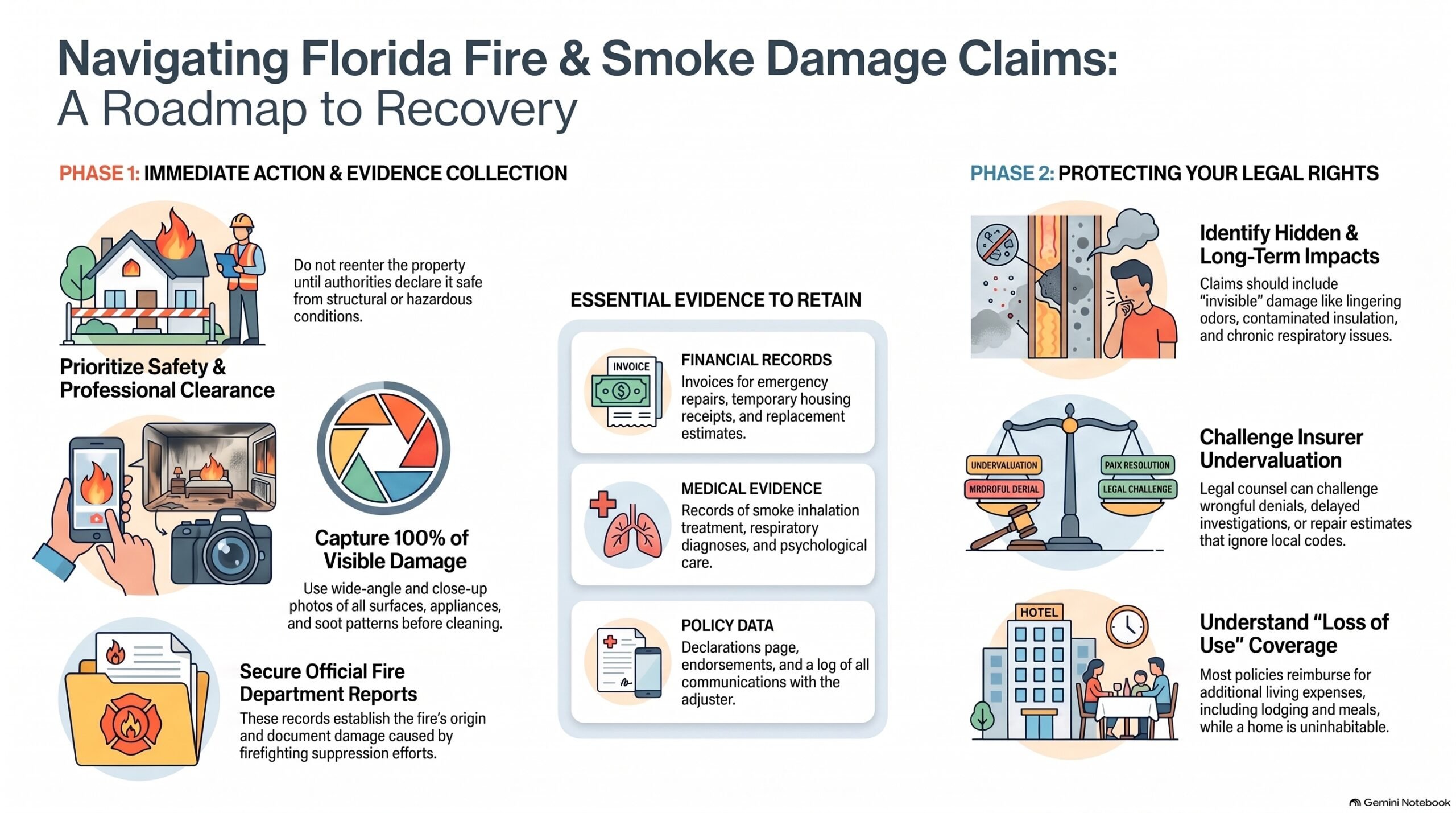
After a fire or smoke-related injury, the affected person should first get to a safe location and seek necessary medical care. The property owner or claimant should document visible damage, preserve relevant records, and photograph affected areas when conditions permit. Prompt consultation with an insurance lawyer can help protect the claim and address disputes over coverage, valuation, or liability.
Ensure Immediate Safety
Prioritize immediate safety by leaving the property if fire, smoke, structural damage, or hazardous conditions remain present. Occupants should move to a safe location and call 911 when emergency assistance is needed. They should not reenter the structure until firefighters, utility personnel, or other qualified authorities declare it safe. Emergency evacuation plans can help households identify exits, meeting points, and procedures for assisting children, older adults, and individuals with disabilities. Anyone exposed to smoke should move to fresh air and avoid inhaling it, particularly when odors, soot, or visible particles remain. Medical evaluation may be appropriate for coughing, breathing difficulty, dizziness, burns, or other symptoms, even when they initially appear minor. Neighbors and witnesses can assist safely by guiding vulnerable individuals away while avoiding contact with unstable areas or contaminated materials.
Document Fire and Smoke Damage
Documenting fire and smoke damage promptly can preserve critical evidence for insurance evaluation and any resulting injury or property claim. After authorities declare the property safe, photographs and videos should be taken of each affected room, surface, furnishing, appliance, and personal belonging before cleaning or disposal. Records should identify the date, location, apparent condition, and suspected source of each loss, while receipts and estimates should be retained for necessary expenses. A written inventory can describe smoke odor, soot deposits, water intrusion, structural changes, and damaged contents. Document restoration steps, including cleaning, drying, debris removal, and repairs, with corresponding dates and provider information. Humidity control measures should also be recorded because lingering moisture can worsen contamination, mold growth, and material deterioration. These organized records can help preserve accurate information for all affected parties and supporting professionals.
Contact Your Insurance Lawyer
When a Florida fire or smoke damage claim involves substantial losses, disputed coverage, injuries, or concerns about the insurer’s conduct, the policyholder should promptly contact a qualified insurance lawyer. Counsel can perform an Insurance coverage review, explain policy provisions, identify deadlines, and assess whether exclusions, limits, or claim decisions were properly applied. Legal guidance may also protect the policyholder during recorded statements, inspections, settlement discussions, and requests for additional information. The lawyer can provide guidance on gathering documentation, helping organize photographs, repair estimates, inventories, medical records, receipts, correspondence, and proof of lost income. Prompt representation may preserve evidence, reduce avoidable mistakes, and support a complete presentation of the claim. Individuals serving affected families should encourage timely legal assistance and advise them to avoid speculation about coverage or accepting payments before understanding their rights and potential obligations.
Critical Evidence in a Florida Property Claim Fire & Smoke Damage Injury Case
Critical evidence can establish the cause of the fire, the extent of smoke damage, and whether an insurer properly evaluated the claim.
Key records should be preserved promptly and organized for legal and insurance review:
- Fire department reports and incident records
- Photographs, insurance policy documents, and claim correspondence
- Expert inspection findings addressing damage, origin, and repair costs
Fire Department Reports
Fire department reports can provide important, contemporaneous evidence in a Florida property insurance claim involving fire and smoke damage. These records may identify the reported Fire origin, emergency conditions, actions taken by responders, and observations made during the initial investigation. Official investigation reports can help establish when the incident occurred, whether suppression efforts caused additional water damage, and how smoke spread throughout the structure. They may also document suspected building code violations or conditions that influenced the fire’s development. Because reports are generally prepared by public officials in the ordinary course of their duties, insurers and claim professionals may consider them significant when evaluating coverage and causation. Policyholders should preserve complete copies, including supplements and attachments, and review the information carefully for any inconsistencies that require clarification through the appropriate channels.
Damage Photographs
Damage photographs provide powerful contemporaneous evidence in a Florida property insurance claim involving fire and smoke damage. Clear images should document every affected room, surface, fixture, appliance, and personal belonging before cleaning, repairs, or disposal occurs. Wide-angle photographs establish location and scope, while close-up images reveal soot patterns, charring, water intrusion, and other conditions that might otherwise be missed. Individuals assisting with documentation should avoid disturbing unsafe areas and should follow instructions from fire officials and qualified professionals.
Photo Preservation Tips include recording the date, time, and location, retaining original files, creating secure backups, and maintaining an organized image log. An Evidence Security Check should confirm that files remain unaltered, accessible, and linked to the specific property area or item shown. Consistent documentation helps representatives evaluate losses accurately and serve affected property owners responsibly.
Insurance Policy Documents
When evaluating a Florida property insurance claim involving fire and smoke damage, the policy documents establish the coverage terms, duties, exclusions, limits, and procedures that govern the insurer’s response. A complete policy record should include the declarations page, endorsements, renewal notices, applicable forms, and correspondence explaining amendments or coverage decisions. A careful review of the policy language helps identify notice requirements, proof-of-loss obligations, additional living expense provisions, and deadlines that affect the claims process. It also allows a claimant’s representatives to compare the insurer’s position with contractual obligations rather than relying on verbal statements. Documenting adjuster timelines, requests, and responses supports evidence gathering and may reveal delays in investigations or inconsistencies in explanations. Preserving every policy version and related communication serves others by promoting accountability, informed decisions, and fair evaluation of covered fire and smoke losses.
Expert Inspection Findings
With the policy record established, expert inspection findings provide objective evidence about the cause, scope, and effect of fire and smoke conditions in a Florida property claim. A qualified fire investigator can document ignition sources, burn patterns, soot distribution, water intrusion, and structural instability. Industrial hygienists may evaluate airborne contaminants, odor persistence, and materials requiring specialized cleaning or replacement. These findings help distinguish direct fire damage from consequential smoke, suppression, and environmental damage. Inspectors should follow appropriate Safety precautions, including protective equipment, controlled access, and contamination protocols. Evidence preservation is equally important; photographs, samples, measurements, damaged-item inventories, and chain-of-custody records can support accurate valuation and coverage analysis. Independent findings may also identify unsafe conditions, necessary repairs, and health risks, enabling informed decisions that protect occupants and advance a fair resolution.
Don’t Wait. Call Our Florida Personal Injury Lawyers Now!
Long-Term Effects of Florida Property Claim Fire & Smoke Damage Injuries
Fire and smoke damage injuries may cause chronic respiratory problems that persist long after the immediate emergency has ended. Individuals may also experience lasting psychological effects, including anxiety, sleep disruption, or trauma-related symptoms. These conditions can require ongoing medical care and create substantial expenses that should be carefully documented in a property claim.
Chronic Respiratory Problems
Although visible fire damage may be repaired, exposure to smoke, soot, and toxic combustion byproducts can contribute to chronic respiratory problems long after a property loss. Smoke exposure may aggravate asthma, bronchitis, sinus disorders, or other conditions, while persistent coughing, wheezing, shortness of breath, and reduced stamina can interfere with work and daily responsibilities. A medical evaluation can identify ongoing impairment and help determine whether symptoms are related to the fire. Affected individuals should follow treatment recommendations and preserve medical documentation, including diagnoses, prescriptions, testing results, and projected care needs. These records may support legal damages for treatment costs, lost income, ongoing care, and diminished quality of life. Insurance delays can worsen financial pressure when necessary care or remediation remains unpaid. Legal counsel can help protect the claimant’s interests and pursue appropriate compensation.
Long-Term Psychological Effects
Long-term psychological effects may develop after a fire, even when physical injuries and visible property damage have been addressed. Survivors may experience persistent fear, sleep disruption, irritability, sadness, or difficulty concentrating. Smoke Anxiety can arise when an individual notices unusual odors, alarms, or conditions that resemble the original event. Some people avoid returning home, using appliances, or discussing the incident, while others remain constantly alert to possible danger. These reactions can interfere with family relationships, employment, and daily responsibilities. Coping Strategies may include counseling, structured routines, peer support, emergency planning, and gradual reentry into affected spaces under professional guidance. Compassionate assistance can help survivors identify symptoms and seek appropriate mental-health support. Documenting these effects may also help clarify how the fire continues to affect the individual’s quality of life.
Ongoing Medical Expenses
When injuries from a property fire or smoke exposure require continuing treatment, medical expenses may persist long after the initial emergency has ended. Follow-up visits, prescription medications, rehabilitation, diagnostic testing, and expert care can create substantial financial pressure. Medical documentation should identify each condition, service, provider, and related cost, while treatment timelines help demonstrate how care developed after the incident. Individuals affected by smoke exposure may require monitoring for respiratory, cardiac, or neurological complications that recover gradually. Consistent symptom tracking can help healthcare professionals evaluate changes and support appropriate treatment decisions. Detailed records may also assist in presenting an insurance claim or seeking compensation for reasonable, necessary future expenses. Legal guidance can help organize evidence, assess coverage, and protect access to continuing care without placing the burden on those already in recovery.
Proving Liability in Florida Property Claim Fire & Smoke Damage Injury Cases
Proving liability in a Florida property claim involving fire and smoke damage requires evidence that identifies the responsible party and establishes a causal link between that party’s conduct and the resulting losses. Investigators may examine the fire’s origin, maintenance records, photographs, witness accounts, and reports from fire officials or qualified engineers. A defective appliance, negligent contractor, unsafe electrical work, or inadequate maintenance may support a negligence claim when evidence demonstrates a duty, breach, causation, and damages.
Building permit records can reveal whether construction or renovations received required approval and complied with applicable plans. Fire code violations, such as blocked exits, missing alarms, or improperly maintained suppression systems, may provide important evidence, although a violation does not automatically establish liability. Records concerning inspections, warnings, repairs, and prior incidents can help clarify notice and responsibility. Preserving damaged materials and documenting affected property is crucial. An attorney may coordinate with experts to evaluate these facts and present a clear claim that helps affected individuals and families pursue accountability.
Dealing With Insurance Companies After a Florida Property Claim: Fire & Smoke Damage Injury
After a fire or smoke event at a Florida property, dealing with insurance companies requires prompt documentation, careful communication, and a clear understanding of policy obligations. Policyholders should photograph damage, preserve receipts, secure temporary repairs, and maintain a written record of every conversation with adjusters. An inventory of damaged property, supported by estimates and ownership records, can help establish the value of covered losses.
Insurance correspondence should be reviewed carefully before any statement, release, or settlement is signed. Policy language may impose notice requirements, proof-of-loss procedures, mitigation duties, and Policy denial deadlines that affect available remedies. A lawyer can help identify exclusions, evaluate whether the insurer’s investigation is adequate, and respond to requests without compromising the claim.
When the amount of loss is disputed, appraisal dispute resolution may provide a contractual method for determining valuation, although it does not decide coverage questions. Professional guidance can help affected owners protect their interests while pursuing fair treatment and timely assistance.
What to Expect During a Florida Property Claim Fire & Smoke Damage Injury Claim Process
The claim investigation process typically begins with an assessment of the fire’s cause, property damage, and related losses. Effective documentation and clear communication with the insurance adjuster help establish the scope and value of the claim. The process may conclude through negotiated settlement or other resolution, depending on the evidence and applicable policy terms.
Claim Investigation Process
During a Florida property claim investigation, the insurer evaluates the fire and smoke damage, determines the likely cause, and assesses whether the policy provides coverage. An adjuster may inspect the property, interview occupants, review fire department records, and consult engineers or other experts. The investigation commonly includes a causation analysis, which considers whether negligence, an accident, or an excluded circumstance caused the loss. Policy language, endorsements, deductibles, and coverage limits are examined alongside available reports. Evidence preservation is important because altered conditions or discarded materials may complicate the insurer’s review and affect the claim’s credibility. The policyholder may be asked for statements, access, and authorization for relevant records. A careful, impartial investigation helps clarify responsibilities and supports a fair resolution for affected individuals and families.
Documenting Fire Damage
Thorough documentation is essential to establishing the extent and value of fire and smoke damage in a Florida property claim. The property owner or tenant should photograph and video every affected area before discarding damaged materials, when safety conditions permit. Images should show structural conditions, soot patterns, water intrusion, contents, and neighboring unaffected areas for comparison. A written inventory should identify each damaged item, its purchase date, approximate value, and replacement cost, supported by receipts, appraisals, or account records. Repair estimates, emergency service invoices, temporary housing expenses, and cleaning records should be preserved in an organized file. Any Smoke alarm condition, fire department report, or evidence concerning landlord responsibilities may also be relevant. Detailed records can help advocates serve affected families by presenting a clear, verifiable account of their losses.
Insurance Adjuster Communications
Once fire and smoke losses have been documented, communications with the insurance adjuster become an important part of presenting the Florida property claim. The adjuster may request recorded statements, access to the inspection, repair estimates, photographs, receipts, and medical information. Claimants should provide accurate, consistent responses while avoiding speculation about causes, ownership, or the full extent of damage. Health effects linked to smoke exposure should be reported promptly to medical professionals and described carefully in claim communications. Organized proof documents can clarify damaged property, temporary expenses, and repair needs. Evidence preservation remains important; photographs, damaged materials, receipts, correspondence, and expert reports should be retained before disposal or alteration. Questions should be submitted in writing when possible, and deadlines should be tracked. A representative may help protect accurate communication throughout the investigation.
Settlement And Resolution
Settlement and resolution in a Florida property claim involving fire, smoke, or related injuries generally follow the insurer’s investigation, evaluation of covered losses, and review of supporting evidence. The claimant may receive a settlement offer addressing structural repairs, personal property, temporary housing, medical expenses, or other covered damages. Before accepting, the claimant should compare the offer with inventories, estimates, photographs, medical records, and policy provisions. Documentation can help improve claim timelines by reducing requests for clarification and demonstrating the full scope of the loss. When the offer is incomplete or undervalues damages, the claimant or representative may respond with additional evidence and pursue fair compensation through negotiation. A written release may limit future recovery, so its terms require careful review. If negotiations fail, appraisal, mediation, an internal appeal, or litigation may provide appropriate avenues for resolution.
Compensation for Florida Property Claim Fire & Smoke Damage Injury Damages
When a fire or smoke event damages property in Florida and causes physical harm, the injured party may seek compensation for both injury-related losses and covered property damage. A careful claim may address medical treatment, rehabilitation, necessary transportation, and continuing care connected to the incident. Documentation should establish the event’s cause, the condition of the premises, the injuries sustained, and the relationship between those injuries and the loss. Witness accounts, medical records, photographs, fire reports, repair estimates, and insurer communications can help preserve that evidence. A Florida property claim lawyer may also review policy duties, exclusions, deadlines, and whether negligent maintenance or another party contributed to the harm. Individuals assisting affected residents can encourage prompt medical attention and organized recordkeeping without making unsupported promises about recovery. Home emergency plans and smoke alarm upgrades may reduce future risks, but they do not eliminate an insurer’s obligation to evaluate a valid claim under the policy and applicable Florida law.
Economic vs Non-Economic Damages in Florida Property Claim Fire & Smoke Damage Cases
Economic damages may include repair or replacement costs, temporary housing, damaged belongings, smoke remediation, and other documented financial losses. Non-economic losses can involve inconvenience, disruption of daily life, and diminished use or enjoyment of the property. Establishing the value of damage generally requires inventories, photographs, receipts, professional estimates, and other reliable evidence.
Economic Damage Categories
Property fire and smoke claims in Florida may involve several categories of economic damages, each requiring documentation and a clear connection to the covered loss. Recoverable amounts may include reasonable repair expenses, debris removal, emergency services, temporary housing, and replacement costs for damaged personal property. Business owners may also seek lost revenue when covered damage interrupts operations, provided financial records establish the amount and duration of the interruption. Lost-wage calculations can support claims when an individual cannot work due to necessary relocation, property cleanup, or other directly related circumstances. Appraisals, market comparisons, and repair assessments may demonstrate the impact of property devaluation when smoke or fire damage reduces the premises’ value. Receipts, invoices, payroll records, photographs, and expert evaluations help present these losses accurately and assist fair claim resolution.
Non-Economic Losses
Non-economic losses in Florida fire and smoke damage claims generally refer to personal harms that do not have a direct invoice or readily measurable financial value. These losses may include emotional distress, anxiety, disrupted sleep, loss of comfort, and the diminished ability to use a home as a safe and stable environment. Smoke odors, soot, displacement, and uncertainty can affect household routines and well-being, even when economic damages are recognized separately. Florida property insurance policies may not expressly provide a distinct category for these harms, making coverage dependent on policy language, applicable law, and the nature of the claimed injury. Compensation disputes often arise when insurers characterize distress as incidental. Understanding potential reasons for denial, including exclusions or causation arguments, helps representatives address claims carefully while treating affected families with dignity and respect.
Proving Damage Value
When a Florida fire or smoke damage claim is evaluated, proving the value of each loss requires a clear distinction between measurable financial harm and non-economic damages. Economic damages may include emergency services, temporary housing, debris removal, lost rental income, replacement of contents, and structural repairs. Reliable support includes photographs, inventories, invoices, estimates, receipts, contractor reports, and records showing pre-loss condition. Documentation should also address hidden consequences, such as Mold growth caused by suppression water or lingering moisture. Non-economic damages are less readily calculated and may involve disruption, inconvenience, loss of use, and reduced comfort or enjoyment of the property. Although these harms may not have a standard price, contemporaneous records and credible testimony can establish their significance. A careful presentation helps insurers, adjusters, and courts distinguish legitimate losses from unsupported estimates.
When a Florida Property Claim Fire & Smoke Damage Injury Case Goes to Trial vs Settlement
Although many Florida fire and smoke damage claims resolve through negotiation, some proceed to trial when the parties cannot agree on coverage, the value of the loss, or the insurer’s handling of the claim. Settlement negotiations may provide a faster, more predictable resolution, allowing affected property owners to restore their homes, businesses, and routines without prolonged litigation. However, a settlement requires informed evaluation of documented losses and the risks associated with accepting an offer.
When negotiations fail, trial preparation becomes necessary. A thorough Fire investigation can help identify the origin, scope, and consequences of the damage. Contractors, engineers, accountants, and other professionals may provide expert testimony concerning repair costs, contamination, lost property, or business interruption. Counsel also develops courtroom strategy by organizing records, preparing witnesses, addressing disputed evidence, and presenting the claim in a clear sequence. A trial may produce a favorable judgment, but it also involves greater expense, delay, and uncertainty. Careful guidance helps clients choose the resolution that best serves their recovery.
Don’t Wait. Call Our Florida Personal Injury Lawyers Now!
Florida Laws That May Affect Your Florida Property Claim Fire & Smoke Damage Case
Florida property fire and smoke damage claims are governed by several bodies of law that address insurance coverage, policy interpretation, claim deadlines, and the insurer’s obligation to investigate and evaluate losses fairly. Florida statutes, regulations, and court decisions may determine whether disputed damage falls within covered perils, exclusions, endorsements, or valuation provisions.
Policy interpretation generally considers the contract’s language, documented facts, and applicable rules protecting reasonable coverage expectations.
- Coverage rules may address fire, smoke, water used during firefighting, debris removal, additional living expenses, and damaged personal property.
- Claims-handling standards require insurers to communicate, investigate, request relevant information, and make coverage decisions based on available evidence.
- Insurance bad faith principles may apply when an insurer improperly delays, undervalues, or refuses a claim that should have been resolved fairly.
Public adjusters, contractors, and legal professionals can help preserve records and present organized evidence, supporting policyholders and families during difficult recovery efforts. Legal analysis remains fact-specific, and professional guidance may clarify rights, responsibilities, and available remedies under Florida law.
The Statute of Limitations for Florida Property Claim Fire & Smoke Damage Injury Cases
A Florida property fire and smoke damage claim must be filed within the deadline established by applicable law and the insurance policy. Florida law may impose different limitation periods depending on whether the dispute involves property damage, personal injury, or an insurance contract. Policy conditions may also require prompt notice and cooperation, even before a lawsuit deadline has expired. Because deadlines may be affected by statutory amendments, policy language, concealment, or other circumstances, the applicable dates require careful evaluation.
Delay can also weaken the claim before litigation begins. Evidence preservation should include photographs, repair estimates, damaged materials, inspection reports, and communications with insurers or contractors. Proof of causation may be necessary to connect the fire, smoke, or related contaminants to the claimed losses. Expert testimony can address the origin of the damage, the scope of repairs, and the health consequences. Medical records may document treatment for smoke inhalation or other injuries. Timely organization of these materials supports accurate assessment and protects affected individuals’ ability to seek compensation.
How a Florida Property Claim Fire & Smoke Damage Lawyer Can Help You
When fire or smoke harms a home or business, legal counsel can assess the insurance policy, investigate the origin and severity of the loss, and identify the compensation available under Florida law and the policy’s terms. An attorney can organize evidence, communicate with adjusters, and present a documented demand that accounts for structural repairs, contents, cleaning, lost income, and additional living expenses.
Legal counsel helps fire and smoke loss victims document damage, evaluate coverage, and pursue full compensation under Florida law.
- Counsel can review photographs, inventories, contractor estimates, and expert findings to establish the scope and worth of damage.
- Counsel can address contested coverage, insufficient payments, delays, and Claim Denial Appeals through targeted negotiations or litigation.
- Counsel can examine possible Insurance Bad Faith when an insurer unreasonably investigates, values, or administers a covered claim.
This representation enables affected owners to focus on protecting occupants, restoring operations, and supporting those who depend on them. Legal guidance also promotes consistent documentation and helps ensure that settlement discussions reflect the policy rather than unfounded insurer assumptions.
When to Contact a Florida Property Claim Fire & Smoke Damage Lawyer
Prompt legal attention can protect a fire or smoke damage claim before evidence is lost and deadlines become difficult to manage. A property owner should consider contacting a Florida property claim fire-and-smoke-damage lawyer soon after firefighters declare the site safe. Early guidance can help establish safety priorities while preventing well-intentioned cleanup from affecting important documentation.
Legal counsel may be appropriate when an insurer delays inspection, requests extensive recorded statements, questions the cause of loss, or offers payment that appears insufficient to cover repairs and related expenses. It can also be prudent when smoke affects concealed areas, personal belongings, business operations, or neighboring property. Photographs, repair estimates, damaged materials, receipts, and communications should be retained as part of evidence preservation.
Prompt consultation is especially important when policy language is unclear or a filing deadline may apply. Seeking assistance early allows the property owner to understand immediate obligations, organize relevant records, and communicate with the insurer carefully while recovery efforts continue.
Why You Need an Experienced Florida Property Claim Fire & Smoke Damage Lawyer
Experience matters because fire and smoke claims often involve disputed coverage, hidden damage, complex policy conditions, and repair costs that are difficult to calculate accurately. An experienced Florida property claims fire and smoke damage lawyer can review the policy, identify potentially applicable benefits, and organize evidence to support the property owner’s position. This guidance is particularly valuable when soot, odors, water used for firefighting, or structural instability create damage that is not immediately visible.
Such counsel can also address insurer delays, incomplete investigations, and settlement proposals that may fail to account for necessary restoration, temporary housing, business interruption, or personal property losses. Accurate information is essential for families and organizations serving others after a disaster. Clear advice can correct Smoke inhalation myths, while practical recovery discussions may reinforce the importance of Emergency evacuation planning. Professional representation helps preserve documentation, communicate with insurers, and pursue a claim based on the full scope of covered damage and resulting expenses.
How to Choose the Right Florida Property Claim Fire & Smoke Damage Lawyer for Your Case
Selecting the right Florida property claim fire and smoke damage lawyer requires more than reviewing general legal experience. Choosing representation should involve examining the lawyer’s history with property insurance disputes, denied claims, delayed payments, and disputes involving extensive smoke contamination. Relevant experience can help identify policy provisions, document losses, and address insurers’ efforts to minimize covered damage.
A qualified attorney should explain the proposed strategy clearly and identify the evidence needed to support the claim. This may include photographs, repair estimates, inventory records, expert reports, and communications with the insurer. Experience with fire cause determination is also valuable when origin findings, suspected negligence, or conflicting inspections affect coverage. The lawyer should assess whether those issues could influence liability or policy defenses without making unsupported promises.
Professional responsiveness, careful preparation, and a commitment to protecting policyholder interests are important considerations. Clients may also evaluate fees, potential costs, communication practices, and the firm’s ability to handle the case, whether through resolution or litigation.
About The Law Offices of Anidjar & Levine
The Law Offices of Anidjar & Levine represents Florida policyholders in property insurance disputes involving fire, smoke, and related damage.
The firm assists homeowners, business owners, and families seeking fair treatment after a covered loss disrupts their property and daily lives.
Its attorneys review insurance policies, investigate the origin and extent of damage, and assess whether an insurer has properly handled the claim.
An Arson investigation may create additional scrutiny, particularly when an insurer questions coverage or delays payment.
The firm works to clarify the facts, preserve relevant evidence, and present the policyholder’s position through organized documentation and legal analysis.
Depending on the circumstances, Expert testimony may help establish the cause of the loss, the required repairs, or the value of damaged property.
The Law Offices of Anidjar & Levine seeks practical resolutions while protecting clients’ contractual rights.
Its approach emphasizes careful communication, thorough preparation, and service directed toward restoring stability after a serious property loss.
Frequently Asked Questions
Can I Live in My Home During Fire and Smoke Damage Restoration?
A resident may remain in a fire- and smoke-damaged home only after qualified professionals confirm that it is structurally sound and free from hazardous air, soot, water, electrical, or chemical conditions. Restoration areas may require temporary relocation, particularly during demolition or deodorization. The resident should complete an Emergency return checklist and promptly discuss an insurance living arrangement with the insurer, documenting expenses and obtaining written approval before occupying affected spaces again.
Will My Homeowners Insurance Cover Temporary Housing and Relocation Expenses?
Homeowners insurance may cover temporary housing and relocation expenses when fire or smoke damage makes a residence uninhabitable. This protection is commonly called loss-of-use coverage and may reimburse additional living expenses, including lodging, meals, transportation, and other necessary costs that exceed normal household spending. Coverage depends on the policy, the damage assessment, the limits, and the documentation. The policyholder should notify the insurer promptly, obtain approval when required, and retain receipts throughout the restoration process.
How Are Personal Belongings Evaluated After Smoke or Fire Damage?
Personal belongings are evaluated by identifying each item, documenting its condition, and determining whether cleaning, repair, or replacement is appropriate. Contents Valuation generally considers the item’s age, quality, market value, and applicable policy limits, whereas replacement-cost coverage may require proof of purchase before full payment is made. Claim Documentation should include photographs, videos, receipts, inventories, and professional cleaning estimates. Thorough records help protect the insured’s interests and support fair, efficient claim resolution.
Can Smoke Damage Affect Neighboring Properties or Shared Building Areas?
Smoke damage can affect neighboring properties and shared building areas through drifting particulates, soot deposits, odor migration, and contaminated ventilation systems. Shared ventilation effects may spread residue into hallways, adjoining units, elevators, and common mechanical spaces, even when flames remain localized. Neighboring unit liability may depend on the fire’s origin, negligence, lease terms, insurance provisions, and applicable building rules. Prompt inspection, documentation, and coordinated cleaning help protect affected occupants and preserve evidence.
What Health Precautions Should I Take Before Returning to a Fire-Damaged Property?
Before returning, the individual should obtain clearance from fire officials and qualified restoration professionals, confirming structural stability and the safety of electrical systems. Respiratory safety requires avoiding soot, ash, and contaminated materials unless properly fitted protective equipment is used. Using appropriately rated air filters can reduce airborne particles, while carbon monoxide testing should confirm that combustion hazards are absent. Mold risk reduction requires rapid drying, controlled humidity, and professional assessment of water-damaged areas.
—————————
Fire and smoke damage can result in significant property losses, health concerns, and insurance disputes.
Florida policyholders may benefit from prompt legal guidance to protect their rights, document covered damage, and pursue the compensation available under their policies.
An experienced Florida property claim fire and smoke damage lawyer can assess the circumstances, respond to insurer challenges, and handle negotiations or litigation when necessary.
The Law Offices of Anidjar and Levine provides informed representation focused on pursuing a fair and restorative resolution.
For assistance with related injuries, consult a Florida Personal Injury Lawyer.

