The Law Offices of Anidjar and Levine, an Orlando slip and fall stores and premises law firm, evaluates whether a property owner or occupier failed to maintain reasonably safe conditions, provide adequate warnings, or address a known hazard. Counsel may preserve surveillance footage, photographs, incident reports, witness accounts, maintenance records, and medical documentation. Representation can also address comparative negligence, insurer communications, damages, and litigation preparation. For additional information, visit an Orlando Personal Injury Lawyer. The following information explains liability requirements, common hazards, evidence, and steps that may support an injured visitor’s claim.
Main Takeaways
- An Orlando slip-and-fall lawyer evaluates whether a store or property owner negligently created or failed to address a dangerous condition.
- Liability typically requires proving the hazard existed, the responsible party knew or should have known about it, and the condition caused your injury.
- Important evidence may include photographs, surveillance footage, incident reports, witness statements, maintenance records, and medical documentation.
- Common hazards include spills, leaks, uneven flooring, cluttered aisles, poor lighting, damaged parking areas, and unsafe stairs.
- After an accident, seek medical care, report the incident, document the scene, preserve evidence, and avoid premature insurance statements.
How We Can Help With Your Orlando Slip & Fall Stores & Premises Injury Claim
When an Orlando slip and fall occurs in a store or other property, an experienced premises liability attorney can evaluate the circumstances and determine whether the owner or occupier may be legally responsible. Counsel can provide steady guidance to injured individuals and families seeking a fair resolution while preserving important evidence.


The representation may include Claims investigation steps such as interviewing witnesses, reviewing incident reports, documenting the condition, and identifying surveillance footage. An attorney can also assess medical records, employment impacts, and other losses relevant to the claim. The analysis considers store responsibility standards, including whether the property operator knew or reasonably should have known about a hazardous condition and failed to address it appropriately.
OUR CONSULTATIONSARE FREE
START YOUR FREE CASE REVIEW

Counsel can communicate with insurers, organize supporting documentation, and pursue negotiations when liability and damages are adequately established. If a satisfactory resolution cannot be reached, the attorney may prepare the matter for litigation. This service allows the injured person to focus on recovery while receiving informed, client-centered legal assistance.
Understanding Orlando Slip & Fall Stores & Premises Injury Cases
Orlando slip and fall premises injury cases generally depend on whether a property owner or occupier failed to use reasonable care in maintaining safe conditions. Under premises liability basics, the injured person typically must establish that a dangerous condition existed, the responsible party knew or reasonably should have known about it, and the condition caused the injury. The analysis may also consider whether reasonable inspections, warnings, repairs, or other protective measures were available.


A claim can involve a store, office, apartment, hotel, restaurant, or other property open to visitors. The visitor’s legal status and purpose for entering may affect the duty owed. Evidence such as incident reports, photographs, surveillance footage, witness statements, medical records, and maintenance documents can help clarify responsibility.
Independent negligence may also apply when a business’s conduct, rather than the property condition alone, contributed to harm. Prompt legal evaluation helps preserve evidence, assess applicable duties, and present the injured person’s circumstances accurately while supporting fair treatment.
Don’t Wait. Call Our Florida Personal Injury Lawyers Now!
Common Causes of Orlando Slip & Fall Stores & Premises
Common causes of slip-and-fall incidents in Orlando stores and commercial premises include wet floors, uneven walking surfaces, inadequate lighting, and cluttered aisles. Each condition can create a foreseeable hazard when property owners or managers fail to identify and promptly correct it. The circumstances surrounding the hazard, including notice and maintenance practices, may be important in evaluating liability.
Wet Store Floors
Wet store floors are a frequent cause of slip-and-fall accidents in Orlando retail establishments, particularly when spills, leaks, mopping, or tracked-in rainwater create hazardous walking conditions. Employees and customers may not notice moisture near entrances, refrigerated displays, restrooms, or service counters, especially under poor lighting or heavy foot traffic. Retailers can reduce these risks by inspecting floors regularly, cleaning spills promptly, and addressing plumbing or equipment leaks without delay. Clearly visible dry floor warnings should be placed around recently mopped or contaminated areas until surfaces are safe for walking. Staff training should include slip prevention tips, including directing shoppers away from affected locations and promptly reporting hazards to management. When stores fail to maintain reasonably safe conditions or provide adequate warnings, injured individuals may seek guidance regarding potential premises liability claims.
Uneven Walking Surfaces
Uneven walking surfaces are a frequent source of slip-and-fall hazards in Orlando stores and other commercial premises. Raised floor edges, cracked tiles, broken pavement, loose mats, and abrupt transitions between materials can destabilize shoppers and employees. These conditions may develop through ordinary wear, construction activity, weather exposure, or inadequate repairs. Store maintenance policies should require regular inspections, prompt defect correction, and documentation showing that responsible personnel addressed known hazards. Failure-to-warn claims can arise when management receives reports of damaged flooring but does not provide warnings, barriers, or timely repairs. Liability may depend on whether the property operator knew, or reasonably should have known, about the dangerous condition. Individuals serving injured visitors should preserve photographs, incident reports, witness information, and medical records to help evaluate whether negligent maintenance contributed to the occurrence.
Poor Store Lighting
When inadequate lighting obscures walkways, merchandise, floor-level displays, or changes in elevation, customers may not identify hazards before encountering them. Poor store lighting can result from burned-out bulbs, inadequate fixture placement, delayed maintenance, or electrical failures. It may also create shadows and glare that distort a customer’s perception of surface conditions. Store operators generally have a responsibility to maintain reasonably visible premises and promptly address known lighting problems. Improper signage and inadequate warnings can further increase danger when dim conditions prevent customers from recognizing transitions, obstructions, or other risks. After a fall in a poorly lit area, investigators may review inspection records, maintenance practices, surveillance footage, and witness accounts. These details can help clarify whether reasonable care was used to protect customers from foreseeable harm and support accountability.
Cluttered Store Aisles
Cluttered store aisles can create serious trip-and-fall hazards when merchandise, boxes, carts, or other objects obstruct designated walking paths. Customers may reasonably expect clear routes through a retail establishment, particularly near entrances, checkout areas, and frequently used displays. When employees leave inventory in walkways or fail to remove abandoned carts, customers can lose balance and suffer serious injuries. Poor signage may further increase the danger by failing to direct shoppers around temporary obstructions or warn them about uneven surfaces. Effective store training should require employees to keep aisles accessible, conduct regular inspections, and promptly correct hazardous conditions. Documentation of complaints, inspection procedures, and corrective actions may help determine whether management knew or should have known about the obstruction. Injured individuals should seek appropriate assistance and preserve relevant evidence.
Legal Rights of Orlando Slip & Fall Stores & Premises Injury Victims
Orlando slip and fall victims may have legal rights when hazardous conditions on a store or other premises cause injury. Florida premises liability law may allow an injured visitor to seek compensation if the property owner or operator knew, or reasonably should have known, about a dangerous condition and failed to respond appropriately. A legal evaluation may address:
Orlando slip and fall victims may pursue compensation when property owners fail to address known or reasonably discoverable hazards.
- Medical expenses and ongoing treatment
- Lost income or diminished earning capacity
- Physical pain and emotional distress
- Evidence supporting notice and responsibility
Victims should preserve photographs, incident reports, witness information, clothing, and medical records. Store maintenance policies, inspection logs, surveillance footage, and employee statements may help establish whether reasonable safety procedures were followed. Comparative negligence can affect recovery if an injured person’s conduct contributed to the incident. Because deadlines and notice requirements may apply, prompt consultation with an Orlando premises liability attorney can protect available claims. Counsel may also communicate with insurers, investigate disputed facts, and pursue a fair resolution while supporting the victim’s recovery and dignity.
Why Do Orlando Slip & Fall Stores & Premises Injuries Happen?
Understanding how these incidents occur can help identify whether a property owner or business may have failed to maintain reasonably safe premises. Orlando slip and fall injuries commonly result from wet floors, spilled merchandise, uneven surfaces, loose mats, poor lighting, or blocked walkways. Refrigeration leaks, cleaning activities, and weather-related moisture can create hazards when employees do not promptly correct or isolate them.
Store maintenance standards generally require reasonable inspection routines, timely repairs, and appropriate precautions in areas open to customers. A business may increase risk when staff overlook recurring defects, fail to remove obstacles, or neglect routine safety checks. Customer notification signs can reduce danger when placed promptly and visibly near a temporary hazard, although signage may not eliminate responsibility if the condition remains unreasonable or the warning is inadequate.
Injuries may also arise from crowded displays, poorly designed entrances, damaged parking areas, or inadequate stairway maintenance. Determining the cause requires examining the property condition, inspection practices, employee knowledge, and whether reasonable safety measures were followed.
What Should You Do After a Orlando Slip & Fall Stores & Premises Injury?
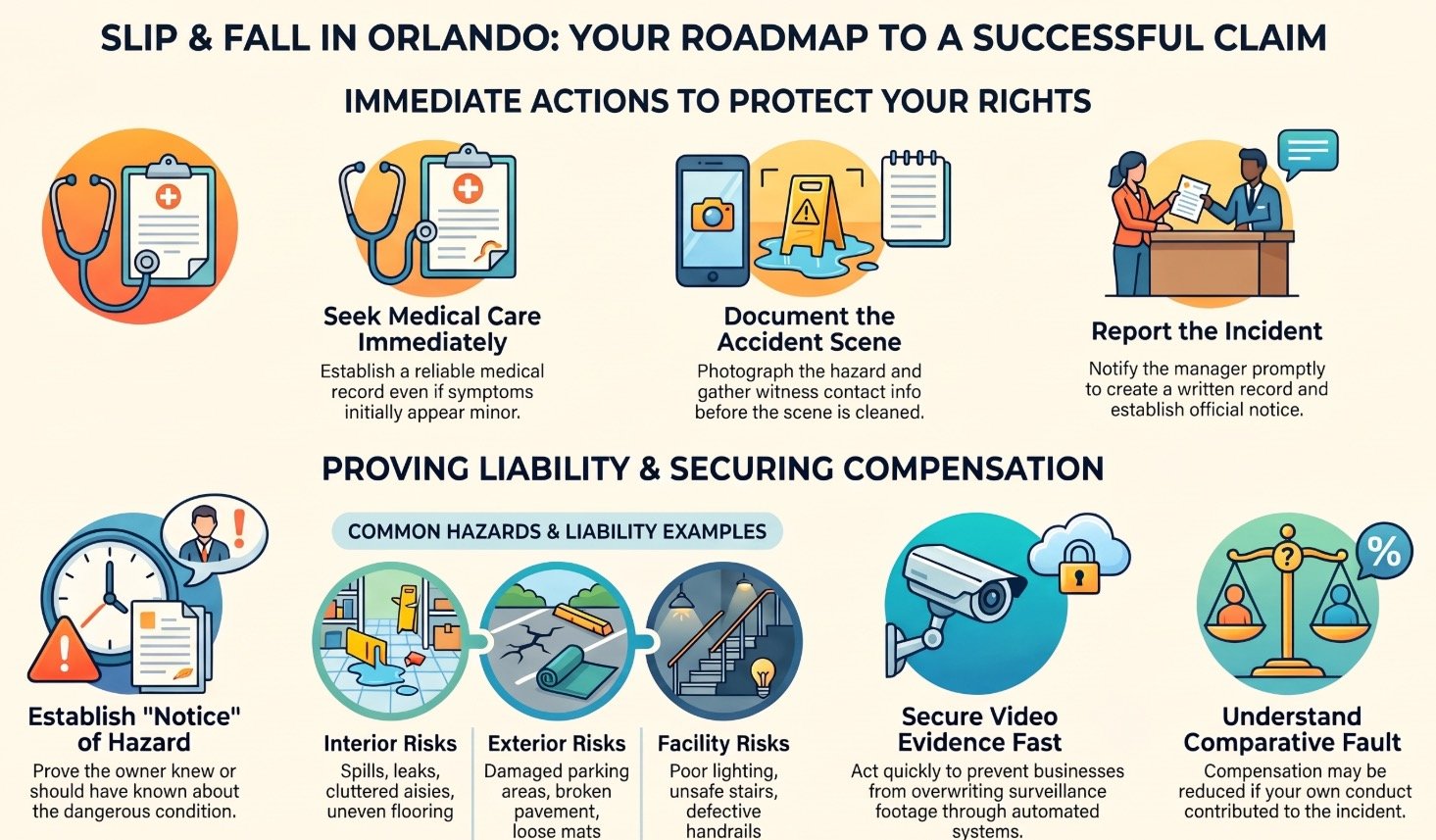
After an Orlando slip and fall injury, the individual should seek immediate medical care, even when symptoms initially appear minor. The accident scene should be documented with photographs, witness information, and other relevant details. The incident should also be reported promptly to the store owner, manager, or premises operator, with a written record of the notification retained.
Seek Immediate Medical Care
Prompt medical attention should be obtained after a slip and fall at an Orlando store or other premises, even when the injury initially appears minor. A qualified clinician can identify conditions that may worsen, provide appropriate treatment, and establish a reliable medical record. The injured person should explain how the incident occurred, describe every symptom, and follow prescribed restrictions or referrals. Medical follow up is important because delayed symptoms can affect recovery and complicate an insurance claim. Basic knowledge of insurance claim basics may help the individual understand requests for records, bills, and authorization forms, although legal guidance may be appropriate before providing statements. Store hazard reporting should be addressed through responsible personnel when feasible, while prompt documentation from medical providers preserves vital information about the injury, diagnosis, and treatment.
Document The Accident Scene
Accurate scene documentation can preserve evidence that may otherwise disappear before an Orlando slip and fall claim is evaluated. If physically able, the injured person or a trusted companion should photograph the precise location, surrounding conditions, lighting, flooring, and any visible substance or obstruction. Images should capture both close details and wider views showing how the area was arranged. Check for hazards without disturbing them, since moving an object or cleaning a spill may eliminate important evidence. The person should also note the date, time, weather, footwear, and what occurred while details remain clear. Where possible, gather witness statements, including names and contact information, and ask witnesses to describe what they observed independently. Preserving these details can help attorneys and support staff evaluate the circumstances accurately.
Report The Incident Promptly
Timely incident reporting gives an Orlando slip and fall lawyer and the property owner an opportunity to investigate conditions while relevant evidence remains available. After receiving medical attention, the injured person should notify a manager, property representative, or responsible employee as soon as practical. The report should identify the date, time, location, apparent hazard, and any known witnesses without speculating about fault. A written report or confirmation of the complaint can help establish when the store received notice. The individual should request store contact information, including the manager’s name and corporate claims department details. Preserve receipts, photographs, clothing, and other materials related to the visit and injury. Prompt reporting supports a fair investigation and allows responsible parties to address dangerous conditions, protect other visitors, and evaluate potential claims.
Critical Evidence in an Orlando Slip & Fall Stores & Premises Injury Case
Evidence can establish how the incident occurred, identify responsible parties, and document the resulting harm in an Orlando slip and fall stores & premises injury case.
Important materials may include:
- Incident scene photographs
- Surveillance video evidence
- Witness contact information
- Medical records and documentation
Promptly preserving these materials can support a thorough evaluation of the claim and help clarify disputed facts.
Incident Scene Photos
Photographs taken at the scene can preserve conditions that may change or disappear before investigators examine an Orlando slip and fall claim. Clear images may document liquid, debris, uneven flooring, inadequate lighting, missing warnings, or the surrounding layout. Multiple angles and distance views can help establish where the incident occurred and whether a condition was readily observable. If possible, photographs should include a scale reference and capture relevant dates through reliable records, not assumptions. Witnesses may also photograph their footwear, visible injuries, and any property damage without altering the area. During slip & fall investigations, these details can help evaluate liability standards and explain the claim timeline. An attorney consultation can help determine which images are relevant, preserve original files, and organize evidence for fair review.
Surveillance Video Evidence
Surveillance video can provide essential evidence in an Orlando slip and fall claim by showing the condition of a store or premises before, during, and after the incident. Recordings may reveal a spill, obstruction, inadequate lighting, or delayed cleanup, while also documenting the claimant’s movements and the sequence of events. Prompt surveillance footage preservation is important because businesses may routinely overwrite recordings through automated systems. A legal representative can send a preservation request identifying relevant cameras, dates, and time ranges, reducing the risk that essential evidence disappears. Properly obtained footage may support liability proof through video by clarifying whether employees observed a hazard, created it, or failed to respond within a reasonable period. Review the recording alongside incident reports and physical evidence to assess authenticity, completeness, and relevance.
Witness Contact Information
Alongside surveillance footage, witness contact information can help establish what occurred during an Orlando slip and fall at a store or other premises. Customers, employees, delivery personnel, or nearby visitors may have observed the hazardous condition, the incident, or the property’s response. Preserve their names, telephone numbers, email addresses, and brief descriptions of what they saw promptly, because recollections can change and contact details may become outdated. Witness statements can clarify whether a spill, obstruction, uneven surface, or inadequate warning existed before the fall. They may also identify employees who received prior notice of the condition. Organized witness accounts can help counsel develop a liability timeline, compare testimony with business records, and determine which facts require further investigation. Approach each witness respectfully, without coaching or pressure.
Medical Records Documentation
When a person seeks treatment after an Orlando slip and fall, medical records become essential evidence of the injuries, their severity, and the care required. Treatment notes should identify reported symptoms, affected body parts, diagnostic findings, prescribed limitations, and changes in condition over time. Consistent documentation can connect the injuries to the incident and clarify whether additional care, therapy, or expert evaluation was necessary. Doctor note completeness is especially important because vague or missing observations may create uncertainty about causation and impairment. Records should also include medication instructions, referrals, imaging results, and follow-up recommendations. Billing and discharge documents can establish treatment dates, services provided, and related expenses. Patients should preserve copies and provide accurate histories, while legal counsel may organize records to present a clear, reliable account of the claim.
Long-Term Effects of Orlando Slip & Fall Stores & Premises Injuries
Orlando slip and fall injuries may produce chronic pain, reduced mobility, and lasting limitations in daily activities. Emotional and mental strain, including anxiety or diminished confidence, can also persist after the physical injury. Ongoing medical treatment, rehabilitation, and lost income may create substantial financial costs for the injured individual and family.
Chronic Pain And Mobility
Chronic pain and impaired mobility may persist long after an Orlando slip-and-fall injury, particularly when fractures, ligament damage, nerve involvement, or spinal trauma require extensive treatment. Ongoing symptoms can limit walking, standing, lifting, driving, and participation in household or community responsibilities. Appropriate follow-up may include physical therapy, strength and flexibility exercises, diagnostic evaluations, and expert referrals designed to preserve function and prevent further deterioration. Coordinate medication management with qualified medical professionals to address pain control, side effects, and potential interactions. Assistive devices, including canes, walkers, braces, or mobility scooters, may improve safety and independence when used correctly. Documented limitations, treatment needs, and anticipated future care can help clarify the injury’s continuing effects and support informed legal evaluation of available compensation.
Emotional And Mental Strain
Emotional and mental strain may develop after a serious slip-and-fall injury, especially when pain, reduced independence, medical treatment, and financial concerns continue for months. Individuals may experience anxiety, depression, irritability, sleep disruption, or diminished confidence in finding one’s way through stores, workplaces, and public spaces. Traumatic stress symptoms can include intrusive memories, heightened alertness, avoidance, and fear of another fall. These reactions may interfere with rehabilitation, relationships, employment, and ordinary responsibilities, even when physical recovery progresses. Family members and caregivers may notice withdrawal or behavioral changes before the injured person recognizes their significance. Post-injury support strategies can include counseling, supportive communication, gradual activity, appropriate accommodations, and coordinated guidance from healthcare professionals. Early attention may help preserve dignity, strengthen coping skills, and support meaningful recovery while legal concerns are evaluated.
Ongoing Medical And Financial Costs
Long-term medical and financial costs can continue after the immediate effects of an Orlando slip-and-fall injury have subsided. Ongoing care may include follow-up appointments, physical therapy, prescription medication, assistive equipment, or surgery. These expenses can add up while an injured person faces reduced income or can’t return to the same occupation.
A documented Disability Impact may clarify how limitations affect work, household responsibilities, and future earning capacity. Accurate Billing Documentation, including invoices, insurance statements, and payment records, can help establish the extent of financial losses. Records should also reflect transportation costs, rehabilitation needs, and anticipated treatment. Attorneys serving injured community members may review these materials with medical and financial professionals to evaluate damages. Prompt organization of evidence can support informed decisions and help preserve a claim for compensation related to continuing care and economic hardship.
Don’t Wait. Call Our Florida Personal Injury Lawyers Now!
Proving Liability in Orlando Slip & Fall Stores & Premises Injury Cases
Proving liability in an Orlando slip and fall case generally requires establishing that the property owner or occupier knew, or reasonably should have known, about a dangerous condition and failed to correct it or provide adequate warning. Evidence may include photographs, surveillance footage, incident reports, inspection records, maintenance schedules, and statements from witnesses who observed the hazard or its duration. Medical records can connect the fall to documented injuries, while testimony may explain how the condition caused the incident. A premises duty overview considers whether the injured person was lawfully present and whether reasonable care was owed under the circumstances. The claimant must also show that the property’s unsafe condition was a substantial factor in causing harm. Comparative negligence may reduce recovery if the claimant’s own conduct contributed to the fall, such as ignoring visible warnings. Prompt documentation and careful preservation of evidence help clarify responsibility and support a fair evaluation of the injured person’s needs.
Dealing With Insurance Companies After an Orlando Slip & Fall Stores & Premises Injury
After documenting the conditions that caused an Orlando slip and fall, the injured person may need to communicate with the property owner’s insurance company. Early conversations should remain factual and limited to established information. The injured person should avoid recorded statements, speculation about fault, or broad medical authorizations until they receive advice.
Evidence preservation remains crucial. Retain photographs, incident reports, witness information, footwear, medical records, and communications securely. An insurer may request documentation, but review each request carefully to protect relevant rights and privacy.
Attorney consultation can help an injured person understand coverage issues, deadlines, and appropriate communication. Counsel may also evaluate Claim denial reasons, including alleged lack of notice, disputed causation, or assertions that the condition was open and obvious. If liability and damages are adequately supported, Settlement negotiation may address medical expenses, lost income, and other legally recognized losses. Professional guidance helps ensure that service to the injured person remains informed, careful, and focused on fair treatment.
What to Expect During an Orlando Slip & Fall Stores & Premises Injury Claim Process
The Orlando slip and fall claim process typically begins with an initial case evaluation to assess liability, injuries, and available legal options. Lawyers then collect evidence and negotiate with the insurance company about potential compensation. If settlement efforts fail, the matter may proceed to trial, where the evidence and legal arguments will be presented to a court.
Initial Case Evaluation
An initial case evaluation gives an Orlando slip and fall lawyer an opportunity to determine whether a store or property owner may be legally responsible for the injuries reported. During this discussion, the attorney reviews the reported incident, medical condition, treatment status, and circumstances surrounding the property visit. The evaluation may identify potential damages, including medical expenses, lost income, rehabilitation costs, and other documented losses. A preliminary evidence timeline helps clarify when the incident occurred, when symptoms developed, and how treatment progressed. The lawyer may also consider available witness statements and conduct an insurance review to understand coverage and potential claims procedures. Clients receive an explanation of possible legal options, responsibilities, and deadlines, allowing them to make informed decisions while preserving their ability to pursue appropriate compensation.
Evidence Collection Process
When a slip and fall occurs at an Orlando store or other property, evidence collection begins with preserving information that may establish how the incident happened and who controlled the premises. A representative may document the location, surface condition, lighting, warning signs, and surrounding hazards through photographs or video. Record witness names and contact information promptly, while memories remain clear. Medical records, incident reports, clothing, footwear, and receipts may also help connect the event to resulting injuries. Evidence preservation is particularly important when negligent maintenance, such as an unrepaired spill or uneven flooring, may be involved. Property owners may possess surveillance footage, inspection logs, cleaning schedules, and maintenance records. A legal professional can request relevant materials, organize documentation, and identify missing evidence without interfering with medical care or investigations.
Insurance Company Negotiations
After gathering evidence, negotiations with the insurance company typically become the next stage of an Orlando slip and fall claim. The insurer reviews incident reports, medical records, photographs, witness statements, and information concerning the property’s maintenance. Adjusters may request additional documentation, question the extent of injuries, or assess whether the store had reasonable notice of a dangerous condition. A representative may also raise Comparative negligence defenses, alleging that the injured person failed to watch where they were walking or otherwise contributed to the incident. Counsel can address these arguments with documented facts and applicable premises-liability standards. A policy limits evaluation may help determine the available insurance coverage and whether other responsible parties or policies should be identified. Communications are generally handled carefully to protect the claimant’s interests and maintain an accurate record.
Settlement Or Trial
A settlement or trial generally follows negotiations if the parties have not resolved an Orlando slip and fall claim. During this stage, the injured person and legal representative evaluate medical records, lost income, property conditions, and applicable insurance coverage. A negotiation strategy may involve presenting a carefully supported demand, responding to counteroffers, and judging whether proposed compensation fairly addresses present and future losses.
If settlement remains unavailable, the case may proceed to trial. Each side presents witnesses, documents, photographs, inspection records, and other trial evidence concerning notice, hazardous conditions, causation, and damages. The court or jury then determines whether the property owner or occupier bears responsibility and, if so, the amount of compensation. Throughout either path, counsel explains deadlines, risks, and likely outcomes while protecting the claimant’s interests and supporting informed decisions.
Compensation for Orlando Slip & Fall Stores & Premises Injury Damages
Victims injured in Orlando stores or on other unsafe premises may be entitled to compensation when a property owner’s negligence caused the slip and fall. Potential recovery may address legally recognized harm resulting from the incident, subject to available evidence and applicable Florida law. A claim generally requires showing that the owner or occupier knew, or reasonably should have known, about a dangerous condition and failed to take appropriate corrective action or provide adequate warning.
Comparative negligence can reduce compensation if the injured person’s own conduct contributed to the fall. The percentage assigned to each party may affect the final recovery, making careful investigation important. Insurance coverage limits may also restrict the amount an insurer can pay, even when documented losses are substantial. Counsel may identify responsible parties, preserve surveillance footage, obtain witness accounts, and negotiate with insurers on the injured person’s behalf. Prompt legal guidance can help protect evidence, clarify available remedies, and promote a fair resolution while respecting the person’s recovery needs.
Economic vs Non-Economic Damages in Orlando Slip & Fall Stores & Premises Cases
Economic damages may include medical expenses, lost wages, rehabilitation costs, and other measurable financial losses from a premises injury. Non-economic damages address less tangible harm, including pain, emotional distress, and diminished quality of life. Calculating total compensation requires evaluating both categories in light of the injury’s severity, duration, and effect on the individual’s daily life.
Economic Damages
When an Orlando slip-and-fall incident results in documented financial losses, economic damages may provide compensation for the measurable costs caused by the injury. These damages commonly include Medical Expenses for emergency treatment, physician visits, hospitalization, rehabilitation, prescription medication, medical equipment, and necessary future care. Lost Wages may also be recoverable when the injury prevents work, reduces earning capacity, or requires missed time for appointments and recovery. Documentation is fundamental. Invoices, pay records, tax documents, employment statements, and medical records can help establish the amount and connection between the incident and the claimed losses. An evaluation may also consider transportation costs, household services, and other out-of-pocket expenses reasonably caused by the injury. Careful evidence collection supports accurate calculations and helps present a responsible, well-supported claim.
Non-Economic Damages
Non-economic damages address the personal effects of a slip-and-fall injury that cannot be measured through bills or pay records. They may include pain and suffering, reduced mobility, disrupted sleep, and diminished enjoyment of ordinary activities. Emotional damages can reflect fear, anxiety, embarrassment, frustration, or emotional distress arising from the incident and its consequences. The seriousness of these harms may depend on the injury’s severity, recovery period, medical treatment, and effect on daily relationships and responsibilities. Testimony from the injured person, family members, coworkers, and treating professionals may help describe these losses. In Orlando premises liability cases, evidence should connect the claimed suffering to the fall and demonstrate how it changed the individual’s life. These damages differ from economic losses because they do not have a fixed market value.
Calculating Total Compensation
A total compensation assessment combines documented financial losses with the personal harm caused by a slip-and-fall. Economic damages may include emergency treatment, continuing medical care, prescription costs, rehabilitation, lost wages, reduced earning capacity, transportation, and necessary household assistance. Records, invoices, employment statements, and medical opinions help establish these amounts.
Non-economic damages address pain, emotional distress, inconvenience, disfigurement, diminished enjoyment of life, and lasting limitations. Unlike bills, these losses require evidence describing daily effects, prognosis, and the injury’s effect on relationships and activities. Insurance settlement tactics may undervalue either category by emphasizing gaps in treatment or disputed liability. Counsel may evaluate comparative fault defenses, including allegations that the injured person ignored warnings or acted unreasonably. A careful assessment considers liability evidence, future needs, and applicable Florida law before presenting a demand or evaluating settlement.
Don’t Wait. Call Our Florida Personal Injury Lawyers Now!
When an Orlando Slip & Fall Stores & Premises Injury Case Goes to Trial vs Settlement
Although many Orlando slip-and-fall claims resolve through negotiation, some stores and premises injury cases proceed to trial when liability, damages, or the value of a fair settlement remains disputed. Settlement discussions may conclude early when evidence supports responsibility, and both sides can evaluate medical costs, lost income, and ongoing effects. A lawyer may use organized records, witness accounts, photographs, and treatment documentation to develop settlement leverage while protecting the injured person’s interests.
Trial becomes more likely when a store denies notice of a dangerous condition, challenges causation, or offers compensation that does not reflect the injury’s full impact. The trial timeline can include investigation, filing, discovery, depositions, expert review, mediation, and testimony preparation. Even after litigation begins, negotiations may continue and produce a resolution before a verdict. If trial is necessary, counsel presents evidence, examines witnesses, responds to defenses, and explains the requested compensation. The client’s ability to serve others may remain central when seeking accountability and appropriate recovery.
Florida Laws That May Affect Your Orlando Slip & Fall Stores & Premises Case
Florida law establishes the legal standards that may determine whether an Orlando store or property owner is responsible for a slip-and-fall injury.
Essential principles may include:
- Negligence standards: A claimant generally must show that a hazardous condition existed, the owner knew or should have known about it, and reasonable corrective action was not taken.
- Premises liability: Businesses and property owners may owe lawful visitors duties involving inspections, maintenance, warnings, and reasonably safe conditions.
- Comparative fault: If an injured person’s conduct contributed to the incident, Florida’s comparative-fault rules may reduce the recoverable amount according to the assigned percentage.
- Damages caps: Certain claims, particularly those involving governmental entities or specific statutory circumstances, may be subject to limits on recoverable damages.
Evidence such as photographs, incident reports, surveillance footage, witness statements, and medical records can help clarify these issues. Legal guidance may help families, caregivers, and community advocates pursue a fair evaluation while preserving the injured person’s dignity and interests.
The Statute of Limitations for Orlando Slip & Fall Stores & Premises Injury Cases
Because Florida’s statute of limitations can bar an otherwise valid claim, the deadline for filing an Orlando slip-and-fall lawsuit is a crucial consideration after an injury. Under Florida law, you generally must file negligence claims within two years of the accident. Missing that deadline can result in dismissal, even when a store’s hazardous condition caused substantial harm. Certain circumstances may alter the calculation. Claims involving a government-owned property may require shorter notice periods and additional procedural steps. Injuries discovered later may raise issues concerning when the claim accrued, although delayed discovery does not automatically extend the deadline. Comparative negligence impacts may reduce recoverable damages when an injured person shares responsibility, but that issue does not ordinarily eliminate the filing requirement. Prompt attention also supports evidence preservation timelines because surveillance footage, incident reports, photographs, and witness recollections may disappear or deteriorate. Individuals representing injured community members should encourage timely documentation and qualified legal evaluation, without assuming settlement discussions pause the statutory deadline.
How an Orlando Slip & Fall Stores & Premises Lawyer Can Help You
An Orlando slip-and-fall lawyer can help an injured person evaluate liability, preserve evidence, and pursue compensation under Florida premises-liability law. Counsel provides organized guidance while treating the client’s concerns with respect and attention.
An Orlando slip-and-fall lawyer provides compassionate guidance, evaluates liability, preserves evidence, and pursues legally supported compensation under Florida law.
A lawyer may assist by:
- Conducting an attorney investigation, including reviewing surveillance footage, incident reports, inspection records, and witness accounts.
- Applying Florida negligence principles to determine whether a dangerous condition, inadequate warning, or unreasonable maintenance caused the incident.
- Coordinating Evidence preservation through photographs, medical records, footwear, correspondence, and timely requests for relevant business records.
- Developing a settlement strategy that accurately presents medical expenses, lost income, continuing limitations, and other legally supported damages.
Counsel can also communicate with store representatives, insurers, and defense attorneys, reducing confusion and helping protect the client’s position during claim evaluation. When appropriate, the lawyer may explain dispute-resolution options and assess whether available evidence supports further action. This service-oriented approach allows an injured person and family to focus on recovery while receiving informed, principled representation. Each case remains dependent on its facts, documentation, applicable law, and the strength of the liability analysis.
When to Contact an Orlando Slip & Fall Stores & Premises Lawyer
Contacting an Orlando slip-and-fall lawyer promptly can help safeguard evidence and clarify whether a workable premises-liability claim exists. Early guidance is especially important when injuries require immediate treatment, create work limitations, or raise questions about Emergency eligibility for medical assistance and related benefits.
A lawyer may also identify responsible parties, request surveillance footage, and advise on preserving photographs, witness information, incident reports, medical records, and other Claim documentation. These materials can become difficult to obtain as time passes or business records are routinely overwritten.
Florida time limits can restrict how long an injured person has to pursue a premises-liability action, making timely consultation prudent even when the full extent of harm remains uncertain. Contact is also appropriate when an insurer requests a recorded statement, offers a quick settlement, or disputes responsibility. Such Compensation disputes may affect medical expenses, lost income, and future care. Prompt legal review helps ensure that decisions are informed, organized, and consistent with the injured person’s interests while allowing necessary treatment and recovery to continue.
Why You Need an Experienced Orlando Slip & Fall Stores & Premises Lawyer
Experienced Orlando slip-and-fall premises lawyers provide informed guidance when liability, evidence, and damages are disputed. Their experience helps injured visitors understand how Premises Liability Standards apply to stores, restaurants, offices, and other public properties. They can assess whether a dangerous condition existed, whether the owner or manager had notice, and whether reasonable steps were taken to correct it or warn others.
A qualified lawyer also recognizes that Store Owner Negligence may involve inadequate inspections, poor maintenance, unsafe floor conditions, or insufficient lighting. Timely investigation can preserve surveillance footage, incident reports, witness accounts, photographs, and medical documentation before important evidence disappears. Counsel can communicate with insurers, assess the full effect of injuries, and present facts in a structured manner that supports fair treatment.
This representation allows an injured person to focus on medical care and recovery while a legal professional protects their interests. Experienced counsel can also identify disputed facts and pursue appropriate accountability through negotiation or litigation when necessary.
How to Choose the Right Orlando Slip & Fall Stores & Premises Lawyer for Your Case
Selecting the right Orlando slip-and-fall stores and premises lawyer requires careful evaluation of the attorney’s experience, communication practices, and approach to premises liability claims. Individuals seeking to serve injured clients should check a lawyer’s experience with retail, commercial, and property-owner negligence disputes. A strong background may indicate familiarity with preserving surveillance footage, identifying hazardous conditions, and addressing comparative negligence issues.
Prospective clients should verify case results through reliable sources, while recognizing that past outcomes do not guarantee future success. They should also review fee structure carefully, including contingency percentages, litigation expenses, medical-record costs, and any obligations if the claim does not succeed. Upfront transparency can prevent later misunderstandings.
It is equally important to confirm communication style. The lawyer should clearly explain legal options, provide realistic assessments, respond within reasonable timeframes, and identify the staff members handling routine questions. Carefully comparing qualifications, client reviews, accessibility, and case strategy can help clients choose representation that fits their needs and the demands of the claim.
About The Law Offices of Anidjar & Levine
The Law Offices of Anidjar & Levine represents individuals pursuing compensation after injuries caused by unsafe conditions on commercial or residential properties. Its attorneys examine the circumstances surrounding each incident, identify potentially responsible parties, and explain available legal options in terms clients can understand.
The firm provides a premises liability overview that may address hazardous floors, inadequate lighting, falling merchandise, defective stairs, and insufficient warnings. Attorneys assess whether a property owner or occupier knew or should have known about a dangerous condition and failed to take reasonable corrective action. They also evaluate medical records, incident reports, witness accounts, photographs, and other evidence that may support a claim.
Because businesses and insurers may raise store-negligence defenses, legal counsel reviews arguments about notice, comparative fault, trespassing, and compliance with safety procedures. The firm seeks to protect injured individuals while pursuing appropriate compensation for medical expenses, lost income, pain, and related losses. Its approach emphasizes preparation, clear communication, and client support during difficult recovery periods.

Frequently Asked Questions
Can I File a Claim if I Slipped at a Store but Wasn’T Seriously Injured?
A person may file a claim after slipping at a store even when injuries are minor, although recovery depends on proving the store’s negligence and documenting resulting losses. Medical evaluation remains important because some conditions worsen or appear later. Comparative negligence may reduce compensation if the injured person contributed to the incident, such as ignoring warnings. Evidence, including photographs, witness information, incident reports, and medical records, can help determine whether pursuing a claim serves the person’s interests.
What Happens if the Store’s Property Owner Is Different From the Business Operator?
If the property owner differs from the business operator, responsibility depends on who controlled the hazardous condition and whether each party knew, or should have known, about it. Negligence liability may involve one party or both, based on leases, maintenance duties, inspections, and the circumstances of the fall. Property owner disputes can complicate insurance and evidence. A careful investigation should identify responsible parties and preserve records, witnesses, and medical documentation.
Can I Pursue Compensation if I Partially Caused My Orlando Slip and Fall?
Yes, an injured person may pursue compensation even if partially responsible for an Orlando slip and fall. Under comparative negligence, the court may reduce recovery according to the claimant’s percentage of fault; in some circumstances, responsibility exceeding a statutory threshold may bar recovery. Damage calculation considers medical expenses, lost income, pain, disability, and future needs. Evidence regarding hazardous conditions, warnings, footwear, and conduct can clarify liability and support a fair evaluation.
Are Employees or Witnesses Allowed to Provide Statements About the Accident?
Yes. Employees and witnesses may provide statements describing what they observed, heard, or knew about the accident. Their accounts can support a claim, particularly when recorded promptly and consistently. However, employee statement admissibility may depend on how the statement was obtained, its relevance, and applicable evidence rules. Witness credibility issues, including bias, inconsistent details, or limited perception, can affect weight. A careful investigation should preserve statements and identify corroborating evidence.
Does a Store’s Security Footage Automatically Belong to the Injured Customer?
A store’s security footage does not automatically belong to the injured customer. The retailer generally owns or controls the recording, but the footage may constitute relevant evidence in a premises-liability claim. A customer or representative can request its preservation and production through a written demand, discovery, or court order. Spoliation laws may impose consequences if potentially relevant footage is intentionally or negligently destroyed after the store reasonably anticipates litigation.
—————————
Orlando slip and fall incidents may lead to substantial medical expenses, lost income, and lasting physical limitations. Property owners and businesses may be held responsible when hazardous conditions cause injuries and they fail to take reasonable safety measures. The Law Offices of Anidjar and Levine can assess the circumstances, identify potentially liable parties, and pursue evidence-supported compensation. Prompt guidance from an Orlando Personal Injury Lawyer may help protect an injured person’s rights while building a focused premises liability claim.