Florida workers’ compensation injuries may result from falls, machinery accidents, vehicle collisions, repetitive motions, lifting incidents, or exposure to harmful substances. The Law Offices of Anidjar and Levine can help determine whether a condition is sudden, cumulative, or occupational, connect it to job duties, and document medical treatment, disability, lost wages, and long-term limitations. Prompt reporting and medical evaluation are important, especially when insurers dispute causation or delay benefits. For additional legal guidance, visit a Florida Personal Injury Lawyer to learn more about available remedies, evidence, deadlines, and legal protections.
Main Takeaways
- A Florida workers’ compensation lawyer can evaluate whether an injury resulted from a sudden accident, repetitive motion, or occupational illness.
- Common workplace causes include falls, machinery accidents, hazardous exposures, and physically repetitive job duties.
- Medical records should connect the diagnosed condition, treatment needs, and work activities to establish compensability.
- Available benefits may include authorized medical care, temporary disability payments, impairment benefits, and wage-loss compensation.
- Legal assistance can address delayed or denied claims, impairment disputes, benefit calculations, deadlines, and settlement terms.
How We Can Help With Your Florida Workers Comp Damage Types & Causes Injury Claim
Two essential services can reinforce a Florida workers’ compensation injury claim: establishing the cause and extent of the workplace injury and pursuing every benefit available under state law. A qualified legal team can help an injured worker document workplace conditions, report the incident appropriately, and preserve relevant medical and employment records. This support may clarify how the injury occurred without prematurely addressing broader categories of damages or causes.
Counsel can also communicate with insurers, employers, and medical providers on the worker’s behalf. When benefits are delayed, reduced, or denied, representation can help prepare denied claim appeals, meet procedural deadlines, and present organized evidence to the appropriate authorities. Attorneys may further explain available wage-loss and medical benefits in terms the worker and family can understand.


Employers and organizations committed to serving others may also benefit from guidance regarding Workplace safety training, reporting procedures, and compliance practices. Early professional assistance promotes accurate documentation, protects lawful interests, and helps secure that injured workers receive fair treatment throughout the claims process.
Understanding Florida Workers Comp Damage Types & Causes of Injury Cases
OUR CONSULTATIONSARE FREE
START YOUR FREE CASE REVIEW

Understanding the types and causes of workplace injuries is central to evaluating a Florida workers’ compensation case. Each claim requires careful attention to the employee’s medical condition, job duties, and connection between the work environment and reported harm. Recognizing whether an injury is sudden, cumulative, or related to an occupational illness can help clarify which benefits may apply.
Florida workers’ compensation generally addresses necessary medical care, authorized treatment, temporary disability benefits, and permanent impairment when supported by sufficient evidence. Documentation from healthcare providers, employers, and witnesses may help establish the injury’s timing, severity, and impact on work capacity. Employees and their advocates also benefit from understanding reporting requirements and the importance of prompt medical evaluation.


Prevention remains an important service to workers and employers. Effective workplace safety training and ergonomic risk assessments can identify hazards, improve job conditions, and reduce preventable harm. A well-informed review of the case supports fair treatment while helping injured individuals pursue appropriate benefits without compromising the broader goal of safer workplaces.
Common Causes of Florida Workers Comp Damage Types & Causes
Common causes of Florida workers’ compensation injuries include workplace falls, repetitive motion injuries, machinery-related accidents, and hazardous material exposure. Each cause may produce distinct physical conditions, from sudden trauma to illnesses that develop over time. Identifying how an injury occurred is important when evaluating eligibility for benefits and determining the appropriate documentation.
Workplace Falls
Workplace falls are a significant source of Florida workers’ compensation claims, often causing fractures, head injuries, spinal damage, and other conditions that may limit an employee’s ability to work. Common causes include wet floors, uneven surfaces, inadequate lighting, unsecured ladders, missing guardrails, and cluttered walkways. Falls may also result from insufficient training, defective equipment, or an employer’s failure to address known hazards. Prompt medical evaluation helps document the injury, identify work restrictions, and establish a connection to the workplace incident. Medication documentation can further clarify prescribed treatment, side effects, and ongoing medical needs. Employees and their advocates should preserve incident reports, witness information, photographs, and medical records. Understanding claim denial reasons, including delayed reporting or disputed causation, supports careful preparation and timely legal guidance for affected workers and their families.
Repetitive Motion Injuries
Repetitive motion injuries develop when employees repeat the same movements, often involving the hands, wrists, elbows, shoulders, neck, or back. Tasks such as typing, lifting, sorting, gripping tools, or assembling products may gradually strain muscles, tendons, and nerves. Symptoms can include persistent pain, numbness, tingling, weakness, swelling, and reduced range of motion. Workers may initially dismiss discomfort as temporary, but continuing the activity can worsen the condition and interfere with ordinary job duties. Employers can reduce these risks through ergonomic risk assessments, adjustable workstations, appropriate equipment, scheduled rest periods, and job rotation strategies that limit prolonged repetition. Medical documentation may help establish the relationship between workplace duties and the injury. Florida workers’ compensation benefits may cover authorized treatment, wage replacement, and related losses when eligibility requirements are satisfied.
Machinery-Related Accidents
Machinery-related accidents occur when workers are struck by moving equipment, caught in unguarded components, crushed between objects, or exposed to unexpected energy releases. These incidents may result from inadequate maintenance, defective safeguards, improper lockout procedures, insufficient supervision, or operator error. Employers generally reduce risks through thorough workplace safety programs, regular inspections, emergency stops, and clearly documented operating procedures. Appropriate guarding should prevent access to pinch points and moving parts, while training should address equipment limitations and response protocols. Ergonomic training can also help workers use tools and machinery with safer postures, controlled movements, and reduced strain. When an injury occurs, prompt medical attention and accurate incident reporting support the worker’s recovery and help identify corrective measures. Florida workers may also seek guidance regarding potential workers’ compensation benefits.
Hazardous Material Exposure
Hazardous material exposure occurs when workers inhale, ingest, or absorb harmful substances through the skin during routine operations, spills, improper storage, or inadequate protective measures. Chemical exposure may involve solvents, asbestos, pesticides, cleaning agents, fuels, or industrial dust. Depending on the substance and duration, affected employees may develop respiratory disorders, burns, neurological injuries, skin conditions, organ damage, or long-term illnesses, including certain cancers. Employers generally must identify hazards, provide training, maintain safety data sheets, and supply appropriate protective gear. Ventilation, labeling, containment procedures, and emergency response plans can further reduce workplace risks. When exposure requires medical treatment, causes lost income, or results in permanent impairment, Florida workers’ compensation may provide benefits for authorized care and wage losses. Prompt reporting and medical evaluation help document the incident and support appropriate assistance.
Don’t Wait. Call Our Florida Personal Injury Lawyers Now!
Legal Rights of Florida Workers Comp Damage Types & Causes for Injury Victims
When a workplace injury occurs, Florida employees generally have the right to pursue workers’ compensation benefits for medical treatment, lost wages, and qualifying disability, regardless of whether the harm resulted from repetitive strain, machinery, or hazardous conditions. Victims should promptly report injuries, obtain appropriate medical care, and preserve records supporting their claims. Employers and insurers must evaluate benefits under Florida law, while injured workers may challenge improper denials or delays.
Florida workers injured by accidents or occupational conditions may pursue medical, wage, and disability benefits under applicable workers’ compensation laws.
- Medical benefits can include authorized treatment, prescriptions, rehabilitation, and related transportation.
- Temporary or permanent wage benefits may depend on medical restrictions, earning capacity, and accurate documentation of lost wages.
- Workers may request assistance addressing impairment rating disputes, benefit calculations, and settlement terms.
A qualified legal representative can help protect procedural rights, communicate with insurers, and present evidence when disagreements arise. Workers should avoid signing releases or accepting settlements without understanding their long-term effect. Serving injured employees requires careful attention to deadlines, documentation, and fair access to benefits after a covered workplace accident or occupational condition.
Why Do Florida Workers Comp Damage Types & Causes Injuries Happen?
Florida workers’ compensation injuries happen when workplace conditions, job demands, or unsafe practices place excessive stress on an employee’s body or expose the employee to preventable hazards. Common causes include falls, machinery malfunctions, vehicle collisions, lifting incidents, repetitive motions, and exposure to harmful substances. Inadequate staffing or unrealistic production demands may encourage rushed work, increasing the likelihood of mistakes and physical strain. Poorly maintained equipment, blocked walkways, insufficient protective gear, and improper ergonomic design can also create dangerous conditions.
Some injuries result from inadequate Workplace safety training, particularly when employees are not instructed on equipment operation, hazard recognition, emergency procedures, or safe lifting methods. Weak employee communication may prevent workers from reporting hazards or understanding changing work conditions. Supervisors who overlook safety rules can further increase risk, while fatigue, distraction, and insufficient rest may impair judgment. Identifying these contributing factors helps explain how preventable workplace events produce injuries and supports safer conditions for employees serving customers, patients, and communities.
What Should You Do After a Florida Workers Comp Damage Types & Causes Injury?
After a Florida workplace injury, the employee should promptly report it to the employer and document the circumstances surrounding the incident. Immediate medical care can establish the injury’s nature and support appropriate treatment, while following all medical recommendations remains important. Consulting a workers’ compensation lawyer can help protect the employee’s rights and clarify available benefits and required procedures.
Report The Workplace Injury
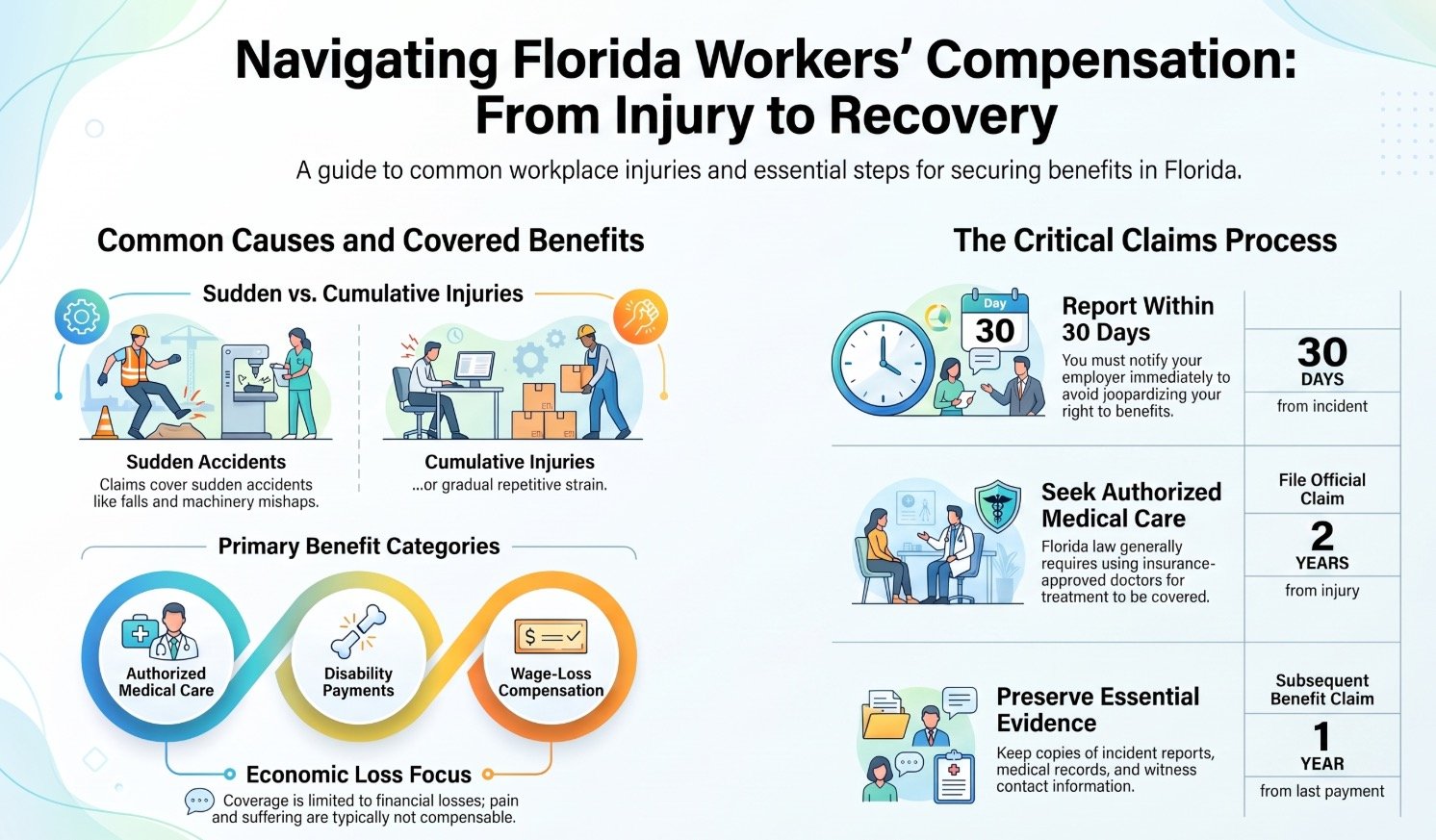
Promptly reporting a workplace injury is an important first step in protecting an employee’s rights under Florida’s workers’ compensation system. An employee should notify a supervisor, manager, or designated employer representative as soon as the injury occurs or becomes apparent. The report should identify when, where, and how the incident happened, along with the affected body areas and any witnesses. Written notice, such as an email or incident form, can help preserve an accurate record. Florida generally requires notice within 30 days after an employee knows, or should know, that an injury is work-related. Understanding these legal time limits is necessary because delayed reporting may jeopardize benefits. Employees should keep copies of reports and related medical documentation, cooperate respectfully with workplace procedures, and provide factual, complete information throughout the claim.
Seek Immediate Medical Care
Get a medical evaluation as soon as possible, even if the injury initially appears minor. Prompt treatment can identify conditions that may worsen and create a clear medical record connecting symptoms to the workplace incident. The worker should accurately describe how the damage occurred, identify every affected area, and disclose prior or related symptoms without minimizing discomfort. Following clinical instructions, attending scheduled appointments, and reporting changes can support recovery and prevent complications. Preserve medical records, diagnostic results, prescriptions, work restrictions, and receipts as post-injury documentation. The worker should also confirm that the healthcare provider knows the injury is work-related and that the employer receives required restrictions. Timely action matters because Florida workers’ compensation legal deadlines may affect notice, treatment, and benefit eligibility. Consistent care helps restore health and keeps records accurate.
Consult A Workers’ Compensation Lawyer
A Florida workers’ compensation lawyer can evaluate whether the injury, medical treatment, and resulting limitations support a claim for available benefits. Legal guidance may help an injured worker understand reporting duties, medical documentation, and the injury claim timeline before important deadlines pass. Counsel can review accident records, witness statements, employment information, and treatment histories to identify disputed facts or employer and insurer errors. The lawyer can also explain benefit eligibility requirements, including whether the condition arose from work and whether notice was provided within the required period. If benefits are delayed or denied, representation may assist with communications, negotiation, and formal proceedings. Prompt consultation allows the worker to preserve evidence, make informed decisions, and focus on recovery while protecting access to lawful wage replacement and medical care.
Critical Evidence in a Florida Workers Comp Damage Types & Causes Injury Case
A Florida workers’ compensation claim may rely on several forms of evidence, including:
- Medical records and incident reports;
- Witness statements; and
- Employment documentation.
Together, these materials can establish the injury’s cause, timing, severity, and connection to the workplace.
Medical Records
Because medical records establish the nature, timing, and extent of an employee’s work-related injuries, they serve as fundamental evidence in a Florida workers’ compensation case. Treatment notes, diagnostic images, prescriptions, and expert evaluations can document symptoms, functional limitations, and the medical need for care. Consistent records may connect an injury to employment while identifying conditions that could affect benefits or recovery. They also help clarify whether requested treatment is reasonable and medically necessary. Attorneys and claims professionals may review these materials to update a claim strategy, identify evidentiary gaps, and support communication with insurers. Accurate documentation can promote employer dispute resolution by addressing questions about severity, causation, and ongoing impairment. Employees should provide complete medical histories, attend authorized appointments, and promptly report symptom changes to preserve reliable evidence.
Incident Reports
Incident reports provide contemporaneous documentation of workplace events that may support a Florida workers’ compensation claim. They typically identify the date, time, location, equipment involved, observed conditions, and reported symptoms. Such details can help establish when and how an injury occurred, particularly when the report is completed promptly and preserved without alteration. Accurate entries may also demonstrate whether workplace safety procedures were followed or whether hazardous conditions required corrective action. Employers and injured workers should review reports for completeness, factual consistency, and accurate documentation. Make corrections transparently rather than deleting original information. A report does not determine eligibility for benefits on its own, but it can complement medical records and claim forms. Timely reporting can also help organizations respond responsibly and protect employees from further harm.
Witness Statements
Witness statements can supplement incident reports by providing firsthand accounts of how a workplace injury occurred and what conditions existed at the time. Coworkers, supervisors, or customers may describe unsafe equipment, missing safeguards, sudden events, or the worker’s immediate symptoms. Their observations can help establish timing, causation, and the incident’s seriousness without relying solely on the injured employee’s recollection.
Each account’s value depends on witness credibility. Consistent details, direct observation, and a lack of personal bias may strengthen the evidence, while conflicting statements or secondhand information may reduce its weight. An attorney may preserve statements through interviews, written declarations, or sworn testimony. Statement admissibility can depend on how the information was obtained, whether the witness has personal knowledge, and whether applicable evidentiary rules are satisfied. Prompt collection helps preserve accurate recollections.
Employment Documentation
Employment documentation can provide crucial evidence in a Florida workers’ compensation case by confirming the worker’s position, job duties, work schedule, wages, and employment status at the time of the injury. Payroll records may establish average weekly wages, overtime, and benefits relevant to disability payments. Job descriptions and assignment records can connect the claimed injury to specific physical demands or workplace exposures. Training records may demonstrate training compliance, while manuals, inspection reports, and acknowledgments can show whether safety protocols were communicated and followed. Attendance logs, timecards, and personnel files may clarify when the incident occurred and whether the worker was performing assigned duties. Preserving these documents helps attorneys, adjusters, and medical professionals evaluate causation, compensable losses, and applicable benefits. Accurate records also support fair treatment for injured workers seeking recovery and stability.
Long-Term Effects of Florida Workers Comp Damage Types & Causes Injuries
Florida workers’ compensation injuries may produce chronic pain or permanent disability that substantially affects daily activities and long-term independence. Ongoing medical treatment, including therapy, medication, or future procedures, may remain necessary as symptoms develop or persist. These limitations can also reduce earning capacity by restricting work hours, duties, advancement opportunities, or the ability to return to the prior occupation.
Chronic Pain And Disability
Chronic pain and disability can become enduring consequences of workplace injuries, affecting an injured worker’s mobility, ability to perform essential job duties, and overall quality of life. Persistent limitations may interfere with lifting, standing, concentration, or reliable attendance, potentially preventing a return to the prior position. A worker may also experience reduced earning capacity, dependence on assistance, and difficulty participating in family or community responsibilities. Pain Management Options can help assess functional concerns through qualified providers, prescribed strategies, and coordinated support, without assuming that symptoms will resolve quickly. Employers may need to consider Disability Accommodation Requests, such as modified schedules, assistive equipment, or reassigned tasks, when a worker remains qualified to perform essential functions. Documentation describing restrictions and workplace impact can support informed decisions and protect the worker’s ability to serve others safely.
Ongoing Medical Treatment
Persistent pain or disability may require ongoing medical treatment long after the initial workplace injury, particularly when symptoms limit mobility, strength, concentration, or other functional abilities. Care may include expert evaluations, prescription medication, physical therapy, diagnostic testing, injections, surgery, or assistive devices. Authorized providers may periodically reassess the condition, document treatment response, and identify whether additional care remains medically necessary. Consistent records can help establish the connection between continuing symptoms and the covered workplace accident. Functional impairment ratings may also describe lasting limitations and support evaluation of available workers’ compensation benefits. When an insurer refuses treatment, delays authorization, or disputes medical necessity, benefits denial appeals may require medical evidence, treatment records, and professional legal guidance. Coordinated advocacy helps injured workers pursue appropriate care while protecting their dignity, stability, and ability to recover.
Lost Earning Capacity
When a workplace injury limits an individual’s ability to perform the same duties, work the same hours, or advance in the same occupation, it may reduce long-term earning capacity. This loss differs from temporary wage replacement because it concerns future income, career progression, and access to comparable employment. Medical records, work restrictions, education, prior earnings, and transferable skills may help establish the impact. Vocational Rehabilitation can identify suitable retraining, alternative occupations, and realistic earning projections when returning to the former position is impractical. Wage Verification, including payroll records and employer statements, may document historical income and support comparisons with expected post-injury wages. A careful evaluation can help injured workers pursue appropriate benefits while preserving dignity, independence, and the ability to continue serving their families and communities.
Proving Liability in Florida Workers Comp Damage Types & Causes Injury Cases
Establishing liability in a Florida workers’ compensation injury case requires evidence that connects the employee’s job duties or workplace conditions to the claimed injury. Relevant proof may include accident reports, medical records, witness statements, photographs, safety policies, and testimony describing how the incident occurred. Medical documentation should identify the diagnosis, treatment needs, and relationship between the condition and employment activities.
Florida generally covers injuries arising out of and occurring in the course of employment, although disputes may involve preexisting conditions, delayed reporting, or alleged violations of workplace procedures. Accurate job descriptions and payroll records can also help address Employee Misclassification, which may affect eligibility and employer responsibility.
When benefits are denied, a worker may pursue Claim Denial Appeals by gathering supporting evidence and meeting applicable filing deadlines. An attorney can evaluate causation, preserve records, identify responsible parties, and present a coherent claim while protecting the injured person’s opportunity to obtain lawful benefits. Witness cooperation and consistent reporting can further strengthen the factual record.
Dealing With Insurance Companies After a Florida Workers’ Comp Damage Types & Causes Injury
After a Florida workers’ compensation injury, the insurance company may investigate the accident, request medical records, and evaluate whether the claimed condition is work-related. Injured employees should provide accurate information, attend authorized medical appointments, and preserve accident reports, wage records, and relevant correspondence. Consistent descriptions of the injury and its effect on work can help prevent misunderstandings during communications with adjusters.
An insurer may question causation, limit treatment authorization, or request an independent medical examination. Claim denials should be reviewed carefully because the stated reason may involve missed deadlines, disputed employment facts, or alleged failure to follow reporting requirements. A qualified workers’ compensation attorney can explain available responses and communicate with the carrier when direct discussions become difficult.
Employees should also document adverse scheduling changes, threats, reduced hours, or termination after reporting an injury. Such conduct may suggest employer retaliation, which can raise separate legal concerns. Supportive guidance helps injured workers protect their rights while continuing appropriate medical care and serving their families responsibly.
What to Expect During a Florida Workers’ Comp Damage Types & Causes Injury Claim Process
The Florida workers’ compensation claim process generally begins with promptly reporting the workplace injury and obtaining complete medical documentation. The insurer and claimant may then review applicable benefits, wage losses, medical expenses, and other compensable damages. Finally, the injury claim may be resolved through approved benefits, settlement negotiations, or formal dispute procedures when the parties disagree.
Reporting Your Workplace Injury
When a workplace injury occurs, prompt reporting is essential to protect an employee’s rights under Florida workers’ compensation law. An employee should notify a supervisor, manager, or designated human resources representative as soon as reasonably possible, describing when, where, and how the incident occurred. Florida generally requires notice within 30 days, although earlier reporting reduces disputes and supports a timely claim. The employee should follow the employer’s reporting procedures and retain a copy or written confirmation of the notice. Employer notice requirements may vary by workplace policy, but they cannot eliminate statutory protections. Delays, incomplete descriptions, or undocumented verbal reports can create avoidable challenges, including disputes resembling Aflac claim denials. Prompt, accurate communication helps employers respond responsibly and allows injured workers to pursue available benefits without unnecessary obstacles.
Gathering Medical Documentation
Maintaining complete medical documentation is a crucial part of a Florida workers’ compensation claim. After reporting an injury, the worker should attend authorized appointments and clearly describe symptoms, limitations, and changes in condition. Medical records should identify the diagnosis, treatment recommendations, prescribed medications, and whether the condition relates to workplace duties. Diagnostic testing, including imaging or laboratory studies, may provide objective support for the reported injury. The worker should retain discharge instructions, referrals, bills, and records from follow-up appointments. Timeline documentation can organize the injury date, medical visits, symptoms, and treatment responses, helping prevent inconsistencies. If records are unavailable, alternative evidence may include pharmacy information, appointment confirmations, or written communications with medical providers. Consistent, accurate documentation helps authorized representatives evaluate the claim responsibly.
Reviewing Benefits And Damages
After documenting a Florida workplace injury, reviewing available benefits and potential damages helps clarify what compensation may be available during the workers’ compensation claim process. An injured employee may qualify for authorized medical treatment, temporary disability payments, or benefits for a lasting impairment. Wage-loss calculations generally depend on pre-injury earnings, work restrictions, and the employee’s ability to perform available duties. When returning to the prior position is not feasible, Vocational Rehabilitation may provide counseling, training, or assistance identifying suitable employment. The review should also consider transportation needs, prescription costs, and ongoing care associated with the injury. An attorney or claims professional can explain eligibility requirements, documentation standards, and applicable deadlines. Early evaluation of Settlement Options may help the employee understand possible outcomes without assuming that an agreement is appropriate.
Resolving Your Injury Claim
Resolving a Florida workers’ compensation injury claim generally involves confirming medical status, calculating eligible benefits, and addressing any disputed issues with the insurer or employer. The injured worker typically attends authorized medical appointments, follows treatment recommendations, and provides documentation concerning work restrictions, lost wages, and related expenses. Medical improvement may clarify whether temporary benefits should continue or whether permanent impairment benefits warrant consideration. The impact of medical delays can complicate recovery, benefit calculations, and return-to-work planning, making timely communication important. Handling benefit disputes may require reviewing claim records, responding to insurer decisions, and requesting assistance through Florida’s workers’ compensation dispute-resolution process. Legal counsel can help protect procedural rights, organize evidence, and communicate with involved parties. A resolution may result from agreement, mediation, or a formal hearing before a judge.
Compensation for Florida Workers Comp Damage Types & Causes Injury Damages
Compensation for Florida workers’ compensation injuries depends on the type and severity of the workplace harm, the medical treatment required, and the extent to which the condition affects the employee’s ability to work. Eligible benefits may cover authorized medical care, prescription expenses, temporary disability payments, and compensation for a lasting impairment. When an injury prevents a return to the prior position, vocational rehabilitation may assist with suitable training, job placement, and transfer services.
Benefits generally require timely notice to the employer, accurate medical documentation, and compliance with authorized treatment requirements. Insurance carriers may dispute the relationship between the injury and employment, question the need for treatment, or deny payment altogether. An injured worker may seek help from an attorney or qualified advocate to meet deadlines, communicate with the carrier, and present supporting evidence. If benefits are denied or reduced, a claim appeal can seek review through Florida’s workers’ compensation process. Careful guidance helps ensure injured employees receive fair support while recovering and supporting their families.
Economic vs Non-Economic Damages in Florida Workers Comp Damage Types & Causes Cases
Florida workers’ compensation generally addresses economic losses such as medical expenses, wage replacement, and costs related to necessary treatment. Non-economic damages, including pain and suffering, are typically limited or unavailable under the workers’ compensation system. To establish compensable losses, you need medical documentation, employment records, and other reliable evidence linking the injury to the workplace.
Economic Damage Coverage
Although workers’ compensation generally covers economic losses arising from a workplace injury, it typically does not provide the same broad damage recovery available in a personal injury lawsuit. Covered economic benefits may include authorized medical treatment, temporary disability payments, and compensation for lasting impairment when supported by medical evidence. Disability benefits eligibility depends on the injury’s effect on work capacity, the employee’s medical restrictions, and compliance with required reporting and claims procedures. An injured worker may also receive wage-loss benefits while recovering or performing limited duties. When returning to the prior occupation is not feasible, Vocational rehabilitation options can assist with job counseling, retraining, and placement services, subject to applicable program rules. Careful documentation of wages, treatment, restrictions, and employment efforts helps establish the value and duration of compensable losses.
Non-Economic Damage Limits
Economic benefits address measurable financial losses, while non-economic damages concern pain, suffering, emotional distress, and loss of enjoyment of life. In Florida workers’ compensation claims, however, these non-economic losses generally are not awarded separately. The system primarily provides authorized medical care, temporary or permanent disability benefits, and compensation for documented wage loss. Unlike a personal injury lawsuit, it typically does not permit recovery for pain and suffering caused by an ordinary workplace injury. Narrow exceptions may apply, including certain intentional torts or third-party claims, where you can pursue broader damages outside workers’ compensation. Careful evidence preservation remains important when evaluating those possibilities. Testimony from coworkers, medical professionals, and family members may help describe limitations, while legal guidance clarifies applicable damage restrictions.
Proving Compensable Losses
When proving compensable losses in a Florida workers’ compensation case, the injured worker must connect each claimed economic loss to the workplace injury through reliable documentation and medical evidence. Economic losses may include authorized medical treatment, prescription costs, mileage, temporary disability benefits, and reduced earning capacity. Pay stubs, employment records, invoices, travel logs, and benefit statements can help establish the amount and duration of each loss. Medical records must demonstrate medical causation, treatment necessity, work restrictions, and the relationship between the accident and claimed condition. Preserve evidence promptly, including incident reports, witness information, photographs, and communications with the employer or insurer. Non-economic damages, such as pain and suffering, generally are not separately recoverable in Florida workers’ compensation claims. Accurate records and consistent testimony can support fair benefit determinations.
Don’t Wait. Call Our Florida Personal Injury Lawyers Now!
When a Florida Workers’ Comp Damage Types & Causes Injury Case Goes to Trial vs Settlement
The decision to resolve a Florida workers’ compensation injury claim through settlement or trial depends on the nature of the damages, the strength of the evidence, and whether the parties can agree on the benefits owed. Settlement may provide a faster, more predictable resolution for an injured worker who needs medical care, wage replacement, or vocational support. Negotiations can address disputed impairment, treatment, and future needs while avoiding the uncertainty of a hearing.
A trial may become necessary when the parties disagree about compensability, medical evidence, disability, or the value of ongoing benefits. Each side presents testimony, records, and legal arguments before a judge, whose decision may be challenged through available review procedures. Retaliation claims generally require separate consideration when employment actions follow an injury report or benefit request. Review attorney fee agreements carefully so the worker understands payment responsibilities and the services covered. Counsel can help evaluate whether settlement serves the worker’s long-term interests or whether trial is necessary to pursue fair benefits.
Florida Laws That May Affect Your Florida Workers Comp Damage Types & Causes Case
Chapter 440 of the Florida Statutes primarily governs workers’ compensation claims and establishes eligibility requirements, covered benefits, reporting duties, and dispute-resolution procedures. Additional laws may affect how an injury claim is evaluated, particularly when employment status, medical evidence, or third-party conduct is contested.
Florida workers’ compensation claims involve statutory requirements, medical evidence, employment classification, and potential third-party liability.
- Employee classification: Independent contractors may not receive the same protections as statutory employees. The actual working relationship can influence benefit eligibility, regardless of a contract’s wording.
- Medical treatment: Authorized providers, utilization rules, and required documentation can affect payment for care, impairment evaluations, and continuing benefits. Prompt cooperation supports accurate claim administration.
- Other legal claims: A defective product, negligent property owner, or separate responsible party may create a civil claim beyond workers’ compensation. Coordinating these proceedings helps protect available recovery without compromising required disclosures.
The Statute of limitations is one of several procedural rules that can influence a case, while notice requirements and administrative deadlines also matter. Because legal consequences vary with injury type and employment circumstances, injured workers and supportive advocates should obtain qualified guidance early and preserve all relevant records.
The Statute of Limitations for Florida Workers Comp Damage Types & Causes Injury Cases
Under Florida workers’ compensation law, an injured employee generally must report the injury promptly and file a claim within the applicable statutory deadline. Employees typically must notify their employer within 30 days after they knew, or should have known, that an injury was work-related. For occupational diseases, the deadline may begin when the condition and its connection to employment become apparent.
Florida generally requires a workers’ compensation claim to be filed within two years after the date of injury. A subsequent claim for benefits may also be subject to a one-year limitation period after the last payment of compensation or provision of medical treatment. Exceptions can apply, including situations involving employer misrepresentation, minors, or certain incapacitated employees.
Timely Determining Benefit Eligibility depends on accurate medical and employment information. Filing Required Forms and preserving notices, treatment records, wage documentation, and insurer correspondence can help establish compliance with statutory deadlines. Missing a deadline may jeopardize otherwise valid benefits, so prompt attention is critical to protect injured workers.
How a Florida Workers Comp Damage Types & Causes Injury Lawyer Can Help You
When a workplace injury involves disputed liability, complex medical issues, a Florida workers’ compensation lawyer can help protect the employee’s legal rights throughout the claims process. The lawyer can review records, communicate with insurers, and present evidence explaining how the injury arose from employment.
- The attorney may identify Hidden policy defenses, including exclusions or procedural arguments that could limit coverage, and respond with relevant medical and workplace documentation.
- Counsel can coordinate with physicians, clarify restrictions, and pursue authorized treatment when disagreements affect recovery or earning capacity.
- A lawyer can develop a settlement strategy that evaluates unpaid benefits, future medical needs, impairment, and the practical consequences of returning to work.
When to Contact a Florida Workers Comp Damage Types & Causes Injury Lawyer
Prompt legal guidance can be important when a workplace injury is denied, medical treatment is delayed, or workers’ compensation benefits do not reflect the employee’s documented condition. An injured worker may consider contacting a Florida workers’ compensation injury lawyer when claim procedures become unclear or an employer questions whether the incident occurred at work. Delayed claim reporting can create disputes about notice, while denied benefits may interrupt access to authorized care and wage replacement. Legal assistance may also be appropriate when insufficient medical documentation makes it difficult to connect symptoms to workplace duties. Employees should preserve medical records, accident reports, correspondence, and details about missed work and witness statements before discussing the claim. Contact is especially timely after a denial, an unexplained delay, a request for a recorded statement, or pressure to return to work despite medical restrictions. Early consultation can clarify deadlines and identify practical steps to protect the claim while supporting a fair resolution for the injured worker.
Why You Need an Experienced Florida Workers Comp Damage Types & Causes Injury Lawyer
An experienced Florida workers’ compensation injury lawyer can assess the damage types and causes in a claim, identify disputed issues, and ensure supporting medical and employment records are properly presented. This guidance helps injured employees pursue benefits while continuing to support their families, coworkers, and communities.
Experienced counsel can explain how workplace accidents, repetitive stress, occupational exposure, or preexisting conditions may affect eligibility and compensation. The lawyer can also identify liability defenses an employer or insurer may raise, including disputes about notice, employment status, causation, or whether an injury occurred during work duties. Understanding these defenses helps address the claim with relevant evidence rather than assumptions.
A lawyer can investigate claim denial reasons, challenge incomplete findings, and seek appropriate medical evaluation when necessary. Proper representation may help preserve deadlines, clarify treatment needs, and protect access to wage-loss and medical benefits. This support is particularly valuable when injuries are intricate, records conflict, or an insurer delays action without adequate explanation.
Don’t Wait. Call Our Florida Personal Injury Lawyers Now!
How to Choose the Right Florida Workers Comp Damage Types & Causes Injury Lawyer for Your Case
Selecting the right Florida workers’ compensation injury lawyer requires careful consideration of the attorney’s experience with the specific damage types and causes involved in the claim. A suitable representative should understand workplace accidents, occupational illnesses, repetitive stress injuries, and disputes involving medical benefits or lost wages. Reviewing the lawyer’s credentials, case results, communication practices, and familiarity with the relevant Florida procedures can help an injured worker make an informed decision.
Choosing a consultation allows the worker to compare legal strategies, assess responsiveness, and clarify potential costs before signing an agreement. During each meeting, the worker should provide medical records, accident reports, employment information, and insurance correspondence. The attorney should explain eligibility, evidence requirements, deadlines, and possible challenges in understandable terms.
A careful evaluation also includes reviewing settlement options. Counsel should identify whether an offer fairly addresses current and future losses, explain potential consequences, and protect the worker’s ability to receive necessary care. This method supports informed decisions and promotes responsible advocacy.
About The Law Offices of Anidjar & Levine
The Law Offices of Anidjar & Levine represents injured workers in Florida seeking benefits for workplace accidents, occupational illnesses, and other job-related conditions. The firm evaluates each matter carefully, helping clients understand reporting duties, medical documentation, deadlines, and available workers’ compensation benefits. Its attorneys may assist with denied claims, delayed payments, disputes concerning disability status, and questions involving permanent impairments.
The firm also addresses practical concerns that can arise after an injury. Clients may need guidance regarding on-site medical attention, authorized providers, treatment disputes, and procedures for obtaining necessary care. Employer retaliation concerns, including reduced hours, termination, or adverse treatment after reporting an accident, may require prompt legal review. Attorneys explain potential remedies while maintaining a professional approach focused on the worker’s circumstances.
Frequently Asked Questions
Can I Choose My Own Doctor for a Florida Workers’ Compensation Injury?
A Florida workers’ compensation claimant generally cannot freely choose any doctor. Medical treatment typically must come from an authorized provider selected through the workers’ compensation insurer or employer. Claimants may have more options when the insurer fails to provide appropriate care, refuses a medically necessary change, or delays authorization. The claimant should request approval in writing, document symptoms and communications, and seek legal guidance before treating with an unauthorized physician, because payment could otherwise be disputed.
Will Workers’ Compensation Cover Transportation to Medical Appointments?
Workers’ compensation may cover transportation to a necessary medical appointment when the visit relates to an accepted workplace injury. Carrier coverage can include mileage reimbursement for using a personal vehicle, public transportation, or approved alternative travel, depending on the circumstances. The injured worker should request authorization, retain receipts, and document dates, destinations, and distances. Travel limitations may apply, particularly when treatment is unauthorized, unnecessary, or available through a closer qualified provider.
Can I Receive Benefits While Working a Modified-Duty Job?
Yes, an injured worker may receive benefits while performing modified-duty work, provided eligibility requirements are still met. If the new position pays less than the pre-injury wage, workers’ compensation may provide partial wage-loss benefits to address the difference. Benefit calculations generally consider average weekly wages, post-injury earnings, and applicable statutory limits. The worker should follow medical restrictions, report income accurately, and coordinate with the employer and insurer to protect continued coverage.
What Happens if My Employer Retaliates After I Report an Injury?
An employer who retaliates after a worker reports an injury may violate workplace protections and face legal or administrative consequences. Retaliation can include termination, demotion, reduced hours, harassment, or denial of legitimate benefits. The worker should document events, preserve communications, identify witnesses, and promptly report suspected misconduct through appropriate state or federal channels. Depending on the facts, retaliation claims may support reinstatement, back pay, damages, penalties, or other remedies.
Can Undocumented Workers Qualify for Florida Workers’ Compensation Benefits?
Undocumented eligibility generally exists under Florida workers’ compensation law because immigration status typically does not eliminate coverage for job-related injuries. The worker should notify the employer promptly, preferably within thirty days, and seek medical care through approved providers. Benefit limits may apply to certain payments, particularly wage-loss benefits, depending on the circumstances. Request language access when reporting the injury, completing forms, or communicating with insurers, attorneys, and medical professionals to ensure accurate understanding.
—————————
Florida workers’ compensation claims may involve medical expenses, lost wages, temporary or permanent disabilities, and other significant consequences. Understanding the cause of an injury, documenting its effects, and meeting reporting and filing deadlines can help protect an injured worker’s rights. An experienced Florida workers’ compensation attorney can assess available benefits, address disputes, and pursue an appropriate resolution. For related legal guidance, consult a Florida Personal Injury Lawyer. The Law Offices of Anidjar and Levine assists eligible workers with these complex claims through informed, focused legal representation.