The Law Offices of Anidjar and Levine, a Jacksonville Personal Injury Lawyer firm, helps injured shoppers preserve vital evidence, evaluate grocery store negligence, and pursue compensation for medical bills, lost income, pain, and future care. These claims may involve spills, tracked-in rainwater, poor lighting, cluttered aisles, or delayed cleanup. Legal support can help secure incident reports, witness statements, photographs, inspection records, and surveillance footage before they disappear. The sections below explain liability, evidence, damages, and when legal assistance may be important.
Main Takeaways
- A Jacksonville grocery slip-and-fall lawyer can quickly preserve video, incident reports, witness details, photos, and inspection records.
- Claims often require proving the store knew or should have known about a dangerous condition and failed to act.
- Common supermarket hazards include spills, tracked-in rainwater, leaking refrigeration units, cluttered aisles, loose mats, and poor lighting.
- Strong evidence may include surveillance footage, incident reports, witness statements, hazard photos, medical records, and store inspection logs.
- After a fall, seek medical care, report the incident, request an incident report, and preserve shoes, receipts, photos, and paperwork.
How We Can Help With Your Jacksonville Slip & Fall Grocery & Supermarkets Injury Claim
After a fall in a Jacksonville grocery store or supermarket, an injury claim often depends on evidence that can disappear quickly. Legal assistance can help preserve incident reports, witness names, inspection records, video footage, and photographs before routine store practices erase or alter them. Through careful evidence review, a lawyer can assess whether Store negligence may have contributed to unsafe aisles, spills, misplaced merchandise, poor lighting, or delayed cleanup.
Support also includes Medical documentation, which connects the fall to diagnosed injuries, treatment plans, work restrictions, and future care needs. Accurate timeline tracking helps organize when the hazard appeared, when employees knew or should have known about it, and how the injured person responded after the incident. This structured approach helps present a claim accurately and with purpose. For clients focused on serving family, community, and workplace responsibilities, skilled guidance can reduce confusion while pursuing fair compensation through negotiation or litigation.
Understanding Jacksonville Slip & Fall Grocery & Supermarkets Injury Cases


When a customer is injured in a Jacksonville grocery store or supermarket, the legal analysis often begins with how and why the fall occurred. These cases require careful review of whether the business acted with reasonable care toward people it invited onto the property. Under premises liability principles, a store may be responsible when evidence shows a hazard existed, the store knew or should have known about it, and it failed to take reasonable action.
OUR CONSULTATIONSARE FREE
START YOUR FREE CASE REVIEW

A claim often turns on Neighbor Duty Breach, meaning the store’s obligation to protect lawful visitors, the failure to meet that obligation, and the resulting harm. Jacksonville cases may also involve conditions tied to a Weather Incident, where tracked-in water or changing outdoor conditions affect indoor safety responsibilities. For injured customers, the focus remains on accountability, prevention, and fair support during recovery. A clear investigation helps determine whether compensation is appropriate under Florida law. Evidence may include reports, photographs, witness statements, and surveillance footage.
Common Causes of Jacksonville Grocery & Supermarket Slip & Falls
Slip and fall incidents in Jacksonville grocery stores and supermarkets often arise from preventable hazards that affect customer safety. Common causes include wet or slippery floors, spilled merchandise, poor lighting conditions, and cluttered store aisles. Each condition may create a dangerous walking surface, particularly when store management fails to inspect, correct, or warn customers in a timely manner.
Wet Or Slippery Floors


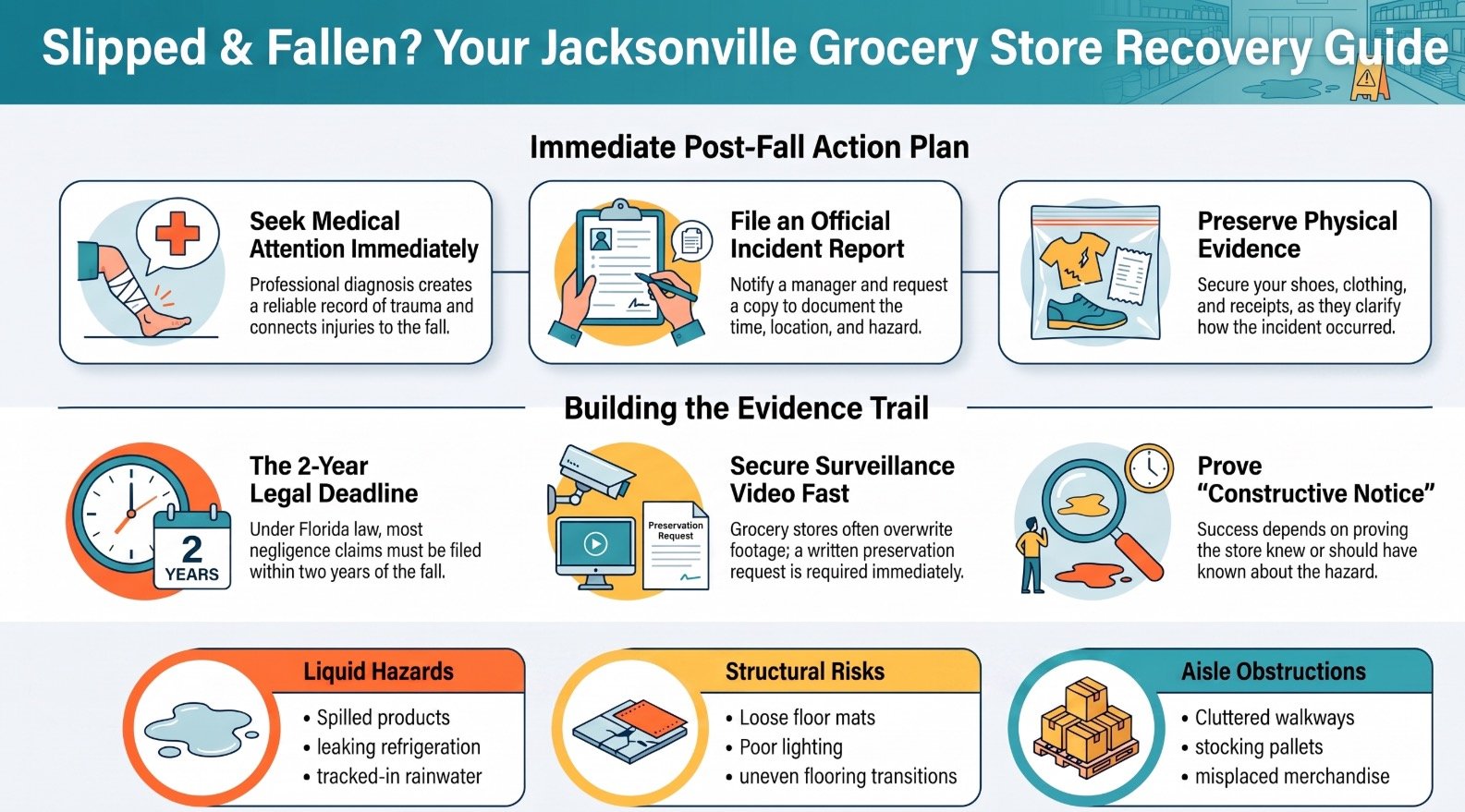
Although grocery stores and supermarkets are expected to maintain safe walking areas, wet or slippery floors remain a frequent cause of slip-and-fall injuries in Jacksonville. Moisture from rain tracked through entrances, recently cleaned aisles, leaking refrigeration units, or condensation near produce displays can create hazardous conditions for shoppers, employees, and visitors. A clear Wet floor policy helps ensure prompt inspection, warning signs, cleanup, and documentation when unsafe surfaces show up. Staff training effectiveness also matters, because employees must recognize risks quickly and respond with care for public safety. When store personnel overlook wet flooring or delay corrective action, vulnerable patrons may suffer major harm. In these situations, liability may depend on whether management acted reasonably, followed procedures, and prioritized the well-being of those it serves.
Spilled Merchandise Hazards
Because grocery stores handle thousands of products each day, spilled merchandise is a common source of slip-and-fall hazards in Jacksonville supermarkets. Broken jars, leaking containers, dropped produce, and torn packaging can create slick or obstructed walking surfaces in aisles, checkout lanes, and service areas. When employees are not trained to inspect, report, and clean these hazards promptly, shoppers may face preventable risks while seeking food, medicine, or household necessities. Customer service delays can worsen the danger when staff members are unavailable to respond to spills or warn nearby patrons. Pharmacy counter incidents may also arise when liquids, bottles, or packaging fall in crowded waiting areas. Careful monitoring, prompt cleanup, and clear communication reflect a store’s duty to protect visitors who depend on safe, orderly premises.
Poor Lighting Conditions
Poor lighting conditions can make routine shopping areas in Jacksonville grocery stores and supermarkets more dangerous than they appear. Dim entryways, shadowed produce sections, poorly lit restrooms, and parking-lot passages may prevent customers from seeing wet flooring, uneven surfaces, or changes in elevation. When visibility declines, customer awareness also drops, even among careful shoppers trying to move responsibly through the premises. Store operators should inspect lighting systems, replace failed bulbs, and evaluate areas where glare or shadows interfere with safe movement. Effective hazard signage may help, but warnings lose value when customers cannot clearly see them. For injured patrons, inadequate lighting can become an important factor in determining whether reasonable safety measures were ignored. Careful investigation may identify maintenance records, inspection gaps, or prior complaints.
Cluttered Store Aisles
A grocery store’s aisles can become hazardous when merchandise, stocking carts, pallets, displays, boxes, or cleaning equipment obstruct the walking path. These conditions may force shoppers to step around barriers, shift direction suddenly, or walk through narrowed spaces, increasing the risk of a fall. Store safety requires reasonable inspection practices, prompt removal of obstructions, and careful placement of temporary displays or restocking materials. Employees should anticipate that customers may carry bags, push carts, or assist children, which can limit visibility and mobility. While Customer negligence may be considered if a shopper ignores an obvious obstacle, a store’s responsibility remains significant when clutter is foreseeable or left unattended. Clear aisles help protect visitors, support dignified service, and reduce preventable harm in Jacksonville grocery and supermarket settings.
Don’t Wait. Call Our Florida Personal Injury Lawyers Now!
Legal Rights of Jacksonville Slip & Fall Grocery & Supermarkets Injury Victims
Injured shoppers in Jacksonville may have the right to pursue compensation when a grocery store or supermarket fails to maintain reasonably safe premises. These rights support individuals and families seeking stability after harm and encourage businesses to protect the public they serve.
- Victims may seek damages for medical expenses, lost income, pain, suffering, and other losses connected to the fall.
- Evidence may include incident reports, photographs, witness statements, surveillance footage, and medical records showing the extent of injury.
- Comparative fault may affect recovery if the injured shopper is found partly responsible, but partial responsibility does not always prevent compensation.
- Insurance negotiations often determine whether a fair settlement is reached, so they require careful documentation and a clear presentation of liability and damages.
A Jacksonville slip and fall lawyer may help protect these rights by evaluating the claim, communicating with insurers, and preparing for litigation when necessary.
Why Do Jacksonville Slip & Fall Grocery & Supermarket Injuries Happen?
Understanding a shopper’s legal rights also requires examining the conditions that commonly lead to falls in grocery stores and supermarkets. These incidents often arise from spilled liquids, tracked-in rainwater, leaking refrigeration units, uneven flooring, loose mats, cluttered aisles, or poorly placed merchandise. In busy Jacksonville stores, employees may struggle to inspect aisles promptly, but customer safety still depends on reasonable maintenance, timely cleanup, and clear warnings.
Falls may also occur when lighting is inadequate, carts block walkways, or floor transitions are not clearly marked. A careful review considers whether the hazard existed long enough for staff to discover it, whether anyone complained earlier, and whether inspection policies were followed. Premises liability defenses may focus on the danger’s visibility or store procedures. Comparative negligence factors may examine whether the shopper was distracted or ignored warnings. These issues help determine accountability while encouraging safer environments for the public and those who serve them daily.
What Should You Do After a Jacksonville Slip & Fall Grocery & Supermarkets Injury?
After a slip and fall injury in a Jacksonville grocery store or supermarket, the injured person should take prompt steps to protect both health and any potential claim. Immediate medical care, proper incident reporting, and preserving crucial evidence can significantly affect how the matter is evaluated. These actions help create a clear record of the injury, the hazardous condition, and the circumstances surrounding the fall.
Seek Immediate Medical Care
Seek medical attention as soon as possible following a slip and fall injury in a Jacksonville grocery store or supermarket, even when the pain initially appears minor. Prompt care protects the injured person’s health and creates a reliable record of trauma, diagnosis, and recommended treatment. An Emergency room evaluation may be necessary for head injuries, fractures, severe back pain, dizziness, or loss of consciousness. Others may require urgent care, primary care, imaging, or specialized referral. Medical providers can document symptom severity, note limitations, and identify conditions that may worsen without treatment. Delays can make recovery harder and may allow insurers to question whether the injury came from the fall. Careful follow-through, including prescribed therapy and appointments, supports mending and preserves important medical evidence for any later claim.
Report The Incident
At the store, report the incident to a manager or other authorized employee as soon as the injured person is medically stable. Prompt reporting helps create a clear record of what occurred, where it happened, and who was involved. The injured person should ask the store to prepare an incident report and provide accurate, measured statements about the fall, pain, and visible conditions. If a witness is present, the manager should be informed so that the person’s identity may be noted. Employees may ask questions, and the injured person should answer truthfully without guessing or accepting blame. While photos and other Evidence may later become important, the immediate focus is ensuring the store is formally notified and that the report reflects the basic facts with care and accuracy.
Preserve Important Evidence
After reporting the incident, preserving evidence becomes a crucial step in protecting a potential claim. An injured shopper should keep shoes, clothing, receipts, photographs, and medical paperwork in a secure place, since these items may clarify how the fall occurred. Also record witness names, store employee identities, and incident report details promptly.
For those assisting an injured person, careful organization can help Document Timelines, showing when hazards appeared, when staff responded, and when treatment began. Video footage may be erased quickly, so send a written request to preserve surveillance as soon as possible. These steps can Prevent Claim Denial by supporting a clear account of negligence, injury, and damages, while helping counsel evaluate liability with accuracy.
Critical Evidence in a Jacksonville Slip & Fall Grocery & Supermarkets Injury Case
Critical evidence can determine whether a Jacksonville grocery or supermarket had notice of a dangerous condition and failed to correct it.
Key materials often include:
1. Incident Reports
2. Surveillance Video
3. Witness Statements
4. Hazard Documentation.
Each category may help establish how the fall occurred, how long the hazard existed, and whether the company followed reasonable safety procedures.
Incident Reports
After a fall in a Jacksonville grocery store or supermarket, an incident report may become one of the most important pieces of evidence in the injury claim. This report may identify the time, location, hazard, employees involved, witnesses, and the store’s immediate response. When prepared accurately, it can help clarify whether safety protocols were followed and whether the dangerous condition was addressed with reasonable care. A prompt report may also note the injured person’s complaints, visible conditions, and whether they requested medical help. Store personnel often create these reports before memories fade, making them useful for later review. Although camera footage may provide separate confirmation, the incident report can preserve critical facts and support a fair evaluation of responsibility, care, and the customer’s harm.
Surveillance Video
An incident report may describe what store employees recorded, but surveillance video can show how the fall occurred, how long the hazard existed, and what actions were taken before and after the event. In grocery and supermarket cases, footage may reveal spills, tracked rainwater, fallen merchandise, or inspection activity that supports or challenges Incident report accuracy. Because many systems overwrite recordings quickly, timely action is important. Useful video preservation tips include sending a written request, identifying the date, time, aisle, entrance, register area, or parking location, and asking that footage before and after the fall be retained. For those committed to helping injured people, this evidence can clarify responsibility, protect truthful accounts, and guide fair evaluation of the store’s safety practices in Jacksonville claims.
Witness Statements
When a fall occurs in a Jacksonville grocery store or supermarket, witness statements may provide important details that are not captured in an incident report or surveillance video. Customers, employees, or nearby vendors may describe the injured person’s movements, the timing of the incident, or store personnel’s response after the fall. These accounts can help clarify disputed facts and support a fair evaluation of responsibility. Eyewitness credibility often depends on the witness’s location, attention, consistency, and lack of bias. Prompt written statements are especially useful because memories can fade, and later accounts may become less precise. A careful legal review may compare each statement with other evidence, identify conflicts, and preserve testimony from those willing to assist truthfully in service of accountability and community safety.
Hazard Documentation
Hazard documentation is central evidence in a Jacksonville grocery store or supermarket slip and fall case because it may show what dangerous condition existed, where it was located, and how long it may have remained uncorrected. Photographs of spills, broken flooring, tracked liquid, missing warning signs, or obstructed aisles can help clarify whether the store used reasonable care. Incident reports, cleaning logs, inspection records, and employee communications may further establish notice or reveal gaps in store safety practices. Surveillance preservation is also important, since video may confirm the hazard’s duration and staff response. Witness identification supports this process by connecting observations to specific people who saw the condition. Careful documentation helps injured customers, families, and advocates pursue accountability while encouraging safer practices that protect others.
Long-Term Effects of Jacksonville Slip & Fall Grocery & Supermarket Injuries
Slip and fall injuries in Jacksonville grocery stores and supermarkets may lead to long-term complications that extend well beyond the initial accident. Chronic pain, mobility limitations, and balance problems can interfere with work, daily routines, and overall independence. Emotional trauma, including anxiety or fear of reinjury, may also affect recovery and should be considered when evaluating the full impact of a claim.
Chronic Pain Complications
Although some grocery store and supermarket fall injuries appear manageable at first, chronic pain can develop weeks or months later and substantially affect daily function. Persistent back, neck, shoulder, or joint pain may interfere with work duties, caregiving responsibilities, sleep, and participation in community service. Medical follow-up can help identify soft tissue damage, nerve irritation, or worsening inflammation connected to the fall. Evidence preservation remains important because maintenance records, incident reports, and photographs may clarify how the hazard caused lasting harm. Witness documentation can also support the timeline of symptoms and the store’s notice of unsafe conditions. Insurance coverage issues may affect access to treatment, while settlement negotiations should account for future care, lost income, and reduced capacity to assist others with reliability, dignity, and independence.
Mobility And Balance Issues
When a fall in a grocery store or supermarket affects the legs, hips, spine, or inner ear function, mobility and balance problems may persist long after the initial injury. An injured shopper may require a cane, walker, brace, or physical therapy to move safely through daily routines. Limited balance can increase the risk of additional falls, especially on stairs, wet surfaces, or crowded aisles. Caregivers, store personnel, and safety professionals should recognize how prevention supports public service. Footwear safety, clear walkways, prompt spill response, and adequate lighting can reduce hazards for vulnerable customers. Training programs may also help employees identify unstable walking conditions and respond appropriately. These long-term limitations can affect independence, transportation, household tasks, and access to medical care.
Emotional Trauma Effects
After a grocery store or supermarket accident, emotional trauma may become a lingering outcome that impacts everyday functioning, self-assurance, and quality of life. Individuals may develop anxiety, fear of public places, sleep disturbance, or increased stress when returning to similar retail environments. These effects can interfere with work, caregiving, community service, and routine errands, especially when physical pain remains unresolved. Prompt emergency response may help document the immediate distress observed after the incident, supporting a clearer understanding of both physical and emotional harm. Statements from employees, shoppers, or companions may also affect witness credibility, particularly when they describe confusion, panic, or visible fear following the fall. Careful documentation and compassionate assessment help ensure these less visible injuries receive appropriate consideration in a Jacksonville slip and fall claim.
Proving Liability in Jacksonville Slip & Fall Grocery & Supermarkets Injury Cases
Because grocery and supermarket injury claims often turn on evidence of preventable hazards, proving liability requires more than showing that a fall occurred. The injured person must establish that the store owed a duty of reasonable care, breached that duty, and caused measurable harm. Evidence may include surveillance footage, incident reports, inspection logs, photographs, witness statements, and records showing how long a spill, broken item, loose mat, or unsafe display remained uncorrected.
Proof of employee negligence may involve showing that staff created the hazard, ignored it, failed to follow inspection procedures, or did not warn customers in time. In limited circumstances, the Res ipsa loquitur doctrine may help when the event likely would not have happened without negligence, and the store controlled the dangerous condition. Careful investigation supports accountability, encourages safer practices, and serves the broader goal of protecting Jacksonville shoppers from avoidable injuries in grocery and supermarket settings.
Don’t Wait. Call Our Florida Personal Injury Lawyers Now!
Dealing With Insurance Companies After a Jacksonville Slip & Fall Grocery & Supermarkets Injury
In the days following a Jacksonville grocery or supermarket slip and fall, insurance companies may commence gathering information before the injured person fully understands the claim’s value or legal significance. Adjusters may request a statement, medical authorization, or details about prior conditions. A Recorded Accident statement can later be used to refine liability, question symptoms, or suggest the hazard was avoidable. Careful communication helps protect truthful facts while preventing incomplete answers from being taken out of context.
Insurers also evaluate whether the store had notice of the danger, whether treatment appears consistent, and whether documentation supports the injury. When records are missing or statements conflict, Claim Denials may follow. A lawyer can communicate with insurers, preserve evidence, review settlement offers, and ensure the injured person’s needs are presented with dignity. This guidance supports fair consideration of losses, while allowing the injured person and family to focus on recovery and service to others.
What to Expect During a Jacksonville Slip & Fall Grocery & Supermarkets Injury Claim Process
A Jacksonville slip and fall grocery or supermarket injury claim typically begins with an initial case evaluation, followed by focused evidence collection to document liability and damages. The process may then proceed through an insurance claim, where fault, medical records, lost income, and store policies are closely examined. If the parties cannot reach a fair settlement, the claim may move to litigation, where a lawsuit can be filed to pursue compensation through the court system.
Initial Case Evaluation
When an injured shopper begins a Jacksonville grocery or supermarket slip and fall claim, the initial case evaluation focuses on the facts that determine liability, damages, and available insurance coverage. Counsel assesses where the incident occurred, the hazardous condition involved, the shopper’s injuries, and the medical treatment needed to support recovery. This review also considers whether the store acted with reasonable care toward customers who rely on safe premises. The analysis evaluates the store’s responsibility through its legal duties, including maintenance, inspection, and warning obligations. Comparative negligence analysis also begins at this stage, as the shopper’s actions may affect compensation under Florida law. A careful evaluation helps identify strengths, risks, and service-focused strategies for pursuing fair relief with dignity and discipline.
Evidence Collection Steps
After the initial evaluation identifies the critical issues, evidence collection begins with a disciplined review of materials that may prove how the fall occurred and whether the store had notice of the hazard. Counsel may seek photographs of the scene, preservation of surveillance video, cleaning logs, inspection records, and maintenance reports. Store policies, aisle safety procedures, and employee training materials may also show whether staff followed reasonable practices designed to protect customers. Medical records, footwear information, weather conditions, and prior complaints can help clarify causation and foreseeability. Incident witness corroboration is especially important when employees, customers, or companions observed the spill, obstruction, or delayed cleanup. Each item is organized carefully so the claim reflects truth, accountability, and the injured person’s documented needs.
Insurance Claim Process
Once important evidence has been secured, the insurance claim process usually begins with notice to the grocery store, supermarket, property owner, or applicable liability carrier. The insurer may assign an adjuster, request records, and review whether unsafe conditions caused the fall. Accurate Incident Report Tips include confirming dates, locations, witnesses, and hazard descriptions without adding speculation. Medical Evidence Gathering is also central, because treatment records, imaging, diagnoses, and provider notes help connect injuries to the Jacksonville supermarket incident. A claimant may be asked for statements, authorization forms, or documentation of lost income and expenses. Each response should be careful, timely, and consistent with known facts. The process often involves ongoing communication, record review, and evaluation of liability, damages, and available coverage before any next formal step occurs.
Settlement Or Lawsuit
At the settlement stage, a Jacksonville slip and fall claim involving a grocery store or supermarket may be resolved through negotiation, or it may proceed toward litigation if liability, damages, or insurance coverage remain disputed. The process often turns on Evidence preservation, including video footage, incident reports, cleaning logs, and witness statements. Insurers may argue comparative negligence, claiming the injured person failed to notice a hazard, which can reduce recovery under Florida law. When insurance delays prevent fair evaluation, counsel may file suit to protect deadlines and compel cooperation. Trial readiness can strengthen negotiations, because it shows the claim is supported, organized, and prepared for court. This approach helps injured customers seek accountability while promoting safer store practices for the broader Jacksonville community.
Compensation for Jacksonville Slip & Fall Grocery & Supermarkets Injury Damages
When a grocery or supermarket fall causes injury, compensation may address both the immediate financial losses and the longer-term effects on the injured person’s daily life. In Jacksonville, recovery often depends on showing that the store failed to use reasonable care, such as by ignoring spills, unsafe flooring, poor lighting, or obstructed aisles. This focus on premises liability helps identify whether the business, property owner, or another responsible party should answer for the harm caused.
Comparative negligence may also affect the amount available. If the injured person is found partly responsible, any recovery may be reduced in proportion to that share of fault. Careful documentation, witness statements, incident reports, and medical records can help clarify what occurred and support a fair evaluation. For those committed to helping injured shoppers, understanding these factors promotes informed guidance, respectful advocacy, and a stronger path toward accountability and recovery after a preventable store fall.
Economic vs Non-Economic Damages in Jacksonville Slip & Fall Grocery & Supermarkets Cases
In Jacksonville slip and fall grocery and supermarket cases, damages are generally evaluated as either economic or non-economic losses. Economic damages may include medical costs and lost income, which can often be supported through records, bills, and wage documentation. Non-economic damages address harms such as pain and suffering, which require careful assessment of the injury’s effect on daily life.
Medical Costs
Medical costs often form the foundation of economic damages in Jacksonville grocery and supermarket slip and fall cases, because they provide a documented measure of the physical harm caused by the incident. These costs may include emergency care, diagnostic imaging, physician visits, surgery, medication, assistive devices, and follow-up treatment. When injuries require physical therapy, orthopedic care, or pain management, the rehabilitation timeline can help show the extent of ongoing medical need. Provider records also help connect treatment to the fall, supporting a fair evaluation of the claim. In cases involving chronic pain, future medical expenses may become significant, particularly when long-term care is reasonably expected. Careful documentation allows advocates to serve injured persons by presenting losses accurately, responsibly, and with respect for their recovery.
Lost Income
After a grocery or supermarket fall, lost income may become a central part of economic damages when injuries prevent an injured person from working. In Jacksonville cases, these losses may include missed wages, reduced hours, lost benefits, or diminished earning capacity when limitations continue. Careful documentation helps show how the fall affected employment, rather than relying on estimates. Pay stubs, tax records, employer letters, work schedules, and medical restrictions can connect the injury to the financial loss. Start preserving evidence early, especially if store reports, video footage, and witness details can support the claim. Insurance adjusters may question whether time away from work was medically necessary or related to the fall. Accurate records help protect the injured person’s right to fair economic recovery.
Pain And Suffering
Lost income addresses the financial impact of time away from work, but pain and suffering concerns the personal harm that pay records or invoices cannot measure. In Jacksonville grocery and supermarket slip and fall cases, this non-economic damage may include physical discomfort, limited mobility, sleep disruption, emotional strain, and loss of normal activities. Medical documentation helps show the nature, duration, and seriousness of the injury, while pharmacy records may support ongoing treatment needs. A careful review of the pain impact can also explain how an injury affects caregiving, household duties, community involvement, and daily independence. For those committed to serving others, this assessment recognizes that harm extends beyond bills, reflecting the real burdens an injured person must carry after a preventable fall and its continuing consequences.
When a Jacksonville Slip & Fall Grocery & Supermarkets Injury Case Goes to Trial vs Settlement
When a Jacksonville slip and fall injury case involving a grocery store or supermarket is evaluated for settlement or trial, the central question is whether liability, damages, and insurance exposure can be resolved on terms that fairly reflect the injured person’s losses. Settlement may be appropriate when the facts are well documented, medical treatment is understood, and the insurer recognizes the store’s responsibility. Trial becomes more likely when the business disputes notice of the hazard, challenges the severity of injuries, or argues comparative negligence.
Careful evidence preservation often shapes this decision. Surveillance footage, incident reports, photographs, witness statements, cleaning logs, and medical records help clarify what occurred and whether the store acted reasonably. A negotiated resolution can provide certainty, privacy, and faster support for recovery. A trial may be necessary when fair compensation is not offered. Either way, the goal remains accountable decision-making that respects the injured person and encourages safer community practices.
Florida Laws That May Affect Your Jacksonville Slip & Fall Grocery & Supermarkets Case
Florida law can materially influence how a Jacksonville grocery or supermarket slip and fall case is evaluated, especially in matters involving proof of negligence, notice of a dangerous condition, filing deadlines, and comparative fault. Premises liability rules require careful attention to how the hazard arose, how long it existed, and whether store employees acted reasonably to protect lawful visitors.
Florida premises liability rules can shape how grocery store fall claims are investigated, proven, and fairly resolved.
- Notice: An injured customer generally must show the business knew, or should have known, about the unsafe condition.
- Reasonable care: Stores are expected to inspect aisles, address spills, and warn shoppers when hazards cannot be immediately corrected.
- Comparative negligence: If the customer’s own conduct contributed to the fall, compensation may be reduced based on the assigned percentage of fault.
- Evidence preservation: Incident reports, surveillance video, witness statements, and maintenance records may help clarify responsibility.
These rules guide fair accountability while supporting safer service to the Jacksonville community.
Don’t Wait. Call Our Florida Personal Injury Lawyers Now!
The Statute of Limitations for Jacksonville Slip & Fall Grocery & Supermarkets Injury Cases
Deadlines are another major legal issue that can shape a Jacksonville slip and fall grocery or supermarket injury case from the outset. In Florida, most negligence claims arising from these injuries must be filed within two years of the date of the fall. Missing this deadline may prevent an injured person from seeking compensation, regardless of the seriousness of the harm or the strength of the underlying facts.
This time limit also affects practical steps taken soon after the incident. Evidence preservation is often most effective when addressed early, because surveillance footage may be erased, store conditions may change, and witnesses may become harder to locate. Prompt incident documentation can help clarify where the fall occurred, what hazard was present, who was notified, and how the injury affected daily life. For individuals and families focused on recovery and responsible care, understanding these deadlines supports informed decisions before important rights are lost.
How a Jacksonville Slip & Fall Grocery & Supermarkets Lawyer Can Help You
After a fall in a Jacksonville grocery store or supermarket, legal representation can help an injured person understand whether the store’s conduct, records, and safety practices support a premises liability claim. A lawyer may evaluate how the hazard developed, whether employees had notice, and how the incident affected the person’s ability to work, serve family, and meet community responsibilities.
A lawyer can help determine whether store safety practices and notice issues support a premises liability claim.
- Evidence preservation guidance helps secure video footage, incident reports, witness names, maintenance logs, and photographs before important details are lost.
- Liability analysis connects store policies, inspection routines, and employee actions to the legal duty owed to customers.
- Damage documentation organizes medical records, wage information, mobility limitations, and treatment needs in a clear, service-focused claim presentation.
- Insurance negotiation support helps address adjuster questions, disputed fault, and settlement offers with measured advocacy.
Through these efforts, counsel can provide structure, reduce confusion, and pursue accountability with professionalism.
When to Contact a Jacksonville Slip & Fall Grocery & Supermarkets Lawyer
In the days after a grocery store or supermarket fall, contacting a Jacksonville slip and fall lawyer promptly can help preserve evidence, clarify legal options, and reduce the risk of avoidable mistakes. Early guidance is often important when injuries require treatment, symptoms worsen, or questions arise about how the hazard occurred.
A lawyer may advise on Visit timelines, including the date, time, location, and purpose of the shopping trip. The injured person may also need to preserve receipts, photographs, footwear, medical records, and any written communication from the store. Prompt witness identification can be valuable, especially when employees, shoppers, or companions observed the condition before or after the fall.
Contact is also appropriate when the store’s response is unclear, when incident reports are incomplete, or when store maintenance policies may explain inspection and cleanup practices. Acting early supports an orderly review, while respecting the responsibilities owed to injured community members.
Why You Need an Experienced Jacksonville Slip & Fall Grocery & Supermarkets Lawyer
Timely contact is only the first step, because grocery store and supermarket fall claims often require careful analysis of evidence, safety practices, and Florida premises liability standards. An experienced Jacksonville slip and fall lawyer understands how Negligence standards apply when a store fails to correct hazards, inspect aisles, warn customers, or properly train employees. This guidance can help injured shoppers pursue accountability while preserving dignity and promoting safer spaces for the community.
Evidence preservation is often essential and includes surveillance footage, incident reports, cleaning logs, witness statements, and photographs of the hazardous condition. A lawyer can identify missing records, evaluate store procedures, and address defenses that shift blame to the injured person. Knowledge of Compensation types also matters, including medical expenses, lost income, future care, and pain-related losses. Trial preparation strengthens every stage of the claim, encouraging fair settlement discussions while ensuring the case can proceed effectively if litigation becomes necessary.
How to Choose the Right Jacksonville Slip & Fall Grocery & Supermarkets Lawyer for Your Case
When an injured shopper evaluates legal representation, the right Jacksonville slip and fall grocery and supermarkets lawyer should offer focused experience, clear communication, and a disciplined approach to case development. The lawyer’s background should reflect familiarity with grocery store hazards, including spills, poor floor maintenance, crowded aisles, and inadequate inspection practices. Careful evidence preservation is critical, as video footage, incident reports, maintenance logs, and photographs may quickly become unavailable.
A qualified lawyer should also assess witness credibility, medical documentation, and liability issues with care. Case valuation requires more than adding medical bills; it should account for lost income, pain, future care needs, and how the injury affects daily responsibilities. Effective settlement negotiation depends on organized proof, practical judgment, and the ability to respond firmly to insurance defenses. Injured shoppers are best served by counsel who listens respectfully, explains each step, and works with purpose to protect their recovery.
About The Law Offices of Anidjar & Levine
When selecting legal counsel for a grocery or supermarket injury claim, injured shoppers often choose firms that emphasize preparation, communication, and client support. The Law Offices of Anidjar & Levine represents injured clients in Jacksonville with attention to the conditions that often cause falls, including Safety signage, proper cleanup, store maintenance, hazard inspection, and employee response procedures. The firm’s work commonly involves reviewing incident reports, medical records, surveillance footage, and witness statements to assess how a hazard developed and whether reasonable action could have prevented harm.
Its attorneys and staff aim to reduce burdens on clients while pursuing accountability from negligent property owners, managers, or insurers. This service-centered approach supports individuals who need guidance after painful injuries, missed work, and unexpected medical care. By combining organized case preparation with consistent client communication, the firm helps injured shoppers understand their legal options and pursue compensation aligned with the facts of their case.
Frequently Asked Questions
Can I Sue if I Slipped in a Grocery Store Parking Lot?
Yes, a person may sue after slipping in a grocery store parking lot if unsafe conditions caused the fall. Premises liability requires showing the store or property owner knew, or should have known, about the hazard and failed to address it. Under Florida negligence standards, evidence such as photographs, incident reports, witnesses, and medical records can support the claim. Prompt reporting helps protect the injured person’s ability to seek compensation.
What if Another Shopper Caused My Grocery Store Slip and Fall?
If another shopper caused the grocery store slip and fall, the injured person may have a claim against that shopper, the store, or both. Liability depends on whether the store failed to respond reasonably to a foreseeable hazard. A comparative fault determination may divide responsibility among parties. Prompt eyewitness testimony collection, incident reporting, and video preservation can help clarify what occurred, protect others, and support a careful assessment of fault.
Are Supermarket Employees Required to Complete Incident Reports?
Supermarket employees are generally required by company policy to make sure to complete incident reports after customer injuries, though laws may vary. These reports support premises liability evaluation, identify incident causation, and preserve documentation of damages for later review. Staff should accurately record conditions, witnesses, store security footage, and immediate responses. For those serving injured patrons, prompt reporting promotes accountability, protects evidence, and helps ensure that legitimate safety concerns receive proper attention.
Can Video Footage From a Grocery Store Be Deleted?
Yes, grocery store video footage can be deleted under routine video retention policies, often after days or weeks. However, once management knows, or should know, that footage may relate to an injury claim, spoliation laws may require preservation. Deleting relevant footage after notice can harm the store’s defense and support sanctions. Those serving injured guests should request preservation promptly, in writing, identifying the incident date, time, and camera locations.
Do Grocery Store Slip and Fall Cases Require Expert Witnesses?
Grocery store slip and fall cases may require expert witnesses when liability, causation, or safety standards are disputed. An expert can assess floor conditions, inspection practices, warning signs, and whether store procedures met reasonable care standards. Their input may also address Comparative Fault, especially if the injured person’s conduct is questioned. Prompt Video Preservation remains important because footage can help experts evaluate timing, hazards, and the store’s response more accurately.
—————————
A Jacksonville slip and fall claim involving a grocery store or supermarket requires prompt investigation, clear evidence, and a thoughtful legal strategy. Injured shoppers may face medical expenses, lost income, and lasting complications, while property owners and insurers may dispute responsibility. An experienced lawyer can evaluate liability, preserve crucial evidence, and pursue fair compensation. The Law Offices of Anidjar and Levine provide knowledgeable representation for injury victims seeking accountability after unsafe conditions cause preventable harm. Learn more from a Jacksonville Personal Injury Lawyer.