The Law Offices of Anidjar and Levine, a Jacksonville Personal Injury Lawyer firm, can help injured victims evaluate liability, preserve evidence, and pursue compensation after falls involving unsafe stairs, cracked pavement, wet entryways, loose railings, or poor drainage. Counsel may review maintenance records, surveillance video, incident reports, witness statements, and medical documentation to establish notice, causation, and damages. Potentially liable parties may include businesses, landlords, contractors, associations, or public entities, as explained further below.
Main Takeaways
- A Jacksonville slip and fall lawyer can identify liable parties controlling unsafe walkways, stairs, railings, or other structures.
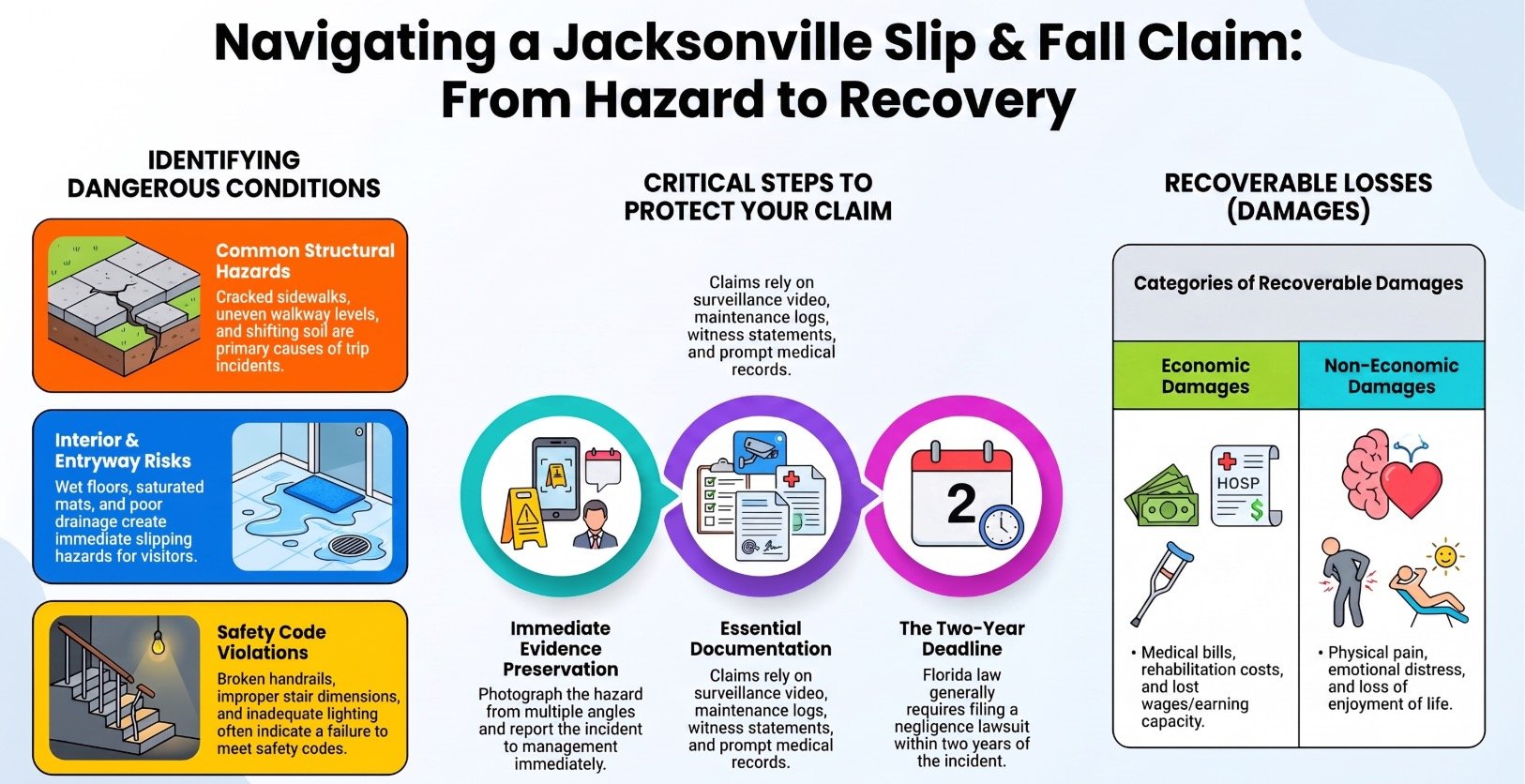
- Common hazards include cracked pavement, uneven surfaces, wet entryways, broken handrails, poor drainage, and code violations.
- Strong claims often require photos, surveillance video, incident reports, witness statements, and maintenance or repair records.
- Prompt medical care and accurate injury documentation help connect the dangerous condition to the fall and resulting harm.
- Liability may depend on proving the owner, landlord, contractor, or business knew or should have known about the hazard.
How We Can Help With Your Jacksonville Slip & Fall Walkways & Structures Injury Claim
After a fall on a walkway, stairway, ramp, balcony, parking structure, or other built surface, an injured person may face immediate medical needs and complex questions about legal responsibility. A Jacksonville slip and fall walkways and structures lawyer can provide steady guidance while protecting the person’s ability to seek fair compensation. The firm may coordinate medical documentation, identify responsible parties, communicate with insurers, and reduce burdens that distract from recovery and family obligations.
Early Evidence preservation is often crucial. Attorneys may seek photographs, maintenance records, incident reports, surveillance video, witness statements, and prior complaint histories before they are lost or altered. This careful work supports a Legal strategy grounded in facts, not assumptions.
Understanding Jacksonville Slip & Fall Walkways & Structures Injury Cases
A slip and fall involving a walkway or structure in Jacksonville may arise from unsafe construction, poor maintenance, inadequate warnings, or hazardous conditions that property owners failed to correct. These cases often require careful review of who controlled the property, what duties applied, and whether reasonable steps were taken to protect visitors, tenants, workers, or guests. Liability may involve businesses, homeowners associations, public entities, contractors, or landlords, depending on the location and the nature of the hazard.


Understanding Landlord Duties is especially important when an injury occurs at an apartment complex, rental home, or shared access area. A landlord may be responsible for keeping common areas reasonably safe, responding to reported defects, and addressing foreseeable risks. Negligent Maintenance can support a claim when records, inspections, or witness accounts show that needed repairs were ignored. Each case depends on the evidence, timing, notice, and whether the dangerous condition was preventable.
Common Causes of Jacksonville Slip & Fall Walkways & Structures
OUR CONSULTATIONSARE FREE
START YOUR FREE CASE REVIEW

Common causes of Jacksonville slip and fall incidents involving walkways and structures often include cracked sidewalk surfaces, uneven walkway levels, wet entryway floors, and broken stair railings. These hazards may create unsafe conditions for pedestrians, particularly when property owners fail to inspect, repair, or warn about known risks. Identifying the specific cause is crucial to evaluating liability, causation, and the extent of resulting injuries.
Cracked Sidewalk Surfaces
Cracked sidewalk surfaces can create serious slip, trip, and fall hazards when pedestrian pathways become uneven, unstable, or hard to navigate. In Jacksonville, heat, moisture, tree root pressure, poor installation, and gradual wear may cause concrete or brick surfaces to fracture. These defects can widen over time, especially when water enters masonry cracks and weakens the surrounding material. Property owners, managers, and maintenance teams serving the public should inspect sidewalks regularly, document visible damage, and respond before minor defects become dangerous conditions. Cracks may catch shoe soles, mobility aids, stroller wheels, or delivery equipment, creating trip hazards for residents, visitors, workers, and vulnerable pedestrians. Timely repair, clear warnings, and routine upkeep support safer access and help reduce preventable injuries near businesses, residences, public entrances, and shared community spaces.
Uneven Walkway Levels


When walkway sections rise, sink, or shift out of alignment, pedestrians may encounter abrupt height changes that create serious trip-and-fall hazards. These uneven levels often result from settling soil, tree root growth, poor installation, heavy use, or neglected maintenance around commercial properties, apartment complexes, public areas, and service entrances. In Jacksonville, owners and managers who welcome visitors must use reasonable care to inspect walking routes and address dangerous elevation changes. Failure to do so may support a premises liability claim when an injured person can show notice, causation, and preventable harm. However, courts may also consider comparative negligence if the pedestrian ignored visible conditions. Prompt repairs, warning markings, temporary barriers, and routine inspections reflect responsible stewardship and help protect those who rely on safe access.
Wet Entryway Floors
Uneven walkway levels are not the only access hazard that can expose property owners to liability, as wet entryway floors often create an immediate risk where pedestrians move from exterior surfaces into a building. Rain, tracked-in moisture, irrigation overspray, and spills can leave a Slippery threshold that visitors may not anticipate. Businesses, churches, medical offices, and community facilities should address these hazards promptly, especially when serving children, older adults, or individuals with mobility limitations. Wet floor mats may also become dangerous when saturated, curled, or poorly placed, because they can slide or conceal slick flooring beneath them. Reasonable safety measures include routine inspections, absorbent mats, warning signs, and timely cleanup. When these steps are neglected, a preventable fall may cause serious harm.
Broken Stair Railings
Although stairways may appear safe at a glance, broken stair railings can create a serious fall hazard for visitors who rely on them for balance, support, and safe movement between levels. In Jacksonville properties, loose brackets, splintered wood, corroded metal, or poor handrail installation may cause a railing to fail when assistance is needed most. Property owners, managers, and maintenance teams serve the public by inspecting stairways regularly and correcting defects before harm occurs. Safety code compliance also matters, because railings must meet height, strength, and continuity requirements designed to protect lawful visitors. When a railing gives way, a person may suffer fractures, head trauma, or other significant injuries. Legal review may determine whether negligent maintenance, delayed repairs, or improper construction contributed to the fall.
Don’t Wait. Call Our Florida Personal Injury Lawyers Now!
Legal Rights of Jacksonville Slip & Fall Walkways & Structures Injury Victims
After a fall on a walkway, stairway, ramp, deck, balcony, or other structure, an injured person in Jacksonville may have the right to seek compensation when unsafe property conditions contributed to the incident. These rights are shaped by Premises liability standards, which require property owners, occupiers, and managers to take reasonable care for lawful visitors. Negligence evidence rules may affect how photographs, maintenance records, witness statements, and inspection histories are used to support a claim.
Victims may pursue recovery for losses that affect health, work, and daily service to family or community, including:
- Medical treatment, rehabilitation, and future care needs
- Lost income, reduced earning ability, and related financial strain
- Pain, suffering, disability, and loss of normal life activities
Timely action helps preserve evidence and protect legal options. A Jacksonville injury lawyer may evaluate responsibility, communicate with insurers, and seek fair compensation through settlement or litigation when necessary.
Why Do Jacksonville Slip & Fall Walkways & Structures Injuries Happen?
Understanding a victim’s legal rights often begins with identifying why the fall occurred and whether reasonable care could have prevented the hazard. Walkways, stairs, ramps, balconies, decks, and entry areas can become dangerous when owners, managers, or maintenance providers fail to inspect and repair unsafe conditions. Environmental neglect may include standing water, algae growth, loose gravel, poor lighting, cracked pavement, uneven linkages, or debris that remains after storms or routine use. These conditions can place residents, visitors, customers, and workers at unnecessary risk.
Other incidents arise from building code issues, such as improper handrail height, inadequate stair dimensions, unstable guardrails, defective drainage, or surfaces that lack required slip resistance. Aging materials, rushed construction, insufficient maintenance budgets, and ignored complaints may also contribute. For service-minded communities, prevention depends on responsible stewardship, consistent oversight, and respect for the safety of every person who must use a walkway or structure.
What Should You Do After a Jacksonville Slip & Fall Walkways & Structures Injury?
After a slip and fall injury on a Jacksonville walkway or structure, the injured person should seek immediate medical care to address harm and create a clear record of the condition. Document the hazard with photographs, witness information, and notes about the location, lighting, surface condition, and surrounding circumstances. Also report the incident to the property owner, manager, or responsible authority, since timely notice can preserve important details for any later claim.
Seek Immediate Medical Care
Why is prompt medical care so important after a slip and fall on a Jacksonville walkway, stairway, ramp, deck, or other structure? Timely treatment protects the injured person’s health and supports an accurate injury assessment. Falls can cause fractures, head trauma, spinal strain, or internal injuries that may not be immediately obvious. Emergency response may be necessary when pain, dizziness, bleeding, confusion, or limited movement appears. Medical providers can evaluate symptoms, order appropriate tests, and recommend care that reduces the risk of worsening harm. Prompt attention also creates a clear medical record linking the injury to the incident, which may later assist a legal review. Those caring for an injured person should encourage evaluation, follow care instructions, and avoid assuming that apparent minor pain will resolve without treatment.
Document The Hazard
When safe, document the hazardous condition before repairing, removing, or altering it. Clear hazard photo evidence may show uneven pavement, loose handrails, poor lighting, wet flooring, broken steps, or obstructed walkways. Photographs should include close-up and wider views, with nearby landmarks to establish location and scale. If possible, the injured person or a trusted helper may preserve footwear, damaged clothing, or objects involved in the fall. Witness accounts can also be valuable, especially if bystanders observed the condition, the fall, or prior problems at the site. Gather names and contact information respectfully, without pressure. Careful documentation helps responsible parties, insurers, and legal counsel assess what occurred and whether preventable dangers went uncorrected.
Report The Incident
How should a slip and fall incident be reported once immediate safety and medical needs are addressed? The injured person, or a responsible witness, should notify the property owner, manager, supervisor, or security personnel as soon as possible. This report should identify the location, time, apparent cause, and any First responder care provided. When feasible, request a written incident report, review it for accuracy, and make a copy before leaving. If the hazard remains, ask staff to arrange immediate hazard control to protect others from harm. Record names and contact information for employees, witnesses, and responding personnel. Reporting should remain factual, calm, and limited to observed conditions. Prompt notice helps preserve records, encourages corrective action, and supports accountability for unsafe walkways or structures in Jacksonville.
Critical Evidence in a Jacksonville Slip & Fall Walkways & Structures Injury Case
Evidence in a Jacksonville slip and fall walkways and structures injury case can help establish how the hazard existed, who may have known about it, and whether reasonable safety measures were taken.
- Incident scene photos and surveillance video footage
- Maintenance and repair records
- Witness statements
These materials can clarify liability, preserve essential facts, and support a more complete evaluation of the injured person’s claim.
Incident Scene Photos
Although a fall may last only seconds, incident scene photos can preserve conditions that may otherwise be repaired, cleaned, altered, or disputed in a Jacksonville slip and fall walkways and structures injury case. Photographs may document uneven pavement, broken stairs, missing handrails, pooled water, debris, inadequate drainage, or damaged flooring. They may also show whether hazard signage was present, visible, blocked, or absent when warning was needed. Clear images from several angles can help explain distance, elevation changes, lighting conditions, and the surrounding layout. When possible, photos should optimize lighting without misrepresenting the scene. Time-stamped images, close-ups, and wider views may help attorneys, insurers, and courts evaluate notice, causation, and reasonable care. Such evidence helps protect injured persons while promoting safer property practices.
Surveillance Video Footage
In many walkway and structural fall cases, surveillance video can provide the clearest account of the hazard, the fall, and the events surrounding the incident. Cameras may capture lighting conditions, pedestrian traffic, warning signs, employee response, or how long a dangerous condition remained visible. A careful review of surveillance video may also show whether the injured person acted reasonably and whether staff or management had an opportunity to prevent harm. Because many systems overwrite recordings within days, prompt footage preservation steps are critical. Written requests should identify the date, time, location, and relevant camera angles. When available, video evidence can support a fair evaluation, encourage accountability, and help protect others from similar walkway or structural dangers on Jacksonville properties and in public areas after a serious fall.
Maintenance And Repair Records
When a fall involves a walkway, stairway, ramp, balcony, deck, parking surface, or other structure, maintenance and repair records can help show what the property owner or manager knew before the incident. These materials may include inspection logs, work orders, contractor invoices, emails, photographs, and internal reports addressing prior defects or needed corrections. In a Jacksonville slip and fall case, property documentation can show whether responsible parties identified loose boards, uneven pavement, broken handrails, poor drainage, or deteriorated stairs but delayed meaningful action. A repair history may also reveal repeated complaints, temporary fixes, or patterns of neglect that placed visitors, tenants, employees, or customers at risk. Careful review of these records allows a lawyer to assess notice, responsibility, and whether reasonable care was exercised.
Witness Statements
Maintenance and repair records often show what should have been done before a fall, while witness statements can explain what was actually seen, heard, or reported at the scene. In Jacksonville walkway and structure injury cases, witnesses may describe lighting, surface conditions, warnings, prior complaints, or the conduct of employees and visitors. Their observations can help clarify timing, notice, and whether reasonable care was provided to protect the public.
Witness credibility is evaluated through consistency, opportunity to observe, neutrality, and whether the account is supported by photographs, reports, or other evidence. Promptly recording witness statements helps preserve details before memories fade or outside influences arise. Accurate statements can serve injured persons, property owners, insurers, and courts by promoting fair review, responsible decision-making, and a clearer understanding of the incident.
Long-Term Effects of Jacksonville Slip & Fall Walkways & Structures Injuries
Jacksonville slip and fall injuries involving walkways and structures may lead to lasting complications, including chronic pain that limits daily function. Some injured individuals experience reduced mobility and balance, which can affect independence, work capacity, and future medical needs. Emotional recovery challenges may also arise, particularly when pain, physical restrictions, and uncertainty disrupt normal routines.
Chronic Pain Complications
Chronic pain often becomes one of the most disruptive long-term effects of slip and fall injuries on walkways and structures, particularly when trauma involves the back, neck, hips, knees, or shoulders. Persistent discomfort may continue after visible wounds recover, affecting sleep, concentration, work capacity, and the ability to serve family or community responsibilities. Effective care often requires medication management, coordinated rehabilitation planning, and consistent medical follow-up to evaluate symptoms over time. Accurate injury documentation can help connect ongoing chronic pain to the original fall, especially when diagnostic findings, treatment records, and provider observations are preserved. These complications may require long-term support, careful legal evaluation, and evidence showing how pain limits daily function, creates future care needs, and alters a person’s overall quality of life.
Mobility And Balance Loss
After a serious fall, mobility and balance loss can develop from injuries to the spine, hips, knees, ankles, or neurological system, creating lasting limitations that affect walking, standing, and ordinary movement. Falls and injuries involving uneven walkways, stairs, ramps, or damaged structures may leave a person dependent on braces, canes, walkers, or supervised assistance. These changes affect balance and mobility in homes, workplaces, medical settings, and community spaces where safe movement is critical. Common causes of gait instability include nerve damage, joint weakness, vestibular disruption, and pain-related guarding. When wheelchair access hazards, narrow routes, broken thresholds, or unsafe ramps remain uncorrected, recovery and independence may decline further. Careful evaluation helps identify functional losses, future care needs, and safety modifications that support dignified daily living.
Emotional Recovery Challenges
Physical limits from a serious walkway or structure-related fall often place significant strain on emotional recovery as well. Injured individuals may face isolation, lost independence, disrupted work, and uncertainty about their recovery timeline. These pressures can contribute to mental anguish, anxiety, depression, or fear of falling again, especially when daily routines once centered on helping family, coworkers, or community members.
Emotional damages may be considered when the psychological effects are connected to the injury and supported by medical or counseling records. However, Compensation limits, insurance disputes, and evidence requirements can affect how these harms are evaluated. A careful legal review may help identify the full impact of the fall, including emotional suffering that may not be visible but still affects long-term recovery and service.
Proving Liability in Jacksonville Slip & Fall Walkways & Structures Injury Cases
To establish liability in a Jacksonville slip and fall case involving walkways or structures, the injured person must show that a dangerous condition existed and that the responsible party knew, or should have known, about it before the injury occurred. Evidence may include inspection records, maintenance logs, photographs, witness statements, building code issues, or prior complaints about the same hazard. Defendant Notice is often central, because liability may depend on proving actual awareness or constructive awareness through the condition’s duration or obvious nature.
The injured person must also satisfy Causation Standards by connecting the unsafe walkway, ramp, stairway, deck, or structural defect directly to the fall and resulting harm. This requires careful documentation of how the incident happened and why ordinary caution would not have prevented it. A thorough liability analysis supports accountability, encourages safer premises, and helps protect others from preventable injuries in Jacksonville public and private spaces.
Dealing With Insurance Companies After a Jacksonville Slip & Fall Walkways & Structures Injury
In the days following a Jacksonville slip and fall involving a walkway, stairway, ramp, deck, or other structure, insurance companies often begin gathering information that may affect the injured person’s claim. Adjusters may request recorded statements, photographs, incident details, prior health history, or broad medical authorizations. Approach these requests carefully, because incomplete or imprecise answers may be used to question the injury, the cause of the fall, or the extent of damages.
A careful response helps protect the injured person while allowing legitimate claim review. Accurate medical documentation is especially important because treatment records connect the structural hazard to diagnosed injuries and ongoing limitations. Consistent reporting to healthcare providers, preserved bills, and written work restrictions can strengthen the presentation of harm. The Claim timeline also matters, since delayed reporting or missed communication may create disputes. A Jacksonville attorney can manage insurer contact, reduce pressure on the injured person, and promote a fair, orderly evaluation.
Don’t Wait. Call Our Florida Personal Injury Lawyers Now!
What to Expect During a Jacksonville Slip & Fall Walkways & Structures Injury Claim Process
A Jacksonville slip and fall walkways and structures injury claim typically begins with an initial case evaluation, where we assess liability, damages, and available legal options. The process then moves through evidence collection steps, including documentation of the hazard, medical records, witness statements, and property maintenance information. If settlement negotiations do not resolve the claim, litigation and trial may become necessary to pursue appropriate compensation.
Initial Case Evaluation
When a walkway or structural defect causes a fall in Jacksonville, the initial case evaluation focuses on determining how the incident happened, who controlled the property, and whether unsafe conditions contributed to the injury. During Client intake, the lawyer reviews the injured person’s account, medical concerns, location details, and potential notice issues involving owners, managers, contractors, or maintenance providers. This early review helps identify whether the claim may involve negligent inspection, poor repairs, code violations, or failure to warn visitors.
Injury timeline mapping also connects the fall, symptoms, treatment, work limitations, and daily-life disruptions. This process supports a careful assessment of damages and responsibility, while helping the legal team guide the injured person with dignity, order, and service-centered attention throughout the claim.
Evidence Collection Steps
After the initial case evaluation, evidence collection begins with a focused effort to preserve proof before conditions change or records become difficult to obtain. Investigators may document the walkway or structure, measure hazards, identify lighting issues, and secure maintenance records. Photo preservation is often essential, as images of broken pavement, wet surfaces, loose railings, or uneven stairs can clarify the danger that caused harm. You may also gather witness information, incident reports, medical records, and footwear details to support a complete claim file. A Digital footprint can also help, including surveillance video, time-stamped photographs, repair logs, or communications about prior complaints. Careful collection allows legal counsel to serve the injured person with diligence, protect the truth, and evaluate responsibility under Florida premises liability standards.
Settlement Negotiation Process
Once the evidence is organized and liability is assessed, settlement negotiations typically begin with a demand package that presents the injured person’s damages, supporting proof, and legal basis for recovery. This package may include medical records, wage loss documentation, photographs, incident reports, and statements showing how the unsafe walkway or structure caused harm. The insurer reviews the submission, assigns value, and may respond with questions, delays, or a reduced offer. Careful advocacy helps identify insurer tactics that minimize responsibility or pressure a claimant before treatment is complete. Negotiations often involve several exchanges, guided by injury severity, available coverage, comparative fault concerns, and claim timelines. A fair resolution should account for present losses, future care, and the dignity owed to the injured person.
Litigation And Trial
If settlement negotiations do not produce a fair resolution, litigation may become necessary to move the claim forward through the court system. During this stage, counsel files the complaint, serves the responsible parties, and develops evidence through discovery. Witness testimony, maintenance records, inspection practices, and expert opinions may clarify how the walkway or structure became unsafe. Comparative fault analysis may also shape the case, as defendants often argue that the injured person failed to exercise reasonable care. When conduct shows reckless disregard for public safety, courts may consider punitive damages. Trial preparation requires organization, patience, and respect for the court’s role. By presenting credible evidence with care, the process seeks accountability while supporting injured individuals and the broader duty to protect others.
Compensation for Jacksonville Slip & Fall Walkways & Structures Injury Damages
In a Jacksonville slip and fall case involving walkways or structures, compensation may reflect the full scope of harm caused by an unsafe condition, including medical expenses, lost income, reduced earning capacity, pain and suffering, and long-term physical limitations. When an injured person faces disrupted employment, ongoing treatment, or daily functional challenges, a careful claim presentation helps connect those losses to the property hazard.
A lawyer may help preserve evidence, such as photographs, incident reports, maintenance records, and witness information, before details disappear. This work supports a fair assessment of the injury’s impact and the property owner’s or manager’s responsibility. During insurance negotiation, counsel may address disputed liability, inadequate settlement offers, and attempts to minimize medical findings. The goal is to pursue compensation that supports recovery, stability, and dignity, while recognizing the injured person’s need for practical resources after a preventable walkway or structural fall in Jacksonville.
Economic vs Non-Economic Damages in Jacksonville Slip & Fall Walkways & Structures Cases
In Jacksonville slip and fall cases involving walkways and structures, courts generally evaluate damages as either economic or non-economic. Economic damages reflect measurable financial harm, while non-economic damages address the personal impact of pain, suffering, and diminished quality of life. Proving the value of each category requires clear evidence, careful documentation, and a reasoned connection between the hazardous condition and the resulting injuries.
Economic Damages Explained
After a slip and fall on a walkway, stairway, ramp, balcony, or other structure in Jacksonville, economic damages refer to the measurable financial losses tied to the injury. These losses often include emergency care, hospitalization, surgery, rehabilitation, medication, assistive devices, and follow-up treatment. Medical documentation is critical because it links each expense to the incident and supports the claim’s value. Economic damages may also include wage loss when an injured person cannot work during recovery, serve clients, or fulfill professional duties. If lasting limitations reduce earning capacity, you may evaluate future earnings through employment records, tax history, and vocational evidence. Property-related costs, transportation for treatment, and necessary household assistance may also qualify when properly supported by receipts, records, and reliable proof for claim review.
Non-Economic Damages Explained
While economic damages ensure measurable financial losses, non-economic damages account for the personal harm that cannot be captured through receipts, invoices, or wage records. In Jacksonville slip and fall cases involving walkways and structures, these losses may include physical pain, emotional distress, loss of enjoyment of life, inconvenience, and the strain placed on family relationships. Such harm often reflects how an injury changes daily responsibilities, community involvement, and the ability to serve or care for others. Non-economic damages are distinct from punitive damages, which are reserved for misconduct involving intentional wrongdoing or gross negligence. They may also be affected by comparative negligence if the injured person shares responsibility for the fall. Careful evaluation is necessary to ensure the claim recognizes these deeply personal consequences.
Proving Damage Value
Every damage claim requires reliable evidence connecting the fall, the injury, and the resulting losses. In Jacksonville walkway and structure cases, economic damages may include medical bills, therapy costs, lost wages, and reduced earning ability. Non-economic damages address pain, limitations, distress, and loss of normal activities. Medical documentation helps establish diagnosis, treatment needs, recovery limits, and future care expectations. Attorneys may also review employment records, expert opinions, photographs, incident reports, and witness statements to measure the full impact. Proof of causation remains central, because the evidence must show that unsafe conditions produced the injury, rather than an unrelated event. Careful valuation supports fair recovery, while also respecting the responsibility to present truthful claims that serve justice and community safety.
When a Jacksonville Slip & Fall Walkways & Structures Injury Case Goes to Trial vs Settlement
When a Jacksonville slip and fall case involving walkways or structures cannot be resolved through negotiation, the injured person’s claim may proceed toward trial, where liability, damages, and the credibility of the evidence are tested before a judge or jury. Settlement often occurs when both sides recognize the strength of liability evidence and the likely value of the harm suffered. Trial may become necessary when responsibility is disputed, the injury impact is minimized, or the offer does not fairly address medical needs, lost income, and lasting limitations.
A careful trial strategy helps present the condition of the walkway or structure, witness accounts, maintenance records, photographs, expert opinions, and medical proof in a clear sequence. For those committed to serving injured neighbors and protecting community safety, the goal is not conflict for its own sake, but accountability. Whether resolved by settlement or verdict, the case should reflect the evidence, the losses, and the need for fair repair.
Florida Laws That May Affect Your Jacksonville Slip & Fall Walkways & Structures Case
The decision to settle or try a Jacksonville slip and fall walkways and structures case depends not only on the evidence, but also on Florida laws governing liability, fault, deadlines, and damages. These rules help determine whether an injured person may recover compensation after a fall on stairs, ramps, sidewalks, platforms, or other structural areas.
- Premises liability standards require proof that a property owner, manager, or responsible party failed to use reasonable care to maintain the property or warn of a dangerous condition.
- Comparative negligence rules may reduce compensation if the injured person is found partly responsible for the fall, such as by ignoring visible hazards.
- Florida law may also affect what losses are recoverable, including medical expenses, lost income, and pain-related damages.
Careful legal evaluation helps advocates protect injured people while promoting accountability, safer spaces, and responsible stewardship of public property.
The Statute of Limitations for Jacksonville Slip & Fall Walkways & Structures Injury Cases
Although liability and damages are central to a Jacksonville slip and fall walkways and structures case, the statute of limitations can determine whether the claim may be pursued at all. In Florida, an injured person generally has two years from the incident to file a negligence lawsuit. Missing this deadline may bar recovery, regardless of the seriousness of the harm or the strength of the evidence.
Certain circumstances may affect timing. Claims involving government property, public walkways, or municipal structures may involve notice requirements that arise before a lawsuit is filed. These deadlines can be shorter and demand careful attention from those seeking accountability and community safety.
The time limit also interacts with Comparative fault, because evidence about responsibility often becomes harder to preserve as time passes. Prompt documentation of conditions, witnesses, medical care, and maintenance records supports a clearer evaluation of the claim within the required legal period for fair resolution.
How a Jacksonville Slip & Fall Walkways & Structures Lawyer Can Help You
After the filing deadline is considered, legal guidance can help determine what steps are needed to protect a Jacksonville slip and fall walkways and structures claim. A lawyer may evaluate unsafe surfaces, broken stairs, missing railings, poor lighting, or code violations to identify responsible parties and support a well-documented demand.
Legal guidance can identify hazards, determine responsibility, and help protect a Jacksonville slip and fall claim.
- Reviewing incident reports, maintenance records, inspection logs, and witness statements to strengthen evidence preservation.
- Examining medical records, work limitations, and future care needs to present the full scope of harm.
- Addressing Comparative negligence arguments when a property owner claims the injured person failed to use reasonable care.
For individuals focused on serving family, coworkers, and the community, a serious injury can disrupt daily responsibilities and financial stability. Legal counsel can communicate with insurers, organize proof, calculate losses, and pursue fair compensation through negotiation or litigation. This support allows the injured person to focus on recovery while the claim is managed with discipline and care.
Don’t Wait. Call Our Florida Personal Injury Lawyers Now!
When to Contact a Jacksonville Slip & Fall Walkways & Structures Lawyer
Immediately following a fall on a walkway, stairway, ramp, deck, balcony, or similar structure, injured individuals should consider contacting a Jacksonville slip and fall walkways and structures lawyer, especially when pain, medical treatment, or unsafe property conditions are involved. Early contact may help preserve important details before evidence changes, repairs occur, or witnesses become unavailable.
You may want to contact a lawyer if you see signs of negligence, such as broken handrails, loose flooring, poor lighting, uneven surfaces, missing warnings, code violations, or neglected maintenance. Legal guidance may also be appropriate when an injured person is unsure who controlled the property, whether an incident report was completed, or how to respond to insurers.
Immediate legal advice can help individuals understand deadlines, protect their interests, and make informed decisions while focusing on recovery. For those committed to caring for family, coworkers, or community members, timely action may support accountability and safer conditions for others.
Why You Need an Experienced Jacksonville Slip & Fall Walkways & Structures Lawyer
Proving liability after a fall on a walkway, stairway, ramp, deck, or balcony often requires more than showing that an injury occurred. An experienced Jacksonville slip and fall lawyer can examine whether unsafe design, poor maintenance, missing warnings, code violations, or prior complaints contributed to the hazard. This careful review supports proving negligence, which may require evidence that a property owner knew, or should have known, about the dangerous condition.
Legal guidance also helps protect the injured person from delays and avoidable mistakes. A lawyer can preserve photographs, inspection records, incident reports, witness statements, and repair documentation before they are lost or changed. Proper management of the case timeline is important because deadlines, medical treatment, insurance communications, and settlement negotiations can affect the outcome.
For individuals focused on restoring stability for themselves and those who depend on them, experienced representation can provide structure, accountability, and informed direction throughout the claim.
How to Choose the Right Jacksonville Slip & Fall Walkways & Structures Lawyer for Your Case
Selecting the right Jacksonville slip and fall walkways and structures lawyer requires careful attention to experience, case strategy, and familiarity with premises liability claims involving built environments. A suitable attorney should understand how defective stairs, uneven pavement, broken handrails, poor lighting, and unsafe entryways contribute to preventable injuries. This knowledge supports focused investigation and responsible advocacy for injured individuals seeking fair accountability.
Prospective clients may benefit from reviewing a lawyer’s history with similar claims, approach to expert analysis, and ability to explain legal options with care. Client communication clarity is important, especially when injured people must make decisions while managing medical treatment, lost income, and family obligations. A qualified lawyer should also offer evidence-preservation tips, including photographing hazards, reporting the incident, saving footwear, and identifying witnesses. Careful selection helps guarantee the case is handled with diligence, respect for the injured person’s needs, and commitment to community safety.
About The Law Offices of Anidjar & Levine
For individuals injured in slip-and-fall incidents involving walkways, stairs, ramps, entryways, or other structural hazards, The Law Offices of Anidjar & Levine provides legal representation focused on premises liability and injury recovery. The firm helps clients evaluate unsafe property conditions, identify responsible parties, and pursue compensation for medical costs, lost income, pain, and related losses.
Its attorneys approach each case with careful attention to Premises liability basics, including notice, duty of care, hazard correction, and causation. They may also review local ordinances when walkway design, maintenance standards, lighting, railings, or accessibility requirements may affect liability.
The firm’s work reflects a service-oriented commitment to injured clients who need guidance during difficult circumstances. Through investigation, communication with insurers, and preparation for settlement or litigation, The Law Offices of Anidjar & Levine seeks to protect clients’ rights while supporting a fair path toward recovery in Jacksonville cases.
Frequently Asked Questions
Can Tourists File Jacksonville Walkway Slip and Fall Claims?
Yes, tourists may file Jacksonville walkway slip and fall claims when unsafe conditions cause injury. A visitor can pursue a premises liability claim against a business, property owner, or, in limited cases, a public entity. Claims involving government-maintained walkways may require strict notice compliance and consideration of sovereign immunity. Prompt documentation, medical care, and witness information help preserve facts, allowing you to identify responsible parties and enforce community safety obligations.
Are Public Sidewalks Treated Differently Than Private Walkways?
Yes, public sidewalks are generally treated differently than private walkways. Claims involving public sidewalks often require proof of governmental responsibility, statutory compliance, and prior notice of the hazard. Private walkway claims usually focus on the property owner’s maintenance duties and inspection practices. Comparative negligence may reduce recovery if the injured person failed to use reasonable care. Careful service to injured visitors requires timely evidence, accurate reporting, and disciplined legal evaluation.
Do Building Code Violations Strengthen Walkway Injury Claims?
Yes. Building code violations can strengthen walkway injury claims by providing building code evidence that a hazardous condition failed to meet required safety standards. When a violated code was designed to protect pedestrians from the type of harm suffered, it may support a negligence per se claim. This helps establish duty and breach, though causation, notice, and damages still matter. Careful documentation serves injured people by preserving proof and promoting safer premises.
Can Poor Lighting Make a Property Owner Liable?
Yes, poor lighting can support property owner liability when it creates an unreasonable hazard, and the owner knew or should have known about it. Dim stairwells, shadowed walkways, or burned-out exterior lights may indicate inadequate maintenance. Liability may also arise from negligent supervision if staff ignored unsafe conditions. For those committed to serving others, prompt inspections, repairs, and warnings help protect visitors and reduce preventable harm.
What if I Fell on Stairs Without Handrails?
A fall on stairs without handrails may indicate unsafe premises, especially where codes, design standards, or foreseeable use required railings. Liability depends on whether the owner knew, or should have known, about the hazard and failed to correct it. Comparative negligence may reduce recovery if the injured person was careless. Evidence preservation, including photos, incident reports, measurements, and witness information, helps responsible advocates evaluate fault and pursue accountability.
—————————
A Jacksonville slip and fall on a walkway or structure can lead to serious medical, financial, and legal concerns. These claims often require a careful investigation, evidence of hazardous conditions, and a clear demonstration of liability. The Law Offices of Anidjar and Levine help injured clients understand their legal options and pursue compensation through a structured process. With experienced guidance from a Jacksonville Personal Injury Lawyer, victims can protect their rights, address insurance challenges, and build a claim based on evidence and accountability.