The Law Offices of Anidjar and Levine helps failure-to-yield accident victims protect their rights, prove liability, and pursue compensation from negligent drivers and insurers.
Our team gathers police reports, witness statements, medical records, employment documentation, crash-scene evidence, traffic camera footage, and proof of vehicle damage.
We also handle insurer communications, challenge undervalued claims, and prepare for litigation when fair settlement offers don’t come.
If you were injured, a Gainesville Car Accident Lawyer can explain your options and what steps may strengthen your claim.
Main Takeaways
- A Gainesville failure-to-yield injury lawyer can protect your rights and pursue compensation from the at-fault driver or other liable parties.
- Key evidence may include police reports, witness statements, medical records, traffic camera footage, crash-scene photos, and vehicle damage documentation.
- Liability often depends on right-of-way rules, driver attention, traffic signals, intersection layout, roadway conditions, and vehicle timing.
- Compensation may cover emergency care, surgery, therapy, lost income, reduced earning capacity, pain, emotional distress, and future treatment.
- An attorney can handle insurers, challenge undervalued claims, respond to bad-faith tactics, and prepare for litigation if needed.


How We Can Help With Your Gainesville Failure To Yield Accident Injury Claim
After a failure-to-yield accident, we can help you protect your rights, document your losses, and pursue compensation from the driver or other parties responsible for your injuries. We listen to your concerns, identify urgent needs, and guide each step with disciplined attention to detail. Our team gathers police reports, witness statements, medical records, employment documentation, and evidence from the crash scene to support your claim.
We communicate with insurers, challenge incomplete evaluations, and respond to Insurance Bad Faith tactics when carriers delay, deny, or undervalue valid claims. If negotiations do not produce fair results, we prepare your case for litigation with the same focus we bring to settlement discussions.
When families lose a loved one, we handle Wrongful Death claims with respect, diligence, and a service-centered approach. We seek accountability while helping you pursue financial recovery for medical expenses, lost income, funeral costs, pain, and other legally recognized damages.
OUR CONSULTATIONSARE FREE
START YOUR FREE CASE REVIEW

Understanding Gainesville Failure To Yield Accident Injury Cases
When a driver fails to yield in Gainesville, the resulting crash often turns on right-of-way rules, driver attention, roadway conditions, and the timing of each vehicle’s movement. We help you understand how these cases are evaluated, so you can make informed choices while focusing on recovery and service to your family and community.
Right-of-way rules determine who should proceed, stop, turn, or wait in specific traffic situations. We examine police reports, witness statements, vehicle damage, intersection layouts, traffic signals, and available video footage to identify evidence of liability. This evidence helps show whether another driver breached a duty of care and caused your injuries.
We also consider medical records, missed work, pain levels, and future care needs. By organizing the facts with discipline and compassion, we build a claim that reflects your losses and supports your path forward. Our goal is to protect your rights while guiding you with steady, practical counsel.
Common Causes of Gainesville Failure To Yield Accident
We often see Gainesville failure-to-yield accidents occur when drivers allow distractions, traffic signals, or rushed decisions to override basic roadway duties. You may face serious harm when another driver ignores a red light, makes an unsafe left turn, or misjudges who has the right of way. We’ll examine these common causes so you can better understand how negligence may have contributed to your accident.
Distracted Driving
Distracted driving often causes failure-to-yield accidents in Gainesville because a driver who looks away from the road, even briefly, can miss traffic signals, stop signs, crosswalks, or oncoming vehicles with the right of way. We see how texting while driving, adjusting navigation, eating, or speaking with passengers can divide attention at the exact moment careful judgment matters most. When drivers fail to notice pedestrians, cyclists, or approaching vehicles, they create preventable risks for people who depend on shared roads.
We help you understand how distracted driving may support your injury claim by examining phone records, witness statements, crash reports, and available video. By identifying careless conduct, we work to protect your rights, promote accountability, and support safer choices throughout our Gainesville community.
Ignoring Traffic Signals
Although traffic signals exist to control the flow of vehicles, pedestrians, and cyclists, drivers who ignore them can cause serious failure-to-yield accidents in Gainesville. When a driver runs a red light, proceeds through a steady yellow without caution, or disregards a pedestrian signal, others who are lawfully using the road may have little time to react.
We often see signal violations create intersection confusion, especially when multiple lanes, turn arrows, and crosswalks require careful attention. These choices place families, students, workers, and community volunteers at unnecessary risk while they travel to serve others. If you were injured because another driver ignored a traffic signal, we can examine the crash report, witness statements, camera footage, and roadway conditions to help determine fault.
Unsafe Left Turns
Unsafe left turns lead to many failure-to-yield accidents in Gainesville, especially at busy intersections where drivers must judge oncoming traffic, pedestrians, cyclists, and changing signals simultaneously. We often see these crashes when a driver turns too quickly, focuses only on vehicles, or enters a crosswalk without carefully checking for people nearby.
As advocates for safer roads, we believe pedestrian safety depends on patient, attentive turning behavior and clear awareness of every travel lane. A left-turning driver may also collide with vehicles in the right lane, particularly when traffic patterns shift near driveways, campuses, or shopping areas. When these preventable collisions harm you or someone you serve, we examine signal timing, visibility, lane position, and driver conduct to identify accountability.
Misjudging Right Of Way
At Gainesville intersections and access points, drivers often misjudge the right of way when they rely on assumptions rather than confirming who may lawfully proceed. We see this happen when motorists wave others through, hesitate at four-way stops, or enter traffic after believing another driver will yield. Right of way confusion can place you, your family, or someone you serve in immediate danger, especially when vehicles, cyclists, and pedestrians converge.
Intersection misjudgment also occurs near schools, hospitals, churches, and shopping areas, where careful attention is especially important to protect the community. We examine traffic signals, signage, lane position, witness accounts, and timing to determine how the error occurred. When another driver’s poor judgment causes harm, we help you pursue accountability with clear evidence and a focused legal strategy.


Legal Rights of Gainesville Failure To Yield Accident Injury, Victims
When a driver fails to yield in Gainesville, injured victims have the right to pursue compensation for the harm caused by that violation of traffic law. We help you understand these rights clearly, so you can protect your interests, your family, and your ability to serve others.
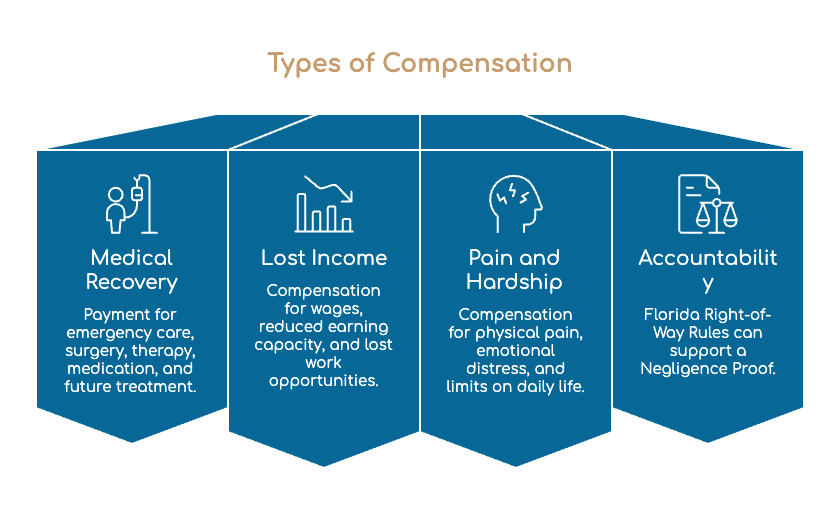
Injured victims can pursue compensation and protect their future after a Gainesville failure-to-yield crash.
- Medical recovery: You may seek payment for emergency care, surgery, therapy, medication, and future treatment tied to the collision.
- Lost income: We can pursue compensation for wages, reduced earning capacity, and lost work opportunities resulting from your injuries.
- Pain and hardship: Compensation may address physical pain, emotional distress, and limits on daily life.
- Accountability: Florida Right-of-Way Rules can support a Negligence Proof when another driver’s failure to yield caused the crash.
We also help preserve evidence, communicate with insurers, and evaluate settlement offers. You should not carry the burden alone when another driver’s unlawful conduct changed your life and duties.
Why Do Gainesville Failure To Yield Accident Injuries Happen?
Because failure-to-yield crashes often develop in seconds, Gainesville drivers can cause serious injuries by making one poor judgment call at an intersection, driveway, crosswalk, or merge point. We often see these collisions arise when a driver misjudges another vehicle’s speed, overlooks a cyclist, or assumes a pedestrian will stop. Weather impacts, including heavy rain and glare, can reduce visibility and make safe gaps harder to judge.
We also recognize how road design can contribute to risk. Limited sight lines, confusing lane markings, poorly timed signals, and heavy campus-area traffic can pressure drivers into unsafe decisions.
Pedestrian behavior may also affect how a crash occurs, especially when people cross unexpectedly or move through crowded areas with limited attention. In some cases, vehicle mechanical failure, such as worn brakes or defective lights, prevents a driver from yielding safely. By understanding these causes, we can better serve injured people and promote accountability.
What Should You Do After a Gainesville Failure To Yield Accident Injury?
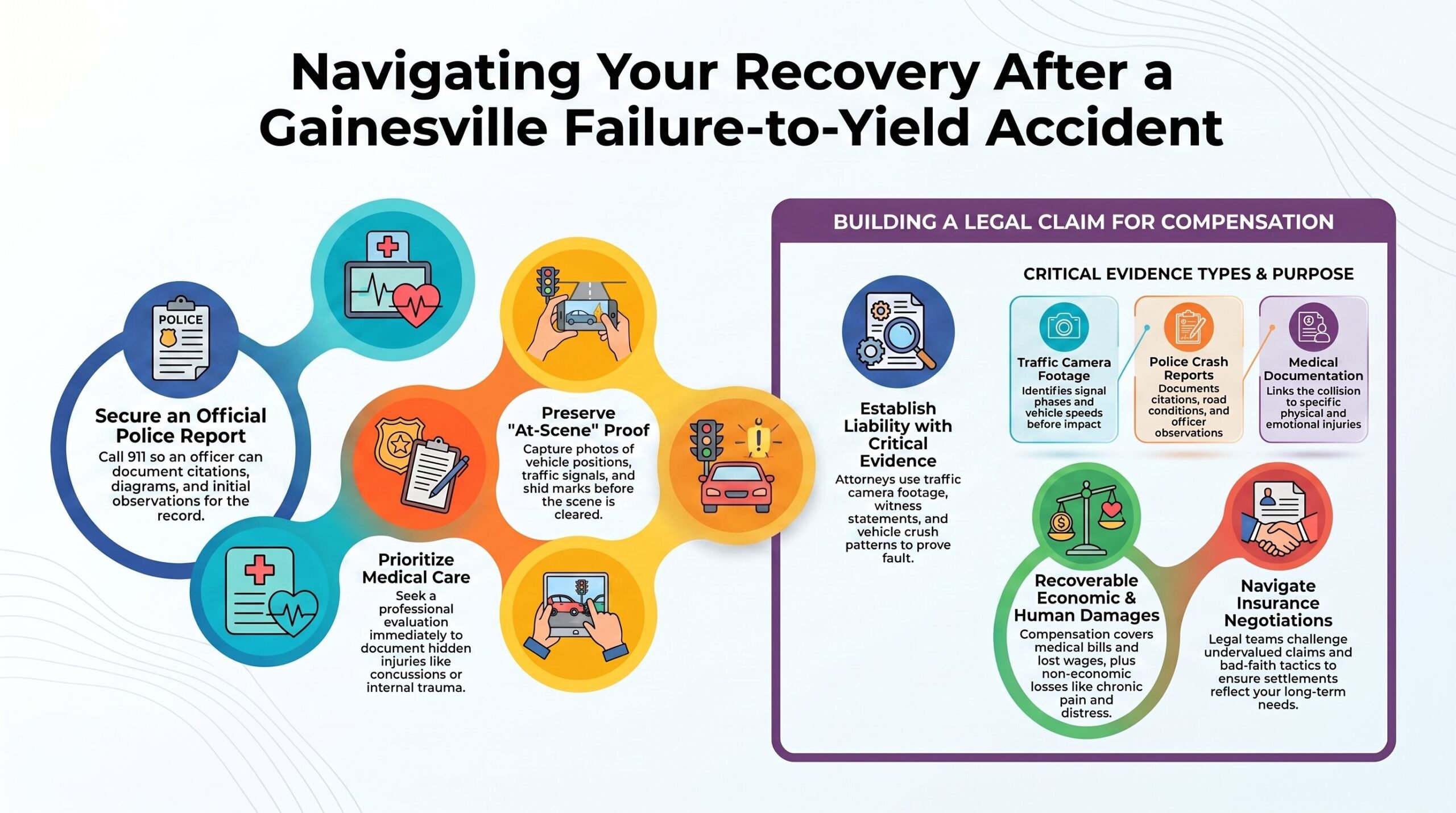
After a Gainesville failure to yield accident, we encourage you to protect your health, your legal rights, and the evidence that may support your claim. You should seek medical attention promptly, report the crash to the proper authorities, and preserve accident evidence whenever possible. These steps can help us evaluate fault, document your injuries, and pursue the compensation you may be entitled to recover.
Seek Medical Attention
Even if your injuries seem minor, you should seek medical attention promptly after a Gainesville failure to yield accident. People often want to return to work, family, or service commitments, but delayed symptoms can threaten your health and ability to help others. A medical professional can identify concussions, soft tissue injuries, internal trauma, and worsening pain before complications develop.
We also encourage you to follow treatment plans, attend referrals, and keep records of diagnoses, medications, therapy, and restrictions. These steps protect your recovery and clarify how the crash affected your daily responsibilities. If injuries may limit long-term function, early chronic disability planning can guide practical decisions. We also value mental health support, because trauma, anxiety, and sleep disruption need timely care.
Report The Crash
Once you’ve addressed immediate medical needs, you should report the crash to law enforcement as soon as possible. We recommend calling 911 at the scene, especially when anyone is injured, traffic is blocked, or a driver appears impaired. A responding officer can document crucial facts, identify involved drivers, and create an official crash report. That report often helps protect your rights when insurers later question fault or the seriousness of your injuries.
If a loved one died, prompt reporting may also support Wrongful death claims by establishing an early, reliable record. We should give officers accurate information, but we don’t need to admit fault or speculate. Reporting the collision also supports evidence preservation by helping establish the time, location, and parties involved for future review.
Preserve Accident Evidence
While the details are still fresh, we should preserve every piece of evidence that may help prove how the failure to yield caused the crash. We can start by photographing vehicle positions, traffic signals, skid marks, debris, injuries, and road conditions. Strong photo documentation tips include capturing wide views, close details, and multiple angles before anything changes.
We should also secure contact information for witnesses, including names, phone numbers, and brief statements, when people are willing to help. If nearby businesses, homes, or traffic cameras may have footage, we should promptly note their locations. Keep damaged property, medical records, repair estimates, and all correspondence organized. By protecting evidence early, we help your legal team build a clear, reliable claim focused on accountability and recovery.
Critical Evidence in a Gainesville Failure To Yield Accident Injury Case
We evaluate failure-to-yield claims by identifying evidence of fault, timing, and the force of impact. Key evidence may include: 1. police crash reports, 2. traffic camera footage, 3. witness statements, and 4. vehicle damage evidence. We use these materials to help you establish liability, challenge disputed accounts, and support the full value of your injury claim.
Police Crash Reports
After a failure-to-yield crash in Gainesville, the police crash report often becomes one of the first critical documents we review. It identifies the drivers, vehicles, witnesses, location, and responding officer’s initial observations. We examine it closely for citations, diagrams, statements, road conditions, and any evidence of traffic signals. These details help us understand how the crash occurred and whether another driver failed to yield.
We also look for references to intersection visibility issues, obstructed signs, lane markings, or confusing traffic patterns. When you serve others by seeking accountability, this report can support a clear, organized claim. We use it as a starting point, not a final answer, and compare it with medical records, witness accounts, and physical evidence.
Traffic Camera Footage
When a failure-to-yield crash happens at a busy Gainesville intersection, traffic camera footage can provide powerful evidence of what drivers did in the seconds before impact. We use this footage to identify signal phases, vehicle positions, speeds, lane choices, and whether a driver ignored a legal duty to yield. Because public systems may overwrite recordings quickly, we act promptly to request and preserve available video.
We also examine traffic camera authenticity, including timestamps, source records, and the chain of custody, so the footage can reliably support your claim. If the defense disputes fault, clear video may resolve questions that reports alone cannot answer. We prepare the evidence for admission in court, helping you pursue accountability while protecting the dignity and needs of those injured.
Witness Statements
Because memories can fade quickly, witness statements often become pivotal in a Gainesville failure-to-yield accident injury case. We look for people who saw the drivers’ actions, traffic conditions, signals, and timing before impact. Their accounts can help us understand whether a driver ignored the right of way or failed to act safely.
We also evaluate Eyewitness reliability with care. A helpful witness should describe what they personally observed, not what they assumed. We consider location, visibility, distractions, and consistency across reports. Statement timelines matter because early statements often preserve details that later become uncertain. When you serve others by seeking accountability, timely witness information can support a fair claim. We work to gather, review, and present these statements so your case reflects the clearest available evidence.
Vehicle Damage Evidence
Although photos and repair records can’t tell the entire story alone, vehicle damage evidence can strongly show how a failure-to-yield collision occurred. We review crush patterns, impact points, paint transfer, airbag deployment, and repair estimates to connect the damage with the traffic movements involved. When you’re helping protect an injured person’s rights, these details can support a clear, service-focused presentation of the facts.
We also use vehicle damage evidence as documentation in insurance disputes when an insurer questions liability or minimizes the severity of the impact. It can help explain lane position, angle of travel, and whether another driver entered the roadway unsafely. This information also supports how to calculate fault percentage, especially when both drivers’ actions are examined under Florida’s comparative fault rules in a disputed Gainesville claim.
Long-Term Effects of Gainesville Failure To Yield Accident Injuries
We help you understand how a failure to yield accident can cause long-term harm, including chronic pain, reduced mobility, and emotional trauma. These effects can interfere with your work, daily routines, and overall quality of life, even after initial medical treatment ends. We evaluate these lasting consequences carefully, so your injury claim reflects the full impact of the crash.
Chronic Pain Complications
After a failure to yield collision in Gainesville, chronic pain can become one of the most disruptive long-term complications an injury victim faces. We often see pain persist after fractures, nerve trauma, soft tissue injuries, or spinal damage, affecting daily responsibilities and the ability to serve family, coworkers, and community. Chronic pain myths can cause others to minimize your condition, but persistent pain is not weakness, exaggeration, or lack of discipline.
It may require ongoing treatment, careful documentation, and professional evaluation. Sleep disruption can intensify symptoms, reduce focus, and make recovery harder, especially when pain cycles continue for months. We help you connect these lasting complications to the crash, preserve medical evidence, and pursue compensation that reflects the full burden of your long-term suffering.
Reduced Mobility Challenges
Persistent pain often leads to another serious consequence: reduced mobility that limits how you walk, work, drive, lift, or care for yourself. We recognize how these limitations can affect your ability to serve your family, support coworkers, and participate in community responsibilities. After a failure-to-yield accident, injuries to the back, hips, knees, shoulders, or nerves may require canes, braces, therapy, home changes, or disability accommodations at work.
You may also need safe vehicle modifications, including hand controls, swivel seats, or adaptive mirrors, to travel with greater independence. We evaluate how reduced mobility affects your daily life, future care, earning capacity, and long-term needs. By documenting these losses clearly, we help you pursue compensation that reflects the full impact of your injury.
Emotional Trauma Effects
When a failure-to-yield crash leaves lasting psychological recovery harm, the effects can disrupt your health, relationships, work performance, and daily routines. We often see survivors who want to care for families, clients, patients, or communities, yet struggle with anxiety, irritability, and fear behind the wheel. Emotional trauma may appear as panic disorder, post-accident nightmares, avoidance of intersections, or sudden distress when traffic conditions resemble the collision.
These symptoms can limit sleep, concentration, and the steady judgment needed to serve others responsibly. We encourage you to document emotional changes, seek qualified mental health care, and connect those symptoms to the crash through medical records. By addressing psychological injuries with the same seriousness as physical harm, we help protect your recovery, dignity, and future stability.
Proving Liability in Gainesville Failure To Yield Accident Injury Cases
Because failure-to-yield crashes often turn on split-second decisions, proving liability requires a careful review of the facts, traffic laws, and available evidence. We examine right-of-way rules, signal timing, roadway markings, sight lines, and each driver’s conduct before impact. Our goal is to build a reliable account that helps you pursue justice and supports the community’s need for safer roads.
We also focus on preserving witness testimony, since neutral observations may clarify who entered the intersection, changed lanes, or proceeded when they should have stopped. Photographs, video footage, vehicle damage, and crash reports can strengthen the timeline.
A sound Comparative fault strategy matters in Florida, where responsibility may be divided among the parties. We work to show how the other driver’s failure to yield caused your injuries while addressing claims that you shared blame. Careful proof protects your claim and honors the service of those seeking accountability.
Dealing With Insurance Companies After a Gainesville Failure To Yield Accident Injury
After a failure-to-yield crash, insurance companies often move quickly to protect their own financial interests. We help you respond with care, accuracy, and purpose so that your statements, records, and communications aren’t used against you. Adjusters may request recorded statements, broad medical authorizations, or quick settlements before your injuries are fully understood. We review each request and guide you toward choices that preserve your claim.
We also assist with dealing with policy limits when available coverage may not reflect the full harm you suffered. In those situations, we look for all responsible parties and applicable insurance sources. If the insurer disputes fault or minimizes treatment, handling denial letters requires a focused, evidence-based response supported by medical documentation and legal arguments.
Our role is to reduce pressure on you, protect your rights, and pursue fair compensation while you focus on recovery and serving the people who depend on you.
What to Expect During a Gainesville Failure To Yield Accident Injury Claim Process
We begin the claims process by evaluating your case, identifying the parties involved, and reviewing the facts supporting liability and damages. We then collect evidence, handle insurance claim negotiations, and work to protect your position at each stage. If the insurer won’t offer a fair settlement, we can prepare your case for litigation and pursue the compensation you’re owed.
Initial Case Evaluation
The first step in a Gainesville failure-to-yield accident injury claim is a detailed case evaluation focused on how the crash occurred, who had the legal duty to yield, and what evidence supports liability. We listen to your account, review the location, and identify traffic laws that may apply. We also assess accident liability by considering driver conduct, roadway conditions, and whether another party failed to act with reasonable care.
During this meeting, we discuss your injuries, treatment timeline, and available medical records to understand how the collision affected your life and service to others. We explain potential claim value, deadlines, and insurance issues. This evaluation helps us provide practical guidance, set expectations, and determine whether legal action can protect your interests.
Evidence Collection Steps
Once we comprehend the facts of your crash, evidence collection becomes the next pivotal step in building a Gainesville failure to yield accident injury claim. We move promptly to preserve proof before it disappears, because timely action can protect your ability to seek accountability. We obtain police reports, witness statements, medical records, and roadway details that clarify how the failure to yield occurred.
We also review Intersection cameras when available, as well as nearby business surveillance, traffic signal timing, and scene measurements. You can help by preserving photos of the damage, injury, and repairs, as well as any messages related to the crash. We organize each item carefully, so the evidence reflects the full impact on your wellbeing, work, and daily responsibilities to others who depend on you.
Insurance Claim Negotiations
Several important steps shape insurance claim negotiations after a Gainesville failure-to-yield crash, and each requires careful preparation. We help you present medical records, wage details, crash evidence, and witness information in a clear demand package. Insurers often review liability, treatment progress, and policy limits before responding, so we track settlement timelines and keep you informed.
When adjusters undervalue your losses, we challenge unsupported conclusions with documented facts and practical analysis. We also discuss mediation options when structured discussions may help both sides evaluate the claim more responsibly. Throughout negotiations, we protect your ability to focus on recovery and service to others, while we pursue fair compensation for medical costs, lost income, pain, and future needs tied to the collision.
Settlement Or Litigation
After negotiations reach a clear stopping point, we evaluate whether settlement remains reasonable or whether litigation offers a stronger path forward. We review liability, medical evidence, wage loss, future care needs, and the insurer’s final position. If insurance negotiations produce a fair result, we help you resolve the claim efficiently, protecting your recovery and your ability to serve your family and community. If the offer undervalues your losses, we prepare to file suit with purpose and discipline.
Litigation doesn’t always mean trial, but it changes leverage. We develop a trial strategy early, gather testimony, consult experts, and present the facts clearly. Throughout the process, we explain risks, timelines, and choices, so you can make informed decisions with confidence and dignity.
Compensation for Gainesville Failure To Yield Accident Injury Damages
Failure-to-yield collisions can leave injured Gainesville drivers, passengers, pedestrians, and cyclists facing medical bills, lost income, vehicle damage, and lasting physical limitations. We help you pursue compensation by identifying all responsible parties, documenting losses, and presenting a claim that accurately reflects the full impact of the crash.
Our work may include gathering traffic reports, witness statements, medical records, repair estimates, and insurance communications. When facts support it, we also examine Negligent entrustment, such as when an owner allowed an unsafe or unqualified driver to use the vehicle. We address property damage valuation carefully, because repair costs, diminished value, towing, rental needs, and replacement issues can affect your recovery.
We understand that compensation supports more than one person; it helps families, caregivers, and communities regain stability. By building a thorough claim, we seek accountability and the resources you need to move forward with dignity and purpose after a serious Gainesville failure-to-yield accident.
Economic vs Non-Economic Damages in Gainesville Failure To Yield Accident Cases
We separate economic damages, such as medical bills and lost wages, from non-economic damages, including pain and emotional distress. We help you understand how each category affects the value of your Gainesville failure to yield accident claim. We also focus on proving your damages with clear records, credible evidence, and a strategy built around your recovery.
Medical Bills And Lost Wages
When a failure-to-yield crash disrupts your wellness and income, the financial impact often extends far beyond the initial emergency room visit. We help you document medical bills, follow-up care, rehabilitation, prescriptions, medical equipment, and future treatment needs tied to the collision. We also calculate lost wages, reduced earning capacity, and missed opportunities when your injuries prevent you from serving your family, workplace, or community.
To strengthen these economic damages, we gather records, employer statements, provider opinions, and objective evidence such as tire tread analysis and biomechanical injury proof. These details help connect the defendant’s conduct to your measurable losses. We pursue compensation that reflects the full financial burden, not just the bills currently due, so your recovery plan can remain stable.
Pain And Emotional Distress
Although medical bills and lost wages show the economic side of a crash, pain and emotional distress often reveal the deeper harm a Gainesville failure-to-yield accident causes. We acknowledge that serving your family, workplace, and community becomes harder when daily pain limits movement, sleep, and concentration. Non-economic damages address these human losses, including anxiety, depression, fear of driving, loss of enjoyment, and strain on relationships.
When traumatic brain effects appear, you may face memory problems, mood changes, or sensory issues that disrupt ordinary responsibilities. Post-accident therapy can also become part of recovery, helping you process fear, grief, and frustration. We believe these injuries deserve careful attention because they affect how you live, serve others, and move forward after a serious collision in meaningful ways.
Proving Your Damages
To prove your damages after a Gainesville failure-to-yield accident, we must connect each loss to clear evidence that shows how the collision changed your life. We gather Medical documentation, bills, treatment plans, and provider opinions to establish economic losses. These may include emergency care, surgery, therapy, medication, future treatment, property damage, and lost wages. We also prepare damage calculations that account for reduced earning ability and out-of-pocket costs.
Non-economic damages require careful proof because they reflect human harm, not receipts. We document pain, emotional distress, loss of mobility, and limits on your ability to serve family, work, and community. Liability evidence, including crash reports, witness statements, and scene details, helps show why the other driver must answer for both measurable losses and personal consequences.
When a Gainesville Failure To Yield Accident Injury Case Goes to Trial vs Settlement
After a serious failure-to-yield crash in Gainesville, we evaluate whether settlement or trial offers the stronger path to fair compensation. We review medical proof, witness accounts, crash reports, insurer conduct, and the long-term impact on your ability to serve your family, workplace, and community.
Settlement timing considerations often depend on whether your treatment has stabilized, whether future care is clear, and whether the insurer has offered a number that reflects your losses. A timely settlement can reduce stress and provide needed resources, but we do not recommend accepting less than the case merits.
Trial strategy factors include liability disputes, contested injuries, witness credibility, expert testimony, and the likely response of a jury. When an insurer undervalues your claim, trial may become necessary. We prepare each case with care, so negotiations carry weight and, if needed, the courtroom presentation is disciplined, persuasive, and fully supported by evidence.
Florida Laws That May Affect Your Gainesville Failure To Yield Accident Case
Whether your case resolves through settlement or trial, Florida law shapes the value, strategy, and timeline of a Gainesville failure-to-yield accident claim. We help you understand how these rules affect your recovery while you focus on serving your family, work, and community.
- Florida comparative fault: If another party claims you shared responsibility, your compensation may be reduced by your percentage of fault.
- Right-of-way rules: We examine traffic signals, stop signs, lane changes, and witness accounts to show who failed to yield.
- Insurance requirements: Personal injury protection may cover initial medical bills, but serious injuries often require pursuing the at-fault driver’s liability coverage.
- Uninsured motorist coverage: If the responsible driver lacks adequate insurance, we review your policy to determine whether it provides additional protection.
We apply these laws carefully, protect your claim from unfair blame, and pursue the compensation needed to restore stability after a preventable collision.
The Statute of Limitations for Gainesville Failure To Yield Accident Injury Cases
Although every case turns on its own facts, Florida’s statute of limitations sets a strict deadline for filing a Gainesville failure-to-yield accident injury lawsuit. In most negligence cases, we must file within two years from the crash date, and missing that deadline can bar recovery, regardless of injury severity.
We encourage you to act promptly, especially when your recovery affects your ability to serve family, neighbors, patients, students, or your community. Early action helps preserve records, witness accounts, traffic evidence, and medical documentation tied to the collision. It also allows time to evaluate Comparative negligence rules, which may reduce damages if another party argues you shared fault.
Deadlines also matter when Insurance coverage limits may not fully address medical bills, lost income, and long-term care needs. By understanding the filing period early, we protect your opportunity to pursue accountability through the civil justice system before time removes that option.
How a Gainesville Failure To Yield Accident Injury Lawyer Can Help You
Meeting the filing deadline is only one part of protecting your claim, and a Gainesville failure to yield accident injury lawyer can help build the evidence needed to prove liability and damages. We work with you to present the facts clearly, protect your rights, and support your recovery with organized, purposeful action.
- We investigate the crash, review traffic laws, gather witness statements, and secure records showing that the other driver failed to yield.
- We prepare Claim Documentation, including medical records, wage loss, repair estimates, and care needs, so your losses are supported by reliable evidence.
- We address Florida Comparative fault issues and respond to Fault Defenses that may unfairly shift blame onto you.
- We communicate with insurers, evaluate settlement offers, and prepare for litigation when negotiation does not reflect the harm you suffered.
Through this process, we help you pursue accountability while you focus on mending and serving those who depend on you.
When to Contact a Gainesville Failure To Yield Accident Injury Lawyer
After a failure to yield crash, you should contact a Gainesville accident injury lawyer as soon as your immediate medical needs are addressed. Early guidance helps us protect your ability to recover losses while you focus on repairing and caring for those who depend on you.
You should reach out promptly if the other driver disputes fault, an insurer requests a recorded statement, your injuries affect work, or medical bills begin to accumulate. Initial evidence gathering is often time-sensitive because skid marks fade, vehicles get repaired, and witnesses become harder to locate.
We also help you understand Common settlement timelines, so you know what to expect before making decisions that may affect your family’s stability. Waiting too long can complicate documentation, insurance communication, and compliance with legal deadlines. By contacting us early, we can begin organizing records, preserving facts, and helping you move forward with informed confidence.
Why You Need an Experienced Gainesville Failure To Yield Accident Injury Lawyer
Because failure to yield cases often turn on detailed right-of-way rules and fast-moving evidence, you need a Gainesville accident injury lawyer who knows how to build a clear, fact-driven claim. We help you identify who had the duty to yield, preserve proof, and connect the crash to your injuries with reliable insurance documentation.
When you are focused on recovery, work, and caring for others, we handle the legal burden through a disciplined claims strategy. We evaluate police reports, witness accounts, medical records, traffic signals, and roadway conditions, then organize the evidence in a way insurers must address.
Experience also creates negotiation leverage. Insurers may dispute fault, minimize treatment, or issue a Wrongful denial when the facts appear incomplete. We counter those tactics with prepared evidence and firm advocacy. By guiding your claim from the start, we protect your right to fair compensation while you focus on recovery and responsibilities.
How to Choose the Right Gainesville Failure To Yield Accident Injury Lawyer for Your Case
When you’re choosing a Gainesville failure to yield accident injury lawyer, look for a legal team that understands both Florida right-of-way law and the practical insurance tactics that often shape these claims. We should assess whether the lawyer can explain liability, identify all available insurance coverage, and protect your claim from early mistakes.
Ask how the team handles evidence preservation, including crash reports, witness statements, traffic camera footage, vehicle damage, and medical records. Strong preparation helps us serve your recovery needs and present the truth clearly.
We also value Case timeline planning because injury claims involve medical treatment, insurance deadlines, settlement demands, and possible litigation. A lawyer should keep you informed, set realistic expectations, and move your case forward with purpose.
Choose counsel who listens carefully, communicates respectfully, and treats your well-being as central to the case. The right advocate helps you pursue accountability while you focus on recovery.
About The Law Offices of Anidjar & Levine
At The Law Offices of Anidjar & Levine, we represent injured clients with focused legal guidance, clear communication, and a commitment to protecting their rights throughout the claims process.
We recognize that a failure-to-yield accident can disrupt your health, work, and responsibilities to those who depend on you.
Our team listens to your concerns, investigates the collision, gathers evidence, and communicates with insurers on your behalf.
We provide client-focused strategy updates so you comprehend the status of your case and the purpose behind each step we take.
You won’t have to manage legal pressure alone while trying to recover.
We also make scheduling a free consultation simple because timely guidance can help you make informed decisions.
When you contact us, we review your situation, explain potential options, and outline how we may carefully pursue compensation for your injuries, losses, and future needs.
Frequently Asked Questions
Can Failure to Yield Accidents Involve Pedestrians or Cyclists?
Yes, failure-to-yield accidents can involve pedestrians or cyclists, and we often see severe harm when drivers ignore crosswalks, bike lanes, or right-of-way rules. We help you understand Pedestrian Rights and Bicycle Safety duties, including when motorists must stop, slow, or share the road. By serving injured community members with care, we identify violations, preserve evidence, and pursue accountability for medical costs, lost income, and lasting impacts.
What if the Other Driver Received No Traffic Citation?
A Traffic citation isn’t required to prove fault. We help you understand the admissibility rules for evidence because a citation may be limited or excluded, while other proof may carry greater weight. We preserve camera footage, witness statements, vehicle damage, and roadway evidence under a no-notice protocol when needed. With liability proof strategies, we show how the other driver failed to act safely, even without an officer issuing a citation.
Can Dashcam Footage Help My Failure-to-Yield Case?
Yes, dashcam footage can strongly help your failure-to-yield case. We use it to show vehicle positions, traffic signals, speed, braking, and driver conduct. Strong dashcam credibility can support your account and serve others by promoting accurate fault findings. We also stress evidence preservation, because overwritten or edited footage may lose value. You should save the original file, avoid alterations, and share it promptly for review by qualified counsel.
Are Rideshare Vehicles Treated Differently in Failure to Yield Accidents?
Yes, rideshare vehicles can be treated differently because rideshare liability often depends on the driver’s app status, insurance coverage, and conduct. We examine whether the driver was waiting, en route, or carrying a passenger. We also assess comparative negligence, since more than one party may share fault. If you’re helping an injured person seek accountability, we gather records, trip data, and witness accounts to protect their claim.
Can Tourists File Failure to Yield Injury Claims in Gainesville?
Yes, tourists can file failure-to-yield injury claims in Gainesville. We help you understand your legal rights as a tourist, including medical expenses, lost income, and pain and suffering damages after a negligent driver causes harm. Florida law also permits out-of-state claimants to pursue compensation, though deadlines, insurance issues, and evidence needs require prompt action. We’ll guide you with care, protect your interests, and support your recovery-focused service to others.
—————————
After a failure-to-yield accident in Gainesville, your next steps can affect your recovery and financial future.
The Law Offices of Anidjar and Levine can investigate the crash, identify liable parties, handle insurers, and pursue compensation for your medical care, lost income, and other losses.
You don’t have to manage the legal process alone while recovering.
Contact our Gainesville Car Accident Lawyer today to discuss your case and learn how we can help protect your rights.