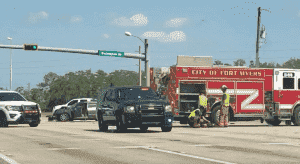
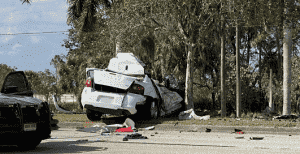
A Fort Myers Car Accident Lawyer from The Law Offices of Anidjar and Levine helps crash victims protect their rights by securing prompt medical documentation, preserving evidence, and managing insurer communications.
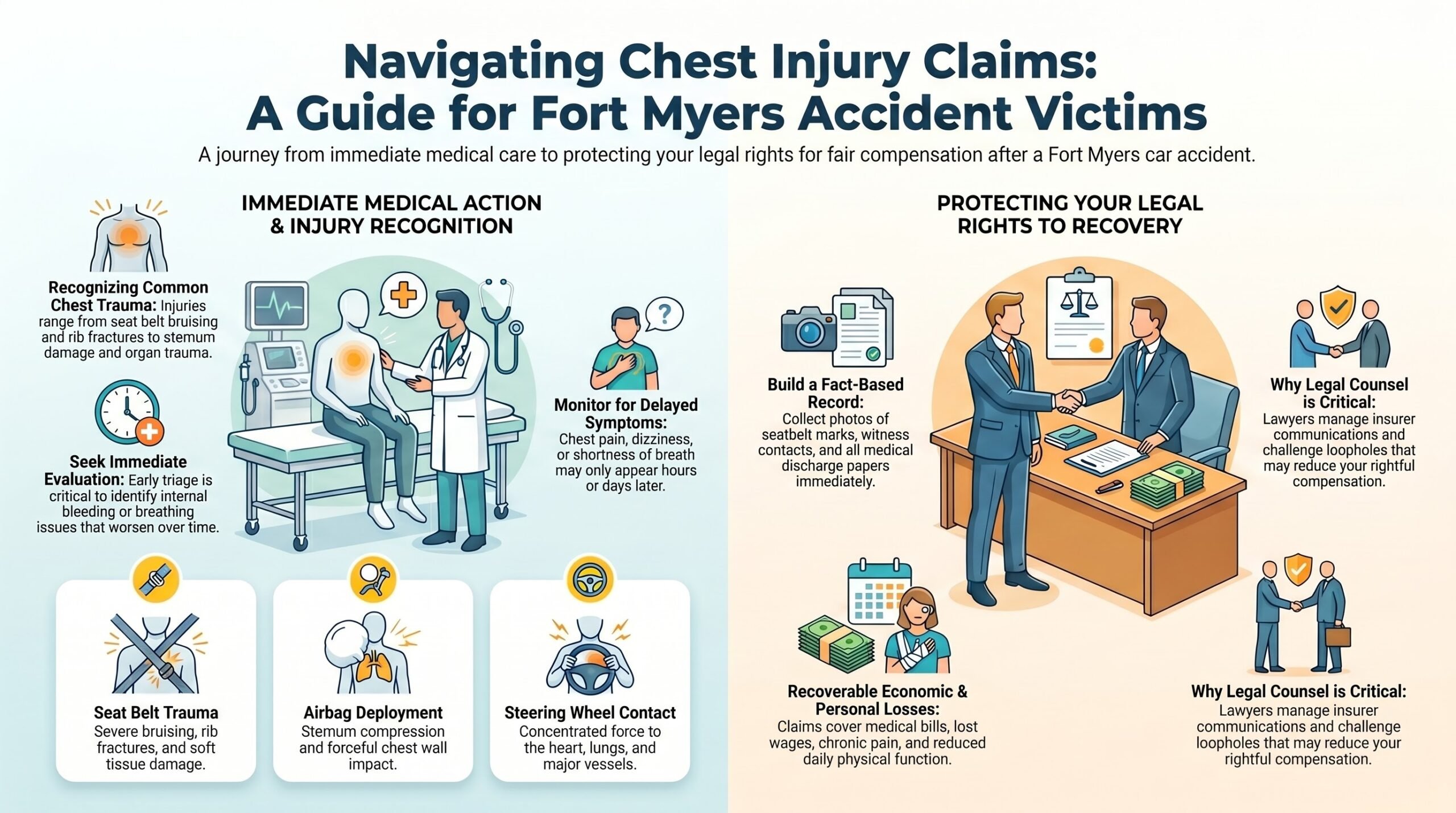
Chest injuries may involve bruising, rib fractures, breathing problems, or delayed internal complications, so early evaluation is important for both recovery and claim support.
Counsel can investigate liability, organize records, assess current and future losses, and pursue compensation for medical care, lost income, pain, and long-term limitations.
Main Takeaways
- Seek immediate medical care for chest pain, bruising, or shortness of breath after a Fort Myers crash to detect internal injuries and document treatment.
- Thoroughly document the accident with photos, witness contacts, police information, medical records, receipts, and notes about worsening pain or breathing issues.
- Chest injuries from seat belts, airbags, steering wheel impact, or high-speed crashes can include rib fractures, sternum injuries, and internal organ trauma.
- Some chest injuries worsen over hours or days, so follow-up imaging, physician notes, and pain monitoring are critical to connect symptoms to the crash.
- A Fort Myers chest injury car accident lawyer can handle insurers, prove liability, and pursue compensation for medical costs, lost income, and long-term limitations.
How We Can Help With Your Fort Myers Chest Injury Car Accident Claim
In the aftermath of a serious collision, pursuing a chest injury claim often requires prompt legal guidance and a disciplined approach to evidence. A dedicated legal team can serve injured residents by organizing medical records, preserving crash documentation, and communicating with insurers so families can focus on recovery and daily responsibilities.
Through careful case management, counsel can identify liable parties, calculate current and future losses, and challenge insurance loopholes that may reduce rightful compensation. They can coordinate with physicians and other professionals to document pain, restricted mobility, and projected rehabilitation options in a clear, persuasive manner. They also assist with claim forms, deadlines, and settlement discussions, helping clients avoid costly mistakes. When an insurer resists a fair resolution, the firm can prepare a strong case for litigation and present it professionally. This support advances accountability, protects household stability, and helps injured people secure resources needed to continue caring for themselves and others with dignity.
Understanding Fort Myers Chest Injury Car Accident Cases


Several factors shape Fort Myers chest injury car accident cases, including the force of impact, seat belt use, airbag deployment, and the timing of medical evaluation. These details often determine how symptoms appear, how injuries are diagnosed, and how recovery needs are understood by medical providers, insurers, and legal advocates serving injured people and their families.
OUR CONSULTATIONSARE FREE
START YOUR FREE CASE REVIEW

Chest trauma may involve bruising, soft tissue damage, a rib fracture, or a cardiac contusion, each carrying different risks and treatment demands. Some injuries produce immediate pain, while others worsen over hours or days, making prompt documentation especially important. Imaging studies, physician notes, and follow-up care often help connect the collision to the physical harm suffered. In many cases, the legal review also considers lost income, limitations on daily tasks, and the projected need for continued care. A careful, service-minded approach helps guarantee the injured person’s condition is fully recognized and responsibly addressed.
Common Causes of Fort Myers Chest Car Accident Injuries
Several crash-related forces commonly contribute to chest injuries in Fort Myers car accidents, often producing harm that ranges from bruising to more serious internal damage. Frequent causes include seat belt trauma, airbag deployment impact, and direct contact with the wheel during a collision. High-speed rear-end crashes also create substantial force on the chest, making these accidents a significant source of injury claims.
Seat Belt Trauma


Many Fort Myers chest injury car accident cases involve seat belt trauma, particularly when the force of a collision causes the restraint system to press sharply against the chest. Although seat belts save lives, they can also cause significant injuries, including bruising, rib fractures, soft-tissue damage, and painful buckle abrasions. These injuries may not appear severe at first, yet they can signal deeper harm involving muscles, cartilage, or internal structures.
A service-minded legal advocate recognizes that proper medical evaluation is crucial after any crash involving chest pain or visible restraint marks. Careful documentation, timely treatment, and a clear understanding of how impact forces affected the body can support both recovery and accountability. This measured approach helps injured individuals pursue informed decisions while protecting their health, stability, and long-term well-being.
Airbag Deployment Impact
Triggering within fractions of a second, an airbag can reduce the risk of fatal injury while also delivering a forceful blow to the chest during a collision. This rapid inflation may compress the sternum, ribs, and surrounding soft tissue, especially when occupants are seated close to the dashboard or bracing before impact. In some crashes, victims experience airbag-induced fractures, chest wall pain, or shortness of breath that requires prompt medical evaluation.
From a service-minded legal perspective, careful documentation of deployment-related bruising, diagnostic imaging, and physician findings can help explain the full extent of harm. Such evidence may support a claim for treatment costs, rehabilitation needs, and other losses, while recognizing that airbags remain an important safety feature despite their potential to cause serious chest trauma.
Steering Wheel Collisions
Strike forces against the helm remain a frequent source of chest injury in Fort Myers car accidents, particularly in head-on crashes, sudden deceleration events, and collisions involving limited occupant restraint. When the torso moves forward, the sternum, ribs, and heart region may absorb concentrated force from the wheel rim or hub. In severe events, steering column intrusion can further compress the chest and worsen underlying trauma.
From an impact biomechanics perspective, these collisions often produce fractures, bruising, cardiac contusions, and damage to lungs or major vessels. Vehicle weight, seat position, belt use, and driver stature may all influence injury patterns. A careful evaluation of crash dynamics and medical findings helps families, caregivers, and legal advocates understand the mechanism of harm and pursue support that protects the injured person’s recovery and long-term stability.
High-Speed Rear-End Crashes
Amplifying crash forces in a matter of seconds, high-speed rear-end collisions can produce serious chest injuries even when vehicle damage appears concentrated at the back of the car. The body is thrown forward abruptly, and the sternum, ribs, lungs, and heart may absorb violent compression from the seatbelt or interior structures.
In severe impacts, seatbelt slackening can reduce restraint effectiveness at the worst possible moment, allowing greater torso movement and increasing the risk of fractures, bruising, and internal bleeding. Vehicle underride may also worsen outcomes when a smaller car slides beneath a taller vehicle, exposing occupants to crushing forces. Careful legal review often helps injured individuals and families identify negligence, secure necessary resources, and continue to serve their households and communities during recovery with stability and dignity.
Legal Rights of Fort Myers Chest Injury Car Accident Victims
Understanding these legal protections is vital for Fort Myers chest injury car accident victims, because Florida law allows injured individuals to pursue compensation when another party’s negligence caused the collision. These rights help families, caregivers, and community-minded residents seek accountability while preserving dignity, Medical privacy, and fair treatment throughout the claims process.
Knowing these legal protections helps Fort Myers chest injury victims pursue accountability, safeguard medical privacy, and seek fair treatment after a negligent collision.
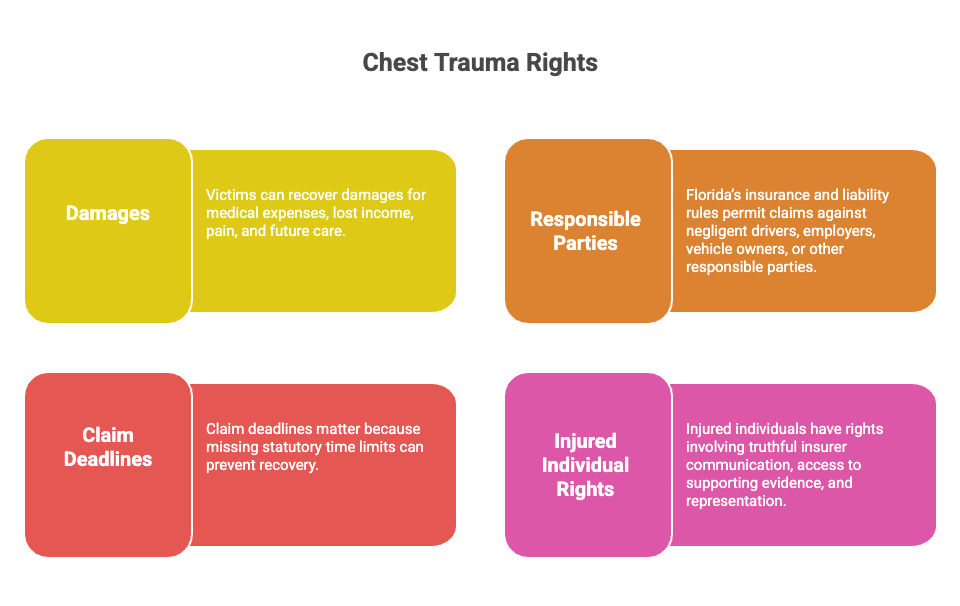
- Victims may recover damages for medical expenses, lost income, pain, and future care linked to chest trauma.
- Florida’s insurance and liability rules may permit claims against negligent drivers, employers, vehicle owners, or other responsible parties.
- Claim deadlines matter because missing statutory time limits can prevent recovery even when injuries are serious and well-documented.
- Injured individuals also have rights involving truthful insurer communication, access to supporting evidence, and representation during settlement negotiations or litigation.
A careful understanding of these protections supports informed decisions and promotes outcomes that respect both personal recovery and the broader well-being of those who depend on the injured person.
Steps to Take After a Fort Myers Chest Injury Car Accident Injury
After a Fort Myers car accident involving a chest injury, prompt medical evaluation is crucial to identify internal harm and create a clear record of treatment. It is also important to document the accident thoroughly by preserving photographs, obtaining witness information, and securing any available reports. Early contact with a lawyer can help protect the injured person’s interests and support an informed response to insurance and liability issues.
Seek Immediate Medical Care
In the moments following a collision, prompt medical evaluation should be prioritized when a chest injury is suspected. Even when symptoms seem manageable, internal harm may exist without obvious signs, and a timely urgent assessment can identify dangerous conditions before they worsen.
Those assisting an injured person should help secure emergency care, encourage calm breathing, and support safe transport to a hospital or urgent care facility. Physicians may evaluate bruising, rib fractures, organ trauma, or breathing complications through examination and imaging. Pain monitoring also matters in the hours after the crash, because increasing discomfort, dizziness, or shortness of breath may indicate a serious problem. Early treatment protects health, aids recovery, and equips families and caregivers to respond with informed, compassionate attention to the injured person’s immediate needs.
Document The Accident
Documentation becomes a vital safeguard when a Fort Myers car accident results in a chest injury, because accurate records can preserve facts that may otherwise fade or be disputed. If the injured person is stable, important details should be gathered promptly and carefully.
Helpful documentation may include the date, time, location, road conditions, vehicle damage, and visible injuries. Photographic evidence can capture seat-belt marks, bruising, airbag deployment, and the positions of vehicles before conditions change. Contact information for drivers, passengers, and responding officers should be recorded accurately. Witness statements may also support a clear account of how the collision occurred. Medical instructions, discharge papers, receipts, and notes about pain levels or breathing difficulties can further strengthen the overall record and support informed decisions for recovery and care later.
Contact A Lawyer
Prompt legal guidance can help protect a person’s interests once the immediate medical and documentation concerns have been addressed. After a Fort Myers collision involving chest injuries, an attorney may evaluate liability, preserve evidence, and manage insurer communications so the injured person can focus on recovery and family responsibilities.
During a free consultation, counsel can review medical records, crash reports, witness statements, and potential damages, and then explain available legal options clearly. This early discussion also allows for questions about the lawyer’s experience, expected timeline, and fee structure, thereby supporting informed decision-making. By contacting counsel promptly, a person may reduce mistakes, strengthen the claim, and improve the ability to pursue fair compensation. Timely legal support can also help advance accountability and promote resources needed for continued care and service to others.
How a Fort Myers Chest Injury Car Accident Lawyer Can Help You
Guiding a chest injury claim after a Fort Myers car accident often requires more than medical treatment alone, because legal counsel can play a central role in protecting the injured person’s rights and financial interests. An attorney may evaluate records, consult experts on chest biomechanics, and identify liability with care.
This support helps families pursue accountability while remaining focused on recovery and service to loved ones.
- Investigates crash facts, injuries, and insurance issues thoroughly.
- Preserves evidence and coordinates reliable medical documentation.
- Develops compensation strategies tailored to losses and responsibilities.
- Negotiates firmly and prepares for trial when necessary.
A Fort Myers chest injury car accident lawyer can also manage insurer communications, calculate present damages, and prevent harmful mistakes in recorded statements or settlement discussions. Through organized advocacy, counsel helps injured people make informed decisions, seek fair financial compensation, and uphold their dignity throughout a difficult legal process. This guidance often restores confidence and practical stability.
Long-Term Effects of Fort Myers Chest Injury Car Accident Injuries
Chest injuries from car accidents in Fort Myers can produce lasting consequences that extend well beyond the initial recovery period. Common long-term effects include chronic breathing difficulties, persistent chest pain, and a reduced ability to perform routine daily activities without limitation. These ongoing impairments often affect physical health, independence, and overall quality of life, making careful medical and legal assessment important.
Chronic Breathing Difficulties
Following a serious car accident in Fort Myers, some individuals develop chronic breathing difficulties that persist long after the initial chest injury appears to have mended. Lingering respiratory impairment may result from scar tissue, reduced lung expansion, airway irritation, or damage that impairs coordinated breathing. In some cases, Pulmonary fibrosis gradually limits oxygen exchange and endurance, making routine tasks more difficult.
Others experience Vocal cord dysfunction, in which the vocal cords close improperly and restrict airflow, especially during stress or exertion. These conditions can interfere with work, caregiving, sleep, and community involvement. Careful evaluation by pulmonologists, imaging consultants, and rehabilitation providers is often necessary to identify the source of impairment. With timely treatment, respiratory therapy, and consistent follow-up, affected individuals may improve their function and continue to serve their families and communities.
Persistent Chest Pain
Often, persistent chest pain remains one of the most disruptive long-term effects of a Fort Myers car accident, even after fractures, bruising, or internal injuries have largely mended. This discomfort may stem from a rib fracture that healed improperly, lingering inflammation, nerve irritation, or deep soft-tissue pain affecting muscles and connective tissues.
For many injured individuals, persistent pain creates continuing concern because symptoms can flare during coughing, twisting, lifting, or even resting. Medical evaluation often seeks to determine whether the source involves scar tissue, unresolved inflammation, or complications that were not fully apparent during initial treatment. Careful documentation, timely follow-up, and consistent treatment can help clarify the condition and support a path toward stability. A thorough legal review may also help families pursue resources needed for compassionate, ongoing care.
Reduced Daily Function
Diminished physical capacity can alter nearly every part of daily life after a Fort Myers car accident causes significant chest trauma. Victims may struggle with breathing, lifting, bending, or even walking short distances, especially when pain and reduced mobility persist beyond the initial recovery period.
These functional losses often create daily limitations that affect employment, household duties, childcare, and community involvement. A person who once assisted others without hesitation may require help with errands, transportation, or personal tasks. Sleep disruption and fatigue can further weaken stamina, making routine responsibilities more difficult to manage consistently. Over time, reduced independence may lead to frustration, isolation, and decreased quality of life. Careful medical evaluation, rehabilitation planning, and legal guidance can help document these challenges and support access to needed resources and long-term assistance.
Proving Liability in Fort Myers Chest Injury Car Accident Cases
Establishing liability in a Fort Myers chest injury car accident case requires clear evidence that another party’s negligence caused the collision and the resulting physical harm. Useful proof may include police reports, eyewitness statements, crash scene photographs, vehicle damage assessments, and medical records connecting chest trauma to the impact. In intricate matters, forensic biomechanics can help explain how force patterns caused rib fractures, sternum injuries, or internal damage.
Liability analysis also considers whether traffic laws were violated, whether distraction, speeding, impairment, or fatigue played a role, and whether the injured person is alleged to share fault. Claims involving contributory negligence require careful examination of conduct, timing, visibility, and right-of-way. Attorneys often work with accident reconstruction experts and treating physicians to build a clear narrative grounded in facts. This process helps families, caregivers, and community-minded individuals understand accountability, support informed decisions, and pursue outcomes that recognize both legal responsibility and the full scope of physical loss.
Dealing With Insurance Companies After a Fort Myers Chest Injury Car Accident
Once liability is established and supported by evidence, the insurance process becomes the next major source of pressure in a Fort Myers chest-injury car accident case. Insurers often request recorded statements, medical authorizations, and extensive documentation, and scrutinize symptoms, treatment recommendations, and prior health history for inconsistencies.
For those focused on protecting injured people and their families, careful communication with carriers is crucial. Chest injuries can involve delayed complications, making early settlement discussions especially risky. Accurate records, organized billing information, and physician opinions help support fair policy negotiation and reduce opportunities for undervaluation. Attention to claim timelines also matters, because missed notice requirements or response deadlines can weaken an otherwise valid case. A disciplined approach encourages transparency without volunteering unnecessary information that could be misinterpreted.
In many situations, professional guidance helps maintain balance, preserve dignity, and keep the insurance conversation centered on documented harm, reasonable care needs, and responsible financial recovery.
What to Expect During a Fort Myers Chest Injury Car Accident Claim Process
A Fort Myers chest injury car accident claim typically begins with immediate medical evaluation, which helps protect both the injured person’s recovery and the documentation needed for the case. From there, the process often moves into claim investigation, where evidence, medical records, and liability details are reviewed before settlement discussions begin. If negotiations do not produce a fair outcome within a reasonable timeline, the matter may proceed into litigation and require formal court involvement.
Immediate Medical Evaluation
In the immediate aftermath of a Fort Myers car accident, prompt medical evaluation is often one of the most important steps in both protecting health and documenting a chest injury claim. Medical providers typically begin with early triage, vital signs, and a focused physical examination to identify pain, breathing difficulty, bruising, or signs of internal trauma. Depending on symptoms, clinicians may order imaging such as X-rays, CT scans, or a portable ultrasound to assess ribs, lungs, and surrounding structures.
Treatment recommendations may include pain control, breathing support, activity limits, or referral to a consultant for continued care. Timely follow-up also helps create a clear record of symptoms, diagnoses, and recovery needs. This organized medical response can support those seeking accountability while placing immediate attention on recovery, safety, dignity, and community well-being.
Claim Investigation Steps
With immediate medical records in place, the claim investigation for a Fort Myers chest injury car accident case generally begins with a careful review of how the collision occurred and how the injury was first documented. Investigators typically gather crash reports, photographs, vehicle damage data, and witness statements to build a reliable factual record.
They may also examine traffic camera footage, emergency response notes, and insurance communications for consistency. In more complicated cases, forensic reconstruction can help clarify speed, impact angles, and occupant movement inside the vehicle. Medical providers may be asked to explain whether chest trauma is consistent with seat belt force, airbag deployment, or wheel contact. Throughout this stage, the focus remains on accuracy, accountability, and the protection of the injured person’s ability to pursue support for recovery and continued care after the collision.
Settlement Negotiation Timeline
After the initial investigation is assembled, settlement negotiations in a Fort Myers chest injury car accident claim often begin only once the injured person’s medical condition is sufficiently understood to estimate treatment needs, recovery time, and likely future care. This stage typically begins with a demand package, followed by an insurer review, valuation, and a response that may accept, deny, or counter the claim.
The timeline varies depending on medical updates, documentation quality, and the insurer’s negotiation tactics. Productive discussions usually involve careful review of records, wage loss evidence, and prognosis statements. Each exchange should focus on fair compensation and the protection of long-term well-being. Clear written terms are also important because they can reduce confusion, preserve dignity, and help prevent post-settlement disputes. Patience and organized communication often support a more efficient resolution for everyone involved.
Possible Litigation Process
When settlement efforts do not produce a fair result, a Fort Myers chest injury car accident claim may move into litigation. The process often begins with filing a complaint, followed by formal responses from the opposing party and careful review of nuances in the statute that may affect deadlines or available damages.
During discovery, both sides exchange records, written questions, and witness information. Medical documentation, crash reports, and employment evidence may be examined closely to clarify how the chest injury affected daily life and the ability to serve family or community. Depositions may follow, and expert testimony can help explain causation, prognosis, and future care needs.
If the matter does not resolve through mediation, it may proceed to trial. A court then evaluates liability, damages, and the strength of the evidence presented.
Compensation for Fort Myers Chest Injury Car Accident Damages
In the aftermath of a Fort Myers car accident, compensation for chest injury damages may include both economic and non-economic losses, depending on the severity of the harm and its effect on the injured person’s daily life. A careful claim review often examines emergency care, follow-up treatment, imaging, rehabilitation, and the expected duration of recovery. It may also address medical liens that affect the final amount an injured person receives.
Chest trauma can produce lingering discomfort, breathing limitations, and reduced physical capacity, all of which influence pain valuation during settlement discussions or trial preparation. Documentation from physicians, therapists, and family caregivers may help demonstrate how the injury affects routine activities, sleep, mobility, and the ability to care for loved ones or contribute at work. In more serious cases, compensation may reflect long-term monitoring, future procedures, or permanent impairment. Because insurers often challenge the extent of chest injuries, detailed records and consistent treatment history remain important in presenting a credible demand for fair recovery.
Economic vs Non-Economic Damages in Fort Myers Chest Injury Car Accident Cases
Fort Myers chest injury car accident claims often involve both economic damages, such as medical expenses, lost income, and future treatment costs, and non-economic damages, including pain, suffering, and reduced quality of life. These categories serve different purposes in valuing the full impact of a collision-related chest injury. Establishing their value typically requires medical records, employment documentation, expert opinions, and other evidence that connects the injury to specific financial and personal losses.
Economic Damage Categories
Beyond the immediate physical harm, chest injury car accident claims in Fort Myers often involve substantial economic damages, which are the measurable financial losses tied to the collision and its aftermath. These categories commonly include emergency care, hospital bills, diagnostic imaging, surgery, rehabilitation, prescription costs, and follow-up treatment needed to support recovery and continued service to family or community.
Economic damages may also cover lost wages when an injured person cannot work during treatment or recuperation. If the injury limits future earning capacity, those projected losses may also be evaluated. In addition, property damage may include vehicle repair or replacement, towing, rental transportation, and other out-of-pocket expenses directly caused by the crash. Careful documentation, billing records, and evidence of employment are often crucial for establishing the full value of these financial losses.
Non-Economic Loss Examples
Losses that cannot be measured by invoices or wage statements often form a significant part of a chest injury car accident claim. These harms reflect the human impact of trauma and the ways an injury can alter daily life, service, and family roles.
Examples include pain and suffering from fractured ribs, sternum injuries, or breathing limitations that interfere with rest, movement, and ordinary responsibilities. A person may also experience emotional distress, including anxiety, fear of driving, sleep disruption, or frustration caused by reduced independence. Non-economic losses can further involve loss of enjoyment when hobbies, volunteer work, exercise, or time with loved ones becomes difficult or impossible. In serious cases, diminished relationships may arise when the injury affects companionship, communication, affection, or the ability to participate fully in shared routines and community life.
Proving Damage Value
Assigning a fair value to a chest injury claim requires proof of both measurable financial harm and the less tangible effects of the injury on daily life. Economic damages are typically supported by medical bills, wage records, rehabilitation costs, and expert opinions regarding future treatment needs and future loss of earning capacity.
Non-economic damages require careful documentation of pain, restricted movement, emotional strain, and reduced ability to serve family, work, or community. Attorneys often rely on medical narratives, testimony from treating providers, and statements from those who observe the injured person’s limitations. In more complex cases, forensic valuation may be used to link the injury’s long-term consequences to a reasonable monetary amount. Strong evidence allows insurers, judges, and juries to evaluate losses with fairness, discipline, and respect for human impact.
When a Fort Myers Chest Injury Car Accident Case Goes to Trial vs Settlement
In many Fort Myers chest injury car accident cases, the path toward settlement or trial depends on the severity of the injuries, the clarity of fault, and the willingness of the insurance company to offer fair compensation. A careful settlement strategy often serves injured people by reducing delay, controlling costs, and securing funds for medical care, household support, and other pressing needs after a collision.
When insurers dispute liability, minimize chest trauma, or refuse reasonable payment, trial dynamics become more important. A lawsuit may allow witnesses, physicians, and accident experts to explain how rib fractures, internal bleeding, or cardiac injuries affect daily life and future treatment. Trial can also increase pressure on an insurer that has undervalued a claim. Still, settlement remains common when evidence is strong, and both sides seek a responsible outcome. The appropriate course usually reflects the injured person’s medical condition, financial burdens, tolerance for uncertainty, and the overall strength of the evidence presented.
The Statute of Limitations for Fort Myers Chest Injury Car Accident Cases
After a Fort Myers car accident causes chest injuries, the time allowed to file a personal injury claim becomes a pivotal legal issue that should be evaluated without delay. Florida law generally imposes strict deadlines, and missing them can prevent an injured person from pursuing compensation for medical costs, lost income, and other damages.
Careful attention to timing supports fairness for everyone involved, because evidence, witness memory, and treatment records become harder to preserve as months pass. In some matters, special rules may affect the ordinary deadline, including statute extensions and filing exceptions. These may apply when injuries are not immediately discovered, when a defendant cannot be located, or when other legally recognized circumstances exist. Each case depends on specific facts, so accurate review of the accident date, diagnosis timeline, and insurance communications is vital. Prompt evaluation helps protect the injured person’s interests while also promoting accountability, responsible planning, and informed service to family, community, and caregivers.
When to Contact a Fort Myers Chest Injury Car Accident Lawyer
When should an injured person contact a Fort Myers chest injury car accident lawyer? Contact is often appropriate soon after medical evaluation, especially when chest pain, breathing difficulty, or delayed symptoms raise concern about hidden injury. Early legal communication helps preserve records, identify witnesses, and organize practical guidance without interrupting treatment or family responsibilities.
Prompt contact may also be advisable when questions arise about insurance timing, vehicle damage documentation, lost income, or requests for recorded statements. A lawyer can help an injured person understand what information should be gathered, what deadlines may apply, and how to coordinate important paperwork. In many situations, families who are focused on serving and supporting a recovering loved one benefit from structured post-impact counseling about next steps. Reaching out becomes especially important when symptoms worsen, expenses increase, or fault is disputed.
Timely action allows the injured person to make informed decisions, protect crucial evidence, and move forward with greater clarity after a serious collision.
Why You Need an Experienced Fort Myers Chest Injury Car Accident Lawyer
For victims of serious vehicle collisions, an experienced Fort Myers chest injury car accident lawyer provides value that extends far beyond routine claim handling. Chest trauma can involve hidden complications, delayed symptoms, and disputed medical evidence, all of which require careful legal analysis and prompt action. Skilled counsel helps preserve records, coordinate expert review, and present a clear account of how the collision caused lasting harm.
Experienced representation also protects injured people from common insurance tactics that minimize pain, treatment needs, and future limitations. When questions arise about diagnosis errors, delayed care, or Medical negligence, a knowledgeable lawyer can identify additional sources of accountability. This broader approach supports families who want responsible parties held accountable and community safety strengthened. Strong advocacy is also crucial to pursuing full Financial recovery for medical costs, lost income, rehabilitation, and diminished quality of life. In serious chest injury cases, experience often shapes both the outcome and the stability of recovery.
How to Choose the Right Fort Myers Chest Injury Car Accident Lawyer for Your Case
Selecting the right Fort Myers chest injury car accident lawyer can materially affect how a claim is investigated, valued, and resolved. A careful selection process should begin with reviewing the lawyer’s experience handling collision cases involving chest trauma, disputed liability, and substantial medical evidence. Attention should also be given to courtroom readiness, negotiation history, and communication practices.
A qualified lawyer should explain legal options clearly, set realistic client expectations, and respond consistently and respectfully. Those comparing firms may also evaluate fee structures, case management resources, and the availability of direct access to attorneys throughout the matter. It is often helpful to contemplate whether the lawyer demonstrates a service-minded approach, showing concern for the injured person’s recovery, financial stability, and family responsibilities.
Reviews, professional standing, and a willingness to provide candid assessments may further indicate whether the lawyer is prepared to pursue a result that protects both immediate needs and long-term well-being after a serious collision.
About The Law Offices of Anidjar & Levine
In evaluating legal representation after a serious collision, The Law Offices of Anidjar & Levine presents a client-focused practice that handles personal injury claims involving significant physical harm, including chest injuries from car accidents. The firm is known for guiding injured people through insurance disputes, medical documentation, and settlement negotiations with careful attention to each case’s facts and long-term consequences.
Its attorneys and staff emphasize responsiveness, accessibility, and practical support, helping clients pursue compensation while reducing avoidable stress during recovery. This approach reflects a service-minded philosophy that may appeal to individuals who value advocacy rooted in dignity and responsibility. Public information, including client testimonials, points to consistent communication and attentive case management.
The firm’s broader presence also includes community outreach, which suggests an interest in serving beyond the courtroom.
For those in Fort Myers seeking representation after a chest injury collision, The Law Offices of Anidjar & Levine stands as a professional resource with experience, structure, and purpose.
Frequently Asked Questions
Can Delayed Chest Pain Appear Days After a Car Accident?
Yes, delayed chest pain can appear days after a car accident. From a detached clinical perspective, delayed-onset symptoms may result from bruising, inflammation, muscle strain, rib injury, or internal bleeding. Because some conditions worsen gradually, prompt medical evaluation serves the injured person and protects overall well-being. Persistent pain, shortness of breath, dizziness, or chest pressure should be treated as warning signs that require timely assessment and appropriate care.
Are Seatbelt-Related Chest Injuries Common in Low-Speed Crashes?
Yes, seatbelt-related chest injuries are fairly common in low-speed crashes, because even modest force can press the restraint firmly against the chest. Observers often note seatbelt bruising or restraint imprinting, which may indicate soft tissue injury and, in some cases, deeper harm. Those assisting affected individuals should encourage prompt medical evaluation, especially if pain, tenderness, breathing difficulty, or delayed symptoms appear, since early assessment supports safer recovery and informed care.
Can Airbags Cause Chest Injuries During a Collision?
Yes, airbags can cause chest injuries during a collision, particularly when they deploy at close range or with significant force. They are designed to reduce life-threatening harm, yet the impact may still produce bruising, rib fractures, or thoracic trauma in some occupants. Risk often increases with improper seating position, smaller body size, or preexisting medical conditions. Careful evaluation helps affected individuals receive timely treatment and continue serving others safely.
What Medical Tests Diagnose Chest Injuries After a Car Accident?
Medical tests that diagnose chest injuries after a car accident often include physical examination, chest X-rays, CT scans, and other imaging modalities to identify fractures, internal bleeding, or lung damage. Clinicians may also order electrocardiograms and blood tests measuring cardiac biomarkers to detect heart injury. In serving patient welfare, these evaluations help guide timely treatment, clarify injury severity, and support careful decisions about follow-up care and long-term recovery needs.
Can Anxiety Worsen Chest Pain After a Car Accident?
Yes, anxiety can worsen chest pain after a car accident. It may increase muscle tension, breathing changes, and heart rate, which can intensify discomfort. Panic amplification and somatic focus often heighten awareness of normal sensations, making pain feel more severe. Those who support injured individuals should encourage prompt medical evaluation, since anxiety may coexist with serious physical injury. Careful assessment helps distinguish emotional distress from conditions requiring immediate treatment and follow-up care.
—————————
Chest injuries from car accidents can involve serious medical complications, substantial expenses, and prolonged recovery. A Fort Myers Car Accident Lawyer can evaluate the facts, protect the injured person’s rights, and pursue appropriate compensation.
Prompt action often strengthens a claim by preserving evidence and supporting medical documentation. Anidjar and Levine assists injured individuals with focused legal guidance, enabling them to address treatment needs while their cases are handled with diligence and care.