

We help Port St. Lucie truck crash victims with internal injuries obtain prompt medical documentation, protect treatment timelines, and preserve essential evidence such as logbooks, black-box data, and inspection records.
At The Law Offices of Anidjar and Levine, we’ll guide you on reporting the crash, keeping symptom journals, saving bills and records, and avoiding recorded statements or broad medical authorizations that insurers may use against you.
We also identify all liable parties and pursue full compensation for medical costs, lost income, and pain and suffering.
Learn more from our Port St. Lucie Truck Accident Lawyer. More important steps are outlined below.
Main Takeaways
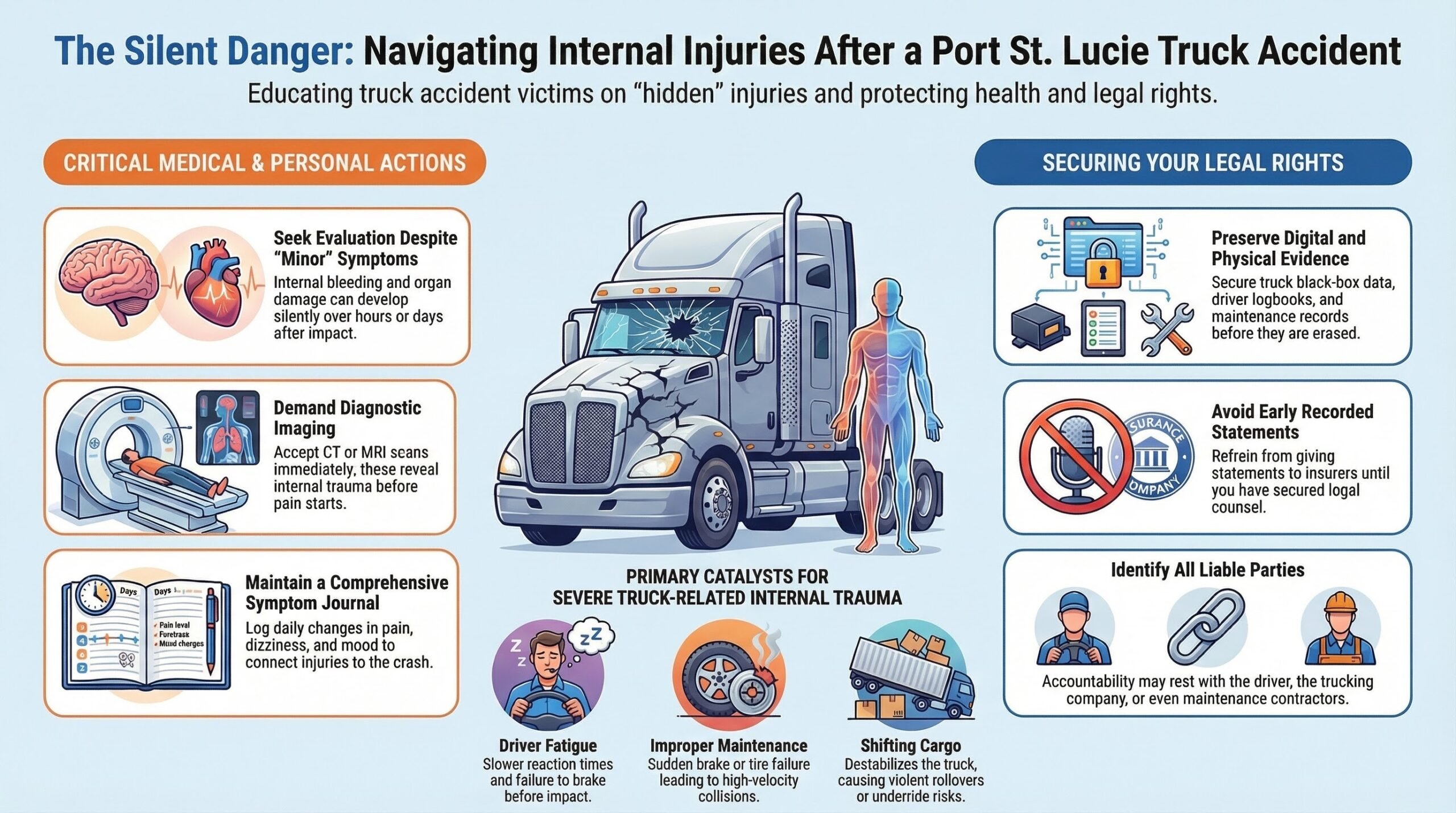
- Get immediate medical evaluation after a Port St. Lucie truck crash; internal injuries can worsen silently hours or days later.
- Call 911 and accept imaging and monitoring; CT/MRI can reveal bleeding or organ damage before pain signals danger.
- Document everything: photos, symptom journal, medical records, bills, and a communication log to protect your health and claim.
- Report the crash to insurers promptly, but avoid recorded statements or broad medical authorizations until speaking with a lawyer.
- An internal-injuries truck accident lawyer can coordinate medical evidence, manage insurer contacts, and plan a claim for long-term impacts.
How We Can Help With Your Port St. Lucie Truck Accident Internal Injuries Claim
How do we help after a Port St. Lucie truck crash when internal injuries may not appear immediately? We listen, then act quickly to protect your health and your claim, coordinating with providers so records, imaging, and treatment timelines are properly documented.
We also guide you on communication, so you don’t face insurers alone or feel pressured into early statements.
We build the case with purpose, gathering crash reports, witness accounts, driver logs, and trucking company records, then presenting a clear damage picture grounded in evidence.
If you need Language Services, we’ll arrange reliable support so your instructions and concerns are accurately understood at every step.
If access is a challenge, our Technology Assistance helps you share documents securely, attend remote meetings, and stay up to date without unnecessary travel.
Throughout, we keep deadlines on track, pursue fair resolution, and prepare for litigation when required.
Understanding Port St. Lucie Truck Accident Internal Injuries Cases
Because internal injuries often develop quietly after a truck crash, understanding these Port St. Lucie cases helps us serve you with clarity and purpose.
We focus on what’s happening inside the body even when symptoms seem minor, since bleeding, organ damage, or swelling may progress over hours or days.
In evaluating claims, we look closely at medical records, diagnostic imaging, and care timelines, and then connect those findings to the crash forces.
We also examine Injury Mechanisms and Vehicle Dynamics to explain how a sudden deceleration, underride risk, or trailer impact can transmit force through the torso and spine.
This approach supports a clear narrative for insurers and, if needed, a jury.
We’ll help you document changes in pain, follow-up visits, and work restrictions, and we’ll coordinate records so your treating providers’ observations are fully reflected.
Our goal is accurate valuation grounded in evidence, not assumptions.
Common Causes of Port St. Lucie Truck Accident Internal Injuries
To understand why truck crashes in Port St. Lucie so often lead to internal injuries, we need to look at the factors that increase impact forces and reduce reaction time.
We’ll explain how driver fatigue and distraction, speeding and aggressive driving, and improper truck maintenance can turn a preventable incident into a life-altering collision.
We’ll also address how overloaded or shifting cargo can destabilize a truck, raising the risk of violent crashes that cause serious harm.
Driver Fatigue And Distraction
Driving long stretches while tired or distracted puts everyone on Port St. Lucie roads at risk, especially when large trucks are involved.
Fatigue slows reaction time, narrows attention, and increases the chance a driver drifts, misses hazards, or fails to brake in time. Modern safeguards like drowsiness detection can help, but they don’t replace adequate rest, lawful hours, and attentive driving.


Smartphone distraction is equally dangerous, since a brief glance can cause a lane departure or rear-end impact that leads to serious internal injuries. If you’re focused on serving your family and community, we ask you to take these risks seriously and to support policies that encourage safe scheduling and strict distraction controls.
We can help document these failures and pursue accountability.
Speeding And Aggressive Driving
When truck drivers exceed safe speeds or use aggressive tactics to make up time, crashes in Port St. Lucie can become severe, and internal injuries often follow.
Speed reduces reaction time and increases stopping distance, so a sudden lane change or hard braking can crush smaller vehicles, causing organ damage and internal bleeding.
Aggressive driving also escalates conflict; Road Rage may lead a driver to tailgate, cut off traffic, or block merges, turning routine conditions into emergencies.
We help you focus on care while we investigate, because service means protecting others from preventable harm.
We can review electronic logs, dash video, witness accounts, and Enforcement Tech data to show speed patterns, unsafe actions, and decision-making before impact.
Improper Truck Maintenance
Speed and aggression often set the stage for a wreck, but poor upkeep can turn a manageable incident into a catastrophic collision.
When brakes fade, tires fail, or steering components wear out, a truck can lose control in seconds, and the resulting impact may cause severe internal injuries.
OUR CONSULTATIONSARE FREE
START YOUR FREE CASE REVIEW

We encourage safety-minded carriers to treat inspections as a duty to the public, not a paperwork exercise. Proper records, parts traceability, and timely replacements help confirm that essential systems meet standards, and they reveal whether shortcuts occurred.
Modern maintenance software can flag missed service intervals, recurring defects, and out-of-service warnings before a truck returns to the road. If neglect played a role, we’ll help you secure logs, repair histories, and vendor documentation, then pursue accountability.
Overloaded Or Shifting Cargo
Overloading a trailer or allowing cargo to shift mid-route can destabilize a commercial truck with little warning, especially during braking, lane changes, or turns.
When the weight exceeds the limits or is unevenly loaded, the driver may lose control, and nearby motorists can be struck suddenly, causing serious internal injuries.
We focus on how preventable these crashes are.
Proper Cargo securement requires rated straps, blocking, and regular checks, not rushed shortcuts at the dock.
Sound Load distribution keeps the center of gravity stable and reduces rollover risk, particularly on Port St. Lucie ramps and intersections.
If a company ignored securement rules, skipped inspections, or prioritized speed over safety, we’ll help you document those failures, identify responsible parties, and pursue accountability to protect others from the same harm.
Legal Rights of Port St. Lucie Truck Accident Internal Injury Victims
Although internal injuries after a truck crash may not appear on the day of the collision, Port St. Lucie victims still hold strong legal rights that merit prompt protection.
We can help you assert claims for medical costs, lost income, and pain and suffering, while honoring your Privacy Rights and limiting unnecessary disclosure of sensitive records.
We also work to secure evidence before it disappears, so accountability rests with the driver, carrier, or other responsible parties.
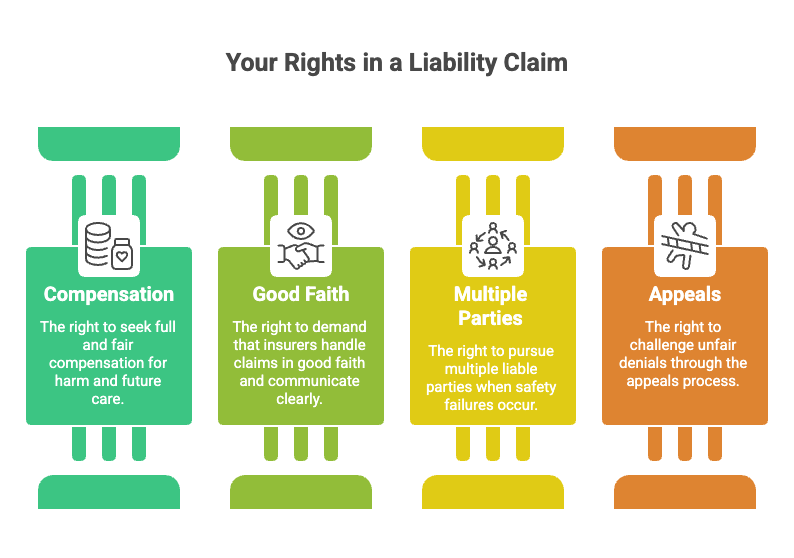
- We’re entitled to seek full and fair compensation tied to documented harm and future care needs.
- We can demand that insurers handle claims in good faith and communicate clearly.
- We may pursue multiple liable parties when safety rules, hiring practices, or maintenance failures contributed.
- We can challenge unfair denials through the Appeals Process by providing organized medical support and timely filings.
When we stand up for your rights, we also uphold the community’s expectation of safety.
Steps to Take After a Port St. Lucie Truck Accident Internal Injuries
After a Port St. Lucie truck crash, we should treat possible internal injuries as urgent and get immediate medical care, even if symptoms seem mild at first.
We’ll also document the crash and our symptoms by taking photos, gathering witness information, and keeping clear notes on pain, dizziness, or other changes.
Next, we should notify the insurers promptly and contact counsel early, so we don’t risk mistakes that could undermine both medical treatment and our legal claim.
Seek Immediate Medical Care
When a truck crash occurs in Port St. Lucie, we should seek immediate medical care, even if we feel steady enough to walk. Internal injuries can evolve quietly, and delays can turn treatable conditions into life-altering emergencies.
We encourage you to call 911 and let trained responders follow Emergency protocols, because they’re equipped to assess airway, breathing, circulation, and hidden bleeding at the scene.
If you’re transported, accept evaluation and follow-up testing as recommended, since imaging and monitoring often reveal problems that pain alone does not.
Early stabilization protects your organs, limits complications, and supports a safer recovery. We can also help coordinate care so you’re treated with dignity, and so no one overlooks your need for timely, thorough attention.
Document Crash And Symptoms
Documenting the crash and your symptoms builds a clear record that can protect your health and strengthen any related claim.
If you’re able, we should photograph the vehicles, road conditions, skid marks, signage, and visible injuries, then save images in dated folders to create Photo timelines.
We’ll also note the time, location, weather, and any traffic disruptions, because details fade quickly after shock and pain set in.
For internal injuries, we can’t rely on what’s visible, so we encourage you to keep a Symptom journal.
Record pain levels, dizziness, nausea, fatigue, sleep changes, and any new limitations, along with when symptoms start and what worsens them.
We’ll keep receipts, discharge papers, and appointment notes so caregivers and advocates can serve you accurately.
Notify Insurers And Counsel
Clear photos, a symptom journal, and organized medical paperwork give us the facts, but we also need to put the right parties on notice before timelines tighten and statements get taken out of context.
We should report the crash to our auto insurer promptly, even if the truck driver appears at fault, and we must confirm claim numbers and adjuster contacts in writing. When the trucking company or its insurer calls, we can be courteous, yet we shouldn’t give recorded statements without counsel.


Our timing strategies matter because early notice helps preserve coverage, protects benefits, and supports quick access to care. We’ll keep communication logs of every call, email, and letter, including dates, names, and summaries. With counsel engaged, we can coordinate responses and prevent harmful misunderstandings.
How a Port St. Lucie Truck Accident Internal Injuries Lawyer Can Help You
How do we prove the full impact of internal injuries after a Port St. Lucie truck crash when symptoms can be delayed, and records can be incomplete?
We help you act with purpose, protecting your health and your ability to serve your family and community.
Our team coordinates prompt evaluations, gathers medical imaging, and connects the findings to the mechanics of the collision, so insurers can’t minimize what isn’t visible.
We also bring a service-minded lens, supporting community outreach and legislative lobbying that promote safer commercial driving practices.
- Preserve vital evidence, including logbooks, black-box data, and inspection records.
- Work with qualified physicians to document internal trauma and necessary care.
- Calculate recoverable losses, then present a clear, credible demand package.
- Handle insurer communications and negotiations, so you can focus on recovery.
Long-Term Effects of Port St. Lucie Truck Accident Internal Injuries
We’ll explain how internal injuries from a Port St. Lucie truck accident can create lasting challenges long after the initial treatment ends.
You may face chronic pain and fatigue that limit daily function, while organ damage can lead to complications requiring ongoing monitoring and care.
We’ll also address the emotional and cognitive impacts that can affect work performance, decision-making, and overall quality of life.
Chronic Pain And Fatigue
Living with internal injuries after a Port St. Lucie truck crash can leave you with chronic pain and persistent fatigue that disrupt work, family responsibilities, and your ability to serve others.
We often see pain fluctuate, intensify with activity, and resist quick fixes, making consistent Pain Management vital.
When pain drains your energy, fatigue follows, affecting focus, reaction time, and emotional resilience.
We encourage you to document symptoms, triggers, and limitations so your care team can adjust treatment and so your legal claim reflects daily reality.
Practical steps, including structured pacing, gentle movement as cleared by clinicians, and disciplined Sleep Hygiene, can reduce setbacks.
We can help you pursue compensation for ongoing care, lost capacity, and future support needs.
Organ Damage Complications
Chronic pain and fatigue often signal more serious internal damage, and some truck crash victims in Port St. Lucie face organ complications that unfold over months or years.
Blunt force trauma can bruise the liver, spleen, or kidneys, while reduced blood flow may quietly impair function and trigger infection risks.
Even after surgery, scar tissue can restrict movement in the abdomen, complicate digestion, and increase the chance of future obstruction.
When transplantation becomes necessary, the body’s immune response may attack the new organ, and organ rejection can require lifelong monitoring and strict medication adherence.
We help you document these medical realities, connect treatment timelines to the collision, and pursue resources so your recovery can serve your family and community well.
Emotional And Cognitive Impacts
Although internal injuries often dominate the early medical focus after a truck crash, the long-term emotional and cognitive effects can quietly reshape a person’s daily functioning long after the physical wounds have closed.
You may notice PTSD symptoms, including intrusive memories, hypervigilance, or disrupted sleep, and these reactions can affect work performance, family roles, and decision-making.
Cognitive changes, such as slowed processing, reduced attention, or difficulty organizing tasks, may follow blood loss, oxygen deprivation, or prolonged hospitalization.
We encourage you to track mood shifts, memory lapses, and triggers, then share them with qualified clinicians who can provide trauma-informed care.
When anxiety leads to social withdrawal, relationships often strain, and community service can feel out of reach.
We’ll help you document these harms and pursue support that restores stability and purpose.
Proving Liability in Port St. Lucie Truck Accident Internal Injuries Cases
When a Port St. Lucie truck crash causes internal injuries, proving liability becomes the foundation for meaningful recovery and accountability.
We work with you to identify every responsible party, including the truck driver, motor carrier, maintenance contractors, and cargo loaders, because service to others requires that blame rests where the facts place it.
We promptly secure police reports, scene photographs, surveillance video, and witness statements, then connect those details to the injuries documented in your medical records.
We also rely on Event Data from the truck’s electronic systems, along with driver logs, dispatch records, and inspection histories to test whether fatigue, speeding, or neglected repairs played a role.
When disputes arise, we partner with Expert Witnesses, such as accident reconstructionists and medical experts, to explain causation clearly and credibly.
Dealing With Insurance Companies After a Port St. Lucie Truck Accident Internal Injuries
After a Port St. Lucie truck accident causes internal injuries, insurers often move quickly to control the narrative and limit payouts. We can help you respond with calm precision, because serving your family and community starts with protecting your health and financial stability.
After a Port St. Lucie truck accident, insurers act fast to shape the story—protect your health and financial stability with calm precision.
We encourage you to report the crash promptly, seek consistent medical care, and keep copies of every bill, record, and communication.
We also recommend that you avoid recorded statements or broad medical authorizations until we review them, since adjuster tactics may include leading questions, selective note-taking, or pressure to accept an early settlement.
Insurance policies contain policy nuances that can affect coverage, exclusions, and available benefits, especially when commercial carriers and multiple parties are involved.
We’ll handle communications, present clear documentation, and insist that insurers evaluate the full impact of your internal injuries, lost income, and ongoing needs, without mischaracterization.
What to Expect During a Port St. Lucie Truck Accident Internal Injuries Claim Process
In a Port St. Lucie truck accident internal injuries claim, we’ll start with an initial evaluation of your case, then we’ll organize the medical evidence and documentation needed to prove the full extent of your harm.
We’ll also prepare for liability and fault disputes, since trucking companies and insurers often challenge causation, the severity of injuries, or responsibility.
From there, we’ll guide you through settlement talks and, if the other side won’t offer fair compensation, we’ll move the claim into litigation and press it forward.
Initial Claim Evaluation
Evaluating an internal injuries claim starts with a focused review of what happened, what your doctors have found so far, and how the truck collision has affected your health and finances.
We’ll listen carefully, ask targeted questions, and identify immediate priorities so you can protect your recovery and your household.
We review crash details, insurance communications, and any time-sensitive reporting requirements, then outline the practical next steps.
We also emphasize Language Accessibility, explaining the process in clear terms and confirming you understand your options before any decisions are made.
We provide Fee Transparency from the outset, so you know how costs, contingency arrangements, and potential expenses may work.
Medical Evidence And Documentation
Once we’ve mapped out the immediate priorities from your initial claim evaluation, we turn to the medical evidence that will prove the scope of your internal injuries and connect them to the truck crash.
We’ll help you gather hospital records, emergency transport notes, and follow-up treatment plans, ensuring timelines are clear and consistent.
We may recommend forensic imaging, such as CT scans or MRIs, to document bleeding, organ damage, or soft-tissue trauma that isn’t visible from the outside.
We’ll also track medications, referrals, and any activity restrictions, because these details show how your injuries affect daily service to others.
To obtain complete records, we’ll prepare and review consent forms with you, then request certified copies. When needed, we’ll coordinate narratives from treating providers to clarify diagnosis, causation, and prognosis.
Liability And Fault Disputes
Although your medical records may clearly show internal injuries, the trucking company and its insurer often dispute who caused the crash and how much responsibility each party should carry.
We prepare you for aggressive challenges to your credibility, driving choices, and even the timing of symptoms, because these arguments are used to reduce payouts.
Florida’s Comparative negligence rules can still allow recovery, but insurers will try to assign you a larger share of fault than the evidence supports.
We respond by gathering scene photos, vehicle data, dashcam footage, witness accounts, and safety records to pinpoint what happened. We also examine third-party liability, including negligent maintenance contractors, cargo loaders, or manufacturers of defective parts.
By organizing this proof early, we help you serve your family’s needs and protect your right to fair compensation.
Settlement Talks And Litigation
When internal injuries don’t present clearly at the crash scene, settlement negotiations often turn on how well the medical evidence connects your condition to the truck wreck and explains the full scope of treatment ahead.
We’ll package records, imaging, and physician opinions into a clear demand, then counter low offers with documented projections for surgery, rehabilitation, and lost capacity.
If the insurer insists on delay or denial, we prepare for suit, preserve evidence, and take depositions to protect your story and the people who depend on you.
Some cases resolve through mediation, and we’ll review confidentiality agreements so you understand what you may disclose.
If financial pressure mounts, we’ll discuss safer alternatives and the risks of litigation financing, while keeping your care and recovery the priority throughout.
Compensation for Port St. Lucie Truck Accident Internal Injuries Damages
How do we put a fair dollar value on internal injuries after a Port St. Lucie truck crash when the harm is often hidden and recovery is uncertain?
We start by documenting every diagnosis, procedure, and prognosis, then connect the medical record to the collision through credible expert support.
We also account for future care needs, follow-up testing, and the practical limits the injury places on your ability to serve your family, employer, and community.
When a trucking company’s conduct shows reckless disregard for safety, we may pursue punitive damages to promote accountability and protect others on our roads. We’ll also evaluate whether structured settlements fit your long-term needs, especially when ongoing treatment, disability, or minor beneficiaries are involved.
Throughout the claim, we present a clear, evidence-based demand that reflects the full scope of your injuries and the lasting impact on daily life.
Economic vs Non-Economic Damages in Port St. Lucie Truck Accident Internal Injuries Cases
We’ll start by defining economic damages, which include measurable losses such as medical bills, lost wages, and future treatment needs related to internal injuries.
We’ll also explain non-economic damages, including pain and suffering, reduced quality of life, and the lasting impact these injuries can have on your daily functioning.
Finally, we’ll outline how we prove both categories in court by using medical records, expert testimony, and clear documentation that connects the crash to your losses.
Defining Economic Damages
Hospital invoices, wage statements, and rehabilitation receipts often become the clearest proof of economic damages after a Port St. Lucie truck crash causes internal injuries.
We define economic damages as the measurable financial losses you can document and verify, and we use them to restore stability for you and your family.
These losses typically include past and future medical treatment, prescription costs, diagnostic testing, physical therapy, in-home assistance, lost wages, reduced earning capacity, and other out-of-pocket expenses tied to recovery.
We also help you account for Tax Implications, so settlement structure and reporting don’t create avoidable burdens.
When multiple factors contribute to the loss, we apply the Apportionment Rules to link each expense to the crash and support a fair allocation.
Understanding Non-Economic Damages
Stability after a Port St. Lucie truck accident often depends on more than paying bills, because internal injuries can change how you live each day.
Non-economic damages address those human losses, such as pain, suffering, emotional distress, loss of enjoyment of life, and strain on relationships.
Unlike economic damages, they don’t come with receipts, yet they remain real and worthy of careful consideration.
When we serve you, we focus on describing how symptoms limit sleep, mobility, independence, and the ability to care for others.
We also consider Jury perceptions, since jurors may value clear, practical examples over broad statements.
In many cases, Expert testimony helps explain lasting effects, even when outward signs appear minimal.
Proving Damages In Court
Many internal injury claims rise or fall on how well the damages are proven in court, because the defense often challenges both the amount and the cause of your losses.
We help you present economic damages with clear documentation, including medical bills, future treatment plans, lost wages, and reduced earning capacity supported by records and expert testimony.
We also prove non-economic damages through consistent medical notes, credible personal statements, and witness accounts that show pain, disability, and loss of enjoyment of life.
For jury persuasion, we connect every dollar and every hardship to evidence, timelines, and reliable professionals.
When the trucking company’s conduct shows reckless disregard for safety, we evaluate whether punitive damages may apply.
We serve you by preparing a careful, truthful case that stands up to scrutiny.
When a Port St. Lucie Truck Accident Internal Injuries Case Goes to Trial vs Settlement
Although most Port St. Lucie truck accident internal injury claims resolve through settlement, we prepare each case as if it will be tried.
We weigh medical proof, liability disputes, insurance limits, and the true cost of long-term care, then we compare those realities against a fair settlement offer that helps you serve your family and community without added strain.
A case may go to trial when the carrier denies fault, minimizes internal injuries, or refuses to value future complications.
In that setting, we assess Jury Dynamics and use Verdict Predictors, such as venue tendencies, witness credibility, and the clarity of diagnostic findings, to estimate risk and potential return.
We also consider whether a public verdict can promote accountability and safer trucking practices.
Still, if settlement can secure timely resources, reduce uncertainty, and meet your goals, we’ll pursue it firmly and ethically, with your informed consent throughout.
The Statute of Limitations for Port St. Lucie Truck Accident Internal Injuries Case
After a Port St. Lucie truck crash, internal injuries may not show their full impact right away, yet Florida law still imposes strict time limits.
The statute of limitations sets the window for bringing a lawsuit, and missing it can bar recovery regardless of fault.
The statute of limitations defines your time to sue—miss the deadline, and recovery may be barred regardless of fault.
Because your ability to serve your family and community may depend on timely action, we treat these rules with urgency and care.
In most cases, the countdown begins on the date of the accident, so we track critical records early and confirm all filing deadlines for every responsible party, including trucking companies and other insurers.
We also watch for circumstances that can change the clock, such as tolling exceptions that may apply when a defendant can’t be located, a claimant is legally incapacitated, or other narrow legal conditions exist.
When to Contact a Port St. Lucie Truck Accident Internal Injuries Lawyer After a Port St. Lucie Truck Accident Internal Injuries
Strict filing deadlines mean you can’t afford delays when internal injuries may not appear right away.
We encourage you to contact a Port St. Lucie truck accident internal injuries lawyer as soon as you’re medically stable, even if symptoms seem minor, because early action helps preserve records and supports the care you’ll provide to those who depend on you.
Reach out immediately if you experience dizziness, abdominal pain, shortness of breath, confusion, or worsening bruising, since these signs may indicate bleeding or organ damage.
We also recommend calling after any ER visit, hospital admission, or follow-up imaging, so we can coordinate documentation while you focus on recovery and serving your family.
If an insurer requests a recorded statement or quick settlement, contact us first to avoid unintended harm to your claim.
We’ll also discuss Privacy protection for your medical information and guide Family notification decisions, especially when hospitalization affects caregiving responsibilities.
Why You Need an Experienced Port St. Lucie Truck Accident Internal Injuries Lawyer
Because internal injuries can develop quietly while the trucking company moves quickly to protect itself, we need experienced legal counsel who can secure critical evidence, align medical documentation with the full scope of harm, and prevent early missteps that reduce the claim’s value.
We work to preserve driver logs, maintenance records, onboard data, and witness accounts before they disappear or are distorted.
We also coordinate with your treating providers so imaging, diagnoses, and limitations are documented consistently, supporting both immediate care and long-term needs.
An experienced Port St. Lucie truck accident internal injuries lawyer anticipates common defense tactics, challenges premature settlement pressure, and frames damages in a way that reflects real life impact.
We keep you informed through Client education, explaining timelines, decision points, and what information matters most.
We also invest in Community outreach, helping neighbors understand safety resources and claim basics, so families can protect one another after serious crashes.
How to Choose the Right Port St. Lucie Truck Accident Internal Injuries Lawyer for Your Case
How do we separate a capable truck accident internal injuries lawyer from a firm that simply advertises well? We start by looking for proven experience with commercial trucking claims, including knowledge of federal regulations, logbooks, and preservation letters that protect vital evidence.
We also ask how the lawyer evaluates internal injuries, coordinates medical documentation, and presents damages in a way insurers can’t dismiss.
Next, we focus on communication style. We should expect clear timelines, prompt updates, and answers that respect our need to make careful decisions, especially when we’re trying to care for family and community.
We also insist on fee transparency, including a written explanation of contingency terms, costs, and when expenses are deducted.
Finally, we review past results, client references, and willingness to take a case to trial if fair settlement efforts fail. We choose the lawyer who serves with discipline, accountability, and steady advocacy throughout.
About The Law Offices of Anidjar & Levine
Experience and preparation guide the way we handle truck accident internal injury cases at The Law Offices of Anidjar & Levine.
We understand that internal trauma can be life-altering, so we build each case with disciplined investigation, careful documentation, and a focus on your long-term health needs.
You can expect clear communication, steady guidance, and prompt action when insurers delay or dispute the harm you’ve suffered.
Our Firm History reflects a consistent commitment to advocacy and service, shaped by years of representing injured Floridians with integrity.
We approach every matter with respect for your time and goals, and we coordinate with medical providers and experts to present a complete, credible claim.
Our Community Involvement also matters because serving others extends beyond the courtroom.
We support local initiatives, respond when neighbors need help, and bring that same responsibility to your recovery and your family’s stability.
Frequently Asked Questions
Can Internal Injuries Appear Days After a Truck Accident?
Yes, internal injuries can appear days after a truck accident, and we shouldn’t dismiss new pain or fatigue.
Delayed symptoms may reflect swelling, organ trauma, or concussion effects that weren’t obvious at the scene.
Occult bleeding can progress quietly, then become dangerous once blood loss increases.
We can best serve others by urging prompt medical evaluation, documenting changes, and seeking emergency care for dizziness, worsening abdominal pain, or fainting.
What Medical Specialists Should Evaluate Suspected Internal Injuries?
We recommend evaluation by an emergency physician, a trauma surgeon, and, when imaging is needed, a diagnostic radiologist to confirm or rule out bleeding or organ damage.
We also suggest consultation with a general surgeon, intensive care clinician, or gastroenterologist, depending on symptoms and exam findings.
We’ll encourage you to seek prompt assessment and follow-up, because timely clinician coordination supports accurate diagnosis, protects others through safer decisions, and improves outcomes.
Should I Keep a Pain Journal to Document Internal Injury Symptoms?
Yes, we recommend you keep a pain journal because it can clearly document internal injury symptoms over time.
We encourage you to record a symptom timeline with dates, pain locations and intensity, triggers, and any changes in function or sleep.
We also suggest maintaining a medication log that notes doses, timing, effects, and side effects.
When we bring this record to clinicians, it supports accurate evaluation and helps us advocate responsibly for others.
Will My Health Insurance Lien Reduce My Settlement Amount?
Yes, a health insurance lien can reduce your net settlement, because reimbursement usually comes from the recovery’s medical portion.
We’ll review the plan terms and applicable subrogation laws to confirm what’s owed and whether limits apply.
Through lien negotiation, we can often seek reductions for attorney fees, proportional fault, or insufficient funds.
We should also track paid bills and their dates to protect the resources needed for ongoing care.
Can I Recover Damages if a Pre-Existing Condition Was Aggravated?
Yes, you can recover damages when an accident aggravates a pre-existing condition, and we’ll help you document the change.
We focus on medical causation, showing how symptoms, limitations, or treatment needs worsened after the incident.
We’ll often rely on expert testimony, detailed records, and before-and-after comparisons to separate prior issues from new harm. You may claim additional medical costs, lost income, increased pain, and reduced quality of life.
—————————
Internal injuries after a truck crash can be difficult to diagnose, expensive to treat, and challenging to prove without prompt action.
At Law Offices of Anidjar and Levine, we’ll protect your rights, gather crucial evidence, and pursue full compensation from every liable party, including trucking companies and insurers.
If you’re facing mounting medical concerns or uncertainty about your next steps, we’re ready to guide you through the claims process with disciplined preparation.
Contact a Port St. Lucie Truck Accident Lawyer as soon as possible, so we can act.

