

At the Law Offices of Anidjar and Levine, we handle Port St. Lucie 18-wheeler accident claims by acting quickly to preserve critical evidence, including dash-cam footage, black-box data, driver logs, and maintenance records.
We coordinate crash investigations, document injuries and losses, and identify every liable party, from the driver to the carrier and vendors.
We also protect you from insurer tactics, manage deadlines, and pursue full compensation for medical care, lost income, and long-term harm.
Learn more from our Port St. Lucie Truck Accident Lawyer page.
Main Takeaways
- Get medical care and report the crash immediately; early treatment and a police case number strengthen both safety and your claim.
- A Port St. Lucie 18-wheeler lawyer can preserve critical evidence fast, including ELD/black-box data, dash-cam video, dispatch logs, and maintenance records.
- Truck cases may involve multiple liable parties and layered insurance, such as the driver, carrier, broker, shipper, or maintenance provider.
- Avoid recorded statements and fault discussions with insurers; an attorney can handle communications and protect you from blame-shifting tactics.
- A lawyer can calculate full damages—medical costs, lost wages, future care, and pain and suffering—and negotiate or litigate for fair compensation.
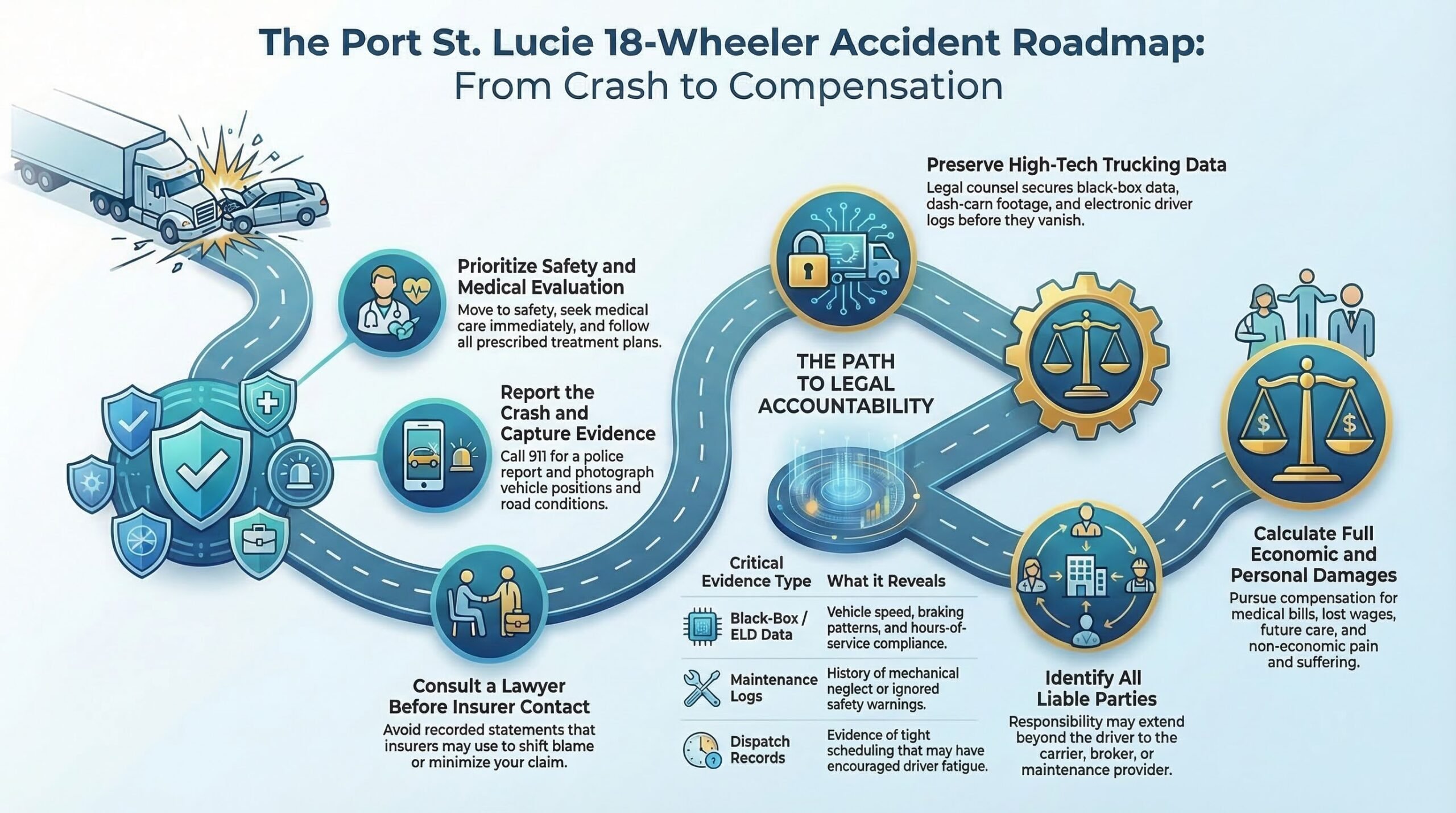


How We Can Help With Your Port St. Lucie 18-Wheeler Accident Claim
When an 18-wheeler crash disrupts your life in Port St. Lucie, we step in to protect your time, health, and future.
We listen first, then organize medical records, employment impacts, and repair documentation so your claim reflects the full scope of harm.
We listen first, then gather medical, work, and repair records so your claim shows the full scope of harm.
We communicate with insurers and opposing counsel on your behalf, pushing for a fair resolution while keeping you informed at every stage.
We also help you serve your family and community by restoring stability.
Our team arranges multilingual support so you can speak clearly and make decisions with confidence.
When bills stack up, we coordinate financial counseling options and connect you with trusted resources, without losing focus on your claim’s progress.
We track deadlines, prepare demand materials, and negotiate firmly, always aiming to reduce your burden and secure the compensation you need to move forward with purpose.
OUR CONSULTATIONSARE FREE
START YOUR FREE CASE REVIEW

Understanding Port St. Lucie 18-Wheeler Accident Cases
After we take over communication and documentation, we also help you understand what makes a Port St. Lucie 18-wheeler accident case distinct.
These claims often involve multiple responsible parties, layered insurance policies, and detailed records that must be preserved quickly.
We guide you through the legal standards that determine liability, while keeping the focus on protecting your recovery and honoring the needs of those you serve.
Florida’s Comparative negligence rules can reduce compensation if insurers argue you share fault, so we work to present a clear, evidence-based account of what happened.
We review crash reports, medical records, and vehicle data, then connect those details to the applicable duties of care.
When questions arise about injuries, stopping distances, or industry compliance, Expert testimony can clarify technical issues for adjusters, mediators, or a jury.
Throughout, we keep you informed, prepared, and positioned to make sound decisions with confidence.
Common Causes of Port St. Lucie 18-Wheeler Accident
When we evaluate Port St. Lucie 18-wheeler crashes, we often see a small set of causes that repeat across serious cases.
We’ll explain how driver fatigue and hours violations, distracted truck driving, and improper cargo loading can quickly turn routine trips into catastrophic collisions.
We’ll also address mechanical failures and poor maintenance, and show you how these issues can be identified through records, inspections, and timely investigation.
Driver Fatigue And Hours
Although federal hours-of-service rules exist to limit exhaustion behind the wheel, driver fatigue remains a leading cause of Port St. Lucie 18-wheeler crashes.
When carriers push tight schedules, drivers may stretch limits, skip restorative breaks, or rely on short naps that don’t resolve underlying fatigue.
We often see Circadian Disruption during overnight runs, early-morning deliveries, and rotating routes, when the body’s natural alertness drops.
In those hours, Microsleep Risks rise, and even a few seconds of lost awareness can turn a routine lane change into a catastrophe.
If you’re harmed, we’ll help identify logbook inconsistencies, electronic logging data, dispatch communications, and delivery demands that encouraged unsafe driving time.
Our goal is accountability, safer roads, and respectful support for every family affected.
Distracted Truck Driving
Dividing attention in a commercial cab can turn an 18-wheeler into an immediate hazard, especially on Port St. Lucie’s busy corridors.
We often see distraction linked to phones, messaging systems, GPS programming, eating, or reaching for paperwork, all of which steal vital seconds from maneuvering, braking, and scanning mirrors.
When a driver looks away, a lane drift or delayed stop can harm families, workers, and first responders who serve our community.
We help you document device use, in-cab video, dispatch records, and witness accounts to prove how attention shifted at the wrong moment.
Strong Work Policies, including hands-free limits and no-device expectations, reduce risk when enforced. Public Campaigns also matter, reminding carriers and drivers that safe focus protects everyone on our roads.
Improper Cargo Loading
Improperly loading and securing cargo turns a tractor-trailer’s weight into an unpredictable force that drivers can’t easily correct.
When pallets shift, straps loosen, or loads exceed limits, the trailer can sway, jackknife, or spill into surrounding lanes, placing everyone at risk on Port St. Lucie roads.
We often see these crashes traced to rushed dock schedules, inadequate warehouse training, and failures to follow packaging standards for weight distribution and containment.
Even minor gaps in bracing or uneven stacking can amplify movement during turns, braking, or lane changes.
We work with you to identify who controlled the load, what procedures were required, and where the chain of responsibility broke down.
By holding each party accountable, we help protect the public and promote safer practices for others.
Mechanical Failures And Maintenance
Cargo issues aren’t the only hidden hazard in tractor-trailer crashes, because mechanical failures and poor maintenance can turn routine driving conditions into sudden emergencies.
When brakes fade, tires blow, or steering components loosen, a driver may have seconds to react, and the public pays the price.
In Port St. Lucie, we often see evidence that basic service intervals were ignored, warning lights were dismissed, or worn parts were kept in service to save time.
We encourage carriers to practice Preventive Inspections that document repairs, verify compliance, and remove unsafe units before they roll.
We also promote Fleet Upgrades, including modern braking systems and stability technology, because prevention is a form of service to every family sharing the road.
If maintenance lapses contributed to your collision, we’ll pursue accountability.


Legal Rights of Port St. Lucie 18-Wheeler Accident Victims
- The right to pursue full, fair compensation
- The right to investigate and preserve crucial evidence
- The right to reject low or rushed settlement offers
- The right to privacy and respectful treatment
- The right to counsel that answers to you, not insurers
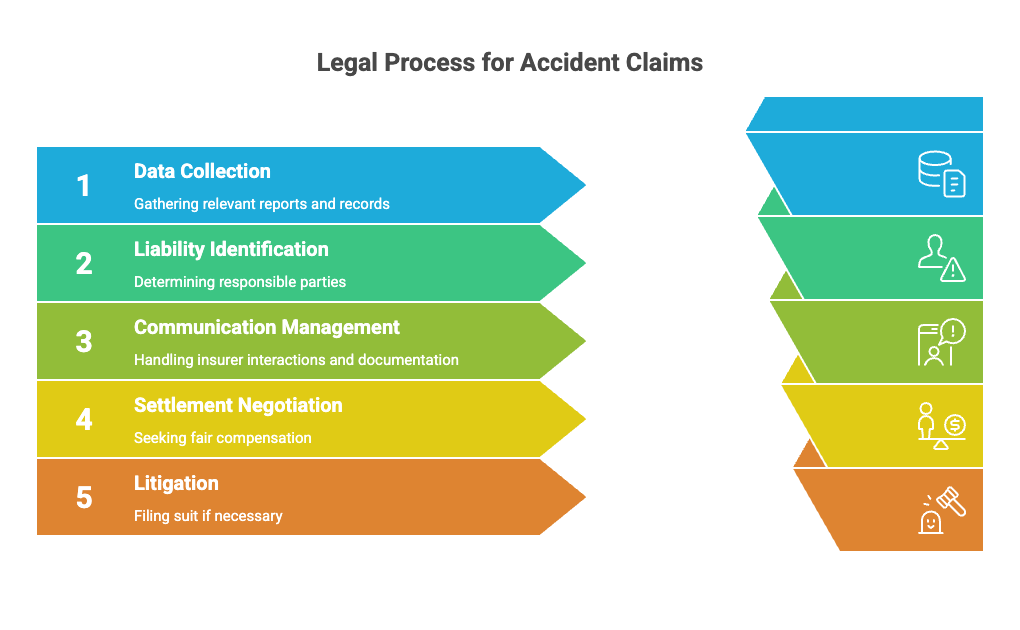
Steps to Take After a Port St. Lucie 18-Wheeler Accident
After a Port St. Lucie 18-wheeler accident, we need to act quickly and methodically, and we’ll start by ensuring your immediate safety and getting medical care.
Next, we should report the crash to law enforcement and document essential evidence, including photos, witness details, and trucking information.
Finally, we’ll explain when to contact a truck accident lawyer so we can protect your rights and preserve vital records before they’re lost.
Ensure Safety And Seek Care
Even if the crash seems minor, we should treat safety and medical care as the first priorities because a Port St. Lucie 18-wheeler collision can cause hidden injuries and secondary impacts.
We should move ourselves and others out of traffic when it’s safe, shut off hazards if possible, and watch for fuel, fire, or unstable cargo.
If anyone can’t move, we should keep them still and calm until trained help arrives.
We should also consider Passenger Evacuation for children, older adults, and anyone in shock, guiding them to a secure area away from the roadway.
With Weather Preparedness in mind, we should seek shelter from rain, heat, or lightning and use reflective items for visibility.
We should accept prompt evaluation and follow care instructions closely.
Report Accident And Document Evidence
Once we’ve stabilized the scene and medical care is underway, we should report the crash promptly and begin documenting evidence while details remain clear and conditions haven’t changed.
We can call 911, cooperate with responding officers, and request an incident or case number for later reference.
If we or a witness needs language access, we should ask dispatch or officers for an interpreter so statements are accurate and complete.
We should photograph vehicle positions, skid marks, road conditions, cargo spills, and visible injuries, then note weather, lighting, and any nearby cameras.
We can collect contact information from witnesses, but we should avoid discussing fault.
We should preserve medical papers and receipts, and safeguard privacy rights by sharing only necessary health details with authorities.
Contact A Truck Accident Lawyer
With the crash reported and crucial evidence documented, we should contact a truck accident lawyer as soon as we’re safe and medically stable, because commercial trucking cases can involve multiple liable parties and fast-moving insurers.
When we reach out early, we give counsel time to preserve logbooks, dash-cam footage, black-box data, and maintenance records before they’re lost or altered.
We can also protect our statements, since adjusters may seek quick interviews that shift blame or minimize harm.
A lawyer can evaluate insurance layers, identify the motor carrier, shipper, or broker, and pursue a plan that supports our recovery and the people who depend on us.
Many firms offer contingency fees, so we don’t pay up front. We should review client testimonials to confirm service and results.
How a Port St. Lucie 18-Wheeler Accident Lawyer Can Help You
How do we turn the chaos of an 18-wheeler crash into a clear, evidence-based claim that protects your rights?
We begin by listening, then acting quickly to preserve records, secure witness statements, and identify every liable party, from the driver to the carrier and contractors.
We listen first, then move fast to preserve evidence, secure witnesses, and identify every liable party—from driver to carrier and contractors.
We guide you with calm, service-minded advocacy, so you can focus on caring for others while we manage the legal burden.
You’ll receive transparent guidance on Contingency Fees, and we’ll provide Multilingual Support to make certain nothing is lost in translation.
- Preserve logbooks, black-box data, and dispatch records
- Coordinate crash reconstruction and expert review
- Handle insurer calls, paperwork, and deadlines
- Calculate full, document-backed damages and losses
- Negotiate firmly, and file suit when necessary
Throughout the process, we keep you informed, protect your voice, and pursue accountability with professionalism and resolve.
Long-Term Effects of Port St. Lucie 18-Wheeler Accident Injuries
After a Port St. Lucie 18-wheeler crash, we often see injuries that don’t end with the initial treatment, and you may face chronic pain, lasting disability, or reduced mobility.
We also recognize that traumatic injuries can create cognitive and emotional impacts, including memory problems, anxiety, or depression, that affect daily function.
As we evaluate your case, we’ll account for future medical care and the financial needs that follow, so you’re not left paying for long-term consequences you didn’t choose.
Chronic Pain And Disability
Although some Port St. Lucie crash victims recover within months, many face chronic pain that persists long after an 18-wheeler collision.
We help you document ongoing symptoms, treatment needs, and functional limits, so insurers can’t dismiss them as temporary discomfort.
Persistent back, neck, and joint pain can restrict lifting, standing, or safe driving, and it may require repeated medical visits, injections, or surgery.
When disability affects daily tasks, we work with your doctors and life-care planners to show the real cost of support, from home modifications to assistive technology.
We also consider alternative therapies, such as supervised physical therapy, acupuncture, or therapeutic massage, when they’re medically appropriate and consistent with your care plan.
Cognitive And Emotional Impacts
Physical limitations aren’t the only long-term consequence of an 18-wheeler crash; many Port St. Lucie survivors also face lasting cognitive and emotional strain.
We often see problems with memory, attention, and processing speed, which can undermine confidence and make routine tasks feel unsteady.
Emotional impacts may include anxiety, irritability, depression, or trauma responses that surface without warning, affecting sleep and decision-making.
These changes can create Identity changes as you adjust how you lead, serve, and show up for others.
We also recognize Social withdrawal, when overstimulation, fatigue, or fear leads you to avoid gatherings, ministries, or volunteer roles.
We encourage you to document patterns, communicate needs clearly, and seek supportive counseling that respects your values.
Future Medical And Financial Needs
Because many 18-wheeler injuries evolve over time, we plan early for future medical care and the financial demands that follow.
We work with your physicians to project ongoing treatment, rehabilitation, prescriptions, and periodic evaluations, then translate those needs into a clear life-care roadmap.
When mobility or independence changes, we account for assistive technology, home modifications, and transportation, so you can remain engaged with family and community service.
We also address caregiver coordination, including schedules, respite coverage, and training, because consistent support reduces setbacks and protects dignity.
On the financial side, we calculate expected costs, lost earning capacity, and insurance gaps, and we pursue compensation that reflects long-term realities, not short-term snapshots.
Our goal is stability, so you can focus on recovery and helping others.
Proving Liability in Port St. Lucie 18-Wheeler Accident Car Accident Cases
When a Port St. Lucie crash involves an 18-wheeler, we must prove liability with disciplined, service-minded advocacy that protects you and the community.
We start by identifying every duty that was breached, then connect that failure to the harm you suffered through clear, verifiable evidence.
We gather driver logs, electronic data, dispatch records, maintenance histories, and cargo documents to show fatigue, speeding, improper loading, or neglected repairs.
We also review training files and safety policies, because Corporate Liability may arise when a carrier pressures unsafe schedules, ignores inspections, or hires unqualified drivers.
We work with qualified experts to explain stopping distance, visibility, and impact forces in plain terms.
We also prepare for Comparative Fault arguments by documenting your driving, road conditions, and timing, then showing why the truck’s conduct was the primary cause.
This approach strengthens accountability and supports fair outcomes for everyone.
Dealing With Insurance Companies After a Port St. Lucie 18-Wheeler Accident
Strong liability evidence sets the foundation, but insurance companies control much of what happens next through recorded statements, document requests, and early settlement offers.
We help you respond with care, because one misplaced comment can be used to minimize the harm you’ve suffered.
We recommend limiting direct conversations, keeping a written log of every contact, and sharing only necessary records after we review them.
Limit direct conversations, log every contact in writing, and share only essential records after we’ve reviewed them.
We also scrutinize coverage limits, exclusions, and coordination between multiple policies, since policy interpretation often drives whether an insurer pays fairly or shifts blame.
When adjusters question treatment, wages, or future needs, we support your providers and your family by organizing clear, service-minded documentation that reflects the true impact of the crash.
If the carrier delays or refuses payment, we prepare a focused response, including appealing denials with supporting evidence and firm deadlines.
Our goal is simple: protect your time, dignity, and ability to serve others.
What to Expect During a Port St. Lucie 18-Wheeler Accident Claim Process
As we guide you through a Port St. Lucie 18-wheeler accident claim, we’ll start with a focused investigation and evidence collection, then align those findings with consistent medical treatment documentation.
Next, we’ll manage the insurance negotiations timeline, setting clear expectations for requests, responses, and potential delays.
If a fair resolution doesn’t materialize, we’ll prepare you for the settlement steps and, when necessary, the path to trial.
Initial Investigation And Evidence
Building a persuasive 18-wheeler claim in Port St. Lucie starts with swift, service-minded action, because your recovery can also protect others on the road.
We secure the crash report, identify witnesses, and obtain available video before it’s overwritten.
We send preservation letters to the carrier and related vendors, then request driver logs, dispatch records, GPS data, maintenance files, and cargo documents.
To protect the evidence chain, we document each transfer, store materials securely, and track who handled what and when.
When needed, we coordinate forensic reconstruction to analyze impact points, speed, visibility, and braking, using measurements and scene mapping.
We also review safety regulations and prior violations to uncover systemic issues, then align the facts with a clear liability theory.
Medical Treatment Documentation
Once we’ve secured the physical and digital evidence from the scene, we focus on documenting your medical care with the same discipline, because treatment records often determine the value and direction of a Port St. Lucie 18-wheeler accident claim.
We’ll encourage prompt evaluation, consistent follow-up, and clear reporting of every symptom, even those that appear minor or delayed.
We help you organize ER notes, imaging, consultant referrals, physical therapy charts, and discharge instructions, then confirm dates, providers, and diagnoses for accuracy.
We also recommend keeping symptom journals to track pain levels, functional limits, sleep disruption, and missed activities.
Maintain medication logs that show prescriptions, dosage changes, side effects, and refills. This careful recordkeeping supports your recovery and helps us present your case responsibly.
Insurance Negotiations Timeline
In the days and weeks after a Port St. Lucie 18-wheeler crash, we begin the insurance timeline by notifying all carriers and requesting policy disclosures.
We gather your treatment records, wage information, and repair documentation, then submit a focused demand package that explains liability and outlines documented losses.
Adjusters typically respond with questions, recorded statement requests, and initial evaluations, and we manage those communications so your time stays centered on recovery and serving your family.
We should expect review periods that vary by carrier workload, Seasonal Delays, and Internal Audits within trucking companies or insurers.
As information arrives, we answer follow-up requests, exchange supporting evidence, and track deadlines for claim status updates.
Throughout, we keep you informed, document every contact, and press for timely, fair consideration.
Settlement Or Trial Steps
After we’ve exchanged documentation with the adjusters and the insurer has completed its initial review, the claim usually moves toward a decision point: settlement discussions or preparation for trial.
We’ll review the offer with you, measure it against medical needs, wage loss, and long-term care, and advise whether it serves your family and community responsibilities.
If negotiations progress, we’ll prepare a clear demand package, respond promptly, and keep pressure on deadlines and liens.
If settlement stalls, we shift to litigation with purpose.
We handle pleadings, discovery, depositions, and targeted motion practice, while keeping you informed and ready.
Exhibit Preparation organizes records, photos, and crash data into a persuasive narrative.
Witness Coaching helps you and essential witnesses testify clearly, honestly, and consistently, always with accountability and others’ safety in mind.
Compensation for Port St. Lucie 18-Wheeler Accident Damages
Although a truck crash can disrupt every part of your life, we can pursue compensation that reflects the full scope of your losses in a Port St. Lucie 18-wheeler case.
We’ll document your harm, connect it to the collision, and present a demand that insurers and defendants can’t dismiss as incomplete.
We gather medical records, employment documentation, repair estimates, and expert opinions, then build a clear narrative that supports accountability and fair payment.
When long-term needs require reliable planning, we can explore Structured Settlements that provide steady support over time, while still protecting flexibility where possible.
We also evaluate Tax Implications, because the form of recovery can affect what you keep and how you budget for future care.
Throughout the process, we’ll keep you informed, respect your values, and pursue outcomes that help you continue serving your family and community.
Economic vs Non-Economic Damages in Port St. Lucie 18-Wheeler Accident Cases
We’ll start by separating economic damages, such as medical bills, lost income, and future care costs, from non-economic damages, which address pain and suffering, emotional distress, and loss of enjoyment of life.
We’ll then explain how these categories apply in Port St. Lucie 18-wheeler accident cases, and why each one matters to the full value of your claim.
Finally, we’ll outline how we can prove damages in court using records, testimony, and credible expert support when necessary.
Economic Damages Overview
Because an 18-wheeler crash can disrupt every part of a victim’s financial life, we start by separating damages into two categories: economic and non-economic.
Economic damages cover the measurable costs you can document with bills, records, and expert projections, and they often form the backbone of a strong claim.
We help you identify medical expenses, rehabilitation, prescriptions, travel for treatment, property damage, and lost income, including reduced earning capacity when injuries limit future work.
We also gather employment files, wage statements, and provider invoices to prove each amount clearly.
As we serve you, we stay alert to Tax implications that may affect certain recoveries, and we pursue Lien resolution with insurers and medical providers so the final settlement reflects your true net loss.
Non-Economic Damages Explained
How do you measure the harm that doesn’t come with a receipt?
In Port St. Lucie 18-wheeler crash cases, non-economic damages address losses that economic damages can’t capture, even when medical bills and lost wages are clear.
These damages may include physical pain, emotional distress, loss of enjoyment of life, disfigurement, and the strain injuries place on relationships and daily service to others.
Because these impacts are personal, we often rely on valuation theories that translate human experience into a fair monetary range, while recognizing that cultural perceptions influence how people describe suffering, resilience, and dignity.
Our role is to help you identify these harms with care and respect, so the full scope of your recovery is acknowledged.
Proving Damages In Court
Non-economic losses can be difficult to express in numbers, but a claim won’t succeed on empathy alone.
We help you prove both economic and non-economic damages with clear, service-minded preparation that respects your recovery and your family’s stability.
For economic losses, we gather medical bills, wage records, and expert projections for future care, then connect each figure to the crash and its lasting effects.
For non-economic harm, we present treatment notes, therapist input, and testimony that shows pain, limitations, and the daily changes you now endure.
When conduct is especially reckless, we may seek punitive damages to promote accountability.
We also calculate prejudgment interest where allowed, so delayed payment doesn’t reduce the value of your award.
When a Port St. Lucie 18-Wheeler Accident Case Goes to Trial vs Settlement
While many Port St. Lucie 18-wheeler claims resolve through settlement, we prepare each case as if it will be tried, so you’re never pressured into an unfair offer.
Settlement can provide faster funds for medical care and family stability, reduce stress, and limit Publicity risks that may distract from recovery and service to others.
It also gives both sides more control over outcomes, including structured payments and confidentiality terms.
A case may go to trial when the insurer denies fault, disputes the severity of injuries, or refuses to value long-term needs such as future treatment, lost earning capacity, and household support.
We weigh Jury perceptions, the strength of crash reconstruction and safety records, and whether the defense will shift blame to you.
If trial is necessary, we present a clear narrative of responsibility and community safety, seeking a verdict that reflects full accountability.
The Statute of Limitations for Port St. Lucie 18-Wheeler Accident Case
After an 18-wheeler crash in Port St. Lucie, Florida law limits how long you have to bring a claim.
These time limits, called the statute of limitations, protect fairness by ensuring evidence stays reliable and witnesses’ memories remain fresh.
If we miss the required filing deadlines, the court can dismiss the case even when liability seems clear, leaving injured people without a legal remedy.
In most trucking-collision matters, the clock generally starts on the crash date, although the start date can vary in specific circumstances.
Certain tolling exceptions may pause or extend the time to file, such as when the injured person is a minor, when a defendant can’t be located, or when material facts were concealed despite reasonable diligence.
Because trucking cases often involve multiple parties, layered insurance, and records controlled by companies, we should confirm all applicable deadlines early and document any basis for tolling with care.
When to Contact a Port St. Lucie 18-Wheeler Accident Lawyer After a Port St. Lucie 18-Wheeler Accident
Because time-sensitive evidence in trucking cases can disappear quickly, we should contact a Port St. Lucie 18-wheeler accident lawyer as soon as we’re safe and medical needs are addressed.
An Immediate Consultation helps us preserve driver logs, dispatch records, vehicle data, and witness accounts before they change or vanish.
We also protect the people we serve by reducing confusion, since early guidance can prevent missteps when speaking with insurers or responding to requests for statements and documents.
We shouldn’t wait for pain to worsen, bills to arrive, or fault arguments to harden, because early action supports clear documentation of injuries and losses.
Deadline Awareness matters as well, since multiple notice requirements and filing timelines may apply alongside the statute of limitations.
If a loved one is hospitalized or we’re overwhelmed, we can still reach out promptly, authorize a representative, and begin gathering the records needed to move forward responsibly.
Why You Need an Experienced Port St. Lucie 18-Wheeler Accident Lawyer
Even if the crash seems straightforward, 18-wheeler cases rarely are, and we need an experienced Port St. Lucie 18-wheeler accident lawyer to protect your recovery and your ability to keep serving the people who rely on you.
Trucking collisions involve federal rules, multiple insurance layers, and corporate defense teams that move quickly to limit exposure.
We gather crucial evidence, preserve driver logs and electronic data, and identify every liable party, from the carrier to maintenance contractors.
We also calculate damages fully, including future care, lost earning capacity, and the real cost of reduced mobility.
We work on contingency fees, so you can pursue justice without adding financial strain.
Consistent client communication matters, too, because informed decisions help your case and reduce uncertainty.
With experienced guidance, we can negotiate from strength and prepare for trial when insurers refuse fair accountability.
How to Choose the Right Port St. Lucie 18-Wheeler Accident Lawyer for Your Case
Start by vetting a lawyer the same way a trucking company will defend the claim: with specifics, proof, and a clear plan.
We should ask how they investigate logbooks, electronic data, and maintenance records, and whether they move quickly to preserve evidence.
We can also request examples of past truck-crash results that match our injuries and damages, not just general verdict totals.
We’ll check client reviews for consistent notes about responsiveness, professionalism, and follow-through, because service matters when we’re trying to protect our family and community.
We should confirm who’ll handle day-to-day work, how often we’ll receive updates, and what support is available for medical scheduling and documentation.
Finally, we must insist on fee transparency, including contingency percentages, costs, and how liens or reimbursements are addressed.
When a lawyer answers clearly and documents commitments in writing, we can choose confidently and proceed with purpose.
About The Law Offices of Anidjar & Levine
Choosing counsel means looking for a firm that can back up its promises with documented action, and that’s where The Law Offices of Anidjar & Levine come in.
We focus on serving injured people with disciplined case management, timely communication, and a steady commitment to doing what’s right when an 18-wheeler crash disrupts your life.
We serve injured people with disciplined case management, timely communication, and a commitment to doing what’s right after an 18-wheeler crash.
You’ll work with a team that treats your case with urgency, not as a file number.
Our Firm History reflects years of advocating for Floridians harmed by negligence, and we apply that experience to truck accident claims that demand careful investigation and strategic negotiation.
We pursue accountable parties, document losses with precision, and prepare each case as if it will go to trial.
Beyond the courtroom, our Community Outreach supports local needs and reinforces our belief that professional service should strengthen the communities we share with you.
Frequently Asked Questions
Can I Recover Damages if I Was Partly at Fault in Florida?
Yes, we can still recover damages in Florida even if you were partly at fault.
Under Comparative Fault, your compensation is reduced by your percentage of responsibility, and if you’re more than 50% at fault in most negligence cases, recovery is barred.
Settlement Impact matters, because insurers often dispute fault to lower offers.
We’ll document service-minded losses carefully, then negotiate firmly for fair accountability.
How Do Trucking “Black Box” Records Get Preserved and Obtained?
We preserve trucking black box records by sending a prompt spoliation letter to the carrier, demanding retention of event data and related logs.
We then seek access through voluntary production or the subpoena process, often pairing it with a court order if resistance arises.
We’ll identify the device, request downloads by a qualified technician, and secure chain-of-custody documentation.
Acting quickly helps prevent overwrites, deletions, or routine data loss.
Are There Special Rules if the Crash Involved a Hazardous Materials Truck?
Yes, special rules apply when a hazardous materials truck is involved, and we’ll help you follow them promptly.
We’ll examine placard requirements to confirm the cargo classification and whether carriers complied with federal and state transport standards.
We’ll also coordinate with emergency response reports, spill containment records, and hazmat team logs to track exposure risks and scene decisions.
These materials can shape liability, damages, and necessary public safety actions for you.
Can a Lawsuit Include Negligent Hiring or Retention Against the Trucking Company?
Yes, we can include negligent hiring or retention claims against the trucking company when evidence shows it employed or kept an unsafe driver.
We’ll examine screening policies, background checks, prior crashes, and drug or alcohol history to prove the company knew or should’ve known the risk.
We also assess training deficiencies, supervision failures, and ignored safety violations.
What Happens if the At-Fault Truck Driver Is From Another State?
If the at-fault truck driver is from another state, we can still pursue your claim, but we must address Jurisdiction Issues to determine where the case belongs.
We’ll examine where the crash occurred, where the company operates, and where the driver can be served.
We’ll also verify Insurance Coverage, including interstate policies and federal filings, so you can focus on recovery while we protect those you serve.
—————————
If you’ve been injured in a Port St. Lucie 18-wheeler crash, the Law Offices of Anidjar and Levine are prepared to protect your rights and pursue full compensation.
We’ll investigate the cause, preserve crucial evidence, handle insurers, and build a claim that reflects your medical needs, lost income, and long-term impact.
Time matters in trucking cases, so we’ll act quickly and keep you informed at every stage.
Learn more about working with a Port St. Lucie Truck Accident Lawyer and let’s discuss your options and next steps.

