

If you’ve suffered a post-surgical infection in Miami, you need Law Offices of Anidjar and Levine to act fast to protect evidence and clarify whether the outcome was a known complication or preventable negligence.
You’ll be guided to secure complete medical records, operative reports, and a clear symptom timeline, then supported by qualified experts who can pinpoint lapses in sterile technique, antibiotic timing, discharge instructions, or follow-up care.
You can also pursue compensation for added treatment, lost income, and long-term harm.
Learn more through our Miami Medical Malpractice Lawyer page and continue for critical steps and deadlines.
Main Takeaways
- Seek immediate medical care at the first signs of infection and document symptoms, photos, medications, and follow-up communications to strengthen your clinical and legal record.
- A Miami post-surgical infection injury lawyer promptly requests complete medical records and operative reports, preserving evidence and building a clear chronological timeline.
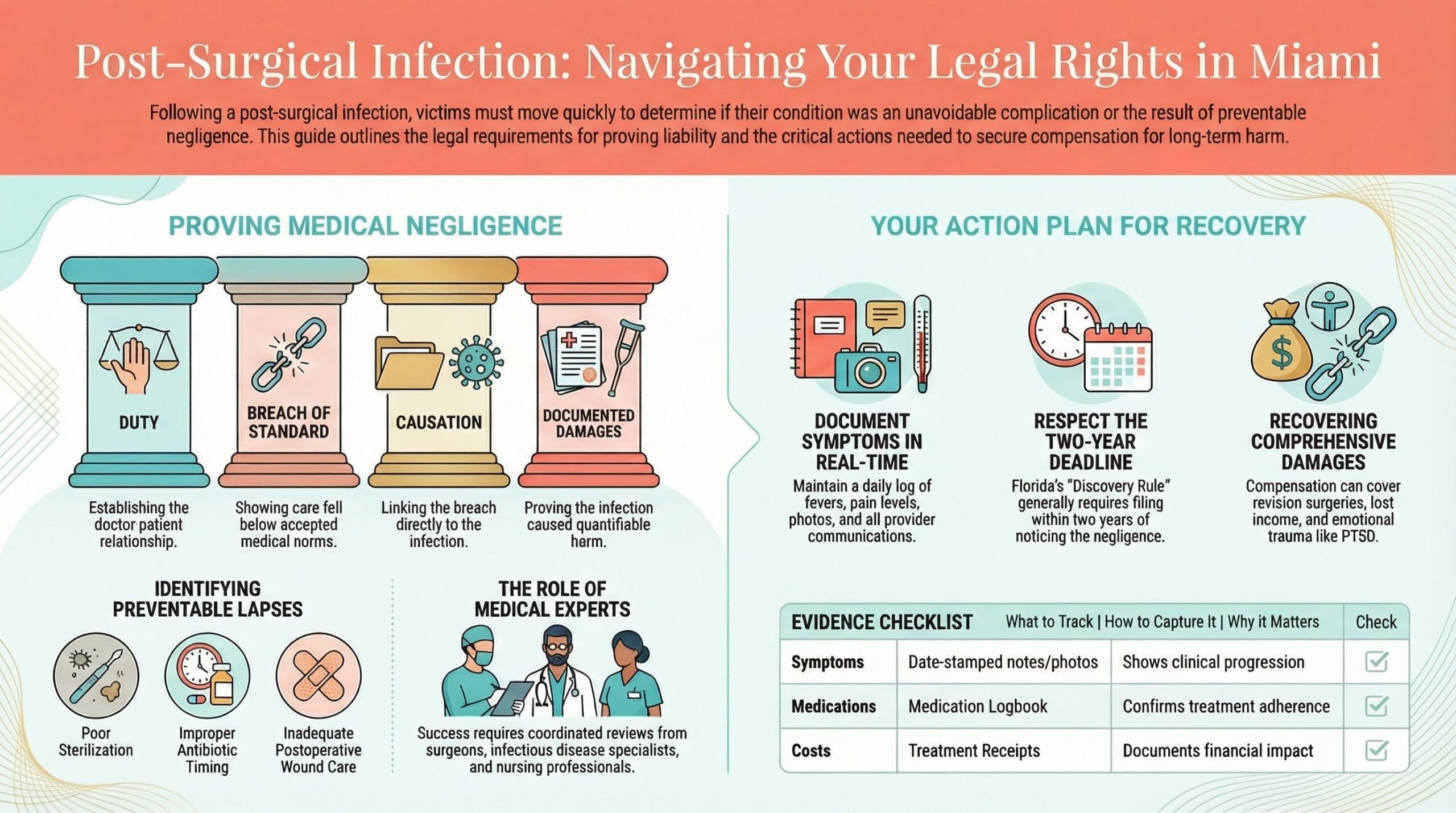
- Proving negligence requires showing duty, breach of surgical or infection-control standards, causation linking delays or lapses to harm, and documented damages.
- Lawyers coordinate expert reviews by surgeons, infectious disease specialists, and nurses to evaluate antibiotic timing, cultures, discharge instructions, and responsiveness.
- Ask about contingency fees, expert case costs, expected timelines, and communication standards to understand obligations and potential out-of-pocket risks.
How We Can Help With Your Miami Post-Surgical Infection Injury Claim
How do you turn a suspected post-surgical infection into a strong legal claim in Miami?
You start by securing timely medical care, then you let your legal team preserve evidence, request records, and document how the infection changed your ability to serve your family, workplace, and community.
Secure prompt care, then let your legal team preserve evidence, obtain records, and document how the infection reshaped your daily responsibilities.
You’ll get guidance on what to save, whom to notify, and how to avoid statements that insurers may later misuse.
You can expect Fee Transparency from the outset, including clear explanations of costs, timelines, and what you’ll owe, if anything, at each stage.
Your lawyer will build a focused Case Strategy by identifying responsible parties, coordinating qualified medical review, and calculating damages that reflect both immediate treatment and long-term impact.
You’ll also receive disciplined communication support, so your claim stays consistent, respectful, and persuasive.
Throughout, you remain informed, prepared, and protected.
Understanding Miami Post-Surgical Infection Injury Cases
Because post-surgical infections can develop quickly and mimic ordinary recovery symptoms, you need a clear framework for distinguishing an unfortunate complication from a preventable injury caused by substandard care.
You start by comparing what you were told to expect with what you experienced, including worsening pain, fever, drainage, or sudden weakness, then you document dates, symptoms, and communications.
A viable Miami post-surgical infection injury case often turns on whether providers met accepted standards and responded promptly when warning signs appeared.
Diagnostic Delays can allow bacteria to spread, increase the need for revision surgery, and prolong disability, so timelines matter.
You also evaluate how treatment decisions addressed Microbial Resistance, such as whether cultures, sensitivity testing, and appropriate antibiotics occurred in a timely manner.
You strengthen your position by securing records, preserving discharge instructions, and identifying witnesses who observed your decline.
This disciplined approach supports accountability and safer care for others.
Common Causes of Miami Post-Surgical Infection Injuries
You can often trace a post-surgical infection in Miami to preventable breakdowns in care, and identifying the source helps you evaluate whether negligence occurred.
You may be placed at risk by poor sterilization practices, contaminated surgical instruments, or improper antibiotic prophylaxis that fails to protect you during the procedure.
After surgery, you can also suffer harm when providers don’t maintain adequate postoperative wound care, allowing bacteria to enter and spread.
Poor Sterilization Practices
Cutting corners in sterilization can expose surgical patients to dangerous, preventable infections.
When you entrust a facility with your care, you’re entitled to consistent Sterilization Training and disciplined Autoclave Maintenance, not rushed turnover and skipped safety checks.
If instruments aren’t properly cleaned before processing, residue can shield microbes and undermine the entire cycle.
When staff ignore packaging rules, overload trays, or fail to verify indicators, you face unnecessary risk in the operating room.
You can also suffer harm when scopes and reusable devices aren’t dried, stored, and handled correctly between cases.
These lapses don’t just affect you; they burden families and the wider community you serve.
If you suspect poor sterilization contributed to your infection, document symptoms, request records, and seek legal guidance promptly.
Improper Antibiotic Prophylaxis
When a surgical team mismanages antibiotic prophylaxis, a routine procedure can turn into a preventable infection with lasting consequences.
You rely on clinicians to give the right medication at the right moment, yet Timing Errors can leave bacteria time to take hold before your incision is protected. Delays, early administration, or missed re-dosing during longer operations can undermine the intended safeguard.
You may also face harm when the dosage selection is careless. An antibiotic that’s too weak, too strong, or poorly matched to your health factors can increase risk, especially if you have allergies, kidney concerns, or higher body weight.
When standards aren’t followed, you may shoulder prolonged recovery and added procedures. Holding providers accountable supports safer care for others in Miami.
Contaminated Surgical Instruments


Although sterile technique is a core expectation in every operating room, contaminated surgical instruments still contribute to avoidable post-surgical infections in Miami. You may assume every tool is clean, yet failures can occur during cleaning, sterilization, storage, or transport, and a single lapse can expose you to harmful bacteria.
OUR CONSULTATIONSARE FREE
START YOUR FREE CASE REVIEW

Residual bioburden may persist in hinges or lumens, while material corrosion can create pits that shield microbes from disinfectants. You’re also at risk when packaging breaches compromise sterile wraps or trays before use, even if the sterilizer cycle was adequate.
If you serve others and trust the system to protect patients, you should expect strict inspection, clear documentation, and timely removal of damaged instruments. When these safeguards fail, infections can follow, and accountability matters for your recovery and future care.
Inadequate Postoperative Wound Care
Even if your surgeon performs a flawless procedure, inadequate postoperative wound care can still create the conditions for a serious infection. You depend on timely cleansing, hand hygiene, and clear instructions, yet breakdowns occur when staff rush, supplies run short, or follow-up is delayed.
If a wound is left moist, soiled, or improperly covered, bacteria can multiply quickly and enter deeper tissue.


You also need an appropriate Dressing Selection that matches the drainage level, incision location, and skin sensitivity, because the wrong material can trap fluid or cause breakdown. When clinicians dismiss early redness, warmth, odor, or increasing pain, you may lose valuable time for culture and antibiotic treatment.
Proper Scar Management is important as well, since excessive tension and inadequate protection can reopen tissue and invite contamination. If you’re serving others, insist on safe, consistent care.
Legal Rights of Miami Post-Surgical Infection Injury Victims
How do you protect yourself after a surgical infection upends your recovery and raises questions about whether it should’ve happened at all?
You retain the right to safe, competent care, and you can pursue accountability when a provider’s actions fall below accepted standards and cause harm.
You also have the right to clear explanations, including risks, alternatives, and expected outcomes, so Patient Consent is informed rather than assumed.
When expenses mount, you may seek recovery beyond basic Insurance Coverage, including uncompensated medical costs, lost income, and the human impact on your ability to serve family and community.
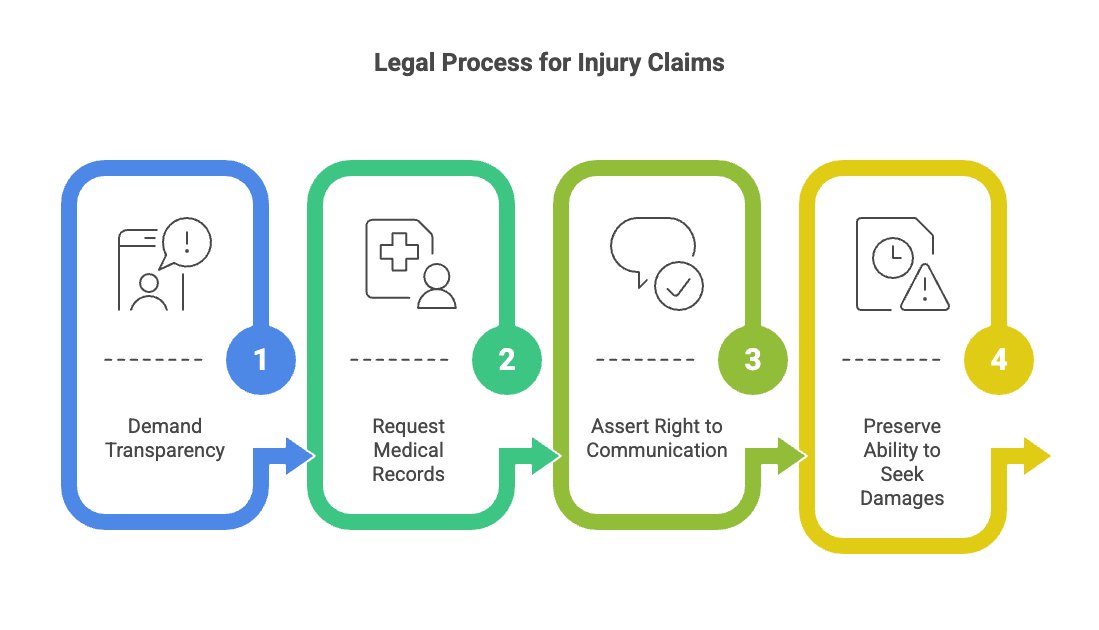
- Demand transparency about what occurred, and request access to your medical records and operative reports.
- Assert your right to timely communication from the facility and the treating team, with complete documentation.
- Preserve your ability to seek damages by recognizing deadlines and requesting a qualified legal review of causation and negligence.
Steps to Take After a Miami Post-Surgical Infection Injury
If you suspect a post-surgical infection, seek immediate medical care, as prompt treatment can reduce complications and help maintain a clear clinical record.
You’ll also want to document your symptoms and all treatment, including dates, providers, medications, and any discharge instructions, because accurate records can support a later claim.
Once your health is stabilized, you should consult a Miami attorney so you can protect your rights and preserve evidence before it’s lost.
Seek Immediate Medical Care
Act quickly by seeking immediate medical care at the first sign of a post-surgical infection, such as worsening pain, redness, swelling, fever, drainage, or an incision that won’t mend.
Call your surgeon’s office or go to an urgent care or emergency department if symptoms escalate, because delays can allow infection to spread and become harder to control.
Watch for Emergency Indicators, including confusion, shortness of breath, chest pain, rapidly increasing swelling, severe chills, or a high fever that doesn’t improve.
If you notice these signs, don’t drive yourself; arrange Rapid Transport by calling 911 or having a trusted person take you directly to the nearest hospital.
When you act promptly, you protect your recovery and stay able to care for your family and community with steadiness.
Document Symptoms And Treatment
Although your doctors will focus on stopping the infection, you should also document your symptoms and treatment in real time, because a clear record can reveal when the condition began, how it progressed, and what care you received. Write daily notes on fever, redness, drainage, pain levels, and mobility limits, then record every call, visit, and instruction you’re given.
Maintain a Medication Logbook with doses, times, and side effects, and save Treatment Receipts for prescriptions, supplies, wound care, and transportation. This discipline supports accountability and helps you protect others by promoting safer care standards.
| What to track | How to capture it | Why it matters |
|---|---|---|
| Symptoms | Date-stamped notes/photos | Shows progression |
| Medications | Medication Logbook | Confirms adherence |
| Costs | Treatment Receipts | Documents financial impact |
Consult A Miami Attorney
When should you consult a Miami attorney after a post-surgical infection? You should reach out as soon as you suspect negligent care, your condition worsens, or you face unexpected readmission, because early guidance helps preserve evidence and protect deadlines.
You can continue to focus on recovery while your counsel coordinates records, identifies responsible parties, and evaluates whether the accepted surgical protocols were followed.
During your Initial Consultation, bring symptom notes, discharge instructions, medication lists, photos, and bills, and describe how the infection affected your work and your ability to serve others.
You’ll also want a clear explanation of the Fee Structure, including contingency terms, costs for experts, and who pays if the claim doesn’t succeed. Prompt counsel helps you pursue accountability with professionalism and care.
How a Miami Post-Surgical Infection Injury Lawyer Can Help You
Because post-surgical infections often involve disputed timelines, incomplete records, and competing medical opinions, a Miami post-surgical infection injury lawyer can bring structure and leverage to a claim that might otherwise stall.
You don’t have to carry this burden alone; your lawyer coordinates facts, protects deadlines, and keeps the focus on accountability and safer care for others.
You don’t have to carry this alone—your lawyer coordinates the facts, protects deadlines, and keeps the focus on accountability and safer care.
- Organize and preserve evidence: You’ll get prompt record requests, chart reviews, and a clear chronology that highlights deviations from accepted standards.
- Bridge medical and legal issues: Your lawyer acts as a medical liaison, working with qualified clinicians to translate findings into persuasive, service-minded advocacy.
- Negotiate firmly, prepare completely: You’ll enter settlement talks with documented damages, expert support, and trial readiness that discourages low offers.
Long-Term Effects of Miami Post-Surgical Infection Injuries
If you’ve suffered a post-surgical infection in Miami, you may face lasting harm that extends well beyond the initial recovery period.
You can develop chronic pain and disability that limits daily function, or experience organ damage and sepsis that create ongoing medical risks.
You may also carry emotional trauma and PTSD, which can affect sleep, relationships, and your ability to return to work.
Chronic Pain And Disability
Living with a post-surgical infection can mean more than a difficult recovery—it can leave you with chronic pain and lasting disability that disrupts work, mobility, and daily independence.
You may face persistent inflammation, nerve sensitivity, and scar-related limitations that make standing, lifting, or even sleeping difficult.
As symptoms continue, you might need Work Accommodations, reduced hours, or reassignment, which can affect your ability to support others through steady service.
You can also experience Social Isolation when pain limits transportation, volunteering, and community participation, especially if fatigue and medication side effects narrow your routine.
You’ll often require ongoing therapy, assistive devices, and careful activity planning, and setbacks may trigger anxiety or depression.
Document your symptoms, functional limits, and missed opportunities, since clear records can support accountability and long-term planning.
Organ Damage And Sepsis
Although many post-surgical infections start as a localized wound problem, they can quickly progress into sepsis and cause lasting organ damage that changes your long-term health outlook.
When bacteria enter the bloodstream, your immune response can overwhelm critical systems, reducing oxygen delivery and injuring the kidneys, liver, and lungs.
Clinicians track sepsis biomarkers to identify dangerous escalation early, yet delayed treatment can still leave you with chronic organ impairment.
You may also face cardiac complications, including irregular rhythms, weakened heart function, or increased stroke risk, which can limit your ability to serve others consistently.
After hospitalization, you’ll often need ongoing labs, imaging, and specialized care, plus strict medication management and infection monitoring.
Document symptoms, follow-up visits, and functional limits, because clear records support both recovery planning and legal accountability.
Emotional Trauma And PTSD
Because a post-surgical infection can turn routine recovery into an emergency, you may also carry lasting psychological harm long after the physical wound closes.
You might relive alarms, isolation, or rushed procedures through intrusive memories, nightmares, or panic that resembles PTSD, especially when medical settings trigger fear.
You can still serve others while addressing your own needs, but you must set clear boundaries and seek structured care.
Evidence-based counseling, trauma-informed support groups, and physician-guided medication can stabilize sleep and mood, while practical coping strategies like paced breathing, journaling, and graded exposure help you regain control.
Your recovery may also strain family dynamics, as loved ones shoulder new responsibilities and worry about setbacks.
You can rebuild trust through honest communication, shared planning, and consistent follow-through on treatment.
Proving Liability in Miami Post-Surgical Infection Medical Malpractice Injury Cases
When a post-surgical infection occurs, proving liability in a Miami medical malpractice case turns on whether a provider departed from the accepted standard of care and whether that lapse caused your injury.
You’ll build the case by collecting records, tracking the infection’s onset, and securing Expert Testimony from qualified surgeons, infectious disease experts, and nursing experts who can explain what competent care is required.
| What you must show | How you support it |
|---|---|
| Duty of care | Provider-patient relationship documents |
| Breach | Policies, operative reports, sterile technique notes |
| Injury | Cultures, labs, imaging, wound photos, diagnoses |
| Causation | Causation Analysis, timelines, differential causes |
| Damages link | Work limits, added treatment records, prognosis notes |
You should also examine antibiotic timing, discharge instructions, and follow-up responsiveness, because delays can convert manageable infections into serious harm. By presenting clear timelines and credible expert opinions, you can pursue accountability while honoring your commitment to protecting others from preventable medical errors.
Compensation for Miami Post-Surgical Infection Damages
Proving fault and medical causation sets the foundation, but your case’s value ultimately depends on the damages you can document and connect to the infection.
You can seek reimbursement for economic losses, including additional hospital stays, revision surgery, wound care, prescriptions, and future monitoring.
You should also account for lost wages, reduced earning capacity, and the time you spend arranging care for family members or patients who rely on you.
You strengthen Insurance negotiations when you keep organized records, obtain itemized bills, and secure clear physician opinions tying each expense to the infection’s progression.
You also need careful non-economic valuation for pain, scarring, disability, sleep disruption, and the loss of independence that interferes with your service to others.
If the infection caused sepsis, organ injury, or long-term limitations, you can document assistive devices, home modifications, and ongoing therapy to support full, fair compensation.
The Statute of Limitations for Miami Post-Surgical Infection Injury Cases
How long do you have to file a Miami post-surgical infection claim before Florida’s deadline bars it?
In most medical negligence matters, you must act within a limited window, and delay can permanently prevent you from serving your family and community through a just recovery.
Florida generally applies a two-year period that starts when you knew, or should’ve known, that negligence likely caused your infection, an approach often discussed as the Discovery Rule.
Even if you’re focused on recovery and supporting others, you should document symptoms, diagnoses, and follow-up care promptly, because the timeline often turns on when notice became reasonable.
Florida also imposes an overall cutoff that can apply even when discovery occurs later.
In specific circumstances, Tolling Exceptions may pause or extend the deadline, such as certain concealment, incapacity, or other legally recognized barriers.
Because every date matters, you should confirm filing deadlines well in advance.
Why You Need an Experienced Miami Post-Surgical Infection Injury Lawyer
Although a post-surgical infection may seem straightforward, such claims rarely succeed without experienced legal guidance and a disciplined case strategy. You must connect medical facts to legal standards, preserve records, and address defenses that shift blame to underlying conditions or aftercare.
An experienced Miami post-surgical infection injury lawyer frames the timeline, identifies preventable lapses, and presents your story with a Credibility Boost that resonates with insurers, hospitals, and juries.
| What you face | What experience delivers |
|---|---|
| Missing or altered documentation | Fast preservation demands, subpoenas, and audit trails |
| Conflicting medical opinions | Network Access to qualified reviewers and testifying experts |
| Pressure to settle quickly | Valuation grounded in future care, wages, and service impact |
When you pursue accountability, you protect others from similar harm, and you strengthen safer practices across the community through informed, principled advocacy.
How to Choose the Right Miami Post-Surgical Infection Injury Lawyer for Your Case
Selecting the right lawyer becomes the next priority once you understand that post-surgical infection claims demand tight documentation, credible experts, and a clear theory of preventability.
Start by confirming the attorney’s specific experience with infection-related negligence, including hospital protocols, sterile technique failures, and delayed diagnosis injuries. Ask how they build a case file, what records they request, and how they evaluate timelines, lab results, and follow-up care.
You should also assess communication standards, because you’ll need clear updates while you focus on recovery and helping your family. Request fee transparency in writing, including how costs, liens, and contingency percentages work, and when you could owe expenses.
Use virtual consultations to compare responsiveness, preparation, and the quality of initial issue-spotting. Finally, choose counsel who treats your claim as a service, prioritizing patient safety and accountability, not just a payout.
About the Law Offices of Anidjar and Levine
The Law Offices of Anidjar and Levine represent injured patients in Miami with a case approach that emphasizes disciplined investigation, clear communication, and trial-ready preparation.
You receive structured guidance from intake through resolution, with timelines, evidence needs, and next steps explained in plain terms.
When you’re harmed by a post-surgical infection, you need decisive action, and the team focuses on preventing preventable lapses in sterile practice, monitoring, or discharge planning.
Decisive action matters after a post-surgical infection—prove preventable lapses in sterile practice, monitoring, or discharge planning.
Firm history reflects steady growth built on client service and consistent results, and you benefit from established processes that keep your matter moving.
You’ll work with attorneys and staff who coordinate records, consult qualified medical experts, and document damages with care.
Community involvement also matters, and you’ll see a commitment to supporting local initiatives and treating clients with dignity.
If you’re called to serve others, you’ll value a firm that serves you with the same seriousness and respect.
Frequently Asked Questions
What Is the Average Settlement Value for a Post-Surgical Infection Case in Miami?
In Miami, you can expect an average post-surgical infection settlement to fall within a broad Settlement Range of roughly $50,000 to $500,000, though some cases resolve lower or higher.
Your outcome depends on critical Damage Components, including additional medical care, lost income, long-term impairment, pain and suffering, and whether negligence is clearly documented.
If you aim to serve others, you’ll gather records early and seek timely, objective medical review.
Will My Medical Malpractice Claim Affect My Immigration Status or Visa?
In most situations, your medical malpractice claim won’t affect your immigration status or visa, because it’s a civil matter. You should still assess potential Visa Impact if your case involves alleged fraud, identity issues, or criminal allegations tied to documentation.
Your Deportation Risk generally stays unchanged unless separate criminal conduct arises.
You can protect yourself by keeping records accurate, avoiding false statements, and consulting an immigration attorney alongside your malpractice counsel.
Can I Sue if I Signed a Surgical Consent Form and Still Got Infected?
Yes, you can sue even if you signed a surgical consent form, because consent validity doesn’t excuse substandard care.
You must show the provider breached the professional standard and that the lapse caused your infection, not an unavoidable risk you accepted.
Negligence exceptions apply when staff ignore sterile protocols, delay diagnosis, or fail to treat promptly.
If you’re committed to protecting others, document symptoms, request records, and consult counsel promptly.
How Long Do Miami Post-Surgical Infection Cases Typically Take to Resolve?
Most post-surgical infection claims in Miami resolve in about 12 to 24 months, though some settle sooner.
You’ll see the schedule shift based on timeline factors such as medical intricacy, insurer cooperation, and court availability.
You must prioritize evidence gathering early, including complete records, cultures, and expert reviews, because strong evidence often accelerates negotiations.
If you pursue this to protect others, you’ll need patience, consistent documentation, and timely responses.
Do I Owe Attorney’s Fees if We Don’T Win My Post-Surgical Infection Case?
You usually won’t owe attorney’s fees if you don’t win, provided you’ve signed a proper contingency agreement.
You should confirm whether the contract states you pay nothing unless there’s a recovery, and you should ask how cost allocation works for medical records, experts, and filing fees.
Some firms advance costs and deduct them from any settlement, while others require reimbursement even after a loss.
Review terms carefully.
—————————
If you’ve suffered a post-surgical infection in Miami, you can’t afford delays or uncertainty.
You should document symptoms, follow medical instructions, and preserve records that show how the infection developed and affected your life.
You may have rights to recover for medical costs, lost income, and lasting harm, but strict deadlines can limit your claim.
With the Law Offices of Anidjar and Levine and guidance from a Miami Medical Malpractice Lawyer, you can evaluate liability, build evidence, and pursue fair compensation with confidence.

