The Law Offices of Anidjar and Levine, a Florida Personal Injury Lawyer, evaluates whether another party’s negligence caused an injury and identifies available sources of compensation. The lawyer may gather medical records, witness statements, photographs, employment documentation, and insurance information to establish liability and damages. Representation can also address disputed responsibility, comparative fault, coverage limits, future medical needs, and applicable filing deadlines. Early legal guidance helps preserve evidence and support informed settlement decisions. The following information explains how these claims are assessed and pursued.
Main Takeaways
- A Florida personal injury lawyer evaluates negligence, causation, comparative fault, damages, and applicable filing deadlines.
- Lawyers help identify responsible parties and gather medical records, photographs, witness statements, and expert evidence.
- Potential compensation may include medical expenses, lost income, property damage, pain, suffering, and future care needs.
- Attorneys communicate with insurers, challenge disputed liability or inadequate offers, and build evidence-supported settlement demands.
- Prompt medical treatment and thorough documentation can help preserve evidence and support the connection between injuries and wrongful conduct.


How We Can Help With Your Florida Personal Injury Claim
When a personal injury claim arises in Florida, an experienced attorney can manage the legal process while protecting the injured person’s rights and interests. Legal counsel may begin by reviewing available records, identifying responsible parties, and organizing information needed to present a clear demand. This support allows the injured person to focus on medical care and recovery while informed decisions guide the claim.
Counsel can also provide practical Insurance settlement tips, including evaluating liability, documenting losses, and determining whether an insurer’s offer reflects the claim’s supported value. A careful Witness statement strategy may preserve accurate accounts from people who observed the incident, the conditions involved, or its immediate consequences. Attorneys may communicate with insurers, address disputed facts, and seek a resolution consistent with the evidence. If negotiations do not produce a fair result, counsel can prepare the matter for further legal action. Throughout the process, professional guidance promotes accountability, protects procedural rights, and helps serve the injured person’s legitimate interests.
OUR CONSULTATIONSARE FREE
START YOUR FREE CASE REVIEW

Understanding Florida Personal Injury Claims
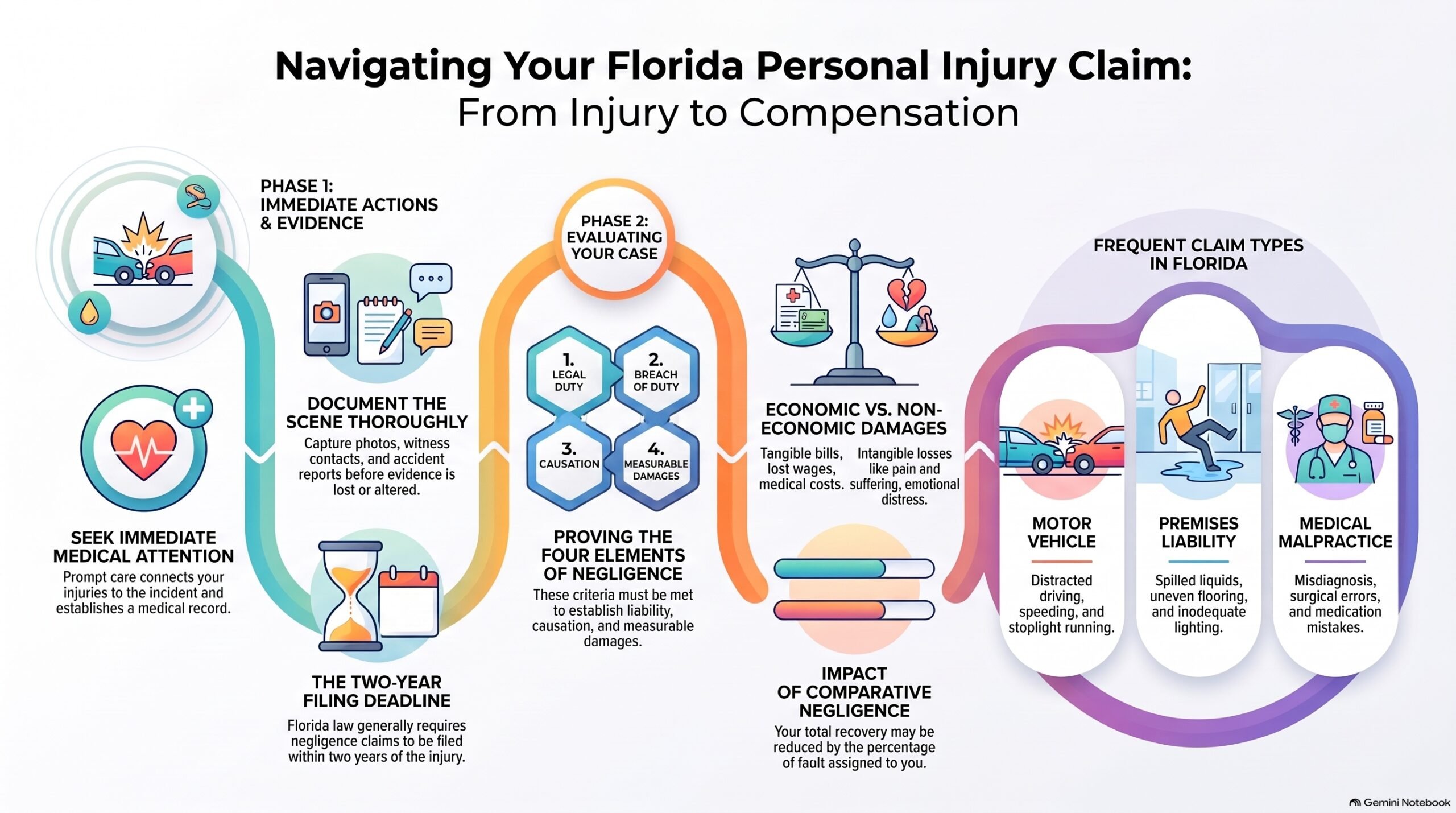
A Florida personal injury case generally involves evaluating whether another party’s conduct caused legally compensable harm. The analysis commonly examines duty, breach, causation, and damages, while considering the available evidence and applicable filing deadlines. Proving Negligence may require medical records, witness statements, photographs, expert opinions, and documentation showing how the injury affected daily life or earning capacity.
Insurance Disputes can complicate otherwise valid claims. An insurer may question responsibility, lessen the severity of an injury, challenge treatment, or assert that policy terms limit payment. Careful review of coverage, liability evidence, and settlement communications helps clarify the issues. A claim may resolve through negotiation, mediation, or litigation, depending on the strength of the evidence and the parties’ positions.
Throughout the process, responsible legal guidance supports accurate information gathering and respectful communication. A thorough evaluation also distinguishes immediate losses from future needs, helping ensure that compensation reflects the injury’s full impact without exaggerating or undercounting recoverable damages.
Common Causes of Florida Personal Injury Claims
Florida personal injury claims commonly arise from motor vehicle accidents and slip-and-fall injuries, often involving questions of negligence and liability. Workplace accidents may also result in compensable injuries when unsafe conditions or inadequate safety measures contribute to harm. Medical malpractice claims represent another significant category, arising when healthcare providers fail to meet applicable standards of care.
Motor Vehicle Accidents
Motor vehicle accidents are among the most common causes of Florida personal injury claims, often resulting from distracted driving, speeding, impaired operation, or violations of traffic laws. These collisions may involve passenger vehicles, motorcycles, commercial trucks, or pedestrians, creating substantial physical, financial, and emotional consequences for injured individuals. Truck Driving presents particular risks because large vehicles require greater stopping distances and can cause severe injuries during a crash. Stoplight Running is another frequent factor, as drivers who ignore traffic signals may strike vehicles lawfully proceeding through intersections. Florida personal injury claims may address medical expenses, lost income, property damage, rehabilitation, and other losses supported by evidence. Prompt medical attention, accident documentation, witness information, and professional legal guidance can help protect an injured person’s rights while promoting accountability and recovery.
Slip And Fall Injuries
When hazardous conditions on another party’s property cause someone to fall, the resulting injuries may support a Florida personal injury claim. Common hazards include spilled liquids, uneven flooring, inadequate lighting, loose mats, broken stairs, and debris in walkways. A property owner or occupier may have a duty to inspect for dangerous conditions, correct them, or provide reasonable warnings. Liability often depends on whether the responsible party knew, or should have known, about the hazard and failed to respond appropriately. Evidence such as photographs, incident reports, witness accounts, medical records, and surveillance footage can help establish the facts of premises liability. Property owners may raise wet-floor defenses, arguing that warnings were provided, the condition was transient, or that reasonable inspection procedures were followed. Prompt documentation and qualified legal guidance can help protect an injured person’s rights.
Workplace Accidents
Workplace accidents represent another significant source of Florida personal injury claims, particularly when unsafe conditions, inadequate training, defective equipment, or negligent supervision contribute to an employee’s injuries. Construction sites, warehouses, factories, offices, and transportation settings may expose workers to falls, struck-by incidents, machinery-related injuries, exposure to toxic substances, and vehicle collisions. Employers generally have responsibilities to maintain reasonably safe premises, provide appropriate safety training, and address known hazards promptly. Remote workers can also experience injuries arising from poorly arranged workstations, inadequate equipment, or repetitive strain, depending on the circumstances. Additionally, workplace harassment may create conditions that affect an employee’s safety and well-being. An injured worker may pursue workers’ compensation benefits and, in certain situations, a personal injury claim against a negligent third party. Preserving accident reports, photographs, medical records, and witness information can support a careful evaluation.
Medical Malpractice Claims
Medical malpractice claims may arise when a healthcare provider’s failure to meet the accepted standard of care causes a patient’s injury or worsens an existing condition. Common allegations include misdiagnosis, delayed diagnosis, medication errors, inadequate monitoring, and failures to provide appropriate treatment. Surgical Errors, such as operating on the wrong site, leaving an instrument inside the patient, or causing avoidable damage, may support a claim when negligence is established. Informed Consent also remains significant. Providers generally must explain material risks, benefits, and alternatives before treatment, allowing patients to make knowledgeable decisions. A successful claim typically requires evidence of a provider-patient relationship, a breached professional duty, causation, and measurable damages. Medical records, expert testimony, and timely legal guidance can help clarify what occurred and protect an injured patient’s rights.
Don’t Wait. Call Our Florida Personal Injury Lawyers Now!


Legal Rights of Florida Personal Injury Claims Injury Victims
Florida personal injury victims have legal rights that may allow them to seek compensation for medical expenses, lost income, property damage, pain and suffering, and other losses caused by another party’s negligence or wrongful conduct. Understanding those rights helps victims make informed decisions while protecting their families and communities.
Florida injury victims may seek compensation for medical costs, lost income, property damage, pain and suffering, and other losses resulting from negligence.
- Victims may pursue a claim against responsible parties when evidence establishes a legal duty, breach, causation, and damages.
- Insurance Coverage may provide benefits, although policy limits, exclusions, and disputed liability can affect available recovery.
- Under Comparative Negligence, a victim’s award may be reduced by the percentage of fault assigned to that victim.
- Florida law imposes deadlines for filing claims, making prompt investigation and preservation of records vital.
A qualified attorney can explain procedural requirements, communicate with insurers, gather supporting evidence, and evaluate settlement proposals. Victims also have the right to decline inadequate offers and seek judicial review when negotiations fail. Careful legal guidance promotes accountability and supports fair treatment throughout the claims process.
Why Do Personal Injury Claims Happen in Florida?
Why do personal injury claims arise? They generally arise when another person’s conduct, the condition of their property, or a failure to act creates an unreasonable risk of harm. Common causes include distracted or impaired driving, unsafe premises, defective products, workplace hazards, and professional negligence. In each situation, the injury must be connected to conduct that the law recognizes as wrongful.
Causation basics require a clear link between the alleged misconduct and the claimed physical, financial, or emotional losses. A collision alone does not establish responsibility; the circumstances must show that a careless or unlawful act substantially contributed to the harm. Comparative fault may also affect the outcome when multiple parties share responsibility.
The importance of evidence cannot be overstated. Medical records, incident reports, photographs, witness accounts, surveillance footage, and expert evaluations may help establish what occurred and whether the resulting losses were foreseeable. Careful examination of these facts allows a Florida personal injury lawyer to distinguish valid claims from unsupported allegations while promoting fair accountability for injured individuals.
What Should You Do After a Florida Personal Injury Claim?
After a Florida personal injury claim, the injured party should seek immediate medical care, even when symptoms initially appear minor. The accident should be documented promptly through photographs, witness information, medical records, and a detailed written account. Contacting a personal injury lawyer can help protect legal rights, evaluate potential claims, and guide communications with insurers.
Seek Immediate Medical Care
Prompt medical attention should be sought immediately following a personal injury, even if symptoms appear minor or develop later. A qualified healthcare professional can identify hidden conditions, provide appropriate treatment, and explain necessary follow-up care. Timely evaluation also protects an injured person from complications that may worsen without intervention.
Emergency vs. long-term care depends on the injury’s severity and the provider’s assessment. Emergency services may be necessary for severe pain, bleeding, breathing difficulty, loss of consciousness, or suspected fractures. Less apparent injuries may still require scheduled examinations, diagnostic testing, therapy, or referral to a relevant expert. Medical Evidence from these visits can establish the nature, timing, and progression of harm. Individuals should follow medical instructions, attend recommended appointments, and promptly communicate any changes in symptoms. Consistent care supports recovery while helping professionals understand the injury’s full impact.
Document The Accident
A person injured in Florida should document the accident as soon as it is safe to do so, while medical care remains the immediate priority. After treatment, the individual should create an Injury timeline that records the date, time, location, conditions, events, symptoms, and names of witnesses. Accurate notes can preserve details that may otherwise fade. Gathering photos of vehicles, property damage, roadway conditions, visible injuries, and surrounding signs may also clarify what occurred. Witness contact information should be collected when circumstances permit, without interfering with emergency assistance. The person should report the incident to the appropriate authority, employer, property owner, or insurer, depending on where it occurred. Reporting delays should be explained factually, especially when injuries or emergency treatment prevented immediate notice. Medical documentation, including discharge instructions and follow-up records, should be preserved carefully.
Contact A Personal Injury Lawyer
Consulting a Florida personal injury lawyer can help an injured person understand available legal rights, potential sources of compensation, and important deadlines. Early advice may also protect evidence and prevent statements or agreements from undermining a claim. During the first contact, the firm may provide a Vital intake checklist explaining what to bring, including medical records, photographs, insurance information, accident reports, witness contacts, and correspondence with involved parties. Clear documentation allows counsel to evaluate liability, injuries, and applicable coverage more efficiently. Initial consultation expectations commonly include a confidential discussion of the incident, questions about treatment, and a preliminary assessment of legal options. The lawyer can then explain fees, potential obstacles, and next-step guidance. Prompt, accurate communication helps an injured person make informed decisions while preserving the ability to support others.
Critical Evidence in a Florida Personal Injury Claims Case
A Florida personal injury claim is often strengthened by organized evidence that establishes liability, injuries, and financial losses.
The following records can provide crucial support for evaluating and proving the case:
- Accident scene evidence
- Medical records and bills
- Witness statements
- Insurance and employment documentation
Accident Scene Evidence
When an injury occurs, preserving evidence at the accident scene can be essential to establishing liability and documenting the full extent of a claimant’s losses. Photos and video documentation should capture vehicle positions, property damage, road conditions, traffic signals, lighting, weather, and visible hazards before conditions change. Witness names, contact information, and concise statements may help clarify how the incident occurred. A claimant or representative should identify the location of the traffic camera footage and promptly request preservation of the recordings, as systems may overwrite data quickly. Nearby businesses, residences, and public agencies may possess additional surveillance footage. Physical evidence, including damaged personal property, debris, skid marks, and defective equipment, should be preserved without alteration when safe and practical. Careful scene documentation can protect the interests of injured individuals and support a fair evaluation of responsibility.
Medical Records And Bills
Medical records and bills provide essential evidence of the injuries sustained in a Florida personal injury claim and the treatment required to restore them. These documents can connect the condition to the incident, establish treatment timelines, and demonstrate the seriousness of physical harm. Complete records may include emergency reports, diagnostic images, physician notes, prescriptions, therapy plans, and discharge instructions. Itemized bills help calculate healthcare costs, including past charges and reasonably anticipated future expenses. Effective documentation tips include requesting copies promptly, preserving every invoice, organizing records chronologically, and confirming that providers’ names and dates are accurate. Records should also reflect symptoms, limitations, and compliance with recommended care. A personal injury lawyer can review this evidence, identify missing information, and present it clearly to support fair compensation and responsible service to the injured person.
Witness Statements
Witness statements can provide important evidence in a Florida personal injury case by describing how the incident occurred, identifying the parties involved, and confirming the conditions surrounding the event. Independent observers may clarify traffic signals, lighting, weather, property conditions, or disputed conduct. Their accounts should be recorded promptly, while memories remain reliable, and should include contact information and the witness’s relationship to the parties. An attorney may conduct interviews, compare accounts, and identify inconsistencies through a careful credibility assessment. If litigation proceeds, statements can support deposition preparation and help organize questions about timing, visibility, and firsthand observations. Witnesses should provide truthful information without speculation or exaggeration. Preserving their accounts can assist the injured person, opposing counsel, and the court in fairly and accurately evaluating responsibility.
Insurance And Employment Documentation
Insurance and employment documentation can establish the financial consequences of a Florida personal injury claim and clarify the sources of available compensation. Insurance policies may reveal policy limits, applicable exclusions, additional coverage, and procedures that affect settlement discussions. Correspondence regarding a claim denial can identify disputed facts, missed deadlines, or incomplete information that requires prompt correction. Employment files also document lost income and diminished earning capacity. Payroll records, tax forms, benefit statements, and attendance histories can demonstrate wages the injured person could not earn during recovery. Supervisor reports may confirm missed shifts, reduced duties, changes in performance, or workplace accommodations. Carefully preserving these materials helps counsel present an accurate damages claim while protecting the individual’s interests. Organized documentation can also assist insurers, employers, and courts in evaluating compensation fairly and efficiently.
Long-Term Effects of Florida Personal Injury Claims Injuries
Florida personal injury claims may result in chronic pain, lasting disability, and significant limitations on a person’s daily activities. Emotional and psychological effects, including anxiety, depression, and trauma-related symptoms, may also continue long after the initial incident. These conditions can require ongoing medical treatment and create substantial expenses that should be considered when evaluating a claim.
Chronic Pain And Disability
When injuries from a personal injury claim result in chronic pain or permanent disability, the effects may extend far beyond the initial medical treatment. Ongoing symptoms can limit mobility, reduce independence, and interfere with employment, household responsibilities, and ordinary daily activities. A qualified medical team may recommend pain management options, physical therapy, assistive devices, medication, or additional procedures based on the person’s condition and prognosis. Consistent treatment helps document continuing limitations and may support a clearer assessment of future care needs. Disability documentation should include medical records, functional evaluations, work restrictions, and statements describing how the injury affects routine tasks. Accurate records can assist legal professionals in evaluating lost income, diminished earning capacity, medical expenses, rehabilitation costs, and necessary services that may be required throughout the injured person’s life.
Emotional And Psychological Effects
Chronic pain or permanent disability may also produce significant emotional and psychological effects that require separate medical attention. Individuals may experience anxiety, depression, irritability, sleep disruption, or withdrawal from relationships and previously meaningful activities. Some develop PTSD symptoms, including intrusive memories, heightened alertness, avoidance, and distress when reminded of the injury. These conditions can affect concentration, employment, family responsibilities, and the ability to participate confidently in daily life. Psychological harm may appear immediately or emerge months after the event, making careful observation important. Licensed mental health professionals can evaluate symptoms, provide counseling, and support trauma recovery through evidence-based treatment. Compassionate family members, advocates, and community supporters may also help reduce isolation while respecting each person’s pace and privacy. Documenting these effects can clarify their seriousness during a personal injury claim.
Ongoing Medical Expenses
Although an injury may appear medically stable, it can create ongoing expenses for treatment, monitoring, medication, rehabilitation, medical equipment, and related transportation. These costs may continue for months or years, particularly when an injury causes chronic pain, reduced mobility, or permanent functional limitations. A careful assessment should consider current bills as well as projected expenses for Future Treatment, including consultant visits, procedures, therapy, and assistive devices. Medication Documentation can help establish prescription names, dosages, refill frequencies, and associated costs, providing useful evidence of ongoing medical needs. Records should also include transportation receipts, equipment invoices, insurance statements, and provider recommendations. A Florida personal injury claims lawyer may consult medical and financial professionals to estimate future expenses and present them clearly. This approach supports fair compensation and helps protect the injured person’s long-term access to necessary care.
Don’t Wait. Call Our Florida Personal Injury Lawyers Now!
Proving Liability in Florida Personal Injury Claims
Proving liability in a Florida personal injury case requires evidence establishing that the defendant owed the injured party a legal duty, breached that duty, and caused the resulting injuries and losses. Relevant proof may include photographs, surveillance recordings, incident reports, witness statements, medical records, and testimony from qualified experts. Each item should help connect the defendant’s conduct to the event and demonstrate why the conduct fell below a reasonable standard of care.
Florida’s comparative negligence rules may reduce recovery when the injured person contributed to the incident. Accordingly, the evidence should address all material circumstances, including warnings, safety practices, visibility, and the actions of each involved party. Careful documentation also supports proving damages by establishing the nature, extent, and duration of physical harm, lost income, property damage, and other legally recognized losses. An attorney serving injured individuals can organize these facts, identify evidentiary weaknesses, and present a coherent claim grounded in applicable Florida law.
Dealing With Insurance Companies After a Florida Personal Injury Claim
After a personal injury in Florida, dealing with insurance companies requires careful communication and a clear understanding of the claim’s value. An insurer may request statements, medical records, employment information, and authorization forms while evaluating liability and damages. Claimants should provide accurate facts and avoid speculation, admissions, or recorded statements until they have obtained informed legal guidance.
Strong organization supports fair communication. Relevant evidence may include the police report, photographs, witness contact information, medical bills, treatment records, and proof of lost income. Survival documentation, including records showing continuing symptoms, necessary assistance, or lasting limitations, can help demonstrate the injury’s ongoing impact. Copies should be retained, and every conversation, letter, offer, and deadline should be documented.
Insurance adjusters represent the insurer’s financial interests, not the injured person’s welfare. A prompt settlement offer may exclude future medical expenses, reduced earning capacity, or non-economic losses. A careful review enables an authorized representative to protect the claimant’s interests and communicate respectfully while seeking compensation that reflects the documented harm.
What to Expect During a Florida Personal Injury Claim Process
A Florida personal injury claim typically begins with an initial case evaluation, followed by the collection and review of evidence supporting liability and damages. The claimant’s legal team may then negotiate with the insurance company to pursue appropriate compensation. If settlement efforts fail, the matter may proceed to trial, where the evidence and legal arguments will be presented to a court.
Initial Case Evaluation
During an initial case evaluation, a Florida personal injury lawyer reviews the circumstances of the incident, the available evidence, and the claimant’s resulting injuries or losses. The attorney typically discusses the Florida injury timeline, including when the incident occurred, when medical care began, and how symptoms developed. This discussion helps determine whether deadlines, liability issues, or insurance requirements may affect the potential claim. The claimant may also receive an Evidence preservation checklist identifying records to be retained, such as medical bills, correspondence, and photographs, without initiating a formal evidence collection process. The lawyer assesses applicable legal theories, potential damages, and practical obstacles, and explains the expected procedures. A clear evaluation allows the claimant to make informed decisions and helps the attorney determine whether representation could effectively support the claimant’s interests and recovery.
Evidence Collection Process
Once representation begins, the Florida personal injury claims evidence collection process involves gathering and organizing materials that may establish liability, causation, and the extent of the claimant’s damages. Counsel may obtain medical records, bills, diagnostic images, employment documentation, incident reports, photographs, surveillance footage, witness statements, and relevant communications. The claimant may be asked to preserve electronic messages, maintain treatment records, and accurately describe symptoms, limitations, and daily impacts. Attorneys can inspect the incident location, identify responsible parties, and consult qualified professionals when technical opinions are necessary. This organized record supports methods of damages valuation by linking documented losses to the injury and its consequences. It may also inform later insurance negotiation tactics, although evidence collection itself focuses on preserving facts rather than presenting settlement demands or negotiating coverage.
Insurance Negotiations
With the relevant evidence organized, insurance negotiations become the stage at which the claimant’s documented losses and legal position are presented to the insurer. The claimant’s representative typically submits a demand supported by medical records, invoices, employment documentation, and an explanation of liability. The insurer reviews these materials, evaluates policy coverage, and may request additional information before responding. Adjusters can question treatment, dispute responsibility, or raise Coverage denials based on policy language or alleged exclusions. A careful response addresses factual and legal issues without overstating the evidence. Negotiations may involve several written exchanges as both sides assess damages and applicable limits. Throughout this process, clear communication helps protect the claimant’s interests and supports a fair settlement of the claim. Counsel also explains proposed terms so the claimant can make an informed decision.
Settlement Or Trial
A Florida personal injury claim may resolve through a negotiated settlement or proceed to trial if the parties cannot reach an acceptable agreement. During settlement discussions, each side evaluates liability, medical documentation, lost income, future needs, and the strength of the evidence supporting the claim. Insurance representatives may use negotiation tactics such as disputing facts, delaying responses, or making low initial offers. A claimant’s legal representative can organize records, communicate with insurers, and seek compensation that reflects the full impact of the injury. If settlement efforts fail, litigation may begin with pleadings, discovery, depositions, expert opinions, and pretrial motions. At trial, a judge or jury considers admissible evidence before determining responsibility and damages. Because litigation involves uncertainty, expense, and time, careful case preparation helps protect the claimant’s interests while supporting a fair resolution for all affected parties throughout the process.
Compensation for Florida Personal Injury Claims: Injury Damages
Florida personal injury damages may compensate an injured person for losses caused by another party’s negligence or wrongful conduct. Potential recovery depends on the facts, severity of the harm, available insurance, and evidence establishing liability. A claim may arise from a vehicle collision, Faulty equipment, medical negligence, or premises liability involving unsafe property conditions.
Florida law may also permit punitive damages when the responsible party’s conduct reflects intentional misconduct or gross negligence, rather than ordinary carelessness. These damages are designed to punish especially wrongful behavior and deter similar conduct, although they are not available in every case. The injured person must generally prove the legal elements of the claim and establish a causal link between the defendant’s conduct and the injury.
Comparative negligence can reduce compensation when the injured person contributed to the event. Courts may assign percentages of responsibility and adjust an award accordingly. An experienced attorney can help preserve evidence, identify responsible parties, and pursue compensation through negotiation or litigation while supporting the injured person’s recovery.
Economic vs Non-Economic Damages in Florida Personal Injury Claims Cases
Florida personal injury claims may include economic damages, such as medical expenses, lost income, and other measurable financial losses. Non-economic damages address less tangible harm, including pain and suffering, emotional distress, and diminished quality of life. Comparing these damage types helps establish the full extent of compensation potentially available under Florida law.
Economic Damages Explained
When a personal injury claim proceeds in Florida, damages are generally divided into economic and non-economic categories to measure the harm caused by another party’s conduct. Economic damages represent measurable financial losses supported by records, invoices, employment information, and other documentation. They may include emergency treatment, hospital services, medication, rehabilitation, medical equipment, transportation for necessary care, and anticipated future medical expenses. Lost wages and reduced earning capacity may also qualify when the injury limits employment or permanently affects a person’s ability to work. A careful evaluation should account for continuing needs rather than only expenses incurred before filing. Comparative negligence can reduce the recoverable amount if the injured person shares responsibility. The settlement timeline often depends on medical recovery, evidence collection, and reliable calculation of these losses.
Non-Economic Damages Defined
Non-economic damages compensate for personal harm that cannot be measured through bills, wage records, or other direct financial documentation. In Florida personal injury claims, these damages may address pain, emotional suffering, mental anguish, inconvenience, disfigurement, and reduced enjoyment of life. They recognize that an injury can affect dignity, relationships, independence, and daily functioning even when those consequences lack an exact monetary value. The claimant generally must present evidence showing how the incident changed physical or emotional well-being. Medical observations, testimony from family members, personal accounts, and treatment records may help establish the injury’s broader impact. Non-economic damages differ from punitive damages, which are intended to punish exceptionally wrongful conduct and deter similar behavior. A careful assessment helps ensure that an injured person’s less visible losses receive meaningful legal consideration.
Comparing Damage Types
Although both categories seek to compensate an injured person, economic and non-economic damages address different consequences of an accident. Economic damages cover measurable financial losses, including medical treatment, rehabilitation, lost wages, reduced earning capacity, property damage, and necessary future care. These pecuniary payouts can generally be supported by bills, employment records, expert assessments, and other documentation.
Non-economic damages address losses for which there is no precise invoice. They may include pain and suffering, emotional distress, disfigurement, loss of enjoyment of life, and diminished relationships. Their valuation depends on the injury’s severity, duration, treatment, and effect on daily activities. Florida personal injury claims may involve both categories, allowing for a more complete assessment of the harm sustained. Careful evidence collection helps present the injured person’s circumstances accurately and supports a fair resolution for those seeking meaningful assistance.
When a Florida Personal Injury Claim Goes to Trial vs. Settlement
A Florida personal injury claim may resolve through settlement or proceed to trial, depending on the strength of the evidence, the extent of the damages, and the parties’ willingness to reach an agreement. Settlement discussions typically involve reviewing medical records, employment documentation, witness accounts, and other proof of harm. An effective Insurance negotiation strategy evaluates liability, future needs, and the risks of accepting or rejecting an offer.
Trial becomes more likely when insurers dispute responsibility, damages, or the value of a claim. The court process requires presenting admissible evidence, questioning witnesses, and explaining how the injury affected daily life. A realistic trial preparation timeline may include depositions, expert consultations, motion practice, and testimony preparation.
Although trial can provide a formal decision, it also creates uncertainty, expense, and delay. Settlement offers greater control and finality, while trial may be necessary when fair resolution remains unavailable. Careful legal guidance helps injured individuals make informed decisions while preserving their ability to serve family, work, and community.
Florida Laws That May Affect Your Florida Personal Injury Claims Case
Florida personal injury claims are governed by laws that can affect liability, available damages, filing deadlines, and the evidence required to establish a case. Several legal principles may shape how an injured person receives assistance and compensation.
Florida personal injury laws shape liability, compensation, evidence requirements, and deadlines, making knowledgeable legal guidance essential.
- Comparative negligence rules: Florida may reduce a recovery when the claimant shares responsibility for the incident. Evidence concerning conduct, causation, and fault consequently requires careful evaluation.
- Damage limitations: Statutes and case law can influence recoverable medical expenses, lost income, property damage, and noneconomic losses. Government defendants may face additional restrictions.
- Evidence requirements: Records, witness accounts, photographs, expert opinions, and timely preservation of physical evidence can support a credible claim and promote fair resolution.
- Filing deadlines: Applicable deadlines vary depending on the injury, defendant, and procedural circumstances. Early legal review helps prevent avoidable loss of rights without addressing the separate statute-of-limitations discussion.
A qualified Florida personal injury attorney can interpret these rules, communicate with the involved parties, and pursue an outcome that supports the injured person, their family, and the broader community.
Don’t Wait. Call Our Florida Personal Injury Lawyers Now!
The Statute of Limitations for Florida Personal Injury Claims
Time limits can determine whether an injured person may pursue a Florida personal injury claim in court. Florida generally provides two years from the date of an injury to file a negligence action, although exceptions may alter that deadline. Claims involving medical negligence, governmental entities, minors, or delayed discovery can involve distinct notice requirements or limitation periods. A court may dismiss an otherwise valid claim when filing occurs after the applicable period expires.
Wrongful death eligibility also depends on timely action. Florida generally requires a wrongful death lawsuit to be filed within two years after the person’s death, subject to limited exceptions. Determining the correct deadline requires attention to the injury date, the identity of the responsible party, and applicable statutory provisions. Comparative Negligence Factors may affect the amount recoverable, but they generally do not extend the filing period. Preserving records, identifying witnesses, and reviewing dates promptly can support informed decisions and protect a claimant’s opportunity to seek lawful relief.
How a Florida Personal Injury Claims Lawyer Can Help You
Once the applicable filing deadline is identified, a Florida personal injury claims lawyer can help protect the claimant’s legal rights and evaluate the strength of the case.
The lawyer may coordinate services that support an injured person and the family members assisting with recovery.
- Evidence preservation: Counsel can secure medical records, photographs, witness statements, employment documentation, and other materials before they are lost or altered.
- Case valuation: A careful review of injuries, treatment, lost income, future needs, and available insurance helps estimate a claim’s potential value.
- Insurance negotiation: The lawyer can communicate with insurers, address disputed facts, and assess settlement offers without allowing pressure to dictate decisions.
- Settlement strategy: Counsel can develop a resolution plan based on liability evidence, damages, medical progress, and the claimant’s long-term interests.
These services can reduce administrative burdens while promoting fair treatment. A lawyer may also clearly explain legal options, helping the claimant make informed decisions and preserve resources for recovery.
When to Contact a Florida Personal Injury Claims Lawyer
Prompt legal guidance is often most valuable immediately after an injury, before evidence deteriorates or insurers begin shaping the claimant’s account of events. A Florida personal injury claims lawyer should be contacted when medical treatment is ongoing, injuries appear serious, or responsibility is disputed. Early consultation can help preserve photographs, witness details, accident reports, and relevant communications without interfering with recovery.
Contact is also appropriate when an insurer requests a recorded statement, offers a quick settlement, or delays the evaluation of a claim. A lawyer can explain available options, identify harmful assumptions, and organize an insurance evidence checklist tailored to the incident. If bills are accumulating, assistance with Medical bill negotiations may help address disputed charges while the claim develops.
Individuals assisting injured family members should seek guidance when communication becomes difficult, documentation is incomplete, or deadlines may apply. Consultation does not require immediate litigation. It provides a structured opportunity to assess circumstances, protect information, and make informed decisions while treatment and claim review continue.
Why You Need an Experienced Florida Personal Injury Claims Lawyer
An experienced Florida personal injury claims lawyer provides informed guidance when liability, insurance coverage, and damages require careful assessment. Such counsel helps protect an injured person’s legal interests while coordinating communication with insurers, medical providers, and other involved parties. This support allows the individual to focus on recovery and ongoing responsibilities to family, coworkers, or the broader community.
A lawyer also develops a negotiation strategy based on documented losses, applicable policy limits, and the long-term effect of the injury. Insurers may present offers that do not reflect future treatment, diminished earning capacity, or related expenses. Experienced legal review can identify these deficiencies and support a more accurate claim.
Knowledge of settlement timelines helps manage expectations and prevent avoidable delays. Counsel can monitor deadlines, preserve evidence, and explain when settlement discussions may be appropriate or when litigation becomes necessary. By applying careful preparation and informed judgment, an experienced attorney promotes a fair process and helps ensure that available compensation serves the injured person’s legitimate needs.
How to Choose the Right Florida Personal Injury Claims Lawyer for Your Case
Selecting the right Florida personal injury claims lawyer requires careful consideration of the attorney’s experience, communication practices, and record of handling cases similar to the injury involved. Reviewing case experience can help determine whether the lawyer understands the medical, financial, and legal issues commonly associated with comparable claims. A prospective client may examine professional credentials, disciplinary history, prior results, and client reviews while avoiding conclusions based solely on advertising.
The lawyer’s communication style also warrants close attention. Clear explanations, realistic assessments, and timely responses can help an injured person make informed decisions during a demanding process. The initial consultation may reveal whether the attorney listens carefully, answers questions directly, and explains fees and responsibilities in understandable terms. It is also useful to ask who will manage daily communications and how updates will be provided. A suitable lawyer should demonstrate sound judgment, respect the client’s objectives, and possess the resources necessary to investigate evidence, document losses, and pursue a fair resolution.
About The Law Offices of Anidjar & Levine
The Law Offices of Anidjar & Levine represents individuals pursuing compensation after accidents and other personal injuries throughout Florida.
Its attorneys assist clients who may face medical expenses, lost income, property damage, and long-term personal challenges following an incident.
The firm handles matters involving motor vehicle collisions, workplace injuries, premises liability, wrongful death, and other negligence-based claims.
Legal professionals review available evidence, communicate with insurers, and evaluate damages to help clients understand their options.
This support can enable injured individuals and their families to focus on medical recovery and critical responsibilities.
The Anidjar Levine Reputation is associated with responsive representation and attention to each client’s circumstances.
Through a Client-Focused Approach, the firm seeks to explain legal developments clearly, prepare claims thoroughly, and pursue appropriate compensation through negotiation or, when necessary, litigation.
Its work reflects a commitment to serving people during difficult periods while maintaining professional standards, careful case preparation, and individualized guidance throughout the legal process for Florida residents.
Frequently Asked Questions
Can I Afford to Hire a Florida Personal Injury Claims Lawyer?
Many injured individuals can afford legal representation because personal injury attorneys commonly work on a contingency fee basis, receiving payment only if compensation is recovered. This arrangement may reduce or eliminate upfront costs, although the written agreement should specify the percentage charged, case expenses, and who is responsible for costs if the claim is unsuccessful. A careful consultation allows the individual to assess affordability, protect personal interests, and choose counsel committed to serving clients responsibly.
Will My Personal Injury Claim Affect My Immigration Status?
Generally, filing a personal injury claim does not affect an individual’s immigration status. Seeking compensation for medical treatment, lost income, or suffering is a civil matter, not an immigration violation. A claim ordinarily has no Criminal record impact and should not create Work permit effects. However, immigration consequences may arise from separate criminal conduct, misrepresentation, or certain public-benefit issues. An experienced attorney can coordinate with qualified immigration counsel to protect the claimant’s rights.
Can Family Members Attend Meetings With My Personal Injury Lawyer?
Yes, family members may usually attend meetings with a personal injury lawyer with the client’s consent. The lawyer should confirm who may participate and explain confidentiality obligations, because the client retains a right to privacy. Caregiver attendance may be appropriate when someone assists with communication, transportation, or decision-making, but it should be discussed beforehand. In certain circumstances, additional participants could affect attorney-client confidentiality, so the client’s interests must remain central.
What Happens if the At-Fault Person Has Died?
If the at-fault person dies, the injured party’s claim may continue against the deceased person’s estate, subject to applicable deadlines and asset limitations. Wrongful death options may arise if the injury caused death, but claim eligibility depends on state law and qualifying relationships. Evidence preservation remains critical, including medical records, photographs, reports, and witness information. The insurance process may continue, although insurers and estate representatives will evaluate liability, coverage, and damages.
Can I Change Lawyers During My Personal Injury Claim?
Yes, a claimant can generally change lawyers during a personal injury claim, particularly when communication, strategy, or trust has deteriorated. Switching Attorneys should begin with reviewing the current representation agreement and consulting prospective counsel. Consent Requirements may include notifying the former lawyer in writing and, if litigation has already commenced, obtaining court approval. The lawyers must resolve fees and the case file transfer while preserving deadlines, evidence, and the claimant’s legal interests.
—————————
Florida personal injury claims may involve significant medical expenses, lost income, and long-term consequences.
Understanding legal rights, applicable deadlines, and potential compensation is essential to protecting a claim.
An experienced Florida Personal Injury Lawyer can evaluate the circumstances, establish liability, communicate with insurers, and pursue an appropriate recovery.
The Law Offices of Anidjar and Levine provide informed legal guidance to individuals seeking accountability and compensation after an injury.
Prompt consultation may help preserve important evidence and strengthen the case.