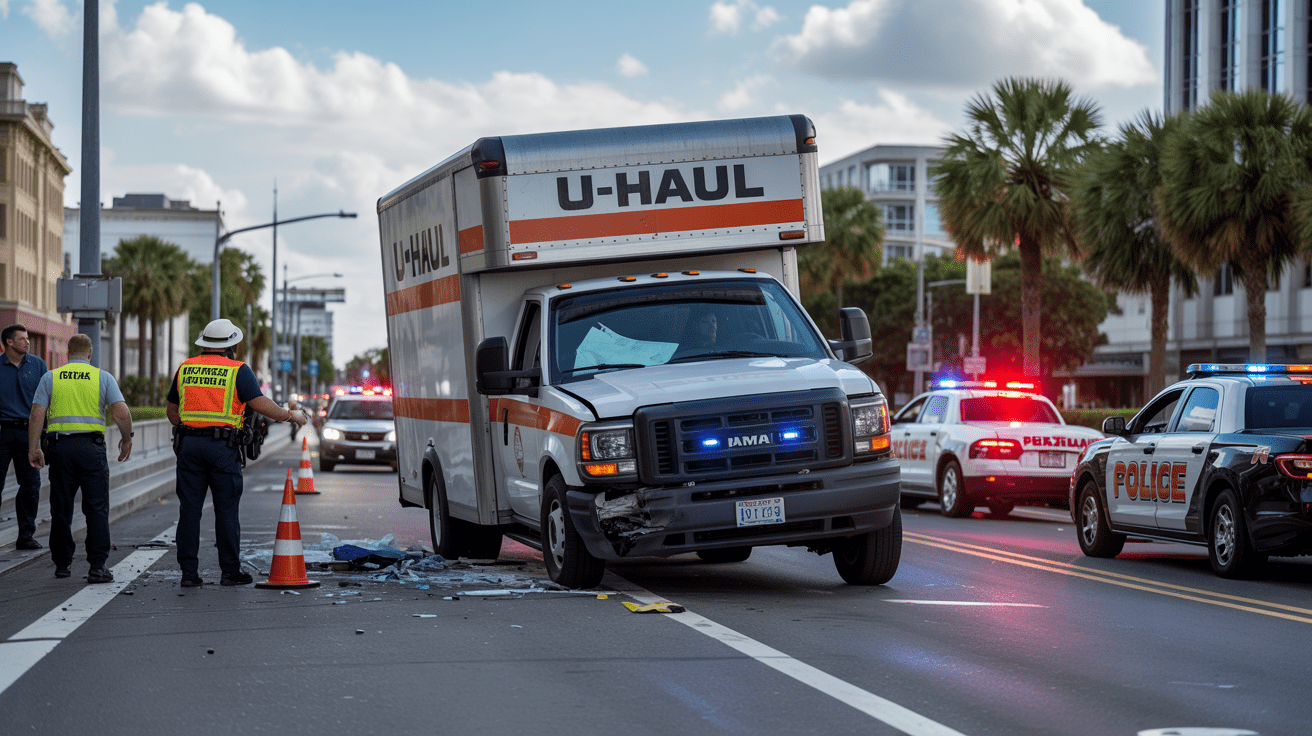
You know, renting a moving truck, it seems so simple. Right? But what happens when it all goes terribly wrong? Well, today we’re gonna unpack the surprisingly complex world of liability in rental truck accidents.
Learn More: Tampa U-Haul & Rental Truck Accident Lawyer
I mean, think about it. You sign a few papers, they hand you the keys, and boom, you’re off, hauling your life stuff across town. It feels just like driving a big car, doesn’t it? But is it really that simple? As we’re about to find out, the answer is a hard no.
And look, this isn’t just some harmless misunderstanding. It’s a really dangerous assumption. In fact, it’s a huge reason why so many of these awful preventable accidents happen on our roads. And the consequences? They can be absolutely devastating for everyone involved.
So here’s what we’re diving into today. We’ll start with the hidden dangers you might not think about. Then we’ll try to untangle this crazy web of liability. We’ll look at the company’s responsibilities, walk through what to do right after an accident, break down what fair compensation looks like, and finally, we’ll talk about a critical deadline you absolutely cannot afford to miss.
Alright, let’s get right into it. The hidden dangers. What is it that makes these trucks so different from the car you drive every day? Well, the risks are bigger than you think, and they are often seriously underestimated.
Let’s start with the big one: driver inexperience. These trucks need way, way more room to stop and take much wider turns than you’re used to. Then there’s how you load it. If that cargo isn’t balanced right, the truck can become dangerously unstable, and that’s a recipe for a rollover.
And you gotta talk about the massive blind spots. There’s no rearview mirror, just these huge zones on both sides where a whole car can just disappear. All of this gets worse when you remember that unlike professional commercial drivers, regular folks get practically no training at all. So when one of these accidents does happen, who’s actually to blame?
It is rarely a simple one person answer.
Figuring out who’s legally on the hook is like trying to solve a really complex puzzle. And this really shows you just how tangled that web can get. See the blame doesn’t always land squarely on the driver. It can actually be shared among a bunch of different parties from the rental company all the way to the people who made the truck. And this is so important, because if you’re injured, it can mean there are multiple avenues to seek compensation. Yeah, the driver is often the first person you think of, right?
Speeding, looking at their phone, just not knowing how to handle the truck. But what if the rental company never bothered to check the brakes? Or what if the manufacturer put out a batch of bad tires? A mechanic could be at fault for a shoddy repair job, or even a professional moving company if they’re the ones who loaded the truck and didn’t secure the cargo properly. Okay, now let’s zoom in a bit on the rental company itself. You might be surprised to learn they have some pretty hefty legal protections, but, and this is key, those protections aren’t bulletproof.
So there’s a federal law called the Graves Amendment and it basically acts like a shield for rental companies protecting them from being sued for the mistakes their renters make. It makes sense, right? You don’t want to hold them responsible for every single driver. However, in states like Florida, there are some really critical exceptions.
If the company itself was negligent, say they skipped a safety check or knew about a problem and rented the truck out anyway, that federal protection could just go right out the window. Now this is where it gets really interesting. This concept of gross negligence. You know those liability waivers you sign?
Well, they can often be thrown out if you can prove the company’s behavior was just that reckless. So, for example, if a company knew a truck’s brakes were bad but rented it to someone anyway, well that’s not just a mistake, that’s a conscious disregard for safety. That’s gross negligence. And it could make that waiver totally worthless.
Knowing the law is one thing, but if you actually find yourself in this awful situation, what you do in those first few moments and hours after a collision is absolutely crucial for protecting yourself.
Okay, if you’re ever in an accident, here are the six things you have to do. First and foremost, make sure everyone is safe and call nine eleven immediately. Then, pull out your phone and photograph everything, the damage to the cars, the road, any injuries.
Next, exchange all your insurance and contact info, and just as important, get the names and numbers of anyone who saw what happened. And this is a big one: write down the rental truck’s specific ID number. And finally, always, always get a copy of the police report.
So, once the scene is safe, what comes next? Well, it’s all about understanding what you can actually claim in terms of compensation. These are called damages, and they’re designed to cover a whole lot of different losses.
So damages pretty much fall into three main buckets. First, you’ve got economic damages. This is the stuff you can put a number on. Medical bills, the wages you lost because you couldn’t work, car repair costs.
Then, you have non economic damages. This is for the personal, intangible stuff like pain and suffering or emotional trauma. And finally, in really extreme cases, there are punitive damages. These aren’t about paying you back.
They’re about punishing the at fault party for truly awful behavior.
Alright, last but certainly not least, and honestly this might be the most important thing you hear today. You have to understand that your time to take legal action is not limited, not even close.
The law doesn’t care if you’re ready. The second that accident happens, a legal countdown starts, and if you let that clock run out, you could lose your right to get any compensation forever. In Florida, that countdown is two years. You generally have just two years from the date of that accident to file a lawsuit.
And let me be clear, this is a hard and fast deadline. If you miss it, it doesn’t matter how strong your case is, it’s over. The courthouse doors are closed on that claim for good. So it all leaves us with a really big question, doesn’t it?
When something that seems so simple like renting a truck can lead to such a complicated mess, who really holds the ultimate responsibility for keeping everyone safe on the road? It’s something to think about next time you see one of those trucks go by.