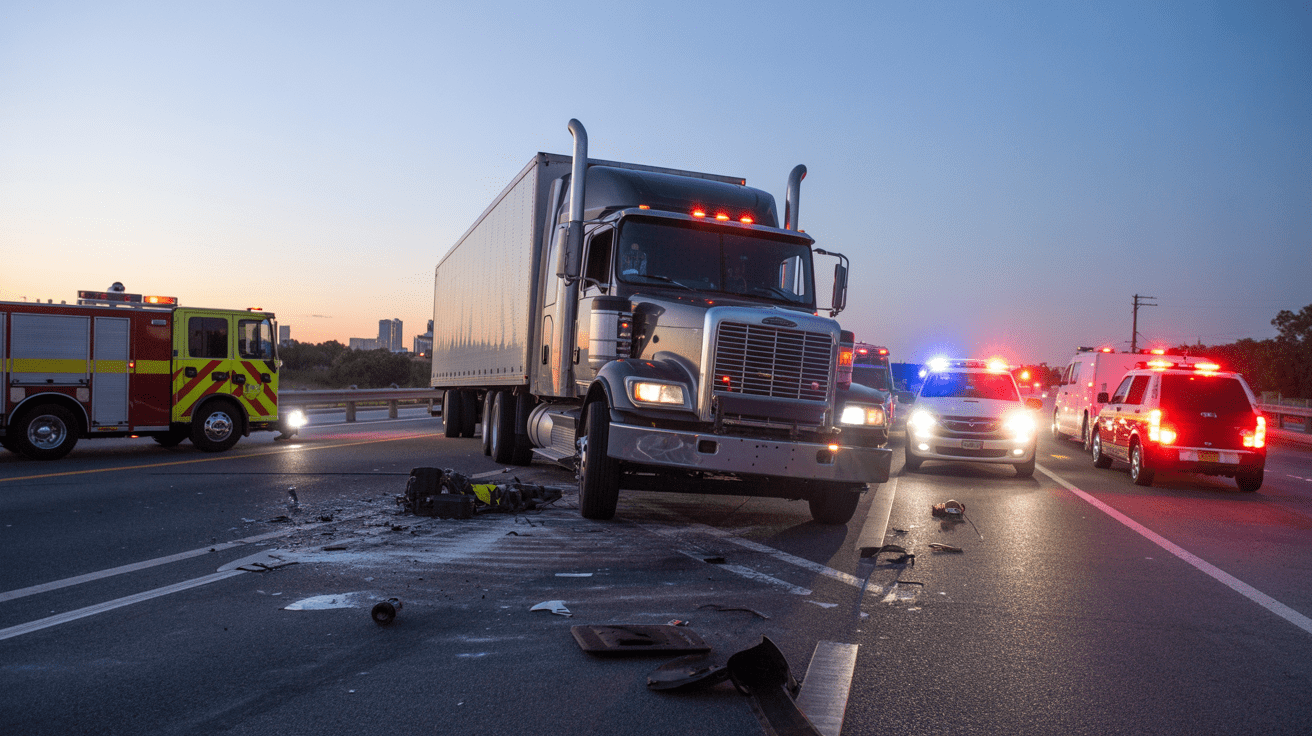
Alright. Let’s get right into it. We’re all out there on the roads, sharing them with these massive commercial trucks. But there’s this hidden danger that most of us don’t really think about, driver fatigue.
Learn more: Tampa Fatigued Truck Driver Accident Lawyer
It is a silent threat, one that can turn your everyday commute into a life changing disaster in just a split second. So let’s unpack why this happens, take a hard look at the devastating impact, and most importantly, talk about what you need to know if the unthinkable happen. To really wrap your head around the sheer scale of this risk, just look at this number, eighty thousand pounds. That’s what a fully loaded commercial truck can weigh.
Now imagine the person behind the wheel of all that weight is drowsy. They’re not just driving a truck anymore. They’re basically piloting a battering ram. The consequences, as you can guess, are just catastrophic.
Now, here’s something that might surprise you. We tend to think of impaired driving as, you know, being about alcohol or drugs. But modern sleep science tells a different story. Just look at this comparison.
Drowsy driving impairs reaction time, decision making, spatial awareness. Sound familiar? It’s practically identical to other forms of impaired driving. Make no mistake, a tired driver is an impaired driver.
So let’s start by digging a little deeper into this eighty thousand pound danger so we can all understand the risk that’s out there on our roads every single day. But that really begs the question, right? Why are so many of these drivers so exhausted to begin with? Well, as we’re about to see, it’s rarely just one bad decision.
It’s often a much bigger systemic problem that’s all rooted in the immense pressure to just keep driving. You know, there’s actually a huge safety net that’s supposed to prevent this exact problem. They’re called the hours of service regulations. These are federal rules with one crystal clear purpose, to limit driving hours and keep dangerously tired drivers off the road.
This is supposed to be the bedrock of safety in the industry. And inside those regulations, this is the key number, eleven.
That’s the absolute maximum number of hours a driver is legally allowed to be behind the wheel in a single day. It sounds so simple, but you would be absolutely floored by how often this one rule gets bent or just plain broken with truly tragic results.
So when you look at the big picture, the problem usually boils down to these four key culprits. You’ve got drivers who are violating those hours of service rules we just talked about. You have a ridiculously demanding delivery schedules pushing them to the brink. You have rest breaks that are either skipped entirely or are so low quality they don’t do any good.
And then there’s the issue of undiagnosed medical conditions that can seriously mess with a driver’s alertness. And this quote, man, it just hits the nail right on the head. It really gets to the heart of the conflict here. Companies create these delivery schedules that are basically impossible to meet without breaking the rules.
So drivers get stuck in this awful position where they have to choose, do I keep my job or do I follow the safety regulations?
And this leads to what you can only call a vicious cycle of inadequate rest. It’s not just about skipping a break here and there. Look at the cause and effect. Even if a driver does stop, the quality of that rest is everything.
If the only available rest stop isn’t safe, or it’s noisy, or just plain awful, they can’t get the restorative sleep they desperately need. And that puts all of us at risk. And you know, sometimes the cause isn’t about schedules at all, it’s medical. Conditions like sleep apnea, which literally stops you from breathing properly while you sleep, can leave a driver dangerously tired no matter how long they’re off the clock.
The same goes for certain prescription meds that have drowsiness as a side effect. This is exactly why thorough, regular medical screenings for all commercial drivers are so unbelievably critical. Okay, so we’ve talked about the causes. Now we need to shift our focus to the consequences.
Because when one of these preventable accidents does happen, the aftermath for the victims is, well, it’s profound. It often lasts a lifetime. We’re not just talking about a totaled car or a broken arm. We’re talking about a person’s entire life being changed forever.
This chart really breaks down those long term impacts into four main categories. And as you can see, it’s just this devastating combination of chronic pain, deep psychological trauma, cognitive problems, and a financial burden that can feel absolutely crushing. Each one of these is life altering on its own, but victims often have to deal with all four at the same time.
Let’s just talk about the physical side for a second. We’re talking about pain that just doesn’t go away. Chronic pain that needs constant management with therapy, with medication. This can easily lead to permanent disabilities that stop someone from working, from playing with their kids, from living the life they had before the crash.
And then you have the invisible wounds. And honestly, these can be even more debilitating. Things like PTSD, crippling anxiety, and depression are incredibly common.
But so are cognitive issues, you know, memory loss, not being able to concentrate. And the cruelest irony? Many victims end up developing chronic sleep problems themselves, literally haunted by the trauma of the accident. And on top of all of that, the physical pain, the mental anguish comes the financial strain, and it is immense.
It’s like a snowball effect. The medical bills for all the ongoing care just keep piling up, and at the exact same time, the victim’s ability to earn a living is often drastically reduced if not wiped out completely. This financial pressure just poisons everything. So after hearing all of that, which I know is incredibly heavy, let’s talk about the path forward.
Let’s talk about recovery. If something like this ever happens to you or someone you love, what are your rights? What are the absolute first things you need to do? Okay.
In the chaos right after a crash, these three steps are nonnegotiable. First, document everything you possibly can at the scene. Photos, videos, witness phone numbers, it is all vital. Second, get medical care immediately, even if you think you feel fine.
Adrenaline is a powerful thing, and it can hide very serious injuries. And third, contact legal counsel as soon as you can to protect your rights and make sure crucial evidence doesn’t disappear. And it is so, so important to understand your legal rights. This includes the right to a full investigation, to look at the driver’s logs, the company’s safety records, all of it.
It means you have the right to seek full compensation for everything you’ve lost, not just the medical bills And crucially, you have the right to hold more than just the driver accountable. The trucking company itself could be liable. This stuff gets complicated fast, which is why the right to have good legal representation is so essential. So how is fatigue actually proven in a legal case?
Well, investigators look for several key types of evidence. They’ll pore over the driver’s log books, looking for any violations or signs that the logs were faked. They’ll pull the data from the truck’s electronic logging device, that’s the black box, for undeniable proof of driving hours. They’ll hunt for any surveillance footage that might show the truck drifting, and they’ll examine medical records for any underlying conditions or medication.
And listen, this next part is maybe one of the most critical things to understand. The clock is ticking. In a state like Florida, for instance, you generally have a two year deadline to file a claim. It’s called the statute of limitations.
And if you miss that deadline, you could lose your right to seek compensation forever, no matter how strong your case is. And that really brings us back to the biggest question of all. This isn’t just about a few individual drivers making bad choices. It’s about an entire system where the push for profit can go head to head with the need for public safety.
And it leaves us all with this final thought to wrestle with. When profit and safety collide out there on our highways, who is truly held account