

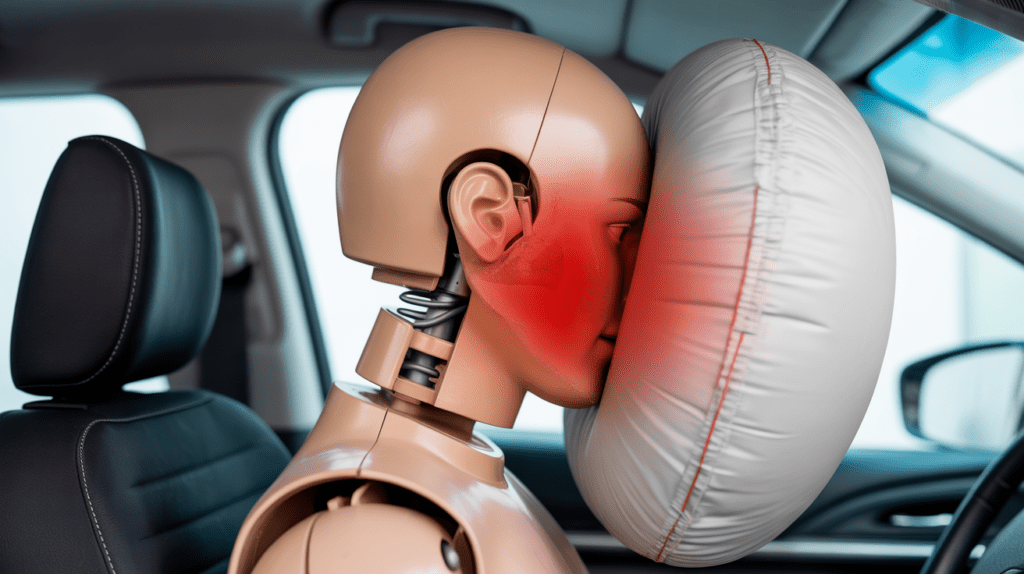
Airbags. They’re in pretty much every car, and we count on them to save our lives. But what happens when that very safety device, the thing designed to protect you, becomes the thing that causes devastating harm? Well, in this explainer, we’re gonna pull back the curtain on the hidden dangers of airbag malfunctions.
Learn More: Tampa Airbag Injury Lawyer
It’s a tough question to even wrap your head around, isn’t it? It just doesn’t compute. A safety feature that hurts you? That’s the core paradox we’re gonna unpack today.
So let’s start by looking at the dangerous flaw hiding inside this essential device. All right, first up, the airbag’s dangerous flaw. To really get how a safety device can go so wrong we have to understand the hidden risk. This fundamental clash between what we think an airbag is and what it actually is.
And this slide just lays it out perfectly. On one side, we have the promise. Right? This idea of a soft life saving cushion that catches you. But the reality? Woah. It’s a violent controlled chemical explosion that happens faster than you can blink.
That incredible force is what saves you, but it’s also the exact thing that can cause terrible harm when it’s not perfect. So when any product, especially a safety product, ends up hurting someone, this is the key legal idea that kicks in. It’s called product liability. Basically, it’s the framework that holds companies accountable when their defective or dangerous products cause injury.
This concept is going be central to everything we talk about. Now let’s get into the nitty gritty. Let’s look at the anatomy of a malfunction and see exactly how these good intentions can go so terribly wrong. How does an airbag actually fail?
Turns out it’s not just one thing. There are a few critical ways this whole system can break down. First up, and this one is just brutal, is when the airbag deploys with way, way too much force. Instead of being a cushion, it’s more like a punch.
It hits the person with such power that it’s like a second collision happening right inside the car.
And the results of that force are, well, they’re horrific. We’re talking about shattered facial bones, crushing chest trauma, and serious neck and spine injuries. The force can be so intense that it causes permanent eye damage or deep gashes. This is not a minor glitch, it’s a catastrophic failure.
The second major failure is the complete opposite, but it can be just as deadly. This is when the airbag either deploys too late, or it doesn’t deploy at all. It’s the safety net that’s just not there when you need it most. So why would this happen?
Well, as you can see here, it usually comes down to a few key culprits. The whole system is a chain reaction and if any link in that chain breaks, the whole thing fails. It could be bad sensors that don’t even know a crash happened, faulty wiring that can’t send the signal, or even a simple flaw from the factory. Okay, now for a danger that most of us probably never even consider.
The chemicals that are inside the airbag. You see that super fast inflation isn’t just air. It’s a very rapid, very hot chemical reaction. The propellants, chemicals like sodium azide, they generate a ton of heat and some pretty nasty gases.
If that airbag tears or malfunctions, those hot chemicals can spray out, causing serious first and second degree burns right on your skin, and that can lead to permanent disfiguring scars. And it’s not just a physical or chemical threat. Get this, there’s a sonic one too. The sound of an airbag going off can be over one hundred and seventy decibels.
That is a literal explosion happening inside the tiny cabin of your car. It’s loud enough to rupture eardrums and cause permanent hearing loss or that constant ringing known as tinnitus. So when you start to stack all these potential injuries up, the impact trauma, the chemical burns, the hearing damage, the long term effects can completely change someone’s life. Victims often have to deal with chronic pain, permanent scarring, losing their sight or hearing, and deep psychological trauma like PTSD that can make just the thought of getting in a car a nightmare.
When something this awful happens, it’s so easy to feel completely overwhelmed and powerless, but there are steps you can take.
And that brings us to our next section, the first steps to justice, all about protecting your health and your rights right after it happens. This quote here really nails it. What you do in the moments and days right after an accident is so, so important. Critical evidence can vanish in the blink of an eye, and if it does, your ability to build a strong case can disappear with it.
So there are three absolutely critical things to do. Number one, get medical help right away. Even if you feel okay, some injuries can take time to show up. Two, document everything.
Use your phone, take pictures of the car, the airbag, your injuries, everything. And three, this is so vital. You have to preserve the evidence. That means do not let anyone repair or get rid of the car or the airbag.
Now you might think you have plenty of time. For example, a state like Florida might give you four years to file a claim. But here’s the catch. The physical evidence won’t last anywhere near that long.
That car could be towed to a junkyard and crushed within weeks, wiping out the proof forever. The clock starts ticking the second the crash happens.
Taking those first steps is what puts you on the path to the final piece of this puzzle, proving fault and claiming compensation. This is all about the road to accountability, getting the resources needed to cover the incredible costs of an injury like this.
Figuring out who’s at fault can be pretty complex because it’s not always just one party. It could be the giant car company. It could be the supplier who actually made the airbag. It might even be a mechanic who installed it wrong or of course the other driver who caused the accident to begin with.
So when we talk about compensation, what does that actually cover? This table breaks it down really well. It’s not just for the immediate ER bills. It’s designed to cover future surgeries and rehab, lost wages if you can’t work, and it also tries to account for the things without a price tag, the physical pain and the emotional suffering that completely upend your life.
Now I know what a lot of people are thinking. How could I possibly afford to take on a massive car manufacturer? And that’s a completely fair question. But it’s really important to know how these cases usually work.
Most attorneys take them on what’s called a contingency fee. That means you pay nothing upfront. The lawyer only gets paid if they win the case for you. And so that brings us right back to where we started with that unsettling question.
We put so much faith in our car’s safety features. We just assume they’ll be there for us.
But as we’ve seen, that’s not always a guarantee. It really leaves you with one final chilling thought. Are you as safe in your car as you think you are?

