

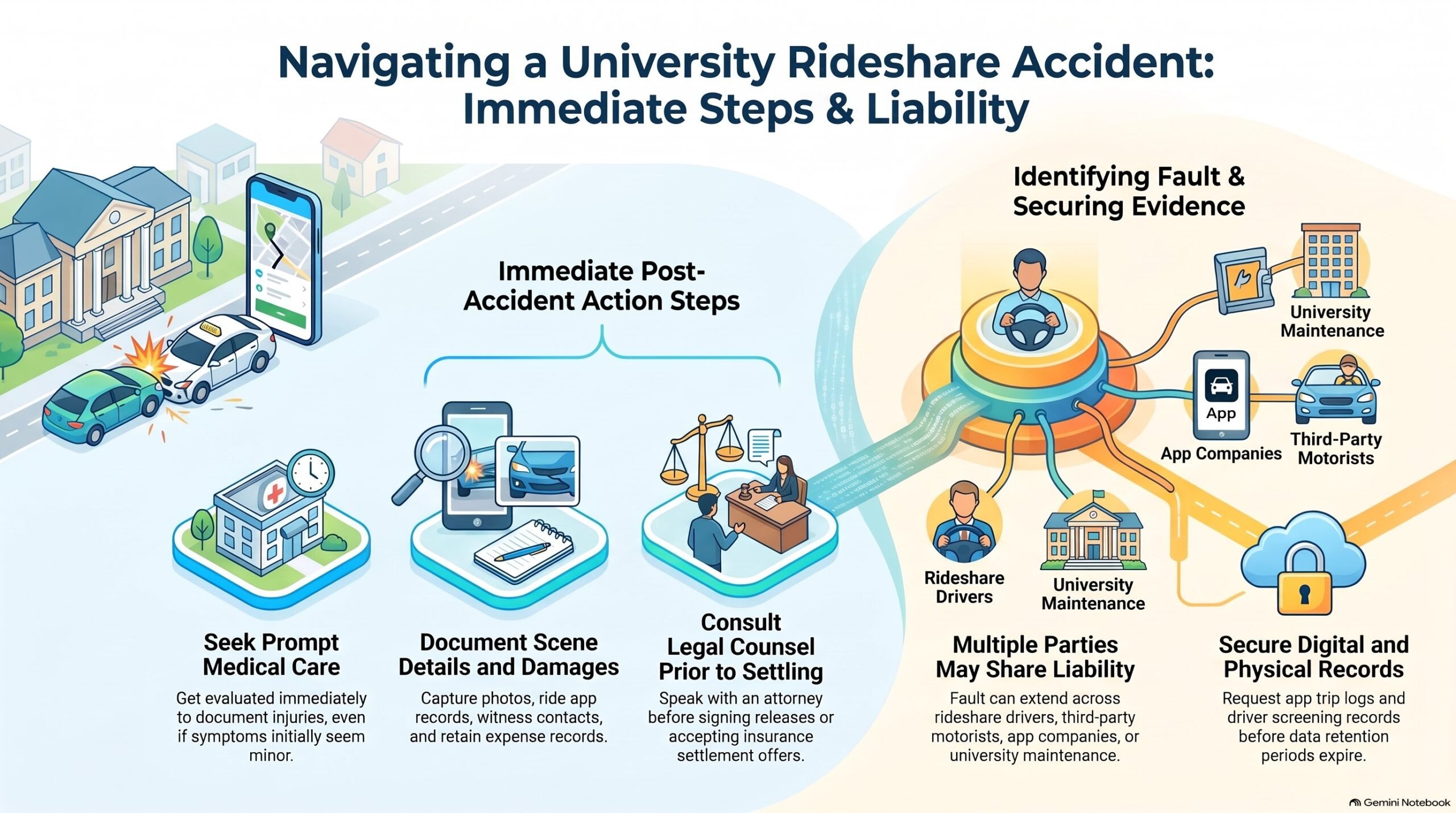
After a university rideshare accident, fault may involve the rideshare driver, another motorist, a vehicle owner, or, in some circumstances, the rideshare company or university. The Law Offices of Anidjar and Levine can assess each party’s conduct, available insurance, and the evidence connecting negligence to your injuries. Preserve trip records, photographs, witness details, medical documents, and communications with your insurer. Because deadlines and coverage depend on the facts and jurisdiction, consult a qualified lawyer before accepting a settlement or signing a release. Learn more from a University Personal Injury Lawyer. The sections below explain important considerations and next steps.
Main Takeaways
- Potentially responsible parties include the rideshare driver, another motorist, a vehicle owner, the rideshare company, or multiple parties.
- A university is not automatically liable; responsibility may depend on unsafe roads, neglected maintenance, or other conditions under its control.
- Liability depends on evidence linking a party’s conduct or breach of duty to the crash and injuries.
- Preserve app records, crash reports, witness details, photos, medical documents, and expense records before evidence is lost.
- Consult a qualified rideshare injury lawyer about deadlines, potential parties, and options before accepting a settlement or signing a release.


How We Can Help With Your University Rideshare Accident At-Fault Parties Injury Claim
When a university rideshare crash causes injuries, identifying every at-fault party is essential to pursuing a complete claim. We help you take practical steps toward recovery while protecting your ability to serve your campus community. Our team reviews available records, organizes evidence, and explains how each detail may affect your options. We can communicate with insurers, request relevant documentation, and track deadlines so you don’t have to manage a complicated process alone.
With Campus claim support, we help you understand what information you need to document your injuries, expenses, and other losses. We’ll keep you informed, answer your questions, and prepare you for important decisions without promising a particular outcome. Our university advocacy strategy focuses on clear communication and careful preparation, allowing you to pursue fair consideration while continuing your studies or service commitments. If you’re unsure what to do next, we can assess your circumstances and outline appropriate steps. You merit informed guidance and respectful support throughout the claim process.
OUR CONSULTATIONSARE FREE
START YOUR FREE CASE REVIEW

Understanding University Rideshare Accident At-Fault Parties Injury Cases
University rideshare accident injury cases can involve several potentially responsible parties, and we examine the facts to understand each party’s role. Depending on the evidence and applicable law, the rideshare driver, another motorist, a vehicle owner, or a transportation provider may bear responsibility. We assess how each person or organization contributed to the incident and whether their actions violated a duty of care.
A university may also have a role when its conduct or responsibilities relate to the injury. We review Campus transportation policies, relevant agreements, and university safety initiatives to understand how the institution manages transportation services and responds to safety concerns. These materials don’t establish liability on their own, but they can help clarify the parties’ duties and the context of the event.
We also consider available records, witness accounts, and the nature of your injuries. By carefully identifying each potentially responsible party, we can help you pursue accountability and seek the support you need to continue serving your community.
Common Causes of University Rideshare Accident At-Fault Parties
When we assess a university rideshare crash, we look at whether distracted driving, speeding, or reckless behavior contributed to the collision. We also consider whether a driver was impaired or created a dangerous situation during pickup or drop-off. Identifying these causes can help us determine which parties may be responsible for your injuries.
Distracted Driving
A distracted driver can cause a serious rideshare crash near a university, whether the driver is checking a navigation app, responding to a passenger, or looking at a phone notification. Phone notifications can divert a driver’s attention from pedestrians, cyclists, and other vehicles around campus. Dashboard interactions, including adjusting a screen or entering a destination, can also take a driver’s eyes and focus off the road. Rideshare drivers may face added distractions while locating a pickup point, confirming a passenger’s identity, or communicating through an app. We can help you examine whether a driver’s inattention contributed to your collision and identify evidence that may clarify what happened. If you were injured, preserving ride records, messages, and witness details can support a careful review of potential responsibility and help protect your interests.
Speeding and Reckless Driving
Speeding or reckless driving near campus can put rideshare passengers, pedestrians, cyclists, and other motorists at serious risk. Drivers may face pressure to reach pickups quickly, but urgency doesn’t excuse unsafe choices. Speed limit violations reduce the time available to respond to students crossing streets, crowded intersections, or sudden traffic changes. Aggressive lane changes can also cause collisions, especially near campus entrances and busy drop-off zones.
When a rideshare crash occurs, we can examine whether a driver’s speed or conduct contributed to the harm. Witness accounts, trip records, traffic camera footage, and police reports may help clarify what happened. We can also assess whether another party shares responsibility. By carefully identifying the causes, we help injured people understand their options and pursue accountability while supporting safer travel for the wider campus community.
Impaired Driving
Impaired driving can cause serious university rideshare crashes when a driver operates a vehicle after using alcohol, drugs, or medication that affects judgment and reaction time. Alcohol impairment may reduce a driver’s ability to recognize hazards, maintain lane position, and respond safely to changing traffic. Drug impairment can create similar risks, whether it involves illegal substances, cannabis, or prescription medication with warnings against driving. As passengers and community members, we rely on rideshare drivers to make responsible choices and protect everyone on the road. After a crash, we can examine whether substance use contributed to the driver’s conduct and whether the rideshare company followed applicable safety procedures. Witness accounts, trip records, and available testing may help clarify what happened. A lawyer can help you assess potential claims and pursue accountability.
Unsafe Pickup and Drop-Offs
When rideshare drivers stop in unsafe locations or rush passengers into traffic, pickup and drop-off decisions can contribute to serious crashes in the university area. Drivers may block bike lanes, stop near intersections, or pull into active travel lanes, forcing cyclists, pedestrians, and other motorists to react suddenly. These choices can endanger students and visitors who rely on safe, accessible transportation. Designated loading zones help protect passengers and keep vehicles from obstructing campus traffic flow. Drivers should use approved areas, check for approaching traffic, and allow passengers time to enter or exit safely. Universities and rideshare companies can support safer practices through clear signage, route guidance, and consistent enforcement. When a crash occurs, we can examine where the driver stopped, whether safer options were available, and who may be responsible for resulting injuries and losses.
Don’t Wait. Call Our Florida Personal Injury Lawyers Now!


Legal Rights of University Rideshare Accident At-Fault Parties Injury Victims
Even if a university rideshare accident involves a driver who may be at fault, injured passengers and other victims still have legal rights. We can help you understand those rights and pursue fair treatment while protecting everyone affected. Responsibility may depend on the facts, insurance coverage, and any applicable campus liability rules; a university isn’t automatically responsible for a rideshare driver’s conduct.
Injured victims may have legal rights, but responsibility depends on the facts, insurance coverage, and applicable campus liability rules.
Victims may consider these steps:
- Seek prompt medical care and keep records of treatment, expenses, and missed work. Clear documentation can support a claim and help your recovery.
- Preserve trip details, photographs, witness contacts, and communications with the rideshare company. These materials may clarify what happened.
- Consult a qualified attorney before accepting a settlement or signing a release. We can review available options and explain deadlines in your jurisdiction.
Your victim rights may include seeking compensation for documented losses, subject to applicable law. By acting carefully, you can protect your interests while supporting a fair process for other injured people.
Don’t Wait. Call Our Florida Personal Injury Lawyers Now!
Why Do University Rideshare Accident At-Fault Parties Injuries Happen?
University rideshare accidents that injure at-fault parties can result from several factors, including distracted driving, speeding, fatigue, impaired judgment, or unfamiliarity with campus roads and traffic patterns. These conditions can combine, leaving drivers with less time to recognize hazards and respond safely.
Campus traffic often changes throughout the day as students, staff, service vehicles, and rideshare cars move between buildings. Drivers may stop suddenly to locate passengers, enter restricted areas, or make turns near crowded intersections. Pedestrian congestion adds risk, particularly when people cross between parked vehicles or use marked crossings while a driver focuses on directions or pickup instructions.
Collisions can also occur when poor lighting, construction, weather, or limited visibility makes campus routes harder to navigate. Rideshare drivers under pressure to complete trips may make unsafe decisions, while passengers and pedestrians can contribute to unpredictable movement. Understanding these causes helps our community promote safer transportation and support everyone affected by a crash.
What Should You Do After a University Rideshare Accident At-Fault Party Injury?
After a university rideshare accident, seek prompt medical care, even if your injuries seem minor. We can document the scene, gather witness details, and keep records of our treatment and related expenses. Once we address our immediate needs, we can contact a rideshare lawyer to understand our options and protect our interests.
Seek Immediate Medical Care
If you’ve been injured in a university rideshare accident, seek medical care promptly, even if your symptoms seem minor. Some injuries may not become apparent until hours or days later, and early treatment can help protect your health. If you have severe pain, trouble breathing, confusion, or heavy bleeding, call emergency services or go to an Emergency room without delay. Otherwise, contact a healthcare provider and arrange a thorough Medical evaluation as soon as possible. Tell the clinician how the collision happened, describe every symptom, and mention any changes you notice. Follow the treatment plan, attend recommended follow-up appointments, and ask questions if instructions are unclear. Taking these steps supports your recovery and helps you remain able to care for family, classmates, and others who depend on you.
Document The Accident
While the details are still fresh, document the university rideshare accident and the injuries you sustained. Write down the date, time, location, weather, and events leading up to the collision. Record the rideshare driver’s name, vehicle information, license plate, and any trip details. Photograph the scene, vehicle damage, visible injuries, road conditions, and relevant signs, but do so only when it’s safe. Ask witnesses for their names and contact information, then request brief Witness Statements describing what they observed. Keep copies of medical records, receipts, and messages related to the crash, and note how your symptoms change over time. Follow your school’s Campus Reporting procedures and save confirmation of any report. Accurate records can help us protect your interests and support accountability while you focus on recovery.
Contact A Rideshare Lawyer
Once you’ve documented the crash and your injuries, contact a rideshare lawyer to assess who may be responsible and what steps can protect your claim. A university rideshare collision may involve the driver, another motorist, a rideshare company, or several parties. We can help you identify potential sources of liability and preserve evidence before records or witness accounts become harder to obtain.
Ask about a Free consultation to discuss the facts, deadlines, and possible next steps without committing to representation. During that conversation, review Attorney credentials, including experience with rideshare claims and injury cases involving multiple parties. Choose counsel who explains your options clearly and responds to your concerns.
Critical Evidence in a University Rideshare Accident At-Fault Parties Injury Case
To assess who may be at fault and support your injury claim, we’ll focus on evidence that shows how the crash occurred and what harm you suffered.
Crucial sources include:
1. rideshare app records and driver background checks; 2. crash-scene evidence, such as photos and witness accounts; and 3. medical records and other injury documentation.
We’ll explain how to preserve and use these materials to establish responsibility and damages.
Rideshare App Records
Rideshare app records can help establish who caused a university-area crash and whether the driver was working at the time. These records may show when a driver accepted a trip, picked up a passenger, followed a route, or ended a ride. We can compare that timeline with crash reports, witness accounts, and location evidence to clarify how the collision occurred and which parties may bear responsibility.
Acting promptly matters because companies may retain trip data for limited periods. We can request Data preservation and seek relevant records through appropriate legal procedures before information disappears. Records may also include driver-passenger messages, payment details, and app activity surrounding the collision. We’ll use privacy safeguards to limit requests to information relevant to your claim and protect sensitive details. Careful review can support a fair investigation and help injured people pursue accountability.
Driver Background Checks
When a university-area rideshare crash raises questions about a driver’s qualifications, background-check records may help show what the company knew before approving the driver. We can examine Driver screening materials, including application details, verification steps, and the timing of any checks. These records may clarify whether the company followed its stated policies and whether it identified concerns relevant to passenger safety.
Criminal history information requires careful review. A record alone doesn’t establish that a driver caused a collision or acted negligently. We assess whether the company had access to relevant information, how it evaluated that information, and whether applicable rules required further action. You may also need records showing when the company received or updated screening results. By preserving and analyzing these documents, we can help identify responsible parties and support a fair claim while recognizing the community’s need for safe, dependable transportation.
Crash Scene Evidence
Because conditions at a university-area crash scene can change quickly, we work to preserve evidence before it disappears. We document vehicle positions, road conditions, traffic signs, lighting, and nearby cameras that may have recorded the collision. Scene Photography can capture details that later help clarify how the rideshare vehicle moved and where impact occurred. We also look for physical evidence, including debris, fluid marks, and damage to vehicles or campus property. Skid Mark Analysis may help establish braking, speed, and direction, though we interpret those findings alongside other evidence rather than in isolation. When possible, we identify witnesses and promptly request relevant surveillance or rideshare records. By preserving reliable scene evidence, we can help you pursue accountability and protect the interests of passengers, pedestrians, and others affected by the crash.
Injury Documentation
Prompt medical care creates a clear record of injuries after a university rideshare crash. We encourage you to seek evaluation promptly, even when symptoms seem minor, because some conditions worsen over time. Follow your clinician’s treatment plan and attend recommended appointments; consistent care helps document how the crash affected your health.
Keep a medical timeline with dates of visits, diagnoses, prescriptions, referrals, and treatment changes. Save discharge papers, test results, bills, and messages from health providers. A symptom journal can record pain, mobility limits, sleep disruption, and missed classes or work. Note when symptoms begin and how they affect daily responsibilities, including caregiving or service commitments.
We can use these records to connect documented injuries with the collision and assess losses. Be accurate and avoid guessing; clear, consistent documentation supports a credible claim.
Long-Term Effects of University Rideshare Accident At-Fault Parties Injuries
When a university rideshare crash caused by another party’s negligence leads to serious injuries, we should consider how those injuries may affect you long after treatment begins. You may face chronic pain or lasting mobility limitations that disrupt daily activities, education, and work. We should also recognize emotional and psychological effects, which can persist even after physical injuries improve.
Chronic Pain
Chronic pain can continue long after a university rideshare accident, even after visible injuries have recovered. You may experience persistent soreness, nerve pain, or headaches that interfere with studying, work, and service to others. We can help you understand how ongoing symptoms may relate to the collision and what documentation can support your claim.
Effective Pain management may involve medical evaluation, treatment, and consistent follow-up. Keep records of symptoms, appointments, prescriptions, and expenses, and tell your providers how pain affects daily responsibilities. This information can help establish the injury’s duration and impact.
Chronic pain can also disrupt sleep, which may affect concentration, mood, and recovery. If an at-fault party’s negligence caused your injuries, we can assess available evidence and explain options for pursuing compensation. Timely legal guidance can help protect your interests while you focus on care.
Lasting Mobility Limitations
Lasting mobility limitations can follow a university rideshare accident, affecting your ability to walk, climb stairs, attend classes, or manage daily tasks. When injuries restrict movement, we can help you understand how treatment, rehabilitation, and practical support may address your needs. You might require Adaptive equipment, such as a cane, wheelchair, or bathroom safety aids, to move more independently and reduce the risk of further injury. Accessible transportation can also help you reach campus, medical appointments, work, and community commitments when driving or using standard transit isn’t feasible. These changes may affect your education and your ability to serve others through school, work, or volunteer activities. We can document how mobility limits affect your routine and future needs, helping establish the crash’s lasting impact when pursuing compensation from responsible parties.
Emotional and Psychological Effects
A university rideshare accident can cause emotional and psychological effects that continue long after physical injuries begin to recover. You may experience anxiety, depression, sleep problems, or fear of traveling in vehicles. Post-traumatic stress can make ordinary reminders, such as a campus pickup area or a sudden stop, feel threatening. These reactions may affect your relationships, concentration, and confidence as you return to daily routines.
Academic disruption can follow when symptoms interfere with attending classes, completing assignments, or participating in campus activities. If you’re also balancing work, caregiving, or service commitments, the added strain may feel especially difficult. We encourage you to seek support from a qualified mental health professional and discuss any academic accommodations you need. Documenting symptoms and treatment can also help show how the crash has affected your life.
Proving Liability in University Rideshare Accident At-Fault Parties Injury Cases
When a university rideshare crash causes injuries, proving liability requires identifying who acted negligently and connecting that conduct to the harm. We’ll examine the driver’s actions, vehicle condition, road design, and any relevant campus policies. A rideshare driver may have failed to yield, sped, or been distracted, while another motorist or a property manager may also have contributed. We’ll gather available evidence, including photographs, witness accounts, trip details, incident reports, and medical records, to establish what happened and how the injuries resulted.
Liability apportionment matters when several parties share responsibility. We’ll assess each party’s conduct under applicable law rather than assume the driver alone caused the collision. Campus jurisdiction can also affect which rules and procedures apply, particularly when a crash occurs on university property or involves campus transportation. If you were hurt while traveling to class, work, or a volunteer commitment, we can help clarify responsibility and protect your ability to seek a fair resolution. Our careful investigation can support accountability and safer travel for the university community.
Dealing With Insurance Companies After a University Rideshare Accident At-Fault Party Injury
After a university rideshare accident, insurance companies may contact you quickly to discuss the crash and your injuries. We can help you respond carefully while protecting your health and financial interests. You don’t have to provide a recorded statement or accept an early offer before understanding its terms. Insurers may seek information that minimizes their responsibility, so keep your answers accurate and limited to what you know.
We can review relevant coverage, including Policy limits, and identify which insurer may be responsible for your losses. Coverage may come from the rideshare driver’s personal policy or insurance available through the rideshare company, depending on the driver’s status. Don’t assume an insurer’s first explanation reflects all available protection.
Keep copies of messages, medical records, and expenses, and note each contact. If claim delays interfere with your ability to manage treatment or daily responsibilities, we can follow up and ask for clear explanations. Our guidance helps you focus on recuperation and supporting those who depend on you.
What to Expect During a University Rideshare Accident At-Fault Parties Injury Claim Process
We’ll begin with an initial case review, then identify everyone who may be at fault. We’ll gather evidence and handle the relevant insurance claims to support your injury case. Finally, we’ll assess whether a fair settlement is possible or whether you need to take the claim to trial.
Initial Case Review
An initial case review helps us determine who may be responsible for a university rideshare accident and what evidence supports your injury claim. During an Initial Consultation, we’ll listen to your account, discuss your injuries, and learn how the crash has affected your studies, work, and daily responsibilities. You can ask questions and share concerns about seeking fair compensation while continuing to serve your community.
Next, we’ll conduct a Case Assessment by reviewing available records, such as medical documentation, photographs, trip details, and communications related to the incident. We’ll identify information that may need clarification and explain how the claims process generally works. Our review also considers deadlines and practical steps for preserving relevant evidence. We’ll provide an honest evaluation of your claim’s strengths and uncertainties, then discuss options for moving forward. You’ll receive clear guidance without pressure to decide immediately.
Identifying At-Fault Parties
Determining who may be at fault in a university rideshare accident requires a careful review of how the crash occurred and each party’s role. We’ll consider whether the rideshare driver, another motorist, or a pedestrian acted carelessly and contributed to your injuries. A vehicle owner or rideshare company may also bear responsibility in certain circumstances, depending on their relationship to the driver and applicable law.
We’ll also examine whether university liability may arise from unsafe campus roads, neglected maintenance, or other conditions the university controlled. Campus security may have a role when its actions or responsibilities relate to the incident, though the university isn’t automatically at fault because a crash happened on campus. By identifying each potentially responsible party, we can help you pursue accountability while protecting your ability to focus on recovery and supporting others.
Evidence and Insurance Claims
Once we identify the parties who may be responsible, we can focus on the evidence needed to support your injury claim. We’ll help you preserve rideshare app records, trip details, photographs, witness contacts, and any available campus or traffic camera footage. Keep medical records, treatment bills, and notes about how your injuries affect daily responsibilities; these materials can connect the collision to your losses. During claim filing, we’ll organize the documentation and notify the appropriate insurers. A rideshare driver’s personal policy, the company’s coverage, and another motorist’s insurance may each apply, depending on the facts and policy terms. We’ll manage coverage coordination, review responses, and address requests for additional information. By handling these steps carefully, we can protect your ability to seek support while you continue caring for your health and community.
Settlement or Trial
After we evaluate the evidence, insurance coverage, and the extent of your injuries, we’ll assess whether a settlement offer fairly reflects your losses. During Settlement Negotiation, we’ll present documented expenses, lost income, and the effects of the crash on your daily life. We’ll also consider future medical needs and any impact on your ability to serve your community or meet family responsibilities. You’ll receive clear guidance about each offer, its risks, and the time required to resolve your claim. If the insurer won’t make a fair offer, we can pursue a lawsuit. Trial Preparation may include gathering records, consulting qualified experts, and preparing you to explain what happened. We’ll keep you informed and help you weigh the benefits and uncertainties of trial, so you can make decisions that support your recovery and long-term needs.
Compensation for University Rideshare Accident At-Fault Parties Injury Damages
When a university rideshare crash injures you, the at-fault party may owe compensation for the losses the collision caused. We can help you identify the responsible parties and document how the crash has affected your health, education, and daily responsibilities. Compensation may address medical treatment, rehabilitation, medication, and future care recommended by your providers. If injuries prevent you from attending classes or completing coursework, we can also consider related academic consequences, including Lost Scholarships or expenses associated with Campus Housing changes. Keep records of appointments, bills, missed classes, and communications with your university. These details can show how your injuries disrupted your plans and what support you may need to continue your studies and serve others. We’ll assess available evidence, explain your options, and pursue a claim that reflects the harm you’ve experienced. Each case depends on its facts, and no specific result is guaranteed. Prompt legal guidance can help preserve important records and clarify next steps.
Economic vs. Non-Economic Damages in University Rideshare Accident At-Fault Parties Cases
When we assess a university rideshare accident claim, we distinguish economic losses, such as medical bills and lost income, from non-economic harm, including pain and emotional distress. We’ll explain how each category may affect the compensation you can seek from an at-fault party. To support your claim, we must prove the nature and extent of your damages with reliable evidence.
Economic Losses
In a university rideshare accident, economic losses are the measurable financial costs caused by the crash, while non-economic damages address harms such as pain, emotional distress, and reduced quality of life. We can help you identify and document expenses linked to the collision, including emergency care, follow-up treatment, medication, transportation, and necessary medical equipment. Keep bills, receipts, insurance records, and provider recommendations so we can connect each cost to your injuries. You may also recover lost wages if treatment or recovery prevents you from working. If your injuries limit your future earning capacity, it may be part of your claim. We’ll review employment records and relevant professional assessments to estimate these losses. Careful documentation supports a fair demand and helps protect the resources you need to continue meeting your responsibilities.
Non-Economic Harm
The effects of a university rideshare crash can extend beyond the bills and lost income we discussed above. You may also face harm that doesn’t come with a clear price tag. Pain and Suffering can include physical discomfort, emotional distress, anxiety, or disruption to your daily routine. These effects may influence how you study, work, care for others, and participate in campus life.
Loss of Enjoyment addresses the ways injuries can limit activities and relationships that once mattered to you. For example, you may have to step back from sports, volunteering, social events, or responsibilities that support your community. These non-economic damages differ from measurable expenses, but they can still shape your recovery and quality of life. We can help you understand how the law may account for these personal effects in a university rideshare accident claim.
Proving Damages
To prove damages after a university rideshare accident, we must connect your losses to the crash and support each claim with reliable evidence. We can document economic damages, including medical bills, rehabilitation costs, lost wages, and future care needs, through invoices, employment records, and medical opinions. Careful loss documentation helps show what you’ve paid and what you may reasonably owe.
Non-economic damages address less measurable harm, such as pain, emotional distress, and reduced ability to participate in campus, family, or community life. We can support these claims with treatment notes, personal accounts, and statements from people who understand your daily responsibilities. Damage valuation considers both categories and the evidence linking them to the collision. By organizing records and presenting a clear account, we can help you pursue compensation while protecting your capacity to serve others.
Don’t Wait. Call Our Florida Personal Injury Lawyers Now!
When a University Rideshare Accident At-Fault Parties Injury Case Goes to Trial vs Settlement
When a university rideshare accident injury case involves disputed fault, we must weigh whether settlement or trial offers the stronger path to a fair result. We’ll compare the evidence, likely outcomes, costs, and time involved, while considering how each option may affect your recovery and responsibilities. Settlement timing matters: accepting too soon may leave important losses unresolved, while prolonged negotiations can delay compensation. We’ll assess any offer against documented injuries, treatment needs, and other established damages before advising you.
If the parties can’t reach a fair agreement, trial may allow a judge or jury to evaluate the evidence and decide responsibility. Trial preparation requires organized records, coordinated witnesses, and a clear presentation of how the crash affected you. We’ll explain the demands and uncertainties of that process so you can make an informed choice. Your priorities matter, including returning to school, work, or community service. We’ll pursue a resolution based on the evidence and focused on your future.
Florida Laws That May Affect Your University Rideshare Accident At-Fault Parties Case
Florida law can shape who bears responsibility for a university rideshare crash and how an injured person may recover damages. As we assess your case, we’ll consider rules that can affect insurance coverage, fault, and available compensation. Understanding them helps you make informed choices while protecting your ability to support others who depend on you.
- Florida no-fault: Your personal injury protection coverage may pay certain medical expenses and lost wages, regardless of who caused the crash. Serious injuries may allow you to pursue a claim against an at-fault party beyond those benefits.
- Comparative negligence: Florida’s modified comparative negligence rule may reduce damages according to your share of responsibility. If you’re found more than 50 percent at fault, you generally can’t recover damages from another party.
- Rideshare coverage: Insurance may depend on whether the driver was offline, awaiting a request, or transporting a passenger. We can examine app records and policy terms to identify potentially responsible parties and applicable coverage.
The Statute of Limitations for University Rideshare Accident At-Fault Parties Injury Cases
Insurance and fault rules may affect who pays for your injuries, but strict filing deadlines can also determine whether you may pursue compensation. In Florida, the clock for filing a personal injury lawsuit generally starts on the date of the rideshare crash. The applicable deadline can depend on the claim and the parties involved, so we shouldn’t assume every case follows the same schedule. Missing a filing deadline may prevent you from seeking compensation in court, even when your injuries are serious, and another party may be responsible.
Some circumstances may change how a deadline applies. Deadline Exceptions can involve factors such as a defendant’s absence from Florida or a claimant’s legal disability. Claim Tolling may pause the limitations period in specific situations, but it doesn’t apply automatically. Claims involving government entities may also require earlier notice and separate procedures. We should treat deadlines as urgent to protect your ability to serve your family and community. Keep records of the crash and medical care, and promptly confirm which filing rules govern your case.
How a University Rideshare Accident At-Fault Parties Lawyer Can Help You
After a university rideshare crash, a lawyer can help you identify potentially responsible parties, preserve evidence, and pursue compensation through the appropriate claims. We can examine the driver’s conduct, the rideshare company’s role, and any responsibilities of the university or third parties. Our work can help you seek accountability while supporting safer transportation for the campus community.
A university rideshare crash lawyer can help preserve evidence, identify responsible parties, and pursue compensation while promoting safer campus transportation.
- We gather trip records, witness accounts, photographs, and available video to clarify how the collision occurred and who may bear responsibility.
- We review insurance policies and applicable rules, then communicate with insurers and other parties to present a well-supported claim.
- We document your injuries, expenses, and effects on school, work, or caregiving duties, helping us pursue compensation that reflects your losses.
Throughout the process, we can explain your options in clear terms and handle complicated communications, allowing you to focus on recovery and Student support needs. By pursuing claims responsibly, we also contribute to Campus safety and encourage practices that protect students, staff, and visitors.
When to Contact a University Rideshare Accident At-Fault Parties Lawyer
Contact a university rideshare accident lawyer as soon as you can after a crash, especially if you’ve suffered injuries, the other parties dispute fault, or an insurer has contacted you. Early guidance can help us protect important information while you focus on medical care and your responsibilities to family, classmates, or the campus community. Don’t wait for every detail to emerge before asking questions; evidence and recollections may become harder to obtain over time.
We can arrange an Attorney Consultation to discuss what happened, identify potential deadlines, and clarify what information may help assess your situation. Bring any available documents, such as medical records, trip details, photographs, and insurance correspondence, but don’t delay if you don’t have everything. Ask directly about Representation Costs, including any fee arrangement and possible expenses, so you understand the terms before deciding how to proceed. If you’re unsure whether legal help is appropriate, a timely conversation can help you make an informed choice without committing to representation.
Why You Need an Experienced University Rideshare Accident At-Fault Parties Lawyer
When a university rideshare crash involves disputed fault or multiple potential defendants, an experienced lawyer can help identify who may be legally responsible and preserve evidence that could support your claim. We can examine driver conduct, rideshare company records, campus policies, and roadway conditions to clarify how the collision occurred. This work matters when a university, contractor, or another party may share responsibility, because each may control different records or safety measures.
We can also coordinate evidence collection before video footage disappears or witness memories fade. By organizing medical records, incident reports, and other documentation, we help connect your injuries to the crash and present a clear account of its effects. Our role includes explaining how insurance coverage and university liability may affect your options for compensation, without assuming any party is automatically at fault.
Pursuing accountability can support your recovery and encourage stronger Campus safety practices, helping protect students, staff, and visitors across the university community.
How to Choose the Right University Rideshare Accident At-Fault Parties Lawyer for Your Case
How should you choose a lawyer for a university rideshare accident involving disputed fault or multiple potential defendants? Start by evaluating Attorney qualifications, including experience with rideshare collisions, insurance disputes, and cases involving drivers, companies, or other responsible parties. Ask how the lawyer investigates fault, preserves app records and other evidence, and identifies everyone who may bear responsibility. We should also look for clear communication: your lawyer should explain the process, answer questions promptly, and help you make informed decisions while you focus on recovery and responsibilities to others.
Discuss fee structures before hiring anyone. Ask whether fees depend on a recovery, which expenses may be charged separately, and how costs are handled if the case doesn’t succeed. Request a written agreement and review it carefully. During a consultation, consider whether the lawyer listens closely, describes realistic next steps, and avoids promising a particular result. A careful choice can help us pursue accountability while protecting your interests throughout the claim.
About The Law Offices of Anidjar & Levine
At The Law Offices of Anidjar & Levine, we represent people injured in university rideshare accidents and help them understand their legal options.
We understand a collision can disrupt your education, work, and plans to serve your community.
Our team can explain how responsibility may involve a rideshare driver, another motorist, or a company, and what evidence may help clarify the facts.
Our firm’s history reflects a commitment to helping injured people pursue accountability and compensation.
We approach each case with care, listen to your concerns, and provide clear information so you can make informed decisions.
You can review our attorney biographies to learn about the lawyers who may handle your claim and their professional backgrounds.
When you contact us, we’ll discuss the accident, your injuries, and possible next steps.
We can also address questions about deadlines, insurance, and the claims process.
Our goal is to provide practical guidance while you focus on recovery and your responsibilities.

Frequently Asked Questions
Can I File a Claim if I Was a Passenger in a University Rideshare Vehicle?
Yes, we can help you pursue a claim if you were injured as a passenger in a university rideshare vehicle. Passenger Injury Claims may involve the rideshare driver, another motorist, or, in some cases, the rideshare company, depending on the facts and available insurance coverage. We’ll review the crash, identify potentially responsible parties, and explain your options. Promptly document your injuries and preserve trip details to support your claim and protect your rights.
What if the Rideshare Driver Was Off-Duty When the Crash Happened?
If the rideshare driver was off duty, we’ll assess Off-Duty Driver Liability by examining whether the driver had accepted a trip, was logged into the app, or was using the vehicle for personal purposes. Personal Auto Coverage may apply, but policy terms and exclusions can affect available benefits. We’ll help you identify the responsible parties, preserve relevant app and crash records, and pursue compensation through the appropriate insurance channels.
Can a University Be Liable for a Rideshare Accident on Campus?
A university may be liable for a rideshare accident on campus if its negligence contributed to the crash or resulting harm. We’d examine whether the university maintained safe roads, addressed known hazards, and followed its traffic and campus security policies. Liability isn’t automatic merely because the collision occurred on university property. We’d also assess the driver’s conduct, available insurance, and evidence to identify responsible parties and help protect injured people’s rights.
Does Rideshare Insurance Cover Accidents Involving Uninsured Drivers?
Yes, rideshare insurance may cover an accident caused by an uninsured driver, but coverage depends on the driver’s status, the policy terms, and applicable law. We can help you determine whether uninsured motorist coverage applies and identify which policy responds. Coverage may vary while a driver waits for a ride request, travels to pick up a passenger, or transports one. We’ll also review policy limits, exclusions, and available claims before advising you on next steps.
Can I Pursue Compensation if I Was Partially at Fault?
Yes, you may pursue compensation even if you were partially at fault. We can explain how Comparative Negligence rules may reduce your recovery based on your share of responsibility, while some jurisdictions bar recovery above a specified fault threshold. Shared Fault findings depend on the evidence, including driver conduct, witness accounts, and crash reports. We’ll help you assess the facts, identify responsible parties, and understand deadlines before deciding how to proceed.
—————————
After a university rideshare accident, identifying every at-fault party can affect your ability to pursue fair compensation.
We can investigate the crash, explain your legal options, and handle communications with insurers while you focus on recovery.
If you’re unsure who may be responsible or what steps to take, contact The Law Offices of Anidjar and Levine.
We’ll review the circumstances, answer your questions, and help you understand how to protect your rights and move forward.
Learn more about working with a University Personal Injury Lawyer.

