

The Law Offices of Anidjar and Levine help Sarasota property owners challenge delayed, underpaid, or denied storm damage claims by reviewing policy terms, documenting losses, and organizing supporting evidence. Storms can damage roofs, windows, and interiors through wind, rain, flooding, or fallen debris, while policy exclusions and deadlines may affect coverage. We can assess the scope or value of a disputed claim and explain potential options under Florida law. Prompt reporting, safe mitigation, photographs, estimates, and receipts can strengthen the claim record. The sections below explain how these claims work and when legal help may be useful. Learn more about a Sarasota Personal Injury Lawyer.
Main Takeaways
- A Sarasota storm-damage lawyer can review your policy, coverage limits, exclusions, deadlines, and claim obligations.
- Legal help may address disputed damage estimates, inadequate payments, claim delays, or disagreements over covered losses.
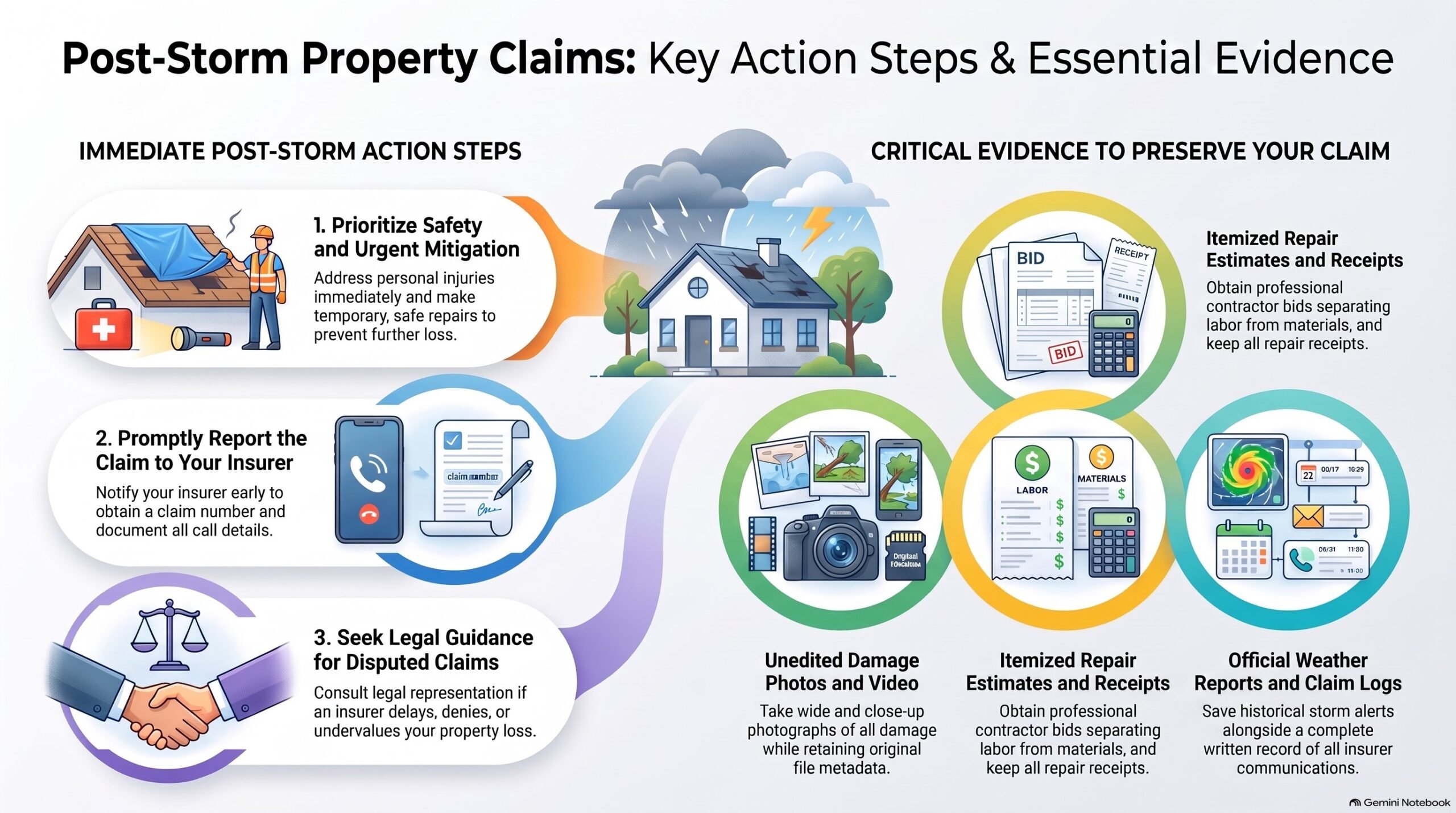
- Document damage with original photographs, qualified repair estimates, receipts, weather records, and dated insurer communications.
- Notify your insurer promptly, request a claim number, and keep a clear record of calls and follow-ups.
- Prioritize safety, take reasonable steps to prevent further damage, and keep receipts for emergency repairs.


How We Can Help With Your Sarasota Property Claim: Storm & Weather Damage Injury Claim
When a storm damages your Sarasota home or business, we can assess the loss, document the damage, and help you pursue the compensation available under your insurance policy. We’ll listen to your concerns, explain the claims process, and identify practical steps to protect your property and support those who depend on you. Our team reviews policy terms, deadlines, exclusions, and insurer communications to help you understand your obligations and options. Through careful Policy interpretation and Coverage analysis, we compare the reported damage with the protection your policy provides. We can organize photographs, repair estimates, receipts, and other records to present a clear, well-supported claim. If the insurer questions the scope or value of your loss, we’ll evaluate its position and respond with relevant documentation and policy language. We’ll keep you informed, answer your questions, and work to address delays or inadequate payments. Our goal is to help you seek a fair resolution while you focus on restoring your home, business, and community.
OUR CONSULTATIONSARE FREE
START YOUR FREE CASE REVIEW

Understanding Sarasota Property Claim Storm & Weather Damage Injury Cases
Storm and weather damage claims arise when events such as hurricanes, windstorms, heavy rain, or flooding harm a home or business. When you’re responsible for protecting a household, employees, or customers, understanding the claim process can help you pursue a fair outcome and restore safe conditions.
We review the insurance policy, damage records, and communications with the insurer to assess what coverage may apply. Policy exclusions and limits can affect payment, so we explain how the contract’s language relates to your documented losses. We also help you understand mitigation duties, including reasonable steps to prevent further damage, and how to preserve evidence of those efforts.
A careful claim often depends on timely notice, clear photographs, repair estimates, and consistent records of expenses. We can identify disputed issues, respond to requests for information, and challenge an inadequate adjustment when the evidence supports doing so. By approaching the process methodically, we help you protect your property interests while prioritizing the well-being of those who rely on you.
Common Causes of Sarasota Property Claim Storm & Weather Damage
When we assess Sarasota storm damage claims, we often find that hurricane winds have damaged roofs or caused leaks that spread into the home. Flooding and storm surge can damage buildings and belongings, while fallen trees and debris may cause additional structural harm. We’ll examine how these common causes affect property claims and what evidence can help document the loss.
Hurricane Wind Damage
Hurricane-force winds can tear shingles from a roof, break windows, and drive rain into a Sarasota home, causing damage that extends beyond the initial impact. Windborne debris, including branches and loose building materials, can strike siding, doors, and windows, weakening the home’s exterior. Strong gusts may also create structural uplift, stressing roof connections and other load-bearing components. These forces can damage garages, fences, and outdoor structures, while fallen trees may affect the home or block access for emergency crews. After a storm, we can help you document visible damage and review your policy’s coverage requirements. Prompt, careful records can support a clear claim and help insurers assess the full extent of wind-related harm. We’ll work to protect your interests while keeping your family’s safety and recovery in focus.
Roof Leaks
Roof leaks can follow heavy rain, wind-driven debris, or damage to shingles, flashing, and roof vents. After a storm, we can help you identify signs of water entry, such as ceiling stains, damp insulation, or peeling paint. Roof flashing around chimneys, skylights, and roof edges may loosen or bend, allowing rain to reach the structure. Clogged gutters and damaged seals can also direct water beneath roofing materials. Poor attic ventilation may trap moisture, worsening damage and encouraging mold growth. We recommend documenting visible conditions promptly and arranging a qualified inspection before making permanent repairs. Keep receipts and photographs, and review your policy’s notice requirements. When you serve your family, tenants, or community, addressing a leak quickly can limit further harm and support a clear, well-documented property claim.
Flooding And Storm Surge
Even after a roof leak is addressed, flooding and storm surge can cause extensive damage to Sarasota homes and businesses. Heavy rainfall may overwhelm drainage systems, while rising coastal waters can push into buildings and damage walls, flooring, electrical systems, and personal property. Properties outside designated flood zones aren’t necessarily protected; water can reach areas that rarely flood, especially during severe storms.
When water enters your property, we encourage you to document visible damage, take reasonable steps to prevent further loss, and promptly notify your insurer. Keep receipts for emergency repairs and preserve damaged materials when it’s safe to do so. We can help you review the policy, organize supporting records, and assess whether the insurer has fairly evaluated your claim. By understanding your coverage and documenting the effects, you can pursue the resources you need to restore your property and support those who depend on you.
Fallen Trees And Debris
When strong winds or saturated soil bring trees down, branches and other debris can damage Sarasota properties in ways that aren’t always immediately visible. A fallen tree may puncture a roof, break windows, crush fencing, or damage plumbing and electrical lines. Water can then enter the structure, creating additional damage that becomes apparent only after the storm passes.
We can help you document the damage promptly, including less obvious structural concerns, and review your policy’s reporting and repair requirements. Before arranging Tree removal or debris cleanup, take photographs from a safe distance and keep receipts for necessary work. Don’t enter an unstable building or attempt hazardous removal yourself. If your insurer disputes coverage or the scope of repairs, we can assess the claim and explain your options. Careful records and timely action can help protect your home and support a fair review.
Don’t Wait. Call Our Florida Personal Injury Lawyers Now!


Legal Rights of Sarasota Property Claim Storm & Weather Damage Injury Victims
Storms and severe weather can leave Sarasota property owners facing substantial repair costs, disputed insurance claims, and uncertainty about their legal options. We can help you understand the rights that may protect your household and support a fair resolution.
Your policy, Florida law, and the facts of your loss shape the available remedies.
- Review your policy: We can explain Policy interpretation, including limits, deadlines, and duties you must meet after damage.
- Question exclusions: We apply coverage exclusions according to the policy language and relevant law, and we can assess whether an insurer’s position is justified.
- Document and communicate: Keep photographs, repair estimates, receipts, and written communications. We can help present a clear, organized claim.
- Challenge unfair decisions: If an insurer delays, underpays, or denies a valid claim, we can explain dispute options and pursue appropriate remedies.
You don’t have to navigate a complicated claim alone. By protecting your rights, we can help you restore safe, usable property and preserve resources for your family and community.
Why Do Storm & Weather Damage Injuries Happen in Sarasota Property Claims?
Why do storm and weather damage injuries occur in Sarasota property claims? Severe rain, wind, flooding, and lightning can damage buildings and create hazards for residents, workers, and visitors. When roofs fail or windows break, debris and water may enter occupied spaces. Flooded floors can cause falls, while damaged electrical systems may expose people to shock or fire risks.
Seasonal storm patterns can intensify these dangers, especially when properties aren’t prepared for recurring heavy rain and high winds. Poor maintenance, aging materials, blocked drainage, and inadequate repairs may leave a building more vulnerable before a storm arrives. Building code enforcement also matters: code requirements help address structural strength, drainage, and other safety concerns, but gaps in compliance or oversight can increase risks.
Owners and managers who serve the public have a responsibility to maintain reasonably safe premises. When preventable hazards combine with severe weather, people may suffer injuries and property losses that sound construction, timely maintenance, and careful safety planning could have reduced.
Don’t Wait. Call Our Florida Personal Injury Lawyers Now!
What Should You Do After a Sarasota Property Claim Storm & Weather Damage Injury?
After a storm-related injury, we should seek medical care promptly, even if symptoms seem minor. Document property damage with clear photographs, videos, and written notes before making temporary repairs. Then contact your insurer promptly and keep records of all communications and claim-related expenses.
Seek Medical Care
If you’re injured by storm damage at a Sarasota property, seek medical care promptly, even if your symptoms seem minor. We can’t always recognize the seriousness of a head injury, fracture, or exposure to contaminated water without professional evaluation. Call 911 for severe bleeding, difficulty breathing, confusion, chest pain, or loss of consciousness. For less urgent concerns, contact a healthcare provider or visit an appropriate clinic. Describe how the incident happened and report every symptom, including pain that develops later. Ask about follow-up appointments and warning signs that require immediate attention. Discuss medication safety with your provider, especially if you take prescriptions, have allergies, or are considering over-the-counter pain relief. Prompt care supports your recovery and helps us protect the well-being of everyone affected by the storm.
Document the Damage
Once everyone is safe and receiving needed care, document the storm damage as soon as conditions allow. We can start with wide photos of each affected room and exterior area, then take close-ups showing specific damage. Include the date and location in our notes, and describe what happened without guessing about the cause or extent. An Inventory checklist helps us record damaged belongings, including each item’s description, approximate age, and condition. Save receipts for emergency purchases and, when safe, keep damaged items until we can document them fully. If water, broken windows, or exposed wiring creates further risk, arrange Temporary protection, such as tarping or boarding, through qualified help. Keep copies of photographs, lists, and receipts in a secure place so the record remains clear and accessible.
Contact Your Insurer
When should we contact our insurer about storm damage? We should report the loss promptly, even if we’re still evaluating the full extent of the damage. Early notice creates a claim record and helps the insurer arrange an inspection. We can provide the storm date, describe visible damage, and share the photographs and notes we collected.
Before speaking with an adjuster, we should review our policy and note any Policy deadlines for reporting damage or submitting proof of loss. We should also identify coverage exclusions that may affect the claim. We can answer questions accurately, request written confirmation of important communications, and keep copies of all forms and estimates. If the insurer disputes coverage or delays action, we can seek guidance from a qualified professional while continuing to protect the property from further damage.
Critical Evidence in a Sarasota Property Claim Storm & Weather Damage Injury Case
We can strengthen your storm-damage claim by preserving evidence that documents the loss, its cause, and your communications with the insurer. Keep these records organized and dated, since they can help support your account of what happened.
Crucial evidence includes:
- Photos of storm damage
- Weather reports
- Repair estimates
- Claim correspondence
Storm Damage Photos
How clearly do your photos show the storm damage to your Sarasota property? We can help you document affected areas before repairs or cleanup change the evidence. Photograph damage from several angles, including close views of broken materials and wider images that show each area’s location. Include undamaged surroundings when useful to provide context, and avoid altering or filtering images.
Preserve original files because Photo metadata may record when and where images were captured. Keep a separate backup, and use image organization that groups photos by room, exterior area, and date. Add brief notes identifying what each image shows, but retain the unedited originals. If you can do so safely, take photographs soon after the storm and update them as conditions change. Clear, orderly records can help us present your claim accurately and support a fair review.
Weather Reports
What weather conditions affected your Sarasota property during the storm? We can use reliable weather reports to connect those conditions with the damage you documented. Historical forecasts, official alerts, and local observations may establish when severe winds, heavy rain, hail, or flooding reached your area. We’ll compare those records with your account and photographs to build a clear timeline.
Radar interpretation can help show a storm’s path, intensity, and movement near your property. Because radar images require context, we’ll consider them alongside verified reports rather than treating them as conclusive on their own. Accurate weather evidence can support a fair review of your claim and help others understand the event’s impact. We can also preserve relevant records promptly, since online reports and alerts may change or become harder to locate.
Repair Estimates
When a storm damages your Sarasota property, detailed repair estimates can help show the scope and cost of the work required. We can use estimates to connect visible damage with necessary repairs and explain why each task matters. Ask qualified contractors to inspect affected areas, document their findings, and separate labor from materials. Contractor bids can provide useful comparisons, while itemized material pricing helps establish whether proposed costs reflect current local conditions. Estimates should identify damaged components, describe the repair methods, and account for code requirements where applicable. Photographs and measurements can support these calculations and help others understand the property’s condition. Review estimates carefully for missing work, unsupported charges, or assumptions that could leave damage unresolved. Clear, complete documentation gives your claim a stronger factual foundation and helps protect the people who depend on your property.
Claim Correspondence
After storm damage, claim correspondence can provide crucial evidence of what you reported, what the insurer acknowledged, and how the claim progressed. We recommend keeping every email, letter, text, and portal message in one organized file. Record dates, names, and summaries of phone calls, then confirm important conversations in writing. Clear adjuster correspondence can show whether the insurer received photographs, repair estimates, and other supporting documents. Prompt claim follow-ups may help resolve unanswered questions and create a reliable timeline of your efforts to protect your property and serve those who depend on you. Avoid speculation or emotional language; state observed damage and requested action accurately. If the insurer disputes your account or delays a response, we can review the record and explain what evidence may support your claim under Florida law.
Long-Term Effects of Sarasota Property Claim Storm & Weather Damage Injuries
Storm- and weather-related injuries can cause chronic pain that continues long after the immediate damage is addressed. We’ll also examine lasting mobility issues that may limit your ability to work or manage daily activities. Emotional distress can persist as well, and we’ll explain how these effects may shape your recovery and claim.
Chronic Pain
Chronic pain can persist long after storm-related injuries appear to have recovered, affecting mobility, sleep, and the ability to work. When you’re focused on caring for family, neighbors, or clients, ongoing pain may also make daily responsibilities harder to manage. We encourage you to seek a medical evaluation and follow a care plan tailored to your condition. Effective Chronic pain management may include prescribed treatment, counseling, and regular communication with your healthcare providers. You can also discuss pain coping strategies, such as pacing tasks, relaxation exercises, and keeping a symptom record, to identify what helps and what worsens discomfort. If a storm injury caused your pain, document treatment, expenses, and how it affects your routine. These records can help us assess the injury’s lasting impact and explain your losses in a property-related claim.
Lasting Mobility Issues
When storm or weather damage causes an injury, lasting mobility issues may continue to limit walking, lifting, or other everyday activities. These changes can affect your ability to work, care for family members, and participate in community service. Mobility limitations may require ongoing physical therapy, medical appointments, or changes to your home and workplace. We can help you document how an injury affects daily tasks and identify the support you need to maintain as much independence as possible. Your care team may recommend assistive devices, such as a cane, walker, or wheelchair, based on your condition and recovery goals. Keep records of treatment, equipment costs, and practical restrictions. If an insurer disputes the extent of your injuries, clear evidence can help explain their lasting effects and support a fair property claim.
Emotional Distress
After a storm-related injury, emotional distress may persist long after the immediate danger has passed. You may experience anxiety after storms, disrupted sleep, recurring memories, or fear when severe weather approaches. These responses can affect work, family responsibilities, and your ability to support others. We encourage you to seek professional help when distress continues or interferes with daily life. Trauma counseling can provide practical strategies for managing symptoms and rebuilding a sense of safety. Keep records of treatment, related expenses, and how the injury affects your routine. These details may help explain the lasting impact of your experience when you pursue a property claim. We can help you understand which documentation matters and how to address the emotional consequences of storm-related injuries while protecting your interests and well-being.
Proving Liability in Sarasota Property Claim Storm & Weather Damage Injury Cases
To prove liability in a Sarasota storm or weather damage injury case, we must show that a property owner or another responsible party failed to take reasonable steps to protect people from a foreseeable hazard. We examine whether the party knew, or should have known, about risks such as loose roofing, standing water, fallen branches, or unsafe walkways. Duty standards depend on the property, the hazard, and the people invited or permitted to be there. We also assess whether reasonable inspections, repairs, warnings, or temporary closures could have reduced the danger.
Our causation analysis connects the unsafe condition to your injury. We gather photographs, maintenance records, weather reports, witness accounts, and medical documentation to establish what happened and when. This evidence can help distinguish storm damage that no one could reasonably prevent from harm caused by neglected precautions. By building a clear, fact-based account, we can support your effort to protect your health, seek accountability, and pursue a fair resolution.
Dealing With Insurance Companies After a Sarasota Property Claim Storm & Weather Damage Injury
Insurance companies may contact you soon after a storm-related injury, but their questions and settlement offers may not reflect the full impact of your losses. We can help you respond carefully while protecting your interests and the resources you need to recover and continue serving others.
Before signing documents or accepting payment, we should review the policy language, coverage limits, exclusions, and deadlines. Careful Policy interpretation can clarify which storm-related losses may qualify for coverage and identify terms the insurer may apply differently. We can also help you organize repair estimates, medical records, photographs, and other evidence that supports your claim.
During settlement negotiations, we can address offers that overlook ongoing treatment, property repairs, lost income, or future needs. We’ll communicate with the insurer on your behalf, explain the documented impact of your losses, and seek a fair resolution. You don’t have to manage difficult insurance discussions alone; informed guidance can help you make decisions with greater confidence.
What to Expect During a Sarasota Property Claim Storm & Weather Damage Injury Claim Process
We’ll start by promptly reporting the storm damage and documenting your losses with photographs, receipts, and repair estimates. Your insurer will review the claim and may inspect the property before deciding what coverage applies. If the insurer disputes the damage or payment, we’ll explain the options for challenging its decision and pursuing a resolution.
Reporting the Damage
After storm or weather damage, report the loss to your insurer as soon as it’s safe. We can help you understand the reporting process and communicate clearly with your insurer. Provide the policyholder’s information, the property address, the date of the event, and a concise account of what happened. Explain any urgent conditions that could affect occupants, neighbors, or responders, so the insurer can consider appropriate next steps. Ask for a claim number and the adjuster’s contact information, and confirm how the insurer will communicate with you. Prompt compliance can help move the claim forward, and knowing deadlines matters because policies may set notice requirements. If you’re unsure what to say or face a disputed response, we can review the policy and help protect your interests.
Documenting Your Losses
Once it’s safe to assess the property, document the damage before making non-emergency repairs. We can help you create a clear record by taking dated photographs and videos of each affected room, exterior area, and damaged item. Capture wide views and close-up details, and keep copies in a secure location. Don’t discard damaged belongings until you’ve recorded them, unless they pose a safety risk.
Prepare a Personal property inventory that lists each item, its approximate age, purchase price, and current condition. Gather receipts, warranties, bank statements, or other records that support your descriptions. Keep copies of repair estimates and receipts for emergency work. If you must leave home, save records of temporary housing expenses, meals, and other necessary costs. Organized documentation can help us explain the full scope of your loss and support your recovery.
Insurer Claim Review
When you file a storm or weather damage claim, the insurer reviews your policy, documentation, and the cause and extent of the loss. We can help you understand what the insurer examines, including coverage limits, exclusions, repair estimates, photographs, and records of damaged belongings. The insurer may send an adjuster to inspect the property, ask questions, and prepare an estimate. An Independent adjuster review may also assess the damage on the insurer’s behalf. We encourage you to provide accurate information and keep copies of every submission and communication. Review the insurer’s estimate carefully, since it may not account for all necessary repairs or related costs. If your policy includes an appraisal clause process, we can explain how it applies to evaluating the loss and what steps you may need to take.
Resolving Claim Disputes
If the insurer disputes the cause, scope, or value of your storm damage, we can help you assess the disagreement and understand your options. We’ll review the policy, estimates, photographs, and related records to identify the issues and support your position. Clear documentation can help keep discussions focused and protect the resources you need to repair your property and serve your family or community.
Depending on your policy and the dispute, the appraisal process may help resolve differences over the amount of loss. Mediation options may also allow you and the insurer to work toward an agreement with a neutral facilitator. We’ll explain the requirements, potential costs, and deadlines before you choose a path. If negotiations don’t resolve the claim, we can discuss further legal steps and help you make informed decisions.
Compensation for Sarasota Property Claim Storm & Weather Damage Injury Damages
Storm and severe weather can damage a Sarasota property and leave owners facing costly repairs, lost belongings, and related expenses. When we help you pursue a property claim, we’ll review your policy and document the storm-related losses. Depending on your coverage, compensation may include reasonable repair or rebuilding costs, cleanup expenses, and the cost to replace damaged belongings. If the home becomes unsafe or unlivable, your policy may also cover Temporary housing and certain additional living expenses while repairs proceed. We’ll help you keep receipts, photographs, repair estimates, and other records that support your request. Coverage limits, exclusions, deductibles, and deadlines can affect what an insurer pays, so we’ll assess the policy terms before estimating available benefits. You may also need payment for emergency measures that prevent further damage, such as temporary roof protection. We’ll communicate with the insurer, challenge unsupported reductions, and work to secure funds that help you restore your property and meet your household’s immediate needs.
Economic vs Non-Economic Damages in Sarasota Property Claim Storm & Weather Damage Cases
When a storm damages your property, we distinguish economic losses, such as repair costs and damaged belongings, from non-economic harm, such as disruption to your daily life. We’ll explain which losses you may be able to recover under your policy and applicable law. To support your claim, we must document the damage, establish its value, and connect it to the storm.
Economic Losses
After severe weather damages your Sarasota property, the financial impact may extend beyond repair costs. We can help you identify and document measurable losses tied to the damage, then present them clearly to your insurer. These economic losses may include temporary housing costs, debris removal, emergency repairs, and expenses for protecting the property from further harm. If you rent out a damaged home, you may be able to recover lost rental income for the period the property remains uninhabitable, subject to your policy’s terms. For a local business, Business interruption losses may include income missed during a necessary closure and certain continuing expenses. Keep receipts, contracts, photographs, and financial records to support your claim. We’ll review the policy, assess the evidence, and pursue benefits that help you restore your property and serve your community.
Non-Economic Harm
Property damage claims generally address measurable financial losses, while non-economic harm involves personal impacts that are harder to quantify. After a Sarasota storm, a damaged home can disrupt routines, privacy, and the sense of security we rely on. Emotional suffering may include persistent worry, frustration, or distress connected to displacement and uncertainty. Loss of enjoyment can arise when damage prevents us from using our home, hosting loved ones, or taking part in familiar activities. These effects differ from repair costs, temporary housing expenses, and other economic losses. When we help you assess a property claim, we consider how the disruption has affected your daily life, not only the condition of the building. Recognizing these personal impacts helps us better understand the harm you’ve experienced and the recovery you need.
Proving Damages
To prove damages in a Sarasota storm claim, we must support each loss with reliable evidence and distinguish financial costs from personal harm. We can document economic damages with repair estimates, invoices, receipts, photographs, and records of damaged belongings. Keep proof of temporary housing, lost rental income, and mitigation expenses, such as emergency tarping or water removal. Depreciation calculations may affect the amount an insurer initially pays, so we should review how the policy applies depreciation and whether recoverable depreciation becomes available after repairs.
Non-economic harm concerns personal effects, including stress, disruption, or loss of use of your home. We can explain these impacts through a clear account of daily limitations and supporting records, where available. By presenting both categories carefully, we help insurers and decision-makers understand the full scope of your loss and evaluate the claim fairly.
Don’t Wait. Call Our Florida Personal Injury Lawyers Now!
When a Sarasota Property Claim Storm & Weather Damage Injury Case Goes to Trial vs Settlement
When a storm or weather-related property claim in Sarasota becomes disputed, we must decide whether settlement or trial offers the stronger path to a fair result. We’ll assess the insurer’s position, the evidence of damage, repair estimates, and the effect of delay on your household or business. Settlement negotiations may resolve the dispute sooner, reduce uncertainty, and help you direct resources toward repairs and recovery. We’ll explain any proposed terms, identify what the payment covers, and consider whether it addresses documented losses.
If the insurer won’t make a reasonable offer, trial may let you present your case to a judge or jury. Trial preparation includes organizing records, consulting qualified experts, preparing witnesses, and explaining how the damage occurred and what it will take to restore the property. We’ll discuss the time, expense, and uncertainty involved so you can make an informed choice. Our goal is to protect your interests while helping you move forward and serve those who depend on you.
Florida Laws That May Affect Your Sarasota Property Claim Storm & Weather Damage Case
Florida law can shape how we evaluate and pursue a Sarasota storm damage claim, from policy deadlines and notice requirements to rules governing coverage disputes. We’ll review the policy and applicable statutes to identify duties, preserve evidence, and help you make informed decisions while serving your family, employees, or community.
- Prompt notice: Policies often require timely notice. We’ll document when damage occurred and report it promptly, while preserving photographs, repair records, and communications.
- Proof of loss: Your insurer may request a sworn statement or supporting documents. We’ll help organize accurate information and respond within applicable policy requirements.
- Matching materials: Florida matching law may affect whether an insurer must replace undamaged areas when repairs would leave visibly inconsistent materials. We’ll assess the facts and current legal standards.
- Dispute resolution: Policies may include appraisal procedures for disagreements about the amount of loss. We’ll explain the process, review its limits, and consider whether it fits your claim.
These rules can change, so we’ll evaluate your circumstances and explain practical options before you act.
The Statute of Limitations for Sarasota Property Claim Storm & Weather Damage Injury Cases
After a storm damages your Sarasota property, the deadline to file a lawsuit may depend on the type of claim and when the loss occurred. Florida law generally gives property owners five years to bring a lawsuit based on a written contract, including many insurance disputes. However, the applicable period can depend on the claim’s facts and current law, so we shouldn’t assume one deadline fits every case.
Separate Policy deadlines may require prompt notice of damage, proof of loss, or other steps before litigation. Missing a policy requirement could affect coverage even when the lawsuit deadline hasn’t passed. We should review both timelines carefully and preserve relevant records, such as photographs, repair estimates, and insurer correspondence.
Certain statutory exceptions may pause or alter a filing period, but they’re limited and fact-specific. Because delays can jeopardize recovery and the resources needed to restore a home or serve a community, we should promptly identify the governing deadlines and avoid relying on informal assurances or estimates.
How a Sarasota Property Claim Storm & Weather Damage Lawyer Can Help You
A Sarasota property damage lawyer can help us evaluate a storm-related claim, interpret the insurance policy, and identify the steps needed to protect our right to compensation. We can use legal guidance to present clear evidence and pursue a fair outcome while keeping our responsibilities to family, employees, tenants, or neighbors in view.
- Policy interpretation: We can review exclusions, deductibles, deadlines, and claim duties to understand what the contract requires and which protections may apply.
- Coverage analysis: We can compare the reported damage with policy language and assess whether wind, rain, flooding, or another covered event may support payment.
- Evidence development: We can organize photographs, repair estimates, inspection findings, and records of damaged property to support a complete, consistent claim.
- Insurer communication: We can respond to questions, challenge unsupported decisions, and negotiate based on documented losses and applicable policy terms.
With informed representation, we can address disputes carefully, protect resources needed for recovery, and seek compensation without losing sight of those who depend on us.
When to Contact a Sarasota Property Claim Storm & Weather Damage Lawyer
We should contact a Sarasota property claim storm and weather damage lawyer when an insurer delays, disputes coverage, offers less than the documented loss, or requests information we’re unsure how to provide. Early guidance can help us understand what the policy requires and respond accurately while we focus on restoring our homes and supporting those who depend on us.
We may also seek legal advice if the insurer’s explanation conflicts with the policy, the damage assessment overlooks visible harm, or repeated requests leave us uncertain about next steps. Policy interpretation can clarify which losses may qualify and what evidence the insurer needs. We shouldn’t wait until a disagreement becomes harder to resolve.
We should review coverage deadlines promptly because policies may impose time limits for reporting damage, submitting documents, or pursuing a claim. If we’re unsure whether a deadline applies, we can ask a lawyer to explain our obligations and help us protect our ability to seek the benefits available under our coverage.
Why You Need an Experienced Sarasota Property Claim Storm & Weather Damage Lawyer
When storm or weather damage disrupts our homes, an experienced Sarasota property claim lawyer can help us assess the insurer’s decisions, interpret policy terms, and present evidence that supports the full scope of our losses. We may be focused on restoring safe, comfortable spaces for our families and neighbors, while the insurer evaluates the claim under its own procedures. Skilled guidance can help us keep the process grounded in the policy and the facts.
A lawyer can explain Policy interpretation, identify relevant Coverage exclusions, and clarify how those provisions may apply to the damage. We can also receive help organizing repair estimates, photographs, inspection findings, and other records that show what happened and what restoration requires. If an insurer undervalues a loss, delays a decision, or disputes coverage, an experienced advocate can communicate our position and pursue a fair review. This support helps us protect our property interests while keeping the focus on recovery and the people who depend on us.
How to Choose the Right Sarasota Property Claim Storm & Weather Damage Lawyer for Your Case
Choosing the right Sarasota property claim storm and weather damage lawyer requires looking beyond general legal experience and assessing how well an attorney handles property insurance disputes. We should ask about the attorney’s experience with wind, hurricane, flood, and disputed repair estimate claims. A lawyer who understands policy language and insurer procedures can help us identify coverage issues and pursue a well-supported claim.
We can also evaluate how the attorney communicates. Does the lawyer explain our options clearly, respond promptly, and treat our concerns with respect? These qualities matter when we’re seeking a fair resolution while managing repairs and protecting our household.
Before hiring counsel, we should discuss the fee structure, including how fees are calculated and whether case expenses may apply. We can request a written agreement and clarify what happens if the claim doesn’t succeed. By comparing relevant experience, communication, and costs, we can choose representation aligned with our needs and make informed decisions throughout the process.
About The Law Offices of Anidjar & Levine
The Law Offices of Anidjar & Levine represents people facing property damage disputes and insurance claim challenges in Florida.
We help homeowners understand their options after storms, wind, or other covered events damage their property.
When an insurer delays, disputes, or underpays a claim, we work to clarify the issues and pursue a fair resolution.
Our Firm’s history reflects a commitment to serving people who need guidance during difficult legal and financial circumstances.
We recognize that damage to a home can disrupt daily life, threaten security, and create uncertainty about what comes next.
We listen to your concerns, explain the process, and keep you informed as your matter progresses.
Our attorney values include diligent preparation, clear communication, and respect for each client’s circumstances.
We assess the available information, review relevant policy terms, and identify practical steps for addressing a dispute.
By focusing on your needs and the facts of your claim, we aim to provide steady support throughout the process.
Frequently Asked Questions
Does Homeowners Insurance Cover Mold Discovered After Storm-Related Water Intrusion?
Homeowners insurance may cover mold discovered after storm-related water intrusion when a covered event caused the damage, and you took reasonable steps to limit moisture. Storm-related mold coverage often depends on policy exclusions, reporting deadlines, and any mold sublimit. We recommend documenting the leak, photographing affected areas, and notifying your insurer promptly. Review the policy carefully, since mold remediation costs may be limited or denied if neglect or delayed repairs contributed to growth.
Can I File a Claim if My Roof Was Damaged by a Fallen Tree?
Yes, we can help you assess whether your homeowners policy covers roof damage caused by a Fallen tree. Coverage often includes sudden, accidental damage, but exclusions, deductibles, and policy limits may affect payment. Photograph the damage, take reasonable steps to prevent further harm, and keep receipts. Before authorizing Roof repairs, contact your insurer and arrange an inspection. We can review the policy, document your losses, and help you pursue a fair claim.
What Should I Do if My Insurer Requires a Recorded Statement?
If your insurer requires a recorded statement, ask why it’s needed and what topics it will cover before agreeing to a time. We recommend Recorded Statement Preparation so you can review your policy, documents, and timeline, and give accurate answers without guessing. During Insurer Questioning, listen carefully, answer only what’s asked, and request clarification when needed. Don’t speculate or minimize damage. We can help you understand your obligations and protect your interests throughout the process.
Can I Hire a Public Adjuster to Inspect My Storm Damage?
Yes, you can hire a licensed public adjuster to inspect your storm damage and help document your loss. During the Public adjuster inspection process, we recommend asking the adjuster to photograph damage, review repair estimates, and explain how they’ll communicate with your insurer. Before signing, understand the Public adjuster fee structure, including the percentage charged and any limits under Florida law. We should also confirm the agreement’s cancellation terms and avoid signing blank forms.
Will Filing a Storm Damage Claim Affect My Future Insurance Premiums?
Filing a storm damage claim can affect your future premiums, but an increase isn’t automatic. We’ll help you assess factors that may increase your premium, including your insurer’s rules, the claim’s cost, and whether the storm caused widespread losses. Claim history may affect renewal pricing or coverage availability, but state regulations and policy terms also matter. Before filing, we can review your documentation and explain potential consequences, helping you make an informed choice while protecting your household and community.
—————————
Storm and weather damage claims can involve complex policy terms, strict deadlines, and disputes over the cause or value of your losses.
The Law Offices of Anidjar and Levine can review your coverage, help document the damage, and communicate with the insurer on your behalf.
If your Sarasota property claim has been delayed, underpaid, or denied, contact us to discuss your options.
We’ll explain the next steps and work to protect your rights while pursuing the compensation available under your policy.
Learn more about a Sarasota Personal Injury Lawyer.