

A Plantation premises liability lawyer evaluates whether a property owner or occupier failed to use reasonable care and whether that failure caused an injury. The Law Offices of Anidjar and Levine can assess visitor status, the hazard, prior notice, safety measures, medical records, and other evidence. Florida’s comparative negligence rules may affect compensation if an injured person shares responsibility. A lawyer can explain deadlines, communicate with insurers, and pursue settlement or litigation when appropriate. Learn more about working with a Plantation Personal Injury Lawyer. The following sections explain these claims and the steps involved.
Main Takeaways
- A Plantation premises liability lawyer can assess whether a property owner’s negligence contributed to your injury.
- Liability may depend on the hazard, visitor status, the owner’s knowledge, and whether reasonable safety measures were taken.
- Preserve evidence by photographing the scene, reporting the incident, and collecting witness details and medical records.
- Seek prompt medical care and keep records of treatment, expenses, missed work, and other losses.
- A lawyer can communicate with insurers, negotiate a settlement, and discuss filing a lawsuit if negotiations fail.
How We Can Help With Your Plantation Premises Liability Injury Claim
When a property owner’s negligence causes an injury, an attorney can help an injured person pursue a premises liability claim in Plantation. Legal support gives an injured person a clear point of contact while they focus on recovery and daily responsibilities.
A Claim assessment may include reviewing incident records, medical documentation, photographs, and communications with the property owner or insurer. This review helps identify practical next steps, clarify the information still needed, and establish a sound basis for discussing potential compensation. An attorney can also organize deadlines and handle routine correspondence, reducing avoidable confusion during a difficult period.
Through attorney advocacy, counsel can present the injured person’s position clearly and professionally and communicate with insurers on the person’s behalf. The attorney may explain available options, evaluate settlement proposals, and negotiate for a resolution that reflects documented losses. If negotiations do not produce a fair outcome, counsel can advise whether further legal action is appropriate, while keeping the client informed throughout the process.
Don’t Wait. Call Our Florida Personal Injury Lawyers Now!
Understanding Plantation Premises Liability Injury Cases


Understanding a Plantation premises liability injury case begins with determining whether a property owner or occupier failed to use reasonable care under the circumstances. The analysis considers the relationship between the injured person and the property, the owner’s knowledge of a potential hazard, and whether reasonable steps could have reduced the risk. Property owner duties may include inspecting the premises, addressing unsafe conditions, and providing adequate warning when a danger cannot be promptly corrected. The scope of those duties depends partly on visitor status classification, which generally distinguishes invitees, licensees, and trespassers under Florida law. Each category may affect what precautions the property owner must take, although the specific facts remain important. A claim also requires evidence connecting the alleged failure to the injury and resulting losses. Records, photographs, witness accounts, and medical documentation can help clarify these issues. Careful evaluation supports fair treatment of injured visitors while ensuring responsibility is assessed under applicable legal standards.
Common Causes of Plantation Premises Liability
OUR CONSULTATIONSARE FREE
START YOUR FREE CASE REVIEW

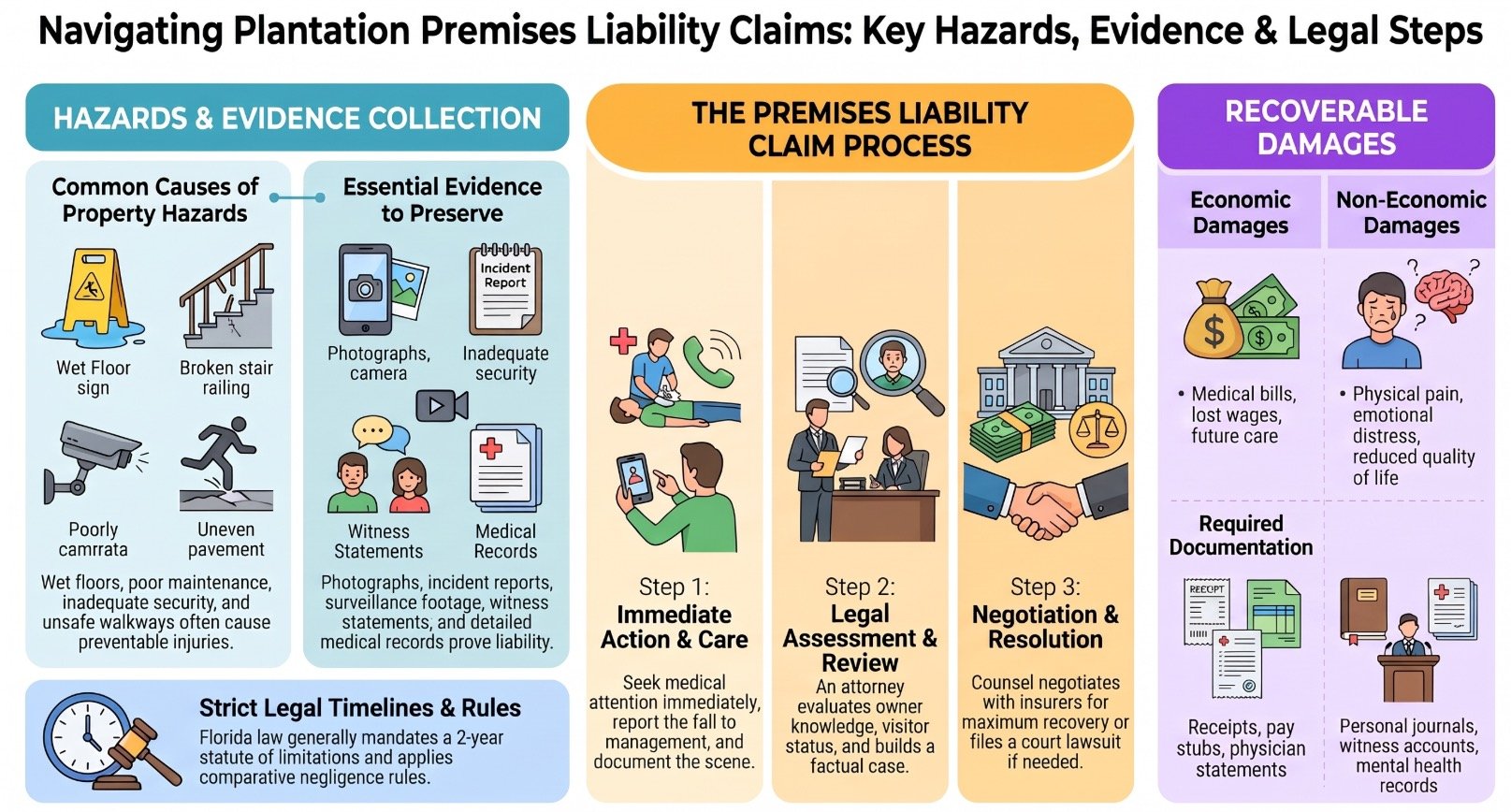
Common causes of premises liability incidents in Plantation include slip-and-fall hazards, poor property maintenance, and inadequate security. Unsafe stairways and walkways may also create risks when property owners fail to address dangerous conditions. The circumstances surrounding each hazard can help determine whether a property owner may be legally responsible.
Slip and Fall Hazards
Slip and fall hazards can arise from wet floors, uneven walkways, loose carpeting, poor lighting, or debris left in areas open to visitors. These conditions may cause injuries when property owners or managers fail to take reasonable steps to protect guests, customers, and other lawful visitors. Wet floor warning signs can alert people to recently cleaned or spilled-on surfaces, while prompt cleanup may reduce the risk of a fall. Uneven surface hazards, including raised pavement or changes in floor level, can also be difficult to notice, particularly in dimly lit areas. Visitors who fall may suffer fractures, sprains, or other injuries requiring medical care. A premises liability claim may depend on whether the responsible party knew, or reasonably should have known, about the hazard and failed to address or clearly warn of it.
Poor Property Maintenance


Poor property maintenance can create hazards beyond isolated spills or uneven walking surfaces, exposing visitors to unsafe conditions throughout a premises. In Plantation, property owners and managers are generally expected to take reasonable steps to inspect and maintain areas used by guests, customers, and other lawful visitors. When maintenance is overlooked, damaged walkways, loose handrails, deteriorating stairs, or leaking pipes may cause preventable injuries. Neglected landscaping can also obstruct paths, conceal changes in elevation, or allow branches and debris to fall into visitor areas. Broken exterior lighting may make entrances, parking areas, and walkways difficult to traverse, particularly after dark. Prompt inspections, timely repairs, and clear warnings can reduce these risks. When a hazardous condition causes injury, the circumstances and the responsible party’s knowledge may be relevant to a premises liability claim.
Inadequate Security
When a property’s security measures are inadequate, visitors may face preventable risks of assault, theft, or other criminal acts. Owners and managers may need to assess foreseeable threats and take reasonable steps to protect people using their premises. Relevant measures can include functioning cameras, adequate lighting in public areas, controlled access, and clear procedures for responding to reported concerns. Security camera blind spots may limit the ability to monitor vulnerable areas or identify incidents, while negligent security staffing can leave visitors without timely assistance. Security needs vary according to a property’s location, history of criminal activity, and intended use. When a foreseeable danger is ignored, an injured visitor may question whether reasonable precautions were taken. A careful review of the circumstances can help clarify responsibility and identify measures that could better protect others.
Unsafe Stairways and Walkways
Beyond security concerns, unsafe stairways and walkways can expose visitors to preventable falls and other injuries. Property owners and managers in Plantation must keep these areas reasonably safe for guests, customers, and community members. Uneven stair treads, loose flooring, cracked pavement, and poorly maintained steps can cause someone to lose balance, particularly when hazards are difficult to see. Missing walkway handrails may also leave people without needed support, especially older adults and visitors with mobility limitations. Inadequate lighting, wet surfaces, and obstructed paths can increase the risk. When a dangerous condition is reported or discovered, prompt repairs, clear warnings, and appropriate barriers can help prevent harm. Documentation of the hazard and any response may assist in evaluating whether reasonable care was provided.
Legal Rights of Plantation Premises Liability Injury Victims
What legal protections apply after a premises-related injury in Plantation depends largely on how the hazard arose and whether the property owner or occupier knew, or reasonably should have known, about it. Injured visitors may seek compensation when negligence contributed to their harm, though outcomes depend on evidence and applicable law. Visitor status can affect the duty owed, while property ownership may help identify the responsible party. A careful review can support fair accountability and protect others from preventable harm.
Potential rights and steps include:
- Seeking payment for reasonable medical expenses and related losses.
- Requesting compensation for lost income and reduced earning capacity.
- Preserving photographs, incident reports, and witness contact details.
- Obtaining prompt medical care and keeping treatment records.
- Consulting a qualified attorney about deadlines and legal options.
Florida’s comparative negligence rules may reduce recovery if an injured person shares responsibility. Claims generally require proof of duty, breach, causation, and damages. A lawyer can assess available evidence, communicate with insurers, and explain whether settlement or litigation may serve the injured person’s interests.
Why Do Plantation Premises Liability Injuries Happen?
Understanding why premises-related injuries occur can help clarify how a property owner or occupier may have contributed to an accident. In Plantation, visitors may be injured when a walkway, parking area, business, or residential property is not reasonably maintained. Property Owner Negligence can include failing to repair broken steps, clean spills, replace damaged flooring, or address hazards after receiving notice. Inadequate lighting and missing warnings may also leave guests unable to recognize danger in time.
Some risks arise from Environmental Design Flaws rather than a single maintenance failure. Poorly planned stairs, uneven level changes, narrow paths, or drainage that allows water to collect can increase the likelihood of falls. In commercial settings, cluttered aisles and obstructed exits may create additional hazards. Weather conditions, heavy foot traffic, and an area’s intended use can affect how risks develop, but they do not automatically excuse unsafe conditions. Careful design, routine inspections, and timely repairs help protect residents, customers, workers, and other visitors from preventable harm.
What Should You Do After a Plantation Premises Liability Injury?
After a premises liability injury in Plantation, the injured person should seek prompt medical care, even if symptoms seem minor at first. Report the incident to the property owner or manager, and keep a copy of any written report. Photographs, witness contact information, and other relevant records can help preserve evidence about the hazard and resulting injury.
Seek Medical Care
After a premises liability injury in Plantation, prioritize prompt medical evaluation, even if the harm initially appears minor. Some injuries, including concussions and soft-tissue damage, may not produce clear symptoms immediately. A qualified health care professional can assess the condition, recommend appropriate treatment, and identify complications that may require prompt attention. Emergency evaluation is appropriate for severe pain, heavy bleeding, difficulty breathing, loss of consciousness, or other urgent concerns. For less serious symptoms, timely care can still help prevent worsening and support recovery. The injured person should follow medical instructions, attend recommended appointments, and keep records of diagnoses and treatment. Symptom monitoring is also important because changes may signal a need for further assessment. Prompt care protects health and helps individuals remain able to serve their families and community.
Report the Incident
Reporting a premises liability incident promptly can help create a clear record of what occurred. After receiving medical care, the injured person or a companion should notify the property owner, manager, or responsible business representative. Prompt notification gives those responsible an opportunity to address an unsafe condition and document the reported event. The report should state when and where the injury happened, describe the condition involved, and explain how it caused harm. It should remain factual and avoid speculation about fault.
The injured person should request the representative’s name, role, and contact information to identify staff. If no manager is available, the report may be directed to the designated office or customer service channel. A copy of any written report, along with its submission date, can help clarify what was communicated and when.
Preserve Evidence
Preserving evidence can help establish how a hazardous condition contributed to a Plantation premises liability injury. After receiving necessary medical care, the injured person should photograph the scene, including the hazard, surrounding area, lighting, warning signs, and any visible injuries. Take images promptly, before conditions change or repairs occur. Record witnesses’ contact information, and retain relevant messages, receipts, clothing, or footwear without alteration.
An Evidence preservation checklist can help organize these steps and identify materials that may otherwise be overlooked. The injured person may also ask the property owner to preserve surveillance footage, maintenance logs, and property inspection records. Such records can document what the owner knew and when inspections or repairs occurred. Store copies of incident reports and communications securely, with dates noted. These measures can support a clear, accurate account for those evaluating the claim.
Critical Evidence in a Plantation Premises Liability Injury Case
Evidence can establish how an unsafe condition caused an injury and whether the property owner knew, or should have known, about the hazard. Records and firsthand accounts may also help clarify the incident’s timeline and the extent of the resulting harm.
Crucial evidence may include:
- Incident reports documenting the event and initial observations
- Surveillance footage showing the hazard or incident
- Witness statements describing conditions and events
- Medical records linking the injury to the incident
- Photographs of the scene, hazard, and visible injuries
Incident Reports
When a fall or other injury occurs on commercial or residential property, an incident report can provide an early record of what happened and how the property owner or manager responded. The document may identify the location, time, reported hazard, witnesses, and staff actions. Its details can help clarify whether the property’s representatives knew of a dangerous condition and whether they arranged assistance or repairs.
An injured person or authorized representative may request access to the report, although procedures and disclosure rules can vary. Review the report for accuracy, missing information, or differences from other available records. A prompt request can help preserve relevant documentation before routine retention practices affect it. An Incident log may also show whether similar complaints were recorded, offering context about notice and the property’s response to safety concerns.
Surveillance Footage
Surveillance footage can provide a time-stamped view of the conditions and events surrounding a premises liability injury in Plantation. Video may show a hazard’s location, how long it remained, and whether staff took steps to address it. It can also document lighting, walkway conditions, and the sequence of events before and after an injury. Because recordings may be overwritten quickly, prompt preservation requests can be important. Video retention policies vary by property, and some systems automatically delete footage after a set period. A careful review should identify relevant cameras, recording dates, and possible camera blind spots that limit what the footage captures. The recording may support a clear assessment of property conditions and safety practices, while its gaps or limitations should also be considered when evaluating the evidence.
Witness Statements
Witness statements can clarify details that surveillance footage does not capture, including what a person noticed before an injury and how staff responded afterward. A visitor may describe a spill, a damaged walkway, a warning sign, or a delay in addressing a hazard. Employees may explain inspection routines, prior complaints, or steps taken after an incident. These accounts can help establish how a dangerous condition developed and whether reasonable precautions were used to protect visitors.
Witness credibility depends on factors such as firsthand knowledge, consistency, and the ability to recall events accurately. Prompt statement preservation is important because memories can fade, and witnesses may become difficult to locate. Collect names, contact information, and clear notes as soon as possible. A careful, respectful process can preserve useful evidence while recognizing each witness’s perspective and supporting a fair assessment of the property owner’s response.
Medical Records
Medical records provide vital evidence in a Plantation premises liability injury case by documenting the nature, severity, and timing of an injury. Emergency department reports, physician notes, imaging results, and therapy records can connect reported symptoms to a fall or other incident on the property. They may also show whether the injured person followed medical advice and how the condition changed over time.
A complete Treatment Timeline helps clarify when symptoms began, what care was provided, and whether later complications arose. Medical Record Accuracy is important because inconsistencies in dates, symptoms, or prior conditions may affect how insurers assess a claim. Review records carefully and correct errors through appropriate providers when you identify them. With the injured person’s authorization, relevant documentation can help counsel evaluate damages and present reliable evidence while supporting a fair resolution.
Long-Term Effects of Plantation Premises Liability Injuries
Premises liability injuries may cause chronic pain and mobility limitations that persist long after the initial incident. Some injured individuals also experience lasting emotional effects, including anxiety or reduced confidence in everyday settings. Continued treatment and rehabilitation can create ongoing medical expenses that affect long-term financial stability.
Chronic Pain And Mobility
Although many injuries from unsafe property conditions initially appear manageable, some can lead to chronic pain and lasting mobility limitations. Persistent discomfort may follow fractures, spinal injuries, or damage to joints and soft tissues. These conditions can make walking, standing, or completing routine tasks difficult, sometimes limiting a person’s ability to work or assist others. Medical providers may recommend Pain management through medication, physical therapy, or other appropriate treatment, with care tailored to the injury and its long-term effects. When movement remains restricted, mobility aids such as canes, walkers, or wheelchairs may support safer daily activity. Ongoing evaluations can help track changes, adjust treatment, and document functional limitations. In premises liability claims, medical care records and related expenses may clarify the injury’s ongoing impact and the support required.
Lasting Emotional Effects
In addition to physical limitations, a serious injury on unsafe property can have lasting emotional effects. After a fall or other premises accident, an injured person may experience anxiety, fear, or difficulty feeling secure in places that resemble the incident location. These reactions can affect relationships, sleep, concentration, and confidence in daily activities.
In some cases, symptoms of post-traumatic stress may persist, particularly when the event involved severe harm or a perceived threat to safety. Emotional responses vary, and they should not be dismissed as a natural consequence that must resolve without support. Qualified mental health professionals can assess symptoms and guide emotional recovery through appropriate care. Family members, caregivers, and others who provide support can help by listening respectfully and recognizing changes in behavior. Documentation of these effects may also help explain the injury’s broader impact.
Ongoing Medical Expenses
When a premises injury requires continuing care, medical expenses may remain a significant concern long after the initial treatment. For injured people and those supporting them, understanding these obligations can help preserve access to appropriate care while household resources are strained.
Future treatment costs may include follow-up appointments, physical therapy, diagnostic testing, assistive devices, or additional procedures. The nature and duration of care depend on the injury and medical guidance. Ongoing prescription expenses can also accumulate, particularly when medication is needed to manage pain, prevent complications, or support recovery.
Accurate records of bills, prescriptions, and recommended treatment can clarify the financial impact over time. A premises liability claim may account for documented future needs when evidence supports them. Careful evaluation helps ensure long-term medical needs are considered alongside immediate losses and that injured individuals can focus on recovery.
Don’t Wait. Call Our Florida Personal Injury Lawyers Now!
Proving Liability in Plantation Premises Liability Injury Cases
Proving liability in a Plantation premises liability case requires evidence that the property owner or responsible party failed to use reasonable care and that this failure caused the injury. Evidence may show that a dangerous condition existed, such as a wet floor, broken step, or poorly maintained walkway, and that it created an unreasonable risk to visitors. The injured person must also connect the condition to the harm suffered.
Notice requirements are important. A claim may depend on whether the owner knew about the hazard or should have discovered it through reasonable inspections. Constructive knowledge may be established when a condition existed long enough that a responsible party could have found and addressed it. Maintenance records, inspection logs, photographs, incident reports, and witness accounts can help clarify when the hazard arose and what steps were taken.
Prompt documentation can preserve relevant details. A careful review of the property’s safety practices may help determine whether reasonable measures could have prevented the injury.
Dealing With Insurance Companies After a Plantation Premises Liability Injury
After documenting the hazard and evaluating potential liability, an injured person may need to address communications from the property owner’s insurance company. Adjusters may request details about the incident, injuries, and treatment. A careful, factual response can help prevent misunderstandings, while speculation or estimates about recovery may create an incomplete record. The injured person should keep copies of correspondence and note the date, name, and purpose of each contact.
Recorded calls may capture statements that are later reviewed during claim evaluation. Before speaking on a recorded line, the person can ask what topics will be covered and whether they can provide a written account instead. Share medical information only when relevant and with attention to privacy. Any proposed claim releases require close review because their terms may limit future recovery or disclose sensitive information. A qualified premises liability attorney can explain these documents and help protect the person’s interests, allowing the injured party to focus on health and responsibilities to others.
What to Expect During a Plantation Premises Liability Injury Claim Process
A Plantation premises liability claim typically begins with an evaluation of the incident, the injuries, and the available legal options. Evidence collection then helps establish how the hazardous condition arose and who may be responsible, while settlement negotiations may resolve the claim without going to court. If the parties cannot reach a fair resolution, filing a lawsuit may be the next step.
Initial Case Evaluation
During an initial case evaluation, a Plantation premises liability lawyer reviews how the injury occurred, the property owner’s responsibilities, and the available evidence. The Initial consultation also gives the injured person an opportunity to explain the incident, describe its effects, and identify immediate concerns. The lawyer may ask about medical care, missed work, and communications with the property owner or insurer. This discussion helps clarify whether the facts may support a claim and what legal issues require attention. A preliminary case valuation considers potential losses, such as treatment costs, income disruption, and other documented harm, while recognizing that estimates can change as the claim develops. The lawyer can explain possible next steps, applicable deadlines, and the client’s responsibilities. This early guidance helps the injured person make informed decisions and pursue fair accountability.
Evidence Collection
Once the initial evaluation identifies the issues that may support a claim, evidence collection helps establish how the injury occurred and whether the property owner had notice of the hazard. An attorney may gather incident reports, maintenance records, inspection logs, and communications concerning the property. Witness statements can clarify what conditions were present and how staff responded. Photographing Hazards soon after an incident may document their location, visibility, and surrounding conditions before repairs or weather changes alter the scene. Preserving Physical Evidence, such as damaged footwear or objects involved in the fall, may also help explain the event. Medical records and treatment notes connect the reported injury to its effects and care. Careful collection and organization of these materials supports a reliable account and helps protect the interests of those affected.
Settlement Negotiations
When the available evidence clarifies the circumstances of an injury, settlement negotiations may begin with a demand outlining the claim and supporting documentation. A Plantation premises liability lawyer may present records of medical treatment, lost income, and other documented losses, along with an explanation of how the property owner’s conduct contributed to the injury. Demand strategy should account for the strength of the evidence, the claimant’s recovery outlook, and the practical value of resolving the matter. The insurer may accept the demand, request further information, or respond with a lower amount. Counteroffer timing can affect the pace of discussions, but each response should be assessed carefully, not rushed. Negotiations may involve several exchanges as the parties evaluate liability, damages, and available documentation. Any proposed agreement should be reviewed for its terms and effect on the claimant’s ability to meet ongoing needs.
Filing a Lawsuit
If settlement negotiations do not resolve a premises liability claim, filing a lawsuit may allow the injured person to pursue compensation through the court system. The process begins with reviewing the evidence, identifying responsible parties, and confirming Filing deadlines under applicable Florida law. Missing a deadline may prevent recovery, so prompt legal guidance can help protect the claim.
Complaint preparation involves describing the incident, explaining why the property owner or another party may be liable, and outlining the damages sought. After the complaint is filed and served, the defendants may respond, and both sides can exchange records, question witnesses, and assess the evidence. The court may schedule hearings or encourage further settlement discussions. Throughout the case, careful documentation and respectful communication support a fair process and help injured people pursue accountability without losing sight of their broader community responsibilities.
Compensation for Plantation Premises Liability Injury Damages
Compensation for a premises liability injury in Plantation may cover medical expenses, lost income, reduced future earning capacity, and pain and suffering. The amount depends on the injury’s severity, the treatment required, and its effects on daily responsibilities. Records such as medical bills, treatment notes, and employment documents can help establish the losses connected to the incident.
Lost income may include wages missed during recovery or time away from work for medical appointments. When an injury limits a person’s ability to perform the same job or earn at the prior level, diminished earning capacity may also be considered. Future losses should be supported by evidence about the person’s condition, work history, and likely employment restrictions.
Compensation may also address physical discomfort, emotional strain, and reduced participation in meaningful activities. A careful assessment helps ensure the injured person’s needs are presented accurately. Each claim is evaluated according to its facts and available evidence.
Economic vs Non-Economic Damages in Plantation Premises Liability Cases
In Plantation premises liability cases, damages generally include economic losses, such as medical expenses and lost income, as well as non-economic harm, including pain and emotional distress. Each category reflects a different impact of the injury and may require distinct evidence. Clear records and credible supporting testimony can help establish the extent and value of these losses.
Economic Damages
After a premises-related injury in Plantation, economic damages cover measurable financial losses caused by the incident, such as medical expenses, lost wages, and reduced future earning capacity. These losses may include emergency treatment, hospital care, prescription medication, diagnostic testing, and follow-up appointments. Rehabilitation costs, including physical therapy and necessary assistive equipment, may also be considered when supported by records. Lost wages can reflect time away from work during recovery, while reduced earning capacity may apply when lasting limitations affect a person’s ability to perform job duties. Documentation helps establish the amount and connection of each claimed expense to the incident. Relevant evidence may include bills, receipts, pay records, employment information, and medical assessments. A careful accounting can help confirm that financial needs are clearly presented as the injured person pursues recovery and stability.
Non-Economic Damages
While economic damages address measurable financial losses, non-economic damages may account for the personal effects of a premises-related injury in Plantation. These damages concern harm that does not have a direct price, though it may substantially affect an injured person’s daily life and relationships. Depending on the circumstances, compensation may address physical pain, emotional distress, and the disruption caused by ongoing symptoms or limitations. Loss of enjoyment may also be relevant when an injury prevents someone from participating in activities, family responsibilities, or community service that previously mattered to them. Unlike medical bills or lost income, these effects are personal and may vary from one case to another. Non-economic damages recognize that an injury can affect well-being beyond financial costs, while remaining distinct from measurable economic losses in a premises liability claim.
Proving Your Losses
A well-supported premises liability claim distinguishes measurable financial losses from personal harms that lack a direct monetary value. Economic damages may include medical bills, rehabilitation costs, lost wages, and expenses for necessary assistance. Documenting Financial Impact requires organized records, such as invoices, pay stubs, insurance statements, and written confirmation of missed work. These materials help show how an unsafe property condition affected the injured person’s finances.
Non-economic damages address pain, emotional distress, and reduced ability to participate in daily activities. Medical records, personal journals, and statements from people familiar with the claimant’s limitations may support these losses. Calculating Future Losses can require evidence from treating providers, vocational experts, or financial professionals, particularly when an injury affects long-term earning capacity or care needs. Clear, consistent evidence enables a fair assessment and helps responsible parties understand the incident’s full consequences.
When a Plantation Premises Liability Injury Case Goes to Trial vs. Settlement
In Plantation premises liability cases, settlement is often possible when the evidence clearly establishes how the hazard caused the injury and the parties can agree on the value of the resulting losses. A negotiated resolution may provide a more predictable outcome and allow injured people to focus on treatment and recovery. It can also spare witnesses from testifying and reduce the time and expense associated with court proceedings.
A case may proceed to trial when the parties dispute responsibility, the cause of the injury, or the amount of compensation. Trial preparation can include organizing records, reviewing photographs, identifying witnesses, and preparing testimony about the incident and its effects. Each side presents evidence, and a judge or jury evaluates the competing accounts. Jury verdicts can result in compensation, but they are not guaranteed and may differ from settlement offers.
The appropriate path depends on the evidence, the parties’ positions, and the injured person’s needs. A careful case assessment helps clarify available options.
Florida Laws That May Affect Your Plantation Premises Liability Case
Florida law sets the standards for determining when a property owner or occupier may be responsible for an injury on the premises. The facts, the visitor’s legal status, and the owner’s knowledge of a hazard can affect whether a claim succeeds.
Several legal principles may shape the analysis:
- Duty of care: Owners generally must address hazards or provide adequate warnings, depending on the visitor’s status and circumstances.
- Notice of danger: Evidence that an owner knew, or reasonably should have known, about a dangerous condition may be important.
- Florida Comparative Negligence: An injured person’s share of responsibility may reduce recoverable damages under applicable rules.
- Attractive Nuisance: This doctrine may apply when a hazardous feature could draw children who cannot appreciate its danger.
- Evidence and documentation: Photographs, incident reports, witness accounts, and maintenance records can help clarify how an injury occurred.
These principles support a careful, fact-specific review. A claim’s outcome depends on the evidence and how Florida law applies to the particular property, hazard, and injury. Proper evaluation can help injured people seek fair treatment while respecting everyone’s rights.
The Statute of Limitations for Plantation Premises Liability Injury Cases
Beyond the facts that establish responsibility, the filing deadline can determine whether a Plantation premises liability claim may proceed. Florida law generally gives an injured person two years from the date of an accident to file a negligence lawsuit. Missing this deadline may lead to dismissal, even when unsafe property conditions caused serious harm. The applicable period can depend on when the injury occurred and the legal basis for the claim, so Deadline calculation requires careful attention to current statutes and case details.
Certain circumstances may affect how time is counted. Tolling exceptions can apply in limited situations, such as when a claimant is a minor or legally incapacitated, but these rules are specific and may not extend every filing period. Claims involving government-owned property can also require earlier notice and compliance with separate procedures. People who assist injured neighbors or community members should encourage prompt attention to deadlines, since preserving access to a court can be critical to seeking accountability and addressing losses.
How a Plantation Premises Liability Lawyer Can Help You
When a property-related injury raises questions about responsibility, a Plantation premises liability lawyer can help evaluate the evidence and explain the available legal options. The lawyer may investigate the incident, identify potentially responsible parties, and evaluate whether a property owner failed to address a hazardous condition. This work can help an injured person pursue fair compensation while supporting safer conditions for others.
Legal assistance may include:
- Reviewing incident reports, photographs, and medical records.
- Gathering witness statements and relevant property records.
- Evaluating liability and documenting losses.
- Communicating with insurers and responding to settlement offers.
- Explaining court procedures and representing the client in negotiations or litigation.
Attorney selection can involve reviewing relevant experience, communication practices, and professional standing. A prospective client may also ask about fee structures, including how fees are calculated and whether case expenses are separate. Clear discussions about representation can help people make informed decisions and understand the responsibilities involved. A lawyer can also clarify a claim’s strengths and limits without guaranteeing a particular result.
When to Contact a Plantation Premises Liability Lawyer
Prompt legal guidance may be important after a property-related injury, particularly if the cause is disputed, the injuries are significant, or an insurer requests a statement or offers a settlement. A Plantation premises liability lawyer can help an injured person understand available options before making decisions that could affect a claim.
Contacting an attorney may be appropriate soon after the incident, while records, photographs, and witness details remain accessible. Medical care should come first, and preserving relevant information can help you accurately describe what happened. If a property owner denies responsibility or an insurer seeks a quick resolution, an Urgent Consultation may help clarify next steps without delaying necessary treatment.
Legal Deadlines can limit the time available to bring a claim, and the applicable period may depend on the circumstances. Prompt advice can help identify those time limits and avoid preventable delays. Individuals who assist others after an injury may also benefit from knowing when to refer the injured person for legal guidance, while respecting that person’s choices.
Don’t Wait. Call Our Florida Personal Injury Lawyers Now!
Why You Need an Experienced Plantation Premises Liability Lawyer
Because premises liability claims often depend on disputed facts and detailed evidence, an experienced Plantation premises liability lawyer can help assess how the injury occurred and whether the property owner may be legally responsible. The lawyer can examine incident reports, photographs, maintenance records, and witness accounts to identify relevant facts and preserve evidence before it is lost. This careful review can clarify whether a hazardous condition existed and whether the property owner took reasonable steps to address it or warn visitors.
Attorney Experience also matters when applying Florida law, evaluating potential damages, and communicating with insurers. A lawyer familiar with these claims can explain available options and help an injured person make informed decisions without overstating what a case may achieve. When the evidence supports it, counsel can pursue Property Owner Accountability to seek fair treatment for people harmed while visiting homes, businesses, or public spaces. This work can also encourage safer property practices that protect others from preventable injuries and hazards.
How to Choose the Right Plantation Premises Liability Lawyer for Your Case
Choosing the right Plantation premises liability lawyer requires careful attention to the attorney’s experience, communication, and approach to investigating claims. A suitable attorney should have handled cases involving unsafe property conditions, such as falls, inadequate security, or poor maintenance. Reviewing Attorney Credentials can help clarify the lawyer’s licensing, relevant experience, and standing with the Florida Bar.
Potential clients should ask how the attorney will investigate the incident, preserve evidence, identify responsible parties, and keep them informed. Clear answers can show whether the lawyer is prepared to pursue accountability while treating injured people and their families with respect. This matters to individuals seeking fair outcomes and hoping to protect others from similar hazards.
The Fee Structure should also be explained before representation begins. The client should understand whether payment depends on recovery, which expenses may arise, and how costs are handled if the claim is unsuccessful. Comparing these details, along with communication practices and case strategy, can help a person make an informed choice suited to the circumstances.
About The Law Offices of Anidjar & Levine
The Law Offices of Anidjar & Levine represents people injured in premises liability incidents in Plantation and throughout Florida. The firm handles claims involving unsafe property conditions, including falls, inadequate security, and other preventable hazards. Its attorneys work to identify how an incident occurred, preserve relevant evidence, and explain available legal options. This approach can help injured people and their families make informed decisions while seeking accountability.
Firm history reflects a practice focused on representing individuals facing the consequences of serious injuries. The firm serves clients across Florida and provides guidance through investigation, negotiation, and, when necessary, litigation. Its legal team evaluates each matter based on its facts rather than relying on a single strategy.
Attorney credentials, including education, licensing, and relevant experience, are important when selecting counsel. Prospective clients can review the firm’s attorneys and discuss their circumstances directly with the legal team. The firm’s role is to provide clear information, pursue claims responsibly, and support clients as they work toward resolution.

Frequently Asked Questions
Can I File a Premises Liability Claim if I Was Trespassing?
A trespasser may still file a premises liability claim, but recovery is limited and depends on the circumstances. Trespasser Injury Rights generally require proof that the property owner acted willfully or recklessly, rather than merely failing to maintain the property. Property Owner Duties may differ when someone enters without permission, though special rules can apply to children or known hazards. A local attorney can assess the facts, applicable law, and available evidence.
Can a Property Owner Be Liable for an Injury Caused by a Pet?
A property owner may be liable for an injury caused by a pet when the owner knew, or reasonably should have known, that the animal posed a danger and failed to take appropriate precautions. Pet owner responsibility and animal attack liability depend on local law, the animal’s history, the injured person’s conduct, and whether the owner used reasonable care. Prompt medical attention and documentation can help clarify what happened and support an accurate assessment of potential legal options.
What if I Was Injured at a Friend’s Home in Plantation?
A person injured at a friend’s home in Plantation may have a claim if an unsafe condition or negligent conduct caused the injury. The homeowner’s responsibility depends on the circumstances, including whether the hazard was known or should have been addressed. Homeowner insurance may cover Guest injuries, subject to policy terms and exclusions. The injured person should document the incident, seek medical care, and consult a qualified attorney before discussing settlement or signing releases.
Can I Pursue a Claim if I Signed a Liability Waiver?
Yes, an injured person may pursue a claim even if they signed a liability waiver. Waiver enforceability depends on the document’s wording, the circumstances of signing, and applicable Florida law. A waiver may not protect a property owner from every form of negligence, especially when its terms are unclear or don’t cover the conduct involved. Negligence exceptions may apply when an owner’s careless actions created an unreasonable hazard. A legal review can clarify available options.
Does a Premises Liability Claim Affect My Immigration Status?
A premises liability claim generally does not, by itself, change a claimant’s immigration status. Immigration status protections may apply regardless of whether the injured person is a citizen, but individual circumstances and any related legal proceedings can matter. Discuss claimant confidentiality concerns with an attorney, since privacy rules have limits and information may be disclosed when legally required. A qualified lawyer can explain risks and help the claimant pursue compensation while protecting their interests.
—————————
A premises liability injury can create lasting medical, financial, and personal challenges. A Plantation premises liability lawyer can assess the circumstances, explain available legal options, and help preserve evidence that may support a claim. Because deadlines and legal requirements can affect a person’s ability to recover compensation, prompt guidance may be important. The Law Offices of Anidjar and Levine can review the case and discuss appropriate next steps based on its specific facts. Learn more about a Plantation Personal Injury Lawyer.

