

The Law Offices of Anidjar and Levine help Ormond Beach property owners assess storm and weather damage claims, document losses, and address insurer disputes. High winds, hail, heavy rain, and flooding can damage roofs, interiors, and belongings, and create hazards such as exposed wiring, unstable trees, and hidden moisture. We can review your policy, deadlines, inspection findings, repair estimates, and insurer communications to identify questions and potential next steps. For related legal support, visit our Ormond Beach Personal Injury Lawyer page. Continue below for guidance on documenting damage, understanding your options, and choosing legal support.
Main Takeaways
- An Ormond Beach property claim lawyer can review storm damage, policy language, deadlines, and insurer decisions.
- Photograph damage safely, record dates and locations, and preserve original images and weather reports.
- Keep estimates, invoices, repair records, claim correspondence, and receipts for emergency measures and temporary repairs.
- Request prompt inspections for roof, water, and hidden moisture damage; document written scope revisions and new findings.
- Prioritize safety, follow evacuation orders, and consult a qualified attorney about disputed, delayed, or underpaid claims.


How We Can Help With Your Ormond Beach Property Claim Storm & Weather Damage Injury Claim
When a storm damages your Ormond Beach property, we can help you understand your insurance options and pursue the compensation your policy provides. We’ll listen to your concerns, explain the claims process, and identify practical steps to protect your interests while you focus on your family and community.
Our Policy review examines your coverage, exclusions, deadlines, and insurer communications. We’ll help you organize relevant records, assess the information supporting your request, and identify questions that may need clear answers. If the insurer disputes or undervalues your claim, we can handle claim negotiation and present a reasoned response grounded in your policy and available documentation.
We’ll keep you informed, explain important decisions in plain language, and respond promptly as your matter progresses. Our role is to provide careful guidance and dependable advocacy so you can make informed choices without having to navigate the process alone. We’ll work toward a fair resolution and treat your concerns with respect at every stage of representation.
OUR CONSULTATIONSARE FREE
START YOUR FREE CASE REVIEW

Understanding Ormond Beach Property Claim Storm & Weather Damage Injury Cases
Storm and weather damage claims can involve more than visible roof or structural damage; they may also raise questions about coverage, exclusions, and filing deadlines. We help you understand how your policy applies and what evidence may support your claim. Insurers review policy language, inspection findings, repair estimates, and the timing of reported damage. A careful assessment can clarify which losses fall within coverage and whether the insurer has adequately explained its decision.
Policy exclusions may limit recovery, but their wording and application matter. We can examine the relevant provisions and compare them with the facts and documentation. If you disagree with the insurer’s valuation, appraisal clauses may provide a process for resolving disputes over the amount of loss. We’ll explain the process, its limits, and any deadlines before you decide how to proceed.
Common Causes of Ormond Beach Property Claim Storm & Weather Damage
We commonly see property claims arise from hurricanes and tropical storms, as well as damaging winds and tornadoes. Hail and heavy rain can harm roofs, siding, and interiors, while flooding and storm surge may cause extensive water damage. We’ll explain how each weather event can affect your property and support a claim.
Hurricane and Tropical Storms
Because Ormond Beach faces Atlantic storms and tropical systems, hurricane damage can affect roofs, windows, siding, and interior spaces through high winds and wind-driven rain. Heavy rainfall may also overwhelm drainage systems, cause flooding, and allow water to enter through damaged openings. These conditions can disrupt daily life and leave families facing costly repairs. We encourage property owners to practice Storm Preparedness by securing outdoor items, reviewing insurance documents, and recording the condition of their homes before a storm arrives. Evacuation Planning also helps protect residents who may need to leave, especially those assisting children, older adults, or neighbors with mobility needs. After the storm, we can help you document visible damage, promptly report your loss, and understand your policy’s requirements. Careful records and timely action support a clearer, more complete property claim.
Wind and Tornado Damage
When strong winds or tornadoes strike Ormond Beach, they can tear off roofing, break windows, damage siding, and send debris into homes and other structures. These forces may also uproot trees, topple fences, and compromise garages, leaving families and local businesses exposed. Tornado debris can puncture walls or damage interior belongings, while windborne projectiles may shatter glass and create openings that affect a building’s security. After a storm, we encourage you to prioritize safety, document visible damage from a safe location, and keep receipts for reasonable protective measures. We can help you review your policy, organize evidence, and communicate with your insurer about the reported loss. A careful assessment may identify damage that isn’t immediately visible and support a clearer, more complete property claim. Our guidance can help you pursue a fair review.
Hail and Heavy Rain
Hail and heavy rain can damage Ormond Beach properties in ways that aren’t always immediately obvious. Hail impact may dent metal roofing, crack shingles, damage vents, or break windows, creating openings that expose the building to further harm. We encourage you to document visible damage promptly, while noting the date and location of each affected area. Heavy rain can exploit even small defects, allowing Rain intrusion through roofing, flashing, windows, or exterior walls. Moisture may stain ceilings, weaken materials, and encourage mold growth if repairs are delayed. We can help you identify related damage, preserve photographs and repair records, and review your policy’s reporting requirements. A careful inspection matters because some signs emerge only after the storm. Timely, accurate documentation can support a clearer property claim and help you pursue repairs that protect occupants and the wider community.
Flooding and Storm Surge
Flooding and storm surge can affect Ormond Beach properties when heavy rainfall, overflowing waterways, or coastal storms push water into buildings and surrounding areas. Even properties outside designated high-risk zones may face damage when drainage systems become overwhelmed or tides rise quickly.
We can help you understand how water entered your home or business and document resulting damage, including harm to foundations, electrical systems, and personal belongings. Floodplain Mapping can offer useful context about local exposure, but it doesn’t establish the full extent of a specific loss. Surge Barriers and other protective measures may reduce risks, yet they can’t guarantee that a building will remain dry during severe conditions.
After the flooding, we can review available records, photographs, and policy terms with you to clarify claim requirements and identify concerns that may require a careful response.
Don’t Wait. Call Our Florida Personal Injury Lawyers Now!


Legal Rights of Ormond Beach Property Claim Storm & Weather Damage Injury Victims
Ormond Beach property owners have legal rights when storms or severe weather damage their homes or businesses, but those rights depend on the insurance policy, the cause and extent of the damage, and compliance with claim requirements. We can help you understand your policy and pursue the benefits it provides while protecting your ability to serve your family, employees, and community.
Your Legal rights may include submitting a covered loss, receiving a timely investigation, and challenging an insurer’s decision when evidence supports your position. Review claim deadlines promptly because late notice or missed filing periods may affect recovery. Keep communications, estimates, photographs, and receipts organized, and avoid signing a release before understanding its terms.
We can help you take practical steps:
- Read coverage limits, exclusions, and duties after loss.
- Report damage within the policy’s required timeframe.
- Preserve records of expenses and insurer communications.
- Request written explanations for denied or reduced payments.
- Seek qualified legal guidance when disputes remain unresolved.
Each claim turns on its facts and policy language. We’ll help you evaluate options and pursue fair treatment.
Why Do Ormond Beach Property Claim Storm & Weather Damage Injuries Happen?
Severe weather can damage Ormond Beach homes and businesses when strong winds, heavy rain, hail, or storm surge overwhelm roofs, windows, drainage systems, and other vulnerable areas. These failures can create hazards that injure residents, employees, visitors, and emergency responders. Falling branches, broken glass, exposed wiring, and weakened structures may cause harm during a storm or while people shelter indoors. Floodwater can conceal debris, contaminate living spaces, and make floors dangerously slippery. Prolonged moisture may also encourage mold growth, which can affect breathing and aggravate existing health conditions.
Local conditions can increase these risks. Coastal exposure brings salt air, high winds, and storm surge, while intense rainfall can overwhelm drainage and flood low-lying properties. Deferred maintenance, aging materials, and inadequate construction may leave buildings less able to withstand severe weather. Strong Storm Preparedness and Coastal Resilience can reduce preventable hazards by supporting safer buildings and communities. When property owners, businesses, and local agencies understand these causes, we can better protect the people who depend on them.
Don’t Wait. Call Our Florida Personal Injury Lawyers Now!
What Should You Do After an Ormond Beach Property Claim Storm & Weather Damage Injury?
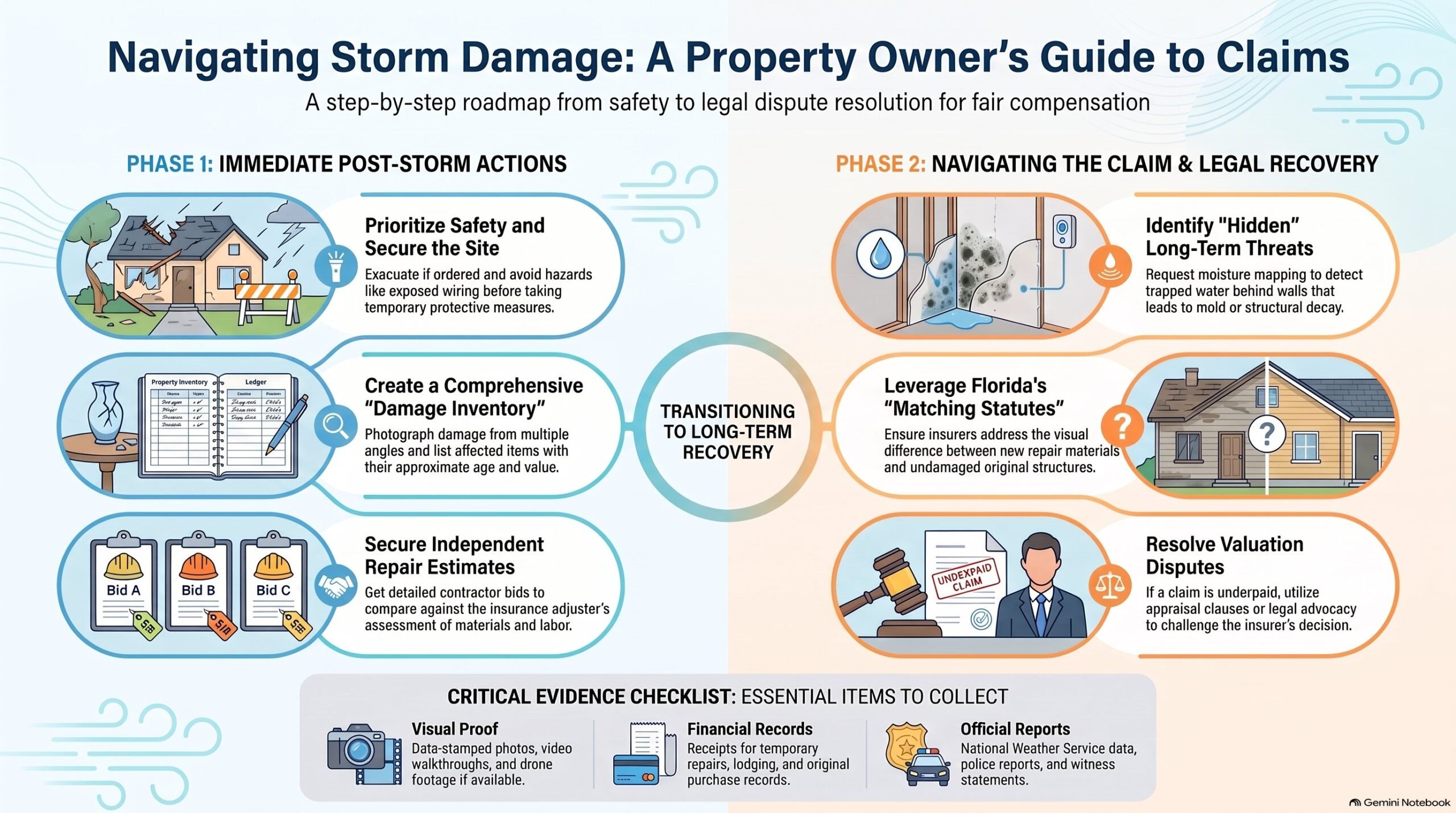
After storm damage, we should first protect ourselves and our families by avoiding unsafe areas and seeking emergency help when needed. Once it’s safe, we can photograph the damage and preserve relevant records before making temporary repairs. We should then contact our insurer promptly to report the loss and ask about the claims process.
Prioritize Immediate Safety
If a storm or weather event injures you on an Ormond Beach property, move to a safe location and call 911 if symptoms are serious or worsening. Don’t re-enter a damaged building or approach downed power lines, unstable trees, floodwater, or broken glass. Follow emergency responders’ instructions, and assist others only when you can do so without increasing the danger. If officials order an Emergency evacuation, leave promptly via a safe route and, when possible, help children, older adults, or people with disabilities reach shelter. Once you’re out of immediate danger, seek medical care for injuries, even if symptoms seem minor. Tell medical professionals how the incident occurred and follow their treatment advice. We can protect Personal safety by avoiding hazards, staying alert to changing conditions, and waiting for authorities to confirm an area is safe.
Document Storm Damage
Once you’re safe, document visible storm damage as soon as conditions allow. Use your phone or camera to photograph each affected area from several angles, including close-ups and wider views that show the damage’s location. Record the date and note any observations, such as roof leaks, broken windows, fallen trees, or damaged belongings. Create a Damage inventory listing affected items, their approximate ages, and any available purchase records. Keep receipts for emergency expenses and Temporary repairs, and save damaged materials when practical. Take reasonable steps to prevent further harm, such as covering openings with a tarp, but avoid unsafe work or permanent repairs before the damage is fully documented. If others help, ask them to record what they see and preserve relevant photographs, receipts, and notes for your records.
Contact Your Insurer
Contact your insurer promptly to report the storm damage and begin the property claim process. We should provide the date of the storm, describe the affected areas, and share the photographs and records we’ve gathered. Ask for a claim number and the adjuster’s contact information, then keep notes of every conversation and save all written communications.
Review your policy’s Policy notification requirements and claim deadlines carefully. We shouldn’t assume that a call alone satisfies all notice requirements; ask the insurer which forms or supporting documents it needs and when they’re due. Prompt, accurate reporting helps protect our ability to seek coverage and supports an orderly review. If the insurer delays, disputes, or denies the claim, we can request a written explanation and consider speaking with a qualified property-claim attorney about available options.
Critical Evidence in an Ormond Beach Property Claim Storm & Weather Damage Injury Case
To support your storm damage claim, we’ll focus on evidence that documents the damage, its cause, and the cost of repairs. Preserve relevant records promptly, as clear, consistent documentation can strengthen your case.
Essential evidence may include:
- Photos of storm damage
- Local weather reports
- Repair estimates
- Witness statements
- Receipts and records of completed repairs
Storm Damage Photos
After a storm damages your Ormond Beach property, clear, timely photographs can help document what happened and support your insurance claim. We recommend photographing each affected area before cleanup or repairs, when it’s safe to do so. Capture wide views that show the location, then take close-ups of damaged roofing, walls, belongings, and water intrusion. Include undamaged areas where they help establish context. Keep original files and preserve Photo metadata, which may show when and where images were taken. Create image backups in secure storage so evidence remains available if a device is lost or damaged. Create a simple record that identifies each image and the damage it depicts. We can help you organize these materials and share them with your insurer, supporting a fair review while protecting your ability to assist others.
Weather Reports
Photographs can show the damage to your Ormond Beach property, while official weather reports can help establish the conditions that caused it. We can compare National Weather Service records with the date and time of the reported loss to identify relevant wind speeds, rainfall, hail, or storm activity. Weather radar may help show a storm’s path and intensity near your property, while local observations can add context. Forecast accuracy may also matter when evaluating what warnings were available before the event, though forecasts don’t prove the precise conditions at your home. We should preserve dated reports and note their sources so the evidence remains verifiable. These records can help us present a clear account to insurers and support a fair review of your claim, while keeping the focus on documented facts.
Repair Estimates
When storm damage affects your Ormond Beach property, a detailed repair estimate can show the work needed and its likely cost. We can help you compare estimates with the damage documented after the storm and identify repairs that may be missing or undervalued. Contractor bids can be useful, especially when they detail materials, labor, and the tasks required to restore your home. Keep dated estimates, photographs, invoices, and related communications in one place so you can present a clear record to your insurer. If inspection reveals hidden damage or prices change, request written scope revisions that explain the reason for each adjustment. We can review these records with you and help assess whether the insurer’s proposed payment accounts for necessary repairs. Accurate estimates can strengthen your claim and support a fair resolution that helps protect your household.
Witness Statements
Repair estimates can document the cost of restoring your property, while witness statements may help establish how the storm caused damage or injury. We can help you identify people who saw the event, observed conditions before and after the storm, or assisted with immediate repairs. Their accounts may clarify when damage appeared, how water entered, or whether a hazardous condition caused someone’s injury. Ask witnesses to record what they personally observed, including dates, locations, and relevant details, while their memories remain fresh. Preserve their contact information and any photographs or messages that support their accounts. Witness credibility matters, so we should assess each person’s opportunity to observe and possible bias. We should also review statement inconsistencies carefully; differences may require clarification, but shouldn’t automatically discredit an honest witness. Clear, accurate accounts can support a fair claim and help protect those affected.
Long-Term Effects of Ormond Beach Property Claim Storm & Weather Damage Injuries
We should assess how storm-related property damage can continue affecting your home long after the weather clears. Persistent roof leaks may worsen structural problems, while hidden water damage can spread behind walls and beneath floors. Lingering mold exposure may also pose health concerns, making prompt inspection and documentation important.
Persistent Roof Leaks
Persistent roof leaks can turn storm damage into a long-term threat to an Ormond Beach property. Recurring seepage may weaken roofing materials, loosen fasteners, and compromise the roof’s ability to withstand future storms. Over time, roof membrane deterioration can widen openings and make repairs more extensive. We encourage you to document each leak, photograph visible damage, and keep records of repair visits and related expenses. These details can help show how the problem developed and whether an insurer has adequately addressed the covered damage. Prompt professional inspections can identify the source of a leak and support practical repairs before another storm worsens the roof’s condition. When you serve tenants, customers, or family members, timely action also helps protect the building’s continued use and supports a safer, more dependable property.
Hidden Water Damage
After a storm, water can remain hidden behind walls, beneath flooring, or inside insulation, causing damage that may worsen before it becomes visible. We can help you recognize why prompt investigation matters: trapped moisture may weaken drywall, warp wood, damage electrical components, and compromise structural materials. These problems can increase repair costs and disrupt your household long after the weather clears. A qualified inspection can identify affected areas before you authorize repairs or accept an insurer’s assessment. Moisture mapping and thermal imaging can help locate damp materials that a visual check might miss, providing clearer evidence of the damage. Keep photographs, inspection findings, repair estimates, and claim correspondence in one place. When you document the full scope of loss, you’re better prepared to seek fair coverage and protect everyone who depends on your home.
Lingering Mold Exposure
When storm-related moisture remains in a home, lingering mold exposure can affect occupants long after the weather clears. Mold may grow behind walls, beneath flooring, or inside ventilation systems, making it difficult to identify without a careful inspection. We encourage you to document visible growth, musty odors, and repair delays, especially when occupants develop respiratory symptoms such as coughing, wheezing, or persistent congestion. These effects can disrupt sleep, work, and caregiving responsibilities, and they may be more serious for children, older adults, or people with existing health conditions. Prompt Mold remediation can limit continued exposure, but repairs should address the moisture source and contaminated materials. We can help you understand how to preserve records, report property damage, and seek appropriate support while protecting the people who rely on you.
Proving Liability in Ormond Beach Property Claim Storm & Weather Damage Injury Cases
Proving liability in an Ormond Beach storm or weather damage claim requires more than showing that a storm damaged your property. We must identify who had a duty to protect people from foreseeable hazards and show how a failure to meet that duty caused your injury. Property owners may face Premises liability claims when they knew, or reasonably should have known, about dangerous conditions and failed to address them. For example, fallen debris, unstable structures, or waterlogged walkways may create hazards after severe weather.
Contractor negligence may also contribute to harm. A contractor who installs roofing improperly, leaves materials unsecured, or performs inadequate repairs may create risks that injure residents, visitors, or workers. We can help you document the condition, identify responsible parties, and connect the unsafe conduct to your injuries. Photographs, maintenance records, witness accounts, and qualified professional assessments may clarify what happened. By carefully examining the property and the work performed, we can build a clear account of responsibility and support your effort to protect those affected.
Dealing With Insurance Companies After an Ormond Beach Property Claim: Storm & Weather Damage Injury
Insurance companies may contact you soon after a storm-related injury, but their interests don’t always align with yours. When you’re focused on helping family, neighbors, or coworkers recover, a request for a quick statement or broad medical authorization can feel routine. We can help you respond carefully while protecting your interests.
Before discussing fault or accepting payment, review what the insurer asks you to sign. Your statements and documents may affect how the company evaluates your claim. Keep copies of correspondence, repair records, medical bills, and photographs, and provide accurate information without guessing about details you don’t know.
Policy interpretation can determine whether storm damage and resulting injuries fall within the available protection. We can examine the policy language, including coverage exclusions, and explain how those provisions may apply to your circumstances. If an insurer delays, disputes responsibility, or offers less than your documented losses support, we can communicate with the company and advocate for fair consideration while you focus on recovery and those who depend on you.
What to Expect During an Ormond Beach Property Claim Storm & Weather Damage Injury Claim Process
We’ll begin by reviewing your policy, the circumstances of the loss, and the claim details. We’ll document the damage and explain how the insurer’s investigation may affect your claim. Once the insurer makes a decision, we’ll assess any settlement offer and discuss options if the claim is disputed.
Initial Claim Review
After storm or weather damage in Ormond Beach, an initial claim review helps us understand what happened, assess the available evidence, and identify the steps needed to pursue compensation. We’ll listen to your account, clarify the property impacts you’ve reported, and learn what communications you’ve had with your insurer. This review helps us determine whether the event may fall within your policy’s protections and what questions require further attention.
We’ll examine relevant policy language through careful Policy interpretation, including limits, conditions, and potential coverage exclusions. We’ll also consider deadlines and the insurer’s stated position, if one has been provided. Our goal is to explain your options clearly, identify concerns that may affect the claim, and help you make informed decisions. By understanding your circumstances, we can plan a responsible path forward while keeping your priorities in view.
Damage Documentation
When storm or weather damage affects your Ormond Beach property, thorough documentation can help establish the extent and cause of your losses. We recommend recording damage as soon as it is safe to do so. Take clear photographs and videos of affected rooms, exterior areas, and damaged belongings before making non-emergency repairs. Note the date, location, and visible condition of each item, and keep copies of receipts for temporary repairs and related expenses.
An Inventory checklist can help us organize damaged possessions by description, age, purchase price, and estimated replacement cost. Save relevant invoices, warranties, and ownership records when available. If you hire a qualified professional to assess or repair damage, request detailed documentation from the contractor, including written estimates, invoices, and descriptions of completed work. Keep these materials organized so we can present a clear, consistent account of your losses.
Insurer Investigation
During the insurer’s investigation of your Ormond Beach storm or weather-damage claim, the adjuster will review the reported losses, inspect the property, and assess the available evidence. We can help you understand what the process involves and prepare to cooperate without overlooking important details. Ask about the adjuster’s qualifications and experience with storm-related property damage. The insurer may also use engineers or other experts to evaluate roofing, structural, or water damage. Inspection protocols should guide how the property is examined, photographed, and documented. You can provide repair estimates, receipts, photographs, and other records that support your account. Keep copies of materials you submit, note inspection dates, and record the names of people involved. We’ll help you communicate clearly and protect an accurate record while the insurer gathers information about your claim.
Settlement or Dispute
Once the insurer completes its investigation, it may offer a settlement, request more information, or dispute part of your Ormond Beach storm damage claim. We can review the offer against your policy, repair estimates, and documented losses to assess whether it fairly addresses the damage. During Settlement Negotiation, we can present supporting evidence, explain disputed costs, and seek a resolution that reflects your covered losses. If the insurer denies items or maintains an inadequate offer, we can examine its stated reasons and identify relevant policy provisions. Dispute Resolution may involve further discussions, a formal appeal, appraisal, mediation, or litigation, depending on your policy and circumstances. We’ll help you understand available options, deadlines, and potential costs so you can make informed decisions while protecting your property and supporting those who depend on you.
Compensation for Ormond Beach Property Claim Storm & Weather Damage Injury Damages
Storm damage can cause losses that extend well beyond the cost of repairing a home or business, including damaged belongings, temporary housing expenses, and lost income. When you make a property claim, we can help you identify the losses your policy may cover and present clear documentation to the insurer. Compensation may include reasonable repair or replacement costs for damaged belongings, as well as Temporary housing when your property cannot safely accommodate you. You may also need to account for cleanup, storage, or other necessary expenses caused by the storm. Keep receipts, photographs, repair estimates, and records of communications with your insurer. These materials can support your request and help show how the damage affected your household or business. We’ll review the policy language, assess the evidence, and explain potential options if the insurer disputes or undervalues a covered loss. Our goal is to help you pursue a fair resolution while protecting the resources you need to recover and serve your family or community.
Economic vs Non-Economic Damages in Ormond Beach Property Claim Storm & Weather Damage Cases
We distinguish economic losses, such as repair costs and temporary housing expenses, from non-economic harm, including disruption and loss of use. To support your claim, we’ll identify the damage the storm caused and link it to your property loss. Clear records and other reliable evidence can help establish the value of each category.
Economic Losses
Economic losses are the measurable financial costs you incur when storm or weather damage affects your Ormond Beach property. These may include repair expenses, damaged belongings, cleanup, and reasonable costs to prevent further harm. We can help you document invoices, estimates, receipts, and other records that connect each expense to the covered event. If damage forces you to close a business, Business interruption losses may include income you couldn’t earn during the closure and necessary continuing expenses. If your home becomes unsafe, temporary relocation costs may include lodging and other reasonable expenses while repairs proceed. Policy terms, limits, and exclusions affect what an insurer must pay, so we’ll review the applicable coverage and evidence with you. Clear documentation can support a fair assessment and help protect resources you need to serve your family, employees, or community.
Non-Economic Harm
Beyond repair bills and other measurable expenses, storm damage can also cause non-economic harm, such as stress, disruption, and loss of use of your home or property. When damage forces you to leave familiar rooms, change daily routines, or worry about your family’s safety, the impact reaches beyond finances. Emotional Distress may affect your sleep, concentration, and sense of security, while ongoing repairs can place strain on relationships and caregiving responsibilities. You may also experience Loss of Enjoyment when storm damage prevents you from using a home, yard, or other property as you did before. These effects matter because a property serves more than a practical purpose; it supports comfort, stability, and connection. We can help you understand how non-economic harm differs from measurable economic losses in a property claim.
Proving Your Damages
To prove damages in an Ormond Beach storm or weather damage claim, we must connect each claimed loss to the covered event and support it with reliable evidence. We can document economic losses with repair estimates, invoices, receipts, temporary housing costs, and records of damaged belongings. Photographs, maintenance records, inspection reports, and weather data can help establish the property’s pre-loss condition and explain the cause of damage. We should also preserve damaged materials when practical and keep a dated record of communications with the insurer.
Non-economic harm, such as disruption, stress, or loss of use, may be harder to measure. We can describe these effects clearly and support them with relevant records or witness statements. By organizing evidence and distinguishing storm-related damage from prior wear, we help insurers assess the claim fairly and pursue appropriate compensation.
Don’t Wait. Call Our Florida Personal Injury Lawyers Now!
When an Ormond Beach Property Claim Storm & Weather Damage Injury Case Goes to Trial vs Settlement
In an Ormond Beach property claim involving storm or weather damage, settlement may resolve the dispute without a trial, but the right path depends on the evidence, the insurer’s position, and the value of the loss. We can assess the available records, repair estimates, and coverage communications to identify a reasonable resolution. A well-supported demand may encourage the insurer to negotiate fairly and give you Settlement leverage without the delay and uncertainty of court.
Settlement isn’t always appropriate. If the insurer disputes responsibility, undervalues the damage, or refuses to engage in meaningful negotiations, we may recommend pursuing the claim at trial. We’ll explain the potential costs, timing, and risks so you can make an informed choice that serves your household’s needs. Careful trial preparation includes organizing evidence, preparing witnesses, and presenting a clear account of the loss. Whether we negotiate or present your case to a judge or jury, we’ll keep you informed and focused on obtaining a fair outcome.
Florida Laws That May Affect Your Ormond Beach Property Claim Storm & Weather Damage Case
Florida law sets deadlines and standards that can shape how we pursue an Ormond Beach storm damage claim. We’ll review your policy, applicable statutes, and claim records to identify the rules that affect coverage and payment. These protections help property owners seek fair treatment while keeping homes and businesses safe for the people who depend on them.
Florida law and a careful review of claims can help property owners pursue fair treatment after storm damage.
Key legal considerations may include:
- Policy exclusions may limit coverage for certain causes, so we’ll examine how the insurer applies each provision.
- Florida’s matching statutes may affect whether an insurer must address differences between repaired and undamaged materials.
- Claim-handling requirements can guide how insurers investigate losses and communicate decisions.
- Building codes and local safety rules may influence the scope of necessary repairs.
- Evidence requirements can affect how we document damage, expenses, and disputed coverage.
We’ll connect these rules to your specific loss rather than rely on general assumptions. Clear records, careful policy review, and a focused response can support a more informed claim and help protect those who rely on your property.
The Statute of Limitations for Ormond Beach Property Claim Storm & Weather Damage Injury Cases
How quickly must you act after storm or weather damage to protect your property claim? Florida law sets deadlines for filing many property insurance lawsuits, but the applicable limit may depend on the policy, the loss date, and the claim history. We shouldn’t assume that reporting damage preserves every right or that a lawsuit deadline is the only deadline that matters.
Review your policy promptly and notify your insurer as required. Policy deadlines may govern when you must report a loss, submit documents, or provide a sworn proof of loss. Missing a contractual requirement could complicate your claim, even if the statutory filing period hasn’t expired. Keep dated photographs, repair records, and communications to document the damage and your efforts to protect the property and those who rely on it.
Appraisal clauses may set separate procedures and timelines for resolving disagreements about the amount of loss. Because laws and policy terms can change, we should verify current requirements rather than rely on general assumptions. Don’t delay seeking guidance about your specific deadlines.
How an Ormond Beach Property Claim Storm & Weather Damage Lawyer Can Help You
Once you’ve reviewed the deadlines that may affect your claim, an Ormond Beach property claim storm and weather damage lawyer can help you assess the next steps. We can organize the evidence, explain your policy, and communicate with the insurer so you can focus on protecting your household and supporting those who depend on you.
Our assistance may include:
- Documenting storm damage with photographs, repair estimates, and other records.
- Reviewing policy interpretation issues and explaining coverage exclusions that may affect payment.
- Comparing the insurer’s estimate with the damage and necessary repairs.
- Preparing claim materials and responding to requests for information.
- Challenging an inadequate denial or settlement through appropriate procedures.
We’ll help you understand what the policy requires and identify information that could strengthen your position. When disputes involve complicated damage or unclear terms, we can consult qualified professionals and present supporting evidence. Our goal is to pursue a fair evaluation while keeping you informed about available options. With clear guidance, you can make considered decisions and preserve resources for your family and community.
When to Contact an Ormond Beach Property Claim Storm & Weather Damage Lawyer
Contact a lawyer as soon as storm or weather damage raises questions about coverage, repair costs, or the insurer’s response. An early consultation can help us review the policy, organize records, and identify practical next steps while the details are still clear. We can also help you understand what information to preserve, such as photographs, repair estimates, receipts, and communications with the insurer. Prompt advice matters when a home, business, or community facility needs attention, because timely repairs can protect people from further harm.
Reach out if the insurer delays, disputes the cause or extent of damage, requests unfamiliar documentation, or offers less than the documented loss. We can assess the situation and explain available options before you make decisions that may affect the claim. Pay close attention to Claim Deadlines in your policy and under applicable law; missing a required notice or filing date may limit your ability to pursue payment. If you’re unsure when a deadline applies, ask for guidance promptly.
Why You Need an Experienced Ormond Beach Property Claim Storm & Weather Damage Lawyer
When a storm damages your property, an experienced Ormond Beach property claim storm and weather damage lawyer can help you assess the loss, interpret policy terms, and respond to the insurer’s decisions. We can organize repair estimates, photographs, inspection reports, and other records to present a clear account of the damage. Careful Policy Interpretation helps us explain what your policy may cover and how its requirements apply to your claim. We can also examine Coverage Exclusions and challenge an insurer’s reliance on language that may not fit the facts. When an insurer delays, undervalues, or denies a claim, we can identify the issues, communicate with the insurer, and pursue appropriate remedies. Our guidance can reduce uncertainty while you focus on restoring your home and supporting the people who depend on you. By addressing the evidence and policy terms directly, we help protect your interests and seek a fair resolution grounded in the coverage you purchased.
How to Choose the Right Ormond Beach Property Claim Storm & Weather Damage Lawyer for Your Case
Choosing the right Ormond Beach property claim storm and weather damage lawyer can shape how effectively we present your claim and respond to the insurer. We should begin by reviewing Attorney qualifications, including Florida licensure, experience with property insurance disputes, and familiarity with storm-related damage claims. Ask how the lawyer evaluates evidence, communicates with insurers, and prepares cases when negotiations fail. Clear answers can help us judge whether the lawyer’s approach fits your circumstances and priorities.
We should also discuss Fee structures before signing an agreement. Ask what services the fee covers, whether costs are separate, and how payment works if the claim does not succeed. A written explanation helps us compare options and avoid surprises. During a consultation, we can bring the policy, photographs, repair estimates, and correspondence from the insurer so the lawyer can assess the situation more accurately. Choose someone who listens carefully, explains practical next steps, and treats your concerns with respect. That care supports informed decisions while protecting the resources you need to serve your family and community.
About The Law Offices of Anidjar & Levine
At The Law Offices of Anidjar & Levine, we represent property owners pursuing insurance claims after storms and other severe weather damage in Ormond Beach.
We help you understand your options, organize claim information, and respond when an insurer questions, delays, or undervalues a loss.
Our work focuses on clear communication and practical guidance, so you can make informed decisions while addressing repairs and protecting your property.
Firm history reflects our commitment to helping people facing difficult circumstances.
We bring experience handling insurance disputes and explain each step in terms you can understand.
We’ll review the available records, discuss potential next steps, and keep you informed as your matter progresses.
Every claim depends on its facts, and we tailor our approach to your needs rather than promise a particular outcome.
Community involvement also shapes how we serve.
We value the people and neighborhoods we work with, and we aim to treat every client with respect, diligence, and care throughout the claims process.
Frequently Asked Questions
Does Homeowners Insurance Cover Temporary Housing After Storm Damage in Ormond Beach?
Yes, homeowners insurance may cover temporary housing after storm damage in Ormond Beach if covered damage makes your home uninhabitable. We can help you review your policy’s additional living expenses, sometimes called displacement coverage, which may reimburse reasonable costs for lodging and certain increased living expenses. Coverage limits, deductibles, exclusions, and documentation requirements vary. Keep receipts, report the damage promptly, and ask your insurer to confirm what expenses qualify before making arrangements or committing to extended housing costs.
Can I File a Claim for Damage Discovered Weeks After a Storm?
Yes, you can often file a claim for damage discovered weeks after a storm, but coverage depends on your policy, the cause of damage, and applicable reporting deadlines. We recommend documenting the damage promptly with dated photographs, repair estimates, and notes explaining when and how you found it. This Late Damage Documentation can help clarify the timeline. We’ll review your policy and Delayed Claim Deadlines, then help you report the loss accurately and protect your interests.
Should I Hire a Public Adjuster for My Storm Damage Claim?
Hiring a public adjuster may help when storm damage is extensive, disputed, or difficult to document. We can weigh the potential benefit against Public adjuster fees, which may be a percentage of your settlement. A qualified adjuster can inspect damage, prepare estimates, and provide support with claim negotiations with your insurer. We should review the agreement carefully, confirm licensing, and compare the expected costs with the claim’s intricacy before deciding whether to hire one.
Can My Insurer Require Me to Use Its Preferred Repair Contractor?
Your insurer generally can’t require you to use its preferred contractor, though your policy and state law may affect your options. We recommend reviewing the policy, requesting the insurer’s Repair Estimates in writing, and comparing them with an independent contractor’s assessment. You retain Contractor Choice in many claims, but choosing a contractor who charges more than the approved amount could leave you responsible for the difference unless the dispute is resolved.
What Should I Do if My Home Suffers Additional Damage During Repairs?
If your home suffers additional damage during repairs, Document new damage promptly with dated photographs, video, and written notes. Notify your insurer as soon as possible, explain when and how the damage occurred, and request instructions before authorizing further work. We can help you preserve evidence, coordinate with the contractor, and clarify whether the new damage falls under your existing claim or requires a separate report. Keep copies of every communication and repair estimate.
—————————
Storm and weather damage can leave you facing costly repairs, disputed coverage, and uncertainty about what to do next.
We can review your policy, document your losses, and communicate with the insurer on your behalf.
If your claim has been delayed, underpaid, or denied, contact The Law Offices of Anidjar and Levine to discuss your options.
We’ll explain the next steps and help you pursue the benefits available under your policy, while keeping you informed throughout the process.
Learn more about our Ormond Beach Personal Injury Lawyer services.

