The Law Offices of Anidjar and Levine help Orlando car accident victims determine whether an at-fault driver is uninsured or has insufficient coverage. A lawyer can review applicable policies, including UM/UIM coverage, preserve crash evidence, and document medical expenses, lost income, and lasting limitations. Representation may also address comparative fault, coverage disputes, notice requirements, and insurer communications. Prompt legal guidance can help protect claim rights before evidence or policy deadlines create complications. For additional information, visit an Orlando Personal Injury Lawyer.
Main Takeaways
- An Orlando uninsured/underinsured car accident lawyer evaluates available policies, UM/UIM benefits, coverage limits, and potential coverage disputes.
- UM/UIM claims may apply when the at-fault driver has no insurance, insufficient limits, or cannot be identified after a hit-and-run.
- Preserve crash reports, photographs, witness information, vehicle damage records, insurance documents, and electronic evidence promptly.
- Medical records, itemized bills, wage documentation, and treatment histories help establish expenses, lost income, disability, and other damages.
- Florida comparative negligence rules may reduce compensation, making careful investigation and timely insurer communication important.
How We Can Help With Your Orlando Car Accident Uninsured / Underinsured Injury Claim
Orlando car accident uninsured or underinsured injury claims often require careful evaluation of insurance policies, medical records, and the circumstances of the collision. A legal team can help identify available uninsured motorist benefits, review coverage limits, and communicate with insurers on the injured person’s behalf.
Assistance may include organizing treatment records, documenting lost income, and assessing how injuries affect daily responsibilities. Counsel can also coordinate evidence preservation by securing photographs, witness information, vehicle damage records, crash reports, and relevant electronic data before it becomes unavailable. These steps support a clear presentation of the claim and help protect important rights during insurance negotiations.


The legal team may explain procedural requirements, identify deadlines, and address insurer requests for statements or authorizations. When appropriate, counsel can prepare a demand supported by medical documentation and financial evidence. Through careful preparation and consistent communication, representation helps ensure that an injured person’s concerns receive serious, orderly attention while promoting a fair evaluation of available compensation.
Understanding Orlando Car Accident Uninsured / Underinsured Injury Cases
OUR CONSULTATIONSARE FREE
START YOUR FREE CASE REVIEW

Understanding an uninsured or underinsured car accident case begins with identifying how insurance coverage applies to the collision and the resulting injuries. An uninsured driver carries no applicable liability insurance, while an underinsured driver has coverage that may not fully compensate an injured person’s losses. The injured party’s own uninsured or underinsured motorist policy may provide additional benefits, subject to policy terms, notice requirements, and coverage limits.
A thorough evaluation typically considers medical records, wage documentation, property damage, witness accounts, and Evidence preservation. Promptly securing photographs, reports, vehicle data, and communications can help clarify liability and damages. Insurers may examine treatment history, prior conditions, and alleged gaps in care when reviewing a claim.


Responsibility may also be disputed through comparative fault defenses. Florida’s comparative negligence rules can reduce recovery when an injured person is assigned some responsibility. Carefully reviewing facts, policy language, deadlines, and settlement offers helps protect the claimant’s interests and supports a fair resolution.
Don’t Wait. Call Our Florida Personal Injury Lawyers Now!
Common Causes of Orlando Car Accident Uninsured / Underinsured
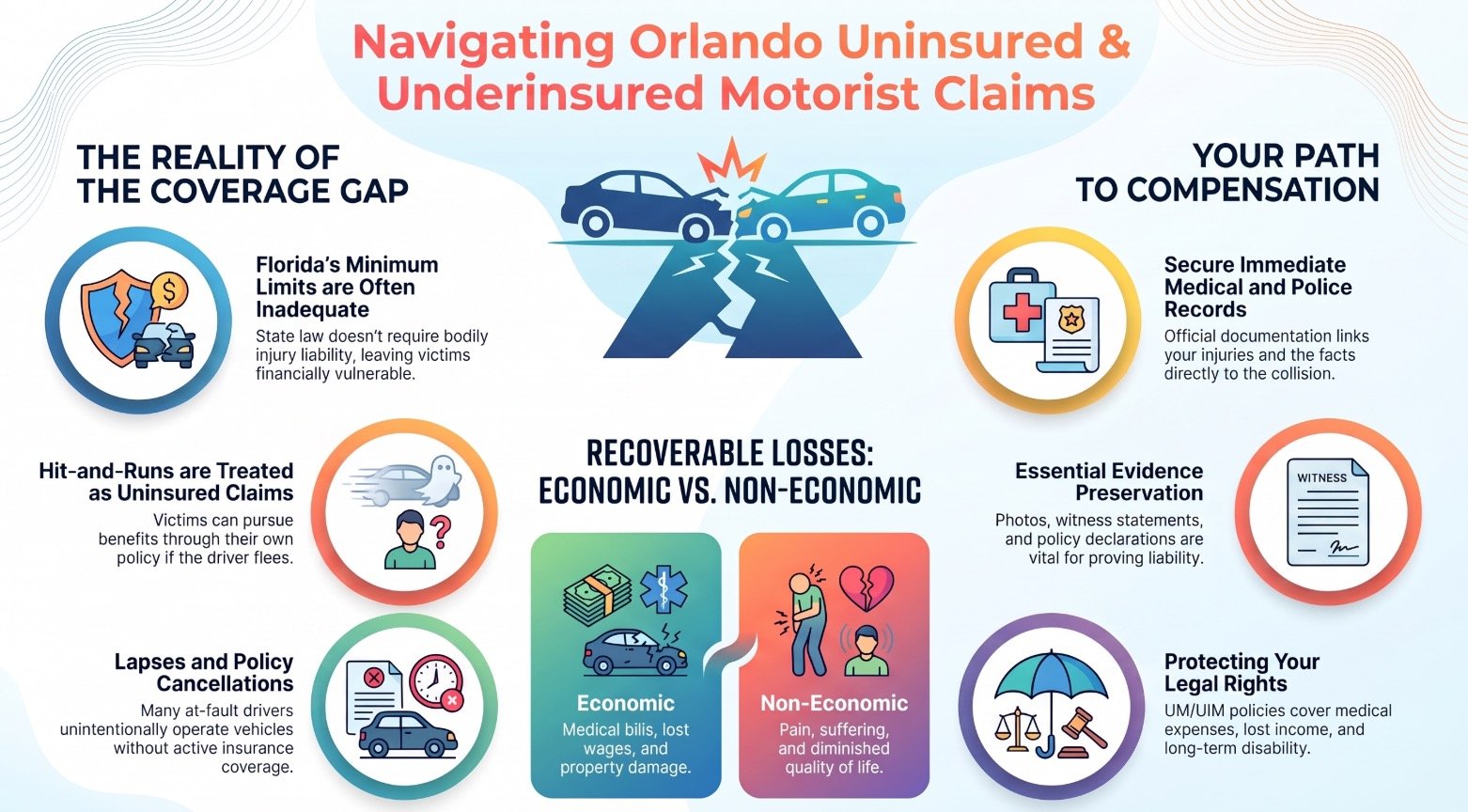
Common causes include driving without insurance or carrying only minimum coverage limits that may not fully compensate an injured person’s losses. Hit-and-run collisions can also leave victims unable to identify the responsible driver or access applicable insurance coverage. Policy lapses and cancellations may also leave an at-fault motorist uninsured when a collision occurs.
Driving Without Insurance
Why do some motorists drive without adequate insurance despite Florida’s financial responsibility requirements? Several causes may explain this conduct. Some individuals allow coverage to lapse after missing payments, changing residences, or overlooking renewal notices. Others cancel policies because premiums become difficult to afford, particularly when household finances change unexpectedly. A driver may also believe that a vehicle is covered when a policy has terminated, a listed driver is excluded, or an insurer denied a claim based on policy exclusions. In other cases, confusion about registration, vehicle ownership, or required uninsured compliance leads to unintentional violations. Uninsured motorists can create serious difficulties for people injured in crashes, who may need assistance identifying available recovery sources. Prompt legal evaluation can clarify coverage issues, preserve evidence, and help affected individuals pursue appropriate remedies while supporting fair accountability.
Minimum Coverage Limits
Florida’s minimum auto insurance requirements may leave injured motorists with inadequate compensation after a serious Orlando crash. Florida generally requires drivers to carry limited personal injury protection and property damage coverage, but it does not require bodily injury liability insurance. As a result, an at-fault motorist may lack the resources to cover medical expenses, lost income, rehabilitation, and other losses affecting an injured household. The injured person’s own uninsured motorist coverage can provide an important safeguard, subject to the policy’s terms and limits. Reviewing Florida UM limits helps determine whether available protection matches the potential harm from a collision. Some policies may permit policy stacking, allowing coverage from multiple qualifying vehicles or policies to combine, although contractual restrictions and statutory requirements may apply. Legal review can clarify available benefits and support fair recovery.
Hit-and-Run Collisions
When a driver leaves the scene without providing identifying or insurance information, the injured motorist may need to pursue benefits through an uninsured motorist policy. Hit-and-run collisions can create immediate challenges because the responsible driver may remain unidentified, leaving limited avenues for direct recovery. Prompt medical attention, a police report, and careful documentation can help establish when, where, and how the crash occurred. Witness names, vehicle descriptions, license plate details, surveillance recordings, and dashcam footage may provide important leads or support a claim. Evidence preservation is especially important because video systems may overwrite recordings and physical vehicle evidence can disappear. An injured person may benefit from reporting the incident promptly, avoiding speculation, and consulting qualified counsel regarding policy requirements, notice deadlines, coverage interpretation, and available benefits under applicable Florida law.
Policy Lapses and Cancellations
Policy lapses and cancellations can leave a vehicle owner without liability coverage at the time of an Orlando crash, even if the owner believes a policy remains active. Missed premiums, returned payments, expired identification cards, or administrative errors may cause termination. Nonpayment disputes can arise when an insurer claims it provided proper notice, while the policyholder maintains that payment was submitted or the cancellation notice was unclear. Verifying coverage before driving, after changing vehicles, and after a billing issue can help identify these risks. Accident victims should obtain the policy declarations, cancellation notices, payment records, and insurer correspondence. An Orlando car accident uninsured or underinsured lawyer can examine whether coverage existed, whether statutory notice requirements were satisfied, and whether another policy may respond. Prompt review helps protect injured individuals seeking fair compensation.
Legal Rights of Orlando Car Accident Uninsured / Underinsured Injury Victims
After an Orlando car accident, an injured person may retain important legal rights even if the at-fault driver lacks adequate insurance coverage. Florida law may permit recovery through the injured person’s uninsured or underinsured motorist policy, subject to policy terms, exclusions, and required procedures.
A careful overview of uninsured claims helps identify available coverage, notice deadlines, and potential sources of compensation.
- The right to seek payment for reasonable medical expenses and related losses.
- The right to pursue compensation for lost income and diminished earning capacity.
- The right to document pain, disability, and other legally recognized damages.
- The right to obtain policy information and evaluate coverage disputes.
- The right to consult qualified counsel before accepting a settlement.
Evidence preservation can strengthen the claim. Maintain medical records, collision reports, photographs, witness information, wage documentation, and insurer communications systematically. A representative acting in the victim’s interest can review applicable policies, communicate with carriers, protect procedural rights, and assess whether additional legal action is appropriate. Timely guidance may help preserve fair recovery.
Why Do Orlando Car Accident Uninsured / Underinsured Injuries Happen?
Understanding how uninsured or underinsured injuries occur helps clarify the coverage issues that may affect an Orlando car accident claim. These injuries often arise when a driver operates a vehicle without required liability insurance, shifting financial responsibility to injured parties and their insurers. Underinsured injuries occur when available policy limits cannot cover medical treatment, lost income, rehabilitation, or continuing care.
Several circumstances contribute to this problem. Some motorists knowingly cancel coverage because premiums are unaffordable, while others allow policies to lapse after missed payments. Policy misrepresentation, such as inaccurate residency, vehicle use, or driver information, may create disputes about whether coverage applies after a collision. In other cases, a driver carries only minimum limits that prove inadequate for serious injuries. Economic hardship and credit-related impacts can make consistent insurance payments difficult, increasing the number of uninsured vehicles on Orlando roads. Understanding these causes helps community advocates and legal professionals recognize why injured individuals may need uninsured or underinsured motorist protection and evaluate available resources carefully.
What Should You Do After an Orlando Car Accident Uninsured / Underinsured Injury?
After an Orlando car accident involving an uninsured or underinsured driver, the injured person should seek immediate medical care, even when symptoms initially appear minor. Report the crash to law enforcement, and preserve relevant medical records, photographs, and insurance information. Consulting an experienced insurance lawyer can help protect the person’s rights and evaluate available coverage.
Seek Immediate Medical Care
Seek prompt medical attention immediately after an Orlando car accident, even if injuries initially appear minor or symptoms have not yet developed. A qualified healthcare professional can identify concussions, internal injuries, soft-tissue damage, and other conditions that may worsen without treatment. Medical records also provide an objective account of symptoms, diagnoses, and recommended care, supporting the injured person’s recovery and future needs. Delaying evaluation may complicate treatment and affect eligibility under Florida injury timelines. Individuals concerned about cost should ask providers about payment plans, insurance options, or copay assistance programs. Following medical instructions, attending appointments, and documenting symptom changes can help protect health and maintain continuity of care. Seeking immediate treatment reflects responsible concern for personal well-being and helps injured individuals receive appropriate support while recovering.
Report The Crash
When an Orlando car accident involves an uninsured or underinsured motorist, report the crash promptly to law enforcement, especially when injuries, significant property damage, or disputed facts are involved. Officers can create an official report, identify drivers and witnesses, document roadway conditions, and record statements while details remain fresh. Until assistance arrives, injured individuals should prioritize Immediate safety steps, including moving from active traffic when possible, activating hazard lights, and avoiding unnecessary movement after a suspected serious injury. The involved parties should exchange identifying, vehicle, and insurance information without arguing about fault. Documenting damage photos can preserve clear evidence of vehicle positions, visible injuries, debris, traffic controls, and surrounding conditions. Also collect witness names and contact information. Accurate, timely reporting helps protect everyone’s interests and supports responsible claims handling.
Consult An Insurance Lawyer
Consulting an experienced Orlando insurance lawyer can help an injured person evaluate uninsured or underinsured motorist coverage, identify applicable policy provisions, and preserve evidence needed to support a claim. Counsel can review coverage options, explain notice deadlines, and determine whether multiple policies may apply to the collision. This review may include the injured person’s policy, household policies, rental vehicle coverage, and potential claims involving an employer or vehicle owner. An attorney can also assess medical records, wage documentation, police reports, witness statements, and photographs to establish liability and damages. Prompt legal guidance may prevent missed deadlines, incomplete disclosures, or unfair settlement decisions. By seeking assistance early, an injured person can protect available benefits and pursue fair compensation while focusing on medical treatment and recovery.
Critical Evidence in an Orlando Car Accident Uninsured / Underinsured Injury Case
Essential evidence can establish fault, document injuries, and clarify the available uninsured or underinsured motorist coverage.
A thorough case review typically considers the following materials:
- Insurance policy documents and coverage declarations
- Police accident reports and related citations
- Medical records, treatment notes, and billing statements
- Witness statements describing the collision
- Photographs of the vehicles, scene, and visible injuries
Insurance Policy Documents
Insurance policy documents establish the coverage available after an Orlando car accident involving an uninsured or underinsured motorist. These records can identify policy limits, covered vehicles, insured drivers, and requirements for pursuing uninsured motorist benefits. They may also reveal whether stacked coverage, medical payments coverage, or other protections apply to the injured person’s circumstances.
A careful review should include declarations pages, complete policy forms, endorsements, renewal notices, and correspondence concerning coverage. The Claim procedure may require timely notice, recorded statements, medical authorizations, or cooperation with the insurer. Missing a contractual deadline can create disputes even when injuries are substantial. Likewise, insurance exclusions may restrict recovery based on vehicle use, household status, or other specified conditions. Preserving every policy-related document helps a legal representative evaluate available benefits, communicate accurately with insurers, and serve the injured individual’s interests responsibly.
Police Accident Reports
Alongside insurance policy documents, police accident reports provide an important account of the collision and the circumstances surrounding an uninsured or underinsured motorist claim. Responding officers prepare these reports, which may identify the involved drivers, vehicles, roadway conditions, witnesses, citations, and apparent contributing factors. Although a report is not conclusive proof of fault, its observations can help establish a consistent factual foundation for investigating coverage and liability. Florida crash reporting requirements may affect whether an incident was documented and how information can be obtained. Attention to police report timelines is also important because reports may require processing before release, while amendments or supplemental statements could appear later. A careful review can identify discrepancies, preserve witness information, and clarify investigative issues for counsel serving an injured claimant’s interests.
Medical Records And Bills
When an uninsured or underinsured motorist claim involves bodily injuries, medical records and bills provide key evidence of the nature, extent, and financial impact of the claimant’s treatment. These documents can link reported symptoms to the collision, establish diagnoses, identify procedures, and show ongoing medical needs. Complete records may include emergency evaluations, imaging results, physician notes, therapy documentation, prescriptions, and expert opinions. Itemized bills help calculate reasonable expenses, while billing record audits can identify duplicate charges, coding errors, or services requiring clarification. Records also help evaluate lost earning capacity when treatment limits work responsibilities. Insurance denial letters may explain rejected payments, coverage positions, or requests for additional proof, making them important to preserve. A careful review helps present an accurate claim and supports fair compensation for injured individuals seeking dependable assistance.
Witness Statements And Photos
Witness statements and photographs can preserve critical evidence in an Orlando uninsured or underinsured motorist injury case by documenting how the collision occurred and the conditions immediately afterward. Independent witnesses may describe vehicle positions, traffic signals, speed, weather, and statements made at the scene. Collect their contact information promptly, while recollections remain clear. A careful credibility assessment considers each witness’s vantage point, consistency, possible bias, and relationship to the parties. Photographs can show damage, roadway conditions, debris, lighting, visible injuries, and relevant signs or markings. Maintaining original files, timestamps, and reliable storage supports photo authentication and helps establish that images accurately depict the scene. Such evidence can assist insurers, attorneys, and courts in evaluating fault, injury claims, and available uninsured or underinsured motorist coverage.
Don’t Wait. Call Our Florida Personal Injury Lawyers Now!
Long-Term Effects of Orlando Car Accident Uninsured / Underinsured Injuries
Uninsured or underinsured car accident injuries may produce chronic pain, permanent disability, and lasting limitations on daily activities. Ongoing medical treatment can include expert visits, rehabilitation, medications, and future procedures. These consequences may also create substantial financial and emotional strain through lost income, mounting expenses, and reduced quality of life.
Chronic Pain and Disability
Chronic pain and disability can become lasting consequences of injuries sustained in an Orlando car accident, particularly when treatment is delayed or incomplete. Persistent discomfort may restrict mobility, concentration, sleep, employment, and participation in family or community responsibilities. Some individuals require workplace accommodations, reduced hours, or a transfer to less physically demanding duties. Thorough chronic pain documentation can clarify symptom patterns, functional limitations, and the accident’s effect on daily life. Records may include pain descriptions, activity restrictions, diagnostic findings, and statements from treating professionals or witnesses. Disability benefits eligibility may depend on medical evidence, work history, policy terms, and the extent to which impairments prevent substantial employment. Uninsured or underinsured motorist coverage may provide a path to compensation when another driver lacks sufficient insurance. Legal guidance can help preserve evidence and protect affected individuals’ interests.
Ongoing Medical Treatment
Ongoing medical treatment may be necessary when injuries from an Orlando car accident produce lasting pain, limited mobility, neurological symptoms, or other complications. Care may include follow-up examinations, prescription management, physical therapy, occupational therapy, imaging, or expert consultations. A consistent treatment plan can help physicians monitor recovery, identify changes, and address complications before they become more serious. Patients should follow medical instructions and report worsening symptoms promptly, while providers should explain the purpose and expected duration of each service. Rehabilitation expenses may continue for months or longer, particularly when injuries require supervised exercises, assistive devices, or repeated evaluations. Thorough treatment documentation, including diagnoses, recommendations, appointment records, and progress notes, can clarify the injury’s ongoing medical needs. Accurate records also help counsel assess potential compensation and coordinate support responsibly.
Financial and Emotional Strain
When injuries from an Orlando car accident require extended care, the resulting financial and emotional strain can affect nearly every aspect of a person’s life. Medical bills, reduced income, transportation expenses, and rehabilitation costs may continue long after an insurance claim begins. Careful budgeting after crash injuries can help identify necessary obligations, available resources, and the potential need for financial assistance. At the same time, persistent pain, limited independence, and uncertainty about recovery may contribute to anxiety, depression, sleep disruption, or isolation. Coping with trauma often requires counseling, support from trusted individuals, and consistent communication with healthcare providers. Families and community members can provide practical assistance while respecting the injured person’s autonomy. Documenting these losses may help show the full impact of uninsured or underinsured motorist injuries during legal proceedings.
Proving Liability in Orlando Car Accident Uninsured / Underinsured Injury Cases
Establishing liability in an Orlando car accident case requires evidence showing that another driver’s negligence caused the collision and resulting injuries. Relevant proof may include photographs of vehicle damage, traffic signals, roadway conditions, and visible injuries. Police reports, witness statements, surveillance recordings, and event data from equipped vehicles can help establish how the crash occurred. Medical records should connect the collision to documented injuries, treatment, and limitations.
Evidence Preservation is crucial because photographs, electronic recordings, vehicle components, and witness recollections may disappear or change. Promptly documenting the scene and requesting available records can protect the accuracy of the investigation. An attorney may also consult accident reconstruction professionals when fault is disputed or the crash involves intricate circumstances.
Comparative Negligence can affect recovery if the injured person is alleged to share responsibility. Florida’s applicable rules may reduce compensation according to the assigned percentage of fault. Careful review of all evidence helps present a fair account and supports those seeking assistance after an uninsured or underinsured driver causes harm.
Dealing With Insurance Companies After an Orlando Car Accident Uninsured / Underinsured Injury
After an Orlando car accident involving an uninsured or underinsured driver, you must handle insurance communications carefully. The injured person should provide accurate facts, preserve relevant documents, and avoid speculation when speaking with an insurer. Statements given during recorded interviews or settlement discussions may influence how coverage and damages are evaluated.
Policy language should be reviewed carefully to identify uninsured-motorist or underinsured-motorist benefits, notice requirements, cooperation clauses, and applicable deadlines. An insurer may request medical records, wage information, photographs, or other evidence. Address those requests thoroughly while protecting private information unrelated to the collision.
When disagreements arise, Florida insurance disputes may involve questions about fault, medical necessity, coverage limits, or loss value. A legal professional can help organize communications, identify inconsistent positions, and explain available remedies. If the carrier issues an improper denial, a claim denial appeal may require policy analysis, supporting evidence, and timely written arguments. Careful communication promotes fair treatment without prematurely sacrificing legal rights.
What to Expect During an Orlando Car Accident Uninsured / Underinsured Injury Claim Process
The claim process generally begins with promptly reporting the accident and reviewing the available uninsured or underinsured motorist coverage. The injured party must gather evidence and documentation, including medical records, bills, photographs, witness information, and policy materials. Depending on the insurer’s response and the strength of the claim, the matter may be resolved through settlement negotiations or proceed to litigation.
Reporting The Accident
When an Orlando collision involves a driver with no insurance or insufficient coverage, promptly reporting the accident creates an official record and supports the injured party’s uninsured or underinsured motorist claim. When safety permits, the injured person should contact law enforcement from the scene, provide accurate facts, and request the incident report number. Arrange a medical evaluation promptly, even if symptoms initially seem minor, and preserve treatment records. Documenting crash scene conditions, vehicle positions, visible damage, traffic controls, and injuries can clarify what occurred. Contacting witnesses and recording their names and contact information may help preserve independent accounts. The injured party should notify the automobile insurer without unnecessary delay, follow reporting instructions, and avoid speculation or recorded statements that could misstate the circumstances or extent of harm.
Uninsured Coverage Review
A thorough uninsured coverage review begins with examining the applicable automobile policy to determine whether uninsured motorist (UM) or underinsured motorist (UIM) benefits are available and how those provisions apply to the collision. The review typically considers policy limits, insured vehicles, household coverage, notice requirements, and whether multiple policies may contribute to a claim. A careful claims investigation also evaluates the at-fault driver’s liability insurance, if any, and whether that coverage is insufficient for the injured person’s losses. Counsel may assess coverage exclusions, consent-to-settle provisions, and arbitration language that could affect resolution. The policyholder’s duties, including cooperation with the insurer and timely reporting, may also be examined. This process helps identify available benefits and supports a fair, orderly evaluation while protecting the interests of those seeking assistance.
Evidence And Documentation
Effective evidence and documentation form the foundation of an uninsured or underinsured motorist injury claim. The injured person should preserve photographs of vehicle damage, roadway conditions, traffic signals, visible injuries, and surrounding property. Accident scene notes should record the date, time, location, weather, lane positions, witness information, and post-collision statements. Medical documentation must include emergency evaluations, diagnostic results, treatment plans, prescriptions, and restrictions, while consistent follow-up helps establish the injury’s progression. Employment records may support claimed lost income and limitations on job duties. An insurance policy review identifies applicable uninsured or underinsured motorist provisions, notice requirements, exclusions, coverage limits, and documentation obligations. A legal professional may organize these materials, identify missing evidence, and communicate accurately with insurers while protecting the claimant’s interests throughout the review process.
Settlement Or Litigation
Settlement or litigation generally begins after the insurer reviews the uninsured or underinsured motorist claim and the available evidence. The insurer may offer payment, request additional documentation, or dispute liability, coverage, or damages. A careful evaluation compares the proposal with medical expenses, lost income, future needs, and the strength of available proof.
Negotiations may resolve the claim without court involvement, allowing injured individuals to obtain resources while avoiding delay and litigation expense. If negotiations fail, an attorney may file a lawsuit and pursue discovery, depositions, and expert testimony. The insurer may raise a comparative fault defense, asserting that the injured person contributed to the collision or resulting harm. Counsel then develops a trial preparation strategy, preserves witnesses, organizes evidence, and assesses courtroom risks. Throughout the process, informed decisions should reflect both immediate needs and long-term recovery considerations.
Compensation for Orlando Car Accident Uninsured / Underinsured Injury Damages
When an uninsured or underinsured motorist causes a crash, the injured person may recover compensation through their own insurance policy, subject to coverage limits and applicable exclusions. A claim generally requires proof that the other driver caused the collision, the claimant qualifies as an insured, and the policy provides applicable protection. The uninsured damages calculation may consider documented injury severity, treatment records, recovery progress, and the effect of the harm on daily functioning. Insurers may also evaluate pain and suffering factors, including physical discomfort, emotional distress, duration of symptoms, and whether lasting limitations are expected. Policy language, notice requirements, medical examinations, and cooperation provisions can materially affect recovery. Carefully reviewing available coverage helps identify realistic compensation and prevent avoidable disputes. A lawyer may communicate with insurers, organize supporting evidence, and pursue benefits consistent with the policy and Florida law. This process allows injured individuals to protect their interests while seeking fair treatment after a serious crash.
Economic vs Non-Economic Damages in Orlando Car Accident Uninsured / Underinsured Cases
Economic damages generally cover measurable losses, including medical expenses, lost income, and property damage. Non-economic damages address less tangible harm, such as pain, emotional distress, and diminished quality of life. Proving uninsured motorist losses typically requires organized financial records, medical evidence, and documentation connecting the accident to the claimed injuries.
Economic Damages Explained
After an Orlando car accident involving an uninsured or underinsured motorist, damages generally fall into two categories: economic and non-economic. Economic damages represent measurable financial losses caused by the collision. They may include emergency treatment, hospital bills, medication, rehabilitation, medical equipment, and anticipated future care. Lost wages, reduced earning capacity, property damage, rental transportation, and necessary household assistance may also qualify, depending on the evidence and applicable insurance coverage.
Accurate documentation helps establish the value of these losses. Medical records, invoices, pay statements, repair estimates, employment records, and expert opinions can connect expenses to the accident. Evidence preservation should begin promptly, including photographs, reports, and relevant communications. In disputed cases, accident reconstruction may clarify how the crash occurred and support causation. An uninsured or underinsured motorist claim must then be evaluated under the policy’s terms, limits, exclusions, and applicable Florida law.
Non-Economic Damages Explained
Non-economic damages address the personal impact of an Orlando car accident that cannot be measured through bills or receipts. They may include physical pain, emotional distress, inconvenience, disfigurement, loss of enjoyment, and disruption to family relationships. In uninsured or underinsured motorist cases, these losses can matter when coverage permits recovery beyond documented financial expenses. Pain scale methods, treatment notes, personal journals, and consistent descriptions may help communicate how symptoms affect daily life without reducing suffering to a number. Evidence preservation tips include retaining photographs, maintaining appointment records, and documenting meaningful changes in sleep, mobility, and routine. A careful evaluation should recognize each injured person’s circumstances and dignity. Legal guidance can help identify applicable policy terms and present non-economic harm responsibly while serving the individual’s broader recovery needs.
Proving Uninsured Motorist Losses
When an uninsured or underinsured motorist claim arises, the injured person must establish both the extent of the loss and the policy provisions that permit recovery. Economic damages typically include medical treatment, rehabilitation, lost wages, reduced earning capacity, property damage, and future care. Relevant records, employer statements, expert opinions, and reasonable billing documentation support an accurate damages calculation. Non-economic damages address pain, emotional distress, disability, disfigurement, loss of enjoyment, and diminished quality of life. Because these losses lack fixed invoices, consistent medical narratives, personal testimony, and observations from family or caregivers may help demonstrate their effect. Prompt evidence preservation is critical, including photographs, crash reports, insurance communications, witness information, and treatment records. Counsel also reviews coverage limits, exclusions, notice requirements, and settlement offers to determine available recovery.
When a Orlando Car Accident Uninsured / Underinsured Injury Case Goes to Trial vs Settlement
The decision to resolve an Orlando car accident uninsured or underinsured injury claim through settlement or trial depends on the strength of the evidence, the amount of available insurance coverage, and the parties’ willingness to accept a fair resolution. Settlement discussions may provide a faster, more predictable outcome, allowing an injured person to address medical needs, lost income, and household responsibilities without extended litigation. Trial settlement negotiation can continue even after a lawsuit begins, but preparation should account for disputed liability, contested damages, and the possibility that no agreement will be reached.
A trial may be appropriate when an insurer undervalues the claim or refuses to provide a reasonable offer. Counsel may present medical records, employment documentation, witness testimony, and other evidence to explain the injury’s effect on daily life. However, Jury verdict risks include an uncertain result, added expense, delay, and the possibility of recovering less than the final settlement proposal. A careful evaluation of these factors helps promote a fair, informed decision that protects the injured individual’s interests.
Florida Laws That May Affect Your Orlando Car Accident Uninsured / Underinsured Case
Florida law can substantially affect how an Orlando uninsured or underinsured motorist claim is evaluated, negotiated, and litigated.
Several rules influence available coverage, evidence, and responsibility:
- Policy language may require prompt notice, cooperation, recorded statements, or arbitration of disputed benefits.
- Florida comparative fault can reduce recovery when an injured person is assigned responsibility for contributing to the collision.
- Stacking provisions and household policies may affect whether multiple uninsured motorist coverages can apply.
- Insurers must handle claims fairly, while claimants should preserve medical records, wage documentation, photographs, and witness information.
- Consent to search is generally relevant to law-enforcement evidence after a crash, but it does not replace careful review of insurance rights.
Medical-payment benefits, personal injury protection, and coordination among available policies can also affect immediate treatment and financial planning. An attorney serving injured motorists can evaluate exclusions, coverage limits, and opposing fault arguments while communicating clearly with clients and insurers. Because each policy and collision presents distinct facts, individualized legal review remains crucial before accepting payment or waiving potential claims.
The Statute of Limitations for Orlando Car Accident Uninsured / Underinsured Injury Cases
Because filing deadlines can determine whether an otherwise valid claim proceeds, injured motorists should identify the applicable statute of limitations promptly after an Orlando collision. In Florida, personal-injury actions generally must be filed within two years after the accident, subject to statutory changes and claim-specific rules. Uninsured or underinsured motorist demands may also involve policy deadlines, notice provisions, and contractual procedures separate from the court-filing period.
Filing claim steps should begin with identifying the accident date, reviewing the insurance policy, documenting injuries, and confirming which parties and causes of action may be involved. Careful deadline calculation matters because a missed limitation period can bar recovery, even when liability and damages appear clear. Tolling circumstances may pause or extend a deadline in limited situations, such as a claimant’s incapacity or an insurer’s legally recognized conduct. Other legal exceptions can apply, including rules governing minors, government entities, or delayed injury discovery. Because exceptions are narrowly interpreted, prompt attention supports informed decisions and protects the interests of injured motorists and their families.
How an Orlando Car Accident Uninsured / Underinsured Lawyer Can Help You
Once applicable deadlines and policy requirements are identified, an Orlando car accident uninsured or underinsured lawyer can evaluate the claim and establish a focused course of action. The lawyer may help by:
- Reviewing Uninsured motorist coverage, exclusions, limits, and notice provisions
- Identifying responsible parties and applicable insurance policies
- Coordinating medical records, bills, wage documentation, and collision evidence
- Conducting Documentation checklist preparation to organize complete, consistent support
- Communicating with insurers and addressing undervalued or disputed claims
Counsel can assess how injuries affect work, household responsibilities, treatment needs, and long-term quality of life. This evaluation helps present damages accurately while preserving the client’s interests during negotiations. A lawyer may also explain settlement proposals, identify unresolved losses, and recommend whether additional evidence or legal action is warranted. By managing insurer communications and procedural details, counsel lets injured individuals focus on recovery and supporting their families, workplaces, and communities. The process remains grounded in evidence, policy language, and applicable Florida law, with careful attention to fair compensation and responsible advocacy for those harmed by another driver’s inadequate insurance.
When to Contact an Orlando Car Accident Uninsured / Underinsured Lawyer
When should an injured driver contact an Orlando car accident uninsured or underinsured lawyer? Contact should occur as soon as possible after a crash, particularly when injuries, disputed fault, or uncertain insurance coverage are involved. Early legal guidance can help protect deadlines, organize communications, and prevent statements that may unintentionally weaken a claim.
You should also consult a lawyer if the at-fault driver has no insurance, carries limits that may not cover medical expenses, or provides incomplete policy information. Prompt Evidence preservation is important because photographs, vehicle damage, medical records, witness details, and electronic data may become more difficult to obtain over time. The injured driver should seek assistance before signing a release or accepting a settlement offer.
An Insurance denial, delayed response, or request for extensive documentation also warrants timely consultation. A legal professional can review applicable policies and identify available coverage while the claimant focuses on recovery and responsibilities to family and community. Immediate contact is especially appropriate when treatment continues, or financial losses are accumulating.
Don’t Wait. Call Our Florida Personal Injury Lawyers Now!
Why You Need an Experienced Orlando Car Accident Uninsured / Underinsured Lawyer
An experienced Orlando car accident uninsured or underinsured lawyer can evaluate the available insurance coverage, establish the extent of the claimant’s losses, and pursue compensation through the appropriate legal process. This assistance is particularly important when policy limits, exclusions, or competing accounts complicate a claim. Counsel can identify responsible parties, communicate with insurers, and protect the claimant from premature statements or inadequate settlement offers.
A lawyer also helps organize medical records, wage documentation, repair estimates, and other proof supporting damages. Practical Insurance claim tips may include reporting the collision promptly, preserving correspondence, and avoiding recorded statements without informed guidance. An Evidence checklist can help confirm that you have collected photographs, witness information, crash reports, treatment records, and policy documents. By managing deadlines and evaluating disputed facts, experienced counsel can reduce procedural errors and present a complete claim. This support enables injured individuals and their families to focus on recovery while their legal interests receive careful, responsible attention.
How to Choose the Right Orlando Car Accident Uninsured / Underinsured Lawyer for Your Case
Selecting the right Orlando car accident uninsured or underinsured lawyer requires careful consideration of the attorney’s experience with coverage disputes, claim valuation, and Florida personal injury law. A qualified lawyer should explain how policy limits, exclusions, notice requirements, and available evidence may affect recovery. During a case consultation, the prospective client can ask who will manage communications, investigate damages, and address disagreements with an insurer. Clear answers may help determine whether the attorney is prepared to provide dependable guidance and serve the client’s interests.
Clients should also review Fee agreement terms before signing. The agreement should identify the contingency percentage, responsibility for litigation expenses, potential costs, and circumstances that could affect payment. The lawyer’s communication practices, professional resources, and record of handling similar claims may also merit attention. Carefully comparing several attorneys can reveal differences in preparation, accessibility, and strategy. Choosing counsel based on demonstrated competence, transparency, and commitment helps an injured person pursue benefits with greater confidence and realistic expectations.
About The Law Offices of Anidjar & Levine
The Law Offices of Anidjar & Levine represents individuals pursuing compensation after collisions involving uninsured or underinsured drivers. Its attorneys help injured clients evaluate available insurance, document losses, and identify responsible parties. The firm may review policy language, accident reports, medical records, and other evidence relevant to a potential claim.
For clients with Uninsured Motorist Coverage, the firm can explain how policy provisions may apply when an at-fault driver lacks adequate insurance. Counsel may also address disputes concerning liability, damages, coverage limits, and deadlines. When an insurer rejects or undervalues a valid request for benefits, the attorneys may pursue Claim Denial Appeals and other appropriate remedies.
The firm’s approach emphasizes informed decision-making and communication throughout the legal process. Its team presents organized claims while helping clients understand potential outcomes, obligations, and procedural options. Individuals seeking to support family members or others after a serious crash may consult the firm to discuss their circumstances and determine whether legal representation is appropriate.
Frequently Asked Questions
Can I File an Uninsured Motorist Claim if the At-Fault Driver Flees the Scene?
Yes, an injured person may file an uninsured motorist claim after an at-fault driver flees, because many policies treat a qualifying hit-and-run as an uninsured vehicle incident. Coverage depends on the policy, state law, and required proof of contact or reasonable investigation. Documenting hit-and-run details is crucial: report the crash, obtain witness information, preserve photographs, and seek medical care. Begin the insurance claim process promptly, and review policy deadlines carefully.
Does Uninsured Motorist Coverage Apply When I Was a Passenger in Someone Else’s Vehicle?
Uninsured motorist coverage may apply when an injured person was a passenger in someone else’s vehicle, but Coverage eligibility depends on the applicable policies and circumstances. The passenger’s own policy may provide protection, while the vehicle owner’s policy might also respond, subject to policy language and coordination rules. Insurers will evaluate fault, notice requirements, exclusions, and bodily injury limits. Professional guidance can help preserve benefits and support an accurate claim.
Can Uninsured Motorist Insurance Cover Hit-And-Run Accidents Involving Pedestrians or Bicyclists?
Uninsured motorist insurance may cover hit-and-run accidents involving pedestrians or bicyclists, depending on the policy’s terms and applicable state law. Hit-and-run coverage generally requires proof that a qualifying vehicle caused the injury, even when its driver cannot be identified. Pedestrian benefits may apply through the injured person’s policy or a resident relative’s policy. Prompt medical treatment, police reporting, witness information, and timely insurer notification can strengthen the claim and preserve available rights.
What Happens if Multiple Injured People Seek Compensation From Limited Uninsured Motorist Coverage?
When multiple injured people seek compensation from limited uninsured motorist coverage, the policy’s claim caps generally limit the total available recovery. Unless the parties reach a different agreement, each claimant may receive pro rata recovery based on documented damages and available proceeds. An insurer may request arbitration to resolve disputes, while settlement prioritization can consider medical urgency, liability strength, and litigation risk. Legal guidance helps ensure equitable treatment and protects vulnerable claimants.
Can I Use Uninsured Motorist Coverage After an Accident Involving a Rental or Borrowed Vehicle?
Yes, uninsured motorist coverage may apply after an accident involving a rental or borrowed vehicle, but eligibility depends on the applicable Policy Coverage, insurer terms, and state law. A Third Party Rental agreement may impose separate insurance requirements or exclusions. Borrowed Vehicle Eligibility commonly depends on permissive use and household policies. Claim Limitations may include vehicle exclusions, notice deadlines, offset provisions, and reduced limits, so review carefully before pursuing compensation for injured persons.
—————————
Orlando drivers injured by uninsured or underinsured motorists may face substantial medical bills, lost income, and complex insurance disputes. Understanding available coverage and protecting legal rights promptly can significantly affect the outcome of a claim. An experienced Orlando uninsured or underinsured accident lawyer can investigate the collision, evaluate damages, communicate with insurers, and pursue appropriate compensation. The Law Offices of Anidjar and Levine can help victims assess their options and take informed legal action based on their case circumstances. Learn more from an Orlando Personal Injury Lawyer.