

The North Florida Personal Injury Lawyer at The Law Offices of Anidjar and Levine helps injured individuals evaluate liability, preserve evidence, communicate with insurers, and pursue compensation. Potential recovery may include medical expenses, lost income, future care, pain, emotional distress, and other documented losses. Common claims arise from vehicle collisions, premises hazards, workplace incidents, and medical negligence. Prompt medical treatment, organized records, witness information, and legal evaluation are important because Florida deadlines and comparative-fault rules may affect recovery. Additional guidance explains these protections and procedures.
Main Takeaways
- A North Florida personal injury lawyer can evaluate liability, damages, deadlines, and available legal options.
- Attorneys may communicate with insurers and negotiate claims while protecting clients from potentially harmful statements.
- Preserving photographs, reports, surveillance, witness accounts, medical records, and financial documentation can strengthen an injury claim.
- Liability generally requires proving a duty of care, breach, causation, and measurable damages.
- Prompt legal evaluation helps protect evidence, address comparative-fault defenses, and meet Florida filing deadlines.
How We Can Help With Your North Florida Personal Injury Claim
A North Florida personal injury lawyer can help an injured person evaluate the circumstances of a claim, identify responsible parties, and determine what compensation may be available. The lawyer may explain procedural requirements, communicate with insurers, and organize information needed to support a fair resolution.
Early Evidence preservation can protect photographs, incident reports, surveillance recordings, physical objects, and witness accounts before they become unavailable. Counsel may also advise the injured person to avoid statements or agreements that could unintentionally affect the claim.
Medical documentation provides an organized record of diagnoses, treatment, restrictions, and ongoing needs. A lawyer can help gather relevant records, bills, employment information, and other materials that clarify the injury’s practical effects. When appropriate, the lawyer may coordinate with medical providers and other professionals while respecting the client’s privacy.
This assistance allows an injured person to address administrative demands with greater confidence and focus on recovery. It also supports clear communication, responsible decision-making, and informed consideration of available legal options.
Understanding North Florida Personal Injury Lawyer Injury Cases
Understanding North Florida personal injury cases requires examining how the incident occurred, who may be legally responsible, and how to establish the resulting harm. Each claim depends on evidence connecting a defendant’s conduct to the individual’s injuries. Relevant materials may include medical records, photographs, witness accounts, employment documentation, and professional evaluations.
Responsibility can involve an individual, business, property owner, or another entity. In some cases, negligent hiring becomes significant when an organization fails to reasonably investigate or supervise a worker whose conduct creates foreseeable risk. A careful review of policies, training, and prior warnings may help clarify whether additional liability exists.
Injury cases also require a measured damages calculation. Economic losses may include treatment costs, lost income, and future care, while noneconomic losses can involve pain, diminished quality of life, and emotional distress. Legal analysis considers applicable deadlines, comparative fault, insurance coverage, and available evidence. A well-supported claim promotes accountability and helps injured people pursue appropriate assistance and recovery.
Don’t Wait. Call Our Florida Personal Injury Lawyers Now!
Common Causes of North Florida Personal Injury
Personal injury claims in North Florida commonly arise from car accidents, slip and falls, workplace injuries, and medical malpractice. Each cause involves distinct legal and factual considerations, including negligence, liability, and the extent of the resulting harm. Understanding these circumstances helps clarify when an injured person may have grounds to pursue compensation.
Car Accidents
On North Florida roadways, car accidents remain a leading source of personal injury claims, often resulting from distracted driving, speeding, impaired motorists, or failure to obey traffic laws. These collisions may also arise when drivers disregard lane responsibility, follow too closely, make unsafe turns, or fail to yield at intersections. Weather, poor visibility, and road construction can further increase hazards, although careful motorists can reduce many risks through attention and sound judgment. Defensive driving training promotes collision prevention by teaching drivers to anticipate hazards, maintain safe distances, and respond appropriately to changing traffic conditions. After a crash, injured individuals may require medical care, income support, and assistance understanding their legal options. A qualified personal injury lawyer can evaluate evidence, communicate with insurers, and help protect an injured person’s interests throughout the claims process.
Slip And Falls
Slip and fall incidents are another common source of personal injury claims in North Florida, often occurring on premises where hazardous conditions were known or reasonably discoverable. Common hazards include uneven flooring, poor lighting, loose carpeting, spilled liquids, and debris left in walkways. During winter weather, ice and sidewalks may create dangerous conditions when property owners fail to clear or treat affected areas. Businesses can also increase risks when cleaning practices are inadequate or when wet floor signage is absent, misplaced, or removed too soon. Affected individuals may experience fractures, sprains, head injuries, or other complications requiring medical attention. Liability generally depends on whether the responsible party created the hazard, knew about it, or should have identified and corrected it within a reasonable time. Careful documentation can help clarify the circumstances.
Workplace Injuries
Although workplace injuries can arise in many industries, they often result from unsafe conditions, inadequate training, defective equipment, or failures to follow established safety procedures. Construction sites, warehouses, factories, offices, and transportation operations may expose workers to falls, machinery accidents, repetitive strain, chemical exposure, vehicle collisions, and falling objects. Employers generally must provide proper equipment, safety instruction, and reasonably maintained work areas. After an injury, prompt reporting and medical evaluation can help document what occurred and support an appropriate benefits claim. Disputes may arise involving workers’ compensation denials, delayed payments, disputed causation, or pressure to resume duties prematurely. Return-to-work accommodations may help an injured employee shift safely while limitations remain. Legal guidance can clarify available remedies and promote fair treatment for affected workers and their families.
Medical Malpractice
Medical malpractice occurs when a healthcare professional or facility provides treatment that falls below the accepted standard of care and causes injury. Common examples include misdiagnosis, delayed diagnosis, surgical errors, medication mistakes, birth injuries, and inadequate monitoring. Establishing liability generally requires showing that a provider owed a duty, breached the applicable standard, and caused measurable harm. Patients may face additional complications, extended recovery periods, lost income, and substantial treatment costs. Medical expense disputes can arise when providers, patients, and insurers disagree about necessary services or who is responsible for payment. Similarly, insurance coverage denials may leave injured individuals unable to obtain recommended care. A North Florida personal injury lawyer can review medical records, consult qualified experts, preserve evidence, and explain available legal remedies. Prompt action is important because Florida law imposes deadlines and specific procedural requirements.
Legal Rights of North Florida Personal Injury Injury Victims
In North Florida, personal injury victims have legal rights that may allow them to seek compensation when another party’s negligence causes harm. These rights support informed decisions and fair treatment throughout the claim process.
- Right to pursue compensation: A victim may seek damages for medical expenses, lost income, property damage, and other legally recognized losses.
- Right to evidence: Individuals may obtain relevant records, preserve documentation, and present witness information supporting responsibility and damages.
- Right to insurance information: Understanding insurance policy coverage can clarify available benefits, exclusions, and potential sources of recovery.
- Right to informed representation: A qualified attorney may protect a victim’s interests, communicate with insurers, and assist with negotiating claim timelines.
Florida law imposes deadlines for filing many injury claims, so prompt evaluation is important. Victims also have the right to decline unfair settlements and request an explanation of proposed agreements. Careful legal guidance can help individuals serve their families and communities responsibly while preserving their opportunity to obtain appropriate compensation through negotiation or litigation.
Why Do North Florida Personal Injuries Happen?
North Florida personal injuries often result from preventable conduct, unsafe conditions, or failures to follow established safety standards. Common causes include distracted driving, speeding, impaired operation, inadequate training, and negligent maintenance. Commercial vehicles may create especially serious risks when employers ignore inspection duties, exceed loading limits, or permit fatigued drivers to operate. A careful truck accident investigation can examine driver records, vehicle maintenance, electronic logs, cargo arrangements, and roadway conditions to identify contributing failures.
Unsafe premises also cause injuries when property owners fail to repair hazards, provide adequate lighting, or warn visitors about known dangers. Defective products may cause harm despite reasonable use, leading to Product liability claims involving design defects, manufacturing errors, or inadequate instructions. Workplace incidents can arise from insufficient safety equipment, poor supervision, or violations of occupational standards. Medical injuries may result from misdiagnosis, delayed treatment, medication errors, or inadequate communication. Identifying the underlying cause helps clarify responsibility and supports broader efforts to protect affected individuals and communities.
What Should You Do After a North Florida Personal Injury?
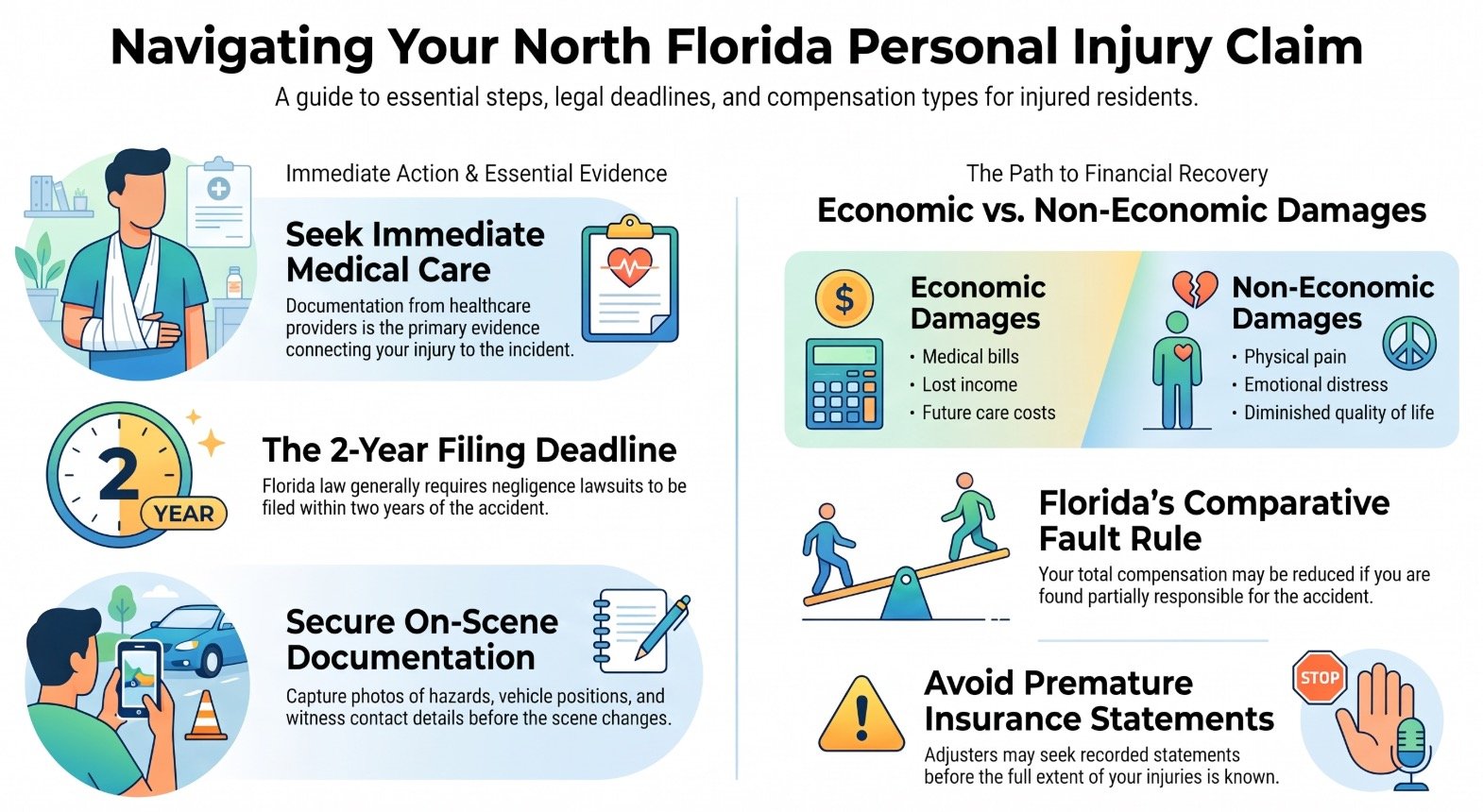
After an injury, the individual should seek immediate medical care, even when symptoms initially appear minor. Document the accident scene with photographs, witness information, and other relevant records. Contacting a personal injury lawyer can help protect legal rights and clarify available options.
Seek Immediate Medical Care
Prompt medical evaluation should be obtained following any personal injury, even when symptoms appear minor or are not immediately noticeable. A qualified healthcare professional can identify internal trauma, document physical findings, and recommend appropriate care. Emergency room treatment may be necessary when injuries involve severe pain, bleeding, loss of consciousness, breathing difficulty, neurological changes, or other urgent warning signs. For less serious conditions, still arrange an appointment with a physician or urgent care provider promptly. Individuals should provide complete and accurate information about the incident, symptoms, medications, and relevant medical history. Timely symptom reporting helps clinicians evaluate changes and supports continuity of care. Follow medical instructions carefully, including recommended restrictions, follow-up visits, medications, and rehabilitation. Prompt attention also helps protect the injured person’s long-term health and recovery.
Document The Accident Scene
At the accident scene, the injured person or a designated representative should document conditions that may later clarify how the incident occurred. If safety permits, photographs should show vehicle positions, damage, skid marks, debris, weather, lighting, and nearby signs. Images should capture the surrounding area from several distances, not just visible injuries. Witnesses may provide valuable information, so record their names and contact details with permission. Notes should describe traffic light violations, lane markings, construction areas, and any apparent obstruction. In parking lots, photographs can preserve evidence of parking lot hazards, including poor lighting, uneven pavement, blocked walkways, or missing warnings. The individual should avoid disturbing evidence and should prioritize personal safety. A contemporaneous record can help preserve accurate details for later review.
Contact A Personal Injury Lawyer
When should an injured person contact a personal injury lawyer? An injured individual should seek legal guidance promptly after receiving necessary medical care, particularly when another party may be responsible. Early consultation helps preserve important deadlines, protect legal rights, and prevent statements or agreements that could weaken a claim. A North Florida personal injury lawyer can evaluate liability, insurance coverage, and potential compensation while explaining available options in clear terms. The lawyer may also coordinate evidence preparation, including medical records, accident reports, photographs, witness accounts, and lost-income documentation. Prospective clients should ask how legal fees are calculated, whether costs are advanced, and what expenses may remain their responsibility. Maintaining organized records and following medical recommendations can support the case. Prompt, informed representation also lets the injured person focus on recovery and family responsibilities.
Critical Evidence in a North Florida Personal Injury Case
Important evidence can establish how an injury occurred, the extent of resulting harm, and the financial consequences for the claimant.
A North Florida personal injury lawyer may evaluate the following materials when developing the case:
- Accident scene photos
- Medical treatment records
- Witness statements
- Lost income documentation
Accident Scene Photos
Accident scene photos can preserve important evidence in a North Florida personal injury case by documenting vehicle positions, road conditions, property damage, visible hazards, and other details that may change or disappear soon after the incident. Photographs should capture wide views of the surrounding area, close images of damage, traffic signs, lighting, skid marks, debris, and weather-related conditions. When safely possible, the injured person or a trusted representative should photograph multiple angles without disturbing the scene. Record witness contact info with permission to preserve accounts that may later clarify disputed events. Store images with their original timestamps and include brief notes identifying where and when they were taken. Document insurance adjuster quotes carefully, but photographs remain independent evidence that can help those evaluating responsibility and losses.
Medical Treatment Records
Medical treatment records provide essential evidence in a North Florida personal injury case by documenting the nature of the injuries, the care received, and the financial costs associated with recovery. They may show when symptoms began, how seriously providers evaluated them, and whether treatment followed established medical recommendations. Doctor visit timelines and symptom tracking can help clarify progression, improvement, or continuing limitations after an accident. Detailed notes may also connect reported symptoms to observed findings, supporting proof of causation when the relationship between the incident and injury is disputed. Records can explain choosing treatments, including medication, therapy, diagnostic testing, or surgery, based on clinical judgment. Billing statements further establish reasonable expenses. Preserving complete records allows legal professionals to evaluate damages accurately and present information responsibly for those seeking appropriate recovery.
Witness Statements
Witness statements can supplement medical treatment records by describing what occurred before, during, and after an incident. Observers may clarify traffic conditions, physical movements, warnings, visible injuries, and behavioral changes that formal records cannot capture. Their accounts can help establish how an event unfolded and whether the reported injuries appeared consistent with the circumstances. Attorneys generally conduct Witness credibility reviews by examining each person’s opportunity to observe, relationship to the parties, consistency, and potential bias. Prompt interviews also support accurate recollection, since memories may become less reliable over time. As a result, document statement-collection timelines carefully, including when you contacted each witness, what they reported, and whether later accounts changed. Respectful, organized communication helps preserve evidence while protecting witnesses from unnecessary pressure or confusion.
Lost Income Documentation
When an injury limits a person’s ability to work, lost income documentation can become critical evidence in a North Florida personal injury case. Pay stubs, tax returns, employment contracts, timekeeping records, and employer statements may establish pre-injury earnings and the length of missed work. Medical records should connect the work restriction to the injury, while disability notes can clarify whether limitations are temporary or permanent. Self-employed individuals may need invoices, business records, canceled appointments, and prior-year financial statements to demonstrate lost revenue. An accident witness may support the timeline, but financial documentation generally provides the strongest measurement of economic harm. Careful organization also helps counsel evaluate settlement positions against available insurance policy limits. Accurate records protect an injured person’s ability to pursue fair compensation and serve clients responsibly.
Long-Term Effects of North Florida Personal Injuries
Long-term injuries can produce chronic pain, permanent disability, or reduced physical functioning that affects daily activities and independence. Emotional and psychological effects may include anxiety, depression, trauma-related symptoms, and diminished quality of life. These conditions can also create continuing financial and lifestyle challenges through medical expenses, lost income, and limitations on work or family responsibilities.
Chronic Pain And Disability
Chronic pain and disability can profoundly affect an injured person’s ability to work, perform daily activities, and maintain financial stability long after an accident has occurred. Persistent injuries may limit mobility, strength, concentration, or endurance, making former job duties difficult or impossible. Treatment can require ongoing medical appointments, rehabilitation, assistive equipment, and prescription drugs. Medication Side Effects may create additional safety concerns, impair alertness, or restrict participation in certain activities. Individuals unable to maintain employment may need to evaluate Disability Benefits, workers’ compensation, insurance coverage, and other available resources. Accurate medical records, employment documentation, and consistent treatment histories can help demonstrate the injury’s continuing impact. A North Florida personal injury lawyer may help determine future medical costs, lost earning capacity, and compensation for permanent functional limitations.
Emotional And Psychological Effects
Beyond physical limitations and financial strain, an injury may produce lasting emotional and psychological effects that interfere with recovery and daily functioning. Some individuals experience persistent fear, sadness, irritability, or emotional numbness after a traumatic event. Nightmare flashbacks can disrupt sleep and create distressing reminders during ordinary activities. Others may avoid vehicles, medical settings, crowded areas, or social contact, limiting their ability to participate in family and community life. These reactions are not signs of weakness; they can reflect trauma that requires appropriate clinical attention. Counseling, psychiatric evaluation, support groups, and anxiety treatment may help an injured person manage symptoms and regain stability. Family members, caregivers, and advocates can support recovery by listening without judgment, encouraging professional care, and recognizing warning signs such as isolation, hopelessness, or thoughts of self-harm.
Financial And Lifestyle Challenges
When an injury limits a person’s ability to work, manage household responsibilities, or participate in ordinary activities, its financial and lifestyle consequences may extend well beyond initial medical expenses. Reduced earnings, ongoing treatment, transportation costs, and necessary home modifications can strain budgets. Work disruption may also affect benefits, career advancement, and long-term financial stability, particularly when recovery is prolonged or permanent limitations develop. Daily responsibilities may require assistance from relatives, professional caregivers, or community organizations, changing household routines and increasing pressure on available resources. Recreational activities, social participation, and personal independence may likewise become restricted. Careful documentation of these effects can help clarify the injury’s full impact. A North Florida personal injury lawyer may help affected individuals evaluate losses and pursue compensation that supports recovery, stability, and continued participation in community life.
Proving Liability in North Florida Personal Injury Cases
Establishing liability in a North Florida personal injury case requires evidence showing that another party’s negligence caused the accident and resulting harm. A claimant generally must demonstrate a duty of care, a breach of that duty, a direct connection between the breach and the incident, and measurable damages. Useful evidence may include photographs, surveillance recordings, witness statements, accident reports, medical records, and testimony from qualified professionals. Prompt documentation can clarify roadway conditions, vehicle positions, hazardous property conditions, and the event timeline. Evidence preservation mistakes, such as deleting messages, discarding damaged items, or failing to identify witnesses, may weaken an otherwise valid claim. The opposing party may raise Comparative fault defenses, alleging that the injured person contributed to the occurrence or failed to act reasonably. Careful investigation helps distinguish unsupported assertions from reliable facts. A qualified legal professional can organize evidence, evaluate conflicting accounts, and present the case in a manner that supports accountability and fair treatment for affected individuals.
Don’t Wait. Call Our Florida Personal Injury Lawyers Now!
Dealing With Insurance Companies After a North Florida Personal Injury
After a North Florida personal injury, communication with insurance companies requires careful attention because adjusters may seek statements, medical authorizations, or settlement discussions before they know the full extent of the injuries. A North Florida personal injury lawyer can help protect an injured person from accidental admissions, incomplete disclosures, and premature agreements. Insurers may request recorded interviews, broad access to medical records, or documentation unrelated to the incident. Review each request carefully and respond accurately, without speculation.
When liability appears clear, the insurer may still undervalue losses or delay meaningful communication. Counsel can organize medical evidence, wage information, and other damages while communicating through appropriate channels. If the claim is denied, Claims denial appeals may require additional records, policy analysis, or a formal response explaining why coverage applies. Policy limits negotiation may also become necessary when injuries are substantial and available insurance is restricted. Professional guidance helps preserve rights while supporting a fair, informed resolution for the injured individual and family.
What to Expect During a North Florida Personal Injury Claim Process
A North Florida personal injury claim typically begins with an initial case evaluation to assess liability, damages, and available legal options. The process then involves collecting evidence, reviewing medical records, and negotiating with insurance companies based on the documented facts. If settlement efforts do not produce a fair resolution, the claim may proceed to trial.
Initial Case Evaluation
During an initial case evaluation, a North Florida personal injury lawyer reviews the circumstances of the incident, the available evidence, and the nature of the claimant’s injuries to determine whether the matter supports a viable legal claim. The lawyer typically discusses the claimant’s account, immediate concerns, and desired outcome while explaining potential legal options. Medical documentation, including treatment records and related expenses, helps clarify the injury’s seriousness and likely effect on daily life. The evaluation may also cover insurance timelines, notice requirements, and communication with adjusters, helping the claimant avoid unnecessary delays or statements that could undermine the claim. The lawyer then considers liability, applicable deadlines, and practical challenges before recommending an appropriate course of action. This guidance helps injured individuals pursue fair treatment while protecting their interests.
Evidence Collection Process
When a personal injury claim moves forward, evidence collection establishes the facts needed to evaluate liability, damages, and the strength of the case. A North Florida personal injury lawyer may gather accident reports, photographs, surveillance footage, medical records, employment documentation, and witness statements. Records concerning prior health conditions can also clarify whether an injury resulted from the incident or another cause. The injured person may be asked to preserve messages, receipts, damaged property, and a detailed account of symptoms and treatment. Investigators can inspect the location and identify relevant safety conditions or responsible parties. This organized process supports accurate case valuation and a documented damages calculation, including medical expenses, lost income, rehabilitation needs, and other recoverable losses. Careful preservation also helps prevent gaps that could weaken later factual analysis.
Insurance Negotiation Steps
Once the relevant evidence has been organized, insurance negotiations typically begin with a demand package outlining liability, medical treatment, financial losses, and the compensation sought. A North Florida personal injury lawyer may review policy limits, applicable exclusions, and the insurer’s evaluation before presenting a Settlement Demand Strategy supported by records and documented damages. The adjuster may request additional information, question treatment, or propose a lower amount. Counsel can respond with clarifying evidence, address disputed facts, and maintain organized communication on the claimant’s behalf. If the insurer denies the claim, the lawyer reviews coverage denial reasons, including alleged fault, policy exclusions, notice issues, or insufficient proof. Regular updates help the injured person understand each request, deadline, and negotiation development while protecting accurate documentation and preserving the claim’s value throughout discussions with the insurer.
Settlement Or Trial
The decision between settlement and trial depends on the strength of the evidence, the extent of the injuries, available insurance coverage, and the parties’ willingness to resolve the claim. During insurance negotiation, counsel evaluates medical records, liability proof, lost income, and future care needs before presenting a demand. A thoughtful settlement strategy may provide timely compensation while reducing uncertainty, expense, and delay. Case valuation helps determine whether an offer reasonably reflects the claimant’s losses and long-term challenges. If negotiations fail, trial preparation begins with witness interviews, expert testimony, document organization, and courtroom planning. The claimant may need to testify about the incident, treatment, and daily limitations. Throughout the process, a North Florida personal injury lawyer explains risks, protects the client’s interests, and pursues a resolution that supports recovery and accountability.
Compensation for North Florida Personal Injury Damages
Compensation for personal injury damages in North Florida may cover medical expenses, lost income, property damage, and the physical and emotional harm caused by an accident. A claim may also address necessary rehabilitation, ongoing treatment, and services required because an injury limits daily activities. Available recovery depends on evidence establishing fault, the severity of the harm, and the link between the incident and the claimed losses.
Florida law may impose a damages cap in certain cases, particularly claims involving governmental entities or specific statutory circumstances. Such limitations can affect the amount recoverable and the procedures required before filing suit. Punitive compensation is distinct from ordinary recovery and may be available only when conduct demonstrates intentional misconduct or gross negligence. Courts generally require clear and convincing evidence before awarding it. A qualified personal injury lawyer can help an injured person document losses, identify responsible parties, and pursue compensation through a process that respects the individual’s needs while supporting fair accountability. Careful legal guidance also helps preserve deadlines and comply with applicable notice requirements.
Economic vs Non-Economic Damages in North Florida Personal Cases
Economic damages include measurable financial losses such as medical expenses, lost income, and necessary rehabilitation costs. Non-economic damages address less quantifiable harm, including pain, emotional distress, and diminished quality of life. Calculating injury compensation requires evaluating both categories, along with the evidence, severity, and lasting effects of the injury.
Economic Damages Explained
Financial losses form the foundation of economic damages in North Florida personal injury cases. These losses can include Medical bills for emergency treatment, hospitalization, surgery, medication, rehabilitation, and necessary follow-up care. Documentation should also establish anticipated medical expenses when an injury requires continuing treatment or dedicated services.
Economic damages may cover lost wages during recovery, reduced earning capacity, and reasonable costs for transportation, medical equipment, or household assistance made necessary by the injury. Receipts, employment records, tax documents, physician opinions, and expert assessments can help demonstrate the amount and connection of each claimed loss.
A careful settlement strategy relies on complete financial evidence rather than estimates. Attorneys serving injured individuals typically organize records, verify future needs, and assess applicable insurance coverage before presenting a demand. This structured approach supports accurate valuation and helps protect a client’s ability to obtain appropriate financial reimbursement.
Non-Economic Damages Explained
When an injury affects a person’s daily life in ways that cannot be measured by bills or pay records, non-economic damages may address those personal losses. These damages generally concern the human consequences of an accident rather than documented financial expenses. Pain and suffering can include physical discomfort, emotional distress, anxiety, inconvenience, and the loss of enjoyment of activities. They may also reflect lasting limitations that affect relationships, independence, or ordinary routines. In wrongful death claims, non-economic damages may recognize the surviving family’s loss of companionship, guidance, affection, and emotional support. The availability and scope of these damages depend on applicable Florida law and the facts of the case. A North Florida personal injury lawyer can help present these personal effects clearly while serving the injured person’s interests with diligence and compassion.
Calculating Injury Compensation
Determining injury compensation in North Florida requires separating documented economic damages from non-economic losses arising from the same incident. Economic damages may include emergency treatment, rehabilitation, prescriptions, lost wages, diminished earning capacity, and reasonably necessary future medical bills. Records, invoices, employment documentation, and expert projections help establish these amounts.
Non-economic damages address harm that lacks a fixed price, including pain, emotional distress, disability, disfigurement, loss of enjoyment, and effects on family relationships. A claimant’s pain prognosis, treatment history, recovery limitations, and testimony may influence valuation. Insurance carriers often scrutinize causation, preexisting conditions, and gaps in care, making consistent medical documentation important.
A North Florida personal injury lawyer may compare similar verdicts, consult medical and financial experts, and present evidence supporting a fair settlement or trial award. Each calculation should reflect the injured person’s circumstances rather than a formula.
When a North Florida Personal Injury Case Goes to Trial vs Settlement
Because every personal injury case presents different evidence, losses, and liability concerns, deciding whether to settle or proceed to trial requires careful legal analysis. A North Florida personal injury lawyer typically evaluates medical documentation, witness credibility, insurance positions, and the client’s willingness to endure prolonged litigation before recommending either path.
Settlement may provide a predictable resolution, faster access to compensation, and reduced emotional strain. However, an offer may not adequately reflect long-term care needs, lost earning capacity, or the seriousness of permanent harm. Trial may be appropriate when liability is disputed, or negotiations fail to produce a fair result.
If litigation proceeds, preparation includes organizing evidence, preparing witnesses, and developing a clear Verdict Strategy. Jury Selection also becomes important because jurors’ perspectives can influence how they assess testimony, responsibility, and damages. Throughout the process, counsel should explain risks, costs, timelines, and possible outcomes to help you make informed decisions that protect your interests and support recovery.
Florida Laws That May Affect Your North Florida Personal Injury Case
Florida laws can substantially affect a North Florida personal injury case by governing liability, available damages, filing deadlines, and insurance claims. Understanding these rules helps a claimant evaluate options and pursue fair treatment while serving family, employees, or community members affected by an injury.
- Comparative Negligence: Florida may reduce compensation when an injured person shares responsibility. Evidence concerning conduct, causation, and fault allocation can thus influence the final recovery.
- Damages: Economic losses may include medical expenses, rehabilitation, and lost income. Non-economic damages can address pain, emotional distress, and diminished quality of life, subject to applicable legal requirements.
- Insurance Policy Limits: An insurer generally evaluates payment within the policy’s coverage limits. Identifying all potentially responsible parties and applicable policies may be required when losses exceed one policy.
- Evidence and Procedure: Medical records, witness statements, photographs, and employment documentation can strengthen a claim. Legal counsel may also coordinate communications with insurers and protect the claimant from statements that could undermine liability or damages.
These considerations require careful, fact-specific review by a qualified Florida attorney.
The Statute of Limitations for North Florida Personal Injury Lawyer Injury Cases
Filing deadlines can determine whether an otherwise valid North Florida personal injury claim may proceed in court. Florida law generally requires an injured person to file a negligence lawsuit within two years of the accident, though important exceptions may apply. Claims involving wrongful death, medical negligence, government entities, minors, or delayed discovery can follow different deadlines and notice requirements. Because the applicable period may depend on specific facts, identifying the correct starting date is necessary.
Missing the statute of limitations can permanently bar recovery, regardless of injury severity or available evidence. Early attention also protects a claimant’s negotiation strategy because negotiations do not automatically extend the filing deadline. A settlement timeline should consequently be evaluated alongside the limitations period, with written agreements carefully reviewed for enforceability. Preservation of medical records, incident reports, witness information, and insurance communications can support accurate deadline analysis. Individuals seeking to protect another person’s interests should obtain qualified legal guidance promptly, particularly when multiple parties or overlapping claims are involved.
How a North Florida Personal Injury Lawyer Can Help You
With careful guidance from a North Florida personal injury lawyer, an injured person can better protect legal rights and consider available recovery options. Counsel can provide structured support while treating each client’s circumstances with respect and diligence.
Primary services may include:
- Case evaluation: The lawyer reviews medical records, incident details, insurance communications, and potential sources of compensation to identify legally relevant facts.
- Evidence preservation basics: Counsel can explain how to secure photographs, witness information, employment records, medical documentation, and other materials before they become unavailable or unreliable.
- Claim management: The lawyer can communicate with insurers, organize supporting documentation, and address procedural requirements without placing unnecessary burdens on an injured person or family.
- Negotiation strategy planning: After considering liability, damages, and available coverage, counsel develops a measured approach for settlement discussions and advises whether an offer reasonably reflects the established losses.
Through careful preparation and clear communication, legal representation can promote accountability while helping clients pursue fair treatment and informed decisions throughout the claim.
When to Contact a North Florida Personal Injury Lawyer
Knowing when to contact a North Florida personal injury lawyer can affect evidence preservation, how you handle insurance communications, and the protection of your legal rights. A consultation may be appropriate soon after a crash, workplace incident, unsafe property condition, or other injury-causing event. Early guidance can help identify witnesses, secure photographs, preserve records, and document medical treatment before information becomes difficult to obtain.
Prompt contact also clarifies insurance claim timelines, which may include policy requirements, statutory deadlines, and requests for recorded statements. An attorney can help an injured person communicate accurately without making admissions that could complicate a claim. Legal advice may be especially important when an insurer disputes responsibility, delays payment, or raises comparative fault defenses. Consider seeking assistance when injuries are serious, liability is uncertain, multiple parties are involved, or medical expenses and lost income keep growing. Timely action supports informed decisions and helps protect available remedies.
Why You Need an Experienced North Florida Personal Injury Lawyer
An experienced North Florida personal injury lawyer can provide informed guidance when liability, insurance coverage, and damages are disputed. Such counsel helps an injured person preserve evidence, communicate with insurers, and avoid statements that could weaken a legitimate claim. Experience also supports careful review of medical records, accident reports, witness accounts, and available coverage.
After a collision, a Car Accident Checklist can organize necessary tasks, including obtaining treatment, documenting injuries, photographing property damage, and identifying witnesses. A lawyer can explain how each step may affect the case while coordinating communications with relevant parties.
An Injury Claim Timeline further clarifies deadlines, medical evaluations, negotiations, and potential litigation. Understanding this progression helps an injured individual make informed decisions and pursue compensation without unnecessary delay. Experienced representation also gives a case focused attention, promoting accountability and protecting the person’s ability to recover losses while continuing to serve family, coworkers, and the broader community.
Don’t Wait. Call Our Florida Personal Injury Lawyers Now!
How to Choose the Right North Florida Personal Injury Lawyer for Your Case
Selecting the right North Florida personal injury lawyer requires careful evaluation of the attorney’s experience, communication practices, resources, and record of handling cases similar to the client’s circumstances. A prospective client should review professional credentials, relevant case experience, and the lawyer’s approach to investigating injuries, insurance coverage, and available compensation.
During initial meetings, Client consultation questions may clarify who will manage the claim, how updates will be provided, and what evidence the legal team expects to obtain. The attorney should explain potential obstacles without promising a particular result. Fee agreement transparency is equally important. The written agreement should identify contingency percentages, litigation expenses, medical lien issues, and any costs that could remain payable if the case ends without recovery.
A suitable lawyer should demonstrate patience, respect, and a commitment to protecting the client’s interests. References, disciplinary history, and prompt responses can provide additional insight. Comparing several qualified attorneys may help an injured person select representation capable of serving the case with diligence, honesty, and sound judgment.
About The Law Offices of Anidjar & Levine
The Law Offices of Anidjar & Levine represents individuals who have suffered injuries because of accidents, negligence, or unsafe conditions. The firm assists clients throughout North Florida with claims involving motor vehicle collisions, premises liability, wrongful death, and other serious injuries.
Anidjar Levine’s background reflects a practice built around client advocacy, case preparation, and communication. Attorneys evaluate available evidence, identify responsible parties, and explain legal options so injured individuals can make informed decisions. Their work may include negotiating with insurers, gathering medical documentation, consulting qualified professionals, and pursuing litigation when they cannot reach a fair resolution.
Local Legal Experience allows the firm to understand regional courts, opposing counsel, insurance practices, and the circumstances affecting North Florida communities. This familiarity supports a more focused approach to each claim while keeping the client’s specific needs in mind.
The firm’s services are intended to help individuals and families pursue accountability, compensation, and stability after preventable harm has disrupted their lives.
Frequently Asked Questions
Can I Afford a North Florida Personal Injury Lawyer Without Paying Upfront Fees?
Many injured individuals can afford representation through a contingency fee arrangement, meaning there are No Upfront attorney fees in most qualifying cases. The lawyer generally receives payment only if compensation is recovered, usually as an agreed percentage of the settlement or verdict. Review contingency plans carefully, including who pays case expenses and costs if the claim is unsuccessful. A consultation can clarify eligibility, fees, and expected obligations.
What Happens if I Cannot Attend Medical Appointments After My Injury?
If an injured person cannot attend medical appointments, they should notify the provider promptly, explain the circumstances, and reschedule as soon as possible. Missed treatment may interrupt recovery and allow insurers to argue that the injury is less serious or unrelated. Patients should retain doctor notes, appointment records, transportation documentation, and communications explaining each absence. Consistent follow-up, honest communication, and alternative arrangements can help preserve medical care and support a claim.
Can Social Media Posts Affect My North Florida Personal Injury Claim?
Social media posts can affect a personal injury claim because insurers may review public content during insurance investigations. Photographs, comments, check-ins, and videos may be interpreted as evidence that contradicts reported injuries, limitations, or emotional distress, even without context. Careful clients should avoid discussing the accident, medical treatment, or settlement online, preserve relevant records, and adjust privacy settings without deleting existing material. Legal guidance can protect evidence credibility and interests.
Will My Personal Injury Settlement Be Taxable in Florida?
A personal injury settlement is generally not taxable in Florida when it compensates for physical injuries or illness, including related medical expenses and pain and suffering. However, taxability rules differ by compensation type. Under federal law, amounts allocated to punitive damages or interest are typically taxable, while lost wages may require careful analysis. A qualified tax professional should review the settlement structure, documentation, and applicable federal requirements before distribution to protect the recipient and those served.
Can Undocumented Immigrants File North Florida Personal Injury Claims?
Undocumented immigrants can generally file personal injury claims in North Florida, regardless of immigration status. They may seek compensation for medical expenses, lost wages, pain, and other legally recognized damages when another party caused harm. Confidentiality rights generally protect relevant client information, and pursuing a claim does not automatically trigger immigration enforcement. Insurance coverage may provide compensation, although insurers may challenge liability or damages. A qualified attorney can explain your options and the process.
—————————
A North Florida personal injury claim requires timely action, thorough documentation, and informed legal guidance. Victims may face medical expenses, lost income, and lasting physical or emotional consequences, so accurately assessing damages is essential. An experienced North Florida Personal Injury Lawyer can investigate the circumstances, protect your legal rights, communicate with insurance companies, and pursue appropriate compensation. The Law Offices of Anidjar and Levine provide case-specific counsel to help injured individuals understand their options and move forward with confidence.

