

If you’ve suffered nerve damage after surgery in Miami, you can work with Law Offices of Anidjar and Levine to protect deadlines, secure complete records, and build a clear timeline of symptoms.
You’ll want operative reports, anesthesia notes, imaging, follow-up notes, and all related communications for expert review of negligence and causation.
Your claim may seek compensation for medical care, lost income, and long-term pain or disability.
Learn more by visiting our Miami Medical Malpractice Lawyer page.
Main Takeaways
- Consult a Miami surgical nerve damage lawyer quickly to protect rights, meet Florida deadlines, and evaluate negligence, causation, and damages.
- Gather complete medical records: operative and anesthesia notes, imaging, discharge instructions, follow-up notes, bills, and all provider communications.
- Prove duty, breach of standard of care, causation, and measurable damages using timelines, nerve studies, and expert medical review.
- Pursue compensation for medical costs, future care, lost wages, reduced earning capacity, pain and suffering, disability, and loss of enjoyment of life.
- Choose firms with proven malpractice results, contingency fees, expert coordination, strong negotiation, and litigation readiness to counter insurer defenses.
How We Can Help With Your Miami Surgical Nerve Damage Lawsuit Injury Claim
Although surgical nerve damage cases can appear straightforward at first, they often require a disciplined legal and medical approach to prove what happened, why it happened, and how it changed your life.
Surgical nerve damage may seem clear, but proving fault and life impact demands disciplined legal and medical clarity.
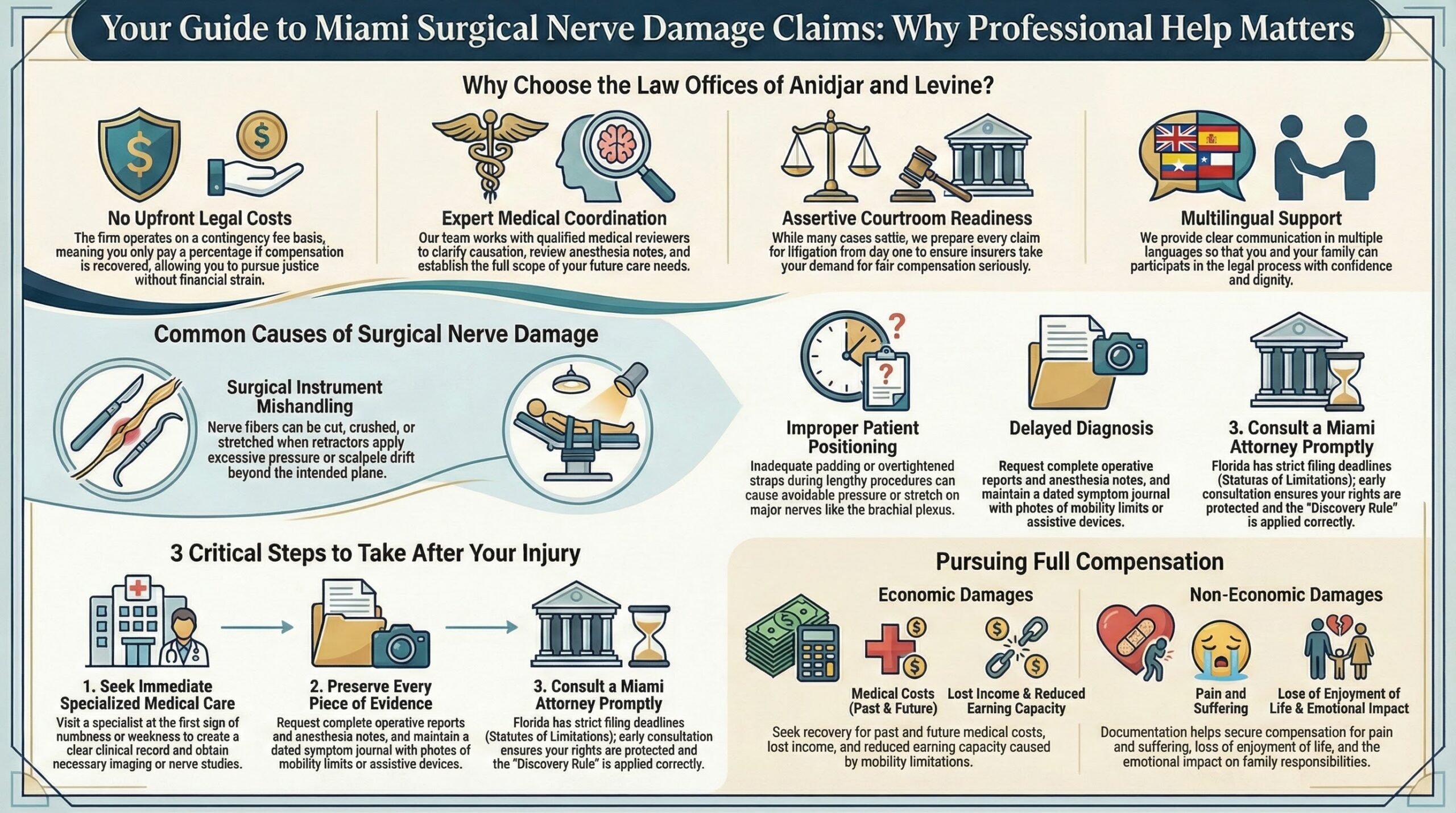
You’ll get a focused team that gathers operative reports, imaging, and follow-up notes, then coordinates qualified medical reviewers to clarify causation and future care needs.
You can expect clear communication, prompt updates, and practical guidance as you document symptoms, treatment, and daily limitations.
You’ll receive organized claim preparation, careful valuation of losses, and firm negotiation that reflects the full impact on work, mobility, and independence.
If insurers resist, you’ll have assertive, courtroom-ready advocacy grounded in a coherent record and credible testimony. You can pursue justice without added financial strain through Contingency Fees, and you’ll stay fully informed through Multilingual Support, so your family can participate with confidence and dignity throughout the process.
Understanding Miami Surgical Nerve Damage Lawsuit Injury Cases
Strong case preparation sets the foundation, but you also need to understand what makes a Miami surgical nerve damage lawsuit succeed or fail. You’ll typically prove four elements: a provider’s duty of care, a breach of that duty, a direct causal link to your nerve injury, and measurable damages.
Your records, imaging, and postoperative evaluations help demonstrate how the outcome affected your function and your daily service to others.


You also benefit from an organized Anatomy Overview that explains which nerves were at issue, what normal function looks like, and why your symptoms are consistent with a specific injury pattern. Consent Laws matter as well, because the defense may argue you accepted known risks, so you must distinguish a recognized complication from avoidable negligence.
You’ll strengthen your case by preserving timelines, documenting limitations, and seeking timely specialized care that supports causation and damages.
Common Causes of Miami Surgical Nerve Damage Lawsuit Injuries
You’ll often see surgical nerve damage traced to preventable breakdowns in the operating room, including surgical instrument mishandling and improper patient positioning.
You may also face harm when the care team delays diagnosing a nerve injury, which can postpone urgent treatment and worsen outcomes.
You should understand how inadequate surgical site protection can expose nerves to compression, stretching, or accidental contact, creating a clear pathway to avoidable injury.
Surgical Instrument Mishandling
OUR CONSULTATIONSARE FREE
START YOUR FREE CASE REVIEW

When a surgical team mishandles instruments during an operation, even a brief lapse in technique can place nearby nerves at serious risk. You may be harmed when retractors apply excessive pressure, clamps pinch tissue, or scalpels drift beyond the intended plane, all of which can cut, crush, or stretch delicate nerve fibers.
Sterilization Errors can also trigger infection and inflammation, worsening nerve irritation and delaying recovery.
| Risk | How it happens | Patient-focused safeguard |
|---|---|---|
| Excess force | Overtraction, tight clamping | Gentle technique, clear handoffs |
| Misplacement | Wrong angle, poor visibility | Pause-and-confirm, standardized steps |
| Retained items | Count failures, poor Instrument Tracking | Two-person counts, tracking logs |
If you suspect mishandling, promptly document symptoms, request records, and seek guidance to support safer care for others.
Improper Patient Positioning
Although the surgical team may focus on the procedure itself, improper patient positioning can place sustained pressure or stretch on major nerves and lead to avoidable, lasting deficits.
You may face harm when padding is inadequate, straps are overtightened, or arms and legs are secured at unsafe angles for too long. In lengthy cases, limb traction can overextend the brachial plexus or peroneal nerve, while neck hyperextension may compromise cervical nerve roots and surrounding structures.


You serve others best by insisting on careful safeguards, including neutral alignment, periodic checks, and clear documentation of positioning decisions. When a facility ignores basic positioning standards, you can pursue accountability, protect future patients, and reinforce a culture of disciplined, patient-centered surgical care.
Delayed Nerve Injury Diagnosis
Proper positioning safeguards can reduce nerve stress during surgery, but patient safety can still unravel after the procedure if the care team misses early warning signs of nerve damage.
When your complaints are minimized or charted without follow-up, the window for timely treatment narrows, and preventable impairment may become permanent.
You often rely on clinicians to track symptom timelines, compare expected recovery milestones, and order prompt consultations when numbness, weakness, or burning pain persists.
Delays occur when staff attribute symptoms to anesthesia, swelling, or normal recovery, rather than reassessing the surgical record and performing focused neurologic exams.
Imaging limitations can further complicate decisions, because scans may appear normal even while a nerve continues to deteriorate.
If you serve others, you’re entitled to care that acts quickly, documents clearly, and escalates concerns without hesitation.
Inadequate Surgical Site Protection
Failing to shield the surgical site can expose nerves to avoidable trauma long before anyone notices symptoms. When the field isn’t properly isolated, instruments, retractors, or pooled fluids may contact delicate structures, and minor pressure can become lasting harm.
You can’t rely on skill alone; you need consistent safeguards that limit movement and prevent accidental contact.
Breakdowns often begin with rushed setup, gaps in surgical draping, or poorly placed sterile barriers that shift during the procedure. If the team overlooks these protections, you may face numbness, burning pain, weakness, or loss of function after surgery.
Serving others in healthcare means treating prevention as a duty, not a preference, and documenting each step so accountability remains clear if injury occurs.
Legal Rights of Miami Surgical Nerve Damage Lawsuit Injury Victims
When a surgical procedure in Miami leaves you with nerve damage, you don’t have to accept the outcome as unavoidable or “just a risk of surgery.” Florida law gives injury victims specific rights, including the ability to demand answers, access vital medical records, and pursue a medical malpractice claim when a provider’s conduct falls below the accepted standard of care.
You can stand for patient safety while honoring the mission of service by seeking accountability that protects others.
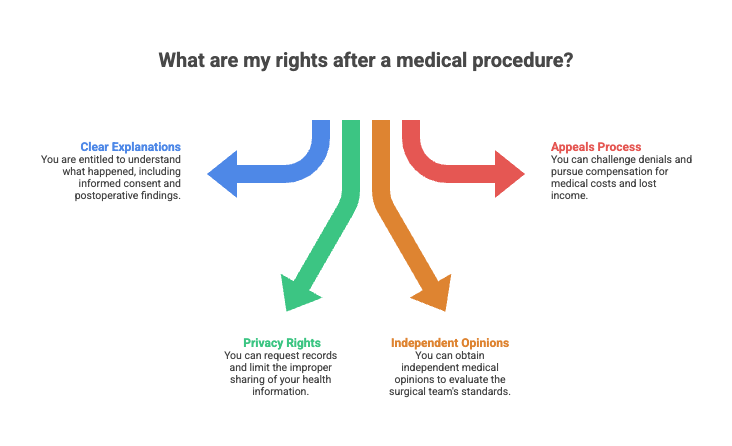
- You’re entitled to clear explanations of what occurred, including informed consent disclosures and postoperative findings.
- You can request records and exercise your Privacy Rights, helping limit the improper sharing of your health information.
- You may obtain independent medical opinions to evaluate whether the surgical team met professional standards.
- You can challenge denials or adverse determinations through the Appeals Process and pursue compensation for medical costs, lost income, and ongoing care.
Steps to Take After a Miami Surgical Nerve Damage Lawsuit Injury
After a surgical nerve damage injury in Miami, you should seek immediate medical care to protect your health and create a clear treatment timeline.
You’ll also need to preserve records and evidence, including operative reports, discharge instructions, follow-up notes, photographs, and all related communications.
Then you should consult a Miami attorney promptly, so you can protect your rights, meet time-sensitive deadlines, and position your claim effectively.
Seek Immediate Medical Care
Although it may feel tempting to wait and see whether the symptoms improve, you should seek immediate medical care at the first sign of possible surgical nerve damage, because prompt evaluation can protect your health and establish a clear clinical record.
Arrange an Emergency evaluation if you notice severe pain, new weakness, numbness, burning sensations, or loss of function, and clearly describe when each symptom began.
Request appropriate testing or referral to a specialist, and follow treatment instructions exactly, including medication use, activity restrictions, and follow-up visits.
Practice Symptom monitoring between appointments by noting changes in sensation, strength, balance, and daily function, then report any worsening without delay.
Preserve Records And Evidence
Because surgical nerve damage cases often hinge on documentation, you’ll want to preserve records and evidence from the start, before details fade or documents disappear. Request complete medical charts, operative reports, anesthesia notes, discharge instructions, and imaging, then store copies in secure Digital Backups.
Keep all bills, pharmacy receipts, and appointment summaries, since they show your ongoing needs and help you serve your family and community responsibly. Photograph visible changes, mobility limits, and assistive devices, and keep a dated symptom journal with clear Timestamp Verification using your phone’s settings or a trusted app.
Save emails, portal messages, and voicemails, and note each call’s date, time, and participants.
| Evidence | How you preserve it |
|---|---|
| Medical records | Request full copies, archive securely |
| Photos/journals | Date-stamp, export to backups |
Consult A Miami Attorney
Strong records and dated proof give your claim a solid foundation, but you’ll still need a Miami surgical nerve damage attorney to convert that documentation into a focused legal strategy.
You should schedule a consultation promptly, because deadlines can limit your ability to recover damages and protect your family’s stability. Bring your medical records, bills, and a timeline of symptoms so your attorney can assess negligence, causation, and future care needs with precision.
Ask direct questions about fee structures, including contingency terms, costs, and how expenses get handled if the case doesn’t resolve in your favor. Review client testimonials to evaluate responsiveness, professionalism, and outcomes in similar cases.
When you choose counsel who serves with discipline and integrity, you strengthen your ability to pursue accountability and fair compensation.
How a Miami Surgical Nerve Damage Lawsuit Injury Lawyer Can Help You
Take control of your claim by working with a Miami surgical nerve damage lawsuit injury lawyer who can evaluate what went wrong and move quickly to protect your rights.
Work with a Miami surgical nerve damage lawsuit injury lawyer to evaluate what went wrong and act fast to protect your rights.
You’ll gain steady guidance built on service, accountability, and clear client communication, so you can focus on supporting your family and community while your case advances.
A skilled lawyer can help you by:
- Collecting operative records, imaging, and expert reviews to identify negligence and establish causation.
- Calculating damages and presenting them with credible documentation, so decision-makers understand the full scope of loss.
- Building a disciplined negotiation strategy, confronting insurers and defense counsel with evidence, deadlines, and well-framed demands.
- Preparing for litigation from day one, filing on time, managing discovery, and positioning your case for trial if a fair settlement isn’t offered.

You are entitled to practical counsel that respects your mission to serve others and insists on professional standards throughout.
Long-Term Effects of Miami Surgical Nerve Damage Lawsuit Injuries
If you’ve suffered surgical nerve damage in Miami, you may face chronic pain and neuropathy that persist long after the procedure, disrupting sleep, work, and daily functioning.
You can also experience permanent mobility limitations, including weakness, loss of coordination, or reduced range of motion that alters how you move and care for yourself.
Over time, you might notice emotional and cognitive impacts, such as anxiety, depression, or difficulty concentrating, that compound the physical burden and affect your overall quality of life.
Chronic Pain And Neuropathy
Although a surgical procedure may mend on the surface, nerve damage can leave you with chronic pain and neuropathy that persist for months or even years.
You may feel burning, tingling, or electric shocks that flare without warning, disrupting sleep, focus, and your ability to show up for those who rely on you.
These symptoms often stem from Neuropathic Mechanisms, in which injured nerves send distorted signals even after the tissues have recovered.
You’ll likely need structured Pain Management, including careful medication planning, targeted therapy, and consistent documentation of triggers and functional impact.
You can also support others by communicating clearly with your care team, attending follow-ups, and advocating for safe work and home adjustments.
When symptoms linger, your records help clarify causation and damages.
Permanent Mobility Limitations
When surgical nerve damage disrupts the muscles and sensory feedback that guide movement, you can develop permanent mobility limitations that don’t resolve with routine recovery timelines. You may notice weakness, foot drop, poor balance, or reduced grip strength, which can limit your ability to perform caregiving tasks and community service.
Rehabilitation helps, yet lasting deficits often require Assistive devices and Home adaptations so you can remain safe and dependable for those who rely on you.
| Challenge | Daily impact | Practical support |
|---|---|---|
| Leg weakness | Slower walking | Cane or walker |
| Foot drop | Tripping risk | Ankle-foot brace |
| Hand weakness | Dropping items | Adaptive utensils |
Track falls, therapy progress, and activity restrictions, because clear documentation supports long-term care planning and strengthens your legal claim.
Emotional And Cognitive Impacts
Permanent mobility limits don’t just change how you move through the day; they can also reshape how you think, feel, and function over time.
When pain persists and independence narrows, you may notice Mood Changes such as irritability, withdrawal, or a shorter temper, even when you’re committed to serving others.
Stress hormones stay elevated, sleep may break down, and that strain can reduce patience and steady decision-making.
You might also experience Memory Problems, including trouble recalling appointments, tracking medications, or following multi-step tasks.
These cognitive effects can interfere with work, caregiving, and community roles, creating frustration and self-doubt.
Document these symptoms, share them with your medical team, and keep a clear record of how they limit daily responsibilities, since they often represent lasting, compensable harm after surgical nerve injury.
Proving Liability in Miami Surgical Nerve Damage Lawsuit Medical Malpractice Injury Cases
| What you must show | How you support it |
|---|---|
| Duty of care | Provider-patient relationship, consent forms |
| Breach of standard | Operative notes, guidelines, Expert Witnesses |
| Causation | Imaging, nerve studies, timeline analysis |
| Defenses raised | Chart review, Comparative Negligence arguments |
You also serve your community by insisting on transparency, promoting safer practices, and holding systems accountable through careful, fact-based presentation of your claim.
Compensation for Miami Surgical Nerve Damage Lawsuit Damages
After you establish duty, breach, causation, and rebut the defenses the provider may raise, the next focus is the value of what the surgical nerve injury has taken from you.
You can pursue compensation for past and future medical care, including surgery revisions, therapy, medication, and assistive devices that support daily function and your ability to serve others.
You may also seek damages for lost wages, reduced capacity, and future earnings when ongoing weakness, numbness, or chronic pain limits your role at work and in your community.
You can request recovery for pain and suffering, disability, loss of enjoyment of life, and the strain the injury places on family responsibilities and volunteer commitments.
You should document these losses through treatment records, expert opinions, and credible testimony about practical limitations.
Your claim value may be shaped by available coverage and insurance limits, so you’ll want a strategy that accounts for all potential sources of payment.
The Statute of Limitations for Miami Surgical Nerve Damage Lawsuit Injury Cases
When does the clock start running on a Miami surgical nerve damage lawsuit?
In Florida, you generally must act within specific Filing Deadlines for medical negligence claims, and missing them can bar recovery. The timeline often begins on the date of the procedure, yet that’s not always the fairest measure when nerve damage isn’t immediately apparent.
If you couldn’t reasonably know you were harmed, the Discovery Rule may shift when the limitation period starts, tying it to when you discovered, or should’ve discovered, the injury and its possible link to substandard care. Even then, outside limits may still apply, so you should promptly document symptoms, follow-up visits, and communications.
If nerve damage wasn’t reasonably knowable, the Discovery Rule may delay deadlines—but outside limits still apply; document symptoms and follow-ups early.
When you serve others, you also protect your family and community by preserving clear records, encouraging safer practices, and ensuring accountability. You should review your dates early, because delays can quietly erase otherwise valid claims.
Why You Need an Experienced Miami Surgical Nerve Damage Lawsuit Injury Lawyer
Although a surgical nerve injury may look straightforward on paper, proving medical negligence in Miami rarely is, and you can’t afford guesswork with your health and financial future at stake.
An experienced lawyer helps you connect the medical facts to the legal standards, so your claim reflects what truly happened and why it shouldn’t have occurred.
You need counsel who can secure records, identify the right medical consultants, and present clear timelines that show where care fell below accepted practice.
With local familiarity, your lawyer understands Miami providers, court procedures, and common defense tactics, allowing you to respond quickly and responsibly.
You also merit an approach that supports service to your family and community, because fair compensation can fund treatment, adaptive care, and stable housing.
When you face mounting bills, contingency fees let you pursue justice without paying upfront, while your lawyer advances costs and focuses on results.
How to Choose the Right Miami Surgical Nerve Damage Lawsuit Injury Lawyer for Your Case
Because surgical nerve damage claims depend on subtle medical facts and strict legal deadlines, you should choose a Miami lawyer who can prove negligence with disciplined case preparation rather than promises.
Start by confirming the attorney’s focus on medical negligence and their ability to work with qualified experts who can explain how the injury occurred and how it changed your daily service to others.
Ask how they investigate records, preserve evidence, and calculate both current and future losses.
Evaluate Communication Style early, you should receive clear timelines, prompt answers, and written explanations you can share with family or ministry leaders who support your recovery.
Review verified Success Rates, but also ask what those results involved and whether the lawyer has tried cases when insurers refused reasonable offers.
Finally, choose counsel who respects your goals, evaluates your case candidly, and commits to steady, ethical advocacy.
About the Law Offices of Anidjar and Levine
The Law Offices of Anidjar and Levine provides focused representation for Miami clients pursuing surgical nerve damage claims, pairing disciplined case preparation with practical guidance from intake through resolution.
You’ll work with a team that values clear communication, timely updates, and careful documentation, so your claim reflects the full impact on your health, work, and daily function.
You can draw confidence from the Firm History, which reflects sustained advocacy for injured Floridians and a structured approach to investigating medical records, consults, and damages.
You’ll receive support with scheduling, evidence collection, and insurer communications, allowing you to stay focused on recovery and family responsibilities.
The firm also prioritizes Community Outreach, and you’re invited to align your case with a broader commitment to safety, accountability, and ethical care.
When you choose this representation, you’re not only seeking compensation, you’re reinforcing standards that protect patients and strengthen the community at large.
Frequently Asked Questions
Can I Sue if I Signed an Informed Consent Form Before Surgery?
Yes, you can still sue even if you signed an informed consent form before surgery, because consent doesn’t excuse negligence or undisclosed risks.
You’ll need careful document interpretation to confirm what you were told, what alternatives you received, and whether risks were presented clearly.
If you experienced coerced consent, missing disclosures, or misleading explanations, you may have a viable claim.
You should act promptly, gather records, and seek counsel to protect others.
Will My Immigration Status Affect My Ability to File a Miami Malpractice Claim?
Your immigration status typically won’t prevent you from filing a Miami malpractice claim, and you can still pursue accountability.
Florida courts focus on the medical negligence facts, not Residency eligibility, although practical issues may arise with identification, address stability, and travel.
You shouldn’t let Language barriers limit your voice; request interpreters and translated records.
You’ll serve others by documenting care, keeping records, and seeking counsel early for deadlines.
How Much Does It Cost Upfront to Hire a Surgical Nerve Damage Lawyer?
You’ll often pay little to nothing upfront, because many lawyers offer an initial consultation at no cost and work on contingency fees.
You sign an agreement stating that the lawyer collects a fee only if you recover compensation, helping you pursue justice while protecting your finances.
You may still cover case expenses, such as medical records, expert reviews, and filing fees, so ask for a clear written breakdown before proceeding.
Can I Switch Lawyers if I’M Unhappy With My Current Attorney?
Yes, you can switch lawyers if you’re unhappy with your current attorney.
You’ll follow clear Firing Procedures, including written notice and resolving any outstanding fees or liens, so you protect your interests and the people you aim to serve.
You should request your full case file promptly, then create a Handover Plan with new counsel to avoid missed deadlines.
You’ll also confirm who communicates with insurers and courts during the handoff.
Will My Case Settle, or Will I Need to Testify in Court?
Your case may settle, but you should plan as if you’ll testify, as outcomes depend on the evidence and your negotiation leverage.
You can improve settlement likelihood by providing complete records, responding promptly, and presenting consistent, credible facts that support accountability and fair compensation.
You should also invest in witness preparation, including practicing clear, service-minded testimony that reflects your values and respects the process.
If settlement fails, you’ll enter trial ready, composed, and effective.
—————————
If you’ve suffered nerve damage after surgery in Miami, you can’t afford delays or uncertainty.
You should document symptoms, preserve records, and seek a prompt medical evaluation to protect both your health and your claim.
Because these cases often require expert analysis and strict compliance with filing deadlines, you’ll benefit from experienced legal guidance from Law Offices of Anidjar and Levine.
You can pursue compensation for medical costs, lost income, and lasting impairment, while your attorney handles investigation, negotiations, and litigation—starting with help from a Miami Medical Malpractice Lawyer.

