

You’ll want a Miami hospital negligence injury lawyer from Law Offices of Anidjar and Levine who can secure complete charts, staffing logs, and timelines, then prove the hospital’s care fell below accepted standards and caused measurable harm.
You can expect disciplined case management, clear updates, and written fee transparency under contingency terms.
Your lawyer should coordinate qualified medical experts, preserve evidence fast, and prepare you for statements, depositions, or trial when insurers resist fair value.
Learn more by visiting our Miami Medical Malpractice Lawyer page, and keep going to see critical deadlines and next steps.
Main Takeaways
- A Miami hospital negligence lawyer evaluates records and timelines to determine if Florida’s medical standard of care was breached.
- They quickly secure and organize evidence, including full chart production, orders, staffing logs, and insurer communications.
- They coordinate qualified medical experts to link the hospital’s breach directly to your injury and document measurable damages.
- They manage strict Florida deadlines, including the typical two-year statute of limitations, notices, and insurer negotiations.
- They offer clear contingency-fee terms in writing, regular updates, and trial-ready preparation for statements, depositions, or litigation.


How We Can Help With Your Miami Hospital Negligence Injury Claim
When a hospital’s mistake leaves you facing unexpected medical complications, lost income, and mounting uncertainty, you need a legal strategy that moves quickly and stays focused on proof.
You can rely on our team to organize records, identify essential timelines, and communicate with insurers so you’re not forced to manage the process alone.
When a hospital mistake upends your health and income, we move fast—organizing records, timelines, and insurer communication for you.
You’ll receive clear next steps, regular updates, and practical guidance that respects your desire to protect your family and continue serving others.
You’ll work with attorneys who prepare your claim with disciplined documentation, preserve crucial evidence, and pursue fair compensation through firm negotiation.
If language barriers affect care or communication, our Multilingual Staff helps you share details accurately and confidently.
You can also review Client Testimonials to understand how we prioritize accountability, professionalism, and responsive support.
You’ll stay informed, and you’ll remain in control while we carry the legal workload.
OUR CONSULTATIONSARE FREE
START YOUR FREE CASE REVIEW

Understanding Miami Hospital Negligence Injury Cases
Although hospital care often involves complicated decisions and multiple providers, negligence cases usually come down to whether the facility and its staff followed accepted standards and protected your safety.
You must show a duty of care, a breach of that duty, and a direct link between the breach and your injury, along with measurable damages.
In Miami, you’ll often rely on records, policies, and qualified medical opinions to compare what happened to what should’ve occurred under similar conditions.
You should also consider how Medical Ethics shapes professional obligations, including honest communication, informed consent, and respect for patient dignity.
Hospital Accreditation standards can further clarify expected safety systems, staffing practices, and oversight, even when accreditation alone doesn’t prove fault.
When you approach a claim with service in mind, you help protect future patients while seeking accountability and fair support for your recovery.
Common Causes of Miami Hospital Negligence Injuries
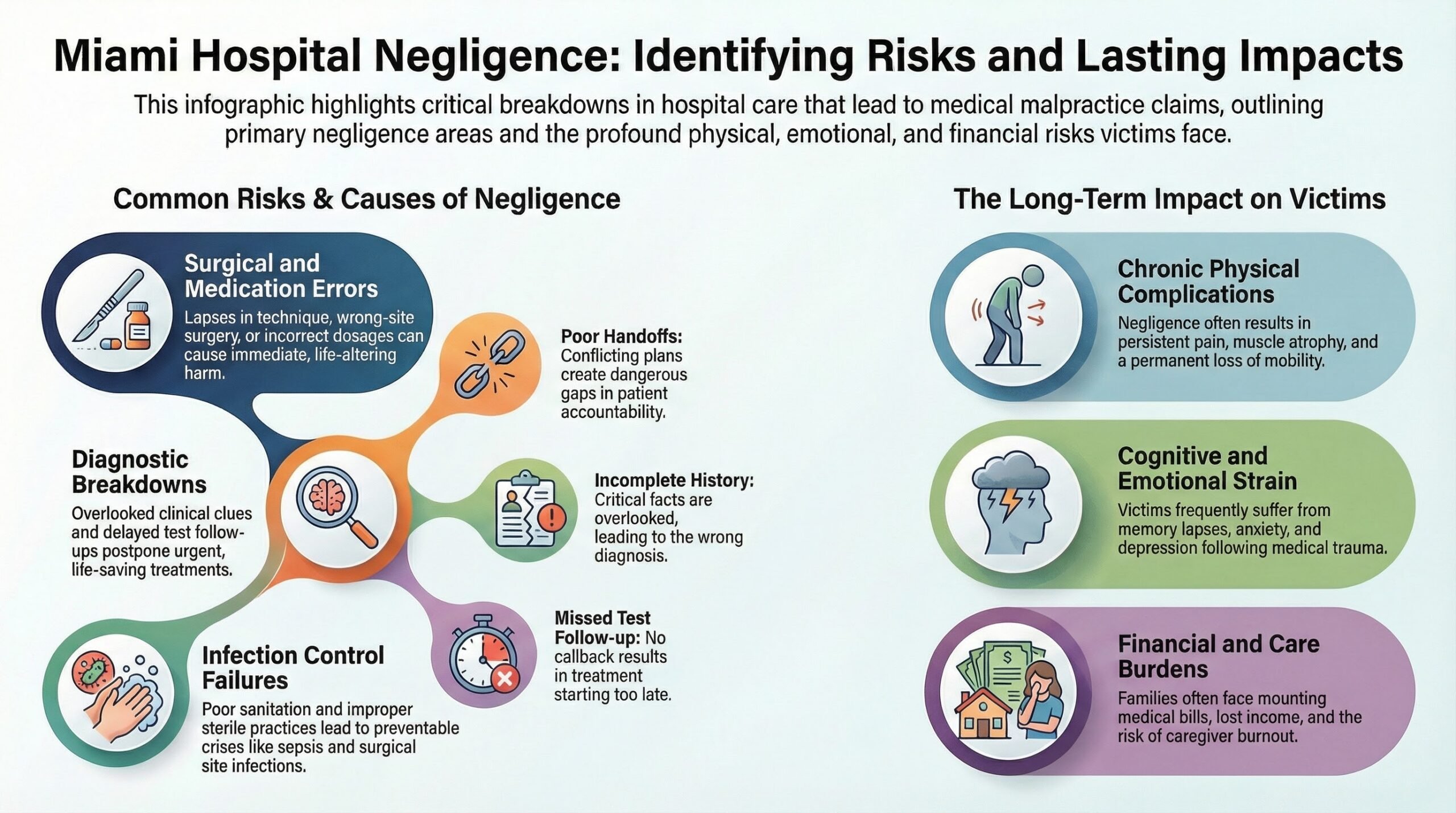
You can often trace Miami hospital negligence injuries to specific breakdowns in care, and identifying them helps you evaluate whether the harm was preventable.
You may face surgical errors and complications, medication and dosage mistakes, or a misdiagnosis or delayed diagnosis that postpones urgent treatment.
You should also watch for poor infection-control practices, as lapses in sanitation and monitoring can lead to serious, preventable infections.
Surgical Errors And Complications
Because surgery demands precise planning, careful execution, and coordinated follow-up care, even a single lapse in technique or communication can cause severe and lasting harm.
If you’re supporting a loved one after a procedure, you should watch for complications tied to preventable surgical errors.
You may face wrong-site surgery, organ perforation, uncontrolled bleeding, or infections linked to poor sterile practice and delayed response.
You should also know that Anesthetic awareness can occur when monitoring fails or when teams don’t communicate clearly, leaving you conscious and traumatized during an operation.
Retained instruments, such as sponges or clamps, left inside the body can trigger pain, abscesses, and repeat surgeries.
When providers ignore warning signs, rush handoffs, or skip post-op checks, you’re left carrying the consequences and the burden of recovery.
Medication And Dosage Mistakes
When medication orders move quickly through a busy hospital unit, even a minor lapse in verification can turn routine treatment into a serious injury.
If you serve patients or support their families, you know trust depends on careful checks at every handoff, from prescribing to dispensing to administration.
Medication mistakes often stem from Label Confusion between look-alike vials, similar patient names, or unclear abbreviations, and you can see harm escalate within minutes.
Dosage errors may involve the wrong concentration, an incorrect infusion rate, or failure to adjust for kidney function, creating avoidable complications.
Pediatric dosing requires extra vigilance because small miscalculations, weight-entry errors, or decimal misplacement can increase risk.
You can reduce harm by confirming allergies, reconciling medications, and consistently documenting cross-checks.
Misdiagnosis Or Delayed Diagnosis
Although many hospital injuries begin with a missed clinical clue, misdiagnosis or delayed diagnosis often result from breakdowns in assessment, communication, and follow-up.
You may see symptoms minimized, test results not escalated, or discharge instructions that don’t match your condition.
When teams fail to reconcile histories, imaging, and labs, cognitive biases can lead them to choose the wrong, familiar explanation.
Telemedicine limitations may also restrict examination quality, making it harder to detect subtle deterioration and delaying urgent referrals.
| Breakdown | What you notice | Why it matters |
|---|---|---|
| Incomplete history | Critical facts overlooked | Wrong differential diagnosis |
| Missed test follow-up | No callback | Treatment starts late |
| Poor handoffs | Conflicting plans | Gaps in accountability |
| Narrow framing | “It’s just…” | Cognitive biases persist |
Poor Infection Control Practices
Even in well-regarded facilities, lapses in infection control can turn routine care into a preventable medical crisis.
When staff skips hand hygiene, reuses supplies, or fails to maintain Sterile Instruments, you can face surgical site infections, sepsis, or extended hospitalization that disrupts your ability to care for others.
These breakdowns may occur during wound care, catheter placement, ventilation, or postoperative recovery, where strict protocols are most critical.
You should expect consistent cleaning, appropriate isolation, and clear documentation of infection-prevention steps.
If you develop a hospital-acquired infection, request your records, request culture results, and document your symptoms and timeline.
A Miami hospital negligence injury lawyer can assess whether the facility’s practices fell below accepted standards and pursue accountability that encourages safer care for future patients.


Legal Rights of Miami Hospital Negligence Injury Victims
Because a hospital injury can affect your health, income, and long-term stability, Florida law gives you specific rights to pursue accountability and financial recovery after negligent care in Miami.
You can seek damages when a provider breaches the accepted standard of care, and that failure causes harm, including added medical costs, lost wages, and pain and suffering.
You also have rights that protect your dignity while you serve your family and community during recovery.
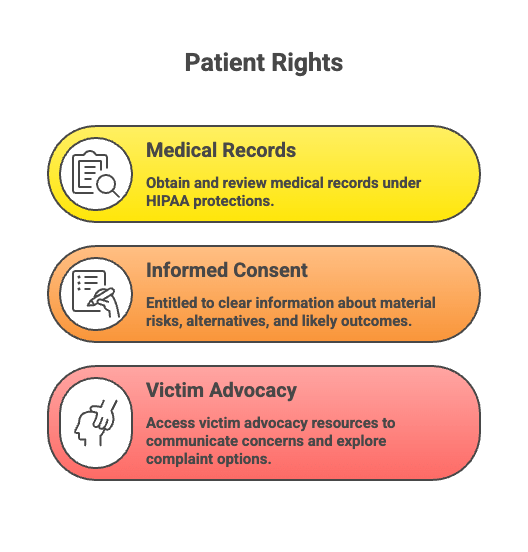
- You can obtain and review medical records under HIPAA protections, and challenge inaccuracies that may affect your claim.
- You can expect informed consent, meaning you’re entitled to clear information about material risks, alternatives, and likely outcomes.
- You can access victim advocacy resources that help you communicate your concerns, document harm, and explore institutional complaint options.
You may hold hospitals accountable for staff negligence, unsafe policies, or inadequate supervision.
You can demand a fair evaluation of future care needs and related losses.
Steps to Take After a Miami Hospital Negligence Injury
After a Miami hospital negligence injury, you should seek immediate medical care to protect your health and create a clear record of your condition.
You’ll also want to preserve records and evidence, including discharge papers, test results, medication lists, bills, and any communications with the hospital.
As soon as you can, consult a Miami attorney so you can meet time-sensitive deadlines, evaluate liability, and avoid missteps that could weaken your claim.
Seek Immediate Medical Care
When you suspect a hospital error has harmed you, seek immediate medical care to protect your health and prevent complications from worsening.
Prioritize immediate symptom recognition, including changes in breathing, confusion, severe pain, fever, or unexpected swelling, and report them clearly to the treating clinician.
If your condition feels urgent, request Emergency transport rather than attempting to drive, since rapid monitoring and stabilization can prevent further injury.
When appropriate, request an evaluation by an independent provider or another department, and follow discharge instructions exactly, including medication schedules and follow-up appointments.
You serve others best when you protect your own capacity to function, so don’t delay care out of uncertainty or politeness.
Prompt treatment also supports accurate diagnosis and safer recovery overall.
Preserve Records And Evidence
Immediate medical care protects your health, and the next step is to protect the facts surrounding what happened.
Start by requesting copies of discharge papers, test results, medication lists, and any written instructions, then store them in a single secure location.
Keep a dated journal of symptoms, missed work, and follow-up visits, and record the names and roles of each provider you encountered.
Use Photo documentation to capture visible injuries, medical devices, room conditions, and relevant paperwork, taking wide and close shots for context.
Prioritize Digital preservation by saving emails, portal messages, billing statements, and appointment confirmations, and by backing up files to a secure cloud drive.
Don’t alter originals, and don’t post details online; focus on accuracy and service-minded responsibility.
Consult A Miami Attorney
How soon should you consult a Miami hospital negligence attorney once you suspect a preventable injury?
You should reach out promptly because early legal guidance helps protect patients, families, and the broader community by holding providers accountable.
An attorney can assess whether the standard of care was breached, preserve deadlines, and coordinate with medical experts while your evidence remains accessible.
Bring your records, timeline, and a list of questions, then confirm Fee structures in writing, including contingency terms and case costs.
Set clear Communication expectations, such as update frequency, who handles calls, and how decisions will be made.
You’ll also discuss immediate steps, including notice requirements, insurer contact limits, and how to avoid statements that could undermine your claim.
Acting early supports safer care for others.
How a Miami Hospital Negligence Injury Lawyer Can Help You
Although a hospital may appear to have every safeguard in place, negligence can still occur, and you shouldn’t have to shoulder the consequences alone.
A Miami hospital negligence injury lawyer helps you act with purpose, protect your family’s stability, and uphold safer care for others who may be at risk.
A Miami hospital negligence injury lawyer helps protect your family’s stability and uphold safer care for others at risk.
Your lawyer evaluates records, secures essential timelines, and builds a disciplined case strategy that aligns facts with Florida’s legal standards.
You’ll also benefit from a medical liaison who coordinates communication with qualified clinicians, clarifies technical terminology, and helps you identify where protocols failed.
With that foundation, your attorney can pursue fair compensation while keeping your role focused on recovery and service to those who depend on you.
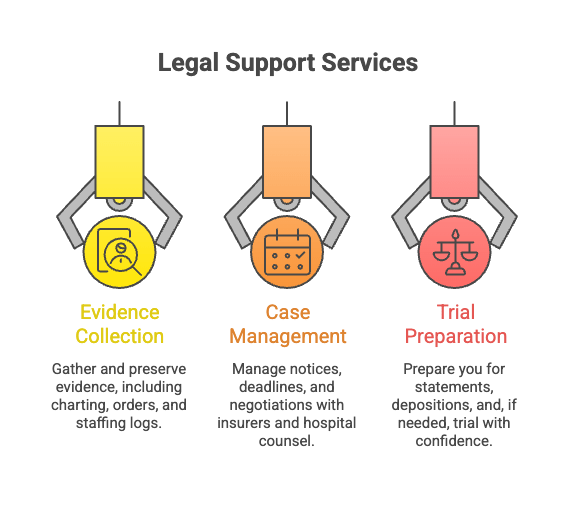
- Gather and preserve evidence, including charting, orders, and staffing logs
- Manage notices, deadlines, and negotiations with insurers and hospital counsel
- Prepare you for statements, depositions, and, if needed, trial with confidence
Long-Term Effects of Miami Hospital Negligence Injuries
When a hospital’s negligence causes harm, you may face chronic physical complications that require ongoing treatment, limit mobility, and reduce your ability to work.
You can also experience cognitive and emotional impacts, including memory problems, anxiety, or depression, which may disrupt relationships and daily decision-making.
Over time, you’re often left managing serious financial and care burdens, from rehabilitation costs to in-home assistance, while your family absorbs added responsibilities.
Chronic Physical Complications
Even after the immediate crisis passes, hospital negligence can leave you with chronic physical complications that reshape your health, mobility, and independence for years.
You may face persistent pain, reduced range of motion, or weakness that limits your ability to care for others.
Lymphatic damage can lead to persistent swelling and increased risk of infection, while Muscle atrophy may develop after prolonged immobility, inadequate monitoring, or delayed rehabilitation.
You’ll often need consistent therapy, assistive devices, and coordinated follow-up to prevent decline and protect daily function.
| Complication | Common Cause | Ongoing Need |
|---|---|---|
| Chronic pain | Surgical error | Pain management plan |
| Lymphatic damage | Improper handling | Compression, monitoring |
| Muscle atrophy | Extended bed rest | Rehab, strengthening |
| Limited mobility | Missed diagnosis | PT, adaptive support |
Cognitive And Emotional Impacts
Chronic physical complications don’t just limit movement and stamina; they can also strain the way you think, feel, and cope day to day.
When pain, sleep disruption, or medication effects persist, you may notice slower processing, memory lapses, and reduced focus, which can create decision-making difficulties in routine tasks and urgent moments.
Emotionally, you might experience irritability, anxiety, or depression, especially when recovery feels uncertain, and your role as a helper seems interrupted.
You can start protecting others from your struggle, yet that impulse may lead to Social withdrawal, fewer community ties, and less support when you need it most.
If these changes continue, you should document symptoms, request screening, and seek counseling that respects your values and preserves your capacity to serve.
Financial And Care Burdens
Many patients discover that a hospital negligence injury doesn’t end with discharge; it follows you into your budget, your household, and your long-term care plan.
You may face ongoing therapy, prescription costs, mobility equipment, home modifications, and lost wages, all while trying to continue serving your family and community consistently.
When you need daily assistance, you often rely on relatives or friends, and that support can drift into Caregiver Burnout if you don’t set boundaries and schedules.
You can protect everyone involved by tracking expenses, documenting hours of care, and coordinating benefits, then building realistic Financial Planning around future setbacks.
You shouldn’t have to choose between recovery and helping others, but you do need a plan that accounts for both.
Proving Liability in Miami Hospital Negligence Medical Malpractice Injury Cases
| Proof Focus | What You Collect |
|---|---|
| Records | Charts, orders, nursing notes |
| Timeline | Handoffs, delays, response times |
| Standards | Policies, protocols, guidelines |
| Experts | Board-certified peer review opinions |
| Link | Objective findings tying breach to injury |
When you pursue accountability, you protect future patients and uphold the mission of safe, compassionate care.
Compensation for Miami Hospital Negligence Damages
Because a hospital negligence injury can disrupt your health, work, and long-term stability, compensation focuses on restoring what you’ve lost and funding the care you’ll need going forward.
Hospital negligence can upend your health and livelihood, so compensation aims to restore losses and support future care.
You can pursue repayment for past and future medical expenses, rehabilitation, prescriptions, and assistive services, along with lost income and reduced earning capacity.
You may also recover for pain, emotional distress, and loss of enjoyment of life, especially when the injury limits your ability to serve your family and community.
If the hospital’s conduct shows reckless disregard for patient safety, you may seek punitive damages to promote accountability and protect others from similar harm.
Your lawyer can document damages through records, expert opinions, and day-to-day impact evidence, then negotiate with insurers and defense counsel.
While settlement timelines vary by case intricacy and hospital response, a well-prepared demand often encourages earlier, fairer resolution without sacrificing leverage.
The Statute of Limitations for Miami Hospital Negligence Injury Cases
Although you may still focus on recovery, Florida’s statute of limitations can quietly control whether you’re allowed to pursue a Miami hospital negligence claim at all.
In most medical negligence matters, you must act within two years, and the clock generally starts when you knew, or should’ve known, that negligence caused harm, a standard shaped by the discovery rule.
You should also account for an external deadline that could preclude claims, even with later discovery, so timely investigation and record requests are critical.
Certain circumstances may pause or extend the filing deadline through tolling exceptions, such as fraud, concealment, or other legally recognized barriers that prevented earlier action.
Because your choices can affect not only your own health, but also the safety of future patients, you should preserve evidence, document symptoms and dates, and confirm the applicable deadlines before time closes the courthouse doors.
Why You Need an Experienced Miami Hospital Negligence Injury Lawyer
When a hospital’s mistake leaves you facing unexpected complications, you can’t rely on assurances or incomplete records to prove what happened.
You need an experienced Miami hospital negligence injury lawyer to secure evidence promptly, demand full chart production, and identify deviations from accepted standards of care before crucial details disappear.
An experienced Miami hospital negligence injury lawyer secures evidence fast, demands full chart records, and exposes care deviations before details vanish.
You’re not just pursuing compensation, you’re protecting your future and helping prevent similar harm to other patients.
An experienced lawyer coordinates qualified medical experts, builds a clear timeline, and presents damages with precision, including ongoing treatment, lost income, and long-term support needs.
You also benefit from legal technology that organizes records, tracks deadlines, and strengthens case strategy through careful data review.
If language barriers exist, multilingual services ensure your story is understood and your instructions are followed accurately.
With skilled advocacy, you can respond to institutional defenses, negotiate from a position of strength, and seek accountability with professionalism and resolve.
How to Choose the Right Miami Hospital Negligence Injury Lawyer for Your Case
How do you identify the right Miami hospital negligence injury lawyer when hospitals control the records, the timeline, and the narrative?
You start by confirming the lawyer’s focus on hospital negligence, because these cases demand medical insight, strict deadlines, and disciplined evidence handling.
Ask how they obtain charts, audit trails, and internal policies, and whether they work with qualified medical experts who can explain what should’ve happened.
Next, evaluate fee transparency in writing, including contingency terms, case costs, and how expenses are handled if the case is not recovered.
You should also test responsiveness early, since delays can harm your case and your ability to serve your family.
Set clear communication preferences, such as weekly updates, preferred communication channel (email or text), and who’ll handle urgent questions.
Finally, choose counsel who treats your claim as a public trust, pursues accountability without exaggeration, and respects your goals.
About the Law Offices of Anidjar and Levine
Choosing counsel is only the start; you also need a firm that has the staffing, systems, and courtroom readiness to take a hospital negligence claim from intake through trial if necessary.
With the Law Offices of Anidjar and Levine, you’ll find a practice built on organized case management, responsive communication, and disciplined advocacy focused on patient safety and accountability.
| What you need | How the firm supports you |
|---|---|
| Clear guidance | You receive direct updates and defined next steps. |
| Strong proof | You get a thorough records review and coordinated experts. |
| Trial posture | You’re prepared for litigation, not pressured to settle. |
You can evaluate the Firm History to understand how the team has developed procedures that protect clients under demanding timelines.
You’ll also see Community Outreach that reflects a service mindset, reinforcing that your case is handled with respect for families, caregivers, and the broader public good.
Frequently Asked Questions
What Does It Cost to Request My Miami Hospital Medical Records?
You’ll usually pay a small amount, often limited to copy fees set by Florida law, while some electronic records may cost less.
You must submit a signed release authorization, and the hospital can charge for labor, supplies, and postage within allowed limits.
If you request certified copies or expedited service, you’ll likely pay more.
Request an itemized estimate in advance so you can budget responsibly while supporting others.
Will My Immigration Status Affect Pursuing a Hospital Negligence Claim in Miami?
Your immigration status usually won’t prevent you from pursuing a hospital negligence claim in Miami.
You can seek accountability and safer care for others, and courts generally focus on medical facts and damages, not status.
Still, discuss Deportation Risk with counsel, especially if documents or testimony could expose personal details.
Also, ask about Public Charge, because some benefit interactions raise questions, although injury settlements typically don’t.
Can I Change Lawyers if I’m Unhappy With My Current Representation?
Yes, you can change lawyers if you’re unhappy, and you should act promptly.
Your Client Rights allow you to Change Counsel at almost any stage, though you’ll need to review your fee agreement and confirm any lien for work already performed.
You should request your full file, set expectations in writing, and make sure new counsel meets all deadlines.
If you aim to serve others, choose a lawyer aligned with your values and responsibilities.
Are Hospital Negligence Settlements Taxable Under Federal or Florida Law?
Generally, you don’t pay federal income tax on settlement amounts tied to physical injury, and Florida has no state income tax.
However, taxable damages can apply to interest, punitive awards, or compensation for non-physical claims, and the IRS may scrutinize the settlement allocation in your agreement.
You should document medical causation, itemize each category carefully, and coordinate with a tax professional so you can serve others without avoidable compliance risks.
How Long Will My Miami Hospital Negligence Case Usually Take to Resolve?
You’ll usually resolve a hospital negligence case in about 12 to 36 months, though complicated injuries can take longer.
Your Investigation timeline often runs 2 to 6 months as you gather records and expert reviews.
Discovery typically lasts 6 to 12 months and includes depositions and written exchanges.
If you pursue settlement, you may conclude sooner; if trial becomes necessary, scheduling delays can extend the process while you remain focused on patient safety.
—————————
If you’ve suffered harm due to hospital negligence in Miami, you can’t afford delays or uncertainty.
You should protect your health first, then preserve records, document what occurred, and seek legal guidance before insurers or providers shape the narrative.
You’re entitled to pursue compensation for medical costs, lost income, and lasting impacts, but strict deadlines and complicated standards apply.
With the Law Offices of Anidjar and Levine and an experienced Miami Medical Malpractice Lawyer, you’ll build a strong claim and negotiate from a position of strength.

