

The Law Offices of Anidjar and Levine can help people injured in a Miami car accident explore compensation options when another party’s negligence causes internal organ damage, burns, or related harm. Because these injuries may not be immediately visible, prompt medical evaluation and consistent follow-up care are important. Treatment records, diagnostic imaging, photographs, and crash evidence may help document the injuries and connect them to the collision. Florida insurance rules and deadlines may affect a claim. Learn more from a Miami Personal Injury Lawyer.
Main Takeaways
- Seek emergency care after a Miami crash; internal bleeding, organ damage, and serious burns may not be immediately visible.
- Call 911 for severe pain, confusion, unconsciousness, heavy bleeding, or breathing difficulty; avoid moving the injured person.
- Keep medical records, imaging, symptom notes, photographs, and treatment timelines to document injuries and their effects on daily life.
- A lawyer can investigate crash evidence, assess potential liability, and connect another party’s conduct to your injuries.
- Ask a Miami car accident lawyer about deadlines, available insurance coverage, and how documented medical needs may affect a claim.
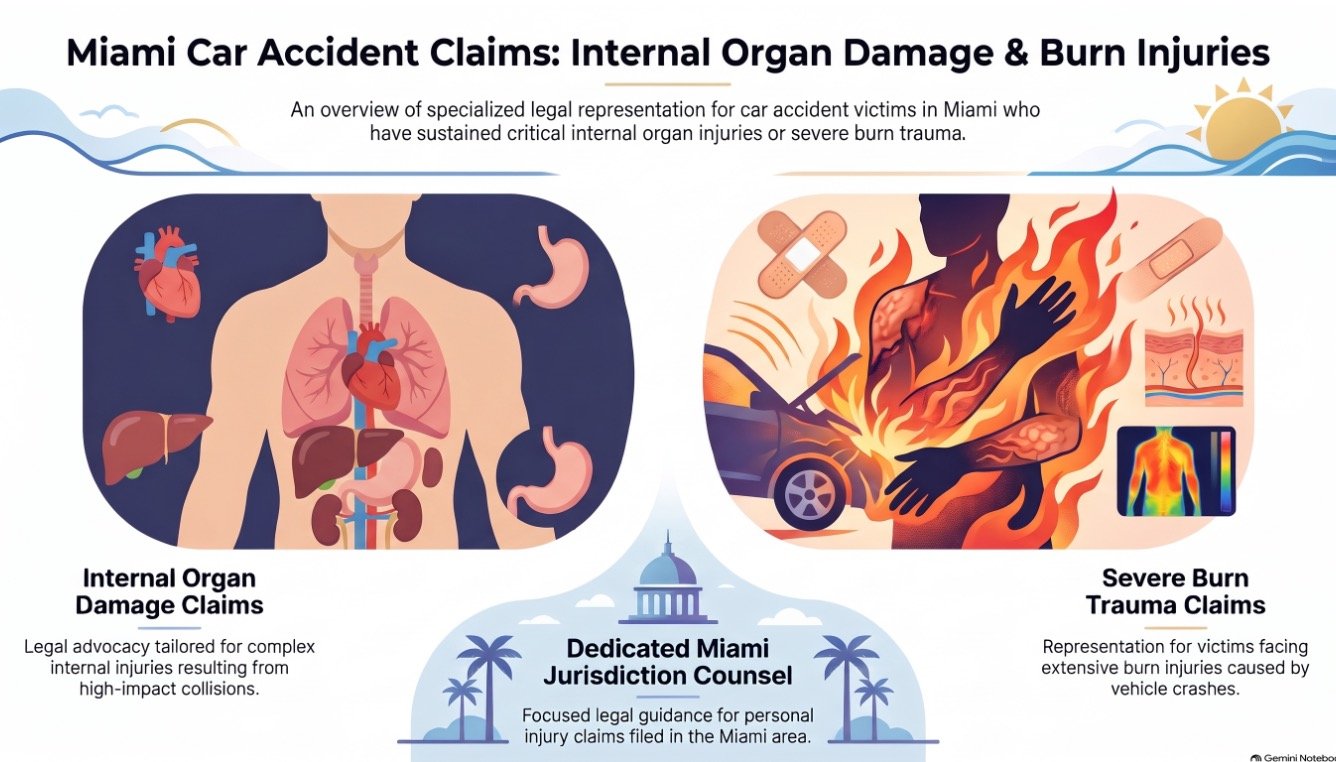
How We Can Help With Your Miami Car Accident Internal, Organ & Burns Injury Claim
Internal organ damage and burn injuries after a Miami car accident may require urgent treatment and can lead to substantial medical costs, lost income, and lasting complications. A legal team can help an injured person pursue a claim while allowing attention to remain on medical care and recovery. Its role may include organizing records, documenting expenses, and identifying information needed to support the requested compensation.
Claim evaluation considers available evidence, treatment records, income losses, and the ways injuries affect daily responsibilities. The review can help clarify potential issues and determine what additional documentation may be useful. When appropriate, the team can communicate with insurers, request relevant records, and address questions about the claim.


Consistent attorney communication helps keep the client informed about deadlines, developments, and decisions requiring attention. A service-minded approach also recognizes the practical burdens placed on injured people and their families. By managing claim-related tasks carefully, counsel can help clients make informed choices and seek a fair resolution based on the evidence.
Understanding Miami Car Accident Internal, Organ & Burns Injury Cases
OUR CONSULTATIONSARE FREE
START YOUR FREE CASE REVIEW

When a Miami car accident causes internal organ damage or burns, the severity may not be immediately apparent. Some injuries develop gradually, making prompt medical assessment important even when initial discomfort seems minor. Hidden injury symptoms may include abdominal pain, dizziness, nausea, weakness, confusion, or changes in breathing. These signs can indicate serious harm that requires professional evaluation rather than observation alone.
Organ trauma types vary according to the affected area and may involve damage to the liver, spleen, kidneys, lungs, or other organs. Internal bleeding can occur without visible wounds, while burns may damage the skin and, in severe cases, deeper tissue. Medical records, diagnostic imaging, and follow-up care help clarify the nature and extent of an injury.
Clear documentation can also assist those supporting an injured person and evaluating the effects on daily life. Understanding the diagnosis, treatment needs, and recovery outlook provides a sound basis for informed decisions about care and any related legal claim.
Don’t Wait. Call Our Florida Personal Injury Lawyers Now!
Common Causes of Miami Car Accident Internal, Organ & Burns


Internal, organ, and burn injuries may result from several common circumstances in Miami car accidents. High-speed collisions can cause severe blunt-force trauma, while vehicle fires may expose occupants to burns and smoke. Seat belt injuries and airbag deployment can also cause internal harm, particularly during forceful impacts.
High-Speed Collisions
At high speeds, a Miami car collision can subject the body to forces severe enough to damage internal organs, cause internal bleeding, or produce serious burns. Speed thresholds do not define a single point at which injuries occur; outcomes depend on impact direction, vehicle structure, restraint use, and occupants’ health. Crash dynamics explain how rapid deceleration, intrusion, or contact with interior surfaces can transfer force to the chest and abdomen. A seat belt may reduce ejection risk, yet it can also cause bruising or, in a severe impact, contribute to internal injury. Prompt medical evaluation is important because organ damage and internal bleeding may not be immediately apparent. Accurate documentation of the collision, treatment, and resulting limitations can help injured people and their families understand available support and pursue appropriate assistance.
Vehicle Fires
Vehicle fires can turn a Miami car accident into a source of severe burns and additional internal injuries. Fuel system failures may release gasoline after an impact, allowing spilled fuel to ignite when exposed to sparks or hot engine components. Electrical malfunctions can also create sparks, overheat wiring, or interfere with systems that might otherwise limit fire risks. A collision may damage the vehicle’s structure and increase the speed at which flames and smoke spread through the passenger area. Smoke inhalation can harm the lungs, while heat and flames may cause burns and other trauma. Emergency responders prioritize extinguishing fires and moving occupants to safety. A careful investigation can help identify the fire’s origin, preserve relevant evidence, and clarify whether vehicle defects, maintenance issues, or crash damage contributed to the injuries.
Seat Belt Injuries
Although seat belts reduce the risk of being thrown from a vehicle, the force that restrains an occupant during a Miami car accident can also cause injuries. A belt’s pressure across the chest or abdomen may bruise skin, strain muscles, or damage underlying organs, particularly during a high-impact collision. Seat Belt Syndrome describes a pattern of injuries associated with the belt’s position and visible marks across the body. These injuries can include abdominal trauma and, in serious cases, harm to the intestines or other internal structures. Restraint Abrasions may appear as red, painful lines where the belt rubbed or compressed the skin. Because internal injuries may not be immediately apparent, prompt medical evaluation is important after a crash. Careful documentation can help injured occupants and their families understand the harm and pursue appropriate support.
Airbag Deployment
When an airbag deploys during a Miami car accident, its rapid expansion can protect occupants from severe impact while also causing injuries. The force of deployment may injure the face, chest, arms, or hands, particularly when a person sits too close to the steering wheel or dashboard. Friction, heat, and chemical residue from the inflator can cause Airbag burns, ranging from minor irritation to injuries requiring medical care. In some crashes, deployment defects, delayed activation, or failure to deploy may increase the risk of internal or organ injuries because occupants lack expected protection. Medical evaluation can identify hidden trauma and document symptoms. Preserving photographs, medical records, and vehicle inspection findings may help clarify how the airbag functioned and support a careful assessment of the incident.
Legal Rights of Miami Car Accident Internal, Organ & Burns Injury Victims
Internal injuries, organ damage, and burns from a Miami car accident may be serious even when they are not immediately visible. Florida law gives injured people the right to seek compensation when another party’s negligence causes their harm. Prompt medical assessment and careful documentation can help protect those rights while supporting an accurate evaluation of losses.
- A victim may pursue a claim for medical expenses, lost income, pain, and other legally recognized damages.
- Florida’s personal injury protection rules generally require initial claims through PIP coverage; Florida PIP Exemptions may apply in limited circumstances.
- Comparative Negligence can reduce compensation when an injured person shares responsibility, but it does not automatically bar recovery.
- A claim may involve liability insurers, deadlines, and evidence requirements, so records and communications should be handled carefully.
Those seeking to support an injured person can help preserve documents and encourage timely professional guidance. A qualified attorney can explain available options, assess applicable deadlines, and advocate for fair treatment without overstating likely outcomes.
Why Do Miami Car Accident Internal, Organ & Burns Injuries Happen?
Internal, organ, and burn injuries in Miami car accidents often result from the force of impact, intrusion into the passenger compartment, or exposure to heat and hazardous materials. Crash force can cause a person’s body to strike the steering wheel, dashboard, door, or seat belt with substantial energy. Even without visible wounds, abrupt deceleration may damage organs, fracture ribs, or cause internal bleeding. Impact mechanics also shape how injuries occur: a side collision may compress the chest or abdomen, while a rollover can expose occupants to repeated blows and crushing forces.
Vehicle design and occupant position can affect injury severity, as can whether safety systems function properly. Fires may start when collisions damage fuel lines, batteries, or electrical components. Burns can also result from hot fluids, steam, or chemicals released during a crash. In Miami, dense traffic, high speeds, and varied road conditions can contribute to collisions with severe consequences. Understanding these causes helps communities support injured people and promote safer travel.
What Should You Do After a Miami Car Accident Internal, Organ & Burns Injury?
After a Miami car accident involving suspected internal, organ, or burn injuries, the injured person should seek emergency medical care, since some serious conditions may not be immediately apparent. They should document visible injuries and preserve relevant medical records and accident evidence. Once immediate medical needs are addressed, contacting a Miami lawyer can help clarify potential legal options and next steps.
Seek Emergency Medical Care
Because internal injuries, organ damage, and serious burns may not be immediately apparent, anyone involved in a Miami car accident should seek emergency medical care as soon as possible. Even when symptoms seem mild, prompt evaluation can identify conditions that may worsen without treatment. If a person is unconscious, confused, bleeding heavily, having difficulty breathing, or experiencing severe pain, someone at the scene should call 911 rather than attempt to move them. Ambulance transport allows trained responders to provide care and alert the hospital to urgent needs. At the emergency department, Emergency room triage helps staff assess the severity of each patient’s condition and prioritize treatment. People with suspected internal trauma or extensive burns should clearly describe their symptoms and the crash circumstances to medical personnel, supporting timely, appropriate care for everyone affected.
Document Your Injuries
When documenting injuries after a Miami car accident, injured people should keep a clear record of symptoms, diagnoses, and treatment. A consistent account can help medical providers understand changes and guide appropriate care. It can also preserve details that may be difficult to recall later.
A Symptom journal should note pain, swelling, bruising, breathing difficulties, digestive changes, and other concerns, including when each began and whether it worsens. Internal organ injuries and burns may develop or change over time, so report new symptoms promptly to a qualified medical professional. Records should include appointment dates, test results, prescribed medications, care instructions, and photographs of visible injuries when appropriate.
Injured people can also record recovery milestones, setbacks, and effects on daily activities. Organized documentation supports continuity of care and helps others understand the injury’s practical impact.
Contact a Miami Lawyer
A Miami car accident lawyer can help an injured person understand the legal issues surrounding internal organ injuries or burns and identify steps to protect a potential claim. Prompt legal guidance may help preserve medical records, accident evidence, and witness information while the injured person focuses on treatment and recovery. A lawyer can also explain deadlines, assess possible insurance coverage, and communicate with insurers on the client’s behalf.
When choosing counsel, an injured person may ask about experience with serious burn and internal injury claims, case procedures, and attorney availability. A Free consultation can provide an opportunity to discuss the accident, learn what documents may be useful, and understand potential next steps without an immediate commitment. Timely contact may help protect the injured person’s rights and support a fair resolution, while allowing family members to concentrate on practical care and recovery.
Don’t Wait. Call Our Florida Personal Injury Lawyers Now!
Critical Evidence in a Miami Car Accident Internal, Organ & Burns Injury Case
A strong claim involving internal, organ, or burn injuries may depend on records and physical evidence that establish the harm and its connection to the collision.
Essential materials include:
- Medical imaging records
- Emergency treatment reports
- Accident scene evidence
- Burn injury documentation
Together, these materials can help clarify the injury’s severity, timing, and cause.
Medical Imaging Records
Medical imaging records can provide objective evidence of internal organ damage, fractures, and burn-related complications after a Miami car accident. X-rays, CT scans, MRI studies, and ultrasound images may document injuries that are not immediately visible during an examination. Radiology records can identify the affected structures, describe the severity of findings, and show whether an injury changed over time. The imaging chronology may help establish when a condition first appeared and how later studies compare, supporting a clear account of the harm sustained. Accurate records also allow qualified professionals to assess the connection between the collision and documented injuries. Preserving original images and written interpretations can reduce uncertainty when evidence is reviewed. Careful organization of these materials helps ensure injury claims are evaluated based on reliable, verifiable medical information.
Emergency Treatment Reports
When internal injuries or burns require urgent care after a Miami car accident, emergency treatment reports can document the patient’s condition and the response to the collision. These records may identify reported symptoms, visible injuries, essential signs, treatment provided, and decisions about admission or discharge. Physician observations can help explain how the injuries appeared during the initial examination and whether urgent concerns required further care. Report accuracy matters because incomplete or inconsistent details may complicate later review of the patient’s medical history. The reports should be checked for correct dates, symptoms, medications, procedures, and follow-up instructions. When appropriate, the patient or an authorized representative can request corrections to factual errors through the provider’s process. Clear documentation supports informed medical decisions and helps others understand the seriousness and progression of the injuries.
Accident Scene Evidence
Beyond emergency treatment reports, evidence from the crash scene can help explain how a Miami collision occurred and how it may have caused internal injuries or burns. Photographs of vehicle positions, impact damage, skid marks, and roadway debris patterns may clarify the direction and force of a collision. Traffic camera footage, nearby business recordings, and witness accounts can help establish timing, traffic signals, and driver actions. Investigators may also document road conditions, lighting, weather, and hazards that contributed to the crash. Preserving this information promptly matters because vehicles are moved, debris is cleared, and recordings may be overwritten. A careful review can link the physical circumstances of the collision to the reported injuries while distinguishing verified facts from assumptions. Such evidence can support a fair assessment of responsibility and damages.
Burn Injury Documentation
Burn injury documentation can establish the extent of harm and connect it to a Miami car accident. Early medical records should describe the burn’s location, size, depth, cause, and symptoms, supported by photographs taken at appropriate intervals. Clinicians may use Burn severity grading to classify the injury and guide treatment, while records of procedures, medications, infection concerns, and follow-up visits show how the condition progressed.
For a claim, consistent documentation can help explain the care required and its effects on daily activities. Surgical reports, discharge instructions, and rehabilitation notes may also clarify whether skin grafting was necessary and what limitations followed. A documented graft recovery timeline can show recovery milestones, complications, and continuing care needs. Preserving these records helps attorneys, insurers, and medical professionals assess losses accurately and support a fair resolution.
Long-Term Effects of Miami Car Accident Internal, Organ & Burns Injuries
Long-term consequences of internal injuries may include chronic organ damage that requires ongoing treatment and limits daily activities. Severe burns can leave persistent scars, restricted movement, or lasting sensitivity. These physical effects may also contribute to lasting emotional distress, including anxiety or trauma related to the crash.
Chronic Organ Damage
Chronic organ damage can emerge months or years after a Miami car accident, even when initial injuries appear manageable. Delayed organ symptoms may include persistent abdominal pain, unusual fatigue, changes in digestion, or difficulty breathing. These signs can indicate that trauma affected the liver, kidneys, lungs, or other internal structures. Prompt medical evaluation helps identify developing problems and supports appropriate treatment. Some people require ongoing monitoring, medication, or rehabilitation to manage chronic organ impairment and preserve daily function. Medical records can connect later diagnoses to the collision and document the care required. When injuries limit a person’s ability to work or assist family and community members, clear documentation can help explain the practical consequences. A qualified attorney can review available evidence and help injured people understand options for pursuing compensation for related losses.
Persistent Burn Scars
When flames, hot surfaces, or chemicals cause burns in a Miami car accident, the resulting scars may persist after the wounds have recovered. Burn scars can remain raised, tight, discolored, or uneven, and their effects may depend on the injury’s depth, location, and recovery process. Scars across joints can restrict movement, while those on exposed areas may affect daily activities and interactions. Scar Sensitivity may also cause discomfort when clothing, sunlight, or routine contact irritates affected skin. Medical follow-up can help assess changes, manage symptoms, and identify appropriate care. Depending on the scar, treatment may include compression garments, silicone products, injections, laser procedures, or surgery. Scar Revision Options should be evaluated by qualified clinicians, who can explain likely benefits, limitations, recovery needs, and potential risks. Treatment records and documentation of functional effects may also help document lasting injury.
Lasting Emotional Effects
After a Miami car accident involving internal injuries, organ damage, or severe burns, emotional effects may continue after physical treatment ends. Survivors may experience post-traumatic stress, anxiety, depression, sleep disruption, or fear of traveling in vehicles. These responses can interfere with work, medical appointments, and ordinary routines, even when injuries appear to be recovering. Persistent pain, visible scarring, and uncertainty about recovery may also affect confidence and independence. Relationship strain can develop when emotional distress changes communication, caregiving responsibilities, or family roles. Support from qualified mental health professionals may help survivors address these challenges and rebuild daily stability. Family members and caregivers can provide practical assistance while respecting each person’s pace. Documenting symptoms and treatment may also clarify the lasting effects of the crash when evaluating recovery needs and related claims.
Proving Liability in Miami Car Accident Internal, Organ & Burns Injury Cases
Proving liability in Miami car accident cases involving internal, organ, or burn injuries requires evidence connecting another party’s conduct to both the collision and the resulting harm. Investigators may examine police reports, photographs, roadway conditions, vehicle damage, and witness accounts to establish how the crash occurred. Accident reconstruction can help clarify vehicle speeds, points of impact, and whether a driver failed to follow traffic laws. When a vehicle defect may have contributed, maintenance records, inspection findings, and expert analysis can help identify a responsible manufacturer or repair provider.
Medical records also play an important role. Prompt evaluations, diagnostic imaging, and treatment notes can document injuries that may not be immediately visible, including internal bleeding, organ damage, or burns. These records can connect the injuries to the collision and establish their seriousness. A careful review of available evidence helps identify each party whose actions or products contributed to the harm, supporting accountability and the injured person’s recovery.
Dealing With Insurance Companies After a Miami Car Accident Involving Internal, Organ & Burns Injury
Because internal injuries, organ damage, and burns may require extensive treatment, insurance companies often scrutinize both the cause of the crash and the claimed losses. Adjusters may request medical records, bills, employment information, and statements about how the injuries affect daily life. Accurate, consistent documentation can help explain the need for care and the financial impact of the collision.
Injured people should review requests carefully and avoid guessing about symptoms or accepting blame before the facts are clear. Recorded calls with insurers may be used to assess a claim, so answers should remain truthful and limited to what the person knows. A claimant may ask for questions in writing or consult counsel before providing a recorded statement.
Coverage also matters. Policy limits can restrict the amount available from an insurer, even when documented losses are greater. Reviewing applicable policies and identifying potential sources of coverage can help clarify available options. Respectful, organized communication supports a fair evaluation while allowing injured people to focus on recovery and their responsibilities to family and community.
What to Expect During a Miami Car Accident Internal, Organ & Burns Injury Claim Process
A claim involving internal, organ, or burn injuries typically begins with a medical evaluation to document the harm and guide treatment. Evidence collection then supports the claim, while negotiations address liability and compensation. If the parties cannot reach an agreement, the case may proceed to trial.
Initial Medical Evaluation
After a Miami car accident, prompt medical evaluation can reveal internal injuries, organ damage, or burns that may not be immediately apparent. During the initial visit, clinicians typically review the patient’s medical history and ask how the collision occurred, when symptoms began, and whether they have changed. A focused symptom assessment helps identify concerns such as abdominal pain, dizziness, breathing difficulty, nausea, or burn-related discomfort. The physical examination may include checking essential signs, inspecting affected areas, and evaluating tenderness, swelling, or changes in alertness. Depending on the findings, a provider may recommend imaging, laboratory tests, expert consultation, or observation. Some injuries develop gradually, so follow-up care may be advised even when early symptoms seem mild. Timely evaluation supports appropriate treatment and helps patients understand their health needs after a serious collision.
Evidence Collection
Once medical needs have been assessed, evidence collection helps establish how the collision occurred and how internal, organ, or burn injuries affected the claimant. Records may include police reports, photographs of the scene and vehicles, traffic or business surveillance footage, and available vehicle data. Evidence preservation is important because damaged property may be repaired, footage may be erased, and physical conditions can change. Medical records, imaging results, treatment notes, and expert assessments can document the injuries, their progression, and the care required. Witness interviews may clarify what happened before, during, and after impact, while statements from first responders can provide additional context. A careful review can also identify missing information and guide further investigation. These steps help present an accurate account of the event and its consequences without overlooking details relevant to the claimant’s needs.
Claim Negotiations
How a claim is negotiated can affect both the amount of compensation offered and the time needed to resolve a Miami car accident case involving internal, organ, or burn injuries. Insurers may review medical records, treatment plans, wage information, and evidence of how the injuries affect daily responsibilities. Because some internal injuries develop or become clearer over time, a complete medical picture can help prevent premature valuation. Negotiation tactics may include presenting organized documentation, explaining future care needs, and responding to questions about fault or damages. A claimant’s representatives may compare an offer with documented losses and request clarification when figures appear unsupported. Settlement timing can depend on treatment progress, record availability, and the insurer’s review process. Clear communication and careful evaluation can support informed decisions while keeping the claim focused on the injured person’s needs.
Settlement Or Trial
Whether a Miami car accident claim ends in settlement or proceeds to trial depends on the evidence, the extent of the injuries, and the parties’ ability to agree on compensation. For internal injuries, organ damage, or burns, medical records and expert opinions may help establish the harm, expected treatment, and financial losses. A settlement can resolve the claim without a court decision, but its terms should be reviewed carefully, including any settlement confidentiality terms and the release of future claims. If negotiations fail, the case may proceed to trial, where each side presents evidence and witnesses. The judge or jury evaluates liability and damages under applicable law. Jury deliberation dynamics can affect how evidence is weighed, but no outcome is guaranteed. Careful preparation supports informed decisions and accountability throughout the process.
Don’t Wait. Call Our Florida Personal Injury Lawyers Now!
Compensation for Miami Car Accident Internal, Organ & Burns Injury Damages
Internal injuries, organ damage, and severe burns from a Miami car accident may require extensive treatment and cause lasting effects. Compensation may address the documented consequences of these injuries and help an injured person obtain appropriate care. Medical expense forecasting can account for emergency services, surgery, hospitalization, rehabilitation, medication, and anticipated future treatment. Reliable estimates should reflect medical records and qualified professional opinions.
Compensation eligibility factors may include who caused the collision, whether negligence can be established, the relationship between the crash and the injuries, and available insurance coverage. Florida’s comparative fault rules may also affect recovery when an injured person shares responsibility. Prompt medical attention and careful documentation can help preserve evidence of the harm and its connection to the accident.
A claim may require coordination among healthcare providers, insurers, and legal representatives. An attorney can review records, assess potential sources of compensation, and present supporting evidence. Careful preparation can help injured people pursue treatment resources while allowing them to focus on recovery and family responsibilities.
Economic vs. Non-Economic Damages in Miami Car Accident Internal, Organ & Burns Cases
Economic damages may include medical bills, lost income, and other measurable costs arising from internal, organ, or burn injuries. Non-economic damages address less tangible effects, such as pain, emotional distress, and reduced quality of life. Clear records of treatment, expenses, and daily limitations can help document both types of losses.
Economic Damages
A serious Miami car accident involving internal injuries, organ damage, or burns can create substantial financial losses alongside lasting physical and emotional harm. Economic damages address measurable costs and income losses connected to the collision. They may include emergency treatment, surgery, hospital stays, medication, rehabilitation, follow-up care, and medically necessary equipment. Records such as bills, receipts, employment documents, and medical reports can help establish these amounts.
Lost wages may be recoverable when injuries prevent a person from working during treatment or recovery. If lasting medical limitations affect future employment or reduce the ability to earn at the prior level, diminished earning capacity may also be considered. A careful assessment can account for projected care needs and documented financial effects. These damages can support injured people and their families as they meet necessary expenses and plan for future stability.
Non-Economic Damages
Beyond medical bills and lost income, a serious Miami car accident can cause non-economic harm that is significant but not measured by receipts or pay records. Internal injuries, organ damage, and burns may bring persistent discomfort, emotional strain, and lasting changes to daily life. Pain and Suffering can reflect the physical distress and mental hardship associated with recovery, including fear, anxiety, or disrupted sleep. Loss of Enjoyment may arise when injuries prevent a person from taking part in family activities, community service, work, or other meaningful pursuits. These effects differ from financial losses because they lack a fixed market value. Their significance depends on how the injuries affect the person’s circumstances and well-being. Florida law may allow eligible claimants to seek compensation for these harms, subject to applicable legal requirements and case-specific facts.
Documenting Your Losses
Medical records, bills, and personal accounts can help show how a serious car accident affected an injured person’s finances and daily life. In Miami cases involving internal injuries, organ damage, or burns, organized documentation can clarify both economic and non-economic losses. Economic damages may include hospital charges, medication, rehabilitation, transportation, and wages lost during recovery. Expense tracking helps preserve receipts and identify costs that may continue after treatment. Income records, such as pay statements and employer letters, can establish missed work and reduced earning capacity. Non-economic damages concern effects that lack a direct price, including pain, emotional distress, scarring, and limits on daily activities. A dated journal and statements from people familiar with the injured person’s routine may help describe these changes. Careful records support a clearer, more complete account of losses.
When a Miami Car Accident Internal, Organ & Burns Injury Case Goes to Trial vs Settlement
When internal injuries, organ damage, or severe burns result from a Miami car accident, the decision to settle or proceed to trial often depends on the strength of the evidence, the extent of the harm, and the insurer’s willingness to offer fair compensation.
A settlement can provide a defined recovery without the uncertainty, delay, and public demands of a courtroom proceeding. It may also allow injured people to focus on treatment and daily responsibilities. Before accepting an offer, the injured person and counsel typically assess medical records, expert opinions, future care needs, lost income, and the impact on quality of life. A trial may be considered when the insurer disputes responsibility, minimizes the injuries, or refuses to make an adequate offer.
At trial, evidence and witness accounts are presented for a judge or jury to evaluate. Trial testimony preparation helps witnesses explain events and losses clearly. Jury deliberation dynamics can make outcomes difficult to predict, so each path requires careful, individualized evaluation.
Florida Laws That May Affect Your Miami Car Accident Internal, Organ & Burns Case
Florida law can affect how a Miami car accident claim involving internal injuries, organ damage, or severe burns is evaluated and pursued. Several rules may shape access to compensation, evidence requirements, and responsibility for resulting losses. Understanding these provisions can help injured people and their families make informed decisions while preserving resources for recovery and caregiving.
Florida’s injury laws can shape compensation, fault, and evidence requirements after a Miami crash involving serious internal injuries or burns.
- Florida’s no-fault system generally requires drivers to seek initial medical benefits through personal injury protection coverage. Florida no-fault thresholds may matter when injuries are serious enough to pursue damages beyond those benefits.
- Comparative negligence rules can reduce an award if an injured person is found partly responsible. Under Florida’s modified system, recovery may be barred when that person’s share of fault exceeds 50 percent.
- Medical records, diagnostic imaging, and medical professional opinions can help establish the nature and extent of internal damage or burns.
- Available damages may include qualifying medical expenses, lost income, and pain and suffering, subject to applicable legal standards and the evidence presented.
The Statute of Limitations for Miami Car Accident Internal, Organ & Burns Injury Cases
How long an injured person has to file a lawsuit can depend on the circumstances of a Miami car accident and the type of claim involved. Florida law generally gives a person two years to bring a negligence action for injuries arising from a crash. Different periods may apply to claims against government entities, wrongful death cases, or other legal claims, and required notices can create earlier deadlines. Missing an applicable deadline may prevent recovery, regardless of the seriousness of internal organ damage or burns.
Filing deadlines can also be affected by a claimant’s age, the defendant’s identity, or other specific facts. In some cases, discovery rules may matter when an injury was not reasonably apparent at the time of the collision. However, delayed symptoms do not automatically extend the time to sue. Medical records, crash reports, and claim documents can help establish relevant dates. Because deadlines are fact-specific and may change, prompt review of the applicable law can help preserve a person’s ability to seek accountability and support.
How a Miami Car Accident Internal, Organ & Burns Lawyer Can Help You
After identifying the deadlines that may apply to a claim, an injured person may need help documenting the harm and pursuing compensation. A Miami lawyer can coordinate evidence gathering and explain how internal injuries, organ damage, or burns may affect treatment, work, and daily responsibilities. This support can also help an injured person preserve resources and continue serving family or community members during recovery.
A lawyer may assist by:
- Collecting medical records, diagnostic results, photographs, and crash reports to establish the nature and extent of the injuries.
- Consulting qualified medical professionals to clarify how trauma developed and what future care may reasonably require.
- Reviewing insurance coverage, evaluating documented losses, and communicating with insurers about the claim.
- Developing a Case Strategy that connects evidence to liability and damages, while supporting recovery planning by considering treatment needs, lost income, and long-term effects.
With organized documentation and informed guidance, the injured person can make decisions based on evidence rather than pressure. The lawyer can also assess settlement proposals and prepare the claim for litigation when necessary.
When to Contact a Miami Car Accident Internal, Organ & Burns Lawyer
When internal injuries, organ damage, or burns are suspected after a Miami car accident, prompt medical evaluation should take priority because some conditions worsen before symptoms become clear. Once immediate health needs are addressed, an injured person or a family member may contact a lawyer to discuss the incident and preserve relevant information. Immediate consultation is especially important when symptoms emerge later, treatment is ongoing, or questions arise about insurance communications and deadlines. A lawyer can explain what records may be useful and how to document the accident without interrupting medical care.
Medical referrals, hospital records, photographs, witness details, and insurer correspondence can help clarify the timeline and impact of the injuries. If the injured person is unable to make contact, a trusted representative may seek general guidance on their behalf. Early communication can help prevent avoidable gaps in documentation while allowing clinicians to focus on recovery. Legal discussions should not delay emergency treatment or interfere with care recommended by qualified medical professionals.
Why You Need an Experienced Miami Car Accident Internal, Organ & Burns Lawyer
Because internal injuries, organ damage, and burns can require complicated treatment and lead to lasting effects, an experienced Miami car accident lawyer can help explain the legal issues that may arise. These injuries may not be immediately apparent, and their consequences can affect a person’s health, work, and daily responsibilities. A lawyer can help connect the medical evidence to the collision and identify losses that merit consideration.
Attorney specialization matters because serious injury claims may involve complicated questions about fault, insurance coverage, and future care needs. An experienced attorney can review records, consult appropriate medical professionals, and organize evidence while the injured person focuses on treatment. This work can also help prevent important details from being overlooked during discussions with insurers.
Effective client advocacy requires clear communication, careful preparation, and respect for the injured person’s priorities. A lawyer can explain available legal options and pursue a fair resolution based on documented harm. This support can help clients and families seek accountability while protecting their ability to recover.
How to Choose the Right Miami Car Accident Internal, Organ & Burns Lawyer for Your Case
Choosing the right Miami car accident lawyer for an internal injury, organ damage, or burn claim requires careful attention to the attorney’s experience with serious injury cases. The lawyer should understand how these injuries may develop, affect daily life, and require ongoing medical care. Relevant experience can help the attorney assess evidence, communicate with healthcare providers, and present the full scope of a client’s losses.
Review the Attorney’s credentials, including bar standing, relevant training, and a history of handling complex injury claims. A prospective client may ask how the lawyer approaches investigation, evaluates damages, and keeps clients informed. The communication style should be clear, respectful, and responsive, especially when a person is recovering and managing treatment decisions. The attorney should explain legal options without promising a particular result.
A careful selection process also considers whether the lawyer listens to the client’s priorities and treats family concerns with respect. Choosing counsel who values accountability and service can help injured people pursue fair compensation while focusing on recovery and supporting those who depend on them.
About The Law Offices of Anidjar & Levine
The Law Offices of Anidjar & Levine represents people injured in car accidents in Miami and throughout Florida. The firm handles claims involving serious injuries, including internal organ damage and burns, and helps clients understand the legal options available after a collision. Its attorneys investigate accidents, gather relevant records, communicate with insurers, and pursue compensation supported by the facts of each case.
Firm history reflects a practice focused on representing injured people and addressing the challenges that follow serious accidents. The firm’s work includes assisting clients with medical expenses, lost income, and other documented losses. Its attorneys explain the claims process and provide updates so clients can make informed decisions.
The firm’s attorneys value preparation, responsiveness, and respect for each client’s circumstances. These principles guide how attorneys and staff communicate, evaluate evidence, and advocate for fair outcomes. By handling legal tasks and coordinating case information, the firm helps clients focus on recovery while their claims proceed.

Frequently Asked Questions
Can Internal Injuries Appear Days After a Miami Car Accident?
Yes, internal injuries can appear days after a Miami car accident because some symptoms develop gradually. Delayed injury symptoms, including abdominal pain, dizziness, weakness, or worsening bruising, may signal hidden trauma such as internal bleeding or organ damage. Anyone involved in a collision should seek prompt medical assessment, even if they initially feel well. Severe pain, fainting, confusion, or breathing difficulty requires emergency care, since early diagnosis can reduce the risk of serious complications.
What Symptoms of Internal Bleeding Require Emergency Medical Attention?
Emergency care is required for symptoms suggesting internal bleeding, including severe abdominal pain, a swollen or tender abdomen, fainting, confusion, weakness, pale or clammy skin, rapid breathing, or a fast, weak pulse. Signs of hemorrhagic shock may include dizziness, intense thirst, and declining alertness. Anyone experiencing these symptoms after an injury should call emergency services immediately and avoid driving. Prompt treatment can protect the injured person and help others respond safely.
How Are Burn Injuries Medically Classified by Degree?
Burn injuries are classified by how deeply heat damages the skin and underlying tissue. Burn depth classification generally includes superficial, partial-thickness, and full-thickness burns. Superficial burns affect the outer skin layer; partial-thickness burns extend deeper and may blister; full-thickness burns destroy all skin layers and can involve deeper structures. Burn severity assessment also considers burn size, location, cause, and the person’s age and health, guiding treatment and urgent referral.
Can a Car Accident Cause Organ Damage Without Visible Bruising?
Yes, a car accident can cause organ damage without visible bruising. Seatbelt organ trauma and other blunt force damage may injure the liver, spleen, kidneys, or bowel beneath intact skin. Symptoms can be delayed or subtle, including abdominal pain, dizziness, weakness, or nausea. Because internal bleeding and organ injuries can worsen rapidly, anyone experiencing symptoms after a collision should receive prompt medical evaluation, even when there are no obvious external marks.
Should I Keep a Journal Documenting Pain and Recovery After the Accident?
Yes, maintaining a journal can help document pain and recovery after an accident. A daily pain-tracking record should note symptoms, their severity, timing, affected activities, medications, and any changes. A Recovery progress log can also capture appointments, treatment instructions, and functional improvements or setbacks. Consistent, factual entries may help clinicians assess care needs and provide a clear account of recovery. Store records securely and share them with appropriate professionals.
—————————
Internal injuries, organ damage, and burns from a Miami car accident may require extensive treatment and have lasting financial and personal effects. Prompt medical care and thorough documentation can help protect your health and support your claim. An experienced Miami Personal Injury Lawyer can investigate the collision, review available evidence, and explain your legal options. The Law Offices of Anidjar and Levine can help you understand the steps involved in pursuing compensation under Florida law.

