

The Law Offices of Anidjar and Levine helps people injured in Gainesville truck crashes uncover logbook violations, preserve crucial evidence, and pursue compensation from drivers, trucking companies, and other liable parties.
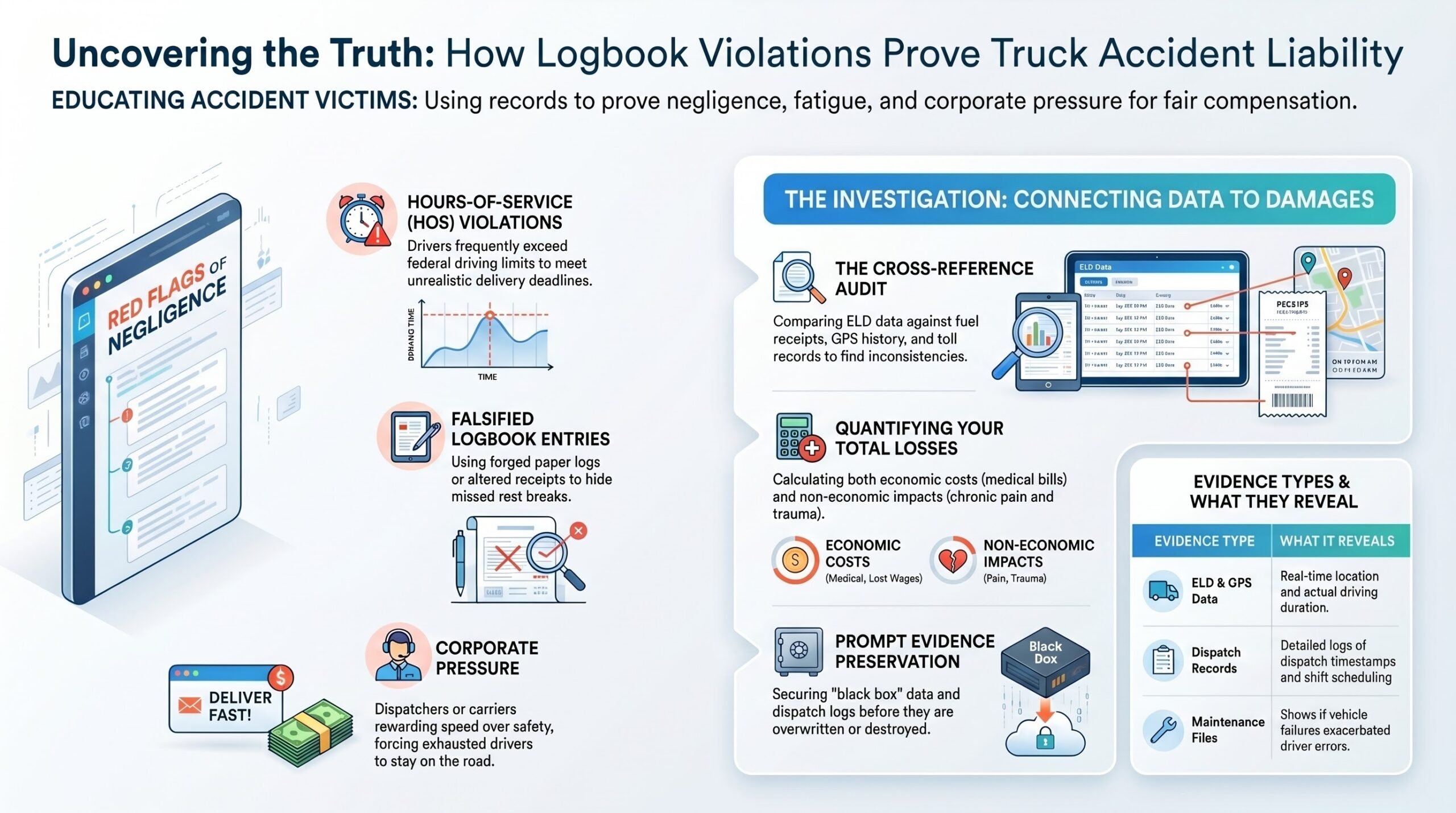
We examine paper logs, ELD data, dispatch records, fuel receipts, GPS history, and maintenance files to show fatigue, falsified entries, or hours-of-service violations.
We also protect you from insurer tactics, document your losses, and prepare your case for trial if needed.
To learn more, visit our Gainesville Truck Accident Lawyer page.
Main Takeaways
- A Gainesville truck accident logbook violations lawyer can quickly preserve ELD data, paper logs, dispatch records, and other evidence before it is altered.
- An attorney compares logs, GPS data, fuel receipts, toll records, and inspection reports to uncover hours-of-service violations, fatigue, or falsified entries.
- Early representation helps protect you from insurer tactics, manage communications, and prevent the trucking company from controlling the narrative.
- A lawyer evaluates crash facts, injuries, deadlines, and damages, including medical costs, lost wages, and future care needs.
- A thorough investigation can determine whether driver fatigue, dispatcher pressure, or failures in company supervision contributed to the Gainesville truck accident.
How We Can Help With Your Gainesville Truck Accident Logbook Violations Injury Claim
When a truck accident involves logbook violations, we move quickly to identify whether hours-of-service rules were ignored and how that misconduct contributed to the crash. We gather driver logs, electronic data, inspection reports, and witness statements, then compare them for inconsistencies that reveal fatigue, falsified entries, or supervision failures. Our purpose is to build a clear claim that serves your recovery and supports your family’s stability.
We also coordinate the evidence that proves the full extent of your harm. We review medical records, treatment plans, wage losses, and future care needs so that the claim accurately reflects your actual damages. While you focus on mending and caring for others, we handle insurer communications, protect you from unfair tactics, and prepare every file as though a trial may be necessary. Through careful settlement negotiations, we pursue compensation that is fair, timely, and evidence-based. If a stronger response is required, we are prepared to act decisively on your behalf.
Understanding Gainesville Truck Accident Logbook Violations Injury Cases


Because truck drivers and carriers must follow strict federal hours-of-service rules, logbook violations often provide vital evidence in a Gainesville truck accident injury case. When we examine a collision, we review paper records, electronic logs, dispatch data, fuel receipts, and GPS data to determine whether a driver exceeded legal driving limits or failed to take required rest breaks.
OUR CONSULTATIONSARE FREE
START YOUR FREE CASE REVIEW

These cases often involve more than a simple paperwork issue. We must understand how inaccurate records can affect driver wellness, roadway safety, and a carrier’s legal responsibilities. If a company pressured a driver to stay on the road despite fatigue rules, that evidence may strengthen an injury claim. We also assess whether the trucking company properly monitored compliance, trained its drivers, and preserved records after the crash.
Common Causes of Gainesville Truck Accident Logbook Violations Injuries
We often find that Gainesville truck accident logbook violations stem from a few recurring problems, and each one can place you at serious risk on the road. Driver fatigue, hours-of-service violations, and falsified logbook entries can combine to impair judgment, reduce reaction time, and conceal unsafe driving practices. We also see pressure to meet deadlines push drivers and trucking companies to ignore federal safety rules, which can lead directly to severe collisions and injuries.
Driver Fatigue Risks


Pushing past legal driving limits often leads to fatigue, and fatigue remains one of the most dangerous causes of truck crashes in Gainesville. When a driver ignores rest needs, alertness declines, reaction time slows, and judgment becomes unreliable. We often see circadian disruption worsen this problem, especially during overnight routes and early morning deliveries, when the body naturally expects sleep.
Fatigued drivers may drift between lanes, miss traffic signals, or fail to brake in time. In severe cases, microsleep episodes can occur without warning, leaving a fully loaded truck out of control for critical seconds. We believe every road user is entitled to protection from preventable harm. By identifying fatigue-related warning signs and investigating driving patterns, we help families and injured victims pursue accountability and support safer practices throughout our Gainesville community.
Hours-Of-Service Violations
Hours-of-service violations often sit at the center of serious truck crashes, especially when drivers or carriers ignore federal limits on driving time and rest breaks. When those rules are disregarded, we often see drowsy driving, delayed reactions, lane drifting, and preventable collisions that harm families and disrupt lives. These limits exist to protect everyone on Gainesville’s roads, including motorists, pedestrians, and workers who serve our community each day.
We help you examine whether a driver exceeded daily or weekly hours, skipped required rest breaks, or continued driving after warning signs of fatigue appeared. Carriers must monitor compliance, train drivers, and remove unsafe trucks from service when necessary. When they fail in those duties, we work to hold them accountable and pursue the support you need to recover and move forward with confidence.
Falsified Logbook Entries
Although logbooks are meant to accurately document a driver’s hours, falsified entries can conceal fatigue, missed breaks, and unlawful time behind the wheel that place everyone on Gainesville roads at risk. When drivers or carriers create forged records, they undermine safeguards designed to protect families, passengers, and other motorists from preventable harm. We often see false paper logs, altered fuel receipts, and electronic tampering used to hide rest violations or unauthorized driving time.
These practices can distort the facts after a crash, making it harder for injured people to understand what happened. By examining logbooks, onboard data, receipts, and dispatch communications, we help uncover inconsistencies and identify whether deceptive recordkeeping contributed to a collision. Our goal is to pursue accountability and support safer conduct throughout the trucking industry for all.
Pressure To Meet Deadlines
Tight delivery schedules often drive the same misconduct that appears in falsified logbooks, because drivers and carriers may feel compelled to keep moving even when rest rules require them to stop. When companies reward speed over compliance, deadline stress can push exhausted drivers to skip breaks, extend shifts, or underreport hours.
We know these choices create dangerous productivity tradeoffs that put everyone on Gainesville roads at risk. If a dispatcher, broker, or carrier prioritizes on-time delivery above lawful rest, fatigue can impair judgment, slow reaction time, and increase stopping distance. We help you examine dispatch records, electronic logging data, text messages, and delivery demands to show how deadline pressure contributed to unsafe driving. By exposing those decisions, we work to protect families, accountability, and safer practices throughout our community.
Legal Rights of Gainesville Truck Accident Logbook Violations Injury Victims
Accountability matters when a truck driver or carrier falsifies logbooks because such violations can reveal fatigue, negligence, and disregard for federal safety rules. When you suffer harm in Gainesville, we help you understand your legal rights with clarity and purpose. You may pursue compensation for medical care, lost income, reduced earning capacity, pain, and other documented losses.
We can also demand essential records, including logbooks, electronic data, dispatch communications, and maintenance files.
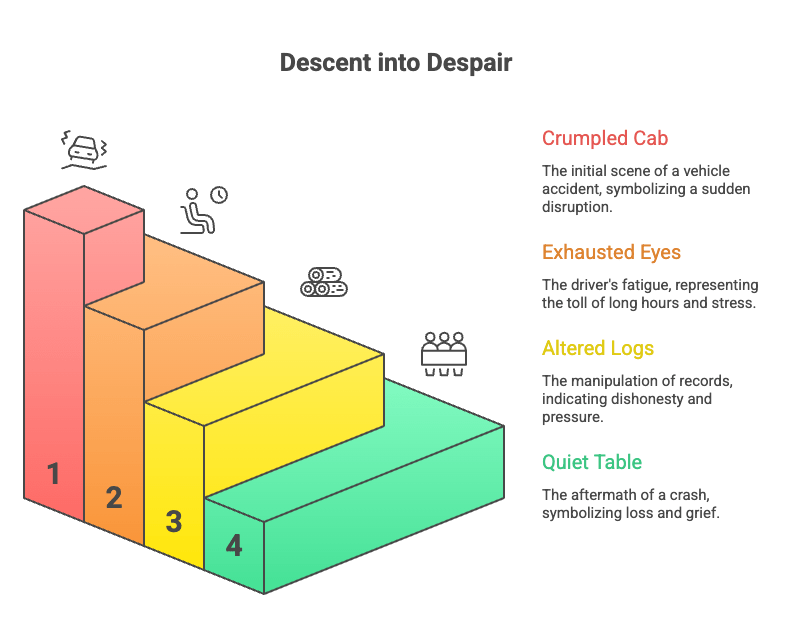
- A crumpled cab beside a dark highway shoulder
- Exhausted eyes behind a glowing dashboard clock
- Stacks of altered logs hiding dangerous overtime hours
- A family table was left quiet after a violent crash
We also recognize worker protections and privacy concerns when records involve drivers, carriers, and third parties. Those issues do not erase your rights. Instead, they shape how evidence is requested, preserved, and presented. Our role is to seek accountability while honoring lawful boundaries and protecting the people affected by these preventable collisions.
Steps to Take After a Gainesville Truck Accident Logbook Violations Injury
After a Gainesville truck accident involving logbook violations, we urge you to seek immediate medical care so your injuries can be diagnosed, treated, and properly documented. We also need to preserve logbook evidence and related records because these materials may show whether the driver or carrier violated federal safety rules. As soon as possible, we should have you consult a truck lawyer who can protect your rights and begin building your claim.
Seek Immediate Medical Care
Prompt medical care should be our first priority following a Gainesville truck accident involving suspected logbook violations, even when injuries seem minor at the scene. We should call 911, request urgent transport when needed, and accept evaluation by emergency responders. Internal injuries, concussions, and soft tissue damage may not appear immediately, yet early diagnosis protects our health and supports a clear treatment plan.
We also serve our families and communities by following medical advice carefully after the crash. We should visit the emergency room, urgent care, or our physician as directed, then keep records of symptoms, medications, and restrictions. Consistent follow-up scheduling helps us monitor recovery, prevent complications, and show that we took the injury seriously. By acting promptly, we strengthen both our well-being and our ability to move forward responsibly.
Preserve Logbook Evidence
Secure every available record as soon as we can, because logbook evidence may reveal whether a truck driver exceeded legal hours, skipped required rest, or altered driving entries before the crash. We should ask that paper logs, electronic logging device data, dispatch records, fuel receipts, toll records, GPS reports, and weigh station tickets remain intact.
We can also help preserve the chain of custody by carefully storing copies, noting when each item was obtained, and limiting unnecessary handling. If you’re able, gather photographic documentation of the cab, dashboard, electronic display, shipping papers, and any loose log pages visible after the collision. We should write down the names of witnesses who saw records being moved or changed. Prompt preservation protects the truth and supports accountability for everyone harmed by negligent trucking practices.
Consult A Truck Lawyer
Why involve a truck lawyer early? We can help you protect evidence, identify logbook violations, and prevent insurers from shaping the narrative before the facts are clear. A prompt legal consultation gives us time to review driver records, electronic logging data, dispatch communications, and maintenance files. That early review helps us build a sound case strategy focused on accountability and recovery.
When we consult a truck lawyer soon after a crash in Gainesville, we also strengthen our ability to serve those who depend on us. We can evaluate deadlines, calculate damages, coordinate with investigators, and organize medical documentation. Early counsel also reduces avoidable mistakes in statements and releases. By acting quickly, we protect your rights and pursue a result that supports your recuperation, your family, and your future stability.
How a Gainesville Truck Accident Logbook Violations Lawyer Can Help You
When a truck driver or carrier violates federal logbook rules, we can use those records to identify fatigue, hours-of-service violations, and gaps in supervision that may have contributed to the crash. We move quickly to preserve evidence, compare paper logs with electronic data, and uncover inconsistencies through logbook audits and driver interviews. By building a clear timeline, we help you understand what happened and why it matters.
- A dim cab light glowed over altered entries made after midnight
- Dispatch messages are stacking up as the legal driving window closes
- Fuel receipts and toll records tracing miles the logbook omits
- A weary driver pausing at dawn, still far from a safe stop
We also coordinate with investigators, obtain carrier safety records, and examine whether the company encouraged unlawful schedules. Our goal is to present truthful evidence that supports accountability, protects your rights, and helps your family pursue justice with confidence and care.
Long-Term Effects of Gainesville Truck Accident Logbook Violations Injuries
We often see that injuries linked to truck logbook violations can restore your health, daily movement, and independence long after the crash. We also recognize that many victims face emotional trauma after collisions, while chronic pain and limited mobility make recovery more difficult. As we discuss these long-term effects, we’ll also address the lasting financial hardships that can continue to strain you and your family.
Chronic Pain And Mobility
Living with chronic pain after a truck crash can reshape nearly every part of daily life, especially when logbook violations led to driver fatigue and a preventable collision. We often see injuries that leave you with Chronic stiffness, reduced range of motion, and persistent discomfort that limits work, family care, and community service. When pain lingers, ordinary tasks such as walking, lifting, driving, or standing can require planning, rest, and outside help.
Some people must rely on Mobility aids, physical therapy, medications, or home modifications to move safely and preserve independence. We work to show how these lasting limitations affect your ability to earn a living and continue serving others. By documenting treatment needs and functional losses, we help pursue compensation that supports long-term care, stability, and practical recovery for you and your family.
Emotional Trauma After Collisions
Although physical injuries often receive immediate attention, emotional trauma after a truck collision can persist long after visible wounds begin to mend, particularly where logbook violations contributed to driver fatigue and a preventable crash.
We often see survivors struggle with post-traumatic stress, anxiety, and persistent fear when driving or riding in traffic. These injuries can strain relationships, disrupt caregiving, and make it harder to serve loved ones and the community with confidence. Many people also experience sleep disturbances, flashbacks, irritability, and difficulty concentrating, all of which can undermine recovery and daily functioning.
We encourage you to treat emotional symptoms seriously, because they merit the same careful attention as physical harm. With timely evaluation, counseling, and consistent support, recuperation is possible, and your voice can still guide your family forward with strength.
Lasting Financial Hardships
Because injuries tied to truck crashes can interrupt work, treatment, and routine household responsibilities for months or years, the financial impact of a logbook violation often extends far beyond the initial emergency care. We often see families face mounting bills for surgeries, therapy, transportation, and home support while paychecks shrink or disappear. When recovery limits a person’s ability to return to the same job, employment loss can threaten stability, retirement plans, and a household’s ability to serve dependents and aging relatives.
We also know that debt can grow quickly when insurers delay, employers hesitate, or disabilities become permanent. In severe cases, victims confront medical bankruptcy, damaged credit, and forced lifestyle changes. By recognizing these long-term burdens, we can pursue compensation that protects your recovery, your family, and your future security.
Proving Liability in Gainesville Truck Accident Logbook Violations Injury Cases
When a truck driver violates logbook rules, we can often use those records to show that fatigue, scheduling pressure, or unlawful hours behind the wheel contributed to a crash in Gainesville. We examine paper logs, electronic logging data, dispatch instructions, fuel receipts, GPS history, and witness statements to identify inconsistencies and clearly establish driver negligence. We also review maintenance records to determine whether poor upkeep, delayed repairs, or inspection failures worsened the danger.
To prove liability, we connect the evidence to the collision and to the harm you suffered. We may show that a driver exceeded federal hour limits, falsified entries, ignored rest requirements, or drove while exhausted. We also look closely at the trucking company’s role, including hiring practices, supervision, training, and delivery demands. By building a careful record, we help demonstrate how preventable safety violations caused the crash and why those responsible should be held accountable under Florida law.
Dealing With Insurance Companies After a Gainesville Truck Accident Logbook Violations Injury
Protect your claim by approaching insurance communications with care after a Gainesville truck accident involving logbook violations. We encourage you to speak carefully, provide only accurate basic facts, and avoid recorded statements before understanding the full extent of your injuries and losses. Insurers often look for inconsistencies, minimize fatigue-related misconduct, and shift blame away from the trucking company and driver.
We help you stay focused on service, recovery, and truth by organizing records, preserving evidence, and maintaining disciplined communication. During claim negotiation, we press for fair treatment by connecting logbook violations to driver fatigue, unsafe schedules, and preventable harm. We also develop a settlement strategy that accounts for medical needs, lost income, pain, and the injury’s impact on your ability to care for others. If an insurer requests broad authorizations or pushes for a quick resolution, we advise caution. Careful, informed responses can protect your position and strengthen your ability to pursue accountability.
What to Expect During a Gainesville Truck Accident Logbook Violations Injury Claim Process
We begin with an initial case evaluation, where we review the crash facts, your injuries, and whether logbook violations may have contributed to the wreck. From there, we gather logbook evidence, assess liability and damages, and identify the records and testimony needed to support your claim. We also help you understand the claim resolution timeline, so you know what to expect as we move your case forward.
Initial Case Evaluation
Clarity matters at the initial case evaluation, because this meeting lets us examine how logbook violations may have contributed to a Gainesville truck accident and how those facts affect your injury claim. During this conversation, we listen carefully to your account, identify immediate concerns, and provide a focused overview of your case, explaining possible legal paths.
We also discuss timing, potential challenges, and the practical steps that may follow, so you can make informed decisions that protect your family and others on the road. Our goal is to serve you with honesty and discipline, while keeping the process understandable. We will answer questions about representation, communication, and fee structures to ensure expectations remain clear from the beginning. This foundation helps us pursue accountability with purpose, respect, and careful attention to your recovery.
Logbook Evidence Collection
Because trucking companies often control the records that explain a driver’s hours and conduct, logbook evidence collection begins quickly and with a clear strategy. We move promptly to request driver logs, electronic logging device data, dispatch records, fuel receipts, toll records, inspection reports, and dash camera footage before anything disappears.
We also send formal data preservation notices to ensure crucial evidence remains intact as your claim moves forward. As we gather these materials, we compare time entries, routes, and rest periods for inconsistencies that may reveal altered or incomplete records. We may also review GPS data, cell phone records, and maintenance files to confirm whether the logbook reflects real-world activity. Throughout this process, we keep you informed so we can serve your goals with diligence, accuracy, and respect at every step.
Liability And Damages
When logbook violations play a role in a Gainesville truck accident claim, liability often extends beyond the driver and may include the trucking company, maintenance contractors, cargo loaders, or other parties whose decisions contributed to the crash. We examine who controlled schedules, enforced rest rules, supervised inspections, and prioritized profits over safety. That broader view helps us serve injured people and families with diligence and care.
We also evaluate damages with precision. You may recover medical costs, lost income, reduced earning capacity, property loss, and pain and suffering. In severe cases, Punitive damages may apply if the misconduct was willful or showed reckless disregard for public safety. Because Comparative jurisdictions handle fault allocation differently, we prepare clear evidence to protect your position and support full, fair compensation under applicable law.
Claim Resolution Timeline
A truck accident claim involving logbook violations typically progresses through several stages, and we guide clients through each with a clear plan and steady attention to detail. We begin by preserving records, reviewing hours-of-service evidence, and documenting injuries and losses.
Next, we notify insurers, calculate damages, and prepare a demand package that supports a fair Settlement timeline. If negotiations progress, we will keep you informed and evaluate each offer against your needs and long-term recovery. When insurers resist accountability, we file suit and move through pivotal Litigation milestones, including discovery, depositions, motion practice, mediation, and, if necessary, trial preparation.
Throughout the process, we remain focused on service, truth, and practical results. While every case differs, prompt action and thorough preparation often improve efficiency, strengthen leverage, and support a more reliable resolution overall.
Compensation for Gainesville Truck Accident Logbook Violations Injury Damages
Although logbook violations may seem administrative at first glance, they often provide vital evidence that a fatigued or overworked truck driver caused a serious crash in Gainesville. When we pursue compensation, we focus on proving how those violations connect directly to your injuries and losses. That evidence can strengthen liability arguments and improve your position during settlement negotiations with insurers and trucking companies.
We also prepare a clear compensation breakdown, so you understand how we value the harm caused by the collision. Our work includes gathering driver logs, electronic records, dispatch communications, and witness statements, then presenting a persuasive claim supported by facts. We press for full and fair compensation, not quick offers designed to limit accountability. By building a thorough case, we help you pursue resources that support recovery, protect your family, and reflect the seriousness of the trucking company’s safety failures. We remain focused on service, accountability, and justice throughout.
Economic vs Non-Economic Damages in Gainesville Truck Accident Logbook Violations Cases
We can help you distinguish between economic damages, such as medical bills, lost wages, and future care costs, and non-economic damages, including pain and suffering, emotional distress, and loss of enjoyment of life. We also explain how non-economic losses are valued, using the severity of your injuries, the length of your recovery, and the effect on your daily life as crucial factors. In Gainesville truck accident cases, logbook violations can strengthen your claim by showing fatigue, negligence, and a direct link between the driver’s conduct and the harm you’ve suffered.
Economic Damage Categories
When a truck driver’s logbook violations contribute to a crash, we begin by separating the financial losses you can document from the personal harms that are harder to measure. Economic damages focus on the costs you can verify through records, invoices, employment information, and repair estimates after the collision.
In these cases, we often identify medical bills, rehabilitation expenses, prescription costs, future treatment needs, lost wages, reduced earning capacity, and property damage. We also examine transportation expenses, household service costs, and other out-of-pocket losses created by the crash. Our goal is to present a complete, organized picture of how the collision affected your finances, so the party responsible cannot minimize the support you need to restore stability, continue caring for others, and move forward with confidence after this event.
Non-Economic Loss Valuation
Financial records show only part of the harm caused by a truck crash tied to logbook violations, because many losses don’t appear on a bill or pay stub. When we assess non-economic damages, we focus on how the injuries changed your daily experience, relationships, and ability to serve your family and community with consistency and dignity.
Our work in pain valuation examines physical suffering, emotional distress, sleep disruption, anxiety, and the loss of enjoyment that follows serious trauma. We also measure changes in quality of life, including limitations in mobility, independence, intimacy, and participation in meaningful activities. To present these losses clearly, we rely on medical records, mental health evidence, testimony from loved ones, and your own account. That careful proof helps us seek a result that reflects the full human cost of the collision.
Logbook Violations Impact
Proving the impact of logbook violations requires more than showing that a driver broke hours-of-service rules; it requires us to connect that misconduct to the full range of losses the crash caused. We help you show economic damages, including medical bills, lost income, future treatment costs, and property damage, with records that clearly trace those losses to fatigue-related negligence.
We also address non-economic damages, which reflect pain, emotional distress, disability, and the loss of normal daily life after a serious truck collision. When companies ignore Driver wellness and reject proper Schedule optimization, they increase the risk of exhausted driving and preventable harm. We work to present a complete damages claim that honors your experience, supports your recovery, and encourages safer trucking practices that protect families and strengthen our Gainesville community over time.
When a Gainesville Truck Accident Logbook Violations Injury Case Goes to Trial vs Settlement
Although many Gainesville truck accident claims involving logbook violations resolve through settlement, we prepare every case as if it may proceed to trial because the strength of the evidence, the extent of the injuries, and the parties’ willingness to accept responsibility often determine the outcome.
When insurers dispute fault, minimize harm, or refuse fair compensation, a trial may become necessary to protect your interests and the broader safety of others on the road. Our trial strategies focus on proving how false or incomplete logbooks contributed to fatigue, unsafe driving decisions, and preventable harm. At the same time, we evaluate settlement dynamics carefully, because a fair agreement can provide timely support for medical care, lost income, and family stability.
We guide you through each option with honesty and discipline, weighing risk, cost, witness credibility, and the jury’s likely response. Whether resolving your claim efficiently or presenting it in court, we remain committed to accountability, justice, and service.
The Statute of Limitations for Gainesville Truck Accident Logbook Violations Injury Cases
Whether a case resolves through settlement or proceeds to trial, filing deadlines still control how long you have to take legal action after a truck crash involving logbook violations in Gainesville. We want you to know that these time limits matter because courts can dismiss otherwise valid claims when they are filed too late, regardless of the harm involved.
In Florida, the applicable limitation period depends on the nature of the claim, the parties involved, and the nuances of specific statutes that may shorten or extend the deadline in limited circumstances. We should also consider whether the crash caused wrongful death, involved a government entity, or raised issues tied to the delayed discovery of pivotal evidence. Trucking records, electronic logging data, and supporting documents may not remain available indefinitely, so timing affects proof as much as procedure.
By understanding filing deadlines early, we put ourselves in a stronger position to protect injured people, preserve evidence, and pursue accountability for conduct that endangered our community.
When to Contact a Gainesville Truck Accident Logbook Violations Lawyer
Because vital evidence can disappear quickly after a crash, we should contact a Gainesville truck accident logbook violations lawyer as soon as we suspect driver fatigue, missing records, or falsified hours-of-service entries played a role in the collision. Early action helps preserve logbooks, electronic data, dispatch records, and surveillance footage before companies overwrite or discard them.
We should also reach out when injuries require ongoing care, insurers request statements, or there is confusion about medical deadlines and reporting obligations. Prompt guidance supports witness collection while memories remain clear, and it helps us organize photographs, bills, treatment records, and repair estimates in a useful way. If a trucking company delays sharing information, denies responsibility, or pressures us to settle quickly, that is another clear signal to seek counsel.
By acting without delay, we protect our ability to serve our families responsibly, safeguard important evidence, and move forward with a careful, informed response following a serious Gainesville truck crash that affected our community.
Why You Need an Experienced Gainesville Truck Accident Logbook Violations Lawyer
When truck logbooks are incomplete, altered, or inconsistent with electronic records, we need an experienced Gainesville truck accident logbook violations lawyer to identify the discrepancy, secure the right evidence, and connect those violations to the crash. Those records often reveal fatigue, scheduling pressure, or safety shortcuts that place everyone on the road at risk. Without prompt action, pivotal documents, device data, and witness accounts can disappear or be reshaped.
We also need counsel with Local know-how, because trucking collisions in Gainesville involve specific roads, courts, insurers, and investigative practices. An experienced lawyer can work efficiently with crash reports, preservation letters, and federal safety rules while building a clear account of what happened. Trial experience matters as well. If an insurer refuses to accept responsibility, we need an advocate prepared to present the evidence persuasively and pursue full accountability. That helps us protect injured people, support families, and promote safer conduct throughout our community for all.
How to Choose the Right Gainesville Truck Accident Logbook Violations Lawyer for Your Case
Although many firms advertise truck accident representation, we should choose a Gainesville truck accident logbook violations lawyer with proven experience handling hours-of-service claims, preserving electronic and paper record evidence, and tracing falsified logs back to the cause of a crash.
We can begin by reviewing the attorney’s credentials, including trial history, federal trucking knowledge, and results in fatigue-related collision cases. We should ask how the lawyer secures black box data, dispatch records, fuel receipts, and driver communications before they disappear. Client interviews also matter because they reveal whether a firm listens carefully, explains strategy clearly, and treats families with respect during a difficult time. We should look for prompt communication, transparent fees, and a willingness to investigate the carrier, broker, and maintenance providers when necessary.
A strong lawyer will connect logbook violations to negligence, present damages persuasively, and prepare every case as if it may reach trial. That careful approach helps us protect others and pursue meaningful accountability after a serious truck crash.
About The Law Offices of Anidjar & Levine
At The Law Offices of Anidjar & Levine, we bring focused advocacy to truck accident cases by combining thorough investigation, responsive client service, and a clear understanding of how commercial carriers and their insurers defend these claims.
We work to protect injured people and families in Gainesville with diligence, respect, and practical guidance at every stage.
Our team studies driver logs, carrier records, maintenance files, and electronic data to identify violations and build strong claims.
We value service, so we stay accessible, answer questions promptly, and help you make informed decisions during a difficult time. Our firm’s history reflects a steady commitment to personal injury advocacy throughout Florida, and our approach remains centered on accountability.
We also encourage you to review client testimonials, which show how we support people with professionalism, compassion, and persistence. When you turn to us, we pursue full compensation while always keeping your needs, your recovery, and your future at the center of our work.
Frequently Asked Questions
Can Electronic Logging Devices Be Hacked or Manipulated After a Truck Crash?
Yes, electronic logging devices can be hacked or manipulated after a truck crash. We look for signs of electronic tampering, altered timestamps, deleted driving records, and restricted data access. We also assess cyber vulnerabilities in the device, connected systems, and data transfers. By acting quickly, we can help you preserve evidence, verify authenticity, and protect the truth, thereby supporting accountability and serving everyone affected by the collision and loss.
Do Weather Conditions Affect Logbook Violation Investigations in Gainesville Truck Accidents?
Yes, weather conditions can affect investigations into logbook violations in truck accidents. We examine adverse visibility, rain, fog, and the road surface to determine whether a driver should have reduced speed, taken breaks, or stopped entirely. We also compare weather reports with logbook entries, electronic data, and dispatch records. By doing that, we help you assess whether fatigue, poor judgment, or hours-of-service violations contributed to the crash and resulting harms.
Can Truck Maintenance Records Support a Logbook Violations Injury Claim?
Yes, truck maintenance records can support a logbook violations injury claim. We use maintenance documentation and repair logs to compare service dates, mileage, and vehicle condition against driver hours and inspection entries. When records conflict, they can reveal unsafe operation, missed inspections, or falsified logs. We help you show how poor maintenance and inaccurate logbooks reflect broader safety failures, thereby strengthening liability arguments and supporting fair compensation for injuries.
Are Trucking Companies Required to Retain Logbook Records After an Accident?
Yes, trucking companies generally must retain logbook records post accident, and legal preservation duties often expand that obligation. We help you understand that retention periods vary under federal rules and the facts of a claim, while record ownership doesn’t eliminate a carrier’s duty to preserve relevant evidence. When litigation is reasonably anticipated, companies shouldn’t destroy logs, electronic data, or supporting records, because courts may impose penalties for spoliation and adverse inferences.
Can Eyewitness Statements Help Prove Driver Fatigue in Logbook Violation Cases?
Yes, we can use eyewitness statements to help prove driver fatigue in logbook violation cases. When we evaluate eyewitness credibility, we compare each account with records, video, and other evidence. Witnesses often report fatigue indicators, such as lane drifting, delayed braking, repeated yawning, or confused behavior at stops. By connecting those observations to logbook inconsistencies, we build a clearer, stronger showing that fatigue likely affected the driver’s conduct.
—————————
If a truck driver or carrier violated logbook rules and caused your injuries, the Law Offices of Anidjar & Levine is prepared to help you pursue full compensation.
We can investigate driving records, identify hours-of-service violations, and build a strong claim based on clear evidence.
Our team understands the serious impact these crashes can have on your recovery, income, and future.
Contact our Gainesville Truck Accident Lawyer to discuss your case and learn how we can protect your rights.

