

A Fort Walton Beach storm and weather damage property claims lawyer at The Law Offices of Anidjar and Levine helps policyholders quickly evaluate losses, understand coverage, preserve evidence, and meet deadlines after hurricanes, wind, roof leaks, flooding, or fallen tree damage. The lawyer may also analyze related injury issues, review repair estimates, photographs, weather records, and insurer communications, and press for fair valuation of structural, contents, and interruption losses. For assistance with accident-related injuries, visit our Fort Walton Beach Personal Injury Lawyer page. The sections below explain how we assess and support these claims.
Main Takeaways
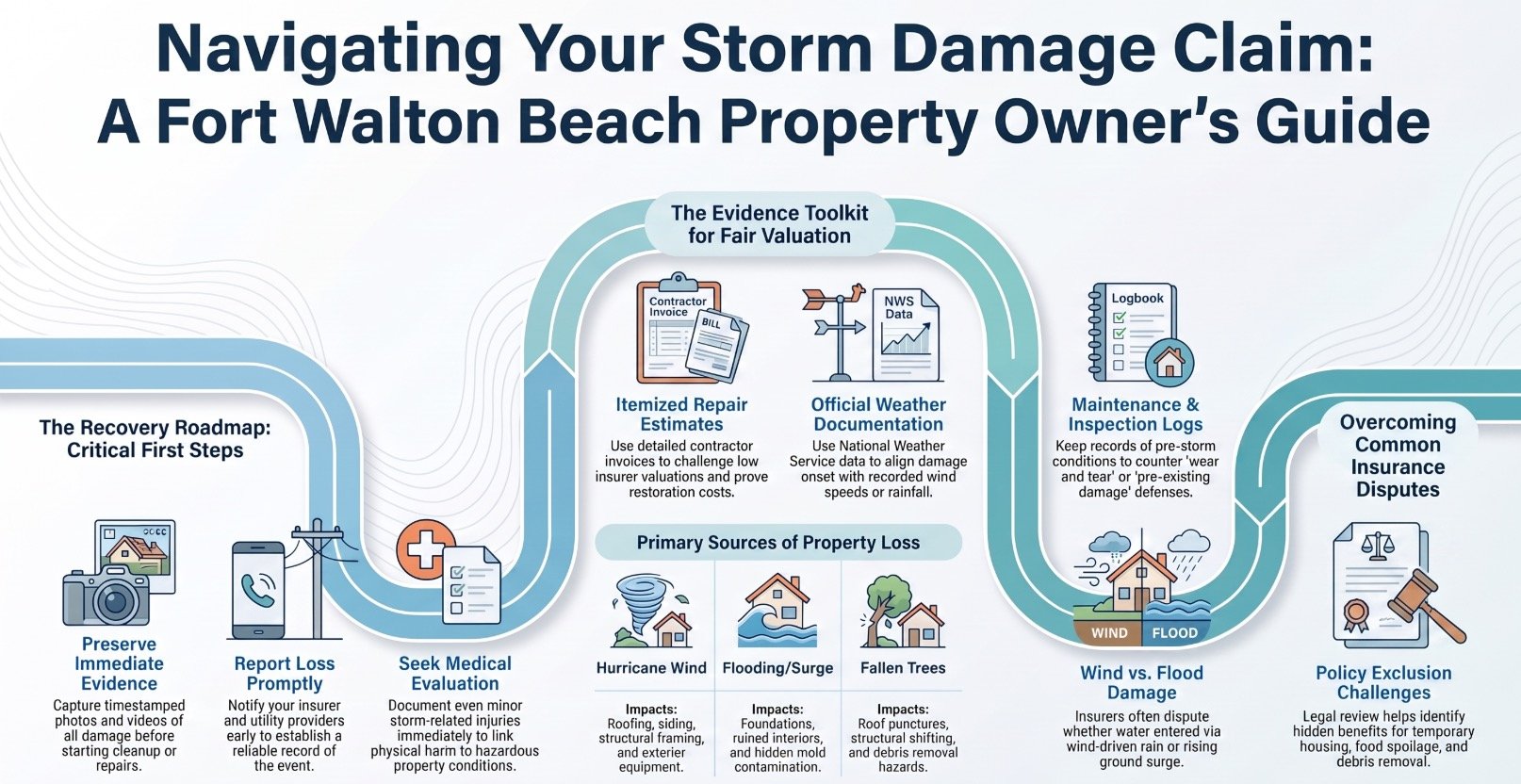
- A Fort Walton Beach storm damage lawyer reviews your loss early, explains coverage, exclusions, and deadlines, and helps organize claim documentation.
- Lawyers support fair property valuation for hurricane wind, roof leaks, flooding, storm surge, fallen trees, and damaged contents or structures.
- Strong claims rely on preserved evidence, including photos, videos, repair estimates, inventories, weather records, and insurer communications.
- Attorneys analyze disputed issues like wind versus flood damage, proof-of-loss requirements, and delays affecting payment and recovery planning.
- If storm recovery injuries occur, a lawyer can coordinate medical documentation, scene evidence, and related property damage issues in one claim review.
How We Can Help With Your Fort Walton Beach Storm & Weather Damage Property Claims Injury Claim
After a storm or severe weather event damages a home or business in Fort Walton Beach, a property claims lawyer can help the policyholder evaluate the loss, interpret the insurance policy, and pursue the full benefits available under the coverage. Counsel provides organized guidance from the earliest stages of the claim, helping families, nonprofits, and business owners move forward with care and purpose.


This assistance often begins with Evidence preservation, including photographs, repair estimates, inventories, and communications with insurers. A lawyer can identify deadlines, explain exclusions, and present documentation clearly and responsibly. During insurance negotiations, counsel advocates for fair valuation of structural damage, contents losses, and interruption-related costs. If the carrier underpays, delays, or denies a claim, the lawyer can challenge its position and seek a more complete recovery. Throughout the process, the focus remains on protecting resources, restoring stability, and helping affected property owners continue serving their households, employees, customers, and the broader Fort Walton Beach community.
Understanding Fort Walton Beach Storm & Weather Damage Property Claims Injury Cases
OUR CONSULTATIONSARE FREE
START YOUR FREE CASE REVIEW

Because storm and weather losses in Fort Walton Beach can involve both extensive property damage and related personal harms, these cases often require a careful review of the event, the insurance policy, and the resulting financial impact. A thorough claim analysis typically examines repair estimates, photographs, witness accounts, and Emergency medical documentation to determine how the incident affected a household and its ability to recover and continue serving others.
These matters can become more complex when insurers question wind vs. flood damage, policy exclusions, or valuation methods. Careful attention is often given to coverage language, proof-of-loss requirements, and insurance dispute timelines, since delays can affect both compensation and planning for future stability. In injury-related storm claims, the legal evaluation may also consider temporary housing costs, lost income, treatment needs, and the connection between hazardous property conditions and physical harm. A disciplined approach helps protect accuracy, accountability, and fair treatment throughout the claims process.
Common Causes of Fort Walton Beach Storm & Weather Damage Property Claims


Several weather-related events frequently lead to property claims in Fort Walton Beach, especially when severe conditions cause sudden, extensive damage. Common sources include hurricane wind damage, roof leaks caused by heavy rain or structural failure, and flooding or storm surge that affects both the building and its contents. Fallen trees also cause significant loss, often leading to roof damage, broken windows, and other structural impacts.
Hurricane Wind Damage
Expose hurricane wind damage for what it is: a leading source of serious property loss in Fort Walton Beach, where extreme gusts can tear away roofing materials, break windows, displace siding, and compromise structural components. Beyond visible destruction, powerful winds may loosen fasteners, warp framing, topple fences, and damage garages, porches, and exterior equipment.
Those assisting property owners should recognize how prompt documentation, careful inspections, and policy review support fair claims handling. Insurers often examine maintenance history, prior conditions, and compliance with wind mitigation features when evaluating losses. In disputed matters, negligence standards may influence whether damage arose solely from the storm or from preventable vulnerabilities. A disciplined response helps families, neighbors, and community institutions pursue resources needed to stabilize property, protect occupants, and continue serving others after dangerous weather events.
Roof Leak Causes
Why do roof leaks so often become central to Fort Walton Beach storm and weather damage claims? They frequently arise when high winds lift shingles, loosen flashing, or expose underlayment around vents, valleys, and chimneys. Even minor openings can admit water, damage insulation and ceilings, and remain hidden until staining, warping, or electrical concerns appear.
In coastal weather, repeated rain, wind-driven debris, and deferred maintenance often worsen these failures. Older roofs may have brittle materials, weakened seals, or corroded fasteners that no longer protect the structure. Once moisture enters, mold growth and indoor contamination may threaten occupants and complicate restoration. For families seeking to protect others and preserve safe housing, understanding these common leak sources helps support timely inspection, proper repairs, and careful documentation for a property damage claim.
Flooding And Storm Surge
Beyond roof-related openings, flooding and storm surge often produce some of the most severe property losses in Fort Walton Beach storm and weather events. Low-lying neighborhoods, coastal properties, and structures near bays or canals may experience rapid water intrusion, foundation weakening, ruined interiors, and contamination that complicates cleanup and restoration.
Storm surge can overwhelm drainage systems and push water far inland, even when rainfall alone appears manageable. Property owners who prioritize community safety often review evacuation compliance, secure important records, and install flood barriers where feasible before a storm arrives. Insurers may closely examine the source of water entry, the timing of damage, and any mitigation steps taken. Careful documentation, prompt notice, and thorough inspections frequently play an important role in presenting a complete property damage claim after major coastal weather events.
Fallen Trees Impact
When strong winds, saturated soil, or concealed root decay compromise a tree’s stability, fallen trunks and large limbs can cause substantial property damage during Fort Walton Beach storms. Homes, fences, vehicles, and utility lines may be struck without warning, creating immediate losses and serious Safety Hazards for occupants, neighbors, and responders.
Insurers often examine whether visible decay, pruning history, or a weakened Tree Root system contributed to the collapse. They may also evaluate roof punctures, structural shifting, water intrusion, and debris removal costs when reviewing a claim. Property owners who act with care for their families and surrounding community generally document damage quickly, secure the area, and seek prompt inspections. Thorough records and timely reporting can support fair claim evaluation while helping restoration efforts proceed efficiently and safely for everyone involved.
Legal Rights of Fort Walton Beach Storm & Weather Damage Property Claims Injury Victims
Although storm and weather damage claims often begin as disputes over property loss, injured individuals in Fort Walton Beach may also possess important legal rights when hazardous conditions, negligent repairs, or insurer misconduct contribute to bodily harm. Those rights may include compensation for medical care, lost income, pain, and future support, depending on proof of negligence, policy terms, and timely action. A careful review of coverage exclusions, repair records, and claim communications may reveal insurer bad faith or other actionable conduct. A disciplined settlement strategy can help protect resources needed to care for family and community after a serious injury.
- A roof tarp snapping loose above a volunteer clearing debris
- Waterlogged flooring collapsing beneath a caregiver’s careful steps
- Exposed wiring glinting inside a darkened, storm-struck hallway
- Claim letters stacked beside medical bills on a kitchen table
- A repaired staircase failing when a neighbor arrives to help
These rights merit prompt, informed protection and thorough documentation.
Why Do Fort Walton Beach Storm & Weather Damage Property Claims Injuries Happen?
Storm and weather damage injuries in Fort Walton Beach often arise from unstable conditions left behind after high winds, heavy rain, flooding, or fallen debris affect a home or business. Wet flooring, weakened roofs, exposed wiring, shattered glass, and hidden structural damage can create serious hazards for residents, workers, volunteers, and visitors alike.
These injuries also happen because storm recovery often involves rushed inspections, temporary repairs, debris removal, and movement through unsafe spaces. In many cases, property owners and occupants underestimate the damage or cannot immediately identify hidden dangers. Poor lighting, displaced materials, mold growth, and contaminated floodwater further increase the likelihood of harm. Insurance adjuster tactics may influence how conditions are documented, while delayed reporting can complicate accountability. Careful evidence preservation steps matter because the cause of an injury is often tied to evolving property conditions, maintenance failures, or unsafe cleanup practices that become harder to evaluate as repairs progress over time.
What Should You Do After a Fort Walton Beach Storm & Weather Damage Property Claims Injury?
After a Fort Walton Beach storm or weather damage incident, the injured party should seek immediate medical care to address health concerns and create a clear record of treatment. It is also important to document all injuries and property damage with photographs, medical records, repair estimates, and other supporting evidence. Prompt reporting of the loss, along with steps to protect the claim from delay or dispute, can greatly affect the strength of any insurance recovery.
Seek Immediate Medical Care
In the immediate aftermath of a weather-related injury, treat prompt medical evaluation as a priority, even when symptoms seem minor at first. Storm debris, falls, electrocution exposure, and structural collapse can cause hidden injuries that worsen without timely care. Immediate treatment protects health, supports recovery, and helps individuals remain able to care for family members and assist neighbors.
Medical professionals can identify concussions, internal injuries, infections, and breathing complications linked to floodwater, mold, or airborne contaminants. They may also offer guidance that reinforces Preventive home safety and practical Hurricane preparedness tips to reduce additional harm during cleanup. When emergency symptoms arise, such as chest pain, severe bleeding, confusion, or difficulty breathing, emergency services should be contacted without delay. Prompt care reflects prudent judgment and responsible concern for community well-being.
Document Injuries And Damage
Because conditions can change quickly and physical symptoms may intensify over time, begin documenting injuries and property damage as soon as it is safe to do so. Individuals should note pain levels, visible wounds, dizziness, mobility limits, and any emotional distress, then preserve receipts, discharge papers, prescriptions, and treatment instructions to support Medical record accuracy. Clear photographs should capture injuries from multiple angles and show damaged roofs, windows, interiors, and personal belongings before cleanup or temporary repairs alter conditions. Useful photo documentation tips include using good lighting, adding date stamps, taking wide and close shots, and repeating images over several days if bruising, swelling, leaks, or structural issues worsen. Organized notes, images, and records can help those assisting the injured understand the full scope of harm and the recovery support needed.
Report And Protect Claim
Once storm-related injuries and property losses are documented, the next priority is to report the event promptly and take measured steps to protect the claim from avoidable disputes. Timely emergency reporting to first responders, utility providers, and insurance carriers helps create a reliable record and demonstrates responsible conduct. Attention should then turn to medical triage, especially when symptoms appear minor but may worsen after the event. Claimants should preserve receipts, repair estimates, and all photo documentation, and avoid disposing of damaged items unless safety requires it. They should also review policy terms carefully, because insurer deadlines for notice, proof of loss, and inspections can affect recovery. By acting methodically and truthfully, injured residents place themselves in a stronger position to serve their households and support fair claim evaluation.
Critical Evidence in a Fort Walton Beach Storm & Weather Damage Property Claims Injury Case
In a Fort Walton Beach storm and weather damage property claims injury case, the strength of the claim often depends on the quality and timing of the evidence preserved. Photographs, video recordings, repair estimates, invoices, weather documentation, and credible witness or expert statements can help establish both the extent and cause of the damage. When assembled carefully, these materials create a clear factual record that can support the property owner’s position during the claims process.
- Rain-soaked ceilings stained in widening brown circles beneath a damaged roof
- Broken shingles, shattered glass, and scattered debris across a storm-struck yard
- Contractor estimates marked with itemized repair costs and dates of inspection
- Official weather reports showing high winds, heavy rainfall, or hail over Fort Walton Beach
- Statements from neighbors, inspectors, or engineers describing what was seen and what failed
Scene Photos And Videos
After a storm or other severe weather event, scene photos and videos often provide some of the most persuasive evidence in a Fort Walton Beach property damage claim. They help capture timestamped evidence of roof failure, water intrusion, fallen trees, shattered windows, and damaged personal belongings before conditions change or cleanup begins.
Clear images from multiple angles can show the scope of loss, the condition of neighboring properties, and hazards that affected access or safety. Video may also preserve sounds, weather conditions, and visible ongoing leaks. Claimants are often encouraged to document communication logs alongside visual records, including call dates, emails, and site visits. When organized carefully, these materials support accurate reporting, strengthen credibility, and assist those working to protect families, neighbors, and the broader community after disaster strikes.
Repair Estimates And Invoices
Because repair costs often become the central point of dispute in a Fort Walton Beach storm and weather damage claim, repair estimates and invoices serve as necessary evidence of the nature, extent, and value of the loss. Detailed contractor estimates can help demonstrate whether the insurer’s valuation is fair, complete, and consistent with the actual work required to restore the property safely and responsibly.
Invoices, receipts, and related claim documentation may also establish what emergency repairs were necessary, when services were performed, and how expenses fit within the Insurance timeline. When organized carefully, these records support transparency and accountability, which can assist families, neighbors, and community members seeking a prompt recovery. A lawyer may use this evidence to challenge underpayment, delays, or unsupported denials and to strengthen the claim’s overall credibility before negotiation.
Weather Reports Documentation
For a Fort Walton Beach storm and weather damage property claim, weather reports documentation often provides a key foundation for proving that damaging conditions occurred at or near the insured property during the relevant period. Such records may include National Weather Service data, radar archives, wind readings, rainfall totals, and official storm advisories tied to the loss date. When carefully organized, Weather timestamps can help align reported conditions with the onset of roof leaks, flooding, fallen trees, or structural failures. This documentation also works well alongside inspection photographs, especially when photo metadata confirms when and where images were taken. By assembling reliable weather records, claimants and advocates can better present a clear, service-oriented account of events, reduce disputes over causation, and support fair evaluation of covered storm-related property damage under the policy.
Witness And Expert Statements
When storm-related property damage is disputed, witness and expert statements can provide important context that supports the documented timeline of loss and the nature of the resulting harm. Neighbors, contractors, and first responders may confirm visible conditions, sudden roof failure, flooding patterns, or debris impact shortly after the event. Their observations can help establish whether damage was consistent with the reported storm and whether prompt mitigation efforts were undertaken.
Professional analysis can further strengthen a claim. Independent insurance consultants may evaluate scope, repair costs, and insurer handling, while independent engineering reports may address causation, structural compromise, and hidden moisture intrusion. Assembled, these statements can clarify intricate issues for insurers, adjusters, and courts. For affected property owners, reliable testimony often bridges gaps that photographs and weather records alone may leave unresolved after significant losses.
Long-Term Effects of Fort Walton Beach Storm & Weather Damage Property Claims Injuries
Storm and weather damage injuries in Fort Walton Beach may produce lasting consequences that extend well beyond the initial event and the property claim process. These effects often include chronic physical complications, significant emotional trauma, and financial strain caused by continuing medical needs, lost income, and repair-related costs. Carefully evaluating these long-term impacts is often important when gauging the full scope of a claimant’s losses.
Chronic Physical Complications
Although many injuries from storm and weather damage incidents seem manageable at first, some develop into chronic physical complications that interfere with mobility, strength, sleep, and daily functioning long after the initial event. Lingering back pain, joint instability, nerve damage, respiratory irritation, and recurring headaches may limit a person’s ability to work, maintain a household, or assist others in the community. These conditions often require ongoing medical evaluation, Rehabilitation planning, and adaptive support services tailored to long-term needs. When symptoms persist, treatment costs can expand beyond immediate care to include therapy, medication, assistive devices, and home modifications. Clear documentation of these physical limitations may support more accurate claim valuation, helping affected individuals pursue resources that promote stability, proper treatment access, and eventual economic recovery after severe weather-related losses.
Emotional Trauma Effects
Persistent physical limitations are often accompanied by emotional trauma that continues well after the immediate property loss and injury event has passed. Many individuals experience disrupted sleep, irritability, grief, and heightened vigilance during storms or routine repairs. These responses can affect relationships, caregiving duties, and the ability to assist others within the household and community.
Effective Trauma coping often requires patience, consistent support, and informed guidance from medical and mental health professionals. Insurance stress may intensify feelings of helplessness when recovery remains uncertain and reminders of the event persist. Some individuals withdraw socially, while others struggle with concentration, confidence, or a renewed sense of safety at home. Recognizing these emotional effects is crucial, because compassionate intervention can promote stability, preserve dignity, and support long-term recovery for impacted families and caregivers alike.
Ongoing Financial Strain
Beyond the immediate costs of repairs and medical care, long-term financial strain can become one of the most disruptive consequences of weather-related property damage injuries. Families may face reduced income, repeated treatment expenses, transportation costs, and temporary housing needs, all while normal household obligations continue. In many cases, the claim timeline extends for months, delaying funds needed for recovery and stability. During that period, careful recordkeeping, including medical records, often becomes critical to support losses and counter insurance tactics that minimize payouts or shift responsibility. Some households also require Budgeting help to manage debt, preserve savings, and prioritize basic necessities without neglecting care. A qualified advocate can help affected individuals pursue fair compensation, organize documentation, and protect resources so they may continue serving loved ones and their broader community with confidence.
Proving Liability in Fort Walton Beach Storm & Weather Damage Property Claims Injury Cases
When storm-related property damage leads to an injury claim in Fort Walton Beach, proving liability generally requires clear evidence that a party’s negligent act, omission, or failure to address a dangerous condition directly contributed to the harm. Helpful proof often includes photographs, repair records, witness statements, maintenance logs, and expert opinions connecting the unsafe condition to the injury. Insurance documentation basics may also help establish timelines, prior notice, and the scope of known damage.
Liability may rest with a property owner, contractor, association, or another responsible entity, depending on who controlled the premises and had a duty to act reasonably. Evidence showing delayed repairs, ignored warnings, code violations, or inadequate storm preparation can support a claim. Carefully reviewing policy coverage exclusions may clarify what damage was anticipated or left unresolved, without determining fault alone. A thorough investigation helps those seeking accountability better protect injured individuals and support safer conditions for the broader Fort Walton Beach community.
Dealing With Insurance Companies After a Fort Walton Beach Storm & Weather Damage Property Claims Injury
After liability evidence has been gathered, communications with insurance companies often become a central part of a Fort Walton Beach storm and weather damage property injury claim. Insurers may request statements, estimates, photographs, and repair records, and each communication can affect how they evaluate losses. A careful Policy coverage review helps identify applicable protections, exclusions, deadlines, and duties owed under the contract.
Claimants who want to protect household stability and support loved ones often benefit from organized, accurate responses. Practical claim documentation tips include preserving damaged items when possible, keeping receipts for emergency expenses, maintaining a communication log, and submitting materials clearly and consistently. Insurance adjusters may inspect the property and compare reported conditions with policy terms and available evidence. Measured communication, factual descriptions, and complete records can reduce misunderstandings and support a fair assessment. Legal guidance may also help ensure insurer requests are addressed appropriately and responsibly.
What to Expect During a Fort Walton Beach Storm & Weather Damage Property Claims Injury Claim Process
A Fort Walton Beach storm and weather damage property claim often begins with an initial damage assessment, followed by filing the claim and supporting documentation. After submission, the insurance company typically investigates to evaluate the reported losses, policy terms, and extent of covered damage. The process may end in a settlement, but disputes can arise when coverage, valuation, or payment amounts are contested.
Initial Damage Assessment
Because early documentation often shapes the strength of a property claim, the initial damage assessment is a critical first step in the Fort Walton Beach storm and weather damage claims process. During this stage, we carefully review, photograph, and compare property conditions against pre-storm conditions when available. We typically identify and note visible structural issues, roof failures, water intrusion, and damaged contents.
A thorough Moisture Inspection may be necessary to detect hidden water behind walls, under flooring, or within insulation. In some situations, a Mold Assessment helps determine whether prolonged dampness has created health or habitability concerns. Contractors, public adjusters, or other qualified professionals may assist by documenting the full scope of damage. This organized approach helps homeowners protect their property, support recovery efforts, and make informed decisions after severe weather.
Filing The Claim
Once the initial damage assessment is complete, the claim-filing stage generally begins with notifying the insurance carrier and submitting supporting documentation that identifies the storm-related losses. This step often includes organized Insurance documentation, photographs, repair estimates, receipts, and records showing when the damage occurred and how it affected the property.
Careful timeline tracking supports accuracy, promotes timely responses, and helps those assisting the property owner keep the process orderly and service-focused. Attention is also given to policy coverage, including deductibles, exclusions, notice requirements, and available benefits under the contract. Clear, complete submissions can reduce avoidable delays and strengthen the claim presentation. If problems arise, early preparation also helps handle claim denials by preserving records, clarifying losses, and supporting appropriate follow-up communications.
Insurance Company Investigation
After you submit a storm damage claim, the insurance company typically investigates to evaluate the reported loss, confirm the cause and scope of damage, and determine what benefits may be available under the policy.
During this stage, adjusters may inspect the property, review photographs, obtain repair estimates, and compare findings against policy terms. A careful documentation checklist helps ensure receipts, maintenance records, and prior communications are organized for review. Evidence preservation is also important, as damaged materials, temporary repairs, and dated images can help clarify when and how losses occurred. The claim timeline may vary depending on storm severity, property conditions, and the insurer’s requests for additional information. Prompt, accurate cooperation often assists efficient review and may reduce misunderstandings that can contribute to delay or a possible coverage denial later.
Settlement And Disputes
While the insurer’s investigation may clarify the scope of storm-related damage, the claim often moves next into settlement discussions, where payment amounts, repair estimates, policy limits, deductibles, and coverage interpretations are closely examined. During this stage, the property owner may receive an offer that does not fully address the loss, especially when depreciation, exclusions, or disputed causation reduce valuation. Careful review of estimates, photographs, expert reports, and policy language can help support a fair resolution that protects the household’s recovery. If disagreement continues, the insurer may raise coverage defenses, or the parties may consider appraisal, mediation, or litigation. Appraisal leverage can encourage more reasonable negotiations, especially when independent evaluations reveal substantial underpayment. A Fort Walton Beach storm damage lawyer may guide this process with discipline, clarity, and service-minded advocacy.
Compensation for Fort Walton Beach Storm & Weather Damage Property Claims Injury Damages
After a severe storm or other weather event, a property damage claim in Fort Walton Beach may include compensation for related injury damages when hazardous conditions cause physical harm. When wind, flooding, collapsing materials, or electrical hazards injure occupants, claimants may pursue recovery for treatment needs and other direct consequences. Careful reporting often supports fair evaluation, especially when records clearly connect the dangerous property condition to the injury.
A service-minded approach emphasizes prompt medical attention, scene preservation, and organized proof. Practical Loss documentation tips include photographing hazards, saving repair estimates, obtaining witness statements, and keeping medical records and incident notes together. These materials can strengthen an insurance dispute strategy when an insurer questions causation, timing, or the extent of harm. In Fort Walton Beach, thorough preparation may help establish that storm-related property damage created unsafe conditions that foreseeably caused injury. Clear documentation also helps counsel present a disciplined, credible claim during negotiations or litigation.
Economic vs Non-Economic Damages in Fort Walton Beach Storm & Weather Damage Property Claims Cases
In Fort Walton Beach storm and weather damage property claims cases, damages are often separated into economic categories, such as repair costs, temporary housing expenses, and other measurable financial losses. Non-economic losses may also be considered when the circumstances support compensation for harms that are real but harder to quantify. Establishing the value of either type of claim typically depends on records, expert assessments, and other evidence that shows the extent of the loss.
Economic Damage Categories
Because storm and weather losses often extend beyond the visible physical damage, economic damages in Fort Walton Beach property claims generally include the measurable financial costs tied to repair, replacement, mitigation, and related out-of-pocket expenses. These categories often cover emergency boarding, water extraction, debris removal, temporary housing, contractor invoices, and materials needed to restore safe living conditions.
Careful Claim documentation supports these losses by connecting receipts, estimates, and timelines to the event. Economic damages may also include code-upgrade expenses, additional utility costs, spoiled inventory, and diminished property valuation when supported by evidence. In insurance disputes, detailed records help clarify covered amounts and challenge undervaluation. Repair delays can increase labor costs and create further necessary expenditures, making prompt assessment, preservation efforts, and organized financial tracking especially important for households and community-focused property owners.
Non-Economic Losses
While property insurance disputes usually center on measurable financial losses, storm and weather events in Fort Walton Beach can also produce non-economic harm that affects daily living, stability, and peace of mind. Families may experience disruption that extends beyond repair bills, including displacement, uncertainty, and the loss of comfort once associated with home. In some situations, severe damage contributes to emotional distress, especially when vulnerable household members face prolonged instability after a storm. Non-economic losses may also include pain and suffering tied to unsafe conditions, disrupted routines, and the strain of rebuilding essential household functioning. A service-minded legal perspective recognizes that these harms, though less tangible than invoices or estimates, can still reflect meaningful consequences for people seeking safety, dignity, and restoration after destructive weather events in their community.
Proving Claim Value
How claim value is proven in a Fort Walton Beach storm or weather damage case often depends on the quality, consistency, and timing of the supporting evidence. Economic damages usually require proving repair costs through estimates, invoices, expert opinions, and receipts showing necessary restoration work. Careful documentation of property condition before and after the event helps connect visible losses to the storm itself.
Non-economic losses are less tangible, yet they may still influence a broader dispute involving severe disruption, displacement, or distress tied to property damage. A clear timeline of damages can show when problems appeared, worsened, and affected daily responsibilities. Insurance valuation methods also matter, because insurers may calculate actual cash value, replacement cost, or depreciation differently. Accurate records allow those serving affected families and communities to present a credible, service-centered claim.
When a Fort Walton Beach Storm & Weather Damage Property Claims Injury Case Goes to Trial vs Settlement
Although many Fort Walton Beach storm and weather damage property claims are resolved through negotiation, some proceed to trial when the insurer disputes the scope of damage, the value of the loss, or its obligations under the policy. Early case preparation often influences that outcome. Careful Evidence preservation steps and practical insurance documentation tips can strengthen a claim and support fair settlement discussions.
Settlement is often preferred when liability is clear, damages are well supported, and both sides recognize the value of avoiding delay, expense, and uncertainty. Trial becomes more likely when expert opinions conflict, policy language is contested, or the insurer alleges preexisting damage, late notice, or inadequate proof. In a service-minded approach, counsel may weigh whether litigation will better protect the property owner’s long-term recovery and financial stability. A trial can provide a binding resolution, but it also demands more time, testimony, and formal evidence than many negotiated outcomes require of all involved parties.
Florida Laws That May Affect Your Fort Walton Beach Storm & Weather Damage Property Claims Case
Because property insurance disputes in Florida are shaped by both policy language and state law, a Fort Walton Beach storm and weather damage claim may be affected by statutes governing notice, claim handling, coverage interpretation, and the time allowed to bring legal action. Florida’s Insurance Code and deadlines can influence how quickly losses must be reported, how insurers investigate, and when written responses are required. Courts may also examine duties after loss, appraisal provisions, and anti-assignment rules.
Florida storm claims often turn on policy terms, notice deadlines, claim handling rules, and the time allowed to sue.
- Wind-driven rain seeping through attic beams
- Blue tarps stretched across a dark roofline
- Water-stained drywall curling near windows
- Adjusters photographing shattered glass and debris
- Families sorting damaged keepsakes on tables
These laws also shape whether conduct supports bad-faith evidence, especially when delays, underpayments, or inadequate investigations affect recovery. Careful compliance may protect the claim’s strength and help a household pursue funds needed to repair, rebuild, and continue caring for others after severe weather strikes.
The Statute of Limitations for Fort Walton Beach Storm & Weather Damage Property Claims Injury Cases
When storm or weather damage leads to disputed losses in Fort Walton Beach, the statute of limitations can determine whether a property-related lawsuit may proceed at all. Florida law sets firm filing deadlines, and missing them can prevent recovery even when damage is substantial. Timely action also preserves records, repair estimates, photographs, and witness accounts that may clarify the source and extent of the loss.
For those seeking to protect homes and serve affected family members responsibly, attention to deadlines is crucial. The applicable period may vary depending on the policy, the nature of the dispute, and whether the matter involves contract-based claims or related allegations. Early documentation supports Policy exclusions review and strengthens claim denial appeals when insurers dispute coverage. Careful tracking of storm dates, notice dates, inspections, and written communications helps establish a clear timeline. In Fort Walton Beach matters, delay can weaken a valid position before the court ever considers the underlying damage evidence.
How a Fort Walton Beach Storm & Weather Damage Property Claims Lawyer Can Help You
After a storm loss in Fort Walton Beach, a property claims lawyer can help by evaluating coverage, organizing damage evidence, and managing communications with the insurer from the outset. Counsel often clarifies policy duties, prepares a documentation checklist, and supports property damage mitigation so families can focus on recovery and service to others. When disputes arise, the lawyer analyzes estimates, gathers expert opinions, and presents organized facts for Insurance claim denial appeals. Guidance may also include storm safety planning steps that protect occupants and preserve claim value.
A property claims lawyer brings order to storm-loss recovery through clear guidance, careful documentation, and focused communication with insurers.
- Blue tarps secured over a rain-soaked roof
- Labeled photographs lining a kitchen table
- Contractor estimates stacked beside the policy
- Water marks traced along hallway walls
- A calm advocate speaking with adjusters
This assistance promotes accuracy, steadier decision-making, and fair presentation of losses. By building a complete record, counsel helps policyholders pursue benefits owed under the policy with confidence and order.
When to Contact a Fort Walton Beach Storm & Weather Damage Property Claims Lawyer
Although many storm losses seem straightforward at first, early legal guidance is often warranted once coverage questions, significant damage, or insurer delays affect the claim. Contact is often appropriate after a roof failure, flooding, mold growth, or business interruption creates uncertainty about policy scope and next steps.
A Fort Walton Beach storm and weather damage property claims lawyer may also be consulted when Emergency reporting timelines are approaching, when a careful Documentation photo strategy is needed, or when temporary repairs must be handled without undermining reimbursement. Prompt consultation can help preserve records, communications, and estimates that support fair review. Legal contact is likewise sensible after repeated adjuster changes, requests for extensive recorded statements, or unclear explanations of Insurance denial reasons. If storm conditions caused physical injury during cleanup or displacement, Medical treatment coordination may also become relevant while the property claim proceeds. Early attention can reduce confusion and protect the ability to serve household recovery needs.
Why You Need an Experienced Fort Walton Beach Storm & Weather Damage Property Claims Lawyer
Early contact with counsel often raises a broader question: why experience matters in a Fort Walton Beach storm and weather damage property claim. Experience helps counsel identify hidden losses, preserve evidence, and frame communications with insurers to protect the claimant’s position from the outset.
An experienced lawyer also understands policy interpretation, which often determines whether structural damage, water intrusion, mold, debris removal, or additional living expenses are covered. That knowledge is especially important when an insurer minimizes damage, delays payment, or issues a denied claim based on narrow readings of policy language. Skilled representation can organize estimates, expert opinions, photographs, and repair records into a persuasive submission that supports fair compensation. For families, churches, nonprofits, and community-minded property owners, this guidance can reduce confusion and keep attention on recovery and service. In intricate losses, experience often provides the discipline and credibility needed to move a claim forward effectively.
How to Choose the Right Fort Walton Beach Storm & Weather Damage Property Claims Lawyer for Your Case
Because storm and weather damage claims often turn on timing, documentation, and policy interpretation, selecting the right Fort Walton Beach storm and weather damage property claims lawyer requires careful attention to qualifications and approach. Families seeking to protect homes and serve their communities should look for counsel with property insurance experience, strong communication habits, and a record of handling disputed damage valuations.
A careful process helps narrow the field. Prospective clients should interview lawyers about credentials, including licensing, litigation background, and familiarity with Florida claim deadlines. They should also ask how the lawyer gathers evidence, works with adjusters, and explains realistic outcomes. It is equally important to check fee structure, including contingency terms, costs, and whether expenses are advanced. Reviews, referrals, and responsiveness can further indicate professionalism and client care. By choosing representation that combines knowledge, diligence, and service-minded guidance, property owners place themselves in a stronger position to pursue fair compensation after a damaging storm event.
About The Law Offices of Anidjar & Levine
The Law Offices of Anidjar & Levine represents property owners in Fort Walton Beach who need disciplined legal support after storm and weather damage affects a home, condominium, or other insured property. The firm provides Legal representation grounded in careful case evaluation, responsive communication, and a practical commitment to helping clients protect financial recovery after unexpected loss.
Its attorneys apply local knowledge to the realities of coastal weather claims, including wind, rain, flooding, and related structural damage. They assist with Claim documentation by organizing repair estimates, photographs, inspection findings, and insurer correspondence in a clear record. They also emphasize evidence protection, helping clients preserve damaged materials, timelines, and other proof that may support coverage.
This approach reflects a service-minded philosophy that values preparation, accountability, and respect for each client’s circumstances. Through organized advocacy and informed guidance, the firm works to reduce avoidable disputes and strengthen each claim for a fair insurance outcome.
Frequently Asked Questions
Can I File a Claim for Mold Discovered Weeks After the Storm?
Yes, you may still file a claim for mold discovered weeks after a storm if the damage can be tied to that event. Success often depends on a clear documentation timeline showing when the storm occurred, when moisture was found, and what mitigation efforts followed. Insurers may also consider evidence of health risk, inspection reports, photographs, and repair records. Prompt notice and careful preservation of proof generally strengthen the claim substantially.
Will My Homeowners Insurance Cover Spoiled Food After a Power Outage?
Yes, homeowners insurance may cover food spoilage after a power outage, but coverage depends on the policy terms and the outage’s cause. Many policies provide limited reimbursement when a covered peril causes the interruption. Strong claim documentation, including receipts, photos, and a record of outage duration, helps support recovery. A careful policy review can clarify exclusions, deductibles, and coverage limits, enabling a household to pursue reimbursement responsibly and efficiently.
Can I Claim Damage to Detached Structures Like Fences or Sheds?
Yes, detached structures such as fences and sheds are often covered under a standard homeowners policy, subject to listed perils, limits, and exclusions. Coverage commonly applies when wind, hail, falling trees, or storm debris cause direct physical damage. The policyholder should review the other structures provision, document all loss carefully, and report it promptly. Service-minded guidance from a qualified professional may help protect available benefits and support a complete claim.
What if My Insurer Says the Damage Was Pre-Existing Wear and Tear?
If an insurer asserts pre-existing damage, the claim should be supported with strong documentation, including inspection records, maintenance history, photographs, and repair estimates. This material can challenge a wear-and-tear defense by distinguishing older conditions from sudden storm-related loss. Carefully reviewing the policy wording, timelines, and expert findings often strengthens the homeowner’s position and helps ensure fair treatment for those seeking to protect property and serve their household.
Are Hotel Stays Reimbursable if My Home Is Temporarily Uninhabitable?
Yes, hotel stays are often reimbursable when a home is temporarily uninhabitable due to covered damage. Coverage usually falls under temporary relocation or additional living expense provisions, as long as the costs are reasonable and necessary. Careful claim documentation, including receipts, booking records, and proof of uninhabitability, helps support reimbursement. If an insurer disputes payment, policy language, cause of loss, and the duration of displacement generally determine whether benefits are owed.
—————————
Storm and weather damage claims in Fort Walton Beach may involve complex policy language, disputed valuations, and strict filing deadlines. A qualified lawyer can evaluate the damage, protect the claimant’s rights, and pursue fair compensation through negotiation or litigation when necessary. The Law Offices of Anidjar and Levine provides focused representation for property owners facing these challenges. Prompt legal guidance may strengthen a claim and support a fair, timely resolution. For related legal assistance, visit our Fort Walton Beach Personal Injury Lawyer page.

