A Fort Lauderdale workers’ compensation accident injury lawyer can explain reporting requirements, filing deadlines, and options when an insurer disputes or delays benefits. Workplace injuries may result from falls, unsafe equipment, repetitive tasks, falling objects, inadequate training, or fatigue. Injured employees should promptly notify their employer, seek medical care, follow treatment instructions, and preserve relevant records. Eligible workers may receive authorized medical care and wage-loss benefits under Florida law. The Law Offices of Anidjar and Levine can discuss claim procedures, evidence, and legal assistance. Learn more from a Fort Lauderdale Personal Injury Lawyer.
Main Takeaways
- Workplace accidents may involve falls, repetitive strain, machinery, falling objects, or unsafe work conditions.
- Report a work injury promptly, document what happened, and seek medical care without delay.
- Florida workers’ compensation may cover authorized medical care and wage-loss benefits for eligible employees.
- A lawyer can explain filing deadlines, review evidence, and help address denied or delayed benefits.
- If equipment makers, contractors, or property owners contributed to an accident, a lawyer can assess possible third-party claims.
How We Can Help With Your Fort Lauderdale Workers Comp Accident Causes Injury Claim
When a workplace accident causes an injury in Fort Lauderdale, an attorney can help an employee understand the workers’ compensation process and protect their claim. Legal guidance can clarify filing deadlines, required forms, and the records needed to document an injury and its impact on work. This support allows employees to focus on recovery while their claim is handled carefully.
An attorney can assess Claim eligibility by reviewing employment information, medical documentation, and the circumstances relevant to the application. If an insurer disputes a claim or delays benefits, counsel can explain available responses and communicate with the parties involved. Clear, timely communication helps reduce confusion and supports a fair review.


Benefit coordination may also require attention when workers’ compensation intersects with health coverage, disability benefits, or other sources of support. An attorney can explain how these benefits may interact and help address questions about payments and responsibilities. With informed guidance, employees can make decisions that protect their interests while maintaining access to appropriate care and support.
Don’t Wait. Call Our Florida Personal Injury Lawyers Now!
Understanding Fort Lauderdale Workers Comp Accident Causes Injury Cases
OUR CONSULTATIONSARE FREE
START YOUR FREE CASE REVIEW

Understanding a Fort Lauderdale workers’ compensation accident injury case begins with identifying how the incident occurred and whether it arose from the employee’s work duties. The claim process generally examines the connection between the injury, the assigned job, and the circumstances in which the employee was working. This assessment helps determine whether Florida law applies workers’ compensation benefits.
Relevant information can include incident reports, medical records, witness accounts, and details about the employee’s responsibilities. Accurate documentation can clarify what happened and support a timely review. Employees who serve patients, customers, or the public may face demanding conditions while carrying out necessary duties, making a careful, respectful evaluation important.


Industry hazards vary by occupation and work setting, so employers and employees benefit from understanding applicable safety procedures. Workplace prevention measures may reduce risks and help protect staff members who provide indispensable services. A clear account of the event also allows decision-makers to evaluate the claim fairly and identify any needed support.
Common Causes of Fort Lauderdale Workers Comp Accident Causes
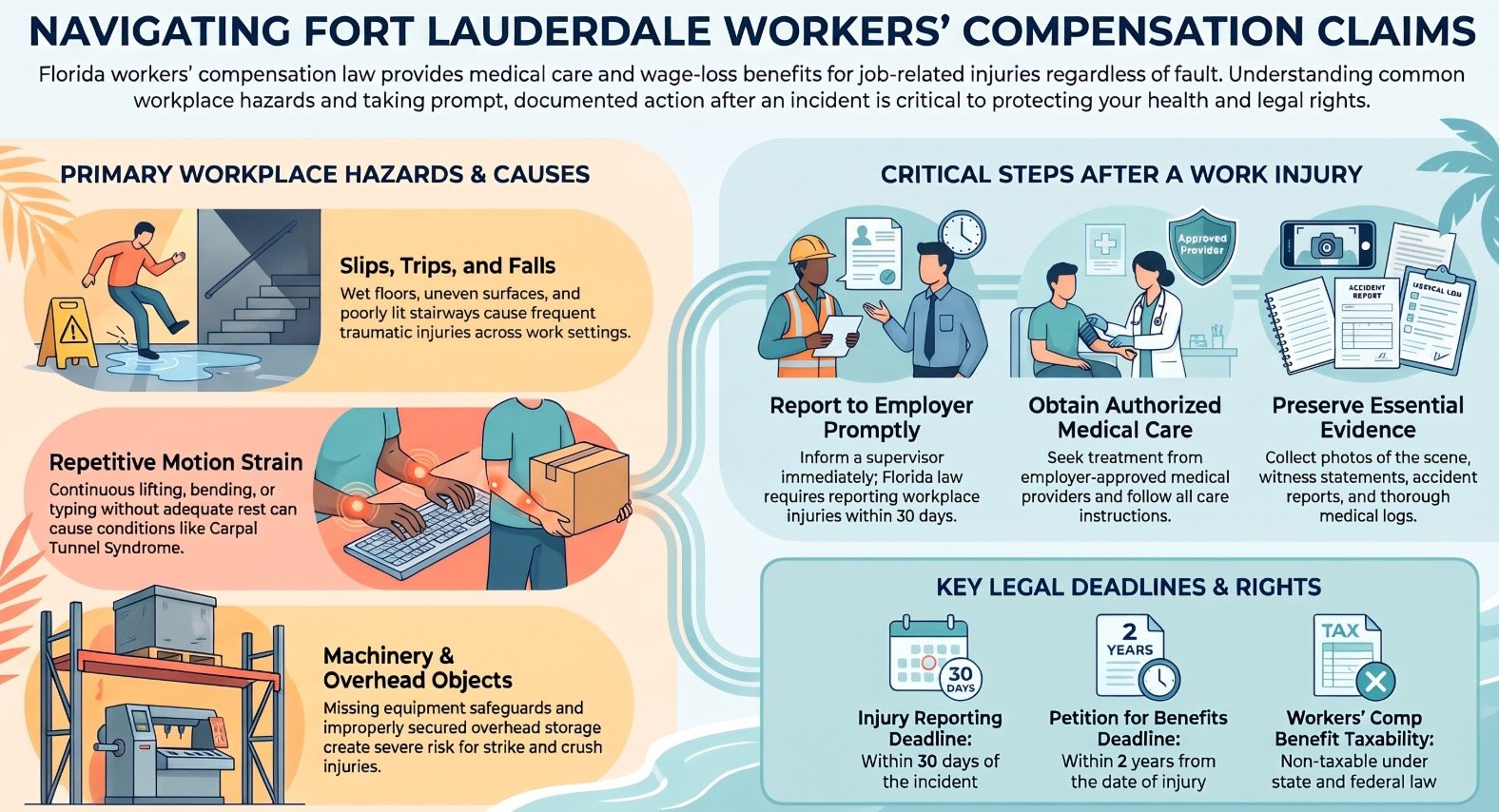
Workplace injuries in Fort Lauderdale commonly result from slips and falls, repetitive motions, equipment accidents, and falling objects. Each hazard can cause injuries ranging from temporary strains to serious conditions that require ongoing care. Understanding how these incidents occur can help clarify the circumstances surrounding a workers’ compensation claim.
Slips and Falls
Slips and falls are a common cause of workplace injuries in Fort Lauderdale, often resulting from wet floors, uneven surfaces, loose cables, or poorly maintained walkways. These incidents can cause fractures, sprains, head injuries, and other conditions that interrupt a worker’s ability to serve colleagues and the public. Wet floor hazards warrant prompt attention, particularly in kitchens, medical facilities, and building entrances where spills or tracked-in rain may create hidden risks. Employers can reduce exposure by cleaning spills quickly, posting visible warning signs, and keeping paths clear. Staircase safety also requires consistent inspection, secure handrails, adequate lighting, and unobstructed steps. Workers who encounter unsafe conditions should report them promptly so corrective measures can protect others. When a fall causes injury, timely medical care and accurate incident documentation may support a workers’ compensation claim.
Repetitive Motion
Repetitive motion injuries can develop when Fort Lauderdale workers repeat the same movements for extended periods without adequate rest or task changes. Employees who assist patients, prepare meals, process orders, or perform detailed office work may repeatedly bend, grip, lift, or reach. Over time, these demands can strain muscles, joints, and tendons, especially when the pace leaves little time to recover.
Common conditions include Carpal tunnel syndrome, which can cause numbness, tingling, or weakness in the hand, and tendon inflammation, which may produce pain and restricted movement. Symptoms can interfere with workers’ ability to complete duties safely and provide consistent service. Early reporting and medical evaluation can help identify the condition and document its connection to job tasks. Employers may adjust duties or schedules to reduce further strain.
Equipment Accidents
Beyond injuries from repetitive tasks, equipment accidents can occur when machinery, tools, or other work devices malfunction or are used without adequate safeguards. In Fort Lauderdale workplaces, these incidents may involve presses, saws, forklifts, or powered hand tools. Missing or defective Machine guarding can expose workers to blades, pinch points, and moving parts. Poor maintenance, inadequate training, and rushed work may also increase the risk of equipment failure or unsafe operation. Employers can reduce hazards by inspecting devices, correcting defects promptly, and ensuring workers understand safe operating practices. Lockout procedures are necessary when equipment is serviced or repaired, because they help prevent unexpected activation. Workers injured while operating or maintaining equipment may require medical care and time away from work. Workers’ compensation may provide benefits for eligible workplace injuries.
Falling Objects
Falling objects can cause serious workplace injuries when materials, tools, or equipment are stored, lifted, or secured improperly. In Fort Lauderdale workplaces, these incidents may occur in warehouses, construction sites, hospitals, and service facilities where employees handle supplies or work near elevated storage. Overhead storage hazards include poorly stacked boxes, unstable shelving, and items placed above walkways without adequate barriers. Unsecured loads pose risks when cargo shifts during lifting, transport, or loading, potentially striking workers below. Employers can reduce exposure through routine inspections, secure storage systems, load limits, and clear material-moving procedures. Workers should receive training on safe handling and maintain distance from suspended loads. When a falling object causes injury, prompt medical care and accurate incident documentation can support recovery and help clarify available workers’ compensation benefits.
Legal Rights of Fort Lauderdale Workers Comp Accident Causes Injury Victims
When a workplace accident causes an injury in Fort Lauderdale, Florida’s workers’ compensation system generally gives eligible employees access to medical care and wage-loss benefits, regardless of who caused the incident. These protections help injured workers focus on recovery while maintaining vital support for themselves and their families. Benefit eligibility depends on factors such as employment status, timely reporting, and compliance with claim procedures. Employees may have the right to:
- Receive authorized medical treatment for covered workplace injuries.
- Obtain wage-replacement benefits when an injury limits work.
- Report an accident and file a claim within applicable deadlines.
- Seek review of a denied or disputed benefits claim.
- Request assistance understanding notices and required documentation.
Workers should promptly notify their employer, keep copies of records, and follow medical instructions. Retaliation protections generally prohibit employers from punishing employees for pursuing lawful workers’ compensation benefits. A worker who suspects retaliation or has an unresolved claim may consult a qualified professional about available options. Clear information can help injured employees protect their rights and continue supporting those who depend on them.
Why Do Fort Lauderdale Workers’ Comp Accident Injuries Happen?
Why do workplace accident injuries occur in Fort Lauderdale? They often result from hazards that develop when safety procedures are overlooked, equipment is poorly maintained, or work areas are not kept orderly. Construction sites, warehouses, hospitals, and service businesses may expose workers to falls, lifting injuries, machinery incidents, and contact with harmful substances. Each setting presents distinct risks, but many incidents share preventable causes.
A strong Workplace safety culture helps employers and employees identify hazards, communicate concerns, and follow established precautions. When training is incomplete or supervisors fail to address unsafe conditions, workers may lack the guidance needed to perform tasks safely. Production demands can also encourage rushed work or shortcuts, increasing the chance of injury.
Fatigue related errors are another contributing factor. Long shifts, inadequate rest, and demanding schedules can reduce attention, coordination, and judgment. These conditions may affect workers serving customers, patients, or the public, as well as their coworkers. Understanding common causes can support safer workplaces and reduce preventable harm.
What Should You Do After a Fort Lauderdale Workers Comp Accident Causes Injury?
After a workplace injury, the worker should promptly report the accident to the employer and follow applicable reporting procedures. The worker should also seek medical care without delay, even if the injury initially appears minor. Keeping records of the incident, symptoms, treatment, and related communications can help preserve an accurate account of what happened.
Report the Accident
Promptly reporting a workplace injury is an essential first step in protecting an injured worker’s health and workers’ compensation rights. After an accident, the employee should notify a supervisor as soon as possible, even if the injury initially seems minor. Supervisor notification creates a timely record and allows the employer to begin its reporting procedures. The employee should provide clear, factual details, including when and where the incident occurred, what happened, and which tasks or conditions were involved. If witnesses were present, their names may also help clarify the circumstances. The employee should request that the company document the event in its incident log and keep a personal record of the report’s date, recipient, and key details. Prompt, accurate reporting supports accountability and helps prevent avoidable disputes about the accident.
Seek Medical Care
When a workplace accident causes an injury, the employee should seek medical care as soon as possible, even if the symptoms appear manageable. Prompt evaluation can identify conditions that may worsen without treatment and help establish an appropriate care plan. For Emergency symptoms, such as severe bleeding, difficulty breathing, loss of consciousness, or intense pain, the employee should call 911 or go to an emergency department immediately. For other injuries, the employee should follow the employer’s procedures for obtaining authorized care and explain that the condition arose at work. A treating provider can assess the injury, recommend treatment, and advise whether work restrictions are necessary. The employee should follow medical instructions and attend recommended appointments. Understanding treatment timelines can support recovery and help prevent delays in necessary care.
Document What Happened
A clear record of the accident can help preserve important details while they are still fresh. The injured worker should note the date, time, location, and sequence of events, including any equipment involved or conditions that may have contributed. An Incident timeline can organize these facts and identify when symptoms began or changed. The worker should also record personal recollections, using specific observations rather than assumptions about fault. Names and contact information for witnesses may help clarify what occurred. Photographs of the scene, hazards, equipment, and visible injuries can provide useful context when they can be obtained safely. Retain relevant messages, schedules, and incident reports. Accurate documentation can help employers, medical providers, and claims reviewers understand the event and support a fair, timely review of the workers’ compensation claim.
Don’t Wait. Call Our Florida Personal Injury Lawyers Now!
Critical Evidence in a Fort Lauderdale Workers’ Comp Accident Causes Injury Case
A strong workers’ compensation claim depends on evidence that documents how the accident occurred and the resulting injury.
Relevant materials may include:
- Accident reports
- Medical records
- Witness statements
- Workplace photographs
- Records of safety procedures or equipment conditions
Promptly preserving these materials can help clarify the facts and support the claim.
Accident Reports
Accident reports can provide crucial evidence in a Fort Lauderdale workers’ compensation injury claim by documenting when, where, and how the incident occurred. A clear report may identify the equipment, work conditions, and people present, helping establish a reliable account of events. Employees should follow workplace procedures for notifying a supervisor and provide accurate details as soon as practicable. Prompt reporting can preserve information while observations remain fresh and may help employers investigate hazards that could affect other workers. Report deadlines and required forms can vary, so employees should review applicable instructions and retain copies of submitted documents. If a report contains errors or omits important facts, the worker can request a correction or submit a written clarification. Consistent documentation supports a fair review and helps those responsible address workplace safety concerns.
Medical Records
Medical records can be vital evidence in a Fort Lauderdale workers’ compensation claim because they document the injury, symptoms, treatment, and medical opinions about work-related causes. Consistent documentation helps establish a clear Medical timeline, from the initial examination through follow-up care and any recommended restrictions. Provider notes may describe reported symptoms, examination findings, diagnoses, and the clinician’s assessment of whether workplace duties contributed to the condition. These records can also show whether the worker followed treatment and how they responded over time. Accurate, complete records help insurers and decision-makers evaluate the claim and the medical support for benefits. Workers who provide timely, truthful information to healthcare professionals can help make certain their records reflect the condition accurately. Careful review may identify gaps or inconsistencies that require clarification before submitting or relying on the evidence.
Witness Statements
When a workplace injury occurs, witness statements can provide important evidence about how the incident happened and what conditions were present. Coworkers, supervisors, or other people nearby may describe the sequence of events, identify potential hazards, and explain what they observed before or after the injury. Their accounts can clarify details not fully captured in medical records.
Witness credibility may depend on whether an observer had a clear view, recalls events consistently, and has any personal interest in the claim. Investigators may compare accounts with incident reports and other available evidence. Statement inconsistencies do not automatically disprove an injury, since stress or limited observation can affect memory. However, significant differences may require follow-up questions. Prompt, accurate accounts can support a fair review and help injured workers receive appropriate benefits.
Workplace Photos
Alongside witness statements, workplace photographs can document conditions that contributed to an injury and may change before an investigation is complete. Images may show a spill, damaged equipment, a blocked walkway, a missing warning sign, or the work area layout. Such details can help explain how an accident occurred and identify hazards that could endanger other employees.
Photographs are most useful when taken promptly and from several angles, with both close views and wider context. Photo metadata, including timestamps and location information, may help establish when and where an image was captured. Preserve original files without editing, and store copies securely. Privacy considerations also matter: images should avoid unnecessary exposure of injured workers or confidential records. A qualified representative can assess how photographs support a workers’ compensation claim and workplace safety review.
Long-Term Effects of Fort Lauderdale Workers Comp Accident Causes Injuries
Work-related injuries may have lasting effects that continue after initial treatment ends. Chronic pain and reduced mobility can limit a worker’s ability to perform job duties and manage everyday activities. Emotional effects, including stress or anxiety, may also arise and warrant appropriate attention.
Chronic Pain
How long can pain from a workplace injury last? Chronic pain may continue for months or years after an accident, even when the original tissue damage has recovered. Its duration and intensity depend on the injury, treatment response, and individual health factors. Pain flare patterns can vary, with symptoms worsening during certain activities, stress, or changes in routine. Sleep disruption may follow, leaving an injured worker fatigued and less able to concentrate during daily responsibilities. Persistent discomfort can also affect mood, relationships, and the ability to participate consistently in work or community service. Medical evaluation can help identify contributing conditions and guide appropriate care. Workers’ compensation records documenting symptoms, treatment, and functional effects may clarify the injury’s ongoing impact and support informed decisions about benefits and recovery planning.
Reduced Mobility
When a workplace injury affects the joints, muscles, nerves, or spine, reduced mobility may persist long after the initial accident. Joint stiffness, weakness, and restricted movement can make routine tasks more difficult, including walking, lifting, reaching, or standing for extended periods. Some workers may also experience balance challenges that increase fall risk, particularly when traversing stairs or uneven surfaces. These limitations can affect the ability to perform job duties safely and consistently, even after acute symptoms have improved. Recovery may require ongoing medical care, physical therapy, assistive devices, or adjustments to work responsibilities. A treating provider can assess functional restrictions and recommend appropriate measures. Clear documentation of mobility limitations can help employers and claims professionals understand the injury’s lasting effects and identify reasonable accommodations that support a safe return to work.
Emotional Effects
A serious workplace injury can have lasting emotional effects, including anxiety, depression, sleep problems, or fear of returning to the job site. Anxiety after injury may make ordinary tasks feel difficult and interfere with concentration, relationships, and recovery. Some workers also experience depression at work, particularly when pain, reduced independence, or uncertainty about their employment continues for months. These effects can influence a person’s ability to support colleagues, serve customers, and contribute to the community.
Recognizing emotional symptoms is an important part of addressing the full impact of an occupational injury. A worker may benefit from discussing persistent distress with a qualified health professional and following recommended care. Employers and coworkers can help by responding respectfully and supporting reasonable recovery measures. When emotional difficulties are documented alongside physical limitations, they may also provide relevant information in a workers’ compensation claim.
Proving Liability in Fort Lauderdale Workers Comp Accident Causes Injury Cases
Proving liability in a Fort Lauderdale workers’ compensation case begins with establishing that the injury arose out of and occurred in the course of employment. Evidence may include incident reports, medical records, witness statements, photographs, and workplace safety documentation. Collectively, these materials can clarify when and where the accident happened, what conditions contributed to it, and how the injury affected the worker’s ability to perform assigned duties.
Workers’ compensation generally does not require proof of Employer negligence. However, records showing unsafe conditions or inadequate training may help explain how an accident occurred and identify whether another party shares responsibility. For example, a contractor, equipment manufacturer, or property owner may have contributed to the hazard. Such circumstances can support a separate claim based on third-party liability, distinct from workers’ compensation benefits.
Careful evidence preservation can help injured workers and their families pursue appropriate accountability. A thorough review also helps distinguish documented facts from assumptions and supports a clear account of the event.
Dealing With Insurance Companies After a Fort Lauderdale Workers Comp Accident Causes Injury
After a workplace injury in Fort Lauderdale, insurance companies may contact the worker to gather information and evaluate a workers’ compensation claim. Their representatives may ask about the accident, reported symptoms, medical care, and work duties. The worker can provide accurate, limited answers while avoiding speculation or guesses about details that remain unclear.
Keep adjuster communication professional and focused on verifiable facts. The worker should keep copies of letters, emails, and claim-related forms, and note the date and substance of telephone conversations. If a question is confusing or a request seems overly broad, the worker may ask for clarification before responding.
An insurer may request recorded statements. Before agreeing, the worker can seek legal advice to understand the request’s purpose and how the statement may be used. Careful preparation helps reduce misunderstandings without withholding relevant information. Prompt, truthful responses and organized records can support clear communication while the worker concentrates on recovery and follows medical guidance.
What to Expect During a Fort Lauderdale Workers Comp Accident Causes Injury Claim Process
A workers’ compensation claim generally begins with prompt reporting of the workplace accident and seeking appropriate medical treatment. The injured worker must then follow the required steps to file a claim and provide relevant information. If the insurer disputes the claim or benefit amount, the process may involve further review or dispute resolution.
Reporting the Workplace Accident
Promptly reporting a workplace accident is an important first step in a Fort Lauderdale workers’ compensation claim. An employee should notify a supervisor as soon as practicable, even when an injury initially appears minor. Notifying a supervisor creates a record the employer can use to begin its reporting procedures and assess the circumstances. The employee should provide clear, factual details, including the date, time, location, task being performed, and any witnesses. A written report can help preserve an accurate incident timeline and reduce the risk of later misunderstandings. If the employer requires a specific form, the employee should complete it carefully and retain a copy when possible. Prompt, accurate reporting supports a fair review and helps protect the employee’s ability to pursue benefits under Florida workers’ compensation rules.
Seeking Medical Treatment
After reporting the workplace accident, the injured employee should seek medical care and follow Florida workers’ compensation procedures for treatment. Prompt evaluation can identify injuries, establish a medical record, and help prevent worsening. In many cases, the employer or insurance carrier directs the employee to an authorized provider. Treatment authorization may be required before the employer or carrier approves appointments, referrals, or diagnostic services, so the employee should confirm the process with the appropriate representative.
Choosing physicians may depend on the authorized treating physician’s referral and the nature of the injury. The employee should describe symptoms accurately, attend scheduled visits, and follow the clinician’s instructions. If care is delayed or symptoms change, the employee should promptly notify the provider and request guidance. Consistent treatment supports recovery and documents the injury’s medical course.
Filing the Workers’ Comp Claim
After reporting the workplace injury and beginning authorized medical care, the employee should confirm that the employer has notified its workers’ compensation insurance carrier. The employee may then receive forms requesting details about the incident, affected body parts, and medical providers. Claim form completion should be accurate and consistent with the initial report and treatment records. The employee should keep copies of submitted documents and note when each was delivered. Filing deadline tracking is important because Florida law sets time limits for reporting injuries and pursuing benefits. Returning requested information promptly can help the insurer review the claim without avoidable administrative delays. The employer, insurer, and authorized medical provider may each require specific documentation. Careful recordkeeping supports an orderly process and helps employees remain focused on recovery and their responsibilities to family and coworkers.
Resolving Disputes and Benefits
Accurate claim records provide a foundation for addressing disputes and determining available benefits in a Fort Lauderdale workers’ compensation claim. After a workplace injury, the insurer reviews medical reports, wage information, and accident details to assess eligibility for medical care and wage replacement. Timely treatment and consistent documentation can help clarify how the injury affects the worker’s ability to perform job duties.
Benefit denials may arise when an insurer disputes the injury’s connection to work, questions medical necessity, or finds that reporting requirements were not met. A worker may challenge a decision through dispute resolution procedures, which can involve submitting additional records, requesting a hearing, or seeking review by the appropriate state agency. During this process, clear evidence and compliance with deadlines matter. Legal guidance can help workers understand their options, protect access to benefits, and support a fair, orderly resolution.
Don’t Wait. Call Our Florida Personal Injury Lawyers Now!
Compensation for Fort Lauderdale Workers’ Comp Accident Causes Injury Damages
When a workplace accident causes an injury in Fort Lauderdale, workers’ compensation may cover reasonable and necessary medical care and provide partial wage-replacement benefits during recovery. Benefits can include authorized treatment, prescription medication, and temporary disability payments when a worker cannot perform regular duties. The amount and duration depend on medical evidence, work capacity, and applicable state rules.
Disability benefit calculations generally reflect the worker’s average weekly wage and the extent of the disability. A treating physician’s restrictions help determine whether the worker can return to the same position, perform modified duties, or must remain off work. If an injury creates lasting limitations, Florida law may provide additional benefits.
Vocational rehabilitation eligibility may arise when an employee cannot resume suitable prior work and needs assistance preparing for other employment. Services can include vocational evaluation, counseling, and job placement support. These benefits are intended to help injured workers regain independence and contribute productively, while employers and insurers must follow statutory requirements and authorized care procedures. A Fort Lauderdale workers’ compensation attorney can clarify benefit options and address questions about eligibility.
Economic vs Non-Economic Damages in Fort Lauderdale Workers Comp Accident Causes Cases
Economic losses may include medical expenses, lost wages, and reduced future earning capacity resulting from a workplace injury. Florida law generally treats non-economic damages, such as pain and suffering, differently. Workers’ compensation benefits have specific limits, so the available recovery may depend on the claim and whether other legal options apply.
Economic Losses
In a Fort Lauderdale workers’ compensation case, economic losses generally refer to measurable financial harm caused by a work-related injury, including medical expenses, lost wages, and reduced earning capacity. These losses may include authorized treatment costs, prescription expenses, and payments for necessary medical equipment. Lost wages can arise when an injured worker cannot perform assigned duties during recovery. If the worker returns with restrictions or must accept lower-paying work, reduced earnings may continue beyond the initial absence. Workers’ compensation benefits may replace part of an employee’s income, subject to applicable rules and eligibility requirements. Accurate records, such as pay statements, medical bills, and work restrictions, help document the financial impact. A careful assessment can clarify which expenses and income changes are connected to the injury and support a fair evaluation of available benefits.
Non-Economic Damages
Although a work-related injury may cause pain, emotional distress, or disruption to daily life, Florida workers’ compensation generally does not provide separate benefits for these non-economic losses. Unlike medical expenses and wage-replacement benefits, non-economic damages address the personal effects of an injury rather than measurable financial costs. Pain and Suffering may include ongoing discomfort, anxiety, or difficulty coping with recovery. Loss of Enjoyment can describe reduced ability to participate in family activities, hobbies, or community service that previously gave daily life meaning. These effects may be significant, even when they do not appear on bills or pay records. Workers’ compensation typically focuses on authorized medical care and specified financial benefits, so injured workers should understand that the system treats emotional and lifestyle impacts differently from economic losses. A clear distinction helps set realistic expectations.
Workers’ Compensation Limits
Florida workers’ compensation limits recovery to benefits authorized by statute, rather than full compensation for every loss caused by a workplace accident. The system generally covers reasonable medical care and a portion of lost wages when an employee suffers a qualifying injury. These economic benefits can help injured workers maintain treatment and meet necessary obligations while they recover and return to serving their communities.
However, workers’ compensation does not ordinarily award non-economic damages for pain, emotional distress, or loss of enjoyment of life. Benefit caps, eligibility rules, and coverage exclusions may further restrict available payments, including when an injury falls outside statutory requirements. Disputes about causation, medical evidence, or work status can also affect benefits. A separate claim against a responsible third party may permit broader damages, subject to applicable law and evidence.
When a Fort Lauderdale Workers Comp Accident Causes Injury Case Goes to Trial vs Settlement
When a workers’ compensation dispute in Fort Lauderdale cannot be resolved through negotiations, the case may proceed to a formal hearing before a judge. At a hearing, each side presents evidence and arguments concerning the injury, medical care, and benefits in dispute. The judge reviews the record and issues a decision, which may take longer and involve greater uncertainty than an agreement.
Settlement negotiations may continue before or during the hearing process. A settlement can provide a clear resolution and reduce the time and stress of a contested case. However, review the terms carefully so the injured worker understands which benefits are included and whether future claims are affected.
Trial preparation may involve gathering medical records, employment information, witness statements, and other relevant evidence. A workers’ compensation attorney can assess the strengths and risks of each option, explain likely procedures, and help the worker make an informed choice. The appropriate path depends on the disputed issues, available evidence, and the worker’s needs. Neither outcome is guaranteed.
Florida Laws That May Affect Your Fort Lauderdale Workers Comp Accident Causes Case
Several Florida laws shape how a Fort Lauderdale workers’ compensation claim is reported, reviewed, and resolved. Florida Statutes, Chapter 440, establishes the framework for medical care, wage replacement, and dispute procedures. These rules help injured workers understand their rights while supporting employers’ responsibilities.
- Employees generally must promptly report a work-related injury to their employer so the claim can be documented and investigated.
- Employers and insurers assess whether the injury arose from employment and whether medical treatment is connected to the reported accident.
- Benefit eligibility may depend on the injury’s circumstances, medical evidence, work restrictions, and applicable statutory requirements.
- Authorized providers typically direct covered treatment, while disputes about care or benefits may proceed through formal review.
- Florida law addresses workplace safety obligations and certain defenses, including misconduct or intoxication, when supported by evidence.
A worker serving the community should preserve incident reports, medical records, and communications. Careful documentation can help clarify the facts and support a fair evaluation under Florida law. Legal guidance may explain how these provisions apply to a particular claim.
The Statute of Limitations for Fort Lauderdale Workers Comp Accident Causes Injury Cases
How long an injured worker has to pursue benefits can depend on the type of claim and the steps already taken. Florida generally requires an employee to report a workplace injury to the employer within 30 days after it occurs or after the worker learns it may be work-related. A late report can jeopardize benefits, though circumstances may affect how the deadline applies.
A petition for benefits is generally subject to a two-year deadline from the date of injury. If the worker has received benefits, a one-year period may apply after the last payment or authorized medical treatment, with certain events potentially extending the time. These Notice deadlines are separate from the initial reporting requirement and should be tracked carefully.
Claim exceptions may apply, including situations involving delayed discovery or an employer’s knowledge of the accident. Because deadlines can turn on specific facts and benefit history, workers should preserve records and seek timely guidance. Prompt attention helps protect access to medical care and wage benefits while supporting a stable recovery.
How a Fort Lauderdale Workers Comp Accident Causes Injury Lawyer Can Help You
A Fort Lauderdale workers’ compensation lawyer can help an injured employee navigate the claims process, address disputes, and protect access to medical and wage benefits. The lawyer can explain responsibilities, organize records, and communicate with insurers so that employees who serve the community can focus on recovery while understanding their rights.
Legal support may include:
- Reviewing claim forms and medical records for accuracy and completeness.
- Clarifying benefit calculations, including temporary disability and authorized treatment.
- Responding to denied care or disputes about the injury’s work-related cause.
- Coordinating with medical providers and the employer regarding restrictions.
- Supporting return-to-work planning and identifying suitable duties.
When an injury limits an employee’s ability to resume prior responsibilities, counsel can explain available options and help address disagreements over work capacity. A lawyer may also discuss vocational rehabilitation when returning to the former position is not medically feasible. These services can help workers pursue appropriate benefits and make informed decisions, while maintaining a clear record of treatment, restrictions, and employment communications. The lawyer’s role is to provide guidance grounded in the applicable workers’ compensation rules.
When to Contact a Fort Lauderdale Workers Comp Accident Causes Injury Lawyer
When a workplace injury affects an employee’s health, income, or ability to perform assigned duties, prompt legal guidance can help clarify the next steps. An injured worker may contact a Fort Lauderdale workers’ compensation lawyer soon after an accident, particularly when reporting requirements, medical care, or benefit applications raise questions. Early legal consultation can help the employee understand deadlines and preserve relevant records while staying focused on recovery and family responsibilities.
Legal advice may be especially timely if an employer or insurer disputes the injury’s connection to work, delays benefits, or requests a recorded statement. A worker should also seek guidance before accepting a settlement or signing documents that could affect future benefits. Before representation begins, an attorney can explain the fee structure, including how fees are calculated and whether costs may arise. Prompt contact does not require a worker to abandon cooperation with the claims process; it helps ensure communications and decisions are informed, organized, and consistent with the employee’s needs.
Why You Need an Experienced Fort Lauderdale Workers Comp Accident Causes Injury Lawyer
Because workers’ compensation claims can involve strict deadlines, disputed medical evidence, and complex benefit rules, an experienced Fort Lauderdale workers’ compensation lawyer can help an injured employee protect their rights. Legal guidance can clarify which benefits may apply, including medical care and wage replacement, and help ensure required forms and records are submitted accurately. A lawyer can also explain how workplace conditions and the reported accident relate to the injury, supporting a clear, evidence-based claim.
When an insurer disputes responsibility or limits treatment, counsel can review the decision and identify appropriate next steps. Claim denial appeals may require organized documentation, timely filings, and a focused response to the insurer’s reasons. An attorney can also help an employee prepare for independent medical examinations and address findings that conflict with treating providers’ opinions. By managing these demands, experienced representation can reduce avoidable delays and allow injured workers to concentrate on recovery and their responsibilities to family and community.
How to Choose the Right Fort Lauderdale Workers Comp Accident Causes Injury Lawyer for Your Case
Choosing the right Fort Lauderdale workers’ compensation lawyer requires more than reviewing a firm’s advertisements or years in practice. An injured worker should consider whether counsel has handled claims involving similar workplace accidents, disputed benefits, medical evidence, and return-to-work concerns. Relevant experience can help the lawyer identify issues and explain available options without promising a particular result.
Verify attorney credentials through Florida’s licensing records and any relevant professional certifications. A prospective client may also ask about the lawyer’s approach to gathering records, communicating with insurers, and preparing for hearings. These details can clarify how the lawyer would address the specific claim.
Communication Style is equally important. The lawyer should explain procedures in understandable terms, respond within reasonable timeframes, and treat questions with respect. Workers who have spent their careers supporting colleagues and serving their communities merit careful attention when they need help themselves. Before choosing representation, the injured worker should discuss fees, responsibilities, and expectations, then select counsel whose experience and approach align with the case.
About The Law Offices of Anidjar & Levine
The Law Offices of Anidjar & Levine represents injured workers in Fort Lauderdale and throughout Florida, including those seeking workers’ compensation benefits after a workplace accident. The firm assists clients with understanding their options, preparing claims, and addressing disputes with insurers. Its legal team can explain benefit procedures and help workers pursue medical care, wage replacement, and other compensation available under Florida law.
Firm history reflects a practice focused on representing people facing serious injuries and the practical challenges that follow. The attorneys handle workers’ compensation matters alongside other injury claims, drawing on experience with insurance issues and legal proceedings. Each case requires careful attention to its facts, deadlines, and supporting records.
Community involvement is also part of the firm’s public presence. The firm supports charitable initiatives and organizations serving local residents, including people affected by injury and hardship. For workers seeking guidance after an accident, the firm provides information about the claims process and the steps available to protect their interests.

Frequently Asked Questions
Can I Choose My Own Doctor for a Florida Workers’ Compensation Injury?
Generally, an injured Florida worker cannot choose a treating doctor independently; the employer or its workers’ compensation insurer typically selects an authorized treating physician. The worker should promptly report the injury and request authorized medical care to help secure timely treatment and proper claim documentation. Emergency care rules allow immediate treatment when urgent circumstances require it, but follow-up care may need insurer authorization. A worker who disputes the assigned physician should seek guidance about available procedures.
Can I Receive Workers’ Compensation if I Was Injured While Working Remotely?
Yes, an employee may receive Florida workers’ compensation for an injury sustained while working remotely if the injury arose out of and occurred in the course of employment. Remote Work Injury Coverage generally depends on whether the employee was performing assigned duties, rather than a personal activity, when injured. Home Office Accident Claims may require prompt reporting, medical documentation, and evidence connecting the accident to work. The employer or insurer evaluates the specific circumstances before accepting or denying benefits.
Are Workers’ Compensation Benefits Taxable in Florida?
Workers’ compensation benefits are generally not taxable under Florida or federal law when paid for a work-related injury or illness. This tax-free compensation typically includes medical care and wage-loss benefits. However, benefit reporting may be required if payments are coordinated with other income, such as Social Security disability benefits, or if an employer-funded plan changes the payment’s tax treatment. A tax professional can assess individual circumstances and clarify any reporting obligations.
Can I Return to Work on Light Duty While Receiving Benefits?
An injured worker may return on light duty while receiving workers’ compensation benefits, provided the treating physician approves the work and its duties comply with Modified Duty Restrictions. If the light-duty position pays less than the worker’s pre-injury wage, benefits may cover part of the difference, subject to Florida law and eligibility requirements. The worker should promptly report earnings, follow medical instructions, and consult the claims administrator about benefit adjustments and any disputed work assignment.
What Happens to My Workers’ Compensation Benefits if My Employer Closes?
An employer’s closure generally does not automatically end an approved workers’ compensation claim or stop benefits owed for a covered injury. Claim continuity depends on the claim’s status, applicable state law, and whether the insurer or claims administrator remains responsible. Employer bankruptcy may affect how obligations are handled, but separate insurance or state guaranty arrangements may protect eligible claims. The worker should contact the claims administrator promptly, preserve records, and seek qualified legal guidance.
—————————
A workplace accident can leave an injured employee facing medical expenses, lost income, and uncertainty about available benefits. Florida workers’ compensation rules impose deadlines and procedural requirements that may affect a claim. A Fort Lauderdale workers’ compensation lawyer can review the circumstances, explain potential options, and help address disputes with an employer or insurer. The Law Offices of Anidjar and Levine represent injured workers and can discuss the steps involved in pursuing benefits after a job-related injury. Learn more about a Fort Lauderdale Personal Injury Lawyer.