Florida hurricane and storm claims lawyers, including The Law Offices of Anidjar and Levine, help policyholders and injured individuals evaluate coverage, liability, causation, and available compensation. They review policies, medical records, photographs, weather reports, repair estimates, and insurer communications to identify responsible parties and challenge unsupported denials or inadequate payments. Legal counsel can also address notice requirements, exclusions, deductibles, appraisal procedures, claim deadlines, and potential bad-faith handling. For injury-related matters, a Florida Personal Injury Lawyer can help protect your rights. Prompt guidance helps preserve evidence and avoid harmful statements or releases. Further information explains how these claims are evaluated and pursued.
Main Takeaways
- A Florida hurricane claims lawyer evaluates coverage, exclusions, deductibles, deadlines, and insurer responsibilities under your policy.
- Lawyers investigate storm causes, property conditions, injuries, and potentially responsible owners, contractors, landlords, or governmental entities.
- Preserve photographs, videos, weather reports, medical records, repair estimates, receipts, witness statements, and insurer communications.
- Counsel can challenge unsupported denials, delayed payments, inadequate offers, and potentially unreasonable claim handling or bad faith.
- Obtain legal guidance before accepting settlements, signing releases, repairing extensively, or missing notice and limitation deadlines.
How We Can Help With Your Florida Hurricane Claims Storm & Weather Claims Injury Claim
When a hurricane or severe weather event causes injury or property damage, an experienced Florida claims and storm-and-weather attorney can evaluate the circumstances and identify the parties or insurers that may be legally responsible. The attorney may review insurance policies, claim documents, photographs, repair estimates, medical records, and communications with adjusters. This careful assessment can clarify available benefits, applicable deadlines, exclusions, and evidence needed to support a claim.
Legal counsel can assist with Insurance coverage disputes by interpreting policy language, challenging unsupported denials, and presenting organized documentation to the insurer. If claim handling appears unreasonable, an attorney can also review potential policy bad faith and advise whether further action is appropriate. The firm can communicate with insurers, coordinate relevant professionals, and pursue a fair resolution while protecting the claimant’s interests. By providing informed guidance and steady advocacy, the attorney helps injured individuals and property owners make decisions that support recovery and responsible service to their families and communities.
Understanding Florida Hurricane Claims Storm & Weather Claims Injury Cases


Understanding Florida hurricane and storm-and-weather injury cases requires examining how the event occurred, what hazards contributed to the injury, and which parties or insurers may bear legal responsibility. These matters can involve physical harm, property-related injuries, evacuation concerns, or disputes over coverage and benefits. A careful evaluation distinguishes an injury claim from a property-loss claim while considering overlapping evidence and legal duties.
OUR CONSULTATIONSARE FREE
START YOUR FREE CASE REVIEW

The analysis generally includes medical records, photographs, witness accounts, incident reports, repair estimates, and communications with insurers or responsible entities. Complete claim documentation can help establish timing, conditions, damages, and the connection between the event and the claimed losses. Policyholder rights may include fair claim handling, timely communication, and payment of covered benefits under applicable policy terms. Individuals seeking to support affected communities should preserve evidence, avoid speculation, and get informed guidance before accepting settlements or signing releases. Each case remains fact-specific, and deadlines, exclusions, causation questions, and available insurance may substantially affect the potential recovery.
Don’t Wait. Call Our Florida Personal Injury Lawyers Now!
Common Causes of Florida Hurricane Claims Storm & Weather Claims
Florida hurricane claims commonly arise from powerful winds that damage roofs, siding, windows, and other structural components. Storm surge flooding, tornado-related destruction, and heavy rainfall can create additional losses affecting buildings, personal property, and safety. Identifying the specific cause and documenting the resulting damage are crucial when evaluating coverage and pursuing a claim.
Hurricane Wind Damage


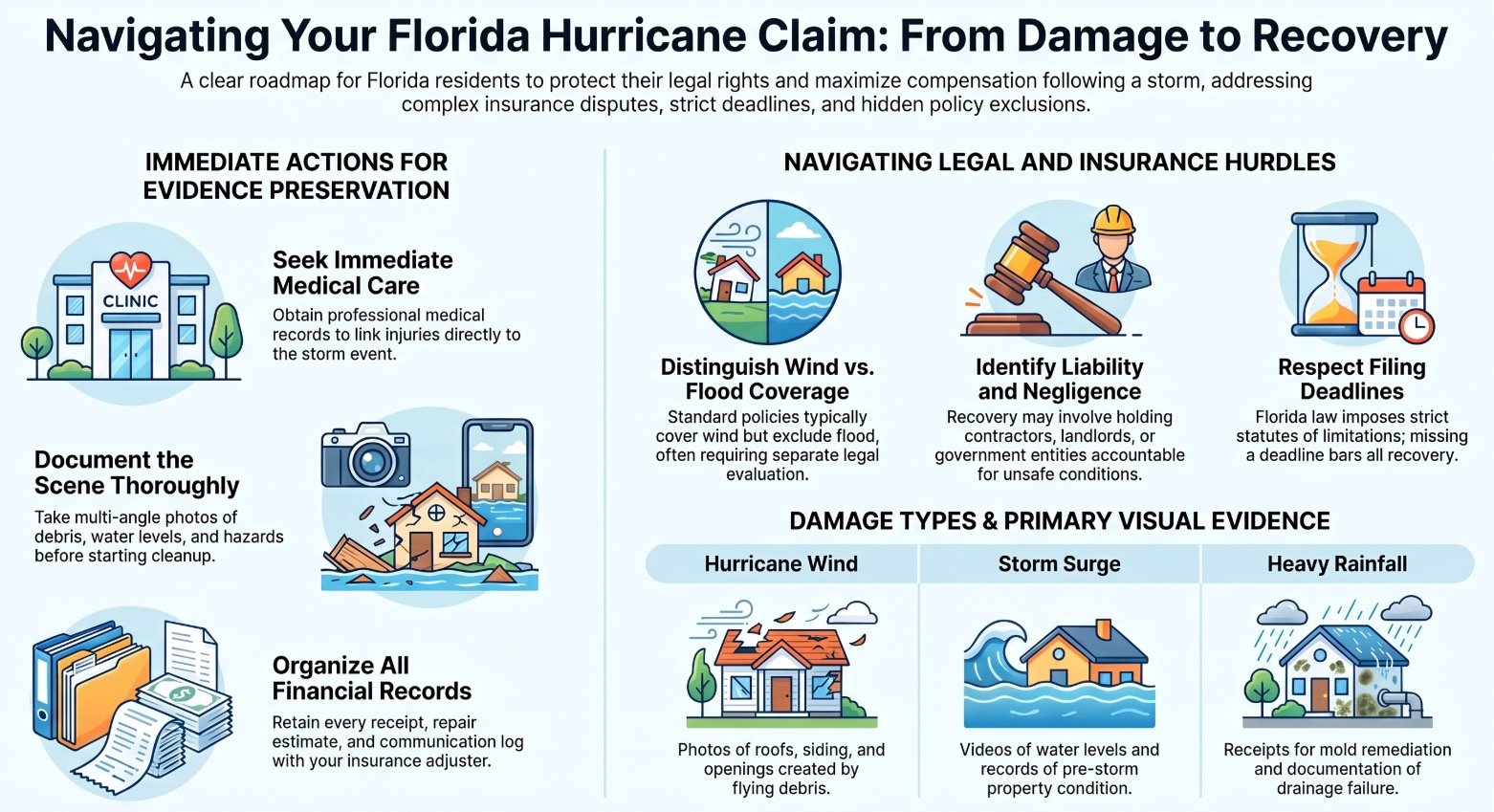
Hurricane wind damage is a leading cause of property insurance claims in Florida and often affects roofs, siding, windows, doors, and structural components. High winds can remove shingles, fracture roof decking, propel debris, and create openings that permit rain to enter the structure. Insurers may inspect whether damage resulted from wind, inadequate maintenance, or preexisting deterioration, making photographs, repair records, and professional assessments valuable. Tropical preparedness can reduce losses by securing outdoor items, protecting openings, and documenting property conditions before a storm. Property owners should review coverage carefully, because windstorm deductibles and exclusions may affect available benefits. Flood insurance generally addresses separate water-related risks and does not replace wind coverage. Because claim filing deadlines vary, prompt notice and organized documentation are important. Legal representation may help policyholders address disputes and pursue fair evaluations.
Storm Surge Flooding
Storm surge flooding presents a separate source of hurricane-related property loss from wind damage, as rising seawater can inundate homes, foundations, electrical systems, flooring, and personal belongings. Because standard Homeowner coverage often excludes flood damage, affected property owners may need separate flood insurance or other applicable policies. Policy language, exclusions, deductibles, and causation requirements can significantly affect whether a claim is considered. Prompt documentation should include photographs, videos, water levels, damaged materials, repair estimates, and records showing the property’s condition before the storm. Professional assistance can help residents understand coverage and communicate accurately with insurers while preserving evidence. Mitigation options, including elevating utilities, installing flood barriers, improving drainage, and relocating valuables, may reduce future losses. Qualified legal guidance can help identify responsible parties and available recovery avenues.
Tornado-Related Destruction
When severe weather produces tornadoes, powerful rotating winds can cause concentrated destruction to roofs, exterior walls, windows, garages, vehicles, and other structures. Flying debris may penetrate building envelopes, while sudden pressure changes can lift roofing materials or cause vulnerable sections to collapse. Damage can affect residences, commercial properties, manufactured homes, and necessary community facilities, even when surrounding areas appear relatively intact. Property owners should document conditions promptly, preserve damaged materials when safe, and arrange professional inspections before completing permanent repairs. Photographs, maintenance records, receipts, and emergency service invoices may help establish the scope and cause of covered losses. Storm safety planning can reduce exposure by designating shelter areas and securing outdoor items. Building retrofitting guidance may identify reinforced doors, roof connections, and impact-resistant openings that improve resilience before future tornadoes threaten Florida communities.
Heavy Rainfall Damage
Heavy rainfall can cause extensive property damage even without direct wind impact, particularly when water overwhelms drainage systems, enters through compromised roofs, or rises around foundations and lower levels. Saturated walls, ceilings, flooring, and insulation may deteriorate quickly, while standing water can damage electrical components, appliances, and personal belongings. Delayed drying increases mold growth, which may affect indoor air quality and require professional remediation. Floodwater also creates a contamination risk when it carries sewage, chemicals, or other hazardous substances into living areas. Property owners should document visible damage, preserve damaged materials when safe, and obtain receipts for emergency services and temporary repairs. A qualified insurance professional or attorney can help evaluate policy language, causation issues, exclusions, and the evidence needed to support a fair claim while protecting affected occupants.
Legal Rights of Florida Hurricane Claims Storm & Weather Claims Injury Victims
Florida hurricane and severe-weather victims may have legal rights to pursue compensation for injuries, property damage, and related financial losses caused by negligent conduct or an insurer’s improper handling of a claim. Those rights may include seeking policy benefits, disputing an unfair adjustment, and pursuing damages when an insurer violates its coverage obligations.
A qualified advocate can help affected individuals understand available remedies and protect their interests.
- Policyholders may request a complete explanation for a denial, review policy language, and pursue coverage denial appeals within applicable deadlines.
- They should preserve policyholder documentation, photographs, repair estimates, medical records, receipts, correspondence, and proof of loss.
- They may consult counsel regarding litigation, statutory remedies, settlement negotiations, and potential claims involving delayed or inadequate payments.
Prompt action matters because notice requirements, appraisal provisions, limitation periods, and administrative procedures can affect recovery. Attorneys and community advocates can provide organized guidance, communicate with insurers, and help vulnerable residents pursue fair treatment without making unsupported promises about outcomes.
Why Do Florida Hurricane Claims Storm & Weather Claims Injuries Happen?
Hurricane and severe-weather injuries often result from the combined effects of powerful winds, flooding, storm surge, falling debris, and unsafe property conditions. Structural failures may expose occupants, visitors, and emergency personnel to collapsing roofs, shattered glass, electrical hazards, and unstable surfaces. Floodwater can conceal open drains, damaged pavement, contaminated materials, and energized equipment, while prolonged moisture may create mold and other health risks. Neglected maintenance can intensify these dangers when loose fixtures, blocked drainage systems, inadequate warnings, or unrepaired roof damage contribute to an accident. Businesses, landlords, municipalities, and insurers may each have different responsibilities depending on the property, conduct, and applicable law. Establishing why an injury occurred thus requires careful evaluation of weather conditions, building maintenance, warnings, inspections, and prior complaints. A sound insurance denial strategy may depend on accurately identifying causation and coverage, while document preservation tactics can help protect records relevant to accountability, safety failures, and resulting losses.
What Should You Do After a Florida Hurricane Claims Storm & Weather Claims Injury?
After a Florida hurricane-related injury, the injured person should seek immediate medical care, even if symptoms initially appear minor. Document the accident scene with photographs, witness information, weather conditions, and relevant records. Consulting a hurricane claims lawyer can help protect legal rights and evaluate potential insurance or liability claims.
Seek Immediate Medical Care
Prompt medical attention should be obtained as soon as possible following an injury caused by storm-related conditions. A healthcare professional can identify injuries that may not be immediately apparent, provide appropriate care, and create a medical record connecting the condition to the incident. Delaying care may allow symptoms to worsen and can raise questions about whether the injury resulted from the hurricane. The injured person should follow all treatment instructions, attend recommended follow-up appointments, and retain medical records, prescriptions, and billing statements. When seeking legal assistance, counsel can review available information, provide hurricane-related property documentation, and explain insurance coverage options for medical expenses and other losses. Immediate care also helps support the person’s health while supporting a clear, reliable account of the injury.
Document the Accident Scene
Create a detailed record of the accident scene as soon as conditions permit and personal safety is no longer at risk. The injured individual or a responsible companion should photograph debris, standing water, damaged structures, vehicles, warning signs, and visible hazards from multiple angles. Images should include wide views that establish location and closer views that show specific conditions that may have contributed to the injury. Written notes should identify the date, time, precise location, weather conditions, and sequence of events while memories remain clear. Also preserve names and contact information for witnesses. Store any damaged clothing, equipment, or personal property safely, without altering it. Retain storm preparation materials, emergency documentation, official reports, and communications with property owners, as they may clarify the scene and resulting losses.
Consult a Hurricane Claims Lawyer
When a Florida hurricane or severe weather event causes an injury, consulting a hurricane claims lawyer can help determine whether insurance coverage or another party’s negligence may support a legal claim. The lawyer can review medical records, photographs, witness statements, policy language, and communications with insurers to identify available remedies. Prompt legal guidance may also protect filing deadlines and prevent statements or settlements that could weaken the injured person’s position. If an insurer delays, underpays, or rejects a valid claim, counsel can explain Insurance denial appeals and pursue appropriate documentation or dispute procedures. A lawyer may further assess whether property owners, contractors, emergency services, or other responsible parties failed to meet applicable safety duties. Strong Emergency preparedness planning can also help organizations better protect people during future storms and preserve relevant records.
Critical Evidence in a Florida Hurricane Claims Storm & Weather Claims Injury Case
Evidence can establish the storm’s impact, the resulting injuries, and the value of a Florida claim.
- Storm damage documentation and weather reports or alerts
- Medical records and bills
- Witness statements and testimony
Together, these materials may support liability, causation, and the compensation sought.
Storm Damage Documentation
Thorough documentation of storm damage can establish the condition of a Florida property, the extent of its losses, and the connection between the weather event and the claimed damage. A property owner should photograph each affected area from several angles, preserve original files, and record the date, location, and apparent cause of each loss. These photo evidence tips can help present conditions clearly without altering or overstating them. Written descriptions should identify damaged materials, missing items, safety concerns, and temporary repairs. Receipts, contractor estimates, maintenance records, and inventories may further support the claimed amount. Track insurance claim timelines carefully, including notice requirements, inspections, requests for information, and repair deadlines. Organized records help advocates and adjusters evaluate the claim fairly and efficiently.
Weather Reports and Alerts
Weather reports and official alerts can provide objective support for a Florida hurricane or storm claim by establishing the event’s timing, location, and severity. National Weather Service advisories, hurricane watches, warnings, radar records, and local emergency notices may help connect hazardous conditions with reported property damage or injuries. Preserving these materials can clarify weather alert timing, including when residents received notice and when dangerous conditions developed. Official records may also show wind speeds, rainfall totals, flooding, tornado activity, and evacuation instructions. Such evidence can help legal professionals evaluate whether warning systems functioned properly and whether reasonable precautions were possible. Documentation of emergency kit planning, shelter guidance, and public safety announcements may further establish the circumstances surrounding the incident. Reliable sources, saved promptly, reduce disputes over conditions and chronology.
Medical Records and Bills
When a hurricane or severe storm causes injury, medical records and bills can establish the nature of the harm, the treatment required, and the financial losses claimed. Treatment notes should identify diagnoses, symptoms, procedures, medications, and anticipated care, while itemized bills document charges and payments. Records connecting the injury to the storm-related event may help clarify causation and support a claim for emergency services, rehabilitation, follow-up visits, and necessary equipment. Review medication coverage carefully, especially when prescriptions continue after discharge or replace medications lost during evacuation. For an individual unable to work, physician statements, functional assessments, and treatment timelines may provide proof of disability. Complete, consistent documentation helps insurers, courts, and representatives evaluate needs fairly and ensure injured people receive appropriate support.
Witness Statements and Testimony
Witness statements and testimony can provide pivotal evidence in a Florida hurricane- or storm-related injury claim by describing the conditions, events, and conduct that preceded the injury. Neighbors, emergency responders, property managers, and other observers may explain when flooding, wind damage, fallen debris, or unsafe conditions became apparent. Their accounts can help establish whether a property owner received warnings, failed to make reasonable repairs, or neglected evacuation and safety procedures. Statements from volunteers involved in neighborhood assistance programs may also document urgent conditions and the assistance provided after the incident. Disaster preparedness records can strengthen testimony about expected hazards and appropriate precautions. An attorney may preserve witness accounts through interviews, affidavits, or depositions, while comparing each statement with photographs, medical records, weather data, and official reports.
Don’t Wait. Call Our Florida Personal Injury Lawyers Now!
Long-Term Effects of Florida Hurricane Claims Storm & Weather Claims Injuries
Florida hurricane-related injuries may produce chronic physical pain that affects mobility, employment, and daily activities long after the storm has passed. Emotional trauma, including anxiety and post-traumatic stress, can further complicate recovery and require ongoing care. Victims may also face financial recovery challenges involving medical expenses, lost income, property damage, and disputes over insurance benefits.
Chronic Physical Pain
Although storm-related injuries may initially appear manageable, chronic physical pain can develop into a persistent condition that affects a claimant’s mobility, sleep, employment, and daily activities. During post-storm cleanup, lifting debris, traversing unstable structures, or using damaged equipment may worsen strains, fractures, and nerve injuries. A weather risk assessment can help identify hazards, but it cannot prevent every injury or eliminate lasting symptoms. Claimants may require diagnostic testing, medication, physical therapy, injections, or surgery to manage continuing pain. Medical documentation should link the condition to the storm, cleanup activity, or delayed treatment, and describe its effect on work and essential responsibilities. Careful records of appointments, limitations, expenses, and prescribed treatment can support an insurance claim. Legal guidance may help preserve evidence and pursue appropriate compensation.
Emotional Trauma
Persistent physical pain after a hurricane may be accompanied by emotional trauma that affects a claimant’s judgment, relationships, sleep, and ability to return to work. Survivors may experience anxiety, depression, irritability, intrusive memories, or heightened reactions to weather alerts. These symptoms can emerge immediately or develop months later, particularly when injuries, displacement, and disrupted routines continue. A qualified mental health professional can assess the condition and identify appropriate treatment. Counseling, peer support, prescribed medication, and practical Coping strategies may help restore stability and daily functioning. Emergency mental health services are appropriate when a survivor faces suicidal thoughts, severe panic, confusion, or an inability to remain safe. Compassionate relatives, caregivers, and advocates can encourage treatment while respecting privacy, autonomy, and the claimant’s pace of recovery.
Financial Recovery Challenges
Financial recovery after storm-related injuries can be complicated by medical expenses, lost income, property damage, and continuing treatment needs. Survivors may face delayed payments while insurers investigate coverage, assess causation, and request extensive documentation. Insurance dispute timelines can stretch for months, especially when policies include competing provisions, exclusions, or valuation disagreements. Careful records of injuries, repairs, receipts, treatment, and communications can help establish the full scope of losses. Legal guidance may help individuals evaluate settlement offers, preserve deadlines, and pursue benefits when claims are underpaid or denied. FEMA assistance resources may provide temporary support for housing, required repairs, and necessary expenses, although eligibility requirements and application periods apply. Community advocates and legal professionals can help affected households understand available options and pursue fair, orderly recovery while addressing continuing financial obligations.
Proving Liability in Florida Hurricane Claims Storm & Weather Claims Injury Cases
To prove liability in a Florida hurricane, storm, or weather-related injury case, the injured party must establish that another person or entity owed a legal duty, breached that duty, and caused the resulting harm. Potentially responsible parties may include property owners, landlords, contractors, maintenance companies, or governmental entities, depending on the circumstances.
Evidence can include photographs, inspection records, witness statements, weather reports, repair invoices, and medical documentation. These materials may show that a dangerous condition existed, that the responsible party knew or should have known about it, and that reasonable precautions were not taken. Faulty repairs, inadequate maintenance, or building code violations may demonstrate negligence, particularly when they compromise hurricane safety. A clear timeline can connect the unsafe condition to the storm and the resulting injury. An insurance delay may complicate recovery but does not, by itself, establish negligence. Legal counsel can help preserve evidence, identify responsible parties, and present a claim that supports accountability and service to the injured individual.
Dealing With Insurance Companies After a Florida Hurricane Claims Storm & Weather Claims Injury
When a Florida hurricane, storm, or weather event causes an injury, dealing with insurance companies often requires careful documentation and a clear understanding of policy obligations. An injured person should preserve medical records, photographs, repair estimates, witness information, and all correspondence connected to the event. The policy may require prompt, accurate notice, but statements should remain factual and consistent with available evidence.
Insurers may investigate causation, fault, exclusions, and the extent of damages before accepting responsibility. Policy coverage disputes can arise when an insurer attributes losses to excluded conditions, delayed maintenance, or insufficient proof. A qualified attorney may review the policy language, identify applicable deadlines, and communicate with the insurer on the claimant’s behalf. If benefits are withheld or denied, claim appeals may require additional evidence, formal explanations, and careful evaluation of statutory or contractual remedies. Professional assistance can help protect the claimant’s interests while supporting a fair resolution for affected individuals and families.
What to Expect During a Florida Hurricane Claims Storm & Weather Claims Injury Claim Process
A Florida hurricane claim typically begins with an initial assessment of the injuries, losses, and applicable insurance coverage. The process then requires organized evidence and documentation, careful communication with insurers, and evaluation of whether settlement negotiations can fairly resolve the claim. If those efforts fail, the claimant and legal counsel may consider litigation based on the available evidence and overall recovery strategy.
Initial Claim Assessment
Although each matter depends on its facts, an initial claim assessment establishes the legal, factual, and financial foundation of a Florida hurricane, storm, or weather-related injury claim. The assessment generally begins with a focused discussion of the event, resulting injuries, responsible parties, insurance coverage, and the assistance sought. Counsel may evaluate whether policy provisions apply, whether statutory duties were breached, and whether potential defendants include property owners, contractors, employers, or insurers. Coverage denials receive careful review because an insurer’s explanation may involve exclusions, policy conditions, causation disputes, or incomplete claim handling. Counsel also considers claim timelines, including notice requirements, limitation periods, medical developments, and settlement-related deadlines. The assessment typically concludes with an informed explanation of potential strategies, likely challenges, and the client’s responsibilities during the representation.
Evidence And Documentation
Because hurricane and weather-related injury claims often depend on changing conditions, thorough evidence preservation is essential from the outset. A claimant should obtain photographs or videos of hazardous conditions, visible injuries, damaged property, warning signs, and surrounding areas, provided doing so does not create additional danger. Medical records, treatment instructions, prescription information, and receipts can help establish the nature and financial impact of an injury. Record witness names and contact information promptly while memories remain reliable. Official weather alerts, emergency response records, and location-specific advisories may help clarify timing and conditions. Documentation of emergency preparedness and evacuation planning can also provide relevant context regarding reasonable safety measures. Preserving damaged clothing, equipment, and other physical evidence may support the claim. Record dates, times, and factual observations consistently.
Insurance Company Communications
During the insurance claim process, the insurer’s communications may materially affect how a Florida hurricane- or storm-related injury claim develops. Adjusters may request medical records, incident descriptions, photographs, receipts, and recorded statements while evaluating coverage and causation. Claimants should review each request carefully, respond accurately, and preserve copies of all correspondence, messages, forms, and deadlines. Written explanations can clarify Policy coverage options, exclusions, deductibles, notice requirements, and documentation standards. Communications should remain factual, consistent, and limited to information relevant to the claimed losses. If the insurer delays, changes its position, or issues a partial or complete denial, the claimant may request the specific policy language and factual basis supporting that decision. Counsel can explain denial-appeal steps, organize supporting materials, and communicate with the insurer while protecting the claimant’s rights and interests.
Settlement Or Litigation Strategy
Settlement or litigation strategy in a Florida hurricane or storm-related injury claim depends on the strength of the evidence, the applicable policy language, the extent of the losses, and the insurer’s response. A careful evaluation may support negotiated settlement when liability, damages, and coverage are reasonably clear. Counsel may organize medical records, repair estimates, photographs, witness statements, and claim correspondence to present a persuasive demand. Independent appraisal disputes can require separate attention when parties disagree about valuation, scope, or causation. Policy coverage interpretation may determine whether exclusions, deductibles, deadlines, or competing provisions affect recovery. If negotiations fail, litigation may provide formal discovery, expert testimony, and judicial review. Throughout the process, representatives should clearly explain risks, likely costs, and potential outcomes to help affected individuals make informed decisions while preserving their rights.
Don’t Wait. Call Our Florida Personal Injury Lawyers Now!
Compensation for Florida Hurricane Claims Storm & Weather Claims Injury Damages
Florida hurricane claims may provide compensation for covered property damage, personal injuries, and other losses caused by severe storm conditions. Policy coverage basics determine whether a homeowner’s or renter’s policy applies to damaged structures, contents, emergency repairs, and related medical needs. Coverage may depend on the storm’s cause, exclusions, deductibles, endorsements, and compliance with notice requirements.
An insurer may evaluate photographs, repair estimates, medical records, witness accounts, weather data, and other documentation before determining payment. Claim denial reasons can include alleged policy exclusions, insufficient proof of damage, late notice, failure to mitigate, disputed causation, or claimed losses exceeding policy limits. A qualified representative can help affected individuals preserve evidence, communicate with insurers, and identify benefits available under the policy. Prompt assistance may reduce confusion and support fair treatment, particularly when injuries or urgent living needs are involved. The precise compensation available depends on policy language, verified losses, applicable deadlines, and the facts surrounding the hurricane or weather event.
Economic vs Non-Economic Damages in Florida Hurricane Claims Storm & Weather Claims Cases
Economic damages may include property repairs, temporary housing, lost income, and other measurable hurricane-related costs. Non-economic losses can include emotional distress, diminished quality of life, and other harms that are harder to assign a monetary value. Proving either category generally requires reliable records, expert evaluations, and evidence connecting the claimed losses to the storm.
Economic Damage Categories
When a hurricane or severe storm damages property, the resulting claim may involve both economic and non-economic damages, depending on the losses recognized under Florida law and the applicable insurance policy. Economic damages generally represent documented financial losses that you can calculate and support with invoices, estimates, receipts, or other records. Homeowner Expenses may include necessary cleanup, debris removal, emergency services, and damaged personal property. Repair Costs can cover labor, materials, structural restoration, and code-related work when policy coverage applies. Temporary Housing expenses may arise when unsafe conditions prevent occupancy, subject to policy limits and eligibility requirements. Relocation Support may address reasonable moving, storage, or transportation costs during restoration. Detailed documentation helps insurers, advocates, and legal professionals evaluate the claim accurately and helps affected households pursue the benefits they need for recovery.
Non-Economic Losses Explained
In Florida hurricane and storm claims, non-economic losses refer to personal impacts without a straightforward dollar value, such as emotional distress, inconvenience, loss of enjoyment, or disruption of ordinary living conditions. Non-economic damages may arise when displacement, unsafe conditions, or prolonged repairs interfere with a household’s stability and daily routines. Unlike property repair costs, these losses reflect the human consequences of a covered storm event. Pain and suffering can include physical discomfort associated with cleanup or temporary living arrangements, while emotional distress may involve anxiety, fear, frustration, or continuing uncertainty. Loss of enjoyment may affect family activities, use of the home, and participation in ordinary community life. Recognizing these effects helps insurers, advocates, and courts evaluate claims with appropriate consideration for the people affected.
Proving Hurricane-Related Damages
Establishing hurricane-related damages requires organized evidence that separates measurable financial losses from personal harms arising from the storm and its aftermath. Economic damages may include repair costs, temporary housing, debris removal, lost income, damaged belongings, and necessary medical treatment. Receipts, estimates, invoices, payroll records, photographs, videos, inspection reports, and insurance communications support a reliable damages calculation. Begin preserving evidence immediately, including secure copies of digital files and records documenting worsening conditions or emergency measures. Non-economic damages, when legally available, may involve emotional distress, anxiety, inconvenience, and disruption of daily life. Personal journals, medical documentation, witness statements, and counseling records can help establish these effects. A careful chronology that connects each loss to the hurricane strengthens the claim and supports fair evaluation, negotiation, or court review.
When a Florida Hurricane Claims Storm & Weather Claims Injury Case Goes to Trial vs Settlement
Although many Florida hurricane, storm, and weather-related injury claims resolve through settlement, some proceed to trial when the parties cannot agree on liability or the value of damages. Settlement negotiation may provide a faster, more predictable resolution while allowing an injured person to avoid the uncertainty, expense, and stress of courtroom proceedings. Counsel may evaluate medical records, repair documentation, witness accounts, photographs, and expert opinions when measuring a reasonable settlement range.
Trial readiness becomes important when an insurer disputes responsibility, minimizes injuries, or refuses to make a fair offer. Evidence disputes may concern property conditions, causation, the timing of reported damage, or the relationship between the storm and claimed injuries. An insurer delay can increase financial pressure and may require formal litigation to move the claim forward. At trial, each side presents evidence, questions witnesses, and asks the court or jury to determine responsibility and damages. A prepared legal team helps clients make informed decisions while protecting their interests throughout either path.
Florida Laws That May Affect Your Florida Hurricane Claims Storm & Weather Claims Case
Florida laws governing hurricane, storm, and weather-related claims may affect liability, insurance coverage, filing deadlines, and the damages an injured person can recover. Applicable statutes and regulations can influence how insurers investigate losses, communicate decisions, and handle property or personal-injury evidence.
A careful review may help advocates serve claimants responsibly by identifying:
- Notice requirements, documentation duties, and Florida claim deadlines that may apply before a dispute is pursued.
- Policy interpretation rules, exclusions, deductibles, and proof standards affecting whether covered damage is paid.
- Insurance bad faith laws addressing unreasonable delay, inadequate investigation, or failure to settle when liability is reasonably clear.
Florida building codes, emergency orders, negligence principles, and comparative-fault rules may also affect causation and recovery. Public-adjuster regulations and insurer licensing requirements can further shape claim handling. Because legal standards may change after severe weather events, qualified counsel can evaluate the policy, communications, repair records, and applicable statutes. This assessment supports informed decisions while protecting the claimant’s interests throughout the insurance process and related negotiations.
The Statute of Limitations for Florida Hurricane Claims Storm & Weather Claims Injury Cases
Time limits can determine whether a hurricane, storm, or weather-related injury claim can proceed, so early evaluation of the applicable statute of limitations is essential. Florida law establishes different deadlines depending on whether the matter involves personal injury, property damage, negligence, or an insurance dispute. Recent statutory changes may also affect claims arising from residential property insurance policies, so the date of loss, policy language, and applicable law require careful review.
The limitations period may begin when the injury occurs, when damage is discovered, or when another legally significant event takes place. Missing the deadline can bar recovery even when liability appears clear. Claimants should document conditions promptly, obtain medical records, preserve photographs, and follow practical evidence-preservation tips for damaged property, communications, and repair estimates. Track written notices and claim filings carefully. Insurance denial defenses may involve untimely notice, exclusions, causation disputes, or alleged failure to mitigate. Early attention helps protect affected individuals and families while preserving their opportunity to seek appropriate relief.
How a Florida Hurricane Claims Storm & Weather Claims Lawyer Can Help You
When a hurricane or severe weather event causes injury or property damage, a Florida hurricane claims, storm, and weather claims lawyer can evaluate the circumstances and identify available legal remedies.
The lawyer may help policyholders, families, and community organizations clarify responsibilities and pursue fair treatment.
- The lawyer can review coverage terms, document losses, and interpret Insurance policy exclusions that may affect payment for wind, flood, or storm-related damage.
- The lawyer can communicate with insurers, challenge unsupported denials, and organize evidence such as photographs, repair estimates, medical records, and witness statements.
- The lawyer can explain government disaster assistance, coordinate applicable resources, and assess whether additional claims or legal actions may address uncovered losses.
This guidance helps affected individuals make informed decisions, preserve important documentation, and support recovery efforts. By analyzing contracts and available evidence, counsel can promote accountability and help protect homeowners, tenants, businesses, and those injured during severe weather events. The lawyer may also identify responsible third parties and negotiate resolutions consistent with the client’s lawful interests.
When to Contact a Florida Hurricane Claims Storm & Weather Claims Lawyer
Early legal guidance can be important after a hurricane or severe weather event, particularly when damage is extensive, coverage is uncertain, or an insurer delays or denies a claim. You may contact a lawyer before repairs begin, especially if documentation, policy interpretation, or communication with the carrier raises concerns. Immediate evidence preservation can include photographing affected areas, retaining damaged materials when safe, collecting receipts, and recording temporary repairs. These steps may help establish the condition and cause of loss.
Contact is also appropriate when an insurer requests a recorded statement, assigns conflicting causes, offers an unexpectedly limited payment, or fails to explain clearly. Claim denial timelines and policy deadlines can affect the opportunity to challenge a decision, so prompt review is prudent. Individuals serving families, businesses, or community organizations may benefit from seeking guidance as soon as uncertainty arises. Early consultation can clarify available next steps without requiring a commitment to litigation or disrupting necessary recovery efforts.
Why You Need an Experienced Florida Hurricane Claims Storm & Weather Claims Lawyer
Although hurricane and severe weather claims may appear straightforward, coverage disputes often involve policy exclusions, deductibles, causation issues, and competing assessments of the damage. An experienced Florida hurricane claims lawyer can examine policy language, organize evidence, and address insurer positions with informed precision. This assistance may prove critical when wind, flood, mold, or delayed maintenance is alleged to have caused or contributed to property loss.
Counsel can also help preserve documentation, obtain qualified inspections, and compare repair estimates so that the claim reflects the full scope of covered damage. Knowledge of Policyholder Rights supports fair treatment during communications, investigations, and settlement discussions. Legal Deadlines further require careful attention because notice requirements, proof-of-loss provisions, appraisal procedures, and litigation time limits may affect recovery.
How to Choose the Right Florida Hurricane Claims Storm & Weather Claims Lawyer for Your Case
Selecting the right Florida hurricane claims storm and weather claims lawyer requires careful evaluation of the attorney’s experience, qualifications, and approach to property insurance disputes. A prospective client should review the lawyer’s background with hurricane damage, wind, flood, and other storm-related claims. Also consider communication practices, responsiveness, and a willingness to explain options in clear terms.
Discuss client expectations at the initial consultation, including potential timelines, evidence requirements, and possible outcomes. The lawyer should identify relevant policy provisions, explain applicable deadlines, and describe how the claim may be evaluated or challenged. Contract clarity is equally important. Any representation agreement should plainly address fees, expenses, responsibilities, and termination rights before services begin.
Carefully comparing credentials, reviews, and consultation responses can help a property owner make an informed decision. The best-fit lawyer will show preparation, integrity, and a practical commitment to protecting the client’s interests throughout the insurance claim process.
About The Law Offices of Anidjar & Levine
The Law Offices of Anidjar & Levine represents Florida property owners in insurance disputes involving hurricane damage, severe weather, wind, flooding, and related losses. The firm evaluates policy language, claim documentation, damage assessments, and insurer communications to help clients understand available remedies. Its attorneys may assist when claims are delayed, underpaid, denied, or complicated by disputes concerning causation, coverage, or proof of loss.
The firm’s approach emphasizes responsive service and careful preparation. Client intake support helps organize important information, including photographs, repair estimates, policy records, correspondence, and deadlines. This preparation helps legal professionals identify key issues quickly and provide informed guidance. Legal consultation scheduling offers property owners an opportunity to discuss their circumstances with an attorney and learn how the claims process may proceed.
Frequently Asked Questions
Does Homeowners Insurance Cover Flood Damage From a Florida Hurricane?
Homeowners insurance generally does not cover flood damage caused by a Florida hurricane. A Hurricane vs. flood coverage distinction is crucial: standard policies may cover wind damage, while flood exclusion clauses typically remove protection for rising water, storm surge, and overflowing waterways. Separate flood insurance may provide coverage, subject to policy limits, waiting periods, and exclusions. A careful policy review and prompt documentation can help affected homeowners identify available benefits and pursue appropriate assistance.
Can Renters File Hurricane-Related Property Damage Claims?
Renters can file hurricane-related property damage claims, but typically through their renters insurance rather than the property owner’s policy. Coverage may apply to personal belongings and additional living expenses, subject to policy terms, deductibles, and exclusions such as flooding. The Renters claim process generally requires prompt notice, photographs, receipts, and a detailed inventory. Hurricane storm eligibility depends on the policy’s effective date, covered causes of loss, and applicable hurricane deductibles.
What if My Insurance Company Denies My Hurricane Claim?
An insurer’s denial does not necessarily end a hurricane claim. The policyholder should request the written explanation, review exclusions and evidence, and preserve photographs, repair estimates, receipts, and communications. The denied claim process may involve submitting additional documentation, requesting reconsideration, or pursuing appraisal, mediation, or litigation. Because the appeal timeline can be short and varies by policy and law, prompt consultation with a qualified professional can protect your rights and help you navigate the process effectively.
Are Public Adjusters Necessary for Florida Storm Damage Claims?
Public adjusters are not required for Florida storm damage claims, but they may help when needed, especially if damage is extensive, records are incomplete, or the insurer disputes coverage or valuation. They can help with documentation, organize evidence, and communicate with the carrier during claim settlement. Policyholders should verify licensing, understand fees, and review any contract carefully. Legal counsel may be appropriate when coverage disputes, delays, or bad-faith concerns arise.
Can I File a Claim for Damage Caused by Fallen Trees?
A property owner can usually file a claim for property damage caused by a fallen tree, but claim coverage depends on the policy, the tree’s origin, and the cause of loss. Coverage may apply when wind or a covered storm caused the fall, while exclusions can limit recovery for neglect or flooding. Hurricane debris may require prompt removal, documentation, and mitigation. Photographs, receipts, and timely notice help insurers evaluate responsibility and covered repairs.
—————————
Florida hurricane and storm-related claims may involve complex insurance disputes, property damage, and injury issues requiring careful legal evaluation. Timely documentation, appropriate medical care, and knowledgeable representation can affect the outcome of a claim. The Law Offices of Anidjar and Levine can assess the circumstances, explain available legal options, and pursue compensation when another party or insurer may be responsible. Individuals affected by severe weather should seek qualified guidance promptly to protect their rights and preserve important evidence. Learn more from a Florida Personal Injury Lawyer.