

The Law Offices of Anidjar and Levine evaluate liability, causation, and available compensation after a crash, unsafe-property incident, workplace accident, or medical negligence event.
A Boynton Beach personal injury lawyer can preserve evidence, obtain medical records, communicate with insurers, address comparative negligence, and document expenses, lost income, pain, and future needs.
Prompt legal review also helps identify deadlines, insurance denials, and medical liens.
Additional information explains case evaluation, evidence requirements, recovery considerations, and the selection of appropriate legal representation.
Learn more from a Boynton Beach Personal Injury Lawyer.
Main Takeaways
- A Boynton Beach injury lawyer evaluates liability, causation, responsible parties, and available compensation based on your specific circumstances.
- Common cases include car crashes, workplace accidents, slip-and-falls, medical negligence, premises liability, and negligent security.
- Potential damages may include medical expenses, lost income, reduced earning capacity, pain and suffering, and long-term care needs.
- Evidence such as medical records, photographs, witness statements, employment documentation, and expert opinions can strengthen your claim.
- An attorney can address insurance denials, comparative negligence, settlement negotiations, evidence preservation, and applicable filing deadlines.


How We Can Help With Your Boynton Beach Injuries & Conditions Injury Claim
An experienced Boynton Beach injuries and conditions lawyer can help claimants evaluate their legal options, identify responsible parties, and pursue compensation for medical care, lost income, rehabilitation, and other related losses. The legal team can gather records, communicate with insurers, and organize evidence that clarifies how an injury has affected daily responsibilities, family obligations, and future needs. By managing deadlines and correspondence, counsel allows claimants to focus on treatment and recovery while protecting their interests throughout the process.
A lawyer may also coordinate with medical professionals, vocational experts, and financial advisers when additional information is needed to present damages accurately. Emotional recovery support can help connect individuals with appropriate community resources, while financial hardship planning may assist households facing reduced earnings and continuing expenses. Legal representatives can explain settlement proposals, identify potential shortcomings, and negotiate for a resolution that reflects documented losses. When a fair agreement cannot be reached, the lawyer can prepare the claim for litigation and provide steady, informed guidance.
OUR CONSULTATIONSARE FREE
START YOUR FREE CASE REVIEW

Understanding Boynton Beach Injuries & Conditions Injury Cases
When injuries or medical conditions affect a person in Boynton Beach, the resulting legal case may involve questions of liability, causation, and the full extent of resulting damages. Understanding these cases requires examining medical records, employment impacts, treatment needs, and evidence connecting the responsible party’s conduct to the claimed harm. Florida’s Comparative Negligence rules may reduce recovery when an injured person shares responsibility, making accurate fact development especially important.
Damages can include medical expenses, lost income, diminished earning capacity, pain and suffering, and other legally recognized losses. Certain claims may also involve Damages Caps, which can limit recovery in particular categories depending on the parties and circumstances. Insurance Denials may create additional challenges when carriers dispute coverage, medical necessity, fault, or the value of a claim.
A careful legal evaluation helps clarify available remedies, deadlines, and evidentiary requirements. Through informed guidance, injured individuals and their families can better understand the process and pursue accountability while protecting their long-term interests. Each case remains dependent on its specific facts.
Common Causes of Boynton Beach Injuries & Conditions
Boynton Beach injuries and conditions commonly arise from motor vehicle crashes, workplace accidents, and slip-and-fall incidents. Medical negligence can also cause significant harm when healthcare providers fail to meet the appropriate standard of care. Each circumstance requires careful evaluation of the facts, resulting injuries, and potential legal responsibility.
Motor Vehicle Crashes
Motor vehicle crashes are a leading cause of injuries in Boynton Beach, often resulting from distracted driving, speeding, impaired operation, or failure to yield. These collisions may involve cars, motorcycles, trucks, bicycles, or pedestrians and can produce fractures, spinal trauma, brain injuries, and other serious conditions. Distracted driving, including texting, adjusting navigation systems, or diverting attention from traffic, substantially increases the risk of collisions.
Other contributing factors include aggressive driving actions, defective signals, inadequate following distances, and traffic negligence by motorists who disregard roadway rules. Crash victims may face emergency treatment, rehabilitation, lost income, and continuing medical needs. Prompt documentation of the scene, vehicle damage, witness information, and medical evaluations can help clarify responsibility and support efforts to obtain appropriate compensation for affected individuals and families.
Workplace Accidents
Workplace accidents in Boynton Beach may arise from unsafe premises, inadequate training, defective equipment, falls, exposure to hazardous substances, or failures to follow established safety procedures. Injuries can affect employees in construction, health care, hospitality, manufacturing, retail, and other industries. Employers generally have responsibilities to provide appropriate instruction, protective equipment, hazard warnings, and reasonably maintained work areas.
When these duties are neglected, an injured worker may require medical treatment, wage replacement, rehabilitation, or assistance pursuing workers’ compensation benefits. Disputes may develop over whether an injury occurred during employment, the extent of disability, or the benefits owed. OSHA safety violations, equipment failures, and incomplete incident reports may provide important evidence. Prompt medical attention and accurate documentation can help recover the worker’s interests while supporting a thorough evaluation of available remedies.
Slip And Fall Injuries
Slip-and-fall injuries in Boynton Beach can result from wet floors, uneven pavement, poor lighting, defective stairs, missing handrails, or other hazardous conditions on private or commercial property. Property owners and managers generally have a responsibility to identify foreseeable dangers, correct them promptly, and provide adequate warnings. When they fail to meet that duty, an injured visitor may have grounds for a Premises Liability claim. Evidence may include photographs, surveillance footage, incident reports, maintenance records, and witness statements documenting the condition and its duration.
In some settings, inadequate lighting, broken gates, or insufficient personnel may also raise Negligent Security concerns, particularly when criminal activity contributes to harm. Prompt reporting and careful preservation of evidence can help clarify responsibility while supporting a fair recovery for affected individuals.
Medical Negligence
When a healthcare provider in Boynton Beach fails to meet the accepted standard of care, the resulting medical negligence may cause significant injuries or worsen an existing condition. Common examples include misdiagnosis, surgical mistakes, medication errors, delayed treatment, and inadequate monitoring. Patients may experience prolonged recovery, permanent impairment, or complications requiring additional medical care. In severe cases, negligence can contribute to Wrongful death, creating legal claims for surviving family members.
Establishing liability generally requires evidence of the provider’s duty, breach, causation, and resulting damages. Consent issues may arise when a patient is not adequately informed about material risks, alternatives, or expected outcomes before treatment. Medical records and qualified professional opinions often address liability disputes. An attorney can evaluate eligibility requirements and help injured patients or families pursue accountability while protecting their interests.


Legal Rights of Boynton Beach Injury Victims
Individuals injured because of another party’s negligence in Boynton Beach may have the right to pursue compensation for medical expenses, lost income, pain and suffering, and other legally recognized losses. These rights help injured residents obtain appropriate support while protecting their families and financial stability.
Boynton Beach injury victims may pursue compensation for medical costs, lost income, pain and suffering, and other legally recognized losses.
A legal review may clarify:
- Comparative Negligence: A claimant’s recovery may be reduced if that person is found partially responsible for the injury. Evidence and careful legal analysis can help establish each party’s share of fault.
- Claim Deadlines: Florida law imposes time limits for filing many injury claims. Missing an applicable deadline may prevent recovery, making prompt consultation important.
- Medical Liens: Hospitals, insurers, or benefit providers may assert rights to repayment from a settlement. Understanding these claims can help preserve more of the compensation obtained.
A qualified Boynton Beach attorney can explain available remedies, communicate with opposing parties, preserve evidence, and pursue a resolution consistent with the victim’s legal interests. Local guidance also supports informed decisions throughout the process.
Don’t Wait. Call Our Florida Personal Injury Lawyers Now!
Why Do Boynton Beach Injuries & Conditions Happen?
Understanding how injuries occur can help identify responsible parties and support a well-founded claim. Boynton Beach injuries and conditions may arise from unsafe environments, preventable errors, or failures to provide reasonable care. Common causes include slippery floors, inadequate lighting, dangerous traffic conditions, and poorly maintained premises. In workplaces, insufficient training, inadequate protective equipment, or excessive demands can contribute to serious harm.
Some injuries result from Negligent supervision when an organization fails to monitor children, patients, residents, customers, or employees appropriately. Medical conditions may also develop or worsen because of delayed diagnosis, improper treatment, or communication failures. In other circumstances, defective products can cause injury when design flaws, manufacturing mistakes, or inadequate warnings expose users to unreasonable risks.
Understanding the specific cause is important because responsibility may involve property owners, employers, manufacturers, healthcare providers, contractors, or other parties. Careful evaluation can help clarify how the event occurred and whether it reflects a preventable failure to protect others.
What Should You Do After a Boynton Beach Injury or Condition?
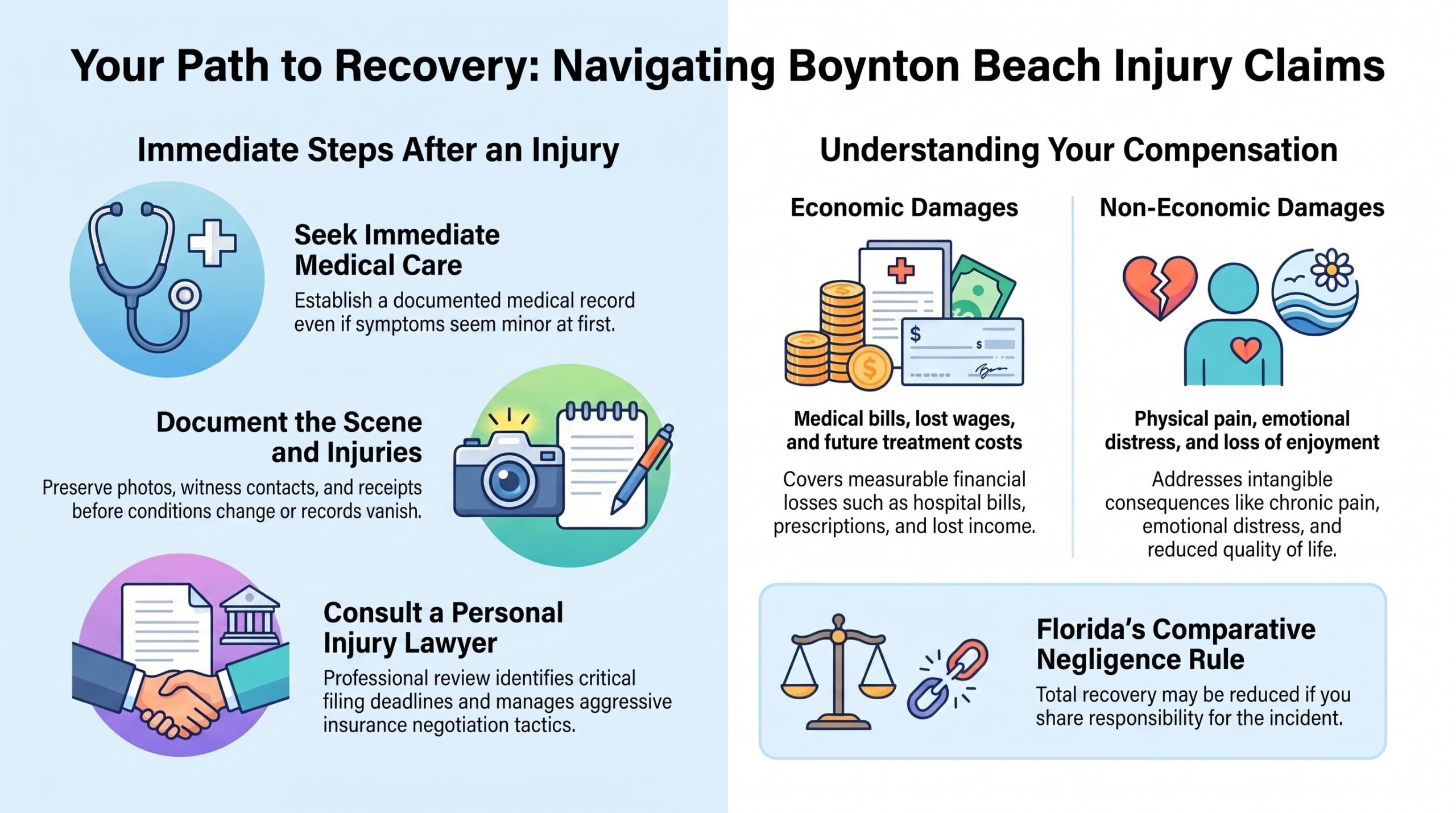
After an injury, the affected individual should seek immediate medical care to address urgent conditions and establish a documented record of treatment. The individual should also document the injury by preserving evidence, recording relevant details, and maintaining medical records. Consulting a personal injury lawyer can help protect legal rights and clarify potential options for pursuing compensation.
Seek Immediate Medical Care
Prompt medical attention should be obtained as soon as possible following an injury in Boynton Beach, even when symptoms initially appear minor. An Emergency response may be necessary for severe bleeding, breathing difficulties, loss of consciousness, suspected fractures, or sudden neurological changes. For less urgent conditions, evaluation by a physician or qualified clinic can identify internal injuries and establish appropriate care. Early treatment may reduce complications, support recovery, and minimize risk associated with delayed diagnosis.
Medical professionals should receive accurate information about symptoms, medications, and the circumstances of the incident. Following prescribed instructions and attending recommended follow-up appointments can help preserve health and demonstrate responsible care. Timely clinical records may also preserve evidence of the injury’s nature and progression without interfering with later documentation. Service-minded individuals should encourage injured persons to seek care promptly.
Document The Injury
When circumstances permit, the injured person or an assisting individual should document visible injuries and relevant conditions as soon as possible. Clear photographs can record bruising, swelling, wounds, damaged clothing, unsafe surfaces, lighting, signage, and other circumstances surrounding the incident. Images should be taken from several distances and angles without disturbing hazards or interfering with Emergency Response personnel. A brief written account should identify the date, time, location, sequence of events, symptoms, and names of witnesses.
Witness contact information should be preserved when willingly provided. Documents, receipts, incident reports, and relevant communications should be retained in an organized file. Medical Documentation, including discharge instructions, diagnoses, treatment records, and appointment information, should also be collected and safeguarded. Accurate records help healthcare providers and others understand the injury’s progression.
Consult A Personal Injury Lawyer
Consulting a personal injury lawyer can help an injured person understand available legal options, preserve important evidence, and evaluate whether another party may be responsible for the harm. A lawyer can review medical records, incident reports, photographs, witness accounts, and communications with insurers to identify potential claims. The consultation may also clarify Insurance coverage options, including applicable liability policies, health benefits, and uninsured or underinsured motorist protection.
Because deadlines can limit the ability to pursue compensation, prompt legal guidance may help protect filing rights and prevent avoidable mistakes. The lawyer can explain compensation timeline expectations, possible case stages, and factors that may affect resolution. By obtaining informed advice, an injured person can make decisions that support recovery while preserving the ability to serve family members and the broader community.
Critical Evidence in a Boynton Beach Injuries & Conditions Injury Case
Pivotal evidence can establish liability, document injuries, and clarify the losses sustained in a Boynton Beach case.
Major sources include:
- Medical records and accident scene photos;
- Witness statements;
- Expert testimony.
Each item should be preserved promptly and evaluated in relation to the specific facts and legal requirements of the claim.
Medical Records
Medical records provide essential evidence in a Boynton Beach injuries and conditions case by documenting the nature, severity, and progression of a claimant’s injuries. Treatment notes, diagnostic reports, medication histories, and specialist evaluations can establish what occurred medically after an incident. Past treatment verification helps distinguish newly reported harm from earlier conditions, allowing an injury claim to be evaluated accurately and fairly. Consistent records also support the creation of a symptom timeline, showing when pain, limitations, or other symptoms began and how they developed.
These documents may clarify the relationship between the alleged event, required care, and continuing impairment. Complete records can assist legal professionals, medical providers, and decision-makers in serving the claimant’s interests responsibly. Promptly preserving and reviewing them helps prevent gaps, inconsistencies, or misunderstandings from undermining a valid claim.
Accident Scene Photos
Accident scene photos can provide persuasive evidence in a Boynton Beach injuries and conditions case by preserving conditions that may change or disappear over time. Images may document hazardous surfaces, property damage, lighting, weather, traffic patterns, and the positioning of relevant objects. Photographs can also show whether Safety gear was available, properly used, or visibly damaged at the time of the incident. Prompt images may support accident reporting by helping maintain an accurate description of events and by identifying conditions that require correction to protect others.
Clear, time-stamped photographs can strengthen insurance documentation, particularly when claims involve disputed responsibility or evolving property conditions. Individuals should photograph the area from several distances, without disturbing evidence, when safe to do so. A legal professional can evaluate whether the images are complete, reliable, and relevant to the injury claim.
Witness Statements
When individuals observe an injury-causing event, their statements may preserve important details that physical evidence cannot fully establish. Witnesses can describe movements, conditions, warnings, and actions immediately before and after an incident, helping clarify disputed facts. A witness’s credibility may depend on visibility, distance, attention, consistency, and any relationship with the parties. Statement timing also matters because accounts recorded soon after an event may capture details before memory changes, although later clarification can remain relevant.
Police reports may contain initial observations, contact information, and summaries of witness accounts, but they do not replace direct testimony. Video evidence can support, contradict, or provide context for a statement. Careful documentation allows an injury attorney to evaluate reliability while serving the injured person’s need for a fair and accurate presentation of events.
Expert Testimony
Building on witness accounts, specialized testimony can explain technical issues that ordinary observations cannot resolve in a Boynton Beach injuries and conditions injury case. Medical professionals may connect an injury to an incident, describe necessary treatment, and address whether lasting limitations are reasonably expected. Engineers, rehabilitation specialists, or vocational experts may clarify unsafe conditions, functional restrictions, and future care requirements.
Their opinions can strengthen courtroom evidence when supported by reliable methods, complete records, and consistent findings. Expert analysis also assists with Damages calculation by estimating medical expenses, lost earning capacity, rehabilitation needs, and related losses. Careful testimony may expose insurance tactics that minimize symptoms or shift responsibility. At the same time, qualifications, methodology, and witness credibility receive close scrutiny, making objective preparation required to present evidence that serves injured individuals fairly.
Long-Term Effects of Boynton Beach Injuries & Conditions Injuries
Long-term injuries may cause chronic pain and discomfort that persist despite treatment and interfere with daily activities. Reduced mobility and physical function can limit employment, caregiving responsibilities, and personal independence. These ongoing effects may also create significant emotional and financial strain through medical expenses, lost income, and diminished quality of life.
Chronic Pain and Discomfort
Chronic pain and discomfort can persist after the initial treatment of injuries sustained in Boynton Beach, limiting mobility, sleep, concentration, and the ability to perform ordinary activities. Persistent symptoms may require continuing medical evaluations, prescription management, physical therapy, or counseling to address their physical and emotional consequences. Records describing pain intensity, treatment compliance, flare-ups, and effects on work or household responsibilities can help establish the condition’s ongoing significance.
A legal professional may review these materials with healthcare providers and other qualified professionals to clarify prognosis and anticipated expenses. Alternative dispute resolution can provide a structured setting for addressing chronic pain claims without trial. An informed settlement strategy should account for future care needs, lost income, personal assistance, and the uncertainty associated with long-term symptoms, while preserving the injured person’s dignity and interests.
Reduced Mobility and Function
Reduced mobility and impaired physical function may become lasting consequences of injuries sustained in Boynton Beach, affecting walking, lifting, driving, personal care, and other routine activities. Joint damage, fractures, nerve injuries, and spinal cord injuries can limit strength, balance, coordination, or range of motion. Repetitive strain injuries may gradually restrict hand, shoulder, or back function, particularly when workplace ergonomics fail to protect vulnerable areas.
Rehabilitation may improve capability, but some individuals continue to require modified duties, adapted transportation, or assistive devices, such as braces, walkers, or wheelchairs. These limitations can affect a person’s ability to serve family members, coworkers, customers, or community members safely and consistently. Medical evaluations, therapy records, and functional assessments can document the injury’s continuing effects and identify necessary accommodations, treatment, and supportive services over time.
Emotional and Financial Strain
Injuries and medical conditions can create substantial emotional and financial strain for Boynton Beach residents, particularly when symptoms persist or recovery remains uncertain. Ongoing pain, disrupted routines, and dependence on others may contribute to anxiety, depression, isolation, or difficulty maintaining family responsibilities. Appropriate Traumatic stress coping strategies, counseling, and dependable support can help individuals manage these burdens while pursuing rehabilitation.
Financial pressure may arise from medical bills, transportation costs, reduced earnings, and ongoing care needs. When an insurer delays or rejects payment, a documented Insurance denial response may be necessary to preserve available benefits and challenge unfair decisions. Families serving injured individuals can assist by organizing records, monitoring deadlines, and helping coordinate professional guidance. Legal evaluation may clarify potential compensation for treatment, lost income, and related long-term damages, supporting stability during recovery and future planning.
Proving Liability in Boynton Beach Injuries & Conditions Injury Cases
How liability is established in a Boynton Beach injury case depends on whether the available evidence connects another party’s conduct to the claimant’s harm. A careful review may identify negligence, unsafe property conditions, defective products, or violations of a legal duty. The claimant generally must show that a duty existed, that the responsible party breached it, and that the breach caused measurable injuries and losses.
Useful evidence can include photographs, surveillance recordings, incident reports, medical records, witness statements, employment documentation, and testimony from qualified professionals. Preserving this material promptly can prevent pivotal facts from being lost or disputed. Comparative fault may also affect recovery if the claimant’s conduct contributed to the incident.
A lawyer serving injured individuals can organize the evidence, identify responsible parties, and assess Insurance coverage limits without making unsupported assumptions. A well-supported liability presentation may strengthen a settlement leverage strategy while remaining focused on fairness, accountability, and the claimant’s documented needs throughout the legal process.
Dealing With Insurance Companies After a Boynton Beach Injuries & Conditions Injury
When an injury occurs, dealing with insurance companies requires careful communication and a clear understanding of the available coverage. An injured person should preserve medical records, photographs, incident reports, receipts, and correspondence that may support a claim. Statements to an adjuster should remain accurate, limited, and consistent with documented facts. Casual comments about recovery or responsibility can be misunderstood and may affect coverage decisions.
Insurance claim delays can arise when an insurer requests additional records, disputes liability, or evaluates medical treatment differently. Promptly answering reasonable requests while retaining copies of every submission can help protect the claimant’s position. A lawyer may review policy language, identify applicable benefits, and communicate with the insurer on the injured person’s behalf.
Settlement negotiation tactics should account for current expenses, future care, lost income, and the strength of the evidence. Before accepting an offer, the claimant should understand what rights would be released and whether outstanding medical obligations remain.
Don’t Wait. Call Our Florida Personal Injury Lawyers Now!
What to Expect During a Boynton Beach Injuries & Conditions Injury Claim Process
A Boynton Beach injury and conditions injury claim typically begins with an initial case evaluation to assess liability, damages, and available legal options. The evidence collection process may include medical records, incident reports, witness statements, photographs, and other documentation supporting the claim. Depending on the circumstances, the matter may proceed through settlement negotiations, with court proceedings preparation becoming necessary if a fair resolution cannot be reached.
Initial Case Evaluation
During an initial case evaluation, a Boynton Beach injuries and conditions injury lawyer reviews the circumstances surrounding the incident, the nature of the injuries, and the evidence that may establish liability. The discussion typically begins with client intake, allowing the attorney to understand the individual’s concerns, losses, treatment, and goals. Medical documentation may help clarify diagnoses, restrictions, prognosis, and the relationship between the event and claimed harm.
The attorney also considers applicable case timelines, including notice requirements, filing deadlines, and anticipated stages of the claim. Evidence preservation is addressed at a general level so important information is not inadvertently lost while the matter is assessed. Based on these factors, the lawyer may explain potential legal theories, practical options, expected responsibilities, and whether representation would support a fair resolution for the injured individual.
Evidence Collection Process
Following the initial case evaluation, the evidence-gathering process establishes the factual foundation for a Boynton Beach injuries and conditions claim. Counsel may gather medical records, diagnostic images, treatment notes, employment documentation, and photographs showing the injury or relevant conditions. Witness statements can clarify what occurred, while incident reports, surveillance footage, and property records may help identify responsible parties. Evidence preservation tips include saving electronic communications, avoiding alterations to photographs, recording symptom changes, and retaining receipts for related expenses.
Liability documentation steps may involve requesting inspection records, identifying applicable safety policies, documenting notice of a hazardous condition, and tracking communications with insurers or property representatives. Each item is reviewed for accuracy, relevance, and completeness. This organized process supports informed case preparation and protects the claimant’s ability to present reliable facts.
Settlement Negotiations
Once the evidence establishes the nature and impact of the injury, settlement negotiations address whether the responsible party or insurer will provide compensation without proceeding to trial. Counsel typically presents a demand supported by medical records, wage documentation, repair estimates, and evidence of ongoing needs. Settlement value factors may include injury severity, treatment costs, lost income, disputed liability, insurance coverage, and the projected effect on daily life.
The insurer may respond with questions, requests for additional documentation, or a counteroffer. Through negotiation leverage strategies, counsel can emphasize reliable evidence, legal responsibility, and the risks of an inadequate resolution while remaining focused on the injured person’s interests. The client generally reviews significant offers and decides whether to accept. Written terms should clearly identify payment amounts, deadlines, releases, and applicable liens before approval.
Court Proceedings Preparation
When settlement negotiations do not resolve an injury claim, court proceedings require careful preparation and a clear understanding of each procedural stage. A Boynton Beach injury attorney may file pleadings, exchange evidence, and manage deadlines established by the court. During discovery, the injured person may answer written questions, provide medical records, and participate in a deposition. A thoughtful deposition strategy helps present accurate testimony while addressing issues the opposing party may raise.
Witness interviews, expert evaluations, and documentation reviews can clarify liability, damages, and ongoing care needs. Pretrial conferences may narrow disputed issues and identify admissible evidence. Trial readiness requires organized exhibits, prepared witnesses, and a clear presentation of the facts. Throughout the process, counsel can explain developments, protect the claimant’s rights, and pursue accountability through lawful, service-oriented advocacy.
Compensation for Boynton Beach Injuries & Conditions Injury Damages
Compensation for Boynton Beach injury damages may address medical expenses, lost income, reduced earning capacity, pain and suffering, and other losses resulting from the injury. A careful evaluation considers available evidence, applicable insurance policies, and the conduct that caused the harm. Documentation such as treatment records, wage statements, photographs, and witness accounts can help establish the claimed losses.
An attorney may assess liability coverage to determine whether insurance can respond and whether additional sources of recovery exist. The settlement value depends on the severity of the injury, the prospects for recovery, the factual support, and the strength of the liability evidence. Insurers may minimize an offer or deny a claim, making prompt review of policy language and supporting documentation important.
Legal guidance can help an injured person communicate with insurers, preserve evidence, and pursue a fair resolution. Where negotiation does not adequately address the losses, litigation may provide a structured process for seeking compensation while protecting the claimant’s interests.
Economic vs Non-Economic Damages in Boynton Beach Injuries & Conditions Cases
Economic damages generally compensate documented financial losses, including medical expenses, lost income, and future treatment costs. Non-economic damages address less tangible harm, such as pain, emotional distress, disability, and reduced quality of life. Comparing these damage types helps determine the full scope of compensation available in Boynton Beach injuries and conditions cases.
Economic Damages Explained
In Boynton Beach injury and condition cases, economic damages represent measurable financial losses caused by an injury, while non-economic damages address the human consequences that cannot be calculated from bills or receipts. Economic damages commonly include Medical treatment costs, prescription expenses, rehabilitation charges, transportation, and future care reasonably connected to the condition. Lost income may include missed wages, reduced earning capacity, and employment benefits that were unavailable during recovery.
Proof of wage loss can consist of pay records, tax documents, employer statements, and work schedules. A strong insurance claim strategy depends on organizing billing documentation, obtaining complete medical records, and linking each expense to the injury. Counsel may also assess projected costs when treatment continues, helping present a supported demand that promotes accountability and protects the injured person’s practical financial interests.
Non-Economic Damages Overview
Non-economic damages address the physical pain, emotional distress, inconvenience, and diminished quality of life that may follow an injury or medical condition. In Boynton Beach cases, these losses can affect daily routines, relationships, independence, and a person’s ability to participate in meaningful activities. Scar pain, sleep disruption, anxiety, and embarrassment may warrant consideration when injuries leave lasting effects. Long-term disability can also create continuing limitations that influence identity, family responsibilities, and personal fulfillment.
A careful evaluation may document symptoms, treatment experiences, family members’ testimony, and changes in daily activities. Such evidence can help clarify the human consequences of an injury without reducing recovery to financial records alone. Legal guidance may explain available compensation options while supporting emotional recovery and preserving the injured person’s dignity throughout the process.
Comparing Damage Types
A clear distinction between economic and non-economic damages helps identify the full scope of losses in a Boynton Beach injuries or conditions case. Economic damages compensate for measurable financial harm, including medical treatment, rehabilitation, prescription costs, property damage, and wage loss. A person with broken bones may require emergency care, surgery, and extended therapy, while soft tissue injuries may involve diagnostic evaluations and ongoing treatment.
Non-economic damages address losses without a fixed invoice, such as pain, reduced enjoyment of life, disfigurement, and emotional distress. Both categories may arise from the same incident, but their proof differs. Records, employment documentation, and expert testimony can support economic claims. Personal accounts, medical opinions, and evidence of daily limitations may establish non-economic harm. Careful evaluation promotes fair recovery and informed service to injured individuals.
When a Boynton Beach Injuries & Conditions Injury Case Goes to Trial vs Settlement
When liability, damages, and available insurance coverage remain disputed, a Boynton Beach injuries and conditions injury case may proceed to trial rather than settle. Settlement discussions can resolve uncertainty, reduce expenses, and provide an injured person with earlier financial support. A sound Settlement Strategy evaluates medical evidence, documented losses, future needs, and the opposing party’s willingness to negotiate fairly.
If negotiations stall, counsel may recommend Trial Preparation. This process can include organizing records, identifying witnesses, consulting qualified experts, developing exhibits, and preparing the injured person to testify clearly. A trial allows a judge or jury to assess contested evidence and determine whether compensation is justified. A Jury Verdict may provide meaningful relief, but it also carries uncertainty regarding the outcome, timing, and the amount recoverable.
Even after litigation begins, negotiations may continue. Thorough preparation can create Negotiation Leverage by demonstrating readiness to present a well-supported case. The decision to settle or proceed generally depends on the strength of the evidence, client priorities, financial needs, and an informed assessment of potential risks.
Florida Laws That May Affect Your Boynton Beach Injuries & Conditions Case
Florida law can greatly affect how a Boynton Beach injuries-and-conditions case is evaluated, pursued, and resolved. Several legal principles may shape responsibility, available compensation, and the evidence needed to support an injured person’s interests.
- Florida comparative negligence rules may reduce a recovery when an injured person shares responsibility for the incident. Clear medical records, witness accounts, and factual analysis can help establish each party’s role.
- Premises liability standards generally require property owners or occupiers to address dangerous conditions they knew, or reasonably should have known, about. Notice, warning practices, inspections, and the condition’s cause may become important issues.
- Florida negligence law may require proof of duty, breach, causation, and damages. Insurance requirements, employer responsibility, governmental claims procedures, and evidence rules can also affect how a case proceeds.
A careful legal evaluation clarifies obligations and protects the needs of injured individuals and their families. Because each matter presents different facts, qualified counsel can assess applicable laws and pursue a fair resolution.
The Statute of Limitations for Boynton Beach Injuries & Conditions Injury Cases
Statutes of limitation impose deadlines for filing Boynton Beach injury and conditions injury claims, making the timing of legal action a significant factor in protecting a person’s rights. Florida claim deadlines vary according to the injury’s nature, the responsible party, and the legal theory supporting recovery. Personal injury actions must commonly be filed within two years, while claims involving government entities may require earlier notice and different procedures. Medical negligence and wrongful death matters also have dedicated periods and exceptions.
Missing a deadline can time-bar lawsuits, preventing a court from considering otherwise substantial evidence. The limitations period may begin on the injury date, when harm is discovered, or when it reasonably should have been discovered. Special rules can apply to minors, fraud, delayed diagnoses, and defendants who leave the state. Potential claimants should preserve records and review filing requirements promptly. Legal tolling options may pause or extend a deadline, but they are limited, fact-specific, and not automatically available.
How a Boynton Beach Injuries & Conditions Injury Lawyer Can Help You
A Boynton Beach injuries and conditions injury lawyer can evaluate the facts, identify potentially responsible parties, and determine which legal claims may apply. By organizing evidence and communicating clearly, counsel can help an injured person pursue accountability while preserving the ability to support family, coworkers, or other community members.
- Proving Fault: The lawyer may gather records, interview witnesses, consult qualified experts, and analyze medical evidence to establish negligence or another basis for liability.
- Damages: Counsel can document treatment costs, lost income, ongoing limitations, pain, and other losses, presenting a complete basis for compensation.
- Negotiating Claims: Through a disciplined Settlement Strategy, the lawyer can assess opposing arguments, respond to insurance tactics, and negotiate terms that reflect the claim’s documented value.
A lawyer can also prepare pleadings, manage communications, and explain procedural requirements in understandable language. This guidance allows the injured individual to make informed decisions without carrying every legal responsibility alone. Professional representation promotes orderly resolution and supports fair treatment throughout the claim process.
Don’t Wait. Call Our Florida Personal Injury Lawyers Now!
When to Contact a Boynton Beach Injuries & Conditions Injury Lawyer
Timeliness can materially affect an injury claim, particularly when evidence may disappear, medical conditions may develop, and legal deadlines continue to run. Individuals should consider contacting an attorney soon after an accident, especially when injuries require emergency care, hospitalization, or ongoing medical treatment. Early legal guidance can help preserve photographs, witness information, incident reports, and other records before details become difficult to verify.
Contact is also appropriate when an insurer requests a recorded statement, offers a settlement, disputes responsibility, or delays payment. A lawyer may review communications and explain which decisions could affect potential compensation, while the injured person remains focused on recovery and serving family or community responsibilities. Additional consultation may be warranted when symptoms worsen, a diagnosis changes, employment is affected, or another party’s conduct contributed to the harm. Because filing periods vary by claim type and circumstances, waiting until treatment ends may create unnecessary risk. Prompt attention supports informed choices without interrupting appropriate medical care.
Why You Need an Experienced Boynton Beach Injuries & Conditions Injury Lawyer
When an injury claim involves disputed facts, substantial medical treatment, or long-term consequences, an experienced Boynton Beach injuries and conditions injury lawyer can provide informed guidance at each stage of the process. Such counsel helps identify applicable Negligence standards and connect the facts to the legal elements required for recovery. Early assistance also supports the preservation of evidence, including medical records, photographs, witness information, employment documentation, and relevant incident reports.
A lawyer can evaluate case timelines, recognize filing deadlines, and coordinate the claim without allowing administrative delays to undermine the injured person’s interests. Careful insurance communication is equally important because statements, authorizations, and settlement discussions may affect the available recovery. Experienced representation can also clarify medical documentation needs, assess future care concerns, and present losses in an organized manner. This support allows the injured individual and family to focus on treatment and daily responsibilities while the legal process receives informed, diligent attention. It further promotes respectful advocacy for fair compensation and accountability.
How to Choose the Right Boynton Beach Injuries & Conditions Injury Lawyer for Your Case
Selecting the right Boynton Beach injuries and conditions lawyer requires careful evaluation of the attorney’s experience, communication practices, and approach to case preparation. A prospective client should examine the lawyer’s track record with cases involving comparable injuries, insurance disputes, and long-term care needs. Results alone do not establish suitability, but they can indicate familiarity with relevant procedures and negotiation strategies.
Client availability is another important consideration. A lawyer who responds promptly and explains developments clearly can help clients and families make informed decisions while focusing on recovery and service to others. The attorney’s communication style should be respectful, organized, and adaptable to the client’s preferred method of contact.
Before representation begins, the fee structure should be reviewed carefully, including contingency percentages, case expenses, and potential obligations if the claim does not succeed. A thorough consultation should also clarify expected responsibilities, anticipated timelines, and the lawyer’s plan for gathering evidence, protecting rights, and pursuing a fair resolution.
About The Law Offices of Anidjar & Levine
The Law Offices of Anidjar & Levine represent individuals and families pursuing compensation for injuries and conditions caused by negligence or other wrongful conduct.
The firm serves clients in Boynton Beach and throughout South Florida, addressing matters involving traffic collisions, unsafe properties, workplace incidents, and serious medical conditions.
Its attorneys evaluate available evidence, identify potentially responsible parties, and explain legal options in language clients can understand.
Through a legal consultation, prospective clients may discuss their circumstances, applicable deadlines, and possible paths toward financial recovery.
The firm’s attorney resources include case investigation, documentation review, negotiations with insurers, and courtroom representation when appropriate.
Beyond legal advocacy, the practice recognizes that injury recovery may involve medical care, emotional strain, lost income, and significant changes to daily life.
Community support and informed guidance can help individuals make responsible decisions during this process.
The firm’s approach centers on accessible communication, careful preparation, and service tailored to each client’s circumstances and objectives.
Frequently Asked Questions
Can I Afford to Hire a Boynton Beach Injuries and Conditions Injury Lawyer?
Affordability often depends on the lawyer’s payment options and the intricacy of the injury claim. Many personal injury attorneys work on contingency fees, meaning the client generally pays no attorney fees unless compensation is recovered. The agreement should clearly explain the percentage, case expenses, and potential obligations if the claim does not succeed. A prospective client should request a written consultation, compare terms, and consider whether experienced representation can better protect the injured person’s interests.
Will My Injury Lawyer Communicate Directly With Medical Providers?
Yes, an injury lawyer may communicate directly with medical providers, provided the client authorizes that contact. This Medical Communication can help obtain records, clarify diagnoses, document treatment, and monitor recovery while protecting the client’s interests. A Direct Provider relationship may also reduce administrative burdens for injured individuals who need to focus on restoration. However, providers retain professional independence, and the lawyer cannot influence medical opinions, treatment decisions, or billing practices.
Can Family Members Attend Meetings With My Personal Injury Attorney?
Family members may attend meetings with a personal injury attorney if the client and attorney agree. The client generally controls who receives information, while the attorney must consider confidentiality concerns before discussing sensitive facts in the presence of another person. A relative may provide support or relevant details, but attendance does not automatically create attorney access or establish representation. The attorney may also request private portions of meetings to preserve candid communication and legal protection.
What Happens if I Move Away During My Injury Claim?
Moving away during an injury claim usually does not end the case, but Post-Claim Relocation requires careful planning. The injured person should promptly provide updated contact information and maintain reliable Insurance Communication with counsel, medical providers, and insurers. Jurisdiction Changes may affect court procedures, hearings, or legal representation, particularly when relocation crosses state lines. Counsel should also monitor Claim Deadlines, preserve evidence, attend required proceedings, and explain whether travel, remote participation, or local assistance is necessary.
Can I Change Lawyers if I Am Unhappy With My Current Representation?
A client may generally change counsel during an injury claim, although the decision can involve fee agreements, court deadlines, and case-transfer procedures. Client dissatisfaction should first be addressed through a direct discussion to clarify strategy, communication, and expected outcomes. If representation concerns persist, another qualified lawyer can review the file before accepting the matter. Allegations of attorney misconduct may require reporting to the appropriate professional authority, while protecting the client’s legal interests.
—————————
Injuries and medical conditions resulting from negligence can cause substantial physical, financial, and emotional challenges.
Victims in Boynton Beach may have legal options for pursuing compensation, but protecting those rights often requires timely action and careful development of evidence.
An experienced personal injury lawyer can assess liability, communicate with insurers, and pursue a claim based on the full extent of the harm.
Boynton Beach Personal Injury Lawyer from The Law Offices of Anidjar and Levine provides informed guidance to individuals seeking accountability and a fair resolution.

