1.0 Introduction: The Unique Legal Landscape of Rental Truck Collisions
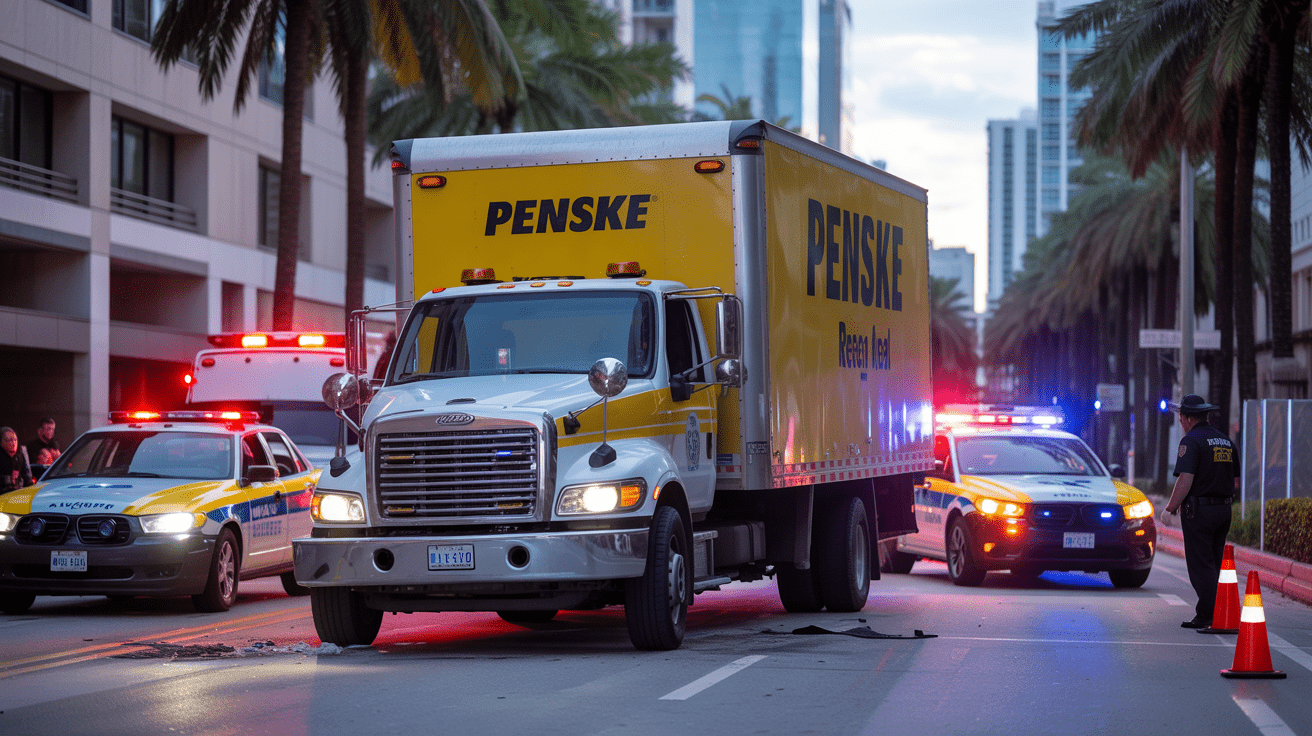
Miami Penske truck accidents represent a complex legal sub-specialty, distinct from typical auto accident claims. These cases blend standard Florida negligence principles with the intricate demands of federal motor carrier regulations, contractual issues stemming from rental agreements, and the potential for multi-party liability. For legal and insurance professionals, understanding these nuances is of paramount strategic importance, as the path to a successful recovery is rarely straightforward.
Learn More: Miami Penske Truck Accident Lawyer
The core challenge presented in these matters involves the rapid identification of all responsible parties—a chain that can extend from the driver to their employer, cargo loaders, and maintenance providers—and the preservation of volatile evidence. Critical data, from on-board telematics to driver logs, must be secured under strict deadlines before it is overwritten or lost. This case study deconstructs the legal framework governing these incidents, beginning with the foundational principles that govern liability in Florida.


2.0 Foundational Principles of Liability in Florida
Establishing liability in a Penske truck accident case requires a multi-layered legal analysis. The process goes beyond simply identifying the driver at fault; it involves a meticulous deconstruction of legal duties and the standards of care applicable to commercial vehicle operations, even within the context of a rental. This section will break down the core legal doctrines that form the basis of a claim: Florida’s negligence standards, the influence of federal safety regulations, and the impact of the state’s comparative fault system on financial recovery.
2.1 Establishing Negligence: Duty, Breach, Causation, and Harm
Under Florida law, any negligence claim must satisfy four core elements. When applied to a Penske truck collision, these elements provide a clear framework for assigning fault to the driver’s actions.
- Duty: The driver has a legal obligation to operate the truck in a safe and reasonable manner, protecting other motorists and pedestrians from foreseeable harm.
- Breach: The driver fails to meet this duty through specific actions or omissions. Common breaches include inexperience with large vehicle dynamics, speeding, improper maneuvering in dense traffic, or failing to account for adverse weather.
- Causation: A direct and proximate link must be established between the driver’s breach of duty and the resulting collision. The accident must be a direct consequence of the negligent act.
- Harm: The collision must result in measurable damages. These can include economic losses like medical expenses and lost income, as well as non-economic harm such as pain and suffering.
2.2 The Influence of Federal Motor Carrier Safety Regulations (FMCSA)
Even though a Penske truck may be a rental, certain operations can trigger the applicability of Federal Motor Carrier Safety Regulations (FMCSA). Standards concerning issues like proper cargo securement and required vehicle inspections can be pivotal in establishing a breach of duty. Evidence of compliance or non-compliance with these federal standards serves as a powerful indicator of whether the responsible parties acted with reasonable care. A violation can be used as compelling evidence of negligence in a civil claim.
2.3 Navigating Florida’s Comparative Negligence Doctrine
Florida operates under a comparative negligence rule, which can have significant strategic implications for a claim’s value. This doctrine allows for fault to be apportioned among all parties involved in an accident, including the victim. If an injured party is found to be partially at fault for the collision, their potential financial recovery is reduced by their percentage of fault. Consequently, building a “coherent, corroborated, and timely” evidentiary record is essential to counter defenses that seek to shift blame and diminish the value of the claim.
These fundamental principles of liability provide the legal basis for a claim, leading directly to the practical task of identifying the specific parties who may be held responsible.
3.0 Analysis of Liable Parties: A Chain of Responsibility
In Penske truck accident litigation, liability often extends far beyond the individual behind the wheel. A thorough investigation must analyze the entire chain of responsibility to ensure full accountability and access all available layers of insurance coverage. This process involves scrutinizing the roles of employers, third-party cargo loaders, and maintenance vendors, each of whom may bear partial or complete responsibility for the conditions that led to the crash.
3.1 Primary Liability: The Driver and the Renter’s Employer
The driver is the most immediate party, but if the truck was rented for commercial purposes, their employer can also be held responsible. Under the doctrine of vicarious liability, an employer is liable for the negligent acts of an employee committed within the scope of their work. Furthermore, direct claims may be brought against the employer for its own negligence, such as the failure to properly train a driver (negligent supervision) or hiring an individual with a poor safety record (negligent hiring).
3.2 Third-Party Liability: Cargo Loaders and Maintenance Providers
Beyond the driver and employer, other entities can contribute to a collision through their own negligence. A forensic investigation frequently uncovers critical failures by third-party vendors responsible for loading cargo or maintaining the vehicle.
| Liable Party | Basis for Liability |
| Cargo Loaders | Improper loading practices can directly cause a collision. Failures include improperly balancing cargo, which compromises steering control; inadequately securing loads, leading to dangerous load shifts during turns or braking; and stacking cargo too high, which increases rollover risk and impairs visibility. |
| Maintenance Vendors | Deferred or faulty maintenance creates inherently dangerous conditions. Liability can arise from missed preventive inspections, failure to repair known defects, or substandard work on critical systems like brakes, tires, and steering, all of which can lead to catastrophic equipment failure on the road. |
Understanding who is liable is intrinsically linked to understanding how their actions or inactions typically cause these devastating accidents.
4.0 Deconstruction of Common Causation Scenarios
While every accident is unique, recurring patterns of failure often lead to Penske truck collisions in Miami’s demanding driving environment. Understanding these common causation scenarios is critical for investigators and litigators to focus discovery, retain the appropriate experts, and build a compelling narrative of fault.
- Driver Inexperience in Urban Environments A significant number of Penske truck rentals are operated by individuals unfamiliar with large vehicle dynamics. This lack of experience is magnified in Miami’s dense urban traffic. Drivers often misjudge the vehicle’s wide turning radius, extensive blind spots, and significantly longer stopping distances. An investigation focuses on evidence such as driver logs, telematics data, and training records (or lack thereof) to connect these skill gaps directly to the collision.
- Improper Cargo Loading and Load Shifting The physics of improper loading can be catastrophic. Unbalanced or unsecured cargo can shift unexpectedly during maneuvers, destabilizing the truck and undermining steering control. This dramatically increases the risk of a rollover, especially on tight ramps or during sudden lane changes. Evidence in these cases includes a review of weight tickets, bills of lading, and adherence to federal cargo securement rules to establish whether loaders failed in their duty to safely prepare the vehicle for transport.
- Critical Vehicle Maintenance Failures Lapses in preventive maintenance are a frequent and direct cause of crashes. Worn brakes reduce stopping power, degraded tires increase the risk of a blowout, and faulty lights or signals impair visibility. The strategic approach to proving this cause involves a meticulous review of the truck’s maintenance records, vendor work orders, defect reports, and recall compliance history to establish a clear causal link between a maintenance failure and the accident.
- Adverse Weather Conditions as an Amplifying Factor Miami’s frequent heavy rain and strong coastal winds are not a valid defense for negligence but rather an amplifying factor that increases the standard of care required of a driver. Liability is assessed by determining if the driver’s speed, following distance, and equipment—particularly wipers and tires—were appropriate for the documented weather conditions. A driver who fails to adjust for slick roads or reduced visibility can be held negligent for a resulting crash.
Identifying the cause of the accident is the first step; the next is securing the evidence needed to prove it.


5.0 The Strategic Imperative of Evidence Management
In any Penske truck accident claim, the rapid and methodical preservation of evidence is of critical importance. Unlike standard car accidents, these cases involve perishable electronic data, extensive corporate records, and complex physical evidence that are all essential for proving liability. A strict and verifiable chain of custody is non-negotiable to ensure this evidence is admissible and credible.
5.1 On-Scene Documentation and Preservation Protocol
The process of evidence collection begins in the moments immediately following a collision. A disciplined protocol for documenting the scene is essential for preserving a clear record of liability.
- Prioritize safety by calling 911 to ensure medical care and create an official report, then secure the area to prevent secondary collisions.
- Photograph and video the scene with a strategic eye, capturing not only close-ups of damage and debris fields but also wide-angle context that shows lanes, distances, and sightlines.
- Record the truck’s identifying information, including its license plate, vehicle identification numbers, and any company markings.
- Gather contact information and concise initial statements from any witnesses while their memories are fresh and uncorrupted.
- Preserve any physical evidence and immediately request copies of available dashcam footage or surveillance video from nearby storefronts or intersections.
5.2 Securing Vehicle-Specific Electronic Data
Modern Penske trucks are equipped with sophisticated electronics that provide an objective record of the vehicle’s activity leading up to a crash. Information retrieved from the truck’s telematics system and its “black box” Event Data Recorder (EDR) is critical for reconstructing the accident. This data can include not only vehicle speed and braking events, but also a wealth of diagnostic and operational information, such as:
- Route history and time stamps
- Engine RPM and throttle position
- System fault codes
- Fuel use and idle time
- Odometer readings and driver behavior indicators
5.3 The Role of Expert Witnesses
The strategic use of expert witnesses is crucial for translating complex evidence into a clear and persuasive narrative. Accident reconstructionists use the physical and electronic data to analyze factors like speed, stopping distances, and sightlines to determine how the crash occurred. Concurrently, medical and vocational experts are retained to link the injuries sustained to the mechanics of the crash and to calculate the full financial value of a claim, including future care needs and lost earning capacity.
Once liability has been established through meticulous evidence management, the focus shifts to building a comprehensive damages claim.
6.0 Quantifying Damages: A Comprehensive Approach to Recovery
Securing a fair recovery for an injured party requires a rigorous and forward-looking assessment of all damages, encompassing both tangible economic losses and intangible non-economic harm. A comprehensive damages model must account for immediate costs as well as the long-term consequences of a serious injury. This section breaks down the categories of compensation available under Florida law and the evidence required to substantiate them.
6.1 Documenting Economic Losses
Economic damages are the quantifiable financial losses resulting from the accident. They fall into two primary categories:
- Medical Expenses: This includes all costs related to treatment, from initial emergency care, hospitalization, and surgery to ongoing needs such as prescriptions, physical therapy, and rehabilitation. For catastrophic injuries, a life-care plan is developed by experts to project the cost of future medical necessities.
- Lost Wages and Earning Capacity: Compensation covers not only income lost from missed work during recovery but also any diminished future earning potential. If an injury prevents a return to a previous career, vocational and financial experts are used to quantify this long-term financial impact.
6.2 Valuing Non-Economic Damages
Non-economic damages are intended to compensate a victim for the intangible, but very real, harm suffered. These losses include physical pain, emotional distress, psychological trauma, and the loss of enjoyment of life. A related claim for loss of consortium can also be made by close family members to recognize the harm done to their relationship with the injured person.
6.3 Assessing Long-Term & Latent Injuries
A comprehensive damages model must account for the long-term and often latent consequences of a crash that may not be apparent in the immediate aftermath.
Chronic Pain Syndromes Persistent pain often arises from central sensitization, where the nervous system amplifies pain signals and lowers thresholds long after initial injuries appear healed. Guided by pain neuroscience, a damages model must document how ongoing nerve or musculoskeletal damage impacts mobility and daily function, substantiating the need for future multidisciplinary care.
Psychological Trauma The impact of a violent collision can be debilitating, manifesting as PTSD, anxiety, or depression. These conditions are often characterized by specific triggers, such as engine noises or sudden braking, leading to consequences like avoidance, sleep disruption, and intrusive thoughts. Expert evaluation is crucial to link these symptoms to the collision and quantify their effect on work performance and quality of life.
Long-Term Disability Risks Serious injuries from these collisions, including traumatic brain injuries and complex orthopedic damage, frequently lead to lasting occupational limitations. A victim may require career changes, accommodations, or face a permanent inability to work. A thorough damages assessment must account for these risks, including the complexities of navigating private disability policies and ERISA plans.
Understanding the full scope of damages is critical, but this knowledge is only effective when applied within the procedural rules that govern the timeline for filing a claim.
7.0 Procedural and Strategic Framework for a Successful Claim
A strong case requires more than compelling evidence; it demands disciplined adherence to legal procedure and a sophisticated understanding of strategic considerations. The success of a Penske truck accident claim often hinges on meeting non-negotiable deadlines, navigating complex insurance structures, and engaging specialized legal counsel with the resources and expertise to manage the case effectively. This final analytical section covers these critical components.
7.1 Strict Adherence to Florida’s Statute of Limitations
Florida’s statute of limitations imposes a strict deadline for filing a lawsuit. In most cases, an individual has two yearsfrom the date of the incident to file a personal injury lawsuit and two years from the date of death to file a wrongful death claim. The consequence of missing this deadline is severe and permanent: the right to recover any damages is lost forever, regardless of how clear liability may be. While certain tolling exceptions may pause or extend this deadline, they are rare and should not be relied upon.
7.2 Navigating Insurance Coverage Complexities
The insurance landscape in a rental truck case is uniquely complex, involving multiple policies and contractual obligations that can shift liability. A thorough analysis must address several key issues:
- Rental Agreements: How do endorsements and indemnity clauses in the rental contract shift liability and defense obligations between the rental company and the renter?
- Personal Auto Policies: Are large rental trucks over a certain weight threshold specifically excluded from a driver’s personal auto policy? This must be verified immediately.
- Commercial vs. Personal Use: How does the purpose of the rental expand liability to an employer’s commercial policy or limit exposure to the individual driver’s coverage?
- Out-of-State Drivers: What jurisdictional rules and insurance reciprocity agreements apply when an out-of-state driver is involved in a crash in Miami?
7.3 The Strategic Value of Specialized Legal Counsel
Given the layers of complexity, specialized legal counsel is essential. An experienced attorney performs several key functions that are critical to success. They conduct a rapid and thorough investigation to preserve evidence, demonstrate mastery of the applicable state and federal regulations, and meticulously manage medical documentation to substantiate the full scope of damages. This preparation creates the necessary leverage for leading negotiations with insurers and provides the foundation for executing a compelling trial strategy if a fair settlement cannot be reached.
8.0 Conclusion: Key Strategic Takeaways for Legal and Insurance Professionals
Successfully resolving a Miami Penske truck accident claim requires a strategic, multi-faceted approach that integrates legal doctrine, investigative rigor, and procedural discipline. The preceding analysis underscores that these cases are far more complex than typical motor vehicle collisions, demanding a higher level of scrutiny and expertise from the outset. For legal and insurance professionals navigating these claims, several strategic imperatives are paramount.
- Assume Multi-Party Liability: Always investigate beyond the driver. A comprehensive liability analysis must include the renter’s employer (in commercial use cases), third-party cargo loaders, and maintenance vendors to identify all responsible parties and access all available insurance coverage.
- Prioritize Immediate Evidence Preservation: Act decisively to secure electronic data from telematics and EDR systems and to document physical evidence from the scene. A strict chain of custody is essential to protect this evidence before it is lost, overwritten, or spoiled.
- Integrate State and Federal Standards: Use violations of Federal Motor Carrier Safety Administration (FMCSA) rules for cargo securement and vehicle maintenance to strengthen a Florida-based negligence claim and establish a clear breach of the standard of care.
- Model Damages Comprehensively: Look beyond immediate economic losses. A complete damages model must account for the full scope of long-term medical, psychological, and vocational impacts, substantiated by expert opinions and life-care plans.
- Respect Procedural Deadlines: Immediately calendar Florida’s two-year statute of limitations for personal injury and wrongful death claims, along with any other applicable notice requirements. Failure to meet these deadlines will permanently bar a client’s right to recovery.