1.0 Introduction: Defining the Phenomenon of Underride Accidents
Underride accidents are not merely tragic incidents but represent critical points of failure where systemic safety shortcomings and regulatory gaps intersect, creating complex liability questions for victims in Tampa.
Learn more: Tampa Underride Truck Accident Lawyer
These violent collisions, where a smaller passenger vehicle slides beneath a large commercial truck, often result in catastrophic outcomes. This case study provides a comprehensive analysis of the multifaceted nature of underride events, examining their primary causes, the profound and lasting consequences for victims, and the established legal pathways for securing justice and compensation.
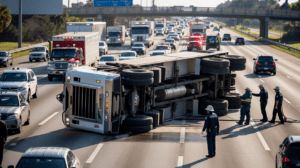
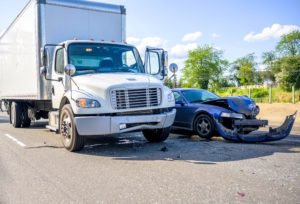
An underride truck accident is a specific type of collision defined by its devastating impact mechanics. It occurs when a passenger car or other small vehicle collides with a commercial truck and slides underneath the trailer. This trajectory bypasses the smaller vehicle’s primary safety features, such as bumpers and crumple zones, which are designed to absorb impact. Instead, the truck’s undercarriage or trailer bed strikes the passenger compartment directly at windshield level, leading to a catastrophic intrusion into the space occupied by the driver and passengers.
The typical outcomes of these accidents are among the most severe on our roadways. Victims commonly suffer from a range of life-altering injuries, including:
- Severe head trauma
- Spinal cord injuries
- Permanent disabilities
- Fatalities
Understanding the specific factors that lead to these devastating events is the first step in establishing accountability and advocating for preventive measures.


2.0 Causal Analysis of Tampa Underride Collisions
A strategic understanding of the root causes of underride accidents is essential to build compelling cases that hold negligent parties accountable. These collisions are rarely the result of a single failure; instead, liability often stems from a complex combination of human error, critical equipment failure, and systemic negligence on the part of multiple parties. The following analysis explores the primary factors that contribute to underride accidents on Tampa’s roads.
2.1 Driver Error and Negligence
Driver error, by both commercial truck operators and passenger vehicle drivers, stands as a leading contributor to underride accidents. The negligence of a truck driver can manifest in several critical ways. When drivers fail to implement proper fatigue management protocols, they can experience dangerously delayed reaction times. Similarly, inadequate distraction prevention—such as the use of mobile devices while driving—can cause a driver to lose awareness of surrounding vehicles.
Simultaneously, the actions of passenger car drivers can also create the conditions for an underride collision. Behaviors such as following too closely behind a large truck, failing to account for its extended stopping distance, or attempting unsafe passing tactics can place a smaller vehicle in a vulnerable position where a collision becomes unavoidable.
2.2 Inadequate Truck Safety Equipment
While driver behavior is a significant factor, equipment deficiencies on commercial trucks create equally hazardous conditions. Federal regulations mandate the use of rear underride guards to prevent smaller vehicles from sliding beneath trailers. However, these protective devices are often insufficient, outdated, improperly installed, damaged, or entirely absent from trailer sides. Although federal standards exist, many older trucks continue to operate without necessary compliance upgrades. This creates a direct and dangerous link between neglected maintenance and compromised public safety, transforming what might have been a survivable accident into a catastrophic event.
2.3 Poor Visibility and Lighting Deficiencies
Inadequate lighting and poor visibility are major contributors to underride accidents, particularly at night or during adverse weather conditions. When a truck’s visibility features are compromised, other motorists may be unable to accurately perceive its true dimensions and position on the roadway. Common failures include:
- Deteriorated reflective tape that no longer illuminates when struck by headlights.
- Failed or broken side marker lights that make the length of the trailer invisible in the dark.
- Glare mitigation challenges caused by improperly aimed or excessively bright headlights that can temporarily blind other drivers.
These deficiencies prevent other motorists from seeing and reacting to the hazard a large truck presents, leading directly to preventable collisions.
2.4 Improper Vehicle Maintenance Practices
Systemic neglect of commercial truck maintenance by trucking companies introduces a severe and unnecessary level of risk to public roadways. Some carriers ignore federally mandated maintenance schedules and fail to implement proper inspection protocols. Specific examples of this negligence include skipping required brake inspections, which can lead to stopping failures, and deferring necessary repairs to damaged underride guards. Our analysis reveals that these preventable tragedies occur when profit takes precedence over safety, demonstrating a clear disregard for regulations and placing every motorist at risk.
The devastating consequences of these causal factors extend far beyond the accident scene, profoundly impacting the lives of victims and their families for years to come.
3.0 The Human Toll: Long-Term Consequences for Victims
The impact of an underride accident creates a cascade of physical, emotional, and financial hardships that demand comprehensive support. Victims are often left with catastrophic, long-term consequences that require lifelong care and fundamentally alter their quality of life. The harm extends far beyond the initial recovery period, encompassing permanent disabilities, severe psychological trauma, and the immense financial strain of ongoing medical needs.
3.1 Catastrophic Brain Injuries
Traumatic brain injuries (TBIs) are a frequent and devastating outcome of underride collisions. The severe force of the impact can cause permanent cognitive impairments, memory loss, and deficits in motor function. Recovery demands specialized neurorehabilitation and often involves years of intensive therapy. The impact on families is profound, especially in cases involving pediatric concussions that can affect a child’s development. Victims face mounting medical expenses, a diminished quality of life, and often a permanently lost earning capacity.
3.2 Permanent Physical Disabilities
Underride accidents frequently result in permanent physical disabilities that reshape a victim’s world. Injuries such as spinal cord damage, limb amputations, and severe orthopedic injuries can permanently alter physical capabilities, requiring the use of mobility aids like wheelchairs and walkers. These life-changing injuries necessitate extensive home adaptations, including the installation of ramps, widened doorways, and modified bathrooms, to accommodate a new reality. The financial and emotional burden of adapting to these limitations is immense, requiring comprehensive, long-term care and support.
3.3 Psychological Trauma and PTSD
Alongside severe physical harm, the psychological injuries from an underride accident inflict deep and persistent damage. Many survivors develop Post-Traumatic Stress Disorder (PTSD), suffering from debilitating flashbacks, nightmares, and severe anxiety. It is also common for survivors to experience survivor guilt, particularly if others perished in the accident. This profound emotional burden complicates recovery and often requires extensive trauma counseling and long-term psychiatric care. These psychological damages represent legitimate injuries deserving full compensation.
These profound human consequences underscore the importance of a legal framework designed to provide victims with justice and the comprehensive compensation needed to navigate their new reality.
4.0 The Legal Framework for Victim Recourse in Tampa
Victims of underride truck accidents in Tampa face a complex and often overwhelming legal landscape. While Florida law provides specific rights to protect their interests, navigating the system to establish liability and secure fair compensation requires expert guidance. The procedural rules are strict, and trucking companies and their insurers are well-equipped to defend against claims.
Under Florida law, victims have fundamental rights designed to facilitate their recovery and ensure access to justice:
- Right to Medical Treatment: To seek and recover the costs of all reasonable and necessary medical care.
- Right to Legal Representation: To retain expert counsel for navigating regulations and negotiating with insurers.
- Right to Fair Compensation: To pursue damages for all economic and non-economic losses, including medical bills, lost income, and pain and suffering.
A critical component of this legal framework is the Statute of Limitations. Under Florida law, victims typically have two years from the date of the accident to file a personal injury lawsuit. For cases involving a fatality, family members have two years from the date of death to file a wrongful death claim. Failing to file a lawsuit within this strict timeframe will result in the permanent loss of the right to pursue compensation.
The following section examines how these legal principles are applied in practice by a specialized law firm dedicated to advocating for victims.


5.0 Case Study in Practice: The Role of Specialized Legal Advocacy
This section provides a practical examination of how a specialized legal team, such as the Law Offices of Anidjar and Levine, provides all-encompassing legal representation tailored to victims’ specific needs. Since its establishment in 2006, the firm has represented thousands of accident victims, providing the critical functions needed to establish liability, maximize financial recovery, and support clients. An experienced legal advocate is essential for navigating the established legal framework and securing justice.
The firm’s approach encompasses the following key functions:
- Thorough Investigation and Evidence Preservation: The legal team immediately begins a meticulous investigation of the accident. This includes documenting the scene, gathering official reports and witness statements, and preserving critical evidence that can quickly disappear. The firm consults with accident reconstructionists and other experts to analyze the data and build a compelling case that establishes liability.
- Strategic Negotiation and Financial Recovery: Armed with strong evidence, the firm engages in aggressive negotiations with powerful insurance companies and trucking corporations. The goal is to counter lowball settlement offers and secure maximum compensation for all damages, including current and future medical expenses, lost wages, and pain and suffering. This dedicated advocacy is reflected in the firm’s track record of recovering over $300 million for injured clients.
- Comprehensive Client Support: Recognizing the overwhelming challenges victims face, the firm provides holistic support that extends beyond legal strategy. This includes connecting clients with resources for post-accident counseling to address emotional and psychological trauma. By handling every aspect of the legal claim, the firm allows clients and their families to focus on healing and recovery.
- Contingency Fee Structure: The firm operates on a contingency fee basis. This means clients pay no upfront costs or attorney fees. Legal fees are collected only if the firm successfully wins the case or secures a settlement, making high-quality legal representation accessible to all victims, regardless of their financial situation.
- Broader Advocacy and Community Engagement: The firm’s commitment extends beyond individual cases to include advocating for meaningful policy reform. This involves working to strengthen federal and state underride guard regulations to prevent future tragedies. Additionally, the firm engages in community outreach to educate Tampa residents on road safety and accident prevention.
While a legal team builds the case, the actions a victim takes immediately following a collision are critical for protecting both their health and their legal rights, as outlined in the following procedural guidance.
6.0 Procedural Guidance: Critical Steps Following an Underride Accident
The actions taken in the immediate aftermath of an underride truck accident can significantly impact a victim’s physical recovery and the ultimate strength of their legal claim. This section provides essential, actionable advice for victims and their families. Following these critical steps helps protect a victim’s health while preserving the evidence needed to build a successful case.
- Ensure Immediate Medical Attention
- Seeking emergency medical care is the absolute first priority, even if injuries seem minor. Underride collisions can cause injuries with delayed symptoms that may only manifest hours or days later. Prompt medical evaluation creates official records that are essential for documenting the extent of injuries for a legal case. Consistent follow-up care demonstrates the severity of the harm and strengthens a claim for compensation.
- Document the Accident Scene
- If possible and safe to do so, gathering evidence at the scene is crucial. This includes taking extensive photographs from multiple angles of vehicle positions, property damage, skid marks, and surrounding road conditions. It is also vital to collect the contact information of any witnesses and, if possible, record their statements about what they observed. This documentation provides invaluable context for accident reconstructionists and legal teams.
- Contact Experienced Legal Representation
- Due to the complex liability issues involved in trucking accidents, contacting an experienced lawyer as soon as possible is critical. Given the complex web of causation involving driver error, equipment failure, and corporate maintenance protocols, an experienced attorney is essential to identify all potentially liable parties. Representation can be secured on a contingency basis, which removes any upfront financial barriers and allows victims to access expert legal help when they need it most.
Taking these steps provides a strong foundation for both physical and financial recovery after a devastating collision.
7.0 Conclusion: Synthesis of Findings and Future Implications
This case study has demonstrated that underride truck accidents are catastrophic events with a complex web of causation rooted in driver negligence, inadequate safety equipment, and systemic maintenance failures. The consequences for victims are profound and long-lasting, often involving permanent physical disabilities, severe brain injuries, and deep psychological trauma that require a lifetime of care and support.
Within this challenging landscape, a specialized and experienced legal advocate plays a critical role. By conducting thorough investigations, navigating intricate regulations, and aggressively negotiating with powerful corporate and insurance interests, legal teams can secure the justice and comprehensive compensation that victims need to rebuild their lives.
Ultimately, this analysis reveals that achieving accountability in the courtroom for individual justice and advocating for systemic policy reform are not separate goals. They are two interconnected fronts in the fight for public safety. Efforts to strengthen underride guard regulations and hold negligent parties responsible are vital steps toward preventing future tragedies and making Tampa’s roadways safer for everyone.