




Law Offices of Anidjar and Levine handle Florida truck accident cases by using FMCSA regulations to identify safety violations, preserve crucial evidence, and prove liability against drivers, motor carriers, brokers, and shippers.
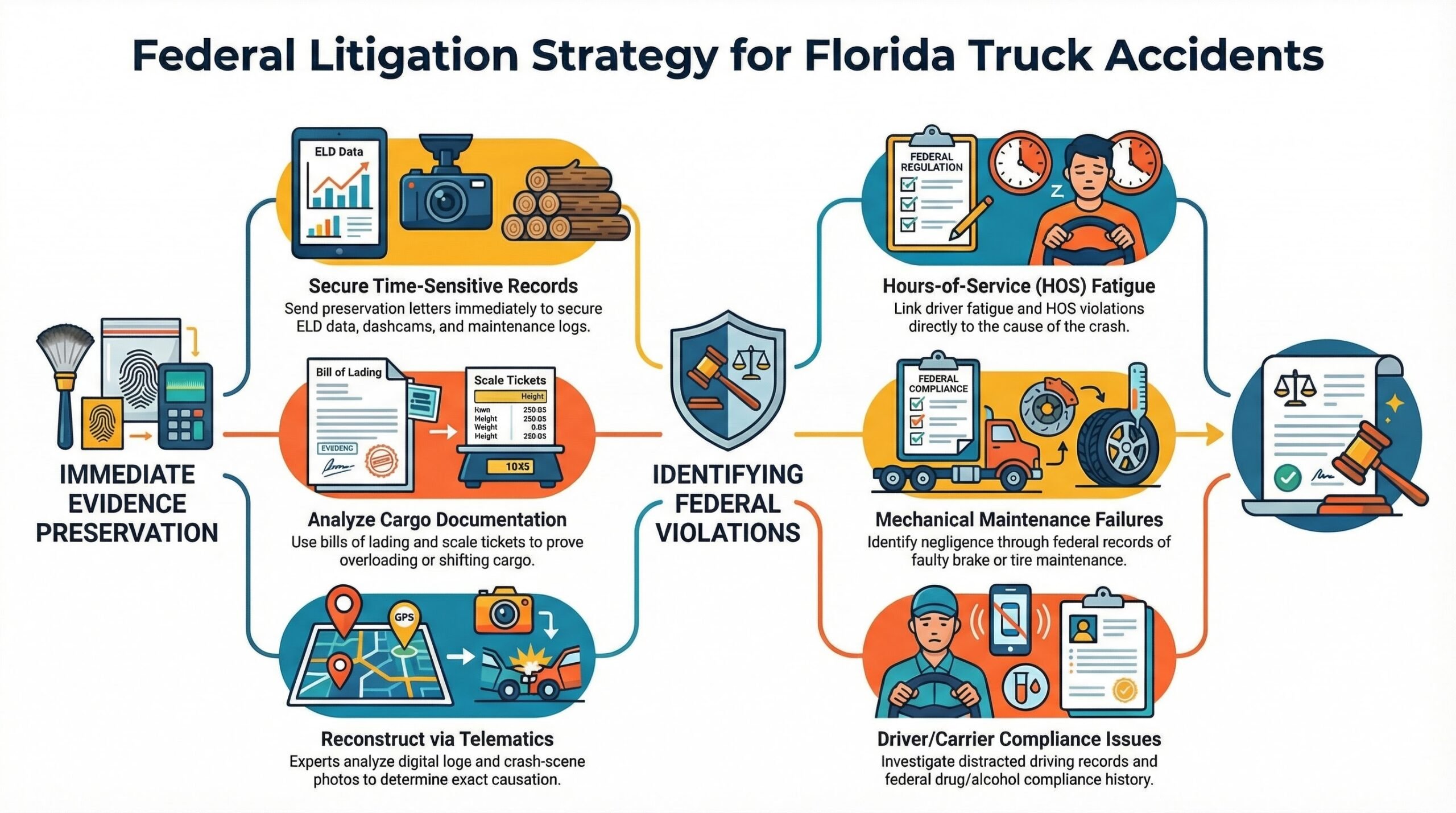
We promptly send preservation letters and secure ELD data, driver qualification files, maintenance records, dashcam footage, dispatch messages, and cargo documents before they are lost.
We coordinate experts to link hours-of-service, maintenance, or load-securement failures to the crash and your damages.
Learn more from our Florida Truck Accident Lawyer page.
Below, you’ll see what matters most.



Key Takeaways
- A Florida truck accident lawyer uses FMCSA/FMCSR violations to prove negligence, tying regulatory duties directly to the crash and injuries.
- Immediate preservation letters secure ELD data, dashcam footage, dispatch messages, maintenance logs, and driver qualification files before evidence disappears.
- Key federal issues include hours-of-service fatigue, distracted driving records, drug/alcohol compliance, and mechanical maintenance failures, such as brake or tire failures.
- Cargo cases focus on federal load securement, bills of lading, scale tickets, and tie-down records to show that overloading or shifting cargo caused the wreck.
- Experts analyze telematics, crash-scene photos, and logs to reconstruct causation and build a litigation-ready demand package under Florida law.
How We Can Help With Your Florida Truck Accident Federal Regulations Claim
Because truck crashes often trigger overlapping state and federal rules, we step in early to identify which Federal Motor Carrier Safety Regulations apply and how they affect your Florida claim.
We preserve evidence quickly by sending spoliation letters, securing electronic logging data, and requesting maintenance, dispatch, and personnel files before records disappear.
We review driver qualification materials to assess driver training, prior violations, and fitness for duty, then compare those findings with the carrier’s representations.
We also examine load documents, scale tickets, and photos to confirm proper cargo inspections and to determine whether shifting, overweight conditions, or securement failures contributed to the crash.
We coordinate with qualified experts to reconstruct the collision and explain the damage clearly.
Throughout the process, we keep you informed, handle insurer communications, and pursue a result that supports your recovery and protects others on Florida roads.
Understanding Florida Truck Accident Federal Regulations Cases
When a serious truck crash occurs in Florida, federal safety regulations often shape what evidence matters most and how liability is proven.
In Florida truck crashes, federal safety rules often determine which evidence matters most and how liability is proven.
We help you understand how the Federal Motor Carrier Safety Regulations can apply to drivers, trucking companies, brokers, and shippers, and how those duties interact with Florida negligence law.
In these cases, we focus on records that show compliance, or the lack of it, with required inspections, hours-of-service documentation, and maintenance programs.
We also review hiring files and driver training materials to confirm whether the carrier met its safety obligations before putting a driver on the road.
Beyond fault, we evaluate insurance coverage, including policy limits, layered coverage, and potential additional insured issues that can affect recovery.


Common Causes of Florida Truck Accident Federal Regulations
We’ll start by identifying the most common regulatory breakdowns that lead to Florida truck crashes, and how they often appear in the evidence.
We frequently see hours-of-service violations, overloaded or improperly secured loads that destabilize the truck, and distracted or impaired driving that undermines safe operation.
We’ll also address poor vehicle maintenance, since missed inspections and worn components can turn a preventable issue into a serious collision.
Hours-Of-Service Violations
Although federal Hours-of-Service rules exist to limit fatigue and protect the public, HOS violations remain a leading cause of serious Florida truck crashes.
When drivers exceed driving limits, skip required breaks, or misuse sleeper-berth provisions, fatigue dulls judgment and slows reaction time, putting families and communities at risk.
We serve you best by focusing on accountability and prevention, not blame, and by explaining how carriers and drivers can meet their duty of care.
Strong fatigue management starts with realistic scheduling, consistent driver education, and enforcement that prioritizes safety over speed.
We also review electronic logging records, dispatch communications, fuel and toll data, and delivery deadlines to identify pressure points and verify true hours worked.
Those details often reveal preventable violations.
Overloaded Or Improper Loads
Fatigue isn’t the only safety breakdown we see in serious Florida truck crashes; overloaded or improperly secured cargo can create the same kind of preventable danger in a single mile.
When weight exceeds legal limits, braking distances increase, tires run hotter, and handling becomes less responsive, placing everyone on the road at risk.
Improper load distribution can also shift the trailer’s center of gravity, raising the chance of rollovers during routine turns or lane changes.
Even a legal load becomes hazardous when crews cut corners on securing cargo, allowing freight to slide, spill, or jackknife the rig.
We help you by examining bills of lading, scale tickets, inspection reports, and tie-down practices, then tying those findings to the federal cargo securement rules that exist to protect the public.
Distracted Or Impaired Driving
When a commercial driver takes their eyes off the road or gets behind the wheel while impaired, a fully loaded truck can turn a brief lapse into a catastrophic collision.
In Florida, federal safety rules limit distractions, yet cellphone usage still leads to missed signals, delayed braking, and unsafe lane changes.
We often see dispatch messages, handheld calls, or even hands-free conversations divert attention at the worst moment.
Impairment presents similar risks, and it isn’t limited to alcohol or illicit drugs. Fatigue, prescription impairment, and mixed medications can slow reaction time and distort judgment, even when a driver believes they’re fit to operate.
When you’re harmed, we can help by securing logs, phone records, and toxicology evidence, then demonstrating how regulatory violations contributed to the crash and your losses.
Poor Vehicle Maintenance
Distraction and impairment often set the stage for a wreck, but mechanical neglect can make a dangerous situation unavoidable.
When a carrier delays repairs or skips routine inspections, worn tires, failing lights, and steering problems can turn an ordinary maneuver into a catastrophic event.
We often see crashes in which a driver had little chance to correct course because critical components failed at the worst moment.
Federal rules require systematic upkeep, and brake maintenance is a frequent point of noncompliance.
Out-of-adjustment brakes, uneven wear, or contaminated linings can extend stopping distance and cause jackknifes or rear-end collisions.
We help you identify missing service records, inspection gaps, and repair shortcuts, and tie those failures to the harm that followed. When maintenance lapses endanger the public, accountability protects others.
Legal Rights of Florida Truck Accident Federal Regulations Victims
Because federal trucking regulations often shape liability determinations after a crash, we need to understand the specific legal rights available to Florida victims when a carrier or driver violates those regulations.
When federal standards on hours, inspections, or cargo securement are ignored, we can pursue accountability under Florida negligence law and use those violations to strengthen our proof of fault.
Our approach centers on Victim advocacy, so you’re treated with dignity, and your losses are fully recognized, not minimized by corporate insurers.
We also track Regulatory updates, since current rules can affect what evidence matters and which parties share responsibility.
- The right to seek compensation for medical care, lost income, pain and suffering, and future needs
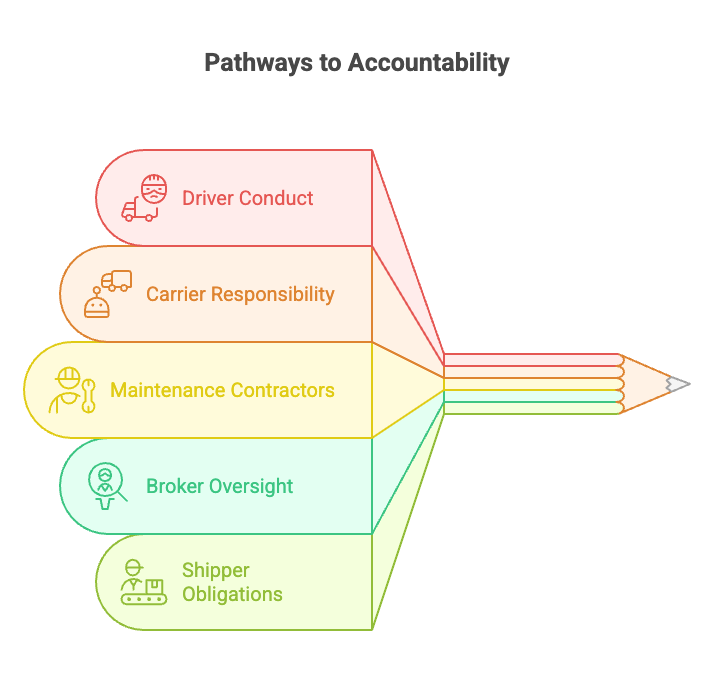
- The right to pursue claims against the driver, carrier, maintenance contractors, brokers, or shippers when their conduct contributed
- The right to demand preservation and review of compliance records, including logs, inspection reports, and training files


Steps to Take After a Florida Truck Accident: Federal Regulations
After a Florida truck accident, we’ll help you take immediate, disciplined steps that protect your health and your claim, starting with securing evidence and obtaining the right reports.
We should seek medical care promptly, because early evaluation documents injuries and reduces disputes about when they occurred.
We’ll also move quickly to preserve federal compliance data, including driver logs and maintenance records, before it’s lost or overwritten.
Secure Evidence And Reports
In the moments immediately following a Florida truck accident, we should move quickly to secure evidence and official reports before they’re lost, altered, or overwritten.
We’ll photograph vehicle positions, skid marks, cargo spills, road signs, and visible injuries, and we’ll note weather and lighting conditions.
We should request the crash report number, identify responding agencies, and document the truck’s DOT markings and plate information.
To preserve data, we’ll send written notices to the carrier to retain logs, ELD records, dispatch messages, and onboard event data, while protecting chain integrity through careful handling and documented transfers.
We’ll also verify timestamps by recording when photos, videos, and calls were taken.
Finally, we’ll gather reliable witness statements, including names and contact details.
Seek Medical Care Promptly
Don’t brush off medical care, even if you think you can walk away from the crash without lasting harm.
After a Florida truck collision, we should get evaluated the same day when possible, because adrenaline can mask injuries and delayed symptoms may not appear for hours or days.
We also protect those who rely on us by addressing hidden trauma early, reducing the risk of complications and missed work.
We recommend calling 911 when pain, dizziness, or confusion appears, and visiting an emergency room, urgent care, or your physician, even for “minor” soreness.
Ask providers to document every complaint, follow-up plan, and restriction, as clear records support recovery and provide reliable insurance documentation.
Keep copies of discharge papers, prescriptions, and referrals, and attend all follow-up appointments without delay.
Preserve Federal Compliance Data
Medical records protect our health, and federal compliance data can protect our legal position.
After a Florida truck crash, we should act quickly to preserve evidence governed by federal rules, including electronic logging device files, driver qualification records, hours-of-service logs, inspection reports, maintenance histories, and drug and alcohol testing documentation.
We can send a spoliation and preservation letter to the carrier and its insurer, citing required data retention periods, and demanding that no files be altered, overwritten, or destroyed.
We should also request vehicle telematics data, dash-cam footage, dispatch messages, bills of lading, and weigh tickets.
To maintain chain integrity, we’ll document who collected each item, when it was obtained, and how it was stored, so the record remains reliable for service and accountability.
How a Florida Truck Accident Federal Regulations Lawyer Can Help You
Although trucking collisions can look like any other crash at first glance, federal safety rules often decide who’s responsible and how much compensation we can pursue.
We help you identify which FMCSA standards apply and build a clear record that links each violation to the harm you suffered, without letting the carrier shift blame or hide behind paperwork.
We identify the FMCSA rules that apply and document violations tied to your harm, preventing carriers from shifting blame.
- We secure and interpret logs, inspection reports, maintenance files, and dispatch records, then flag gaps that suggest noncompliance.
- We coordinate timely requests to preserve evidence, retain qualified experts, and support Regulatory enforcement when rules were ignored.
- We lead Client advocacy in every interaction, presenting a disciplined demand package, negotiating from documented leverage, and preparing for litigation if a fair offer isn’t made.
Throughout the process, we keep you informed, protect your time and privacy, and focus on outcomes that allow you to care for your family and serve others again.
Long-Term Effects of Florida Truck Accident Federal Regulations Injuries
When federal trucking regulations are violated, the injuries we face can persist long after the crash, and we can’t afford to overlook their long-term consequences.
We often see chronic pain and reduced mobility that limit work and daily routines, along with traumatic brain injury effects that disrupt memory, concentration, and decision-making.
We also recognize that emotional trauma and PTSD may develop over time, affecting relationships, sleep, and overall stability, and we’ll explain how these harms shape the claims process.
Chronic Pain And Mobility
Living with chronic pain after a Florida truck crash can limit daily function long after the initial injuries appear to heal.
When joints, nerves, or soft tissues remain inflamed, you may face persistent discomfort that affects sleep, work performance, and family responsibilities.
We often see chronic mobility problems develop, in which walking, lifting, or standing becomes difficult despite consistent treatment.
We can help you document these limits through medical records, therapy notes, and daily activity logs, so your claim reflects real-life impact rather than a short-term snapshot.
By connecting symptoms to the crash and to violations of federal trucking regulations, we strengthen the case for compensation that supports ongoing care, adaptive equipment, and home modifications.
This approach allows you to focus on serving others without neglecting your own recovery needs.
Traumatic Brain Injury Impacts
After a Florida truck accident, a traumatic brain injury can reshape your health and independence in ways that aren’t immediately obvious.
We often see delayed problems with attention, memory, and processing speed, which can disrupt work, school, and daily responsibilities you once handled with ease.
You may also experience sensory sensitivities, such as intolerance to bright light, noise, or busy environments, which can make routine errands and community services more difficult to manage.
Treatment frequently requires structured follow-up, including cognitive rehabilitation that targets practical skills, safe decision-making, and improved communication.
We encourage you to document symptoms, keep appointment records, and share changes with trusted caregivers, because consistent reporting supports appropriate care plans.
When we evaluate long-term impacts, we focus on functionality and safety so you can serve others while protecting your stability.
Emotional Trauma And PTSD
Although physical injuries often receive the earliest attention, emotional trauma and PTSD can persist long past a Florida truck crash and undermine a person’s stability in subtle, cumulative ways.
We often see sleep disruption, hypervigilance, and avoidance of highways, which can strain family roles and workplace reliability.
Emotional triggers may appear without warning, such as air brakes, traffic congestion, or news of another collision, and they can cause panic, anger, or withdrawal.
We encourage you to treat these symptoms as legitimate injuries, not personal weaknesses, and to pursue PTSD counseling early and consistently.
As we serve you, we document how trauma affects daily functioning, relationships, and long-term recovery.
We also connect your treatment plan to the crash evidence and violations of federal regulations, strengthening your claim.
Proving Liability in Florida Truck Accident Federal Regulations Cases
Because federal trucking rules set measurable safety standards, proving liability in a Florida truck accident case often turns on whether the driver, carrier, or broker failed to comply with those requirements and whether that failure caused the crash.
We start by identifying which FMCSA regulations apply, then we connect each duty to the conduct that occurred before impact.
We gather and preserve crucial records, including driver logs, ELD data, maintenance files, inspection reports, dispatch messages, drug and alcohol testing results, and load securement documents.
We also act quickly to prevent spoliation of evidence by sending preservation letters and seeking court orders when necessary.
When technical issues arise, we rely on expert witnesses, such as accident reconstructionists and trucking safety professionals, to interpret data, explain industry practices, and clarify how specific violations increase crash risk.
Finally, we align this proof with Florida negligence principles, so your case reflects accountability and reinforces safer roads for others.
Compensation for Florida Truck Accident Federal Regulations Damages
Compensation in a Florida truck accident case can add up quickly when a federal safety violation triggers severe, preventable harm, and we build damages around the real-world impact of that misconduct.
When federal safety violations cause preventable harm, Florida truck accident compensation can escalate quickly—and we anchor damages to real-world impact.
We begin by documenting medical expenses, future care, lost income, reduced earning capacity, and property loss.
We then present pain, suffering, disability, and loss of enjoyment with credible records and testimony.
Because you may be carrying responsibilities for family and community, we aim for an award that restores stability and supports continued service to others.
We also evaluate any applicable Compensatory limits for certain categories of damages and identify all available insurance and corporate assets.
When evidence shows reckless disregard, such as falsified logs or ignored maintenance mandates, we pursue Punitive recovery to deter repeat violations and protect the public.
Throughout, we connect each dollar requested to clear proof and a principled narrative of accountability.
The Statute of Limitations for Florida Truck Accident Federal Regulations Cases
When a federal trucking safety violation contributes to a crash, the time limit to file a Florida lawsuit can move faster than most people expect, and missing it can end an otherwise strong claim.
In most cases, Florida applies a two-year statute of limitations to negligence-based injury or wrongful death actions, and the clock often starts on the date of the crash, not when we later uncover a regulatory breach.
Because truck cases involve multiple actors, we must also track separate filing deadlines for claims against drivers, motor carriers, brokers, shippers, and maintenance vendors.
Statute nuances can change the analysis, including when a defendant leaves the state, when a party can’t be identified right away, or when a government entity is involved, and pre-suit notice is required.
We should preserve evidence early, request electronic logging data, and serve record demands promptly, so we can file on time and protect the people we’re trying to help.
Why You Need an Experienced Florida Truck Accident Federal Regulations Lawyer
Although a truck crash may look like a routine negligence claim at first glance, federal safety regulations often determine who bears legal responsibility and how we prove it.
When we represent you, we focus on service, accountability, and careful fact work, because commercial carriers often defend claims with teams and records that must be challenged methodically.
We identify violations that ordinary investigations miss, including logbook discrepancies, maintenance gaps, cargo securement failures, and signs of driver fatigue tied to hours-of-service rules.
We also preserve and interpret electronic data, dispatch communications, and inspection histories before they are lost or overwritten.
Because regulatory updates change compliance expectations, we track current standards and apply them to your crash timeline, not outdated assumptions.
How to Choose the Right Florida Truck Accident Federal Regulations Lawyer for Your Case
Because federal trucking rules govern both liability and proof, we should choose counsel with a demonstrated ability to investigate FMCSA compliance and build a case around the relevant records.
We can ask how they secure driver logs, ELD data, inspection reports, maintenance files, dispatch messages, and drug and alcohol testing records, then connect violations to causation and damages.
We should confirm trial readiness, not just settlement experience, since carriers may resist meaningful accountability.
To serve others well, we should seek a lawyer who treats every client with dignity, communicates promptly, and explains decisions in plain language.
Clear client expectations help us stay aligned on timelines, medical documentation, and our role in protecting evidence.
We should also compare fee structures, including contingency terms, litigation costs, and the treatment of limited recoveries.
Finally, we should review results in similar truck regulation cases and verify who’ll handle our day-to-day work.
About the Law Offices of Anidjar and Levine
Turn to the Law Offices of Anidjar and Levine for focused representation in Florida truck accident cases where federal regulations may shape both fault and recovery.
We approach each matter with disciplined preparation, careful review of trucking records, and a practical plan designed to protect you and the people who depend on you.
We don’t treat a claim as paperwork; we treat it as a responsibility to serve with diligence and respect.
We keep you informed, return calls promptly, and handle communications with insurers and defense counsel so you can focus on healing.
Our team evaluates compliance issues that often arise in commercial trucking, then connects the facts to the damages you’ve suffered.
We also value accountability beyond the case, drawing on client testimonials and investing time in community outreach to support safer roads.
When you work with us, you’ll receive steady advocacy, clear counsel, and a results-driven approach throughout your case.
Frequently Asked Questions
What Federal Trucking Regulations Apply to Florida Commercial Truck Accidents?
Federal Motor Carrier Safety Regulations apply to commercial truck accidents in Florida, and we use them to evaluate safety and accountability.
We focus on Hours of Service limits, driver qualification files, drug and alcohol testing rules, and electronic logging requirements.
We also review Vehicle Maintenance duties, including inspection, repair, and maintenance records, as well as pre-trip and post-trip inspections.
We examine cargo securement standards, weight limits, and required insurance filings to support service-minded, evidence-based decisions.
Do Federal Regulations Override Florida Negligence Laws in Truck Accident Cases?
No, federal regulations don’t automatically override Florida negligence laws in truck accident cases.
We look to the preemption doctrine and the statutory hierarchy to determine whether federal law expressly or impliedly displaces state standards.
Often, federal safety rules set minimum duties, while Florida negligence principles still govern fault, causation, and damages.
When a direct conflict arises, we’ll apply the federal rule while preserving valid state remedies.
Can a Violation of FMCSA Rules Automatically Prove Negligence in Florida?
No, an FMCSA violation doesn’t automatically prove negligence in Florida, but it can strongly support it.
We can use the breach as evidence of a duty violation, yet you still must link it to your injuries through statutory causation.
Courts may treat certain safety-rule violations as creating a fault presumption, but defendants can rebut that showing.
We’ll focus on service-minded, fact-based proof, including records, testimony, and crash analysis.
Which Agencies Investigate Violations After a Florida Truck Crash?
After a Florida truck crash, we often see investigations led by local police and the Florida Highway Patrol, with support from the FMCSA for carrier compliance issues.
We may also encounter federal review by the National Transportation Safety Board in severe or high-profile events.
For workplace-related factors, agencies focused on Occupational Safety can examine employer practices and hazards.
We’ll help you coordinate records, reports, and preservation steps promptly.
How Long Do Trucking Companies Keep Electronic Logging Device Records?
Trucking companies generally must retain electronic logging device records for six months and supporting documents, such as fuel receipts, for the same period.
We advise you to request data access promptly, because some systems overwrite older files, and staff turnover can delay retrieval.
To support accurate record retention, we recommend preserving downloads, carrier reports, and any edits, then documenting when and how you obtained them.
———————–
Truck accident cases involving federal regulations demand careful analysis, prompt action, and disciplined evidence preservation.
Law Offices of Anidjar and Levine will evaluate driver logs, maintenance records, cargo practices, and carrier policies to identify violations and connect them to your injuries and losses.
We’ll handle insurer communications, calculate full damages, and pursue the parties responsible, whether the driver, motor carrier, or other entities.
If you’re facing deadlines and uncertainty, a Florida Truck Accident Lawyer is prepared to protect your rights and move your claim forward.


We Can Help.