



We represent Floridians harmed by misread radiology scans, working with board‑certified experts to prove breaches of the radiological standard of care, connect delayed or incorrect findings to resulting harm, and quantify all losses.
Law Offices of Anidjar and Levine secures DICOM images, audit trails, and hospital policies, manages communications with insurers and providers, and pursues full compensation for medical expenses, lost income, and pain and suffering.
Because Florida’s two‑year statute of limitations and four‑year statute of repose can bar claims, prompt action is critical. We clearly explain your rights, legal strategy, next steps, and what to expect from effective counsel.
Learn more: Medical Malpractice Injury Lawyer
Key Takeaways
- Florida malpractice law gives you two years from the date of discovery of a misread scan, with a four-year repose limit; tolling may apply for concealment or minors.
- A qualified Florida injury lawyer evaluates imaging, timelines, and standard of care, retaining radiology experts to prove breach, causation, and damages.
- Preserve evidence immediately: obtain DICOM images, reports, orders, technologist notes, and maintain chain of custody without altering originals.
- Firms pursue compensation for added treatment, lost income, and pain, while handling insurers, hospital communications, and preparing for trial if needed.
- Immediate steps: secure correct medical care, document the proper diagnosis, consult a Florida attorney promptly, and track all dates and communications.
How We Can Help With Your Florida Misread Radiology Scan Injury Claim
Although every case is unique, we grasp how to build a compelling claim when a radiology scan is misread and causes harm. We begin by listening closely, documenting your medical journey, and identifying where the diagnostic process failed.
Dig deeper into our in-depth case study: Anatomy of a Misread Radiology Scan Claim in Florida
Our approach centers on patient advocacy, ensuring your needs, treatment disruptions, and losses are thoroughly captured and presented.
We gather and analyze records, timelines, and imaging, then retain qualified radiology and clinical experts to evaluate causation and damages. Their expert testimony strengthens liability arguments, clarifies standards of care, and links the misread scan to concrete harm.
We calculate full damages, including medical costs, lost income, and future care, and we prepare for negotiation from a litigation-ready position.
We communicate with insurers, preserve evidence, and meet deadlines with precision. Throughout, we coordinate with your providers to support your recovery while safeguarding your legal rights and dignity. Our goal is accountability, fair compensation, and lasting safety improvements.
Understanding Florida Misread Radiology Scan Injury Cases
When a radiology scan is misread in Florida, the legal analysis turns on whether the healthcare provider failed to meet the applicable standard of care and whether that failure caused a preventable injury.
A misread Florida radiology scan hinges on breached standard of care and preventable, causation-linked injury.



We evaluate whether a reasonably prudent radiologist, using available tools and training, would have identified the condition or recommended timely follow-up. Causation is equally pivotal because we must show the misreading led to worsened outcomes, unnecessary procedures, or lost treatment opportunities.
We also assess institutional factors that bear on liability. Policies addressing peer review, double reads, and documentation help establish expectations, while gaps may reveal systemic negligence.
Evidence of Diagnostic bias, such as premature closure or anchoring, can demonstrate departures from professional norms. Technology upgrades and the failure to implement them responsibly may affect duty and breach.
Throughout, we synthesize imaging, medical records, and expert testimony to construct a clear timeline, quantify harm, and align damages with Florida law.

Common Causes of Florida Misread Radiology Scan Injuries
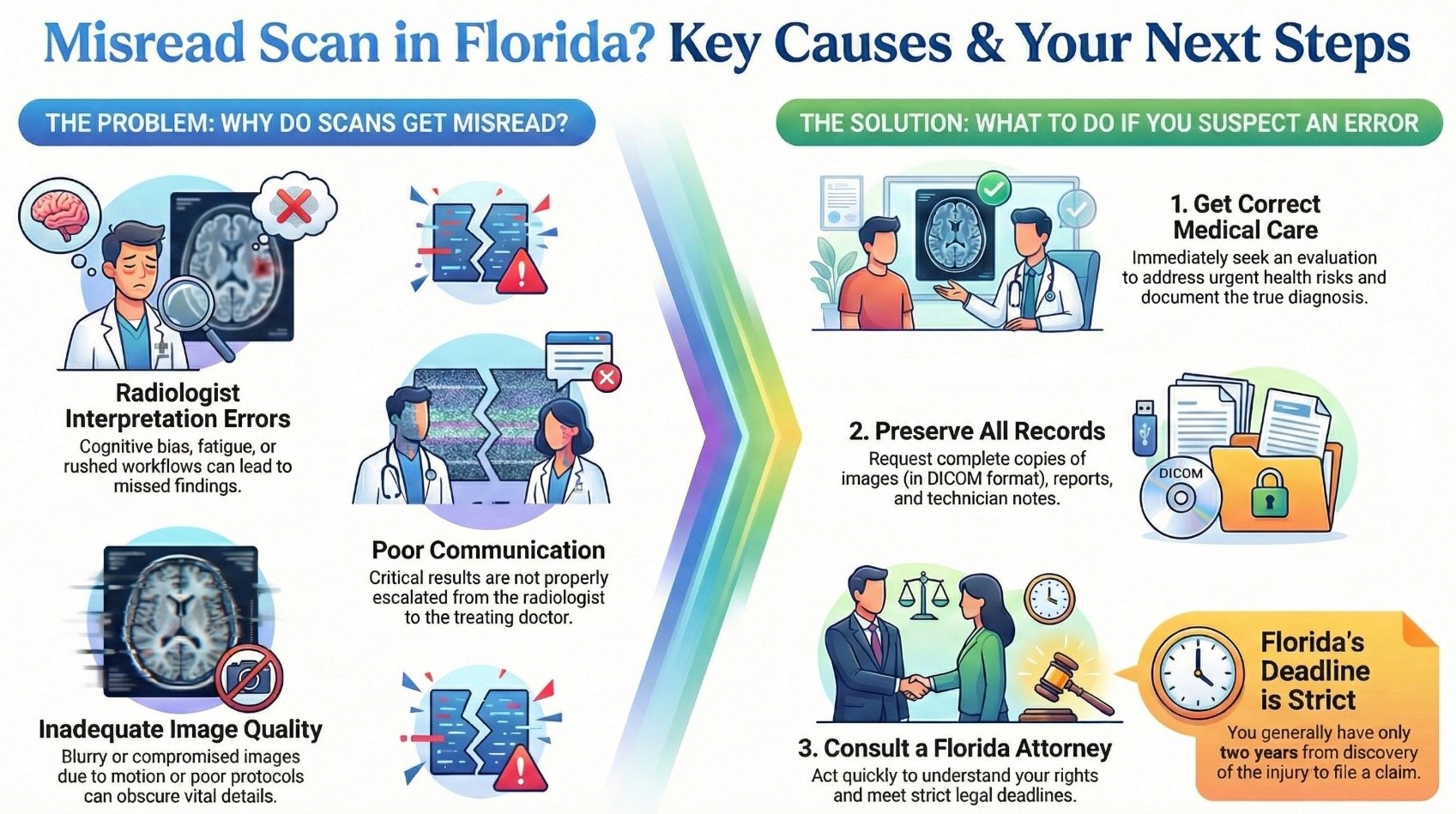
When misread radiology scans cause harm in Florida, we often trace the problem to inadequate image quality that obscures crucial details, radiologist interpretation errors that misclassify findings, or communication breakdowns that prevent essential results from reaching the correct clinician.
We also see delayed follow-up testing, where, when necessary, confirmatory imaging isn’t ordered promptly, allowing a condition to progress.
We’ll explain how each of these factors arises, why they matter legally and medically, and what evidence helps prove responsibility.
Inadequate Image Quality
Set aside the myth that any scan is “good enough,” because inadequate image quality is a leading driver of misread radiology studies and preventable injuries in Florida.
When images are compromised, critical findings can be obscured or distorted, undermining accurate diagnosis and timely treatment. We see this with motion artifacts, which blur structures and mask small fractures, vascular issues, or subtle masses.
Contrast insufficiency can also conceal pathology by failing to differentiate tissues or highlight blood flow, leaving clinicians without essential detail.
We help clients recognize warning signs early. Poor patient positioning, improper scanning protocols, and outdated equipment often degrade clarity, while inadequate technologist supervision compounds risk.
Radiologist Interpretation Errors


Although high-quality images are indispensable, radiologist interpretation errors remain a leading cause of misread scans and preventable injuries across Florida. We see lapses arise from cognitive biases, rushed workflows, and inadequate correlation with prior studies.
Small lesions, subtle fractures, and early strokes are often missed when attention narrows or fatigue sets in. Pattern recognition shortcuts, while efficient, can foster confirmation bias, anchoring, and premature closure.
We hold providers to established standards. Resilient peer review, second reads for high-risk studies, and adherence to evidence-based protocols reduce variability.
When appropriate, artificial intelligence can flag overlooked findings, prioritize essential cases, and standardize measurements, though it must complement—not replace—skilled physicians. We evaluate credentialing, caseload, and quality metrics to identify systemic failures. Our goal is accountability and safer, more reliable diagnostic care.
Communication Breakdowns
Even with clear images and competent readers, miscommunication can derail accurate diagnosis and timely treatment.


We often see breakdowns at the interfaces: radiologist to ordering provider, provider to patient, and team to team. Gaps arise when findings aren’t prioritized, when provisional impressions are mistaken for final reports, or when reporting protocols are unclear.
Just so you know – urgent results must be escalated through direct contact, not passive inboxes.
We emphasize disciplined documentation, explicit time stamps, and read-backs for urgent findings. Clear patient communication matters as much as clinician handoffs, because patients act on what they understand.
We scrutinize report distribution lists, confirmation of receipt, and role clarity among clinicians. When institutions fail to standardize alerts and responsibilities, preventable injuries occur, and accountability follows under Florida law.
Delayed Follow-Up Testing
Clear communication alone won’t prevent harm when follow-up imaging or confirmatory tests stall. We routinely see injuries worsen because abnormal findings aren’t rechecked in time, allowing diseases to progress unchecked.
When care teams don’t promptly escalate results or schedule next steps, patients lose critical treatment windows and face more invasive interventions.
We help clients identify where systems failed. Strong follow-up protocols should define responsibility, timelines, and backup procedures when patients miss appointments. Effective patient reminders, delivered through multiple channels, reduce no-shows and confusion.
Tracking dashboards, closed-loop result acknowledgment, and documented escalation paths add safety. When providers deviate from these safeguards, delays can constitute negligence. We gather records, consult experts, and demonstrate how timely testing would have changed outcomes, securing accountability and needed resources.
Legal Rights of Florida Misread Radiology Scan Injury Victims
When a radiology scan is misread in Florida, we have clear legal pathways to hold negligent providers accountable and pursue compensation for the resulting harm. Our patient rights include accurate interpretation, timely communication of results, and informed decision-making grounded in complete information.
Consent forms don’t waive our right to competent care; they document disclosure, but they don’t excuse negligence or diagnostic errors that fall below the standard of care. We can seek damages for additional treatment, lost wages, and pain and suffering, and, when warranted, pursue punitive damages under Florida law.
Misread scans in Florida demand accountability, patient rights, and compensation for negligence-driven harm.
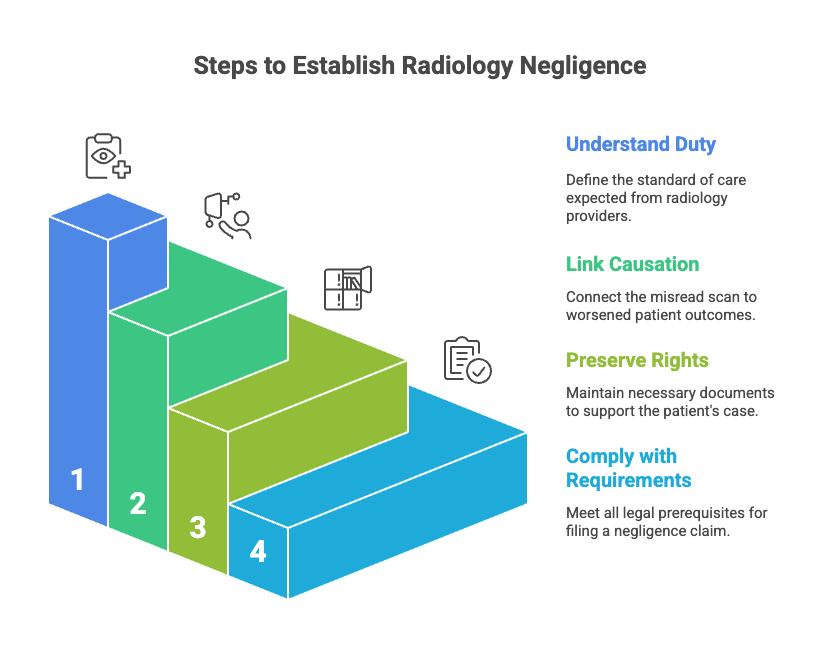
- Understand duty and breach: providers must meet the accepted standard of care in radiology.
- Link causation and damages: connect the misread scan to worsened outcomes and measurable losses.
- Preserve patient rights: retain consent forms, reports, and communications to establish obligations.
- Comply with Florida’s pre-suit requirements: rely on expert support to validate negligence and quantify harm.
These rights assure accountability, promote safer practices, and support meaningful recovery.
Steps to Take After a Florida Misread Radiology Scan Injury
After a suspected misread radiology scan, we should act promptly by securing appropriate medical care to address any urgent health risks and document the true diagnosis.
We then need to preserve all imaging, reports, discharge summaries, and communications, requesting copies in their native formats to maintain evidentiary integrity.
Finally, we should consult a Florida injury attorney without delay, so counsel can evaluate liability, protect deadlines, and guide next steps.
Seek Immediate Medical Care
Prompt action often makes the difference between a manageable complication and a lasting injury, so we should seek immediate medical care at the first sign a radiology scan may have been misread.
When pain worsens, new symptoms emerge, or prior guidance no longer aligns with how we feel, we should request an urgent evaluation. Early intervention can stabilize a hidden condition, prevent cascading harm, and create a clear clinical path forward.
We should describe the original scan, the suspected error, and all current complaints, including timing and severity. Careful symptom monitoring helps clinicians prioritize tests and treatments.
If breathing, neurological, or severe abdominal symptoms appear, we should call emergency services. By engaging qualified providers promptly, we safeguard health, limit complications, and demonstrate diligence in addressing evolving risks.
Preserve Imaging and Records
Stabilizing our health comes first, and the next priority is safeguarding evidence by preserving every image and medical record connected to the scan.
We request complete copies of radiology images in DICOM format, along with radiology reports, orders, technician notes, and discharge summaries.
We document dates, facilities, and providers, and we maintain a clear chain of custody for all files and disks.
We secure duplicates in encrypted storage to uphold data security, and we avoid altering original media.
We obtain written patient consent before sharing records with any reviewer, ensuring that access remains limited and auditable.
We record all communications with imaging centers, including acknowledgment of requests and delivery dates.
Finally, we keep a centralized log, index files, and back up everything to a separate, protected location.
Consult Florida Injury Attorney
With evidence preserved, we should promptly consult a Florida injury attorney who understands radiology malpractice and the state’s procedural rules.
Early counsel helps us meet strict presuit notice requirements, secure expert reviews, and avoid pitfalls that can undermine a valid claim.
We’ll want an attorney who can analyze imaging errors, chart entries, and communications, including telemedicine pitfalls that obscure responsibility.
Skilled counsel coordinates second-opinion radiology, timelines, and affidavits, ensuring our claim reflects both medical and legal standards.
They also address insurance disputes, challenge denials, and calculate damages tied to delayed diagnosis, additional treatment, and lost income.
During the consultation, we should ask about experience, strategy, and fee structure.
A prepared, mission-focused team guides us, protects deadlines, and advances a strong, fact-driven case.
How a Florida Misread Radiology Scan Injury Lawyer Can Help You
Manage the legal aftermath of a misread radiology scan with focused advocacy that protects your health and your claim. We investigate whether clinical negligence or diagnostic oversight caused preventable harm, then build a precise record that supports accountability.
Our role is to coordinate expert reviews, document causation and damages, and negotiate with insurers while you pursue proper medical care. We act promptly, preserve essential evidence, and protect deadlines that can determine the strength of your case.
Focused advocacy after a misread scan—protecting your health, preserving evidence, and pursuing full accountability.
- Case evaluation and strategy: We analyze imaging records, timelines, and standards of care, then craft a targeted plan to prove liability.
- Expert engagement: We retain board-certified radiology and medical experts to identify breaches, link delays to harm, and quantify losses.
- Evidence development: We obtain hospital policies, credentialing files, and audit trails, and conduct depositions that clarify fault.
- Resolution and relief: We seek full compensation for medical costs, lost income, and pain, and we prepare for trial to secure just results.
Long Term Effects of Florida Misread Radiology Scan Injuries
As we assess the long-term effects of a misread radiology scan in Florida, we must consider how delayed diagnosis can allow underlying conditions to worsen and complicate treatment.
We also recognize that untreated or undertreated injuries often lead to chronic pain progression, which can impair daily functioning and quality of life.
Beyond the physical harm, we’ll address the significant psychological burden and the sustained financial toll, including ongoing care, lost income, and future medical needs.
Delayed Diagnosis Complications
Although a misread radiology scan may seem like a single error, delayed diagnosis can set off a cascade of long-term complications that alter treatment options, outcomes, and quality of life. When disease advances unchecked, therapies that were once minimally invasive may become risky, costly, or no longer viable.
We see tumors upstage, infections spread, and fractures heal improperly, creating avoidable clinical hurdles.
We approach these cases with patient advocacy at the forefront, aligning medical records, timelines, and expert opinions to identify where diagnostic algorithms broke down. Delays often lead to extended hospitalizations, intricate surgeries, and prolonged rehabilitation, each increasing financial and physical burdens.
By documenting causation and foreseeable harm, we position you to seek resources for corrective care, safeguard future health needs, and prevent similar system failures.
Chronic Pain Progression
Frequently overlooked in the early aftermath of a misread scan, chronic pain can evolve from a manageable symptom into a debilitating condition that reshapes daily function and long-term health.
When injuries aren’t identified promptly, inflammation, nerve irritation, and untreated structural damage can intensify. Over time, we often see progressive neuropathy, muscle guarding, and joint stiffness compound, creating a cycle of pain and reduced mobility.
We help clients document symptoms, track pain triggers, and collaborate with treating providers. Targeted imaging, differential diagnosis, and conservative therapies can slow decline.
Activity modification, ergonomic support, and graded exercise protect healing tissues while preserving strength. Interventions such as nerve blocks, neuromodulation, and multidisciplinary pain management may be indicated.
Psychological and Financial Toll
While a misread radiology scan begins as a medical error, its long-term impact often reaches far beyond the body. We see clients steer through anxiety, disrupted sleep, and diminished confidence in medical care.
Emotional recovery requires time, counseling, and a steady plan for rebuilding trust, which we help coordinate with qualified professionals. Family members also carry strain, adjusting routines and absorbing new responsibilities.
The financial toll can be equally profound. Unexpected treatments, lost income, and repeated appointments accumulate quickly. We guide careful financial planning to stabilize budgets, project future care costs, and document losses for claims.
By aligning medical, psychological, and economic strategies, we protect your resources and your well-being. Together, we pursue accountability, secure necessary support, and create a path toward restored stability.
Proving Liability in Florida Misread Radiology Scan Medical Malpractice Injury Cases
Because liability turns on evidence and standards, we begin by establishing how a misread radiology scan deviated from accepted medical practice and caused measurable harm.
We analyze the clinical record, compare the radiologist’s interpretation to diagnostic standards, and identify missed findings a reasonably careful practitioner would have reported.
We then link the misread to delays, unnecessary procedures, or worsened outcomes through a clear medical timeline.
We secure qualified experts to conduct a peer review of the imaging and reports, addressing breach and causation with specificity.
Their opinions must be grounded in Florida law and authoritative guidelines, not conjecture.
We corroborate testimony with treating provider notes, imaging metadata, and comparison studies, strengthening the chain of proof.
We also preserve and authenticate all radiology data, including DICOM files and audit trails, to show what was available at the time of reading.
Finally, we satisfy pre-suit requirements, serve detailed notices, and present a concise, evidence-driven liability narrative.
Compensation for Florida Misread Radiology Scan Damages
After establishing fault, we turn to securing full compensation that reflects the true scope of losses caused by a misread radiology scan. We assess every category of damages with rigor, documenting medical expenses, future treatment, rehabilitation, and necessary assistive devices.
We also pursue lost wages, diminished earning capacity, and the cost of in‑home support, ensuring your financial stability during recovery.
We place patient advocacy at the center of valuation. That means quantifying pain and suffering, loss of enjoyment of life, and the emotional burdens of delayed diagnosis or unnecessary procedures. When appropriate, we address disfigurement and permanent impairment through expert-driven evaluations that withstand scrutiny.
We leverage technology advances to substantiate claims, using digital imaging audits, timeline analytics, and life-care planning software to present precise, defensible projections. Our team secures expert testimony from radiology, oncology, neurology, and economics, linking the misread scan to each loss.
Ultimately, we seek thorough, negotiated, or litigated results that restore dignity and resources.
The Statute of Limitations for Florida Misread Radiology Scan Injury Cases
Securing compensation requires timely action, and Florida’s statute of limitations sets firm deadlines that can foreclose valid claims if missed.
In medical malpractice matters involving misread radiology scans, the general rule requires filing suit within two years of when we knew, or should have known, of the injury and its potential medical cause. A four‑year outer limit, often called the statute of repose, can bar claims even before they warrant attention.
Because radiology errors may remain hidden, the latent discovery of harm can influence timing. When a reasonable patient couldn’t detect the misread until later, the clock may start upon discovery.
Limited tolling exceptions can pause deadlines, such as fraudulent concealment by a provider, a minority of the patient, or the mandatory pre‑suit investigation period.
We should document dates carefully, preserve records, and act without delay. Prompt evaluation protects your rights, aligns with our duty to serve, and keeps essential options open.
Why You Need an Experienced Florida Misread Radiology Scan Injury Lawyer
Although every malpractice case demands care, misread radiology scan injuries require focused legal and medical insight that most general practitioners don’t bring to the table. We appreciate how a missed tumor, stroke, or fracture can change a life, and we build cases that show precisely where the process failed.
Our role is rigorous patient advocacy, grounded in Florida law and the diagnostic standards that govern radiologists, imaging centers, and treating providers.
We coordinate independent experts who evaluate scans, report protocols, and handle handoffs between radiology and clinicians. By mapping what should have happened against what did, we establish causation and damages with clarity.
We also preserve vital evidence quickly, manage insurer and hospital communications, and quantify long‑term losses, including future care and lost earning capacity.
When the stakes are high, experience prevents avoidable mistakes. We recognize the proof burdens, the defenses, and the pathways to timely, fair resolution that honors your recovery.
How to Choose the Right Florida Misread Radiology Scan Injury Lawyer for Your Case
Experience matters, but choosing the right lawyer requires more than years in practice. We should evaluate a firm’s specific record with misread radiology scan cases, including outcomes, expert use, and courtroom readiness. We also confirm that the team understands medical standards and knows how to challenge radiology protocols, reporting workflows, and causation defenses.
We set clear client expectations at the outset. We look for counsel who explains timelines, communication practices, and the decision points that affect settlement or trial. We ask how frequently we’ll receive updates, who handles our file day to day, and what support staff will do.
We scrutinize fee structures before signing. We request a written contingency agreement, clarify costs advanced, and confirm how expenses are deducted, whether before or after the fee. We also assess resources: access to radiology experts, nurse consultants, and forensic economists. Finally, we seek references, verify disciplinary history, and guarantee professional liability coverage.
About the Law Offices of Anidjar and Levine
Built on rigorous advocacy and meticulous case preparation, the Law Offices of Anidjar and Levine brings a results‑driven approach to Florida radiology scan injury claims.
We focus on restoring your stability while we pursue accountability from negligent providers and facilities.
Our team understands how misread scans derail treatment, so we move quickly, preserve evidence, and coordinate with leading medical experts to substantiate causation and damages.
We prioritize patient communication, keeping you informed at each phase, explaining options, and ensuring your voice guides the strategy.
Our attorneys measure every action against established practice standards, demonstrating where care fell short and how that deviation harmed you.
We prepare every case as if it will proceed to trial, which strengthens negotiation leverage and protects your timeline.
We manage insurer contacts, schedule independent reviews, and document long‑term needs. You receive direct access to your legal team, prompt updates, and disciplined advocacy that seeks full and fair compensation.
Frequently Asked Questions
Can I Change Radiologists After a Misread Without Harming My Case?
Yes, we can change radiologists after a misread without harming your case, provided we proceed carefully. We’ll notify providers in writing, request complete imaging and reports, and preserve records to maintain continuity.
We’ll avoid altering or discarding originals, document timelines, and secure independent second opinions. We’ll also instruct new radiologists to review prior studies. By coordinating care and chain-of-custody, we protect your medical interests while safeguarding potential claims and evidentiary integrity.
Will My Health Insurer Demand Reimbursement From Any Settlement?
Yes, your health insurer may seek reimbursement from any settlement under its subrogation rights. Many policies and ERISA plans assert insurer liens for medical expenses they paid, which attach to your recovery.
We’ll verify the plan documents, assess whether state or federal law governs, and challenge unsupported or excessive claims. We’ll also negotiate reductions based on common-fund and made-whole doctrines where applicable, maximizing your net recovery while honoring valid obligations and maintaining ethical stewardship.
Are Second-Opinion Radiology Reviews Confidential During a Lawsuit?
Yes, second-opinion radiology reviews can be confidential if we structure them under the attorney-client relationship and work-product doctrine.
We often retain experts through counsel, preserving secrecy unless we choose to disclose. Hospital peer review materials may also be protected by statute, though protections vary by jurisdiction and waiver risks exist.
We’ll assess your goals, engage qualified reviewers, and implement confidentiality protocols to safeguard strategy while preparing admissible expert testimony when it best serves your case.
Can I Sue Tele-Radiology Companies Based Outside Florida?
Yes, we can sue tele-radiology companies based outside Florida, but we must address jurisdiction challenges and cross-border liability. Courts often look at where the harm occurred, where services were directed, and contractual terms.
We evaluate personal jurisdiction, service of process, and venue strategy, then assess insurance coverage and enforceability of judgments. We also coordinate with out-of-state counsel, preserve digital evidence, and secure expert testimony to strengthen causation and standard-of-care arguments.
How Do Misreads Affect Life Insurance or Disability Claim Approvals?
Misreads can derail approvals by creating inconsistent medical records that insurers cite to deny claims, delay processing, or reduce benefits.
We counter this by securing corrected readings, physician affidavits, and timelines linking symptoms to accurate diagnoses.
For disability, misreads may skew impairment ratings or trigger benefit offsets against other coverage.
For life insurance, they can prompt rescission if misclassification implies misrepresentation.
We advocate prompt appeals, expert reviews, and meticulous documentation to restore eligibility and maximize benefits.
Conclusion
We’re ready to protect your rights and pursue the compensation you merit after a misread radiology scan.
The Law Offices of Anidjar and Levine investigates rapidly, consults qualified experts, and builds a clear, evidence-driven case.
We guide you through deadlines, negotiations, and litigation while you focus on recovery.
If a radiology error harmed you, don’t wait. Reach out to discuss your options, understand the statute of limitations, and secure decisive representation.
We’re here to advocate relentlessly and seek the accountability your case demands.
Learn more: Medical Malpractice Injury Lawyer


We Can Help.