

A Miami workers’ compensation accident lawyer can help injured employees understand Florida claim requirements, document how a workplace hazard contributed to an injury, and pursue available medical and wage-loss benefits. Common causes include falls, unsafe machinery, repetitive tasks, vehicle collisions, and hazardous work conditions. Workers should report injuries promptly, seek authorized medical care, and preserve relevant records and photographs. The Law Offices of Anidjar and Levine can provide legal guidance on delayed or disputed benefits and help identify potential third-party claims, including those that may involve a Miami Personal Injury Lawyer. The following sections explain these issues and next steps.
Main Takeaways
- A Miami workers’ compensation lawyer can assess whether your injury arose out of and occurred during your employment.
- Workers’ compensation generally does not require proof that your employer caused the accident.
- Common causes include slips, unsafe machinery, repetitive tasks, vehicle collisions, and hazardous work conditions.
- Report injuries promptly, seek authorized medical care, and preserve accident reports, photos, witness details, and medical records.
- A lawyer can review claim evidence, explain deadlines and benefits, and help address delayed, denied, or disputed claims.
How We Can Help With Your Miami Workers Comp Accident Causes Injury Claim
When a workplace accident causes an injury, a Miami workers’ compensation lawyer can help an employee understand the claims process and pursue available benefits. Legal guidance can clarify Claim eligibility, explain filing requirements, and identify records needed to support an application. This assistance helps injured workers make informed decisions while they focus on recovery and their responsibilities at home and in the community.
A lawyer can review claim documents, communicate with the employer and insurer, and address requests for additional information. If benefits are delayed or denied, counsel can explain available options and help the employee respond within applicable deadlines. Attention to benefit coordination can also help prevent confusion when workers’ compensation overlaps with other sources of support. Each case requires careful review of its facts, medical information, and procedural status.
Understanding Miami Workers Comp Accident Causes Injury Cases


Understanding how an accident occurred is an important part of evaluating a Miami workers’ compensation case. A careful review can clarify how the injury relates to the employee’s duties and whether it arose in the course of employment. Relevant information may include incident reports, medical records, witness accounts, and workplace procedures. These details help establish a clear timeline and identify questions that may require further investigation.
OUR CONSULTATIONSARE FREE
START YOUR FREE CASE REVIEW

Workers’ compensation cases also involve evaluating the injury’s effect on the employee’s ability to work and the treatment needed for recovery. Accurate documentation can support decisions about medical care, wage benefits, and any continuing limitations. Employers and employees both benefit when concerns are reported promptly, and records are maintained consistently.
A strong Workplace safety culture encourages reporting and responsible follow-up without discouraging workers from seeking care. Attention to occupational hazard prevention can also inform future safety improvements. Understanding the circumstances of an injury helps guarantee that claims are evaluated fairly and that workplace responses serve employees and the broader community.
Don’t Wait. Call Our Florida Personal Injury Lawyers Now!
Common Causes of Miami Workers’ Comp Accident Causes


Common workplace accidents in Miami include slips and falls, equipment-related incidents, and vehicle collisions. Repetitive motion injuries also occur when job duties require frequent, sustained movements. Identifying how these events happen can clarify the circumstances that may support a workers’ compensation claim.
Slips and Falls
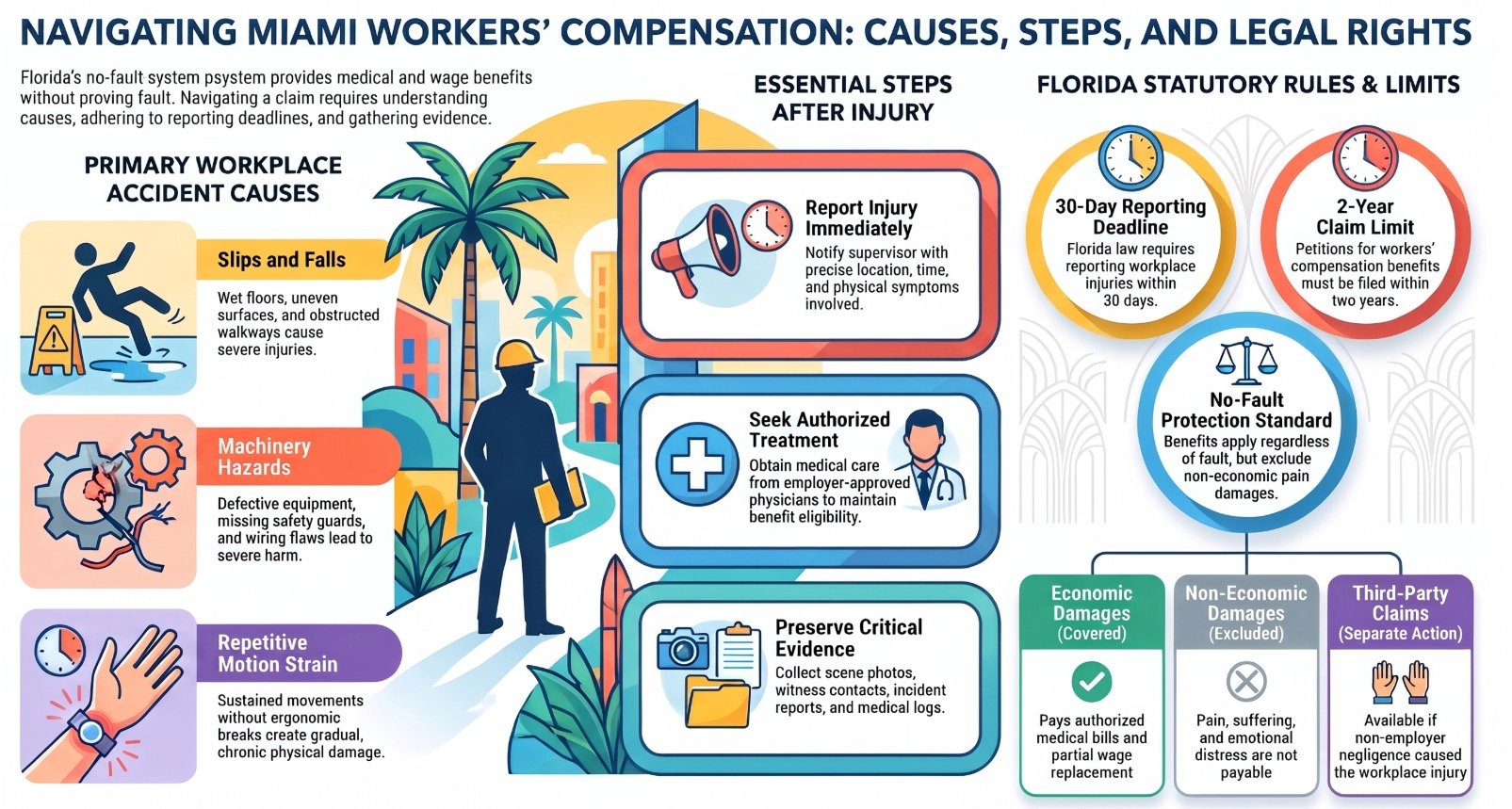
Slips and falls are a common cause of workplace injuries in Miami, especially in areas with wet floors, uneven surfaces, loose cords, or obstructed walkways. These incidents can cause sprains, fractures, head injuries, and back damage, sometimes requiring substantial medical care and time away from work. Wet Floor Hazards often arise during cleaning, after spills, or near entrances during rainy weather. Employers can reduce risks by promptly addressing moisture, placing visible warning signs, and keeping paths clear. Stairway Falls may occur when steps are damaged, poorly lit, or missing secure handrails. Regular inspections and timely repairs can help protect employees, visitors, and the people they serve. When a worker is injured, documenting the location, conditions, and witnesses may support a workers’ compensation claim and clarify the circumstances.
Equipment Accidents
When machinery or tools are defective, improperly maintained, or used without adequate training, equipment accidents can cause serious workplace injuries in Miami. Workers in construction, manufacturing, health care, and other service settings may face hazards from presses, saws, forklifts, or powered hand tools. Missing Machine guarding can expose employees to moving parts, while faulty wiring or unstable equipment may cause burns, crushing injuries, or electric shock. Employers can reduce these risks through regular inspections, prompt repairs, clear operating instructions, and appropriate protective equipment. Lockout procedures are necessary when machinery is cleaned, repaired, or serviced because they help prevent unexpected startup. Workers who report unsafe equipment or seek medical attention after an incident can help protect themselves and coworkers. Documenting the event and injury may also support a workers’ compensation claim.
Repetitive Motion Injuries
Repetitive motion injuries can develop when Miami workers perform the same movements for extended periods without adequate rest or changes in posture. Employees in health care, food service, offices, and other service roles may face this risk while lifting, typing, reaching, or assisting clients throughout a shift. Repetitive Strain can affect muscles, tendons, and joints, causing pain, weakness, numbness, or reduced mobility. Symptoms may emerge gradually and worsen when demanding tasks continue without appropriate adjustments. An Ergonomic Risk assessment can identify workstation problems, forceful movements, awkward positions, and insufficient recovery time. Employers may reduce exposure through task rotation, suitable equipment, scheduled breaks, and training on safer work methods. Workers who develop symptoms should report them promptly and seek medical evaluation, since timely care and accurate records can support recovery and a workers’ compensation claim.
Vehicle Collisions
Vehicle collisions can cause serious workplace injuries for Miami employees who drive as part of their job or travel between work sites. Delivery drivers, construction crews, health care workers, and other employees may face traffic risks while serving customers or supporting vital operations. Crashes can result from distracted driving, speeding, fatigue, unsafe weather conditions, or other motorists’ negligence. Employers can reduce preventable hazards through regular fleet maintenance, driver training, safe scheduling, and clear policies against cellphone use behind the wheel. Even when a collision occurs during a work-related trip, questions may arise about whether the employee was acting within job duties and which benefits may apply. Workers’ compensation may cover medical care and partial wage replacement for eligible employees, regardless of fault. Prompt reporting and accurate records can help preserve a claim.
Legal Rights of Miami Workers’ Comp Accident Causes Injury Victims
Miami workers injured in job-related accidents may have rights to medical care and wage-loss benefits under Florida’s workers’ compensation system, regardless of who caused the accident. These protections can help injured employees focus on recovery while maintaining vital support for themselves and their families.
Miami workers may receive medical care and wage-loss benefits after a job-related injury, regardless of who caused the accident.
Eligible workers may generally seek authorized medical treatment and benefits when an injury prevents them from working or limits their duties. They should report the accident promptly, follow required procedures, and keep records of medical care and communications.
Workers also have important protections when asserting a valid claim:
- They may request benefits for covered injuries without proving employer negligence.
- They may seek legal guidance if a claim is denied, delayed, or disputed.
- They are protected from Employer retaliation for exercising workers’ compensation rights.
Workplace safety regulations and workers’ compensation rights serve different purposes, but both support safer, more responsible workplaces. A worker who helps colleagues or serves the community should not have to choose between recovery and financial stability. An attorney can explain deadlines, benefit options, and available steps based on the individual circumstances.
Why Do Miami Workers Comp Accident Causes Injuries Happen?
Why do workplace accidents cause injuries in Miami? They often occur when job demands, unsafe conditions, and inadequate precautions combine. In busy workplaces, employees may face moving machinery, unstable surfaces, electrical hazards, heavy loads, or chemical exposure. Construction, healthcare, transportation, hospitality, and warehouse work each present distinct risks, especially when tasks are rushed or staffing is limited.
A weak Workplace safety culture can allow hazards to persist. If employers do not provide effective training, maintain equipment, enforce safety procedures, or address reported concerns, workers may be more likely to suffer preventable harm. Fatigue, poor communication, and insufficient supervision can also contribute to mistakes and dangerous decisions.
Some injuries arise from hazardous work environments, including poorly lit areas, excessive heat, cluttered walkways, and inadequate protective equipment. Miami’s climate may intensify heat-related risks for outdoor workers. Accidents can result from a single event or repeated exposure, and their causes may involve several conditions rather than one isolated failure.
What Should You Do After a Miami Workers Comp Accident Causes Injury?
After a workplace injury in Miami, the employee should promptly report it to the employer and follow the required procedures. The employee should also seek appropriate medical care and clearly explain that the injury occurred at work. Keeping records of the accident, treatment, and related communications can help support a workers’ compensation claim.
Report the Injury
When a workplace accident causes an injury, the employee should notify the employer as soon as possible, even if the injury seems minor or symptoms develop later. Prompt Supervisor notification creates a clear record and allows the employer to begin the required workers’ compensation process. The employee should tell a supervisor or designated manager what happened, when and where it occurred, and which body parts were affected. If the employee cannot report personally, a trusted representative may provide notice when appropriate. The employee should also complete any incident forms requested and keep copies of written reports or related correspondence. Reporting deadlines can affect eligibility for benefits, so the employee should not assume that an informal conversation is sufficient. Accurate, timely notice helps protect the employee’s rights and supports a fair, orderly response.
Seek Medical Care
Prompt injury reporting should be followed by timely medical care, even if the employee believes the condition is minor or expects it to improve. A qualified medical professional can assess the injury, identify complications, and recommend appropriate treatment. Employees should follow the employer’s workers’ compensation procedures for selecting an authorized provider, since care requirements may vary. For severe symptoms, such as heavy bleeding, difficulty breathing, or suspected fractures, an Emergency clinic or emergency department may be necessary. In less urgent situations, the employee can ask the employer or claims administrator about an approved clinic or whether a telehealth consultation is available. During the appointment, the employee should describe symptoms accurately and disclose relevant medical history. Following treatment instructions and attending recommended follow-up visits supports recovery and helps prevent avoidable complications.
Document the Accident
Accurate documentation can help establish how a workplace accident occurred and how it affected the employee. As soon as practical, the injured worker should record an Incident timeline, noting when and where the event happened, what tasks were underway, and when symptoms began. A clear sequence can help preserve details that may fade over time.
The employee should also provide a hazard description, including unsafe equipment, spills, poor lighting, or other conditions that may have contributed. Photographs of the scene, equipment, and visible injuries may offer useful context, if they can be taken safely. Collect names and contact information for witnesses, and preserve relevant messages or work records. Report to a supervisor promptly, and retain a copy when possible. Accurate, factual records can support a fair review and help protect the worker’s interests.
Critical Evidence in a Miami Workers Comp Accident Causes Injury Case
Evidence can help establish how the accident occurred, the injuries sustained, and their connection to work.
Essential records and accounts may include:
- Accident reports and medical records
- Witness statements
- Photographs of the accident scene
Accident Reports
When a workplace accident causes an injury, the incident report can establish when, where, and how it occurred. A prompt, accurate account may help an employer and insurer evaluate the circumstances and preserve details before memories fade. Workers should follow applicable report deadlines and use designated reporting channels, such as a supervisor, human resources office, or company reporting system. The report should identify the date, time, location, task being performed, equipment involved, and any witnesses. It should describe events objectively, distinguish observed facts from assumptions, and avoid speculation about fault. A copy of the submitted report and related correspondence can help document that notice was given. For employees whose work supports others, clear reporting also helps organizations address hazards and reduce the risk of similar incidents affecting coworkers.
Medical Records
Medical records can help establish the nature, severity, and timing of an injury in a Miami workers’ compensation case. Physicians’ notes, diagnostic imaging, prescriptions, and therapy records may document how an injury affects an employee’s ability to work and perform daily tasks. These materials can also connect reported symptoms to clinical findings and show whether additional care was recommended.
Record consistency matters because differences in symptom descriptions, dates, or medical history may prompt questions about the claim. Treatment chronology can clarify when care began, how symptoms changed, and whether the employee followed medical guidance. Prompt evaluation and accurate disclosure of relevant health information can help create a clear record for those reviewing the case. Organized medical documentation may support a fair assessment of benefits and necessary treatment while respecting the worker’s health needs.
Witness Statements
Witness statements can clarify how an accident occurred and whether workplace conditions contributed to an injury in a Miami workers’ compensation case. Coworkers, supervisors, and other people who observed the event may describe the worker’s actions, the sequence of events, and any safety concerns they noticed. Their accounts can help explain how an injury arose and may support a fair review of the claim.
Witness Credibility depends on factors such as firsthand knowledge, the ability to observe relevant events, and a willingness to provide accurate information. Statement Consistency also matters. Differences between an initial account and later testimony may require clarification, particularly when time has passed or details were difficult to observe. A careful record of each witness’s account can preserve useful information and help decision-makers assess the evidence. Respectful, neutral questioning can encourage complete responses without leading witnesses or placing undue pressure on them.
Scene Photographs
Photographs of an accident scene can preserve details that may change or disappear before a Miami workers’ compensation claim is reviewed. Images may document hazards, equipment placement, lighting, warning signs, and walkway conditions immediately after an injury. These details can help explain how an incident occurred and support a clear account of workplace conditions.
Photographs should include wide views showing the surrounding area and close views that capture specific hazards or damage. Different Camera Angles can clarify distances, sightlines, and the relationship between workers and equipment. Photograph Metadata, including timestamps and device information, may help establish when images were created, although it should be preserved and interpreted carefully. Images should remain unaltered, with original files retained whenever possible. Accurate scene photographs can assist claims reviewers and those responsible for improving workplace safety.
Don’t Wait. Call Our Florida Personal Injury Lawyers Now!
Long-Term Effects of Miami Workers’ Comp Accident Causes Injuries
Injuries from workplace accidents may cause chronic pain that persists long after initial treatment ends. Some workers experience lasting mobility limits that affect daily activities and their ability to return to work. Emotional effects, including anxiety or distress, may also require attention as part of long-term recovery.
Chronic Pain
When a workplace injury causes pain that persists beyond the expected recovery period, chronic pain can interfere with an employee’s ability to work and manage daily activities. The discomfort may continue even after the original injury has recovered, affecting concentration, mood, and the capacity to complete routine responsibilities. Sleep disruption can further reduce energy and make it harder to maintain consistent performance at work or at home.
Appropriate Pain management may involve medical evaluation, prescribed treatment, and ongoing monitoring to address symptoms and support function. Employees should follow care recommendations and keep records of symptoms, appointments, and work-related effects. In Florida, workers’ compensation may cover reasonable and necessary medical care for a compensable injury, subject to applicable rules. Clear documentation can help explain how persistent pain relates to the workplace accident and affects the employee’s ability to serve colleagues, customers, and family members.
Lasting Mobility Limits
Persistent pain may accompany lasting mobility limits after a workplace accident, restricting an employee’s ability to walk, stand, lift, or perform other routine tasks. Injuries to the back, joints, or limbs can also reduce balance, flexibility, and strength, making familiar work duties difficult or unsafe. Some employees may need modified schedules, lighter assignments, or a gradual return to work while recovering. When limitations persist, an employer may consider reasonable workplace adjustments, such as accessible work areas or revised job tasks. Adaptive equipment, including braces, mobility aids, or modified tools, may support independence and safe participation in daily activities. Accessible transportation can help an injured worker reach medical appointments and the workplace when driving or using standard transit is no longer practical. Medical records and functional assessments can document these needs and guide ongoing care and planning.
Emotional Effects
After a serious workplace accident, an employee may experience lasting emotional effects alongside physical symptoms. Ongoing pain, reduced independence, or uncertainty about returning to work can contribute to Workplace anxiety. The employee may worry about another injury, financial stability, or whether former duties remain manageable. These concerns can affect concentration, sleep, and confidence, making recovery more difficult.
Emotional changes may also influence relationships at home. When an injured worker needs additional care or cannot participate in familiar responsibilities, family strain may develop. Loved ones may face added stress as they adjust to changing routines and financial pressures. Such effects are not a sign of weakness; they can be part of the response to a serious injury. Support from qualified health professionals, family members, and appropriate workplace resources may help address these challenges and support a more stable recovery.
Proving Liability in Miami Workers Comp Accident Causes Injury Cases
Proving liability in a Miami workers’ compensation case generally does not require an injured worker to show that an employer was negligent. Workers’ compensation benefits are typically available when an injury arises out of and occurs in the course of employment, subject to legal requirements and exceptions. Evidence should establish how the incident happened, where it occurred, and how the resulting condition relates to job duties. Relevant records may include incident reports, medical evaluations, witness accounts, photographs, and workplace safety documentation.
Employer negligence is generally not the standard for obtaining workers’ compensation benefits, but the circumstances may matter when identifying other responsible parties. Third-party liability may arise if someone outside the employment relationship, such as a contractor, property owner, or equipment manufacturer, contributed to the injury. A separate claim may allow recovery beyond workers’ compensation benefits, though it requires evidence supporting fault and causation. Careful documentation can help clarify each party’s role and support a fair assessment of the injured worker’s needs. The legal process remains distinct from determining benefit eligibility.
Dealing With Insurance Companies After a Miami Workers Comp Accident Causes Injury
When a workplace injury occurs, communication with the workers’ compensation insurance company can affect how a Miami claim is evaluated and managed. Injured employees may be asked to describe the incident, symptoms, treatment, and work limitations. Clear, accurate answers help preserve a consistent account, while speculation or estimates can create misunderstandings. If a detail is uncertain, the employee can say so rather than guess.
Recorded calls require particular care. Before answering, the employee should understand who is calling and why they are requesting the information. Adjuster tactics may include seeking broad statements, questioning whether symptoms relate to work, or requesting details beyond the immediate incident. Employees should remain courteous, avoid minimizing their condition, and keep copies of written communications. Share medical information through appropriate channels, and direct questions about forms or requests to a qualified representative. Promptly reporting changes in symptoms and following medical guidance supports accurate communication while helping protect the employee’s interests and the integrity of the claim.
What to Expect During a Miami Workers Comp Accident Causes Injury Claim Process
A Miami workers’ compensation claim generally begins with promptly reporting the workplace accident and seeking appropriate medical treatment. The injured worker must then file the required claim documents and provide accurate information about the injury and its effects. If benefits are denied or disputed, the process may involve reviewing the decision and pursuing available resolution procedures.
Reporting the Workplace Accident
Prompt reporting is an important first step in a Miami workers’ compensation claim. An injured employee should notify a supervisor or employer as soon as reasonably possible, even when the injury appears minor or develops over time. Clear supervisor notification helps create a timely record of what happened, when it occurred, and where it took place. The employee should provide accurate details and identify any witnesses, while avoiding speculation about the cause.
Florida law generally requires an employee to report a workplace injury within 30 days after the accident or after recognizing a work-related condition. This Reporting deadline can affect eligibility for benefits, so delays may create complications. The employer may provide an accident report or other forms to complete. Keeping copies of submitted documents and noting the notification date can help preserve an organized claim record.
Seeking Medical Treatment
After notifying the employer, the injured employee should seek medical care promptly and follow the instructions provided for obtaining treatment through the workers’ compensation claim. In Florida, the employer or its insurance carrier generally directs Provider selection, so the employee should confirm which authorized physician or clinic to visit before receiving nonemergency care. Emergency treatment should not be delayed when immediate attention is necessary. The treating provider evaluates the injury, recommends appropriate care, and documents symptoms, findings, and work-related limitations. The employee should describe the incident accurately, disclose relevant medical history, and follow prescribed treatment. If additional services, medication, or expert care are recommended, the carrier may require treatment authorization. Keeping appointment records and copies of medical instructions can help guarantee continuity of care and support clear communication among the employee, provider, and claim representatives.
Filing the Injury Claim
Once the employee has reported the injury and begun authorized medical care, the employer generally must notify its workers’ compensation insurance carrier, which opens a claim and investigates the circumstances. The insurer may request records, statements, and other information to assess how the accident occurred and whether it arose from the employee’s work. The employee should provide accurate details, keep copies of relevant documents, and respond promptly to reasonable requests. A Claim Form may be required to document the injury and related information. Florida law generally requires an employee to report a workplace injury within 30 days, while separate deadlines may apply to filing a petition for benefits. Meeting each Filing Deadline helps preserve access to available benefits and supports an orderly review. Careful recordkeeping can also help those assisting the employee understand the claim’s progress.
Resolving Benefit Disputes
When an insurer disputes a workers’ compensation benefit, the employee may need to take formal steps to challenge the decision. The process generally begins with reviewing the denial notice, identifying the disputed issue, and gathering relevant medical records, accident reports, wage information, and witness statements. Benefit denial appeals must follow applicable deadlines and filing requirements, so prompt attention can help preserve the employee’s rights. In Florida, unresolved disputes may proceed through the state’s Office of the Judges of Compensation Claims, where mediation or a hearing may address the evidence. Payment delays can create financial strain, but clear documentation and timely responses may help move a claim forward. A qualified attorney can explain available procedures, communicate with the insurer, and help the employee present accurate information while seeking benefits needed for recovery and household stability.
Compensation for Miami Workers Comp Accident Causes Injury Damages
Compensation for a Miami workers’ compensation injury generally depends on how the workplace accident affected the worker’s ability to earn income and the medical care required. Benefits may cover authorized treatment, including physician visits, medication, surgery, and rehabilitation services related to the injury. Wage replacement may be available when a worker cannot perform job duties during recovery or can return only with reduced earnings. The amount and duration of payments depend on medical findings, work capacity, and applicable benefit rules.
When an injury causes lasting limitations, the worker may qualify for additional support, such as vocational rehabilitation. These services can help identify suitable employment, provide training, or assist with a safe return to work. Medical documentation is important because it connects the workplace accident to the injury and supports decisions about treatment and work restrictions. Employers and insurers may review that evidence when determining eligibility and benefit levels. A workers’ compensation attorney can explain available benefits and help address claim questions while the injured worker focuses on recovery and future employment.
Economic vs Non-Economic Damages in Miami Workers Comp Accident Causes Cases
Economic damages may include documented medical expenses and lost wages resulting from a workplace injury. Non-economic damages, such as pain and suffering, are generally treated differently under Florida workers’ compensation law. Understanding these distinctions also requires recognizing the limits of workers’ compensation benefits and when other legal remedies may apply.
Economic Damages
In Miami workers’ compensation cases, economic damages refer to measurable financial losses caused by a work-related injury, such as medical expenses and lost wages. These documented costs may include authorized treatment, prescriptions, rehabilitation, and necessary medical equipment. Lost wages can arise when an employee cannot work during recovery or must accept reduced hours. Records such as pay statements, medical reports, and employer documentation help establish the amount and duration of income loss. When an injury limits the ability to perform prior duties or reduces future work opportunities, diminished earning capacity may also be relevant. A careful assessment considers the worker’s job history, restrictions, and expected recovery. Accurate accounting helps ensure eligible benefits address practical financial needs and support a stable return to work, including continued service to the community when medically appropriate.
Non-Economic Damages
Beyond documented medical bills and lost wages, a work-related injury may cause pain, emotional distress, or reduced ability to take part in daily activities. These effects are commonly described as non-economic harm because they do not have a direct price or appear on a bill. Emotional Distress may include anxiety, depression, or difficulty coping with the consequences of an accident. Loss of enjoyment can describe reduced participation in family responsibilities, community service, or activities that previously gave a worker purpose. In Florida workers’ compensation cases, benefits generally focus on medical care and wage replacement rather than separate payment for pain and suffering. A worker’s circumstances may still be relevant when evaluating the injury and its impact. Clear records and consistent medical reporting can help explain these personal effects.
Workers’ Comp Limits
Although an injured worker may experience pain, emotional distress, or limits on daily activities, Florida workers’ compensation generally does not provide separate damages for these non-economic effects. Instead, benefits focus on measurable economic losses, including authorized medical care and partial wage replacement during periods of qualifying disability. The amount and duration depend on statutory rules, medical evidence, and the worker’s circumstances. A Maximum benefit may apply to certain payments, while waiting periods and benefit caps can restrict recovery. Coverage exclusions may also affect eligibility, particularly when an injury falls outside the system’s requirements or results from excluded conduct. Workers who rely on these benefits to support their households should report injuries promptly, follow treatment plans, and preserve relevant records. A qualified attorney can explain applicable limits and identify available benefits without promising compensation beyond what the law allows.
When a Miami Workers Comp Accident Causes Injury Case Goes to Trial vs Settlement
When a Miami workers’ compensation claim involves a disputed injury, denied benefits, or disagreement over medical care, the case may proceed to a hearing or trial rather than settle. Settlement negotiations can resolve a claim without a formal decision, often allowing the injured worker to obtain agreed benefits sooner and avoid the uncertainty of litigation. Any proposed agreement should be reviewed carefully to understand which benefits it covers and whether it addresses future medical needs.
If the parties cannot reach an acceptable resolution, trial preparation becomes important. The worker’s representative may organize medical records, employment information, witness statements, and other evidence to explain how the injury occurred and how it affects the worker’s ability to work. At a hearing, a judge reviews the evidence and arguments before issuing a decision. The process may take longer and require additional preparation, but it can provide a structured way to address unresolved disputes. The appropriate path depends on the facts, available evidence, and the worker’s needs.
Don’t Wait. Call Our Florida Personal Injury Lawyers Now!
Florida Laws That May Affect Your Miami Workers’ Comp Accident Causes Case
Florida law governs how a Miami workers’ compensation claim is reported, evaluated, and resolved. State statutes define which employers must carry coverage, what benefits may be available, and how disputes are reviewed. These rules help injured workers understand their rights while supporting fair, consistent treatment across workplaces.
Florida Coverage generally applies to businesses with four or more employees in nonconstruction industries, while construction employers usually must provide coverage with one or more employees. Employer Exemptions may apply in limited circumstances, including qualifying corporate officers or members who obtain an exemption under state requirements. Coverage status can affect the process for seeking benefits after a workplace accident.
Key legal considerations include:
- Whether the employer was required to maintain workers’ compensation insurance.
- Whether the worker’s duties and injury fall within the law’s coverage.
- Whether medical care and wage-loss benefits meet statutory standards.
A lawyer can review these issues, explain available options, and help workers pursue appropriate benefits while preserving their ability to support coworkers and dependents.
The Statute of Limitations for Miami Workers Comp Accident Causes Injury Cases
Deadlines for filing a Miami workers’ compensation claim can affect whether an injured worker receives benefits, even when the employer was required to provide coverage. Florida law generally requires an employee to report a work-related injury to the employer within 30 days after it occurs, or after the employee knows the injury may be work-related. These Notice deadlines are separate from the time limit for seeking benefits.
A claim for benefits generally must be filed within two years of the accident. If the employer or its insurance carrier provides benefits, a one-year period may apply after the last benefit payment, subject to statutory rules. Missing a deadline can bar a claim, so accurate records of the accident, reports, and benefit payments matter.
Limited filing extensions or exceptions may apply in specific circumstances, including when the employer had knowledge of the injury or the worker could not reasonably recognize its connection to employment. The applicable dates depend on the facts and governing law.
How a Miami Workers Comp Accident Causes Lawyer Can Help You
A Miami workers’ compensation lawyer can help an injured worker understand the claims process, meet required deadlines, and address disputes over eligibility or benefits. Through an Attorney case review, counsel can assess accident records, medical documentation, and employer reports to identify relevant evidence and explain available options. This guidance can help workers pursue benefits while maintaining accurate records and communicating clearly with insurers.
A lawyer may also assist by:
- Preparing and submitting claim forms and supporting documentation.
- Responding to benefit denials or requests for additional information.
- Coordinating with medical providers to clarify work restrictions and treatment needs.
When a workplace injury affects a worker’s ability to serve colleagues, clients, or the community, reliable legal guidance can reduce administrative burdens and support a fair process. Counsel can explain how reported accident causes relate to the claim and identify procedural issues that may require attention. Workplace safety advocacy may also involve documenting hazardous conditions and encouraging appropriate corrective measures, while keeping the workers’ compensation claim focused on applicable benefits and evidence. This support can help protect both individual interests and broader workplace well-being.
When to Contact a Miami Workers Comp Accident Causes Lawyer
When a workplace injury occurs, prompt legal guidance can help preserve evidence and clarify the steps required to pursue workers’ compensation benefits. A worker may contact a Miami workers comp accident causes lawyer soon after reporting the incident, particularly if the injury is serious, the cause is disputed, or the employer or insurer questions the claim. Early Consultation Timing can matter when medical records, witness accounts, and incident details need to be documented accurately.
Legal advice may also be appropriate if benefits are delayed or denied, medical care is restricted, or forms and deadlines are unclear. A lawyer can explain available procedures and help the worker understand what information may be needed, allowing the worker to focus on recovery and responsibilities to family or community.
Before arranging a consultation, the worker can gather accident reports, medical records, and insurer correspondence. Attorney Fees and payment arrangements should be discussed directly, including how fees are handled under applicable rules. Timely questions can support informed decisions without unnecessary delay.
Why You Need an Experienced Miami Workers Comp Accident Causes Lawyer
An experienced Miami workers’ compensation lawyer can assess how an accident’s circumstances relate to the worker’s claim and identify evidence that may support it. This review can clarify whether unsafe conditions, inadequate training, faulty equipment, or another cause contributed to the injury. It may also help establish how the incident affected the worker’s ability to perform job duties and what benefits may be available.
An attorney can explain reporting requirements, organize medical and workplace records, and address disputes over the cause or extent of an injury. If an employer challenges a claim or engages in Employer retaliation after a worker reports an accident, legal guidance can help protect the worker’s rights. The circumstances may also involve third-party negligence, such as a contractor’s unsafe conduct or defective machinery supplied by another company. Identifying that possibility can reveal options beyond workers’ compensation. With informed support, injured workers can pursue appropriate remedies while focusing on recovery and maintaining stability for their families and communities.
How to Choose the Right Miami Workers Comp Accident Causes Lawyer for Your Case
Choosing the right Miami workers’ compensation lawyer requires careful attention to the attorney’s experience with workplace accident claims and disputed causes of injury. A careful review can help an injured worker identify counsel prepared to protect access to medical care and wage benefits while responsibly serving the client’s interests.
Attorney credentials should be verified, including Florida licensure, relevant workers’ compensation experience, and any disciplinary history. The attorney should be able to explain how evidence such as incident reports, medical records, witness accounts, and safety documentation may clarify how an injury occurred. Clear answers about claim procedures, deadlines, and potential disputes can help a worker make informed decisions.
Communication style also matters. A prospective client can assess whether the lawyer listens carefully, explains options in plain language, and provides a reliable process for updates. The worker should ask who will handle routine questions and how promptly concerns are addressed. Comparing several qualified attorneys can support a reasoned choice based on experience, transparency, and respectful service.
About The Law Offices of Anidjar & Levine
The Law Offices of Anidjar & Levine represents injured workers in Miami and throughout Florida in workers’ compensation matters. The firm assists clients seeking benefits after workplace injuries, including medical care and wage replacement. Its attorneys review accident circumstances, explain available options, and help workers address disputes with insurers or employers. This support can be important for people whose recovery affects their families and ability to serve their communities.
Firm history reflects a practice focused on representing individuals facing serious injuries and related legal challenges. The firm’s work includes evaluating claims, gathering records, and communicating with insurers throughout the process. Each matter is assessed according to its specific facts, applicable law, and the worker’s needs.
Community involvement also forms part of the firm’s public presence. Through outreach and support for local initiatives, the firm engages with people across Florida. Workers considering legal assistance can review the firm’s experience and approach, then discuss their circumstances directly with its team. Clear communication helps clients understand the steps ahead and make informed decisions.
Frequently Asked Questions
Can I Receive Workers’ Compensation Benefits for a Repetitive Stress Injury?
Yes, workers’ compensation may cover a repetitive stress injury when it develops from job duties and medical evidence supports the connection. Repetitive Motions, such as typing, lifting, or assembly work, can cause Gradual Symptoms that worsen over time. The worker should report the condition promptly, seek medical evaluation, and document relevant tasks and symptoms. Eligibility depends on applicable state law, deadlines, and proof that employment substantially contributed to the injury.
What Happens if My Employer Disputes That My Injury Is Work-Related?
If an employer disputes whether an injury is work-related, benefits may be delayed or denied while the claim is reviewed. Proving work connection may require medical records, incident reports, witness statements, and evidence linking job duties to the condition. The Employer investigation process may include interviews and review of workplace records. The injured worker can challenge an adverse decision through the state’s claims process and should meet filing deadlines and follow medical advice.
Can I Choose My Own Doctor for a Florida Workers’ Compensation Injury?
Generally, an injured worker cannot choose any doctor for workers’ compensation medical treatment in Florida. The employer or insurance carrier usually selects and authorizes the treating physician, and care from an unauthorized provider may not be covered. If the worker is dissatisfied with the authorized physician, the worker may request a one-time change to another physician within the same specialty. Emergency care is an exception, but the carrier should be notified promptly.
Are Workers’ Compensation Benefits Taxable in Florida?
Workers’ compensation benefits are generally not taxable in Florida because Florida has no personal income tax, and federal IRS Treatment typically excludes benefits paid for work-related injuries or illnesses. This exclusion usually covers medical care, disability payments, and death benefits. However, certain offsets or payments connected to retirement or other income may be treated differently. A worker should review benefit statements and consult a qualified tax professional when circumstances involve multiple income sources or disputed classifications.
Can I Be Fired for Filing a Workers’ Compensation Claim?
An employer generally cannot lawfully fire a worker for filing a workers’ compensation claim in Florida. State law provides retaliation protections for employees who seek benefits after a work-related injury. However, an employer may terminate a worker for legitimate reasons unrelated to the claim, such as documented misconduct or business changes. If the timing or circumstances suggest retaliation, the worker may have grounds for a wrongful termination complaint and should seek legal guidance promptly.
—————————
Workplace accidents in Miami may result from unsafe equipment, inadequate training, hazardous conditions, or preventable errors. Injured workers should report the incident promptly, seek appropriate medical care, and learn about their rights. A workers’ compensation lawyer can review the circumstances, explain available benefits, and help address disputes or delays. The Law Offices of Anidjar and Levine can assess an injury claim and discuss possible next steps, helping workers make informed decisions about pursuing benefits under Florida law. For other injury matters, visit a Miami Personal Injury Lawyer.