

The Law Offices of Anidjar and Levine can help Doral property owners document storm and weather damage, review policy terms, and address an insurer’s delay, reduced payment, or denial. Relevant evidence may include photographs, inspection reports, repair estimates, receipts, weather records, and claim correspondence. Legal guidance can also clarify reporting deadlines, post-loss duties, and options for challenging an insurer’s decision under Florida law. Learn more about a Florida Personal Injury Lawyer. The sections below explain common storm damage issues, documentation steps, and how to evaluate legal representation.
Main Takeaways
- A Doral property claim lawyer can assess storm damage, review policy coverage, and explain claim deadlines and post-loss duties.
- Document damage with dated photos, videos, repair estimates, receipts, and a detailed inventory of affected belongings.
- Preserve weather records, inspection findings, and mitigation documents to help connect storm conditions with property damage.
- Keep receipts for reasonable emergency repairs and temporary housing expenses; coverage depends on policy terms.
- If an insurer delays, underpays, or denies a claim, request written reasons and review available appeal options.


How We Can Help With Your Doral Property Claim Storm & Weather Damage Injury Claim
A Doral property claim storm and weather damage lawyer can help property owners assess storm-related losses, document damage, and pursue benefits available under their insurance policies. Counsel can organize policy records, photographs, repair estimates, and communications with the insurer, helping clients present a clear account of the property’s condition and needs. This support can be especially valuable when a home or business requires prompt attention after severe weather.
Legal guidance may also help owners understand available coverage, meet claim deadlines, and respond to requests for information. When displacement occurs, counsel can clarify whether Emergency housing expenses may be covered and help clients preserve related receipts and records. Contractor coordination can support timely inspections and repairs while maintaining organized documentation of work and costs. Attorneys can communicate with insurers on the client’s behalf, address delays or disagreements, and explain practical options as the claim progresses. This assistance allows property owners to focus on safety, recovery, and the needs of household members or employees.
OUR CONSULTATIONSARE FREE
START YOUR FREE CASE REVIEW

Understanding Doral Property Claim Storm & Weather Damage Injury Cases
When severe weather damages a home or business in Doral, a property claim case concerns how the loss is documented, evaluated, and addressed under the insurance policy. These cases may involve questions about coverage, repair costs, deadlines, and the evidence needed to support a claim. Policy language matters because coverage limits, exclusions, and duties after a loss can shape the insurer’s review.
A careful record of damage, repair estimates, photographs, receipts, and communications can help clarify the extent of the loss. The policyholder may also need to take reasonable steps to prevent further damage while preserving evidence. Doral building codes can inform repair requirements, although code-related costs may be treated differently depending on policy terms and endorsements. Storm preparedness, including knowing where policy documents are stored and how to report a loss, can help residents respond in an orderly way.
A fair review should consider the policy, available documentation, and applicable requirements, while recognizing the practical needs of affected households and businesses.
Common Causes of Doral Property Claim Storm & Weather Damage
Doral properties may sustain damage from hurricane-force winds that weaken roofs, break windows, or dislodge exterior materials. Wind-driven rain, hail, and airborne debris can cause additional harm, while flooding and drainage failures may allow water to enter buildings or damage foundations. Identifying the source and extent of the damage is an important step in evaluating a property claim.
Hurricane-Force Winds
During severe storms, hurricane-force winds can damage Doral properties by tearing off roofing materials, breaking windows, and allowing rain to enter the building. These forces may also dislodge siding, damage doors, and propel debris into exterior surfaces. Roof uplift occurs when wind pressure separates roofing components from the structure, exposing underlying materials and weakening connections. If critical supports or load-bearing elements are compromised, structural failure may follow, creating serious safety concerns for occupants and neighboring properties. After a storm, property owners can help protect others by restricting access to hazardous areas and arranging a careful inspection by qualified professionals. Photographs, repair records, and prompt notice to the insurer may support an accurate claim assessment. A thorough evaluation can distinguish wind-related damage from preexisting wear and identify necessary repairs before conditions worsen.
Wind-Driven Rain
Although wind-driven rain may appear to be a minor consequence of a storm, it can cause substantial property damage when gusts force water through damaged roofs, windows, doors, or exterior walls. In Doral, intense rainfall combined with strong winds can expose weaknesses in a building’s protective envelope. Deteriorated Roof flashing may allow water to enter around chimneys, vents, and roof edges, while compromised window seals can permit moisture to seep behind frames and into interior spaces. Once inside, water may stain ceilings, damage insulation, warp flooring, and encourage mold growth if repairs are delayed. Property owners who document visible damage and take reasonable steps to limit further water intrusion can support a clearer assessment of their losses. Prompt inspection helps identify hidden moisture and preserve evidence relevant to an insurance claim.
Hail And Debris
Beyond wind-driven rain, hail and airborne debris can directly damage a property’s exterior and expose it to further water intrusion. In Doral, hail may dent metal roofing, crack tiles, damage vents, or fracture skylights. Even when marks appear minor, compromised materials can weaken the building envelope and allow later rain to enter. Roof impact patterns help show where hail struck and whether damage is consistent with the reported storm. Windborne branches, signs, and other objects can puncture roof coverings, break windows, and damage siding. Debris trajectories may help explain the direction and force of impact, supporting a clear assessment of the event. Prompt documentation, including photographs and professional inspection findings, can assist owners and their representatives in presenting accurate claims and protecting occupants from continuing exposure to damaged building materials.
Flooding And Drainage Failures
When heavy rain overwhelms drainage systems, water can collect around Doral properties or enter buildings through low openings, damaged seals, and foundation gaps. Poor grading, clogged drains, undersized culverts, and malfunctioning pumps may worsen flooding, even when a storm causes no direct structural impact. Property owners and managers can reduce exposure through regular Drainage system maintenance, including clearing debris, inspecting outlets, and testing pumps before severe weather. A professional assessment can identify vulnerable entry points and recommend suitable flood barrier design for doors, garages, and other low openings. After flooding, prompt documentation of water levels, damaged materials, and mitigation work can support an insurance claim. Inspections, photographs, repair records, and timely notice to the insurer help establish the cause and extent of covered damage while limiting further loss.
Don’t Wait. Call Our Florida Personal Injury Lawyers Now!


Legal Rights of Doral Property Claim Storm & Weather Damage Injury Victims
Doral property owners and residents harmed by storm or severe weather conditions may have legal rights when an insurer delays, underpays, or wrongfully denies a covered claim. Policyholder rights include receiving a fair review under the policy and a clear explanation of the insurer’s decision. Coverage exclusions may limit recovery, but insurers must apply policy terms accurately and consider relevant evidence.
A careful review can help claimants understand available options and protect resources needed for repairs and recovery.
Important steps may include:
- Keep the policy, claim correspondence, estimates, and payment records organized.
- Request written reasons for a denial or reduced payment and identify the provisions cited.
- Seek guidance from a qualified professional when a dispute remains unresolved.
Claimants may challenge decisions through the insurer’s appeal process or pursue other remedies permitted by Florida law. Deadlines and policy conditions can affect those options, so prompt attention is important. Clear documentation and informed support can also help residents advocate responsibly for their households and community members facing similar setbacks.
Why Do Doral Property Claim Storm & Weather Damage Injuries Happen?
Storm and severe weather damage in Doral can result from hurricanes, tropical storms, intense rainfall, high winds, and lightning, which may compromise roofs, windows, drainage systems, and other parts of a property. Injuries often occur when these failures expose occupants, tenants, workers, or visitors to falling debris, broken glass, water intrusion, or electrical hazards. Flooded floors can create slippery conditions, while damaged ceilings, weakened structures, and displaced building materials may cause falls or impact injuries. Windborne objects can also break windows or damage exterior areas where people are present.
Some losses become more severe when property conditions increase the effects of a storm. Inadequate roof maintenance may allow water to enter through existing weaknesses, and poor drainage can contribute to flooding. Building code compliance may affect whether structures and safety systems withstand expected weather conditions. Delayed repairs, defective materials, or neglected hazards can further expose people to preventable harm during and after severe weather events.
What Should You Do After a Doral Property Claim Storm & Weather Damage Injury?
After a storm-related injury, the affected person should seek prompt medical attention and follow the provider’s recommendations. They should photograph property damage, preserve relevant records, and note when and how the loss occurred. The insurer should be notified promptly, with communications and claim-related documents kept for reference.
Seek Medical Attention
When a storm or other severe weather event causes an injury on a Doral property, the injured person should seek prompt medical attention, even if the symptoms initially seem minor. Emergency evaluation can identify injuries that are not immediately apparent, including head trauma, fractures, or breathing complications. If the condition appears life-threatening, emergency services should be contacted without delay. For less urgent concerns, a qualified healthcare provider can assess the injury and recommend appropriate treatment. The injured person should explain how the incident occurred and describe all symptoms accurately, helping clinicians make informed decisions. Following medical advice and attending recommended follow-up appointments can support recovery and prevent complications. Symptom monitoring is also important because pain, dizziness, swelling, or other changes may develop later. Prompt care protects the injured person’s well-being and may help others respond responsibly to similar hazards.
Document the Damage
Careful documentation can help establish the condition of a Doral property after severe weather causes an injury. Once immediate medical needs are addressed, a responsible record can support an accurate account of what occurred and help others assess the property’s condition.
Photographs and videos should show damaged areas, fallen materials, water intrusion, and any hazards connected to the incident. Images should be taken from several angles, with dates and locations recorded when possible. Written notes can describe weather conditions, the sequence of events, and visible changes, while avoiding speculation about the cause.
Inventory belongings affected by the storm, noting their condition, approximate age, and value. Preserve receipts, repair estimates, and records of temporary expenses in a secure location. Keep copies of all documentation and avoid discarding damaged items before they have been carefully recorded.
Notify Your Insurer
Once the damage and related expenses have been documented, the property owner should promptly notify the insurer of the storm-related incident. Early notice gives the insurer an opportunity to inspect the property and helps prevent avoidable delays. The owner should review the policy for reporting instructions, required forms, and Policy deadlines, since late notice may affect coverage. When contacting the insurer, the owner should provide accurate facts about the storm, observed damage, and any urgent protective measures taken. Speculation about the cause or extent of loss should be avoided until a qualified assessment is available. The owner should record the date, time, and method of each communication, along with the representative’s name and instructions. A written request for claim confirmation and a claim number can help establish a clear record for follow-up and support timely cooperation with the claims process.
Don’t Wait. Call Our Florida Personal Injury Lawyers Now!
Critical Evidence in a Doral Property Claim Storm & Weather Damage Injury Case
A well-supported Doral storm damage claim depends on evidence that documents the event, resulting damage, and reasonable repair costs.
Essential records may include:
- Dated photographs of storm damage
- Weather records and repair estimates
- Statements from witnesses who observed the damage or conditions
Together, these materials can help establish the cause and extent of the loss.
Storm Damage Photos
Photographs taken soon after a storm can preserve evidence of roof damage, water intrusion, fallen debris, and other conditions that may change during cleanup or repairs. Clear images can help property owners, insurers, contractors, and community representatives understand the visible scope of damage and coordinate a responsible response. Wide shots establish the location and overall condition, while close-ups document specific defects, damaged materials, and affected belongings. Images should be captured from safe positions, without entering unstable areas or disturbing debris that could pose a hazard. Photo metadata, including timestamps and device details, may help establish when and how images were created. Careful image organization by room, exterior area, and date can make records easier to review. Original files should be retained, with copies shared as needed and edits clearly identified.
Weather Records
Weather records can help establish the timing, intensity, and path of a storm affecting property in Doral. Official reports from NOAA archives may document rainfall totals, wind speeds, warnings, and storm movement near the property. Local weather station data can add detail about conditions during the hours when damage occurred. Radar imagery may show the storm’s direction and development, helping clarify whether reported conditions were consistent with the observed damage. These sources can support a careful review of when and how an event affected a building. Records should be matched to the property’s location and the relevant date, since conditions can vary across short distances. Preserving reliable weather documentation can help claim reviewers assess evidence fairly and understand the circumstances surrounding the loss, particularly when a clear account is needed to support the people affected.
Repair Estimates
Repair estimates provide a documented basis for evaluating the scope and cost of storm damage to a Doral property. A thorough estimate identifies affected areas, describes necessary work, and separates labor from materials. Contractor bids can help establish whether proposed costs reflect the local market and the repairs required to restore the property safely. Material pricing should be current and supported by clear quantities, specifications, and supplier information, particularly when storm damage requires custom or replacement items. Photographs, inspection findings, and itemized estimates can connect observed damage to proposed repairs and help clarify disputed amounts. Comparing multiple estimates may reveal omissions, inconsistent assumptions, or differences in repair methods. Organized documentation allows property owners and claim professionals to assess the claim more accurately and pursue a fair resolution that supports timely, responsible restoration for those relying on the property.
Witness Statements
When a storm-related condition causes injury at a Doral property, witness statements can help establish what happened and when. Visitors, employees, contractors, or nearby residents may have observed the hazard, reported it, or seen how long it remained unaddressed. Their accounts can clarify whether rain, wind, flooding, or debris created an unsafe condition and whether the property owner had notice.
Witness credibility depends on accurate, consistent details and a clear basis for personal observation. A statement should distinguish what the witness saw from what another person reported. Prompt statement preservation is important because memories may fade, contact information may change, and relevant details can be lost. Recording the date, location, conditions, and names of those present can support later review. These accounts may help insurers and decision-makers assess responsibility and the injury’s connection to the storm.
Long-Term Effects of Doral Property Claim Storm & Weather Damage Injuries
Storm and weather-related injuries may have lasting effects that continue well after the immediate damage is addressed. Chronic pain and reduced mobility can interfere with daily activities, work, and independence. Lasting emotional distress may also affect a person’s well-being and require ongoing support.
Chronic Pain
Chronic pain can persist long after a storm-related injury, affecting mobility, sleep, and the ability to perform routine activities. For people recovering from property-related accidents, ongoing discomfort may interfere with household responsibilities, employment, and efforts to support family or community members. Persistent symptoms can also create sleep disruption, which may contribute to fatigue and difficulty concentrating during the day.
A consistent medical evaluation can help identify the source and pattern of pain, while appropriate Pain management may include prescribed treatment, therapy, or other clinician-guided measures. Keeping records of symptoms, appointments, and related expenses can support continuity of care and help document the injury’s lasting effects. When pain continues despite treatment, follow-up with qualified providers may clarify next steps. Timely attention can help injured individuals pursue recovery while maintaining realistic expectations about the course of recovery.
Reduced Mobility
Reduced mobility can be another lasting effect of injuries sustained in storm-related property accidents. Falls on wet floors, collapsing materials, or debris may damage joints, bones, or nerves, limiting a person’s ability to walk, climb stairs, or complete daily tasks. These restrictions can affect work, medical appointments, and participation in community life. A careful assessment may identify necessary treatment, rehabilitation, home modifications, and assistive equipment. When a storm threatens a property, Accessible evacuation planning can help residents with limited movement reach safe areas without unnecessary risk. Property owners and responsible organizations should account for accessible routes, clear instructions, and appropriate assistance. If mobility aids are damaged during an incident, mobility aid protection may be relevant to documenting losses and arranging replacements. Accurate records can support evaluation of long-term needs and related property claims.
Lasting Emotional Distress
Following a storm-related property injury, some individuals experience lasting emotional distress even after their physical injuries begin to recover. Anxiety, disrupted sleep, or fear of returning to damaged spaces may interfere with daily responsibilities and relationships. Post traumatic stress can also affect concentration and a person’s sense of safety, particularly when reminders of the storm remain visible. These effects merit careful attention alongside physical treatment. Affected individuals may benefit from support from qualified mental health professionals, trusted family members, and community services. Practical assistance with housing, repairs, and claim documentation can also reduce ongoing pressure and help preserve stability. Emotional recovery may take time and can involve setbacks, so consistent care is important. Recognizing these challenges allows families, caregivers, and advocates to respond with patience and connect individuals to appropriate resources.
Proving Liability in Doral Property Claim Storm & Weather Damage Injury Cases
Proving liability in a Doral storm or weather damage claim requires evidence connecting the property loss to a covered event and establishing that the insurer failed to meet its obligations under the policy. A careful review of the policy, photographs, repair estimates, inspection reports, and weather records can help clarify the scope and timing of the damage. Establishing storm related causation may require showing that wind, rain, flooding, or another covered condition produced the specific loss rather than preexisting deterioration or inadequate maintenance. When a property owner’s conduct contributed to an injury or preventable damage, Proving property owner negligence may involve maintenance records, witness accounts, and evidence of unsafe conditions before the storm. These facts help distinguish responsibility for the property’s condition from the insurer’s contractual duties. Accurate documentation also supports a clear account of how the event affected residents, workers, or visitors, helping decision-makers assess the claim fairly and understand the consequences for those seeking safe, stable property conditions.
Dealing With Insurance Companies After a Doral Property Claim Storm & Weather Damage Injury
When a Doral property owner reports storm or weather damage, clear, consistent communication with the insurance company can help keep the claim focused on the policy and the documented loss. The owner should provide accurate information, preserve relevant correspondence, and keep copies of photographs, repair estimates, receipts, and inspection records. Prompt, organized responses can reduce misunderstandings and help the insurer evaluate the reported damage.
Policy interpretation may affect whether particular repairs, materials, or related losses are covered. If an insurer requests a recorded statement or broad authorization, the property owner should understand the request before responding and may seek qualified legal guidance. Any disagreement about coverage or valuation should be addressed with specific policy language and supporting evidence, rather than assumptions.
An attorney can review communications, explain available options, and help identify whether an insurer’s conduct raises concerns about bad faith. Careful advocacy can protect the owner’s interests while supporting a fair, evidence-based resolution and preserving resources needed to restore a safe property.
What to Expect During a Doral Property Claim Storm & Weather Damage Injury Claim Process
A Doral storm or weather damage claim typically begins with an initial review of the policy, reported losses, and available evidence. The property owner may need to document damage while the insurer conducts its investigation, which can include inspections and review of repair estimates. The process may conclude with a settlement, or continue through a dispute if the insurer’s decision or proposed payment is contested.
Initial Claim Review
During the initial review, the insurer evaluates the reported storm or weather damage, the policy’s coverage terms, and the evidence supporting the claim. This stage establishes how the claim will be assessed and which policy provisions may apply. A coverage review considers relevant limits, deductibles, exclusions, and conditions, while policy interpretation helps clarify how the contract addresses the reported event. The insurer may also check whether notice was timely and whether the claimed loss falls within the policy period. Questions about the cause or extent of damage may affect the review, but the insurer should explain what information remains necessary. A careful, fair assessment can help property owners understand their options and support timely decisions that protect household safety and community recovery. Legal guidance may clarify disputed terms and procedural rights.
Damage Documentation
Clear damage documentation helps establish the nature, extent, and likely cause of storm-related property loss in Doral. After a storm, owners should record affected areas promptly, before cleanup or repairs alter visible conditions. Photographs and video can show roof openings, water intrusion, damaged belongings, and the progression of stains or cracking. A dated inventory should identify each item, its condition, and estimated value, supported by receipts or prior photographs when available.
Qualified professionals may prepare written assessments, measurements, and repair estimates. Moisture mapping can locate damp materials beyond surfaces that appear wet, while material sampling may help characterize affected building components when needed. Records should distinguish observed damage from suspected causes and note when each observation was made. Organized documentation can help claimants present accurate information and support a fair resolution while preserving evidence for responsible property restoration.
Insurer Investigation
After a storm-related property claim is filed, the insurer typically investigates the reported damage, its cause, and the coverage available under the policy. This Claim investigation may include reviewing the policy, examining photographs and repair records, and arranging an inspection of the property. The adjuster may ask the owner questions about when the damage occurred, prior repairs, and steps taken to limit further harm. Clear, accurate responses can help the insurer assess the claim fairly and understand the property’s condition. Coverage verification involves comparing the reported loss with policy terms, exclusions, deductibles, and applicable limits. The insurer may also consider weather reports or other evidence relevant to the event. Property owners should retain copies of communications and provide requested information promptly. Careful documentation supports an orderly review and helps guarantee the investigation addresses the reported damage.
Settlement Or Dispute
Once the insurer completes its investigation, it may approve the claim, offer a partial payment, or deny coverage. A property owner should review the decision, estimate, and policy provisions carefully before accepting any Settlement Offers. Payment may not cover all documented repairs, temporary housing, or other eligible losses. If the insurer’s assessment conflicts with repair estimates, photographs, or expert findings, the owner can submit supporting records and request reconsideration. Clear documentation helps explain the disagreement and may encourage a fair resolution. When direct discussions do not resolve the matter, Dispute Resolution may involve mediation, appraisal, or legal action, depending on the policy and circumstances. A qualified professional can clarify deadlines, explain available options, and help protect the owner’s interests while seeking an outcome that supports recovery and community stability.
Compensation for Doral Property Claim Storm & Weather Damage Injury Damages
Compensation for storm and weather damage to Doral property depends on the policy’s coverage, the cause and extent of the loss, and the evidence supporting the claim. A covered claim may provide funds to repair or rebuild damaged structures, subject to policy limits, deductibles, exclusions, and applicable valuation terms. The insurer may assess whether repairs can restore the property or whether replacement is necessary, and estimates should identify the work and materials required.
Coverage may also extend to damaged personal belongings, depending on the policy and proof of ownership, condition, and value. If a covered loss makes the home unfit to live in, additional living expense coverage may help pay for Replacement housing and certain related costs, within stated limits and time periods. Records such as photographs, inventories, receipts, repair estimates, and temporary lodging bills can help establish the amount requested. Careful documentation supports a clear review and helps property owners pursue benefits available under their policies while protecting their households and communities.
Economic vs Non-Economic Damages in Doral Property Claim Storm & Weather Damage Cases
Storm and weather damage claims may involve economic losses, such as repair costs, temporary housing, and damaged belongings. Non-economic harm may also arise when property damage disrupts daily life or causes significant personal hardship. Clear records, including estimates, receipts, photographs, and other supporting evidence, help document the losses claimed.
Economic Losses
Economic losses in a Doral property claim generally include measurable financial harm caused by covered storm or weather damage, such as repair costs, temporary housing expenses, and lost rental income. These amounts may also include reasonable costs for emergency mitigation, debris removal, damaged contents, and required code upgrades, subject to the policy’s terms, limits, and exclusions. Owners who rent property may document Lost rental income by showing leases, payment records, and the period the premises could not be occupied. A business affected by storm damage may seek business interruption losses, supported by financial statements and evidence linking reduced operations to the covered event. Clear records, invoices, photographs, and estimates help establish the amount and cause of each claimed expense. Careful evaluation can support a fair recovery and help property owners restore spaces used by tenants, customers, and the wider community.
Non-Economic Harm
While repair costs and lost income can be measured in financial records, storm damage may also cause personal hardship that is not readily assigned a dollar value. Emotional suffering may arise when a damaged home disrupts privacy, security, or familiar routines. Residents may experience stress while displaced or while living amid unsafe or unfinished conditions. Diminished enjoyment can also result when storm damage limits the use of rooms, outdoor spaces, or household amenities. These effects differ from economic losses because they concern quality of life rather than direct financial costs. In a property claim, the availability of compensation for non-economic harm depends on the policy, applicable law, and circumstances of the loss. A careful assessment recognizes the human impact while distinguishing it from repair expenses and other measurable damages.
Documenting Damages
How can a Doral property owner show the full impact of storm or weather damage? A clear record should distinguish economic losses from non-economic harm while showing how each affected the household. Economic damages may include repairs, damaged belongings, cleanup, and additional living expenses. Owners can support these amounts with contractor estimates, invoices, receipts, photographs, and a dated Personal Property Inventory listing each item’s condition and estimated value. Temporary Housing Records, such as lodging bills, meal receipts, and lease documents, can help establish reasonable costs incurred while the home was unsafe or uninhabitable. Non-economic harm may involve disruption, loss of use, and stress associated with displacement. A dated journal and relevant correspondence can document these effects. Organized, accurate records help insurers and decision-makers assess the claim fairly and understand the needs of those affected.
Don’t Wait. Call Our Florida Personal Injury Lawyers Now!
When a Doral Property Claim Storm & Weather Damage Injury Case Goes to Trial vs Settlement
When a storm or severe weather damages property in Doral, a claim may resolve through settlement or proceed to trial if the parties cannot agree on responsibility or the amount of covered loss. Settlement allows the property owner and insurer to reach terms without a court decision. The agreement may address payment for repairs, replacement, or other covered damage, offering a more predictable resolution and avoiding the demands of litigation. Each proposed settlement requires careful review to determine whether it reasonably reflects the documented loss.
If negotiations do not produce an acceptable agreement, a trial may provide a formal process for presenting the dispute. Both sides can offer records, expert opinions, and courtroom testimony to support their positions. A judge or jury then evaluates the evidence and decides the outcome; Jury deliberations may follow when jurors are assigned to the case. Trial can take longer and involve greater uncertainty, so the choice between settlement and litigation depends on the claim’s facts, evidence, and objectives.
Florida Laws That May Affect Your Doral Property Claim Storm & Weather Damage Case
The choice between settlement and trial in a Doral storm damage claim may depend in part on Florida laws governing insurance coverage, claim deadlines, and dispute procedures. Policy terms and state requirements can shape what evidence an insurer must consider and how disagreements are addressed. A careful review may help property owners protect homes and businesses that support their families, employees, and community.
Relevant legal considerations may include:
- Coverage duties: Florida law and the policy determine whether wind, rain, or resulting water damage is covered, subject to exclusions and conditions.
- Repair consistency: Florida matching statutes may affect whether an insurer must account for uniform appearance when replacing damaged materials, depending on the policy and circumstances.
- Dispute procedures: Appraisal provisions may offer a process for resolving disagreements about the amount of loss, while coverage disputes may require separate legal analysis.
Claimants should preserve photographs, repair estimates, and insurer communications. Because policy language and current law can affect available remedies, qualified legal guidance may clarify obligations and support an informed resolution.
The Statute of Limitations for Doral Property Claim Storm & Weather Damage Injury Cases
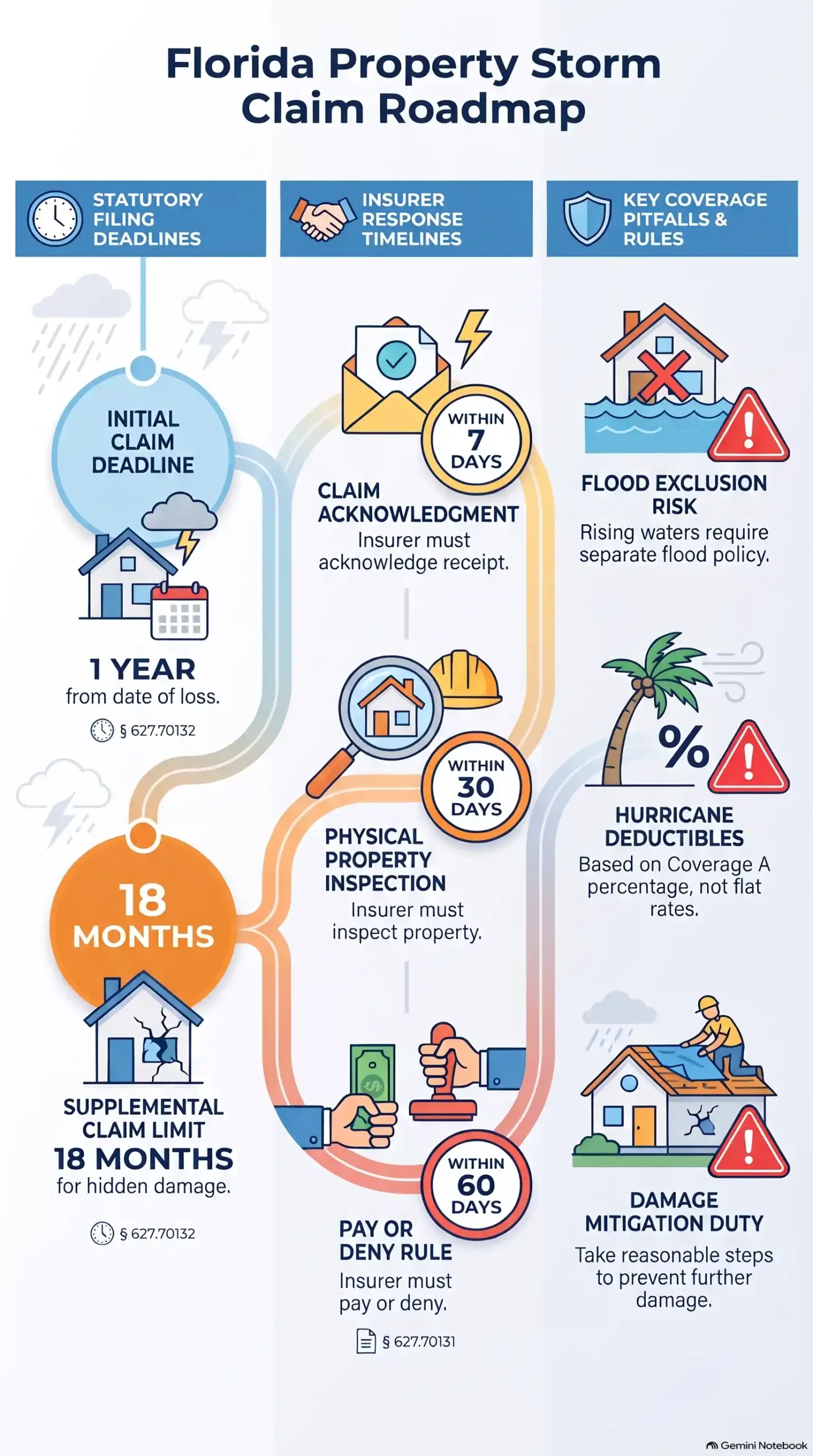
Because filing deadlines can affect a property owner’s ability to pursue compensation, Florida’s statute of limitations is an important consideration in a Doral storm damage claim. The applicable deadline may depend on the type of claim, the insurance policy, and the date the loss occurred. Missing a statutory filing period can prevent recovery, even when storm damage is substantial.
Property owners should distinguish court filing deadlines from Policy time limits. An insurance contract may require prompt notice, documentation, or submission of a proof of loss within a stated period. These contractual requirements can apply before any lawsuit deadline and may affect coverage if overlooked. The governing rules can also change, so the date of the loss and the policy’s terms require careful review.
Certain deadline exceptions may apply in limited circumstances, but they should not be assumed. Promptly preserving records and identifying relevant dates can help protect the interests of occupants, employees, and others who depend on the property. Timely attention supports responsible claim handling.
How a Doral Property Claim Storm & Weather Damage Lawyer Can Help You
A Doral property claim storm and weather damage lawyer can help property owners assess coverage, document losses, and communicate with an insurer after severe weather. The lawyer reviews policy terms and explains how Policy interpretation may affect a claim. This support can help owners make informed decisions while protecting the resources needed to restore homes, businesses, and community services.
A Doral storm damage lawyer can help property owners understand coverage, document losses, and communicate with insurers.
Legal assistance may include:
- Organizing photographs, repair estimates, receipts, and other records that show the extent of damage.
- Reviewing insurer communications and identifying whether Coverage exclusions or other policy provisions apply.
- Preparing clear claim submissions and responding to requests for additional information.
A lawyer can also compare the insurer’s assessment with available evidence and explain options if the proposed payment does not reflect documented losses. Careful guidance may reduce confusion, promote accurate consideration of the claim, and help property owners direct attention toward repairs and the needs of those who depend on their property. The lawyer’s role is to provide informed support, not guarantee a particular result.
When to Contact a Doral Property Claim Storm & Weather Damage Lawyer
Timely legal guidance may be appropriate when storm damage is extensive, the cause of loss is disputed, or an insurer’s response raises questions about coverage. A property owner may also seek counsel after receiving a denial, a payment that appears insufficient, or requests for documentation that are difficult to address. Early Warning signs include delays, changing explanations, or disagreement over whether wind, rain, flooding, or another event caused the damage.
Contacting a Doral property claim storm and weather damage lawyer can help clarify available next steps before deadlines pass. A prompt Coverage Review may identify relevant policy terms, notice requirements, and information needed to evaluate the claim. This can be especially important when damaged homes, businesses, or community facilities affect residents, employees, or people who depend on those spaces. Keeping photographs, repair estimates, correspondence, and claim records organized can support a clear discussion. Legal guidance may be considered whenever uncertainty about the process could hinder timely, responsible decisions.
Why You Need an Experienced Doral Property Claim Storm & Weather Damage Lawyer
When storm damage disrupts a home or business, an experienced Doral property claim storm and weather damage lawyer can help assess the insurer’s response and identify practical next steps. Clear guidance can help property owners protect their interests while restoring safe, functional spaces for families, employees, customers, and neighbors.
Policy interpretation matters because coverage depends on the contract’s terms, exclusions, deadlines, and proof requirements. A lawyer can explain how those provisions may apply to reported wind, rain, or storm-related damage and identify gaps in the insurer’s reasoning. Attorney experience can also support a careful review of estimates, inspection findings, correspondence, and claim decisions. When necessary, counsel can communicate with the insurer, organize supporting documentation, and address disputes through appropriate channels.
This assistance may reduce avoidable delays and help owners make informed decisions during a demanding recovery. By clarifying responsibilities and available options, legal guidance can support a fair claims process and help communities regain stable, usable properties.
How to Choose the Right Doral Property Claim Storm & Weather Damage Lawyer for Your Case
Selecting the right Doral property claim storm and weather damage lawyer requires careful attention to relevant experience, communication, and the ability to assess insurance disputes objectively. A suitable candidate should have experience handling property claims involving storms, wind, flooding, or other weather-related damage in Florida. Reviewing attorney credentials, including licensing, disciplinary history, and relevant case experience, can help property owners make an informed choice.
The lawyer should explain policy terms, claim procedures, deadlines, and potential options in clear language. A communication style that is responsive and respectful can help clients understand decisions and provide accurate information throughout the process. Prospective clients may ask how the lawyer evaluates damage evidence, addresses insurer disputes, and keeps clients updated. They should also clarify fee arrangements and who will manage routine case communications.
Careful comparison helps property owners select counsel whose approach fits their needs. A well-informed choice can support a fair review of the claim and help protect resources needed to repair damaged property and serve the household or community.
About The Law Offices of Anidjar & Levine
The Law Offices of Anidjar & Levine represents clients in Florida property insurance disputes, including claims involving storm and weather damage.
The firm assists policyholders seeking to understand coverage, document losses, and address disagreements with insurers.
Its attorneys review relevant policy terms and claim records, then explain available options in clear language.
This approach can help property owners make informed decisions while managing the practical demands of recovery.
Firm history provides context for the firm’s work across personal injury and insurance matters in Florida.
Its legal team draws on experience handling disputes and communicating with clients about case developments.
In property claims, careful attention to evidence, deadlines, and insurer responses can be important to pursuing a fair resolution.
Community involvement is another aspect of the firm’s public presence.
Through service and outreach, the firm engages with people and organizations across the state.
For Doral residents, its role is to provide legal guidance and representation while treating each claim with diligence, respect, and attention to the policyholder’s circumstances.

Frequently Asked Questions
Does Homeowners Insurance Cover Temporary Housing After Storm Damage in Doral?
Homeowners insurance may cover temporary housing after storm damage in Doral when covered damage makes the residence uninhabitable. This protection, commonly called Additional Living Expenses, may reimburse reasonable increases in lodging, meals, and related costs while repairs are completed. Coverage depends on the policy’s terms, the cause of damage, and applicable Coverage Limits. The policyholder should document expenses, notify the insurer promptly, and confirm eligibility and payment requirements before arranging extended accommodations.
Can I Make Emergency Repairs Before the Insurance Adjuster Inspects My Property?
Yes, a property owner may make emergency repairs before the insurance adjuster inspects the damage, particularly when delay could create safety risks or worsen losses. Urgent damage mitigation may include stopping leaks, boarding openings, or removing hazards. The owner should photograph and video conditions first, retain damaged materials when practical, and keep receipts. Emergency repair documentation should record dates, work performed, and contractors involved. The insurer should be notified promptly, and nonessential repairs should await inspection.
What Should I Do if My Storm Damage Claim Is Denied for a Preexisting Condition?
If a storm damage claim is denied as preexisting, the property owner should request the denial letter, policy provisions, and inspection findings in writing. Documenting prior property condition through dated photographs, maintenance records, invoices, and witness statements can help establish the damage timeline. Challenging insurer causation findings may require an independent inspection and a written response addressing the insurer’s evidence. The owner should observe appeal deadlines and consider consulting a qualified property-claim professional.
Can a Public Adjuster Help Document Damage to My Doral Property?
Yes, a public adjuster can help document damage to a Doral property by inspecting affected areas, photographing conditions, and preparing a detailed Damage inventory. The adjuster may compare observed damage with policy terms and organize supporting records, such as repair estimates and receipts. Inspection preparation can include preserving damaged materials, listing affected belongings, and gathering maintenance documents. This documentation may help the property owner present a clear, evidence-based claim to the insurer for review.
How Can I Protect My Belongings From Additional Damage While Awaiting Repairs?
To protect belongings while repairs are pending, residents should move items away from wet areas and cover exposed possessions with clean, waterproof sheeting. Salvage undamaged belongings by storing them in a dry, secure location, and photograph damaged items before disposal. To Prevent mold growth, remove standing water promptly, improve ventilation when safe, and use dehumidifiers. Residents should avoid unsafe structures, follow professional guidance, and keep receipts and records of protective measures for insurance review.
—————————
Doral property owners facing storm or weather damage should document their losses, review their insurance policy, and promptly communicate with their insurer.
Disputed, delayed, or underpaid claims may require careful legal review to protect their rights.
An experienced property claim lawyer can assess the evidence, explain potential options, and handle negotiations or litigation when appropriate.
The Law Offices of Anidjar and Levine can help Doral residents understand the claims process and pursue a fair resolution.
Learn more about a Florida Personal Injury Lawyer.