

The Law Offices of Anidjar and Levine can help an injured shopper investigate a slip-and-fall at a Fort Lauderdale big-box or discount store and preserve evidence, including photographs, witness details, and available surveillance footage. Florida claims generally require proof that a hazardous condition caused the injury and that the store knew or should have known about it but failed to respond reasonably. Medical records and documentation of losses can support claim evaluation. Learn more about your options with a Fort Lauderdale Personal Injury Lawyer. The following sections explain common hazards, legal rights, and available legal support.
Main Takeaways
- A Fort Lauderdale slip-and-fall lawyer can assess whether a big-box or discount store failed to use reasonable care.
- Claims may depend on the hazard, how long it existed, and whether the store knew or should have discovered it.
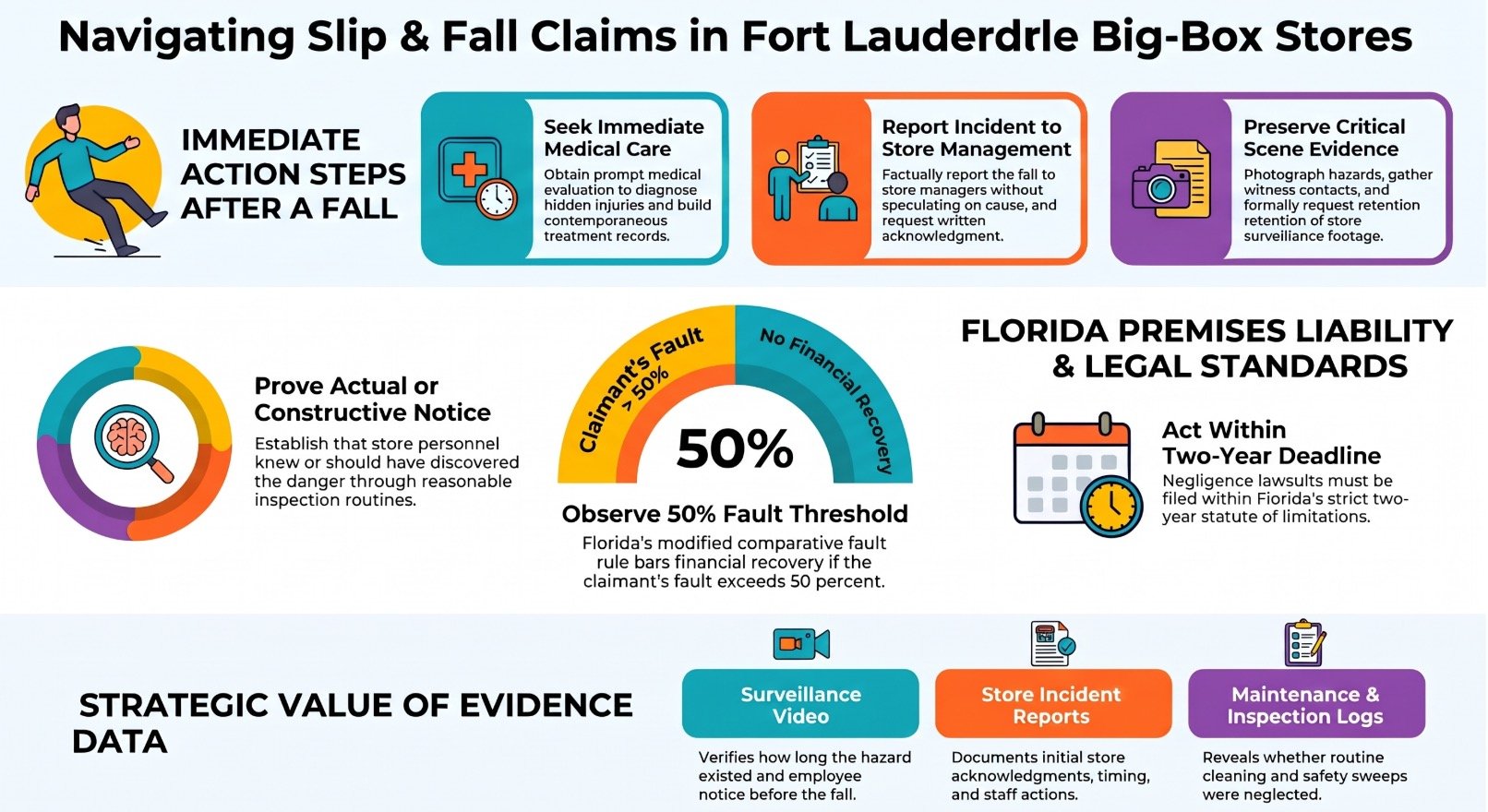
- Seek prompt medical care, report the fall, and describe the hazard factually without guessing.
- Photograph the scene if safe, preserve relevant records, and collect witness contact information.
- Ask the store promptly to preserve surveillance footage, inspection logs, incident reports, and other relevant evidence.
How We Can Help With Your Fort Lauderdale Slip & Fall Big-Box & Discount Injury Claim
When a fall occurs at a big-box or discount store in Fort Lauderdale, an attorney can investigate the incident, preserve relevant evidence, and assess whether the store failed to address a dangerous condition. During claim intake, staff can gather vital information, including when and where the fall happened, what conditions were observed, and whether witnesses or store personnel were present. This organized process helps ensure the injured person’s account is heard and that important details are not overlooked.
A case evaluation may include reviewing available photographs, incident reports, medical records, and communications with the store. The attorney can explain potential next steps, identify any remaining information needed, and answer questions about the legal process. If representation is appropriate, the legal team can manage communications, request relevant records, and keep the client informed as the matter proceeds. Careful support can reduce the burden on someone recovering from an injury while helping protect their ability to seek a fair resolution. Each matter receives individual attention.
Understanding Fort Lauderdale Slip & Fall Big-Box & Discount Injury Cases


Slip and fall cases involving big-box and discount stores in Fort Lauderdale often turn on whether the business knew, or reasonably should have known, about a hazardous condition and failed to address it. Florida law generally requires property owners to use reasonable care to maintain safe premises and warn visitors of dangers they know about or should discover. A resulting claim depends on evidence about the condition, how long it existed, and whether reasonable procedures could have identified and corrected it.
OUR CONSULTATIONSARE FREE
START YOUR FREE CASE REVIEW

Retail safety standards provide context for evaluating a store’s conduct, but they do not alone determine liability. Records of premises inspections, employee reports, maintenance activity, and surveillance footage may help establish what the business knew and when. The injured person must also show that the unsafe condition caused the fall and resulting harm. Careful review of these facts can clarify responsibility and support fair treatment, while accounting for the needs of customers, workers, and the wider community.
Don’t Wait. Call Our Florida Personal Injury Lawyers Now!
Common Causes of Fort Lauderdale Slip & Fall Big-Box & Discount
Common slip and fall hazards in Fort Lauderdale big-box and discount stores include wet or recently mopped floors and spills left in aisles. Cluttered walkways can obstruct customers, while uneven flooring and unsecured or poorly placed mats may create additional tripping risks. Identifying these conditions helps clarify how preventable hazards can contribute to customer injuries.
Wet or Recently Mopped Floors


Wet or recently mopped floors in big-box and discount stores can create a serious fall hazard, especially when moisture is hard to see or customers aren’t warned. Cleaning schedules should account for customer traffic and allow adequate time for floors to dry before areas reopen. Clear warning signs and barriers can alert shoppers to temporary conditions, but they must be visible, properly placed, and maintained until the surface is safe.
Store managers can reduce risk through consistent training, inspection, and documented cleaning procedures. Oversight of floor-drying equipment helps ensure fans and other drying tools are used appropriately and removed when no longer needed. Slip-resistant footwear policies for employees may also support safer work practices, though they do not replace the duty to address hazardous floor conditions. Prompt attention protects customers and staff.
Spills in Aisles
When products leak, containers break, or food and beverages spill, liquids can spread across aisles and create hazards for shoppers. Product leakage may result from damaged packaging, improperly sealed containers, or goods handled during stocking. Spilled drinks and food can also leave slick surfaces that are difficult to see, particularly when lighting or product displays limit visibility. A store’s response can affect whether a shopper encounters the hazard. Employees responsible for monitoring aisles may need to identify spills, warn nearby customers, and arrange prompt cleanup. Effective spill containment can help prevent liquids from spreading while staff address the source and restore a safe walking surface. When a spill remains unattended or is not clearly marked, customers may have little opportunity to avoid it. Records, photographs, and witness accounts may help establish how the incident occurred.
Cluttered Walkways
In big-box and discount stores, cluttered walkways can create trip hazards and obstruct customers’ paths. Stocking carts, boxes, loose packaging, and misplaced products may narrow aisles or block access to merchandise. Blocked aisle hazards can force shoppers to change direction unexpectedly, step around objects, or lose a clear view of the path ahead. Falling merchandise may also strike a customer or land underfoot, creating an additional risk. Store operators and employees can help protect customers by keeping walkways clear, promptly removing packaging, and positioning carts outside customer routes. Regular inspections are important, particularly during busy periods when restocking and shopping activity overlap. When a store fails to address clutter, an injured person may benefit from documenting the scene and seeking guidance about available legal options.
Uneven Flooring and Mats
Uneven flooring and poorly secured mats can create trip hazards in Fort Lauderdale big-box and discount stores. Loose mat edges may curl, shift, or bunch under customers’ feet, especially near entrances where moisture and frequent foot traffic affect floor coverings. Uneven tile changes, cracked surfaces, and abrupt changes in floor height can also cause shoppers to stumble or fall. Store operators are generally expected to inspect walking areas, maintain flooring, and secure or replace mats when hazards become apparent. Prompt attention can protect customers, employees, and others who rely on safe access to necessary goods. When a fall occurs, relevant details may include the hazard’s location, how long it existed, inspection practices, and whether staff received notice. Photographs, incident reports, and witness accounts may help clarify the circumstances.
Legal Rights of Fort Lauderdale Slip & Fall Big-Box & Discount Injury Victims
Customers injured in a Fort Lauderdale big-box or discount store may have legal rights if a dangerous condition caused their slip and fall. Florida law may permit an injured person to seek compensation when a business had actual or constructive knowledge of a hazardous condition and failed to address it. The circumstances, available evidence, and applicable deadlines can affect a claim.
A careful review may help clarify the store’s responsibilities and the injured person’s options.
Relevant considerations include:
- Whether the store knew about the condition or should have discovered it through reasonable care.
- Whether Store inspection policies and records show that employees followed appropriate procedures.
- Whether retail safety standards and warning practices were consistent with the circumstances.
- Whether medical records, photographs, witness accounts, and incident reports support the reported injuries.
A claim may seek payment for documented medical expenses, lost income, and other legally recognized losses. Promptly preserving evidence can support a fair evaluation. An attorney can explain potential rights and help the injured person pursue accountability while respecting the needs of others affected by the incident.
Why Do Fort Lauderdale Slip & Fall Big-Box & Discount Injuries Happen?
Slip and fall injuries in Fort Lauderdale big-box and discount stores can occur when hazards develop in busy aisles, entrances, or checkout areas and are not addressed promptly. High customer traffic, frequent restocking, and large product displays can make these locations difficult to monitor consistently. Spilled liquids, tracked-in rainwater, loose packaging, and dropped merchandise may create slippery or unstable walking surfaces.
Store layout hazards can also contribute to falls. Narrow aisles, obstructed sightlines, uneven floor changes, and crowded checkout lanes may limit customers’ ability to see or avoid dangers. Merchandise stacking risks arise when products are placed too high, extend into walkways, or become unstable and fall. Carts, pallets, and stocking equipment left in customer paths can further restrict safe movement.
These conditions may result from inadequate inspection routines, delayed cleanup, or poorly managed displays. When store operations do not account for changing conditions, customers may encounter preventable hazards while shopping, increasing the risk of serious injury and disrupting their daily responsibilities.
What Should You Do After a Fort Lauderdale Slip & Fall Big-Box & Discount Injury?
After a slip and fall in a big-box or discount store, the injured person should seek prompt medical attention, even if the injury initially appears minor. The hazard should be reported to store management, and the report details should be documented. Photographs, witness information, and relevant records should be preserved to help establish what happened.
Seek Medical Attention
Prompt medical evaluation is an important step after a fall at a Fort Lauderdale big-box or discount store, even when injuries initially seem minor. A qualified healthcare professional can identify conditions that may not be immediately apparent, including head, back, or soft-tissue injuries. Emergency evaluation is appropriate when the person experiences severe pain, bleeding, confusion, loss of consciousness, difficulty breathing, or trouble moving. For less urgent concerns, prompt assessment by a physician or clinic can still support timely care and reduce the risk of complications.
The injured person should follow medical instructions and attend recommended follow-up appointments. Symptom monitoring is also important, since pain, swelling, dizziness, or limited movement may emerge or worsen later. Keeping a clear record of symptoms and treatment can help the person communicate accurately with healthcare providers and support continuity of care. Seeking appropriate care promptly helps protect the person’s health and recovery.
Report the Hazard
Once immediate medical needs are addressed, the injured person should notify a store manager or another responsible employee about the hazard that caused the fall. Prompt manager notification gives the business an opportunity to address the danger and reduce the risk of another customer being hurt. The person should describe where the fall occurred, what condition contributed to it, and when it happened, using clear, factual language. If the exact cause is uncertain, state that uncertainty rather than replacing it with speculation. A companion may help communicate if the injured person is receiving care or cannot speak comfortably. The report should remain focused on the observed condition and its location. Timely hazard reporting can also create an official account of the incident, which may be relevant if questions arise later.
Preserve Evidence
Preserving evidence can help establish what caused a fall and how the hazard appeared at the time. After reporting the incident, an injured shopper can document the location, condition, and surrounding area before anything changes, if it is safe to do so. Photographs may show spills, debris, warning signs, lighting, and the footwear involved. Witness names and contact details can help preserve independent accounts. Evidence preservation also includes keeping clothing, shoes, receipts, and medical records connected to the event. The store may control surveillance footage, inspection logs, and incident reports, which could be lost or overwritten. A written request can ask the business to retain relevant materials. Retention requests should identify the incident’s date, time, and location, and be sent promptly. Copies of communications should be kept securely for later review.
Critical Evidence in a Fort Lauderdale Slip & Fall Big-Box & Discount Injury Case
Important evidence can help establish how a hazard arose, whether the store knew or should have known about it, and how the fall occurred. In a Fort Lauderdale big-box or discount store claim, records and observations gathered soon after the incident may be particularly important.
Essential evidence may include:
- Incident reports prepared by store employees
- Surveillance footage showing the area before and during the fall
- Photographs or other documentation of the hazard and surrounding conditions
- Statements and contact information from witnesses
Incident Reports
What a store records immediately after a fall can shape how the event is later understood. An incident report may identify the location, time, reported hazard, witnesses, and steps employees took after the injury. Its details can help clarify what the store knew and how it responded, while omissions or inconsistencies may require careful review. Report request procedures vary by retailer, and an injured person may not receive a copy immediately. A written request through the store’s designated process can create a record of the request and its timing. Report accuracy safeguards include distinguishing observations from assumptions, confirming names and dates, and preserving any available copy. A clear, factual account can support fair evaluation of the event and help those involved address the injured person’s needs responsibly.
Surveillance Footage
Alongside an incident report, surveillance footage may provide an independent record of a slip and fall in a Fort Lauderdale big-box or discount store. Video may show when a person entered an area, how long a condition remained, and whether employees observed or addressed it. Because stores may overwrite recordings on a routine schedule, prompt camera retention requests can help preserve relevant footage before it is lost. A careful review should include timestamp verification, since a camera’s displayed time may differ from the actual time or other records. The footage can help clarify disputed accounts and support a fair assessment of what occurred. Access may depend on store policies and legal procedures, so preservation and review are often handled through appropriate channels. This evidence can assist injured people seeking accountability and safer conditions for others.
Hazard Documentation
When a slip and fall occurs in a Fort Lauderdale big-box or discount store, prompt documentation of the hazard can help establish the conditions that caused the incident. Photographs of the floor, nearby merchandise, warning signs, and the surrounding area may preserve details that change quickly during cleanup or routine store activity. Images should show both close views of the substance or obstruction and wider views that identify its location. Photo metadata may help confirm when and where images were created, although original files should be preserved to maintain their reliability. A hazard timeline can organize when the condition was discovered, reported, addressed, and documented. Receipts, incident reports, and maintenance records may provide additional context. Careful, accurate records can support a fair evaluation of responsibility and help protect the interests of injured customers.
Witness Statements
Because store conditions can change quickly, witness statements may provide an independent account of a slip and fall in a Fort Lauderdale big-box or discount store. Shoppers, employees, and delivery personnel may have observed the hazard, the incident, or the store’s response. Their descriptions can help establish where the hazard was located, how long it may have remained, and whether staff had notice.
Prompt interviews can preserve details before memories fade. Each witness should describe only what they personally saw or heard, without guessing or adopting another person’s account. Witness credibility may depend on the person’s opportunity to observe, impartiality, and accuracy. Statement consistency across interviews, incident reports, and other evidence can strengthen an account, while differences may require clarification. Respectful, careful documentation helps preserve reliable evidence and support a fair assessment of the injured person’s needs.
Long-Term Effects of Fort Lauderdale Slip & Fall Big-Box & Discount Injuries
A slip and fall injury in a big-box or discount store can have lasting effects beyond the initial recovery period. Some individuals experience chronic pain and reduced mobility that interfere with work and daily activities. Emotional distress may also persist, particularly when the injury limits independence or disrupts established routines.
Chronic Pain
Chronic pain can persist long after a Fort Lauderdale shopper receives initial treatment for injuries sustained in a fall at a big-box or discount store. Even after visible wounds mend, damage to soft tissue, joints, or nerves may cause recurring discomfort that interferes with sleep, concentration, and daily responsibilities. Symptoms can vary in intensity, and pain flare triggers may include prolonged activity, stress, or changes in routine. Identifying these patterns can help healthcare providers tailor care and support more consistent symptom control. Chronic pain management may involve follow-up evaluations, prescribed treatment, therapeutic services, and careful monitoring of medication effects. Accurate records of symptoms, appointments, and related expenses can also clarify the injury’s continuing impact. With appropriate support, injured shoppers may better understand their condition and make informed decisions about ongoing care.
Reduced Mobility
Persistent pain after a Fort Lauderdale slip and fall may also limit a shopper’s ability to walk, stand, climb stairs, or complete routine tasks. Injuries to the legs, hips, back, or joints can reduce balance and strength, making everyday movement difficult for months or longer. A person may need physical therapy, assistive devices, or help with bathing, shopping, and household responsibilities. These limitations can affect independence and make returning to work or community activities more challenging. Mobility aid accessibility may be necessary at home and in public places, including stores, sidewalks, and medical facilities. Post-injury transportation can also become a concern when driving, entering vehicles, or using public transit is difficult. Documented mobility changes and related expenses can help explain the practical effects of an injury and support appropriate care planning.
Emotional Distress
Emotional distress can persist long after physical injuries from a Fort Lauderdale slip and fall in a big-box or discount store have begun to recover. Anxiety after a fall may affect sleep, concentration, and confidence, particularly when the incident occurred in a crowded aisle or near a hazard that remains unexplained. Some injured shoppers develop fear of shopping, avoid familiar stores, or rely on others for routine errands. These changes can limit independence and strain relationships with family members who provide support. A careful assessment may identify the emotional effects, their duration, and any need for counseling or other treatment. When a store’s unsafe condition contributed to the fall, records of symptoms and professional care can help explain the injury’s broader impact. Timely support may assist recovery and restore confidence.
Proving Liability in Fort Lauderdale Slip & Fall Big-Box & Discount Injury Cases
Proving liability in a Fort Lauderdale slip and fall at a big-box or discount store requires evidence that the business knew or should have known about a hazardous condition and failed to address it within a reasonable time. Evidence may include photographs, surveillance footage, incident reports, witness statements, and records showing how long a spill, fallen merchandise, or other danger remained on the floor. These details can help establish whether reasonable care was exercised to protect shoppers and employees.
Store inspection protocols may reveal how frequently aisles were checked and whether staff documented hazards. Employee training oversight can show whether workers were instructed to identify, report, and promptly address unsafe conditions. Maintenance logs and cleaning schedules may also clarify whether established procedures were followed.
A careful investigation can preserve relevant evidence and identify responsible parties. By establishing the hazard, notice, and failure to respond, injured people may seek accountability while supporting safer conditions for others in the community.
Dealing With Insurance Companies After a Fort Lauderdale Slip & Fall Big-Box & Discount Injury
After documenting how a big-box or discount store may have caused a slip and fall, an injured person may need to communicate with the store’s insurance company. Careful, accurate communication can help protect a claim while allowing the injured person to focus on recovery and daily responsibilities.
An insurance adjuster may request a recorded statement, medical authorizations, or details about prior injuries. These Insurance adjuster tactics can affect how evidence is interpreted, so responses should remain factual and limited to what is known. The injured person should avoid guessing about the incident, minimizing symptoms, or signing documents without understanding their effect. Relevant records, photographs, and correspondence should be preserved.
Evaluating a settlement offer requires consideration of medical expenses, lost income, ongoing treatment, and the injury’s effect on ordinary activities. An early offer may not account for future needs or the full impact of the fall. A qualified attorney can review proposed terms, explain potential consequences, and support informed decisions that respect the injured person’s interests.
Don’t Wait. Call Our Florida Personal Injury Lawyers Now!
What to Expect During a Fort Lauderdale Slip & Fall Big-Box & Discount Injury Claim Process
A Fort Lauderdale slip and fall claim typically begins with promptly reporting the incident and preserving evidence, including photographs, witness details, and medical records. The injured person must then establish that the store knew or should have known about the hazardous condition and failed to address it appropriately. Once liability and damages are assessed, the claim may be resolved through negotiation or, if necessary, litigation.
Reporting the Fall
When a fall occurs in a Fort Lauderdale big-box or discount store, prompt reporting can help preserve an accurate record of the incident. The injured person, or someone assisting them, should notify a store employee or manager as soon as practical. Manager notification allows staff to respond, arrange appropriate assistance, and document when and where the reported event occurred. If immediate medical attention is needed, care should take priority over completing store procedures.
The person reporting the fall should describe the circumstances accurately and avoid guessing about details they do not know. Requesting written acknowledgment can help confirm the report was received, though store practices may vary. The injured person should note the name or role of the employee contacted and the approximate time of the report. Clear, timely communication can support an orderly claim process and help the store address potential hazards for other customers.
Gathering Evidence
Timely reporting creates an initial record, while gathering evidence helps clarify how the fall occurred and what harm it caused. After an incident at a big-box or discount store, the injured person may preserve photographs of the area, clothing, footwear, and visible injuries. Photo metadata can help establish when and where images were taken, so retain original files without edits. Receipts, incident paperwork, medical records, and contact details for witnesses may also be collected. An evidence timeline can organize the fall, reporting, treatment, and recovery events in sequence. This record may help the person’s representatives understand the claim and communicate accurately with involved parties. Careful preservation supports a fair review and may reduce avoidable confusion, while personal information should be shared only through appropriate channels.
Proving Store Negligence
Proving store negligence requires more than showing that a fall occurred; the claim generally must establish that a dangerous condition existed and that the store knew or should have known about it but failed to take reasonable steps to address it. Evidence may show how long a spill, obstruction, or damaged surface remained on the floor and whether staff had a reasonable opportunity to respond. Records concerning inspection schedules, incident reports, cleaning procedures, and employee training can help clarify whether the store followed its safety practices. Witness accounts, photographs, and available surveillance footage may also support an assessment of the hazard and the response. The claim process may involve comparing these facts with the store’s duties to customers. Careful review helps establish responsibility while keeping attention on accurate, fair documentation of the incident.
Resolving Your Claim
After liability and damages are assessed, a Fort Lauderdale slip-and-fall claim against a big-box or discount store may proceed through settlement discussions or, if necessary, litigation. The injured person’s representative may prepare a demand outlining the incident, supporting evidence, medical costs, lost income, and other documented harm. Demand negotiation can involve reviewing the store’s response, addressing disputed facts, and evaluating whether an offer fairly reflects the losses. Careful communication helps protect the claimant’s interests while keeping the process focused on a practical resolution. If negotiations do not produce an acceptable agreement, a lawsuit may be filed, and the parties may exchange evidence before trial. Any proposed settlement should be reviewed for its terms, timing, and effect on future claims. Settlement approval confirms informed acceptance before the matter concludes.
Compensation for Fort Lauderdale Slip & Fall Big-Box & Discount Injury Damages
When a fall in a Fort Lauderdale big-box or discount store causes injury, compensation may cover medical expenses, lost income, reduced future earning capacity, and pain and suffering. The amount depends on the injuries, their effect on daily life, and the evidence supporting the claim.
Medical expense reimbursement may include reasonable costs for emergency care, follow-up visits, medication, rehabilitation, and necessary medical equipment. Records and bills help document these expenses, while medical opinions may explain anticipated treatment needs. Wage loss recovery can address income missed during recovery, supported by employer records, pay statements, or other proof of earnings.
Some injuries limit a person’s ability to perform the same work or earn at the prior level. Evidence about restrictions, treatment, and employment may help establish those effects. Compensation may also account for physical discomfort and disruption to ordinary activities. A careful assessment can help an injured person pursue resources needed for recovery and continued responsibilities without overstating what the available evidence can support.
Economic vs Non-Economic Damages in Fort Lauderdale Slip & Fall Big-Box & Discount Cases
In Fort Lauderdale big-box and discount store slip-and-fall cases, economic damages may include medical expenses, lost wages, and other measurable financial losses. Non-economic damages address harm such as pain, emotional distress, and reduced quality of life. Establishing both categories generally requires evidence linking the fall to the claimed losses.
Economic Losses
A slip and fall in a Fort Lauderdale big-box or discount store may cause both economic and non-economic losses, but each category serves a different purpose. Economic losses are measurable financial costs linked to the injury. They may include reasonable medical expenses, such as emergency care, follow-up visits, medication, rehabilitation, and necessary medical equipment. Receipts, invoices, insurance records, and provider statements can help document these expenses.
An injured person may also seek compensation for Lost wages when the injury prevents work or reduces hours. If lasting limitations affect the ability to perform a job or pursue comparable employment, diminished earning capacity may also be considered. Pay records, employer statements, and vocational or medical assessments may help establish these losses. Careful documentation allows a claim to reflect the financial effects of the fall and supports a fair assessment of the resources needed for recovery.
Non-Economic Harm
Beyond measurable financial costs, a slip and fall may cause non-economic harm that affects a person’s daily life and well-being. In Fort Lauderdale big-box and discount stores, injuries may limit a person’s ability to participate in family activities, community service, or other meaningful routines. Loss of enjoyment can arise when pain, reduced mobility, or emotional distress prevents someone from pursuing interests that once brought satisfaction. These effects may also influence personal connections. Damaged relationships can develop when an injured person needs increased assistance, withdraws from social contact, or cannot fulfill responsibilities to loved ones. Such consequences differ from medical bills or lost income because they concern quality of life rather than direct financial loss. Recognizing this distinction helps explain the broader impact an injury may have on an individual and those who depend on them.
Proving Your Damages
Establishing damages after a Fort Lauderdale slip and fall requires evidence that connects the incident to the claimant’s losses. Economic damages include measurable costs, such as medical bills, prescription expenses, lost wages, and reduced earning capacity. Damage documentation may include invoices, pay records, treatment notes, and receipts, organized to show how the fall caused each expense. For injuries requiring ongoing care, medical opinions and treatment plans can help estimate future expenses.
Non-economic damages address losses without a fixed price, including pain, emotional distress, and limits on daily activities. Consistent medical records and testimony from the claimant, relatives, or coworkers may help describe these effects. In big-box and discount stores, incident reports, surveillance footage, and witness statements may also support the account of the fall. Clear, accurate evidence helps decision-makers assess the full impact of the injury.
When a Fort Lauderdale Slip & Fall Big-Box & Discount Injury Case Goes to Trial vs Settlement
When a slip and fall at a Fort Lauderdale big-box or discount store leads to an injury claim, the case may resolve through settlement or proceed to trial. Each option involves different considerations, and the appropriate path depends on the evidence, the parties’ positions, and the injured person’s needs.
Settlement Offer Evaluation involves weighing the proposed payment against documented losses, continuing care, and the uncertainty of litigation. A settlement can provide a defined resolution without a courtroom decision, but the terms should be reviewed carefully before acceptance. The injured person may also consider whether the offer fairly addresses the harm and supports recovery.
If negotiations do not produce an acceptable agreement, the case may proceed to trial. Jury Trial Preparation can include organizing store records, medical evidence, photographs, and witness accounts, then presenting a clear account of how the fall occurred and affected the person’s life. A judge or jury will assess the evidence and decide the outcome. Both routes require careful preparation and informed decisions.
Don’t Wait. Call Our Florida Personal Injury Lawyers Now!
Florida Laws That May Affect Your Fort Lauderdale Slip & Fall Big-Box & Discount Case
The choice between settlement and trial is shaped in part by Florida laws governing premises liability and injury claims. These rules guide how a store’s conduct, an injured visitor’s actions, and available evidence may affect a claim. They also help determine whether responsibility rests with the property operator, another party, or both.
- Florida law generally requires an injured person to show that a business knew or should have known about a dangerous condition and failed to address it appropriately.
- Comparative negligence may reduce compensation if the injured person is found partly responsible for the fall. Florida’s modified comparative negligence rule generally bars recovery when that person’s share of fault exceeds 50 percent.
- Evidence such as inspection records, incident reports, photographs, and witness accounts can help establish what the store knew and when.
- A business may raise defenses concerning warnings, the condition’s visibility, or reasonable safety procedures. Careful review supports fair outcomes and helps protect community members from preventable hazards.
The applicable facts and current law determine how these principles affect each case.
The Statute of Limitations for Fort Lauderdale Slip & Fall Big-Box & Discount Injury Cases
Because Florida law sets a deadline for filing most personal injury lawsuits, the timing of a Fort Lauderdale slip and fall claim can be vital. Under current Florida law, an injured person generally has two years from the date of a fall to file a negligence lawsuit. Missing that deadline may prevent the claim from proceeding, regardless of the seriousness of the injuries or the store’s conduct.
The filing deadline depends on identifying the accident date and confirming which limitation period applies. Earlier incidents may be governed by a prior deadline, so the date and circumstances require careful review. A claim involving a big-box or discount store remains subject to these time limits even when the injured person is focused on medical care or supporting family members.
There may be exceptions for minors and other limited circumstances, but they do not automatically pause every deadline. Timely attention to the applicable period helps preserve the injured person’s ability to seek accountability and pursue compensation through the courts.
How a Fort Lauderdale Slip & Fall Big-Box & Discount Lawyer Can Help You
A Fort Lauderdale slip and fall lawyer can help an injured person evaluate a claim against a big-box or discount store and work through the steps required to pursue compensation. The lawyer may investigate how the hazard arose, whether store personnel knew or should have known about it, and what evidence supports the account. This work can clarify responsibility while helping the injured person seek a fair resolution.
A lawyer can investigate the hazard, assess the evidence, and help an injured person pursue a fair resolution.
- Review incident reports, photographs, witness statements, and Store inspection logs to assess the conditions that led to the fall.
- Examine Retail safety policies and staff procedures to determine whether reasonable precautions were followed.
- Gather medical records and other documentation to explain the injury, treatment, and related financial losses.
- Communicate with the store or insurer, organize claim materials, and explain available options for resolving the dispute.
When to Contact a Fort Lauderdale Slip & Fall Big-Box & Discount Lawyer
After a fall at a big-box or discount store, contacting a Fort Lauderdale slip and fall lawyer promptly can help preserve evidence and clarify the steps available for pursuing a claim. Early guidance can be especially useful when an injured person is focused on medical care and communicating with family or others who depend on them.
Prompt deadlines may affect how long a person has to bring a claim, and the applicable period can depend on the circumstances. Waiting may also make it harder to locate witnesses, obtain surveillance footage, or document a hazard before store conditions change. Evidence preservation is consequently an important reason to seek advice soon after the incident. Photographs, incident reports, receipts, and medical records may help establish what occurred and when.
A consultation can help identify practical next steps without requiring an immediate decision about filing a lawsuit. Timely contact helps the injured person understand relevant deadlines and preserve information that may later be needed to evaluate the matter.
Why You Need an Experienced Fort Lauderdale Slip & Fall Big-Box & Discount Lawyer
When a fall occurs at a big-box or discount store, an experienced Fort Lauderdale slip and fall lawyer can help assess whether the store may be legally responsible and what evidence supports that conclusion. Such incidents may involve spills, damaged flooring, obstructed aisles, or hazards that were not addressed promptly. Establishing responsibility requires careful attention to how the condition arose, how long it existed, and whether reasonable steps could have prevented harm.
An experienced attorney can help identify relevant records, preserve surveillance footage, and evaluate witness accounts before evidence becomes unavailable. A lawyer can also explain how medical documentation and the sequence of events may relate to a claim, while helping an injured person understand the process and its demands. Local knowledge matters because familiarity with Fort Lauderdale courts and community conditions can inform practical case assessment. By examining the facts and applicable duties, counsel can support fair accountability and help protect the injured person’s interests without relying on assumptions about the store’s responsibility.
How to Choose the Right Fort Lauderdale Slip & Fall Big-Box & Discount Lawyer for Your Case
Choosing the right Fort Lauderdale slip and fall lawyer for a big-box or discount store claim involves more than comparing advertisements or promises of results. Carefully reviewing attorney selection criteria can help an injured person identify counsel prepared to assess store conditions, preserve evidence, and explain available legal options. Relevant factors include experience with premises liability claims, familiarity with commercial property practices, clear communication, and a record of handling cases through negotiation or trial.
During an initial meeting, consultation questions should address who will manage the case, how evidence will be gathered, and what deadlines or challenges may affect the claim. The lawyer should explain fees and costs in understandable terms and describe how updates will be provided. The injured person may also ask how the attorney evaluates responsibility when a hazard was temporary or store staff dispute notice. Thoughtful answers can reveal whether counsel listens carefully, sets realistic expectations, and approaches the matter with diligence and respect for everyone affected.
About The Law Offices of Anidjar & Levine
The Law Offices of Anidjar & Levine represents people injured in slip-and-fall incidents, including claims involving big-box and discount stores in Fort Lauderdale. The firm handles matters in which unsafe conditions, such as spills, damaged flooring, or obstructed aisles, may have contributed to an injury. Its work can include reviewing incident records, gathering available evidence, and communicating with insurers on a client’s behalf.
Firm history provides context for how a law office approaches injury claims, but prospective clients may also consider the experience and services relevant to their circumstances. The firm’s attorneys can explain the process, discuss potential legal issues, and outline practical next steps. Attorney values, including responsiveness, careful preparation, and respect for each client’s concerns, may shape the working relationship. For people seeking to support others through a difficult period, clear communication and dependable guidance can matter. A consultation can help an injured shopper understand available options and decide whether representation is appropriate.

Frequently Asked Questions
Can I File a Claim if I Fell in a Store Parking Lot?
A person may file a claim after falling in a store parking lot if unsafe conditions caused the fall and the store or property owner failed to take reasonable steps to address them. Relevant issues may include poor parking lot maintenance, inadequate lighting, or unaddressed weather hazards. Evidence such as photographs, witness details, and medical records can help establish what happened. A qualified attorney can assess responsibility, deadlines, and available options.
What if I Slipped on a Substance Another Customer Spilled?
A customer-spilled substance may support a premises liability claim if the store knew, or reasonably should have known, about the hazard and failed to address it. Proving notice can involve showing how long the spill remained, whether employees observed it, or whether inspections were inadequate. Spill cleanup policies and inspection records may help establish whether reasonable precautions were followed. Photos, witness accounts, and prompt reporting can preserve relevant evidence and clarify the circumstances.
Can I Pursue a Claim if I Was Partly Responsible for My Fall?
A person may pursue a claim even when partly responsible for a fall. Under Florida’s Comparative negligence rules, compensation may be reduced by the injured person’s share of responsibility. However, if that share exceeds 50 percent, recovery is generally barred in most negligence cases. Shared fault depends on evidence about the hazard, the store’s notice, and each person’s conduct. A careful investigation can help establish responsibility and support a fair outcome.
Should I Report a Fall to Store Management Even if I Feel Fine?
Yes, a person should report a fall to store management even when no injury is immediately apparent. Prompt reporting creates an official record and alerts staff to a hazard that could harm other customers. Documenting an Incident should include the date, time, location, conditions, and names of witnesses. Preserving Evidence may involve taking photographs and requesting a copy of the report. Medical symptoms can emerge later, so timely documentation can support accurate follow-up.
Can a Store Delete Surveillance Footage After a Fall?
A store may delete surveillance footage under its Video retention policies, particularly when no one requests that it be preserved. After a fall, prompt written notice describing the incident and requesting evidence preservation can help prevent routine deletion. The request should identify the date, approximate time, location, and relevant camera views. A person may also document the report and seek legal guidance, since applicable duties and deadlines depend on the circumstances.
—————————
A slip and fall at a big-box or discount store can cause serious injuries, medical expenses, and lost income. The details of the incident—including the hazard, the store’s response, and available evidence—may affect a potential claim. A Fort Lauderdale Personal Injury Lawyer can review your situation, explain your legal options, and help you understand important deadlines. The Law Offices of Anidjar and Levine can assess the facts and advise injured shoppers on possible next steps.