

The Law Offices of Anidjar and Levine can investigate how a severe injury occurred, identify potentially responsible parties, and preserve evidence before it is lost. These cases may involve vehicle crashes, workplace hazards, falls, or defective products, and can result in injuries that require long-term treatment or support. A lawyer may also organize medical and financial records, communicate with insurers, and pursue compensation for care, lost income, and lasting effects on daily life. Learn more from a Fort Lauderdale Personal Injury Lawyer. The following sections explain essential legal considerations and available support.
Main Takeaways
- A Fort Lauderdale catastrophic injury lawyer can assess liability, damages, and potential legal options under applicable Florida law.
- Seek emergency care promptly, follow medical advice, and keep records of diagnoses, treatment, and rehabilitation.
- Preserve evidence, including photographs, incident reports, witness details, and relevant messages or receipts.
- Document how the injury affects daily activities, work, independence, and future care needs.
- Ask a lawyer about deadlines, evidence preservation, expert evaluations, and how legal fees are handled.


How We Can Help With Your Fort Lauderdale Catastrophic Injury Claim
A catastrophic injury can create substantial medical, financial, and personal challenges for the injured person and their family. A Fort Lauderdale catastrophic injury lawyer can help organize the claim and address practical concerns while the injured person focuses on care and recovery. This support may include gathering medical records, documenting expenses, communicating with insurers, and tracking important deadlines.
Each matter requires a considered Claim strategy based on the available evidence, the person’s needs, and the losses that may continue over time. Counsel can review relevant documents, identify missing information, and present a clear account of the harm and its consequences. Careful preparation can help families make informed decisions without adding unnecessary strain.
Benefit coordination may also be important when health coverage, disability benefits, or other resources are involved. A lawyer can review how these sources relate to the claim and explain potential obligations in understandable terms. With organized guidance and responsive communication, families can better evaluate options and protect their interests during a demanding period.
OUR CONSULTATIONSARE FREE
START YOUR FREE CASE REVIEW

Understanding Fort Lauderdale Catastrophic Injury Cases
Understanding Fort Lauderdale catastrophic injury cases begins with recognizing that these claims involve harm with serious, lasting effects on a person’s health, independence, or ability to work. A Catastrophic injury generally involves permanent impairment, substantial functional limitations, or a need for ongoing care. The precise legal meaning may depend on the facts and applicable law.
An injury severity assessment considers medical records, professional evaluations, treatment needs, and the injury’s impact on daily activities. It may also examine whether the person can return to work, perform household tasks, or live independently. This assessment helps clarify both immediate needs and potential long-term consequences.
For families and advocates seeking to support an injured person, careful documentation can provide a clearer account of changed abilities and future care requirements. These cases require attention to medical evidence, financial losses, and the person’s individual circumstances. A thorough understanding helps guarantee that the claim reflects the full scope of harm and supports informed decisions throughout the legal process.
Common Causes of Fort Lauderdale Catastrophic Injury
Catastrophic injuries in Fort Lauderdale may result from motor vehicle crashes, workplace accidents, or falls from significant heights. Medical negligence can also cause severe, lasting harm when healthcare providers fail to meet accepted standards of care. Identifying the cause is an important step in understanding the circumstances surrounding an injury.
Motor Vehicle Crashes
How do motor vehicle crashes cause catastrophic injuries in Fort Lauderdale? High-speed collisions, distracted driving, impaired motorists, and failure to yield can subject occupants, pedestrians, and cyclists to severe forces. These impacts may cause traumatic brain injuries, spinal cord damage, amputations, or extensive burns, often requiring lasting medical care and support. A careful investigation can identify how a crash occurred and who may be responsible. Evidence such as police reports, witness accounts, vehicle data, and medical records can help clarify the circumstances. Crash reconstruction may assess vehicle movement, impact points, and speed, while inspection can reveal vehicle defects that contributed to the collision. Understanding these factors can help injured people and their families pursue accountability and recovery resources. Prompt legal guidance may preserve evidence and protect important rights after a serious crash.
Workplace Accidents
Workplace accidents can cause catastrophic injuries when heavy machinery, falls from elevation, electrical hazards, or unsafe work practices expose employees to severe forces. In Fort Lauderdale, industrial sites, construction projects, warehouses, and service operations may pose risks that require ongoing oversight. Equipment malfunctions, unguarded machinery, chemical exposure, and inadequate training can lead to burns, amputations, spinal damage, or traumatic brain injuries. Strong Workplace Safety procedures include equipment inspections, clear hazard warnings, appropriate protective gear, and task-specific training. When an employer fails to address known dangers or enforce established safeguards, Employer Negligence may contribute to a serious injury. Workers who help colleagues or serve the public should not face preventable hazards. Prompt medical care and careful documentation can help clarify the incident and support an informed assessment of available options.
Falls From Heights
When a person falls from a roof, ladder, scaffold, or elevated platform, the impact can cause severe brain, spinal cord, or orthopedic injuries. Such incidents may result from unstable surfaces, missing guardrails, defective equipment, inadequate training, or unsafe work practices. Falls can also occur in homes and on public property when stairs, balconies, or walkways lack appropriate safeguards. The consequences may include lasting disability, reduced independence, and substantial care needs, affecting both injured people and those who support them.
Fall Prevention depends on identifying hazards and maintaining equipment before work begins. Employers and property owners can promote Height Safety through secure barriers, appropriate fall protection, clear procedures, and task-specific training. When a fall occurs, evidence about site conditions, equipment, and safety measures may help establish how the incident happened and who may be responsible.
Medical Negligence
Medical negligence can also cause catastrophic injuries, including errors in diagnosis, treatment, surgery, or post-operative care. Diagnostic errors can delay necessary care or lead to treatment for the wrong condition, allowing an illness or injury to worsen. Surgical mistakes, such as operating on the wrong site or damaging nearby tissue, may cause lasting impairment, severe pain, or additional procedures. Negligence may also involve medication errors, inadequate monitoring, or failure to respond to complications after treatment. These events can affect a patient’s ability to work, live independently, and participate in family or community life. A careful review of medical records and an expert assessment can help determine whether a provider failed to meet the applicable standard of care and whether that failure caused catastrophic harm. Such evaluations may also clarify the support and resources needed for recovery.
Don’t Wait. Call Our Florida Personal Injury Lawyers Now!


Legal Rights of Fort Lauderdale Catastrophic Injury Victims
Fort Lauderdale residents who suffer catastrophic injuries may have the right to seek compensation from parties whose negligence caused their harm. These Legal Rights can help injured people pursue resources for medical care, rehabilitation, lost income, and other documented losses. A claim may also recognize the lasting effects of disability on daily life and family responsibilities. Because each case depends on its facts and applicable law, prompt guidance can help preserve evidence and clarify available options.
Victim Protections may include access to legal representation and safeguards against unfair insurance practices. A careful review can help determine whether another party may be held financially responsible.
Important considerations include:
- Damages: Records may support claims for treatment costs, future care, reduced earning capacity, and pain and suffering.
- Deadlines: Florida law sets filing limits, so delay can affect the ability to bring a claim.
- Shared responsibility: If fault is disputed, evidence may influence how compensation is determined.
Why Do Catastrophic Injuries Happen in Fort Lauderdale?
Why do catastrophic injuries occur in Fort Lauderdale? These injuries often result from sudden events involving significant force, unsafe conditions, or failures to protect others from foreseeable harm. Busy roads can lead to severe collisions when drivers speed, get distracted, or ignore traffic rules. Construction sites and workplaces may present hazards when equipment is poorly maintained, safety procedures are ignored, or workers lack proper training.
Catastrophic harm can also arise in homes, businesses, and public spaces. Falls may cause lasting injuries when property owners fail to address dangerous surfaces, inadequate lighting, or missing safeguards. Product defects, including unsafe designs or manufacturing flaws, can expose consumers to serious risks during ordinary use. Animal attacks may lead to substantial physical and psychological injuries, particularly when an animal is not properly controlled.
In many cases, preventable conduct plays a role. Understanding common causes helps communities, employers, and property owners recognize risks and support safer conditions for everyone.
What Should You Do After a Catastrophic Injury in Fort Lauderdale?
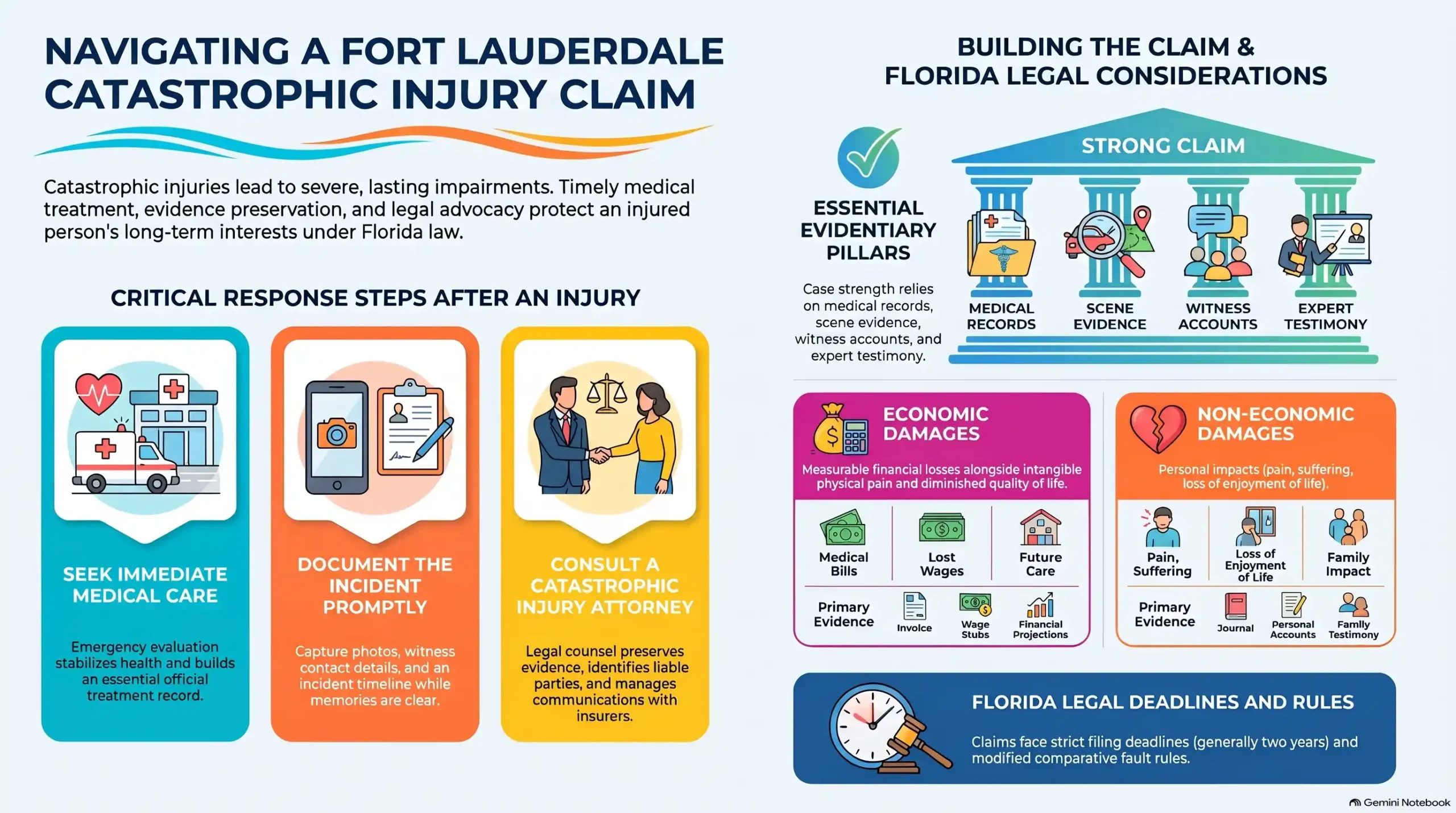
After a catastrophic injury, prioritize prompt medical care, even when the extent of the harm is not immediately clear. The injured person or a representative should document the incident and preserve relevant records, photographs, and witness information. Consulting a catastrophic injury lawyer can help clarify legal options and protect the person’s interests.
Seek Immediate Medical Care
When a catastrophic injury occurs, prompt medical evaluation is essential, even if the injured person appears stable or does not immediately feel severe pain. Some conditions, including internal bleeding and brain trauma, may worsen without obvious early symptoms. Emergency responders can provide Emergency stabilization and transport the injured person to an appropriate facility. If the person is unconscious, having difficulty breathing, or experiencing severe pain, emergency services should be contacted immediately rather than attempting to move them without guidance.
At the hospital, clinicians can assess injuries, order necessary tests, and begin treatment. Following medical advice and attending scheduled appointments can help protect the injured person’s health and support recovery. Serious injuries may require referrals to specialists for ongoing care, rehabilitation, or surgical evaluation. Timely treatment also creates a clear medical record of the injuries and care provided.
Document The Incident
Once you address immediate medical needs, documenting the incident can help preserve information about how the catastrophic injury occurred. If the injured person can, or a trusted supporter can assist, record details promptly while memories are clear. An Incident timeline can note the date, time, location, events leading up to the injury, and actions taken afterward. You may also collect names and contact information for witnesses, summarizing their accounts accurately and without speculation.
Scene photographs can preserve relevant conditions, such as hazards, damaged property, equipment, lighting, or weather. Take images only when it is safe and lawful to do so. Keep important records, including incident reports, messages, and receipts for related expenses, in an organized place. These steps can support accurate understanding and help others assess what occurred.
Contact A Catastrophic Injury Lawyer
A catastrophic injury can raise complicated questions about liability, insurance coverage, and the long-term cost of care. After obtaining necessary medical attention and documenting the incident, the injured person or a family representative may contact a Fort Lauderdale catastrophic injury lawyer. Early legal guidance can help preserve evidence, identify responsible parties, and manage communications with insurers while the injured person focuses on treatment and recovery.
Many firms offer a Free consultation to review the circumstances, explain legal options, and discuss what information they may need. The attorney can also clarify whether contingency fees are available, meaning legal fees are generally tied to a recovery under the agreed terms. Before hiring counsel, the family should ask about experience, costs, case updates, and expected next steps. Prompt, informed advice can support accountability and protect resources needed for ongoing care.
Critical Evidence in a Fort Lauderdale Catastrophic Injury Case
Vital evidence can help establish how an accident occurred, the severity of the injuries, and who may be responsible. Essential sources include medical records, accident scene evidence, witness statements, and expert testimony.
A case may rely on three broad categories of evidence:
- Medical records documenting injuries and treatment
- Scene evidence and witness accounts
- Expert analysis of causation and damages
Medical Records
How can you establish the extent and cause of a catastrophic injury? Medical records provide a detailed account of diagnosis, treatment, prognosis, and the physical limitations that follow. Emergency department notes, imaging, expert evaluations, and surgical reports can show how serious the harm is and whether it matches the reported event. A treatment chronology can clarify when symptoms appeared, how providers responded, and whether the condition changed over time. These records may also document rehabilitation needs, future care recommendations, and effects on a person’s ability to work or manage daily responsibilities. Record preservation is critical: complete, accurate files help prevent gaps that could weaken an otherwise reliable account. With proper authorization, counsel can obtain and organize relevant records, helping decision-makers assess the injured person’s needs and pursue fair recovery support.
Accident Scene Evidence
What happened at the scene can help establish how a catastrophic injury occurred and who may be responsible. Prompt documentation can preserve details that may otherwise disappear during cleanup, repairs, or changing weather. Scene photography should capture the overall location, vehicle positions, road conditions, traffic controls, lighting, and visible damage from several angles. Measurements and dated images can help clarify distances and the relationship between objects. Debris preservation may also be important when fragments, damaged equipment, or other physical items could reveal impact points or mechanical failure. Collect and store such evidence carefully, recording its source and handling to support reliability. Property owners, businesses, or public agencies may control relevant areas or materials, so timely preservation requests can help protect evidence needed to assess responsibility and support those affected.
Witness Statements
Witness statements can help clarify the sequence of events leading to a catastrophic injury and identify details that physical evidence may not reveal. People who saw the incident may describe actions, timing, conditions, or warnings that affected what happened. Their accounts can help establish how an injury occurred and whether reasonable steps could have reduced the risk.
Witness credibility depends on factors such as a person’s opportunity to observe, consistency, and possible bias. Investigators may compare accounts with available records and other evidence, while avoiding pressure that could influence a witness’s recollection. Prompt statement preservation matters because memories can fade, and contact information can become hard to obtain. Written or recorded accounts should accurately reflect each witness’s recollection, including any uncertainty. Careful documentation preserves useful information for evaluating the claim and supports a fair process for everyone affected.
Expert Testimony
When a catastrophic injury raises complicated questions about its cause, severity, or long-term effects, expert testimony can help explain the evidence. Qualified professionals may assess medical records, imaging, accident conditions, and future care needs. Their findings can clarify how an injury occurred, whether treatment was appropriate, and what limitations may continue. In Fort Lauderdale cases, Expert Witnesses may include physicians, rehabilitation practitioners, engineers, or economists, depending on the issues involved. Their opinions help a court understand evidence that requires expert knowledge while remaining grounded in reliable methods and the facts of the case. A sound Testimony Strategy identifies which questions require expert analysis and makes certain each opinion addresses relevant evidence. Careful preparation also helps present conclusions clearly and withstand scrutiny. This evidence can support informed decisions and accountability while respecting the injured person’s needs and dignity.
Long-Term Effects of Fort Lauderdale Catastrophic Injury Injuries
Catastrophic injuries may cause lasting physical limitations that affect a person’s mobility, independence, and ability to work. They can also cause cognitive and emotional changes that may persist long after the initial injury. These consequences often require ongoing care, creating substantial long-term costs.
Lasting Physical Limitations
Lasting physical limitations can affect nearly every aspect of a person’s life after a severe injury. Spinal, brain, or limb damage may reduce strength, balance, coordination, or range of motion. These changes can make routine activities, including dressing, bathing, and traveling to medical appointments, difficult without assistance. The extent of a person’s needs depends on the injury and recovery, and may require ongoing rehabilitation or personal care.
Mobility adaptations, such as ramps, widened doorways, and accessible vehicles, can help restore safe access at home and in the community. Adaptive technology may support communication, daily tasks, or independent movement. Families, caregivers, and service providers can coordinate these resources around the injured person’s abilities and goals. Understanding lasting limitations also helps identify future care needs and related costs.
Cognitive And Emotional Changes
Beyond physical limitations, a severe injury may cause lasting changes in memory, concentration, judgment, or emotional regulation. These effects can follow a traumatic brain injury, oxygen deprivation, or other serious trauma, and may alter how a person communicates, makes decisions, or responds to daily demands. Personality shifts, including increased irritability, withdrawal, or reduced impulse control, can affect relationships with family, coworkers, and community members. Others may find these changes difficult to recognize, especially when the injured person appears physically recovered. A person may need patience and practical support to participate in family life, work, or service to others. Clear documentation of cognitive and emotional symptoms can help explain how they affect independence and relationships. Careful evaluation can identify changes and guide appropriate treatment and rehabilitation.
Ongoing Care Costs
When a severe injury requires continuing medical support, care costs may extend well beyond the initial treatment period. A person with lasting mobility, cognitive, or physical limitations may need regular therapy, prescription medication, medical equipment, and follow-up appointments. These expenses can change as health needs evolve, making long-term planning vital.
Some households also face costs for accessible transportation and home modifications, such as ramps, widened doorways, or adapted bathrooms. If daily tasks require professional assistance, attendant care may provide help with bathing, dressing, meals, and medication schedules. Family members may contribute, but sustained caregiving can affect their time and income.
A careful assessment of anticipated needs can help identify future expenses and available resources. Accurate records of treatment, equipment, and assistance needs may support planning for a stable, safe, and dignified life after a catastrophic injury.
Proving Liability in Fort Lauderdale Catastrophic Injury Cases
Proving liability in a Fort Lauderdale catastrophic injury case requires evidence that another party’s negligence or wrongful conduct caused the injury. The process begins by identifying who owed the injured person a legal duty, such as a driver, property owner, employer, or product manufacturer. Evidence must then show a breach of duty, meaning the responsible party failed to act with reasonable care or violated an applicable safety requirement.
A careful causation analysis connects that failure to the harm suffered. Medical records, accident reports, photographs, witness accounts, and qualified expert opinions may help establish how the incident occurred and whether it caused the catastrophic condition. In some cases, multiple parties may share responsibility, requiring a detailed review of each person’s conduct and role.
Prompt evidence preservation supports a fair assessment and protects the injured person’s ability to pursue accountability. Clear documentation also helps explain the injury’s lasting effects and the support needed for recovery. Each claim depends on its specific facts and applicable law.
Dealing With Insurance Companies After a Fort Lauderdale Catastrophic Injury
After you gather liability evidence, communication with insurance companies can affect how they evaluate a Fort Lauderdale catastrophic injury claim. Insurers may request documents, medical information, or recorded statements while evaluating responsibility and potential damages. A claimant’s responses should be accurate and consistent with available records. Speculation, incomplete answers, or casual remarks may be misunderstood and later used to challenge the claim.
Before providing a recorded statement or signing a release, the injured person may benefit from understanding its purpose and possible consequences. An insurer’s request does not necessarily require immediate agreement, particularly when the full extent of the injuries remains unclear. Share medical records and other sensitive information only when relevant and properly authorized.
Policy limits can also shape settlement discussions, especially when catastrophic injuries require extensive, long-term care. Confirming applicable coverage helps clarify the resources potentially available. Careful, respectful communication can protect the injured person’s interests while allowing insurers to review substantiated information and evaluate the claim responsibly.
What to Expect During a Fort Lauderdale Catastrophic Injury Claim Process
A Fort Lauderdale catastrophic injury claim typically begins with an initial case evaluation to assess liability, damages, and potential legal issues. Evidence collection then helps establish the facts, and negotiations may lead to a settlement if the parties agree. If settlement is not possible, the claim may proceed to trial for a final resolution.
Initial Case Evaluation
During the initial case evaluation, a Fort Lauderdale catastrophic injury lawyer reviews the injury circumstances, available evidence, and resulting medical and financial losses. During an Initial Consultation, the injured person or family can explain how the event has affected daily life, treatment needs, and future plans. The lawyer may ask about current medical care, work limitations, and the support required for long-term recovery. This discussion clarifies the client’s priorities and identifies questions that need further review.
A Case Assessment considers whether another party may be legally responsible, what losses may be recoverable, and which deadlines could affect a claim. The lawyer can outline the general process, discuss potential challenges, and explain available options without promising a particular result. This early guidance helps families make informed decisions while focusing on the injured person’s well-being and access to appropriate care.
Evidence Collection
Once the initial evaluation identifies the issues that require further review, evidence collection helps establish how the injury occurred, who may be responsible, and how the harm has affected the injured person. Investigators may obtain incident reports, medical records, photographs, witness statements, and relevant employment or safety documents. Evidence preservation is important because physical conditions can change, records may be lost, and electronic data may be overwritten. When appropriate, digital forensics can help recover or authenticate information from phones, vehicle systems, surveillance cameras, or other devices. Medical and vocational professionals may also review records to assess the injury’s lasting effects and care needs. Throughout this process, careful documentation and secure handling help maintain the reliability of collected materials. The evidence provides a factual basis for evaluating the claim and its supporting documentation.
Negotiations and Settlement
When the available evidence and medical outlook provide a clearer basis for valuing the claim, negotiations may begin with the insurer or other responsible parties. The injured person’s representative may present a demand explaining liability, documented losses, future care needs, and the injury’s impact on daily life. A sound Demand strategy relies on medical records, expert assessments, and careful estimates of ongoing expenses rather than unsupported figures. The insurer may review the materials, request additional documentation, or make a counteroffer. Assess each proposal in light of the evidence and the person’s long-term needs. If direct discussions do not resolve central disagreements, mediation preparation may help the parties discuss settlement with a neutral mediator. Any proposed agreement requires careful review before acceptance, including its terms and release of future claims.
Trial and Resolution
If settlement negotiations do not resolve the claim, the injured person may pursue a lawsuit, though filing does not necessarily mean the case will go to trial. The parties may continue discussing a resolution while the court sets deadlines for exchanging evidence and other proceedings.
Trial preparation can include reviewing medical records, consulting qualified experts, gathering witness testimony, and organizing evidence about liability, losses, and future care needs. The injured person may need to answer questions under oath and provide information relevant to the claim. A lawyer can explain each step and help make certain the person’s circumstances are presented accurately.
If the case proceeds to trial, a judge or jury evaluates the evidence and issues a decision. When the injured person prevails, they may need to enforce the verdict to collect the awarded damages. The timeline and outcome depend on the facts and applicable law.
Compensation for Fort Lauderdale Catastrophic Injury Damages
Catastrophic injuries can create substantial financial and personal losses, and compensation may address both immediate expenses and long-term needs. A claim may cover medical treatment, rehabilitation, assistive devices, and ongoing care after a serious injury. It may also address changes to a person’s ability to work, including reduced earning capacity and lost Future earnings. These considerations help show how an injury affects both present stability and future planning.
Compensation may support practical needs that promote safety, independence, and continued participation in family and community life. For example, home modifications such as ramps, widened doorways, or accessible bathrooms may be necessary when mobility has changed. The appropriate amount depends on the injury, expected recovery, and documented needs over time. Records from healthcare providers, vocational experts, and other qualified professionals can help explain those needs. A careful assessment can also account for how care responsibilities may affect relatives who provide support. Each claim requires an individualized review of the available evidence and applicable law.
Economic vs Non-Economic Damages in Fort Lauderdale Catastrophic Injury Cases
Catastrophic injury claims may include economic damages, such as medical expenses and lost income, as well as non-economic damages for pain, suffering, and diminished quality of life. These categories reflect different effects of an injury and require distinct forms of evidence. Thorough documentation can help establish the extent and value of each loss.
Economic Damages
Economic damages compensate injured people for measurable financial losses caused by a catastrophic injury. In Fort Lauderdale cases, these losses may include medical expenses, rehabilitation costs, prescription medications, assistive equipment, and necessary home or vehicle modifications. Records such as invoices, treatment statements, and payment histories help establish the amounts incurred and connect them to the injury.
You may recover lost wages when an injured person cannot work during treatment or recovery. If the injury limits future employment or prevents a return to the same occupation, you may also consider diminished earning capacity. Evaluating these losses can require employment records, wage information, and expert analysis of the person’s work prospects. A careful assessment helps guarantee that compensation reflects both current expenses and reasonably supported future financial needs, allowing injured people to access vital care and support.
Non-Economic Damages
While economic damages address measurable financial losses, non-economic damages compensate for the personal effects of a catastrophic injury. These damages recognize how severe harm can alter a person’s daily life, relationships, independence, and sense of well-being. In Fort Lauderdale catastrophic injury cases, they may include Pain and Suffering, such as physical discomfort and emotional distress, as well as Loss of Enjoyment when an injured person can no longer participate in valued activities. They may also reflect the effects of disfigurement, disability, or the loss of companionship and support. Unlike medical bills or lost income, these harms do not have a fixed price. Their recognition acknowledges that a person’s worth extends beyond financial contributions and that recovery involves more than paying expenses. Non-economic damages address an injury’s human consequences alongside measurable financial losses.
Proving Your Losses
Establishing the full value of a catastrophic injury claim requires evidence of both measurable financial losses and personal harm. Economic damages may include medical bills, rehabilitation costs, future care expenses, Lost wages, and reduced earning capacity. Records such as invoices, pay statements, tax returns, and opinions from medical or vocational professionals can help document these losses. Courts may also consider household services when an injured person can no longer perform routine tasks, such as cleaning, cooking, or caring for family members. Non-economic damages cover harm without a fixed price, including pain, emotional distress, loss of independence, and reduced enjoyment of life. Treatment records, personal accounts, and relatives’ testimony may support these claims. Careful documentation helps present a clear, credible account of the injury’s lasting effects.
When a Fort Lauderdale Catastrophic Injury Case Goes to Trial vs. Settlement
A catastrophic injury claim may resolve through settlement or proceed to trial, depending on the evidence, the parties’ positions, and the potential risks of litigation. Settlement can provide a defined outcome without the uncertainty, delay, and demands of a courtroom proceeding. It may also allow an injured person and family to focus on care, rehabilitation, and practical planning. However, assess an offer against documented losses, future needs, and the strength of the available evidence.
If the parties cannot agree on fair compensation, they may need to go to trial. A judge or jury reviews the evidence and determines responsibility and damages, but the outcome is uncertain. Trial readiness supports informed decision-making throughout the case, even when settlement remains possible. A sound settlement strategy considers the claim’s likely value, the costs and duration of continued litigation, and the risks each side faces. Careful preparation helps guarantee that any resolution serves the injured person’s long-term interests and preserves resources for recovery.
Don’t Wait. Call Our Florida Personal Injury Lawyers Now!
Florida Laws That May Affect Your Fort Lauderdale Catastrophic Injury Case
Florida law can shape nearly every stage of a catastrophic injury claim in Fort Lauderdale, from the deadline to file suit to the rules governing fault and compensation. Several legal principles can influence how courts assess responsibility and what recovery may be available.
Understanding them can help injured people and their families make informed decisions while preserving their ability to support others who depend on them.
- Comparative negligence: Florida’s modified comparative negligence rule may reduce compensation when an injured person shares responsibility. A claimant found more than 50 percent at fault generally cannot recover damages, so evidence about each party’s conduct matters.
- Sovereign immunity: Claims involving government entities may face special notice requirements, damage limits, and procedural rules. These cases require careful review before proceeding.
- Damage categories: A claim may seek economic losses, such as medical expenses and lost income, as well as noneconomic harm, including pain and reduced quality of life. Documentation helps establish the impact of severe injuries.
Applicable rules depend on the facts, parties, and evidence in each case.
The Statute of Limitations for Fort Lauderdale Catastrophic Injury Cases
Because catastrophic injuries can require years of treatment, the deadline for filing a lawsuit may arrive sooner than an injured person or family expects. In Florida, the time limit generally depends on the type of claim and when the injury occurred. Many negligence claims must be filed within two years, while other claims may follow different deadlines. Missing the applicable limitation period can prevent a court from considering the case, regardless of the injury’s severity.
The date that starts the filing period is not always obvious. Under the discovery rule, a deadline may begin when an injury was discovered or reasonably should have been discovered, depending on the claim and governing law. Deadline exceptions may apply in limited circumstances, including certain cases involving minors or delayed discovery, but they are fact-specific and do not automatically extend time.
Preserving access to legal remedies can support injured people and the families who care for them. Promptly document important dates and understand the applicable filing period, even while treatment continues.
How a Fort Lauderdale Catastrophic Injury Lawyer Can Help You
When a catastrophic injury disrupts a person’s health, independence, and ability to work, a Fort Lauderdale catastrophic injury lawyer can help manage the legal and practical demands of pursuing compensation. The lawyer can organize evidence, explain legal options, and clearly present the injured person’s needs while family members focus on providing support.
A lawyer may assist by:
- Investigating how the injury occurred, preserving records, and consulting qualified professionals to establish responsibility and the full extent of harm.
- Managing Insurance disputes, reviewing policy terms, responding to insurer arguments, and seeking compensation for medical care, lost income, and other documented losses.
- Supporting rehabilitation planning by accounting for future treatment, assistive equipment, home modifications, and continuing care when evaluating a settlement or claim.
This work can help protect a person’s access to resources and reduce the burden on relatives and caregivers. By pursuing a thorough, well-supported claim, counsel can advocate for practical arrangements that respect the injured person’s dignity and support long-term recovery.
When to Contact a Fort Lauderdale Catastrophic Injury Lawyer
Prompt legal guidance is often important after a catastrophic injury, especially when fault is disputed, medical needs continue, or an insurer requests a statement or settlement decision. Early contact can help preserve relevant records and clarify what information to gather while events are still fresh. Immediate legal consultation may be appropriate when an injury requires extensive treatment, causes lasting limitations, or prevents the injured person from managing personal affairs. It can also be useful before signing forms, giving recorded statements, or accepting an offer that may not account for future care needs.
Families often coordinate treatment, finances, and daily support during recovery. Family decision support can help relatives understand available options and identify questions for a lawyer without taking control from the injured person when they can decide. If the person can’t communicate, a relative or authorized representative may seek guidance. Timely contact allows you to consider decisions carefully while medical care remains the priority.
Why You Need an Experienced Fort Lauderdale Catastrophic Injury Lawyer
An experienced Fort Lauderdale catastrophic injury lawyer can help address the legal and practical demands that often arise after a life-altering injury. These cases may involve substantial medical costs, long-term care, lost income, and lasting changes to a person’s independence. Counsel can explain legal options while letting injured individuals and their families focus on recovery and caregiving.
Attorney experience matters because catastrophic injury claims often require careful review of medical records, accident evidence, and future needs. A lawyer can coordinate with qualified professionals to assess the injury’s effects and document the support required over time. This work can help establish a clear basis for seeking compensation from responsible parties.
A thoughtful Case strategy also helps protect a claim from avoidable setbacks. Counsel can preserve evidence, manage communications with insurers, and address disputes about fault or damages. By organizing complicated issues and meeting legal deadlines, an experienced attorney can help pursue accountability and resources that support the injured person’s long-term well-being.
How to Choose the Right Fort Lauderdale Catastrophic Injury Lawyer for Your Case
Choosing the right Fort Lauderdale catastrophic injury lawyer requires more than comparing credentials or fee arrangements. A careful selection process considers how effectively a lawyer can protect an injured person’s interests while supporting the family’s needs. The lawyer should clearly explain the legal process, answer questions, and treat clients with respect during a difficult time.
Review Lawyer Credentials, including relevant experience with catastrophic injury claims, courtroom preparation, and a record of handling cases involving substantial medical and financial losses. Ask who will manage the case, how they will provide updates, and what evidence may be needed to establish liability and damages. A lawyer’s approach should reflect careful preparation and a commitment to securing resources that can support long-term care.
Discuss the Fee Structure before signing an agreement. The lawyer should explain how fees are calculated, which case expenses may arise, and whether payment is due if compensation is not recovered. Comparing these details helps families make an informed choice without overlooking communication, trust, and practical support.
About The Law Offices of Anidjar & Levine
The Law Offices of Anidjar & Levine represents injured clients in Fort Lauderdale and throughout Florida, including people facing the lasting effects of catastrophic injuries.
The firm helps individuals and families find answers, practical guidance, and a path to financial recovery after life-changing harm.
The firm’s history reflects a focus on representing people injured through negligence and helping them manage complex legal claims.
Catastrophic injury cases may involve extensive medical care, lost income, and long-term changes to daily life.
The firm’s work includes investigating the circumstances, gathering relevant evidence, and presenting compensation claims supported by the available facts.
The firm’s attorney philosophy emphasizes client communication, careful preparation, and attention to each person’s circumstances.
For clients who have spent years serving their families or communities, clear information can help them make informed decisions during a difficult period.
Attorneys explain legal options and case developments, while staff members assist with practical questions.
This approach aims to provide organized representation without minimizing the personal consequences of serious injury.

Frequently Asked Questions
Can Family Members Pursue a Claim if a Catastrophic Injury Victim Cannot Make Decisions?
Yes, family members may help pursue a claim when a catastrophic injury prevents the victim from making decisions, but their authority depends on applicable law and the victim’s legal status. A relative may need decision-making authority through a valid power of attorney or court appointment. If no suitable arrangement exists, guardianship proceedings may be necessary. A qualified attorney can explain available options and help protect the injured person’s interests and legal rights.
Can I Change Lawyers During an Ongoing Catastrophic Injury Case?
Yes, a client may change lawyers during an ongoing catastrophic injury case. Changing attorneys mid-case generally requires written notice and coordination so the former and new lawyers can address fees, transfer records, and preserve pending deadlines. Protecting Your Case Timeline is vital because court schedules, filing limits, and evidence requirements continue despite the changeover. The client should review the representation agreement and confirm the replacement lawyer can promptly assume responsibility for the case.
Are Attorney Fees Due Upfront for a Catastrophic Injury Claim?
Attorney fees are generally not due upfront for a catastrophic injury claim when the lawyer works under a Contingency Fee Arrangement. Instead, the fee is typically a percentage of any recovery, as specified in the written agreement. Case Expense Payments, such as charges for medical records, expert reviews, and filing, may be handled differently. The client should confirm who advances these expenses and whether repayment is required if the claim does not succeed.
Can a Catastrophic Injury Claim Affect Eligibility for Government Benefits?
A catastrophic injury claim can affect eligibility for government benefits, depending on the type and amount of compensation received. SSI and SSDI follow different rules: SSI is means-tested, while SSDI generally depends on work history and disability status. A settlement may count as income or resources for SSI and Medicaid eligibility, potentially reducing or ending benefits. Careful settlement planning and guidance from qualified professionals can help protect access to vital support while addressing the injured person’s needs.
What Happens if the Injured Person Dies Before Their Claim Is Resolved?
If an injured person dies before a claim is resolved, the legal process may continue through the person’s estate, depending on the circumstances and applicable law. Estate Claims may seek compensation for losses the injured person experienced before death, while eligible surviving relatives may pursue a separate Wrongful Death claim for their own losses. The estate’s representative typically manages these matters, and prompt legal guidance can help protect the interests of all affected parties.
—————————
Catastrophic injuries can affect a person’s health, independence, and financial security for years.
A careful legal review can help identify responsible parties, preserve evidence, and assess the full scope of potential damages.
The Law Offices of Anidjar and Levine represent injured people and families in Fort Lauderdale, including those facing complicated, long-term consequences.
Anyone considering a claim should seek timely legal guidance, since deadlines and evidence requirements may affect available options.
Learn more from a Fort Lauderdale Personal Injury Lawyer. Each case depends on its specific facts and applicable law.

