

The Law Offices of Anidjar and Levine can help Sunrise residents document storm damage, organize repair costs, and address disputes with insurers after severe weather. Legal counsel may review policy terms, claim decisions, and evidence concerning wind, hail, flooding, or other covered losses. If storm hazards also cause injuries, an attorney can assess potential premises or contractor liability and help preserve relevant records. Learn more from a Sunrise Personal Injury Lawyer. The following information explains essential steps, legal considerations, and ways to evaluate representation.
Main Takeaways
- A Sunrise storm-damage lawyer can review your property policy and explain potential coverage for wind, hail, rain, flooding, or lightning damage.
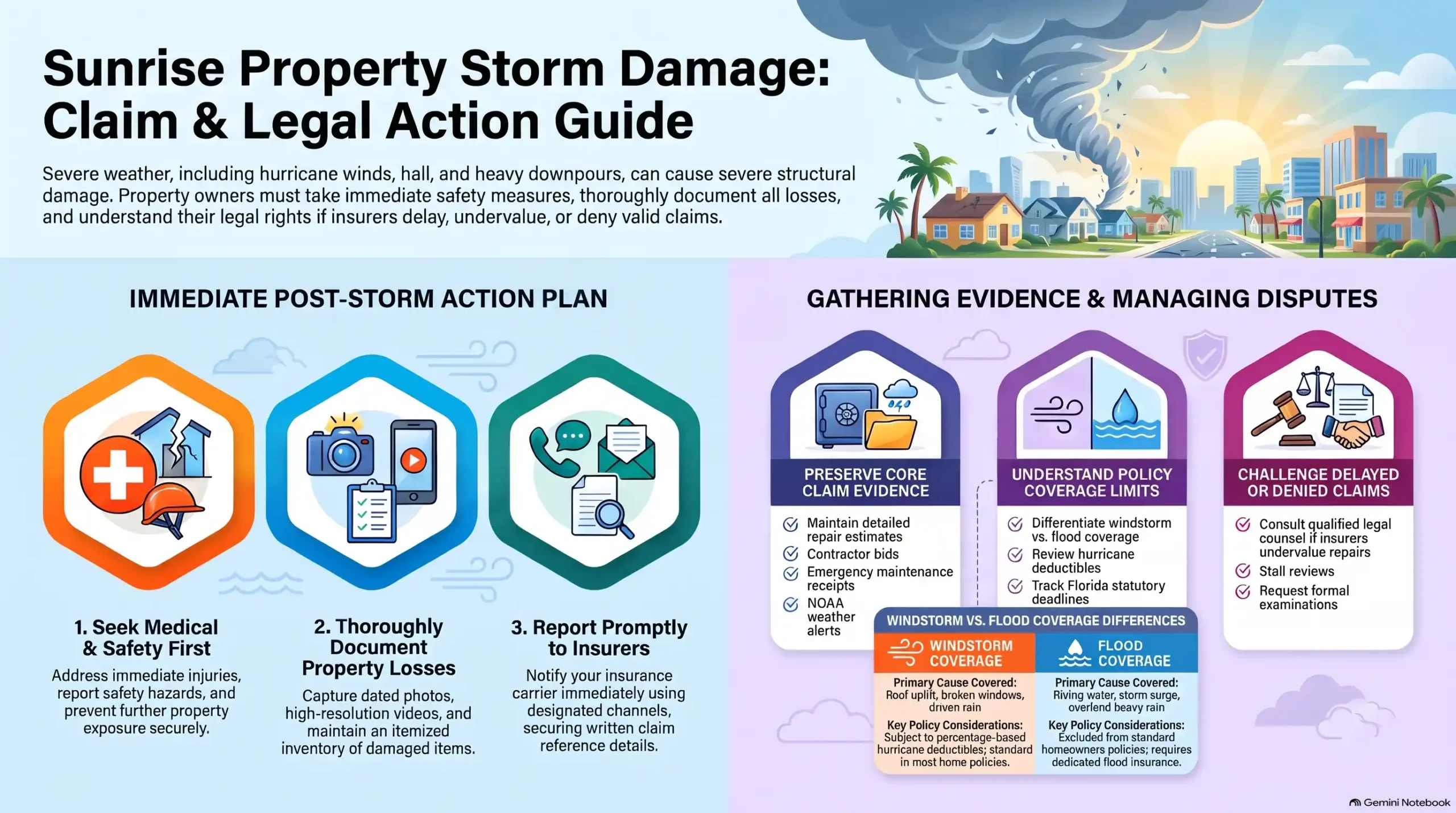
- Report damage promptly, follow policy instructions, and keep claim confirmations, deadlines, and insurer communications.
- Photograph damage and preserve repair estimates, inspection reports, receipts, weather alerts, and records of emergency repairs.
- Take reasonable safety measures to prevent further damage, but avoid unsafe areas and document temporary repairs and expenses.
- If the insurer delays, underpays, or denies your claim, a lawyer can review the decision and discuss available options.


How We Can Help With Your Sunrise Property Claim Storm & Weather Damage Injury Claim
After a storm damages a home or business, a Sunrise property claim lawyer can help the policyholder document the loss, review the insurance policy, and communicate with the insurer. This support can make the claims process more organized and help owners focus on protecting occupants, employees, and vital property.
Claim preparation may include gathering photographs, repair estimates, invoices, inspection records, and correspondence related to the damage. A lawyer can help present these materials clearly and identify information the insurer may need to evaluate the request. Careful records can reduce confusion and provide a reliable account of the loss.
Coverage analysis involves reviewing policy terms, limits, exclusions, and notice requirements that may affect the claim. The lawyer can explain relevant provisions and help the policyholder respond to questions or requests from the insurer. If the insurer delays or disputes payment, counsel can clarify available options and support informed decisions. This guidance can help property owners pursue a fair review while maintaining accurate communication throughout the process.
OUR CONSULTATIONSARE FREE
START YOUR FREE CASE REVIEW

Understanding Sunrise Property Claim Storm & Weather Damage Injury Cases
Storm and weather damage claims involve more than documenting visible property damage; they also require determining whether the loss falls within the policy’s coverage. In Sunrise, carefully reviewing policy terms, exclusions, deductibles, and notice requirements can help property owners understand the insurer’s obligations. The claim may also depend on evidence showing the property’s condition before the event, the extent of the resulting damage, and the reasonable cost of repairs.
A clear record supports fair evaluation and helps prevent overlooked losses from affecting occupants, neighbors, or community services. Photographs, repair estimates, inspection reports, and timely communications can help you present an accurate account. Storm preparedness and building resilience may reduce future risks, but they do not replace the need to assess an existing claim under the applicable policy. When coverage or valuation is disputed, qualified legal guidance can clarify available options and procedural deadlines. A thorough, measured approach promotes accountability while helping property owners pursue a resolution that supports safe, reliable recovery.
Common Causes of Sunrise Property Claim Storm & Weather Damage
Storm and weather damage to Sunrise properties commonly results from hurricane-force winds, hail impacts, and heavy rainfall. These conditions can damage roofs, break windows, cause flooding, and weaken structural components. Lightning strikes may also ignite fires or damage electrical systems, creating additional property losses.
Hurricane Winds
When hurricane-force winds cross Sunrise, they can damage roofs, break windows, and drive rain into a property. Roof uplift may loosen shingles, lift roof edges, or separate sections of a structure, allowing water to enter and affect ceilings, walls, and belongings. Wind pressure can also strain doors, garage doors, and exterior cladding, while falling branches and airborne objects create additional openings. Debris trajectories help explain how windborne materials struck a building and where resulting damage occurred. After a storm, property owners should document visible conditions, protect exposed areas when safe, and retain records of repairs and expenses. A careful inspection can distinguish wind-related damage from other causes and support an accurate insurance claim. Prompt attention can limit further deterioration and keep conditions safe for residents and neighbors.
Hail Impact
Hail can strike Sunrise properties with enough force to bruise roofing materials, crack skylights, dent metal components, and damage exterior finishes. Hailstone formation occurs within strong storm clouds, where rising air currents carry water droplets into freezing temperatures. As ice layers build, stones may grow large enough to cause significant surface damage when they fall. The resulting impact patterns can help distinguish hail damage from ordinary wear or wind-related effects. Marks may appear across roof slopes, vents, siding, windows, and outdoor equipment, though exposure varies by building orientation and surrounding obstructions. A careful inspection can document visible damage and identify less obvious defects, such as loosened roofing granules or fractured protective coatings. Prompt, accurate records help property owners and their advisors evaluate storm-related losses and pursue appropriate claim review.
Heavy Rainfall
Heavy rainfall can overwhelm drainage systems and allow water to enter Sunrise properties through roofs, windows, foundations, and other vulnerable areas. Prolonged downpours may saturate soil, increase pressure against foundation walls, and cause seepage or flooding in lower levels. Clogged gutters, damaged roof coverings, inadequate grading, and blocked storm drains can worsen water intrusion. Even properties without visible structural damage may still damage insulation, flooring, electrical systems, and personal belongings. Effective watershed management and properly maintained drainage infrastructure can reduce runoff risks, while rainwater harvesting may help control water volume when systems are designed and maintained appropriately. Property owners who experience storm-related water damage can document affected areas, preserve repair records, and take reasonable steps to limit further loss. A timely professional assessment can clarify the extent of damage and support accurate insurance claim preparation.
Lightning Strikes
Lightning strikes can damage Sunrise properties through direct impact, electrical surges, and fires caused by ignition of roofing, wiring, or nearby vegetation. A strike may also travel through utility lines, damaging appliances, HVAC equipment, and sensitive electronics. Even when damage is not immediately visible, affected wiring or structural components can create safety hazards and require professional inspection.
Property owners can reduce risks through Lightning safety planning, including monitoring weather alerts, securing outdoor equipment, and directing occupants to safe shelter during storms. Properly installed surge protection systems may help limit electrical damage, while maintained roofs and cleared vegetation can reduce fire exposure. After a strike, occupants should avoid damaged areas and report smoke, burning odors, or exposed wiring to emergency services. Photographs, repair estimates, and inspection findings can support a clear insurance claim and help property owners restore safe conditions for residents and neighbors.
Don’t Wait. Call Our Florida Personal Injury Lawyers Now!


Legal Rights of Sunrise Property Claim Storm & Weather Damage Injury Victims
When storms or severe weather damage a Sunrise property, policyholders have legal rights that may protect them from unfair claim denials, unreasonable delays, or inadequate payment. Their insurance contract, applicable Florida law, and claim documentation shape available options. Careful Policy interpretation can clarify covered losses, while coverage exclusions must be applied based on the policy’s wording and the facts.
Policyholders may generally:
- Review the policy and request written explanations for claim decisions.
- Submit photographs, repair estimates, receipts, and other relevant evidence.
- Ask the insurer to investigate promptly and communicate its findings.
- Challenge an unsupported denial or payment through available dispute procedures.
Accurate records help protect household stability and support a fair assessment. If an insurer fails to meet legal or contractual duties, the policyholder may seek guidance from a qualified property-claim attorney. Counsel can evaluate deadlines, explain potential remedies, and communicate with the insurer. Timely action can help preserve evidence and ensure claim concerns receive careful, accountable attention. Each claim depends on its specific facts and policy terms.
Why Do Storm & Weather Damage Injuries Happen in Sunrise?
Storm and weather damage injuries in Sunrise often occur when severe conditions weaken buildings, dislodge roofing, break windows, or cause flooding that leaves hazards inside and around a property. These events may expose residents, visitors, and workers to falling materials, sharp debris, electrical hazards, or slippery surfaces. Heavy rain can overwhelm drainage systems, while strong winds may turn unsecured objects into dangerous projectiles. Lightning and power outages also pose risks, especially in buildings with damaged wiring or inadequate emergency lighting.
The extent of harm often depends on a building’s vulnerability, including aging roofs, deferred maintenance, weak windows, and poor drainage. Inadequate Storm preparation may leave structures and surrounding areas less able to withstand predictable weather threats. Property owners and managers who serve the public must recognize foreseeable hazards and maintain reasonably safe premises. When inspections, repairs, or protective measures fall short, preventable conditions can contribute to injuries during or after a storm. Understanding these causes helps explain how weather damage can create serious safety risks for people on affected properties.
What Should You Do After a Sunrise Property Claim Storm & Weather Damage Injury?
After a storm-related injury, the affected person should seek prompt medical attention, even if symptoms initially appear minor. Document property damage with photos, records, and other available evidence. They should also contact their insurer promptly to report the loss and ask about the claims process.
Seek Medical Attention
Anyone injured during a storm or weather-related property incident in Sunrise should prioritize prompt medical evaluation. A qualified healthcare provider can assess injuries that may not be immediately apparent, including head trauma, fractures, or breathing difficulties. Emergency symptoms such as severe pain, confusion, heavy bleeding, or loss of consciousness require immediate emergency care. When symptoms are less urgent, prompt assessment can still help prevent complications and guide appropriate treatment.
Following medical advice supports recovery and provides a clear account of the care received. Injured individuals should attend recommended appointments, follow prescribed treatment, and report new or worsening symptoms to their provider. Treatment records can help explain the injury’s nature, timing, and effects. Seeking care also enables injured people to protect their health while remaining better able to support family members and others affected by the incident.
Document the Damage
Once immediate safety and medical needs have been addressed, documenting the property damage can help establish what occurred and support a Sunrise insurance claim. A careful record can also help residents explain the loss to family members, contractors, or other people assisting with recovery.
Photographs and videos should capture each damaged area from several angles, including close views of affected materials and wider views showing the surrounding structure. A dated written inventory can describe damage to Personal belongings, list approximate purchase dates, and note visible identifying details. Receipts, repair estimates, and relevant maintenance records may provide useful context. Copies should be stored securely, preferably in a location unaffected by the storm.
If the home is unsafe, records of Temporary housing arrangements and related expenses should be preserved. Documentation should be gathered only when conditions permit safe access and should never delay urgent protective measures.
Contact Your Insurer
Contacting the insurer promptly can help begin the claim process and clarify what information is required. The property owner should use the insurer’s approved phone number, online portal, or other designated channel to report storm or weather damage. Having the Policy number available can help the representative locate coverage details and open a claim efficiently. The report should provide the date of the event, the affected areas, and a concise description of observed damage. Photographs, repair estimates, and records of temporary protective measures may support the initial notice.
The owner should ask about agent availability, inspection scheduling, documentation deadlines, and whether emergency repairs require prior approval. Written confirmation of the report and claim reference number should be retained. Clear, timely communication can help representatives assess the loss and provide accurate guidance while the owner protects the property and assists affected occupants.
Critical Evidence in a Sunrise Property Claim Storm & Weather Damage Injury Case
A well-documented claim can help establish the extent of storm damage and support a clear account of the resulting losses.
Relevant evidence may include:
- Photographs showing damaged roofs, interiors, and personal property
- Weather reports and alerts documenting storm conditions
- Repair estimates and receipts for completed work and related expenses
- Witness statements and records describing the damage and its discovery
Photographs Of Property Damage
Clear photographs can provide vital evidence in a Sunrise property claim involving storm or weather damage. Images can document the condition of a roof, windows, siding, belongings, and interior spaces before repairs alter the scene. Photo timestamping helps establish when each image was taken and supports a clear account of when the damage was discovered and how it progressed. Wide views show the affected area in context, while closeups of damage can reveal cracks, leaks, displaced materials, or other details that may be difficult to assess later. Photographs should be clear, accurately represent the property, and include multiple angles where practical. A careful record may help insurers, adjusters, and legal representatives evaluate the claim and determine what assistance is appropriate. Preserving these images can also help property owners explain their losses to reviewers.
Weather Reports And Alerts
Official weather reports and alerts can provide important evidence in a Sunrise property claim involving storm or weather damage. Records from the National Weather Service, local authorities, and other reliable sources may establish when severe conditions occurred and which areas were affected. NOAA radar images can help show a storm’s movement, rainfall intensity, or wind patterns near the property. Forecast models and issued alerts may also document what conditions were expected and when warnings reached the area. This information can clarify whether reported damage aligns with the storm and support an accurate claim review. Property owners serving their families, tenants, or communities may benefit from preserving dated reports and alert notices. A qualified attorney can assess relevant records and explain their potential role in a dispute.
Repair Estimates And Receipts
When storm or weather damage requires repairs, estimates and receipts can help document the property’s condition, the work needed, and the costs incurred. Detailed Contractor bids may identify proposed materials, labor, and repair methods, helping show whether the recommended work addresses the damage. Comparing bids can also clarify differences in scope and pricing before repairs begin. Invoices, receipts, and proof of payment document completed work and expenses, supporting accurate payment tracking. Property owners should organize these documents by date and link each charge to a specific repair. If urgent work is necessary to protect occupants or prevent further damage, records of temporary measures and related costs may also be relevant. Clear documentation helps insurers and legal professionals assess the claim and determine whether compensation reflects reasonable repair costs.
Witness Statements And Records
Witness statements and contemporaneous records can help establish how a storm-related hazard caused an injury and what conditions existed at the property. Eyewitness interviews may clarify when flooding, fallen materials, or unsafe walkways appeared and whether staff received notice before the incident. A careful account can also identify actions taken to protect visitors, residents, or workers, supporting a fair assessment of responsibility.
Maintenance logs, inspection reports, and incident records may show whether the property was monitored and hazards were addressed promptly. Weather alerts, photographs, and communications can help confirm the timing and severity of conditions. Preserve records in their original form, with dates and sources documented, because later changes or missing details may affect reliability. Combined, these materials can help decision-makers evaluate the injury and support an accurate claim.
Don’t Wait. Call Our Florida Personal Injury Lawyers Now!
Long-Term Effects of Sunrise Property Claim Storm & Weather Damage Injuries
Storm and weather-related injuries may cause lingering physical limitations that interfere with daily activities long after the event. Exposure to moisture, mold, or other contaminants can contribute to chronic respiratory problems requiring ongoing care. Some individuals also experience lasting emotional effects, including anxiety or distress associated with the damage and recovery process.
Lingering Physical Injuries
Lingering physical injuries can complicate recovery after storm or weather damage, particularly when exposure to debris, contaminated water, or unsafe conditions causes lasting harm. Cuts, fractures, sprains, and joint injuries may require extended treatment and interfere with daily responsibilities. Some affected residents experience persistent pain, reduced strength, or mobility limitations that make returning to work, caring for family, or assisting neighbors more difficult. Prompt medical evaluation can identify injuries that are not immediately apparent and help establish an appropriate care plan. Tracking injury symptoms, including dated notes on pain, treatment, and functional changes, may support discussions with healthcare providers and insurers. Records of medical visits, prescriptions, rehabilitation, and related expenses can also clarify the injury’s continuing effects. A property claim lawyer may help assess documentation and explain available options for pursuing compensation.
Chronic Respiratory Problems
Respiratory problems may develop after exposure to dust, mold, smoke, or contaminated materials during storm cleanup and property repairs. When these hazards remain in damaged buildings, occupants and workers may continue inhaling irritants long after the weather event. Symptoms can include wheezing, chest tightness, shortness of breath, and a Persistent Cough. For people with existing asthma, exposure may trigger an Asthma Exacerbation, requiring medical evaluation or changes to treatment. Some respiratory effects persist even after visible damage is repaired, especially when moisture problems or airborne particles aren’t adequately addressed. Prompt assessment, appropriate protective equipment, and professional remediation can help limit further exposure. Medical records documenting symptoms, diagnoses, and treatment may also clarify the connection between storm-related conditions and ongoing respiratory difficulties for affected residents and those assisting them.
Lasting Emotional Effects
Emotional effects may persist long after storm-related property damage is repaired, especially when injury, displacement, or a prolonged insurance dispute disrupts a person’s sense of safety. Survivors may experience anxiety, low mood, irritability, or persistent worry about future storms and financial stability. Sleep disruption can impair concentration and make daily responsibilities harder, affecting both the injured person and the family members who support them. Some individuals avoid damaged areas or become distressed by weather alerts, especially when reminders are linked to a frightening event. Trauma counseling may help people process these reactions and develop practical coping strategies. Early attention to emotional symptoms can support recovery and reduce isolation. When documenting a property claim, treatment records and related limitations may help explain how storm injuries have affected a person’s well-being and ability to serve others.
Proving Liability in Sunrise Property Claim Storm & Weather Damage Injury Cases
How can a property owner establish liability after storm or weather damage in Sunrise? A careful investigation can identify who controlled the property, what hazards existed, and whether reasonable steps could have prevented the injury. Premises negligence may apply when an owner knew, or should have known, about a dangerous condition and failed to repair it, restrict access, or provide adequate warning. Examples include unsecured roofing materials, standing water, fallen branches, or damaged walkways left unaddressed after severe weather.
Evidence may include dated photographs, maintenance records, inspection reports, witness accounts, and documentation of the site’s condition. These details can help show when the hazard arose and whether the responsible party had time to respond. Contractor liability may also be relevant if a repair, installation, or cleanup was performed carelessly and contributed to the injury. A qualified legal professional can assess applicable duties, preserve relevant evidence, and determine whether multiple parties share responsibility. This process can support accountability and safer conditions for residents and visitors.
Dealing With Insurance Companies After a Sunrise Property Claim Storm & Weather Damage Injury
Once you assess responsibility for a storm-related hazard, insurance communications can affect how an insurer evaluates an injury claim. A person injured on a Sunrise property may need to explain the incident, describe the resulting harm, and provide relevant records to the insurer. Clear Policyholder communication helps keep statements accurate and consistent while reducing misunderstandings about the event or its effects.
Insurers may request photographs, medical information, witness details, or other documentation. Review materials for accuracy before submitting them, and retain copies. Injured individuals should avoid guessing about disputed facts or making unsupported statements about their recovery. Prompt, factual responses can support a fair assessment without overstating the available evidence.
During claim negotiation, the insurer may question responsibility, the extent of injuries, or the value of losses. A careful review of the evidence can help identify gaps and support reasoned discussions. Legal guidance may assist with communications and protect the injured person’s interests while seeking a resolution that reflects documented harm.
What to Expect During a Sunrise Property Claim Storm & Weather Damage Injury Claim Process
A storm or weather damage claim typically begins with promptly reporting the damage to the insurer and documenting losses through photographs, receipts, and repair estimates. The insurer then reviews the policy and supporting evidence to determine coverage and the amount payable. If disagreements arise, the policyholder may pursue further review, dispute resolution, or an appeal.
Report the Damage
Promptly reporting storm or weather damage to the insurer helps establish when the loss occurred and begins the property claim process. The policyholder should contact the insurer as soon as conditions allow, using the designated claims number or online reporting system. The initial notice generally identifies the property, the date of the event, and the apparent type of damage. The insurer may provide a claim number, explain policy requirements, and arrange an inspection. Accurate, timely communication helps the process proceed efficiently and supports a fair review. If immediate steps are needed to protect occupants or prevent further harm, the policyholder should ask the insurer about reasonable precautions. Emergency tarping may limit additional water intrusion, while prompt drying can assist with mold prevention. Necessary safety measures should not be delayed while awaiting an adjuster.
Document Your Losses
Careful documentation helps establish the extent of storm or weather damage and supports the insurer’s evaluation of a property claim. Photographs and videos can record affected rooms, damaged belongings, and visible structural problems before cleanup or repairs alter the scene. A dated list should identify each damaged item, its approximate age, purchase price, and replacement cost when known. Receipts, warranties, repair estimates, and relevant maintenance records can further clarify losses. A Digital Inventory, stored securely with copies of supporting documents, can help organize evidence and make it accessible to household members assisting with recovery. Records should also track reasonable expenses caused by displacement, including Temporary Housing, meals, and transportation, with receipts retained. Accurate, organized documentation helps families communicate their needs clearly and preserve a reliable account of the damage and related costs.
Review the Insurance Claim
After a storm or severe weather event, the insurer reviews the submitted claim, supporting records, and any inspection findings to determine which losses may be covered under the policy. The review may include photographs, repair estimates, receipts, and reports describing the damage. An adjuster may inspect the property to assess the cause and extent of the loss, then compare those findings with the policy terms.
The insurer considers applicable coverage limits and Policy exclusions when evaluating payment. It may distinguish storm-related damage from preexisting conditions or maintenance issues, and calculate the amount payable after any deductible. The resulting decision generally identifies accepted losses, estimated benefits, and any items not included. Property owners can review the explanation and retain the claim documents for their records. Understanding this assessment helps households plan repairs and protect their property responsibly.
Resolve Disputes and Appeals
If a Sunrise property owner disagrees with the insurer’s storm damage assessment or payment decision, they may address the dispute by submitting supporting evidence and requesting a review. Relevant records may include photographs, repair estimates, inspection reports, and correspondence explaining the scope and cost of the damage. The owner should compare the insurer’s findings with policy terms and identify specific areas of disagreement. Appraisal disputes may arise when the parties differ on the amount of loss; policy provisions can describe whether appraisal is available and how the process works. If an internal review does not resolve the matter, the owner may consider a formal appeal or seek guidance from a qualified professional. Appeal deadlines and notice requirements can vary, so prompt action helps preserve options and supports a fair, orderly resolution for everyone affected.
Compensation for Sunrise Property Claim Storm & Weather Damage Injury Damages
Compensation for storm and weather damage to Sunrise property depends on the insurance policy, the cause and extent of the loss, and the evidence supporting the claim. Coverage may include reasonable costs to repair or rebuild damaged structures, subject to policy limits, exclusions, deductibles, and required claim procedures. A careful inventory can help document damaged Personal Property, including furniture, clothing, appliances, and other belongings. Photographs, receipts, repair estimates, and records of communications with the insurer may support the claimed losses.
When storm damage makes a home unsafe or uninhabitable, the policy may provide Temporary Housing or other additional living expense coverage. Such benefits are generally limited by the policy’s terms and may require records showing necessary, reasonable costs. The insured should take reasonable steps to prevent further damage and preserve evidence, while avoiding repairs that could interfere with inspection. A qualified property claim lawyer can review the policy, assess the insurer’s valuation, and help pursue benefits supported by the available documentation.
Economic vs Non-Economic Damages in Sunrise Property Claim Storm & Weather Damage Cases
Storm and weather claims may involve economic property losses, including repair costs, replacement expenses, and other documented financial impacts. They may also include non-economic harm, such as disruption to daily life or loss of use of the property. Proving both types of damage requires clear evidence linking the losses to the covered event.
Economic Property Losses
In Sunrise property claims involving storm or weather damage, economic losses are the measurable financial costs caused by physical damage, such as repair expenses, replacement costs, and reasonable temporary housing or mitigation expenses. These losses may also include documented costs for debris removal, emergency protection, and damaged personal property, subject to the policy’s terms and applicable limits. Commercial property owners may seek covered Business interruption losses when damage prevents normal operations. Landlords may document lost rental income if storm damage makes a unit unusable during repairs. Receipts, invoices, repair estimates, lease records, and financial statements can help establish the amount and cause of claimed losses. Accurate records allow insurers and property owners to assess the claim fairly and support timely restoration, helping residents, tenants, employees, and customers return to safe, functional spaces.
Non-Economic Harm
While economic damages reflect measurable costs such as repairs, temporary housing, or lost rental income, non-economic harm concerns personal effects that are not readily assigned a dollar value. In Sunrise storm and weather claims, this harm may include Emotional distress caused by displacement, uncertainty, or disrupted daily routines. Residents may also experience diminished enjoyment of their homes when damage makes familiar spaces uncomfortable, inaccessible, or less secure. These effects can affect family life, rest, and a person’s sense of stability, even when they don’t produce a direct bill or receipt. Non-economic harm differs from repair expenses and other financial losses, though both may stem from the same event. Recognizing these personal consequences helps describe the broader impact of property damage on those affected and supports a fair assessment of the claim.
Proving Both Damage Types
A strong Sunrise property claim distinguishes economic losses from non-economic harm and supports each with evidence suited to its nature. Economic damages may include repair costs, temporary housing, damaged belongings, and documented lost income. Estimates, invoices, receipts, photographs, and financial records help establish the amount claimed. Non-economic harm may involve disruption, stress, or loss of use that affects daily life, supported by consistent accounts, relevant records, and testimony from people familiar with the impact.
Damage Differentiation prevents financial expenses from being confused with personal effects or counted twice. Causation Analysis connects each claimed loss to the storm or weather event, while addressing possible preexisting conditions and other causes. Clear timelines and professional inspections can strengthen that connection. A careful presentation helps insurers and decision-makers assess both categories fairly and understand the full effect on the property owner and household.
When a Sunrise Property Claim Storm & Weather Damage Injury Case Goes to Trial vs Settlement
Whether a Sunrise storm-damage property claim settles or proceeds to trial depends on the evidence, the extent of the loss, and the parties’ ability to resolve disputes over coverage or payment. Settlement may provide a more predictable resolution, limit legal expenses, and allow property owners to focus on repairs and community responsibilities. However, an offer may not adequately reflect documented damage, repair costs, or related losses. A careful review helps determine whether the proposed amount is fair.
When negotiations do not resolve material disagreements, a case may proceed to trial, where each side presents evidence and arguments for a decision. Trial preparation can include organizing inspection reports, photographs, repair estimates, and relevant communications. Clear documentation may also strengthen settlement leverage by showing the basis for the claimed loss. The decision to settle or continue litigation depends on the claim’s specific facts, the risks of an uncertain outcome, and the owner’s priorities. Legal guidance can help evaluate options and support an informed, responsible resolution.
Don’t Wait. Call Our Florida Personal Injury Lawyers Now!
Florida Laws That May Affect Your Sunrise Property Claim Storm & Weather Damage Case
Florida law can shape how a Sunrise property owner reports, documents, and pursues a storm or weather damage claim. Policy terms and state requirements may affect notice, inspections, proof of loss, and the handling of disputed repair estimates.
Owners who act carefully can protect household safety while helping insurers evaluate damage accurately.
- A dated photograph of roof tiles, fallen branches, or interior leaks can preserve a clear record of conditions.
- Receipts for emergency tarping and temporary repairs can show reasonable steps taken to limit further harm.
- Contractor estimates and inspection notes can help distinguish storm damage from preexisting wear.
- Written communications can document requests, responses, and any disagreement over covered repairs.
Florida policies may set appraisal deadlines or other procedural requirements when the parties dispute the amount of loss. Florida matching funds may also be relevant when repairs involve materials that must coordinate with undamaged portions of a property. Coverage depends on the policy and facts. Careful records support fair review and help owners remain available to assist family members, neighbors, and community recovery efforts.
The Statute of Limitations for Sunrise Property Claim Storm & Weather Damage Injury Cases
Because legal deadlines can limit the time to pursue payment, Sunrise property owners should identify the statute of limitations that applies to their storm or weather damage claim. Florida law sets deadlines for filing lawsuits, and the applicable period may depend on the type of claim, the insurance contract, and when the damage occurred or was discovered. Missing a deadline can prevent recovery, even when a property has sustained substantial damage.
Filing deadlines are distinct from the notice and proof-of-loss requirements in an insurance policy. Policy timeframes may require prompt reporting, documentation, or submission of a sworn statement, sometimes well before a lawsuit deadline. Owners should review their policy and preserve relevant records, including photographs, repair estimates, and insurer correspondence. Storm-related damage can involve hidden conditions, so timely inspection and careful date tracking are important. Because statutory rules and policy terms may change or vary by circumstance, property owners serving tenants, customers, or community members should confirm the deadlines that govern their particular claim without delay.
How a Sunrise Property Claim Storm & Weather Damage Lawyer Can Help You
When a storm damages a property, a Sunrise property claim lawyer can help the owner assess the loss, understand the insurance policy, and pursue the benefits available under its terms. The lawyer can organize evidence and communicate with the insurer so the claim reflects the damage and the policy’s requirements.
- Photographs and inspection records can show roof damage, fallen trees, and water intrusion.
- Repair estimates can document the work needed to restore safe, usable rooms.
- Policy interpretation can clarify duties, limits, and applicable coverage exclusions.
- Claim correspondence can identify disputed items and explain the basis for payment decisions.
This support can help property owners direct attention toward repairs and the needs of family members, tenants, or neighbors affected by the storm. A lawyer may review the insurer’s assessment, compare it with independent documentation, and present a reasoned response when the payment appears incomplete. By keeping records organized and explanations clear, counsel can help the owner pursue a fair resolution while treating all involved parties respectfully.
When to Contact a Sunrise Property Claim Storm & Weather Damage Lawyer
A property owner should consider contacting a Sunrise property claim storm and weather damage lawyer as soon as significant damage appears or an insurer questions, delays, or limits the claim. Early guidance can help clarify what information should be preserved and which steps may affect the claim. A consultation may also be appropriate when the cause or extent of storm damage is disputed, a settlement offer seems incomplete, or the insurer requests additional documentation.
Policy deadlines can apply to reporting damage, submitting proof of loss, and pursuing further review. Missing a deadline may restrict available options, so owners should read policy notices promptly and seek attorney consultation when requirements are unclear. This is especially important after hurricanes, severe rain, wind, or flooding, when damage may emerge gradually and records can become harder to assemble.
Timely contact can help an owner understand the process while keeping communications organized. It may also support informed decisions that protect household stability and allow a return to normal routines.
Why You Need an Experienced Sunrise Property Claim Storm & Weather Damage Lawyer
An experienced Sunrise property claim storm and weather damage lawyer can help property owners address complicated insurance disputes with careful preparation and informed guidance. After severe weather, accurate documentation and a clear understanding of policy obligations can affect whether a claim receives fair consideration. Counsel can review damage records, repair estimates, insurer correspondence, and relevant policy provisions to identify gaps or disputed findings.
Policy interpretation is often central when an insurer questions the cause, extent, or timing of property damage. A lawyer can explain how coverage terms apply and assess whether the insurer has invoked coverage exclusions appropriately. This support may help owners respond to information requests, challenge unsupported claim decisions, and present evidence in an organized way.
Experienced legal guidance also helps protect homeowners from avoidable procedural errors while they focus on restoring safe, functional properties. By clarifying options and communicating with the insurer, counsel can help achieve a more informed resolution. Such assistance serves property owners and their communities by promoting accountability and responsible recovery after storms.
How to Choose the Right Sunrise Property Claim Storm & Weather Damage Lawyer for Your Case
Selecting the right Sunrise property claim storm and weather damage lawyer requires careful review of the attorney’s experience with insurance disputes, policy interpretation, and storm-related property losses. A qualified lawyer should understand how insurers assess wind, hail, and water damage and be able to explain the steps for documenting and challenging a claim. Reviewing an Attorney’s credentials can confirm active licensure, relevant practice experience, and any disciplinary history. A prospective client may also ask how the lawyer communicates, who will handle routine casework, and how progress will be reported. Clear communication supports informed decisions and helps property owners coordinate repairs while protecting their interests. Before signing an agreement, the client should request a written explanation of fee structures, including whether fees depend on recovery and which case expenses may apply. Comparing these details across qualified attorneys can clarify expectations. The selection should reflect the claim’s needs, the lawyer’s relevant experience, and the client’s ability to work confidently with that professional.
About The Law Offices of Anidjar & Levine
When storm or weather damage leads to an insurance dispute, the Law Offices of Anidjar & Levine represents property owners seeking to understand and pursue their claims.
The firm assists clients facing denied, delayed, or underpaid claims after hurricanes, severe rainfall, and other damaging events.
Its work may include reviewing policy terms, documenting losses, communicating with insurers, and evaluating available options for resolving disputes.
Property owners can review the firm’s history to learn about its practice and approach to client representation.
Attorney Profiles provide information about the lawyers’ backgrounds, experience, and areas of focus, helping prospective clients assess whether the firm’s services suit their circumstances.
Each claim depends on its policy language, evidence, and applicable deadlines, so careful case-specific review is important.
The firm explains the claims process and advocates for clients seeking fair consideration of covered damage.
Individuals considering representation can contact the office to discuss their property loss, relevant records, and potential next steps.

Frequently Asked Questions
Does Homeowners Insurance Cover Damage From Hurricanes and Tropical Storms in Sunrise?
Homeowners insurance in Sunrise may cover hurricane and tropical-storm damage, but protection depends on the policy, exclusions, and cause of loss. Wind damage and resulting roof damage coverage are commonly included, while flooding usually requires separate flood insurance. Insurers may apply hurricane deductible rules, which can require a percentage of the home’s insured value rather than a fixed amount. Policyholders should review coverage limits and promptly document damage to support accurate, timely claims.
What Is the Difference Between Windstorm and Flood Coverage?
Windstorm coverage generally pays for direct damage caused by strong winds, such as roof or siding damage, subject to policy limits and Windstorm deductibles. Flood coverage addresses water rising from outside, including storm surge and heavy rainfall that inundates property. Standard homeowners policies commonly exclude flood damage, so you may need separate flood insurance. Understanding these distinctions helps property owners arrange appropriate protection and support affected households after severe weather.
Can I File a Claim for Mold Caused by Storm-Related Water Intrusion?
A claim may be available when storm-related water intrusion causes mold, but coverage depends on the policy, the source of water, and any exclusions or deadlines. The policyholder should promptly notify the insurer, limit further damage, and preserve receipts. Clear Moisture documentation, including dated photographs and repair records, can support the claim. Mold remediation should follow qualified professional guidance, and document damaged materials and inspection findings before removal, when safe and practical.
What Should I Do if My Insurer Requests an Examination Under Oath?
An insured should review the insurer’s request promptly, confirm the examination date, and consult qualified coverage counsel before appearing. Preparing for an Examination Under Oath includes gathering relevant policies, repair records, photographs, invoices, and prior communications, then reviewing the claim timeline for accuracy. When Responding to an EUO Request, the policyholder should answer truthfully, listen carefully, and request clarification when needed. Counsel can explain applicable duties, address scheduling concerns, and help protect the claim record.
Can I Reopen a Property Damage Claim After Discovering Additional Storm Damage?
A property damage claim may be reopened or supplemented when additional storm damage is discovered, subject to the policy and applicable law. The policyholder should promptly notify the insurer and provide Supplemental damage documentation, including dated photographs, contractor assessments, repair estimates, and evidence linking the damage to the storm. Claim reopening deadlines vary, so the policyholder should review notice requirements and act quickly. If the insurer disputes coverage, professional guidance may help protect the claim and support fair resolution.
—————————
Storm damage to your property can create significant financial pressure, especially if your insurer delays, undervalues, or denies your claim.
A Sunrise property claim lawyer can review your policy, document covered losses, and address disputes with the insurance company.
Prompt action may help preserve evidence and protect important deadlines.
The Law Offices of Anidjar and Levine help property owners evaluate their options and pursue fair treatment under their policies.
For other legal matters, learn more about a Sunrise Personal Injury Lawyer.
Each claim depends on its specific facts and coverage terms.