

If you were injured in a Fort Myers rideshare crash, The Law Offices of Anidjar and Levine can help identify who may be at fault, including the rideshare driver, another motorist, or a company responsible for vehicle maintenance. We’ll review trip status, available app records, witness accounts, and other evidence to assess potential liability and insurance coverage. Florida’s comparative fault rules may affect compensation when responsibility is shared. Learn what evidence, coverage questions, and next steps may matter in your claim with a Fort Myers Personal Injury Lawyer.
Main Takeaways
- A Fort Myers rideshare accident lawyer can investigate whether the rideshare driver, another motorist, or a company caused the crash.
- Driver negligence may include distraction, speeding, unsafe turns, failure to yield, or unsafe passenger pickups and drop-offs.
- App status and trip stage can affect which rideshare insurance coverage applies.
- App records, phone activity, witness accounts, crash reports, and camera footage may help establish fault.
- Florida comparative fault rules may divide responsibility among parties and reduce compensation based on the claimant’s share.


How We Can Help With Your Fort Myers Rideshare Accident At-Fault Parties Injury Claim
When a rideshare crash in Fort Myers causes injuries, identifying every responsible party is an important step toward pursuing compensation. We can help you respond to the immediate demands of an injury claim while keeping your recovery and well-being in focus. Our team reviews available records, explains relevant insurance procedures, and helps you understand what information may support your claim. We’ll communicate with insurers on your behalf and handle documentation requests, so you can focus on medical care and family responsibilities.
Rideshare policies and Florida’s No Fault Coverage rules can affect how injury expenses are handled. We’ll clarify how these provisions may apply to your circumstances and explain your Passenger Rights in clear terms. If you’re unsure what to do next, we can discuss practical options and help you make informed decisions. We approach each matter with care, respect, and a commitment to serving people through a difficult period, while keeping you informed about important developments and deadlines.
OUR CONSULTATIONSARE FREE
START YOUR FREE CASE REVIEW

Understanding Fort Myers Rideshare Accident At-Fault Parties Injury Cases
Understanding a Fort Myers rideshare accident injury case starts with determining who caused the crash and what role each party played. We review the evidence to identify potentially responsible parties, including a rideshare driver, another motorist, or a company whose conduct contributed to the harm. Each case depends on its specific facts, and responsibility may be shared among more than one party.
The Rideshare liability framework can affect which insurance coverage applies and when it may respond. A driver’s status in the app, the trip’s stage, and the parties’ relationships may all matter. We help you understand these distinctions and how they can shape a claim.
We also assess corporate responsibility standards, including whether a company met applicable duties in its operations and dealings with drivers and passengers. Our careful review can clarify your options and support a fair process. By explaining the evidence and legal issues, we help you pursue accountability while keeping your recovery and practical needs in view.
Common Causes of Fort Myers Rideshare Accident At-Fault Parties
When we assess a Fort Myers rideshare crash, we consider whether a driver’s distraction, speeding, or reckless driving contributed to the collision. Unsafe passenger pickups can also create hazards for people nearby. We’ll also examine whether another motorist acted negligently and caused or worsened the crash.
Distracted Rideshare Drivers
Distracted rideshare drivers can cause serious crashes when they divide their attention between the road and the demands of an app, passenger, or phone. Phone Distraction may occur when a driver reads messages, accepts a ride, or checks trip details while moving. Even a brief glance can delay a response to changing traffic or a pedestrian crossing the street. Navigation Distraction can also arise when drivers study directions, adjust a route, or search for a pickup location instead of watching the roadway. Passengers may contribute by asking questions or requesting changes, but drivers remain responsible for operating safely. We can review app records, phone activity, witness accounts, and other evidence to identify what drew a driver’s attention and determine whether that conduct contributed to your injuries.
Speeding and Reckless Driving
Speeding and reckless driving can cause severe Fort Myers rideshare crashes, even when a driver isn’t using a phone or app. When a rideshare driver exceeds a safe speed, they have less time to respond to traffic, pedestrians, and changing road conditions. Speed Limit Violations may also increase impact force, making injuries more serious for passengers and others on the road.
Aggressive Driving Patterns, such as tailgating, unsafe lane changes, or running red lights, can further raise crash risks. We can review available evidence, including police reports, witness accounts, and vehicle data, to determine whether a driver’s choices contributed to your injuries. By establishing how the conduct caused the collision, we can pursue accountability and seek compensation for your losses. Your claim may also help encourage safer driving and protect others in our community.
Unsafe Passenger Pickups
Unsafe passenger pickups can create serious hazards when rideshare drivers stop in traffic lanes, block intersections, or pull over where passengers must cross active roads. Drivers should choose legal, well-lit locations that let riders enter and exit without stepping into moving traffic. When they ignore these precautions, passengers, cyclists, and pedestrians may face preventable injuries. We can examine whether the driver selected a safe stopping point, checked surrounding conditions, and gave clear directions before arrival. Curbside visibility matters, particularly at night or in crowded areas where people may be difficult to see. Poor pickup zone design can also encourage unsafe stops by leaving drivers without suitable places to wait. By identifying these conditions, we can help injured people understand who may be responsible, pursue accountability, and support safer rides for everyone in Fort Myers.
Negligent Other Motorists
When another motorist’s negligence causes a collision involving a rideshare vehicle, the rideshare driver or passenger may suffer serious injuries even if the rideshare driver did nothing wrong. Other drivers may cause crashes by speeding, running red lights, following too closely, or driving while distracted or impaired. We can help you identify the responsible motorist and gather evidence, such as crash reports, witness statements, and available video, to support your claim. Motorist insurance gaps may complicate recovery when the at-fault driver lacks adequate coverage. We’ll review available policies and explain possible options, including applicable rideshare coverage. Under comparative fault rules, more than one party may share responsibility, and your compensation may depend on each party’s assigned share of fault. We can assess the evidence and help you pursue a fair outcome.
Don’t Wait. Call Our Florida Personal Injury Lawyers Now!


Legal Rights of Fort Myers Rideshare Accident At-Fault Parties Injury Victims
If you were injured in a Fort Myers rideshare accident, Florida law may let you seek compensation from the driver or other parties whose negligence caused the crash. We can help you understand your options and protect your interests while you focus on recovery and responsibilities to those who depend on you.
Passenger rights may include pursuing damages even when you weren’t driving. Fault disputes can involve several parties, so evidence and careful review matter.
Depending on the facts, you may be able to seek payment for:
- Medical expenses and necessary future care
- Lost income and reduced earning ability
- Pain, suffering, and diminished quality of life
- Property damage and related out-of-pocket costs
- Other losses supported by evidence
Florida’s comparative fault rules may reduce compensation if you share responsibility, but they don’t automatically bar a claim. Insurance coverage can depend on the driver’s rideshare status. We can assess applicable policies, preserve records, and explain deadlines. Prompt legal guidance can help you make informed decisions and pursue fair compensation.
Why Do Fort Myers Rideshare Accident At-Fault Parties Injuries Happen?
Why do rideshare crashes in Fort Myers injure at-fault parties and others on the road? These collisions often happen when drivers divide their attention between traffic, navigation apps, and passenger requests. A brief glance away from the road can keep a driver from noticing a stopped vehicle, a pedestrian, or a changing signal. Speeding, unsafe turns, sudden stops, and failure to yield can also trigger crashes that injure passengers, other motorists, cyclists, and pedestrians.
Tourist traffic patterns add pressure. Visitors may be unfamiliar with local routes, make abrupt lane changes, or slow down unexpectedly while searching for destinations. At the same time, rideshare drivers may stop near busy businesses or curbside pickup points, creating conflicts with moving traffic. Fort Myers road design can contribute when wide roads, intricate intersections, limited crossings, and heavy congestion leave little room for error. Understanding these factors helps us recognize how preventable choices and roadway conditions combine to harm people who depend on one another for safe travel.
What Should You Do After a Fort Myers Rideshare Accident At-Fault Parties Injury?
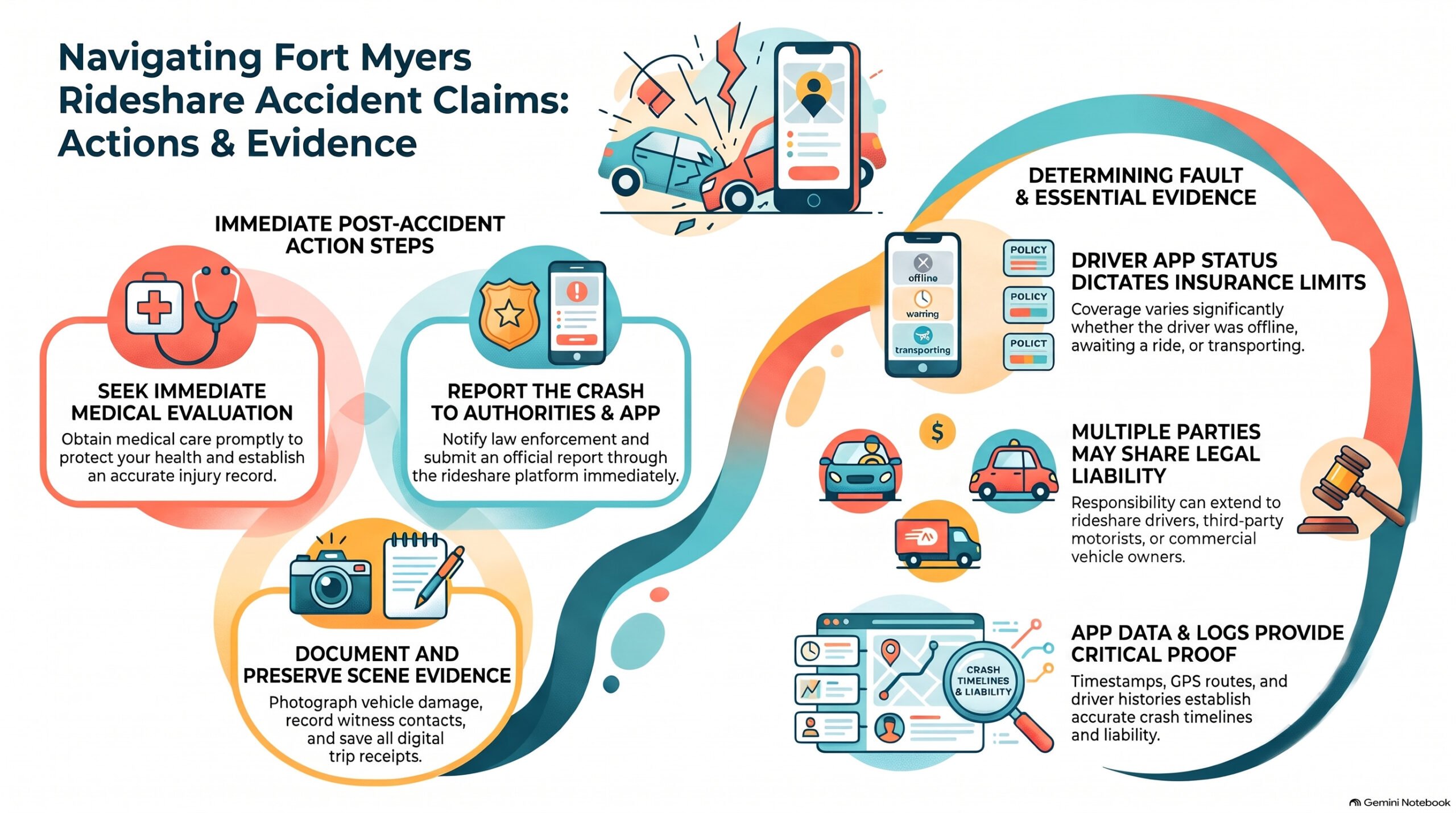
After a Fort Myers rideshare accident, seek medical care promptly, even if your injuries seem minor. Report the crash to law enforcement and the rideshare company, providing accurate details without speculating about fault. We should also preserve photos, witness information, medical records, and trip details that may help document what happened.
Seek Medical Care
Even when a rideshare crash seems minor, seek medical care promptly because some injuries may not become apparent until hours or days later. Call 911 for Emergency symptoms such as difficulty breathing, severe bleeding, confusion, or intense pain. If symptoms seem less urgent, contact a healthcare provider or visit an urgent care clinic as soon as possible. Describe the collision and every symptom, even if it appears mild. Follow the provider’s treatment instructions, take prescribed medication as directed, and attend all follow-up appointments. Consistent care helps us identify changes, support recovery, and maintain an accurate medical record. Keep copies of visit summaries, test results, and bills. By taking these steps, we protect our health and remain better able to care for family members and others who depend on us.
Report The Accident
Report the crash promptly to law enforcement and the rideshare company, even if the collision seems minor. When we Notify Authorities, we create an official record and help ensure everyone gets appropriate assistance. Give officers a clear, factual account of what happened, and avoid guessing about details you don’t know. Ask how to obtain the incident report and provide accurate contact information.
Exchange Information with the rideshare driver, other drivers, and witnesses, including names, phone numbers, insurance details, and vehicle information. Confirm the driver’s rideshare affiliation and, if known, the company and trip status. Report the incident through the company’s app or support channel, and keep a record of the report reference number. If you can’t report the crash yourself, ask a trusted person to help. Prompt, accurate reporting supports everyone affected and helps clarify responsibility.
Preserve Evidence
Preserve evidence as soon as it’s safe, since details can quickly disappear or change. If you can do so safely, photograph the vehicles, visible injuries, road conditions, traffic signs, and the surrounding area before anything is moved. Ask witnesses for their names and contact information, and write down what you remember while events remain clear. Save the rideshare app trip details, driver and vehicle information, receipts, and relevant messages. Keep damaged clothing or personal items as they are, and avoid repairing or discarding them until you’ve documented the damage. Evidence preservation also means protecting electronic records. Make digital backups of photographs, videos, and correspondence, and store copies somewhere secure. We can help you identify other records to request, including rideshare company data, before routine deletion policies affect availability.
Don’t Wait. Call Our Florida Personal Injury Lawyers Now!
Critical Evidence in a Fort Myers Rideshare Accident At-Fault Parties Injury Case
We’ll assess the evidence that can help establish how the crash occurred, who may be responsible, and how your injuries affected you.
Essential records and physical evidence may include:
- Rideshare app records showing the driver’s status and trip details
- Driver employment history and relevant company records
- Crash scene photographs, witness accounts, and other physical evidence
- Medical records documenting treatment and injury progression
- Police reports and available vehicle or traffic camera footage
Rideshare App Records
Because rideshare app records can show what happened before, during, and after a crash, they may help identify the at-fault parties and support an injury claim. These records may include trip status, pickup and drop-off details, route information, timestamps, and communications between the driver, passenger, and company. We can use this information to compare accounts, clarify when a driver accepted a ride, and determine whether the app was active at the time of impact. Prompt action matters because Data retention policies may limit how long a platform keeps relevant records. We can help you seek preservation and account access through appropriate legal channels, rather than relying on screenshots alone. Protecting this evidence can help the injured person and promote accountability by establishing what occurred and who may bear responsibility.
Driver Employment History
A rideshare driver’s employment history may help us identify who controlled the driver’s work and which parties could bear responsibility for a crash. We can examine prior employers, job duties, training records, and any agreements that define the driver’s relationship with a rideshare company or another business. Prior employment verification may reveal whether the driver worked for a fleet operator, transportation provider, or staffing company that set schedules or supervised performance. A review of driving history can also uncover past violations, license suspensions, or safety concerns that an employer may have known about. These records may help us assess whether a company hired or retained the driver responsibly and whether its policies contributed to the harm. By tracing these relationships, we can pursue accountability and seek support for your recovery and the people who depend on you.
Crash Scene Evidence
The moments after a rideshare crash can leave evidence that helps establish how the collision happened and who may be responsible. We can help preserve and assess this information before vehicles move or weather, traffic, and cleanup alter the scene. Photographs should capture vehicle positions, damage, traffic signals, road conditions, and visible marks from several angles. Skid Mark Analysis may help show braking, speed, and a vehicle’s path, while Debris Field Mapping can help identify impact points and movement after the collision. Witness names and contact details, nearby business or traffic-camera footage, and the rideshare driver’s trip records may also clarify events. We’ll coordinate with qualified investigators when needed and organize findings to support a fair assessment of each party’s role and help you pursue accountability.
Medical Treatment Records
Scene evidence can show how a Fort Myers rideshare crash occurred, while medical treatment records help document the injuries that followed. We can use emergency department notes, physician evaluations, imaging results, prescriptions, and therapy records to connect reported symptoms with professional findings. A clear treatment chronology shows when symptoms appeared, which providers assessed them, and how care progressed. Gaps in treatment may raise questions, so we should explain delays accurately and avoid overstating what the records show. With your authorization, we can request relevant records and bills from each provider, then compare them with incident reports and other evidence. Careful record retention helps preserve documents, appointment details, and communications for review. This organized evidence can clarify the harm you experienced and support a fair assessment of responsibility and damages while helping protect your ability to serve your family and community.
Long-Term Effects of Fort Myers Rideshare Accident At-Fault Parties Injuries
After a Fort Myers rideshare crash, we can help you understand how injuries may affect your health and daily life over time. Chronic pain and lasting mobility limits can disrupt work, daily activities, and independence. Emotional trauma may also persist, so we’ll consider its effects alongside your physical injuries.
Chronic Pain
When a Fort Myers rideshare crash causes lasting damage, chronic pain can disrupt your work, sleep, mobility, and daily routines long after initial treatment ends. Pain may continue even after fractures or soft-tissue injuries appear to recover, affecting your ability to focus, care for family, and serve others. Pain flare-ups can occur without warning, while sleep disruption may leave you fatigued and less able to manage everyday responsibilities. We encourage you to keep a consistent record of symptoms, medical visits, medications, and missed work. Share changes in your pain with your healthcare providers and follow their treatment recommendations. If another party’s negligence caused the crash, clear documentation can help us connect your ongoing symptoms to the collision and explain how they affect your life when pursuing fair compensation.
Lasting Mobility Limits
Lasting mobility limits from a Fort Myers rideshare crash can make walking, standing, driving, or completing routine tasks difficult, even after initial treatment ends. We can help you understand how these restrictions affect your independence, work, and ability to care for others. Injuries may limit joint movement, balance, strength, or coordination, requiring ongoing rehabilitation and changes to daily routines. Your medical team can assess whether Assistive technology, such as a walker or adapted vehicle controls, may support safer movement. Home modifications, including ramps, grab bars, or wider doorways, can also improve access and reduce fall risks. Keep records of treatment, mobility assessments, equipment costs, and necessary home changes. We can use this evidence to explain the lasting effects of your injuries and pursue compensation for future care and practical support.
Emotional Trauma
Emotional trauma from a Fort Myers rideshare crash can persist long after physical injuries begin to recover, affecting sleep, concentration, relationships, and daily routines. You may experience post-traumatic stress, recurring memories, or anxiety triggers such as traffic, car rides, or emergency sirens. These effects can make work and family responsibilities difficult, even when others cannot see your distress.
We can help you understand how emotional injuries may relate to the crash and its at-fault parties. Documenting symptoms, treatment, and changes in your daily life can help you clearly describe your losses. Consider speaking with a qualified mental health professional; timely care can help you manage symptoms and rebuild stability. If you’re pursuing a claim, we can explain how records and professional evaluations may help establish the impact and support a fair recovery.
Proving Liability in Fort Myers Rideshare Accident At-Fault Parties Injury Cases
It may not be immediately clear who caused a Fort Myers rideshare crash, especially when several drivers or companies played a role. We can help you identify each party whose conduct contributed to your injuries, including the rideshare driver, another motorist, or a company responsible for vehicle maintenance. Driver negligence may involve speeding, distraction, unsafe turns, or failure to yield. To determine what happened, we review available evidence, including crash reports, photographs, witness accounts, vehicle damage, and electronic trip records. Medical documentation can also connect the collision to your injuries and show how they affect your daily responsibilities. We assess whether a rideshare company or another business may share responsibility based on its role and the facts of the case. Careful liability allocation matters when multiple parties contributed to a crash. By organizing evidence and evaluating each party’s actions, we can build a clear account of responsibility and support your recovery efforts while continuing to serve those who depend on you.
Dealing With Insurance Companies After a Fort Myers Rideshare Accident At-Fault Parties Injury
Once we identify the parties who may be responsible for a Fort Myers rideshare accident, we can assess which insurance policies may apply. Coverage may depend on whether the driver was waiting for a request, traveling to pick up a passenger, or completing a ride. We can help you communicate with the relevant insurers while protecting your interests and keeping your focus on recovery and the people who depend on you.
Insurance adjusters may request broad medical authorizations, seek recorded statements, or suggest your injuries existed before the crash. We should review requests carefully and provide accurate, relevant information without speculation. Insurers may also dispute fault, question treatment, or use claim-denial strategies to limit payment. We can compare their explanations with the available evidence and applicable coverage terms.
Prompt, organized communication can reduce misunderstandings. Keep copies of correspondence, bills, and accident records, and let us know before you sign releases or accept a settlement offer.
What to Expect During a Fort Myers Rideshare Accident At-Fault Parties Injury Claim Process
We’ll begin with an initial case evaluation to assess your injuries, identify potentially responsible parties, and explain your options. Next, we’ll collect and review evidence, then examine the insurance claim and available coverage. Depending on the evidence and insurers’ offers, we’ll pursue a settlement or file a lawsuit.
Initial Case Evaluation
An initial case evaluation helps us determine how the rideshare crash occurred, who may be responsible, and what evidence could support your injury claim. During an Initial consultation, we’ll listen to your account, ask about your injuries and treatment, and explain how the claims process may proceed. We’ll consider whether the rideshare driver, another motorist, a vehicle owner, or a company may bear responsibility, without assuming the outcome before reviewing the circumstances. We’ll also discuss your immediate concerns and priorities, including how your recovery affects your ability to work and care for others. A case valuation estimates potential losses, such as medical costs, lost income, and pain, based on the information available. We’ll outline practical next steps and answer your questions so you can make informed decisions about pursuing a claim.
Evidence Collection
Because evidence can disappear or become harder to obtain, we begin collecting relevant records and information as soon as possible. We’ll seek the rideshare driver’s trip details, app records, vehicle information, and any available photographs or video. We may also gather police reports, medical records, and crash-scene documentation to clarify what happened and who may have contributed.
Evidence preservation matters, so we’ll identify materials that could be lost, altered, or routinely deleted and take appropriate steps to protect them. We’ll interview witnesses while memories are fresh, asking what each person saw, heard, and noticed before and after the collision. Your account also helps us identify missing details and potential sources. By building a reliable record, we can serve your interests and present the circumstances accurately as the claim process continues.
Insurance Claim Review
During an insurance claim review, we assess the available policies, coverage limits, and evidence to identify which insurers may be responsible for your injuries. We examine the rideshare driver’s personal auto policy, the company’s coverage, and any other applicable policies. The driver’s app status at the time of the crash can affect which coverage applies, so we compare records with the policy terms. We also review policy exclusions, reporting requirements, and deadlines that could affect your claim. Our team checks whether insurers have accurately evaluated the collision and your documented losses. We’ll explain what information each insurer needs and help you respond to requests without overlooking important details. This careful review helps you understand your options and protect your interests while pursuing accountability for the harm you’ve suffered.
Settlement or Lawsuit
After we review the available insurance coverage and evidence, we’ll assess whether settlement negotiations can resolve your Fort Myers rideshare accident claim or whether you need to file a lawsuit. We’ll explain each option and help you weigh the likely benefits, risks, and responsibilities involved.
Settlement Timing depends on factors such as medical progress, documented losses, and insurers’ responses. We won’t recommend accepting an offer before we comprehend how your injuries may affect your health, work, and ability to support those who depend on you. If negotiations don’t produce a fair resolution, we’ll discuss Lawsuit Preparation, including filing deadlines, evidence, and the steps litigation requires. A lawsuit doesn’t guarantee a specific result, but it provides a formal path to pursue accountability. Throughout the process, we’ll keep you informed, answer questions, and help you make decisions grounded in the facts and your priorities.
Compensation for Fort Myers Rideshare Accident At-Fault Parties Injury Damages
If another driver caused your Fort Myers rideshare accident, you may be able to seek compensation for medical expenses, lost income, pain and suffering, and other losses. We can help you identify the responsible parties and pursue a claim that reflects how the injuries have affected your life and your ability to support those who depend on you.
Available insurance may depend on who caused the crash and whether the rideshare driver was transporting a passenger or waiting for a ride request. Your own policy may provide Medical expense coverage or wage replacement benefits, subject to its terms and applicable law. These benefits may help address immediate needs while we investigate potential claims against an at-fault driver or other responsible party.
Keep medical records, receipts, proof of missed work, and communications with insurers. We can review these materials, explain your options, and seek fair, evidence-supported compensation while protecting your interests throughout the claims process.
Economic vs Non-Economic Damages in Fort Myers Rideshare Accident At-Fault Parties Cases
We can distinguish economic damages, such as medical bills, lost income, and future care costs, from non-economic harm. To calculate financial losses, we’ll consider documented expenses and income changes, including ongoing losses. We’ll also explain how claims may account for pain, emotional distress, and reduced quality of life.
Economic Damage Categories
After a Fort Myers rideshare crash, the at-fault parties may be responsible for both economic and non-economic damages. Economic damages address measurable financial losses tied to the collision. We can help you identify expenses that may qualify, so you can focus on your recovery and responsibilities to those who depend on you.
These damages may include medical bills, rehabilitation costs, prescription expenses, and necessary transportation to appointments. If your injuries keep you from working, Lost wages may reflect income you miss during recovery. If those injuries limit your ability to earn in the future, diminished earning capacity may also apply. A damaged vehicle or other personal property can create additional economic losses.
We’ll review how the crash affected your finances and explain which categories may apply to your circumstances. Each claim depends on its evidence and facts.
Calculating Financial Losses
Calculating financial losses requires separating documented economic damages from non-economic harm, such as pain, emotional distress, and reduced enjoyment of life. We can help you organize records showing how a rideshare crash has affected your finances, while handling each loss with care and accuracy.
For economic damages, we review medical bills, prescription costs, repair estimates, and income records. If injuries limit your ability to work, we may assess lost wages and Future earnings using employment history, medical opinions, and, when appropriate, vocational analysis. We also consider the reasonable cost of Household services you can no longer perform, supported by evidence of needed assistance and its value.
Non-economic losses require a separate assessment. We’ll explain how the evidence supports a fair claim, so you can focus on recovery and serving the people who depend on you.
Non-Economic Damage Types
Although you can document medical bills and lost income in dollars, non-economic damages cover the personal effects of a Fort Myers rideshare crash. These losses may include Pain and Suffering, such as physical discomfort, emotional distress, anxiety, or disrupted sleep. They can also include Loss of Enjoyment when injuries prevent you from pursuing hobbies, spending time with loved ones, or taking part in community activities that matter to you.
Unlike economic damages, these harms don’t come with receipts or a fixed price. We can help you explain how the crash changed your daily life through consistent records, treatment notes, and statements from people who have observed those changes. Clear evidence helps insurers and, when necessary, a jury assess the impact fairly. Recognizing these losses supports a fuller claim and helps protect your ability to recover.
Don’t Wait. Call Our Florida Personal Injury Lawyers Now!
When a Fort Myers Rideshare Accident At-Fault Parties Injury Case Goes to Trial vs Settlement
A Fort Myers rideshare accident injury case may settle through negotiations or proceed to trial, depending on the evidence, the parties’ positions, and the available insurance coverage. We’ll review the available records, witness accounts, and your medical documentation to help you understand your options. Settlement can resolve a claim without a courtroom decision, often with less uncertainty and delay. However, you’ll need to evaluate whether the proposed amount fairly addresses your losses and future needs.
If negotiations don’t produce an acceptable resolution, we may present your case at trial. We’ll prepare you for trial testimony and explain how the evidence will be presented. A judge or jury will evaluate the case, and jury deliberations may determine the outcome. Trials can take longer and carry risks, since neither side controls the decision.
We’ll discuss the advantages and challenges of both paths, answer your questions, and help you make an informed choice. Our goal is to pursue a result that helps you recover and continue serving the people who depend on you.
Florida Laws That May Affect Your Fort Myers Rideshare Accident At-Fault Parties Case
The decision to settle or proceed to trial may also depend on Florida laws governing fault, insurance coverage, and filing deadlines. We’ll examine how these rules may shape your claim and help you pursue fair compensation while protecting those who depend on you.
Florida’s fault, insurance, and filing deadline rules can shape your claim and influence whether you settle or proceed to trial.
- Comparative negligence: Florida generally reduces damages according to a claimant’s share of fault. If you’re found more than 50% responsible, you may be barred from recovering damages in most negligence cases.
- Insurance coverage: Rideshare coverage varies depending on whether the driver was offline, awaiting a request, or transporting a passenger. We’ll identify the applicable policy and assess available limits.
- Driver responsibility: A rideshare driver may be liable for careless conduct, while another motorist or entity may also share responsibility.
- Evidence rules: Records, photographs, witness accounts, and app data can help establish how the crash occurred and who contributed.
- Damage limits: Florida law may limit certain claims, including punitive damages, unless you meet legal requirements.
We’ll explain how these provisions apply to your circumstances and help you make informed decisions.
The Statute of Limitations for Fort Myers Rideshare Accident At-Fault Parties Injury Cases
Because filing deadlines can determine whether you may pursue compensation, we’ll identify the limitation period that applies to your Fort Myers rideshare injury claim and explain how it affects each potentially responsible party. Florida generally gives an injured person two years from the crash date to file a negligence lawsuit. Missing that deadline can prevent recovery, even if a driver, rideshare company, or another party contributed to the harm.
The same date may not control every claim. A wrongful death action generally must be filed within two years of the death, while claims involving government entities may require earlier notice and additional procedures. We’ll also consider when you discovered an injury and whether separate claims have different deadlines.
Deadline exceptions may apply in limited circumstances, including cases involving minors or a defendant’s absence from Florida. Claim tolling can pause a deadline, but it isn’t automatic. We encourage prompt attention to these dates so an avoidable filing delay doesn’t undermine your efforts to support others.
How a Fort Myers Rideshare Accident At-Fault Parties Lawyer Can Help You
An experienced Fort Myers rideshare accident lawyer can investigate the crash, identify potentially responsible parties, and explain how Florida’s insurance rules may affect your claim. We can help you pursue accountability while you focus on recovery and the people who depend on you.
Our support may include:
- Conducting a Liability Assessment using crash reports, witness accounts, and available video.
- Determining whether a rideshare driver, another motorist, or a company may share responsibility.
- Reviewing insurance policies and ride status to identify potential coverage.
- Collecting medical records and other evidence to document your losses.
- Developing a Legal Strategy tailored to the facts and your priorities.
We can communicate with insurers, organize claim materials, and explain proposed resolutions in clear terms. If the evidence supports your position, we’ll present a well-documented demand and address disputes over fault or damages. We help you make informed decisions, seek fair compensation, and preserve resources for your household and community commitments. You remain involved in crucial choices throughout the process.
When to Contact a Fort Myers Rideshare Accident At-Fault Parties Lawyer
Contact a Fort Myers rideshare accident at-fault parties lawyer as soon as possible after a crash, especially if you’ve been injured or fault is disputed. An early consultation helps us identify what information to preserve while records, vehicle data, and witness recollections are still available. Prompt guidance also helps you understand which parties may be involved, including a rideshare driver, another motorist, or a company.
You don’t need to know who caused the collision before reaching out. We can review the circumstances with you and explain practical next steps, so you can focus on medical care and responsibilities to your family or community. If you’re unsure whether your injuries will require ongoing treatment, contact us rather than waiting for a complete diagnosis.
Acting promptly matters because legal deadlines may limit how long you have to bring a claim. Evidence can also become harder to obtain over time. We can help you understand the timing that applies to your situation and avoid preventable delays.
Why You Need an Experienced Fort Myers Rideshare Accident At-Fault Parties Lawyer
When several parties may share responsibility for a rideshare crash, an experienced Fort Myers lawyer can help determine who may be liable and how to pursue a claim. We can examine the driver’s conduct, the rideshare company’s role, vehicle ownership, and other relevant circumstances. This careful review helps identify potential sources of compensation and preserve evidence that could otherwise be lost.
Local legal insight matters because Florida law, insurance rules, and local procedures can affect how a claim proceeds. We can explain these requirements and communicate with insurers while you focus on your recovery and responsibilities to those who depend on you. A thoughtful case strategy can address disputed fault, multiple insurance policies, and the full impact of your injuries. We’ll present clear, well-supported claims rather than leave important questions unanswered. With experienced guidance, you can make informed decisions, protect your rights, and hold the parties responsible for the crash accountable.
How to Choose the Right Fort Myers Rideshare Accident At-Fault Parties Lawyer for Your Case
Choosing the right Fort Myers rideshare accident lawyer requires more than confirming that an attorney handles injury claims. Look for experience with rideshare crashes, where drivers, passengers, companies, and insurers may each play a role. Ask how the lawyer investigates fault, preserves app records, and identifies every party whose conduct may have contributed to the collision.
Review Attorney Credentials, including Florida licensure, relevant case experience, and a record of handling complicated injury claims. We can also ask who will manage daily casework and how the firm evaluates potential outcomes. Clear answers help us decide without relying on promises.
Consider Communication Style before committing. We are entitled to timely updates, clear explanations, and direct answers to our questions. A lawyer should listen carefully, respect our priorities, and explain important choices in language we can follow. When we serve our families and communities, choosing counsel who treats our recovery with care can help us pursue accountability while focusing on the next steps.
About The Law Offices of Anidjar & Levine
The Law Offices of Anidjar & Levine represents people injured in Fort Myers rideshare accidents and helps them pursue compensation under Florida law.
We understand that a collision involving a rideshare vehicle can leave you facing medical bills, lost income, and difficult questions about who is responsible.
Our attorneys investigate the crash, identify potentially liable parties, and explain your options in clear terms.
Our firm’s history reflects a commitment to helping people harmed by negligence seek accountability.
We work to understand each client’s circumstances and build an evidence-based case, including driver records, trip information, and accident reports.
You’ll receive direct guidance as we work with insurers and pursue a resolution that fits your needs.
Community involvement also shapes how we serve.
We value efforts that support local families and strengthen the communities where our clients live.
When you contact us, we’ll listen carefully, answer your questions, and discuss practical next steps.
Our goal is to help you move forward with informed support and focused legal representation.
Frequently Asked Questions
Can I Recover Compensation if I Was a Passenger in a Rideshare Vehicle?
Yes, you may recover compensation if you were injured as a rideshare passenger. We can help you assess compensation eligibility by identifying who caused the crash and which insurance policies may apply, including the rideshare driver’s coverage or another motorist’s policy. Passenger injury claims may cover medical care, lost income, and other documented losses. We’ll review the evidence, explain your options, and help you pursue a fair recovery.
Does Rideshare Insurance Cover Accidents During Every Stage of a Trip?
Rideshare insurance doesn’t provide the same coverage at every stage of a trip. We can help you understand how the driver’s app status affects the protection available. Coverage during the waiting period may be limited while the driver awaits a request, and App status insurance limits generally increase after a ride is accepted and once a passenger enters the vehicle. We’ll review the trip records, applicable policy terms, and accident circumstances to identify potential coverage and support your recovery.
What if the Rideshare Driver Was Using a Rental or Borrowed Vehicle?
A rideshare driver’s use of a rental or borrowed vehicle can affect which insurance policies apply after a crash. We’ll review the rental agreement restrictions and confirm whether the rental company permits rideshare driving, since violations may limit coverage. For a borrowed car, we’ll review permission to use the vehicle and the owner’s policy terms. We’ll also identify any rideshare coverage and help you pursue responsible parties and available insurance for your losses.
Can Multiple Parties Be Held Responsible for One Rideshare Accident?
Yes, multiple parties can share responsibility for one rideshare accident. We’ll examine each person’s conduct, including the rideshare driver, another motorist, or a vehicle owner who failed to maintain a borrowed or rental car. Shared liability may apply when several actions contributed to the crash, while third-party negligence can create additional claims. We’ll help you identify potentially responsible parties and understand how their roles may affect your compensation and recovery.
What Happens if an Uninsured Motorist Caused the Rideshare Crash?
If an uninsured motorist caused the rideshare crash, we can help you assess whether Florida UM coverage may pay for your injuries and related losses. Coverage may come from your own policy or another applicable policy, depending on who was driving, your status as a passenger, and policy terms. We’ll identify potential coverage, preserve evidence, and track claim deadlines. Prompt action helps protect your options and supports fair compensation for everyone affected.
—————————
If you’ve been injured in a Fort Myers rideshare accident, The Law Offices of Anidjar and Levine can help identify potentially responsible parties and pursue compensation through the appropriate insurance claims.
Acting promptly may help preserve evidence, clarify coverage, and protect your legal rights.
We’ll review the circumstances, explain your options, and handle communications with insurers.
Contact a Fort Myers Personal Injury Lawyer to discuss your case and learn how we can support your recovery and claim.

