

If you’ve been injured in a Fort Myers rideshare crash, The Law Offices of Anidjar and Levine can help identify who may be responsible, determine which insurance policies could apply, and preserve evidence supporting your claim. Liability and coverage may depend on whether the driver was offline, awaiting a request, heading to a pickup, or carrying a passenger. We’ll review available records, explain potential compensation and claim deadlines, and address insurer disputes. Learn more about working with a Fort Myers Personal Injury Lawyer. The sections below explain what to expect and how we can assist.
Main Takeaways
- A Fort Myers rideshare accident lawyer can investigate the crash, identify potentially responsible parties, and assess available insurance coverage.
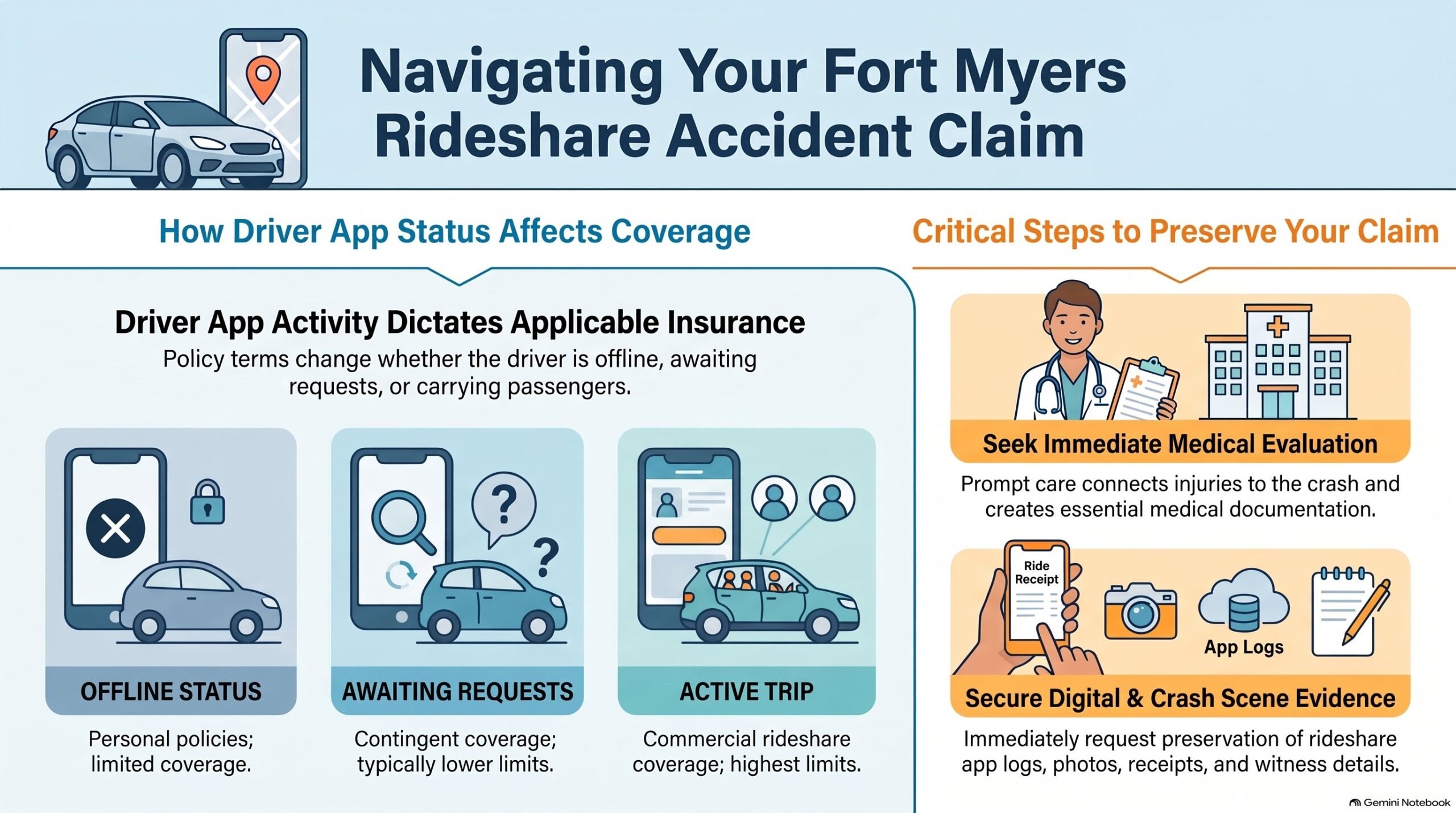
- Coverage may depend on whether the driver was offline, awaiting a request, en route to a passenger, or completing a trip.
- Preserve trip confirmations, app messages, photos, witness details, medical records, and receipts; request prompt preservation of rideshare company data.
- Seek medical care promptly, follow treatment recommendations, and document how injuries affect daily activities, work, and recovery.
- Before discussing fault or accepting a settlement, consider consulting a qualified Florida attorney about your rights and claim options.


How We Can Help With Your Fort Myers Rideshare Accidents Injury Claim
After a Fort Myers rideshare accident, we can help you pursue compensation while you focus on your recovery. We’ll listen to your concerns, explain your options, and handle your claim with care. Our team understands that you may be balancing treatment, work, and responsibilities to family or community. We’ll work to reduce that burden while protecting your interests.
We can assess Claim eligibility by reviewing the available information and identifying potential sources of compensation. We’ll explain what steps may support your claim and what deadlines could affect your ability to act. With legal representation, you won’t have to manage communications with your insurer alone. We can gather records, organize documentation, and clearly present your position.
Throughout the process, we’ll keep you informed and respond to your questions. Our goal is to help you seek fair compensation while respecting your time and circumstances. You can focus on recovering as we address the legal work on your behalf.
OUR CONSULTATIONSARE FREE
START YOUR FREE CASE REVIEW

Understanding Fort Myers Rideshare Accidents Injury Cases
Understanding a Fort Myers rideshare accident injury case starts with identifying how the crash happened, who may be responsible, and what insurance coverage applies. We’ll examine the available records, including the driver’s app activity, trip status, and relevant insurance documents, to clarify how the incident affects your claim.
Rideshare vehicle classifications can influence which coverage applies. A driver may be offline, waiting for a request, traveling to pick up a passenger, or completing a trip. Each status may involve different insurance terms, so we’ll verify the driver’s activity at the time of the collision rather than assume a policy applies.
We’ll also review platform safety policies and any records showing whether required procedures were followed. This careful process helps us assess potential responsibility and identify the evidence needed to support your account. If you were helping a loved one or serving others when injured, we’ll listen closely and explain your options with care. Our goal is to provide clear guidance while protecting your interests.
Common Causes of Fort Myers Rideshare Accidents
We often see Fort Myers rideshare crashes result from distracted driving, driver fatigue, speeding, or other reckless behavior. Unsafe pickups and drop-offs can also put passengers and nearby road users at serious risk. Understanding these causes helps us determine how a collision occurred and who may be responsible.
Distracted Driving
Why do rideshare crashes occur even when drivers know the roads? Familiar streets still demand attention, and a brief distraction can keep a driver from noticing a pedestrian, cyclist, or changing signal. Rideshare drivers often check navigation, accept trip requests, or communicate with passengers while moving. These tasks can divert their eyes and hands from driving, while cognitive distraction can reduce awareness even when a driver looks ahead.
Hands-free technology may limit manual phone use, but it doesn’t eliminate the mental demands of calls or app prompts. Drivers remain responsible for maintaining control and responding to traffic conditions. When distraction contributes to a collision, we can help you examine the available evidence, understand your options, and pursue accountability. Protecting injured people also helps keep streets safer for everyone who depends on rideshare services.
Driver Fatigue
Although rideshare drivers may know Fort Myers roads well, fatigue can slow their reactions and impair judgment. Long shifts, late-night trips, and pressure to accept more fares can leave drivers too tired to protect passengers and others on the road. Fatigue warning signs may include frequent yawning, heavy eyelids, difficulty concentrating, or trouble recalling recent miles. When drivers ignore these signs, they may miss hazards or respond too slowly to changing conditions.
We can help you examine whether exhaustion contributed to a rideshare collision and identify evidence such as trip records, work schedules, and driver communications. Driver rest requirements and company policies may also matter when determining whether a driver had enough time to recover. By reviewing these details, we can help you understand your options and pursue accountability while supporting safer service for everyone in Fort Myers.
Speeding and Recklessness
When rideshare drivers speed to reach a pickup or complete more trips, they may have less time to respond to traffic, pedestrians, and sudden hazards. Speed limit violations can increase collision force and make it harder for a driver to stop safely on Fort Myers roads. Reckless conduct may also include tailgating, weaving between lanes, or ignoring traffic signals. These aggressive actions put passengers, other motorists, cyclists, and pedestrians at risk. When we’re injured by a rideshare driver’s dangerous choices, we may face medical bills, missed work, and lasting disruption. We can help you examine the circumstances, preserve relevant evidence, and identify who may be responsible. By understanding how speed and recklessness contributed to a crash, we can pursue accountability and support safer travel for everyone in our community.
Unsafe Pickups and Drop-Offs
Unsafe pickup and drop-off decisions can put rideshare passengers and others at risk, especially when drivers stop in travel lanes, block crosswalks, or pull over where visibility is limited. When a driver chooses an unsafe location, nearby motorists may brake suddenly or swerve, putting passengers, pedestrians, and cyclists in danger. Poor Lighting can make it harder to see a stopped vehicle or a passenger entering or exiting, especially on busy roads at night. We can help protect everyone by choosing designated loading zones and checking traffic before opening a door. Drivers should also allow safe Passenger Egress, giving riders room to exit onto a sidewalk rather than into traffic. If a collision occurs, we can document the location, conditions, and witnesses to help establish how the unsafe stop contributed to the crash.
Don’t Wait. Call Our Florida Personal Injury Lawyers Now!


Legal Rights of Fort Myers Rideshare Accident Injury Victims
Fort Myers rideshare accident victims can seek compensation for injuries caused by another party’s negligence, including a driver, rideshare company, or other motorist. We can help you understand which insurance policies may apply and what evidence supports your claim. You may pursue payment for medical expenses, lost income, pain, and other legally recognized losses. Acting promptly helps preserve records and protect your options.
Rideshare accident victims may seek compensation for injuries, lost income, medical expenses, and other legally recognized losses.
Your rights may include:
- Seeking compensation from a responsible driver or other liable party.
- Asking the rideshare company to identify applicable insurance coverage.
- Obtaining medical records and documenting injury-related expenses.
- Requesting reasonable accommodations and asserting accessibility rights.
Passenger protections may depend on the driver’s status and the trip’s circumstances. We can review those details, explain deadlines, and help you communicate with insurers without overlooking important information. If you’re supporting an injured family member, we can clarify how to assist while respecting their choices. A careful review can help you pursue fair treatment and accountability while allowing you to focus on recovery.
Why Do Fort Myers Rideshare Accidents Happen?
Rideshare injuries in Fort Myers often occur when drivers divide their attention between traffic and app-based tasks, such as accepting trips or following navigation. These distractions can delay braking, obscure hazards, and lead to unsafe lane changes. By recognizing these risks, we can better understand how everyday driving decisions affect passengers, pedestrians, and other motorists.
Tourist Traffic adds pressure on busy roads. Visitors may hesitate at unfamiliar intersections, while drivers searching for pickup locations can make sudden stops or turns. Congestion near beaches, hotels, and entertainment areas also increases the chance of rear-end collisions. Drivers who rush between fares may follow too closely or exceed safe speeds.
Wet Roads create another serious hazard, especially during heavy rain. Reduced traction and limited visibility make it harder to stop or maintain control. Worn tires, poor vehicle maintenance, and fatigue can compound these conditions. We recognize that rideshare crashes often result from several factors combining, rather than one isolated mistake. Recognizing these causes helps us understand the risks passengers face.
What Should You Do After a Fort Myers Rideshare Accident Injury?
After a Fort Myers rideshare crash, seek medical care promptly, even if your injuries seem minor. Report the collision to law enforcement and notify the rideshare company. We can also preserve evidence by saving photos, witness details, medical records, and trip information.
Seek Medical Care
Even if your injuries seem minor, seek medical care as soon as possible after a Fort Myers rideshare accident. Prompt Emergency evaluation can identify injuries that aren’t immediately obvious, including head, neck, or internal trauma. Call 911 for severe pain, difficulty breathing, loss of consciousness, or other urgent symptoms. Otherwise, see a doctor or urgent care clinic promptly, and describe how the collision happened and every symptom you’ve noticed. Follow the provider’s instructions, attend recommended appointments, and keep records of diagnoses, treatment, and expenses. We can’t assume feeling better means an injury has healed, so keep monitoring symptoms and contact your provider if your condition changes or worsens. By taking these steps, we protect our health and help guarantee we can continue caring for the people who depend on us.
Report the Crash
If anyone is injured, call 911; otherwise, report the collision promptly to local law enforcement and request an official report. Prioritize passenger safety while waiting for help. If it’s safe, move to a protected location and stay clear of traffic, damaged vehicles, and other roadside hazards. Don’t attempt to direct vehicles or provide medical care beyond your training. Tell responding officers that a rideshare vehicle was involved, and identify the driver, passengers, and anyone else who may need assistance. Give a clear, factual account of what happened, distinguishing what you witnessed from what others told you. Ask how to obtain the report number and where the completed report will be available. Cooperate with officers, but don’t guess about details or accept blame before the facts are established.
Preserve Evidence
Once officers have documented the collision, preserve evidence that may help establish how it happened and who was responsible. If it’s safe to do so, photograph the vehicles, visible injuries, roadway, traffic signals, and any hazards. Save medical records, receipts, trip confirmations, and messages with the rideshare driver or company. Don’t edit or delete relevant photos, texts, or app data; keep copies in a secure location. An Evidence preservation timeline can help us record when we collected each item and where it came from. Follow a witness contact protocol: request names and contact details, note what each person observed, and avoid coaching or pressuring them. Because rideshare companies may retain trip and vehicle data for limited periods, we should promptly ask them to preserve relevant records. Organized evidence supports a fair review and helps protect everyone’s interests.
Critical Evidence in a Fort Myers Rideshare Accident Injury Case
Strong evidence can help us establish how a Fort Myers rideshare crash happened and who may be responsible. We’ll focus on records that show the driver’s app activity and status, along with documentation of the collision and your injuries.
Preserve these materials promptly, as some digital records may be difficult to obtain later.
- Rideshare app records
- Evidence of the driver’s status at the time of the crash
- Crash scene photos, videos, and reports
- Medical treatment records
Rideshare App Records
What was the rideshare driver doing at the moment of the crash? App records may help us answer by showing when a trip began, whether the driver accepted a passenger request, and what route the app displayed. These details can clarify the sequence of events and support a careful account of how the collision occurred. We can help you request relevant records promptly, since App data retention practices may limit how long a company keeps certain information. The company’s privacy policies may also affect access, but they don’t necessarily prevent lawful preservation or disclosure. We’ll identify the records that matter, preserve them appropriately, and review them alongside other evidence. Protecting this information can help you pursue accountability and secure resources for your recovery while respecting everyone’s privacy.
Driver Status Evidence
The applicable insurance coverage may depend on the driver’s status in the rideshare app when the crash occurred. We can help you determine whether the driver was offline, waiting for a request, traveling to pick up a passenger, or completing a trip. Each status may trigger different insurance obligations, so precise records matter. We’ll examine available app data alongside trip receipts, account details, and communications to establish the timeline and identify the responsible coverage. Driver account ownership can also matter if someone other than the registered driver used the account. We’ll assess who controlled the vehicle and accepted the ride, while considering employment classification and its effect on potential responsibility. By clarifying these facts, we can help you pursue fair support and protect your ability to serve your family and community after an injury.
Crash Scene Documentation
Once we establish the rideshare driver’s status, we turn to the crash scene and the evidence it may contain. We document vehicle positions, damage, skid marks, debris, traffic signals, and road conditions before those details change. Scene photography preserves the layout from multiple angles and shows how the collision may have occurred. We also look for nearby cameras, including business surveillance systems and traffic cameras, because recordings may be overwritten quickly. Witness statements can clarify what each person saw and heard before impact. We promptly record names and contact information, then preserve accounts while memories remain fresh. If you’re helping an injured person, avoid disturbing evidence and share relevant information with us. Careful scene documentation supports a fair investigation and helps establish responsibility for the harm caused.
Medical Treatment Records
As treatment begins, medical records can provide vital evidence in a Fort Myers rideshare accident injury case. We encourage you to seek prompt care and describe every symptom accurately, even if it seems minor. Your records can link the collision to your injuries, document changes in your condition, and show which treatments your providers recommend. Keep appointment summaries, test results, prescriptions, bills, and discharge instructions. Record retention matters because missing documents may make it harder to explain your recovery and related expenses. With your permission, we can support provider coordination by requesting relevant records and organizing information from different clinics or hospitals. This helps us present a consistent account of your care while respecting your privacy. Careful documentation can strengthen your claim and help us pursue fair compensation without distracting you from recovery.
Long-Term Effects of Fort Myers Rideshare Accident Injuries
After a Fort Myers rideshare crash, we may face chronic pain and reduced mobility that disrupt daily activities. Lasting brain or nerve damage can affect memory, concentration, sensation, or coordination and may require ongoing care. We’ll also consider the emotional and financial strain these injuries can place on you and your family.
Chronic Pain and Mobility
Chronic pain and limited mobility can continue long after a Fort Myers rideshare accident, even when initial injuries seem manageable. We can help you understand how persistent discomfort may affect walking, lifting, driving, and daily responsibilities. A clear treatment plan may include physical therapy, medication, and other Pain management options tailored to your needs. Your providers can also recommend mobility aids, such as a cane or brace, when they support safer movement and independence. These costs and practical needs can shape your recovery and your ability to care for family, work, or serve your community. We can document how the injury limits your activities and affects your quality of life. Keep records of symptoms, appointments, and expenses, and follow medical guidance as you pursue appropriate compensation for your ongoing needs.
Lasting Brain and Nerve Damage
A Fort Myers rideshare accident can cause lasting brain or nerve damage, even when symptoms aren’t immediately clear. A concussion or traumatic brain injury may affect memory, concentration, balance, and communication. Nerve injuries can cause numbness, weakness, tingling, or reduced coordination that interferes with daily tasks. Some people experience sensory processing changes, such as heightened sensitivity to light, sound, or touch. These effects may emerge gradually, so we encourage you to seek prompt medical evaluation and follow your care team’s recommendations. Rehabilitation can help you build skills and adapt to persistent limitations, though Neuroplasticity challenges may make recovery uneven. Keep records of symptoms, diagnoses, and treatment, and share them with trusted professionals. By recognizing the lasting effects, we can better support your recovery and protect your ability to serve others.
Emotional and Financial Strain
Persistent injuries can affect more than physical health; they may also create emotional and financial strain for people injured in Fort Myers rideshare accidents. Ongoing pain, anxiety, or reduced independence can make daily responsibilities harder and limit your ability to care for others. We know recovery may take patience, support, and changes to familiar routines.
Medical bills, rehabilitation costs, and missed work can disrupt household budgets, especially when treatment continues for months or years. A reduced income may also make it difficult to pay for transportation, household help, or future care. These pressures can strain family relationships as loved ones take on new duties and face uncertainty together. We can help you understand potential compensation options, document lasting losses, and pursue resources that support your recovery and your family’s stability.
Proving Liability in Fort Myers Rideshare Accidents Injury Cases
To prove liability in a Fort Myers rideshare accident injury case, we must identify who caused the crash and support that conclusion with reliable evidence. We can examine the police report, photographs, vehicle damage, witness accounts, and available rideshare trip records to establish how the collision occurred. Promptly preserving evidence matters because vehicles may be repaired and digital information may become harder to obtain.
We also assess whether the rideshare driver, another motorist, or a company failed to act with reasonable care. A driver may have been distracted, speeding, or violating traffic rules. In some cases, third-party liability may involve a vehicle manufacturer, maintenance provider, or another responsible entity. We use Comparative fault analysis to evaluate whether multiple people contributed to the crash and how each person’s conduct affected the injuries. By carefully connecting evidence to each party’s actions, we can help you pursue accountability and protect your ability to seek recovery for harm caused by negligence.
Dealing With Insurance Companies After a Fort Myers Rideshare Accident Injury
Once we’ve established how the crash occurred, we can address the insurance claims that may determine how your losses are covered. Rideshare accidents can involve several policies, including the driver’s personal coverage and the company’s insurance. The applicable policy may depend on whether the driver was waiting for a request, traveling to pick up a passenger, or completing a ride. We can help you identify the relevant insurer and direct communications through appropriate channels.
Insurers may question fault, the severity of your injuries, or whether a particular policy covers the crash. If you face a Claim Denial or coverage dispute, we can review the stated reasons and compare them with available records and policy terms. Keep copies of messages, bills, and other documents, and don’t accept a settlement until you understand what it covers. Prompt, accurate communication can protect your interests while allowing you to focus on your recovery and the people who depend on you.
Don’t Wait. Call Our Florida Personal Injury Lawyers Now!
What to Expect During a Fort Myers Rideshare Accident Injury Claim Process
We’ll begin by reporting the accident and gathering records, statements, and other evidence to investigate your claim. Once we grasp the facts and losses, we’ll negotiate with the insurers for a fair settlement. If the parties can’t reach an agreement, we’ll explain your options for resolving the case.
Reporting the Accident
Promptly reporting a rideshare accident can help preserve evidence and clarify which insurance policies may apply to your Fort Myers injury claim. If anyone needs urgent care, call 911 and follow Emergency dispatch instructions. When appropriate, notify law enforcement and request an official report, which can document the collision and identify those involved. Share accurate details with responding officers, including the rideshare driver’s name, vehicle, and trip status if available.
After addressing immediate safety needs, report the crash through the rideshare company’s app or support channel and save the confirmation. We can help you notify relevant insurers without speculating about fault or minimizing your injuries. Gather contact information from witnesses and preserve their statements, but avoid pressuring anyone. Prompt, factual reporting supports accountability and helps protect everyone affected while your claim moves forward. Don’t post details publicly.
Investigating the Claim
What happens during a rideshare injury claim investigation? We gather records and examine how the collision occurred, who was involved, and what harm you suffered. This may include reviewing the police report, medical documentation, rideshare trip data, photographs, witness statements, and available video. We also identify potentially responsible parties, such as the driver, rideshare company, or another motorist, based on the evidence.
Investigator qualifications matter because careful, impartial work can strengthen the factual record. We assess whether investigators have relevant experience and use reliable methods. Evidence preservation protocols help protect important materials before they disappear, including vehicle data, app records, and surveillance footage. We may send preservation requests and document each item’s source and condition. By handling these steps promptly, we help you pursue accountability while keeping the investigation focused on verified facts and your recovery needs.
Negotiating a Settlement
Once the investigation establishes the available evidence, we can begin negotiating a settlement with the insurer. We’ll organize your medical records, lost income information, and other documented losses to support a clear demand. Demand evaluation involves comparing the evidence with the insurer’s assessment and identifying gaps in its reasoning. We’ll explain how your injuries affect your daily responsibilities, recovery, and ability to care for others, while keeping the claim grounded in verifiable facts.
The insurer may respond with questions or an offer that doesn’t reflect your documented losses. We’ll review its position with you, address unsupported conclusions, and develop a counteroffer strategy based on the evidence and your priorities. Throughout negotiations, we’ll keep you informed, respond carefully, and protect your interests without overstating what the claim can support. This measured approach helps us advocate effectively on your behalf.
Resolving the Case
When negotiations produce an acceptable agreement, we’ll explain the settlement terms and any documents you need to sign to resolve the claim. We’ll review how the payment addresses your injuries, expenses, and other losses, and clarify whether accepting it ends your right to seek further compensation. Settlement timelines vary based on insurer processing, required approvals, and the completion of release documents. We’ll keep you informed and follow up on delays so you can plan responsibly and continue supporting those who depend on you.
If the parties can’t agree, we may pursue mediation or litigation. Mediation preparation includes organizing evidence, outlining your needs, and helping you understand the process. If mediation doesn’t resolve the dispute, we’ll explain the next steps and represent your interests in court. Our goal is to guide you through each decision with clear information and steady support.
Compensation for Fort Myers Rideshare Accident Injury Damages
After a Fort Myers rideshare accident, you may seek compensation for medical expenses, lost income, reduced earning capacity, pain and suffering, and other losses caused by your injuries. We’ll help you identify how the crash has affected your health, work, and daily responsibilities, then connect those effects to the available evidence. Your recovery may require continued treatment, rehabilitation, medication, or changes to your home and routine. We’ll account for these future expenses when evaluating the claim, rather than focusing only on bills you’ve already received.
Damage valuation depends on reliable records and a clear explanation of how your injuries have changed your life. We can gather medical documentation, employment information, and statements from people who understand your responsibilities and limitations. If you’ve had to reduce work or rely on others for necessary tasks, those consequences may also matter. By presenting a complete, well-supported account, we can seek compensation that reflects your losses and helps protect your ability to move forward with dignity.
Economic vs Non-Economic Damages in Fort Myers Rideshare Accident Cases
We’ll distinguish economic damages, such as medical bills and lost income, from non-economic damages for pain and other personal losses. To support a claim, we’ll explain how records and other evidence can show the extent of your losses. Our review can help you understand which damages may apply to your Fort Myers rideshare accident case.
Economic Damages
Economic damages compensate you for measurable financial losses from a rideshare accident, while non-economic damages cover harms such as pain and emotional distress. We can help you identify and document costs directly tied to your injuries. These may include ambulance fees, hospital care, medication, rehabilitation, and future treatment your providers recommend. Keep invoices, receipts, and insurance records so we can connect each expense to the crash.
You may also seek compensation for lost wages if injuries kept you from working. If they limit your ability to earn income in the future, diminished earning capacity may be relevant. We can review pay records, employment history, and medical evidence to assess these losses. Careful documentation helps us present a clear claim and pursue the financial support you need to meet obligations and continue serving your family and community.
Non-Economic Damages
Financial losses tell only part of the story, because a rideshare accident can also affect your comfort, independence, and quality of life. Non-economic damages address personal harm that doesn’t come with a clear price tag. We may seek compensation for physical pain, emotional distress, anxiety, and the strain of adjusting to lasting limitations. These effects can influence how you care for family, participate in community life, or serve others through work and volunteering. Loss of enjoyment may also matter when injuries prevent you from pursuing activities that once brought meaning and connection. Unlike medical bills or lost wages, these damages reflect an injury’s human impact rather than direct financial costs. In a Fort Myers rideshare claim, we can explain how non-economic damages differ from measurable economic losses.
Proving Your Losses
To prove your losses after a Fort Myers rideshare accident, we must connect each claimed harm to the crash and support it with reliable evidence. We can organize economic damages, such as medical bills, rehabilitation costs, and lost earnings, using invoices, treatment records, receipts, and income verification from employers or tax documents. Damage documentation should also include future expenses, such as recommended care or reduced earning capacity, when supported by qualified professionals.
Non-economic damages, such as pain, emotional distress, and limits on daily activities, require a different record. We can use your treatment notes, personal account, and statements from people who have observed changes in your life. Keep records consistent and share them promptly with your legal team. Careful evidence helps us present your experience accurately and pursue compensation that reflects both financial costs and personal harm.
When a Fort Myers Rideshare Accidents Injury Case Goes to Trial vs Settlement
Most Fort Myers rideshare injury claims settle before trial, but settlement isn’t always the right choice. A settlement can provide compensation sooner and spare you the demands of a courtroom. We can assess an offer against your documented losses, future needs, and the strength of the available evidence. You’ll decide whether the proposed terms fairly address the harm you’ve experienced.
If the parties can’t reach an acceptable agreement, we may prepare to present your case at trial. That process can involve witness preparation, courtroom testimony, and careful presentation of records and other evidence. A judge or jury will evaluate the case, and a jury may deliberate before reaching a verdict. Trial can take longer and carries uncertainty, so we’ll explain what it requires and the potential outcomes before you decide how to proceed.
Our role is to help you make an informed decision while protecting your interests. We’ll keep you updated, answer your questions, and pursue a resolution that supports your recovery and responsibilities.
Florida Laws That May Affect Your Fort Myers Rideshare Accidents Case
Florida law can shape how we investigate and pursue a Fort Myers rideshare accident claim. We’ll examine insurance coverage, fault, and the circumstances of your trip to identify potential sources of compensation. Understanding these rules helps us advocate for you while supporting the people who depend on your recovery.
- Florida no-fault rules: Your personal injury protection coverage may pay certain medical expenses and lost wages, regardless of who caused the crash. Serious injuries may allow you to pursue a claim against an at-fault party.
- Rideshare insurance: Available coverage can depend on whether the driver was waiting for a request, traveling to pick up a passenger, or completing a ride.
- Comparative negligence standard: If you share responsibility, your compensation may be reduced according to your share of fault. We’ll assess evidence carefully.
- Evidence and reporting: Police reports, app records, witness accounts, and medical documentation can help clarify what happened and support your claim.
We can explain how these laws apply to your situation and help you make informed decisions as you focus on recovery.
The Statute of Limitations for Fort Myers Rideshare Accident Injury Cases
Because filing deadlines can affect your right to seek compensation, we’ll identify the limitation period that applies to your Fort Myers rideshare injury case and help you track important dates. Florida law generally gives injured people two years to file a negligence lawsuit, including many claims arising from rideshare crashes. Missing that deadline can prevent you from pursuing compensation, even when another person’s conduct caused your injuries.
Deadline Calculation depends on the facts of your case. The period usually begins on the crash date, but questions about when an injury became discoverable or who bears responsibility may affect the analysis. Claims involving a government entity can require earlier notice and additional steps, so don’t assume the standard deadline applies.
Filing Exceptions may extend or pause the time limit in limited circumstances, such as when the injured person is a minor or the defendant can’t be located. These rules are fact-specific. Acting promptly helps protect your rights and supports accountability for those harmed. We can help you understand which deadline governs your claim.
How a Fort Myers Rideshare Accidents Lawyer Can Help You
Meeting the filing deadline is only one part of pursuing a rideshare injury claim; we can also help you build and manage the case. We’ll investigate the crash, identify responsible parties, and explain how insurance coverage may apply. Our work can help you focus on recovery while protecting your ability to seek fair compensation.
During an Attorney Consultation, we’ll listen to your concerns and explain how we can support your goals. A Case Evaluation can clarify the evidence, potential challenges, and available options.
We can then:
- Gather records, photographs, witness accounts, and other relevant evidence.
- Review rideshare app activity and insurance policies tied to the trip.
- Communicate with insurers and respond to information requests.
- Calculate documented losses, including medical costs and missed income.
We’ll keep you informed, discuss important decisions, and present your position clearly. By handling legal and insurance issues with care, we can help you pursue accountability while preserving time and energy for your family and community responsibilities.
When to Contact a Fort Myers Rideshare Accidents Lawyer
Contact a Fort Myers rideshare accidents lawyer as soon as possible after a crash, especially if you’ve been injured or the circumstances are unclear. Early guidance can help us preserve important records, identify involved parties, and keep you informed while you focus on your health and responsibilities. If you’re helping an injured passenger, driver, or family member, we can explain practical next steps and communicate with you respectfully.
Don’t wait until you know the full extent of your injuries or have gathered every document. Rideshare trips may involve app records, multiple insurance policies, and questions about whether a driver was waiting for a ride request, en route, or carrying a passenger. Prompt advice helps us understand what information matters and what deadlines may apply.
Ask about Free consultations and attorney availability when you contact a firm. We can discuss your situation, explain how the process begins, and help you decide whether to seek legal representation without pressure.
Why You Need an Experienced Fort Myers Rideshare Accidents Lawyer
Rideshare claims can involve app records, layered insurance coverage, and disputes over a driver’s status at the time of a crash. We can help you address these issues while you focus on recovery and the people who depend on you.
An experienced attorney understands how coverage may change depending on whether the driver was waiting for a request, traveling to pick up a passenger, or completing a trip. Through careful analysis of rideshare policies, we can identify potentially applicable policies, assess coverage limits, and respond to disputes about responsibility. We can also preserve relevant app data, organize medical and financial records, and present evidence that explains how the collision affected your life.
Local counsel experience matters because Fort Myers claims may involve local roads, procedures, and insurers. We can manage communications, challenge incomplete evaluations, and pursue evidence-backed compensation. With informed guidance, you’ll have a clearer path through a process that can otherwise distract from recovery and serving your family and community.
Don’t Wait. Call Our Florida Personal Injury Lawyers Now!
How to Choose the Right Fort Myers Rideshare Accidents Lawyer for Your Case
Choosing the right Fort Myers rideshare accident lawyer means looking beyond general injury experience to assess how well an attorney handles app records, changing insurance coverage, and disputed driver status. We should also ask how the lawyer will investigate the collision, preserve evidence, and identify every potentially responsible party. A focused attorney can explain how the driver’s app status may affect which insurance policy applies and what information we need to establish our claim.
Attorney communication matters throughout a case. We should learn who will answer questions, how often we’ll receive updates, and how the lawyer will explain important decisions in clear terms. Ask about experience with rideshare claims and request examples of how similar issues were addressed, without expecting a guaranteed result.
Before signing, review fee arrangements carefully. We should understand whether fees depend on recovery, which case expenses may arise, and how those costs are handled. A clear agreement and practical communication help us make informed choices while focusing on recovery and our responsibilities to others.
About The Law Offices of Anidjar & Levine
When you need legal guidance after a rideshare accident, The Law Offices of Anidjar & Levine can help you understand your options and the steps involved in pursuing a claim.
We’ll listen to your account, explain relevant legal considerations, and discuss practical next steps based on your circumstances.
Our firm has a history of representing people facing serious injuries and difficult recovery periods.
We work to clarify the legal process so you can focus on your health and responsibilities while we handle the claim.
Our attorneys can investigate the collision, gather available evidence, communicate with insurers, and explain how we may assess potential compensation.
We also value community involvement and service to people across Florida.
By supporting local communities, we seek to contribute beyond our legal work and recognize the needs of those we serve.
Every case is different, so we’ll provide information specific to yours rather than promise a particular outcome.
If you’re considering a claim, we can help you evaluate your options.

Frequently Asked Questions
Can I Recover Compensation if I Was Injured as a Rideshare Passenger?
Yes, you may recover compensation if a rideshare driver or another party caused your injuries. We can help you document medical costs, lost income, pain, and other losses, then identify available rideshare insurance coverage. The applicable policy may depend on whether the driver had accepted a trip, was transporting you, or was logged into the app. We’ll review the evidence and explain your options for pursuing Passenger injury compensation.
Are Rideshare Drivers Considered Employees or Independent Contractors?
Rideshare drivers are generally classified as independent contractors, not employees, though Worker classification can depend on applicable law and the specific working relationship. This distinction may affect who is responsible after a crash, but it doesn’t automatically determine your recovery options. We can help you examine the facts, identify potentially responsible parties, and understand how insurance coverage may apply to your injuries. Acting promptly can help preserve evidence and protect your interests.
Can I File a Claim if I Was Injured While Entering or Exiting a Rideshare Vehicle?
Yes, you may be able to file a claim if you’re injured while entering or exiting a rideshare vehicle. We can help identify who may be responsible, including the driver, another motorist, or a property owner. Dooring liability may apply when someone opens a vehicle door into your path, while curbside hazards can create separate claims. We’ll review the circumstances, available evidence, and insurance coverage to assess your options and protect your interests.
What if My Rideshare Driver Was Not Logged Into the App When the Crash Happened?
If your rideshare driver wasn’t logged into the app, the company’s commercial coverage may not apply, so we’ll first examine the driver’s personal insurance and the facts surrounding the trip. We can help you identify available coverage, document your injuries, and respond to coverage denial defenses. Even when app records show the driver was offline, other evidence may clarify whether the ride had begun or whether another policy may cover your losses.
Can I Use Rideshare App Records to Verify a Trip or Fare?
Yes, we can use rideshare app records to help verify a trip or fare. Trip Receipt Verification may include timestamps, pickup and drop-off locations, route details, fare breakdowns, and payment status. If a charge appears incorrect, preserve screenshots, receipts, and relevant account messages as Fare Dispute Records. We can compare those materials with available driver and platform records, then identify inconsistencies and explain what additional evidence may support your claim.
—————————
A rideshare crash can leave you facing medical expenses, lost income, and uncertainty about who is responsible.
We can review the circumstances, identify available insurance coverage, and explain your options for pursuing compensation.
Acting promptly may help preserve evidence and protect your claim.
The Law Offices of Anidjar and Levine will listen to your concerns and provide clear guidance about next steps.
Contact us to discuss your Fort Myers rideshare accident and learn how we can help, or visit our Fort Myers Personal Injury Lawyer page.

