A Sarasota car accident collision types lawyer from The Law Offices of Anidjar and Levine can help you understand how a crash occurred, what evidence may establish responsibility, and how injuries affect your claim. We review collision details, medical records, witness accounts, and insurance coverage to explain your options under Florida law. Seek prompt medical care and preserve photographs, repair records, and communications with insurers. Liability and compensation depend on the evidence and applicable coverage. Below, we explain what to keep in mind after different types of collisions. For more information, visit our Sarasota Personal Injury Lawyer page.
Main Takeaways
- A Sarasota car accident lawyer can explain how collision type may inform an investigation, but it does not establish fault by itself.
- T-bone, rear-end, and rollover crashes can cause different injuries; seek medical care promptly, even if symptoms seem minor.
- Preserve photographs, witness details, crash reports, vehicle records, and medical documentation to help clarify how the collision occurred.
- Liability evidence should connect a driver’s conduct to the crash and resulting injuries; reconstruction may help when events are disputed.
- A lawyer can review documented losses, including medical expenses, lost income, ongoing care needs, and measurable vehicle diminished value.


How We Can Help With Your Sarasota Car Accident Collision Types Injury Claim
After a Sarasota car accident, the type of collision can affect how we investigate your claim and establish who was at fault. We’ll listen carefully as you explain what happened, how the crash has affected your life, and what support you need to move forward. Our team can gather records, communicate with insurers, and organize evidence while you focus on your health and responsibilities.
We’ll explain your options in clear terms and keep you informed as your case progresses. Your Claim Timeline will depend on factors such as medical treatment, available evidence, and insurer responses. We’ll identify important deadlines and provide updates so you can make informed decisions at each stage.
Before you hire us, we’ll review our Fee Structure and answer your questions about costs. We aim to provide attentive, responsible representation and treat you with respect throughout the process. You don’t have to manage every demand alone; we can help protect your interests while you prioritize recovery and those who depend on you.
OUR CONSULTATIONSARE FREE
START YOUR FREE CASE REVIEW

Understanding Sarasota Car Accident Collision Types Injury Cases
Sarasota car accident injury cases can involve different collision types, and each may raise distinct questions about how the crash occurred and who may be responsible. We’ll carefully review the available evidence to help you understand how the impact may relate to your injuries and losses.
T-bone collisions often affect occupants at the side of a vehicle, while rear-end impacts may place force on the neck, back, and other areas. These descriptions don’t establish fault or prove the extent of harm. We’ll consider the crash circumstances, vehicle damage, medical records, and witness accounts collectively, then explain how those details may support your claim.
Every case warrants an attentive review, especially when injuries disrupt your ability to work, care for family, or serve your community. We’ll listen to your concerns, clarify what information matters, and help you make informed decisions. By focusing on your specific experience, we can pursue a fair resolution grounded in evidence and applicable law.
Common Causes of Sarasota Car Accident Collision Types
We’ll examine how distracted driving can keep drivers from noticing hazards and how speeding or reckless behavior can increase collision severity. We’ll also consider how impaired driving affects judgment and reaction time. Finally, we’ll explain how failing to yield can lead to crashes at intersections and other conflict points.
Distracted Driving
When drivers divert their attention from the road, even briefly, they may fail to notice slowing traffic, pedestrians, or changing signals. Phone distraction can involve texting, checking navigation, or answering a call, while dashboard distractions may include adjusting controls or interacting with an infotainment screen. These actions take a driver’s eyes, hands, or focus away from safe driving and can contribute to a collision.
We encourage drivers to set directions and climate controls before leaving, silence notifications, and pull over safely when they need to respond. Passengers can also help by managing navigation or making calls, allowing the driver to concentrate. If you’ve been injured in a crash, we can help you examine whether distraction played a role and identify evidence that may clarify what happened. Our goal is to support you as you pursue accountability and recovery.
Speeding and Reckless Driving
Beyond distraction, speeding and reckless driving can leave motorists with little time to respond to hazards or maintain control. In Sarasota, a driver who travels too fast for traffic, weather, or road conditions may be unable to stop before a collision. Vehicle speed can also increase impact force, raising the risk of serious injuries for drivers, passengers, pedestrians, and cyclists.
Reckless actions, such as weaving through traffic, tailgating, or ignoring signals, can place everyone nearby in danger. When another driver’s choices cause a crash, we can help you understand how those actions may support a claim and what evidence could clarify responsibility. We’ll identify relevant records, witness accounts, and other details while keeping your needs in mind. By seeking accountability, we can help protect your interests and support safer roads for our community.
Impaired Driving
Impaired driving can slow a motorist’s judgment, reaction time, and coordination, making it harder to respond safely to changing road conditions. Alcohol, cannabis, prescription medications, and other substances may affect a driver’s ability to control a vehicle and make sound decisions. These effects can contribute to serious collisions and injuries for drivers, passengers, pedestrians, and others who depend on safe roads.
Law enforcement may use Field sobriety tests and DUI checkpoints to identify suspected impairment, though these measures don’t establish responsibility for a crash by themselves. After a collision, we can help you understand how investigators assess evidence, including test results, witness accounts, and available records. If someone’s impaired driving harmed you or a loved one, seeking timely guidance can help protect your interests and support accountability while you focus on recovery. We’re ready to listen.
Failure to Yield
Drivers who fail to yield can cause serious collisions in Sarasota, particularly at intersections, crosswalks, and highway entrances. These crashes often occur when motorists ignore signs, enter traffic without a safe gap, or turn across another vehicle’s path. Yield sign violations can endanger pedestrians, cyclists, and drivers who have the legal right to proceed. Florida’s intersection right-of-way rules help determine which road user must yield, but a driver still needs to act carefully and watch for hazards. If someone fails to yield and causes a collision, we can help you understand how the incident may affect your recovery options. We’ll review available evidence, such as traffic camera footage, witness accounts, and the crash report, to clarify what happened and identify responsible parties. Prompt action can help preserve important information.
Don’t Wait. Call Our Florida Personal Injury Lawyers Now!


Legal Rights of Sarasota Car Accident Collision Types Injury Victims
When a car accident in Sarasota causes injuries, the type of collision may help explain how the crash occurred, but it doesn’t determine your legal rights. We can help you understand the options available and take informed steps to protect your recovery while supporting those who depend on you.
Florida law may allow injured people to seek benefits through their own insurance and, when another party’s negligence caused the crash, pursue compensation from that party.
Coverage and deadlines can affect your choices, so we should review the policy and circumstances carefully.
- We can assess available PIP coverage limits and explain what expenses may remain unpaid.
- We can examine uninsured motorist protection when the at-fault driver lacks adequate coverage.
- We can help preserve records of medical care, lost income, and other accident-related losses.
- We can identify filing deadlines and guide you through communications with insurers.
You don’t have to navigate these decisions alone. We can clarify your rights and help you pursue a fair resolution while keeping your family’s needs in view.
Why Do Sarasota Car Accident Collision Injuries Happen?
Sarasota car accident injuries often occur when driver error, traffic conditions, or vehicle problems create forces the body can’t withstand. A driver may follow too closely, speed, turn without yielding, or get distracted, leaving little time to avoid a collision. Rain, glare, congestion, and poorly maintained roads can further increase collision risk. Mechanical failures, including defective brakes or worn tires, may also contribute.
Collision mechanics help explain how a crash can injure occupants. In a rear-end collision, the head and torso may move suddenly in different directions. Side impacts can expose occupants to direct force, while rollovers may cause repeated impacts inside the vehicle. Seat belts and airbags reduce certain risks, but they can’t prevent every injury.
Injury biomechanics describes how those forces affect the body. A person’s position, age, health, and the crash’s direction and severity can influence the outcome. Understanding these factors helps us recognize why injuries vary and why careful investigation matters when serving injured people and their families.
What Should You Do After a Sarasota Car Accident? Collision Types and Injury
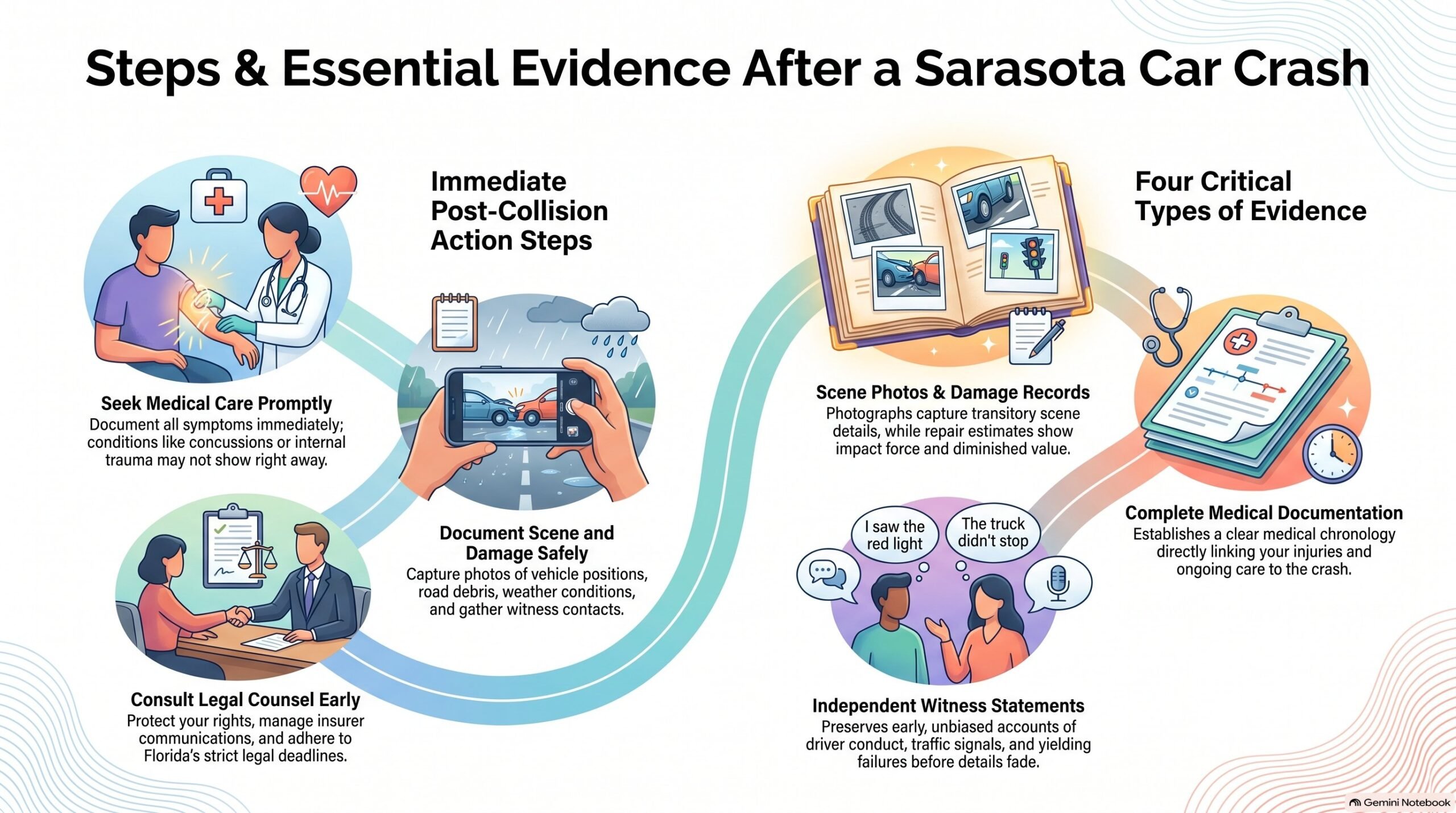
After a Sarasota collision, we should seek medical care promptly, even if our injuries seem minor. Document the scene by photographing vehicle damage, road conditions, and visible injuries, and collect witness information. We should also contact a lawyer to understand our options and protect our interests.
Seek Medical Care
Seek medical care promptly after a car accident, even if your injuries seem minor or symptoms haven’t appeared yet. Some conditions, including concussions and internal injuries, may not cause immediate discomfort. A medical professional can assess your condition, recommend appropriate treatment, and help prevent complications. If you’re hurt, call 911 or ask someone nearby to contact emergency services. Don’t drive yourself if you feel faint, confused, or seriously injured.
Practice urgent symptom recognition by watching for worsening pain, difficulty breathing, weakness, dizziness, confusion, or numbness. Tell your provider about every symptom, even if it seems unrelated to the collision. Follow-up appointments matter: attend them, follow treatment instructions, and ask questions when symptoms change or care is unclear. By taking these steps, you protect your health and help ensure you can continue caring for others.
Document The Scene
Once you’ve addressed immediate medical needs, document the collision scene if it’s safe to do so. Use your phone to photograph vehicle positions, damage, license plates, traffic signals, signs, and visible skid marks. Capture Roadway debris and weather conditions, including rain, glare, or standing water, because these details may help explain how the crash occurred. Take wide shots that show the surrounding area, then closer images of important evidence. If witnesses are willing, ask for their names and contact information, and note what they observed without pressuring them. Record the time, location, and any details you remember while they’re fresh. Don’t enter traffic or move evidence to get a better picture. If the scene feels unsafe, step away and let emergency responders manage it. Keep copies of your records.
Contact A Lawyer
When should we contact a lawyer after a Sarasota car accident? We should reach out as soon as we can, especially if we suffered injuries, face mounting medical expenses, or cannot work. Early guidance can help us preserve evidence, understand insurance communications, and avoid statements that could affect a claim. We can also ask about attorney availability and arrange a Free consultation to discuss what happened, our concerns, and possible next steps.
Before the meeting, we should gather photographs, witness details, medical records, repair estimates, and insurance correspondence. We should share accurate information and avoid guessing about fault or the extent of our injuries. A lawyer can explain our options, deadlines, and responsibilities while we focus on treatment and family needs. By seeking informed advice promptly, we can protect our interests and make decisions that support recovery and accountability.
Don’t Wait. Call Our Florida Personal Injury Lawyers Now!
Critical Evidence in a Sarasota Car Accident Collision Types Injury Case
We can strengthen your Sarasota car accident injury claim by gathering evidence that shows how the collision occurred and how it affected you. Each record can help establish crucial facts, so preserve relevant materials as soon as possible.
Focus on these four types of evidence:
- Crash scene photographs showing vehicle positions, road conditions, traffic signs, and visible injuries
- Vehicle damage records, including repair estimates and inspection reports
- Witness statements with contact details and clear accounts of what they observed
- Medical documentation linking your injuries, treatment, and recovery to the collision
Crash Scene Photographs
Photographs taken at a crash scene can preserve details that may disappear before an insurance investigation or legal review begins. If you’re able, we encourage you to document the scene safely and without interfering with emergency responders. Capture the vehicles’ positions, nearby traffic signs, road markings, debris, and visible hazards from several Photo angles. Wide views can establish the setting, while closer images may clarify specific conditions. Note the time and location, and preserve original files so image metadata remains available to help verify when and where photographs were taken. Don’t put yourself or others at risk to obtain evidence. We can review your images alongside witness accounts and other records to assess how a collision occurred. Careful documentation may help protect your interests and support a fair evaluation of your claim.
Vehicle Damage Records
How can vehicle damage records help explain a Sarasota car accident? They can show where a vehicle was struck, how severe the impact appeared, and whether the damage aligns with the reported collision. We can review photographs, inspection reports, invoices, and Repair estimates to document the vehicle’s condition and the work required. These records may help connect the crash to the repair needs and support a clear account of your losses.
Keep original documents and request copies from repair shops, insurers, and appraisers. We can also examine whether repairs restored the vehicle’s prior condition or left a measurable loss in market value. That loss, known as diminished value, may matter when evaluating compensation. Careful records help us present accurate information and pursue fair treatment while you focus on supporting your family and community.
Witness Statements
What can witness statements reveal about a Sarasota car accident? People who saw the collision may describe how the vehicles approached, where they traveled, and what happened just before impact. Their accounts can help us assess disputed details, including traffic signals, lane changes, and driver actions. We can also compare statements with vehicle damage records and other available evidence to identify inconsistencies.
Witness credibility depends on factors such as visibility, attention, distance, and whether the person has a connection to anyone involved. We should consider these points carefully rather than assume every account is equally reliable. Statement timing matters, too. A prompt, recorded account may preserve details that can fade, while later recollections may be less precise. By gathering witness information respectfully, we can help establish a clearer account and support a fair resolution for everyone affected.
Medical Documentation
When a Sarasota car accident causes injuries, medical documentation can connect the collision to the care and losses that follow. We can help you gather records from emergency responders, physicians, therapists, and other providers so the evidence reflects the full course of treatment. A clear Medical record chronology can show when symptoms began, which diagnoses followed, and how your condition changed over time. We should also review diagnostic imaging interpretation alongside the underlying scans, since findings may help explain injuries that aren’t visible during an initial examination. Accurate records can support claims for medical expenses, ongoing care, lost income, and other documented harm. We’ll check for gaps or inconsistencies and work with qualified professionals when needed. Organized documentation helps us present your experience clearly while respecting the care you’ve received.
Long-Term Effects of Sarasota Car Accident Collision Types Injuries
After a Sarasota car accident, we can help you understand how injuries may affect your health and daily life over time. Chronic pain and limited mobility may persist, while brain or nerve damage can cause lasting changes in thinking, sensation, or movement. We’ll also consider the emotional and financial strain these effects can place on you and your family.
Chronic Pain and Mobility
Why can pain and limited mobility persist long after a Sarasota car accident? Injuries to muscles, joints, bones, or connective tissue may take months to recover, and some can cause lasting stiffness or discomfort. When pain interferes with walking, lifting, or daily responsibilities, we can work with healthcare providers to understand your treatment options and document how the injury affects your life.
Pain management may include prescribed care, physical therapy, and follow-up evaluations tailored to your needs. Your provider may also recommend mobility aids, such as a cane or brace, to support safer movement while you recover. Using these tools doesn’t mean you’ve stopped making progress; they can help you remain active and care for others without placing unnecessary strain on an injured area. Consistent treatment and clear records can help show the long-term effects of a collision.
Lasting Brain and Nerve Damage
How can brain and nerve damage affect life long after a Sarasota car accident? A collision can cause a traumatic brain injury or damage nerves, disrupting memory, concentration, coordination, sensation, and speech. These changes may make everyday tasks harder and affect how reliably we can support family, coworkers, and others who depend on us.
Recovery often requires sustained medical care. Cognitive rehabilitation can help us strengthen attention, memory, and problem-solving skills through structured exercises and practical strategies. When nerve injuries cause numbness, tingling, weakness, or burning pain, clinicians may diagnose peripheral neuropathy and recommend treatment tailored to its cause and severity. Follow-up evaluations can track changes and guide care adjustments. We should document symptoms, attend appointments, and ask providers how an injury may affect daily responsibilities. Early assessment and consistent treatment can protect function and support meaningful progress over time.
Emotional and Financial Strain
Brain and nerve injuries can affect more than physical function; they may also place lasting emotional and financial pressure on people injured in a Sarasota car accident and their families. As recovery continues, pain, memory changes, or reduced independence can disrupt routines and relationships. Family stress may grow when loved ones take on caregiving duties while managing work and household responsibilities. We recognize that these pressures can feel difficult to balance, especially when progress is uncertain.
Financial anxiety may also persist as medical bills, rehabilitation costs, and lost income accumulate. Some people need ongoing treatment or workplace adjustments, which can affect long-term plans. We encourage you to keep records of expenses, care needs, and changes in daily life. These details can help clarify the injury’s full impact when seeking support and evaluating available legal options.
Proving Liability in Sarasota Car Accident Collision Types Injury Cases
Determining liability after a Sarasota car accident requires evidence that connects a driver’s conduct to the collision and resulting injuries. We can help you identify how the crash occurred, whether it involved a rear-end impact, side collision, or another pattern, and which actions contributed to it. Relevant evidence may include photographs, vehicle damage, traffic-camera footage, witness accounts, and the police report. Medical records can document your injuries and help establish their connection to the collision.
When the sequence of events remains disputed, Accident reconstruction may clarify vehicle positions, speed, and impact forces. We can also examine whether a driver failed to yield, followed too closely, or violated another traffic rule. Florida’s comparative negligence law may reduce compensation if your own conduct contributed to the crash, but it doesn’t automatically prevent recovery. We’ll assess the available facts carefully and explain how they may affect responsibility. By building a clear, evidence-based account, we can help you pursue accountability while protecting your ability to focus on recovery and your responsibilities to those who rely on you.
Dealing With Insurance Companies After a Sarasota Car Accident Collision Types Injury
After a Sarasota car accident, insurance adjusters may contact you to discuss the collision, your injuries, and possible compensation. We can help you handle these conversations carefully while you focus on recovery and your responsibilities to family, work, and community. Adjuster communications may include questions about how the crash happened, your medical care, and its effect on daily life. We should answer accurately, avoid guessing, and keep copies of relevant messages and documents. Before you give a recorded statement or sign a release, we can review what the insurer requests and explain the potential consequences. Early settlement offers may not account for ongoing treatment, lost income, or other documented losses. Through claim negotiation, we can present supporting evidence, address disputed issues, and seek compensation that reflects the harm you’ve experienced. We’ll also help you avoid statements that could be misunderstood or used to challenge your account. Clear, consistent communication can protect your interests as you recover.
What to Expect During a Sarasota Car Accident Collision Types Injury Claim Process
We’ll begin by reviewing your claim, then gather evidence to establish how the collision occurred and who may be responsible. We’ll also assess your injuries and related losses to understand the compensation you may seek. After we review the evidence and any settlement offers, we’ll advise you on whether to negotiate further or pursue litigation.
Initial Claim Review
During an initial claim review, we examine the crash circumstances, your injuries, and the available evidence to assess how the collision may affect your Sarasota car accident claim. We’ll ask you to describe what happened, explain the care you’ve received, and identify the practical challenges you’re facing. This conversation helps us understand your priorities and determine how we can support you while protecting your interests.
Our Intake documentation records essential details, including the collision type, injury concerns, and insurance information. We also conduct eligibility screening to evaluate whether the facts may support a claim and whether our office can assist. We’ll explain potential next steps, address your questions, and discuss important deadlines without promising a particular outcome. This early review gives us a clear basis for advising you and helps make sure your concerns remain central as the claim moves forward.
Evidence Collection
When we begin evidence collection, we gather and review records that may clarify how the collision happened and how your injuries affect you. We may request the crash report, photographs, witness statements, and available traffic or business surveillance footage. We also examine vehicle damage, road conditions, and any physical evidence that can help establish the sequence of events.
Evidence preservation matters because records and video can disappear, and damaged vehicles may be repaired or discarded. We’ll identify relevant materials promptly and send preservation requests when appropriate. If a driver’s phone use or vehicle data may be relevant, digital forensics can help recover and interpret information through proper procedures.
We’ll keep you informed about what we’re seeking and why. Careful documentation helps us present a clear, reliable account of the collision and support a fair resolution of your claim.
Injury Assessment
How do your injuries affect your claim? We begin by connecting your medical condition to the collision and documenting how it affects daily life. Seek prompt care, follow your provider’s instructions, and keep records of appointments, diagnoses, treatment, and work restrictions. These details help us understand the harm you’ve experienced and explain your needs accurately.
Injury severity grading considers the nature of each injury, its treatment, recovery outlook, and lasting effects. We review medical records with care and may consult qualified professionals when the evidence requires clarification. Tell your provider about every symptom, even if it seems minor. Delayed symptom recognition can occur after a crash, so report new or worsening problems promptly and make sure they’re documented. We’ll help organize this information, respect your recovery, and present a clear account of how the collision affected you.
Settlement or Litigation
After we document your injuries and losses, we assess whether settlement or litigation is the appropriate path for your Sarasota car accident claim. We review the evidence, insurance coverage, and likely costs before recommending a strategy. If the insurer makes Settlement Offers, we explain what each proposal covers and whether it fairly accounts for your medical care, lost income, and future needs. You’ll decide whether to accept, while we provide clear guidance and negotiate for a just result.
When negotiations don’t resolve the dispute, we may file a lawsuit and present your case in court. We’ll explain Litigation Risks, including delays, expenses, and the uncertainty of a verdict, so you can make an informed choice. Throughout the process, we’ll protect your interests and pursue accountability while keeping you informed at every stage.
Compensation for Sarasota Car Accident Collision Types Injury Damages
The compensation available after a Sarasota car accident depends on the collision, the injuries it caused, and the losses you can document. We can help you identify the support you need to recover and protect your ability to care for others. A rear-end crash, side-impact collision, or rollover may cause different injuries and require distinct treatment plans. Your claim may account for medical care, rehabilitation, medication, and Pain management, as well as future treatment recommended by your providers.
If injuries keep you from working, wage replacement may help address income lost during recovery. We’ll also consider how lasting limitations affect your daily responsibilities, family life, and ability to serve your community. Keep medical records, bills, work documentation, and receipts related to your recovery. These materials can help connect your losses to the crash and support a clear account of your needs. We can review the available evidence, explain your options, and pursue compensation that reflects the injury’s documented effects.
Economic vs. Non-Economic Damages in Sarasota Car Accident Collision Types Cases
We can distinguish economic damages, such as medical expenses and lost income, from non-economic damages for pain, suffering, and other personal losses. The value of each category depends on how the collision affected your health, work, and daily life. To support a claim, we’ll explain how to document and prove your losses with reliable evidence.
Economic Damages
When a collision in Sarasota causes financial losses, we can seek economic damages to recover measurable costs tied to the crash. These damages may include emergency care, hospital treatment, medication, rehabilitation, and future medical expenses supported by evidence. We can also document vehicle repair or replacement costs, rental expenses, and other reasonable out-of-pocket losses caused by the collision.
If your injuries keep you from working, Lost wages may cover income you missed during recovery. If those injuries limit your ability to earn income in the future, we may also consider diminished earning capacity. We can help gather records such as pay statements, tax returns, medical reports, and repair estimates to establish the amount and cause of each loss. Careful documentation helps us present a clear claim and pursue compensation that supports your financial stability and responsibilities.
Non-Economic Damages
Beyond measurable financial losses, a Sarasota car accident may cause non-economic harm that affects your daily life and well-being. These damages address personal effects that don’t come with a clear bill or price tag. They may include physical pain, emotional distress, anxiety, and the disruption of routines you once valued. Loss of enjoyment can arise when injuries prevent you from pursuing hobbies, participating in community service, or spending time with loved ones as you did before. Relationship strain may also develop when pain, stress, or reduced independence affects your connections with family and friends. We recognize that these changes can reach beyond the injured person and affect those who rely on you. Unlike economic damages, non-economic damages reflect the human consequences of a collision, not specific financial expenses. Each person’s experience is different.
Proving Your Losses
How can you prove losses that don’t appear on a receipt? We can build a clear record by connecting each claimed loss to the collision and showing how it affects your daily life.
Economic damages include measurable costs, such as medical bills, repair expenses, and missed wages. Damaged property valuation may rely on repair estimates, photographs, replacement costs, or an independent assessment. To document lost income, we can gather pay records, employer statements, and tax documents. If your injuries limit your ability to work in the future, vocational and financial experts may help establish lost earning capacity.
Non-economic damages address harm without a fixed price, including pain, emotional distress, and reduced enjoyment of life. Medical records, treatment history, and your account of changed routines can support these claims. We can organize this evidence carefully to help insurers or a jury understand the full impact and assess fair compensation under Florida law.
Don’t Wait. Call Our Florida Personal Injury Lawyers Now!
When a Sarasota Car Accident Collision Types Injury Case Goes to Trial vs Settlement
Most Sarasota car accident injury cases settle before trial, but the right path depends on the strength of the evidence, the extent of the injuries, and whether the parties can agree on fair compensation. We’ll assess the collision evidence, medical records, and documented losses with your needs in mind. A settlement can resolve a claim without the uncertainty, expense, and time involved in a trial. We’ll explain any offer and help you consider whether it reflects the harm you’ve experienced and the support you may need.
If the parties can’t reach a fair agreement, we may recommend presenting your case in court. Trial allows us to share evidence, question witnesses, and offer courtroom testimony about how the collision affected your life. The judge or jury then evaluates the case, and jury deliberation may determine the outcome. We’ll prepare you for each stage and discuss the risks and potential benefits before you decide. Our goal is to pursue accountability and a resolution that supports your recovery.
Florida Laws That May Affect Your Sarasota Car Accident Collision Types Case
The outcome of a Sarasota car accident claim can depend on more than whether the case settles or goes to trial. Florida law sets rules that may shape how we seek compensation and support your recovery. We can review these issues jointly so you can make informed choices while continuing to care for those who depend on you.
Florida law can shape your compensation and recovery, so understanding your options can help you make informed choices.
- No-fault coverage: Florida generally requires drivers to carry personal injury protection. This coverage may pay part of your medical expenses and lost income, regardless of fault, subject to policy limits and legal requirements.
- Comparative negligence: If you share responsibility, Florida’s modified comparative negligence rule may reduce your damages by your percentage of fault. If you’re found more than 50% responsible, you generally can’t recover damages from another party.
- Evidence: Photos, witness accounts, and medical records can help establish how the collision occurred and document your losses.
- Insurance duties: Policy terms and reporting requirements may affect the benefits available. We can help you understand applicable obligations and respond carefully to insurer requests.
The Statute of Limitations for Sarasota Car Accident Collision Types Injury Cases
Because filing deadlines can affect your right to seek compensation, we’ll identify which statute of limitations applies to your Sarasota car accident injury claim. In Florida, most negligence-based personal injury lawsuits must be filed within two years of the crash. Missing that deadline can prevent you from pursuing compensation in court, even when another driver caused the collision.
Some circumstances may change how the filing period applies. Deadline Exceptions can involve claims against government entities, which may require written notice and shorter procedural deadlines. A person’s age or legal capacity may also affect the applicable period. Claim Tolling may pause a deadline in limited situations, such as when a defendant cannot be located or a legally recognized condition prevents the claim from proceeding. These rules depend on the facts and applicable law.
We should confirm the date, parties, and claim type promptly, because deadlines can differ and exceptions are narrow. Acting within the required period helps preserve your opportunity to seek accountability and support those who depend on you.
How a Sarasota Car Accident Collision Types Lawyer Can Help You
When a Sarasota car accident leaves you injured, a lawyer can help you understand your options and take practical steps to protect your claim. We can investigate how the collision occurred, preserve available evidence, and explain how the type of crash may affect liability. Our goal is to help you pursue fair compensation while keeping the process clear and manageable.
We may support your case by:
- Reviewing police reports, photographs, medical records, and witness accounts.
- Arranging Collision reconstruction to clarify vehicle movements and impact forces.
- Evaluating comparative negligence and explaining how shared fault could affect recovery.
- Communicating with insurers and organizing documentation of your losses.
We’ll also help connect the evidence to your injuries, treatment, and financial needs. If you serve others through your work or caregiving, we can document how the crash has limited those responsibilities. By building a well-supported claim, we can seek an outcome that recognizes both your losses and your efforts to continue contributing to your community.
When to Contact a Sarasota Car Accident Collision Types Lawyer
Contact a Sarasota car accident lawyer promptly if you’ve been injured, fault is disputed, or an insurer questions your claim. Early guidance can help us protect important records, identify witnesses, and understand what steps merit attention while details remain clear. If you’re caring for others after a crash, timely advice can also help you make informed decisions without overlooking your own needs.
Consider an Attorney consultation even when your injuries seem minor or the collision appears straightforward. Some symptoms emerge later, and questions about responsibility or coverage can become more difficult as time passes. We can review the circumstances with you and explain practical next steps based on your situation.
Don’t wait to ask about claim deadlines. Legal time limits may apply, and missing one can affect your ability to pursue compensation. Contact counsel as soon as you can after the collision, especially if you face medical treatment, lost income, disputed facts, or pressure to provide statements. A prompt conversation helps you understand your options before making consequential choices.
Why You Need an Experienced Sarasota Car Accident Collision Types Lawyer
An experienced Sarasota car accident lawyer can assess how the type of collision affects fault, evidence, and potential insurance coverage. We can explain how a rear-end crash, side-impact collision, or chain-reaction wreck may raise different questions about driver conduct and responsibility. That knowledge helps you understand what information matters and why preserving it can support a fair review of your claim.
Attorney experience also matters when insurers dispute how a crash happened or who contributed to it. We can examine available records, identify gaps in the evidence, and address arguments that may minimize your losses. Our case strategy should reflect the collision’s specific circumstances, your injuries, and the documentation available, rather than rely on assumptions about fault.
When you’re recovering, clear guidance can help you focus on your health and family while we handle legal concerns. We’ll explain your options, communicate important developments, and work to protect your interests. This careful approach can also support accountability and help prevent avoidable harm to others.
How to Choose the Right Sarasota Car Accident Collision Types Lawyer for Your Case
Choosing the right Sarasota car accident lawyer for your case means looking beyond general experience to find someone who understands how different collision types affect liability and evidence. We can begin by asking whether the attorney has handled cases involving crashes like yours, including rear-end, side-impact, and multi-vehicle collisions. Relevant experience helps counsel identify crucial evidence, assess competing accounts, and explain how fault may be established.
Review Attorney credentials, including licensing, disciplinary history, and experience with injury claims. We should also ask who will manage the case, how the lawyer investigates a crash, and what steps may protect important records or witness statements. Clear client communication matters: you merit timely updates, direct answers, and explanations you can understand before making decisions.
During a consultation, we can describe what happened and ask how the attorney would approach the specific collision. Choose counsel who listens carefully, gives realistic guidance, and treats your concerns with respect. A thoughtful selection can help you pursue accountability while focusing on recovery and the people who depend on you.
About The Law Offices of Anidjar & Levine
When a car accident disrupts your life, The Law Offices of Anidjar & Levine can help you understand your legal options and the steps involved in pursuing a claim.
We work with injured people and families to address the practical and legal challenges that follow a collision.
Our team can explain how the claims process works, review available information, and discuss possible next steps based on your circumstances.
Our firm’s history reflects a commitment to representing people facing serious injuries and difficult changes.
We recognize that each client’s situation is different, so we listen carefully and communicate clearly throughout the process.
You can ask questions and receive information about your case without unnecessary legal jargon.
Community involvement also matters to us.
We value opportunities to support the people and neighborhoods we serve, beyond our work on individual claims.
If you’re considering legal help after a Sarasota car accident, we can discuss your concerns and explain how our firm may assist.
Frequently Asked Questions
What Are the Main Types of Car Collisions?
The main types of car collisions include rear-end, head-on, side-impact, sideswipe collisions, and single-vehicle collisions. Rear-end crashes happen when one vehicle strikes another from behind, while head-on crashes occur when vehicles travel toward each other. Side-impact collisions occur when a vehicle hits another’s side, often at an intersection. Sideswipe collisions happen when vehicles traveling alongside each other make contact. Single-vehicle collisions involve one vehicle striking an object or leaving the roadway. We can help you understand these distinctions.
Which Collision Types Are Most Common at Sarasota Intersections?
At Sarasota intersections, rear-end crashes and angle collisions are among the most common, often occurring when drivers follow too closely or fail to yield. Left turn crashes can happen when a driver misjudges oncoming traffic, while intersection sideswipes may result from unsafe lane changes or crowded approaches. We encourage you to document the scene, seek medical care, and report the collision promptly so we can help protect everyone affected and clarify what happened.
How Do Head-On and Rear-End Collisions Differ?
Head-on collisions occur when vehicles traveling in opposite directions strike front to front, while rear-end collisions happen when one vehicle hits another from behind. In a Crash Force Comparison, head-on impacts can combine the forces of both vehicles’ movement, though speed, vehicle design, and braking affect severity. Injury Pattern Differences may include greater risk of leg, chest, or head trauma in frontal crashes, while rear impacts can strain the neck and back. We can help you understand these distinctions and support safer roads.
Can a Low-Speed Collision Cause Serious Vehicle Damage?
Yes, a low-speed collision can cause serious vehicle damage, even when the exterior appears largely intact. We recommend a professional inspection because Hidden frame damage may affect alignment, safety systems, and future crash protection. A damaged bumper can also conceal harm to sensors or underlying structures, increasing bumper replacement costs. By documenting the damage promptly and arranging qualified repairs, we can help protect your safety, preserve the vehicle’s value, and support responsible decisions after a collision.
What Safety Features Help Reduce Injuries in Side-Impact Crashes?
Side-impact airbags and reinforced door beams help reduce injuries by cushioning occupants and limiting intrusion into the passenger compartment. Strong side structures, seat belts with pretensioners, and head restraints can also help manage impact forces and reduce harmful movement. Check that these features are present and functioning, especially in older vehicles. We can further protect others by choosing vehicles with strong side-impact crash-test ratings and keeping occupants properly restrained.
—————————
The type of collision may help explain how an injury occurred, but it doesn’t determine legal responsibility.
The Law Offices of Anidjar and Levine can review the evidence, explain your options, and help you pursue compensation for documented losses.
If you were hurt in a Sarasota car accident, contact us promptly to discuss your claim and important deadlines.
We’ll assess your circumstances and outline practical next steps so you can make informed decisions, focus on your recovery, and protect your rights.
Learn more from a Sarasota Personal Injury Lawyer.