

The Law Offices of Anidjar and Levine can review the policy, claim records, insurer correspondence, inspection findings, and repair estimates to explain how Florida law and the policy may apply. Disputes can involve denied coverage, underpaid estimates, exclusions, delayed inspections, or disagreements about the cause and extent of damage. Counsel may assess explanations, deadlines, and available steps, such as submitting evidence or, when the policy allows, pursuing an appraisal. The following sections explain the process and factors that may shape a claim. For related legal support, visit our Tampa Personal Injury Lawyer page.
Main Takeaways
- A Tampa property claims lawyer can review your policy, denial, insurer correspondence, estimates, and claim deadlines.
- Disputes may involve coverage, exclusions, damage causes, repair scope, claim delays, or inadequate settlement estimates.
- Document damage with dated photos, repair estimates, receipts, inspection findings, and records of insurer communications.
- Ask the insurer for written explanations, applicable policy provisions, documentation requirements, and claim status updates.
- Depending on your policy and dispute, options may include submitting evidence, appealing, or pursuing appraisal for covered-loss valuation.


How We Can Help With Your Tampa Property Claim Disputes & Process Injury Claim
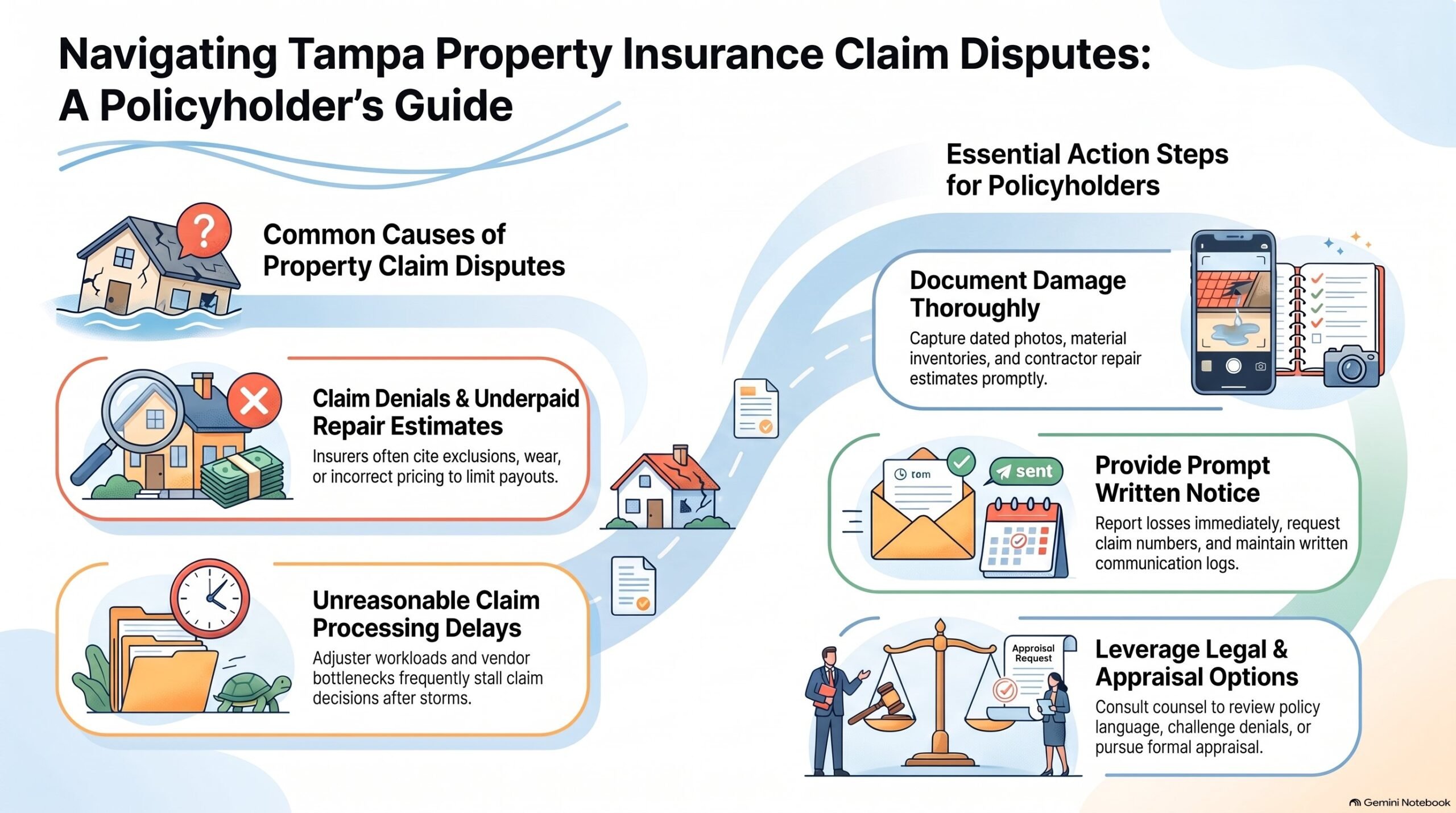
A Tampa property claim dispute can involve more than disagreement over the amount of damage; it may also concern coverage, repair estimates, deadlines, or the insurer’s claim-handling process. Legal guidance can help property owners understand available options and pursue a fair resolution while protecting the resources needed to restore a home or business. A careful Coverage review examines the policy language, relevant exclusions, endorsements, and claim records to identify issues that may affect payment. Counsel can organize supporting documents, assess repair estimates, and communicate with the insurer clearly and promptly. When a disagreement concerns the value of covered damage, an appraisal strategy may help determine whether that process is appropriate and how to prepare for it. The approach should reflect the property owner’s circumstances, the evidence, and applicable requirements. By explaining risks and practical next steps, a lawyer can help clients make informed decisions and focus on recovery without promising a particular outcome.
OUR CONSULTATIONSARE FREE
START YOUR FREE CASE REVIEW

Understanding Tampa Property Claim Disputes & Process Injury Cases
When a property insurer disputes a claim, the disagreement may involve policy coverage, damage estimates, required documentation, or how the claim is handled. Understanding the dispute begins with reviewing the policy, claim records, and communications between the property owner and insurer. These materials can clarify what coverage applies, which deadlines matter, and whether the insurer has explained its decision.
A careful review also considers the property’s condition, repair estimates, and supporting evidence. Photographs, inspection reports, invoices, and professional assessments may help establish the extent and value of covered damage. Local building codes can affect repair requirements, while Hurricane preparedness measures may inform how a property was protected before a storm. Neither factor alone determines coverage; the policy language and facts remain central.
For residents seeking to protect their households and support their communities, a fair, timely resolution can help restore safe use of a home or business. Legal guidance may clarify available options and the steps required to challenge an insurer’s determination.
Common Causes of Tampa Property Claim Disputes & Process
Property claim disputes in Tampa commonly arise when insurers deny claims or offer estimates that undervalue the documented damage. Policy exclusions may also limit coverage, while unclear interpretations of policy terms can create disagreements. Delays in claim processing further complicate resolution and may leave property owners uncertain about their next steps.
Claim Denials
Why are Tampa property claims denied? Insurers may reject a property claim when they determine that the policy excludes the reported cause of damage, coverage has lapsed, notice was late, or required documentation is missing. Disputes can also arise when the insurer concludes that damage resulted from wear, neglect, or a preexisting condition rather than a covered event. The policy language and available evidence are central to evaluating that decision. A property owner serving tenants, neighbors, or a community may need to address a denial promptly to protect the building and those who rely on it. Counsel can review the insurer’s stated grounds, policy terms, and claim record. If the insurer failed to investigate fairly, Bad faith may be a concern. An appraisal clause generally addresses valuation disputes, not coverage denials.
Underpaid Damage Estimates
Even when an insurer accepts coverage, its estimate may not account for the full cost of repairing Tampa property damage. Underpaid estimates can result when an inspection overlooks damaged areas, uses incomplete measurements, or omits necessary labor and related repair work. Differences may also reflect outdated material pricing, especially when local availability or current construction costs have changed since the estimate was prepared.
Contractor estimates can help document the scope and reasonable cost of repairs. Photographs, invoices, measurements, and written explanations may clarify why proposed work is necessary and where the insurer’s figures fall short. A careful comparison can identify omitted tasks, insufficient quantities, or pricing assumptions that do not match the property’s actual needs. Addressing these discrepancies promptly may support a more accurate claim review and help property owners restore safe, functional spaces for occupants and the wider community.
Policy Exclusions
When an insurer denies or limits a Tampa property claim, it may cite a policy exclusion as the reason. Exclusions define circumstances or types of damage the policy does not cover, but their application depends on the policy language and the facts of the loss. For example, an insurer may classify deterioration as Wear and Tear rather than damage caused by a covered event. A Vacancy Clause may also restrict coverage when a property has been unoccupied for a specified period. Disputes can arise when the insurer’s interpretation overlooks evidence about the damage, occupancy, or cause. Carefully reviewing the policy, inspection findings, photographs, and repair records can clarify whether an exclusion applies. Understanding these terms helps property owners evaluate a denial and make informed decisions about seeking assistance.
Delayed Claim Processing
Delayed claim processing can complicate a Tampa property dispute, particularly when an insurer takes longer than expected to investigate damage or issue a coverage decision. Several operational issues may contribute to these delays. Adjuster Workload can increase after severe storms, leaving fewer available professionals to inspect properties, review records, and respond to policyholders. Vendor Bottlenecks may also slow progress when contractors, engineers, or other experts cannot provide estimates or reports promptly.
A delayed response can make it harder for property owners to arrange repairs, protect occupants, and limit further damage. Insurers generally need sufficient information to evaluate a claim, but policyholders can document damage, keep copies of communications, and request written status updates. When delays persist without a clear explanation, a lawyer may review the policy, claim history, and applicable requirements to identify appropriate next steps.
Don’t Wait. Call Our Florida Personal Injury Lawyers Now!


Legal Rights of Tampa Property Claim Disputes & Process Injury Victims
Tampa property claim disputes can affect an injured person’s ability to recover compensation for property damage, medical expenses, and other covered losses. Florida law and the applicable policy define the rights available, so claimants should review policy terms and preserve relevant records. These protections can help individuals meet family responsibilities and continue supporting others during recovery.
Key rights may include:
- Fair claim review: Insurers must handle claims in accordance with Florida law and policy obligations.
- Coverage interpretation: Policy language may be reviewed to determine whether particular damage or expenses qualify for coverage.
- Claim documentation: Claimants may submit estimates, photographs, receipts, and medical records to support claimed losses.
- Appraisal rights: When a policy provides an appraisal process, eligible parties may use it to address disagreements about the amount of loss.
A claimant may also seek legal advice about denial explanations, settlement offers, deadlines, and available remedies. Careful review can clarify options without assuming that every disputed loss is covered. Prompt, organized action helps protect rights and supports an informed resolution.
Why Do Tampa Property Claim Disputes & Process Injuries Happen?
Property claim disputes in Tampa often arise when insurers and policyholders disagree about the cause, scope, or value of damage. These disagreements may follow storm-related damage, including wind-driven rain, flooding, or roof damage during severe weather. Insurers may question whether a covered event caused the loss, while property owners may believe the assessment overlooks affected areas or necessary repairs.
Plumbing failures can also lead to disputes when water damages walls, flooring, or personal property. Disputes may center on whether the failure resulted from sudden breakage, gradual deterioration, or inadequate maintenance. Policy language, exclusions, documentation, and competing repair estimates can further complicate decisions about coverage and payment.
Disputes may also arise from delayed inspections, inconsistent damage assessments, or disagreement over the reasonable cost of restoring a property. For owners seeking to protect their households, tenants, or community spaces, these conflicts can affect timely repairs and safe use of the building. Clear policy terms and reliable evaluations are central to understanding why disagreements occur.
What Should You Do After a Tampa Property Claim Disputes & Process Injury?
After a property claim dispute or related injury, the affected party should document damage with clear photographs, records, and repair estimates. Prompt notice to the insurer helps preserve the claim and start the investigation. If coverage is disputed or the process becomes difficult, consulting a property claims lawyer can clarify available options.
Document the Property Damage
Photographs, videos, and written records can help establish the extent and cause of damage when a Tampa property insurance claim is disputed. Images should show affected areas from multiple angles, with close views of specific damage and wider views that provide context. Dated files can preserve a clear record of conditions before cleanup or repairs alter the scene. A written log should describe when damage was discovered, which rooms or belongings were affected, and any changes observed over time.
A Material inventory can list damaged items, their age, condition, and approximate value, supported by receipts or other available proof of purchase. Repair estimates from qualified professionals can document the work and costs required to restore the property. Organized records help clarify the loss and support a fair review, while preserving useful evidence for everyone involved.
Notify Your Insurer
When damage occurs, prompt notice to the insurer can help preserve the claim and begin the review process. The property owner should report the loss through the insurer’s designated channel as soon as reasonably possible, even if the full extent of the damage remains uncertain. Prompt Notice allows the insurer to arrange an inspection, explain required procedures, and identify deadlines that may apply under the policy.
The report should provide accurate details about when and how the damage occurred, the affected areas, and any immediate steps taken to protect the property. The owner should request a claim number and retain copies of communications and submitted materials. Obtain coverage confirmation by reviewing the policy and asking the insurer which provisions, exclusions, deductibles, and documentation requirements may affect the claim.
Consult a Property Claims Lawyer
If an insurer delays, underpays, or denies a property claim, consulting a property claims lawyer can help the owner understand the policy, assess the insurer’s position, and identify available options. An attorney can explain relevant deadlines, review claim correspondence, and clarify what documentation may strengthen the file. A thorough Coverage review can compare the reported damage with policy terms, exclusions, limits, and the insurer’s stated reasons for its decision. During an attorney consultation, the owner can discuss repair estimates, inspection findings, photographs, and communications with the insurer. The lawyer may recommend requesting a written explanation, submitting additional evidence, pursuing an internal appeal, or considering other lawful steps. Prompt legal guidance can help protect the owner’s interests, support a fair resolution, and preserve resources needed to repair the property and support household members or the wider community.
Don’t Wait. Call Our Florida Personal Injury Lawyers Now!
Critical Evidence in a Tampa Property Claim Disputes & Process Injury Case
Reliable evidence can clarify how an incident occurred, the injuries sustained, and the extent of the resulting loss.
Essential records may include:
- Photographs of the incident scene
- Medical treatment records
- Witness statements
- Property damage documentation
Together, these materials can help substantiate a property claim and support a careful review of disputed facts.
Incident Scene Photographs
Incident scene photographs can preserve details that may disappear before a property claim is investigated, including hazards, warning signs, lighting, and the surrounding area. Clear images can help explain how a dangerous condition appeared and whether reasonable precautions were visible to visitors. Photographs should capture both close views of the hazard and wider views showing its location, nearby pathways, and relevant context. Panoramic Imaging may document the broader layout when a single frame cannot show how the area connects. Photograph Metadata, such as timestamps and device information, can help establish when and how images were created, although it should be preserved with the original files. A consistent record may help property owners, insurers, and claim reviewers evaluate the scene fairly and identify measures that could protect others from similar hazards.
Medical Treatment Records
Medical treatment records provide essential evidence of the injuries reported after a property-related incident and the care required to address them. These documents may include emergency evaluations, diagnostic results, referrals, treatment plans, and follow-up notes. Collectively, they help establish a Physician treatment chronology, showing when symptoms were reported, how providers assessed them, and whether care continued as recommended. Accurate records can clarify the connection between an incident and an injury while identifying gaps or inconsistencies that may require explanation. Medication lists and provider notes may also document medication side effects, treatment changes, and impacts on daily function. In a Tampa property claim, organized medical records can help insurers, attorneys, and decision-makers evaluate the nature and extent of harm. Careful review supports a fair process and helps guarantee that injured individuals receive informed consideration.
Witness Statements
Alongside medical records, witness statements can help clarify how a property-related injury occurred and what conditions were present beforehand. Individuals who saw the incident or its immediate aftermath may describe hazards, lighting, warning signs, and the actions of those involved. Their accounts can help establish a timeline and provide context for evaluating disputed facts. Witness credibility depends on factors such as firsthand observation, consistency, and the ability to recall details without speculation. A careful interview should distinguish what a person directly observed from what was learned later. Preserving the prompt statement can reduce the risk that memories fade or important details are overlooked. Written or recorded accounts should identify the witness, document when the statement was made, and preserve the person’s own words. Respectful, accurate documentation supports fair review and informed resolution.
Property Damage Documentation
Photographs, repair estimates, and preserved damaged items can help show the nature and extent of property damage in a Tampa injury claim. Clear documentation may also support a fair assessment of losses and help those involved understand what occurred.
A detailed Damage inventory should identify each affected item, describe its condition, and note when and where the damage was observed. Dated photographs should capture multiple angles and include context that connects the item to the incident. Receipts, ownership records, and prior condition evidence can help establish value and distinguish new damage from existing wear.
Written repair estimates should specify the work required, materials, and projected costs. If an item cannot be repaired, replacement pricing may be relevant. When practical, preserving damaged property allows later inspection. Consistent records can help insurers, counsel, and claimants evaluate disputes and pursue an accurate resolution.
Long-Term Effects of Tampa Property Claim Disputes & Process Injuries
Property claim disputes can create ongoing financial strain when owners must cover expenses while awaiting a resolution. Delayed repairs may allow property damage to worsen and disrupt daily routines. Prolonged uncertainty can also contribute to lasting personal stress for those affected.
Ongoing Financial Strain
When a Tampa property claim remains unresolved or is underpaid, the financial effects can extend well beyond the initial damage. Household budgets may be disrupted as owners use savings or redirect income to cover expenses that insurance proceeds were expected to address. Mortgage payments, utilities, and other obligations continue, while claim funds may remain insufficient or unavailable. This imbalance can reduce financial flexibility and leave less capacity for routine needs or unexpected costs. If an owner relies on credit to manage the shortfall, increased balances or missed payments may hurt their credit score long after the dispute ends. These pressures can also affect families and community members who depend on the owner’s financial stability. Careful documentation of expenses and claim communications can help clarify the scope of the loss and support informed decisions.
Delayed Property Repairs
Financial pressure from a disputed claim can also delay repairs, especially when available funds don’t cover the work or remain uncertain. In Tampa, unresolved coverage questions may prevent property owners from approving estimates, ordering materials, or scheduling qualified tradespeople. These delays can expose buildings to further water intrusion, mold growth, or structural deterioration, increasing the scope and cost of necessary work. Contractor coordination may also become more difficult when repair plans depend on insurer inspections, revised estimates, or partial payments. If vital rooms remain unsafe or unusable, temporary housing may be needed while repairs proceed, adding logistical demands for households and community support providers. Clear documentation, timely communication, and careful review of claim decisions can help clarify available benefits and support a practical repair schedule, while protecting the property and those who rely on it.
Lasting Personal Stress
Even after repairs begin, a prolonged property claim dispute can leave lasting personal strain for Tampa residents. Uncertainty about coverage, repeated requests for documentation, and ongoing financial pressure can disrupt routines long after the initial damage. Emotional exhaustion can affect concentration, sleep, and the ability to manage work or household responsibilities. Family tension may also increase when relatives disagree about repair choices, expenses, or how to respond to an insurer. These effects can persist even after a home becomes usable again, particularly when the claim remains unresolved or the family has taken on debt. Clear records, timely communication, and realistic expectations can help residents reduce avoidable stress. When disputes continue, qualified legal guidance may clarify available options and support a more orderly process, allowing households to focus on recovery and community responsibilities.
Proving Liability in Tampa Property Claim Disputes & Process Injury Cases
Proving liability in a Tampa property claim dispute requires evidence that establishes who controlled the property, what hazardous condition caused the injury, and whether the responsible party knew or reasonably should have known about the danger. Establishing these facts helps injured visitors seek accountability and supports safer conditions for others.
Relevant evidence may include photographs, incident reports, maintenance records, inspection logs, and witness statements. These materials can show how long a hazard existed, whether staff received prior complaints, and whether reasonable steps were taken to address it. Medical records can connect the condition to the injury and document its effects.
Property owners and occupiers generally have a Duty of Care to maintain reasonably safe premises and warn visitors of known dangers. A Building Code violation may help demonstrate that a safety requirement was not met, though it does not automatically establish liability. The specific circumstances, applicable standards, and available evidence determine whether the responsible party failed to act reasonably and caused harm. A careful investigation can clarify those issues.
Dealing With Insurance Companies After a Tampa Property Claim Disputes & Process Injury
After a Tampa property injury, how an injured person communicates with insurance companies can affect how a claim is handled. Clear, accurate communication helps insurers assess reported damage and related losses while reducing misunderstandings. The injured person should provide factual information, keep copies of correspondence, and note the date, recipient, and substance of each conversation. Prompt notice is important, but statements should remain limited to what is known.
Recorded statements may be requested soon after an incident. Before agreeing, the injured person can ask what topics will be covered and whether the policy requires the statement. Do not guess uncertain details, and ask to clarify unclear questions. A lawyer may help protect the claimant’s interests during communications and review proposed documents before they are signed.
When a policy includes appraisal clauses, those provisions may offer a method for resolving disagreements about the amount of loss. Review their scope and deadlines carefully before taking action.
What to Expect During a Tampa Property Claim Disputes & Process Injury Claim Process
A property claim process typically begins with prompt notice to the insurer and submission of supporting records, including photographs, repair estimates, and proof of loss. The insurer then investigates the damage and coverage, after which parties may address disagreements through negotiation, appraisal, mediation, or litigation. Timelines vary based on the claim’s intricacy, the availability of evidence, and the insurer’s response.
Claim Filing Steps
Filing a property claim in Tampa typically begins with notifying the insurer promptly and documenting the damage, its cause, and any immediate steps taken to prevent further loss. The policyholder should record the date of discovery, affected areas, and actions taken to protect occupants and property. Photographs, receipts, repair estimates, and relevant correspondence can support an organized submission. Coverage verification clarifies which losses may qualify, which exclusions or deductibles apply, and which documents the insurer requires. The policyholder should review filing deadlines under the policy and applicable law, since late notice may complicate recovery. A complete claim form should include accurate details, and the policyholder should retain copies of all materials sent. If another person’s safety or vital services are affected, document reasonable protective measures while preserving evidence and following policy instructions.
Insurer Investigation
During an insurer investigation, the company evaluates the reported damage, reviews the policy, and gathers information to determine whether coverage applies and what amount may be payable. An adjuster inspection may involve photographing affected areas, measuring damage, and asking how and when the loss occurred. The property owner should provide accurate answers and make relevant records available, including repair estimates, receipts, and prior maintenance information. Insurers may also request access to the property or documents from contractors and other witnesses. When the cause or extent of damage is unclear, forensic analysis may help identify contributing conditions and distinguish recent damage from preexisting issues. The investigation can take time, particularly when evidence is incomplete or experts must assess complicated damage. Clear documentation and timely cooperation can help the insurer evaluate the claim responsibly and understand its full scope.
Dispute Resolution Options
When a property insurer and policyholder disagree about coverage or the value of a loss, several resolution options may be available. Mediation options can provide a structured setting for both sides to discuss the dispute with help from a neutral facilitator. The mediator does not decide the outcome; the parties may reach a voluntary agreement that addresses the documented loss and policy terms.
For disagreements focused on the amount of damage, the appraisal process may offer another route if the policy permits it. Each side generally selects an appraiser, and those appraisers may choose an umpire to resolve differences. Appraisal typically addresses valuation rather than broader coverage questions. If informal methods do not resolve the matter, a policyholder may consider legal action. A lawyer can explain available procedures and help clarify the dispute and ensure a fair process.
Claim Timeline Expectations
The timeline for a Tampa property claim dispute depends on the policy, the extent of the damage, and how quickly the parties exchange information. After notice is submitted, the insurer generally acknowledges the claim and begins a Coverage assessment, which may include reviewing policy terms, inspecting the property, and requesting records. Prompt access to estimates, photographs, repair invoices, and other relevant documents can help limit avoidable delays.
Insurers and policyholders should track communications and confirm deadlines in writing. Applicable requirements and timeline benchmarks may vary with the claim’s circumstances and governing rules. If the insurer questions the cause or value of the loss, additional inspections or negotiations may extend the process. A clear record of each step can support informed decisions and help parties address disputes efficiently while preserving resources needed for property recovery and community responsibilities.
Compensation for Tampa Property Claim Disputes & Process Injury Damages
Compensation in a Tampa property claim dispute may cover documented repair or replacement costs, damage to personal belongings, and additional living expenses if the property cannot be safely occupied. These payments can help residents restore a home and maintain stability while repairs proceed. Temporary housing may be necessary when damage creates unsafe conditions, and eligible costs should be supported by receipts, invoices, or other reliable records. Claims for lost belongings may require an inventory describing each item, its condition, and estimated value. Photographs, purchase records, and repair assessments can help clarify the extent of the loss.
A property dispute may also involve disagreement over the cause of damage, the scope of repairs, or the amount payable under the policy. Carefully reviewing policy terms and claim documentation can identify disputed items and support a clear response to the insurer. Prompt, accurate records may help prevent avoidable delays. When a covered loss affects neighbors, tenants, or community members, fair claim handling can also support their recovery and protect their access to safe housing.
Economic vs Non-Economic Damages in Tampa Property Claim Disputes & Process Cases
Economic losses in Tampa property claim disputes may include repair costs, replacement expenses, and other documented financial harm. Non-economic damages may address less tangible effects, such as disruption to daily life, when supported by applicable law and evidence. Establishing either category requires clear documentation linking the claimed losses to the dispute.
Economic Property Losses
In Tampa property claim disputes, economic losses generally include measurable financial harm, such as repair costs, damaged belongings, temporary housing expenses, and lost rental income. These amounts can be supported by estimates, invoices, receipts, photographs, and other records showing the property’s condition and the cost of restoring it. A claim may also include reasonable expenses incurred to prevent further damage, provided those costs are documented and relate to the covered loss. For commercial properties, Business interruption losses may arise when damage temporarily limits operations or prevents access to the premises. Owners seeking rental income may need to establish the amount ordinarily earned and the period the property could not be rented. Clear records help insurers and decision-makers assess claimed losses, identify disputed items, and evaluate whether requested compensation reflects actual financial harm.
Non-Economic Damages
Unlike measurable financial losses, non-economic damages concern intangible harm, such as emotional distress or loss of enjoyment, that may follow property damage or a related dispute. In Tampa property claim cases, these effects can arise when damage disrupts a household’s safety, privacy, or ordinary routines. Emotional distress may include anxiety or ongoing strain connected to an uninhabitable home, prolonged repairs, or uncertainty about an insurer’s response. Diminished enjoyment may reflect the loss of access to rooms, outdoor areas, or valued belongings while a property remains damaged. These harms differ from repair costs, temporary housing expenses, and other quantifiable losses, though they may accompany them. Their recognition depends on the claim’s circumstances and applicable law. A careful assessment considers how the dispute affects residents’ daily lives and ability to maintain a stable home.
Proving Your Claim
When a property claim is disputed, proving the loss requires clear evidence connecting the damage to the claimed harm. In Tampa disputes, organized records can establish when damage occurred, how it affected the property, and what repairs are reasonably necessary. Photographs, inspection reports, repair estimates, invoices, and maintenance records may help distinguish covered damage from preexisting conditions or unrelated deterioration.
Economic damages may include repair costs, replacement expenses, and documented loss of use. Damage valuation should rely on credible estimates and, when appropriate, Expert testimony from qualified contractors, engineers, or other experts. Their findings can clarify the cause and extent of damage without overstating the loss.
Non-economic harm may be relevant when supported by applicable law and evidence. A careful, accurate presentation helps insurers and decision-makers assess the claim fairly and supports a reliable resolution for affected property owners.
Don’t Wait. Call Our Florida Personal Injury Lawyers Now!
When a Tampa Property Claim Disputes & Process Injury Case Goes to Trial vs Settlement
A Tampa property claim dispute may resolve through settlement or proceed to trial, depending on the evidence, the parties’ positions, and the terms of any proposed agreement. Settlement can provide a defined resolution without the uncertainty, expense, and time associated with a courtroom proceeding. The parties may negotiate compensation, payment timing, and other terms, while avoiding a formal verdict. Any proposed agreement should be reviewed carefully to confirm that it addresses the claimant’s documented losses and responsibilities.
If negotiations do not produce an acceptable resolution, the case may proceed to trial. Each side presents evidence and witnesses, and courtroom testimony may help explain the property damage, its effects, and the basis for the disputed claim. The judge or jury evaluates the information presented. After the evidence and arguments are presented, the jury deliberates and reaches a verdict. A trial can offer a formal decision, but the outcome is not guaranteed. A claimant should weigh these options with counsel, considering practical needs and the goal of securing a fair resolution.
Florida Laws That May Affect Your Tampa Property Claim Disputes & Process Case
Florida law can shape how a Tampa property claim is reported, investigated, and resolved. Applicable statutes and policy terms influence insurers’ and property owners’ duties, while Florida policyholder protections may provide safeguards during claim handling. Understanding these rules can help households, businesses, and community organizations make informed decisions after property damage.
- Policy language identifies covered losses, exclusions, deductibles, and required steps for submitting supporting information.
- Florida’s claims-handling standards address insurer communications, investigation, and payment decisions, subject to applicable law and circumstances.
- Appraisal procedure rules may offer a method to resolve disagreements about the amount of a covered loss when policy conditions permit. Appraisal generally does not decide whether coverage applies.
- Building codes, local requirements, and evidence of repair costs may affect damage evaluations and the documentation needed to support a claim.
Because each policy and loss differs, legal guidance can clarify obligations, preserve relevant records, and help claimants pursue fair treatment while maintaining resources needed to serve their families, employees, or neighbors.
The Statute of Limitations for Tampa Property Claim Disputes & Process Injury Cases
Beyond policy terms and claim-handling rules, filing deadlines can determine whether a Tampa property claim dispute may proceed in court. Florida law sets time limits for bringing different civil claims, and the applicable period depends on the nature of the dispute, the date of loss, and relevant statutory provisions. Property insurance claims may also be subject to specific notice and filing requirements that differ from the deadline for a lawsuit.
Policyholders should review deadlines promptly after damage occurs. Delays in reporting a loss, submitting required documents, or commencing litigation may affect available remedies, even when the underlying damage is substantial. Injury claims arising from a property incident may carry a separate limitations period, calculated under rules that can depend on when the injury occurred or was discovered.
Limitation exceptions may apply in defined circumstances, such as certain forms of concealment or legal disability. Because exceptions are fact-specific, accurate records and timely attention to statutory dates help preserve claims and support fair resolution.
How a Tampa Property Claim Disputes & Process Lawyer Can Help You
When a property insurer disputes, delays, or denies a claim, a Tampa property claim disputes and process lawyer can review the policy, organize supporting evidence, and explain your options. This guidance can help property owners pursue a fair resolution while protecting resources needed to maintain safe homes and serve their families or communities.
A lawyer may assist by:
- Reviewing policy language, coverage limits, exclusions, and claim correspondence to identify disputed issues.
- Gathering repair estimates, photographs, inspection findings, and other records to support the claimed loss.
- Communicating with the insurer, presenting a clear response to its position, and tracking required claim procedures.
- Evaluating settlement proposals and explaining potential litigation, costs, and practical consequences.
Clear attorney-client communication helps clients understand developments, responsibilities, and decisions throughout representation. Before work begins, the lawyer can explain fee arrangements, including how legal fees and case expenses may be handled. With organized advocacy and careful analysis, counsel can help clients make informed choices and seek a resolution consistent with the policy and documented damage.
When to Contact a Tampa Property Claim Disputes & Process Lawyer
Early legal guidance can help property owners address insurer disputes before missed deadlines or incomplete documentation weaken a claim. Contacting a Tampa property claim disputes and process lawyer may be appropriate when an insurer delays a response, questions the cause of damage, or offers payment that appears inconsistent with repair estimates. These Early Warning Signs can indicate that the claim needs careful review while records and deadlines remain manageable.
A policyholder may also seek guidance after a denial, a request for repeated documentation, or disagreement about the scope of covered repairs. Prompt attention can help preserve photographs, invoices, inspection reports, and communications that clarify what occurred. If the insurer’s valuation differs substantially from contractor findings, an Independent Appraisal may help identify the source of the disagreement and provide a clearer basis for discussion.
Property owners who coordinate repairs or support affected tenants and neighbors may benefit from understanding their options early. Timely legal review can help them make informed decisions without overlooking policy requirements or procedural deadlines.
Why You Need an Experienced Tampa Property Claim Disputes & Process Lawyer
An experienced Tampa property claim disputes and process lawyer can help property owners interpret policy language, assess insurer decisions, and identify procedural requirements that may affect recovery. This support matters when damage disrupts a household, business, or community service and timely decisions are needed to protect people and property.
A lawyer can provide focused coverage interpretation by examining policy terms, exclusions, limits, and claim documentation in context. This review may clarify whether an insurer’s position aligns with the contract and whether additional evidence or a formal response is appropriate. Experienced counsel can also track deadlines, organize records, and communicate disputed issues with the insurer, reducing the risk that procedural errors weaken a valid claim.
Policyholder advocacy helps guarantee that the owner’s documented losses receive careful consideration. By explaining available options and likely consequences, counsel can support informed decisions while keeping attention on practical recovery needs. This guidance may help property owners pursue repairs, restore operations, and meet responsibilities to family members, employees, tenants, or others who depend on them.
How to Choose the Right Tampa Property Claim Disputes & Process Lawyer for Your Case
Choosing the right Tampa property claim disputes and process lawyer requires carefully evaluating the attorney’s experience, communication style, and approach to insurance disputes. A careful selection can help property owners pursue fair treatment while protecting resources needed to support families, employees, or community services.
Review attorney credentials, including Florida licensure, relevant experience with property insurance claims, and a record of handling disputes similar to the case at hand. Prospective clients can ask how the lawyer evaluates evidence, explains policy provisions, and addresses delayed, underpaid, or denied claims. Clear communication matters: the attorney should provide timely updates and explain decisions in understandable terms.
Before signing an agreement, clients should discuss fee structures, including how fees are calculated, whether case expenses are separate, and when payment is due. Written terms can prevent misunderstandings. A suitable lawyer should also set realistic expectations, identify potential challenges, and outline the steps involved. Comparing several qualified attorneys allows property owners to make an informed choice aligned with their needs and responsibilities.
About The Law Offices of Anidjar & Levine
The Law Offices of Anidjar & Levine represents clients in a range of legal matters, including Florida property insurance disputes.
The firm assists policyholders seeking answers when damage, coverage questions, or claim delays create uncertainty.
Its attorneys can review policy language, assess claim records, and explain available options so clients can make informed decisions.
The firm’s history reflects a practice serving individuals and families across Florida in matters affecting their security and well-being.
In property disputes, the firm’s work may include communicating with insurers, gathering supporting documentation, and pursuing a resolution consistent with the policy and applicable law.
Each claim depends on its facts, coverage terms, and evidence.
The firm’s attorney values include preparation, clear communication, and attention to clients’ concerns.
These principles support a service-focused approach for people navigating stressful losses and seeking fair consideration of their claims.
By explaining procedures and responding to questions, the firm helps clients understand the process while pursuing their legal interests.
No outcome can be guaranteed.
Frequently Asked Questions
Can I Dispute a Property Claim Denial Without Hiring an Attorney?
Yes, a policyholder can dispute a property claim denial without hiring an attorney. The process generally begins with reviewing the denial letter and policy, then submitting an Appeal Letter that identifies specific errors and requests reconsideration. Evidence Gathering is crucial; relevant photographs, repair estimates, receipts, and expert reports can support the request. Follow deadlines and policy requirements carefully. If the insurer maintains its denial, the policyholder may consider regulatory assistance or legal advice.
What Is an Appraisal Clause in a Property Insurance Policy?
An appraisal clause is a policy provision that provides a method for resolving disagreements about the amount of a covered property loss, not whether coverage applies. Typically, each side selects an appraiser, who evaluates the damage and attempts to agree on its value. If they cannot, they use the policy’s umpire selection process. The resulting decision may bind both parties, depending on the policy and applicable law.
Can My Insurer Cancel My Policy While My Claim Is Pending?
An insurer may cancel a policy while a claim is pending only if the policy and applicable law permit it; filing a claim alone generally does not justify cancellation. Policy cancellation protections may require advance notice and a legally valid reason, depending on the policy, location, and circumstances. Pending claim coverage usually remains subject to the policy terms for losses occurring before cancellation. The policyholder should review notices promptly and seek guidance from a qualified professional.
Will Filing a Property Claim Increase My Insurance Premiums?
Filing a property claim can increase insurance premiums, but the increase isn’t automatic. Premium impact depends on factors such as the claim’s cause, size, frequency, and the insurer’s rating rules. At renewal, the company may adjust renewal pricing based on the property’s loss history and broader market conditions. Policyholders should review any proposed change, ask for its basis, and compare coverage options before making decisions that could affect future protection.
Can I Reopen a Property Claim After Accepting Payment?
A property claim may sometimes be reopened after payment, but the signed settlement and release usually determine whether further recovery is available. Settlement finality generally prevents additional payment for damage covered by the agreement. Release exceptions may apply if the insurer understated the loss, concealed material facts, or the release expressly preserves unresolved items. The claimant should review all settlement documents, deadlines, and applicable state law with qualified counsel before seeking further payment.
—————————
Property claim disputes can involve intricate policy terms, strict deadlines, and disagreements over the extent of covered damage.
A Tampa property claim disputes lawyer can review the insurer’s decision, explain available options, and help pursue benefits supported by the evidence.
The Law Offices of Anidjar and Levine represents people handling property claim disputes and related injury matters, including those seeking guidance from a Tampa Personal Injury Lawyer.
Prompt legal guidance can help protect important records and clarify the next steps toward resolving a claim under Florida law.

