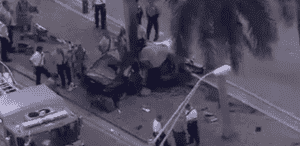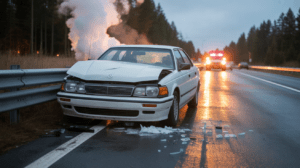
The Law Offices of Anidjar and Levine can investigate how a rear-end, side-impact, head-on, or rollover crash occurred and assess evidence of negligence. Medical records, photographs, witness accounts, and vehicle damage may help connect the impact to reported injuries and losses. Florida comparative fault rules and legal deadlines can affect a claim, while insurance coverage shapes available options. Each case depends on its facts. The sections below explain causes, evidence, potential compensation, and when guidance from a Tampa Personal Injury Lawyer may help.
Main Takeaways
- Rear-end, side-impact, head-on, and rollover crashes create different forces and may cause distinct injury patterns.
- Collision type alone cannot prove injury causation; medical findings, vehicle damage, and witness accounts also matter.
- Distracted, impaired, speeding, or reckless driving and unsafe lane changes may contribute to Tampa collisions.
- Seek prompt medical care, report the crash accurately, and preserve photos, witness contacts, bills, and treatment records.
- A Tampa car accident lawyer can review collision evidence, medical documentation, and police reports to assess liability and potential losses.


How We Can Help With Your Tampa Car Accident Collision Types Injury Claim
After a Tampa car accident, the collision type can affect how injuries are documented, how fault is investigated, and which insurance policies may apply. A lawyer can help an injured person organize records, communicate with insurers, and understand the steps involved in pursuing compensation. This support can also reduce avoidable delays and help preserve information relevant to the claim.
During an initial Legal Consultation, counsel can review available evidence, explain potential options, and identify questions that require further investigation. The review may include medical records, photographs, witness accounts, and insurance documents. Because each matter depends on its facts, no outcome can be guaranteed.
A lawyer can also assess Claim Eligibility by considering applicable deadlines, coverage, and the circumstances of the crash. When appropriate, counsel may negotiate with insurers or prepare a case for litigation. Clear guidance helps clients make informed decisions while allowing them to focus on medical care and daily responsibilities. The process should remain responsive, respectful, and directed toward protecting the injured person’s interests.
Understanding Tampa Car Accident Collision Types Injury Cases
The circumstances of a Tampa car accident can vary considerably depending on the type of collision, and each may raise distinct questions about injury documentation, fault, and insurance coverage. Rear-end, side-impact, head-on, and single-vehicle crashes involve different forces and may produce different injury patterns. Understanding these impact classifications helps explain why medical findings, vehicle damage, and witness accounts must be considered collectively.
Collision biomechanics describes how force moves through a vehicle and affects its occupants. The direction and severity of an impact, restraint use, and occupant position may help clinicians assess reported symptoms, though no single factor establishes the cause or extent of an injury. Some conditions appear immediately, while others become evident over time, making timely evaluation and consistent records important.
A careful review can connect the collision circumstances with treatment needs and documented losses. This process supports fair consideration of an injured person’s claim and helps those assisting them communicate clearly with insurers, medical providers, and other involved parties.
Common Causes of Tampa Car Accident Collision Types
Tampa car collisions often result from preventable behaviors, including distracted driving, speeding, and other reckless conduct. Impaired driving can also compromise judgment and reaction time, increasing the likelihood of a crash. Unsafe lane changes may cause sideswipe or other collisions, particularly when drivers fail to check surrounding traffic.
Distracted Driving
Because driving requires sustained attention, even a brief distraction can prevent a motorist from noticing changing traffic conditions or responding in time. Driver inattention may involve adjusting vehicle controls, eating, reading directions, or focusing on passengers instead of the roadway. Phone distraction is especially concerning because texting, browsing, or handling a device can divert a driver’s eyes, hands, and concentration. In Tampa traffic, a momentary lapse may contribute to rear-end collisions, sideswipes, or crashes at intersections. Distracted driving can also affect pedestrians, cyclists, and other motorists who depend on drivers to remain alert. Evidence such as phone records, witness accounts, and vehicle data may help clarify whether distraction contributed to a collision. A careful investigation can support accountability, help injured people pursue appropriate assistance, and promote safer roads for the wider community.
Speeding and Reckless Driving
When drivers exceed safe speeds or disregard traffic laws, they have less time to respond to hazards and may lose control of their vehicles. In Tampa, speeding can increase collision force and make injuries more severe. Speed Limit Violations are especially dangerous near intersections, school zones, and busy pedestrian areas, where people may enter a driver’s path with little warning.
Reckless conduct can also include tailgating, unsafe lane changes, and passing in low-visibility conditions. These Aggressive Actions can trigger sideswipe, rear-end, or head-on crashes and place other road users at risk. Drivers who follow posted limits, leave adequate space, and yield appropriately help protect passengers, pedestrians, and nearby motorists. When a crash occurs, a careful review of speed, traffic conditions, and driver actions can help clarify how it happened.
Impaired Driving
Impaired driving can compromise judgment, coordination, and reaction time, increasing the risk of a serious collision. Alcohol, prescription medications, and other substances may reduce a driver’s ability to assess hazards and respond safely. Even when a person does not appear visibly impaired, diminished attention can contribute to a crash that injures passengers, pedestrians, or occupants of other vehicles.
Florida law prohibits operating a vehicle while impaired, and DUI penalties may include fines, license suspension, mandatory programs, or incarceration, depending on the circumstances and prior offenses. After a collision, alcohol testing may help investigators determine whether impairment played a role. Test results, witness statements, and other evidence can affect how responsibility is evaluated. Prompt medical care and accurate documentation can help injured people protect their well-being and understand available legal options.
Unsafe Lane Changes
Unsafe lane changes can cause collisions when drivers change lanes without checking blind spots, signaling clearly, or leaving enough space. In Tampa, heavy traffic, sudden congestion, and frequent highway merges can make these actions especially hazardous. Drivers who fail to assess surrounding vehicles may sideswipe another car, force a nearby motorist to brake abruptly, or trigger a chain-reaction crash. Proper mirror positioning helps drivers monitor adjacent lanes, but mirrors cannot show every vehicle. Blind spot checks remain vital before changing lanes, along with signaling early and waiting for a safe opening. Drivers should also avoid weaving through traffic or changing lanes near intersections without adequate visibility. These precautions protect passengers and other road users. When a collision occurs, careful investigation can clarify how the lane change contributed to the crash.


Legal Rights of Tampa Car Accident Collision Types Injury Victims
Tampa car accident victims may have legal rights regardless of whether a collision involves a rear-end impact, a side-impact crash, a rollover, or a multi-vehicle pileup. Those rights can include seeking compensation when another party’s negligence causes injury. A careful review of the evidence can help identify responsible parties and available insurance coverage.
Potential steps and protections include:
- Requesting medical care and preserving records that document injuries and treatment.
- Reporting the crash and retaining photographs, witness details, and other relevant evidence.
- Consulting a qualified attorney to assess claims and communicate with insurers.
- Observing filing deadlines, which can limit how long an injured person has to bring a legal action.
- Considering Comparative negligence, since an injured person’s share of fault may affect compensation under Florida law.
A claim may seek payment for medical expenses, lost income, and other legally recognized losses. Each matter depends on its facts, applicable law, and available proof. Timely, informed action can support a fair process and help victims protect their interests while they focus on recovery and family responsibilities.
Don’t Wait. Call Our Florida Personal Injury Lawyers Now!
Why Do Tampa Car Accident Collision Types Injuries Happen?
Because collisions occur under different conditions, the injuries they cause can vary in severity and type. Impact mechanics help explain how force moves through a vehicle and affects its occupants. In a rear-end crash, sudden acceleration may strain the neck and back. A side-impact collision can direct force toward the torso, while a head-on crash may cause occupants to move forward into restraints or interior surfaces. Rollover crashes can expose people to repeated impacts and changing forces.
Occupant kinematics describes how a person’s body moves during a collision. Seat position, restraint use, vehicle design, and impact direction all influence that movement. Even when airbags deploy, an occupant may experience bruising, fractures, or head trauma. Injury severity also depends on factors such as collision speed, vehicle size, and whether the cabin remains intact. Understanding these causes can help explain why people involved in similar crashes may suffer different injuries and why careful, informed support matters.
What Should You Do After a Tampa Car Accident? Collision Types and Injury
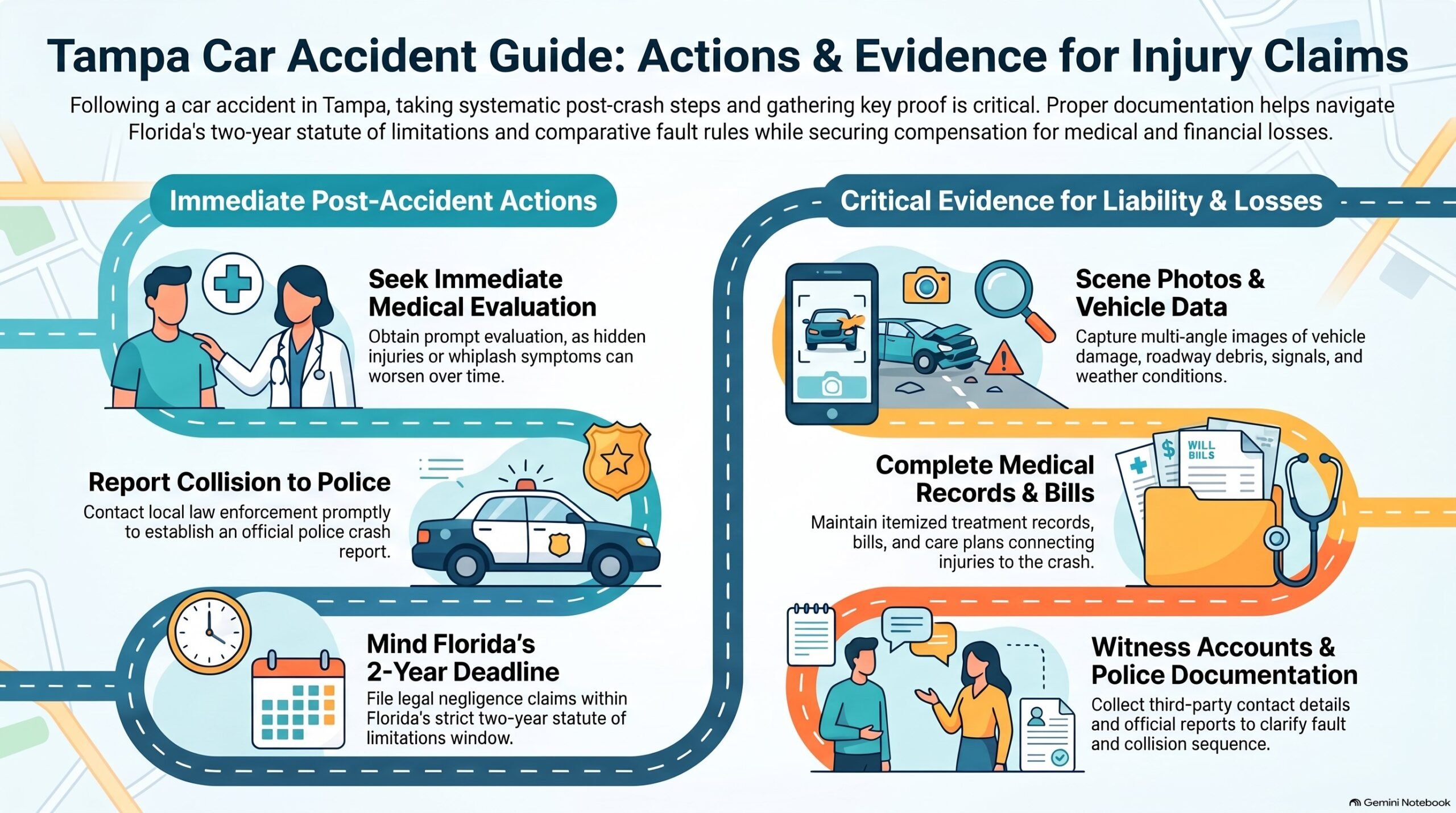
After a Tampa car accident, injured individuals should seek prompt medical care, even if their symptoms initially seem minor. They should report the crash to law enforcement and make certain the incident is documented accurately. Preserving photographs, witness details, and other evidence may help clarify how the collision occurred.
Seek Medical Care
Prompt medical evaluation is essential after a car accident, even when injuries seem minor or symptoms are not immediately apparent. A person involved in a Tampa collision should seek care promptly, since some conditions may worsen or become noticeable hours or days later. Severe pain, difficulty breathing, loss of consciousness, or suspected head, neck, or back injuries warrant an Emergency room visit or a call for emergency assistance. For less urgent concerns, a physician or urgent care provider can assess symptoms and recommend appropriate treatment. Following medical guidance supports recovery and helps prevent avoidable complications. Patients should describe all symptoms accurately, including those that develop after the initial examination. They should also attend recommended follow-up appointments and retain copies of treatment instructions and medical records for their personal files.
Report the Crash
Reporting a Tampa car accident promptly helps create an official record of the collision and may support later insurance or legal claims. After addressing immediate medical needs, the involved driver should contact local law enforcement, especially if anyone is injured, a vehicle cannot be driven, or the crash poses a safety hazard. The driver should provide accurate information about the location, people involved, and apparent injuries without guessing or assigning blame. A responding officer can document the scene and explain how to obtain the report number and a copy of the report.
If police do not respond, the driver should ask how to file a report through the appropriate agency. Emergency Roadside assistance and Tow Coordination can help move disabled vehicles safely. Prompt, factual reporting also helps protect other road users and guarantees relevant authorities can respond.
Preserve Evidence
When it is safe, preserving evidence can help document how a Tampa car accident occurred and the injuries it caused. If it is safe and does not delay medical care, a person involved should photograph vehicle damage, road conditions, traffic signs, visible injuries, and the surrounding area. Witness names and contact details may also help clarify disputed events. Evidence Preservation includes keeping damaged property, repair estimates, medical records, bills, and correspondence related to the crash. Original photos and documents should remain unaltered, and digital backups should be stored securely to reduce the risk of loss. Avoid posting details about the collision on social media, and do not discard relevant items. Promptly organizing these materials can help insurers, medical providers, and legal professionals evaluate the claim.
Critical Evidence in a Tampa Car Accident Collision Types Injury Case
Important evidence can help establish how a Tampa collision occurred, who may be responsible, and the extent of resulting injuries.
Relevant records and accounts may include:
- Accident scene photos
- Police crash reports
- Witness statements
- Medical records
- Medical bills
Together, these materials can support a clear account of the crash and its consequences.
Accident Scene Photos
Photographs taken at a Tampa car accident scene can preserve details that may disappear before an investigation is complete. Images of vehicle positions, damage, skid marks, debris, traffic signals, and road conditions can help clarify how a collision occurred. They may also document hazards that contributed to the crash, such as obstructed signs or poor pavement.
Useful photographs show the scene from several Camera angles, including wide views and close details. Clear images of each vehicle and its damage can support later comparisons. Consider lighting conditions, weather, and time of day because they affect what a photograph reveals. When safe, documenting the scene promptly may preserve evidence before vehicles move or conditions change. These records can help injured people and their representatives evaluate claims and explain the impact of a collision.
Police Crash Reports
Alongside scene photographs, a police crash report can provide an official account of a Tampa collision and the circumstances observed by responding officers. The report may record the crash location, date, vehicle details, roadway conditions, and any citations issued. Its information can help clarify how different collision types occurred and identify facts relevant to an injury claim. However, a report is not a final determination of fault, and it may contain incomplete or inaccurate details. An injured person can promptly review the document and seek corrections through the appropriate agency if factual errors appear. Keeping a copy also supports record retention, allowing you to compare the information with medical records, repair documentation, and other case materials. Careful review helps preserve reliable evidence and supports a fair assessment of the harm suffered.
Witness Statements
Witness statements can clarify how a Tampa collision occurred, particularly when vehicle damage or the police crash report leaves important questions unresolved. Independent observers may describe traffic signals, vehicle speed, lane changes, road conditions, and events immediately before impact. Their accounts can help establish how different collision types unfolded and identify details that drivers may have missed.
Witness credibility depends on factors such as the observer’s location, visibility, attention, and consistency. A person with no apparent connection to the parties may offer a useful perspective, though every account should be evaluated alongside other available evidence. Prompt statement preservation is important because memories can fade, and contact information may become difficult to obtain. Recording each witness’s observations accurately, without suggesting answers, supports a fair assessment and helps protect everyone affected by the crash.
Medical Records and Bills
Medical records and bills can show the nature, timing, and cost of injuries sustained in a Tampa car accident. These documents may connect a collision to symptoms, diagnoses, treatment, and recommended follow-up care. Emergency department notes, imaging results, physician evaluations, and therapy records can help establish how an injury developed and affected daily activities.
Itemized bills identify charges for examinations, procedures, medication, and rehabilitation. Comparing bills with treatment records can clarify which expenses relate to the crash and whether care followed medical advice. Accurate documentation also helps prevent overlooked costs from weakening a claim.
Make record requests promptly to hospitals, clinics, and other providers, since processing may take time. A complete, organized file supports fair evaluation and helps responsible parties understand the injured person’s needs. It may also help insurers and legal representatives evaluate damages.
Long-Term Effects of Tampa Car Accident Collision Types Injuries
Injuries from Tampa car accidents may cause chronic pain that persists long after initial treatment ends. Some victims experience lasting mobility limitations that affect daily activities and independence. Emotional trauma, including anxiety or distress, may also continue and require professional support.
Chronic Pain
Chronic pain can persist long after a Tampa car accident, even when the initial injuries appear to have recovered. It may follow collisions that strain muscles, damage nerves, or aggravate existing conditions. Symptoms can fluctuate, making daily responsibilities difficult to manage and reducing a person’s ability to work, participate in family life, and serve the community. Pain management may involve medical evaluation, prescribed treatment, physical therapy, or other approaches tailored to the documented injury. Consistent records can help explain how symptoms affect routine activities and whether treatment provides relief. Sleep disruption is also common, as discomfort can make it difficult to fall asleep or stay asleep. Ongoing pain and inadequate rest can affect concentration and mood. Timely care and clear documentation help establish the lasting effects of accident-related injuries.
Lasting Mobility Limitations
After a Tampa car accident, lasting mobility limitations may interfere with walking, lifting, driving, or completing routine tasks. Spinal, joint, or limb injuries can restrict movement and reduce independence, sometimes requiring ongoing medical care and rehabilitation. Effects may vary depending on the collision, injury severity, and recovery progress.
A physician or physical therapist can assess functional changes and recommend treatment, mobility exercises, or equipment. Assistive technology, including braces, walkers, and modified household devices, may help an injured person manage daily activities more safely. Adaptive transportation can support access to medical appointments, work, and community services when driving is no longer practical. Family members, caregivers, and employers may also need to adjust routines or spaces to provide appropriate assistance. Documenting limitations and treatment needs can help clarify the continuing impact of accident-related injuries.
Emotional Trauma
Emotional trauma can persist long after a Tampa car accident, particularly when a collision causes serious injuries or threatens a person’s sense of safety. Survivors may experience anxiety, sleep disruption, intrusive memories, or fear of driving. These symptoms can interfere with work, relationships, and daily responsibilities, even after physical injuries begin to recover. Post-traumatic stress may develop after a severe crash, but only a qualified health professional can assess symptoms and recommend appropriate care. Supportive family members, employers, and community organizations can help survivors access counseling and maintain meaningful routines without minimizing their experiences. Emotional recovery often takes time and may involve therapy, medical guidance, and practical assistance. Recognizing these effects can help injured people seek timely support and understand that psychological harm merits attention alongside physical injuries.
Don’t Wait. Call Our Florida Personal Injury Lawyers Now!
Proving Liability in Tampa Car Accident Collision Types Injury Cases
Proving liability in a Tampa car accident injury case requires evidence that another party acted negligently and that this conduct caused the collision and resulting harm. Investigators may review police reports, photographs, vehicle damage, road conditions, and witness statements to establish how events unfolded. Medical records can connect the crash to specific injuries and document the care required. When accounts conflict or the impact sequence is unclear, Accident reconstruction may help explain vehicle movements, timing, and points of contact. This analysis can clarify whether speeding, distraction, unsafe turning, or failure to yield contributed to the collision. Florida’s comparative fault rules make liability allocation important when more than one person may have contributed to the crash. A careful assessment identifies each party’s conduct and its role in causing harm. Promptly preserving evidence can support a fair evaluation and help injured people pursue accountability. Legal counsel may organize records, consult qualified experts, and assess whether the available proof meets applicable standards.
Dealing With Insurance Companies After a Tampa Car Accident: Collision Types and Injury
Because insurers evaluate claims based on policy terms and available evidence, communication after a Tampa car accident can affect how an injury claim is assessed. An injured person may be asked to provide statements, medical records, or other documentation. Responses should be accurate and consistent with available facts, since incomplete or speculative statements can complicate evaluation. Insurers may also request broad authorizations or offer early settlements before the full extent of an injury is known. Careful review can help confirm that requested information is relevant and that any proposed resolution reflects documented losses.
A Claim Denial may arise when an insurer disputes liability, coverage, or the connection between the collision and reported injuries. Policy Limits can restrict available compensation, even when losses exceed the insured amount. Clear records, prompt communication, and attention to policy terms can help protect a claim while supporting fair treatment. Legal guidance may help with insurer communications and clarify coverage issues, allowing injured individuals to focus on recovery while maintaining responsibilities to their families and communities.
What to Expect During a Tampa Car Accident Collision Types Injury Claim Process
A Tampa car accident injury claim typically begins with an initial case review to assess the circumstances, potential liability, and available legal options. The process then involves gathering evidence, documenting injuries, and negotiating with insurers for fair compensation. If the parties cannot reach an acceptable settlement, the claim may proceed to trial.
Initial Case Review
During an initial case review, a Tampa car accident lawyer examines how the collision occurred, the injuries reported, and the available evidence. The review typically begins with intake procedures that establish the client’s account, identify immediate concerns, and clarify what assistance is being requested. Conflict screening helps determine whether the firm can ethically represent the injured person. The lawyer may discuss the type of collision, the treatment received so far, and how the injuries affect daily responsibilities, including work or caregiving. This conversation also helps assess whether the matter falls within the firm’s practice and whether deadlines or urgent needs require attention. The lawyer explains possible next steps, the client’s role, and how communication will proceed. No outcome is guaranteed; the purpose is to evaluate fit, clarify priorities, and support informed decisions.
Evidence Gathering
After the initial review, evidence gathering helps establish how the collision occurred and how it affected the injured person. Attorneys may collect police reports, photographs, witness accounts, and available traffic or surveillance footage. These materials can clarify vehicle positions, road conditions, visibility, and the sequence of events. When available, vehicle data may show speed, braking, or other recorded information relevant to the impact. Skid Analysis can help assess braking distance and vehicle movement, though its conclusions depend on reliable measurements and qualified interpretation. Medical records and treatment documentation can connect reported injuries to the crash and describe their effects on daily activities. Investigators may also inspect damaged vehicles and preserve physical evidence before it is lost or altered. Careful documentation supports a thorough, fact-based understanding of the claim.
Injury Claim Negotiations
Once the available evidence and medical information provide a clearer picture of the claim, negotiations may begin with the at-fault driver’s insurer. The injured person or their representative presents a demand supported by records, bills, wage information, and evidence of how the collision affected daily life. During Demand Evaluation, the insurer reviews liability, treatment, claimed losses, and any gaps or inconsistencies in the documentation. It may request additional records or question whether certain care was related to the crash. The injured person’s representative can respond with relevant evidence and clarification, keeping the discussion focused on documented facts. A Settlement Strategy considers the claim’s strengths, remaining uncertainties, and the injured person’s needs. Clear communication and careful review help guarantee that each issue is addressed fairly and that the insurer receives an accurate account of the claim.
Settlement Or Trial
When negotiations do not resolve a Tampa car accident injury claim, the case may proceed to a lawsuit and, in some instances, trial. Filing a lawsuit does not guarantee that the dispute will reach a courtroom. The parties may continue settlement discussions as they exchange evidence, obtain medical records, and assess the collision’s effects. A settlement can provide compensation without a trial, but its terms should account for documented losses and future needs.
If the case proceeds to trial, each side presents evidence and questions witnesses under established courtroom procedures. The judge manages the proceedings, while jurors evaluate the evidence and determine whether liability and damages have been proven. After closing arguments, the jury begins deliberations. The outcome depends on the facts, applicable law, and the jury’s assessment of the testimony.
Compensation for Tampa Car Accident Collision Types Injury Damages
Compensation for a Tampa car accident depends on the collision, the injuries sustained, and the evidence establishing who was at fault. A rear-end crash, intersection collision, or sideswipe may produce different injury patterns and repair needs. A claim should connect the responsible party’s conduct to the harm and document how it affected the injured person’s daily life.
Medical records, diagnostic results, treatment plans, and photographs can help show how injuries developed and what care was required. Prompt evaluation matters, even when symptoms initially seem manageable. Vehicle damage valuation may support the property portion of a claim, while repair estimates, inspection records, and photographs can clarify the extent of damage. Depending on the circumstances, you may also request rental car reimbursement for reasonable transportation costs while a vehicle is unavailable.
Careful documentation helps insurers and decision-makers assess a claim fairly. An attorney can review collision evidence, organize supporting records, and communicate with insurers, allowing injured people to focus on treatment and recovery.
Economic vs Non-Economic Damages in Tampa Car Accident Collision Types Cases
Car accident damages may include economic losses, such as medical expenses, lost income, and repair costs. Non-economic damages address harm that is harder to measure, including pain, emotional distress, and reduced quality of life. Establishing either category generally requires evidence linking the losses to the collision and supporting their extent.
Economic Losses
Economic losses are the measurable financial costs caused by a Tampa car accident, including medical bills, lost income, and expenses for vehicle repair or replacement. These damages may also include rehabilitation, prescription medication, transportation to appointments, and necessary household or personal assistance. Clear records help establish the amount and connection of each expense to the collision. Pay stubs, employer statements, tax documents, invoices, and medical bills can support a claim. Lost wages may reflect time away from work during recovery, while reduced earning capacity may apply when injuries limit a person’s ability to perform prior duties or earn the same income. Future treatment costs and anticipated income losses may also be considered when supported by reliable evidence. Careful accounting can help ensure compensation addresses documented financial needs and supports a person’s ability to meet obligations and continue serving family, coworkers, and community.
Non-Economic Harm
Although economic losses can be calculated from bills and income records, non-economic harm concerns the personal effects of a Tampa car accident that do not have a precise dollar value. These damages may reflect physical pain, emotional distress, and disrupted routines. A person may experience Loss of enjoyment when injuries prevent participation in family activities, hobbies, or community service that once provided meaning. The effects can also extend to close relationships. Diminished companionship may describe changes in affection, support, or shared experiences between partners and family members after a collision. Unlike medical expenses or lost wages, these losses concern quality of life and personal connection rather than measurable financial costs. Recognizing non-economic harm allows a claim to address the broader consequences of an accident alongside documented economic losses.
Proving Damages
How damages are proven after a Tampa collision depends on the type of loss and the evidence available. Economic damages include measurable costs, such as medical bills, lost income, vehicle repairs, and future expenses related to continued treatment or reduced earning capacity. Damage documentation may include invoices, pay records, repair estimates, expert assessments, and medical opinions connecting the losses to the crash. Non-economic damages address harm without a fixed price, including pain, emotional distress, and limits on daily activities. Medical records, consistent treatment histories, and statements from people familiar with the injured person’s life may help establish these effects. Clear, organized evidence allows insurers, attorneys, or a court to evaluate the full impact of a collision and supports fair compensation while preserving resources for those who depend on the injured person.
When a Tampa Car Accident Collision Types Injury Case Goes to Trial vs Settlement
Whether a Tampa car accident injury case proceeds to trial or settles depends on the strength of the evidence, the extent of the injuries, and the parties’ willingness to resolve the dispute. Settlement may provide a more predictable path, allowing injured people to obtain compensation without the uncertainty and demands of a courtroom. Settlement timing can vary. Negotiations may begin after medical needs and losses are sufficiently documented, though disputed facts or continuing treatment can delay meaningful discussions.
Trial likelihood increases when the parties disagree about how the collision occurred, the seriousness of the injuries, or the value of the claim. A trial requires preparation, testimony, and presentation of evidence to a judge or jury. Its outcome cannot be guaranteed, and the process may take longer than settlement. Attorneys can assess the available proof, explain the practical differences, and help clients consider their priorities. A careful decision should account for the time, expense, and uncertainty involved, while keeping the injured person’s needs central.
Florida Laws That May Affect Your Tampa Car Accident Collision Types Case
The decision to settle or proceed to trial is shaped in part by Florida laws governing fault, insurance coverage, and filing deadlines. Several rules may affect how a Tampa collision claim is evaluated and how available compensation is pursued. Understanding them supports informed decisions and helps injured people protect their families and communities.
Florida’s fault, insurance, and filing deadline rules can shape collision claims and the compensation injured people may pursue.
- Florida no-fault rules generally require drivers to seek initial medical benefits through personal injury protection coverage, subject to policy limits and eligibility requirements.
- A person may pursue damages beyond those benefits when the injury meets Florida’s legal threshold.
- Florida’s modified comparative negligence system can reduce recovery when an injured person shares responsibility; comparative negligence changes may bar recovery if that person’s fault exceeds 50 percent.
- Drivers must maintain required insurance coverage, though policy terms and available limits can influence payment.
- Evidence, including crash reports, medical records, and witness accounts, may help establish fault and document losses.
These rules can affect negotiations, trial strategy, and the resources available to address medical needs, lost income, and other consequences. Legal guidance can clarify how they apply to a specific collision claim.
Don’t Wait. Call Our Florida Personal Injury Lawyers Now!
The Statute of Limitations for Tampa Car Accident Collision Types Injury Cases
Because Florida law sets firm deadlines for filing injury claims, the time limit can affect a Tampa car accident case from the start. For most negligence-based car accident injury claims, Florida generally allows two years from the crash date to file a lawsuit. This Filing Deadline may apply whether the collision involved a rear-end impact, a side-impact crash, or another type of accident. Missing the deadline can prevent an injured person from pursuing compensation in court, regardless of the seriousness of the harm.
Certain circumstances may alter when the limitation period begins or how long it lasts. The Discovery Rule may be relevant when an injury or its connection to the collision was not reasonably apparent at first, although it does not automatically extend every deadline. Different rules can also apply to claims involving government entities, minors, or wrongful death. Prompt attention to dates and records helps protect the ability to seek accountability and support recovery. Because exceptions are fact-specific, verify the applicable deadline without delay.
How a Tampa Car Accident Collision Types Lawyer Can Help You
After identifying the applicable filing deadline, an injured person may benefit from legal guidance tailored to the collision type and the circumstances surrounding it. A Tampa lawyer can assess how the crash occurred, identify potentially responsible parties, and explain available options in clear terms. This support may help an injured person pursue a fair resolution while focusing on recovery and responsibilities to others.
Depending on the collision, counsel may assist with:
- Reviewing crash reports, photographs, and other relevant evidence.
- Identifying issues involving rear-end, intersection, sideswipe, or multi-vehicle crashes.
- Communicating with insurers and responding to settlement proposals.
- Organizing medical records, repair estimates, and documented losses.
- Coordinating among investigators, medical providers, and other professionals.
A lawyer can also evaluate whether evidence supports a claim and explain the practical implications of disputed fault. Careful documentation and consistent communication can reduce confusion during the process. Legal guidance does not guarantee a particular outcome, but informed case coordination may help ensure relevant facts and losses receive appropriate consideration as the claim proceeds.
When to Contact a Tampa Car Accident Collision Types Lawyer
Prompt legal guidance may be important when a collision involves disputed fault, serious injuries, multiple vehicles, or conflicting accounts of what occurred. You may also contact a Tampa car accident collision types lawyer when an insurer requests a recorded statement, questions the extent of an injury, or proposes a settlement before treatment is complete. Early Warning Signs include worsening symptoms, missed work, unclear police documentation, and pressure to accept responsibility without a full review of the facts. Timely advice can help an injured person understand available options while preserving accurate records for those assisting with recovery.
Consultation Preparation can include gathering the crash report, photographs, medical records, insurance correspondence, witness names, and a brief timeline of events. If some documents are unavailable, the person can still describe what happened and identify immediate concerns. Contact is especially appropriate when a collision disrupts daily responsibilities or creates uncertainty about next steps. Prompt attention allows you to address questions before important deadlines or decisions arise.
Why You Need an Experienced Tampa Car Accident Collision Types Lawyer
An experienced Tampa car accident collision types lawyer can assess how a crash’s specific mechanics may affect fault, evidence, and potential claims. A rear-end impact, sideswipe, or intersection collision may raise distinct questions about driver conduct, vehicle damage, and available records. An experienced attorney can help identify which facts require closer review and how to preserve evidence before it becomes difficult to obtain.
Local knowledge also matters. Familiarity with Tampa roads, traffic patterns, and local procedures can help counsel place a collision in context and communicate effectively with relevant parties. A lawyer may coordinate review of photographs, witness accounts, crash reports, and medical documentation to develop a clear account of what occurred. This support can reduce uncertainty for injured people and their families while they focus on recovery and daily responsibilities. By evaluating the collision type alongside the surrounding circumstances, counsel can explain potential legal options and help protect a client’s interests throughout the claims process.
How to Choose the Right Tampa Car Accident Collision Types Lawyer for Your Case
Choosing the right Tampa car accident collision types lawyer requires careful consideration of the attorney’s experience, communication practices, and approach to investigating crashes. A suitable attorney should understand how different collisions occur and how evidence can establish responsibility. Relevant experience with cases involving rear-end impacts, side collisions, and multi-vehicle crashes may help the attorney assess the specific issues in a claim.
Reviewing Attorney Credentials can help clarify an attorney’s education, licensing status, professional history, and focus on injury cases. Prospective clients can also ask how the attorney gathers records, consults qualified experts, and evaluates damages. These questions may reveal whether the attorney’s process is thorough and suited to the circumstances.
Communication Style is another important consideration. The attorney should explain legal procedures in clear terms, respond within reasonable timeframes, and provide updates about significant developments. A careful selection process allows injured people to choose counsel whose methods align with their needs, supports informed decisions throughout the claim, and preserves time and attention for recovery and family responsibilities.
About The Law Offices of Anidjar & Levine
The Law Offices of Anidjar & Levine represents people injured in car accidents, including collisions involving disputed fault or serious injuries.
The firm helps clients understand their legal options, communicate with insurers, and pursue compensation supported by the facts of each case.
Its work may include reviewing crash reports, gathering records, and coordinating with professionals when additional evidence is needed.
The firm’s history provides context for its approach to representing injured people.
Its attorneys handle personal injury matters and explain the legal process so clients can make informed decisions.
Each case requires an assessment of liability, available evidence, and the losses connected to the collision; outcomes depend on the specific circumstances.
Community involvement reflects a broader commitment to serving people beyond individual claims.
The firm’s public-facing efforts may include educational information and support for local initiatives.
For prospective clients, clear communication, careful case review, and attention to practical needs can help establish what representation may involve.
The firm can discuss case details during an initial consultation.
Frequently Asked Questions
What Are the Most Common Types of Car Collisions in Tampa?
The most common car collisions in Tampa include rear-end crashes, intersection impacts, sideswipes, and head-on collisions. Rear-end crashes often occur in congested traffic when drivers follow too closely or fail to stop in time. Intersection impacts may involve turning vehicles or drivers who disregard traffic signals. Sideswipes frequently happen during lane changes, while head-on collisions, though less common, can cause severe injuries. Careful driving and prompt assistance can help protect everyone involved.
How Does a Sideswipe Collision Differ From a T-Bone Crash?
A sideswipe occurs when vehicles traveling alongside one another make lateral contact, while a T-bone crash happens when one vehicle’s front strikes another vehicle’s side at an intersection or crossing. Sideswipe Collision Mechanics often involve scraping damage and loss of control, though severity depends on speed and vehicle position. T-bone impact forces concentrate on the struck vehicle’s doors and occupants, increasing the risk of serious injury. Accurate identification helps responders assess needs and provide appropriate support.
Can a Low-Speed Collision Cause Serious Injuries?
Yes, a low-speed collision can cause serious injuries, even when vehicle damage appears minor. Sudden movement can strain the neck, back, or other soft tissues, and some symptoms may emerge hours or days later. Whiplash symptoms can include neck pain, stiffness, headaches, and dizziness. Delayed injury risks make prompt medical assessment important, particularly when pain worsens or new symptoms develop. Timely care supports accurate diagnosis and helps injured people receive appropriate treatment and assistance.
What Should I Do if the Other Driver Leaves the Scene?
If the other driver leaves the scene, the injured person should move to safety, call 911, and report the collision promptly. Medical evaluation can identify injuries, while photographs, witness contact details, vehicle descriptions, and nearby camera information may preserve hit-and-run evidence. The driver should notify their insurer and avoid speculation about fault. An attorney can explain reporting duties, identify available Uninsured driver claims, and help protect the injured person’s rights.
Are Rideshare Passengers Covered After a Tampa Car Collision?
Yes, rideshare passengers may be protected after a Tampa collision, but available benefits depend on the driver’s app status, insurance policies, and crash circumstances. Rideshare insurance coverage may include the company’s policy when a trip is active, while other coverage may apply before pickup or when the driver is offline. Injured passengers should document the incident, seek medical care, and promptly review passenger injury claims with a qualified professional to protect their interests.
—————————
Tampa car accident collision types can involve rear-end, side-impact, head-on, and other crashes, each with distinct evidence and injury concerns.
An injured person may have legal options, but deadlines, insurance rules, and questions of fault can affect a claim.
The Law Offices of Anidjar and Levine can review the circumstances, explain available next steps, and pursue compensation supported by the evidence.
A Tampa Personal Injury Lawyer can provide prompt legal guidance to help protect a claim while recovery remains the priority.