

Law Offices of Anidjar and Levine help students, staff, and visitors assess storm-related injuries or damage to university property and understand potential legal options. A lawyer can review maintenance records, warnings, weather evidence, and medical or repair documentation to evaluate responsibility and applicable deadlines. Public-university claims may involve special notice rules or immunity, so prompt guidance can matter. Learn more about a University Personal Injury Lawyer. We can explain practical next steps without promising an outcome. The sections below outline common hazards, claim considerations, and ways to protect relevant evidence.
Main Takeaways
- A storm-damage lawyer can assess whether a university or another party may be responsible for property damage or related injuries.
- Relevant hazards include roof leaks, flooding, broken windows, fallen branches, and unsafe icy walkways.
- Preserve photos, original files, repair estimates, receipts, university notices, and communications about the damage.
- A lawyer can review records, explain potential claims, and identify notice requirements and filing deadlines.
- Ask about attorney availability and whether the firm offers a free consultation; no outcome can be guaranteed.


How We Can Help With Your University Property Claim Storm & Weather Damage Injury Claim
When severe weather damages university property or causes an injury, we can help you understand your options and pursue a claim. We’ll listen carefully, learn how the event affected you, and explain practical next steps in clear terms. Our role is to help you focus on recovery while we manage the legal work with care and purpose.
We can gather relevant records, review university communications, and identify information that may support your account. This may include notices about University emergency shelter access, campus class cancellation policy, or safety procedures in effect at the time. We’ll also help organize medical, repair, and other documentation so you can present a complete, accurate picture of your losses.
Throughout the process, we’ll keep you informed, answer your questions, and treat your concerns with respect. When appropriate, we can communicate with the university or other responsible parties on your behalf. Our goal is to help you seek a fair resolution while protecting your ability to serve your community and move forward.
OUR CONSULTATIONSARE FREE
START YOUR FREE CASE REVIEW

Understanding University Property Claim Storm & Weather Damage Injury Cases
Understanding a university property claim involving storm or weather damage starts with identifying what happened, who may be responsible, and how the event caused harm. We examine the circumstances, relevant records, and the effects on students, staff, visitors, and campus operations. A claim may involve physical injury, damaged personal belongings, or disruption that creates additional losses. Establishing responsibility requires careful attention to the university’s duties, its response, and the connection between its conduct and the harm.
We also consider how the institution communicated risks and supported people during the event. Campus evacuation procedures, emergency preparedness plans, and follow-up actions can help show whether the university took reasonable steps to protect its community. We’ll look at incident reports, notices, maintenance records, and witness accounts to build a clear timeline. Each case depends on its facts, so we avoid assumptions and assess the available evidence before discussing possible legal options. Our goal is to help you understand your rights and pursue a fair resolution while supporting those affected.
Common Causes of University Property Claim Storm & Weather Damage
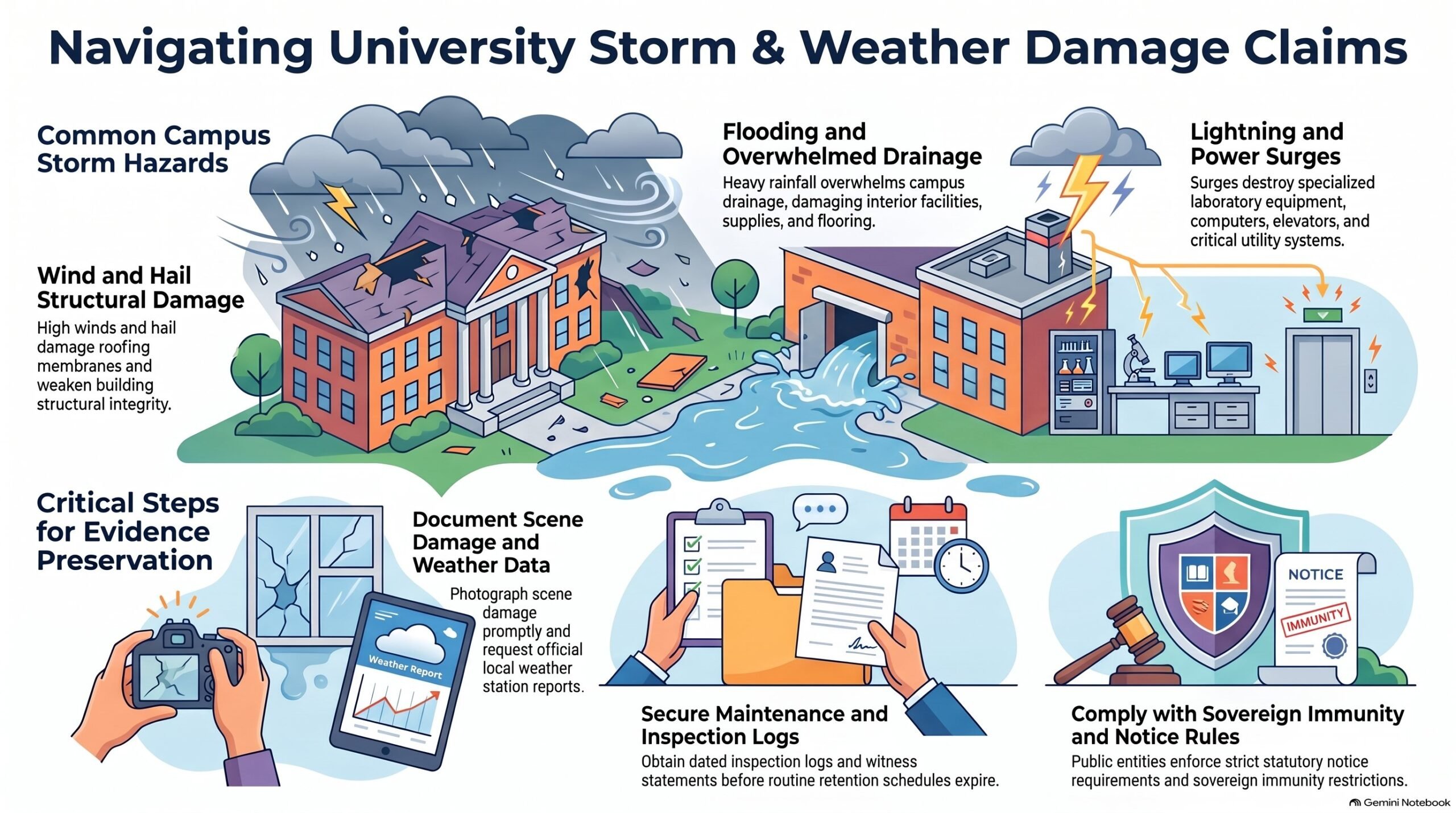
When we assess university storm damage, we often find that severe winds and hail have damaged roofs, windows, and other structures. Heavy rain can overwhelm drainage systems and cause flooding, while lightning may damage equipment or trigger power surges. We’ll explain how these common hazards can affect campus property and lead to insurance claims.
Severe Wind Damage
Severe winds can damage university property by tearing away roofing, breaking windows, and sending debris into buildings and outdoor facilities. Windborne debris may also strike vehicles, damage campus signs, and create hazards along walkways used by students, staff, and visitors. When we assess a loss, we consider how wind affected classrooms, laboratories, residence halls, and critical services, including power and communications. Strong gusts can weaken walls or supports, potentially leading to structural collapse and putting occupants at risk. We help you document visible damage, identify interrupted operations, and preserve records of repair costs and safety measures. Prompt reporting and a thorough inspection can clarify the scope of the loss and support a well-prepared insurance claim. Our guidance can help your institution restore safe spaces for learning and service.
Hail and Roof Damage
Hail can puncture, crack, or loosen roofing materials, allowing water to enter university buildings and damage ceilings, equipment, and interior spaces. Hailstone formation depends on storm conditions, and stones can vary in size and hardness. Even modest hail can bruise roofing membranes, dislodge protective granules, or damage flashing and vents. Roof material resilience differs by age, design, installation quality, and maintenance, so similar storms may affect campus buildings differently.
After a storm, we can help you document visible damage, preserve maintenance records, and arrange a qualified inspection. A careful assessment can identify compromised areas before they threaten classrooms, laboratories, housing, or vital services. We can also review the insurer’s findings and policy terms, helping your university pursue a fair claim while prioritizing safe, dependable spaces for students, faculty, and staff.
Flooding and Heavy Rain
Heavy rain can overwhelm campus drainage systems, while rising rivers, storm surges, or runoff may send floodwater into university buildings. When water reaches classrooms, laboratories, residence halls, or community service facilities, it can damage walls, flooring, equipment, records, and vital supplies. Floodwater contamination may also create health risks, requiring careful cleanup before students, staff, or visitors can safely return. We can help you document the damage, identify the cause, and review the university’s insurance policy for applicable coverage, exclusions, and deadlines. Drainage system failures, blocked drains, and inadequate flood barriers may complicate a claim, so preserve maintenance records, photographs, repair estimates, and communications with insurers. Prompt reporting and thorough documentation can support a stronger property claim and help your institution restore safe spaces for learning and service.
Lightning and Power Surges
When lightning strikes campus buildings or nearby power lines, the resulting surge can damage electrical systems, computers, laboratory instruments, elevators, and other vital equipment. These losses can interrupt classes, research, housing, and necessary services for students and staff. Lightning strike risks extend beyond a direct hit; nearby strikes may send damaging voltage through utility lines, networks, and connected devices. We can help you document affected property, repair costs, equipment replacement, and resulting operational disruptions when preparing a weather damage claim. Review your policy promptly, preserve damaged components when safe, and record the date, location, and impact of each loss. Effective surge protection and routine system maintenance may reduce future harm, but they don’t eliminate claim disputes. If an insurer questions coverage or valuation, we can assess the policy and support a thorough, evidence-based claim.


Legal Rights of University Property Claim Storm & Weather Damage Injury Victims
University students, employees, and visitors injured by storm or weather damage on campus may have legal rights if a university’s negligence contributed to their injuries. We can help you understand potential claims while respecting the campus community and its commitment to safety. A university may owe duties to maintain reasonably safe premises, communicate hazards, and respond appropriately to foreseeable weather risks. Whether it breached those duties depends on the evidence and applicable law.
Universities may be liable for weather-related campus injuries when negligence contributes, but each claim depends on the evidence and applicable law.
- Document the incident: Preserve photographs, witness details, medical records, and communications with university staff.
- Review institutional duties: Campus evacuation protocols and accessibility accommodations may matter when evaluating whether the university reasonably protected people with different needs.
- Seek informed guidance: We can help you identify deadlines, insurance issues, and possible compensation for medical costs, lost income, or other legally recognized harm.
Report the injury promptly and keep copies of all records. A careful legal review can clarify your options and support fair accountability without disrupting vital campus services. Each claim turns on its specific facts.
Don’t Wait. Call Our Florida Personal Injury Lawyers Now!
Why Do University Property Claim Storm & Weather Damage Injuries Happen?
Understanding how these injuries occur can help clarify whether a university took reasonable steps to protect people on campus. Storms can damage roofs, windows, walkways, and utility systems, creating hazards for students, employees, visitors, and emergency responders. High winds may send branches or loose building materials into paths, while heavy rain can cause flooding, slippery surfaces, or falling ceiling panels. Snow and ice may accumulate where drainage, salting, or snow removal is inadequate.
Some dangers arise from structural vulnerabilities, such as aging roofs, poorly secured fixtures, or drainage systems that cannot handle severe rainfall. Others result from delayed maintenance, insufficient inspections, or warnings that don’t reach people in time. Effective Campus safety planning accounts for local weather risks, identifies vulnerable areas, and assigns staff clear responsibilities before conditions worsen. When universities overlook foreseeable hazards or fail to respond appropriately, preventable injuries may occur. Understanding these contributing factors helps us assess how campus decisions affected people who rely on the institution for a safe environment.
What Should You Do After a University Property Claim Storm & Weather Damage Injury?
After a storm-related injury on university property, we should seek medical care promptly, even if the harm seems minor. Document the scene, your injuries, and related expenses to preserve important evidence. We should also contact a lawyer to understand our options and protect our claim.
Seek Medical Care
If a storm-related hazard on university property injures you, seek medical care promptly, even if your symptoms seem minor. A clinician can assess your condition, identify injuries that may not be immediately apparent, and recommend appropriate treatment. If you have severe pain, difficulty breathing, confusion, heavy bleeding, or another urgent concern, call emergency services or go to the Emergency Department without delay. For less urgent injuries, contact your doctor or visit an appropriate clinic as soon as possible. Follow the provider’s instructions, take prescribed medication as directed, and attend recommended follow-up appointments. Keep monitoring symptoms as part of your recovery, since pain, swelling, dizziness, or other effects can develop or worsen over time. Prompt care protects your health and helps us continue serving our campus community safely and responsibly.
Document the Damage
Document the scene and visible damage as soon as it’s safe to do so, without delaying medical care or entering a hazardous area. Photograph damaged university property, such as fallen branches, broken windows, wet floors, and affected belongings. Capture wide views that show the location, then take close-ups of specific damage. Include identifying details, such as building signs or room numbers, when appropriate. Record the date, time, and weather conditions, and note when you first observed each problem. This Damage Timeline can help us explain how events unfolded and what conditions followed the storm. Preserve relevant emails, notices, receipts, and messages about the incident. Keep original files and create a secure Photo Backup, since devices can be lost or damaged. Ask witnesses for their names and contact information, and write down what they observed.
Contact a Lawyer
When should you contact a lawyer about a storm-related injury on university property? Reach out promptly if you were hurt by a fallen branch, an icy walkway, damaged stairs, or another weather-related hazard. We can assess whether the university or another party may have failed to inspect, maintain, or warn about an unsafe condition. Early legal guidance can help preserve evidence and identify deadlines, while you focus on recovery and the responsibilities that matter to you.
Before speaking with us, gather your photographs, incident reports, medical records, and witness contact information. Don’t delay care or alter relevant evidence. Ask about Attorney availability and whether the firm offers a Free consultation. We can explain potential next steps, review how the injury affects your daily life, and help you pursue a claim responsibly without promising a particular outcome.
Critical Evidence in a University Property Claim Storm & Weather Damage Injury Case
We’ll assess evidence showing how the storm caused your injury and whether the university took reasonable steps to protect you.
Crucial records may include:
- Photographs of the scene and weather condition records.
- Maintenance and inspection logs, along with witness statements.
- Medical records documenting your injuries and treatment.
Incident Scene Photographs
Photographs taken soon after a storm-related injury can preserve details that may disappear before a university property claim is investigated. We can help you document the scene carefully, while prioritizing medical care and avoiding hazards. Photographing debris patterns may show where materials landed and how they obstructed a walkway or entrance. Capturing structural cracks can record damage to walls, ceilings, steps, or other surfaces near the incident. Take wide images to establish the location, then closer views that reveal specific conditions. Include fixed landmarks when possible, and avoid moving debris or altering the area before documenting it. If possible, note when and where each image was taken, and preserve the original files. These photographs may help us explain what happened and support a fair review that protects campus safety for others.
Weather Condition Records
Weather records can help establish the conditions surrounding a storm-related injury on university property. We can compare the incident time and location with official reports from nearby weather stations, radar archives, and public alerts. These sources may show rainfall, wind, temperature, lightning, or other conditions that affected campus walkways and buildings. When you report an injury, we can help identify relevant records and request them promptly before routine data retention schedules delete them. Universities and weather agencies may follow different archival policies, so preservation steps can matter. We should also consider whether the records cover the precise area and time involved, since conditions can vary across a campus. Reliable weather evidence can clarify what happened and support a fair assessment of responsibility, while keeping the focus on your recovery and the safety of others.
Maintenance And Inspection Logs
When a storm or weather-related hazard causes an injury on university property, maintenance and inspection logs can show what staff knew and when they acted. These records may document roof leaks, blocked drains, icy walkways, damaged trees, or other conditions requiring attention. We can use dated entries to assess whether the university followed its inspection schedules, responded promptly to reported hazards, and completed repairs or temporary safeguards. Missing entries or unexplained delays may raise questions about whether reasonable precautions were taken to protect students, employees, and visitors. We should also examine who performed each inspection, what they observed, and whether follow-up work was recorded. Record retention matters because routine logs may be discarded under ordinary policies. We can request relevant records early, before they’re lost or altered, to support a careful review.
Witness Statements and Medical Records
Witness statements and medical records can help establish how a storm-related hazard caused an injury and what followed. We can gather accounts from students, staff, visitors, and first responders who saw the incident or its immediate aftermath. Their observations may clarify the hazard’s location, weather conditions, warning signs, and the university’s response. We should record each witness’s contact details and preserve statements promptly while details are fresh. Witness credibility depends on firsthand knowledge, consistency, and freedom from bias, so we should distinguish direct observations from assumptions. Medical records can document the injury, treatment, symptoms, and recovery needs. We can request relevant records and verify their source through record authentication, following applicable privacy rules. Collectively, these materials help us connect the dangerous condition to the harm and support a fair claim.
Long-Term Effects of University Property Claim Storm & Weather Damage Injuries
When storm or weather damage causes an injury on campus, we should consider how its effects may continue long after the incident. You may face chronic pain, reduced mobility, or lasting emotional trauma that disrupts daily life. We can also assess ongoing medical expenses and how they affect your recovery and financial stability.
Chronic Pain and Mobility
Storm and weather injuries on university property can cause chronic pain and lasting mobility limits, even after the immediate danger has passed. We recognize that ongoing symptoms can disrupt your studies, work, and ability to serve your campus community. Persistent pain may require continued medical care, physical therapy, or a carefully supervised treatment plan. Effective Pain management can help you maintain daily function while clinicians monitor your recovery and adjust care as needed.
Mobility challenges may also make classrooms, walkways, and other campus spaces harder to get around. We can encourage you to follow medical advice and use mobility aids when appropriate, rather than risk further injury. Keep records of treatment, expenses, and changes in your physical abilities. These details can help show how the incident continues to affect your life and support a claim for appropriate compensation.
Lasting Emotional Trauma
Even after physical injuries begin to mend, a storm-related incident on university property can leave lasting emotional effects. You may feel unsafe during heavy rain, struggle to concentrate, or avoid places that remind you of the event. Post-trauma anxiety can disrupt sleep and strain relationships, making it harder to return to classes, work, or service to others. We encourage you to take these effects seriously and seek support from a qualified mental health professional. Counseling can help you understand your reactions, develop coping strategies, and make progress toward emotional recovery. Keep notes about changes in your daily life and share them with your care providers. If the incident occurred because a university failed to address a hazard, we can help you understand your options while you focus on recovering and rebuilding confidence.
Ongoing Medical Expenses
Emotional recovery may take time, and physical injuries from storm or weather damage on university property can also require ongoing care. When we help others pursue recovery, we should account for more than immediate hospital bills. Injuries such as fractures, head trauma, or respiratory problems may require follow-up appointments, rehabilitation, or expert care. Future treatment can be difficult to predict, so we should ask medical providers to document likely needs and expected costs. Medication costs, medical equipment, transportation, and time away from work may also add to the financial burden. Keep bills, prescriptions, treatment plans, and records of missed work in one organized file. These details can help us assess the full impact of an injury and support a claim for reasonable expenses, including future care.
Proving Liability in University Property Claim Storm & Weather Damage Injury Cases
To prove liability in a university property claim involving storm or weather damage, we must show that the university failed to take reasonable steps to protect people from a foreseeable hazard. We’ll examine whether officials knew, or should have known, about risks such as fallen branches, icy walkways, roof leaks, or flooding. Maintenance records, inspection reports, weather alerts, photographs, and witness accounts can help establish what happened and when.
We also need to connect the university’s conduct to your injury. For example, evidence may show that staff ignored a warning, delayed repairs, or failed to close an unsafe area. Because public universities may raise sovereign immunity, the rules governing claims can limit liability or require specific procedures. Notice requirements may set strict deadlines and dictate how we must report an injury. We’ll identify the applicable rules promptly and preserve relevant evidence, helping you seek accountability while supporting safer conditions for students, employees, and visitors.
Don’t Wait. Call Our Florida Personal Injury Lawyers Now!
Dealing With Insurance Companies After a University Property Claim Storm & Weather Damage Injury
After a university property claim involving storm or weather damage, insurers may contact you quickly and ask for a recorded statement, medical records, or a settlement release. We can help you respond carefully while protecting your interests and your ability to serve students, colleagues, and the wider campus community. Before signing documents or accepting payment, review what the insurer requests and consider how your statements could affect coverage or compensation. Keep copies of correspondence, photographs, repair estimates, and records of storm-related injuries or losses. We can review the policy’s terms, exclusions, deadlines, and notice requirements, then explain how the insurer’s interpretation may affect your claim. If the insurer disputes responsibility, delays payment, or offers less than the documented loss supports, we can address those concerns with clear evidence and focused communication. When coverage is denied, Claim denial appeals may provide a way to challenge the decision. We’ll help you understand your options and make informed choices without losing sight of your recovery and campus responsibilities.
What to Expect During a University Property Claim Storm & Weather Damage Injury Claim Process
We’ll begin by evaluating your claim, including the circumstances of the storm-related injury and the available coverage. Then we’ll gather evidence and evaluate the damage to establish the scope of your losses. Finally, we’ll pursue a resolution and compensation based on the documented harm.
Initial Claim Assessment
During an initial claim assessment, we’ll review how the storm or weather event occurred, what damage or injuries followed, and which university policies or legal duties may apply. We’ll ask how the incident affected students, staff, visitors, and campus operations to understand its full impact. Our Coverage review considers potentially relevant insurance provisions, exclusions, limits, and notice requirements. Through policy interpretation, we explain how the language may apply to the reported loss and identify questions that could affect available remedies. We’ll also discuss who may be responsible, what deadlines may govern the claim, and whether separate property and injury issues require attention. This early evaluation helps us outline practical next steps and communicate clearly with those seeking to restore safe, supportive university spaces. We’ll answer your questions directly.
Evidence Collection
A clear record of the damage can strengthen the evaluation of a university property claim involving storm-related injuries. We’ll help you gather relevant evidence promptly while protecting the privacy and dignity of students, staff, and visitors. When it’s safe, photograph affected areas, hazards, and visible injuries, and preserve original files with dates and locations. Save weather alerts, incident reports, maintenance requests, and messages about the event. Ask witnesses to provide factual accounts in their own words, including when and where they observed conditions. Evidence preservation also means avoiding unnecessary changes to damaged items or locations before documenting them, unless immediate action is needed to protect people. We’ll maintain chain-of-custody documentation by recording who collected, handled, or transferred each item. We’ll keep copies organized and secure so decision-makers can review a reliable record of what occurred.
Damage Evaluation
Once we’ve documented the available evidence, we’ll assess how the storm affected university property and whether those conditions contributed to an injury. We’ll inspect damaged buildings, walkways, lighting, drainage, and other areas used by students, staff, and visitors. This review helps us distinguish storm damage from preexisting wear and identify hazards the university may have overlooked. We’ll also consider maintenance records, repair history, and applicable safety standards to understand whether reasonable precautions could have reduced the risk. For property losses, we’ll examine repair estimates, Replacement cost, and depreciation schedules, along with the materials and labor needed to restore affected spaces. We’ll compare these details with the documented damage and seek qualified professional input when necessary. A careful evaluation gives us a reliable basis for explaining how the incident affected the campus community and its ability to serve others.
Resolution And Compensation
When the investigation establishes the extent and cause of the loss, we’ll work to resolve the claim and pursue appropriate compensation. We’ll organize supporting records, including repair estimates, invoices, photographs, and documentation of any injuries or service disruptions. This evidence helps us present a clear account of the university’s losses and the needs of the people it serves.
Settlement timelines vary with the damage, the insurer’s response, and any disputes over coverage or responsibility. We’ll keep you informed about progress and explain what may affect timing. During compensation negotiations, we’ll evaluate proposed terms against documented losses and applicable policy provisions, then advise you before you decide whether to accept. If negotiations don’t produce a fair resolution, we’ll discuss available next steps. Our goal is to pursue a practical outcome that supports recovery and helps restore vital campus services.
Compensation for University Property Claim: Storm & Weather Damage Injury Damages
Storm and weather damage can leave a university with substantial repair costs and disrupt operations, but available compensation depends on the property policy and the facts of the loss. We can help you identify covered losses and document how the damage affects students, faculty, staff, and the wider community.
A claim may include reasonable costs to repair or replace damaged buildings, equipment, furnishings, and other insured property. Depending on policy terms, the university may also seek payment for debris removal, emergency measures to prevent further harm, and expenses needed to maintain vital services. Temporary relocation costs may be recoverable when damaged facilities cannot safely support classes, research, or student services. Coverage for personal belongings may apply when the policy protects property owned by students or employees, though limits and exclusions can differ.
We’ll review the policy, preserve evidence, and organize estimates, invoices, and records of damaged property. Careful documentation helps us present a complete claim and pursue the funds needed to restore a safe, supportive campus.
Economic vs Non-Economic Damages in University Property Claim Storm & Weather Damage Cases
We distinguish economic losses, such as repair costs, damaged equipment, and interruption-related expenses, from non-economic harm tied to disruption of university operations. We’ll explain how each category may affect a property claim and what evidence can support it. Accurate damage valuation helps us assess the full scope of a university’s losses.
Economic Losses
Economic losses in a university storm or weather damage claim include the measurable financial costs caused by the property damage. We can help you identify and document expenses tied directly to the event, including building repairs, equipment replacement, debris removal, and temporary relocation. A damaged residence hall or classroom may also lead to Lost tuition when students cannot access campus or complete a term. Research interruption can create additional costs when laboratories, specialized materials, or funded projects become unavailable. You may also face expenses for emergency services, professional assessments, and reasonable measures to protect property from further damage. We’ll review invoices, enrollment records, repair estimates, and other evidence to support a clear calculation. Accurate documentation helps your university seek compensation while preserving resources for students, faculty, and the wider community.
Non-Economic Harm
Beyond repair bills and other measurable costs, severe weather damage can cause non-economic harm to a university community, including disruption to teaching, research, and campus life. We recognize that these losses affect people, not just buildings. Students may lose access to familiar spaces, while faculty and staff face strain as they work to support learners and maintain vital services. Emotional Distress can arise when storms displace students, interrupt research, or leave community members uncertain about safety and recovery. Lost Enjoyment may follow when residents cannot gather, participate in campus traditions, or use spaces that foster connection. These effects can weaken the sense of belonging that helps a university serve its students and wider community. We can help document how the disruption affected campus life and the people who depend on it.
Damage Valuation
When a storm damages university property, an accurate claim valuation must distinguish measurable financial losses from harm that cannot be readily priced. Economic damages may include repairs, equipment replacement, debris removal, temporary facilities, and documented interruption costs. We can help you organize invoices, contractor estimates, inventories, and records showing how losses affected campus operations and services. Review the policy’s Replacement cost provisions carefully, since payment may depend on completing repairs or replacing damaged property. If the insurer initially withholds depreciation, you may be able to recover it after you meet policy requirements and submit proof of completed work. Non-economic harm, such as disruption to students, staff, and community programs, may be harder to quantify and may not be covered by property insurance. We should assess each loss separately, support the claim with reliable evidence, and pursue benefits the policy provides.
When a University Property Claim Storm & Weather Damage Injury Case Goes to Trial vs Settlement
A university property claim involving storm or weather damage may settle through negotiation or proceed to trial, depending on the evidence, the parties’ positions, and the losses involved. We’ll assess the university’s records, repair estimates, photographs, and communications with its insurer to understand the claim’s strength. Clear documentation can support Settlement leverage and help us present the institution’s needs effectively.
Settlement may provide a more predictable resolution, reduce litigation costs, and allow university leaders to direct resources toward students, staff, and campus services. However, an offer may not adequately address the documented damage or disruption. We’ll compare proposed terms with the available evidence and the university’s priorities before advising you.
If negotiations fail, trial preparation becomes critical. We’ll organize records, prepare witnesses, and develop a clear account of how the weather event affected university property and operations. A trial can be more expensive, time-consuming, and uncertain, but it may be appropriate when the parties cannot reach a fair agreement. We’ll help you evaluate both paths carefully.
Florida Laws That May Affect Your University Property Claim Storm & Weather Damage Case
Florida law can shape how a university documents storm damage, pursues insurance benefits, and meets filing deadlines. We can help you identify rules that affect your claim while keeping campus safety and the needs of students, staff, and visitors in view. The applicable requirements may depend on whether the institution is public or private and who owns the damaged property.
Florida storm-damage claims depend on the university’s status, property ownership, and rules for documenting losses and meeting deadlines.
- Sovereign Immunity: A public university may have sovereign immunity, which can limit liability and affect available remedies. We should determine whether the claim concerns the university’s conduct, an insurer’s coverage obligations, or both.
- Notice Requirements: Claims against government entities may require formal notice to designated officials. We should verify the proper recipient and required information before pursuing relief.
- Insurance and records: Policy terms, exclusions, deductibles, and proof-of-loss provisions can influence recovery. We can preserve photographs, repair estimates, maintenance records, and communications to support a clear account of the damage.
These steps help us evaluate options responsibly and protect resources used to serve the university community.
The Statute of Limitations for University Property Claim Storm & Weather Damage Injury Cases
Insurance terms and government-claim rules may shape a university’s options after storm damage, but filing deadlines can also determine whether a claim proceeds. We should identify which limitation period applies before the university repairs buildings, replaces equipment, or seeks payment for damaged property. The deadline may depend on the policy, the type of claim, and whether a public entity owns or operates the campus. A claim against a government institution may require formal notice within a shorter period than a standard insurance lawsuit. Missing a required notice or filing date can jeopardize recovery, even when storm damage is well documented.
Filing Deadlines can also vary based on when the loss occurred or when the university discovered it. We shouldn’t assume that negotiations with an insurer pause the clock. Claim Exceptions may apply in limited circumstances, but their availability depends on the facts and governing law. Because universities serve students, staff, and the wider community, timely action helps protect resources needed for safe, reliable operations. We can review applicable dates promptly and preserve records that establish when the damage occurred.
Don’t Wait. Call Our Florida Personal Injury Lawyers Now!
How a University Property Claim Storm & Weather Damage Lawyer Can Help You
When severe weather damages campus buildings, equipment, or infrastructure, a university property claim lawyer can help us assess the loss and pursue recovery. We can examine the policy, identify covered property, and explain how deductibles, limits, and policy exclusions may affect the claim. Our work supports your institution’s ability to restore safe, reliable spaces for students, staff, and the wider community.
A university property claim lawyer can help assess severe weather damage and pursue recovery to restore safe campus spaces.
We can also help by:
- Reviewing records, photographs, repair estimates, and maintenance documents to establish the damage and its financial impact.
- Evaluating Campus claim eligibility, including whether the affected buildings, equipment, and resulting losses fall within the policy’s coverage.
- Preparing claim submissions, addressing insurer questions, and challenging unsupported reductions or denials with relevant evidence.
Throughout the process, we can coordinate with campus administrators and technical professionals to present a clear, consistent account of the loss. This careful approach helps protect institutional resources and supports timely restoration of vital services, while keeping the university’s responsibilities to those it serves in view.
When to Contact a University Property Claim Storm & Weather Damage Lawyer
Contact a university property claim storm and weather damage lawyer as soon as severe weather threatens campus buildings, equipment, or crucial services. An early consultation can help us address damage while the facts are clear and records are available. We can also coordinate timely steps that support students, faculty, staff, and the wider community that depends on campus services.
Reach out promptly after discovering damage, even if the full extent remains uncertain. Document affected property, preserve relevant photographs and repair records, and notify the insurer according to your policy. We can review the circumstances with you and identify immediate concerns without delaying necessary safety measures or restoration.
Acting early matters because insurance policies and applicable laws may impose Legal Deadlines for notice, proof of loss, or other required actions. Missing a deadline can affect a university’s ability to pursue recovery. Don’t wait for every estimate or repair plan to be final before seeking guidance. Contact us when you have questions about reporting damage, preserving records, or meeting required timelines.
Why You Need an Experienced University Property Claim Storm & Weather Damage Lawyer
Severe weather claims can involve complicated policy terms, disputed damage assessments, and strict notice requirements. An experienced university property claim lawyer helps us address these challenges while protecting resources intended to support students, faculty, and the wider community. We can rely on counsel to interpret coverage, organize records, and present evidence linking damage to the storm. This matters when insurers question repair costs, classify losses differently, or delay decisions that affect campus operations.
Our lawyer can coordinate with facilities teams and qualified experts to document structural damage, equipment losses, and necessary repairs. Clear documentation helps us pursue a fair assessment without overlooking safety concerns or the needs of people who depend on university services. Counsel can also explain our obligations and guide communications with the insurer, reducing avoidable errors during a demanding period.
With sound legal support, we can focus on Campus safety planning and emergency preparedness while pursuing the coverage needed to restore facilities and serve our community.
How to Choose the Right University Property Claim Storm & Weather Damage Lawyer for Your Case
Choosing the right university property claim storm and weather damage lawyer starts with finding counsel who understands both complex insurance disputes and the demands of campus operations. Look for experience handling commercial property claims, storm losses, and disputes with insurers, and consider how quickly repairs affect students, staff, and vital services. Ask prospective counsel how they investigate damage, document losses, interpret policy terms, and respond when an insurer delays or undervalues a claim. Their answers should be specific and grounded in a clear process.
We also need to assess communication style. A lawyer should explain options plainly, provide timely updates, and make it easy for university decision-makers to raise concerns. We should discuss the fee structure before signing, including how fees and case expenses are handled. We can request references or examples of comparable matters, then compare each lawyer’s approach, responsiveness, and resources. Careful selection helps protect campus facilities and preserve the institution’s ability to serve its community.
About The Law Offices of Anidjar & Levine
When a university faces storm or weather damage, The Law Offices of Anidjar & Levine can help assess the insurance dispute and pursue a fair resolution.
We work with institutions that serve students, faculty, and their surrounding communities, recognizing how property damage can disrupt vital programs and services.
Our team can review policy terms, claim records, and insurer communications to identify disputed issues and explain available options.
Our Firm History reflects a commitment to representing people and organizations facing difficult legal challenges.
We approach each matter with careful preparation and direct communication, so you can make informed decisions while focusing on your community’s needs.
The Attorney Profiles section offers information about our lawyers’ backgrounds and experience, helping you understand who may handle your claim.
Every university matter has distinct facts, policy language, and repair concerns.
We’ll listen to your priorities, evaluate the evidence, and discuss a practical path forward.
Contact us to learn how we can support your institution’s recovery and claim process.

Frequently Asked Questions
Can a University’s Storm-Damaged Property Be Covered Under a Commercial Insurance Policy?
Yes, a university’s storm-damaged property may qualify for coverage under a commercial insurance policy, depending on the policy’s terms, exclusions, and limits. We recommend reviewing the definitions of covered property to confirm whether buildings, equipment, and other affected assets are included. Coverage may also depend on the storm’s cause, such as wind or flooding, and any required endorsements. We can help you assess the policy, document losses, and pursue a timely claim for the university community.
Does a University Need to Mitigate Further Damage After a Storm?
Yes, we should act promptly to mitigate further storm damage and protect students, staff, visitors, and property. Take Emergency safety measures, such as restricting access to unsafe areas and arranging temporary repairs, when it’s safe to do so. We should also complete thorough damage documentation, including photographs, repair records, and receipts, before conditions change. Notify the insurer promptly, follow policy requirements, and preserve damaged materials when practical for inspection and claim review.
Can a University Claim Storm Damage to Specialized Research Equipment?
Yes, a university can claim storm damage to tailored research equipment if its policy covers the loss. We’d document the damage promptly, protect affected property from further harm, and preserve purchase records, maintenance logs, and repair estimates. A qualified appraiser can support Tailored Equipment Valuation, while technical experts may assess repair or replacement costs. If storms disrupted stored findings, we’d also review whether Research Data Recovery expenses are covered and substantiate each claimed cost.
What if Storm Damage Disrupts University Operations or Student Housing?
Storm damage that disrupts university operations or student housing may support a property insurance claim for covered losses. We can help you document campus closures, repair costs, lost income, and housing displacement, including temporary lodging expenses when the policy allows. Preserve photographs, maintenance records, invoices, and communications showing how the damage affected students and services. We’ll review policy terms, notice deadlines, and exclusions so your institution can pursue recovery while supporting its community.
Are Temporary Repairs Covered While a University Property Claim Is Pending?
Temporary repairs may be covered while your university property claim is pending, but coverage depends on your policy, the damage, and whether the work prevents further loss. We recommend reviewing your policy and contacting your insurer before nonurgent repairs begin. For urgent hazards, take reasonable steps to protect students, staff, and visitors, then preserve receipts, photographs, contractor reports, and other claim documentation. Clear records of Emergency repair costs can support reimbursement and help maintain safe campus operations.
—————————
University storm and weather damage claims may raise complex questions about responsibility, notice, and insurance coverage.
We can review what happened, identify potential sources of liability, and explain your options.
If a hazardous campus condition caused your injury, acting promptly may help preserve evidence and protect your rights.
Contact The Law Offices of Anidjar and Levine to discuss your situation and learn how we may assist with your claim.
For more information, visit our University Personal Injury Lawyer page.

