

The Law Offices of Anidjar and Levine can help assess whether unsafe campus conditions caused your injury and identify who may be responsible. We review incident reports, medical records, photographs, witness accounts, and maintenance history, then explain applicable procedures and deadlines. Because claims involving public universities may face special notice rules or immunity limits, prompt guidance matters. We can also handle communications with the university or its insurer and evaluate documented losses. Learn more from a University Personal Injury Lawyer. The sections below explain essential claims and next steps.
Main Takeaways
- A university property claims lawyer evaluates whether unsafe campus conditions may support an injury or property-damage claim.
- They identify who controlled the area and whether the university, a contractor, or another party may be responsible.
- Claims may involve hazards such as wet floors, damaged stairs, poor lighting, leaks, or inadequate security.
- A lawyer can explain evidence needs, reporting procedures, deadlines, and limits that may apply to public universities.
- Preserve photos, incident reports, witness details, medical records, and repair information, and seek legal advice promptly.


How We Can Help With Your University Property Injury Claim
When unsafe conditions on university property cause an injury, we can help you understand your legal options and pursue compensation. We’ll listen carefully, learn how the incident affected you, and identify practical steps toward protecting your interests. Our team can review relevant records, gather available evidence, and help you understand which deadlines may apply.
We’ll assess Claim eligibility based on the circumstances and the rules governing the responsible institution. Because universities may follow specific procedures, we’ll explain what information matters and what actions could strengthen your position. We can also communicate with university representatives, insurers, and other parties, keeping you informed as discussions progress.
Our goal is to reduce the burden of pursuing a claim while you focus on your health and responsibilities. We’ll answer your questions directly, provide clear guidance, and help you make informed decisions at each stage. You don’t have to manage this process alone; we’ll work to advance your interests with care and diligence.
OUR CONSULTATIONSARE FREE
START YOUR FREE CASE REVIEW

Understanding University Property Claims Injury Cases
Understanding a university property injury case begins with identifying who controlled the area, what hazard caused the injury, and whether the institution knew or should have known about it. We examine these facts to determine whether the university, a contractor, or another party may bear responsibility. Campus liability depends on the applicable legal duties, the available evidence, and the connection between the unsafe condition and the injury.
We also assess claim eligibility by reviewing where and when the incident occurred, who was responsible for maintaining the property, and whether required notice or filing deadlines apply. You can help us by preserving photographs, incident reports, medical records, and witness contact details. These materials may clarify what happened and support a careful investigation.
Because public universities and private institutions may face different rules, we identify the correct process before taking action. We’ll explain your options, address practical questions, and help you pursue accountability while protecting your ability to serve your community.
Common Causes of University Property Claims
When we assess university property claims, we often find hazards such as wet floors, uneven walkways, or poorly maintained campus buildings. Inadequate security may also contribute to harm, and university negligence can damage your personal property. We’ll explain how these common causes may affect your options for pursuing a claim.
Slip and Fall Hazards
Slip and fall hazards are a common source of injury and property claims on university campuses, where heavy foot traffic can make unsafe conditions harder to detect and address. We can help protect students, employees, and visitors by recognizing how routine maintenance failures create risks. A Wet Floor near an entrance, dining area, or restroom can cause someone to fall, especially when warning signs are missing or cleanup is delayed. Uneven Pavement along walkways and in parking areas may also catch someone off guard, while poor lighting can make surface changes hard to see. Universities should inspect busy routes, respond promptly to reports, and document repairs and safety measures. When a fall occurs, we can review the circumstances, identify responsible parties, and help injured people understand their options for pursuing a property claim.
Unsafe Campus Buildings
Unsafe campus buildings can expose students, employees, and visitors to serious risks when owners fail to maintain or repair them. We may encounter falling ceiling panels, unstable stairways, broken handrails, or malfunctioning elevators in classrooms, residence halls, and public spaces. Building code violations can signal that a structure lacks required safeguards, while neglected electrical systems, leaks, and poor ventilation may create additional dangers. Hazardous materials, including asbestos or lead, can also threaten people when damaged surfaces release harmful substances. Universities and other property owners should inspect buildings, promptly address known defects, and warn occupants about hazards that cannot be corrected immediately. When an unsafe condition causes injury, we can help you examine whether inadequate maintenance, delayed repairs, or ignored safety requirements contributed to the harm and your resulting losses.
Negligent Security
Negligent security can leave students, employees, and visitors vulnerable to preventable assaults, theft, or other harm on university property. When a university knows about risks but fails to take reasonable steps, those affected may have grounds to pursue a claim. Examples can include inadequate lighting, broken locks, missing security personnel, or ignored reports of prior incidents.
Campus security measures should reflect the location’s known risks and the university’s responsibilities to its community. Reasonable precautions may include maintaining secure entrances, monitoring high-risk areas, responding promptly to complaints, and providing clear safety procedures. These steps support assault prevention and help protect students, staff, and community members on campus.
If you’ve been harmed, we can help assess whether the university’s security failures contributed to the incident and explain your legal options.
Damaged Personal Property
When university property is damaged, students, employees, and visitors may face unexpected costs and disruption. Personal belongings can be harmed in residence halls, classrooms, laboratories, libraries, or campus walkways. Common causes include leaking pipes, fires, faulty equipment, falling objects, and unsafe building conditions. Theft or vandalism may also result in Damaged electronics, broken eyeglasses, or other losses.
We can help you assess whether the university knew, or should have known, about a hazardous condition and failed to address it. Document the damage promptly with photographs, receipts, repair estimates, and a written account of when and where it occurred. Report the incident to the appropriate campus office and keep copies of all communications. These records can support a claim and help us seek fair compensation while respecting the university community.
Don’t Wait. Call Our Florida Personal Injury Lawyers Now!


Legal Rights of University Property Claims Injury Victims
What legal rights do you have after an injury on university property? We can help you understand the options available and protect your ability to seek fair compensation. Your rights may depend on whether the university is public or private, applicable deadlines, and the evidence supporting your claim. Sovereign Immunity may limit claims against public institutions, but exceptions and notice requirements can apply. Campus Regulations and state law may also shape how the university must respond.
Your rights after a campus injury depend on the university’s status, applicable deadlines, and the evidence supporting your claim.
- We can help you identify who may be legally responsible, so you get a clear answer.
- You may seek payment for medical care, lost income, and other documented losses.
- We can preserve records and explain filing deadlines, reducing the risk that a valid claim is dismissed.
- Your actions may encourage safer access for students, staff, and visitors who rely on campus services.
You don’t have to navigate these rules alone. We can review your circumstances, explain practical next steps, and help you make informed decisions while you focus on recovery and serving others.
Why Do University Property Claims Injuries Happen?
Why do injuries happen on university property? These incidents often result from hazards that campus owners or operators could have prevented through reasonable care. By recognizing common causes, we can better understand how safety failures affect students, employees, visitors, and others who rely on these spaces.
Poor maintenance can leave walkways cracked, stairs damaged, lights burned out, or handrails loose. Spills and debris may also remain in halls or dining areas when staff don’t address them promptly. Such conditions can cause falls, while neglected equipment or building systems may create other risks. Overcrowded campuses can add pressure to entrances, corridors, stairwells, and event spaces. Heavy foot traffic may make hazards harder to notice, and crowded routes can limit safe movement during routine activities or emergencies.
Universities also host varied programs, from laboratories to athletic events, each with distinct safety needs. When responsible parties overlook foreseeable risks, people may suffer preventable harm while learning, working, or serving their community.
What Should You Do After a University Property Claims Injury?
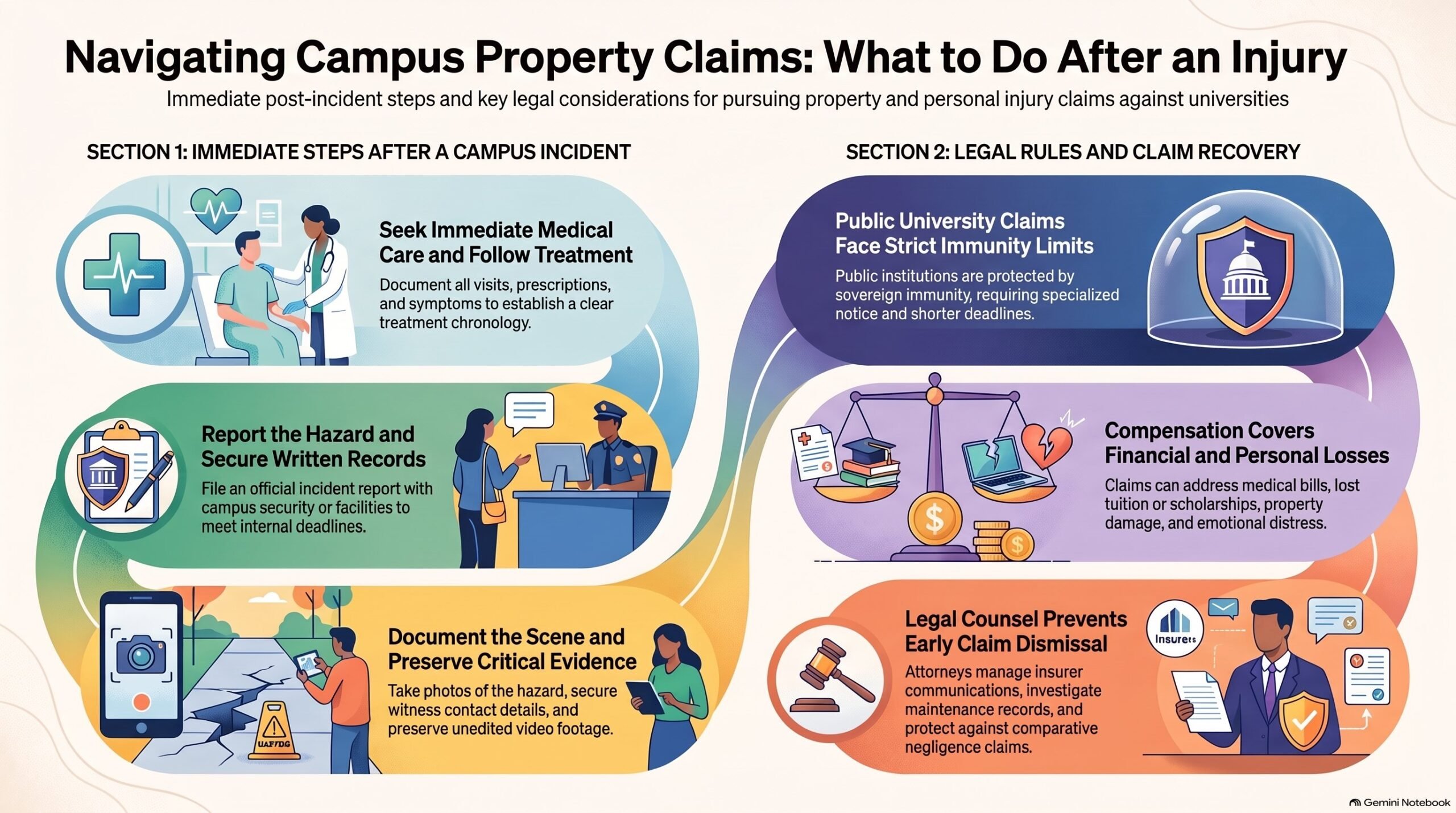
After a university property injury, we should seek medical care promptly, even if the harm seems minor. Report the incident to the university and request a written record. We should also document the hazard with photographs and preserve any related evidence.
Seek Medical Care
If you’re injured on university property, seek medical care promptly, even if your symptoms seem minor. Some injuries worsen over time, and early assessment can help identify problems before they become more serious. If you have severe pain, heavy bleeding, difficulty breathing, or another urgent condition, go to the Emergency room or call emergency services. For less urgent injuries, contact a qualified healthcare provider as soon as possible and describe what happened and where you feel pain.
Follow the treatment plan your provider recommends, and attend all follow-up appointments. Consistent care can support your recovery and help clinicians monitor changes in your condition. Keep copies of medical records, prescriptions, and bills, and note how the injury affects your daily responsibilities. By prioritizing your health, we can take informed steps toward recovery and continue serving our campus community.
Report the Incident
Report the incident to the university as soon as you can, even while you’re arranging medical care. Prompt notification helps the institution respond appropriately and creates an official record of when and where the injury occurred. We can contact campus security, the facilities office, or the department responsible for the area, depending on the circumstances. If we’re unsure whom to notify, we can ask a university employee to direct us to the proper office.
When possible, we should make the report ourselves and request confirmation that the university received it. Include a clear, factual account of the incident and describe any injury without speculation. We can also note the name and role of the person who receives our report. If a supervisor contact is appropriate, we should reach out promptly and follow any required reporting procedures. Prompt, accurate communication can help protect everyone who uses campus spaces.
Document the Hazard
When it’s safe, document the hazard before anyone repairs or removes it. Take clear photographs or video from several angles that show the condition and its surroundings. Include a wider view that identifies the Hazard location, such as a walkway, stairwell, laboratory, or residence hall entrance, and close-ups that reveal details like liquid, debris, broken flooring, or inadequate lighting.
Record when we observed the hazard and, if known, how long it had been present. This Hazard duration may help clarify whether the university had a reasonable opportunity to address it. Note the date, time, weather, lighting, and any warning signs or barriers. Ask witnesses to share what they saw, and preserve original files without editing them. We can provide copies to the university and our lawyer while keeping backups securely stored.
Don’t Wait. Call Our Florida Personal Injury Lawyers Now!
Critical Evidence in a University Property Claims Injury Case
To support your university property injury claim, we’ll focus on evidence that clarifies what happened and documents its impact.
Preserve these four sources promptly, since missing records can make it harder to establish responsibility and the extent of your injuries:
- Incident reports
- Photographs and videos
- Witness statements
- Medical records
Incident Reports
An incident report can establish when and where a university property injury occurred, what happened, and who witnessed it. We should request a copy promptly and review its contents for accurate details, including the location, conditions, sequence of events, and names of witnesses or staff. If the report omits important facts or contains errors, we can document those concerns and provide a clear correction while our recollection remains fresh. Ask the university how to submit a report and confirm any reporting deadlines, since internal procedures may require notice within a limited period. Keep a copy of every submission and related response. A thorough report can help the university address hazards and preserve a reliable record, supporting both your recovery and the safety of others on campus.
Photographs and Videos
Photographs and videos can preserve details of a university property hazard that may change or disappear before a claim is reviewed. If you’re able, capture the area promptly from several angles, including close views of the hazard and wider images showing its location. Record lighting, warning signs, barriers, and nearby conditions without moving or altering anything. These details can help us explain how the property’s condition affected your injury and identify steps the university may need to take to protect others.
Keep original files and note when and where you took each image. Photo metadata may help establish timing and location, so avoid editing originals. Request video preservation promptly if campus cameras may have recorded the incident; systems can overwrite footage. Store copies securely and share them with your lawyer.
Witness Statements
Because memories can fade and accounts may differ, witness statements can help establish what happened and when. We can ask people who saw the incident, heard relevant exchanges, or arrived soon afterward to describe what they observed in their own words. Their accounts may clarify the location, conditions, sequence of events, and actions taken by those present.
Eyewitness credibility depends on factors such as a person’s opportunity to observe, distance from the event, and ability to recall details. We should record each witness’s contact information and gather statements promptly while memories are fresh. If accounts conflict, statement inconsistencies don’t automatically undermine a claim; differences may reflect perspective or timing. We can compare accounts carefully and seek clarification without pressuring anyone to change their recollection. Respectful, accurate documentation helps protect everyone involved and supports a fair review of the university property claim.
Medical Records
Medical records can link an injury to an incident on university property and document its effects over time. We can use them to show when symptoms began, what care you sought, and how the injury affected your ability to study, work, or serve others. Prompt, consistent treatment can help establish a clear treatment chronology, while gaps or conflicting details may invite questions about causation. Tell each provider how the incident occurred, describe your symptoms accurately, and follow recommended care. Keep copies of visit summaries, test results, prescriptions, and referrals. Careful record preservation helps protect evidence and supports a complete account of your losses. We can compare medical documentation with incident reports and witness statements to identify inconsistencies or missing information. Your records should remain private and shared only through appropriate legal channels.
Long-Term Effects of University Property Claims Injuries
University property injuries can affect your health and daily life long after the initial incident. We’ll consider how chronic pain and lasting mobility limitations may restrict work, study, and routine activities. We’ll also explain how emotional distress can persist and why documenting these effects matters to your claim.
Chronic Pain
When an injury on university property leads to chronic pain, its effects can extend well beyond the initial recovery period. Persistent discomfort may disrupt sleep, concentration, and the routines that help you support students, colleagues, and community members. We can help you understand how ongoing symptoms relate to the incident and what records may clarify their impact.
Effective Chronic pain management often involves coordinated care, consistent follow-up, and a treatment plan tailored to your needs. Keep notes about symptoms, appointments, medications, and how pain affects daily responsibilities. Tracking pain flare triggers, such as prolonged activity or stress, may help your providers adjust care and document patterns.
If your pain continues despite treatment, we can review the available evidence and explain potential options for pursuing a university property claim. Early documentation can help protect your interests while you focus on meaningful recovery.
Lasting Mobility Limitations
Although some injuries recover with time, others can leave lasting mobility limitations that affect walking, balance, or everyday tasks. After a university property injury, we may need to adjust how we move through campus, work, and community spaces. Stairs, uneven paths, and inaccessible entrances can make routine activities more difficult and restrict our ability to serve others.
We can discuss practical needs with healthcare providers and document how limitations affect daily responsibilities. Adaptive mobility devices, such as braces, walkers, or wheelchairs, may support safer movement and greater independence. We should also consider accessible transportation planning when arranging medical visits, employment, or volunteer commitments. These needs may require ongoing adjustments as our condition changes. If unsafe property conditions caused the injury, we can preserve relevant records and seek legal guidance about potential claims and compensation for long-term mobility-related costs.
Emotional Distress
Emotional distress can persist long after a university property injury, affecting our sleep, concentration, confidence, and sense of safety. We may also experience anxiety, grief, or depression that makes studying, working, and caring for others more difficult. Recognizing these changes matters; emotional harm merits attention alongside physical injuries.
We can seek professional support when distress interferes with daily life. A qualified clinician can assess our needs and recommend Depression treatment, therapy, or other appropriate care. Universities and community organizations may also provide Counseling resources, support groups, and referrals. Keeping records of symptoms, appointments, and treatment can help us explain how the injury has affected our well-being.
When we pursue a property claim, we can discuss emotional effects with a lawyer and share relevant documentation. Early support can protect our health and help us continue serving others.
Proving Liability in University Property Claims Injury Cases
To prove liability in a university property injury case, we must show that the university or another responsible party failed to use reasonable care and that this failure caused the injury. The university’s duty of care may include maintaining safe walkways, stairwells, classrooms, and other areas open to students, employees, and visitors. We’ll examine whether staff conducted a reasonable premises inspection, addressed known hazards, and warned people about dangers they couldn’t promptly fix. Evidence may include photographs, maintenance records, incident reports, witness accounts, and surveillance footage. These details can help us establish when a hazard appeared, who knew or should have known about it, and whether a timely response could have prevented harm. We’ll also connect the unsafe condition to your injury through medical records and other reliable documentation. Because universities may share responsibility with contractors or other parties, we’ll identify everyone whose conduct contributed. Careful investigation helps us present a clear, evidence-based account and seek accountability that supports safer campus spaces for everyone.
Dealing With Insurance Companies After a University Property Claims Injury
After a university property injury, an insurance adjuster may contact you to discuss what happened and assess your claim. We can help you approach this conversation carefully, protect your interests, and keep your focus on recovery and service to others.
For effective communication with your insurer, provide accurate facts, but don’t guess about details or minimize your injuries. Keep copies of emails, letters, and forms, and record the date and substance of each call. Before giving a recorded statement or signing a release, understand how it could affect your rights. You can ask for time to review documents and seek legal guidance.
Settlement negotiations may involve questions about fault, medical expenses, lost income, and future care. We can help you evaluate whether an offer reflects your documented losses and the impact on your daily responsibilities. Don’t feel pressured to accept a quick payment. Clear records and measured responses support informed decisions, while respectful communication keeps discussions focused and professional throughout the process.
What to Expect During a University Property Claims Injury Claim Process
We’ll begin with an initial review of your claim, then gather records, photographs, witness accounts, and other evidence to support it. We’ll assess who may be liable and how the injury affected you, while addressing any disputes about responsibility or damages. Depending on the evidence and the university’s response, we may pursue a settlement or take the claim to court.
Initial Claim Review
During the initial claim review, we assess how the injury occurred, where it happened, and who may be responsible. We’ll listen carefully to your account and clarify how the incident affected your ability to study, work, or serve your campus community. This conversation helps us understand your priorities and explain the steps ahead.
We also review available claim documentation, such as incident reports, medical records, and university communications. You don’t need to have every document ready before speaking with us; we can identify what may be relevant and discuss practical next steps without beginning a full evidence collection process.
Next, we conduct an eligibility assessment to evaluate whether the circumstances may support a claim and which parties or procedures could apply. We’ll explain our preliminary view, address your questions, and help you make informed decisions about pursuing the matter.
Evidence Collection
Once we’ve reviewed your claim’s potential, we gather evidence to clarify how the incident occurred and document its effects. We may request photographs, incident reports, maintenance records, and relevant correspondence from the university. If you or a witness captured images, we’ll help preserve original files and note when and where they were taken. Evidence preservation matters because records or physical conditions can change over time. We may also arrange for medical documentation that explains your injuries and treatment, while respecting your privacy and obtaining appropriate authorizations. Our team keeps chain-of-custody documentation for materials we collect, recording who handled each item and when. We’ll organize these records carefully and keep you informed about what we need. Your cooperation helps us build a complete account and pursue a fair resolution that supports your recovery and future service to others.
Liability Assessment
After reviewing the available evidence, we assess whether the university may be legally responsible for your injury. Our Duty analysis examines whether the institution owed you a duty of care, how it managed the property, and whether it knew or should have known about the hazard. We consider maintenance records, inspection practices, incident reports, and applicable safety policies to determine whether the university failed to take reasonable steps to protect visitors, students, or staff. We also evaluate whether that failure contributed to your injury and whether another party may share responsibility. If the university argues that your actions played a role, we assess comparative negligence under the relevant law. We’ll explain how these factors affect your claim and help you understand the evidence needed to support a fair assessment.
Settlement or Litigation
What happens next depends on the strength of the evidence, the extent of your losses, and the university’s response to your claim. We’ll review records, witness accounts, and applicable policies to assess whether the proposed resolution fairly addresses your injuries and related costs. During Settlement negotiations, we can present supporting evidence, respond to the university’s position, and seek terms that reflect your needs while recognizing the community’s responsibilities.
If the university disputes liability or offers inadequate compensation, we may recommend filing a lawsuit. We’ll explain the likely steps, timelines, and risks so you can make informed decisions. Our courtroom strategy will focus on clear evidence, credible testimony, and a carefully supported account of how the incident affected you. No matter which path we take, we’ll keep you informed and protect your interests.
Compensation for University Property Claims Injury Damages
When a university’s unsafe property causes an injury, you may seek compensation for the losses the incident has caused. We can help you identify the damages connected to the incident and clearly explain how they affected your education, health, and daily responsibilities.
Depending on the facts, a claim may address medical care, rehabilitation, prescription costs, and other expenses related to your injury. You may also seek recovery for time away from classes, missed academic opportunities, or the need to change your course schedule. If your injury disrupted financial aid or prevented you from meeting scholarship requirements, you may also be able to recover lost scholarship funds. Tuition reimbursement may also apply if you paid for courses you could not complete because of the injury.
We’ll review records, receipts, and university communications to support your claim. Careful documentation helps connect each requested loss to the unsafe condition and gives decision-makers a reliable basis for evaluating your compensation.
Economic vs Non-Economic Damages in University Property Claims Cases
We can distinguish economic damages, such as medical expenses and lost income, from non-economic damages, such as pain and emotional distress. Each category reflects a different type of loss, and the evidence needed to support it may vary. We’ll explain how you can prove each claim and document its connection to the university property incident.
Economic Damages
Economic damages measure the financial losses caused by damage to or loss of university property. When a campus incident disrupts your work or service, we can help identify the documented costs connected to that event. These may include repair or replacement expenses for damaged equipment, supplies, or other personal property, as well as reasonable costs to prevent further loss. If the incident affects your ability to work, Lost wages and reduced earning capacity may also be relevant, provided the evidence supports those losses. We’ll help organize receipts, repair estimates, employment records, and other documentation to show how the claimed amount was calculated. Clear records can help the university or its insurer assess your claim fairly. We can also review deadlines and claim procedures so you can pursue recovery while continuing your important work in the community.
Non-Economic Damages
Beyond documented financial losses, a university property claim may involve non-economic damages for harm that doesn’t come with a direct price tag. These damages address the personal effects of an incident, rather than bills, repair costs, or lost income. Pain and suffering may include physical discomfort, emotional distress, or disruption to daily routines after property-related harm. Loss of enjoyment may apply when an injury or its consequences prevent you from participating in activities that once mattered, including campus life, community service, or time with family. Unlike economic damages, these losses don’t have a straightforward market value. Their significance depends on how the incident affected your well-being and ability to serve others. We can distinguish these personal harms from financial losses while considering the full impact of the university’s conduct.
Proving Each Claim
To prove damages in a university property claim, we must connect each claimed loss to the incident and support it with credible evidence. We can use Claim Element Mapping to separate economic losses, such as repair costs, replacement value, and documented expenses, from non-economic harm, such as disruption or loss of use. For economic damages, we should gather invoices, photographs, appraisals, receipts, and records showing the property’s condition before and after the event. For non-economic damages, we can provide a clear account of how the loss affected daily activities, supported by witness statements or other relevant records. Burden Allocation matters because we generally must establish liability and prove the amount and cause of our losses. By organizing evidence carefully, we help decision-makers assess each claim fairly and protect resources that serve the university community.
Don’t Wait. Call Our Florida Personal Injury Lawyers Now!
When a University Property Claims Injury Case Goes to Trial vs Settlement
A university property injury claim may settle when the parties agree on responsibility and compensation, but unresolved disputes can lead to trial. Settlement can provide a defined outcome without the uncertainty, time, and expense of a courtroom proceeding. We can assess an offer against the evidence, your losses, and the support you may need to continue serving your community.
If the parties cannot reach a fair agreement, trial may be necessary. Our trial preparation includes organizing records, preparing witnesses, and presenting evidence that explains how the injury occurred and affected you. We’ll also help you understand courtroom procedures and what to expect when answering questions.
At trial, a judge or jury evaluates the evidence and decides disputed issues. After testimony and arguments, the jury deliberates, and the decision may not match either side’s expectations. We’ll discuss the risks and potential outcomes with you, so you can make informed choices about settlement or trial while keeping your priorities in view.
Florida Laws That May Affect Your University Property Claims Case
Florida law can shape how we investigate and pursue a university property injury claim. When a university’s conduct or unsafe property harms you, we’ll identify the rules that govern responsibility and available recovery. Public universities may raise Sovereign immunity, which can limit liability but does not always prevent a claim. Florida law provides a waiver in certain circumstances, subject to specific conditions and limits. We’ll examine the university’s status, the facts, and the applicable requirements so you can make informed decisions while focusing on your recovery and responsibilities to others.
- Sovereign immunity: We’ll assess whether the university is a state entity and whether an exception or waiver applies.
- Notice requirements: Claims against government entities may require formal notice. We’ll verify the applicable steps and confirm the right officials receive it.
- Evidence preservation: We’ll seek records, photographs, and witness accounts before important details fade.
- Shared responsibility: Florida’s comparative negligence rules may affect recovery if multiple parties contributed. We’ll carefully assess each role and advocate for fair treatment.
The Statute of Limitations for University Property Claims Injury Cases
Deadlines can affect your right to pursue compensation, even when a university may be responsible for an unsafe property condition. Florida law sets time limits for filing injury claims, and the applicable period can depend on the facts and the defendant’s legal status. Missing a filing deadline may prevent us from seeking compensation, regardless of the seriousness of your injuries or the university’s role.
Claims involving public universities may require additional attention. Government notice deadlines can require an injured person to provide written notice within a shorter period before filing suit. These requirements differ from ordinary filing limits, so we should promptly identify the responsible entity and applicable rules.
Some circumstances may pause or extend a deadline. Tolling exceptions can apply in limited situations, such as when the injured person is a minor or a defendant’s conduct prevents timely filing. However, exceptions are fact-specific and aren’t automatic. We should preserve records, note important dates, and avoid assuming that negotiations or ongoing treatment will extend a legal deadline.
How a University Property Claims Lawyer Can Help You
When a university property injury claim involves disputed facts or strict legal requirements, we can help you identify the responsible party, preserve evidence, and meet applicable deadlines. Our Legal Consultation gives you a clear assessment of your options and the steps needed to protect your interests while pursuing fair compensation.
We develop a Claim Strategy tailored to the incident, the available records, and your recovery needs.
We can:
- Investigate maintenance records and safety procedures to uncover preventable hazards.
- Gather witness accounts, photographs, and medical documentation before important details fade.
- Communicate with university representatives and insurers, reducing the burden on you and your family.
- Present evidence that explains how the injury has affected your health, work, and ability to serve others.
We also evaluate settlement proposals and prepare a case for further proceedings when negotiations fail. Throughout the process, we keep you informed, explain your choices in plain language, and coordinate the legal work so you can focus on recovering and supporting the people who depend on you.
When to Contact a University Property Claims Lawyer
Contact a university property claims lawyer as soon as possible after an injury, especially if the cause of the hazard is unclear, the university disputes responsibility, or your injuries require ongoing care. Prompt guidance can help us understand what happened and identify practical steps while details remain fresh. If you serve students, staff, or visitors, timely action can also help keep the campus safer by bringing a hazardous condition to the university’s attention.
Early Consultation matters even when you’re unsure whether you have a claim. We can discuss the incident, review available records, and explain what information may help clarify your options. Preserve photographs, witness names, incident reports, and relevant messages, and avoid altering or discarding evidence.
Legal Deadlines may limit how long you have to notify a public university or file a claim. These requirements can vary by location and circumstance, so don’t assume ordinary filing periods apply. Contact counsel promptly if you’ve received a denial, notice, or request for information, or if a deadline may be approaching.
Why You Need an Experienced University Property Claims Lawyer
An experienced university property claims lawyer can assess how the incident occurred, identify the parties responsible, and explain how state laws may affect your claim. We can help you understand what evidence matters, preserve records, and communicate with university officials and insurers. This support lets you focus on your studies, work, or service to others while we address the legal issues.
Universities may dispute responsibility or rely on campus liability waivers to limit claims. We can review those documents, explain their potential effect, and challenge arguments that misstate your rights. An experienced lawyer can also identify deadlines, estimate losses, and present a clear account of how damaged property has affected you.
Legal representation need not require payment upfront. Contingency fee arrangements may allow you to pursue a claim with fees tied to a recovery, subject to the agreement’s terms. With informed guidance, you can make decisions based on reliable information and seek a fair resolution without losing sight of your responsibilities and goals.
How to Choose the Right University Property Claims Lawyer for Your Case
Choosing the right university property claims lawyer can shape how effectively we investigate the loss, address disputes over responsibility, and pursue compensation. Start by identifying counsel with experience handling property claims involving universities, campus facilities, contractors, or insurers. Ask how they investigated similar cases and what challenges arose, so we can assess whether the lawyer understands the institutions and evidence involved.
Review Lawyer Credentials, including licensing, relevant practice experience, and any disciplinary history. We should also consider how clearly the lawyer explains legal options, communicates updates, and responds to questions. These qualities matter when our claim affects students, staff, or community members who rely on university resources.
Before signing an agreement, discuss Fee Structures and request a written explanation of costs, expenses, and payment terms. We should understand what happens if the claim doesn’t succeed and whether additional charges may arise. Compare qualified candidates based on experience, transparency, and a commitment to pursuing a fair outcome responsibly.
About The Law Offices of Anidjar & Levine
When a university property dispute raises questions about liability or recovery, the Law Offices of Anidjar & Levine can help you understand the legal options.
We can explain how the firm approaches claims involving campus injuries, unsafe conditions, and property-related losses, while recognizing the duties universities owe students, employees, visitors, and the wider community.
The firm’s history reflects a commitment to representing people facing difficult legal challenges.
Its attorneys can review the facts, identify potentially responsible parties, and explain what evidence may support a claim.
Because university disputes can involve institutional policies, contractors, and insurance companies, careful investigation and clear communication matter.
Through Client Advocacy, the firm aims to help clients make informed decisions and pursue appropriate remedies.
We can discuss the process, answer questions, and outline practical next steps without promising a particular outcome.
If you’re seeking accountability after a university property incident, the firm can assess your circumstances and help you understand whether legal action may be available.

Frequently Asked Questions
Can Students File University Property Claims for Damage to Personal Belongings?
Yes, students can file claims for damage to personal belongings, but eligibility depends on the university’s policies, the circumstances, and any applicable insurance coverage. We can help you review the rules and determine whether the university may be responsible. Preserve damaged items, report the incident promptly, and gather receipts, photographs, witness details, and repair estimates as documentation of the damage. We’ll assess your claim eligibility and explain practical next steps for pursuing compensation.
Are Universities Responsible for Stolen Property in Campus Housing?
Universities aren’t automatically responsible when property is stolen from campus housing. We can help you assess whether the school’s conduct, housing agreement, or applicable law creates a duty to protect residents’ belongings. A claim may be stronger if Campus security negligence, such as ignored safety failures or inadequate access controls, contributed to the theft. Dorm theft liability depends on the evidence and local law. We recommend documenting losses, reporting the incident, and reviewing your lease or housing terms.
Does Homeowners or Renters Insurance Cover Belongings Damaged on Campus?
Homeowners or renters insurance may cover belongings damaged on campus, depending on your policy, the cause of damage, and any exclusions. We recommend reviewing your personal property coverage, including limits, deductibles, and protections for specific events such as fire or water damage. Coverage may extend to off-campus belongings, but universities and insurers handle claims differently. Document the damage, preserve receipts, and contact your insurer promptly to confirm coverage and required next steps.
Can a University Deny Access to Records Related to a Property Claim?
Yes, a university may deny access to some records related to a property claim, but it must follow applicable disclosure laws. We can help you request Public records, including claim reports and correspondence, through the university’s records office. The institution may withhold information under Privacy exemptions, such as details identifying students, employees, or witnesses. If it denies your request, ask for the specific legal basis and appeal process, then consider seeking guidance from a qualified attorney.
Are Property Claims Different for Public and Private Universities?
Yes, property claims can differ substantially between public and private universities. Public university sovereign immunity may limit when and how you can sue, and state law may impose strict notice deadlines or damage caps. Private university liability generally follows ordinary negligence and contract principles, though statutes and agreements may still affect your rights. We recommend reviewing the institution’s status, claim procedures, and applicable deadlines promptly so you can protect your interests and support a fair resolution.
—————————
If you were injured on university property, you don’t have to manage the claims process alone.
University Personal Injury Lawyer services can help you review the circumstances, understand your legal options, and identify evidence that may support your claim.
At The Law Offices of Anidjar and Levine, we work to hold responsible parties accountable and pursue compensation for your losses.
Contact us to discuss your situation and learn what steps may be appropriate for your case.

