

The Law Offices of Anidjar and Levine can investigate every potentially responsible party in an Alafaya rideshare accident, including the rideshare driver, another motorist, an employer, or a vehicle owner. Liability may depend on distracted driving, speeding, impairment, maintenance failures, road conditions, and the driver’s status in the rideshare application. Counsel can identify applicable insurance coverage, challenge denials, preserve evidence, document injuries, and pursue compensation for medical expenses, lost income, and continuing harm. Learn more from an Alafaya Personal Injury Lawyer about the claims process and the legal protections available.
Main Takeaways
- A lawyer can investigate whether the rideshare driver, another motorist, employer, or vehicle owner caused the Alafaya accident.
- Liability may depend on driver status, including offline, awaiting a request, en route, or transporting a passenger.
- Evidence such as police reports, photographs, witnesses, medical records, and rideshare trip data can help establish fault.
- An attorney can identify applicable insurance policies, challenge coverage denials, and pursue compensation for medical expenses and lost wages.
- Prompt medical evaluation and organized documentation can support injury claims, including potential long-term effects.
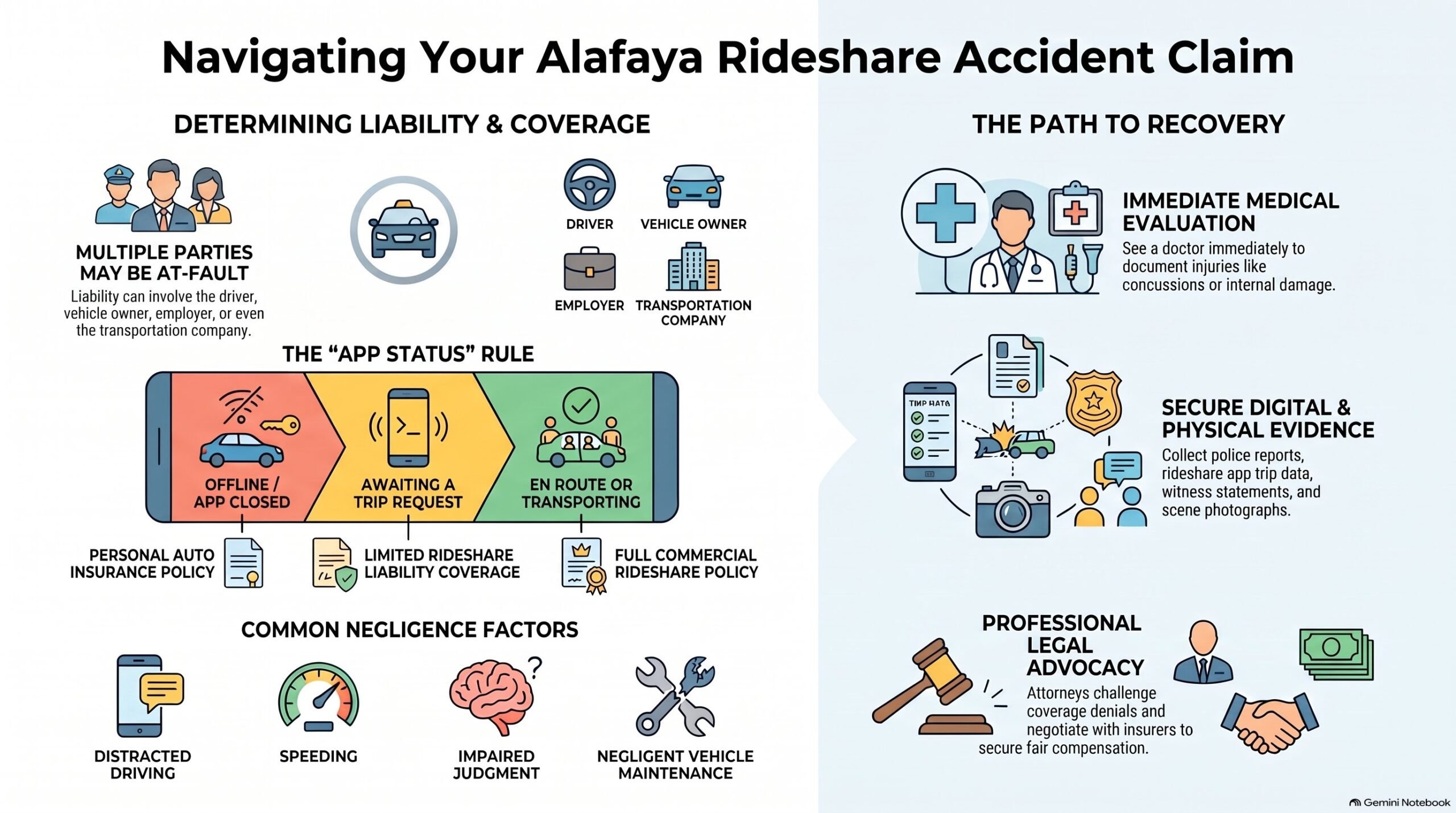


How We Can Help With Your Alafaya Rideshare Accident At-Fault Parties Injury Claim
An experienced Alafaya rideshare accident attorney can identify the parties responsible for a client’s injuries and pursue compensation from the appropriate insurance coverage. Counsel can organize medical records, crash reports, wage documentation, and other evidence needed to present a clear injury claim. This preparation helps establish damages without placing unnecessary burdens on an injured person or family.
Legal representation can also address communication with insurers and rideshare companies. When an insurer issues an Insurance coverage denial, an attorney can review the policy, investigate the stated reason, and challenge an unsupported refusal through negotiation or litigation. Counsel may coordinate with healthcare providers on treatment balances and pursue medical lien negotiations, helping to protect a client’s potential recovery while bills remain outstanding.
Throughout the process, an attorney can provide informed updates, explain available options, and handle procedural deadlines. This service allows clients to focus on medical care and rehabilitation while a dedicated advocate works to preserve their rights and seek fair compensation.
OUR CONSULTATIONSARE FREE
START YOUR FREE CASE REVIEW

Understanding Alafaya Rideshare Accident At-Fault Parties Injury Cases
Understanding an Alafaya rideshare accident injury case begins with identifying how the collision occurred and which parties may be legally responsible. Responsibility may involve a rideshare driver, another motorist, an employer, or a transportation company, depending on employment status, app activity, and applicable insurance policies. A careful review of police reports, medical records, photographs, witness accounts, and digital trip information helps clarify the legal relationship among those parties.
Insurance coverage pitfalls can complicate recovery. Coverage may change depending on whether the driver was offline, awaiting a request, en route to a passenger, or transporting a passenger. Policy limits, exclusions, delayed reporting, and conflicting insurer positions can affect available compensation. Damages-proof strategies should document treatment, lost income, future medical needs, property damage, and the injury’s impact on daily responsibilities. Attorneys serving injured individuals can organize evidence, communicate with insurers, and pursue accountability while preserving the claimant’s interests throughout the case. Each claim requires individualized assessment because liability and coverage depend on its specific facts.
Common Causes of Alafaya Rideshare Accident At-Fault Parties
Common causes of Alafaya rideshare accidents include distracted driving, speeding, reckless maneuvers, and impairment from alcohol or drugs. Negligent vehicle maintenance, such as failing to address defective brakes or worn tires, may also contribute to collisions. Identifying these factors helps determine which parties may bear legal responsibility for resulting injuries and losses.
Distracted Rideshare Drivers
When rideshare drivers divert their attention from the road, even briefly, their conduct can become a significant factor in determining liability after an Alafaya rideshare accident. Phone use, including texting, accepting requests, or reviewing passenger messages, may prevent timely observation of traffic and pedestrians. Ad hoc navigation can create similar hazards when a driver adjusts a route, studies a map, or reaches for a device while the vehicle is moving. These distracted rideshare risks can affect passengers, other motorists, cyclists, and pedestrians who depend on attentive driving. Evidence may include application records, phone data, witness accounts, vehicle footage, and incident reports. A careful liability assessment can identify whether the driver, a rideshare company, or another responsible party contributed to the collision and help injured individuals pursue appropriate support.
Speeding And Reckless Driving
Speeding and reckless driving can make an Alafaya rideshare accident more likely and may substantially affect the determination of at-fault parties. Excessive speed can reduce a driver’s reaction time, increase stopping distance, and intensify the force of impact. Similarly, reckless lane changes may cause collisions when a driver moves abruptly without checking surrounding traffic or providing adequate notice. Investigators may review traffic-camera footage, vehicle data, witness accounts, and speeding citations to evaluate whether a rideshare driver, another motorist, or an employing company contributed to the crash. Evidence of repeated violations can support an argument that negligent conduct created unreasonable danger to passengers and other road users. Identifying each responsible party helps injured individuals pursue appropriate compensation and supports accountability within the community.
Impaired Driving
Impaired driving can greatly contribute to an Alafaya rideshare accident and complicate the determination of at-fault parties. A driver affected by alcohol, prescription medication, or illegal substances may have diminished judgment, slower reactions, and impaired coordination. These conditions can endanger rideshare passengers, other motorists, pedestrians, and anyone providing emergency assistance after a collision. Establishing impairment may require police observations, witness statements, breath analysis, and Field sobriety evaluations. Toxicology testing can provide additional evidence, although results must be interpreted with attention to timing, dosage, and applicable legal standards. Liability may extend beyond the impaired rideshare driver when another motorist caused the crash or when evidence identifies unlawful conduct by a responsible third party. A careful investigation helps clarify each person’s role and supports fair, compassionate representation for injured individuals and their families.
Negligent Vehicle Maintenance
Negligent vehicle maintenance can make an Alafaya rideshare accident more likely and may identify additional at-fault parties. Worn tires, defective brakes, broken lights, or control problems can impair a vehicle’s safe operation and increase risks for passengers, pedestrians, and other motorists. Responsibility may extend beyond the rideshare driver when a transportation company, fleet operator, repair facility, or vehicle owner failed to inspect, service, or correct known problems. A maintenance record review can reveal missed inspections, overdue repairs, repeated complaints, or improper work before the collision. Investigators may also seek proof of a vehicle defect, including photographs, service invoices, expert evaluations, and preserved vehicle components. Establishing the maintenance history helps clarify whether preventable mechanical failures contributed to the crash and supports a fair assessment of each responsible party’s duty to protect others.
Don’t Wait. Call Our Florida Personal Injury Lawyers Now!


Legal Rights of Alafaya Rideshare Accident At-Fault Parties Injury Victims
In Alafaya rideshare accidents, injury victims may retain important legal rights even when another party is alleged to have caused the collision. Those rights can include pursuing compensation from applicable insurers, preserving evidence, and consulting counsel before making statements or accepting a settlement.
A victim’s claim may require:
- Proving Negligence through collision records, witness accounts, and qualified analysis.
- Establishing medical expenses, lost income, and other legally recognized losses.
- Addressing Damages Disputes with organized documentation and credible medical testimony.
- Seeking a fair resolution through negotiation or, when necessary, civil litigation.
Rideshare insurance coverage can depend on the driver’s application status, the platform’s records, and the circumstances surrounding the crash. Accordingly, an injured person should identify each potentially responsible insurer and avoid assumptions about available benefits. Prompt medical evaluation and consistent treatment may support both recovery and documentation of harm. A lawyer serving accident victims can explain deadlines, protect communications, and coordinate evidence collection while treating all involved individuals with professionalism and respect. Rights may vary under Florida law and should be evaluated on a case-by-case basis.
Why Do Alafaya Rideshare Accident At-Fault Parties Injuries Happen?
Several factors can contribute to injuries in Alafaya rideshare accidents, including distracted driving, speeding, unsafe lane changes, fatigue, impaired judgment, and unfamiliarity with local roads. These behaviors can reduce reaction time, impair hazard recognition, or prevent a driver from maintaining proper control. Congested intersections, sudden traffic changes, construction zones, and severe weather may further increase the risk of collisions.
Rideshare passengers and other road users can suffer injuries when a driver fails to follow traffic laws or exercises inadequate caution. Some incidents also result from defective vehicle equipment, poor maintenance, dangerous roadway conditions, or the actions of another motorist. Determining the cause requires examining available evidence, including collision reports, vehicle data, witness accounts, and applicable company records.
Legal negligence may arise when a responsible party breaches a duty of reasonable care, and that breach causes harm. Because multiple individuals or entities may contribute, rideshare liability can involve the driver, transportation company, vehicle owner, or another negligent party.
What Should You Do After an Alafaya Rideshare Accident At-Fault Parties Injury?
After an Alafaya rideshare accident, an injured individual should seek immediate medical care, even if symptoms initially appear minor. The crash should be reported to law enforcement and the applicable rideshare company, with accurate details provided. Medical records, photographs, witness information, and other evidence should be preserved to support any injury claim.
Seek Immediate Medical Care
Prompt medical attention should be sought after any injury sustained in an Alafaya rideshare accident, even if symptoms initially appear minor or are absent. A qualified clinician can identify conditions that may recover without treatment, including concussions, internal injuries, or soft-tissue damage. Depending on the symptoms, the injured person may visit an Emergency room, urgent care facility, or personal physician. Medical providers should receive a complete account of symptoms and any relevant health information so appropriate care can begin promptly. Documentation tips include preserving discharge instructions, prescriptions, treatment dates, and receipts for related expenses. These materials can support continuity of care and help establish the injury’s medical history. Maintaining organized medical records may also assist an insurance claim and allow attorneys to evaluate damages accurately. Follow-up appointments should be attended as recommended.
Report the Crash
Reporting the crash to law enforcement provides an official record of the Alafaya rideshare accident and may support later insurance or legal proceedings. A driver, passenger, or helpful bystander should contact emergency services promptly, particularly when anyone appears injured or the roadway presents danger. Scene safety should remain the immediate priority; individuals should avoid traffic, damaged vehicles, spilled fluids, and other hazards unless movement is necessary to prevent further harm. The reporting person should provide the dispatcher with the location, number of vehicles, apparent injuries, and rideshare involvement. Witnesses can offer valuable independent information, so responsible parties should call witnesses and request their names and contact information when practical. Cooperation with responding officers is important. Each participant should answer questions accurately, avoid speculation, and request the incident or report number before leaving.
Document Evidence and Injuries
Accurate documentation of the crash scene and any injuries can help establish what occurred and preserve information that may later be relevant to insurance or legal proceedings. A passenger, driver, or witness should photograph injuries, vehicle damage, road conditions, traffic signs, and any visible rideshare information when it is safe to do so. Medical evaluation should occur promptly, even when symptoms initially appear minor. Treatment records, prescriptions, work restrictions, and receipts should be preserved in an organized file. Maintaining a symptom timeline can show how pain, limited movement, or emotional distress developed after the collision. Witness names and contact details should also be recorded. These steps may capture insurer tactics, including efforts to minimize injuries or shift responsibility, while reducing the risk of missed evidence. Personal accounts should remain factual, consistent, and securely stored for authorized representatives.
Don’t Wait. Call Our Florida Personal Injury Lawyers Now!
Critical Evidence in an Alafaya Rideshare Accident At-Fault Parties Injury Case
A claim involving an Alafaya rideshare accident may depend on preserving several forms of evidence that clarify fault, causation, and the extent of resulting injuries.
Key materials include:
- Police accident reports; 2. Rideshare app records; 3. Witness statements; 4. Medical documentation.
Together, these records can help establish the parties involved, reconstruct the collision, and support the injured person’s compensation claim.
Police Accident Reports
When a rideshare collision occurs in Alafaya, the responding officers’ accident report may provide critical evidence to identify the at-fault parties and document the resulting injuries. The report can record vehicle positions, road conditions, citations, witness statements, and initial observations about driver conduct. Although it does not conclusively determine legal responsibility, its details may help attorneys evaluate negligence and locate additional supporting evidence. Officers may also note whether injuries were reported at the scene, which can help establish the accident timeline and connect later medical treatment to the collision. A report’s references to nearby surveillance or dashcam footage may guide efforts to preserve those materials before they are overwritten. Individuals assisting injured riders should obtain the report number, request a copy through the appropriate agency, and avoid altering or misrepresenting its contents.
Rideshare App Records
Beyond the information contained in a police accident report, rideshare app records may help establish who was involved, the driver’s status, and the sequence of events surrounding an Alafaya collision. These records can show whether a driver was offline, waiting for a request, traveling to pick up a passenger, or completing a trip at the time of the crash. GPS tracking may identify routes, locations, and movement patterns relevant to responsibility. A trip history can connect the vehicle to a specific passenger and document pickup and drop-off information. An app notification may confirm ride acceptance, cancellation, or an emergency report made shortly after the incident. Taken these materials can clarify the incident timeline and help determine which parties or insurers may bear legal responsibility. Preservation requests may be necessary because platforms retain records for limited periods.
Witness Statements
Although physical evidence and rideshare app records can establish important facts, witness statements may provide a direct account of how an Alafaya collision occurred and who may be responsible. Independent observers can describe traffic signals, vehicle speeds, lane positions, driver behavior, and events immediately before impact. Their accounts may help identify the rideshare driver, another motorist, an employer, or a vehicle owner whose conduct contributed to the crash. Investigators should preserve names, contact information, photographs, and contemporaneous notes before memories change. Eyewitness credibility depends on the person’s vantage point, attentiveness, consistency, and lack of bias. Prompt interview scheduling can support accurate recollection while allowing each witness to provide an uninterrupted narrative. A careful attorney may compare statements with physical evidence and app data, then document discrepancies without pressuring witnesses or distorting their testimony.
Medical Documentation
Medical documentation can establish the nature, timing, and severity of injuries in an Alafaya rideshare accident and help connect those injuries to the collision. Emergency department records, diagnostic images, physician notes, and prescriptions may show when symptoms appeared and how they progressed. An organized Injury Timeline can link complaints, examinations, treatment decisions, and functional limitations to the crash, while reducing questions about unrelated conditions or delayed reporting. Records also may demonstrate Treatment Compliance, including attendance at appointments, adherence to medication instructions, and participation in recommended therapy. Consistent documentation can support claims involving medical expenses, lost income, continuing care, and pain-related limitations. A lawyer may review these materials with healthcare professionals, identify gaps, and obtain relevant records while protecting the injured person’s privacy and serving the case responsibly.
Long-Term Effects of Alafaya Rideshare Accident At-Fault Parties Injuries
Long-term injuries from an Alafaya rideshare accident may result in chronic pain conditions that interfere with mobility, employment, and daily activities. Emotional trauma, including anxiety or post-traumatic stress, can also persist and require professional treatment. Ongoing medical expenses for care, rehabilitation, medication, and related support may create significant financial strain.
Chronic Pain Conditions
Chronic pain conditions may develop after an Alafaya rideshare accident when injuries to the spine, joints, muscles, or nerves fail to resolve with ordinary treatment. Persistent symptoms can restrict mobility, interfere with work, and require continuing medical supervision. A person may experience recurring back pain, headaches, nerve sensations, or reduced strength, even after initial emergency care has ended. Physicians may recommend imaging, physical therapy, medication, injections, or other Pain management strategies based on documented findings and functional limitations. Consistent treatment helps identify whether symptoms are improving, stable, or worsening. Detailed insurance claim documentation should include medical records, treatment bills, prescribed limitations, and evidence of lost income. Such records can help establish the accident’s continuing effects and support fair evaluation of necessary future care and related losses.
Emotional Trauma
Emotional trauma may persist after an Alafaya rideshare accident, particularly when physical injuries cause prolonged pain, reduced independence, or uncertainty about recovery. Affected individuals may experience anxiety, sleep disruption, depression, irritability, or fear of traveling, even after visible wounds improve. These responses can interfere with employment, relationships, and daily responsibilities, making compassionate post-accident support vital. Counseling, trusted social connections, and consistent routines may help restore stability and confidence. Documentation of psychological symptoms, treatment recommendations, and functional limitations can clarify how the collision affected the individual’s life. Such records may also become important evidence of liability when responsibility and damages are evaluated. A qualified mental health professional can assess trauma-related conditions and recommend appropriate care. Early recognition allows families, providers, and advocates to respond with patience while protecting the individual’s dignity and recuperation.
Ongoing Medical Expenses
When injuries from an Alafaya rideshare accident require continuing treatment, medical expenses may extend well beyond the initial emergency care. Follow-up appointments, physical therapy, diagnostic testing, medical equipment, and expert consultations can create substantial ongoing obligations. Medication billing should be reviewed carefully, particularly when prescriptions change as recovery progresses or complications develop. Accurate treatment records help establish the medical necessity of each service and connect continuing care to the accident-related injuries. Insurance delays may leave an injured person responsible for charges before a claim is resolved, creating financial pressure during recovery. A thorough accounting of past and anticipated costs can support a claim for compensatory damages. Legal guidance may help preserve relevant documentation, communicate with insurers, and protect access to necessary treatment while responsible parties and coverage issues are evaluated.
Proving Liability in Alafaya Rideshare Accident At-Fault Parties Injury Cases
To prove liability in an Alafaya rideshare accident injury case, the injured party must establish which person or entity caused the collision and demonstrate that the conduct directly contributed to the resulting harm. Relevant proof may include crash reports, photographs, vehicle damage, witness statements, medical records, and available rideshare application data. Prompt evidence preservation can prevent the loss or alteration of information needed to identify the driver’s status and reconstruct events. A careful evaluation of fault determination may involve assessing traffic violations, negligent driving, vehicle maintenance, road conditions, and the actions of other potentially responsible parties. The rideshare company, driver, vehicle owner, or another motorist may each raise distinct liability defenses. An attorney serving injured individuals can organize records, interview witnesses, consult qualified experts, and present a coherent account of causation and damages. Clear preparation also supports informed insurance negotiation without assuming responsibility before the evidence is evaluated. Each claim requires individualized analysis under applicable Florida law.
Dealing With Insurance Companies After an Alafaya Rideshare Accident At-Fault Parties Injury
Insurance companies may seek statements, medical authorizations, and other information soon after an Alafaya rideshare accident, but an injured person should provide only accurate, necessary details and avoid speculating about fault or minimizing symptoms. A representative may request broad authorizations or recorded interviews that could reveal unrelated medical history or generate inconsistencies. Careful review of documents, deadlines, coverage limits, and applicable policy provisions helps protect an injured person’s interests while preserving cooperation.
Insurer negotiation tactics may include contesting treatment, linking symptoms to prior conditions, delaying evaluations, or presenting an early settlement before the full impact is known. An informed representative can organize medical records, wage documentation, receipts, and other evidence supporting the injury claim, then communicate with insurers on the client’s behalf. Any settlement proposal should be evaluated carefully rather than accepted under pressure. When coverage or liability is challenged, rejected claim appeals may require a written response addressing policy language, factual errors, and supporting documentation. Prompt legal guidance can help ensure the process remains accurate, respectful, and focused on fair compensation.
What to Expect During an Alafaya Rideshare Accident At-Fault Parties Injury Claim Process
An Alafaya rideshare accident injury claim typically begins with an initial assessment of the injuries, insurance coverage, and potentially responsible parties. The investigation then focuses on fault, supported by evidence and documentation, including medical records, crash reports, photographs, and witness statements. Depending on the facts and available compensation, the claim may conclude through settlement negotiations or proceed to litigation.
Initial Claim Assessment
When an Alafaya rideshare accident injury claim begins, the initial assessment establishes how the collision occurred, which parties may be legally responsible, and what insurance coverage could apply. During this stage, a legal professional reviews the reported facts, injury documentation, medical treatment, and immediate financial effects. An Insurance coverage review considers the rideshare company’s policy, the driver’s personal policy, and any applicable uninsured or underinsured motorist protection. Liability evidence gathering may include examining the crash report, photographs, witness accounts, trip details, and available digital records. The assessment also identifies deadlines, potential barriers to a claim, and the information needed to protect the injured person’s interests. Clear communication helps the injured individual understand realistic options, preserve evidence, and support a fair resolution. This organized beginning promotes accountability and informed decisions.
At-Fault Party Investigation
Following the initial claim assessment, the at-fault party investigation focuses on identifying each person or entity whose conduct may have contributed to the Alafaya rideshare accident. The investigation may examine the rideshare driver, another motorist, a vehicle owner, an employer, or a company responsible for roadway conditions. Counsel may interview witnesses to establish an Eyewitness timeline, including traffic movements, driver behavior, and conditions affecting scene safety. Investigators may also assess whether negligent hiring, inadequate supervision, vehicle maintenance failures, or unsafe road design contributed to the collision. Video evidence can help clarify disputed events, while data preservation efforts seek to prevent relevant electronic information from being altered or lost. The process generally involves communication with insurers and involved parties while protecting the injured person’s interests and maintaining an impartial, service-oriented approach.
Evidence And Documentation
Evidence and documentation provide the factual foundation for determining liability and evaluating damages in an Alafaya rideshare accident claim. A claimant should preserve medical records, police reports, photographs, repair estimates, wage information, and communications with insurers or rideshare companies. Witness names and statements can clarify traffic conditions, vehicle movements, and driver conduct. A digital evidence timeline should record when evidence was collected, including app activity, trip details, messages, and relevant location data. Video preservation tips include requesting nearby business, traffic-camera, dashcam, and vehicle recordings promptly because systems may automatically overwrite files. The claimant should maintain originals, avoid altering digital files, and store copies securely. Organized documentation allows attorneys and caregivers to present accurate information while protecting the injured person’s interests throughout the claim review.
Settlement Or Litigation
Settlement or litigation generally begins after the injured claimant’s medical condition, damages, and available insurance coverage have been evaluated. The attorney may present a demand supported by medical records, wage documentation, photographs, witness statements, and evidence identifying each responsible party. During at-fault negotiation, insurers may request additional information, dispute liability, or propose a settlement that does not fully address future care and related losses. The claimant should review every offer carefully before accepting or rejecting it. If negotiations fail, the attorney may file a lawsuit and proceed through discovery, depositions, expert evaluations, and mediation. A thoughtful trial strategy addresses liability, insurance coverage, causation, and damages, and prepares the claimant for testimony. Throughout the process, counsel should provide clear guidance and protect the claimant’s interests.
Compensation for Alafaya Rideshare Accident At-Fault Parties Injury Damages
When an Alafaya rideshare accident results from another party’s negligence, the injured person may pursue compensation for documented injury-related losses. Potentially responsible parties can include another driver, a rideshare company, or an insurer, depending on the facts and applicable insurance coverage. A careful review of policies, accident reports, and liability evidence helps identify available sources of recovery.
Medical documentation provides critical support for claims involving treatment, diagnoses, rehabilitation, and recommendations for future care. The injured person should preserve bills, provider notes, prescription records, and appointment histories while following reasonable medical guidance. These records can help establish how the accident affected daily activities and the need for continuing assistance.
During settlement negotiation, counsel may present organized evidence, communicate with insurers, and assess proposed resolutions against the injury’s documented consequences. A claim may also address pain damages, including physical discomfort and diminished quality of life. By seeking accurate compensation, the injured person can protect financial stability and support recovery without bearing losses caused by another party’s negligence.
Economic vs Non-Economic Damages in Alafaya Rideshare Accident At-Fault Parties Cases
Economic damages may include medical expenses, lost income, property damage, and other verifiable financial losses resulting from an Alafaya rideshare accident. Non-economic losses, such as pain, emotional distress, and diminished quality of life, are assessed through the injury’s severity and lasting effects. Determining responsibility for damages requires evaluating each party’s conduct, available insurance coverage, and evidence linking the claimed losses to the accident.
Economic Damage Categories
A rideshare accident claim in Alafaya may involve both economic and non-economic damages, depending on the injuries, losses, and circumstances established by the evidence. Economic damages represent measurable financial harm supported by records, invoices, employment information, and other reliable documentation. They may include medical treatment, rehabilitation, prescription expenses, and transportation required for care. Lost Wages can compensate an injured person for income lost during recovery, while Future Earnings may address reduced earning capacity due to lasting limitations. Property Losses may include vehicle repairs, replacement costs, damaged personal items, and necessary rental transportation. Out-of-Pocket Costs can cover reasonable accident-related expenses not reimbursed by insurance or another source. Careful documentation helps establish the amount, cause, and necessity of each claimed loss for fair resolution.
Non-Economic Losses Explained
Non-economic losses address the personal effects of a rideshare accident that do not have a fixed price, including physical pain, emotional distress, inconvenience, disfigurement, and loss of enjoyment of life. These damages recognize how injuries can disrupt relationships, independence, routines, and confidence, even when medical bills and lost income capture measurable financial harm. Emotional distress valuation may consider the severity and duration of anxiety, depression, fear, sleep disruption, and trauma, supported by treatment records and personal observations. A claimant’s testimony, family statements, and professional evaluations may help explain these effects. In some cases, punitive damages may be relevant when conduct is especially reckless or intentional, although punitive damages differ from compensation for personal suffering. Careful documentation helps present a complete, respectful account of the injured person’s experience.
Determining Damage Responsibility
When determining responsibility in an Alafaya rideshare accident, the parties and insurers generally distinguish between documented financial losses and personal harms that lack a fixed monetary value. Economic damages may include emergency treatment, rehabilitation, medication, lost wages, reduced earning capacity, vehicle repairs, and necessary transportation. Receipts, employment records, medical opinions, and repair estimates help establish these amounts.
Non-economic damages address pain, emotional distress, disfigurement, disability, loss of enjoyment, and diminished quality of life. Because these injuries are subjective, evidence may include medical documentation, witness observations, and consistent personal accounts. Liability findings, policy limits, and insurance coverage gaps can affect whether compensation is collectible. Insurers and courts may apply damages allocation formulas when multiple drivers, companies, or policies share responsibility. Careful analysis helps injured people receive fair, lawful consideration while supporting accountable resolution of claims.
Don’t Wait. Call Our Florida Personal Injury Lawyers Now!
When an Alafaya Rideshare Accident At-Fault Parties Injury Case Goes to Trial vs. Settlement
Although settlement can resolve an Alafaya rideshare accident injury claim more efficiently, some at-fault parties’ cases proceed to trial when liability, insurance coverage, or damages remain disputed. A settlement may provide injured individuals and responsible parties with predictability, reduced expense, and a timely opportunity to address medical needs. It can also preserve privacy and avoid the uncertainty of a jury’s decision.
Trial becomes more likely when negotiations fail, evidence conflicts, or an insurer contests responsibility. Counsel may develop a Trial strategy addressing witness testimony, collision records, medical documentation, and rideshare data. Evidence challenges can include the unavailability of witnesses, disputes over vehicle damage, or disagreements about whether injuries resulted from the crash.
During insurance negotiation, settlement leverage may arise from persuasive liability evidence, documented losses, and credible preparation for trial. Conversely, unresolved coverage questions or contested damages may limit an insurer’s offer. A careful assessment of risks, costs, and the client’s goals helps determine whether settlement or trial is more likely to achieve a fair resolution.
Florida Laws That May Affect Your Alafaya Rideshare Accident At-Fault Parties Case
Florida law can affect an Alafaya rideshare accident case by determining who may be legally responsible, which insurance policy applies, and how damages are evaluated. Responsibility may lie with the rideshare driver, another motorist, the rideshare company, or multiple parties, depending on the driver’s actions and the available evidence.
Key considerations may include:
- Florida’s comparative fault rules can reduce compensation when an injured person shares responsibility for the collision.
- Rideshare insurance coverage may vary depending on whether the driver was offline, available for a request, or transporting a passenger.
- Florida’s no-fault system may require an injured person to first seek personal injury protection benefits, subject to applicable exceptions.
- Negligence standards require proof that a party breached a duty and caused compensable harm.
A careful review of police reports, application records, medical documentation, and witness statements can clarify each party’s role. Legal guidance may help injured individuals pursue fair treatment while preserving resources for recovery and service to their families and communities.
The Statute of Limitations for Alafaya Rideshare Accident At-Fault Parties Injury Cases
Time limits can determine whether an injured person may pursue compensation after an Alafaya rideshare accident. Florida law establishes deadlines for filing personal injury claims, and the applicable period may depend on the accident date, the parties involved, and whether a government entity shares responsibility. Missing a deadline can result in dismissal, even when the injuries and losses are substantial. An injured person should promptly identify potential at-fault parties, including rideshare drivers, transportation companies, vehicle owners, and other negligent motorists. Medical Documentation: Timing matters because treatment records can connect injuries to the collision and demonstrate ongoing needs. Prompt care also creates a reliable account of symptoms and limitations. Evidence Preservation Steps should include retaining photographs, witness information, crash reports, app records, vehicle data, and relevant communications. Because exceptions and shortened deadlines may apply, early attention supports informed decisions and helps preserve a person’s opportunity to seek fair compensation while serving the interests of accountability and community safety.
How an Alafaya Rideshare Accident At-Fault Parties Lawyer Can Help You
When deadlines may restrict recovery, an Alafaya rideshare accident at-fault parties lawyer can help identify responsible entities, evaluate available insurance coverage, and protect the injured person’s legal rights. The lawyer may investigate driver conduct, vehicle ownership, rideshare policies, roadway conditions, and other evidence relevant to liability.
Key services may include:
- Preserving photographs, medical records, electronic data, and witness statements.
- Coordinating communications with insurers and opposing parties.
- Conducting a careful Damages calculation involving treatment costs, lost income, future needs, and other legally supported losses.
- Developing a trial strategy that presents evidence clearly if negotiations do not produce a fair resolution.
The lawyer can also explain procedural requirements, assess competing claims, and pursue accountability from each responsible party. By managing these tasks, counsel allows the injured person and supportive family members to focus on recovery and service to others. Representation remains guided by evidence, applicable law, and the goal of securing appropriate compensation without unnecessary conflict or delay.
When to Contact an Alafaya Rideshare Accident At-Fault Parties Lawyer
Prompt consultation with an Alafaya rideshare accident at-fault parties lawyer can help preserve evidence and clarify potential sources of compensation before important deadlines arise. After a collision, an injured passenger, driver, pedestrian, or other affected individual should seek legal guidance as soon as practical, particularly when injuries require continuing treatment or fault is disputed. Early medical evaluation documents symptoms, connects injuries to the incident, and supports informed decisions about care. A lawyer can also outline Evidence preservation steps, including securing photographs, witness information, vehicle records, rideshare communications, trip details, and available surveillance footage. Contact should occur before statements are provided to insurers or damaged property is repaired, because relevant information may otherwise disappear or become difficult to verify. Prompt action remains appropriate even when the full extent of harm is uncertain. Individuals serving injured community members can encourage timely reporting, careful documentation, and compliance with applicable filing deadlines, without making premature assumptions about responsibility or recovery.
Why You Need an Experienced Alafaya Rideshare Accident At-Fault Parties Lawyer
An experienced Alafaya rideshare accident at-fault parties lawyer is important because these collisions may involve multiple drivers, insurance policies, and competing accounts of responsibility. A knowledgeable attorney can identify every potentially liable party, including rideshare drivers, other motorists, employers, and insurance carriers, while preserving evidence that may otherwise disappear.
Rideshare claims often require careful analysis of app records, vehicle inspections, traffic-camera footage, witness statements, and company coverage terms. Counsel can address Comparative negligence by evaluating each participant’s conduct and presenting facts that accurately establish responsibility. An attorney also assists with proving damages, including medical expenses, lost income, property damage, continuing treatment, and other measurable losses. This preparation helps prevent insurers from minimizing valid claims or shifting blame without sufficient evidence. By coordinating communications and legal strategy, experienced representation allows injured individuals and their families to focus on recovery while ensuring that responsible parties are held accountable under applicable Florida law and procedural requirements.
How to Choose the Right Alafaya Rideshare Accident At-Fault Parties Lawyer for Your Case
Selecting the right Alafaya rideshare accident at-fault parties lawyer requires careful consideration of the attorney’s experience with complicated liability disputes, rideshare insurance policies, and Florida personal injury law. A suitable lawyer should explain potential responsible parties, including drivers, rideshare companies, vehicle owners, and insurers, without promising a particular outcome.
Client eligibility verification should occur early, allowing the legal team to determine whether the facts support a claim and identify necessary documentation. Prospective clients should assess the attorney’s communication practices, investigative resources, courtroom experience, and commitment to serving injured people with diligence and respect. Clear explanations of legal options can help families make informed decisions during difficult circumstances.
Fee structure comparison is also crucial. The lawyer should describe contingency fees, case-related expenses, and any obligations if recovery is unavailable. Written agreements should state these terms plainly. Reviewing qualifications, asking focused questions, and comparing services can help an injured person select representation aligned with the case’s needs and the pursuit of accountability.
About The Law Offices of Anidjar & Levine
The Law Offices of Anidjar & Levine represents injured individuals in Florida, including those involved in rideshare accidents with disputed liability.
The firm examines how driver conduct, rideshare company policies, insurance coverage, and roadway conditions may affect liability.
Its attorneys can help clients identify potentially responsible parties and pursue compensation for medical expenses, lost income, property damage, and other legally recognized losses.
A Florida case strategy may involve gathering crash reports, electronic trip records, witness statements, medical documentation, and communications with insurers.
Because rideshare claims can involve overlapping policies and contested facts, careful analysis is important before accepting a settlement or assigning fault.
The firm’s legal team also explains procedural options and communicates with the parties involved throughout the claim process.
Individuals seeking guidance may inquire about scheduling an attorney consultation to discuss the accident, available evidence, and potential next steps.
While each matter depends on its facts, informed legal review can help injured people make decisions that support their recovery and protect their interests.

Frequently Asked Questions
What Fees Does an Alafaya Rideshare Accident Lawyer Charge?
An Alafaya rideshare accident lawyer typically charges a contingency fee, meaning payment is based on the recovery rather than billed upfront. The percentage may vary depending on the case’s complexity, litigation, and the attorney’s agreement. Consultation costs also vary: some firms offer an initial evaluation at no charge, while others charge for their time. The client should request a written fee agreement explaining percentages, expenses, medical liens, and responsibility for costs if the claim does not succeed.
Can I Switch Lawyers During My Rideshare Accident Case?
Yes, a claimant can generally switch lawyers in a rideshare accident case, though court approval may be required once litigation begins. The claimant should review the existing representation agreement, address any outstanding fees, and provide written notice before retaining replacement counsel. Attorney substitution options may depend on deadlines, case intricacy, and cooperation between firms. If changes in subtopic scope affect strategy or compensation, an experienced replacement attorney can protect the claimant’s interests and maintain continuity.
Will I Need to Attend Depositions or Court Hearings?
Attendance at depositions or court hearings may be necessary, depending on the case’s intricacy, disputed facts, and settlement progress. Depositions generally require the injured person to answer questions under oath, with counsel preparing and representing them throughout the process. Court hearing guidance will clarify whether personal appearance is required or whether counsel may appear instead. The attorney should provide timely notice, explain expectations, and protect the individual’s rights during each proceeding.
Can I Pursue a Claim if the Rideshare Driver Was Uninsured?
Yes, an injured person may pursue a claim when a rideshare driver is uninsured, although recovery depends on the driver’s status, policy terms, and applicable state law. Uninsured driver options may include the rideshare company’s uninsured-motorist protection, the passenger’s own coverage, or claims against other responsible parties. Rideshare coverage limits vary by accident phase and platform activity. A qualified attorney can investigate coverage, preserve evidence, and pursue fair compensation for medical costs and related losses.
How Are Rideshare Accident Settlements Distributed Among Multiple Claimants?
Rideshare accident settlements are distributed according to each claimant’s documented damages, insurance coverage, and legal responsibility. A court or negotiated agreement may apply Comparative Fault, reducing recovery for claimants whose conduct contributed to the collision. Settlement Allocation typically considers medical expenses, lost income, property damage, and pain-related losses, while liens and legal fees may be deducted. When funds are limited, claimants should coordinate through counsel to protect fair distribution and preserve each person’s lawful rights.
—————————
Alafaya rideshare accident claims may involve multiple at-fault parties, insurance policies, and complex liability questions.
Injured individuals should preserve evidence, seek medical care, and avoid making statements that could affect their rights.
An experienced rideshare accident lawyer can investigate the collision, identify responsible parties, assess available coverage, and pursue appropriate compensation.
The Law Offices of Anidjar and Levine can evaluate the circumstances and explain potential legal options through an Alafaya Personal Injury Lawyer, helping victims make informed decisions throughout the claims process.

