The Law Offices of Anidjar and Levine can help individuals injured in Orlando car accidents involving spine, back, or neck injuries evaluate liability, establish medical causation, and pursue compensation for medical treatment, lost income, reduced earning capacity, pain, and long-term limitations. Important evidence may include crash reports, medical records, imaging, witness accounts, employment documentation, and qualified professional opinions. Prompt medical care and careful communication with insurers may help protect recovery and legal rights. Learn more from an Orlando Personal Injury Lawyer about available assistance, case requirements, deadlines, and selecting appropriate legal representation.
Main Takeaways
- An Orlando car accident lawyer can help pursue compensation for spine, back, and neck injuries, including medical expenses, lost income, and pain and suffering.
- Medical records, diagnostic imaging, treatment timelines, and physician opinions can help connect injuries to the collision.
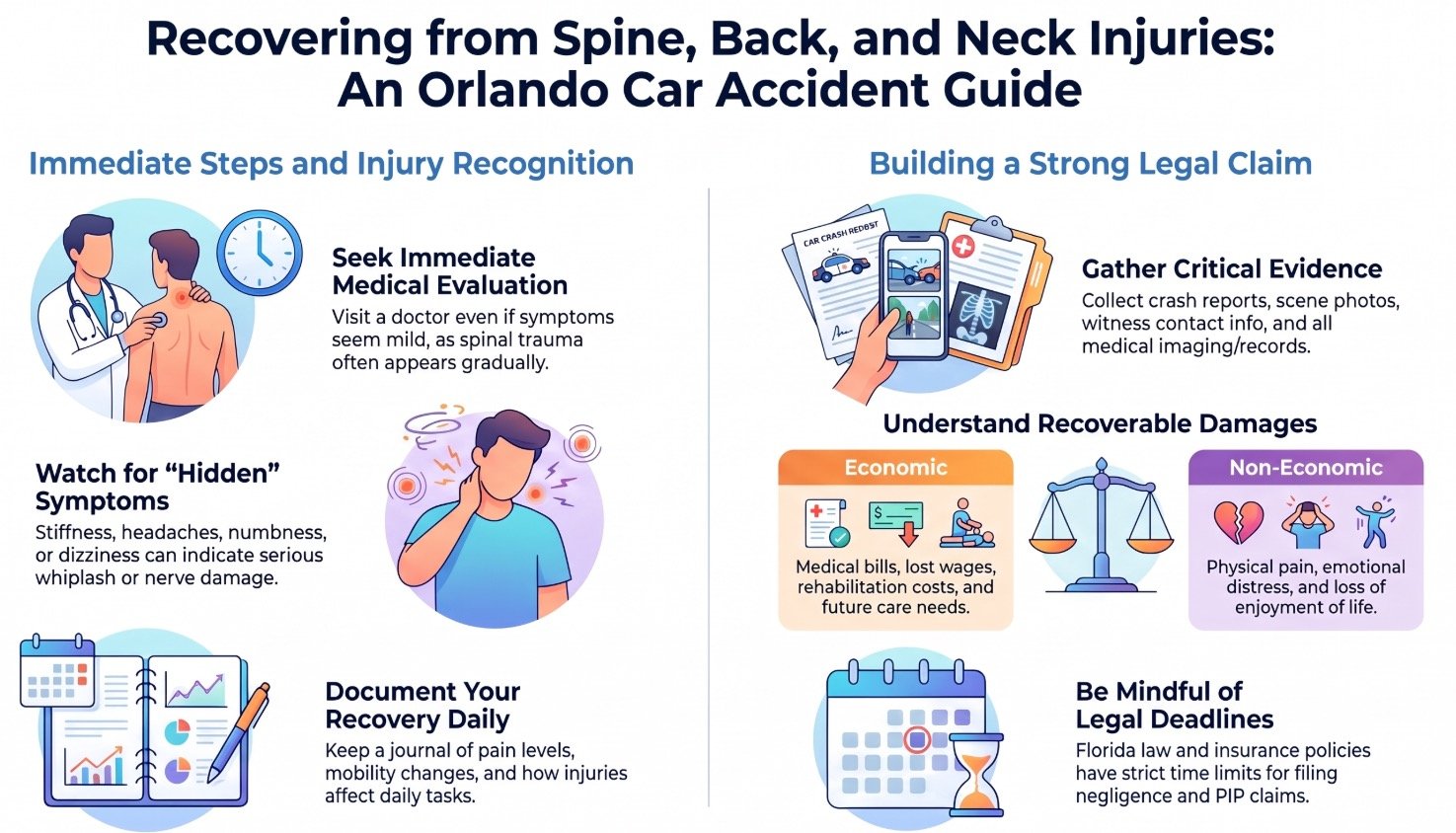
- Symptoms such as whiplash, stiffness, headaches, numbness, or pain may appear gradually and should receive prompt medical evaluation.
- Evidence may include crash reports, photographs, witness statements, employment records, medical bills, and documentation of future care needs.
- Legal deadlines, disputed fault, prior conditions, and insurance communications can affect your claim, so prompt legal guidance may help protect your rights.
How We Can Help With Your Orlando Car Accident Spine, Back & Neck Injury Claim
When an Orlando car accident causes a spine, back, or neck injury, the resulting claim may involve more than immediate medical expenses. Legal assistance can help an injured person organize records, identify responsible parties, and present the claim clearly and in an orderly manner. Counsel may gather collision reports, treatment records, employment information, and statements from qualified professionals to establish the injury’s impact.
Effective Damages proof can address medical care, rehabilitation, lost income, reduced earning capacity, and other legally recoverable losses. Because spinal conditions may develop or worsen over time, careful documentation can help preserve an accurate account of the person’s needs without overstating the evidence. Representation may also support insurance negotiation by evaluating proposed settlements, responding to insurer requests, and protecting the claimant from premature decisions.
Throughout the process, a legal team can communicate with insurers and other involved parties, allowing the injured individual to focus on treatment. The objective remains a fair resolution supported by reliable evidence and responsible advocacy for the claimant’s interests.
Don’t Wait. Call Our Florida Personal Injury Lawyers Now!
Understanding Orlando Car Accident Spine, Back & Neck Injury Cases


An Orlando car accident spine, back, or neck injury case generally requires proof that the collision caused a specific medical condition and resulting losses. Medical records, diagnostic imaging, physician opinions, and testimony may connect the impact to conditions such as sprains, herniated discs, or nerve damage. Early whiplash symptoms can include neck pain, stiffness, headaches, dizziness, and reduced movement, although symptoms may develop gradually.
OUR CONSULTATIONSARE FREE
START YOUR FREE CASE REVIEW

Claim evaluation commonly considers the treatment timeline, including emergency care, follow-up visits, physical therapy, medication, and any recommended procedures. Consistent treatment and accurate reporting can help clarify symptom severity and demonstrate how the injury affects work, daily activities, and long-term health. Insurance documentation should include medical bills, wage-loss records, claim correspondence, and evidence of out-of-pocket expenses. The legal analysis may also address prior conditions, disputed causation, comparative fault, and future medical needs. Careful documentation allows responsible advocates to present the injured person’s circumstances accurately while pursuing appropriate compensation.
Common Causes of Orlando Car Accident Spine, Back & Neck Injuries
Spine, back, and neck injuries in Orlando car accidents commonly result from rear-end collisions, which can subject occupants to sudden, forceful movement. Distracted driving, speeding, and reckless driving further increase crash severity, while poor road conditions may contribute to loss of control and collisions. Each circumstance can affect the nature and extent of the resulting injuries.
Rear-End Collisions


Rear-end collisions occur when one vehicle strikes the back of another, often because of distracted driving, following too closely, speeding, or failing to stop in time. These crashes can transmit substantial force through the spine, causing neck strain, back injuries, herniated discs, or symptoms that develop hours later. Establishing rear-end liability may require reviewing photographs, vehicle damage, traffic conditions, witness accounts, and medical records. Prompt evidence preservation helps protect information that could clarify how the collision occurred and whether additional factors contributed. Injured individuals may encounter insurance claim disputes involving delayed symptoms, preexisting conditions, or disagreements about treatment. Careful documentation and consistent medical evaluation can support a reasonable settlement strategy. Legal guidance may help affected individuals understand available remedies while preserving their ability to pursue compensation for medical expenses, lost income, and continuing care.
Distracted Driving
Distracted driving is a frequent cause of Orlando car accidents that produce spine, back, and neck injuries. A driver who looks away from traffic, reaches for an object, or focuses on a conversation may miss changing roadway conditions. Texting while driving is particularly dangerous because it combines visual, manual, and cognitive distraction, leaving little attention available for safe vehicle operation. Hands-free distractions can also affect awareness when drivers concentrate on phone conversations, navigation systems, or voice commands instead of surrounding traffic. These behaviors may cause sudden lane departures, missed signals, or delayed braking, increasing the likelihood of forceful collisions. Individuals injured in such crashes may require medical evaluation, treatment, and support while pursuing recovery. Careful documentation can help clarify how distraction contributed to the incident and resulting injuries.
Speeding And Reckless Driving
When drivers exceed posted speed limits or operate vehicles recklessly, they reduce the time available to respond to traffic conditions and increase the force of any resulting collision. High-speed impacts can place substantial stress on the spine, back, and neck, causing fractures, disc injuries, nerve damage, or lasting pain. Reckless conduct may include aggressive lane changes, tailgating, street racing, and disregarding traffic signals. Speeding enforcement records, citations, vehicle data, and crash-reconstruction findings may help establish how a collision occurred. Eyewitness credibility can also influence whether accounts of excessive speed or dangerous operations are accepted. Individuals injured in these crashes may need medical evaluation, rehabilitation, and help with insurance claims. A careful legal review can help protect injured parties and support fair compensation while promoting accountability for preventable driving behavior.
Poor Road Conditions
Poorly maintained roads can contribute to Orlando car accidents by creating hazards that drivers may not reasonably anticipate. Potholes, uneven pavement, missing lane markings, and deteriorated shoulders can interfere with direction (instead of steering), braking, and vehicle stability. Road maintenance failures may also allow standing water to accumulate, increasing the risk of hydroplaning and sudden loss of control. Inadequate lighting, obscured signs, and unmarked construction areas can create hazard visibility issues, particularly at night or during heavy rain. When a collision occurs because a roadway defect was not repaired or properly identified, injured individuals may experience significant spine, back, or neck trauma. Documentation of road conditions, photographs, witness accounts, and official reports can help clarify contributing factors. Prompt medical evaluation and informed legal guidance may assist those seeking accountability and support.
Legal Rights of Orlando Car Accident Spine, Back & Neck Injury Victims
Orlando car accident victims who suffer spine, back, or neck injuries may have legal rights to pursue compensation for medical treatment, lost income, reduced earning capacity, pain and suffering, and other related losses. These rights can depend on liability, insurance coverage, injury severity, and compliance with applicable deadlines. Medical documentation can help establish diagnosis, treatment needs, prognosis, and financial consequences.
An attorney consultation may clarify available claims and preserve important evidence.
- Compensation may include reasonable past and future medical expenses.
- Lost wages and diminished earning capacity may be recoverable.
- Pain, disability, and reduced quality of life can support a damages claim.
- Handle insurance communications carefully and accurately.
- Filing deadlines may limit the time available to pursue relief.
Victims may protect their interests by following medical recommendations, maintaining treatment records, documenting expenses, and avoiding statements that minimize their injuries. A qualified legal professional can evaluate the circumstances, communicate with insurers, and advocate for a fair resolution while the injured person focuses on recovery and family responsibilities.
Why Do Orlando Car Accident Spine, Back & Neck Injuries Happen?
Spine, back, and neck injuries in Orlando car accidents often result from the sudden forces created by impact. A collision can accelerate and abruptly stop the body, causing muscles, ligaments, discs, and vertebrae to absorb intense stress. Rear-end crashes commonly produce whiplash when the head moves rapidly forward and backward, while side and head-on impacts may compress or twist the spine. Airbag deployment, seatbelt restraint, vehicle intrusion, and improper headrest positioning can further influence injury severity. Some trauma appears immediately, whereas swelling, muscle spasms, nerve irritation, or disc damage may develop over several hours or days. Whiplash symptoms and recovery timelines vary according to force, prior health, age, and the affected structures. Spinal imaging and diagnostic tests may help clinicians identify fractures, herniated discs, or other abnormalities, although certain soft-tissue injuries require clinical evaluation over time. These injuries can limit movement, impair work, and create continuing care needs, making accurate assessment important for affected individuals and families.
What Should You Do After an Orlando Car Accident Spine, Back & Neck Injury?
After an Orlando car accident, an injured person should seek immediate medical care, even when symptoms initially appear minor. Medical records and other evidence should document the injuries, treatment, and their effects on daily activities. A spine injury lawyer can help protect your legal rights and assess potential compensation.
Seek Immediate Medical Care
Prompt medical evaluation is fundamental following a car accident involving possible spine, back, or neck injuries, even when symptoms initially appear mild or absent. A qualified healthcare professional can assess hidden trauma, identify conditions requiring urgent treatment, and establish appropriate restrictions or follow-up care. Emergency symptom evaluation is especially important when a person experiences severe pain, numbness, weakness, dizziness, confusion, difficulty breathing, or loss of bladder or bowel control. Individuals should avoid unnecessary movement after a significant impact, particularly when spinal injury is suspected, and should follow emergency responders’ instructions. Medical guidance can help prevent an otherwise manageable injury from worsening. Patients should follow prescribed treatment recommendations and attend referrals promptly. They should also preserve medical documentation, including discharge instructions and treatment records, for continuity of care and potential legal review.
Document Your Injuries
Accurate injury documentation should begin as soon as the individual’s medical condition permits and continue throughout treatment. A daily record can identify pain levels, stiffness, numbness, weakness, headaches, sleep disruption, and changes in mobility. Pain documentation should include the location, severity, duration, triggers, and effect on ordinary activities. Recording a symptom timeline helps show when problems appeared, whether they progressed, and how they responded to care. Preserve medical instructions, including prescribed medications, therapy recommendations, brace compliance, and activity restrictions. The individual should follow those instructions and note any difficulty doing so. Photographs of visible bruising or swelling may supplement written observations, while medical records, bills, diagnostic reports, and work absence information should be organized securely. Consistent, accurate records can help healthcare providers evaluate recovery and ongoing needs.
Consult A Spine Injury Lawyer
When should an individual consult a spine injury lawyer following an Orlando car accident? An attorney consultation is appropriate when pain, restricted movement, numbness, or other symptoms persist, worsen, or interfere with work and daily responsibilities. Early legal guidance can help protect evidence, clarify insurance obligations, and prevent statements or settlements that undervalue long-term harm.
A lawyer can review medical records, vehicle damage, witness information, and the documentation checklist needed to support a claim. This review may identify missed milestones in treatment, employment, or recovery that affect damages. Counsel can also explain the compensation timeline, including investigation, negotiations, medical improvement, and potential litigation. Individuals supporting injured family members or community members may benefit from scheduling a consultation promptly, especially when insurers dispute fault, question treatment, or pressure an injured person to resolve the claim prematurely.
Critical Evidence in an Orlando Car Accident Spine, Back & Neck Injury Case
Critical evidence can establish how the Orlando collision occurred, connect the event to spinal, back, or neck injuries, and support the claimed damages.
Relevant materials should be collected promptly and preserved in an organized manner:
- Medical records documenting diagnoses, treatment, and prognosis
- Accident scene photographs showing vehicle damage, road conditions, and visible hazards
- Witness statements describing the collision and its immediate effects
- Expert testimony addressing causation, impairment, and future medical needs
- Employment and financial records demonstrating lost income or reduced earning capacity
Medical Records
Medical records provide specialized evidence in an Orlando car accident spine, back, and neck injury case by documenting the nature, important severity, and progression of the reported conditions. Initial evaluations, treatment notes, and specialized reports can help establish causation by linking symptoms to the collision and identifying when complaints began. MRI documentation and other diagnostic results may clarify disc injuries, fractures, nerve involvement, or soft-tissue damage that symptoms alone cannot confirm. Consistent records also help prove negligence by showing the measurable consequences of unsafe conduct and the need for ongoing care. Accurate records help attorneys assess damages, coordinate treatment, and prepare insurance communication. Patients should follow medical advice, attend recommended appointments, and report changes promptly. Complete documentation allows insurers, providers, and courts to evaluate the claim fairly.
Accident Scene Photos
Accident scene photos can supplement medical records by showing the collision’s physical circumstances and supporting the relationship between the impact and reported spine, back, or neck injuries. Images may document vehicle damage, roadway conditions, traffic controls, debris, skid marks, and visible hazards before those details change. Camera angle documentation is important because photographs from multiple distances and perspectives can clarify impact points, vehicle positioning, and the likely direction of force. Clear images of seat belts, airbags, head restraints, and damaged interior components may also assist in evaluating injury mechanisms. Begin preserving injury evidence promptly, retaining original files and recording dates, locations, and subjects. Take photographs safely and lawfully, without disturbing evidence or interfering with emergency efforts. Such documentation can help attorneys, insurers, and medical professionals assess the claim responsibly.
Witness Statements
When individuals observe a collision, their statements may provide independent evidence concerning how the crash occurred and whether the circumstances are consistent with reported spine, back, or neck injuries. Witnesses may describe vehicle speeds, lane positions, impact direction, weather conditions, and whether a driver obeyed a Traffic light. Their observations can help clarify disputed accounts, particularly when physical injuries become apparent after the collision. Collect contact information promptly because memories can change, witnesses may relocate, and details can become hard to recall. A witness’s description may also be compared with camera footage, vehicle damage, medical records, and police reports. Statements should be recorded accurately without pressure or suggestion. Individuals assisting injured people should preserve witnesses’ names, contact details, and firsthand observations for appropriate review by qualified legal professionals.
Expert Testimony
Expert testimony can provide essential evidence in an Orlando car accident spine, back, and neck injury case by explaining complex medical and collision-related issues in clear, supportable terms. A qualified physician may identify injury patterns, interpret diagnostic images, and address whether trauma caused or aggravated the claimant’s condition. This analysis helps establish medical causation when symptoms appear gradually or involve preexisting conditions. An accident reconstruction expert may explain vehicle movement, impact forces, and how those forces affected the body. These opinions can clarify disputed facts for insurers, judges, and jurors who lack specialized knowledge. Properly supported testimony may also address treatment necessity, future care, impairment, and limitations. As trial evidence, expert testimony should rely on sound methods, complete records, and impartial conclusions that help decision-makers evaluate damages.
Don’t Wait. Call Our Florida Personal Injury Lawyers Now!
Long-Term Effects of Orlando Car Accident Spine, Back & Neck Injuries
Long-term spine, back, and neck injuries from Orlando car accidents may cause chronic pain and stiffness that interfere with daily activities. Reduced mobility and physical function can limit work, exercise, and other routine tasks. Many injured individuals also need ongoing medical treatment, including evaluations, therapy, medication, or possible surgery.
Chronic Pain and Stiffness
Persistent pain and stiffness can develop after an Orlando car accident, even when initial imaging shows no fracture or other obvious structural damage. Soft-tissue injuries, irritated nerves, and inflammation may continue producing discomfort weeks or months after the collision. Muscle spasms can create recurring episodes of tightness and soreness, while damaged ligaments or muscles may remain sensitive during ordinary activities. Some individuals experience fluctuating symptoms, making their condition hard to recognize without consistent medical documentation. Treatment may involve physical therapy, targeted injections, or carefully monitored medication, depending on the diagnosis. Medication effects, including drowsiness, stomach problems, or dependence risks, should be reviewed with a qualified provider. Prompt evaluation and organized records can help injured people obtain appropriate care and support claims for reasonable, accident-related medical expenses.
Reduced Mobility and Function
Reduced mobility and function may become apparent when accident-related pain and stiffness interfere with ordinary movement, even without a visible fracture. Affected individuals may struggle to turn the head, bend, lift, walk, sit, or maintain balance for extended periods. These limitations can disrupt employment, household responsibilities, transportation, and participation in community or family activities. Symptoms may also cause compensatory movements that add stress to unaffected areas, increasing fatigue and reducing independence. Post-accident rehabilitation may help document functional progress and identify practical strategies for safely managing daily tasks. Healthcare providers can perform functional limitations assessments to evaluate range of motion, strength, endurance, coordination, and tolerance for specific activities. Clear records of these restrictions may help demonstrate how spinal, back, or neck injuries continue to diminish quality of life and service to others.
Ongoing Medical Treatment
Ongoing medical treatment may be necessary when spine, back, or neck injuries from an Orlando car accident cause symptoms that do not resolve with initial care. Continuing care may include expert evaluations, prescription management, physical therapy, injections, or surgery, depending on the injury and its effect on daily function. Rehabilitation plans should identify measurable goals, expected limitations, and appropriate follow-up intervals. Consistent participation can help recover mobility, manage pain, and reduce the risk of further impairment. Treatment documentation should record diagnoses, symptoms, recommendations, appointments, medications, and changes in functional capacity. These records may help healthcare providers coordinate services and may clarify the injury’s long-term impact. When ongoing treatment affects employment, caregiving, or household responsibilities, careful documentation can assist those evaluating the individual’s medical needs and available support.
Proving Liability in Orlando Car Accident Spine, Back & Neck Injury Cases
Proving liability in an Orlando car accident involving spine, back, or neck injuries requires evidence establishing that another driver’s negligence caused the collision and resulting harm. Relevant proof may include crash reports, photographs, traffic-camera recordings, vehicle damage, witness statements, and electronic data from involved vehicles. Medical records and physician opinions can connect the impact to diagnosed conditions, treatment, limitations, and anticipated care. A detailed timeline may also explain how symptoms developed, particularly when spinal injuries were not immediately apparent.
Under Comparative negligence rules, an injured person’s recovery may be reduced by the percentage of fault assigned to that person. Evidence should therefore address allegations involving speed, distraction, traffic signals, lane positioning, and other conduct. Prompt preservation of records and witness information can strengthen the factual presentation. Insurance claim delays may complicate access to resources and evidence, but they do not replace the need to establish fault, causation, and legally recognized damages through reliable documentation and professional analysis.
Dealing With Insurance Companies After an Orlando Car Accident Spine, Back & Neck Injury
After an Orlando car accident involving spine, back, or neck injuries, insurance companies may seek statements, medical records, and other information while evaluating liability and the extent of the claim. Injured individuals should provide accurate information but avoid recorded statements or broad medical authorizations if they don’t understand their effect. Insurers may question delayed symptoms, prior conditions, treatment decisions, or the connection between the collision and continuing limitations. Careful documentation, including medical records, bills, wage information, and correspondence, can help present a consistent account of the injury.
When an insurer minimizes or denies responsibility, counsel may assess denied claim strategies, identify policy language, challenge unsupported conclusions, and organize evidence addressing causation and damages. Policy limits negotiation may also become important when multiple injured people or severe spinal injuries place available coverage under pressure. A representative can communicate with adjusters, protect sensitive information, and seek a fair resolution while the injured person concentrates on medical recovery. Review any settlement proposal carefully before accepting it, because it may release future claims.
What to Expect During an Orlando Car Accident Spine, Back & Neck Injury Claim Process
An Orlando car accident spine, back, and neck injury claim typically begins with an initial case evaluation and a review of medical records documenting the diagnosis, treatment, and prognosis. The process may then proceed to settlement negotiations, based on liability, damages, and supporting evidence. If negotiations do not produce a fair resolution, trial preparation may include evidence development, witness coordination, and courtroom strategy.
Initial Case Evaluation
During an initial case evaluation, an Orlando car accident spine, back, and neck lawyer reviews the collision, the claimant’s medical history, current symptoms, treatment records, insurance coverage, and available evidence. The discussion helps determine whether the facts support a potential injury claim and identifies practical next steps. The lawyer may ask when symptoms began, how they affect daily activities, and which parties or insurers may be involved. A Medical evidence timeline can help organize the sequence of the crash, reported symptoms, medical visits, and recovery concerns without replacing a later review of records. The claimant may also receive a Treatment documentation checklist describing information to preserve, such as provider names, appointment dates, work limitations, and insurance communications. Clear answers allow the legal team to assess responsibility, damages, deadlines, and service needs.
Medical Documentation Review
A medical documentation review examines the records that connect the Orlando car accident to reported spine, back, or neck injuries and resulting losses. The review may include emergency department notes, physician evaluations, therapy records, prescriptions, referrals, and work restrictions. Counsel typically compares clinical diagnosis timelines with the accident date, symptoms, treatment progression, and any prior conditions. Imaging report accuracy is also considered, including whether X-rays, CT scans, or MRIs clearly support the described injuries. Consistent documentation can help explain medical needs and functional limitations to insurers and other involved parties. Missing records, unexplained treatment gaps, or conflicting accounts may require clarification from healthcare providers. A careful review protects the claim’s integrity while helping injured individuals present complete, organized information throughout the process.
Settlement Negotiation Process
Once medical records and claim evidence are organized, settlement negotiations typically begin with a demand that outlines the Orlando car accident, documented spine, back, or neck injuries, treatment, expenses, lost income, and other damages. The insurer reviews the demand and may accept, deny, or respond with questions and a lower counteroffer. Counsel evaluates each response against medical prognosis, liability evidence, policy limits, and anticipated future care. Clear explanations of limitations and financial effects can help present the injured person’s needs accurately and respectfully. Negotiations may involve several written exchanges and conferences, while counsel addresses disputed causation, treatment gaps, or comparative fault. A thoughtful deposition strategy and awareness of insurance defense planning can strengthen preparation without prematurely escalating the claim. If the parties reach an agreement, we review written settlement terms and required releases before resolution.
Trial Preparation Steps
When settlement negotiations do not resolve an Orlando car accident claim, trial preparation requires careful organization of liability evidence, medical records, expert opinions, and damages documentation. Evidence preservation may include securing photographs, vehicle data, treatment records, and communications with insurers. Counsel typically interviews witnesses to clarify the collision, treatment history, daily limitations, and credibility concerns. Medical professionals may explain spinal, back, or neck injuries, prognosis, and future care needs, while financial documentation supports lost income and related expenses. The legal team also evaluates whether insurance bad faith affected claim handling, including unreasonable delays or inadequate investigations. Trial timelines vary, but generally include pleadings, discovery, depositions, motions, mediation, and pretrial conferences. Clients should review testimony carefully, follow medical recommendations, and maintain accurate records throughout the process.
Compensation for Orlando Car Accident Spine, Back & Neck Injury Damages
In Orlando, compensation for spine, back, and neck injuries after a car accident may include medical expenses, lost income, reduced earning capacity, and damages for pain and suffering. The recoverable amount depends on injury severity, treatment needs, prognosis, and the accident’s effect on daily responsibilities. A careful claim may account for emergency care, diagnostic testing, rehabilitation, medication, assistive services, and anticipated future treatment. It may also address missed work, reduced ability to perform prior duties, and lasting physical limitations. Damages calculation methods should be supported by medical records, employment documentation, expert evaluations, and consistent evidence linking the injuries to the collision. Pain impact documentation can include treatment notes, symptom journals, testimony from relatives or coworkers, and records describing disrupted sleep, mobility, household tasks, or community service. An attorney may organize this evidence, communicate with insurers, and pursue a resolution that recognizes both immediate needs and long-term consequences while treating the injured person and family with diligence and respect.
Economic vs Non-Economic Damages in Orlando Car Accident Spine, Back & Neck Cases
Economic damages may include medical expenses, lost income, rehabilitation costs, and other measurable financial losses from spine, back, or neck injuries. Non-economic damages generally address pain and suffering, emotional distress, loss of enjoyment, and limitations on daily activities. Proving accident-related losses typically requires medical records, employment documentation, expert testimony, and evidence connecting the injuries to the collision.
Economic Damage Categories
Because spine, back, and neck injuries can affect both immediate finances and long-term quality of life, damages in an Orlando car accident claim are generally divided into economic and non-economic categories. Economic damages represent measurable financial losses caused by the collision. They may include emergency transportation, hospital treatment, diagnostic imaging, physician visits, surgery, rehabilitation, prescription medication, medical equipment, and necessary future care. Lost income, reduced earning capacity, and business-related losses may also qualify with reliable evidence. A thorough documentation checklist can organize invoices, treatment records, employment statements, and receipts. Medical billing review helps identify errors, unpaid balances, and accident-related charges. A careful lost wages calculation supports accurate valuation. These records may strengthen an insurance settlement strategy and help preserve resources for ongoing recovery and crucial care.
Non-Economic Damage Categories
Non-economic damages address the personal effects of a spine, back, or neck injury that bills or pay records cannot measure. In Orlando car accident cases, these damages may include pain and suffering, which reflects physical discomfort, emotional distress, sleep disruption, and reduced enjoyment of daily activities. They may also address disability impacts when an injury limits mobility, independence, household participation, or the ability to engage in valued interests. Loss of companionship and strain on family relationships can be relevant when serious limitations alter established roles and routines. Emotional consequences, including anxiety, depression, fear of driving, and diminished quality of life, may likewise fall within this category. The nature and severity of these losses differ among injured individuals, requiring careful consideration of the person’s circumstances and ongoing needs.
Proving Accident-Related Losses
How are accident-related losses established in an Orlando car accident spine, back, or neck case? Evidence must connect the collision to documented injuries and resulting consequences. Basic documentation includes medical records, diagnostic imaging, treatment plans, prescriptions, invoices, wage statements, and employment records showing missed work or reduced earning capacity. Economic damages generally include past and anticipated medical expenses, rehabilitation, transportation, property losses, and income-related harm. A damages calculation should rely on verified bills, physician opinions, life-care projections, and reliable employment evidence, not speculation. Non-economic damages, including pain, disability, disfigurement, emotional distress, and diminished enjoyment of life, require testimony and records describing symptoms, limitations, and daily effects. Consistent treatment and credible witness accounts can strengthen proof. Careful organization helps counsel present losses accurately while serving the injured person’s interests.
Don’t Wait. Call Our Florida Personal Injury Lawyers Now!
When an Orlando Car Accident Spine, Back & Neck Injury Case Goes to Trial vs Settlement
When liability, medical evidence, and the extent of a spine, back, or neck injury remain disputed, an Orlando car accident case may proceed to trial rather than resolve through settlement. A settlement offers more control over timing, privacy, and outcome, while trial lets each side present testimony, medical records, expert opinions, and arguments to a jury. Counsel may evaluate Jury selection strategy because jurors’ perspectives can influence how pain, diagnostic findings, treatment, and long-term limitations are understood. Settlement timing considerations also include the injury’s medical stability, future-care projections, available evidence, and the opposing party’s willingness to negotiate fairly. Trial preparation may strengthen negotiations, even when resolution remains the preferred course. Conversely, a case may require trial when an insurer minimizes serious impairment, disputes causation, or offers compensation that does not reflect documented losses. Throughout either process, the injured person’s needs, recovery, and ability to serve family or community should remain central to informed legal decision-making.
Florida Laws That May Affect Your Orlando Car Accident Spine, Back & Neck Case
Florida laws can significantly affect an Orlando car accident claim involving spine, back, or neck injuries, particularly through rules governing negligence, comparative fault, insurance coverage, and available damages. The Florida No Fault Rule generally requires injured motorists to seek initial medical benefits through personal injury protection insurance, regardless of who caused the collision. PIP Deadlines and policy requirements can influence eligibility, documentation, and payment disputes.
Important considerations may include:
- Comparative fault can reduce recovery when an injured person shares responsibility.
- Serious-injury thresholds may affect claims against an at-fault driver.
- PIP coverage may address a portion of medical expenses and lost income.
- Evidence should connect symptoms, treatment, and limitations to the crash.
- Damages may include medical costs, lost earnings, pain, and reduced quality of life.
Florida law also imposes duties on drivers, insurers, healthcare providers, and claimants. Careful documentation and timely communication can help protect an injured person’s interests while supporting fair treatment. Counsel serving accident victims can evaluate coverage, liability, and evidence within the governing legal framework.
The Statute of Limitations for Orlando Car Accident Spine, Back & Neck Injury Cases
Time limits can determine whether an Orlando car accident claim involving spine, back, or neck injuries may proceed in court. Florida generally permits two years to file a negligence action based on a motor vehicle crash, although exceptions may alter that period. The applicable deadline can depend on the accident date, the parties involved, and whether a governmental entity is responsible.
Injury symptoms may develop gradually, making timely medical evaluation important. Medical records can document causation, link symptoms to the collision, and preserve information before memories and evidence fade. A person should not assume that delayed pain automatically extends the filing period.
Insurance claims involve separate insurer timelines, which may require prompt notice, recorded statements, medical documentation, or other submissions. Meeting an insurer’s deadline does not replace the court filing deadline. Because missing a statute of limitations can bar recovery, injured individuals should identify all potentially applicable deadlines, preserve relevant records, and seek reliable legal information promptly after the collision.
How an Orlando Car Accident Spine, Back & Neck Lawyer Can Help You
An Orlando car accident spine, back, and neck lawyer can help an injured person evaluate legal options, establish the connection between the collision and the medical condition, and pursue compensation from responsible parties and insurers. The lawyer may coordinate medical records, consult qualified experts, and organize facts demonstrating how injuries affect treatment, employment, mobility, and daily responsibilities.
Assistance can include:
- Reviewing crash reports, medical documentation, and insurance policies
- Providing Evidence preservation tips for photographs, records, and communications
- Applying Insurance negotiation tactics when evaluating settlement proposals
- Identifying potentially liable drivers, employers, vehicle owners, or insurers
- Calculating medical expenses, lost income, rehabilitation needs, and related damages
The lawyer also communicates with insurers and opposing representatives, helping protect the injured person from incomplete statements or premature conclusions. By presenting organized evidence and a reasoned damages assessment, counsel can support fair treatment while allowing the individual to focus on recovery and family obligations. Professional guidance may further help serve vulnerable household members whose needs depend on the injured person’s health, income, and long-term stability.
When to Contact an Orlando Car Accident Spine, Back & Neck Lawyer
When a collision causes persistent neck, back, or spinal pain, consulting an Orlando car accident spine, back, and neck lawyer promptly may help protect the injured person’s legal rights. Early guidance can be especially important when symptoms interfere with work, mobility, sleep, or routine responsibilities.
Some injuries appear gradually. Signs of Whiplash may include neck stiffness, headaches, shoulder discomfort, dizziness, or reduced range of motion. Back pain, numbness, weakness, and radiating symptoms may also warrant prompt medical attention and legal discussion, even when initial treatment seems limited.
A lawyer may be contacted after emergency care, once a physician identifies a potentially serious injury, or when an insurer requests statements or a settlement decision. The injured person should preserve medical records, bills, employment information, photographs, and correspondence. Compensation Timelines can depend on medical documentation, insurance procedures, and applicable filing deadlines. A timely consultation helps you understand your options, support informed decisions, and maintain continuity of care.
Why You Need an Experienced Orlando Car Accident Spine, Back & Neck Lawyer
Because spinal, back, and neck injuries can involve delayed symptoms, disputed medical causation, and substantial long-term costs, an experienced Orlando car accident spine, back, and neck lawyer can provide valuable legal guidance. Such counsel can help injured individuals and families understand available protections while preserving a clear record of the claim.
A lawyer can organize Insurance documentation, review collision reports, and address insurer requests without allowing incomplete information to undermine the case. Careful attention to the medical timeline may connect the accident with diagnoses, treatment, limitations, and future care needs. Symptom documentation is also important because pain, numbness, reduced mobility, or neurological changes may develop gradually and affect employment and daily responsibilities.
Experienced representation can further evaluate liability, identify potentially responsible parties, and account for medical expenses, lost income, rehabilitation, and continuing care. Counsel can explain settlement timing and assess whether an offer reflects documented losses rather than pressure to settle quickly. This support lets injured people focus on recovery and supporting their families.
How to Choose the Right Orlando Car Accident Spine, Back & Neck Lawyer for Your Case
Selecting the right Orlando car accident spine, back, and neck lawyer requires careful consideration of the attorney’s experience with complicated injury claims, medical evidence, and disputed liability. A qualified lawyer should understand how spinal injuries, chronic pain, nerve damage, and delayed symptoms may affect daily activities, employment, and long-term care.
A Client fit checklist can help organize the decision. It may include questions about communication practices, case evaluation methods, courtroom experience, and familiarity with treating physicians and rehabilitation providers. The lawyer should clearly explain legal options, identify potential challenges, and set realistic expectations without promising a specific outcome.
During an initial injury case review, the attorney may examine crash reports, medical records, photographs, witness information, insurance correspondence, and documented losses. A careful review helps determine whether additional evidence is needed and whether liability or damages could be contested. Individuals seeking to protect others should choose counsel who demonstrates preparation, integrity, accessibility, and sustained commitment to the client’s needs.
About The Law Offices of Anidjar & Levine
The Law Offices of Anidjar & Levine represents individuals who have suffered spine, back, and neck injuries in Orlando car accidents. The firm assists injured clients and families seeking responsible guidance during difficult recovery periods. Its attorneys examine crash reports, medical records, insurance communications, and other evidence to clarify liability and document the full impact of an injury.
A case evaluation can help identify available legal options, potential sources of compensation, and important deadlines. The firm may also coordinate with medical professionals and other qualified experts when additional documentation is necessary. This approach supports informed decisions while allowing clients to focus on treatment and rehabilitation.
When negotiations are appropriate, attorneys develop a settlement strategy based on documented losses, future medical needs, lost income, and applicable insurance coverage. If the firm cannot reach a fair resolution, it can prepare the matter for litigation. The firm’s representation focuses on protecting clients’ interests through careful preparation, clear communication, and consistent advocacy.
Frequently Asked Questions
Can I Recover Damages if I Was Partially at Fault for the Orlando Crash?
Yes, an injured person may recover damages after an Orlando crash even when partially at fault. Florida’s comparative negligence rules generally reduce compensation based on the person’s assigned percentage of responsibility, provided the legal requirements are met. Comparative negligence claims require evidence regarding conduct, causation, injuries, and losses. Shared fault recovery may remain available, but insurance companies often dispute responsibility. A qualified attorney can help preserve evidence, evaluate damages, and present the claim fairly.
Will My Health Insurance or Medicare Seek Reimbursement From My Settlement?
Yes. A health insurer or Medicare may seek reimbursement from a settlement for accident-related medical expenses it previously paid. This process, often called subrogation, depends on the governing policy, federal law, and applicable Florida procedures. The injured person should promptly request a written payment claim, verify its accuracy, and determine whether attorney fees or procurement costs reduce the amount. Settlement funds should not be distributed until these subrogation rights are addressed.
What Happens if the At-Fault Driver Had No Insurance or Insufficient Coverage?
If the at-fault driver lacks insurance or has insufficient coverage, the injured person may pursue an uninsured or underinsured motorist claim through their own policy. Policy limits impact how much compensation may be available, although coverage can involve exclusions, notice requirements, and disputes over damages. Review uninsured coverage options promptly with an attorney, who can help preserve evidence, identify additional liable parties, and coordinate potential health insurer or Medicare reimbursement claims.
Can Pre-Existing Spine, Back, or Neck Conditions Affect My Injury Claim?
Pre-existing spine, back, or neck conditions can affect an injury claim, but they do not automatically prevent recovery. A collision may worsen an existing condition, creating compensable pain aggravation when medical evidence connects the change to the crash. The claimant should disclose prior symptoms honestly and satisfy documentation requirements, including medical records, treatment history, diagnostic testing, and physician opinions. Consistent treatment and clear timelines can help distinguish accident-related worsening from the underlying condition.
Are Family Members Entitled to Compensation for Losses Related to My Injuries?
Family members may be entitled to compensation when injuries cause measurable financial or personal losses, although eligibility depends on state law and the claimant’s relationship to the injured person. Recoverable losses may include medical expenses, caregiving costs, lost income, and loss of support. If the injuries result in death, wrongful death eligibility may apply. Medical documentation, employment records, and evidence of dependency can help establish the claim’s value and legal basis.
—————————
Spine, back, and neck injuries caused by Orlando car accidents can affect mobility, employment, finances, and long-term health. Understanding your legal rights and obtaining timely medical documentation are important steps in protecting a claim. An experienced Orlando car accident attorney can investigate the collision, assess liability, communicate with insurance companies, and pursue compensation for eligible losses. The Law Offices of Anidjar and Levine provide guidance tailored to each case, helping injured individuals make informed decisions about their circumstances and legal options. Learn more from an Orlando Personal Injury Lawyer.