The Law Offices of Anidjar and Levine help injured victims evaluate liability, preserve evidence, and pursue compensation through insurance claims or litigation. The case may involve crash reports, photographs, witness accounts, medical records, vehicle damage, lost income, and continuing treatment needs. Counsel can address comparative fault, causation, coverage issues, and communications with insurers while documenting long-term physical or emotional effects. Early guidance from an Orlando Personal Injury Lawyer may protect important rights and strengthen claim valuation. Further information explains available legal support and case considerations.
Main Takeaways
- An Orlando car accident lawyer can evaluate liability, comparative fault, injuries, insurance coverage, and available compensation.
- Preserve crash reports, photographs, witness information, medical records, vehicle damage evidence, and insurance correspondence.
- Seek prompt medical care and follow-up to document injuries, causation, treatment needs, and lasting limitations.
- A lawyer can manage insurer communications, review settlement offers, and help prevent premature or inadequate agreements.
- Potential damages may include medical expenses, rehabilitation, lost income, reduced earning capacity, continuing treatment, and property damage.
How We Can Help With Your Orlando Car Accident Injury Claim
When an Orlando car accident causes injuries, an experienced attorney can manage the legal process while protecting the injured person’s rights and interests. Counsel can start by reviewing the collision information available and developing an organized plan for the claim. This support may reduce administrative burdens for an injured person and help ensure important deadlines receive proper attention.
Evidence preservation is a critical early step. An attorney can identify relevant photographs, vehicle damage, medical records, witness accounts, and other materials before they are lost or altered. Counsel may also communicate with insurers, helping prevent incomplete statements or premature agreements from undermining the claim.


Insurance documentation requires careful review, including policy provisions, correspondence, claim forms, and settlement proposals. An attorney can explain what these materials mean and identify information that may require correction or clarification. By coordinating communications and maintaining accurate records, legal counsel provides dependable service while allowing the injured person to focus on recovery and necessary medical care.
Understanding Orlando Car Accident Injury Cases
OUR CONSULTATIONSARE FREE
START YOUR FREE CASE REVIEW

Orlando car accident injury cases typically require a careful examination of liability, injuries, insurance coverage, and the financial losses connected to the collision. A thorough review may include crash reports, photographs, witness statements, medical records, and applicable policy documents. These materials help establish how the incident occurred and whether another party’s conduct created legal responsibility.
Medical causation is also central to the claim. Medical professionals may need to explain whether the collision caused an injury, worsened a preexisting condition, or produced lasting limitations. Consistent treatment and accurate documentation can help connect the reported symptoms to the event.
A damages calculation may address emergency care, rehabilitation, medication, lost income, reduced earning capacity, property damage, and other measurable losses. Non-economic harm, including pain, inconvenience, and diminished quality of life, may also be considered. A careful evaluation supports fair negotiations and helps protect the claimant’s interests while providing informed guidance to families and community members facing an uncertain recovery.
Don’t Wait. Call Our Florida Personal Injury Lawyers Now!
Common Causes of Orlando Car Accident Injuries


Orlando car accidents commonly result from distracted driving, speeding, and other reckless behaviors that reduce a driver’s ability to respond safely. Impaired driving further increases collision risks, while poor weather conditions can limit visibility and roadway traction. Identifying these causes is important when evaluating liability and the circumstances surrounding an injury claim.
Distracted Driving
How does distracted driving contribute to car accidents in Orlando? It diverts a motorist’s focus from traffic conditions, road signs, pedestrians, and nearby vehicles. Phone distraction remains a significant concern because notifications, calls, and applications can occupy visual, manual, and mental attention. Texting while driving is particularly dangerous because it requires a driver to look away from the roadway and use at least one hand to type. Even brief lapses in driver attention can prevent timely recognition of a stopped vehicle, a changing signal, or a person crossing the street. These incidents can cause injuries and create substantial burdens for affected families. Attentive drivers help protect passengers, cyclists, pedestrians, and other motorists. Community education, responsible driving practices, and prompt legal guidance can support those harmed by preventable collisions and promote safer Orlando roads.
Speeding And Reckless Driving
When drivers exceed posted speed limits or operate vehicles aggressively, they reduce the time available to recognize hazards and respond safely. In Orlando, speeding can increase collision forces, extend stopping distances, and make roadway conditions harder to manage. Reckless conduct may include tailgating, racing, abrupt actions, or disregarding traffic signals. These behaviors often contribute to lane change errors when drivers move across traffic without adequate space, signaling, or attention to surrounding vehicles. Speeding citations may document unsafe conduct, although a citation alone does not establish every fact relevant to a collision. Investigators may examine vehicle damage, witness accounts, roadway conditions, and available video evidence. Understanding these factors can help injured individuals and their families identify responsible parties, preserve important information, and pursue appropriate support after an accident.
Impaired Driving
Impaired driving is another significant cause of Orlando car accidents, particularly when alcohol, cannabis, prescription medication, or other substances affect a driver’s judgment and coordination. These substances can delay reaction times, reduce attention, and impair decision-making, increasing risks for motorists, passengers, pedestrians, and cyclists. A driver may underestimate speed, misjudge distances, or fail to recognize changing traffic conditions. Law enforcement may use sobriety checkpoints, field evaluations, and chemical testing to identify suspected impairment. Blood alcohol measurements can provide evidence in alcohol-related investigations, although impairment may also arise from drugs that do not involve alcohol. DUI penalties may include fines, license suspension, treatment requirements, and incarceration, depending on the circumstances. Injured individuals and their families may benefit from prompt medical care, careful documentation, and informed legal guidance when pursuing accountability and compensation.
Poor Weather Conditions
Poor weather conditions can contribute to Orlando car accidents by reducing visibility, roadway traction, and a driver’s ability to respond to changing traffic conditions. Heavy rain may create standing water, increase hydroplaning risks, and obscure traffic signals or roadway markings. Although hurricanes and freezing conditions are less common, sudden storms, strong winds, and flooded streets can present serious weather related hazards for motorists and pedestrians.
Drivers are expected to adjust their speed, increase following distance, activate appropriate lights, and avoid unnecessary travel when conditions become unsafe. A motorist who continues driving carelessly despite visible hazards may cause a collision and face liability in court. Evidence such as weather reports, surveillance footage, witness statements, vehicle data, and police documentation may help determine whether inadequate preparation or negligent driving contributed to the incident and resulting injuries.
Legal Rights of Orlando Car Accident Injury Victims
Orlando car accident injury victims have legal rights that may allow them to pursue compensation for medical expenses, lost income, property damage, and pain and suffering.
Understanding those rights can help victims and their families make informed decisions while protecting important evidence and deadlines.
- Victims may seek damages from an at-fault party when negligence caused the collision and resulting injuries.
- Florida’s no-fault insurance system may provide initial personal injury protection benefits, although serious injuries can support claims beyond those benefits.
- Surviving relatives may pursue wrongful death claims when a collision causes a fatality, subject to statutory requirements and filing deadlines.
- Punitive damages claims may apply when particularly reckless or intentional misconduct warrants additional punishment, rather than ordinary compensation.
A qualified attorney can evaluate liability, insurance coverage, comparative fault, and available damages. Prompt legal guidance may also help preserve records, communicate with insurers, and pursue a fair resolution that supports recovery and serves the victim’s long-term interests.
Why Do Orlando Car Accident Injuries Happen?
Why do Orlando car accident injuries happen? They commonly result from preventable conduct, hazardous roadway conditions, or vehicle defects. Negligence basics include a driver’s failure to maintain a proper lookout, obey traffic signals, control speed, or leave adequate following distance. Distraction, fatigue, impairment, and aggressive driving can reduce reaction time and increase collision force.
Orlando’s busy roads, tourist traffic, construction zones, and sudden weather changes may further contribute to crashes. Intersections and highway merges present particular risks when motorists misjudge distance or fail to yield. Pedestrian accidents may occur when drivers overlook crosswalks, turn without checking nearby walkways, or drive too quickly in areas with heavy foot traffic. Bicycle and motorcycle collisions can likewise cause severe harm because riders have less physical protection.
Understanding these causes helps communities promote safer transportation practices and encourages responsible parties to recognize the consequences of unsafe conduct. It also clarifies why injury claims often depend on identifying the specific behavior or condition that produced the crash.
What Should You Do After an Orlando Car Accident Injury?
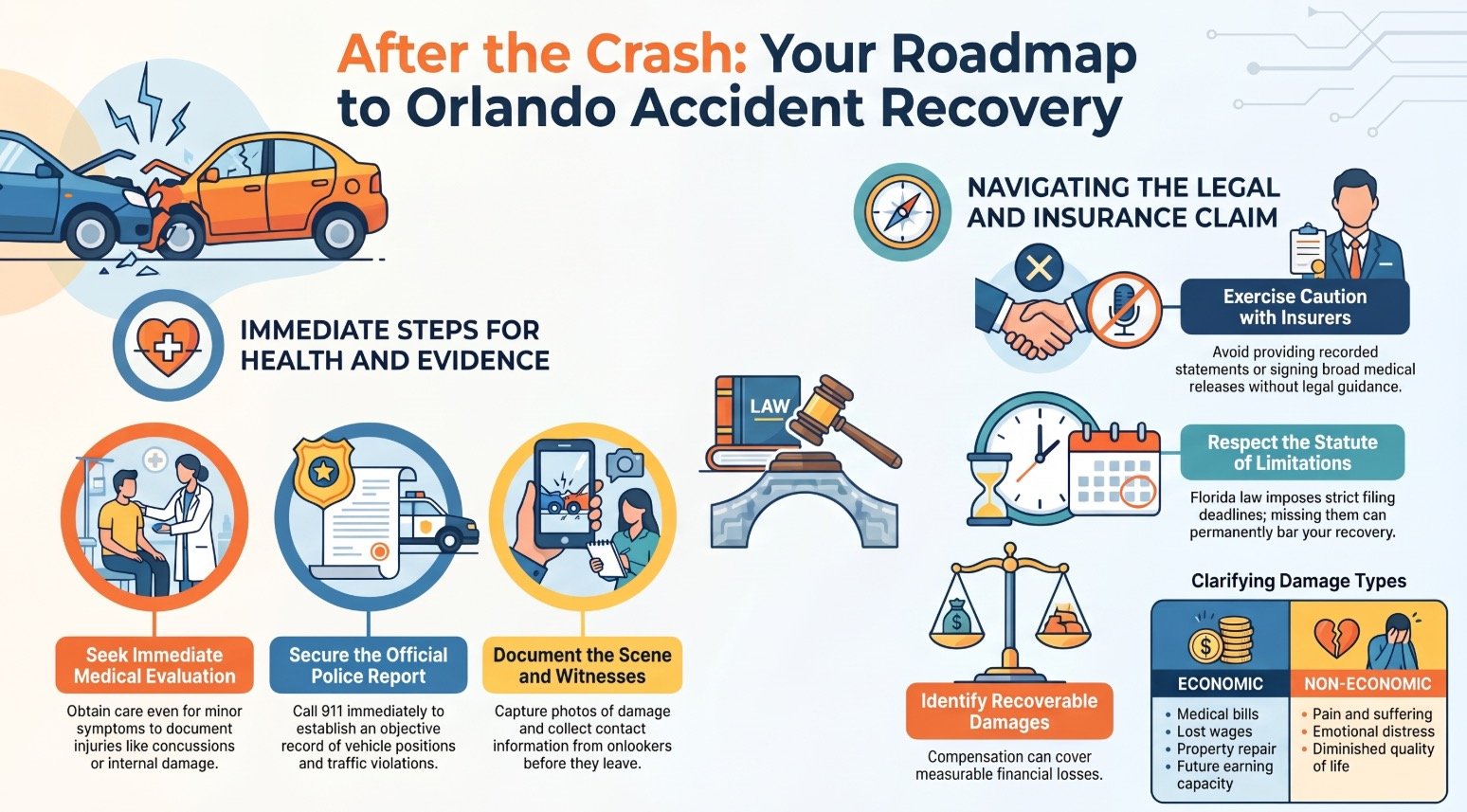
After an Orlando car accident injury, the individual should seek immediate medical care, even if symptoms initially appear minor. Report the accident to law enforcement, and document relevant details while they’re clear. Medical records, photographs, and other evidence can help establish the nature and extent of the injuries.
Seek Immediate Medical Care
Seek prompt medical evaluation after any Orlando car accident injury, even if symptoms initially appear minor or absent. Some conditions, including concussion, internal bleeding, and soft-tissue damage, may develop gradually and require timely assessment. A qualified clinician can document symptoms, perform appropriate testing, and recommend treatment that supports recovery and protects long-term health.
If emergency vehicle symptoms such as severe pain, difficulty breathing, confusion, weakness, uncontrolled bleeding, or loss of consciousness occur, emergency services should be contacted immediately. Injured individuals should avoid driving themselves when serious symptoms are present and should accept assistance from responsible bystanders or responders.
Medical follow-up remains important after an initial examination, especially if discomfort, dizziness, headaches, or limited movement persists. Medical records can also help caregivers coordinate appropriate support while recovery progresses.
Report The Accident
When an Orlando car accident results in injury, the involved individuals should report the collision to law enforcement as soon as it is safe to do so. Calling 911 allows police and emergency responders to address injuries, manage traffic, and establish scene safety. Individuals should provide the dispatcher with the location, apparent injuries, number of vehicles, and any immediate hazards, such as fire or leaking fuel. Unless necessary to prevent further harm, vehicles and debris should remain undisturbed until officers arrive. Each person should communicate factual information without speculating about fault or making accusations. Witness statements can help officers understand how the collision occurred, so provide witnesses’ names and contact information when available. A responding officer may prepare an official report, and involved individuals should ask for instructions on how to obtain a copy.
Document Your Injuries
Medical documentation should begin as soon as possible following an Orlando car accident injury. A prompt examination can identify hidden conditions, establish Injury Severity, and connect symptoms to the collision. The injured person should describe all discomfort accurately, including location, intensity, movement limitations, and changes over time. Consistent Pain Documentation may include written notes, prescribed treatment, photographs of visible injuries, and records of missed work or daily activities.
A clear Symptom Timeline helps healthcare professionals evaluate progression and supports an accurate account of the injury. Preserve medical records, including emergency department reports, imaging results, prescriptions, and provider recommendations. Do not skip medical follow-ups, even when symptoms temporarily improve. Attending appointments demonstrates responsible care and allows providers to adjust treatment. Accurate documentation can also help advocates and legal representatives understand the person’s needs.
Critical Evidence in an Orlando Car Accident Injury Case
Strong evidence can establish how the Orlando collision occurred, document the injuries, and support the claimed damages.
Material commonly includes:
- Police accident report
- Medical treatment records
- Photographs and videos
- Witness contact information
Collecting and preserving these materials promptly can help an Orlando car accident lawyer evaluate liability and build the injury case.
Police Accident Report
A police accident report can serve as crucial evidence in an Orlando car accident injury case by documenting the collision while the circumstances remain recent. The responding officer may record vehicle positions, roadway conditions, visible damage, witness statements, and each driver’s account. These observations can help establish how the crash occurred and identify information that requires further investigation. An Injured Driver should confirm the report number and responding agency are preserved for later retrieval. The report may also note citations, apparent traffic violations, weather, lighting, and Scene Safety concerns that affected the incident. Although an officer’s conclusions are not automatically decisive, the report can provide an objective framework for evaluating disputed facts. Promptly obtaining and reviewing it may help protect the interests of everyone seeking a fair and responsible resolution.
Medical Treatment Records
When an Injured Driver seeks care after an Orlando car accident, treatment records can establish the nature, severity, and progression of the claimed injuries. Records from emergency departments, physicians, therapists, and experts may document symptoms, diagnoses, testing, prescribed care, and limitations affecting daily activities or employment. Consistent medical documentation can connect an injury to the collision and clarify whether recovery remains ongoing. Patients should provide complete histories, attend recommended appointments, and preserve bills, referrals, and discharge instructions. Delayed treatment, missed visits, or undocumented complaints may give an insurer grounds to question causation or damages. Counsel may review these materials before Insurance claim deadlines expire, ensuring required information is submitted accurately. During settlement negotiations, organized records can support reasonable compensation for medical expenses, lost income, and ongoing treatment needs.
Photographs And Videos
Photographs and videos can preserve crucial evidence in an Orlando car accident injury case by documenting vehicle damage, road conditions, traffic signals, visible injuries, and the surrounding scene before conditions change. Clear images can document vehicle damage by showing impact points, broken components, airbag deployment, and debris patterns. Videos can capture lighting, weather, lane markings, and signal timing, which may help explain how the collision occurred. Take images of bruising, swelling, or other visible injuries promptly and periodically, and collect medical records for professional documentation of diagnoses and treatment. Original files should be preserved with dates and locations when available. The injured person should avoid editing, filtering, or publicly posting accident-related media. A lawyer can organize these materials and assess their relevance to liability and damages.
Witness Contact Information
Witness contact information can provide important evidence in an Orlando car accident injury case by identifying individuals who observed the collision, surrounding conditions, or the parties’ statements immediately afterward. Record names, telephone numbers, email addresses, and brief descriptions of each witness promptly, since memories and contact details may change. Eyewitness statements can clarify traffic signals, vehicle speeds, road hazards, and post-crash conduct, helping establish responsibility and the extent of resulting harm. Documentation tips include noting where each witness stood, avoiding coaching, and preserving original notes and messages. Sharing this information promptly with legal counsel helps preserve evidence and enables timely interviews. Witness accounts may also improve police report accuracy if important observations were omitted or reported incorrectly, supporting a thorough, fair evaluation of the injury claim.
Long-Term Effects of Orlando Car Accident Injuries
Orlando car accident injuries can produce lasting consequences, including chronic pain conditions that affect mobility, sleep, and daily functioning. Emotional trauma may also persist through anxiety, depression, or post-traumatic stress, even after physical wounds have recovered. These challenges can lead to significant financial and lifestyle changes, including medical expenses, reduced income, and limitations on personal activities.
Chronic Pain Conditions
When injuries from an Orlando car accident fail to resolve, they may develop into chronic pain conditions that interfere with movement, sleep, employment, and daily activities. Conditions may include persistent back or neck pain, nerve irritation, joint damage, and recurring headaches. A timely pain diagnosis can help identify the affected tissues, establish appropriate treatment goals, and document the condition’s connection to the collision. Medical providers may recommend physical therapy, prescribed medication, injections, activity adjustments, or other measures based on the patient’s needs. Because symptoms can fluctuate, consistent records of pain levels, limitations, appointments, and treatment responses may support continuity of care. Ongoing treatment can also demonstrate that the condition requires sustained medical attention rather than brief recovery services. Legal guidance may help affected individuals address medical costs and related losses.
Emotional Trauma
Emotional trauma after an Orlando car accident can persist long after visible injuries have improved, affecting concentration, sleep, relationships, and the ability to travel or resume normal activities. A person may experience intrusive memories, heightened alertness, irritability, or fear when approaching traffic, even when physical recovery appears complete. These symptoms can interfere with work, caregiving, and participation in community responsibilities. Post-accident counseling may help identify trauma-related conditions, develop coping strategies, and support a gradual return to ordinary routines. Medical documentation can also clarify how emotional symptoms relate to the collision and ongoing treatment. Insurance claim stress may intensify anxiety, particularly when a person must repeatedly describe the event or address disputed medical needs. Prompt professional support and compassionate communication can help protect long-term psychological well-being.
Financial And Lifestyle Changes
Long-term injuries from an Orlando car accident can alter a person’s finances, work capacity, and daily routines even after acute medical treatment ends. Reduced mobility, ongoing therapy, and lost earning ability may require changes to employment, transportation, housing, and family responsibilities. Medical expenses can continue through prescriptions, rehabilitation, professional visits, and assistive equipment, creating pressure when insurance claim delays postpone reimbursement. A thorough record of treatment, income loss, household assistance, and related expenses can help clarify the injury’s continuing impact. Property damage may also cause vehicle depreciation, especially when a repaired vehicle has a diminished resale value. Legal guidance can help identify recoverable damages and coordinate communication with insurers. Families and caregivers benefit from practical planning that preserves stability while supporting the injured person’s independence, dignity, and long-term recovery.
Don’t Wait. Call Our Florida Personal Injury Lawyers Now!
Proving Liability in Orlando Car Accident Injury Cases
Establishing liability in an Orlando car accident injury case requires evidence showing that another party’s negligent conduct caused the collision and resulting injuries. Relevant proof may include crash reports, photographs, traffic-camera footage, vehicle damage, witness statements, and electronic data from involved vehicles. Testimony from accident reconstruction professionals can clarify speed, roadway conditions, visibility, and the sequence of events.
The injured person must also connect the collision to documented harm. Medical records, diagnostic testing, treatment histories, and physician opinions can establish medical causation, while consistent symptom accounts may support the injury claim. Evidence of missed work, reduced earning capacity, and necessary assistance can demonstrate additional consequences.
Potentially responsible parties may include a careless driver, an employer, a vehicle owner, or another entity whose conduct contributed to unsafe conditions. Investigators should preserve physical evidence and identify applicable insurance coverage without speculating about settlement discussions. Careful documentation allows the legal process to serve injured individuals and promote accountability through reliable, fact-based determinations.
Dealing With Insurance Companies After an Orlando Car Accident Injury
After an Orlando car accident injury, handle communications with insurance companies carefully because statements, medical authorizations, and other information may affect a claim’s evaluation. An injured person should provide accurate facts while avoiding speculation about fault, prognosis, or the full extent of losses. Prompt medical treatment and organized records can support clear communication without overstating any condition.
An insurer may request a recorded statement, broad medical releases, or documentation that is unnecessary for evaluating accident-related injuries. Legal guidance can help determine which requests are appropriate and protect sensitive information. Representatives should also explain the insurance claim timeline, including applicable reporting requirements and potential delays, without promising a particular result.
Awareness of unfair denial strategies is important. These may include minimizing injuries, attributing symptoms to prior conditions, or relying on incomplete statements. Careful documentation, consistent communication, and respectful advocacy help preserve a claim. A lawyer may communicate directly with insurers, allowing the injured person to focus on recovery and family responsibilities.
What to Expect During an Orlando Car Accident Injury Claim Process
An Orlando car accident injury claim typically begins with an initial case evaluation to assess liability, injuries, damages, and available legal options. The process may include gathering medical records, accident reports, witness statements, and other evidence before insurance negotiations begin. If negotiations do not produce a fair resolution, the claim may proceed to settlement discussions or trial.
Initial Case Evaluation
During an initial case evaluation, an Orlando car accident lawyer reviews the collision, injuries, medical treatment, insurance coverage, and available evidence to determine whether a viable injury claim exists. The evaluation typically includes a preliminary liability assessment, considering traffic laws, driver conduct, and circumstances that may support responsibility. The lawyer may explain evidence preservation, including the importance of retaining relevant records and avoiding statements that could undermine the claim. Medical documentation is reviewed to connect reported injuries with the collision and assess ongoing treatment needs. The discussion may also address an insurance claim strategy, potential coverage limits, deadlines, and communication with adjusters. The attorney generally explains possible legal options, expected stages, and practical responsibilities, enabling the injured person to make informed decisions while protecting personal interests.
Evidence Gathering Process
Evidence gathering establishes the factual foundation of an Orlando car accident injury claim by documenting how the collision occurred, who may be responsible, and the extent of the resulting harm. A legal team may collect crash reports, photographs, traffic-camera recordings, witness statements, medical records, employment documentation, and vehicle damage assessments. Evidence preservation should begin promptly because physical conditions, digital footage, and recollections can change or disappear. The injured person may be asked to maintain treatment records, follow medical instructions, and provide a consistent account of symptoms and limitations. Handle insurance communication carefully, and retain relevant notices and correspondence for review. Investigators may also examine roadway design, lighting, signage, and driver conduct. This organized process helps present reliable information, support the claimant’s recovery, and protect public accountability.
Insurance Negotiations
Insurance negotiations determine how an Orlando car accident injury claim may be valued and resolved. After reviewing medical records, accident evidence, and coverage information, an insurer may evaluate liability, treatment needs, lost income, and related losses. The injured person may be asked to provide Policyholder statements, recorded accounts, or authorization for relevant documentation. Each response should remain accurate and consistent with the available evidence.
Adjusters may question whether treatment was necessary, whether prior conditions contributed to symptoms, or whether charges are reasonable. Medical billing disputes can delay evaluation when providers submit inconsistent invoices or insurers challenge the connection between services and the collision. A representative may organize records, address requests, and communicate with the carrier on the claimant’s behalf. Careful documentation and timely responses help protect the claim’s value while supporting a fair, informed assessment.
Settlement Or Trial
When an Orlando car accident injury claim cannot be resolved through insurance negotiations, the injured party may pursue a settlement or proceed toward trial. A settlement provides a negotiated resolution, potentially delivering compensation sooner while avoiding courtroom uncertainty. Before accepting, the claimant generally evaluates medical evidence, lost income, future needs, and the insurer’s tactics. If litigation advances, the legal team develops a trial strategy, presents witnesses and documentation, and responds to arguments challenging liability or damages. The court process may require depositions, expert testimony, and careful preparation over an extended period. Ultimately, a jury decision could award compensation, reduce damages, or reject the claim entirely. Weigh this verdict risk against the settlement’s certainty, timing, and terms. Either way, informed guidance helps protect the claimant’s interests and supports a fair resolution.
Compensation for Orlando Car Accident Injury Damages
A person injured in an Orlando car accident may seek compensation for damages caused by another party’s negligence. A claim may address losses connected to medical treatment, vehicle damage, and other accident-related needs, subject to available evidence and applicable insurance coverage. Documentation can strengthen the request, including police reports, medical records, repair estimates, wage statements, photographs, and witness information. An attorney may help identify responsible parties, communicate with insurers, and protect the injured person from premature settlement decisions. When an insurer disputes responsibility or undervalues a claim, Insurance denial appeals may require organized supporting records and a clear explanation of the policy and accident circumstances. If a vehicle cannot be used during repairs, rental reimbursement claims may also be pursued when coverage and policy requirements permit. Prompt attention can preserve evidence and support fair treatment. Legal guidance may also help families, caregivers, and injured individuals navigate the process while seeking an accountable resolution from those responsible.
Economic vs Non-Economic Damages in Orlando Car Accident Cases
Orlando car accident claims may include economic damages, such as medical expenses, lost wages, and property repair costs. Non-economic damages address less tangible harm, including pain, emotional distress, and diminished quality of life. Determining total compensation requires evaluating both categories in light of the evidence and the injury’s effect on the claimant’s life.
Economic Damages Explained
Economic damages compensate an injured person for measurable financial losses resulting from an Orlando car accident. These damages commonly include emergency treatment, hospital services, medication, rehabilitation, and future medical care reasonably connected to the collision. They may also cover vehicle repair or replacement, damaged personal property, transportation expenses, and income lost during recovery. If injuries limit future earning capacity, qualified evidence may support compensation for projected losses. Documentation, including invoices, pay records, medical evaluations, and repair estimates, helps establish the amount requested. A careful review may also identify costs caused by distractions at intersections or failures to follow motorcycle safety tips when those circumstances contributed to the crash. An attorney serving injured individuals can organize records, assess liability evidence, and pursue the full economic value supported by the claim.
Non-Economic Damages Considered
While economic damages address documented financial losses, non-economic damages compensate for the personal effects of an Orlando car accident that are more difficult to calculate. These damages may reflect pain and suffering, emotional distress, disfigurement, inconvenience, and the loss of enjoyment of life. A person may experience persistent discomfort, anxiety, sleep disruption, or difficulty returning to activities that previously provided purpose and connection. In serious cases, injuries can affect family relationships, independence, and the ability to participate in community responsibilities. Non-economic damages recognize these human consequences rather than relying solely on receipts or employment records. Medical documentation, personal accounts, and testimony from relatives or professionals may help demonstrate the injury’s impact. Courts and insurers evaluate the circumstances, severity, duration, and recovery outlook when considering this category of harm.
Calculating Total Compensation
Calculating total compensation in an Orlando car accident case requires evaluating both documented financial losses and the broader personal harm caused by the injuries. Economic damages may include emergency treatment, rehabilitation, prescription costs, lost wages, property damage, and reduced earning capacity. Medical Evidence, such as records, physician opinions, and treatment plans, helps establish the injury’s severity and the need for care. Future Losses may require expert projections addressing ongoing treatment, disability, career limitations, and related expenses. Non-economic damages address pain, emotional distress, disfigurement, diminished quality of life, and loss of companionship. Because these harms affect individuals and families differently, their value depends on the evidence and circumstances presented. A careful assessment supports fair recovery and helps injured people access the resources they need for recovery, stability, and continued participation in their communities.
When an Orlando Car Accident Injury Case Goes to Trial vs Settlement
When an Orlando car accident injury case proceeds to trial rather than settlement, the decision typically reflects significant disputes over liability, damages, or the insurance company’s willingness to offer fair compensation. A settlement can provide a defined recovery, reduce delays, and spare injured individuals and families the demands of a courtroom. Counsel may use a Settlement negotiation strategy involving medical documentation, wage records, expert opinions, and a clear assessment of future needs.
Trial permits both sides to present evidence before a judge or jury when negotiations fail. However, Jury trial risks include an uncertain result, substantial preparation, public testimony, and the possibility that awarded damages differ from expectations. The trial process may also extend resolution and increase litigation costs. A careful evaluation considers the strength of available evidence, injury impact, financial pressures, and the client’s objectives. Legal counsel can explain these competing considerations, communicate respectfully with opposing parties, and help each client choose an informed path that supports recovery and accountability.
Florida Laws That May Affect Your Orlando Car Accident Case
Florida laws governing Orlando car accident claims can affect liability, available compensation, filing deadlines, and the evidence required to prove an injury case. Understanding these rules helps injured individuals pursue fair treatment and support others facing similar hardships.
- Comparative Negligence: Florida may reduce compensation when an injured person shares responsibility for a collision. Evidence concerning speed, distractions, traffic signals, and vehicle positioning can influence each party’s assigned percentage of fault.
- No Fault Threshold: Florida’s personal injury protection system generally requires injured drivers to seek initial medical benefits through their own coverage. A claim against another driver may require proof of a qualifying serious injury, such as permanent impairment or significant scarring.
- Insurance Requirements: Drivers must maintain required personal injury protection and property-damage coverage. Policy terms, exclusions, and available liability limits can affect recovery.
- Evidence Rules: Medical records, photographs, witness statements, crash reports, and repair estimates can help establish causation, damages, and responsibility. Legal guidance may help preserve reliable evidence and promote an orderly, equitable resolution.
The Statute of Limitations for Orlando Car Accident Injury Cases
The statute of limitations imposes a strict deadline for filing an Orlando car accident injury lawsuit, and missing that deadline may prevent an injured person from recovering compensation through the courts. In Florida, the applicable period commonly depends on the date of the crash, the nature of the injury, and the identity of the responsible party. Recent statutory changes may affect the deadline, so an accurate review of current law is crucial.
An injured person should not assume that negotiations with Common Insurance carriers extend the filing period. Settlement discussions generally do not preserve a lawsuit after the statutory deadline expires. Different rules may apply when a government entity is involved, a minor is injured, or the claim concerns medical treatment arising from the collision. Wrongful Death Claims also carry specific deadlines that may differ from personal injury actions. Because evidence and legal rights can be lost with time, prompt attention helps preserve available remedies and supports informed decisions for affected families.
How a Orlando Car Accident Lawyer Can Help You
An Orlando car accident lawyer can help an injured person evaluate legal options, identify potentially responsible parties, and pursue compensation under applicable Florida law. The lawyer may support the injured person and family by providing organized, ethical guidance throughout the claim.
- Evidence development: Counsel can gather crash reports, medical records, photographs, witness statements, and other documentation that clarifies liability and losses.
- Damage assessment: A lawyer can calculate medical expenses, lost income, property damage, rehabilitation needs, and other legally recoverable harm.
- Insurance advocacy: Representation may strengthen negotiations and address Insurance claim disputes involving denials, delays, inadequate offers, or disputed fault.
- Strategic litigation: Counsel can file appropriate pleadings, manage court procedures, and evaluate punitive damages eligibility when conduct appears intentionally harmful or grossly negligent.
This assistance allows an injured person to make informed decisions while preserving personal time for recovery and family responsibilities. A lawyer may also coordinate with medical providers and other professionals to present a complete, well-supported claim.
When to Contact an Orlando Car Accident Lawyer
Prompt legal guidance may be appropriate as soon as a person suffers an injury, faces disputed fault, or receives communication from an insurer after a crash. Early contact can help preserve relevant information while events are fresh and clarify practical steps to protect a potential claim.
Consider contacting counsel when symptoms appear after leaving the scene, medical expenses begin to accumulate, or treatment may continue. Emergency medical documentation can establish the timing and nature of reported injuries, making prompt medical attention and organized records important. Legal guidance may also be useful when another driver denies responsibility, multiple vehicles are involved, or a police report contains disputed details.
Insurers may request recorded statements, medical authorizations, or quick settlement decisions. Before responding, a claimant can seek advice about the significance of those requests and available options. Insurance claim deadlines vary by policy, circumstances, and applicable law, so delay may jeopardize recovery. Timely consultation allows community members to make informed decisions while supporting injured individuals through an orderly process.
Why You Need an Experienced Orlando Car Accident Lawyer
Because car accident claims often involve disputed facts, evolving medical conditions, and strict procedural requirements, experienced legal counsel can materially affect the strength of a person’s recovery. An Orlando car accident lawyer evaluates liability, identifies responsible parties, and protects a client’s position while treatment continues. Counsel can communicate with insurers, challenge incomplete investigations, and prevent recorded statements or early settlements from undermining legitimate compensation.
Effective Evidence Organization also supports a clearer presentation of damages. Medical records, wage information, photographs, witness accounts, and collision reports must be collected, reviewed, and connected to the claimed losses. An experienced attorney understands how these materials can establish causation and demonstrate the accident’s continuing impact.
Professional representation allows injured individuals and their families to focus on recovery and service to one another rather than managing adversarial procedures alone. While choosing a lawyer remains an important later consideration, experience generally provides stronger preparation, more consistent advocacy, and informed protection throughout the claim process.
Don’t Wait. Call Our Florida Personal Injury Lawyers Now!
How to Choose the Right Orlando Car Accident Lawyer for Your Case
Selecting the right Orlando car accident lawyer requires more than reviewing advertising claims or settlement figures. A qualified attorney should demonstrate careful listening, clear communication, and a consistent commitment to protecting injured clients’ interests. During a Free Consultation, prospective clients can ask how the lawyer evaluates liability, medical evidence, insurance coverage, and potential damages.
The discussion should also cover lawyer fees, including whether the firm uses a contingency arrangement, which expenses may be deducted, and when payment may become due. Transparency at the beginning can prevent misunderstandings later.
Local Court Experience may provide practical value because familiarity with regional procedures, judges, and opposing counsel can support efficient case management. However, evaluate experience alongside the lawyer’s ability to explain a tailored Case Strategy. The proposed approach should identify likely challenges, evidence requirements, negotiation options, and circumstances that could require trial preparation.
A suitable lawyer should provide realistic expectations without promising a particular outcome and remain prepared to serve the client’s needs throughout the claim.
About The Law Offices of Anidjar & Levine
The Law Offices of Anidjar & Levine represents individuals pursuing compensation after car accidents in Orlando and throughout Florida. The firm focuses on personal injury advocacy, helping injured clients understand their rights and evaluate available legal options. Its attorneys investigate collisions, review medical records, assess insurance coverage, and identify potentially responsible parties before developing a case strategy tailored to each claim.
Through legal representation, the firm seeks to address medical expenses, lost income, property damage, and other losses supported by evidence. Attorneys communicate with insurers, gather witness statements, consult relevant professionals, and prepare cases for negotiation or litigation when appropriate. This structured approach helps clients make informed decisions as their claims move forward.
Individuals evaluating the firm can review client testimonials and service information to better understand its professional approach. The firm also emphasizes clear communication and attentive case management, recognizing that accident victims often need guidance during difficult circumstances. Its work reflects a commitment to serving injured people with diligence, preparation, and accountability.
Frequently Asked Questions
Can I Afford an Orlando Car Accident Lawyer if I Have Limited Financial Resources?
Yes, an injured person may afford legal representation despite limited financial resources. Many attorneys handling auto injury claims offer contingency arrangements, meaning they collect fees only if they recover compensation. Potential clients should also ask about low-cost options, payment plans, and whether the firm advances case expenses. Comparing several qualified firms can clarify obligations before representation begins. A written fee agreement should explain percentages, expenses, and circumstances that could create additional financial responsibility.
Will My Car Accident Case Affect My Immigration Status?
A car accident case generally does not affect a person’s immigration status, particularly when the individual is seeking compensation as an injured party. However, immigration consequences may arise from separate criminal conduct, such as driving under the influence, using false documents, or leaving the accident scene. An attorney can review the immigration timeline, DMV records, police reports, and court filings, then coordinate with qualified immigration counsel to protect the person’s rights.
Can Family Members Attend Meetings With My Orlando Car Accident Lawyer?
Yes, family members may generally attend meetings with a car accident lawyer, provided the client agrees and confidentiality considerations are addressed. Their presence can support communication, help remember important details, and assist with documents. However, the lawyer may request private discussions to protect privileged legal representation and ensure the client speaks independently. Arrange family participation in advance, especially when sensitive medical, financial, or immigration information may be discussed.
What Happens if the At-Fault Driver Dies After the Accident?
If the at-fault driver dies after an accident, the injured person may still pursue compensation through the driver’s insurance coverage and, when necessary, the estate. The claim process may involve notifying the insurer, identifying estate representatives, and filing required documents within applicable deadlines. A probate impact can affect recovery timing and available assets. Wrongful death claims generally apply when the accident victim dies, rather than when the at-fault driver dies.
Can I Change Lawyers During My Orlando Car Accident Case?
Yes, a client can generally change lawyers during a car accident case, provided they meet procedural requirements. The client should submit a Request for Replacement and obtain Written Consent when required by the court or current counsel. Reviewing Billing Options helps resolve outstanding fees. The new attorney typically manages the Case Transfer Process, including obtaining records, protecting deadlines, and notifying insurers. Court approval may be necessary after litigation begins.
—————————
After an Orlando car accident, injured individuals may face medical expenses, lost income, insurance disputes, and lasting physical consequences. Understanding available legal rights and acting promptly can help preserve evidence and support a fair injury claim. An experienced Orlando car accident lawyer can assess liability, communicate with insurers, and pursue appropriate compensation. The Law Offices of Anidjar and Levine provide informed guidance tailored to each case, helping victims make decisions based on the circumstances and applicable Florida law. Learn more from an Orlando Personal Injury Lawyer.