

The Law Offices of Anidjar and Levine, an Orlando slip-and-fall grocery or supermarket law firm, evaluates hazardous conditions, notice, negligence, and causation to identify potentially responsible parties. Counsel can preserve surveillance footage, inspection logs, photographs, incident reports, witness information, and medical records, and address insurance communications. A claim may involve treatment expenses, lost income, disability, pain, and emotional effects, subject to comparative negligence and filing deadlines. Learn more from an Orlando Personal Injury Lawyer about your legal rights, evidence, and the steps to evaluate a potential claim.
Main Takeaways
- An Orlando slip-and-fall lawyer evaluates hazardous conditions, store knowledge, negligence, causation, and potentially responsible parties.
- Important evidence includes photographs, surveillance footage, incident reports, inspection logs, witness information, and store communications.
- Medical records, diagnostic imaging, therapy documentation, and expense records help establish injuries, treatment needs, and financial damages.
- Claims may involve wet floors, spills, leaks, uneven surfaces, debris, poor maintenance, inadequate warnings, or insufficient inspections.
- Prompt legal guidance helps preserve evidence, manage insurance communications, address comparative negligence, and protect applicable filing deadlines.


How We Can Help With Your Orlando Slip & Fall Grocery & Supermarkets Injury Claim
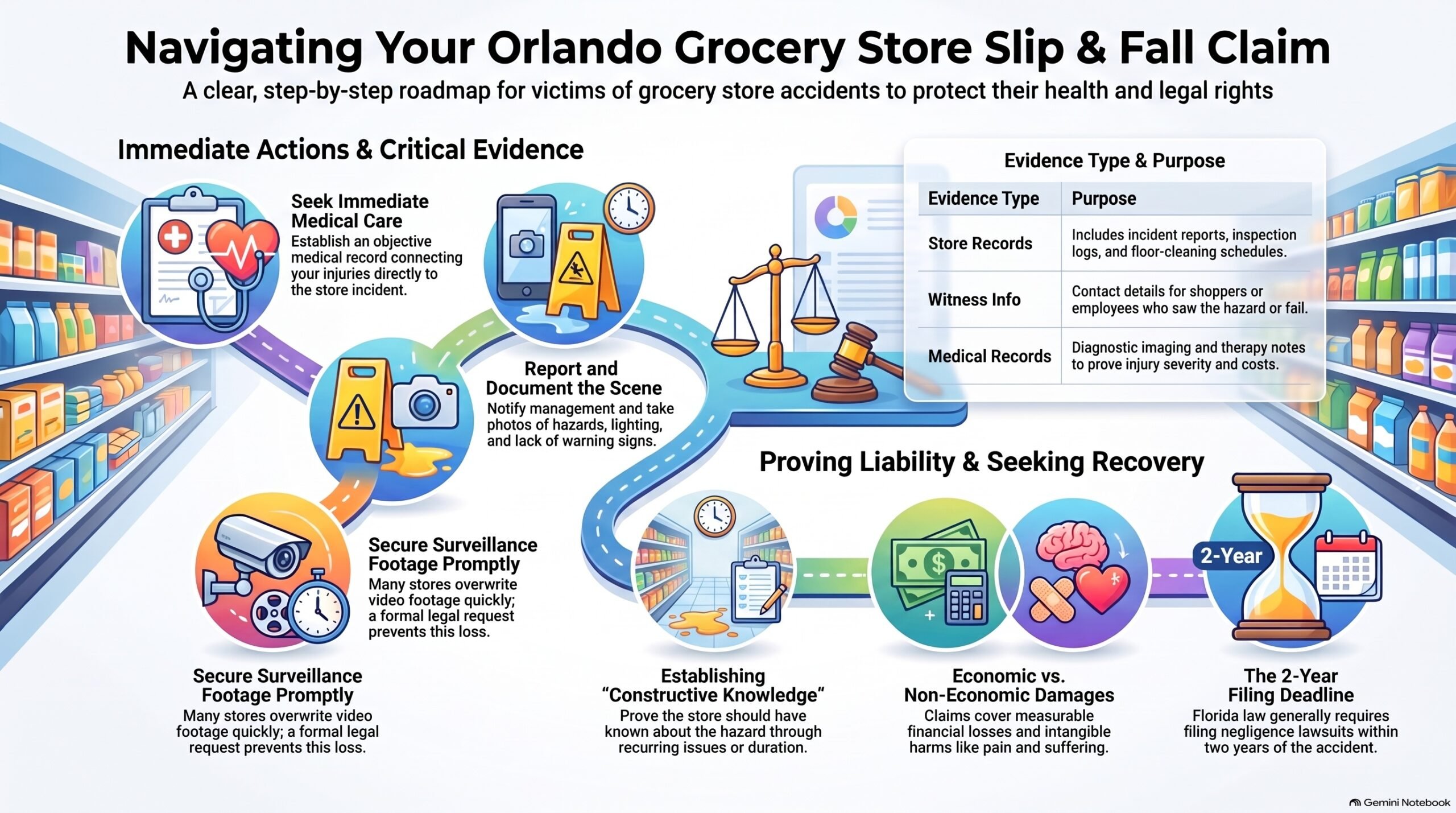
When a grocery or supermarket customer suffers injuries from a slip-and-fall, an Orlando premises liability lawyer can assess the circumstances and identify the parties potentially responsible. Assistance may begin with document gathering, including medical records, receipts, incident reports, witness information, and communications with store personnel. Careful preservation of evidence can help protect photographs, surveillance footage, inspection logs, floor-cleaning records, and other materials that may clarify what occurred.
Counsel may also assist with insurance reporting by directing communications, organizing supporting information, and helping prevent statements that could unintentionally undermine a claim. An attorney can explain available options, address questions from insurers, and maintain orderly records throughout the process. Attention to claim deadlines is required because legal time limits can affect the ability to pursue compensation. By handling administrative and investigative tasks, a lawyer can allow an injured client to focus on medical care and recovery while the claim receives consistent, professional attention.
OUR CONSULTATIONSARE FREE
START YOUR FREE CASE REVIEW

Understanding Orlando Slip & Fall Grocery & Supermarkets Injury Cases
A grocery or supermarket slip-and-fall case generally depends on whether a hazardous condition existed, whether the property operator knew or reasonably should have known about it, and whether the condition caused the reported injuries. Under Florida premises liability law, an injured customer typically must establish that the business owed a duty of reasonable care and failed to address, warn about, or adequately inspect an unsafe condition. Evidence may include photographs, surveillance footage, incident reports, employee statements, inspection records, and medical documentation. The nature and timing of the condition can affect whether constructive knowledge is supportable, particularly when direct notice is unavailable. The claimant must also connect the incident to specific damages, such as treatment expenses, lost income, and continuing limitations. Trip hazards may create liability when they are unreasonably dangerous and foreseeable. Each matter requires careful evaluation of facts, comparative negligence issues, applicable filing deadlines, and the available evidence. Prompt legal guidance can help preserve records and clarify responsibilities.
Common Causes of Orlando Slip & Fall Grocery & Supermarkets
Common causes of grocery store slip-and-fall incidents include wet floors and spilled products that create hazardous walking surfaces. Uneven flooring may also cause customers to lose balance, particularly when defects are difficult to notice. Poorly maintained aisles, including obstructed or damaged areas, can further increase the risk of serious injuries.
Wet Floors
Wet floors are a frequent cause of slip-and-fall incidents in Orlando grocery stores and supermarkets. Water may accumulate near entrances during heavy rain, around refrigerated displays, or beneath cleaning equipment. Ceiling Leaks can also allow moisture to reach aisles, creating hidden hazards that persist until employees identify and address them. When these conditions are not promptly dried, marked, or blocked off, they become significant Slip Hazards for customers, employees, and other visitors. Store operators generally have a responsibility to maintain reasonably safe walking surfaces and to respond appropriately to known or observable moisture. Insufficient inspections, delayed maintenance, or inadequate warnings may increase the likelihood of injury. Individuals who encounter a wet floor should exercise caution and report it, while property owners should act swiftly to protect everyone using the premises.
Spilled Products
Spilled products are another frequent source of slip-and-fall hazards in Orlando grocery stores and supermarkets. Broken containers, leaking packages, and overturned bottles can leave liquids, oils, powders, or other substances across aisles and checkout areas. These materials may be difficult to notice, particularly when they resemble the floor or occur near displays. Store employees generally have cleaning responsibilities that include identifying spills, restricting access, and promptly removing the substance. Managers may also be expected to establish inspection procedures and provide adequate warnings while cleanup is underway. When staff members fail to respond within a reasonable time, customers can face preventable injuries. Documenting the spill, its location, and the store’s response may help clarify whether store safety measures were followed and whether negligent conditions contributed to the incident.
Uneven Flooring
Uneven flooring can create serious trip-and-fall hazards in Orlando grocery stores and supermarkets. Raised tiles, damaged concrete, buckled flooring, and abrupt floor height transitions may catch a shopper’s shoe and cause a sudden loss of balance. These conditions can develop near entrances, checkout areas, refrigeration sections, or changes between flooring surfaces. Store operators and property managers are expected to select appropriate materials, install them correctly, and address conditions that make walking unsafe. Slip resistance materials may reduce sliding on smooth surfaces, but they do not eliminate hazards caused by elevation changes or defective installation. Clear warnings, prompt repairs, and accessible routes can help protect customers, employees, and visitors. When a person is injured after encountering an unreasonably uneven surface, documentation and professional legal guidance may help clarify responsibility.
Poorly Maintained Aisles
Poorly maintained aisles can create slip, trip, and fall hazards even when the flooring itself is properly installed. Spilled liquids, dropped merchandise, loose packaging, and accumulated debris may obstruct walking paths or reduce traction. Store operators generally have a responsibility to monitor these conditions and address them within a reasonable time. Regular worker inspections can help identify hazards before customers encounter them, particularly in busy produce, beverage, and frozen-food sections. When a spill occurs, employees may need to restrict access, clean the affected area, and document the response. Safety signage can warn shoppers while corrective action is underway, but signs do not replace prompt maintenance. If a hazardous aisle remains unattended, incident reports, surveillance footage, and inspection records may help establish how long the condition existed and whether reasonable precautions were taken.
Don’t Wait. Call Our Florida Personal Injury Lawyers Now!


Legal Rights of Orlando Slip & Fall Grocery & Supermarkets Injury Victims
When a grocery or supermarket customer is injured in a slip-and-fall, the victim may have legal rights to seek compensation for medical expenses, lost income, pain and suffering, and other related losses. Under premises liability principles, an injured person may seek recovery when a property owner or operator failed to address a hazardous condition or provide reasonable protection. The claim generally requires evidence establishing the condition, notice, causation, and resulting damages.
Victims may benefit from preserving records and obtaining qualified guidance:
- Medical documentation connecting treatment to the incident
- Photographs, witness information, and store reports
- Evidence of wages, expenses, and continuing limitations
Insurance defenses may challenge liability, the seriousness of injuries, or the value of claimed losses. Comparative negligence arguments may also reduce recovery if the victim is found partly responsible. Orlando injury counsel can communicate with insurers, evaluate available evidence, and pursue a fair resolution through negotiation or litigation. Prompt action helps protect applicable deadlines and supports informed decisions while serving the victim’s interests.
Why Do Slip-and-Fall Grocery & Supermarket Injuries Happen in Orlando?
Grocery and supermarket slip-and-fall injuries commonly result from hazardous conditions that employees or operators fail to identify, correct, or adequately warn customers about. Spilled liquids, dropped food, leaking refrigeration units, and freshly mopped floors can create slippery surfaces in aisles, entrances, and checkout areas. Produce, packaging, or merchandise left on the floor may also cause a customer to trip unexpectedly. Uneven flooring, damaged mats, loose carpeting, and broken tiles present additional dangers, particularly for older shoppers and people with mobility limitations. Improper signage can leave customers unaware of wet areas, maintenance work, or other temporary hazards. Inadequate lighting may prevent shoppers from seeing obstructions, changes in floor elevation, or spills before stepping into danger. Crowded displays and poorly arranged merchandise can further restrict visibility and walking space. These incidents often reflect inadequate inspection procedures, delayed cleanup, insufficient maintenance, or failures to provide reasonable warnings under the circumstances.
What Should You Do After an Orlando Slip & Fall Grocery & Supermarkets Injury?
After a slip-and-fall at an Orlando grocery store, the injured person should seek immediate medical care, even if symptoms initially appear minor. The incident should also be reported promptly to store management, with the report details carefully recorded. Photographs, witness information, medical records, and other evidence should be preserved to document the accident and support any potential claim.
Seek Immediate Medical Care
Prompt medical evaluation is essential following an Orlando grocery or supermarket slip-and-fall injury, even if symptoms initially appear minor. A qualified healthcare professional can identify concussions, fractures, soft-tissue damage, or other conditions that may worsen without treatment. Prompt care also creates an objective medical record that connects reported symptoms to the incident and documents recommended restrictions, medications, therapy, or follow-up appointments. Individuals should describe all symptoms accurately, including pain, dizziness, weakness, and changes that develop later. Following medical instructions supports restoration and helps prevent avoidable complications. From a premises liability perspective, timely treatment can preserve important evidence concerning injury severity. Customer safety advocacy includes encouraging injured shoppers to prioritize health rather than minimize symptoms. Legal counsel may later verify insurance coverage limits and evaluate potential policy defenses while coordinating appropriate assistance.
Report The Incident
Incident reporting should occur as soon as reasonably possible by notifying the store manager, customer service desk, or another responsible employee. A prompt report allows the store to address potential hazards and provide appropriate assistance. The injured person should calmly explain where and how the event occurred, identify any immediate symptoms, and request that the incident be formally recorded. Store personnel may use Customer incident reports to document crucial details and initiate internal procedures. If the area remains hazardous, employees should implement Scene safety measures, such as blocking access, cleaning a spill, or correcting an unsafe condition. The injured person should cooperate with reasonable instructions from staff while prioritizing medical needs. Reporting should remain factual and limited to observed circumstances, without speculation or accusations. This process supports safety and preserves an accurate institutional record.
Document The Accident
Accurate documentation should begin as soon as practicable by recording the date, time, and precise location of the accident at the Orlando grocery store or supermarket. The injured person should photograph the floor, hazardous condition, lighting, warning signs, aisle layout, footwear, and visible injuries before conditions change. Weather conditions may help explain tracked-in water or other substances, while store staffing can indicate whether employees had reasonable opportunities to discover and address the hazard. Names and contact information for witnesses should be collected, along with copies of receipts, incident reports, medical records, and related expenses. A written account should describe what occurred without speculation, including symptoms that developed later. Preserving surveillance footage may also be important, so a written request should be submitted promptly. These records can help clarify responsibility and support a thorough evaluation.
Don’t Wait. Call Our Florida Personal Injury Lawyers Now!
Critical Evidence in an Orlando Slip & Fall Grocery & Supermarkets Injury Case
Essential evidence can establish how the Orlando grocery-store fall occurred, whether the property owner had notice, and the extent of the resulting injuries. Important materials include accident-scene photographs, surveillance footage, witness contact information, and medical treatment records.
Prompt preservation and careful organization of this evidence may greatly support the injury claim.
- Accident scene photos and surveillance video footage
- Witness names and contact information
- Medical records, bills, and treatment documentation
Accident Scene Photos
When a slip-and-fall occurs at a grocery store, photographs of the accident scene can preserve evidence that might otherwise be altered, removed, or obscured. Images should capture the entire area, including the floor condition, liquid, debris, warning signs, lighting, nearby displays, and footwear. Close-up photographs can document details, while wider views provide context regarding visibility and store layout. A person taking photographs should note the date, time, location, and circumstances, and avoid altering the scene before documenting it. Photos may support an Incident report by clarifying what employees or witnesses observed. Prompt collection also helps establish a legal timeline for evidence preservation, particularly when conditions may be cleaned or rearranged. A lawyer can evaluate the images, identify missing documentation, and help preserve relevant evidence for those seeking accountability.
Surveillance Video Footage
Surveillance video footage can provide objective evidence of the conditions that led to a grocery store slip-and-fall, including the presence of liquid or debris, the timing of the hazard, and whether employees noticed or responded to it. Recordings may show inspection practices, warning signs, cleanup efforts, and conduct before and after the incident. This evidence can help establish whether maintenance violations existed and whether store negligence contributed to the unsafe condition. Because many businesses routinely overwrite footage, prompt preservation requests may be necessary to prevent its loss. A legal representative can identify relevant cameras, determine the appropriate time range, and obtain footage through the appropriate procedures. Video may also clarify disputed accounts and demonstrate whether reasonable safety measures were available but not taken, supporting a fair evaluation of responsibility and injuries.
Witness Contact Information
Witness contact information can provide important evidence in an Orlando grocery or supermarket slip-and-fall case by identifying individuals who observed the hazardous condition, the incident, or the store’s response. Names, telephone numbers, email addresses, and brief descriptions of each person’s observations should be recorded promptly, before memories fade or contact becomes difficult. Employees, customers, delivery personnel, and security officers may offer different perspectives regarding the floor’s condition, warning signs, cleanup efforts, and timing. Store incident reporting may also identify witnesses whose information is not immediately available to the injured person. Careful witness statement collection should preserve original wording, avoid leading questions, and document when and where each account was obtained. Accurate records can help attorneys evaluate credibility, establish notice, and present a clearer account of what occurred.
Medical Treatment Records
Medical treatment records are critical evidence in an Orlando grocery or supermarket slip and fall injury case because they document the nature, severity, and progression of the claimed injuries. Emergency department records, diagnostic imaging, physician notes, prescriptions, and therapy reports can connect symptoms to the incident and show the treatment reasonably required. Consistent reporting of pain, limitations, and functional changes may strengthen credibility, while gaps or contradictions can pose challenges. Patients should follow medical instructions, attend scheduled appointments, and preserve bills, referrals, and discharge paperwork. Records may also help distinguish new injuries from preexisting conditions by providing a documented baseline. When evaluating responsibility, counsel may compare medical findings with Prior accident reports and store inspection logs. Careful organization enables legal representatives to present accurate evidence and pursue appropriate assistance for injured individuals.
Long-Term Effects of Orlando Slip & Fall Grocery & Supermarkets Injuries
Long-term effects of grocery store slip-and-fall injuries may include chronic pain, reduced mobility, and permanent disability that interfere with daily activities and employment. Victims may also experience anxiety, depression, or other psychological effects following the incident and its lasting consequences. Ongoing medical treatment, rehabilitation, assistive services, and lost income can create continuing financial needs that require careful evaluation.
Chronic Pain And Disability
When a grocery store slip-and-fall causes lasting damage, the resulting chronic pain may affect a person’s mobility, employment, and ability to perform routine activities. Persistent injuries may require physical therapy, medication, injections, surgery, or assistive devices. They can also limit lifting, standing, walking, driving, and other work-related activities, potentially reducing income and increasing the costs of necessary care. Medical records, diagnostic imaging, treatment histories, and professional opinions help document the injury’s duration and functional consequences. Surveillance video may clarify the hazardous condition, the fall, and the immediate physical response. Witness statements can support accounts of observed limitations, complaints, and changes in daily performance. A legal review may consider future medical needs, diminished earning capacity, and accommodations when evaluating compensation intended to address continuing disability and practical burdens caused by the incident.
Emotional And Psychological Effects
Emotional and psychological effects may develop after a grocery store slip and fall, particularly when injuries cause persistent pain, reduced independence, or uncertainty about recovery. Individuals may experience anxiety when entering stores, walking on wet surfaces, or maneuvering crowded aisles. This anxiety can contribute to a fear of leaving home, especially when a person worries about another fall or believes assistance may be unavailable. Some individuals also report irritability, sadness, reduced concentration, or diminished confidence in daily activities. Sleep disruption may occur when pain, intrusive memories, or concerns about future mobility interfere with rest. These effects can strain family relationships and limit social participation. Recognition of psychological symptoms allows supportive relatives, caregivers, and professionals to respond with patience, reassurance, and appropriate emotional support while preserving the individual’s dignity and sense of control.
Ongoing Medical And Financial Needs
Although some injuries from a grocery store slip-and-fall improve with initial treatment, others require ongoing medical care and financial planning. Fractures, spinal conditions, and traumatic brain injuries may require follow-up appointments, rehabilitation, medication, assistive devices, or future procedures. These needs can create expenses long after an insurance claim begins. Medical documentation helps establish the injury’s progression, necessary treatment, and anticipated costs. Records may include physician evaluations, therapy notes, prescriptions, diagnostic results, and expert recommendations. Financial losses may also continue when pain or limitations prevent a person from returning to work. Income verification, employment records, tax documents, and disability statements can help demonstrate reduced earning capacity. A careful assessment of present and future needs supports fair compensation and helps injured individuals obtain services that promote stability, recovery, and independence.
Proving Liability in Orlando Slip & Fall Grocery & Supermarkets Injury Cases
Proving liability in an Orlando grocery store or supermarket slip-and-fall case generally requires evidence that the business knew, or reasonably should have known, about a dangerous condition and failed to address it within a reasonable time. Premises liability basics include identifying the hazard, establishing its location, and showing how it caused the fall and resulting injuries. Useful evidence may include photographs, surveillance footage, incident reports, inspection logs, employee testimony, witness statements, and medical records. Evidence of recurring leaks, delayed cleanup, inadequate warnings, or unsafe maintenance practices may support constructive knowledge, even when employees did not directly observe the condition. The injured person must also demonstrate reasonable conduct, such as paying attention to surroundings and following posted warnings. Comparative negligence factors may affect recovery if a court finds that the person’s actions contributed to the accident. A careful investigation can preserve relevant evidence and clarify whether the store breached its duty to maintain reasonably safe premises for customers and visitors.
Dealing With Insurance Companies After an Orlando Slip & Fall Grocery & Supermarkets Injury
After a slip-and-fall injury at an Orlando grocery store or supermarket, the insurance company may begin assessing liability and damages before the injured person fully understands the extent of the claim. Adjusters often request statements, medical records, receipts, and photographs while assessing whether store employees had notice of the hazardous condition. Claim-assessing timelines can vary depending on injury severity, available documentation, and the insurer’s investigation practices. An injured person should provide accurate information, preserve relevant evidence, and avoid minimizing symptoms or speculating about responsibility. Written communications and recorded interviews may influence how the insurer interprets the incident. Documentation should also address employment limitations, treatment needs, and out-of-pocket expenses when appropriate. Insurance fraud red flags, including inconsistent accounts, altered records, or exaggerated losses, can prompt increased scrutiny and delay resolution. A careful, service-oriented approach helps protect the injured person’s interests while maintaining credibility. Legal counsel may communicate with insurers and identify unfair tactics without making premature demands or discussing later claim procedures.
What to Expect During an Orlando Slip & Fall Grocery & Supermarkets Injury Claim Process
The Orlando slip-and-fall injury claim process generally begins with an initial case evaluation to assess liability, damages, and available evidence. Evidence collection may include incident reports, surveillance footage, photographs, witness statements, and medical records, followed by negotiations with the insurance company. If settlement efforts do not resolve the claim, the matter may proceed to trial, where liability and compensation are determined through formal legal proceedings.
Initial Case Evaluation
When an Orlando resident is injured in a grocery store or supermarket slip-and-fall, the initial case evaluation determines whether the claim has a reasonable legal and factual basis. A lawyer typically reviews how the incident occurred, the location, the reported hazard, and the store’s potential responsibilities. The evaluation also considers whether the property owner or operator had notice of the dangerous condition, whether reasonable precautions may have been absent, and how the injury affected the individual’s health, work, and daily activities. Medical documentation helps clarify diagnosis, treatment, prognosis, and injury-related expenses. Early preservation of evidence is also important because records, photographs, and other relevant materials may become unavailable. Based on these facts, counsel may explain potential claims, practical risks, anticipated costs, and appropriate next steps to support the injured person.
Evidence Collection Process
Because evidence can determine whether a grocery store slip-and-fall claim succeeds, an Orlando lawyer typically begins by identifying and preserving materials that may establish how the incident occurred. The process may include obtaining incident reporting records, surveillance footage, maintenance logs, inspection schedules, and employee statements. Photographs of the floor, warning signs, lighting, footwear, and surrounding conditions can help show whether a hazardous condition existed and whether it was visible. Damage documentation may include medical records, treatment bills, photographs of injuries, and information describing property loss. Witness contact details should be collected promptly because recollections can change. Counsel may also inspect the location and secure relevant physical evidence, while documenting when each item was obtained. This organized approach helps present a reliable account for evaluating liability and damages.
Insurance Company Negotiations
During insurance negotiations, an Orlando slip-and-fall lawyer typically communicates with the grocery store’s insurer to present evidence of liability and to document the claimant’s injuries and losses. The discussion may address premises liability basics, including notice of the hazardous condition, reasonable inspection practices, and whether store conduct contributed to the incident. Counsel may submit photographs, incident reports, witness statements, medical records, employment documentation, and related expenses to support the claim’s value. The insurer may request additional information, question responsibility, or propose a lower assessment of damages. The claimant should avoid recorded statements or signing releases without informed legal guidance. Settlement timeline expectations vary according to evidence, medical progress, and insurer responsiveness. Throughout negotiations, counsel can provide updates, protect the claimant’s interests, and seek a fair resolution based on documented harm.
Settlement Or Trial
A settlement or trial generally follows the investigation and insurance negotiation stages in an Orlando grocery or supermarket slip-and-fall claim. Counsel reviews the evidence timeline, medical records, witness accounts, store policies, and available surveillance footage before recommending the most responsible course of action. A settlement may resolve the claim without courtroom proceedings, providing compensation for medical expenses, lost income, pain, and related losses. Negotiation strength often depends on liability evidence, documented damages, and settlement leverage created by a credible trial strategy. If negotiations fail, the injured person may file a lawsuit, participate in discovery, attend hearings, and present evidence before a judge or jury. Trial outcomes are uncertain, and litigation may require significant time and preparation. Throughout either process, counsel explains developments and protects the claimant’s interests.
Compensation for Orlando Slip & Fall Grocery & Supermarkets Injury Damages
When a grocery store or supermarket fails to address a dangerous condition, an injured customer may seek compensation for damages resulting from the slip and fall in Orlando. Recovery generally depends on proving premises liability, including that the business knew or reasonably should have known about the hazard and failed to correct or warn about it. Evidence such as incident reports, photographs, witness statements, surveillance footage, and medical documentation may support the claim. An attorney can evaluate fault, communicate with insurers, and protect the customer during insurance negotiations. The process may involve reviewing applicable policies, determining disputed facts, and addressing compensation limits that could affect available recovery. Florida law may also consider comparative fault if the injured person’s conduct contributed to the incident. A legal representative can organize supporting evidence, explain procedural requirements, and pursue a resolution consistent with the injury’s documented consequences. Prompt action may help preserve evidence and guarantee that responsible parties are properly identified.
Economic vs Non-Economic Damages in Orlando Slip & Fall Grocery & Supermarkets Cases
Economic damages include verifiable financial losses such as medical expenses, lost wages, and future treatment costs resulting from a grocery store fall. Non-economic damages address less tangible harms, including pain, emotional distress, and diminished quality of life. Proving either category generally requires organized documentation, credible testimony, and evidence connecting the losses to the incident.
Economic Damages Explained
Following a slip-and-fall in an Orlando grocery store or supermarket, damages generally fall into two categories: economic and non-economic. Economic damages are measurable financial losses resulting from the incident. They may include emergency care, physician visits, diagnostic testing, prescription medication, physical therapy, medical equipment, and transportation for treatment. If the injury prevents work, recoverable losses may also include documented lost wages and, in appropriate circumstances, a reduction in future earning capacity. Accurate records help establish these amounts. Proof of medical expenses can include invoices, receipts, insurance statements, and treatment summaries. Pain treatment documentation should identify services received, dates, providers, and amounts charged. Employment records, payroll statements, and tax documents may support wage-related claims. Organized evidence enables a careful evaluation of the financial harm and promotes fair compensation for necessary, accident-related costs.
Non-Economic Damages Defined
Non-economic damages address the personal effects of a slip-and-fall that do not have a fixed dollar value. They may include physical pain, discomfort, emotional distress, anxiety, embarrassment, inconvenience, and diminished enjoyment of daily activities. Unlike medical bills or lost wages, these losses lack standardized invoices and cannot be calculated through simple addition. Pain vs. compensation reflects the challenge of assigning financial value to experiences that affect a person’s dignity, independence, relationships, and sense of security. Proof of emotional suffering may include personal accounts, observations from family members, treatment records, or professional assessments, depending on the circumstances. The purpose of such damages is not to erase hardship, but to provide fair recognition for its consequences. A compassionate legal evaluation considers the individual’s circumstances, recovery, and lasting limitations.
Proving Damage Claims
A successful damage claim in an Orlando slip-and-fall case requires clear evidence linking the grocery store’s conduct to both financial losses and personal injury. Economic damages may include medical bills, rehabilitation expenses, prescription costs, lost wages, and reduced future earning capacity. Records, invoices, employment documentation, and expert testimony can support an accurate loss calculation. Non-economic damages address pain, emotional distress, inconvenience, disfigurement, and diminished quality of life. These harms may be demonstrated through treatment notes, personal journals, testimony from family members, and professional evaluations. Witness credibility also matters, particularly when describing the condition that caused the fall, the claimant’s symptoms, and resulting limitations. A careful presentation of organized evidence allows insurers, judges, or jurors to evaluate each category fairly and promotes accountability for preventable hazards.
Don’t Wait. Call Our Florida Personal Injury Lawyers Now!
When an Orlando Slip & Fall Grocery & Supermarkets Injury Case Goes to Trial vs. Settlement
When liability, damages, and insurance coverage remain disputed, an Orlando grocery or supermarket slip-and-fall injury case may proceed to trial rather than settle. Settlement discussions can continue throughout discovery, mediation, and preparation, allowing the parties to resolve the claim without a public hearing. A settlement may provide greater predictability, reduce litigation costs, and deliver compensation sooner, although its amount and terms require careful evaluation.
Trial becomes more likely when the parties disagree about hazardous conditions, notice, medical causation, or the extent of losses. Counsel may seek a Motion to Compel if a party withholds relevant records, witness information, or other evidence. Trial preparation updates generally address deposition results, expert opinions, exhibit development, witness availability, and anticipated defenses. At trial, a judge or jury determines disputed facts after hearing evidence and arguments. The decision to accept settlement or proceed should reflect the injured person’s needs, risk tolerance, financial circumstances, and commitment to achieving a fair resolution through informed legal representation.
Florida Laws That May Affect Your Orlando Slip & Fall Grocery & Supermarkets Case
Florida laws governing premises liability, evidence, and filing deadlines may materially affect the outcome of an Orlando grocery or supermarket slip-and-fall case. Florida’s Premises Liability rules generally require property owners or operators to exercise reasonable care, including addressing dangerous conditions and providing appropriate warnings. Under Florida Statutes, the injured person typically must establish that the business knew, or should have known, about the condition and failed to respond reasonably.
Important considerations may include:
- Surveillance footage, incident reports, photographs, and witness statements can help establish how long a hazard existed and whether employees had notice.
- Comparative negligence may reduce compensation if the injured person’s conduct contributed to the incident.
- Medical documentation can connect the fall to claimed injuries and support treatment-related damages.
Store inspection policies, employee training records, and maintenance procedures may also become relevant. Because legal requirements can interact with insurance practices and evidentiary issues, careful case preparation helps protect an injured person’s interests and supports a fair resolution. Serving clients effectively requires timely preservation of evidence and disciplined evaluation of each applicable rule.
The Statute of Limitations for Orlando Slip & Fall Grocery & Supermarkets Injury Cases
Although an injury claim may appear straightforward, the statute of limitations imposes a strict deadline for filing an Orlando grocery or supermarket slip-and-fall lawsuit. Under Florida law, many negligence and premises liability claims must generally be filed within two years after the accident. Missing that deadline can prevent recovery, regardless of injury severity or the store’s apparent responsibility. Certain circumstances may alter the filing period, including claims involving governmental property, delayed discovery, or legally protected individuals. Because deadlines can be disputed, injured shoppers should promptly identify the accident date and preserve medical records, photographs, surveillance footage, witness information, and incident reports. This evidence preservation supports an accurate evaluation before relevant information disappears. Comparative negligence may also affect the amount recoverable if the injured person’s conduct contributed to the fall. Insurance timelines do not replace court deadlines; adjusters may request statements or documents while the statutory period continues running. Timely attention protects the claimant’s ability to pursue accountability and obtain appropriate compensation.
How an Orlando Slip & Fall Grocery & Supermarkets Lawyer Can Help You
An Orlando slip-and-fall grocery and supermarket lawyer can help protect a shopper’s legal rights from the initial investigation through the resolution of the claim. Counsel can organize evidence, communicate with insurers, and explain the legal standards that may apply to the store’s conduct.
An Orlando grocery store slip-and-fall lawyer can investigate the incident, preserve evidence, and pursue compensation for a shopper’s injuries.
A lawyer may assist by:
- Reviewing surveillance footage, photographs, maintenance records, witness accounts, and medical documentation to clarify how the incident occurred.
- Identifying Incident reporting mistakes or missing details that could affect credibility, causation, or the claimed extent of injuries.
- Evaluating Premises liability defenses, including lack of notice, reasonable inspection procedures, comparative responsibility, or an allegedly open-and-obvious condition.
The lawyer can also calculate medical expenses, lost income, rehabilitation needs, and other legally recoverable losses. By managing deadlines, preserving relevant evidence, and presenting organized support for the claim, counsel helps reduce burdens on an injured shopper and the people assisting with recovery. Negotiation or litigation decisions can then be based on documented facts, applicable law, and the claim’s measurable impact.
When to Contact an Orlando Slip & Fall Grocery & Supermarkets Lawyer
Timely consultation with an Orlando slip-and-fall grocery and supermarket lawyer can help preserve evidence and clarify the legal options available after an accident. A consultation is appropriate as soon as possible, particularly when injuries require medical aid, the hazardous condition has been removed, or store personnel may have documented the incident.
Early legal guidance can support practical Preservation steps, including photographing the location, identifying witnesses, securing surveillance footage, and retaining footwear and clothing. It can also help organize medical records, accident reports, receipts, and insurance documentation without delaying necessary treatment. Individuals should avoid providing detailed recorded statements or signing releases before understanding their potential effect on a claim.
Contact is especially important when an insurer requests information, liability is disputed, symptoms develop later, or lost wages and ongoing care become concerns. Prompt communication allows relevant deadlines to be monitored and supports orderly decision-making. Serving injured community members responsibly includes encouraging accurate records, truthful reporting, and timely attention to health and legal needs.
Why You Need an Experienced Orlando Slip & Fall Grocery & Supermarkets Lawyer
Experienced legal representation can provide important support when a grocery or supermarket’s conduct, maintenance practices, or insurance response is disputed. An experienced Orlando attorney can evaluate whether hazardous conditions, inadequate inspection procedures, or delayed warnings contributed to an injury. This review may clarify store liability and identify responsible parties beyond the location where the incident occurred.
A prompt Legal consultation also helps preserve important information, including surveillance recordings, inspection logs, incident reports, photographs, and witness accounts. An attorney can gather and organize evidence before it disappears or becomes difficult to verify. This attorney-gathered evidence may establish how long a dangerous condition existed and whether reasonable safety measures were taken.
Experienced counsel can further develop an insurance strategy that addresses medical expenses, lost income, rehabilitation needs, and other documented losses. Professional guidance may reduce confusion in communication and help an injured person avoid making statements that could undermine a claim. Such representation allows individuals to focus on recovery and serving their families while their legal interests receive informed, diligent attention.
How to Choose the Right Orlando Slip & Fall Grocery & Supermarkets Lawyer for Your Case
When selecting an Orlando slip-and-fall grocery and supermarket lawyer, an injured person should evaluate the attorney’s experience with premises liability claims, familiarity with Florida law, and ability to investigate store safety practices. A capable lawyer should explain potential theories of negligence, evidence requirements, filing deadlines, and realistic case outcomes without promising results.
During an initial meeting, the individual may use a Client consultation checklist covering medical records, photographs, witness information, incident reports, receipts, and communications with the store. The attorney should listen carefully, identify any missing evidence, and explain how preservation requests can protect surveillance footage and maintenance records.
A clear case timeline overview can help the injured person understand the investigation, insurance communications, negotiations, litigation, and possible resolution. Fee arrangements, responsibilities, communication methods, and anticipated expenses should be addressed in writing. Choosing counsel who demonstrates patience, integrity, and organized preparation supports informed decisions and helps the injured person pursue accountability while protecting personal recovery.
About The Law Offices of Anidjar & Levine
Building on those considerations, The Law Offices of Anidjar & Levine represents individuals pursuing compensation after grocery store and supermarket slip-and-fall accidents in Orlando.
The firm assists clients seeking accountability when hazardous conditions, including spills, uneven flooring, inadequate warnings, or other forms of Negligent Maintenance, contribute to an injury.
Its legal team evaluates the circumstances surrounding each incident and may coordinate an Accident Investigation involving photographs, surveillance footage, witness accounts, inspection records, and medical documentation.
This process can help establish how the condition developed, whether the property owner or operator had notice, and whether reasonable corrective measures were taken.
The firm also explains available legal options, communicates with insurers, and works to identify damages, including medical expenses, lost income, rehabilitation costs, and pain and suffering.
By managing these responsibilities, the attorneys allow injured individuals to focus on recovery while their claims receive careful, evidence-based attention.
Each case remains subject to its specific facts, applicable law, and available proof.

Frequently Asked Questions
Does a Grocery Store’s Size Affect Its Responsibility for Customer Injuries?
A grocery store’s size generally does not change the duty standard owed to customers. Premises size may affect how hazards are identified, monitored, and corrected, as larger facilities often require more extensive inspection systems and more employees. Responsibility usually depends on whether the store knew, or reasonably should have known, about a dangerous condition and failed to address it. Evidence regarding staffing, inspection policies, notice, and the duration of hazards can help establish negligence.
Can Undocumented Shoppers Pursue Compensation After a Grocery Store Slip and Fall?
Undocumented shoppers may pursue compensation after a slip-and-fall at a grocery store if evidence shows the store’s negligence caused the injury. Immigration status generally does not eliminate premises-liability rights, and stores may maintain liability coverage for qualifying claims, subject to applicable insurance requirements. The injured person should document hazards, medical treatment, witnesses, and lost income. A qualified attorney can evaluate responsibility, available insurance, deadlines, and potential defenses while protecting the individual’s privacy and legal interests.
Are Grocery Store Employees Allowed to Discuss My Accident With Me?
Grocery store employees may discuss an accident with the injured shopper, but employee conversation boundaries require respectful, factual communication limited to legitimate business purposes. Staff should avoid blaming the shopper, pressuring a statement, promising payment, or speculating about fault. The shopper generally has post-accident privacy rights and may decline detailed questioning, request management, and seek medical or legal guidance. Store policies cannot eliminate the shopper’s right to accurately document events.
Can I Recover Damages if I Slipped While Shopping With a Child?
A shopper may recover damages after slipping while shopping with a child, provided the store’s negligence caused the fall and resulting injuries. Liability may depend on whether the store knew, or reasonably should have known, about a hazardous condition and failed to correct or warn of it. Child supervision can affect the assessment if distraction contributed to the incident. Shared negligence may reduce compensation rather than eliminate it, depending on applicable law and evidence.
Does the Store’s Surveillance System Automatically Preserve Footage After an Accident?
A store’s surveillance system does not automatically guarantee that footage will be preserved after an accident. Many businesses use limited surveillance retention periods, and footage may be overwritten unless management receives timely notice and takes steps to preserve it. A prompt written request can support automatic preservation, protect potentially important legal evidence, and facilitate an accident review. An injured shopper should document the incident and seek guidance to determine whether preservation obligations arose under applicable law.
—————————
An Orlando slip-and-fall in a grocery store or supermarket can lead to serious injuries, financial losses, and complex liability issues.
Victims may have legal options when unsafe conditions, inadequate maintenance, or insufficient warnings contributed to the incident.
Prompt legal guidance can help preserve evidence, evaluate responsibility, and pursue appropriate compensation.
Orlando Personal Injury Lawyer: The Law Offices of Anidjar and Levine provides experienced representation for injured clients seeking accountability and informed advocacy throughout the claims process.

