

The Law Offices of Anidjar and Levine help Gainesville truck accident victims investigate regulatory violations, improper loading, and cargo securement failures that may have caused or worsened their injuries. We preserve driver logs, black box data, maintenance records, loading documents, photos, and witness statements before crucial evidence disappears. We also review hours-of-service issues, overweight cargo, inspection failures, and carrier oversight. Our goal is to identify every liable party and support your claim with strong proof. Learn more from a Gainesville Personal Injury Lawyer.
Main Takeaways
- A Gainesville truck accident lawyer can investigate regulatory violations, improper loading, cargo shifts, and unsafe weight distribution.
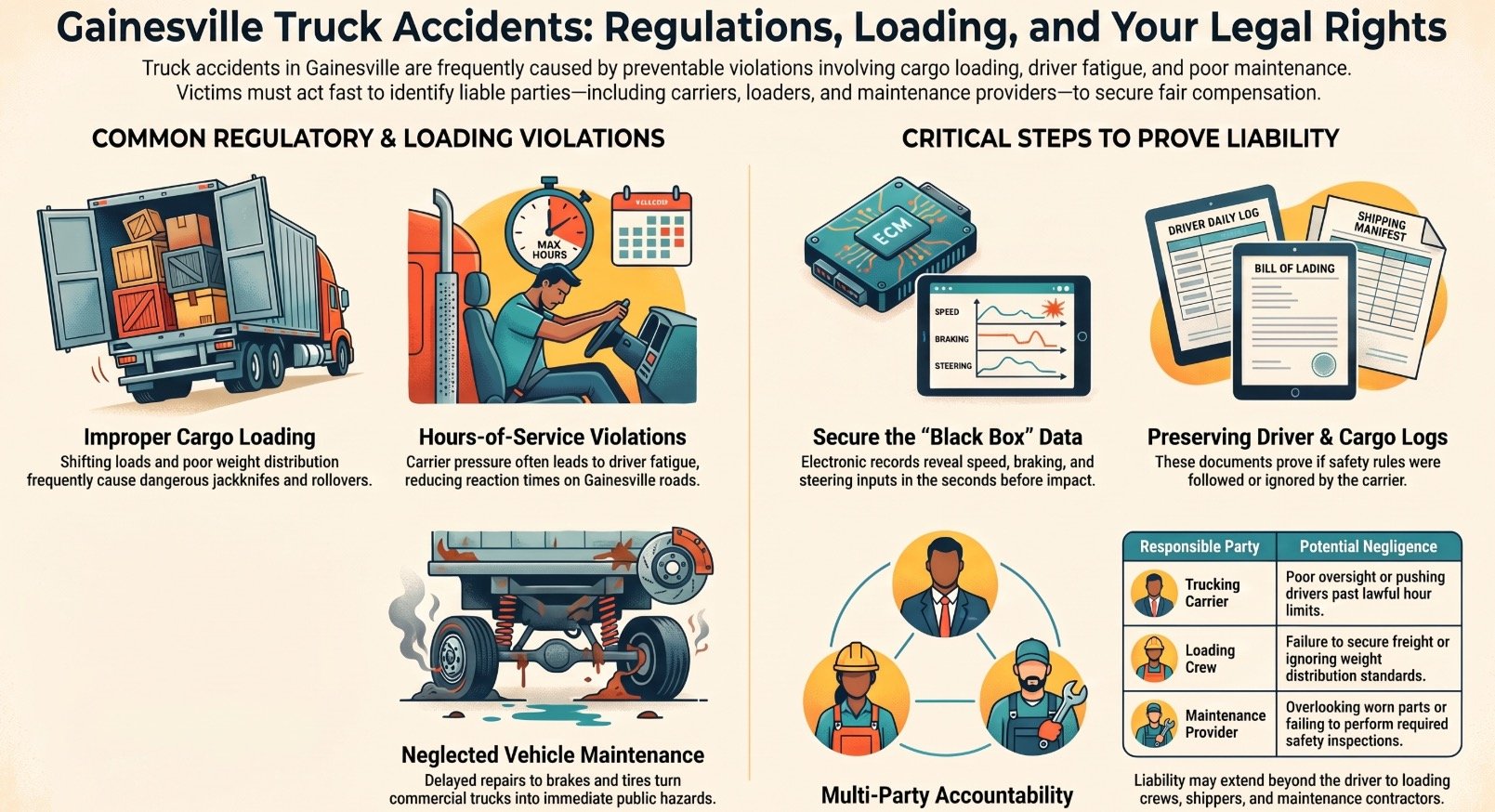
- Key evidence includes driver logs, black box data, loading records, maintenance reports, inspection records, and witness statements.
- Evidence preservation notices help prevent trucking companies from losing or destroying critical crash documentation.
- Lawyers may review hours-of-service violations, poor maintenance, defective restraints, and missed safety inspections.
- Responsible parties may include the driver, carrier, shipper, loading crew, maintenance provider, or other negligent companies.
How We Can Help With Your Gainesville Truck Accident Trucking Regulations & Loading Injury Claim
When a truck accident involves possible regulation violations or improper loading, we move quickly to identify what went wrong and preserve the evidence needed to prove it. We help you understand your options, protect your claim, and pursue accountability from every responsible party.
Our work may include a truck black box review, driver history analysis, maintenance record requests, and a focused Load security investigation. We examine whether cargo shifted, exceeded safe weight limits, or lacked proper restraints, then connect those failures to your injuries.
We also coordinate with experts, communicate with insurers, and gather witness statements before memories fade. While you focus on recovery and caring for those who depend on you, we manage deadlines, documentation, and legal strategy. Our goal is to build a clear, well-supported claim that reflects your losses and supports your continued service to your family, work, and community after a serious Gainesville truck accident.
Understanding Gainesville Truck Accident Trucking Regulations & Loading Injury Cases
Although every truck crash deserves careful review, cases involving trucking regulations and cargo loading require especially close attention because several failures may overlap. We look beyond the collision itself and examine whether the carrier, driver, shipper, or loading crew followed rules designed to protect everyone on the road. These cases often involve records, training materials, cargo securement standards, and inspection checklists that reveal whether safety practices were treated as obligations or overlooked.


When we work with you, we focus on understanding how those duties applied to your situation. Proper loading affects balance, braking, visibility, and control, so even small violations can have serious consequences. We also consider whether required inspections occurred before and during the trip. By reviewing these details carefully, we help you see the full picture, identify responsible parties, and pursue accountability in a way that supports your recovery and serves the broader goal of safer Gainesville roads for all.
Common Causes of Gainesville Truck Accident Trucking Regulations & Loading
OUR CONSULTATIONSARE FREE
START YOUR FREE CASE REVIEW

We often see Gainesville truck accidents arise from preventable violations, including improper cargo loading, driver hours violations, poor vehicle maintenance, and unsafe weight limits. When carriers ignore these rules, they put you and other motorists at serious risk on roads shared with large commercial vehicles. We examine these causes carefully, because each one can reveal liability and support a stronger injury claim.
Improper Cargo Loading
Because commercial trucks carry heavy and often uneven freight, improper cargo loading can quickly turn a routine trip through Gainesville into a serious crash. We recognize that safe transport protects every person sharing the road, including families, workers, and first responders. Cargo securing must meet strict standards, because loose materials can fall, spill, or strike nearby vehicles. Load shifting also creates dangerous instability, especially during turns, braking, or lane changes. When crews ignore weight distribution, a truck may jackknife, roll over, or require a longer stopping distance. Improper strapping can allow freight to break free, creating hazards that careful loading would have prevented. We examine loading records, inspection reports, and carrier practices to determine whether preventable loading failures contributed to your collision and losses.
Driver Hours Violations


When trucking companies push drivers beyond lawful limits, fatigue can make a fully loaded truck as dangerous as improperly secured cargo. We understand hours-of-service rules exist to protect everyone sharing Gainesville roads, including families, workers, and emergency responders serving our community. When carriers ignore Safety Compliance duties, drivers may skip rest breaks, falsify logs, or continue operating after exhausting shifts. These violations reduce reaction time, impair judgment, and increase the risk of devastating rear-end, rollover, and lane-departure crashes.
We examine electronic logging data, dispatch records, delivery schedules, and communications to determine whether Federal Oversight rules were violated. If you were harmed, we help identify whether pressure from a carrier, broker, or shipper contributed to unsafe driving, and we pursue accountability with care, diligence, and purpose.
Poor Vehicle Maintenance
Although federal and state rules require regular inspections and timely repairs, poor vehicle maintenance remains a serious cause of Gainesville truck accidents. We understand that a neglected truck can place you, your family, and the public at immediate risk. Vehicle brake checks, steering inspections, lighting repairs, and fluid reviews help prevent failures that responsible carriers should never ignore. When companies delay service, overlook worn parts, or send unsafe trucks onto local roads, preventable harm may follow.
We also see tire blowouts cause sudden loss of control, especially when carriers ignore tread wear, improper inflation, or damaged sidewalls. As we serve injured people, we examine maintenance logs, repair records, inspection reports, and driver complaints. These details help us identify accountability and protect those harmed by careless fleet management.
Unsafe Weight Limits
On Gainesville roads, unsafe weight limits can turn a large truck into a far more dangerous vehicle than it was designed to be. When carriers overload trailers, brakes work harder, tires overheat, and steering becomes less predictable. We understand these choices can endanger everyone sharing the road, including families, workers, and those serving our community daily. Weight scale inspections exist to identify violations before harm occurs, yet some companies ignore limits or falsify records to meet delivery demands. Improper loading can also raise the cargo center of gravity, increasing rollover risks during turns, lane changes, or sudden stops. If you were injured in such a crash, we examine loading documents, inspection records, and carrier practices to determine accountability and protect your right to recovery.
Don’t Wait. Call Our Florida Personal Injury Lawyers Now!
Legal Rights of Gainesville Truck Accident Trucking Regulations & Loading Injury Victims
After a serious collision involving a commercial truck, Gainesville injury victims have the right to seek compensation from every party whose negligence contributed to the crash. We help you understand these rights so you can protect your health, family, and ability to serve others.
Gainesville truck accident victims deserve clear guidance, strong protection, and accountability from every negligent party involved.
- We identify liable parties, including drivers, carriers, loaders, maintenance contractors, or brokers, when their conduct caused harm.
- We preserve trucking evidence, such as logs, weight records, inspection reports, photographs, and electronic data, before it disappears.
- We organize medical documentation to connect your injuries, treatment needs, lost income, and daily limitations to the collision.
- We build a settlement strategy that accounts for Comparative negligence, insurance defenses, and the full value of your losses.
You shouldn’t have to manage legal pressure while recovering. We stand with you, communicate clearly, and pursue accountability through negotiation or litigation when necessary.
Why Do Gainesville Truck Accident Trucking Regulations & Loading Injuries Happen?
When commercial trucks operate under tight schedules and intricate loading demands, small safety failures can quickly become catastrophic in Gainesville traffic. We often see these injuries happen because carriers, drivers, shippers, or loaders overlook duties designed to protect everyone sharing the road. Improper weight distribution can make a trailer unstable, especially during braking, turning, or sudden lane changes. A Cargo shift may cause a driver to lose control, jackknife, or roll over near intersections, ramps, and congested corridors.
We also recognize how missed safety inspections contribute to preventable harm. Worn brakes, damaged straps, defective tie-downs, underinflated tires, and overloaded axles can turn a routine delivery into a serious collision. Federal and state trucking rules exist because large vehicles demand disciplined oversight. When companies place speed, profit, or convenience above careful loading and compliance, they increase risks for families, workers, students, and public servants who depend on safe Gainesville roads every day.
What Should You Do After a Gainesville Truck Accident Involving Trucking Regulations & Loading Injury?
After a Gainesville truck accident involving trucking regulations or loading issues, we must act quickly to restore your health and legal rights. We recommend that you seek immediate medical care, preserve crash evidence when possible, and avoid giving detailed statements before understanding your position. We can then help you contact a trucking lawyer who knows how to investigate carriers, drivers, cargo practices, and regulatory violations.
Seek Immediate Medical Care
Because truck accident injuries can worsen quickly, we recommend seeking medical care immediately, even if you believe your symptoms are minor. Prompt evaluation protects your health, helps caregivers serve you effectively, and creates a clear treatment record. Tell providers about every pain point, dizziness, numbness, breathing issue, or emotional distress. Emergency symptom tracking helps reveal changes that may not appear at the scene.
We encourage you to document injury severity by following medical instructions, attending follow-up appointments, and asking questions when symptoms change. Report incident timeline details to each provider, including when pain began and how it developed. Keep medical visit notes, prescriptions, test results, and discharge instructions side by side. These records support continuity of care and help us understand how the crash affected your daily responsibilities and restoration.
Preserve Crash Evidence
Medical care protects your health, and evidence preservation protects your ability to prove what happened. After a Gainesville truck accident involving regulations or loading issues, we should act carefully and promptly. If you can do so safely, photograph the vehicles, cargo, skid marks, road conditions, warning signs, and any visible injuries. Keep damaged property, clothing, and personal items, as they may show force, impact, or debris patterns.
We should also identify witnesses and request witness statements while memories remain clear. Record names, phone numbers, and what each person observed. Important trucking evidence can include driver logs, loading records, inspection reports, and Maintenance documentation. Preserving these materials helps establish whether safety rules were followed, supporting accountability for you and others harmed by preventable misconduct.
Contact A Trucking Lawyer
When evidence and deadlines can determine the strength of a claim, you should contact a trucking lawyer as soon as possible. After we secure medical care and report the crash, legal guidance helps us protect your interests and support your recovery with diligence. A lawyer can send Evidence preservation notices, gather driver logs, maintenance records, load documents, and electronic control module data before they disappear. We can also request trucking compliance reviews to determine whether the carrier followed safety rules, weight limits, inspection duties, and hiring standards. Early counsel helps us identify responsible parties, communicate with insurers, and avoid statements that may harm your claim. By acting promptly, we support accountability, protect critical evidence, and position your case for a fair, informed resolution.
Critical Evidence in a Gainesville Truck Accident Trucking Regulations & Loading Injury Case
We focus on the evidence that shows how the crash happened, who failed to follow safety rules, and whether improper loading made your injuries worse.
Crucial proof often includes:
- Driver log records
- Cargo loading evidence
- Maintenance inspection reports
- Black box data
We use these records to identify violations, preserve your claim, and build a clear case for compensation.
Driver Log Records
Because commercial drivers must follow strict hours-of-service rules, driver log records often become central evidence in a Gainesville truck accident case involving trucking regulations and loading issues. We review these records to determine whether fatigue, pressure, or poor oversight contributed to your injuries. Electronic logging data can show driving time, rest periods, route activity, and possible gaps that need careful examination.
When we find Record errors, we look beyond simple mistakes and consider whether they point to deeper Compliance breaches. Safety audits, dispatch records, fuel receipts, and inspection materials may help confirm whether the driver or company ignored required limits. By carefully reviewing log records, we protect your right to answers while supporting safer practices that serve the public and reduce preventable harm on Gainesville roads.
Cargo Loading Evidence
Although cargo may seem secondary to driver conduct, loading evidence can play a decisive role in a Gainesville truck accident case involving trucking regulations and loading failures. We examine bills of lading, weight tickets, seal records, cargo manifests, loading diagrams, photographs, and communications between shippers, brokers, loaders, and carriers. These materials help us determine whether freight was overweight, poorly balanced, unsecured, or incompatible with the trailer used. We also pursue Document preservation quickly, because cargo records can disappear when companies resume normal operations. As we build the claim, we compare loading details with crash reports, witness accounts, electronic data, and updated incident timelines. This process helps us identify who served the supply chain responsibly, who ignored safety duties, and how loading failures contributed to your injuries.
Maintenance Inspection Reports
When a truck’s mechanical condition becomes an issue after a Gainesville crash, maintenance inspection reports can show whether the carrier followed safety rules or allowed preventable hazards onto the road. We examine maintenance records for brake work, tire condition, lighting repairs, steering issues, and missed inspections. These documents help us determine whether a company ignored defects that placed you and others at risk. We also compare inspection timelines with driver logs, Cargo tracking, and trip records to identify inconsistencies. Evidence preservation is vital because carriers may control key documents soon after the collision. We act quickly to request, secure, and review these reports before they disappear or get altered. Careful analysis can reveal negligent maintenance practices and support a claim built on accountability, service, and public safety.
Black Box Data
Maintenance reports can reveal what condition a truck was in before a crash, but black box data can show how the vehicle actually behaved in the seconds leading up to impact. We review this evidence to determine speed, braking, throttle use, steering inputs, and sudden deceleration. When available, drowsiness detection records may also help show whether a driver ignored fatigue warnings or continued operating despite safety alerts. We merit a careful investigation that protects the people harmed and supports accountability for preventable choices. We act quickly because carriers may overwrite or lose electronic data if no preservation demand is sent. In a Gainesville trucking regulations and loading injury case, black box data can link unsafe operation, improper loading, and regulatory violations to the collision.
Don’t Wait. Call Our Florida Personal Injury Lawyers Now!
Long-Term Effects of Gainesville Truck Accident Trucking Regulations & Loading Injuries
We recognize that Gainesville truck accident injuries can create lasting burdens, including chronic pain complications that affect your daily function and quality of life. We also consider how reduced earning capacity may limit your financial stability, especially when injuries prevent you from returning to the same work. We address ongoing medical needs carefully, because future treatment, rehabilitation, and support can notably shape the value of your claim.
Chronic Pain Complications
Although many truck accident injuries appear to stabilize after initial treatment, chronic pain can develop into a lasting complication that affects mobility, employment, sleep, and daily independence. We comprehend that persistent back, neck, joint, or nerve pain can limit your ability to care for family, serve your community, and manage basic routines with dignity. These complications often require consistent medical attention, including diagnostic testing, physical therapy options, medication management, and specialized referrals. We help you recognize how pain patterns, treatment gaps, and functional limitations may affect the value of your claim. Chronic pain also demands clear documentation, because insurers may minimize symptoms that aren’t easily visible. By gathering records, provider opinions, and evidence of daily limitations, we protect your right to pursue fair compensation.
Reduced Earning Capacity
When truck accident injuries limit the kind or amount of work you can perform, reduced earning capacity can become one of the most significant long-term damages in your claim. We look beyond missed paychecks and examine how your injuries affect your ability to serve others through steady, meaningful work. A Vocational assessment can identify job duties you can no longer perform, restrictions that limit advancement, and training needs for different employment. We also evaluate future wage loss by comparing your likely career path before the crash with your realistic earnings afterward. In Gainesville truck accident cases involving trucking regulations or improper loading, this analysis helps connect preventable conduct to lasting financial harm. We build this evidence carefully, so your claim reflects the full impact on your working life.
Ongoing Medical Needs
Reduced earning capacity often connects closely with the medical care you’ll need long after the crash. We evaluate ongoing needs by reviewing diagnoses, treatment plans, consultant opinions, and expected limitations. Serious truck accidents can require surgery, pain management, therapy, mobility support, and follow-up care that affects daily service to family, work, and community. Rehabilitation planning helps identify future treatment, adaptive equipment, transportation needs, and home modifications. We also focus on disability documentation, because clear records can support claims involving permanent impairment, reduced independence, and necessary assistance. When trucking regulations or unsafe loading contributed to the collision, we connect those failures to the lasting medical impact. By documenting future care with precision, we help protect your ability to receive treatment and maintain stability while serving the people who depend on you.
Proving Liability in Gainesville Truck Accident Trucking Regulations & Loading Injury Cases
Because truck crashes often involve several corporate actors, proving liability in Gainesville trucking regulations and loading injury cases requires a careful review of every decision that placed the vehicle on the road. We examine driver conduct, carrier supervision, loading procedures, maintenance records, route planning, and compliance with federal and Florida safety rules. When cargo shifts, weight limits are ignored, or required inspections are skipped, those facts can show how the harm was preventable.
We also quickly gather records, including logs, bills of lading, training materials, dispatch data, and electronic control information. Comparative fault analysis helps us address claims that you, another driver, or a third party contributed to the crash. Through expert testimony procurement, we can present qualified opinions on load securement, braking, visibility, and crash mechanics. Our goal is to build a clear account that honors your experience, supports accountability, and serves the broader need for safer roads.
Dealing With Insurance Companies After a Gainesville Truck Accident Trucking Regulations & Loading Injury
Strong liability evidence also shapes how insurance companies respond after a Gainesville truck accident involving trucking regulations or loading failures. We help you approach insurers with organized proof, clear medical documentation, and a focused account of how the crash affected your life and your ability to serve others.
Insurers may question whether cargo shifted, whether a driver violated safety rules, or whether another company controlled loading. We counter these tactics by preserving records, identifying policy layers, and preparing settlement demand letters that present damages accurately and with purpose.
When an insurer undervalues or rejects a claim, we review Insurance denial options and explain the practical choices available. We don’t let adjusters define your losses through delay, selective facts, or pressure for quick resolution. Instead, we communicate directly, protect your statements, and pursue fair compensation while you focus on recovery, family responsibilities, and the people who rely on you.
What to Expect During a Gainesville Truck Accident Trucking Regulations & Loading Injury Claim Process
We begin your Gainesville truck accident claim by evaluating the facts, identifying trucking regulation or loading issues, and outlining the damages you may recover. We then collect evidence, investigate liability, and determine whether the truck driver, carrier, loader, or another party contributed to the crash. As your claim progresses, we manage settlement negotiations, track critical deadlines, and keep you informed about what to expect at each stage.
Initial Claim Evaluation
When we begin the initial claim evaluation for a Gainesville truck accident involving trucking regulations or improper loading, we focus on identifying how the crash happened, who may be legally responsible, and what evidence must be preserved immediately. We listen to your account, review known facts, and consider whether driver conduct, carrier practices, cargo securement, or maintenance failures contributed to the collision. Our Liability review helps us determine which parties may owe accountability, including trucking companies, loaders, brokers, or maintenance providers. We also prepare an evidence checklist to guide timely preservation requests without moving into collection steps. You are entitled to clear guidance while you’re serving your family, workplace, and community through recovery. We explain deadlines, insurance issues, and next actions so you can make informed decisions.
Evidence Collection Steps
After the initial claim evaluation identifies the likely causes and responsible parties, evidence collection begins with targeted action to secure proof before it’s lost, altered, or destroyed. We help you preserve records that show what happened, including police reports, medical records, repair estimates, load paperwork, driver logs, and carrier communications. Photos and documentation from the scene, vehicles, cargo, road conditions, and visible injuries can clarify important details and support your recovery needs. We also coordinate Witness statement gathering, contacting people who saw the crash, helped afterward, or observed unsafe loading conditions. Because serving injured people requires diligence, we act promptly, organize materials carefully, and request preservation of crucial information. These steps create a reliable foundation for the claim without delaying needed treatment or support.
Liability Investigation Process
As the liability investigation begins, our focus shifts from preserving evidence to proving how the crash occurred, which safety rules applied, and who failed to follow them. We examine driver qualifications, service hours, inspection records, loading documents, maintenance files, and dispatch communications to identify violations that placed you and others at risk.
Witness statement review helps us compare what people saw with physical evidence, electronic data, and company records. When needed, we use independent accident reconstruction to analyze speed, braking, impact angles, cargo movement, and roadway conditions. We also evaluate whether brokers, shippers, loaders, maintenance contractors, or trucking companies share responsibility.
Throughout this process, we keep your needs central, because accountability supports recovery, safety, and service to the broader Gainesville community after serious trucking harm.
Settlement Negotiation Timeline
Once we’ve developed the liability evidence and a clear picture of your damages, settlement negotiations usually begin with a formal demand to the insurer or responsible parties. We present a damages valuation carefully, including medical needs, lost income, pain, and the impact on your ability to serve your family and community. After review, insurance offers may arrive within weeks, though complex trucking regulations or loading disputes can delay settlement. We evaluate each response with you, explain strengths and risks, and reject offers that don’t reflect the evidence. If negotiations stall, we may recommend mediation. Mediation outcomes often depend on preparation, documentation, and each side’s willingness to act reasonably. Throughout the process, we keep you informed and focused on a fair, responsible resolution.
Compensation for Gainesville Truck Accident Trucking Regulations & Loading Injury Damages
When a trucking regulations or loading violation causes a serious crash in Gainesville, compensation should reflect the full scope of the harm, not just the first medical bills. We help you pursue recovery that accounts for the real disruption to your health, work, family duties, and ability to serve others.
We examine carrier records, loading practices, inspection reports, and driver conduct to connect the violation to your injuries. Comparative negligence may affect recovery if an insurer claims you shared fault, so we address those arguments with evidence and clear causation. When conduct shows reckless disregard, such as knowingly unsafe loading or repeated rule violations, we also evaluate punitive damages coverage and related insurance issues.
Our goal is to build a claim that protects your future, not merely closes a file. We pursue accountable parties, document losses carefully, and press for compensation that matches the seriousness of preventable trucking misconduct.
Economic vs Non-Economic Damages in Gainesville Truck Accident Trucking Regulations & Loading Cases
We separate economic losses, such as medical bills and lost income, from non-economic harm, including pain, suffering, and reduced quality of life. We help you understand how insurers and courts value these losses, especially when trucking regulation violations or loading failures caused the crash. We also gather records, expert opinions, and witness evidence to prove the full scope of your truck accident damages.
Economic Losses Explained
Although every truck accident claim turns on its specific facts, economic losses focus on the measurable financial harm caused by the crash. We examine receipts, invoices, employment records, tax returns, and medical billing to connect each cost to the collision. Economic damages may include emergency care, surgery, rehabilitation, medication, assistive devices, home modifications, vehicle damage, and transportation for treatment. When calculating losses, we also review future medical needs and projected expenses, especially when federal trucking or loading violations created severe injuries. Wage loss requires careful proof through missed work, reduced hours, lost benefits, and diminished earning capacity. We consider long-term impact when your injuries limit service, caregiving, or steady employment. Our goal is to present verifiable losses clearly, so responsibility matches the financial harm suffered.
Non-Economic Harm Valuation
Measurable losses tell only part of the story after a serious truck crash, because injuries also disrupt daily comfort, independence, relationships, and peace of mind. We value non-economic harm by considering how the Painful impact changes your routines, limits your service to family or community, and affects dignity. Emotional distress may appear through anxiety, sleep disruption, fear of driving, or strained personal connections. These losses do not come with invoices, yet they matter deeply in a fair settlement negotiation. We also consider future projections when lasting pain, reduced mobility, or permanent limitations may continue shaping your life. In Gainesville trucking regulation and loading cases, careful valuation helps ensure the claim reflects the full human cost, not only financial loss, while keeping your needs at the center.
Proving Truck Accident Damages
After a truck crash, proving damages requires more than listing injuries or estimating bills. We build economic damages through records that show what you’ve paid, what you’ve lost, and what care you’ll still need. Medical expense documentation, wage records, repair estimates, and provider statements help connect losses to the collision and the trucking violations involved.
We also address non-economic damages, including pain, limitations, anxiety, and loss of daily function. These harms require careful testimony, treatment history, and accounts from people who see how your life changed. Future treatment proof is especially important when injuries require surgery, therapy, medication, or long-term monitoring. We help you present a complete picture of your damages, so insurers and courts understand both the financial impact and the human cost of the crash.
When a Gainesville Truck Accident Trucking Regulations & Loading Injury Case Goes to Trial vs Settlement
When a trucking regulations and loading injury case in Gainesville reaches a pivotal stage, we assess whether settlement or trial offers the strongest path to full compensation. We guide you through that decision with clear judgment, careful preparation, and respect for the harm you’re working to overcome.
Our Trial strategy overview begins with evidence strength, witness credibility, expert testimony, and the trucking company’s conduct. If the defense refuses to accept responsibility, trial may help present the full human cost before a jury. We prepare every case as if trial may be necessary, which often improves negotiations.
Settlement leverage factors include documented damages, loading violations, maintenance records, driver logs, medical proof, and the insurer’s risk of a larger verdict. Settlement can provide certainty, privacy, and faster support for your recovery. Trial can pursue accountability when fair offers don’t reflect your losses. We help you choose the path that best serves your future.
Florida Laws That May Affect Your Gainesville Truck Accident Trucking Regulations & Loading Case
Because Florida law shapes nearly every stage of a Gainesville truck accident case, we examine each rule that may affect liability, compensation, and the evidence needed to prove a trucking regulations or loading violation. We use these laws to help you support injured loved ones, protect family stability, and pursue accountability.
Florida law can shape liability, evidence, and recovery after a Gainesville truck accident.
- Comparative fault: Florida may reduce recovery if a driver, carrier, loader, or another party shares responsibility.
- Florida trucking rules: We review weight limits, inspection duties, securement requirements, and driver qualifications to identify preventable violations.
- Negligent loading: Improperly balanced cargo, unsecured freight, or overloaded trailers can show breach of duty when they contribute to a crash.
- Liability defense options: Carriers may blame weather, road conditions, maintenance vendors, or other motorists, so we prepare evidence that answers each claim.
We connect the law to the facts, because careful proof can strengthen your case.
The Statute of Limitations for Gainesville Truck Accident Trucking Regulations & Loading Injury Cases
While the evidence in a Gainesville truck accident case may point to a clear trucking regulation or loading violation, Florida’s statute of limitations can still control whether an injured person may file a lawsuit. We must treat these deadlines with care, because waiting too long can prevent recovery, even when the facts support responsibility.
In most Florida personal injury cases, we measure the civil filing deadline from the date of the crash, although special facts may affect that calculation. Criminal vs Civil timelines also matter, because a traffic citation or criminal investigation doesn’t extend your separate civil deadline. We shouldn’t assume official proceedings protect your right to seek compensation.
Limited exceptions may apply under equitable tolling doctrines, such as when extraordinary circumstances prevent timely filing, but courts apply these rules narrowly. By understanding these time limits early, we help preserve the opportunity to serve injured people through accountability, safety, and lawful recovery after a serious truck collision.
How a Gainesville Truck Accident Trucking Regulations & Loading Lawyer Can Help You
After preserving the filing deadline, we focus on building the proof needed to show how trucking regulation violations or improper loading contributed to the crash. We help you serve your family and community by pursuing accountability with disciplined investigation and clear advocacy.
- We gather driver logs, maintenance records, dispatch notes, and Cargo inspection materials to identify safety failures.
- We develop proof timelines that connect loading decisions, route pressures, inspections, and the moment of impact.
- We work with qualified experts to evaluate weight distribution, securement methods, braking distance, and compliance with industry standards.
- We present insurers or defendants with organized evidence, showing how preventable choices caused harm and financial loss.
Throughout the case, we explain each step, protect your position, and prepare for negotiation or trial. We carry the legal burden while you focus on recovery, stability, and continuing to serve those who depend on you.
When to Contact a Gainesville Truck Accident Trucking Regulations & Loading Lawyer
When a crash involves a commercial truck, you should contact a Gainesville truck accident trucking regulations and loading lawyer as soon as your immediate medical needs are addressed. We can help you take timely steps that protect your interests while you focus on recovery, family responsibilities, and the people who depend on your steady care.
Early contact matters because trucking evidence can change quickly. Evidence preservation may involve driver logs, inspection records, cargo documents, weight tickets, maintenance files, and electronic data from the truck. We also support litigation readiness by organizing facts before memories fade and deadlines approach.
You should reach out before giving detailed recorded statements to insurers or company representatives. An insurance statement review can help prevent confusion, incomplete answers, or comments taken out of context. If you notice unsafe loading, shifting cargo, fatigued driving, or regulation violations, prompt guidance helps us respond with discipline and purpose for you.
Why You Need an Experienced Gainesville Truck Accident Trucking Regulations & Loading Lawyer
Because trucking cases often involve layered federal rules, corporate records, and technical loading issues, you need counsel who masters how to identify the central violations that may have caused or worsened the crash. We examine logbooks, maintenance files, dispatch records, cargo securement practices, and driver qualification materials to determine whether safety duties were ignored. Negligent hiring, poor supervision, overloaded trailers, or improper weight distribution can turn a preventable mistake into a life-changing repair.
We also grasp that families, caregivers, and community members often carry the burden after a serious truck crash. That’s why we focus on evidence preservation, damages documentation, and litigation readiness from the beginning. We work to protect your claim while you focus on restoring and supporting those who depend on you. When trucking companies and insurers control central information, experience matters. We recognize how to pursue accountability with discipline, purpose, and respect for your recovery.
How to Choose the Right Gainesville Truck Accident Trucking Regulations & Loading Lawyer for Your Case
The right truck accident lawyer should show a clear command of trucking regulations, cargo loading standards, and the evidence needed to prove how a violation contributed to your injuries. We should look for counsel who starts with a focused Case investigation, identifies liable parties, and protects time-sensitive proof before it disappears.
We also want a lawyer who explains evidence timelines, because driver logs, maintenance records, cargo documents, and electronic control data can become difficult to obtain. A strong advocate will create a documentation checklist, helping you gather medical records, photos, witness information, and wage loss materials without adding unnecessary burden.
Your lawyer should also have a clear insurance strategy. Trucking cases often involve multiple insurers, contractors, and corporate defendants, so we need someone who can evaluate coverage, challenge blame-shifting, and pursue full compensation. Choose a lawyer who communicates clearly, prepares thoroughly, and treats your recovery as a responsibility worth serving with care.
About The Law Offices of Anidjar & Levine
At The Law Offices of Anidjar & Levine, we help injured clients pursue truck accident claims involving trucking regulations, loading violations, and complex insurance issues. We know your case may affect medical care, work, family duties, and your ability to serve others who rely on you. Our team investigates promptly, identifies responsible parties, and explains each step with clear, practical guidance.
We evaluate driver logs, maintenance records, cargo securement practices, carrier policies, and crash reports to determine whether violations contributed to your injuries. We also help you understand the Truck Accident Timeline, including investigation, treatment, negotiation, and possible litigation. Because essential proof can disappear quickly, we emphasize Evidence Preservation Basics, such as securing photographs, witness information, vehicle data, and documentation.
When you work with us, we handle insurers and legal deadlines while you focus on recovery, stability, and your responsibilities. We pursue accountability with preparation, diligence, and respect for your needs.

Frequently Asked Questions
Can Improper Cargo Loading Cause a Truck to Jackknife?
Yes, improper cargo loading can cause a truck to jackknife. We see cargo shifting reduce stability, especially during braking, curves, or evasive maneuvers. When improper weight distribution overloads one axle or leaves traction uneven, the trailer may swing outward and overpower the cab. We help you understand how loading failures endanger everyone on the road, and why careful securement protects drivers, responders, passengers, and the broader community.
Who Inspects Trucking Companies for Loading Regulation Compliance?
State enforcement agencies and federal safety audits inspect trucking companies for loading regulation compliance. We help you understand that these inspections may review cargo securement, weight limits, driver records, maintenance practices, and company safety procedures. The Federal Motor Carrier Safety Administration can audit carriers, while state officers may inspect trucks at weigh stations or roadside stops. When compliance fails, we use those findings to support accountability and protect the public.
Are Local Gainesville Truck Routes Relevant to My Accident?
Yes, local Gainesville truck routes can be highly relevant to your accident. We examine whether the driver followed designated routes, ignored restrictions, or encountered Overpass clearance issues that should’ve changed the trip plan. We also review traffic enforcement records to identify prior violations, unsafe patterns, or known roadway risks. By gathering these facts, we help clarify responsibility and support a careful, service-focused claim strategy.
Can Loading Dock Workers Be Liable for Unsecured Cargo?
Yes, loading dock workers can be liable when their actions violate Loading Dock Liability principles and Unsecured Cargo Standards. We examine whether workers improperly stacked, secured, inspected, or released cargo before transport. If their negligence contributed to a crash, you may hold them responsible beyond the driver or carrier. We help you identify each accountable party, protect evidence, and serve injured people by seeking fair compensation through a disciplined legal strategy.
Do Trucking Weight Limits Differ for Florida Highways?
Yes, trucking weight limits can differ across Florida highways. We help you understand Florida weight caps, route restrictions, seasonal limits, and heavy load permits, because each factor can affect lawful transport and public safety. State roads, bridges, and local routes may impose different requirements based on capacity, cargo type, or roadway conditions. We review these rules carefully, so you can identify violations that may have contributed to a serious crash.
—————————
If you were injured in a Gainesville truck accident involving trucking regulations or improper loading, The Law Offices of Anidjar and Levine are ready to help protect your rights. Our team can investigate the crash, identify liable parties, handle insurers, and pursue the compensation you may qualify for. These cases demand prompt action and careful legal strategy. Contact us today for a free consultation with a Gainesville Personal Injury Lawyer, and let us help you move forward with confidence.

