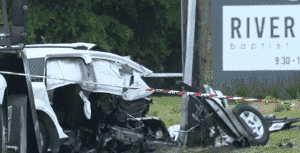
The Law Offices of Anidjar and Levine, a Jacksonville Personal Injury Lawyer resource, investigates whether defective brakes, worn tires, faulty lights, handling problems, or poor maintenance caused a preventable truck crash. The firm reviews inspection reports, maintenance records, driver statements, electronic data, and carrier policies to identify potentially responsible parties, including trucking companies, repair contractors, manufacturers, or loaders. Legal support may also address medical evidence, insurance disputes, lost income, and long-term care needs.
Main Takeaways
- A Jacksonville truck accident lawyer investigates whether brake, tire, light, steering, or other equipment failures contributed to the crash.
- Maintenance records, inspection reports, repair histories, and driver statements can show whether anyone ignored unsafe truck conditions.
- Liability may involve the driver, trucking company, maintenance contractor, parts manufacturer, cargo loader, or other responsible parties.
- Preserving evidence quickly helps protect inspection logs, electronic data, damaged components, photos, videos, and witness statements.
- Legal support can help pursue compensation for medical bills, lost income, pain, and other equipment-failure accident losses.
How We Can Help With Your Jacksonville Truck Accident Equipment Failure Injury Claim
A Jacksonville truck accident injury lawyer can help victims pursue claims involving equipment failures by identifying whether defective brakes, worn tires, faulty lights, control problems, or other mechanical issues contributed to the crash. Legal support may include reviewing maintenance records, inspection reports, driver statements, and carrier policies to determine whether preventable neglect harmed others on the roadway. This work can serve injured individuals and their families by organizing evidence with care, preserving important proof, and presenting a clear account of responsibility.
The lawyer may also assist with Medical Documentation, ensuring treatment records, diagnostic findings, and physician opinions support the nature and extent of the injuries. When an Insurance Claim is filed, counsel can communicate with insurers, respond to disputed liability, and seek compensation for medical costs, lost income, and related losses. Through disciplined case preparation, the claim can reflect both the mechanical failure and its human impact.
Understanding Jacksonville Truck Accident Equipment Failure Injury Cases


When a commercial truck crash in Jacksonville involves equipment failure, the case often requires close examination of both the mechanical defect and the decisions that allowed the vehicle to remain in service. These claims may involve injured motorists, passengers, workers, or families seeking accountability after preventable harm. A careful review can show whether the driver, carrier, maintenance provider, or another responsible party met its safety duties.
OUR CONSULTATIONSARE FREE
START YOUR FREE CASE REVIEW

Understanding these cases includes evaluating how inspections work under applicable trucking rules and company procedures. Inspection records, repair histories, driver reports, and insurance documentation may reveal whether warning signs were identified, ignored, or inadequately addressed. This information helps clarify who controlled the vehicle and who was responsible for protecting others on Jacksonville roads.
Because commercial trucking operations involve layered responsibilities, equipment failure claims often demand organized investigation and disciplined evidence preservation. That process supports injured individuals while promoting safer practices for the broader community.
Common Causes of Jacksonville Truck Accident Equipment Failures
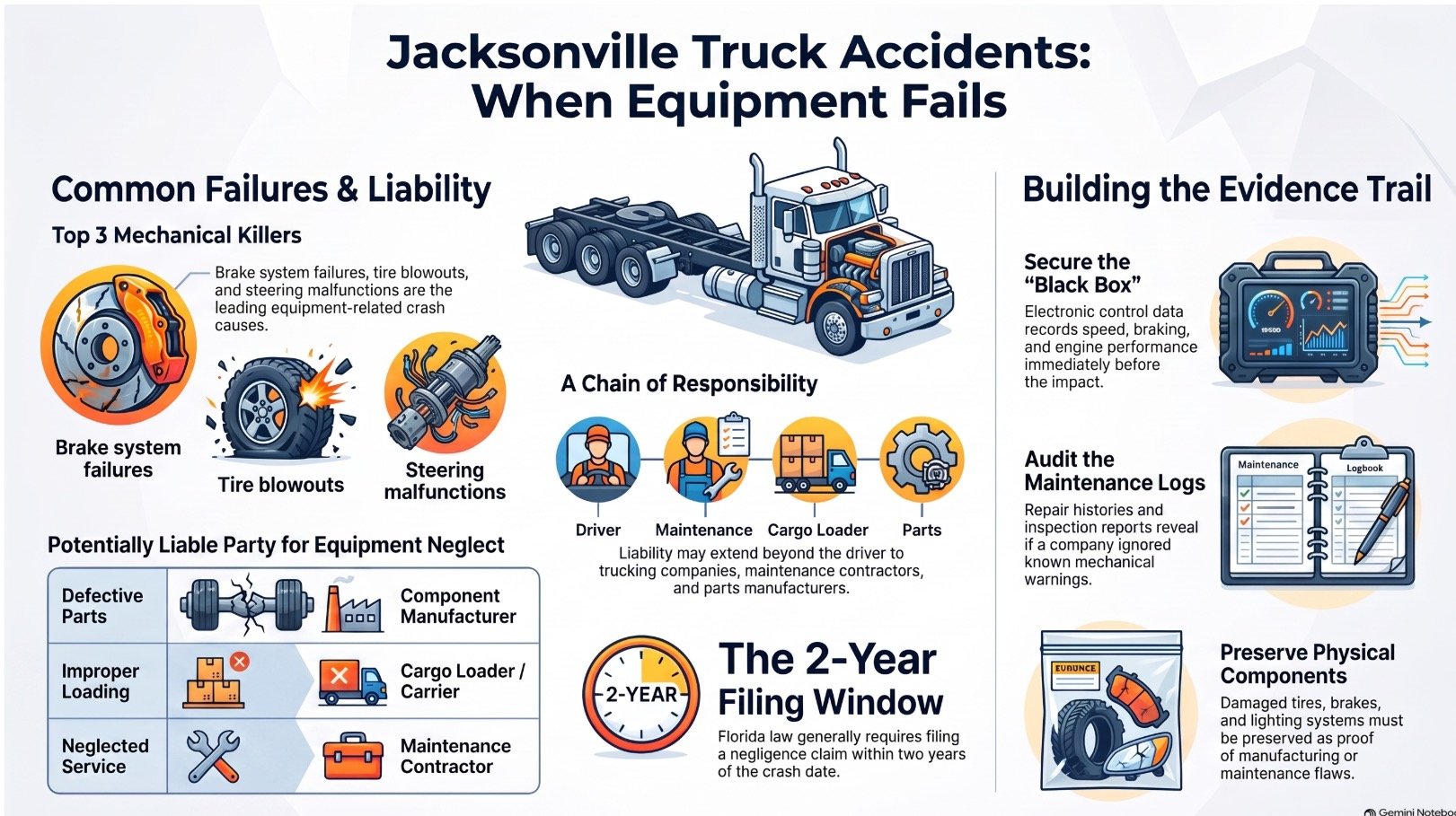
Common causes of Jacksonville truck accident equipment failures often include brake system failures, tire blowouts, steering malfunctions, and poor maintenance practices. These issues may develop from worn components, inadequate inspections, improper repairs, or prolonged use beyond safe operating limits. Identifying the source of the failure is vital because liability may extend to drivers, trucking companies, maintenance providers, or parts manufacturers.
Brake System Failures


Because commercial trucks rely on complex air brake systems to control extreme weight at highway speeds, any defect or maintenance lapse can create a serious risk of collision. Brake maintenance is thus a central safety duty for carriers, drivers, and service providers operating in Jacksonville. Worn brake linings, air leaks, contaminated components, maladjusted slack adjusters, and low air pressure may reduce stopping power or cause uneven braking. When inspections are skipped, records are incomplete, or repairs are delayed, regulatory violations may indicate a broader failure to protect the public. After a crash, investigators may review maintenance logs, driver inspection reports, repair invoices, and electronic data to determine whether defective brakes contributed to the impact. Careful analysis helps injured people pursue accountability and supports safer transportation practices for the broader community.
Tire Blowouts
Brake failures are not the only equipment defect that can turn a large truck into a severe roadway hazard. Tire blowouts can cause a sudden loss of stability, scatter debris, and force nearby motorists into dangerous evasive maneuvers. These incidents often stem from poor maintenance, underinflation, overloading, road damage, or worn components that inspections should have identified. Tire tread age matters because rubber deteriorates over time, even when tread remains visible. A load rating mismatch may also place excessive stress on tires, especially when freight weight exceeds the tire’s intended capacity. Carriers, maintenance providers, and drivers have a duty to protect others by addressing tire conditions before travel. Careful documentation can help determine whether neglect contributed to a Jacksonville truck crash.
Steering Malfunctions
When a truck’s steering system fails, the driver may lose the ability to keep the vehicle in its lane or respond safely to traffic conditions. Handling malfunctions can arise from worn components, fluid loss, misalignment, or damaged linkages that reduce control during turns, merges, or emergency turns. In Jacksonville traffic, even brief handling hesitation may place nearby motorists, pedestrians, and responders at serious risk. These failures may also interact with other equipment problems, including a compromised Brake system, defective tires, or suspension failures, increasing the likelihood of a rollover or multi-vehicle collision. Evidence from inspections, repair records, and electronic data may help determine whether inadequate maintenance, faulty parts, or improper installation contributed to the loss of control, supporting careful accountability for those harmed. Such review protects public safety and injured families.
Poor Maintenance Practices
Often, poor maintenance practices allow minor truck defects to develop into serious equipment failures that endanger drivers and the public. Commercial trucks require consistent service because heavy loads, long routes, and frequent braking place unusual stress on critical systems. Negligent vehicle upkeep may involve ignoring worn tires, weak brakes, leaking fluids, faulty lights, or damaged suspension components. When carriers delay repairs or rely on incomplete records, predictable hazards can remain on Jacksonville roads.
A lack of inspections also contributes to preventable crashes. Routine checks help identify defects before a truck leaves a terminal, loading area, or rest stop. When drivers, maintenance contractors, or companies fail to meet these responsibilities, others may suffer harm. A thorough investigation can uncover missed warning signs and establish accountability after an equipment-related truck accident.
Legal Rights of Jacksonville Truck Accident Equipment Failure Injury Victims
After a commercial truck crash caused by equipment failure, injured victims in Jacksonville may have the right to pursue compensation from multiple responsible parties. These parties may include the trucking company, maintenance contractor, parts manufacturer, cargo loader, or another entity whose conduct contributed to preventable harm. Claims may involve Negligent hiring, inadequate inspection records, or violations of federal trucking regulations.
Legal rights may allow recovery for medical expenses, lost income, reduced earning capacity, pain, suffering, and long-term care needs.
For families and advocates committed to serving others, these rights help protect dignity after serious injury.
- A parent may seek stability while facing surgeries and unpaid bills.
- A worker may need support after losing the ability to earn.
- A family may warrant answers when safety duties were ignored.
- A community may benefit when accountability encourages safer trucking practices.
Timely legal action can preserve evidence, identify liable parties, and strengthen a victim’s claim.
Don’t Wait. Call Our Florida Personal Injury Lawyers Now!
Why Do Jacksonville Truck Accident Equipment Failure Injuries Happen?
Why do equipment failures in Jacksonville truck accidents lead to such severe injuries? Large commercial trucks depend on brakes, tires, driving systems, lights, coupling devices, and load restraints to operate safely. When one system fails, the truck’s size and weight can turn a manageable traffic risk into a catastrophic collision. Victims may include motorists, passengers, pedestrians, or workers who were simply present and vulnerable.
These failures may result from poor maintenance, defective parts, rushed inspections, overloading, or improper repairs. Common Liability may involve trucking companies, maintenance contractors, manufacturers, cargo loaders, or drivers who ignored warning signs. Because several parties may share responsibility, you often need to carefully review service records, inspection logs, electronic data, and component history.
Evidence Preservation is especially important because damaged parts, maintenance files, and onboard data can be lost, repaired, or altered. Understanding why failures occur helps protect the injured and supports accountability within commercial transportation.
What Should You Do After a Jacksonville Truck Accident Equipment Failure Injury?
After a Jacksonville truck accident involving suspected equipment failure, an injured person should seek immediate medical care to identify and treat any injuries. It is also important to document evidence related to the failed equipment, including photographs, witness information, and available records. Contacting a truck accident lawyer can help preserve essential evidence, assess liability, and protect the injured person’s legal interests.
Seek Immediate Medical Care
Seek emergency medical attention as soon as possible following a Jacksonville truck accident involving equipment failure, even when injuries appear minor at first. Prompt evaluation protects health, supports timely diagnosis, and creates a reliable medical record for later review. Truck crashes can cause internal injuries, spinal trauma, concussions, and soft tissue damage that may worsen without care. Emergency responders and physicians can assess symptoms, order appropriate tests, and recommend treatment that promotes recovery and continued service to family, work, and community.
After initial treatment, injured persons should attend every recommended appointment and preserve follow-up documentation. Consistent records help connect symptoms to the collision and show responsible participation in care. While medical needs remain the priority, noting contacts for available witness statements may also support later coordination.
Document Equipment Failure Evidence
When safe, document evidence of possible equipment failure before conditions change or vehicles are repaired, moved, or inspected by others. Photographs and video should capture tires, brakes, lights, cargo securement, skid marks, debris, fluid leaks, roadway conditions, and vehicle positions. A calm, service-minded approach helps preserve facts that may later clarify what happened and protect injured individuals. Driver timeline documentation may include delivery schedules, rest periods, inspection activity, unusual sounds, warning lights, or loss of control before impact. When possible, respectfully gather names, phone numbers, email addresses, and other contact information from bystanders, passengers, and first responders. Also record medical symptoms, damaged property, and conversations with company representatives accurately and promptly.
Contact A Truck Accident Lawyer
Why should legal counsel be contacted promptly after a Jacksonville truck accident involving suspected equipment failure? Early legal guidance helps protect injured individuals while supporting a careful search for accountability. A truck accident lawyer can identify responsible parties, including drivers, carriers, maintenance contractors, manufacturers, or parts suppliers. Counsel may also send preservation notices to prevent repair records, inspection logs, electronic data, and damaged components from being altered or lost.
Timely action also helps gather witness statements, preserve surveillance footage, and document roadway conditions before memories fade or evidence disappears. For those focused on caring for injured families and protecting others from future harm, legal support can provide structure, direction, and advocacy. A lawyer can coordinate investigations, communicate with insurers, and pursue compensation for medical care, lost income, pain, and related losses.
Critical Evidence in a Jacksonville Truck Accident Equipment Failures Injury Case
In a Jacksonville truck accident involving equipment failure, essential evidence may show whether preventable neglect placed injured motorists in harm’s way. Important materials often include: 1. driver inspection reports, 2. maintenance repair records, 3. electronic control data, and 4. defective parts evidence. Each item can help establish how the failure occurred, who had notice of the danger, and whether safety obligations were ignored.
Driver Inspection Reports
Driver inspection reports can be critical evidence in a Jacksonville truck accident case involving suspected equipment failure, because they may show whether a driver or motor carrier knew, or should have known, about unsafe vehicle conditions before the crash. These reports may identify concerns noted before or after a trip, including brake problems, tire defects, lighting issues, handling concerns, or other hazards affecting public safety. When reviewed carefully, they can help determine whether proper driver training prepared the operator to recognize and document dangerous conditions. They also may reveal patterns of ignored warnings, incomplete inspections, or weak safety compliance within the company. For injured people and the communities served by safe road practices, these records help clarify responsibility and support accountability after preventable commercial vehicle harm.
Maintenance Repair Records
When a commercial truck suffers a mechanical failure, maintenance and repair records may reveal whether the defect was preventable. These documents can show if a carrier followed required truck maintenance schedules, responded to known problems, and completed needed service before returning the vehicle to the road. Repair logs may identify repeated brake, tire, guidance, or lighting issues that were ignored or inadequately corrected. Mechanical inspections can also establish whether qualified personnel examined crucial systems with reasonable care. In some cases, video evidence from service areas or fleet facilities may support or challenge the written records. For injured people and the community members seeking accountability on their behalf, these materials help clarify whether safety duties were honored or neglected before the Jacksonville crash occurred and preserve facts for legal review.
Electronic Control Data
Beyond maintenance and repair records, electronic control data can provide a more immediate account of how a commercial truck performed before and during a Jacksonville crash. Modern trucks often store information on speed, braking, throttle position, engine performance, and warning events. Through black box analysis, investigators may compare driver inputs with system responses, helping determine whether equipment failure contributed to the collision. Fault code retrieval can also identify recorded warnings related to braking, guidance, transmission, or engine systems, including when those warnings first appeared. Prompt preservation is crucial because some data may be overwritten, lost, or altered during post-crash handling. For injured individuals and those assisting them, this evidence can clarify responsibility, support truthful claims, and promote safer commercial trucking practices. It can also guide expert testimony.
Defective Parts Evidence
Although electronic data may show how a truck behaved during a collision, defective parts evidence can reveal why a system failed in the first place. In equipment failure cases, attorneys may examine brakes, tires, handling components, coupling devices, lighting systems, and maintenance records to determine whether a defect contributed to the crash. Preserved parts can show wear patterns, fracture points, improper repairs, or manufacturing flaws that require expert review. This evidence may also clarify whether a trucking company ignored warning signs or failed to remove an unsafe vehicle from service. Eyewitness testimony can support these findings when observers describe smoke, blown tires, dragging parts, or loss of control before impact. Timely collection of eyewitness statements helps protect injured people, promotes accountability, and serves the broader goal of roadway safety for all.
Long-Term Effects of Jacksonville Truck Accident Equipment Failures Injuries
Truck accident injuries caused by equipment failures can produce long-term consequences that extend far beyond the initial collision. Chronic pain complications, reduced mobility challenges, and lasting emotional trauma may interfere with medical recovery, employment, and daily independence. These effects often require careful evaluation, especially when determining the full scope of damages in a Jacksonville truck accident injury case.
Chronic Pain Complications
When equipment failures contribute to a Jacksonville truck accident, chronic pain can become one of the most disruptive long-term consequences for an injured person. Brake defects, tire blowouts, or guidance malfunctions may cause forceful impacts that leave lasting pain in the neck, back, shoulders, or limbs. Some individuals develop persistent whiplash symptoms, including headaches, stiffness, and radiating discomfort that interfere with work, caregiving, and community responsibilities. Nerve damage may also produce burning, tingling, or numbness, requiring ongoing neuropathy treatment and careful medical monitoring. Chronic pain can complicate recovery because symptoms may fluctuate, intensify with activity, or persist despite initial care. Proper documentation, expert evaluation, and consistent treatment planning help clarify the injury’s full impact and support fair consideration of long-term needs following a truck accident.
Reduced Mobility Challenges
After an equipment-related collision, reduced mobility may become a significant long-term challenge for a person injured in a Jacksonville truck accident. Damage to the spine, hips, knees, or lower extremities can limit walking, standing, lifting, and transferring between seated and upright positions. These limitations often affect daily caregiving, household duties, transportation, and the ability to serve others reliably. Ongoing rehabilitation may improve function, but some individuals require braces, walkers, wheelchairs, or vehicle modifications. Assistive device replacement can become necessary when equipment wears out, no longer fits, or fails to meet changing medical needs. In employment settings, workplace mobility accommodations may include accessible workstations, modified schedules, closer parking, or reassigned tasks. Careful documentation of these needs helps show how equipment failure caused lasting functional restrictions.
Lasting Emotional Trauma
Following an equipment-related collision, lasting emotional recovery may become a serious long-term effect for a person injured in a Jacksonville truck accident. Fear, sleep disruption, anxiety, depression, and intrusive memories can interfere with recovery, work, family responsibilities, and service to others. These symptoms may appear immediately or develop after medical treatment begins, especially when pain, disability, or financial pressure remains unresolved. Counseling options, including trauma-focused therapy and psychiatric care, can support emotional stability and improve daily functioning. Careful documentation of mental health treatment may also assist compensation planning, particularly when emotional harm affects earning capacity or future care needs. A legal claim may consider these nonphysical losses alongside medical costs, rehabilitation, and reduced mobility, helping injured individuals seek resources for fuller long-term recovery.
Don’t Wait. Call Our Florida Personal Injury Lawyers Now!
Proving Liability in Jacksonville Truck Accident Equipment Failure Injury Cases
In truck accident cases involving equipment failures, liability often depends on identifying the specific mechanical defect, determining who controlled the vehicle’s maintenance, and establishing how the failure caused the crash. A careful investigation may examine brake systems, tires, coupling devices, handling components, lights, and inspection records. Responsible parties may include the trucking company, maintenance provider, parts manufacturer, cargo loader, or another entity that failed to meet safety duties.
Evidence must reliably connect the defect to the injuries. Black box data, expert reconstruction, driver logs, repair invoices, photographs, and federal inspection documents can help show whether the truck was unsafe before impact. By preserving damaged parts and reviewing maintenance patterns, investigators can determine whether warning signs were missed or repairs were delayed. This process supports accountability, protects the injured person’s rights, and promotes safer transportation practices for the Jacksonville community. Strong documentation allows a claim to reflect both fault and preventable harm.
Dealing With Insurance Companies After a Jacksonville Truck Accident Equipment Failure Injury
When an equipment failure causes a Jacksonville truck accident, insurance companies often begin evaluating fault, damages, and coverage limits before the injured person fully understands the claim’s value. Adjusters may request statements, medical authorizations, or quick settlements, and each response can affect recovery. A careful approach helps protect the person harmed while supporting truthful claim handling.
An attorney may coordinate police report review, compare insurer conclusions with physical evidence, and use an evidence preservation checklist to identify maintenance records, inspection logs, damaged parts, and electronic data. Strong medical documentation is also critical, because treatment records connect the crash to injuries and help measure ongoing needs. If the injury affects the person’s ability to work, disability claim support may be needed to accurately present wage loss and functional limitations.
Clear communication with insurers can reduce confusion, prevent unfair blame shifting, and preserve resources needed for care, family stability, and continued service to others after serious harm.
What to Expect During a Jacksonville Truck Accident Equipment Failure Injury Claim Process
A Jacksonville truck accident equipment failure injury claim typically begins with an initial case evaluation, where we assess the facts, injuries, and potential sources of compensation. Evidence collection may include maintenance records, inspection reports, driver logs, expert analysis, and accident scene documentation to determine liability and fault. Once responsibility is established, settlement negotiation steps focus on presenting damages, responding to insurer defenses, and pursuing fair compensation through a structured claims process.
Initial Case Evaluation
Before valuing or pursuing a Jacksonville truck accident equipment failure claim, the initial case evaluation focuses on identifying how the mechanical defect contributed to the crash and who may be legally responsible. This review considers the injured person’s account, the crash timeline, reported vehicle issues, medical impact, and any immediate communications from insurers or trucking representatives. Counsel may assess whether responsibility could involve a driver, carrier, maintenance contractor, parts supplier, or manufacturer. In severe cases, the evaluation may also address Wrongful death claims and the needs of surviving family members. Early attention focuses on deadlines, available insurance, and conduct suggesting insurance bad faith. This stage clarifies legal options, protects vulnerable claimants, and guides decisions with care, discipline, and a service-centered purpose for the injured.
Evidence Collection Process
Preserve crucial evidence quickly because equipment failure claims often depend on physical proof that can change, disappear, or be repaired soon after a Jacksonville truck accident. During this stage, the injured person’s legal team may seek maintenance records, inspection reports, repair invoices, electronic control module data, photographs, and damaged components. A prompt vehicle inspection can document brake systems, tires, lights, coupling devices, and other parts before conditions change. You may also gather witness statements from drivers, passengers, first responders, mechanics, or nearby observers who noticed mechanical problems, unusual sounds, or unsafe operation. Medical records, crash reports, and scene evidence further support a complete claim file. Careful evidence collection helps the process serve the truth, protect injured people, and preserve the facts needed for informed legal action.
Liability And Fault
When equipment failure contributes to a Jacksonville truck accident, liability often depends on identifying who controlled the defective part and who failed to act reasonably before the crash. Fault may rest with a trucking company that ignored maintenance duties, a driver who continued operating an unsafe vehicle, a repair provider that performed careless work, or a manufacturer that supplied a defective component. Investigators may also consider whether Driver distraction worsened the danger, especially if warning signals, handling problems, or brake issues were disregarded. Under Florida’s comparative negligence rules, responsibility may be divided among multiple parties, including the injured person in limited circumstances. A careful liability review helps protect harmed individuals while promoting accountability, safer practices, and more responsible service to the public.
Settlement Negotiation Steps
During settlement negotiations, a Jacksonville truck accident equipment failure claim usually begins with a detailed review of the evidence, the injured person’s losses, and the parties that may share responsibility. Counsel often focuses on evidence preservation, including maintenance records, inspection logs, repair history, and electronic data, so the claim rests on reliable proof. After investigation, damage valuation addresses medical care, lost income, reduced earning ability, pain, and future needs. A settlement demand letter then presents liability facts, supporting documents, and a reasoned request for compensation. The insurance adjuster’s leverage may depend on disputed fault, policy limits, medical gaps, or incomplete records. Negotiations often involve counteroffers, clarification, and firm responses. A careful process helps protect the injured person while promoting fair accountability and responsible resolution.
Compensation for Jacksonville Truck Accident Equipment Failure Injury Damages
After a truck crash involving equipment failure, compensation may address both the immediate and long-term harm caused by defective brakes, tire blowouts, guiding malfunctions, lighting failures, or improperly maintained safety systems. In Jacksonville, recovery can depend on identifying every responsible party, including carriers, maintenance contractors, parts manufacturers, or inspection providers whose conduct placed the public at risk.
Claims may also involve Wrongful death damages when a family loses a loved one because safety duties were ignored. Attorneys serving injured people often respond to insurance denials by presenting maintenance records, black box data, repair histories, and expert opinions. When severe misconduct is shown, attorneys may pursue punitive damages to deter similar disregard for community safety. Prompt legal action also helps prevent spoliation of evidence, such as altered logs, discarded parts, or missing inspection reports, ensuring the claim reflects the full consequences of the equipment failure and supports accountability.
Economic vs Non-Economic Damages in Jacksonville Truck Accident Equipment Failures Cases
In Jacksonville truck accident cases involving equipment failures, damages generally fall into economic and non-economic categories. Economic damages may include medical bills, lost wages, rehabilitation costs, and property damage, while non-economic losses address pain, suffering, emotional distress, and reduced quality of life. Proving the value of compensation requires clear evidence, credible documentation, and a careful assessment of how the equipment failure affected the injured person’s financial and personal well-being.
Economic Damage Examples
When a truck accident involves equipment failure, economic damages may include direct financial losses documented through bills, records, invoices, and wage information. These losses often begin with medical expenses, including emergency care, hospitalization, surgery, rehabilitation, prescriptions, and follow-up treatment. They may also include transportation costs for medical visits, home health services, medical equipment, and necessary modifications to a residence or vehicle. If the injured person cannot work while recuperating, lost wages may be calculated through pay stubs, tax records, employer statements, or business records. Economic damages can also include reduced earning capacity when injuries limit future employment. In equipment failure cases, careful documentation helps show how the collision affected financial stability, allowing responsible parties to be evaluated accurately, fairly, and with accountability.
Non-Economic Losses
Non-economic losses address the personal consequences of a Jacksonville truck accident that invoices or wage records alone cannot measure. In equipment failure cases, these losses may include physical pain, emotional distress, disfigurement, loss of enjoyment of life, and the strain placed on family relationships. A person devoted to serving others may find daily duties, caregiving roles, and community involvement sharply limited after a severe collision. These harms are real, even without a fixed market price. Insurers may use insurance tactics to minimize suffering, suggest recovery is exaggerated, or focus narrowly on medical bills. Careful attention to fault proof helps connect the failed equipment, resulting injuries, and lasting human impact, without reducing the injured person’s experience to financial documents alone. Such losses demand measured, respectful evaluation in every claim.
Proving Compensation Value
Because equipment failure cases often involve both financial records and deeply personal harm, proving compensation value requires a structured comparison of economic and non-economic damages. Economic losses may include hospital bills, rehabilitation costs, medication, lost wages, reduced earning capacity, and future care needs. Non-economic losses address pain, emotional distress, disfigurement, loss of independence, and diminished enjoyment of life. In Jacksonville truck accident equipment failure claims, careful documentation helps connect defective brakes, tires, lights, or maintenance failures to measurable injury outcomes. A sound Settlement strategy weighs invoices, employment records, medical opinions, and impairment valuation ideas against the human effect of lasting limitations. This balanced approach supports fair advocacy, helps protect injured people from undervalued claims, and promotes responsible accountability for preventable commercial trucking harm.
When a Jacksonville Truck Accident Equipment Failures Injury Case Goes to Trial vs Settlement
Although many equipment failure claims resolve through negotiated settlements, a Jacksonville truck accident injury case may proceed to trial when the parties cannot agree on fault, causation, or the full value of damages. Settlement may allow injured people to receive compensation sooner, reduce uncertainty, and preserve resources for medical care, family support, and recovery. Trial may become necessary when an insurer denies responsibility, undervalues future losses, or disputes whether defective brakes, tires, lights, coupling systems, or maintenance failures caused the crash.
Trial strategy focuses on presenting clear proof, anticipating defenses, and helping the court understand how preventable equipment failures harmed others. Jury selection may address attitudes about trucking companies, injury claims, and safety accountability. Evidence exclusions can shape what reports, photographs, repair records, or expert opinions the jury may consider. Witness credibility is also central, especially when drivers, mechanics, company representatives, medical providers, and experts describe what happened and why it matters.
Florida Laws That May Affect Your Jacksonville Truck Accident Equipment Failures Case
Several Florida laws can influence a Jacksonville truck accident equipment failure case, from how fault is divided to how long an injured person has to file a lawsuit. Under Florida comparative negligence, responsibility may be shared among drivers, trucking companies, maintenance contractors, or parts manufacturers.
Evidence must show whether failed brakes, tires, lights, or coupling systems violated trucking safety regulations and created preventable harm.
- Families may face sudden loss of income when a working loved one cannot return to service.
- Caregivers may carry heavy duties while medical bills and uncertainty grow.
- Communities depend on safe commercial transport, making neglected maintenance a public concern.
- Injured people often need advocates who can identify every accountable party with care.
These laws may affect compensation, liability defenses, and insurance negotiations. A Jacksonville truck accident equipment failures lawyer can evaluate inspection records, repair histories, and compliance evidence to support a claim grounded in service, safety, and accountability.
Don’t Wait. Call Our Florida Personal Injury Lawyers Now!
The Statute of Limitations for Jacksonville Truck Accident Equipment Failures Injury Cases
When equipment failure contributes to a Jacksonville truck accident, the statute of limitations sets a strict deadline for filing an injury lawsuit. In Florida, injured parties generally have two years from the date of the crash to pursue a negligence claim. Missing this deadline may bar recovery, even when brake defects, tire failures, lighting problems, or maintenance lapses caused severe harm.
Timely action also supports injured individuals, families, and the broader community by promoting accountability before crucial evidence is lost. Evidence preservation steps may include securing maintenance records, inspection reports, electronic data, photographs, and damaged components before anyone alters or disposes of them. These records can clarify whether a carrier, maintenance provider, manufacturer, or other party contributed to the failure.
Comparative fault rules may also affect a claim’s value if multiple parties share responsibility. Filing within the required period protects the injured person’s right to have those issues evaluated.
How a Jacksonville Truck Accident Equipment Failures Injury Lawyer Can Help You
After a truck accident involving suspected equipment failure, a Jacksonville truck accident injury lawyer can help identify the mechanical, maintenance, and safety issues that may have caused or worsened the crash. Counsel may review inspection records, repair logs, driver reports, and component evidence to determine whether preventable neglect harmed innocent people.
A lawyer can uncover equipment failures, maintenance neglect, and safety violations that contributed to a serious truck crash.
- Examine failed brakes, tires, lights, coupling systems, or control parts to understand how danger reached the roadway.
- Compare trucking liability among carriers, maintenance contractors, manufacturers, loaders, and drivers, so blame is not unfairly shifted.
- Analyze failure responsibility by connecting violated safety duties to injuries, losses, and the need for continued care.
- Negotiate insurance tactics that minimize suffering while identifying responsible parties and protecting the injured person’s dignity.
Through organized investigation and advocacy, the lawyer supports recovery efforts, helps preserve accountability, and serves families seeking stability after avoidable harm.
When to Contact a Jacksonville Truck Accident Equipment Failures Injury Lawyer
In the hours or days following a serious truck crash, legal guidance may be important if equipment failure appears to have contributed to the collision. Contact an attorney if brakes, tires, lighting systems, coupling devices, steering components, or cargo securement equipment seem defective or poorly maintained. Early action can help protect Emergency roadside documentation, including photographs, witness information, inspection notes, and repair records before they are altered or lost.
A Jacksonville truck accident equipment failures injury lawyer may also help when injured persons, caregivers, or service-minded family members coordinate medical care, transportation, and practical support. Prompt communication may help them understand insurance claim deadlines, notice requirements, and the importance of preserving vehicle evidence. If a trucking company, insurer, or investigator requests statements or releases, timely legal consultation can provide the direction you need. Contact an attorney when injuries are serious, fault is disputed, or maintenance history may be central to the claim.
Why You Need an Experienced Jacksonville Truck Accident Equipment Failures Injury Lawyer
Establishing liability in a truck accident involving equipment failure often requires more than a basic insurance claim. These cases may involve defective brakes, worn tires, failed coupling systems, or missed maintenance, each requiring careful review of records, inspections, and witness accounts. An experienced Jacksonville truck accident equipment failures injury lawyer can identify responsible parties, including drivers, trucking companies, maintenance contractors, parts manufacturers, or others whose conduct harmed the public.
Legal guidance is especially important because Insurance claim timelines can affect evidence preservation and access to compensation. A lawyer can coordinate investigations, request vital documents, and ensure deadlines are not overlooked. Strong pain documentation also supports the full impact of injuries, including treatment needs, work limitations, and long-term suffering. By building a clear record, counsel helps injured people pursue accountability while allowing families, caregivers, and community members to focus on recovery, service, and restoring stability after a serious crash.
How to Choose the Right Jacksonville Truck Accident Equipment Failures Injury Lawyer for Your Case
Choosing the right Jacksonville truck accident equipment failures injury lawyer begins with evaluating whether the attorney has specific experience handling commercial vehicle crashes involving mechanical defects, maintenance violations, and complex liability disputes. The lawyer should understand federal trucking regulations, inspection duties, and how failed brakes, tires, lights, or coupling systems can affect a claim.
A careful selection process also includes reviewing how the attorney approaches early investigation. An effective advocate should use an evidence preservation checklist to secure maintenance records, driver reports, inspection logs, repair invoices, electronic data, and damaged components before they are altered or lost.
Families seeking justice for an injured person should also consider Client communication expectations. A qualified lawyer should clearly explain case steps, provide timely updates, and answer questions with patience and respect. The right attorney combines technical knowledge with dependable guidance, helping clients make informed decisions while pursuing accountability from negligent trucking companies, maintenance providers, or other responsible parties.
About The Law Offices of Anidjar & Levine
The Law Offices of Anidjar & Levine represents injured clients in Jacksonville and throughout Florida, including those harmed in serious truck accidents involving equipment failures, negligent maintenance, and unsafe commercial vehicle operations. The firm supports individuals and families during difficult recoveries by managing legal demands, communicating with insurers, and pursuing accountability from responsible parties.
In equipment failure cases, the firm examines whether carriers, drivers, maintenance providers, or manufacturers failed to meet required safety duties. Its work may involve Truck inspection records, evidence preservation requests, repair histories, electronic logs, driver reports, and other materials that can clarify how a crash occurred.
The firm’s approach reflects a commitment to service, preparation, and client communication. By handling investigations, negotiations, and litigation when necessary, The Law Offices of Anidjar & Levine allows injured clients to focus on medical care, stability, and rebuilding their lives after a serious Jacksonville truck accident.

Frequently Asked Questions
Can a Truck’s Maintenance History Affect My Equipment Failure Claim?
Yes. A truck’s maintenance history may strongly affect an equipment failure claim. Repair records can show whether the carrier acted responsibly, ignored known defects, or delayed necessary service. Missing or altered records may raise evidence spoliation concerns, especially when injured people need preserved proof to seek accountability. Consistent documentation can support or weaken fault allegations, while gaps may hurt the credibility of the trucking company, driver, or maintenance provider.
Who Inspects Commercial Trucks for Equipment Defects in Florida?
In Florida, the Florida Highway Patrol, Motor Carrier Compliance officers, and federal or state-certified inspectors inspect commercial trucks under FMCSA requirements. Carriers must also ensure driver vehicle checks before and after trips, helping identify unsafe brakes, tires, lights, and coupling devices. These inspections protect the public, support responsible service, and create records that may show whether a company acted diligently or ignored preventable equipment defects.
Can Defective Truck Parts Lead to a Product Liability Claim?
Yes, defective truck parts can support a product liability claim when defective components cause or worsen a crash. Under product liability law, responsible parties may include manufacturers, distributors, or sellers if a part was defectively designed, improperly made, or sold without adequate warnings. Those assisting injured people should preserve evidence, service records, and the failed part, because careful documentation helps identify accountability and supports fair compensation.
What if the Truck Driver Knew About the Equipment Problem?
If the truck driver knew about the equipment problem, Negligent awareness may support a claim that the driver failed to protect others on the road. A known defect can create a duty to repair, report, or stop operating the vehicle. Employer liability may also arise if the company allowed continued use, ignored complaints, or required unsafe service. Negligent inspection records can further show whether preventable harm occurred.
Are Trucking Companies Required to Keep Repair and Inspection Records?
Yes, trucking companies must keep repair and inspection records under federal safety regulations. These records help prove maintenance compliance and show whether the company fulfilled its inspection duties before placing a vehicle on the road. For those serving injured people, such documents can clarify whether preventable neglect contributed to a crash. Missing, altered, or incomplete records may indicate deeper safety failures and support a careful review of corporate responsibility.
—————————
Truck equipment failure cases require careful investigation, accurate fault analysis, and a firm pursuit of compensation. Injured victims in Jacksonville may face medical expenses, lost income, and lasting physical limitations after preventable failures involving brakes, tires, lights, or other critical systems. A qualified Jacksonville Personal Injury Lawyer can identify liable parties, preserve essential evidence, and handle negotiations with insurers. The Law Offices of Anidjar and Levine provides focused legal support for those seeking accountability after serious truck accidents.